Kong API Gateway: The Essential Guide to API Management
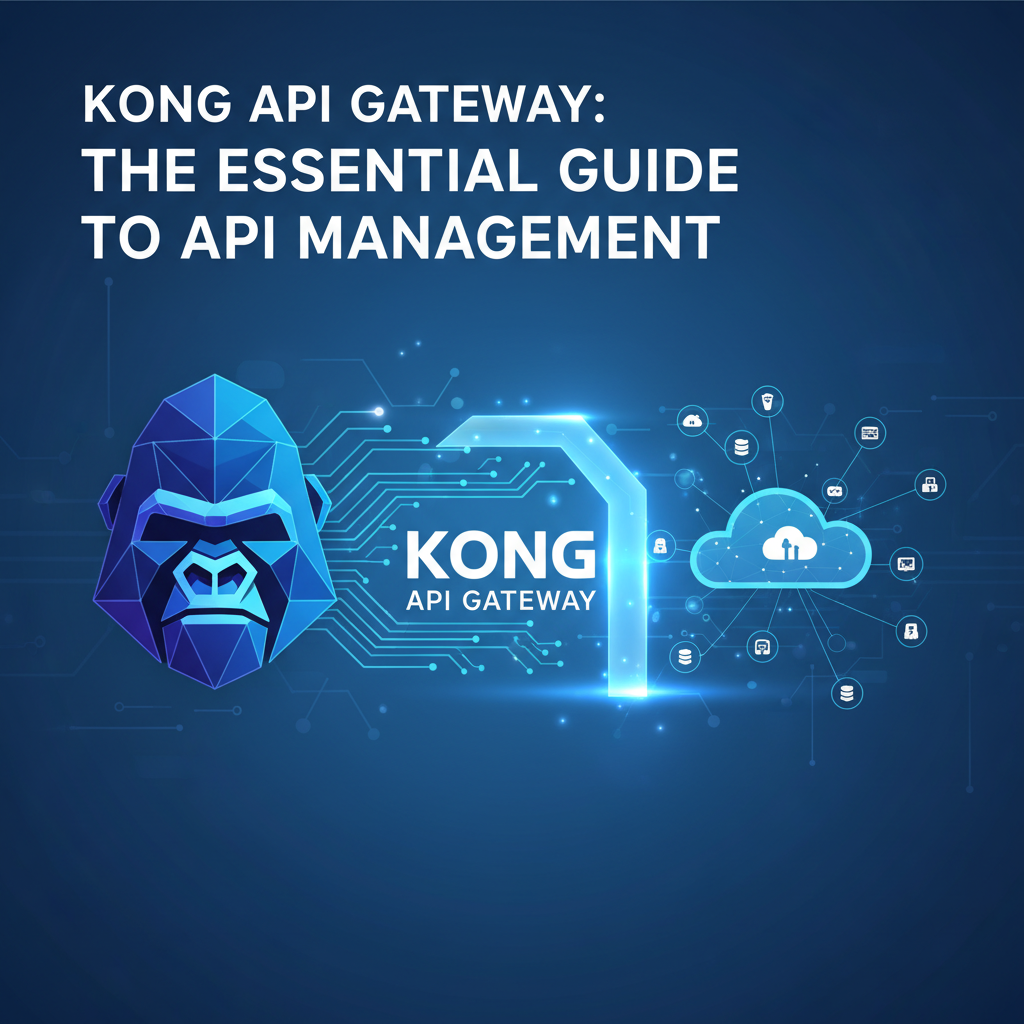


In an era defined by digital transformation and interconnected services, Application Programming Interfaces (APIs) have emerged as the fundamental building blocks of modern software ecosystems. From mobile applications and single-page web experiences to complex microservices architectures and IoT devices, APIs facilitate seamless communication, data exchange, and functionality sharing across disparate systems. However, as the number and complexity of APIs within an organization grow, so do the challenges associated with managing them effectively. This escalating complexity necessitates a robust, centralized solution capable of governing the entire API lifecycle, from security and performance to routing and analytics. Enter the API Gateway, a critical architectural component that acts as a single entry point for all client requests, abstracting the complexities of backend services and enforcing policies across the board.
Among the myriad of API Gateway solutions available today, Kong API Gateway stands out as a powerful, flexible, and widely adopted open-source platform. Built on the highly performant Nginx web server and OpenResty, Kong is designed to handle the demanding requirements of modern, distributed architectures, offering unparalleled scalability, extensibility, and control over API traffic. This comprehensive guide will delve deep into the world of API management with Kong, exploring its core functionalities, architectural nuances, practical implementation strategies, and best practices. We will uncover how Kong empowers organizations to securely and efficiently manage their APIs, enhance developer experience, and accelerate innovation. Furthermore, we will touch upon the evolving landscape of API management, including the advent of AI gateways, and introduce how platforms like APIPark are shaping the future of integrating artificial intelligence capabilities into existing API infrastructures.
Part 1: Understanding API Gateways – The Cornerstone of Modern Architectures
The proliferation of microservices, serverless computing, and cloud-native applications has fundamentally reshaped how software is designed, developed, and deployed. While these architectural paradigms offer immense benefits in terms of agility, scalability, and resilience, they also introduce new complexities, particularly around inter-service communication and external client access. In such an environment, the role of an API Gateway becomes not just beneficial, but absolutely essential. It serves as an intelligent reverse proxy, sitting at the edge of the network and acting as the primary point of contact for all incoming API requests before they reach the actual backend services.
What is an API Gateway? A Comprehensive Definition
At its core, an API Gateway is a management tool that acts as a single point of entry for all API calls. Instead of clients having to interact with multiple backend services directly, they communicate solely with the gateway. The gateway then takes responsibility for routing requests to the appropriate microservice, applying various policies, and ensuring that the communication is secure, performant, and reliable. This architectural pattern centralizes numerous cross-cutting concerns that would otherwise need to be implemented within each individual service, leading to reduced boilerplate code, improved consistency, and easier maintenance. It's akin to a sophisticated air traffic controller for your digital services, directing requests, verifying credentials, and ensuring smooth operations across a complex landscape of applications.
The primary purpose of an API Gateway extends far beyond simple request routing. It encapsulates a wide array of functionalities designed to enhance the overall API management experience. These include:
- Request Routing and Load Balancing: Directing incoming requests to the correct upstream services based on defined rules (e.g., URL paths, HTTP methods, headers) and distributing traffic efficiently across multiple instances of a service to prevent overload.
- Authentication and Authorization: Verifying the identity of clients (authentication) and ensuring they have the necessary permissions to access specific resources (authorization) before forwarding requests. This offloads security concerns from individual services.
- Rate Limiting and Throttling: Controlling the number of requests a client can make within a specified timeframe, preventing abuse, ensuring fair usage, and protecting backend services from being overwhelmed.
- Caching: Storing responses from backend services to fulfill subsequent identical requests faster, thereby reducing latency and diminishing the load on upstream services.
- Request/Response Transformation: Modifying request headers, body, or query parameters before forwarding them to a service, or altering service responses before sending them back to the client. This allows for API versioning, data normalization, and client-specific adaptations.
- Logging and Monitoring: Capturing detailed information about API requests and responses, providing valuable insights into API usage, performance, and potential issues for auditing, troubleshooting, and analytics.
- Circuit Breaking: Implementing resilience patterns to prevent cascading failures by detecting when a service is unhealthy and temporarily routing traffic away from it.
- Protocol Translation: Enabling communication between clients and services that use different communication protocols (e.g., translating HTTP requests to gRPC calls).
By consolidating these functions, the API Gateway provides a robust and consistent layer for managing interactions between consumers and providers, serving as the critical middleware in a distributed system.
The Indispensable Role of API Gateways in Microservices Architectures
The architectural shift towards microservices, characterized by small, independently deployable services that communicate over lightweight mechanisms, has been a major driver for the adoption of API Gateways. In a monolithic application, clients typically interact with a single, large backend. However, with microservices, a single client request might necessitate interactions with several different services to fulfill its purpose. Without an API Gateway, clients would be forced to:
- Manage Multiple Endpoints: Clients would need to know the specific URLs for each microservice they wish to consume, making client-side code complex and tightly coupled to the backend architecture.
- Handle Cross-Cutting Concerns Repeatedly: Each client application would need to implement its own logic for authentication, rate limiting, caching, and error handling, leading to duplicated effort and potential inconsistencies.
- Deal with Service Discovery: Clients would need mechanisms to discover where individual microservices are located, adding another layer of complexity.
- Aggregate Data Manually: If a client requires data from multiple services for a single display, it would have to make several calls and then aggregate the results on its own.
The API Gateway elegantly solves these challenges by acting as an aggregation point and a façade for the microservices. It presents a simplified, unified API to the clients, abstracting away the internal service boundaries. For instance, a mobile application requesting user profile data might trigger a single request to the gateway, which then internally orchestrates calls to a "user service," a "preferences service," and a "billing service," aggregates their responses, and returns a single, coherent response to the mobile client. This not only simplifies client development but also allows backend microservices to evolve independently without directly impacting client applications.
Benefits of Implementing an API Gateway
The adoption of an API Gateway brings a multitude of strategic and operational benefits to organizations striving for modern, scalable, and secure digital infrastructures:
- Enhanced Security Posture: By centralizing authentication and authorization at the gateway, organizations can enforce consistent security policies across all APIs. This reduces the attack surface and prevents individual microservices from being directly exposed to the public internet. Security protocols like OAuth 2.0, JWT, API key validation, and mTLS can be applied uniformly, significantly strengthening the overall security of the system.
- Improved Performance and Latency Reduction: Features like caching frequently requested data at the gateway level reduce the load on backend services and drastically improve response times for clients. Load balancing capabilities ensure that traffic is distributed optimally, preventing bottlenecks and maintaining high availability.
- Simplified Development and Operational Efficiency: Developers of backend services can focus solely on their core business logic, offloading common concerns such as security, traffic management, and observability to the API Gateway. This streamlines development efforts, reduces boilerplate code, and accelerates time-to-market for new features. Operations teams benefit from a centralized point of control for API traffic, making monitoring, troubleshooting, and policy enforcement much simpler.
- Better Observability and Analytics: The API Gateway becomes a central point for logging all API interactions. This rich data can be used for real-time monitoring, detailed analytics on API usage patterns, performance metrics, and error rates. These insights are invaluable for understanding API consumption, identifying trends, capacity planning, and proactive issue resolution.
- Increased Scalability and Resilience: By abstracting backend services, the API Gateway enables independent scaling of individual microservices. If one service becomes overloaded, the gateway can reroute traffic, apply circuit breakers, or gracefully degrade service, preventing cascading failures and ensuring the overall system remains resilient.
- Enhanced Developer Experience (DX): For consumers of your APIs (both internal and external developers), the API Gateway provides a clean, consistent, and well-documented interface. This simplification, often coupled with a developer portal, makes it easier for developers to discover, understand, and integrate with your services, fostering a thriving developer ecosystem. It reduces the learning curve and time spent on integration, allowing developers to be more productive.
- Support for API Versioning and Evolution: As APIs evolve, the gateway can manage multiple versions of an API, allowing older clients to continue using previous versions while new clients leverage the latest features. This enables seamless evolution of backend services without breaking existing client applications, ensuring continuity and reducing upgrade friction.
Challenges Without an API Gateway
Without an API Gateway, organizations face a myriad of challenges that can quickly spiral into architectural nightmares and operational inefficiencies:
- Sprawling Security Concerns: Each microservice would be responsible for its own security, leading to inconsistent implementations, potential vulnerabilities, and a significant burden on individual service developers. Maintaining a uniform security posture across dozens or hundreds of services becomes nearly impossible.
- Inconsistent Policy Enforcement: Implementing and enforcing policies like rate limiting, access control, and data transformation consistently across numerous services is extremely difficult, leading to a fragmented and error-prone system.
- Difficult Client Management: Clients become tightly coupled to the backend architecture, requiring constant updates as services evolve. Managing multiple API keys or authentication tokens for different services from the client side is cumbersome and prone to errors.
- Maintenance Nightmares: Any change in a backend service's endpoint or internal logic could potentially break multiple client applications. Debugging issues across a distributed system without a central traffic management point becomes a complex and time-consuming endeavor.
- Lack of Centralized Observability: Without a single point to aggregate logs and metrics, gaining a holistic view of API traffic, performance, and errors across all microservices is challenging, hindering troubleshooting and performance optimization efforts.
- Limited Scalability and Resilience: Without centralized load balancing, circuit breaking, and traffic management, individual services are more susceptible to overload and failure, and the system as a whole becomes less resilient to spikes in demand or service outages.
The architectural necessity of an API Gateway is clear. It transforms a chaotic mesh of services into a well-ordered, secure, and manageable ecosystem, laying the groundwork for sustainable growth and innovation.
Part 2: Deep Dive into Kong API Gateway
Having established the fundamental importance of an API Gateway, we now turn our attention to one of the most prominent and powerful solutions in the market: Kong API Gateway. Kong distinguishes itself through its performance, flexibility, and extensive feature set, making it a preferred choice for organizations ranging from startups to large enterprises.
What is Kong API Gateway?
Kong is an open-source, cloud-native API Gateway and API management platform designed to provide a lightweight, fast, and flexible layer for managing and routing requests to upstream APIs and microservices. It acts as an orchestrator, sitting in front of your microservices or legacy APIs, providing security, authentication, traffic control, and an array of other features through a robust plugin architecture.
Kong was initially released in 2015 by Mashape (now Kong Inc.) and has since gained significant traction within the developer community due to its reliability and extensibility. It is built upon proven, high-performance technologies:
- Nginx: A highly optimized web server and reverse proxy renowned for its stability, vast feature set, and ability to handle a massive number of concurrent connections.
- OpenResty: A powerful web platform built on Nginx, extending its capabilities with LuaJIT (Just-In-Time compiler for Lua). OpenResty allows developers to write complex, high-performance logic directly within Nginx, which is precisely what Kong leverages for its plugin system.
- LuaJIT: A high-performance, lightweight scripting language that allows Kong's plugins to execute with minimal overhead, contributing significantly to Kong's impressive throughput and low latency.
The philosophy behind Kong is to provide a "microservices API Gateway" that is nimble enough to be deployed across various environments, from on-premise servers to containerized platforms like Docker and Kubernetes. Its open-source nature means a vibrant community contributes to its development and ecosystem, ensuring continuous improvement and a wealth of resources for users.
Core Architecture of Kong
Understanding Kong's architecture is key to harnessing its full potential. Kong employs a decoupled architecture, separating its control plane from its data plane, which offers significant benefits in terms of scalability, resilience, and operational flexibility.
Control Plane
The Control Plane is where all the configuration and management of Kong happen. It's the brain of the operation, responsible for defining APIs, services, routes, consumers, and applying plugins. Crucially, the Control Plane itself does not handle any live API traffic.
Key components of the Control Plane include:
- Kong Manager (GUI): A web-based graphical user interface that provides an intuitive way for administrators and developers to configure, manage, and monitor their Kong gateway instances. It allows for visual creation of services, routes, consumers, and the application of plugins without needing to interact directly with the Admin API.
- Admin API: A powerful RESTful API that serves as the primary programmatic interface for configuring Kong. Everything that can be done via Kong Manager can also be achieved through the Admin API. This is essential for automation, CI/CD pipelines, and integrating Kong into existing infrastructure as code (IaC) workflows. Developers can use
curlcommands, client libraries, or automation tools to manage their API configurations. - Database (PostgreSQL or Cassandra): Kong requires a database to persist its configuration.
- PostgreSQL: Often preferred for simpler deployments, especially for those already familiar with relational databases. It's robust and well-understood.
- Cassandra: A distributed NoSQL database, offering high availability and linear scalability, making it suitable for very large, geographically distributed Kong deployments where extreme resilience and performance are paramount.
The Control Plane's role is to ensure that the configuration is consistent and available to all Data Plane nodes. When changes are made via Kong Manager or the Admin API, these changes are stored in the database and then propagated to the Data Plane nodes.
Data Plane
The Data Plane is the engine that handles all live API traffic. It's where client requests are actually received, processed by Kong's logic and plugins, and then proxied to the upstream backend services. Data Plane nodes are designed for high performance and minimal overhead, as they are on the critical path of every API call.
Key characteristics of the Data Plane:
- Nginx/OpenResty Workers: These are the core components that receive incoming HTTP requests. OpenResty's LuaJIT environment allows for the dynamic execution of Lua-based plugins.
- Lua Modules for Plugin Execution: Each Data Plane node loads and executes the configured plugins for incoming requests. These plugins perform tasks like authentication, rate limiting, logging, and data transformation.
- Configuration Caching: To avoid constant database lookups, Data Plane nodes aggressively cache the configuration received from the Control Plane's database. This caching mechanism is crucial for Kong's high performance, as it minimizes latency by allowing requests to be processed directly from memory. When the configuration changes, the Control Plane signals the Data Plane nodes to refresh their caches, ensuring consistency.
The decoupled nature of Kong's architecture means that multiple Data Plane nodes can operate independently, scaling horizontally to handle increasing traffic, while a single Control Plane manages their configuration. This separation ensures that even if the Control Plane becomes unavailable, the Data Plane nodes will continue to process traffic based on their last cached configuration, maintaining service continuity. This resilience is a significant advantage in production environments.
Key Features of Kong
Kong's comprehensive feature set, primarily delivered through its powerful plugin architecture, makes it a versatile solution for a wide range of API management needs.
1. Routing & Proxying
Kong's fundamental capability is to act as a sophisticated reverse proxy. It allows you to define "Services" which represent your upstream APIs (e.g., https://my-backend-service.com/api/v1). For each service, you define "Routes" which specify how client requests are matched and routed to that service. Routes can be based on:
- Hostnames:
api.example.com - HTTP Paths:
/users,/products - HTTP Methods:
GET,POST - Headers:
X-API-Version: v2 - SNI (Server Name Indication): For TLS connections.
This granular routing capability enables complex API architectures, allowing you to direct different requests to different services or different versions of the same service, all through a single gateway endpoint. It abstracts the internal network topology from the external clients.
2. Authentication & Authorization
Security is paramount for any API Gateway, and Kong provides a rich set of authentication and authorization plugins:
- Key Authentication: Simple API key validation.
- Basic Authentication: Username and password authentication.
- OAuth 2.0: Support for various OAuth 2.0 flows, allowing you to integrate with identity providers like Auth0, Okta, or your own OAuth server.
- JWT (JSON Web Token): Validates incoming JWTs, allowing for token-based authentication.
- LDAP Authentication: Integrates with LDAP directories for enterprise user management.
- mTLS (Mutual TLS): Ensures that both the client and the server authenticate each other using TLS certificates, providing the highest level of transport-layer security.
These plugins allow you to offload the burden of securing your APIs from individual services to the gateway, ensuring consistent security policies and reducing development effort.
3. Traffic Control
Managing API traffic effectively is crucial for performance, stability, and fair usage. Kong offers powerful traffic control mechanisms:
- Rate Limiting: Prevents API abuse and ensures fair usage by restricting the number of requests a consumer can make within a given time window (e.g., 100 requests per minute). It can be configured per consumer, per IP, or globally.
- Spike Arrest: A more advanced form of rate limiting that smooths out traffic spikes to protect backend services from sudden surges.
- Request Size Limiting: Prevents clients from sending excessively large requests that could consume too many resources or be part of a denial-of-service attack.
- Response Rate Limiting: Controls how frequently the gateway responds to specific types of requests, useful for preventing data exfiltration or managing webhook callback rates.
- Circuit Breaker: Implements the circuit breaker pattern, monitoring the health of upstream services. If a service starts to fail, the circuit opens, and the gateway temporarily stops sending requests to it, preventing cascading failures and allowing the service to recover.
- Health Checks: Proactively monitors the health of upstream service instances and removes unhealthy instances from the load balancing pool, ensuring requests are only sent to available services.
- Load Balancing: Distributes incoming requests across multiple instances of an upstream service using algorithms like round-robin, least connections, or consistent hashing.
4. Security Enhancements
Beyond authentication, Kong offers additional layers of security:
- IP Restriction: Allows or denies requests based on their source IP addresses.
- ACL (Access Control List): Grants or restricts access to APIs based on consumer groups or specific consumers.
- WAF (Web Application Firewall Integration): While Kong itself is not a full WAF, it can integrate with external WAF solutions or be configured to apply basic WAF-like rules through custom plugins or configuration.
- Bot Detection: Helps identify and block malicious bots or scrapers.
5. Transformation
Kong's transformation capabilities allow you to manipulate requests and responses as they pass through the gateway:
- Request Transformation: Modify incoming request headers, body, or query parameters. This is useful for normalizing data formats, adding required headers for upstream services, or removing sensitive information before forwarding.
- Response Transformation: Modify outgoing response headers, body, or status codes. This can be used for sanitizing responses, adding common headers, or formatting data for specific client types.
- CORS (Cross-Origin Resource Sharing): Handles CORS preflight requests and adds necessary CORS headers to responses, enabling web applications from different domains to safely interact with your APIs.
6. Observability & Monitoring
Gaining insights into API usage and performance is crucial. Kong provides extensive logging and monitoring features:
- Logging Plugins: Kong supports various logging destinations, allowing you to send API request and response data to:
- File logs
- HTTP endpoints (e.g., Logstash, custom logging services)
- TCP/UDP endpoints
- Syslog
- Cloud-specific services (e.g., AWS Kinesis, Google Cloud Logging)
- Monitoring platforms (e.g., Datadog, Prometheus, Splunk).
- Metrics: Integrates with monitoring systems like Prometheus and Grafana to expose detailed metrics about gateway performance, request counts, latencies, error rates, and resource utilization. This enables real-time dashboards and alerts.
- Tracing: Support for distributed tracing (e.g., Zipkin, Jaeger) helps track requests across multiple microservices, aiding in performance debugging and understanding complex transaction flows.
7. Extensibility (Plugins)
Perhaps Kong's most defining feature is its highly extensible plugin architecture. Plugins are modular components that hook into the request/response lifecycle within Kong, allowing you to add custom logic and functionality without modifying Kong's core codebase.
- Rich Plugin Marketplace: Kong offers a vast array of official and community-contributed plugins covering almost every imaginable API Gateway function, from security and traffic control to logging and transformation.
- Custom Plugin Development: For unique requirements, developers can write their own custom plugins using Lua. Kong provides a Plugin Development Kit (PDK) that simplifies this process. Furthermore, with Kong Gateway Enterprise, custom plugins can also be written in other languages like Go, JavaScript, or Python, leveraging an external plugin server, greatly expanding the flexibility for organizations with diverse language stacks.
This plugin-centric design makes Kong incredibly adaptable. You only enable the functionalities you need, keeping the gateway lightweight and performant.
8. Developer Portal (Kong Konnect / API Portal)
While Kong itself manages the traffic, a developer portal is essential for consumer interaction. Kong offers developer portal solutions (like the API Portal feature in Kong Gateway Enterprise or the broader Kong Konnect platform) that provide:
- API Discovery: A catalog for developers to browse available APIs.
- Documentation: Integration with OpenAPI/Swagger specifications to display interactive API documentation.
- Self-Service Signup: Allows developers to register, create applications, and obtain API keys.
- Usage Analytics: Provides developers with insights into their API consumption.
A well-implemented developer portal significantly enhances the developer experience, encouraging API adoption and fostering a thriving ecosystem around your services.
9. Declarative Configuration (GitOps)
Kong supports declarative configuration, meaning you define the desired state of your gateway (services, routes, plugins, consumers) in a configuration file (e.g., YAML, JSON). Tools like deck (Declarative Config for Kong) can then apply this configuration to your Kong instances. This approach offers several advantages:
- Version Control: Configuration files can be stored in Git, allowing for versioning, change tracking, and rollbacks.
- Automation: Integrates seamlessly into CI/CD pipelines, enabling automated deployment of API configurations.
- Consistency: Ensures that all Kong instances adhere to the same desired state, simplifying management across multiple environments.
- GitOps: Aligns with GitOps principles, where Git is the single source of truth for your infrastructure and application configurations.
10. Hybrid & Multi-Cloud Support
Kong is designed with modern cloud-native principles in mind. It can be deployed:
- On-Premise: On bare metal servers or virtual machines.
- Containerized: Using Docker or Kubernetes.
- Across Clouds: In AWS, Azure, Google Cloud, or any combination thereof.
This flexibility allows organizations to deploy Kong in environments that best suit their operational needs and cloud strategy, providing a consistent API Gateway layer regardless of where their backend services reside. This capability is particularly valuable for hybrid cloud strategies, where some services might remain on-premises while others migrate to the cloud.
This table summarizes some of Kong's key features and their corresponding benefits, highlighting why it's a preferred choice for robust API management:
| Kong Feature | Description | Primary Benefits |
|---|---|---|
| Routing & Proxying | Directs incoming API requests to the appropriate upstream services based on configurable rules. | Centralized traffic management, abstracts backend complexity, enables flexible API design, supports microservices architecture. |
| Authentication & AuthZ | Verifies client identity and permissions (e.g., API Key, OAuth 2.0, JWT, mTLS). | Enhanced security, offloads security logic from services, consistent policy enforcement, reduces development effort. |
| Traffic Control | Includes Rate Limiting, Spike Arrest, Circuit Breaker, Health Checks, Load Balancing. | Prevents API abuse, protects backend services from overload, improves system resilience, ensures high availability, optimizes resource utilization. |
| Transformation | Modifies request/response headers, body, and query parameters. | Enables API versioning, data normalization, client-specific adaptations, protocol translation, simplifies integration with diverse clients/backends. |
| Extensibility (Plugins) | A modular architecture allowing custom logic and features via pre-built or custom Lua/Go/JS/Python plugins. | Highly customizable, future-proof, rapid feature development, vast ecosystem, allows for unique business logic without modifying core gateway. |
| Observability | Comprehensive logging, metrics (Prometheus), and distributed tracing capabilities. | Real-time monitoring, deep insights into API usage and performance, faster troubleshooting, proactive issue detection, improved capacity planning. |
| Declarative Config | Manages gateway configuration as code (YAML/JSON) via tools like deck. |
Version control, GitOps compatible, automated deployments, configuration consistency, reduces human error, facilitates CI/CD. |
| Developer Portal | Provides a self-service portal for API discovery, documentation, and key management. | Improves developer experience, accelerates API adoption, fosters an API ecosystem, reduces support burden. |
| Hybrid & Multi-Cloud | Deployable across various environments: on-premise, Docker, Kubernetes, public clouds. | Operational flexibility, consistent API Gateway layer across hybrid infrastructures, avoids vendor lock-in, supports diverse deployment strategies. |
| Performance (Nginx/LuaJIT) | Built on high-performance Nginx and LuaJIT. | Low latency, high throughput, handles massive concurrent connections, efficient resource utilization, suitable for demanding production workloads. |
This detailed exploration of Kong's architecture and features underscores its capabilities as a leading API Gateway solution, ready to tackle the complexities of modern API management.
Part 3: Practical Implementation and Use Cases with Kong
Implementing Kong effectively involves choosing the right deployment strategy and leveraging its features for specific use cases. Its versatility makes it suitable for a wide array of scenarios, from microservices orchestration to modernizing legacy systems.
Deployment Options for Kong
Kong's flexibility extends to its deployment model, offering choices that cater to different infrastructure preferences and operational needs.
- Docker: For quick local development, testing, or small-scale deployments, Docker is often the go-to. A single
docker-compose.ymlfile can bring up Kong and its database (e.g., PostgreSQL) in minutes. This provides an isolated and reproducible environment. - Kubernetes (Kong Ingress Controller): In cloud-native environments, Kubernetes is the de facto standard for orchestrating containerized applications. Kong provides a dedicated Kong Ingress Controller which translates Kubernetes Ingress resources and Custom Resources (CRDs) into Kong configurations. This allows platform teams to manage API gateways directly using Kubernetes manifests, integrating Kong seamlessly into existing Kubernetes CI/CD pipelines and leveraging Kubernetes' native capabilities for scaling, self-healing, and service discovery. This is arguably the most prevalent and recommended deployment strategy for modern production environments due to its scalability and declarative nature.
- Bare Metal / Virtual Machines (VMs): For organizations with existing on-premise infrastructure or specific compliance requirements, Kong can be installed directly on Linux servers or VMs. This provides maximum control over the environment and allows for deep tuning of the underlying Nginx configuration. While this offers granular control, it also shifts more operational burden onto the infrastructure team compared to containerized deployments.
- Hybrid Deployments: Kong can also be deployed in a hybrid fashion, with some instances on-premises and others in the cloud, all managed by a centralized Control Plane (e.g., Kong Konnect) or separate Control Planes synced via declarative configuration. This is particularly useful for organizations with complex regulatory needs or phased cloud migration strategies.
The choice of deployment depends largely on the existing infrastructure, operational expertise, and scalability requirements. For most modern, agile organizations, Kubernetes with the Kong Ingress Controller offers the best balance of flexibility, scalability, and ease of management.
Setting Up a Basic Kong Gateway (Conceptual Example)
While a full step-by-step tutorial is beyond the scope of this guide, understanding the conceptual flow of setting up Kong is vital. Let's outline the basic steps:
- Database Setup: Before Kong can run, it needs a database. For instance, with PostgreSQL, you'd provision a database instance and create a dedicated database and user for Kong.
sql CREATE USER kong WITH PASSWORD 'kong'; CREATE DATABASE kong OWNER kong; - Kong Installation & Migration: Install Kong (e.g., via Docker, or your OS package manager). Once installed, run the database migration command to set up Kong's schema in your chosen database.
bash kong migrations bootstrap --database ${KONG_DATABASE:-postgres} --conf /etc/kong/kong.conf - Start Kong: Launch the Kong gateway instance.
bash kong start --conf /etc/kong/kong.confAt this point, Kong is running and listening on its default ports (e.g.,8000for HTTP proxy,8443for HTTPS proxy,8001for Admin API,8444for Admin API over HTTPS). - Add a Service: Define an "upstream service" that Kong will proxy requests to. Let's say you have a simple backend service running at
http://my-backend-service:5000.bash curl -X POST http://localhost:8001/services \ --data "name=my-backend" \ --data "url=http://my-backend-service:5000" - Add a Route: Create a "route" that defines how client requests are matched and directed to the
my-backendservice.bash curl -X POST http://localhost:8001/services/my-backend/routes \ --data "paths[]=/api/my-service"Now, any request tohttp://localhost:8000/api/my-servicewill be proxied by Kong tohttp://my-backend-service:5000/api/my-service. - Add a Consumer: If you need to identify and manage API consumers, create one.
bash curl -X POST http://localhost:8001/consumers \ --data "username=dev-team-a" - Apply a Basic Plugin (e.g., Rate Limiting): Attach a plugin to your service, route, or consumer. Here, we apply rate limiting to
my-backendservice.bash curl -X POST http://localhost:8001/services/my-backend/plugins \ --data "name=rate-limiting" \ --data "config.minute=5" \ --data "config.second=1"This configuration restricts themy-backendservice to 5 requests per minute and 1 request per second. Any consumer hitting this service will be subject to this limit. - Example API Call: Now, when a client makes a request, Kong handles it:
bash curl http://localhost:8000/api/my-serviceKong will receive this request, apply therate-limitingplugin, and then proxy it tohttp://my-backend-service:5000/api/my-service.
This example illustrates the declarative nature of Kong's configuration through its Admin API, which can be fully automated using tools like deck for GitOps workflows.
Advanced Use Cases for Kong
Kong's flexibility makes it suitable for a multitude of advanced API Gateway use cases:
- Microservices Orchestration and Aggregation: Beyond simple routing, Kong can be used to aggregate data from multiple microservices into a single, unified response. For instance, a mobile app might request a user's dashboard data, which requires fetching information from user profiles, order history, and notification services. Kong can proxy these internal requests, combine the responses, and present a curated payload to the client, simplifying client-side logic.
- API Monetization and Tiered Access: Businesses can leverage Kong's rate-limiting, ACL, and custom plugin capabilities to implement API monetization strategies. Different consumer groups can be assigned different API plans (e.g., Free, Basic, Premium) with varying rate limits, access to specific endpoints, or higher request quotas. This allows for fine-grained control over API consumption and enables new revenue streams.
- Legacy System Modernization: Many enterprises operate with monolithic legacy systems that are critical but difficult to integrate with modern applications. Kong can act as a modernization layer, exposing well-defined RESTful APIs to the outside world while internally translating these requests into calls to legacy SOAP services, mainframes, or databases. This pattern, often called "API Façade," allows organizations to incrementally modernize their infrastructure without rewriting entire legacy applications, making them accessible to new digital initiatives.
- Security Perimeter and Threat Protection: Kong acts as the first line of defense for your backend services. By implementing strong authentication (JWT, OAuth), IP restriction, and potentially integrating with WAF services, it can significantly reduce the attack surface. It can also detect and mitigate common web vulnerabilities and brute-force attacks by applying intelligent traffic policies.
- IoT & Mobile Backend Gateway: IoT devices and mobile applications often have unique connectivity patterns, latency requirements, and security considerations. Kong can optimize communication for these clients, offering features like request/response transformation to adapt data formats, efficient caching for frequently requested data, and robust authentication for diverse device types, ensuring reliable and secure interactions.
- Data Aggregation and Transformation for Analytics: For data analytics platforms, Kong can be used to normalize data streams from various sources into a consistent format before forwarding them to data lakes or business intelligence tools. This ensures data quality and simplifies subsequent analytical processing, providing cleaner input for insights generation.
- Building a Developer Ecosystem (Internal and External): With its developer portal capabilities, Kong facilitates the creation of a vibrant developer ecosystem. By providing clear documentation, self-service API key management, and usage analytics, it empowers both internal teams and external partners to discover, integrate, and build upon your APIs efficiently, fostering innovation and collaboration.
Comparison with Other API Gateways (Briefly)
While Kong is a leading solution, it's important to acknowledge other prominent API Gateway options and briefly understand Kong's competitive edge:
- Nginx (Directly Used): While Kong is built on Nginx, using Nginx directly as an API Gateway requires significant custom Lua scripting for features like authentication, rate limiting, and analytics. Kong provides these capabilities out-of-the-box through its plugin architecture, abstracting much of the underlying complexity and offering a more opinionated API management solution.
- Cloud-Native Gateways (AWS API Gateway, Azure API Management, Google Apigee): These are fully managed services integrated deeply within their respective cloud ecosystems. They offer convenience and tight integration but can lead to vendor lock-in and may be less flexible for hybrid or multi-cloud strategies. Kong, being open-source and deployable anywhere, offers greater control and portability.
- Other Open Source Gateways (e.g., Tyk, KrakenD): These are also robust open-source alternatives. Kong often stands out for its extensive plugin ecosystem, high performance, and large community, making it a powerful choice for organizations prioritizing extensibility and control.
Kong's strength lies in its performance, the power of its plugin architecture for deep customization, its open-source nature, and its cloud-agnostic deployment flexibility, making it a highly adaptable choice for diverse API management challenges.
APIPark is a high-performance AI gateway that allows you to securely access the most comprehensive LLM APIs globally on the APIPark platform, including OpenAI, Anthropic, Mistral, Llama2, Google Gemini, and more.Try APIPark now! 👇👇👇
Part 4: Best Practices for API Management with Kong
To truly unlock the potential of Kong API Gateway and ensure a resilient, secure, and performant API ecosystem, adopting a set of best practices is crucial. These practices cover various aspects, from security and performance to scalability and developer experience.
Security Best Practices
Security should always be the top priority for any API Gateway, as it acts as the primary access point to your backend services.
- Implement Strong Authentication Mechanisms:
- Prioritize OAuth 2.0 or JWT: For external-facing APIs, leverage industry-standard protocols like OAuth 2.0 (for delegated authorization) or JWT (for stateless token-based authentication). Integrate Kong with your Identity Provider (IdP) to centralize user management and token issuance.
- API Keys with Caution: While simple, API keys are less secure than token-based approaches. If used, ensure keys are rotated regularly, transmitted securely (HTTPS), and scoped to specific consumers and endpoints. Use Kong's ACL plugin to control access based on consumer groups.
- mTLS for Service-to-Service: For communication between Kong and your upstream services, implement mutual TLS (mTLS). This ensures that both the client (Kong) and the server (your backend service) authenticate each other using cryptographic certificates, providing strong identity verification and encrypted communication.
- Apply WAF and IP Restrictions:
- Integrate with a WAF: While Kong itself has some security features, consider integrating with a dedicated Web Application Firewall (WAF) to provide an additional layer of defense against common web exploits (SQL injection, XSS). Kong can forward traffic to a WAF, or you can run a WAF in front of Kong.
- Enforce IP Whitelisting/Blacklisting: Use Kong's IP Restriction plugin to explicitly allow or deny traffic from specific IP addresses or CIDR blocks, especially for internal APIs or administrative endpoints.
- Regularly Update Kong and Plugins: Stay current with Kong releases and plugin updates. These updates often include critical security patches and performance improvements. Automate the update process within your CI/CD pipeline to minimize downtime and ensure you're protected against known vulnerabilities.
- Principle of Least Privilege: Grant only the necessary permissions to API consumers. For example, a public API consumer might only need read access, while an internal administrative tool might require write access to specific endpoints. Use Kong's consumer groups and ACLs to implement fine-grained access control.
- Encrypt Sensitive Data in Transit and at Rest: Ensure all communication between clients and Kong, and between Kong and upstream services, uses HTTPS/TLS. For configuration data stored in Kong's database, ensure the database itself is encrypted at rest and access is strictly controlled.
- Validate Inputs and Sanitize Outputs: While services should perform their own validation, Kong can act as an initial filter for malformed or malicious requests, reducing the load on backend services. Similarly, it can sanitize responses to prevent sensitive data leakage.
Performance Optimization
Kong is designed for high performance, but proper configuration and resource allocation are essential to achieve optimal throughput and low latency.
- Proper Sizing of Kong Instances: Monitor CPU, memory, and network usage of your Kong data plane nodes. Scale horizontally by adding more Kong instances as traffic increases. Use load balancers (e.g., Nginx, cloud load balancers) in front of your Kong cluster.
- Leverage Caching Effectively: Utilize Kong's Caching plugin for frequently accessed, non-sensitive data. Configure appropriate TTLs (Time-To-Live) to balance data freshness with performance gains. Caching can dramatically reduce the load on your backend services.
- Optimize Database Performance: Ensure your PostgreSQL or Cassandra database instances backing Kong are well-tuned, adequately resourced, and regularly maintained. Database performance is critical for Kong's startup time and configuration updates.
- Tune Nginx Worker Processes: For bare metal or VM deployments, fine-tune Nginx worker processes and connections settings in Kong's configuration (
kong.conf) to match your server's CPU cores and expected load. In Kubernetes, this is often managed by the resource requests and limits set for the Kong pods. - Minimize Plugin Usage: While plugins are powerful, each plugin adds a small amount of overhead. Only enable the plugins you genuinely need, and optimize custom plugins for efficiency. Be judicious about applying plugins globally; instead, apply them to specific services or routes where required.
- Use Connection Pooling: Ensure Kong is configured to use connection pooling for upstream services to reduce the overhead of establishing new connections for every request.
Scalability & High Availability
To handle fluctuating traffic and ensure continuous service, Kong deployments must be scalable and highly available.
- Cluster Deployment for Data Plane: Deploy multiple Kong data plane nodes behind a load balancer. This distributes incoming traffic and provides redundancy. If one Kong node fails, traffic can be rerouted to healthy nodes.
- Database Replication: For high availability of the Control Plane, implement database replication (e.g., PostgreSQL streaming replication, Cassandra clusters). This ensures that even if a primary database instance fails, a standby can take over.
- Load Balancing Kong Instances: Place a hardware or software load balancer (e.g., HAProxy, Nginx, cloud load balancers like AWS ALB/NLB) in front of your Kong data plane cluster to distribute client requests evenly.
- Leverage Kubernetes for Auto-Scaling: When deploying Kong with the Ingress Controller on Kubernetes, utilize Horizontal Pod Autoscalers (HPAs) to automatically scale Kong pods based on CPU utilization or custom metrics, adapting to traffic demand dynamically.
- Separate Control Plane and Data Plane: Ensure your Control Plane (Kong Manager, Admin API, Database) is deployed independently from your Data Plane. This isolation improves resilience, as Control Plane issues won't directly affect live traffic. For large-scale deployments, consider a highly available Control Plane configuration as well.
- Geographic Distribution: For global applications, deploy Kong clusters in multiple geographical regions (active-active or active-passive) to reduce latency for users worldwide and provide disaster recovery capabilities.
Observability & Monitoring
Effective monitoring and logging are critical for understanding API behavior, diagnosing issues, and ensuring system health.
- Integrate with Centralized Monitoring Systems: Ship Kong metrics to Prometheus and visualize them with Grafana. Track key metrics such as request rates, error rates, latency percentiles, CPU/memory usage, and active connections. Set up alerts for deviations from normal behavior.
- Centralized Logging: Configure Kong's logging plugins to send all API request/response logs to a centralized logging system (e.g., ELK Stack, Splunk, Datadog, Sumo Logic). This allows for easy searching, analysis, and auditing of API traffic.
- Implement Distributed Tracing: Integrate Kong with distributed tracing tools (e.g., Jaeger, Zipkin, OpenTelemetry). This allows you to trace a single request as it flows through Kong and multiple downstream microservices, providing invaluable insights into latency bottlenecks and service dependencies.
- Dashboard and Alerting: Create comprehensive dashboards that provide a real-time view of your API gateway's health and performance. Configure alerts for critical events (e.g., high error rates, increased latency, resource exhaustion) to enable proactive response to issues.
API Versioning Strategies
Managing API evolution gracefully is crucial to avoid breaking existing clients. Kong can facilitate various versioning strategies:
- URL Versioning: Include the version number in the URL path (e.g.,
/v1/users,/v2/users). Kong's routing rules can easily distinguish between these paths and direct them to the appropriate backend service versions. - Header Versioning: Use a custom HTTP header (e.g.,
X-API-Version: 1.0) to indicate the desired API version. Kong's route matching can be configured to inspect headers and route accordingly. - Media Type Versioning: Specify the version within the
Acceptheader's media type (e.g.,Accept: application/vnd.mycompany.v1+json). This is a more RESTful approach.
Regardless of the chosen strategy, Kong provides the flexibility to manage multiple versions concurrently, allowing for a smooth transition for API consumers.
Developer Experience (DX)
A great developer experience is key to widespread API adoption and innovation.
- Maintain Comprehensive Documentation: Provide clear, up-to-date documentation for all your APIs. Use OpenAPI/Swagger specifications, which can be easily rendered in a developer portal. Explain authentication mechanisms, request/response formats, error codes, and rate limits.
- Utilize a Developer Portal: As mentioned, a self-service developer portal (like Kong Konnect's portal) is invaluable. It allows developers to discover APIs, access documentation, register applications, obtain API keys, and monitor their usage.
- Provide Clear Error Messages: Configure Kong to return informative, yet not overly verbose, error messages to clients. These messages should help developers understand what went wrong without revealing sensitive internal details.
- Sandbox and Testing Environments: Offer sandbox environments or mock APIs through Kong, allowing developers to test their integrations without impacting production systems.
Configuration Management
Managing Kong's configuration consistently and reliably, especially in large-scale deployments, requires robust practices.
- Adopt GitOps for Declarative Configuration: Use
deck(Declarative Config for Kong) to manage your Kong configurations (services, routes, plugins, consumers) as YAML or JSON files stored in Git. This enables:- Version Control: Track all configuration changes, facilitate rollbacks.
- Code Review: Ensure configuration changes are peer-reviewed before deployment.
- Automated Deployment: Integrate
deckinto your CI/CD pipelines to automatically apply configuration changes to Kong instances upon Git commits.
- Separate Environments: Maintain distinct Kong configurations for development, staging, and production environments. Never make direct changes to production configurations without going through a controlled release process.
- Secrets Management: Do not hardcode sensitive information (e.g., API keys, database passwords) directly in Kong configuration files. Use a secrets management solution (e.g., HashiCorp Vault, Kubernetes Secrets, AWS Secrets Manager) and inject them into Kong at runtime.
- Automate Deployment Pipelines: Implement CI/CD pipelines that automate the build, test, and deployment of your Kong configuration. This ensures consistency, reduces human error, and speeds up the release cycle.
By adhering to these best practices, organizations can build a highly effective, secure, and scalable API management platform with Kong, capable of supporting their evolving digital strategies.
Part 5: The Evolving Landscape of API Management and AI Gateways
The rapid advancements in Artificial Intelligence and Machine Learning are not only transforming applications but also reshaping the infrastructure that supports them. Just as API Gateways became indispensable for managing traditional RESTful services, a new breed of gateways, often termed AI Gateways, is emerging to address the unique challenges of integrating and managing AI models.
Introduction to AI Gateways: What They Are and Why They Are Emerging
An AI Gateway can be thought of as a specialized API Gateway designed specifically to handle the complexities of AI/ML model invocation and management. While a traditional API Gateway focuses on routing, security, and traffic control for general-purpose APIs, an AI Gateway extends these capabilities with features tailored for AI workloads.
The emergence of AI Gateways is driven by several factors:
- Proliferation of AI Models: Organizations are increasingly integrating various AI models (e.g., large language models, image recognition, sentiment analysis, recommendation engines) into their applications, often from different providers or internal teams.
- Complexity of AI Model APIs: Different AI models often have diverse input/output formats, authentication mechanisms, and rate limits, making unified integration challenging.
- Cost Management and Observability for AI: AI model inference can be expensive. Tracking usage, managing quotas, and optimizing costs for different models becomes critical.
- Prompt Management and Versioning: For generative AI models, managing and versioning prompts (the instructions given to the AI) is as important as versioning the models themselves.
- Security for Sensitive AI Workloads: Protecting AI models and the data they process requires specialized security considerations.
An AI Gateway acts as a centralized layer to abstract these complexities, providing a unified interface for developers to interact with a diverse set of AI models, while offering granular control and observability for operations teams.
The Role of Gateways in AI/ML Workflows
In an AI/ML workflow, a gateway plays a pivotal role in:
- Managing Access to AI Models: It enforces authentication and authorization for AI model endpoints, ensuring only authorized applications or users can invoke sensitive models.
- Unified Invocation Patterns: It normalizes the request and response formats across different AI models, allowing developers to interact with various models using a consistent API interface, regardless of the underlying model's specific requirements. This reduces the burden on application developers to adapt to each model's nuances.
- Prompt Management: For large language models (LLMs), prompts are critical. An AI Gateway can encapsulate prompts, allowing them to be versioned, A/B tested, and managed centrally, ensuring consistent model behavior and simplifying prompt engineering.
- Cost Tracking and Security for AI APIs: By centralizing AI model calls, the gateway can accurately track usage, attribute costs to specific teams or applications, and enforce spending limits. It also provides a choke point for applying security policies specific to AI data flows, such as data anonymization or input sanitization.
- Load Balancing and Fallback: It can distribute AI model inference requests across multiple instances or even different providers (e.g., if one LLM service is overloaded, route to another), improving resilience and performance.
While Kong can be configured to handle some aspects of AI API management (e.g., routing to AI endpoints, basic authentication), specialized AI Gateways are emerging to offer more bespoke features that cater directly to the unique needs of AI-driven applications.
Introducing APIPark: An Open Source AI Gateway & API Management Platform
In this evolving landscape, platforms like APIPark are stepping up to provide comprehensive solutions for managing both traditional and AI-centric APIs. APIPark is an all-in-one AI gateway and API developer portal that is open-sourced under the Apache 2.0 license. It's designed to help developers and enterprises manage, integrate, and deploy AI and REST services with ease, extending the concept of an API gateway to the specialized domain of artificial intelligence.
While Kong excels at traditional API management with its powerful routing, security, and extensibility for general-purpose services, the rise of AI-driven applications brings new challenges that specialized platforms like APIPark are explicitly designed to address. APIPark builds upon the foundational principles of an API Gateway but adds a layer of intelligence specifically for AI model orchestration.
Let's look at some of its key features:
- Quick Integration of 100+ AI Models: APIPark offers the capability to integrate a variety of AI models with a unified management system for authentication and cost tracking. This drastically simplifies the process of bringing diverse AI capabilities into your applications.
- Unified API Format for AI Invocation: It standardizes the request data format across all AI models. This crucial feature ensures that changes in underlying AI models or prompts do not affect the application or microservices consuming them, thereby simplifying AI usage and significantly reducing maintenance costs.
- Prompt Encapsulation into REST API: Users can quickly combine AI models with custom prompts to create new, specialized APIs. For example, you can encapsulate a prompt for "sentiment analysis" with an LLM and expose it as a simple REST API, abstracting the complex prompt engineering from your application developers.
- End-to-End API Lifecycle Management: Beyond AI, APIPark also assists with managing the entire lifecycle of APIs, including design, publication, invocation, and decommission. It helps regulate API management processes, manage traffic forwarding, load balancing, and versioning of published APIs – capabilities that are central to any robust API Gateway.
- API Service Sharing within Teams: The platform allows for the centralized display of all API services, making it easy for different departments and teams to find and use the required API services, fostering internal collaboration and reusability.
- Independent API and Access Permissions for Each Tenant: APIPark enables the creation of multiple teams (tenants), each with independent applications, data, user configurations, and security policies. This multi-tenancy model allows organizations to share underlying infrastructure to improve resource utilization while maintaining strict separation and security for different business units.
- API Resource Access Requires Approval: APIPark allows for the activation of subscription approval features, ensuring that callers must subscribe to an API and await administrator approval before they can invoke it. This prevents unauthorized API calls and potential data breaches, adding an important layer of control.
- Performance Rivaling Nginx: With just an 8-core CPU and 8GB of memory, APIPark can achieve over 20,000 TPS, supporting cluster deployment to handle large-scale traffic. This demonstrates its robust engineering and capability to handle demanding production environments, much like high-performance traditional gateways.
- Detailed API Call Logging: APIPark provides comprehensive logging capabilities, recording every detail of each API call. This feature allows businesses to quickly trace and troubleshoot issues in API calls, ensuring system stability and data security.
- Powerful Data Analysis: By analyzing historical call data, APIPark displays long-term trends and performance changes, helping businesses with preventive maintenance before issues occur and optimizing resource allocation.
APIPark can be quickly deployed in just 5 minutes with a single command line, emphasizing its ease of use and rapid integration for developers. While the open-source product meets the basic API resource needs of startups, APIPark also offers a commercial version with advanced features and professional technical support for leading enterprises. Launched by Eolink, a prominent API lifecycle governance solution company, APIPark represents a significant step forward in bringing specialized API management capabilities to the AI domain, offering a powerful governance solution to enhance efficiency, security, and data optimization for developers, operations personnel, and business managers alike.
The rise of AI Gateways like APIPark signifies a new frontier in API management, where the foundational principles of routing, security, and traffic control are augmented with AI-specific features to manage the intelligent backbone of future applications. While platforms like Kong remain crucial for traditional API Gateway functions, specialized solutions like APIPark are essential for organizations looking to seamlessly integrate and govern their AI models at scale.
Conclusion
In the sprawling and dynamic landscape of modern software development, APIs are no longer just an afterthought; they are the lifeblood of digital ecosystems, driving innovation, connectivity, and business value. The journey through this guide has underscored the undeniable importance of a robust API Gateway as the central nervous system for managing, securing, and optimizing these critical digital assets. It acts as the intelligent traffic controller, shielding backend services from direct exposure, enforcing policies, and providing a unified façade for diverse client applications.
Kong API Gateway stands as a testament to the power of open-source innovation, offering a highly performant, flexible, and extensible solution built on the bedrock of Nginx and OpenResty. Its decoupled architecture, rich plugin ecosystem, and comprehensive feature set — encompassing sophisticated routing, multi-layered security, granular traffic control, and deep observability — empower organizations to confidently navigate the complexities of microservices architectures and deliver seamless digital experiences. Whether deployed on-premises, in Docker, or integrated deeply into Kubernetes, Kong provides the necessary control plane and data plane capabilities to manage APIs at scale, enabling strategic initiatives like microservices orchestration, legacy system modernization, and the cultivation of thriving developer ecosystems.
As we look to the future, the realm of API management continues to evolve, propelled by the relentless pace of technological advancement. The integration of Artificial Intelligence and Machine Learning models introduces a new dimension of complexity and opportunity, giving rise to specialized platforms like APIPark. These AI Gateways extend the core functionalities of traditional gateways by offering bespoke features for managing AI model invocation, standardizing formats, encapsulating prompts, and providing granular cost tracking and security for AI-driven applications. They complement established API Gateway solutions like Kong, ensuring that both traditional RESTful services and intelligent AI models can be governed with equal efficiency and security.
Ultimately, effective API Gateway management is not merely a technical undertaking; it is a strategic imperative. By adopting best practices in security, performance, scalability, and developer experience, and by embracing the evolving tools available in the market, organizations can transform their API infrastructure from a potential bottleneck into a powerful accelerator for digital transformation. The choice of the right API Gateway — be it Kong for its unparalleled versatility or APIPark for its specialized AI focus — will profoundly shape an organization's ability to innovate, secure its digital assets, and thrive in an increasingly API-driven world.
Frequently Asked Questions (FAQs)
1. What is the fundamental difference between an API and an API Gateway?
An API (Application Programming Interface) is a set of rules and protocols for building and interacting with software applications. It defines how different parts of software should interact, specifying the kinds of calls or requests that can be made, how to make them, the data formats that should be used, and the conventions to follow. Essentially, an API is the interface or contract that allows disparate software components to communicate.
An API Gateway, on the other hand, is an architectural component or service that sits in front of one or more APIs. It acts as a single entry point for all client requests, routing them to the appropriate backend service, and enforcing policies such as authentication, rate limiting, and caching. The gateway abstracts the complexity of backend services from clients and centralizes cross-cutting concerns, providing a unified and secure interface to the entire API ecosystem.
2. Why is Kong API Gateway a popular choice for microservices architectures?
Kong API Gateway is particularly popular in microservices architectures due to several key advantages:
- Performance: Built on Nginx and OpenResty with LuaJIT, Kong is extremely fast and capable of handling high volumes of concurrent requests with low latency, which is crucial for dynamic microservices environments.
- Extensibility (Plugins): Its robust plugin architecture allows developers to easily add custom functionalities like advanced authentication, traffic control, and logging without modifying Kong's core, making it highly adaptable to specific microservice needs.
- Cloud-Native Design: Kong is designed to integrate seamlessly with containerized environments like Docker and Kubernetes (via the Kong Ingress Controller), supporting modern deployment practices and enabling auto-scaling and resilience.
- Declarative Configuration: Supporting GitOps workflows, Kong's configuration can be managed as code, promoting consistency, automation, and version control across complex microservice deployments.
- Open Source: Being open source fosters a large, active community, providing extensive documentation, support, and a wide array of community-contributed plugins.
3. How does Kong handle API security, and what are its key features in this area?
Kong provides robust security features by centralizing many security functions at the gateway level, reducing the burden on individual backend services:
- Authentication: It supports various authentication methods including API Key authentication, Basic Auth, OAuth 2.0, JWT (JSON Web Token) validation, LDAP, and mTLS (Mutual TLS). This allows for flexible and strong identity verification.
- Authorization: Through plugins like ACL (Access Control List), Kong enables fine-grained control over which consumers or consumer groups can access specific APIs or routes, enforcing the principle of least privilege.
- IP Restriction: It can whitelist or blacklist specific IP addresses or CIDR blocks to control network access.
- Rate Limiting & Throttling: These features protect backend services from denial-of-service attacks and ensure fair usage by preventing API abuse.
- SSL/TLS Termination: Kong can handle SSL/TLS termination, decrypting incoming traffic and encrypting traffic to backend services, ensuring secure communication channels.
- WAF Integration: While not a full WAF itself, Kong can be integrated with external Web Application Firewalls to provide deeper protection against common web vulnerabilities.
4. Can Kong API Gateway be used to manage AI model APIs, or is a specialized AI Gateway necessary?
Kong API Gateway can certainly be used to manage AI model APIs to some extent. It can route requests to AI model endpoints, apply authentication and rate limiting, and even perform basic request/response transformations. For simpler AI integrations, Kong's general-purpose capabilities might suffice.
However, for complex AI/ML workflows, a specialized AI Gateway like APIPark becomes highly beneficial, and often necessary. AI Gateways offer features tailored specifically for AI model management, such as:
- Unified API format for diverse AI models: Standardizing disparate input/output formats across various AI models.
- Prompt encapsulation and versioning: Centralized management of prompts for generative AI.
- AI-specific cost tracking and optimization: Granular monitoring and control over AI inference costs.
- Semantic routing: Intelligent routing based on the content or intent of AI requests.
So, while Kong can manage some aspects, an AI Gateway provides a deeper, more specialized layer of control and convenience for organizations extensively leveraging AI models.
5. What is the importance of a developer portal in an API management strategy with Kong?
A developer portal is a critical component of a successful API management strategy, even with a powerful API Gateway like Kong, because it significantly enhances the developer experience (DX). Its importance stems from several factors:
- API Discovery: It provides a centralized catalog where developers (both internal and external) can easily discover all available APIs, fostering reusability and reducing internal friction.
- Comprehensive Documentation: It serves as a single source of truth for API documentation, often integrating with OpenAPI/Swagger specifications to provide interactive API references, code samples, and usage guides. This dramatically reduces the learning curve for new API consumers.
- Self-Service Capabilities: Developers can register, create applications, obtain API keys, and manage their subscriptions independently, reducing the operational burden on API providers and accelerating time-to-integration.
- Community and Support: A portal can foster a developer community through forums, FAQs, and support channels, enabling peer-to-peer assistance and direct communication with API providers.
- Usage Analytics: It can provide developers with insights into their API consumption, helping them understand their usage patterns and manage their quotas effectively.
By facilitating easy discovery, integration, and management of APIs, a developer portal powered by Kong ensures that APIs are not just available, but also actively adopted and successfully utilized, leading to greater innovation and business value.
🚀You can securely and efficiently call the OpenAI API on APIPark in just two steps:
Step 1: Deploy the APIPark AI gateway in 5 minutes.
APIPark is developed based on Golang, offering strong product performance and low development and maintenance costs. You can deploy APIPark with a single command line.
curl -sSO https://download.apipark.com/install/quick-start.sh; bash quick-start.sh

In my experience, you can see the successful deployment interface within 5 to 10 minutes. Then, you can log in to APIPark using your account.

Step 2: Call the OpenAI API.