Master the Basics: What is a Circuit Breaker?
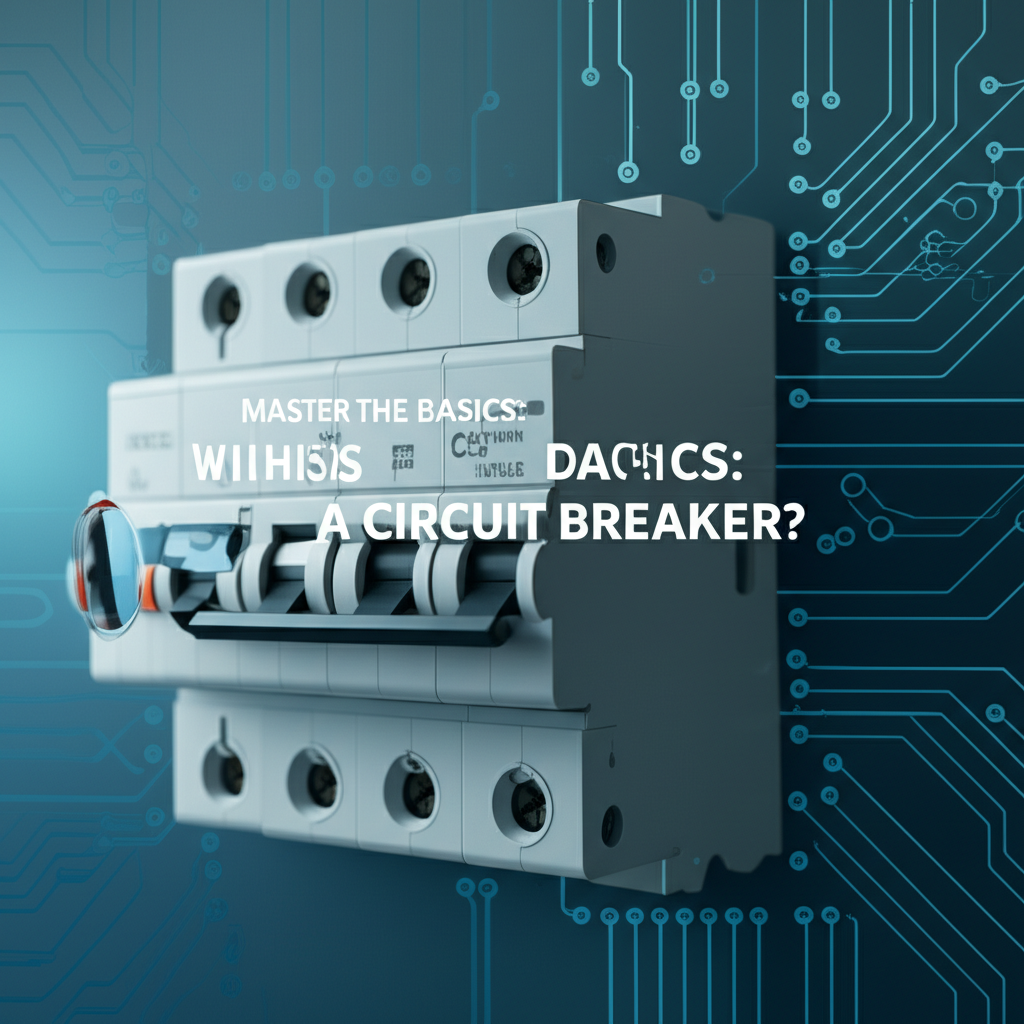


Circuit breakers are a crucial component in the world of electrical systems and power distribution. Understanding their functionality and how they work is essential for ensuring the safety and reliability of any electrical installation. This article will delve into the basics of what a circuit breaker is, how it functions, and its importance in various applications, including API management systems like APIPark.
Understanding Circuit Breakers
What is a Circuit Breaker?
A circuit breaker is an electrical switch designed to protect an electrical circuit from damage caused by excessive current flow. When an excessive current occurs, such as due to a short circuit or overload, the circuit breaker automatically trips, interrupting the circuit and preventing further damage to the circuit and electrical components.
Types of Circuit Breakers
There are several types of circuit breakers, each with its own design and application:
| Type | Description |
|---|---|
| Thermal | The most common type, using bimetallic strips that bend when heated by excessive current. |
| Magnetic | Uses a magnetic field to detect excessive current and trip the circuit breaker. |
| Residual | Designed to detect and trip when there is a leakage of current to ground. |
| Molded Case | Suitable for household and small commercial applications. |
| Air Circuit Breaker | Designed for industrial and commercial use, handling high current and voltages. |
How Does a Circuit Breaker Work?
When a circuit breaker is connected to a circuit, it typically operates in one of two modes: "closed" or "open."
- Closed Mode: The circuit is complete, and electrical current flows through the circuit without interruption.
- Open Mode: The circuit is interrupted, and no current flows.
When the current in the circuit exceeds a safe threshold, the circuit breaker trips to the open mode, thus breaking the circuit.
Importance of Circuit Breakers
Ensuring Safety
The primary role of a circuit breaker is to ensure electrical safety. By preventing excessive current from damaging the electrical system, circuit breakers minimize the risk of fires, electric shocks, and equipment damage.
Maximizing Equipment Lifespan
By limiting the current that can flow through a circuit, circuit breakers help to prevent damage to electrical components. This not only ensures safety but also maximizes the lifespan of the equipment.
Simplifying Maintenance
Circuit breakers make maintenance easier by isolating faulty circuits. This means that when a problem occurs, it can be addressed without affecting the rest of the electrical system.
APIPark is a high-performance AI gateway that allows you to securely access the most comprehensive LLM APIs globally on the APIPark platform, including OpenAI, Anthropic, Mistral, Llama2, Google Gemini, and more.Try APIPark now! 👇👇👇
Circuit Breakers in API Management: APIPark
While circuit breakers are commonly associated with electrical systems, they can also be used in the context of API management systems, such as APIPark. APIPark is an open-source AI gateway and API management platform designed to help developers and enterprises manage, integrate, and deploy AI and REST services with ease.
The Role of APIPark
APIPark acts as a circuit breaker for API management, ensuring that the flow of API requests is controlled and monitored. This helps to prevent system overload, improve performance, and enhance security.
How APIPark Functions as a Circuit Breaker
APIPark accomplishes its circuit-breaking function through several key features:
- Traffic Management: APIPark can control the amount of traffic that a particular API can handle, ensuring that no single API overloads the system.
- Load Balancing: The platform automatically distributes incoming API requests across multiple servers to prevent any single server from being overwhelmed.
- Failover Mechanism: In the event of a server failure, APIPark can automatically route requests to a backup server, minimizing downtime.
The Importance of APIPark
By acting as a circuit breaker, APIPark helps to ensure the stability and reliability of API services. This is crucial for businesses that rely on APIs to deliver services to their customers.
Conclusion
Understanding the basics of circuit breakers, both in electrical systems and in API management platforms like APIPark, is essential for maintaining safety, performance, and reliability. By incorporating circuit-breaking principles into API management, organizations can create more resilient and secure systems.
Table: Circuit Breaker Types and Their Applications
| Circuit Breaker Type | Application |
|---|---|
| Thermal Circuit Breaker | Household and small commercial appliances |
| Magnetic Circuit Breaker | Industrial and commercial power distribution |
| Residual Circuit Breaker | Protection against electric shock and fire |
| Molded Case Circuit Breaker | General-purpose protection for circuits up to 1000A |
| Air Circuit Breaker | Industrial and commercial applications up to 6300A |
FAQs
FAQ 1: What is the difference between a circuit breaker and a fuse?
A fuse is a passive device that melts and breaks the circuit when the current exceeds a certain threshold. In contrast, a circuit breaker is an active device that trips and interrupts the circuit when excessive current is detected.
FAQ 2: How do circuit breakers save energy?
Circuit breakers prevent electrical overloads, which can cause damage to equipment and increase energy consumption. By protecting the electrical system from damage, circuit breakers ensure that energy is used efficiently.
FAQ 3: Can a circuit breaker be reset after it trips?
Yes, most circuit breakers can be reset manually after they trip. However, if the circuit is still experiencing an overload, repeatedly resetting the circuit breaker can damage the breaker or other electrical components.
FAQ 4: What is the role of APIPark in preventing API overload?
APIPark uses traffic management, load balancing, and failover mechanisms to prevent any single API from overloading the system. This ensures that all APIs can function reliably and efficiently.
FAQ 5: Is APIPark suitable for small-scale API management?
Yes, APIPark is designed to be scalable and can be used for small-scale API management. However, it also offers advanced features that are suitable for large-scale enterprise applications.
🚀You can securely and efficiently call the OpenAI API on APIPark in just two steps:
Step 1: Deploy the APIPark AI gateway in 5 minutes.
APIPark is developed based on Golang, offering strong product performance and low development and maintenance costs. You can deploy APIPark with a single command line.
curl -sSO https://download.apipark.com/install/quick-start.sh; bash quick-start.sh

In my experience, you can see the successful deployment interface within 5 to 10 minutes. Then, you can log in to APIPark using your account.

Step 2: Call the OpenAI API.