Master Your AI Deployments with an AI Gateway
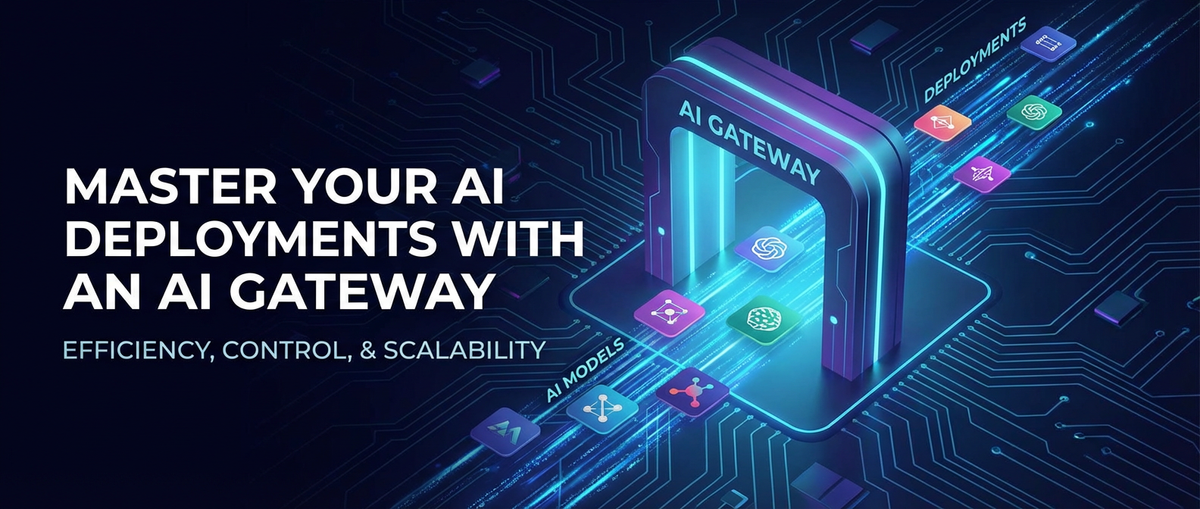


In an era increasingly defined by artificial intelligence, businesses across every sector are grappling with the immense potential and inherent complexities of integrating AI into their core operations. From automating customer service with advanced chatbots to powering data-driven insights with sophisticated machine learning models, AI is no longer a futuristic concept but a present-day imperative. Yet, the journey from AI aspiration to successful, scalable, and secure deployment is fraught with challenges. The sheer diversity of AI models, the ever-evolving landscape of foundational large language models (LLMs), and the critical need for robust management infrastructure can overwhelm even the most technologically adept organizations. This comprehensive guide delves into the pivotal role of an AI Gateway – a transformative technology that acts as the central nervous system for your AI ecosystem, streamlining integration, enhancing security, optimizing performance, and ultimately, enabling enterprises to truly master their AI deployments.
The proliferation of AI has been nothing short of revolutionary, fundamentally altering how businesses interact with data, make decisions, and serve their customers. What began as specialized machine learning tasks – image recognition, recommendation engines, predictive analytics – has now expanded into the realm of generative AI, spearheaded by powerful Large Language Models (LLMs) that can understand, generate, and process human-like text with unprecedented fluency. These advancements promise unparalleled efficiency gains, innovative product development, and deeper customer engagement. However, the promise of AI often collides with the practical realities of enterprise deployment. Organizations find themselves navigating a fragmented landscape of diverse AI models, each with its own API, data format, and operational requirements. This fragmentation can lead to integration nightmares, security vulnerabilities, uncontrolled costs, and a significant drain on development resources. The solution lies in a sophisticated architectural layer that can abstract away this complexity, providing a unified, secure, and efficient conduit for all AI interactions: the AI Gateway. This article will explore the multifaceted challenges of modern AI deployment and illustrate how a dedicated LLM Gateway or a comprehensive API Gateway tailored for AI can transform these obstacles into opportunities, ensuring that your enterprise not only adopts AI but thrives with it.
The Evolving Landscape of AI Deployments: From Niche Tools to Core Infrastructure
The trajectory of artificial intelligence within the enterprise has been one of accelerating complexity and expanding scope. A decade ago, AI adoption was primarily confined to specialized data science teams leveraging machine learning algorithms for specific, often isolated, tasks. These deployments typically involved custom-built models, managed in silos, and integrated through point-to-point connections. The operational overhead was significant, and scalability often remained a distant goal rather than an immediate necessity.
However, the rapid advancements in deep learning, coupled with the explosion of computational power and vast datasets, have fundamentally reshaped this paradigm. The emergence of pre-trained models, particularly those from major cloud providers and research institutions, democratized access to sophisticated AI capabilities. This era saw the rise of vision APIs, natural language processing (NLP) services, and advanced analytics tools becoming more accessible, though still requiring considerable effort for enterprise-wide integration. Organizations began to recognize AI not just as a tool, but as a potential core competency, driving strategic initiatives across various departments.
The latest wave, dominated by Large Language Models (LLMs) and other generative AI models, marks another seismic shift. Models like GPT-4, Llama, Claude, and Stable Diffusion offer unprecedented generative and analytical capabilities, from sophisticated content creation and code generation to complex problem-solving and nuanced data interpretation. This has ignited a widespread corporate interest in "AI-first" strategies, where AI isn't just an add-on but a foundational element of new products, services, and internal processes. The ambition now is to embed AI deeply into every layer of the technology stack, transforming enterprise applications from the ground up.
This evolution brings with it a new set of architectural challenges. Traditional monolithic applications are giving way to microservices architectures, where distributed services communicate through well-defined APIs. AI, particularly LLMs, fits naturally into this distributed paradigm, often consumed as a service. However, unlike traditional RESTful services, AI endpoints introduce unique requirements: varying inference latencies, diverse model types (text, image, audio), specialized input/output formats, and often, significant resource consumption. Managing this heterogeneous landscape effectively demands a robust and intelligent intermediary. Without a centralized control plane like an AI Gateway, enterprises risk spiraling into an unmanageable mesh of disparate AI integrations, hindering innovation, increasing operational costs, and exposing critical vulnerabilities. The journey from isolated AI projects to a fully integrated, enterprise-scale AI ecosystem critically depends on establishing this intelligent gateway infrastructure.
Navigating the Labyrinth: Core Challenges in Modern AI Deployment
While the potential of AI is boundless, its effective deployment in an enterprise setting presents a myriad of complex challenges. These obstacles can quickly derail promising AI initiatives if not addressed with a strategic and comprehensive approach. Understanding these pain points is the first step towards appreciating the indispensable role of an AI Gateway.
Model Heterogeneity & Interoperability Nightmare
The AI landscape is a vibrant, yet often chaotic, ecosystem. Businesses are rarely locked into a single AI model or provider. They might use OpenAI's GPT models for generative text, Anthropic's Claude for sensitive conversational AI, a custom-trained TensorFlow model for fraud detection, and a Hugging Face model for specific NLP tasks. Each of these models comes with its own API endpoints, authentication mechanisms, data formats, and rate limits. Integrating this diverse collection directly into applications creates a monumental integration burden. Developers spend countless hours writing model-specific code, adapting inputs, and parsing outputs, leading to fragmented codebases and increased maintenance costs. This heterogeneity directly impacts the agility of an organization, making it difficult to switch models, leverage new advancements, or even perform A/B testing between different AI solutions without significant refactoring. The dream of a plug-and-play AI architecture remains elusive without an intermediary layer to normalize these disparate interfaces.
Scalability, Performance, and Latency Requirements
AI models, especially large ones like LLMs, can be computationally intensive, requiring significant resources for inference. As AI applications scale, managing the influx of requests becomes a critical performance bottleneck. Direct calls to AI endpoints might experience unpredictable latencies, particularly with external third-party services that can suffer from congestion or rate limits. Furthermore, different applications may have vastly different performance requirements – a real-time customer service chatbot demands sub-second responses, while a batch processing job might tolerate longer latencies. Ensuring consistent performance, optimizing for low latency where needed, and distributing requests across multiple model instances or providers requires sophisticated traffic management capabilities. Without careful orchestration, peak loads can lead to service degradation, user frustration, and missed business opportunities, turning the promise of AI into a performance liability.
Fortifying the Gates: Security & Access Control Vulnerabilities
The data flowing into and out of AI models can be highly sensitive, ranging from personally identifiable information (PII) to proprietary business intelligence. Exposing AI endpoints directly to applications or external users introduces significant security risks. Unauthorized access can lead to data breaches, model manipulation, or denial-of-service attacks. Managing API keys, credentials, and access permissions across numerous AI services individually is not only cumbersome but also prone to human error, creating gaping security holes. Enterprises need fine-grained access control, robust authentication mechanisms (OAuth, API keys, JWT), and the ability to enforce security policies consistently across their entire AI surface. Without a centralized security enforcement point, maintaining a strong security posture for AI deployments becomes an unmanageable and high-risk endeavor.
The Cost Conundrum: Managing AI Consumption and Optimization
While AI offers immense value, it often comes with a significant price tag. Public cloud AI services and proprietary LLMs charge based on usage – tokens consumed, compute time, or number of requests. Without a clear mechanism to track, categorize, and control these costs, enterprises can quickly find their AI budgets spiraling out of control. Individual teams might unknowingly consume excessive resources, or inefficient prompts could lead to higher token usage. Furthermore, organizations often miss opportunities to optimize costs by routing requests to cheaper models for simpler tasks or by leveraging cached responses. The lack of transparent cost visibility and proactive control mechanisms turns AI from an investment into an unpredictable expense, hindering widespread adoption and strategic planning.
Observability & Monitoring: Blind Spots in the AI Pipeline
Effective AI operations require deep visibility into the performance, health, and usage patterns of models. When an AI-powered feature malfunctions or produces undesirable outputs, developers and operations teams need immediate access to detailed logs, performance metrics, and error traces to diagnose and resolve issues. Without a centralized logging and monitoring system, tracing problems across multiple AI services becomes a Herculean task, leading to prolonged downtime and customer dissatisfaction. Furthermore, understanding usage patterns – which models are most popular, which applications consume the most resources, and how latency varies over time – is crucial for capacity planning, cost optimization, and continuous improvement of AI services. A lack of comprehensive observability creates dangerous blind spots in the AI pipeline.
Version Control & Rollbacks: Managing the Pace of AI Evolution
AI models are not static; they are continuously updated, retrained, and improved. Managing different versions of models, enabling A/B testing for new iterations, and facilitating graceful rollbacks in case of issues are essential for maintaining stability and driving innovation. Directly managing these lifecycle events across numerous independent AI endpoints is complex and risky. A new model version might introduce breaking changes, or a faulty deployment could negatively impact production applications. The ability to deploy new versions gradually, monitor their performance, and quickly revert to a stable previous version if necessary, is a fundamental requirement for reliable AI operations. Without a structured approach, AI updates can become a source of instability rather than improvement.
Prompt Engineering & Management: The New Frontier of Interaction
With the rise of generative AI and LLMs, prompt engineering has emerged as a critical discipline. The quality and specificity of the prompt directly influence the output of an LLM. However, managing prompts across various applications, ensuring consistency, versioning changes to prompts, and even A/B testing different prompts for optimal performance presents a unique challenge. Directly embedding prompts within application code leads to rigidity and makes experimentation difficult. The need for a centralized, managed prompt library that can dynamically inject prompts based on context or user profiles is increasingly apparent, especially for organizations aiming for consistent brand voice or specific response criteria from their LLM-powered applications.
Data Governance & Compliance: Navigating Regulatory Complexities
AI systems frequently process sensitive data, making data governance and compliance paramount. Regulations like GDPR, HIPAA, CCPA, and industry-specific mandates impose strict requirements on how data is collected, stored, processed, and secured. Ensuring that AI interactions comply with these regulations – particularly regarding data residency, consent, and anonymization – is a complex undertaking. Directly integrating AI services might inadvertently expose sensitive data or violate data handling policies. A central control point is needed to enforce data masks, apply data transformations, and log access in a compliant manner, mitigating legal and reputational risks associated with improper data handling in AI.
Developer Experience (DX): Empowering Innovation, Not Entangling It
Ultimately, the success of AI adoption hinges on the ability of application developers to easily and efficiently integrate AI capabilities into their products. If integrating an AI model is a complex, error-prone, and time-consuming process, developers will be discouraged, slowing down innovation. Providing a consistent, well-documented, and simplified interface to all AI services, regardless of their underlying complexity, is crucial. A poor developer experience means developers spend more time wrestling with integrations than building innovative features, directly impacting the speed of product development and the overall return on AI investment.
These formidable challenges underscore the necessity of a sophisticated solution – one that can harmonize the cacophony of AI models into a symphony of controlled, secure, and optimized services. This solution is the AI Gateway.
Introducing the AI Gateway: The Central Nervous System for AI
In light of the complex challenges outlined above, enterprises are increasingly turning to a critical architectural component: the AI Gateway. More than just a traditional API Gateway, an AI Gateway is specifically designed to address the unique demands of AI and machine learning model deployments, acting as an intelligent intermediary that sits between your applications and your diverse AI models. It consolidates, orchestrates, secures, and optimizes all interactions with your AI ecosystem, transforming a chaotic landscape into a well-governed and efficient system.
At its core, an AI Gateway performs many functions typical of an advanced API Gateway, such as request routing, load balancing, authentication, and rate limiting. However, it extends these capabilities with AI-specific features that are essential for managing the distinct characteristics of machine learning models and particularly Large Language Models. Think of it as the control tower for your entire AI fleet, directing traffic, ensuring safety, and optimizing flight paths.
The primary role of an AI Gateway is to abstract away the underlying complexity of individual AI models. Instead of applications needing to understand the nuances of OpenAI's API, then Anthropic's, then a custom TensorFlow endpoint, they interact with a single, unified interface provided by the AI Gateway. This standardization dramatically simplifies application development and integration, allowing developers to focus on building features rather than wrestling with AI model specificities.
For instance, an LLM Gateway specifically focuses on the unique needs of large language models. This includes managing multiple LLM providers (e.g., GPT, Claude, Llama), handling token limits, enabling advanced prompt engineering, and providing fallbacks between different models based on cost, performance, or availability. It understands the context of language generation and processing, offering features that go beyond generic API management. While an LLM Gateway is a specialized form, the broader AI Gateway concept often encompasses these LLM-specific capabilities, recognizing the increasing prevalence and strategic importance of generative AI.
Beyond abstraction, an AI Gateway serves as a critical enforcement point for policies related to security, cost, and performance. It's where you define who can access which model, how much they can use it, and under what conditions. This centralized control is vital for maintaining governance, ensuring compliance, and optimizing resource utilization across the entire organization. By providing a single point of entry and exit for all AI requests, the AI Gateway becomes the indispensable hub for mastering your AI deployments.
Key Features and Benefits of an AI Gateway
The strategic adoption of an AI Gateway brings a multitude of benefits, directly addressing the formidable challenges of modern AI deployment. By consolidating control and enhancing visibility, it empowers organizations to leverage AI more effectively, securely, and cost-efficiently. Let's explore its key features and the profound impact they have.
Unified Access & Abstraction: Taming Model Heterogeneity
One of the most compelling advantages of an AI Gateway is its ability to provide a unified API interface for a diverse array of AI models, regardless of their underlying technology or provider. Instead of applications maintaining direct integrations with numerous individual model APIs – each with its unique request/response formats, authentication schemes, and specific parameters – they interact solely with the gateway. The AI Gateway then translates these standardized requests into the appropriate format for the target model and routes them accordingly.
This abstraction layer is a game-changer for developer experience and operational agility. Developers can use a consistent programming model, significantly reducing the learning curve and integration effort. For example, if you decide to switch from one LLM provider to another, or even introduce an internal custom model, the change can be managed at the gateway level without requiring modifications to every consuming application. This resilience ensures that your applications remain decoupled from the volatility of the AI model landscape. Furthermore, it allows for easy A/B testing of different models for the same task, enabling data-driven decisions on model selection based on performance, cost, or output quality without complex application refactoring.
A prime example of a platform excelling in this area is APIPark. APIPark offers the capability for Quick Integration of 100+ AI Models with a unified management system. This means that organizations can onboard a vast spectrum of AI models, from popular public services to specialized internal algorithms, all under a single operational umbrella. Crucially, APIPark provides a Unified API Format for AI Invocation. This standardization is powerful: it ensures that changes in underlying AI models or specific prompt variations do not ripple through to affect the application or microservices layer. By maintaining a consistent interface for invoking AI, APIPark significantly simplifies AI usage and drastically reduces maintenance costs, allowing developers to focus on innovation rather than integration complexities.
Advanced Security & Access Control: Fortifying the AI Perimeter
Security is paramount when dealing with sensitive data and proprietary AI models. An AI Gateway acts as a hardened perimeter, centralizing all security enforcement for AI interactions. It moves authentication and authorization logic out of individual applications and into a single, robust layer. This includes:
- Centralized Authentication: Supporting various authentication methods like OAuth 2.0, API keys, JSON Web Tokens (JWT), or even enterprise identity providers, ensuring that only authenticated users or services can access AI capabilities.
- Fine-Grained Authorization: Implementing role-based access control (RBAC) or attribute-based access control (ABAC) to define precisely who can access which specific AI models or endpoints, down to particular operations or data types. This prevents unauthorized users from accessing sensitive models or making costly calls.
- Threat Detection & Prevention: Many gateways include features like IP whitelisting/blacklisting, bot detection, and anomaly detection to identify and block malicious activity. They can protect against common API security threats such as injection attacks, excessive data exposure, and broken authentication.
- Data Masking & Transformation: The gateway can be configured to mask or redact sensitive data in requests or responses to comply with data privacy regulations, ensuring that PII or confidential information never reaches the AI model or is exposed inadvertently.
APIPark offers robust solutions in this domain. Its feature for API Resource Access Requires Approval ensures that callers must subscribe to an API and await administrator approval before they can invoke it. This proactive security measure prevents unauthorized API calls and significantly mitigates potential data breaches. Furthermore, APIPark enables the creation of multiple teams (tenants), each with Independent API and Access Permissions for Each Tenant. This multi-tenancy support provides distinct applications, data, user configurations, and security policies for different departments or clients, all while sharing underlying infrastructure. This not only enhances security by isolating access but also improves resource utilization and reduces operational costs in a segmented enterprise environment.
Scalability, Load Balancing & Performance Optimization: Ensuring Smooth AI Operations
The ability to handle fluctuating loads and deliver consistent performance is crucial for any production AI system. An AI Gateway is instrumental in ensuring optimal scalability and performance:
- Intelligent Load Balancing: Distributing incoming requests across multiple instances of an AI model, or even across different providers, to prevent bottlenecks and maximize throughput. This can be based on various algorithms, including round-robin, least connections, or even AI-aware routing based on model latency or cost.
- Caching: Caching common or predictable AI responses to reduce the number of direct calls to models, significantly decreasing latency and operational costs, especially for expensive LLMs where repeated prompts might yield identical results.
- Rate Limiting & Throttling: Protecting AI models from being overwhelmed by too many requests, which can degrade performance or incur excessive costs. The gateway enforces limits on the number of requests per user, application, or time period.
- Circuit Breaking & Retries: Implementing resiliency patterns to prevent cascading failures. If an AI model becomes unresponsive, the gateway can temporarily "break the circuit" to prevent further requests, and automatically retry failed requests after a delay, improving overall system reliability.
- Dynamic Routing: Based on real-time metrics, the gateway can dynamically route requests to the fastest, cheapest, or most available AI model, or even to different versions of a model for A/B testing.
With its Performance Rivaling Nginx, APIPark demonstrates exceptional capabilities in this area. With just an 8-core CPU and 8GB of memory, APIPark can achieve over 20,000 Transactions Per Second (TPS), highlighting its efficiency and robustness. This high-performance core, combined with its support for cluster deployment, ensures that APIPark can handle even the largest-scale traffic demands of enterprise AI applications, making real-time AI inference and high-volume usage a practical reality. Its End-to-End API Lifecycle Management also assists in regulating API management processes, managing traffic forwarding, load balancing, and versioning of published APIs, all contributing to superior performance and reliability.
Cost Management & Optimization: Gaining Financial Control Over AI
Uncontrolled AI consumption can quickly become a significant financial burden. An AI Gateway provides the necessary tools to gain granular control over AI-related expenditures:
- Usage Tracking & Metering: Accurately logging and categorizing every API call to an AI model, providing detailed metrics on who is using which model, how often, and what the associated costs are. This allows for chargebacks to specific departments or projects.
- Quota Enforcement: Setting quotas on API calls, token usage, or spending limits for specific users, teams, or applications, preventing unexpected cost overruns.
- Budget Alerts: Notifying administrators or team leads when usage approaches predefined thresholds, allowing for proactive intervention.
- Intelligent Routing for Cost Optimization: Routing requests to the most cost-effective AI model based on the complexity of the task. For example, a simple classification might go to a cheaper, smaller model, while a complex generation task goes to a premium LLM.
- Tiered Access: Offering different service levels for AI access, with varying costs and performance characteristics, allowing organizations to align AI usage with budget constraints.
APIPark contributes significantly to cost optimization through its comprehensive monitoring and analysis features. While its direct cost tracking is part of its unified management system, its Detailed API Call Logging and Powerful Data Analysis capabilities are crucial enablers. By recording every detail of each API call, businesses can quickly trace and troubleshoot issues, but more importantly, they can analyze historical call data to display long-term trends and performance changes. This insight is invaluable for understanding usage patterns, identifying inefficiencies, and making informed decisions to optimize AI spending. Businesses can perform preventive maintenance before issues occur, including cost-related issues stemming from inefficient model usage.
Observability, Monitoring & Analytics: Illuminating the AI Black Box
For reliable AI operations, visibility is key. An AI Gateway provides a single point for comprehensive monitoring and analytics across your entire AI landscape:
- Centralized Logging: Capturing detailed logs for every API request and response, including timestamps, request parameters, response data, latency, and error codes. This unified log stream simplifies debugging and auditing.
- Performance Metrics: Collecting and aggregating key performance indicators (KPIs) such as latency, throughput, error rates, and resource utilization for each AI model and API endpoint.
- Dashboards & Visualizations: Presenting real-time and historical data through intuitive dashboards, allowing operators and developers to quickly assess the health and performance of their AI services.
- Alerting & Anomaly Detection: Setting up alerts for predefined thresholds (e.g., high error rates, increased latency, excessive usage) or automatically detecting anomalous behavior that might indicate an issue or a security threat.
- Tracing: Integrating with distributed tracing systems to provide end-to-end visibility into the flow of a request through various services and AI models, making it easier to pinpoint the root cause of performance issues.
As mentioned, APIPark excels here with its Detailed API Call Logging, which records every minute detail of each API call. This feature is not just for troubleshooting but forms the foundation for deep operational insights. Complementing this is APIPark's Powerful Data Analysis capability, which analyzes this historical call data to display long-term trends and performance changes. This allows businesses to understand usage patterns, predict potential issues, and optimize their AI deployments proactively, turning raw data into actionable intelligence for system stability and data security.
Prompt Management & Versioning: Mastering the LLM Dialogue
For organizations heavily reliant on Large Language Models, the capabilities of an LLM Gateway (often integrated within an AI Gateway) for prompt management are invaluable. Prompts are the new interface for interacting with generative AI, and their effectiveness directly impacts the quality of AI output.
- Centralized Prompt Library: Storing, organizing, and versioning prompts in a central repository, separate from application code. This ensures consistency and simplifies updates.
- Dynamic Prompt Injection: Dynamically injecting prompts based on user context, application state, or A/B testing configurations.
- Prompt Engineering Workflow: Supporting a workflow for prompt creation, testing, and deployment, allowing prompt engineers to iterate and refine prompts without requiring code changes.
- Prompt Fallbacks & Chaining: Configuring fallbacks to alternative prompts or even different LLMs if a primary prompt fails or produces unsatisfactory results. Chaining allows for multi-stage prompting or combining prompts.
- Prompt Security: Preventing prompt injection attacks by validating and sanitizing user inputs before they are incorporated into prompts sent to the LLM.
APIPark directly addresses this with its unique feature: Prompt Encapsulation into REST API. This allows users to quickly combine AI models with custom prompts to create new, specialized APIs. For instance, an organization can encapsulate a specific LLM and a carefully crafted prompt for "sentiment analysis of customer reviews" into a dedicated REST API. This means that application developers can invoke a simple, well-defined API endpoint for sentiment analysis without needing to understand the underlying LLM or the intricacies of the prompt, making AI capabilities incredibly accessible and reusable across the enterprise.
API Lifecycle Management & Developer Experience (DX): Empowering the Builders
A holistic AI Gateway also provides tools for managing the entire lifecycle of AI APIs, from inception to deprecation, significantly enhancing the developer experience.
- Design & Publishing: Tools for defining API specifications (e.g., OpenAPI/Swagger), publishing them to a developer portal, and making them discoverable.
- Versioning: Managing multiple versions of an AI API concurrently, allowing applications to gradually migrate to newer versions while ensuring backward compatibility for older ones.
- Deprecation: Gracefully deprecating older AI APIs with clear communication to consuming applications.
- Developer Portal: A self-service portal where developers can browse available AI APIs, read documentation, subscribe to APIs, manage their API keys, and view usage statistics. This self-serve model accelerates innovation and reduces friction.
- Team Collaboration: Facilitating sharing of AI APIs and related resources across different departments and teams.
APIPark is built with comprehensive API lifecycle management in mind. It assists with managing the End-to-End API Lifecycle Management of APIs, encompassing design, publication, invocation, and decommission. This helps regulate API management processes, and importantly, manage traffic forwarding, load balancing, and versioning of published APIs. This structured approach ensures that AI APIs are well-governed and stable throughout their lifespan. Furthermore, APIPark enhances team collaboration and discovery through its API Service Sharing within Teams feature. This platform allows for the centralized display of all API services, making it remarkably easy for different departments and teams to find and use the required API services. This fostering of internal reusability and discoverability significantly boosts developer productivity and accelerates the adoption of AI-powered solutions across the enterprise.
Summary of APIPark's Key Features for Mastering AI Deployments
To further illustrate the comprehensive capabilities of a modern AI Gateway, particularly focusing on how APIPark delivers on these promises, let's look at a summary table:
| Feature Category | APIPark Capability | Benefit for AI Deployments |
|---|---|---|
| AI Model Integration | Quick Integration of 100+ AI Models, Unified API Format | Simplifies onboarding diverse AI models (100+), ensures application resilience to underlying model changes, and reduces integration effort. |
| API Development | Prompt Encapsulation into REST API | Enables rapid creation of new, specialized AI-powered APIs (e.g., sentiment analysis) from custom prompts, making AI accessible to all developers. |
| Lifecycle Management | End-to-End API Lifecycle Management | Governs API design, publishing, versioning, and retirement, ensuring stability, maintainability, and controlled evolution of AI services. |
| Security & Access | Independent API and Access Permissions for Each Tenant, Resource Access Requires Approval | Granular, multi-tenant control over API access, robust approval workflows, preventing unauthorized use and securing sensitive AI data. |
| Performance | Performance Rivaling Nginx | Achieves high throughput (20,000+ TPS) with minimal resources, supports cluster deployment for large-scale enterprise traffic and real-time AI inference. |
| Observability & Analytics | Detailed API Call Logging, Powerful Data Analysis | Provides deep, comprehensive insights into API usage, performance, errors, and cost, enabling proactive issue resolution, optimization, and strategic planning. |
| Collaboration | API Service Sharing within Teams | Centralizes API discovery and sharing, fostering reusability, reducing redundant efforts, and accelerating AI adoption across the organization. |
| Deployment Ease | Quick Deployment (5 mins with one command) | Simplifies the initial setup and operationalization of a robust AI Gateway, allowing teams to get started rapidly. |
The strategic decision to implement an AI Gateway like APIPark is not merely about addressing technical challenges; it's about establishing a resilient, scalable, and secure foundation for your enterprise's entire AI strategy. It transforms AI from a collection of disparate, complex tools into a streamlined, managed, and highly valuable asset.
The Synergy of AI Gateway, LLM Gateway, and API Gateway: A Holistic Perspective
The terms AI Gateway, LLM Gateway, and API Gateway are often used interchangeably, leading to some confusion. While there's significant overlap in their foundational functionalities, understanding their nuances and synergistic relationship is crucial for architecting a robust AI infrastructure.
At its most fundamental, an API Gateway is a core component of modern microservices architectures. It acts as a single entry point for all API requests from clients to a collection of backend services. Its primary responsibilities include request routing, load balancing, authentication, rate limiting, and request/response transformation. A traditional API Gateway is protocol-agnostic and primarily deals with RESTful or GraphQL APIs, focusing on the mechanics of distributed service communication. It's a general-purpose traffic cop for all your application programming interfaces.
An AI Gateway, as we've extensively discussed, builds upon the foundational principles of an API Gateway but introduces a specialized layer of intelligence and functionality tailored for the unique characteristics of AI and machine learning models. While it performs all the standard API Gateway functions, it adds specific capabilities like: * Model Abstraction: Normalizing diverse AI model APIs into a unified interface. * AI-aware Routing: Routing requests based on model capabilities, costs, or performance characteristics. * Cost Optimization: Tracking token usage, managing expenses for expensive models. * Model Governance: Centralized management of model versions, A/B testing, and fallbacks. * Prompt Management: For generative AI, managing and versioning prompts. * Data Security for AI: Implementing specific data masking or PII redaction for AI inference data.
Essentially, an AI Gateway is a specialized form of an API Gateway that understands the "language" and operational needs of AI. It extends the generic API management capabilities to specifically cater to the idiosyncrasies of AI models.
An LLM Gateway is a further specialization within the AI Gateway category, focusing exclusively on Large Language Models. Given the rapid proliferation and unique demands of LLMs (e.g., token management, prompt engineering, provider diversification, contextual awareness), many organizations find value in a gateway specifically optimized for these models. An LLM Gateway would prioritize features such as: * Token Usage Tracking and Cost Control: Fine-grained monitoring and control over token consumption, which is the primary cost driver for LLMs. * Advanced Prompt Engineering & Versioning: Dedicated features for managing, testing, and iterating on prompts. * Context Management: Handling conversational context for multi-turn dialogues. * Model Fallback Strategies: Automatically switching between different LLMs (e.g., GPT, Claude, custom open-source) based on availability, cost, or specific task requirements. * Guardrails and Safety Filters: Implementing content moderation and safety checks specific to generative AI outputs.
The synergy is clear: an organization building an AI-first strategy will likely start with or evolve towards an AI Gateway. This gateway will naturally incorporate the core functionalities of an API Gateway to handle all its AI service communication. As LLMs become more central, the AI Gateway will increasingly adopt or provide dedicated LLM Gateway features to manage these powerful generative models effectively.
A comprehensive solution often combines the best of all worlds. A robust AI Gateway will inherit the reliability, security, and scalability patterns of a mature API Gateway, while integrating the AI-specific intelligence required for model abstraction, cost optimization, and governance. Furthermore, it will likely offer specialized modules or configurations that serve as an effective LLM Gateway, providing deep control over large language model interactions.
For instance, APIPark exemplifies this synergy. While it is branded as an AI Gateway and API Management Platform, its features clearly demonstrate a comprehensive approach. Its ability to integrate 100+ AI models and provide a unified API format reflects its role as an AI Gateway, abstracting heterogeneity. The "Prompt Encapsulation into REST API" feature directly serves the needs typically associated with an LLM Gateway, streamlining the use of generative AI. Concurrently, its "End-to-End API Lifecycle Management," performance rivaling Nginx, and detailed logging capabilities embody the robust functionalities expected of a top-tier API Gateway. Therefore, when evaluating solutions, look for platforms that offer this integrated, multi-faceted approach, recognizing that the demands of AI deployments span the entire spectrum from generic API management to highly specialized LLM orchestration.
APIPark is a high-performance AI gateway that allows you to securely access the most comprehensive LLM APIs globally on the APIPark platform, including OpenAI, Anthropic, Mistral, Llama2, Google Gemini, and more.Try APIPark now! 👇👇👇
Implementing an AI Gateway: Best Practices for Success
Adopting an AI Gateway is a strategic move that can dramatically improve an organization's AI capabilities. However, successful implementation requires careful planning and adherence to best practices to ensure smooth integration, optimal performance, and long-term value.
1. Conduct a Thorough Assessment of Your Current AI Landscape and Future Needs
Before selecting or deploying any AI Gateway, gain a deep understanding of your existing AI ecosystem. * Inventory your AI models: Catalog all AI models currently in use or planned, including their types (ML, LLM, vision), providers (OpenAI, Anthropic, custom), APIs, and specific requirements. * Identify consuming applications: Understand which applications or services interact with AI models and their specific integration patterns and performance demands. * Analyze traffic patterns: Quantify current and projected AI request volumes, latency requirements, and peak loads. * Evaluate security posture: Review existing authentication, authorization, and data governance practices around AI. * Assess cost structures: Understand current AI spending and identify areas for potential optimization. * Define future requirements: Envision your AI roadmap for the next 3-5 years. Do you plan to expand LLM usage? Integrate more diverse models? Support internal AI development teams? The gateway should be flexible enough to evolve with your strategy.
2. Choose the Right AI Gateway Solution: Open-Source vs. Commercial
The market offers a range of AI Gateway solutions, from fully open-source projects to commercial platforms with varying feature sets. * Open-Source: Solutions like APIPark, Kong, or Apache APISIX with AI plugins offer flexibility, community support, and often lower initial costs. They allow for deep customization and avoid vendor lock-in. However, they typically require more internal expertise for deployment, maintenance, and support. * Commercial Products: These often provide out-of-the-box advanced features, dedicated vendor support, and easier deployment. They might be suitable for organizations prioritizing ease of use and professional support over deep customization. * Hybrid Approaches: Some open-source projects, like APIPark, also offer commercial versions with advanced features and professional technical support, providing a balance of flexibility and enterprise-grade backing. * Consider key features: Prioritize features critical to your assessment (e.g., specific LLM support, cost management, multi-tenancy, performance). Don't overpay for features you don't need, but also don't compromise on critical capabilities. * Scalability and Performance: Ensure the chosen gateway can handle your projected traffic volumes with acceptable latency. Look for benchmarks and support for cluster deployment. As highlighted, APIPark's Performance Rivaling Nginx with 20,000+ TPS and cluster support makes it a strong contender for demanding environments.
3. Adopt a Phased Rollout Strategy
Deploying an AI Gateway should be an iterative process, not a big-bang launch. * Start Small: Begin with a pilot project or a non-critical AI integration to validate the gateway's functionality, performance, and operational fit. * Iterate and Expand: Gradually onboard more AI models and applications, learning from each phase. This allows your team to gain experience and fine-tune configurations. * Monitor and Optimize: Continuously monitor the gateway's performance, resource utilization, and any impact on downstream applications. Use tools like APIPark's Detailed API Call Logging and Powerful Data Analysis to gather insights and identify areas for optimization. * Feedback Loop: Establish a feedback loop with developers and operations teams to understand their experience and address any pain points promptly.
4. Prioritize Security and Access Control from Day One
Given the sensitive nature of AI data and models, security cannot be an afterthought. * Centralize Policy Enforcement: Use the AI Gateway as the single point for all authentication and authorization logic related to AI. * Implement Least Privilege: Grant only the necessary permissions for users and applications to interact with AI models. Leverage features like APIPark's Independent API and Access Permissions for Each Tenant and API Resource Access Requires Approval. * Data Protection: Configure the gateway to enforce data masking, encryption, or PII redaction as required by compliance mandates. * Regular Audits: Periodically review access policies and gateway configurations to ensure they remain secure and aligned with organizational policies.
5. Establish Comprehensive Monitoring, Logging, and Alerting
Visibility is crucial for operational stability and quick problem resolution. * Unified Observability: Ensure the AI Gateway integrates with your existing logging, monitoring, and tracing infrastructure. * Granular Metrics: Collect detailed metrics on request counts, latency, error rates, token usage, and resource consumption per model, per application, and per user. * Proactive Alerts: Configure alerts for critical events, such as high error rates, unusual latency spikes, or unexpected cost increases, to enable immediate response. APIPark's data analysis capabilities are key here for proactive insights.
6. Foster Collaboration Across Teams
Successful AI Gateway implementation requires close collaboration between various stakeholders: * AI Engineers/Data Scientists: To understand model specifics, performance characteristics, and prompt requirements. * Application Developers: To ensure a smooth developer experience and effective API integration. * Operations/DevOps Teams: For deployment, monitoring, maintenance, and infrastructure management. * Security Teams: To define and enforce security policies. * Product Owners/Business Managers: To understand cost implications and align gateway capabilities with business goals. * Leverage Collaboration Features: Platforms like APIPark, with its API Service Sharing within Teams, can significantly streamline collaboration and API discoverability across departments.
7. Plan for Cost Management and Optimization
Actively manage AI costs to ensure sustainability. * Implement Quotas and Throttling: Set limits on usage per team or application to control spending. * Monitor Usage: Regularly review cost reports generated from gateway logs. * Strategic Routing: Configure the gateway to route requests to more cost-effective models where appropriate, or leverage caching for frequently asked prompts. * Budget Alerts: Set up automated alerts for when spending approaches predefined thresholds.
By following these best practices, enterprises can successfully implement an AI Gateway, transforming their complex AI landscape into a streamlined, secure, and highly efficient ecosystem that accelerates innovation and delivers tangible business value.
Case Studies & Scenarios: Where an AI Gateway Shines Brightest
The true power of an AI Gateway becomes evident when applied to real-world enterprise scenarios. It solves critical problems that traditional API management or direct integrations simply cannot handle efficiently. Let's explore some compelling use cases where an AI Gateway proves indispensable.
1. Enterprise-Wide AI Integration and Centralized Governance
Scenario: A large financial institution wants to integrate various AI capabilities across multiple departments. The fraud detection team uses a custom ML model, the customer service department uses an external LLM for chatbot responses, and the marketing team employs a third-party vision AI for content analysis. Each team has its own security and billing requirements.
How an AI Gateway Helps: * Unified Access: The AI Gateway provides a single, consistent API endpoint for all these disparate AI services. The marketing team doesn't need to know the specifics of the fraud model's API, nor does customer service need to worry about the vision API's authentication. They all interact with the gateway. * Centralized Security: The gateway enforces enterprise-wide authentication and authorization. The security team can define granular access policies – e.g., only the fraud team's applications can invoke the fraud detection model, while customer service apps have access to the LLM within their specific usage quotas. APIPark with its Independent API and Access Permissions for Each Tenant and API Resource Access Requires Approval features is perfectly suited for this, ensuring strict governance and preventing cross-departmental unauthorized access. * Cost Visibility: The finance department can track AI consumption per department or project directly from the gateway's logs and analytics, enabling accurate chargebacks and budget management. This detailed logging, as provided by APIPark's Detailed API Call Logging and Powerful Data Analysis, is critical for financial oversight.
2. Implementing a Multi-Model Strategy for Optimal Performance and Cost
Scenario: An e-commerce platform uses an LLM for product descriptions. For basic inquiries (e.g., "What is a chair?"), a cheaper, smaller LLM is sufficient. However, for complex, nuanced descriptions or creative writing, a more powerful and expensive LLM (e.g., GPT-4) is required. The platform also wants a fallback mechanism if the primary LLM is unavailable.
How an AI Gateway Helps: * Intelligent Routing: The AI Gateway can analyze the incoming request (e.g., prompt length, complexity score, specific keywords) and dynamically route it to the most appropriate model. Simple queries go to the cheaper model, while complex ones are directed to the premium model. * Cost Optimization: This intelligent routing directly translates to significant cost savings by avoiding unnecessary calls to expensive models. * Resilience and Fallback: If the primary, high-tier LLM experiences an outage or hits its rate limit, the gateway can automatically reroute the request to a secondary, perhaps slightly less capable but more available, LLM, ensuring service continuity. * A/B Testing: The gateway can split traffic between two different LLM versions or prompt strategies to evaluate their performance and cost-effectiveness in a controlled manner, allowing the platform to continuously optimize its AI output.
3. Rapid Development of AI-Powered Applications
Scenario: A software development company wants to embed various AI functionalities – sentiment analysis, language translation, text summarization, image tagging – into its suite of products. Developers are from diverse backgrounds, some with little AI expertise.
How an AI Gateway Helps: * Simplified Integration: The AI Gateway provides a unified, easy-to-use API for all these AI services. Developers don't need to learn individual model APIs; they just call the gateway's standardized endpoint. This accelerates development significantly. * Prompt Encapsulation: For generative AI tasks, features like APIPark's Prompt Encapsulation into REST API allow AI engineers to pre-define specific prompts for common tasks (e.g., "summarize this article for a 10-year-old") and expose them as simple REST APIs. Developers then call GET /summarize?article_id=X&audience=child instead of crafting complex LLM prompts. * Accelerated Innovation: By abstracting complexity, developers can focus on building innovative application features rather than spending time on AI model integration, leading to faster time-to-market for AI-enabled products. * API Service Sharing: With APIPark's API Service Sharing within Teams, developers can easily discover and reuse pre-built AI APIs, fostering internal collaboration and reducing redundant efforts across projects.
4. Managed AI Services for Internal Teams and External Partners
Scenario: A large enterprise wants to provide internal development teams and external partners with self-service access to its curated set of AI models, ensuring proper usage, security, and governance.
How an AI Gateway Helps: * Developer Portal: The AI Gateway can host a developer portal where teams can browse available AI APIs, view documentation, subscribe to services, and manage their API keys. This self-service model empowers teams and reduces administrative overhead. * Multi-Tenancy: The gateway supports multi-tenancy, allowing each internal team or external partner to have their own isolated environment, API keys, quotas, and access permissions. APIPark's support for Independent API and Access Permissions for Each Tenant is crucial here, ensuring each "tenant" operates securely and independently while sharing the underlying AI infrastructure. * Auditing and Compliance: All AI API calls are logged and auditable, which is vital for regulatory compliance and internal security audits. APIPark's Detailed API Call Logging offers the necessary granular data. * Version Management: The gateway allows for smooth versioning of AI APIs, ensuring that internal and external consumers can migrate to newer models at their own pace without breaking existing integrations.
In each of these scenarios, the AI Gateway (which often includes LLM Gateway capabilities and builds on API Gateway fundamentals) emerges as a vital piece of infrastructure, transforming AI deployment from a challenging, ad-hoc process into a streamlined, secure, and strategically managed capability. Solutions like APIPark provide the robust, open-source foundation to make these enterprise visions a reality, offering not just a gateway but a comprehensive platform for AI and API lifecycle governance.
Deep Dive into APIPark: An Open-Source Solution for AI Governance
In the dynamic landscape of AI and API management, finding a robust, flexible, and comprehensive solution is paramount for enterprises aiming to truly master their AI deployments. This is where APIPark stands out as a powerful open-source AI Gateway and API Management Platform. Released under the Apache 2.0 license, APIPark is designed to tackle the multifaceted challenges we've discussed, providing an all-in-one platform for managing, integrating, and deploying both AI and traditional REST services with remarkable ease and efficiency.
APIPark is not just another gateway; it's a strategic infrastructure component built to streamline the entire API lifecycle, with a keen focus on the emerging demands of artificial intelligence. Its comprehensive feature set directly addresses the complexities of model heterogeneity, security, performance, cost control, and developer experience, making it an ideal choice for organizations at any stage of their AI journey.
One of APIPark's most compelling capabilities is its Quick Integration of 100+ AI Models. This feature directly confronts the model heterogeneity challenge. Imagine an enterprise needing to interact with a multitude of AI services—OpenAI, Anthropic, Google AI, custom on-premise models, and more. Each has its own distinct API, authentication methods, and data formats. APIPark abstracts this complexity, allowing organizations to integrate a vast array of AI models under a single, unified management system. This system not only streamlines authentication but also provides a centralized mechanism for cost tracking, giving businesses granular visibility into their AI expenditures.
Complementing this broad integration is APIPark's Unified API Format for AI Invocation. This is a game-changer for maintaining application resilience and reducing maintenance overhead. By standardizing the request data format across all integrated AI models, APIPark ensures that any changes in the underlying AI models, or even subtle adjustments to prompts, do not necessitate modifications at the application or microservices layer. This decoupling means developers can rely on a consistent interface, simplifying AI usage, accelerating development cycles, and significantly driving down long-term maintenance costs.
The rise of generative AI has underscored the importance of prompt engineering. APIPark innovates here with its Prompt Encapsulation into REST API. This powerful feature allows users to rapidly combine an AI model with a custom-designed prompt to create new, highly specialized APIs. For instance, a data scientist can craft a specific prompt for advanced sentiment analysis, a translation task optimized for technical jargon, or a data analysis query. This prompt, combined with a chosen LLM, can then be exposed as a simple, consumable REST API. This empowers application developers to leverage sophisticated AI capabilities without needing deep expertise in prompt engineering or the underlying AI model, democratizing AI access across the enterprise.
Beyond AI-specific features, APIPark provides robust End-to-End API Lifecycle Management. It assists organizations in governing every stage of an API's existence, from its initial design and subsequent publication to its invocation and eventual decommission. This comprehensive management includes regulating API processes, intelligently managing traffic forwarding, ensuring effective load balancing, and handling the versioning of published APIs. Such rigorous lifecycle governance is crucial for maintaining the stability, security, and scalability of all AI and REST services.
For organizations with multiple teams or departments, secure and efficient access management is vital. APIPark enables the creation of multiple teams, or "tenants," each operating with Independent API and Access Permissions for Each Tenant. This multi-tenancy capability means that distinct applications, data, user configurations, and security policies can be maintained for different departments or client groups, all while sharing the underlying application and infrastructure resources. This isolation enhances security, streamlines administrative tasks, and optimizes resource utilization, translating into reduced operational costs. Further bolstering security, APIPark allows for the activation of API Resource Access Requires Approval features. This ensures that any caller must formally subscribe to an API and receive administrator approval before they can invoke it. This preventative measure is critical for safeguarding sensitive data and preventing unauthorized API calls or potential data breaches.
Performance is a non-negotiable requirement for enterprise-grade solutions. APIPark delivers here, with Performance Rivaling Nginx. Achieving over 20,000 Transactions Per Second (TPS) with a modest 8-core CPU and 8GB of memory, APIPark demonstrates exceptional efficiency. Its support for cluster deployment further ensures that it can seamlessly handle large-scale traffic, making it suitable for even the most demanding real-time AI inference workloads.
Observability and analytics are foundational for operational excellence. APIPark provides Detailed API Call Logging, recording every granular detail of each API call. This rich dataset is invaluable for quickly tracing and troubleshooting issues, ensuring system stability, and bolstering data security. Complementing this, APIPark offers Powerful Data Analysis capabilities. By analyzing historical call data, it can display long-term trends and performance changes, offering businesses the insights needed for proactive decision-making and preventive maintenance, often before issues even manifest.
Deployment of such a sophisticated platform is often a barrier, but APIPark simplifies this considerably. It boasts an incredibly quick deployment process, achievable in just 5 minutes with a single command line:
curl -sSO https://download.apipark.com/install/quick-start.sh; bash quick-start.sh
This ease of deployment significantly reduces the time-to-value for organizations looking to rapidly implement robust AI and API governance.
While APIPark's open-source product meets the essential API resource needs of startups and many growing businesses, it also offers a commercial version. This commercial offering includes advanced features and professional technical support, catering to the specialized and demanding requirements of leading enterprises.
APIPark is an open-source initiative launched by Eolink, a prominent company in China's API lifecycle governance solution space. Eolink's extensive experience, providing professional API development management, automated testing, monitoring, and gateway operation products to over 100,000 companies worldwide, underpins APIPark's robust design and functionality. Eolink's active involvement in the open-source ecosystem, serving tens of millions of professional developers globally, reinforces APIPark's commitment to community-driven innovation and excellence.
The value proposition of APIPark to enterprises is clear and compelling: its powerful API governance solution enhances efficiency for developers, strengthens security for operations personnel, and optimizes data utilization for business managers. By providing a unified, secure, and performant platform for managing AI and REST APIs, APIPark empowers organizations to confidently navigate the complexities of modern digital ecosystems and unlock the full potential of their AI investments.
The Future of AI Gateways: Intelligent Orchestration and Beyond
The journey of AI Gateways is far from over; it's an evolving field that will continue to adapt to the accelerating pace of AI innovation. As AI models become more sophisticated and deeply embedded in enterprise operations, the capabilities of AI Gateways will also expand, moving towards more intelligent orchestration and proactive management.
One significant area of evolution will be More Intelligent Routing and Self-Optimization. Future AI Gateways will likely incorporate advanced machine learning algorithms within themselves to dynamically optimize request routing. This could involve semantic routing, where the gateway understands the intent of a request and routes it to the most semantically appropriate model, even if that model wasn't explicitly specified. Self-optimizing gateways could learn from past performance, cost metrics, and user feedback to autonomously adjust routing strategies, prompt variations, and caching policies in real-time to achieve predefined goals (e.g., lowest cost, lowest latency, highest quality output). This proactive, AI-driven management will drastically reduce manual configuration and enhance efficiency.
Enhanced Security through AI-Powered Threat Detection is another critical frontier. Current AI Gateways offer robust security features, but the next generation will leverage AI itself to detect and mitigate threats. This could include anomaly detection for unusual usage patterns that indicate a compromised API key, real-time analysis of prompt injections, or even behavioral analytics to identify malicious actors. By using AI to secure AI, gateways will provide an even more resilient shield against sophisticated cyber threats, including those specific to generative AI like prompt leaking or adversarial attacks.
The integration of AI Gateways with broader MLOps Pipelines will become seamless. As organizations mature their machine learning operations, the gateway will not just be a deployment target but an integral part of the continuous integration and continuous deployment (CI/CD) of AI models. It will work hand-in-hand with model registries, feature stores, and experiment tracking platforms, facilitating automated A/B testing of new model versions through dynamic routing, seamless rollbacks, and real-time performance monitoring directly integrated into MLOps dashboards. This tight coupling will streamline the entire lifecycle from model development to production deployment and monitoring.
Furthermore, with the rise of edge computing, Edge AI Gateway Considerations will become more pronounced. Deploying AI models closer to the data source, on devices or local servers, reduces latency and bandwidth usage, and enhances privacy. AI Gateways will need to adapt to manage and orchestrate these distributed edge AI deployments, providing centralized control over models running in diverse, often resource-constrained, environments. This includes managing model synchronization, version updates, and data aggregation from numerous edge locations back to central analytics platforms.
Finally, as AI models become collaborative, support for Federated Learning and Distributed AI will emerge. AI Gateways could play a role in orchestrating training data exchange or model updates in federated learning scenarios, ensuring data privacy and secure communication between distributed data sources without centralizing raw data. This would allow organizations to leverage AI insights from sensitive datasets across multiple entities while adhering to strict privacy regulations.
The future of the AI Gateway is one of increasing intelligence, deeper integration into the MLOps ecosystem, and expanded reach into distributed and edge environments. It will remain at the forefront of enabling enterprises to not just deploy AI, but to govern, optimize, and innovate with it at an unprecedented scale and sophistication, truly mastering the AI frontier.
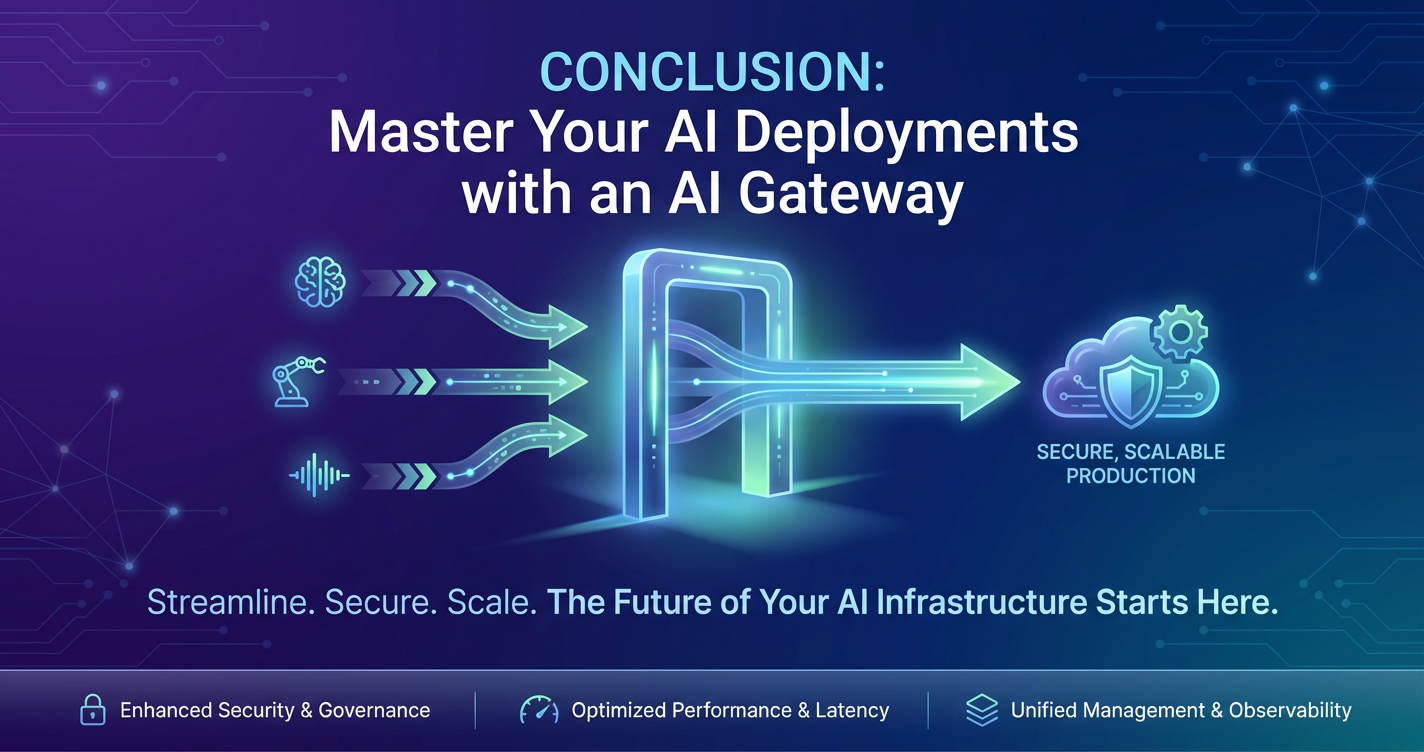
Conclusion: Mastering the AI Frontier with a Strategic AI Gateway
The rapid evolution of artificial intelligence, particularly the transformative power of Large Language Models, has ushered in an era of unprecedented opportunity for enterprises. Yet, this promise comes with a complex set of challenges: the intricate diversity of AI models, the demanding requirements for scalability and security, the critical need for cost optimization, and the complexities of managing dynamic AI-specific nuances like prompt engineering. Navigating this intricate landscape requires more than just isolated integrations; it demands a strategic, unified approach.
This is where the AI Gateway emerges as an indispensable architectural component. By acting as the central nervous system for your entire AI ecosystem, an AI Gateway abstracts away complexity, standardizes access, enforces robust security policies, optimizes performance, and provides invaluable insights into usage and costs. Whether it's an LLM Gateway specifically fine-tuned for generative models or a broader AI Gateway encompassing all forms of machine learning, this intermediary layer is the key to transforming chaotic AI deployments into a streamlined, secure, and efficient operation. It empowers developers to innovate faster, enables operations teams to maintain stability, and provides business leaders with the transparency needed to make informed, data-driven decisions.
Solutions like APIPark exemplify this transformative power. As an open-source AI Gateway and API Management Platform, APIPark directly addresses the core challenges by offering quick integration of diverse AI models, a unified API format, prompt encapsulation, end-to-end API lifecycle management, robust security features like access approval and multi-tenancy, and high-performance capabilities rivaling Nginx. Its detailed logging and powerful data analytics provide the critical visibility necessary for proactive management and continuous optimization, ensuring that AI investments yield maximum returns.
In the journey to become an AI-driven enterprise, simply adopting AI models is not enough. The true mastery of AI deployments lies in the ability to govern, scale, secure, and optimize these powerful technologies effectively. A well-implemented AI Gateway provides the foundational infrastructure to achieve precisely this, ensuring that your organization can confidently navigate the complexities of the AI frontier, unlock its full potential, and maintain a competitive edge in an increasingly intelligent world.
Frequently Asked Questions (FAQs)
1. What is the fundamental difference between an AI Gateway and a traditional API Gateway? While both act as an intermediary for API traffic, an AI Gateway is a specialized form of an API Gateway designed specifically for AI and machine learning models. A traditional API Gateway focuses on generic request routing, authentication, and rate limiting for any API. An AI Gateway extends these capabilities with AI-specific features such as model abstraction (unifying diverse AI model APIs), intelligent routing based on model capabilities or costs, token usage tracking for LLMs, prompt management, and AI-specific security guardrails. Essentially, an AI Gateway understands the unique operational and governance needs of AI models, whereas a traditional API Gateway is protocol-agnostic.
2. Why do I need an AI Gateway if I only use one LLM (Large Language Model) provider? Even with a single LLM provider, an AI Gateway (functioning as an LLM Gateway) offers significant advantages. It centralizes authentication and access control, preventing direct exposure of API keys in applications. It provides granular usage tracking for cost management and allows for setting quotas or rate limits to prevent budget overruns. Moreover, it enables prompt versioning and experimentation, letting you refine and test prompts without changing application code. If you later decide to use another LLM or a custom model, the gateway provides the flexibility to integrate new models without refactoring your existing applications. It establishes a resilient and future-proof foundation for your LLM interactions.
3. How does an AI Gateway help with cost management for AI services? An AI Gateway provides comprehensive visibility and control over AI-related expenditures. It accurately tracks and logs every API call, including parameters relevant to cost (e.g., token usage for LLMs, compute time for other models). This enables organizations to: * Monitor Usage: Get detailed reports on who is using which model and how much. * Set Quotas: Enforce limits on API calls or token consumption per user, team, or application. * Implement Budget Alerts: Receive notifications when spending approaches predefined thresholds. * Optimize Routing: Dynamically route requests to the most cost-effective model for a given task (e.g., a cheaper, smaller model for simple queries, a premium model for complex ones). This granular control helps prevent unexpected cost overruns and optimizes resource allocation.
4. Can an AI Gateway support custom-trained, internal AI models in addition to third-party services? Yes, absolutely. A robust AI Gateway is designed to integrate a wide variety of AI models, including both external third-party services (like OpenAI, Anthropic, Google AI) and internally custom-trained models deployed on your private infrastructure. The gateway's core function of model abstraction means it can normalize the interfaces of these diverse models, presenting a unified API to your consuming applications. This allows organizations to seamlessly blend proprietary AI capabilities with public services, ensuring consistent management, security, and performance across their entire AI portfolio. APIPark specifically highlights its capability for "Quick Integration of 100+ AI Models," emphasizing its flexibility for both public and private AI resources.
5. Is APIPark suitable for small startups or only large enterprises? APIPark offers benefits for organizations of all sizes. As an open-source platform under the Apache 2.0 license, it provides a powerful, free-to-use solution that can meet the essential API and AI resource needs of startups and growing businesses, allowing them to implement robust governance from the start without significant initial investment. Its quick 5-minute deployment further aids rapid adoption. For larger enterprises with more complex demands, APIPark also offers a commercial version with advanced features and professional technical support. This tiered approach ensures that both startups seeking cost-effective, flexible solutions and large enterprises requiring enterprise-grade features and support can find value in APIPark's comprehensive platform.
🚀You can securely and efficiently call the OpenAI API on APIPark in just two steps:
Step 1: Deploy the APIPark AI gateway in 5 minutes.
APIPark is developed based on Golang, offering strong product performance and low development and maintenance costs. You can deploy APIPark with a single command line.
curl -sSO https://download.apipark.com/install/quick-start.sh; bash quick-start.sh

In my experience, you can see the successful deployment interface within 5 to 10 minutes. Then, you can log in to APIPark using your account.

Step 2: Call the OpenAI API.