Mastering App Mesh GatewayRoute on K8s
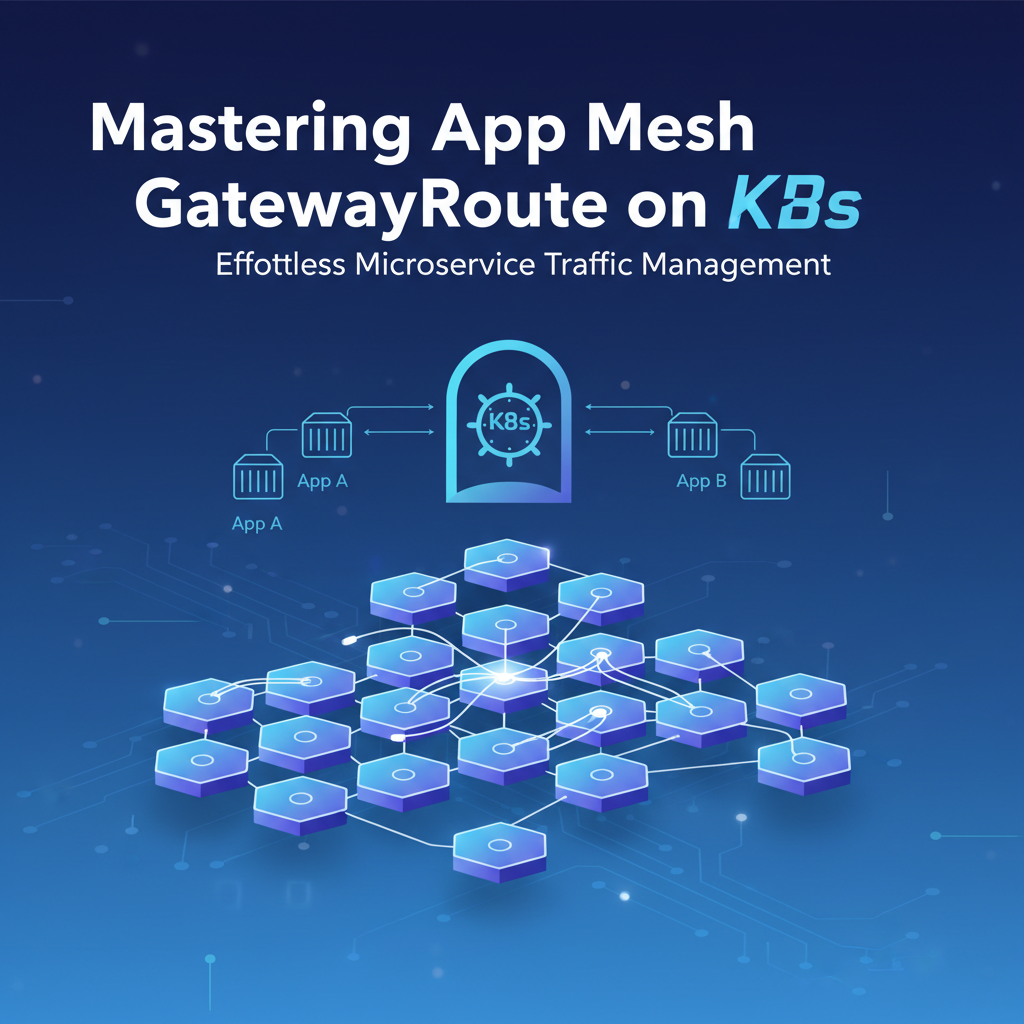


In the rapidly evolving landscape of microservices, managing inter-service communication and external ingress has become a paramount challenge. As applications decouple into smaller, independently deployable units, the complexity of network policies, traffic routing, and observability grows exponentially. This is where the concept of a service mesh, and specifically AWS App Mesh, emerges as a powerful solution, offering a dedicated infrastructure layer for handling service-to-service communication. Within App Mesh, one component stands out for its crucial role in orchestrating how external traffic enters your mesh-enabled applications: the GatewayRoute.
This comprehensive guide delves deep into the intricacies of mastering GatewayRoute on Kubernetes (K8s), providing an exhaustive exploration of its architecture, configuration, practical applications, and best practices. We will uncover how GatewayRoute, in conjunction with a VirtualGateway, acts as the sophisticated entry point, translating the raw demands of the outside world into the structured language of your mesh services. By the end of this journey, you will possess the knowledge to design, implement, and optimize sophisticated traffic management strategies, unlocking the full potential of your cloud-native applications.
The Evolution of Microservices and the Imperative for a Service Mesh
The journey from monolithic applications to microservices has been driven by the promise of agility, scalability, and resilience. Monoliths, while simpler to deploy initially, often become bottlenecks as they grow, hindering continuous innovation and independent scaling of components. Microservices, by breaking down an application into a collection of small, autonomous services, address these challenges. Each service can be developed, deployed, and scaled independently, using technologies best suited for its specific function.
However, this architectural shift introduces a new set of complexities. Communication between dozens, hundreds, or even thousands of microservices can quickly become a distributed systems nightmare. Challenges include:
- Traffic Management: How do you route requests efficiently between services, manage load balancing, and implement advanced deployment strategies like canary releases or blue/green deployments?
- Observability: How do you monitor the health and performance of individual services, trace requests across multiple hops, and diagnose failures in a distributed system?
- Security: How do you secure inter-service communication, enforce access policies, and ensure data integrity across a sprawling network?
- Resilience: How do you make your application tolerant to failures, implementing retries, timeouts, circuit breakers, and fault injection mechanisms?
These operational concerns often fall on application developers, leading to a proliferation of boilerplate code in each service or the development of bespoke libraries. This not only distracts developers from business logic but also creates inconsistencies and maintenance overhead. This is precisely the problem a service mesh aims to solve.
A service mesh is a dedicated infrastructure layer for handling service-to-service communication, typically implemented as an array of network proxies deployed alongside your application code (often referred to as sidecars). It offloads the complexities of traffic management, observability, and security from application developers, providing these capabilities at the network level. AWS App Mesh is Amazon's fully managed service mesh, built on the Envoy proxy, designed to make it easy to monitor and control microservices. It standardizes how your services communicate, providing end-to-end visibility and traffic control, regardless of where your services run (EC2, ECS, EKS, Fargate, or even on-premises).
Deconstructing AWS App Mesh: Core Components and Their Symbiosis
Before we delve specifically into GatewayRoute, it's essential to understand the foundational components of AWS App Mesh and how they interact to form a cohesive service mesh. Each component plays a distinct role in defining the network topology, routing logic, and operational policies within your mesh.
- Mesh: The logical boundary that encapsulates all your service mesh resources. It defines the scope of communication and policies for your microservices. All other App Mesh resources belong to a specific mesh. Think of it as the container for your entire service mesh configuration.
- Virtual Node: Represents a logical pointer to a particular application service running within your mesh. Each Virtual Node corresponds to one or more application instances (e.g., a Kubernetes Pod) and defines how incoming traffic should be handled by that service instance. It specifies listening ports, health checks, and service discovery mechanisms. When an application becomes part of the mesh, an Envoy proxy sidecar is injected into its deployment, and this sidecar is configured by the Virtual Node.
- Virtual Service: Represents a logical name for a real service that a Virtual Node (or a set of Virtual Nodes) provides. Consumers of this service don't need to know which specific Virtual Node is serving the request; they simply target the Virtual Service. This abstraction allows for seamless updates, canary deployments, and A/B testing, as the underlying Virtual Nodes can change without affecting clients. A Virtual Service is typically backed by one or more Virtual Routers or directly by a Virtual Node.
- Virtual Router: Manages traffic distribution to one or more Virtual Nodes that collectively implement a Virtual Service. It's where the complex routing logic lives, allowing you to define rules based on headers, paths, or weights to direct requests to different versions of a service (represented by different Virtual Nodes). This is critical for progressive deployments and traffic shifting.
- Virtual Gateway: This is our first encounter with the gateway concept in App Mesh. A
VirtualGatewayis the ingress point into your service mesh for traffic originating outside the mesh. It represents a deployed proxy (like Envoy) that listens for external requests and forwards them into the mesh. Unlike Virtual Nodes, which represent internal services, aVirtualGatewayis specifically designed to handle external-to-mesh communication. It defines listening ports and often acts as a point for TLS termination for incoming external traffic. - GatewayRoute: This is the star of our show. A
GatewayRoutedefines how traffic arriving at aVirtualGatewayshould be routed to a specificVirtualServicewithin the mesh. While aVirtualRouterroutes traffic within the mesh, aGatewayRouteroutes traffic into the mesh from aVirtualGateway. It's essentially the rule engine for yourVirtualGateway, determining which internal service receives which external request based on criteria like paths, headers, or query parameters.
The synergy between these components is what gives App Mesh its power. External requests first hit the VirtualGateway, which then uses GatewayRoute rules to forward them to the appropriate VirtualService. The VirtualService, in turn, is often managed by a VirtualRouter that distributes the request to specific VirtualNodes (instances of your application), where the Envoy sidecar handles the actual service communication and applies mesh policies. This layered approach ensures granular control over traffic flow both at the edge and deep within your service architecture.
Kubernetes and App Mesh: A Seamless Integration
Kubernetes provides the orchestration layer for containerized applications, managing deployment, scaling, and networking. App Mesh extends Kubernetes' capabilities by providing advanced traffic management, observability, and security features at the application layer. The integration between Kubernetes and App Mesh is facilitated by the AWS App Mesh Controller for Kubernetes.
This controller allows you to define your App Mesh resources (Mesh, Virtual Nodes, Virtual Services, Virtual Routers, Virtual Gateways, and GatewayRoutes) directly as Kubernetes Custom Resources (CRDs). You interact with App Mesh using kubectl and familiar YAML manifests, just like any other Kubernetes resource. The controller then translates these CRD definitions into App Mesh API calls, managing the underlying App Mesh resources in AWS.
A key aspect of this integration is the automatic injection of the Envoy proxy sidecar into your application pods. When you annotate your Kubernetes Deployments or Pods to indicate they belong to an App Mesh, the controller intercepts the pod creation process and modifies the pod specification to include an initContainer (to configure networking) and the Envoy container alongside your application container. This sidecar intercepts all incoming and outgoing network traffic for your application, enforcing the policies defined by your Virtual Nodes, Virtual Routers, and ultimately, by the GatewayRoute for external ingress.
This tight coupling means that you can manage your service mesh configuration directly from your Kubernetes environment, using the same GitOps workflows and CI/CD pipelines you use for your applications. It abstracts away the complexities of managing individual Envoy proxies, allowing you to focus on defining your desired network behavior.
Deep Dive into App Mesh GatewayRoute: The External Traffic Conductor
The GatewayRoute is arguably one of the most critical components for exposing your mesh-enabled services to external consumers. Without it, your VirtualGateway would merely be a listening proxy with no instructions on where to send incoming traffic. Let's dissect its purpose, structure, and practical applications in detail.
What is a GatewayRoute?
At its core, a GatewayRoute is a set of rules that tells a VirtualGateway how to forward incoming external requests to a VirtualService within the mesh. It acts as the "receptionist" for your service mesh, taking a request from an external client (which first arrives at the VirtualGateway) and directing it to the correct internal VirtualService based on predefined criteria.
Consider a microservices application where you have a frontend service, an authentication service, and a product-catalog service, all running within your App Mesh. An external client might want to access /products to view the catalog or /login to authenticate. A VirtualGateway would receive all these requests. The GatewayRoute would then inspect the incoming request's path (e.g., /products or /login) and, based on its rules, forward the request to the product-catalog VirtualService or the authentication VirtualService respectively.
Why is GatewayRoute Crucial?
The importance of GatewayRoute cannot be overstated for several reasons:
- Centralized Ingress Control: It provides a single, controlled entry point for all external traffic into your service mesh. This simplifies network configuration and ensures consistency in how external requests are handled.
- Sophisticated Traffic Management at the Edge: Beyond simple routing,
GatewayRouteallows for advanced routing logic based on various request attributes (paths, headers, query parameters). This enables complex scenarios like:- Version-based Routing: Directing specific external clients or API versions to different backend services.
- Canary Deployments for External Traffic: Gradually rolling out new service versions to a small percentage of external users.
- A/B Testing: Routing specific user segments to different service implementations for experimentation.
- URL Rewriting: Modifying incoming request paths before forwarding them to internal services.
- Security Posture: While
VirtualGatewayhandles TLS termination,GatewayRoutecontributes to security by enforcing fine-grained access control based on routing rules. It ensures that only requests matching specific criteria are allowed to reach internal services. - Decoupling External Access from Internal Implementation:
GatewayRouteabstracts the internal service names and versions from external clients. Clients only need to know the externalgatewayendpoint and the expected URL paths; theGatewayRoutehandles the mapping to the correctVirtualServiceand its underlying versions.
Anatomy of a GatewayRoute Manifest on Kubernetes
When defining a GatewayRoute in Kubernetes, you'll use a YAML manifest that adheres to the App Mesh CRD schema. Here's a conceptual example and a breakdown of its key fields:
apiVersion: appmesh.k8s.aws/v1beta2
kind: GatewayRoute
metadata:
  name: my-app-gateway-route
  namespace: default
spec:
  meshRef:
    name: my-app-mesh
  virtualGatewayRef:
    name: my-virtual-gateway # This GatewayRoute belongs to this VirtualGateway
  httpRoute: # Or http2Route, grpcRoute, tcpRoute for different protocols
    action:
      target:
        virtualServiceRef:
          name: my-app-service # Target Virtual Service within the mesh
        # If there are multiple Virtual Routers/Virtual Nodes, VirtualService
        # handles the internal routing
    match:
      prefix: /app # Match requests starting with /app
      # Optional: headers, queryParameters
      # headers:
      #   - name: x-version
      #     match:
      #       exact: v2
      # queryParameters:
      #   - name: debug
      #     match:
      #       exact: true
Let's break down the significant fields:
apiVersionandkind: Standard Kubernetes CRD fields, specifyingappmesh.k8s.aws/v1beta2andGatewayRoute.metadata.name: A unique name for yourGatewayRouteresource within the Kubernetes namespace.spec.meshRef.name: The name of theMeshthisGatewayRoutebelongs to. All App Mesh resources must be associated with a mesh.spec.virtualGatewayRef.name: Crucial. This links theGatewayRouteto its parentVirtualGateway. AGatewayRoutecannot exist independently; it must be a child of aVirtualGateway. It tells the specifiedVirtualGatewayhow to route traffic.spec.httpRoute(orhttp2Route,grpcRoute,tcpRoute): This block defines the routing rules for specific protocols. You can have one of these perGatewayRoute.action: Specifies what should happen when a match is found.target: Defines where the traffic should be routed.virtualServiceRef.name: The name of theVirtualServicewithin your mesh that this route should direct traffic to. This is the destination for the external request once it enters the mesh.rewrite(Optional): Allows you to modify parts of the incoming request before it's forwarded to the targetVirtualService.prefix: Rewrite the matched prefix to a new one (e.g.,/appto/).path: Rewrite the entire path to a new one.hostname: Rewrite the hostname.
match: Defines the conditions that an incoming request must meet for thisGatewayRouterule to apply.prefix: Matches requests whose URL path starts with the specified prefix (e.g.,/products). This is the most common match type.exact: Matches requests whose URL path is exactly as specified.path: Matches requests based on a specific path, often used withexactor regex.headers: An array of header match rules. You can match headers by name, and then specifyexact,prefix,suffix,regex, orrangefor the header's value. This is incredibly powerful for advanced routing.- Example: Route traffic with
x-version: v2header to a specific service version.
- Example: Route traffic with
queryParameters: An array of query parameter match rules. Similar to headers, you can match query parameters by name and value.- Example: Route traffic with
debug=truequery parameter to a debug service.
- Example: Route traffic with
port: Matches based on the incoming port (relevant if yourVirtualGatewaylistens on multiple ports).
Routing Rules: Path, Header, and Query Parameter Based
The flexibility of GatewayRoute comes from its rich set of matching rules. Understanding how to combine and prioritize these rules is key to sophisticated traffic management.
- Path-Based Routing (
prefix,exact):- This is the most fundamental routing mechanism.
prefix: Matches any request whose URI path begins with the specified string. For example, aprefix: /productswould match/products,/products/123,/products/category/electronics.exact: Matches only requests where the URI path is precisely the specified string.exact: /productswould only match/products, not/products/123.- Example Use Case: Directing
/usersrequests to the User Service,/ordersto the Order Service, and/paymentsto the Payment Service.
- Header-Based Routing:
- Allows you to route requests based on the presence and value of specific HTTP headers.
- Example Use Case:
- A/B Testing: Route users with a specific cookie header (
UserGroup: A) to one version of a service and (UserGroup: B) to another. - Version Pinning: Route requests with an
x-app-version: v2header to thev2instance of a service, useful for internal testing or specific client integrations. - Geographical Routing: Potentially route based on
x-countryheader if populated by an upstream load balancer.
- A/B Testing: Route users with a specific cookie header (
- Query Parameter-Based Routing:
- Enables routing based on query string parameters in the URL.
- Example Use Case:
- Feature Flags: Route requests containing
?feature=new-uito a service exposing a new UI feature. - Debugging: Route
?debug=truerequests to a debugging instance of a service, often with increased logging or diagnostic capabilities.
- Feature Flags: Route requests containing
Table: GatewayRoute Match Types and Use Cases
| Match Type | Description | Common GatewayRoute Field |
Example Configuration | Typical Use Case |
|---|---|---|---|---|
| Path Prefix | Matches if the request URL path starts with the specified string. | prefix |
prefix: /api/v1/users |
Directing all requests for a specific API path. |
| Path Exact | Matches if the request URL path is exactly the specified string. | exact |
exact: /health |
Routing to a precise endpoint, like a health check. |
| Header Match | Matches if a specific HTTP header exists and its value meets criteria. | headers |
name: x-version, match: { exact: "v2" } |
A/B testing, version-specific routing for clients. |
| Query Parameter | Matches if a specific URL query parameter exists and its value meets criteria. | queryParameters |
name: debug, match: { exact: "true" } |
Enabling debug modes, feature flagging. |
| Port Match | Matches if the incoming request is on a specific port. | port |
port: 8080 |
Routing traffic from different VirtualGateway listeners. |
Targeting Virtual Services
The action.target.virtualServiceRef.name field is paramount. It's the ultimate destination within your mesh for the incoming external request. When a GatewayRoute matches an incoming request and targets a VirtualService, that VirtualService then takes over. If the VirtualService is backed by a VirtualRouter, the VirtualRouter's internal routing rules (which might include weight-based routing to different Virtual Nodes) will then determine which specific instance of your application receives the request. This two-tiered routing (external by GatewayRoute, internal by VirtualRouter) provides immense flexibility and control.
Advanced GatewayRoute Configurations and Considerations
While GatewayRoute primarily focuses on matching and forwarding, its interaction with other App Mesh components allows for advanced behaviors.
- URL Rewriting:
- The
rewriteaction withinhttpRoute.action.targetis powerful. It allows you to modify the incoming URL path or hostname before the request is forwarded to theVirtualService. - Example: An external client might access
/legacy-api/v1/products. Your internalproduct-servicemight only expect/products. You can useprefixrewrite to change/legacy-api/v1/productsto/productsbefore it hits theproduct-service VirtualService. This helps in API versioning, internal service simplification, and migrating legacy endpoints without external client changes.
- The
- Order of Rules:
- If you define multiple
GatewayRouteresources associated with the sameVirtualGateway, or even multiple match rules within a singleGatewayRoute(though typically you'd define separateGatewayRouteobjects for distinct routing paths), the order in which they are evaluated is crucial. App Mesh (and Envoy) typically evaluate more specific rules before more general ones. For instance, anexactpath match will usually take precedence over aprefixmatch if both apply. While App Mesh usually handles this intelligently, it's good practice to ensure your most specific routes are defined clearly.
- If you define multiple
- Timeouts and Retries:
- While
GatewayRouteitself doesn't directly configure timeouts or retries for the external ingress, these are critical aspects of overall resilience. Timeouts and retries are typically configured at theVirtualNodeorVirtualRouterlevel. However, a well-designedGatewayRouteensures that traffic is routed efficiently to healthy services, complementing the internal resilience mechanisms. If yourGatewayRoutedirects traffic to an unhealthyVirtualService(which is backed by unhealthyVirtualNodes), the upstream caller will still experience issues, but the mesh's internal health checks and routing will quickly adapt.
- While
- Fault Injection (Indirectly):
- Fault injection, such as introducing delays or aborting requests, is primarily configured on
VirtualRouters andVirtualNodes to test the resilience of your internal services. WhileGatewayRoutedoesn't directly perform fault injection, it's the entry point for traffic that will then encounter these injected faults. This means you can useGatewayRouteto target specific external traffic to aVirtualServicethat has fault injection policies applied, allowing for targeted testing of external-facing APIs.
- Fault injection, such as introducing delays or aborting requests, is primarily configured on
Security Considerations with GatewayRoute
Security at the edge of your service mesh is paramount, and GatewayRoute plays a supporting role by dictating where traffic flows after initial ingress.
- TLS Termination:
- The
VirtualGatewayis responsible for TLS termination for incoming external traffic. It defines listener configurations, including certificates (from ACM, Secret Manager, or provided directly) for encrypting communication with external clients. - Once TLS is terminated at the
VirtualGateway,GatewayRoutethen routes the decrypted traffic internally within the mesh. This allows for clear-text internal communication (if desired, though mTLS is highly recommended for internal mesh communication as well) while maintaining encrypted external communication.
- The
- Authentication and Authorization:
- Authentication of external clients typically happens before the request reaches the
VirtualGateway(e.g., at a load balancer or an API Gateway like API Gateway) or within a dedicated authentication service that theGatewayRoutemight direct initial requests to. - For example, all requests might first hit a
GatewayRoutefor/authwhich directs them to anauthentication-service. Once authenticated, subsequent requests (with a token) could be routed by otherGatewayRouterules to the appropriateVirtualServices. GatewayRoutecan also enforce basic authorization by requiring specific headers (e.g.,x-api-key) to be present for a route to match, effectively blocking unauthorized access at thegatewaylevel.
- Authentication of external clients typically happens before the request reaches the
This holistic view of GatewayRoute — from its fundamental role as an external traffic conductor to its advanced routing capabilities and interaction with security — underscores its importance in a well-architected App Mesh deployment on Kubernetes.
APIPark is a high-performance AI gateway that allows you to securely access the most comprehensive LLM APIs globally on the APIPark platform, including OpenAI, Anthropic, Mistral, Llama2, Google Gemini, and more.Try APIPark now! 👇👇👇
Practical Implementation: Configuring GatewayRoute on EKS
Let's walk through a conceptual step-by-step implementation of GatewayRoute within an EKS cluster. This will demonstrate the typical flow of defining resources.
Prerequisites:
- An active Amazon EKS cluster.
kubectlconfigured to interact with your EKS cluster.aws-cliconfigured with appropriate permissions.- The AWS App Mesh Controller for Kubernetes installed and running in your cluster. This controller watches for App Mesh CRDs and manages the corresponding AWS App Mesh resources.
- Envoy proxy automatic sidecar injection enabled for your target namespace (e.g.,
kubectl annotate namespace default mesh=my-app-mesh).
Step 1: Create the App Mesh
First, define your mesh, which acts as the logical boundary for all your services.
# mesh.yaml
apiVersion: appmesh.k8s.aws/v1beta2
kind: Mesh
metadata:
  name: my-app-mesh
spec:
  # Optionally enable egress filter to restrict outbound traffic from sidecars
  # egressFilter:
  #   type: ALLOW_ALL
Apply: kubectl apply -f mesh.yaml
Step 2: Define Your Virtual Services and Virtual Nodes
Imagine we have two simple services: frontend and backend. Each will have a Virtual Node and a Virtual Service.
# frontend-service.yaml
apiVersion: appmesh.k8s.aws/v1beta2
kind: VirtualNode
metadata:
  name: frontend-vn
  namespace: default
spec:
  meshRef:
    name: my-app-mesh
  listeners:
    - portMapping:
        port: 8080
        protocol: http
  serviceDiscovery:
    dns:
      hostname: frontend.default.svc.cluster.local # Kubernetes service DNS
---
apiVersion: appmesh.k8s.aws/v1beta2
kind: VirtualService
metadata:
  name: frontend-vs
  namespace: default
spec:
  meshRef:
    name: my-app-mesh
  provider:
    virtualNodeRef:
      name: frontend-vn
---
# backend-service.yaml (similar structure, potentially on port 9000)
apiVersion: appmesh.k8s.aws/v1beta2
kind: VirtualNode
metadata:
  name: backend-vn
  namespace: default
spec:
  meshRef:
    name: my-app-mesh
  listeners:
    - portMapping:
        port: 9000
        protocol: http
  serviceDiscovery:
    dns:
      hostname: backend.default.svc.cluster.local
---
apiVersion: appmesh.k8s.aws/v1beta2
kind: VirtualService
metadata:
  name: backend-vs
  namespace: default
spec:
  meshRef:
    name: my-app-mesh
  provider:
    virtualNodeRef:
      name: backend-vn
Apply: kubectl apply -f frontend-service.yaml and kubectl apply -f backend-service.yaml
And then, deploy your actual frontend and backend application deployments and services in Kubernetes, ensuring their pods are annotated for App Mesh sidecar injection.
Step 3: Configure a VirtualGateway
This is the ingress point for external traffic. It typically exposes an external endpoint (e.g., via a Kubernetes LoadBalancer Service).
# virtual-gateway.yaml
apiVersion: appmesh.k8s.aws/v1beta2
kind: VirtualGateway
metadata:
  name: my-virtual-gateway
  namespace: default
spec:
  meshRef:
    name: my-app-mesh
  listeners:
    - portMapping:
        port: 8080
        protocol: http # Or HTTPS with TLS config
      # For TLS termination:
      # tls:
      #   mode: STRICT
      #   certificate:
      #     acm:
      #       certificateArns: ["arn:aws:acm:REGION:ACCOUNT_ID:certificate/CERT_ID"]
      #   mutualTls:
      #     mode: DISABLED # Or PERMISSIVE, STRICT for mTLS between gateway and clients (less common for external)
  logging:
    accessLog:
      file:
        path: /dev/stdout # Log access requests to standard output of the Envoy proxy
Apply: kubectl apply -f virtual-gateway.yaml
After applying this, the App Mesh Controller will create an AWS App Mesh VirtualGateway resource. You'll then typically create a Kubernetes Service of type LoadBalancer that targets the VirtualGateway's Envoy proxy deployment, exposing it to the internet.
# virtual-gateway-service.yaml
apiVersion: v1
kind: Service
metadata:
  name: my-virtual-gateway-lb
  namespace: default
spec:
  type: LoadBalancer
  selector:
    app: my-virtual-gateway # This selector should match the label of your VirtualGateway Envoy deployment
  ports:
    - protocol: TCP
      port: 80
      targetPort: 8080 # Matches the listener port of your VirtualGateway
Apply: kubectl apply -f virtual-gateway-service.yaml Wait for the LoadBalancer to provision and get an external IP/hostname.
Step 4: Define GatewayRoutes
Now, we create the GatewayRoutes to direct traffic from my-virtual-gateway to our frontend-vs and backend-vs.
# gateway-route-frontend.yaml
apiVersion: appmesh.k8s.aws/v1beta2
kind: GatewayRoute
metadata:
  name: frontend-gateway-route
  namespace: default
spec:
  meshRef:
    name: my-app-mesh
  virtualGatewayRef:
    name: my-virtual-gateway
  httpRoute:
    action:
      target:
        virtualServiceRef:
          name: frontend-vs
    match:
      prefix: /
      # If you want to differentiate, e.g., only route specific paths
      # prefix: /frontend
Apply: kubectl apply -f gateway-route-frontend.yaml
Let's add another one for the backend, assuming we want to expose it under /api/v1 externally. We can also use a rewrite rule here.
# gateway-route-backend.yaml
apiVersion: appmesh.k8s.aws/v1beta2
kind: GatewayRoute
metadata:
  name: backend-gateway-route
  namespace: default
spec:
  meshRef:
    name: my-app-mesh
  virtualGatewayRef:
    name: my-virtual-gateway
  httpRoute:
    action:
      target:
        virtualServiceRef:
          name: backend-vs
        rewrite:
          prefix:
            value: / # Rewrite /api/v1 to / for the backend service
    match:
      prefix: /api/v1 # External requests to /api/v1...
Apply: kubectl apply -f gateway-route-backend.yaml
Now, when an external client sends a request to your LoadBalancer: * http://<LB_ENDPOINT>/ (or any path not starting with /api/v1) would hit frontend-gateway-route and be directed to frontend-vs. * http://<LB_ENDPOINT>/api/v1/data would hit backend-gateway-route, have its path rewritten to /data, and then be directed to backend-vs.
Example Scenario: Canary Deployment with GatewayRoute (Advanced)
While GatewayRoute directly routes to a VirtualService, and the VirtualService often uses a VirtualRouter for weighted routing between different VirtualNodes (e.g., backend-v1 and backend-v2), GatewayRoute plays a crucial role in directing traffic to the correct VirtualService that embodies this canary deployment.
Let's say you have backend-vs which is backed by a VirtualRouter that splits traffic 90/10 between backend-v1-vn and backend-v2-vn. Your GatewayRoute (like backend-gateway-route above) would simply target backend-vs. The canary logic happens inside the mesh, controlled by VirtualRouter.
However, you can use GatewayRoute for more direct canarying by routing specific external traffic to a new VirtualService or even a new VirtualRouter.
Scenario: Introduce a new backend-v2-vs only for users with a specific header x-canary: true. All other users go to the regular backend-vs.
- Define
backend-v2-vs(backed bybackend-v2-vnor aVirtualRouterthat directs tobackend-v2-vn).
Add a new GatewayRoute:```yaml
gateway-route-backend-canary.yaml
apiVersion: appmesh.k8s.aws/v1beta2 kind: GatewayRoute metadata: name: backend-canary-gateway-route namespace: default spec: meshRef: name: my-app-mesh virtualGatewayRef: name: my-virtual-gateway httpRoute: action: target: virtualServiceRef: name: backend-v2-vs # Target the new canary Virtual Service rewrite: prefix: value: / match: prefix: /api/v1 headers: # Match on header - name: x-canary match: exact: "true" `` ThisGatewayRoutewould need to be defined *before* the more generalbackend-gateway-routein terms of evaluation order (or combined into a singleGatewayRoute` if rules are prioritized, though separate CRs are clearer for distinct routing logic). The App Mesh controller manages the actual Envoy configuration to ensure the correct order of evaluation, typically prioritizing more specific matches.
This demonstrates how GatewayRoute provides the ultimate control over how external requests are initially directed, forming the crucial link between the outside world and the sophisticated routing capabilities within your App Mesh.
Troubleshooting Common GatewayRoute Issues
Even with a robust understanding, issues can arise. Here's a guide to common GatewayRoute problems and how to troubleshoot them:
- Traffic Not Reaching Services:
- Check
VirtualGateway: Is theVirtualGatewayitself healthy? Check its Kubernetes Pod status. Is its associated KubernetesLoadBalancerService provisioning correctly and exposing an external IP/hostname? VirtualGatewayListener: Does theVirtualGatewaylistener port match the port traffic is arriving on (e.g., 8080 for HTTP)?GatewayRoutemeshRefandvirtualGatewayRef: Ensure these fields correctly point to the existingMeshandVirtualGatewayresources. A typo here will prevent theGatewayRoutefrom being associated.GatewayRoutematchRules: This is the most common culprit. Double-check yourprefix,exact,headers, andqueryParametersmatch definitions. Are they too restrictive? Are they too broad? Does the incoming request actually match the rule? Test withcurl -vto see headers.GatewayRouteaction.target.virtualServiceRef: Does the targetVirtualServiceexist and is it healthy? Is it correctly backed byVirtualNodesorVirtualRouters?VirtualServiceHealth: Even if theGatewayRoutedirects traffic, if theVirtualServiceand its backingVirtualNodesare unhealthy or misconfigured, the request will fail. Check App Mesh service health in the AWS console or usingaws appmesh describe-virtual-service.
- Check
- Incorrect Routing (e.g., Request to
/api/v1/datagoes to frontend):- Order of
GatewayRoutes: While App Mesh controller tries to order rules, explicit ordering or combining routes carefully is vital. If a less specificGatewayRoute(e.g.,prefix: /) is evaluated before a more specific one (e.g.,prefix: /api/v1), the less specific one might "catch" traffic intended for the more specific one. Ensure your most specificGatewayRoutes are logically prioritized. - Overlapping Matches: Are two
GatewayRoutes accidentally matching the same traffic? For example, if you haveprefix: /apiandprefix: /api/v1, traffic to/api/v1/usersmight match both. App Mesh's Envoy proxy typically gives precedence to the most specific match. - Rewrite Rules: If you're using
rewrite, ensure thevalueis correct. A misconfigured rewrite can lead to the internal service receiving an unexpected path.
- Order of
- Logs and Metrics Issues:
VirtualGatewayAccess Logs: Ensurelogging.accessLog.file.path: /dev/stdout(or a file system path configured for an external logging agent) is configured on yourVirtualGateway. These logs are invaluable for seeing what traffic is hitting the gateway and how it's being routed.- Envoy Proxy Logs: Check the logs of the Envoy proxy container within the
VirtualGatewaydeployment pods for errors or routing decisions. - App Mesh Controller Logs: The logs of the
appmesh-controllerpod can reveal issues with applying your App Mesh CRDs to the AWS App Mesh API. Look for errors related toGatewayRoutecreation or updates.
- TLS/HTTPS Problems:
- If using HTTPS, ensure the
VirtualGateway'stlsconfiguration is correct:mode,certificate(correct ARN for ACM), andenforcesettings. - Verify that your domain's DNS is pointing to the
LoadBalancerCNAME/IP, and that the certificate covers the domain name.
- If using HTTPS, ensure the
By systematically going through these troubleshooting steps, leveraging kubectl describe, kubectl logs, and AWS App Mesh console/CLI, you can diagnose and resolve most GatewayRoute related issues efficiently.
Best Practices for App Mesh GatewayRoute Management
Effective management of GatewayRoutes extends beyond mere configuration; it encompasses architectural patterns, operational considerations, and integration with your broader development lifecycle.
- Logical Grouping of GatewayRoutes:
- Avoid creating a monolithic
GatewayRoutewith dozens of complex match rules. Instead, create separateGatewayRouteresources for distinct logical services or API groups. For example,api-v1-gateway-route,admin-panel-gateway-route,frontend-app-gateway-route. This improves readability, maintainability, and makes changes less risky.
- Avoid creating a monolithic
- Explicit Routing for External Exposure:
- Be explicit about what you expose externally. Not every
VirtualServiceneeds aGatewayRoute. Only createGatewayRoutes for services that are genuinely intended for external consumption. Internal services should only be accessible through internal mesh routing, improving your security posture.
- Be explicit about what you expose externally. Not every
- Leverage URL Rewriting for API Evolution:
- Use the
rewritefeature judiciously. It's excellent for decoupling external API paths from internal service paths. This allows you to evolve your internal service architecture (e.g., refactor paths) without forcing breaking changes on external API consumers. It can also simplify internal service endpoints by stripping prefixes.
- Use the
- Version-Aware Routing for Progressive Delivery:
- Combine
GatewayRoutes with header or query parameter matching to implement sophisticated canary deployments or A/B testing scenarios for external traffic. WhileVirtualRouterhandles internal weighted routing,GatewayRoutecan direct specific user segments to entirely differentVirtualServices representing new major versions or experimental features.
- Combine
- Robust Error Handling and Fallbacks:
- While
GatewayRouteitself doesn't define error pages, consider how yourVirtualGateway(and theGatewayRoutes it hosts) integrates with upstream load balancers or API Gateways that can provide default error pages or fallback routes for unmatched or failing requests. This ensures a graceful degradation experience for external clients.
- While
- Comprehensive Observability:
- Enable access logging on your
VirtualGatewaylisteners. Integrate these logs with a centralized logging solution (e.g., CloudWatch Logs, Splunk, ELK stack). - Ensure your
VirtualNodesare configured to emit metrics and traces (App Mesh integrates with CloudWatch, X-Ray). This provides end-to-end visibility, allowing you to trace a request from theGatewayRoutethrough to the target service.
- Enable access logging on your
- Automation and GitOps:
- Manage your
GatewayRoute(and all App Mesh) definitions as Kubernetes CRDs in a Git repository. Use CI/CD pipelines to apply these changes, ensuring version control, auditability, and automated deployments. This approach is fundamental to operating cloud-native infrastructure at scale.
- Manage your
- Security Best Practices:
- Always use HTTPS for external-facing
VirtualGateways. Terminate TLS at theVirtualGateway. - Consider implementing strong authentication and authorization at the edge (e.g., via AWS WAF, AWS API Gateway) before traffic reaches your
VirtualGatewayfor an additional layer of security. - Regularly review your
GatewayRouterules to ensure they align with your security policies and do not accidentally expose sensitive endpoints.
- Always use HTTPS for external-facing
By adhering to these best practices, you can maximize the benefits of GatewayRoute in App Mesh, building a resilient, scalable, and secure microservices architecture on Kubernetes.
The Broader Picture: API Management and Gateways
While App Mesh's VirtualGateway and GatewayRoute offer robust traffic management into a mesh, the realm of gateway technologies extends further, particularly in the context of broader API management. App Mesh focuses on the network layer within a service mesh, handling internal and edge routing with great sophistication. However, for organizations building, publishing, and managing a multitude of APIs for external developers, partners, or even internal teams, a dedicated API Management platform often becomes essential.
An API Management gateway typically provides capabilities beyond just traffic routing, such as:
- Developer Portals: Centralized documentation, API catalogs, and self-service access for API consumers.
- Monetization: Billing, subscription management, and usage tiers for APIs.
- Advanced Security: OAuth2, OpenID Connect integration, token validation, rate limiting, and sophisticated threat protection policies at the API level.
- Lifecycle Management: Tools for designing, testing, versioning, and deprecating APIs.
- Analytics and Reporting: Detailed insights into API usage, performance, and consumer behavior.
In scenarios where both a service mesh for internal microservices and a comprehensive API Management solution for external-facing APIs are required, these two layers often complement each other. An external API Gateway (like AWS API Gateway or a self-hosted solution) would sit in front of the App Mesh VirtualGateway, handling the broad API management aspects, and then forward relevant, authorized requests to the App Mesh VirtualGateway which uses its GatewayRoutes to direct traffic internally.
One such comprehensive platform that excels in this broader API management space, particularly with the rising demand for managing AI models alongside traditional REST APIs, is APIPark. APIPark is an open-source AI gateway and API developer portal, designed to simplify the management, integration, and deployment of both AI and REST services. It offers features like quick integration of 100+ AI models, unified API format for AI invocation, prompt encapsulation into REST API, and end-to-end API lifecycle management. Its ability to centralize API service sharing within teams, manage independent API and access permissions for each tenant, and provide powerful data analysis capabilities, makes it a compelling choice for enterprises looking to govern their API landscape comprehensively. While App Mesh's GatewayRoute handles the traffic routing into your service mesh, a solution like APIPark provides the higher-level governance, security, and developer experience for your entire API portfolio, potentially sitting upstream from your App Mesh VirtualGateway for external consumers.
This demonstrates that while GatewayRoute is a master of its domain within App Mesh, it operates as one piece in a larger ecosystem of network and API management tools that cater to different layers of application complexity and exposure.
Conclusion
Mastering App Mesh GatewayRoute on K8s is not merely about understanding YAML syntax; it's about grasping the fundamental principles of external traffic management in a sophisticated microservices environment. The GatewayRoute, as the intelligent gatekeeper for your service mesh, provides granular control over how requests from the outside world are welcomed and directed to your internal services. It's the component that bridges the gap between the untamed internet and the organized complexity of your App Mesh, enabling advanced deployment strategies, enhancing security, and simplifying the evolution of your APIs.
By meticulously configuring VirtualGateways and GatewayRoutes, leveraging path, header, and query parameter matching, and integrating with other App Mesh components, you empower your Kubernetes clusters with an unparalleled level of traffic orchestration. This enables your teams to innovate faster, deploy more safely, and operate with greater confidence, all while maintaining robust control and comprehensive visibility. The journey to mastering GatewayRoute is a significant step towards fully realizing the agility, resilience, and scalability promised by a cloud-native, microservices architecture. Embrace its power, and you will unlock new dimensions of control over your distributed applications.
Frequently Asked Questions (FAQs)
1. What is the primary difference between a GatewayRoute and a VirtualRouter in AWS App Mesh? A GatewayRoute manages how external traffic (entering via a VirtualGateway) is routed to a VirtualService within the mesh. It's focused on the "ingress" point from outside the mesh. A VirtualRouter, on the other hand, handles internal traffic routing between VirtualNodes that collectively provide a VirtualService. It's responsible for traffic distribution within the mesh, often used for weighted routing during canary deployments or A/B testing among different versions of an internal service.
2. Can a single VirtualGateway have multiple GatewayRoutes associated with it? Yes, absolutely. A VirtualGateway is designed to be the single ingress point for your mesh, and it can host multiple GatewayRoutes. Each GatewayRoute defines specific rules (e.g., based on different URL paths or headers) to direct different types of external traffic to distinct VirtualServices within the mesh. The App Mesh controller (and underlying Envoy proxy) will evaluate these GatewayRoutes to find the most specific match for an incoming request.
3. How does GatewayRoute support canary deployments or A/B testing for external traffic? GatewayRoute facilitates external-facing canary deployments by allowing you to route specific segments of external traffic to a new VirtualService (representing the canary version) based on criteria like HTTP headers (e.g., x-canary: true), query parameters, or even a small percentage of randomized traffic (though the latter is more commonly handled by an upstream load balancer or an API Gateway passing specific headers). The new VirtualService would then direct traffic to your canary VirtualNodes, while the existing GatewayRoutes continue to direct the majority of traffic to the stable VirtualService.
4. What role does URL rewriting play in a GatewayRoute configuration? URL rewriting allows you to modify the incoming request's path or hostname before it's forwarded to the target VirtualService. This is extremely useful for decoupling external API schemas from internal service implementations. For instance, an external request to /api/v2/users could be rewritten by the GatewayRoute to simply /users before being sent to the user-service VirtualService, simplifying the internal service's endpoint expectations and allowing for API versioning without internal service changes.
5. How does GatewayRoute contribute to the security of my microservices on Kubernetes? While VirtualGateway handles the primary security concerns like TLS termination for external traffic, GatewayRoute contributes by enabling fine-grained control over which external requests are allowed to reach internal services. By using header-based or path-based matching, you can implement rudimentary access control (e.g., requiring a specific API key header for a route to match). Combined with an upstream API Gateway or WAF, GatewayRoute ensures that only well-formed and authorized requests are directed into your sensitive internal mesh environment, enhancing your overall security posture.
🚀You can securely and efficiently call the OpenAI API on APIPark in just two steps:
Step 1: Deploy the APIPark AI gateway in 5 minutes.
APIPark is developed based on Golang, offering strong product performance and low development and maintenance costs. You can deploy APIPark with a single command line.
curl -sSO https://download.apipark.com/install/quick-start.sh; bash quick-start.sh

In my experience, you can see the successful deployment interface within 5 to 10 minutes. Then, you can log in to APIPark using your account.

Step 2: Call the OpenAI API.