Mastering GQL Type Into Fragment in GraphQL
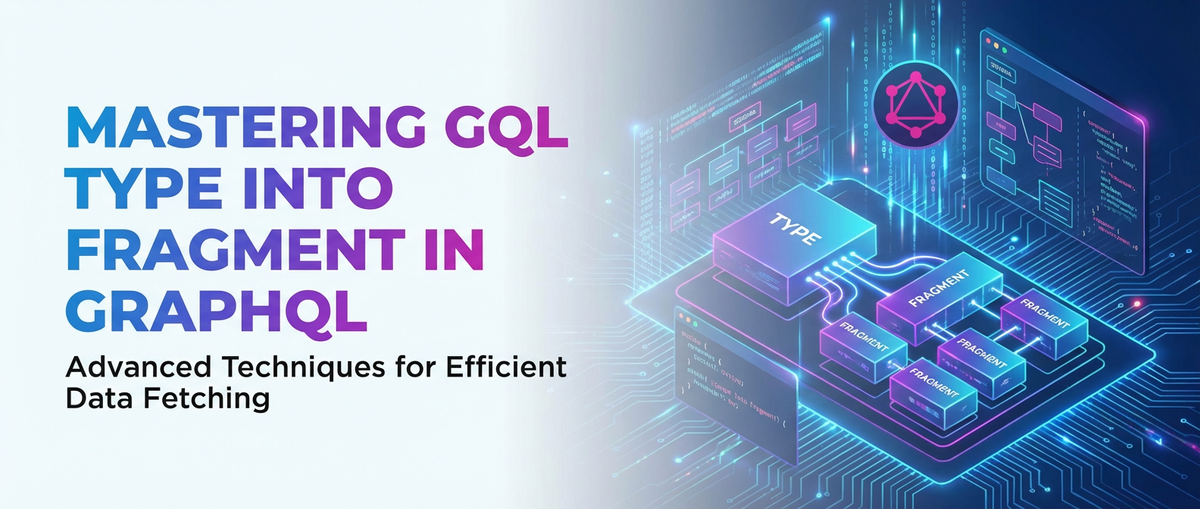


In the rapidly evolving landscape of modern web development, efficient and precise data fetching stands as a cornerstone for building performant and responsive applications. GraphQL, with its robust type system and declarative query language, has emerged as a powerful solution, offering unparalleled flexibility compared to traditional REST APIs. While basic GraphQL queries are intuitive, the true power of the language unfurls when developers delve into its more advanced features, particularly the sophisticated interplay between GraphQL types and fragments, especially when dealing with polymorphic data. This deep dive will explore the critical concept of "GQL Type Into Fragment," dissecting how the on keyword, combined with fragments, empowers developers to query heterogeneous data structures with surgical precision, fostering maintainable, scalable, and efficient data layers.
We will navigate the foundational principles of GraphQL's type system, understand the genesis and utility of fragments, and then meticulously unravel how type conditions (...on TypeName) enable intelligent data selection across interfaces and union types. Furthermore, we will touch upon best practices, advanced composition techniques, and the broader context of API management, recognizing that even the most elegantly crafted GraphQL API operates within a larger infrastructure. This journey aims to arm developers with the knowledge to harness GraphQL's full potential, crafting data requests that are not only precise but also resilient and easily extensible, ultimately leading to a more streamlined and powerful api development experience.
I. GraphQL's Strongly Typed Foundation: The Bedrock of Reliability
Before we plunge into the intricacies of fragments and type conditions, it is imperative to firmly grasp GraphQL's fundamental commitment to a strongly typed schema. This core design principle is not merely an academic detail but the very bedrock upon which GraphQL's power, introspection capabilities, and developer experience are built. Understanding this foundation is crucial for appreciating how fragments, particularly with type conditions, operate within this meticulously defined universe.
A. What is GraphQL and Why Types Matter?
GraphQL, at its heart, is a query language for your api and a server-side runtime for executing queries using a type system you define for your data. Unlike REST, where multiple endpoints might be required to gather disparate pieces of information, GraphQL allows clients to request exactly what data they need from a single endpoint, consolidating requests and minimizing over-fetching or under-fetching. This paradigm shift in API design grants unparalleled flexibility to frontend developers, enabling them to evolve their client applications independently of backend changes, provided the GraphQL schema remains consistent.
The cornerstone of this flexibility and reliability is GraphQL's strict type system, which is defined using the Schema Definition Language (SDL). Every piece of data that can be queried, every argument that can be passed, and every operation that can be performed must be explicitly defined within the schema. This schema acts as a formal contract between the client and the server, meticulously outlining the shape of the data available through the api.
The advantages of this strong typing are manifold. Firstly, it provides inherent validation. Any query sent to a GraphQL server is validated against the schema, ensuring that only valid requests for existing fields and types are processed. This prevents many common errors at the query formulation stage, long before they hit the application logic. Secondly, it enables powerful introspection. Clients, development tools, and integrated development environments (IDEs) can query the schema itself to discover what types, fields, and arguments are available. This self-documenting nature dramatically enhances developer experience, allowing for auto-completion, real-time error checking, and easy exploration of the api's capabilities without constant reference to external documentation. Finally, strong typing ensures predictability. Clients can always anticipate the exact shape of the data they will receive, making data parsing and state management significantly more straightforward and less prone to runtime errors. This predictability is vital when building complex applications that rely on consistent data structures.
B. A Taxonomy of GraphQL Types
To fully leverage GraphQL's power, one must be conversant with its diverse array of type categories. Each type serves a distinct purpose in shaping the data contract, contributing to the overall robustness and clarity of your GraphQL api.
- Object Types: These are the most fundamental building blocks of a GraphQL schema, representing a collection of fields. Each field within an object type returns a specific type, which can be a scalar, another object type, an interface, or a union. For example:
graphql type User { id: ID! name: String! email: String posts: [Post!]! }Here,Useris an object type with fieldsid,name,email, andposts, each defined with its respective type. - Scalar Types: These are the "leaf" nodes of a GraphQL query, representing primitive data values that cannot have sub-fields. GraphQL provides several built-in scalar types:
String: UTF-8 character sequence.Int: Signed 32-bit integer.Float: Signed double-precision floating-point value.Boolean:trueorfalse.ID: A unique identifier, often serialized as a String. Custom scalar types (e.g.,Date,JSON) can also be defined to handle specific data formats.
- Interface Types: An
interfacetype in GraphQL defines a set of fields that any object type implementing that interface must include. It's a contract that ensures specific common fields are present across different object types. This is incredibly powerful for querying polymorphic data, where you expect a field to return one of several possible object types, all of which share certain characteristics.```graphql interface Character { id: ID! name: String! }type Human implements Character { id: ID! name: String! homePlanet: String }type Droid implements Character { id: ID! name: String! primaryFunction: String } ```Here,Characterdefines thatidandnamemust be present on any type that implements it, likeHumanandDroid. - Union Types: Unlike interfaces,
uniontypes specify that a field can return one of several object types, but these types do not necessarily share any common fields. Unions are useful when the possible return types are completely distinct in their structure but semantically related as alternatives for a single field.```graphql type Book { title: String! author: String! }type Movie { title: String! director: String! releaseYear: Int }union SearchResult = Book | Movie ```ASearchResultfield could return either aBookor aMovieobject. The key distinction from interfaces is thatBookandMoviedon't have to share any fields to be part of theSearchResultunion. - Input Object Types: Used for passing complex objects as arguments to fields, particularly mutations. They mirror regular object types but are explicitly marked for input.
graphql input CreateUserInput { name: String! email: String } - Enum Types: A special scalar type that restricts a field to a predefined set of allowed values.
graphql enum Status { PENDING APPROVED REJECTED }
This comprehensive type system allows developers to model complex data relationships with remarkable precision. It is within this rich environment that fragments, especially when combined with type conditions, unleash their true potential, enabling developers to navigate and extract exactly the data needed from these diverse structures.
II. Fragments: Deconstructing and Reconstructing Data Requirements
As GraphQL applications grow in complexity, the need for modularity and reusability in data fetching becomes paramount. Imagine a scenario where multiple parts of your application, or even different queries within the same part, require the exact same set of fields for a particular type. Copy-pasting these field sets would quickly lead to brittle, hard-to-maintain code. This is precisely the problem fragments were designed to solve.
A. The Genesis of Fragments: Why Modularity?
The primary motivation behind fragments stems from the desire to achieve reusability and co-location of data requirements. In a large application, especially one following a component-driven architecture, individual UI components often know exactly what data they need to render themselves. If each component were to duplicate the definition of its data requirements within every query that uses it, the queries would become verbose, error-prone, and difficult to manage. Any change to a component's data needs would necessitate updates across potentially numerous queries, introducing maintenance overhead and increasing the risk of inconsistencies.
Fragments address this by allowing developers to define reusable units of fields. Think of a fragment as a subroutine or a data component: a self-contained block of fields that can be defined once and then "spread" into any query or another fragment. This not only makes queries more concise but also fosters a cleaner separation of concerns, aligning data fetching with component logic. When a component's data requirements change, you only need to modify its associated fragment, and all queries using that fragment automatically inherit the update. This modularity is a game-changer for building scalable and maintainable GraphQL applications, making your GraphQL api easier to consume.
B. Anatomy of a Fragment: Syntax and Basic Usage
A fragment is defined using the fragment keyword, followed by a unique name, the on keyword specifying the type it applies to, and then a selection set of fields enclosed in curly braces.
The basic syntax is as follows:
fragment MyFragmentName on TypeName {
  field1
  field2 {
    subField1
  }
}
To use a fragment within a query or another fragment, you use the "spread" syntax, which is three dots followed by the fragment name: ...MyFragmentName.
Let's illustrate with a simple example. Suppose we have a User type with several fields, and we frequently need to fetch the id, name, and profilePictureUrl for users in different parts of our application.
Schema Definition (excerpt):
type User {
  id: ID!
  name: String!
  email: String
  profilePictureUrl: String
  bio: String
  createdAt: String
}

type Query {
  currentUser: User
  allUsers: [User!]!
}
Fragment Definition:
fragment UserBasicDetails on User {
  id
  name
  profilePictureUrl
}
Now, we can use this UserBasicDetails fragment in multiple queries:
Query 1: Fetching current user details
query GetCurrentUserDetails {
  currentUser {
    ...UserBasicDetails
    email # Additional field specific to this query
  }
}
Query 2: Fetching details for all users
query GetAllUsersDetails {
  allUsers {
    ...UserBasicDetails
    createdAt # Additional field specific to this query
  }
}
In both queries, ...UserBasicDetails expands to id, name, and profilePictureUrl. This eliminates duplication, makes the queries more readable, and centralizes the definition of common data requirements. If the UserBasicDetails fragment ever needs to include a new field, such as username, it only needs to be updated in one place, and all consuming queries will automatically reflect that change. This level of modularity significantly streamlines the development and maintenance workflow for any GraphQL api.
C. The Power of Co-location and Component-Driven Development
The true power of fragments extends far beyond mere syntax sugar for reusability; it fundamentally transforms how data fetching can be integrated into modern, component-driven frontend architectures. Frameworks like React, Vue, and Angular thrive on the idea of encapsulated components, each responsible for rendering a specific part of the UI. Fragments provide the missing link to effectively co-locate a component's data requirements directly alongside its rendering logic.
Consider a UserProfileCard component. This component knows precisely what user information it needs to display: an id, name, and profilePictureUrl. Without fragments, the parent component rendering UserProfileCard would be responsible for constructing a GraphQL query that fetches all the necessary user fields, potentially passing them down as props. This approach creates a tight coupling, where the parent needs to know the internal data needs of its child, violating the principle of encapsulation.
With fragments, the UserProfileCard component can declare its own data requirements by defining a fragment specific to itself:
# src/components/UserProfileCard/UserProfileCard.fragment.js
fragment UserProfileCard_user on User {
  id
  name
  profilePictureUrl
}
Now, any parent component that renders UserProfileCard simply needs to spread this fragment within its own query:
query UserDashboard {
  currentUser {
    ...UserProfileCard_user
    # Other fields needed by the dashboard itself
    lastLogin: String
  }
}
The parent doesn't need to know what fields UserProfileCard_user fetches; it only needs to know that UserProfileCard requires data conforming to that fragment. This pattern, often formalized by libraries like Relay and Apollo Client, brings several profound benefits:
- Encapsulation: Components become truly self-contained, owning both their UI and data requirements.
- Maintainability: Changes to a component's data needs are isolated to its fragment, preventing ripple effects across the application.
- Readability: Queries become cleaner and more focused on the top-level data structure, delegating detail fetching to encapsulated fragments.
- Scalability: As applications grow, managing data requirements for hundreds of components becomes tractable, as each component declares its own needs.
- Developer Experience: Developers can work on individual components and their fragments without needing to understand the entire application's data graph, fostering parallel development.
This co-location strategy is a powerful testament to how fragments elevate the design of GraphQL api consumption, making it more aligned with modern frontend development paradigms and significantly improving the overall developer workflow.
III. The "Type Into Fragment" Conundrum: Handling Polymorphic Data
While basic fragments excel at reusing fixed sets of fields on a known type, the real architectural elegance of GraphQL emerges when applications need to query data that can take on different shapes—a concept known as polymorphism. In GraphQL, this typically occurs when a field returns an Interface type or a Union type. The challenge then becomes: how do you specify which specific fields you want from each concrete type that might be returned, given that different concrete types will have different fields? This is where the on keyword, used within a fragment, becomes indispensable, allowing developers to precisely "type into" a fragment and declare fields conditionally based on the actual type of the data.
A. The Challenge of Variable Data Shapes
In many real-world scenarios, data is not always uniform. Consider a search result page, where a single search query might return books, authors, or movies. Each of these entities has distinct fields (e.g., a book has an ISBN, a movie has a director, an author has birthYear). Similarly, an activity feed might display various types of events (e.g., PostCreatedEvent, CommentAddedEvent, UserJoinedEvent), each with unique associated data. GraphQL's Interface and Union types are designed to model this kind of polymorphic data, but directly querying such fields requires a special mechanism to access type-specific attributes.
Without the ability to specify fields conditionally, a developer would be faced with a dilemma: * Over-fetching: Requesting all possible fields from all possible concrete types, leading to unnecessary data transfer and processing. * Under-fetching: Being unable to request the specific fields needed for a particular concrete type, thus rendering parts of the UI incomplete. * Runtime Errors: If a field is requested on a type that doesn't define it, the GraphQL server will typically throw an error.
This is precisely where the on keyword within a fragment comes into play, providing a powerful and type-safe solution to handle this variability, enabling developers to write queries that are both flexible and precise against their GraphQL api.
B. The on Keyword: Conditionality in Fragments
The on keyword within a fragment (or an inline fragment) is the cornerstone of querying polymorphic data in GraphQL. It acts as a type condition, specifying that the selection set enclosed within its block should only be applied if the underlying data object is of a particular concrete type.
The syntax for an inline fragment with a type condition is:
... on ConcreteType {
  fieldSpecificToConcreteType
  anotherField
}
And for a named fragment, the on keyword is used in the fragment definition itself to declare what type it applies to, but when used with polymorphic fields, the type condition is still explicitly written at the spread site or within a parent fragment that handles polymorphism. More commonly, for polymorphic fields, we use inline fragments with on directly within the selection set.
Let's illustrate its role. Imagine you have a field item that could return either ProductA or ProductB. If you only requested item { id name }, you'd get the common fields. But if ProductA has a sku field and ProductB has a modelNumber field, you need the on keyword:
query GetPolymorphicItem {
  item {
    id
    name
    ... on ProductA {
      sku
      weight
    }
    ... on ProductB {
      modelNumber
      dimensions
    }
  }
}
In this query: * id and name are fetched regardless of whether item is ProductA or ProductB (assuming both types define these fields, perhaps via an interface). * sku and weight will only be included in the response if item is a ProductA. * modelNumber and dimensions will only be included in the response if item is a ProductB.
The on keyword ensures type safety by instructing the GraphQL execution engine to include those specific fields only if the runtime type of the item matches the specified ConcreteType. This allows for highly granular data fetching, retrieving exactly the fields relevant to each possible concrete type without over-fetching or risking errors by querying non-existent fields. This capability is absolutely essential for building robust clients that interact with GraphQL apis exposing complex, variable data structures.
C. Mastering Interfaces with Type Conditions
GraphQL Interfaces are fundamental for defining shared contracts across different object types. When a field returns an interface type, it implies that the actual object returned could be any one of the concrete types that implement that interface. To query fields specific to these concrete types, on fragments are indispensable.
Let's revisit our Character interface example:
Schema Definition:
interface Character {
  id: ID!
  name: String!
  appearsIn: [Episode!]!
}

type Human implements Character {
  id: ID!
  name: String!
  appearsIn: [Episode!]!
  homePlanet: String
  height: Float
}

type Droid implements Character {
  id: ID!
  name: String!
  appearsIn: [Episode!]!
  primaryFunction: String
  modelNumber: String
}

enum Episode {
  NEWHOPE
  EMPIRE
  JEDI
}

type Query {
  characters: [Character!]!
  character(id: ID!): Character
}
In this schema, both Human and Droid implement Character, meaning they must provide id, name, and appearsIn. However, Human has unique fields like homePlanet and height, while Droid has primaryFunction and modelNumber.
Now, consider a query that fetches a list of characters. We want the common fields for all characters, but also the specific details if the character is a Human or a Droid.
GraphQL Query:
query GetCharactersWithDetails {
  characters {
    id
    name
    appearsIn
    ... on Human {
      homePlanet
      height
    }
    ... on Droid {
      primaryFunction
      modelNumber
    }
  }
}
Explanation of the Query:
characters: This is a field that returns a list ofCharacterinterface types.id,name,appearsIn: These fields are part of theCharacterinterface, so they will be fetched for every item in thecharacterslist, regardless of whether it's aHumanor aDroid.... on Human { homePlanet height }: This is an inline fragment with a type condition. It specifies that if the current item in thecharacterslist is concretely aHumanobject, then itshomePlanetandheightfields should also be fetched.... on Droid { primaryFunction modelNumber }: Similarly, if the current item is aDroid, itsprimaryFunctionandmodelNumberfields will be fetched.
Example GraphQL Response (assuming a mix of Humans and Droids):
{
  "data": {
    "characters": [
      {
        "id": "1000",
        "name": "Luke Skywalker",
        "appearsIn": ["NEWHOPE", "EMPIRE", "JEDI"],
        "homePlanet": "Tatooine",
        "height": 1.72
      },
      {
        "id": "2001",
        "name": "R2-D2",
        "appearsIn": ["NEWHOPE", "EMPIRE", "JEDI"],
        "primaryFunction": "Astromech",
        "modelNumber": "R2"
      },
      {
        "id": "1002",
        "name": "Han Solo",
        "appearsIn": ["NEWHOPE", "EMPIRE", "JEDI"],
        "homePlanet": "Corellia",
        "height": 1.80
      }
    ]
  }
}
Notice how the response automatically includes the homePlanet and height fields for Luke Skywalker and Han Solo (who are Human), and primaryFunction and modelNumber for R2-D2 (who is a Droid). The fields specific to Droid are not present on Human objects, and vice-versa, which is exactly the desired behavior.
Benefits of using fragments with interfaces:
- Type Safety: The GraphQL server rigorously validates that requested fields (
homePlanetonHuman,primaryFunctiononDroid) are only queried on the appropriate concrete types. - Efficiency: Only the necessary fields are fetched for each object, minimizing data transfer.
- Clarity: The query clearly articulates the data requirements for each possible concrete type, making it easier to understand and maintain.
- Flexibility: Clients can fetch polymorphic data in a single request, then use the
__typenamemeta-field (which can be requested on any type) to conditionally render UI components based on the received data type.
Mastering this technique is crucial for building robust client-side applications that interact with a GraphQL api that models complex, evolving real-world entities through interfaces.
D. Navigating Union Types with Type Conditions
Union types in GraphQL offer another powerful way to represent polymorphic data, but with a subtle yet important distinction from interfaces. While interfaces define a common set of fields that implementing types must share, union types simply declare that a field can return one of several distinct object types, without any inherent shared fields. Despite this difference, the mechanism for querying type-specific fields remains the same: the on keyword within fragments.
Let's illustrate with our SearchResult union example:
Schema Definition:
type Book {
  title: String!
  author: String!
  isbn: String
  publicationYear: Int
}

type Movie {
  title: String!
  director: String!
  releaseYear: Int
  genre: String
}

type Author {
  name: String!
  nationality: String
  birthYear: Int
}

union SearchResult = Book | Movie | Author

type Query {
  search(query: String!): [SearchResult!]!
}
In this schema, SearchResult can be a Book, a Movie, or an Author. These three types do not necessarily share any common fields beyond perhaps title (which is shared by Book and Movie, but not Author). To query the specific fields relevant to each possible type within a search result, we again turn to inline fragments with type conditions.
GraphQL Query:
query GlobalSearch($query: String!) {
  search(query: $query) {
    # Requesting the __typename meta-field is often useful for unions
    __typename
    ... on Book {
      title
      author
      isbn
      publicationYear
    }
    ... on Movie {
      title
      director
      releaseYear
      genre
    }
    ... on Author {
      name
      nationality
      birthYear
    }
  }
}
Explanation of the Query:
search(query: $query): This field returns a list ofSearchResultunion types.__typename: While not a direct part of our data,__typenameis a special meta-field available on all GraphQL types. It returns the name of the object's concrete type. This is incredibly useful for client-side logic to determine which fields are present and how to render the data, especially with unions where no common fields are guaranteed.... on Book { ... }: This inline fragment instructs the server to fetch thetitle,author,isbn, andpublicationYearfields only if the currentSearchResultobject is concretely aBook.... on Movie { ... }: Similarly, if it's aMovie,title,director,releaseYear, andgenreare fetched.... on Author { ... }: If it's anAuthor,name,nationality, andbirthYearare fetched.
Example GraphQL Response (assuming search for "Dune" might return a Book and a Movie, and "Frank Herbert" might return an Author):
{
  "data": {
    "search": [
      {
        "__typename": "Book",
        "title": "Dune",
        "author": "Frank Herbert",
        "isbn": "978-0441013593",
        "publicationYear": 1965
      },
      {
        "__typename": "Movie",
        "title": "Dune: Part One",
        "director": "Denis Villeneuve",
        "releaseYear": 2021,
        "genre": "Science Fiction"
      },
      {
        "__typename": "Author",
        "name": "Frank Herbert",
        "nationality": "American",
        "birthYear": 1920
      }
    ]
  }
}
As with interfaces, the response selectively includes only the fields that are relevant to the actual type of each item in the search result. Fields specific to Book are not present on Movie or Author objects, and so forth.
Key considerations for Union Types:
- No Common Fields: Remember that union members don't necessarily share fields. If you attempt to query a field directly on a union type without an
oncondition, and that field is not common to all members (or defined on the union itself, which is not possible in standard GraphQL), it will result in a validation error. - Client-Side Type Discrimination: The
__typenamefield is particularly vital for unions, as it provides an explicit way for client-side code to determine the exact type of the received data and apply appropriate logic or rendering components. This is often the primary mechanism to differentiate data when there are no common fields.
Both interface and union types, combined with the power of on fragments, represent sophisticated tools in the GraphQL developer's arsenal. They allow for the creation of highly flexible and adaptable apis that can serve diverse data needs without sacrificing type safety or performance. Mastering these constructs is a hallmark of advanced GraphQL proficiency.
APIPark is a high-performance AI gateway that allows you to securely access the most comprehensive LLM APIs globally on the APIPark platform, including OpenAI, Anthropic, Mistral, Llama2, Google Gemini, and more.Try APIPark now! 👇👇👇
IV. Advanced Fragment Techniques and Best Practices
Having established the foundational role of fragments and the on keyword for polymorphic data, we can now explore more advanced techniques and best practices that elevate fragment usage from mere convenience to a strategic element of robust GraphQL application design. These methods enhance modularity, manage complexity, and integrate seamlessly with modern client-side architectures, further solidifying the efficiency of your GraphQL api consumption.
A. Inline Fragments vs. Named Fragments: When to Use Which
GraphQL offers two primary forms of fragments: inline fragments and named fragments. While both serve the purpose of reusing selection sets, their nuances dictate their optimal use cases. Understanding when to employ each is crucial for writing clean, efficient, and maintainable GraphQL queries.
Inline Fragments (... on TypeName { ... })
- Definition: An inline fragment is defined directly within a selection set, without a separate
fragmentkeyword declaration. It is predominantly used with theonkeyword to specify type-specific fields on polymorphic fields (interfaces or unions). - Use Cases:
- Polymorphic Field Selection: As demonstrated in the previous sections, this is their primary use. When you have a field that can return different concrete types (e.g.,
Characterinterface orSearchResultunion), inline fragments withonallow you to conditionally fetch type-specific fields. - Ad-Hoc Conditional Fields: Occasionally, you might need to conditionally fetch fields from a concrete type even if it's not strictly polymorphic, perhaps to avoid defining a separate named fragment for a very specific, one-off scenario.
- Polymorphic Field Selection: As demonstrated in the previous sections, this is their primary use. When you have a field that can return different concrete types (e.g.,
- Advantages:
- Conciseness: Ideal for short, specific type-conditional selections that aren't reused elsewhere.
- Local Scope: Resides exactly where it's used, reducing mental overhead of tracking separate fragment definitions.
- Disadvantages:
- Limited Reusability: By definition, they cannot be reused across different parts of the query or different operations. Duplication can occur if the same type-specific selection is needed multiple times.
- Readability with Complexity: For very large conditional selections, inline fragments can make the query dense and harder to parse.
Named Fragments (fragment MyFragment on TypeName { ... })
- Definition: A named fragment is declared separately using the
fragmentkeyword, given a unique name, and then "spread" (...MyFragment) into selection sets where needed. Named fragments can also contain inline fragments with type conditions within their own selection set. - Use Cases:
- Reusable Field Sets: When a common set of fields is needed across multiple queries, mutations, or even within different parts of a single complex query.
- Co-location with UI Components: The cornerstone of component-driven data fetching (e.g., a
UserProfileCard_userfragment). - Abstraction and Modularity: Breaking down complex data requirements into smaller, manageable, named units.
- Polymorphic Reusability: While inline fragments handle the
oncondition, a named fragment can encapsulate a polymorphic selection itself, allowing it to be reused. For example, aCharacterDetailsfragment could contain both... on Humanand... on Droidblocks.
- Advantages:
- High Reusability: Define once, use everywhere, leading to DRY (Don't Repeat Yourself) code.
- Enhanced Readability: Queries become cleaner as complex selections are abstracted away behind meaningful fragment names.
- Maintainability: Changes to a common field set only require updating the named fragment.
- Stronger Encapsulation: Ideal for component data requirements.
- Disadvantages:
- Global Scope (within operation): Must be defined once for the entire GraphQL operation.
- Slightly More Verbose: Requires a separate definition block.
Comparison Table:
| Feature | Inline Fragments (... on TypeName) |
Named Fragments (fragment MyFragment on TypeName) |
|---|---|---|
| Syntax | ... on TypeName { fields } (within a selection set) |
fragment MyFragmentName on TypeName { fields } (defined separately) |
| Reusability | Low (typically for single-use, type-conditional selections) | High (can be spread into multiple queries/fragments) |
| Scope | Local to the selection set where it's used | Global to the operation; available anywhere after definition |
| Primary Use | Querying type-specific fields on interfaces/unions (polymorphism) | Reusable field sets; co-locating data with UI components; abstracting complex selections |
| Readability | Good for simple, short conditionals; can become dense if large | Excellent for abstracting complexity; improves overall query readability |
| Maintainability | Can lead to duplication if same conditional selection is repeated | Centralized definition improves maintainability and consistency |
on Keyword Use |
Always used (explicitly ... on TypeName) |
Used within the named fragment if it needs to query polymorphic fields from its type |
| Example | item { ... on Book { title } } |
fragment BookFields on Book { title author }; item { ...BookFields } |
In general, prefer named fragments for any field set that is reused more than once or is tightly coupled with a UI component. Use inline fragments primarily for specific, non-reusable conditional field selections on polymorphic types, or when a named fragment is overly verbose for a trivial condition. The judicious use of both enriches your GraphQL api consumption patterns.
B. Nested Fragments and Deep Polymorphism
The power of fragments truly compounds when they are nested, meaning a fragment can spread other fragments, which in turn can spread more fragments, and so on. This nesting capability allows for building highly modular and hierarchical data requirements that mirror the structure of complex UI components or deeply nested data graphs. When combined with type conditions, nested fragments become an exceptionally potent tool for navigating "deep polymorphism," where polymorphic fields themselves might contain other polymorphic fields.
Consider an e-commerce scenario where products have different variants, and those variants can also have different attributes.
Schema Example:
interface Product {
  id: ID!
  name: String!
  variants: [ProductVariant!]!
}

type SimpleProduct implements Product {
  id: ID!
  name: String!
  variants: [ProductVariant!]!
  basePrice: Float!
}

type ConfigurableProduct implements Product {
  id: ID!
  name: String!
  variants: [ProductVariant!]!
  configurableAttributes: [String!]!
}

interface ProductVariant {
  id: ID!
  sku: String!
  price: Float!
}

type SizeVariant implements ProductVariant {
  id: ID!
  sku: String!
  price: Float!
  size: String!
  stock: Int!
}

type ColorVariant implements ProductVariant {
  id: ID!
  sku: String!
  price: Float!
  colorHex: String!
  colorName: String!
}

type Query {
  products: [Product!]!
}
Here we have: * Product interface, implemented by SimpleProduct and ConfigurableProduct. * Each Product has variants, which is a list of ProductVariant interface types. * ProductVariant interface, implemented by SizeVariant and ColorVariant.
To fetch deeply nested and polymorphic data from this schema, nested fragments with type conditions are essential.
Fragment Definitions:
# Fragment for common variant details
fragment BaseVariantFields on ProductVariant {
  id
  sku
  price
}

# Fragment for SizeVariant specific details
fragment SizeVariantDetails on SizeVariant {
  ...BaseVariantFields # Nested fragment
  size
  stock
}

# Fragment for ColorVariant specific details
fragment ColorVariantDetails on ColorVariant {
  ...BaseVariantFields # Nested fragment
  colorHex
  colorName
}

# Fragment for common product details
fragment BaseProductFields on Product {
  id
  name
}

# Fragment for SimpleProduct with its variants
fragment SimpleProductDetails on SimpleProduct {
  ...BaseProductFields # Nested fragment
  basePrice
  variants {
    __typename
    ... on SizeVariant {
      ...SizeVariantDetails # Deeply nested, polymorphic fragment
    }
    ... on ColorVariant {
      ...ColorVariantDetails # Deeply nested, polymorphic fragment
    }
  }
}

# Fragment for ConfigurableProduct with its variants
fragment ConfigurableProductDetails on ConfigurableProduct {
  ...BaseProductFields # Nested fragment
  configurableAttributes
  variants {
    __typename
    ... on SizeVariant {
      ...SizeVariantDetails # Deeply nested, polymorphic fragment
    }
    ... on ColorVariant {
      ...ColorVariantDetails # Deeply nested, polymorphic fragment
    }
  }
}
GraphQL Query using Nested Fragments:
query GetProductsWithDetailedVariants {
  products {
    __typename
    ... on SimpleProduct {
      ...SimpleProductDetails
    }
    ... on ConfigurableProduct {
      ...ConfigurableProductDetails
    }
  }
}
Explanation: 1. The GetProductsWithDetailedVariants query fetches products, which is a list of Product interface types. 2. It uses inline fragments ... on SimpleProduct and ... on ConfigurableProduct to spread SimpleProductDetails and ConfigurableProductDetails named fragments respectively. 3. Both SimpleProductDetails and ConfigurableProductDetails fragments nest the BaseProductFields fragment for common product fields. 4. Crucially, within both product-specific fragments, the variants field (which is polymorphic [ProductVariant!]!) again uses inline fragments (... on SizeVariant, ... on ColorVariant) to conditionally spread the SizeVariantDetails and ColorVariantDetails named fragments. 5. Each of these variant-specific fragments further nests BaseVariantFields.
This demonstrates a sophisticated composition where fragments are built upon each other, and type conditions are applied at multiple levels of the data graph. This approach offers:
- Unrivaled Modularity: Each fragment addresses a specific, isolated data requirement.
- Hierarchical Co-location: Data needs are defined at the level of the component or data structure they represent.
- Precise Data Fetching: Only the fields relevant to the runtime type at each level are fetched, minimizing payload size.
- Scalability: Managing extremely complex data models becomes manageable by breaking them down into smaller, interconnected pieces.
Deeply nested and polymorphic fragment usage is a hallmark of truly advanced GraphQL clients and a critical skill for managing large-scale applications interacting with complex GraphQL apis.
C. Fragment Co-location with UI Components (Relay/Apollo Client Perspective)
The concept of fragment co-location, where a UI component declares its data dependencies using a GraphQL fragment directly alongside its rendering logic, is a cornerstone of modern GraphQL client libraries like Relay and Apollo Client. This approach dramatically streamlines development, improves maintainability, and fosters robust, independent UI components.
Traditional data fetching often separates concerns: the UI component knows what to display, but a higher-level container or data service is responsible for fetching that data. This creates a disconnect; if the component's data needs change, the developer must hunt down the corresponding data fetching logic, which might be far removed from the component itself.
Fragment co-location flips this model. With this pattern, a UI component explicitly states its data requirements in a fragment. When a parent component needs to render this child component, it "asks" for the child's fragment data. The GraphQL client then intelligently composes these fragments into a single, efficient query to the GraphQL api.
Example using a conceptual React-like component structure:
// src/components/UserAvatar/UserAvatar.fragment.js
import { graphql } from 'react-apollo'; // or relay-runtime/lib/query/graphql

export const UserAvatarFragment = graphql`
  fragment UserAvatar_user on User {
    id
    name
    profilePictureUrl
    status { # Nested field
      online
    }
  }
`;

// src/components/UserAvatar/UserAvatar.js
import React from 'react';
// import { UserAvatarFragment } from './UserAvatar.fragment.js'; // client library handles fragment import

const UserAvatar = ({ user }) => (
  <div className="user-avatar">
    <img src={user.profilePictureUrl} alt={user.name} />
    <span>{user.name}</span>
    {user.status.online && <span className="online-indicator" />}
  </div>
);

// This is how a modern GraphQL client would connect the component to its fragment
// The client ensures 'user' prop contains data matching UserAvatarFragment
export default UserAvatar;
Now, a parent component (e.g., UserProfilePage) that needs to display a UserAvatar for currentUser would simply:
// src/pages/UserProfilePage/UserProfilePage.query.js
import { graphql } from 'react-apollo';
import { UserAvatarFragment } from '../../components/UserAvatar/UserAvatar.fragment'; // Import the fragment

const UserProfilePageQuery = graphql`
  query GetUserProfilePageData {
    currentUser {
      ...UserAvatar_user # Spread the fragment directly here
      email
      lastLogin
    }
  }
  ${UserAvatarFragment} # The client stitches this into the main query
`;

// src/pages/UserProfilePage/UserProfilePage.js
import React from 'react';
import UserAvatar from '../../components/UserAvatar/UserAvatar';
// import UserProfilePageQuery from './UserProfilePage.query.js'; // client library handles query import

const UserProfilePage = ({ data: { currentUser } }) => {
  if (!currentUser) return <div>Loading...</div>;
  return (
    <div>
      <h1>Welcome, {currentUser.name}!</h1>
      <UserAvatar user={currentUser} /> {/* Pass the data that matches UserAvatarFragment */}
      <p>Email: {currentUser.email}</p>
      <p>Last Login: {currentUser.lastLogin}</p>
    </div>
  );
};

// This would be wrapped by the client's HOC or hook
export default UserProfilePage;
Key Benefits of Fragment Co-location:
- Autonomous Components: Each component is truly self-sufficient in declaring its data needs, making them easier to develop, test, and reuse.
- Reduced Prop Drilling: Data can be passed directly to the component that needs it, as the client ensures the data shape matches the fragment.
- Improved Maintainability: When a component's UI or data requirements change, the modifications are isolated to its own file(s), significantly reducing the risk of breaking other parts of the application.
- Optimized Query Generation: GraphQL clients dynamically compose a single, minimal query for the entire view hierarchy, avoiding redundant field requests and ensuring efficient communication with the GraphQL api.
- Consistent Data Management: The client library takes care of caching, updates, and normalization based on the fragments, providing a consistent data flow across the application.
This pattern, often deeply integrated into frameworks like Relay, represents the pinnacle of modern GraphQL client development. It showcases how fragments are not just a syntax feature but a fundamental architectural primitive for building highly performant and scalable frontend applications.
D. Fragment Composition and Modular Schema Design
The effectiveness of fragments extends beyond client-side consumption; it also influences how we think about and design the GraphQL schema itself. A well-designed schema can anticipate and facilitate optimal fragment composition, leading to a more intuitive and efficient GraphQL api for consumers.
Thinking in Fragments During Schema Design:
When designing your GraphQL schema, consider which groups of fields are frequently requested together or which groups represent a coherent "unit" of data. These are natural candidates for what would become a fragment on the client side.
- Introduce Interfaces for Shared Concepts: If multiple object types share common fields (e.g.,
Nodewithid,TimestampedwithcreatedAtandupdatedAt), define an interface. This not only enforces consistency but also enables clients to use fragments on the interface to query these common fields universally, reducing query complexity. ```graphql interface Node { id: ID! }type User implements Node { id: ID! name: String! email: String }`` Clients can then usefragment NodeId on Node { id }to easily get the ID of anyNode`. - Use Unions for Distinct Alternatives: For fields that can return one of several distinct types, unions are the appropriate choice. Again, anticipating the need for type-conditional fragments (e.g.,
SearchResult) should guide their implementation. - Encourage Granular Object Types: Instead of having one massive
Usertype with every possible piece of information, consider breaking it down into smaller, more focused object types (e.g.,User,UserProfile,UserAddress,UserPreferences). While this might seem counter-intuitive to the "single endpoint" idea, it promotes better modularity. Clients can then define fragments on these smaller types and compose them as needed.```graphql type UserProfile { bio: String avatarUrl: String website: String }type User { id: ID! name: String! profile: UserProfile }`` A client might then definefragment UserProfileDetails on UserProfile { bio avatarUrl website }and spread it into aUser` fragment.
Benefits for API Consumers:
- Minimizing Over-fetching and Under-fetching: A modular schema, consumed with well-composed fragments, allows clients to fetch precisely what they need, optimizing network payload and client-side processing.
- Clarity and Discoverability: A schema designed with composability in mind makes it easier for developers to understand the available data and how to construct efficient queries. Tools like GraphQL Playground leverage introspection to show available fields and types, which is further enhanced by logical schema divisions.
- Evolvability of the API: When the backend changes, well-defined fragments on stable interfaces or types are less likely to break. New fields can be added to existing types, or new types to unions, and existing fragments continue to work, requiring clients only to update specific fragments for new features. This enables a stable and adaptable GraphQL api.
- Consistency: Encourages consistent data models and naming conventions across the api, as developers are thinking about reusable data units from the outset.
In essence, fragment composition is a two-way street. Client-side developers leverage fragments to manage complex data requirements, while schema designers can proactively structure their GraphQL api to make fragment composition natural, intuitive, and highly efficient. This synergy between schema design and client querying strategy unlocks the full potential of GraphQL for building robust and scalable applications.
V. Operationalizing GraphQL: From Advanced Queries to Robust API Management
While mastering GQL types into fragments empowers developers to craft incredibly precise and efficient data requests, the journey of building a successful GraphQL application doesn't end there. Sophisticated queries are just one piece of a much larger puzzle. Deploying, securing, monitoring, and scaling a GraphQL api—or any api for that matter—demands a comprehensive operational strategy. This is where the broader ecosystem of api management and api gateway solutions becomes indispensable. Even the most elegantly designed GraphQL api needs to be properly managed and governed to ensure its reliability, security, and performance in a production environment.
A. The Broader API Ecosystem: Beyond the Query Language
GraphQL offers tremendous benefits in terms of flexibility and developer experience on the client side. However, a GraphQL server, like any backend service, operates within a complex IT infrastructure. It needs to be protected, its traffic needs to be routed efficiently, and its usage needs to be monitored. These are concerns that the GraphQL specification itself doesn't directly address; rather, they fall under the domain of general api infrastructure and management.
Consider a modern enterprise environment where numerous services—REST APIs, microservices, third-party integrations, and now potentially GraphQL endpoints—all need to be exposed and consumed. Without a unified approach to managing these diverse apis, chaos can quickly ensue. Developers might struggle with inconsistent authentication mechanisms, operations teams might lack visibility into traffic patterns, and security teams might face challenges in enforcing global policies.
This is precisely why the concept of an api gateway has become a critical component in modern api architectures. An api gateway acts as a single entry point for all api requests, sitting in front of your backend services (including your GraphQL server). It handles a myriad of cross-cutting concerns that would otherwise need to be implemented within each individual service or application. These concerns typically include:
- Authentication and Authorization: Centralized identity verification and access control for all api consumers.
- Rate Limiting and Throttling: Protecting backend services from abuse or overload by controlling the number of requests clients can make.
- Traffic Routing and Load Balancing: Directing requests to the appropriate backend service instance and distributing load for high availability and performance.
- Caching: Storing frequently accessed api responses to reduce latency and backend load.
- Monitoring and Analytics: Collecting detailed logs and metrics on api usage, performance, and errors.
- Transformation: Converting requests or responses between different formats if needed.
- Security Policies: Applying Web Application Firewall (WAF) rules, DDoS protection, and other security measures.
While GraphQL servers can implement some of these features (e.g., internal authentication logic), relying solely on the GraphQL server for all operational concerns can lead to reinventing the wheel and inconsistencies across an organization's broader api landscape. A dedicated api gateway provides a consistent, robust, and scalable solution for managing the entire api surface.
B. The Role of an API Gateway in a GraphQL Setup
Even with GraphQL's inherent elegance in managing data fetching, an api gateway still plays a vital role in its successful deployment and operation. A GraphQL server typically exposes a single /graphql endpoint. While this endpoint is powerful, the api gateway sits in front of it, providing an essential layer of protection and control.
Here's how an api gateway specifically benefits a GraphQL setup:
- Unified Entry Point: For organizations managing a mix of REST and GraphQL apis, an api gateway provides a single, consistent endpoint for all client applications. This simplifies client configuration and allows for uniform domain handling.
- Global Security Policies: The
gatewaycan enforce authentication, authorization, and other security measures before requests even reach the GraphQL server. This means your GraphQL server can focus purely on data resolution, offloading security complexities to a specialized component. For instance, anapi gatewaycan handle JWT validation, OAuth flows, or IP whitelisting for all incoming GraphQL queries and mutations. - Rate Limiting and DDoS Protection: GraphQL queries, especially complex ones leveraging deep fragments, can be resource-intensive. An
api gatewaycan implement sophisticated rate limiting rules, not just per client, but potentially even per query depth or complexity, protecting your GraphQL server from malicious or accidental overloads. It also serves as the first line of defense against DDoS attacks. - Performance Optimization: While GraphQL clients do client-side caching, an
api gatewaycan provide global caching at the edge, especially for frequently requested, less volatile GraphQL data. It can also handle connection pooling and load balancing across multiple GraphQL server instances, ensuring optimal performance and high availability. - Traffic Routing and Versioning: If you have multiple versions of your GraphQL api (e.g.,
/v1/graphql,/v2/graphql) or different GraphQL services, theapi gatewaycan intelligently route traffic based on URL paths, headers, or other criteria. This facilitates seamless API versioning and rollout strategies. - Centralized Monitoring and Analytics: The
gatewayserves as a choke point where allapitraffic passes through. This makes it an ideal place to collect comprehensive logs, metrics, and analytics about GraphQL query volume, latency, errors, and client usage patterns. This data is invaluable for understanding how yourapiis being consumed and for proactive issue identification. - Protocol Mediation (potentially): While GraphQL is a specific protocol, some advanced
api gatewaysolutions can even handle protocol mediation, for example, exposing a traditional REST endpoint that translates requests to an underlying GraphQL query.
In essence, an api gateway complements GraphQL's internal strengths by providing the necessary external operational controls. It allows developers to focus on building rich data graphs with advanced features like "type into fragment," knowing that the broader api infrastructure is robustly managed and secured by a dedicated gateway. This holistic approach ensures that your GraphQL api is not only powerful and flexible but also reliable, secure, and scalable in a production setting.
C. Enhancing Your API Management Strategy with APIPark
In a world increasingly driven by interconnected services and intelligent applications, effective API management is not just a best practice—it's a strategic imperative. This holds true for the most basic REST APIs as well as for sophisticated GraphQL services employing advanced features like type-conditional fragments. Whether you're managing external integrations, internal microservices, or the dynamic data needs of a modern application, a robust platform to oversee the entire API lifecycle is essential. This is where solutions like APIPark come into play, offering a comprehensive, open-source AI gateway and API management platform designed to streamline the complexities of api governance.
APIPark, an open-source AI gateway and API management platform, presents a compelling solution for organizations looking to bring order, security, and efficiency to their API ecosystem. While its strong emphasis on AI model integration might seem distinct from GraphQL's specific query language, APIPark's core capabilities in API lifecycle management, traffic control, and monitoring are universally beneficial for any type of api, including the most advanced GraphQL implementations. It acts as a powerful api gateway that can sit in front of your GraphQL services, providing the operational backbone necessary for production readiness.
Let's delve into how APIPark's features directly address the operational challenges faced by GraphQL developers and organizations:
- End-to-End API Lifecycle Management: Even a well-defined GraphQL schema requires careful management from conception to deprecation. APIPark assists with managing the entire lifecycle of APIs, including design, publication, invocation, and decommissioning. This means your GraphQL endpoints, which might evolve with new types and fragments, can be systematically managed. APIPark helps regulate API management processes, manage traffic forwarding, load balancing, and versioning of published APIs. This is crucial for deploying new GraphQL schema versions without disruption, ensuring that clients can seamlessly migrate or continue using older versions if necessary.
- Performance Rivaling Nginx: A GraphQL api, especially one serving a high-traffic application with complex queries (potentially enhanced by many fragments), demands exceptional performance from its underlying infrastructure. APIPark boasts impressive performance, capable of achieving over 20,000 TPS with modest hardware (8-core CPU, 8GB memory), and supporting cluster deployment for even larger-scale traffic. This robust performance ensures that your GraphQL server isn't bottlenecked by the api gateway, allowing it to deliver data quickly and reliably to your clients.
- Detailed API Call Logging: When a GraphQL query, particularly one leveraging deep fragments and polymorphic selections, encounters an issue, detailed logging is invaluable for debugging. APIPark provides comprehensive logging capabilities, recording every detail of each API call. This feature allows businesses to quickly trace and troubleshoot issues in API calls, ensuring system stability and data security. Whether it's an invalid fragment spread or a server-side resolver error, these logs provide the critical insights needed for rapid problem resolution.
- Powerful Data Analysis: Understanding how your GraphQL api is being used is vital for making informed decisions about its evolution and optimization. APIPark analyzes historical call data to display long-term trends and performance changes. This helps businesses with preventive maintenance before issues occur. You can gain insights into which GraphQL queries are most frequently called, their average latency, error rates, and even potential anomalies in usage patterns, helping you optimize your schema and resolvers.
- Unified API Format and Quick Integration: While APIPark highlights its unified API format for AI invocation, its broader vision as an api gateway and management platform positions it to unify the management of all your API services. This means REST APIs, AI services, and your sophisticated GraphQL endpoints can all be managed from a single, centralized platform. This consolidation simplifies operations and provides a consistent management layer across your entire
apilandscape. - API Service Sharing within Teams & Access Permissions: For large organizations where various teams consume GraphQL and other APIs, APIPark allows for the centralized display of all API services, making it easy for different departments and teams to find and use the required API services. Furthermore, with independent API and access permissions for each tenant, and API resource access requiring approval, it ensures that your GraphQL endpoints are secured and accessed only by authorized consumers, preventing unauthorized API calls and potential data breaches.
In conclusion, while "Mastering GQL Type Into Fragment" empowers the internal elegance of your GraphQL api, a product like APIPark provides the essential external governance. It ensures that your highly optimized GraphQL service operates securely, performs reliably, and scales effectively within a comprehensive api management framework. By leveraging an api gateway like APIPark, developers can focus on building innovative GraphQL features, confident that the underlying api infrastructure is robustly managed and monitored, ultimately leading to a more resilient and high-performing application ecosystem.
VI. Conclusion: The Symphony of Types and Fragments
Our journey through "Mastering GQL Type Into Fragment" has unveiled a fundamental truth about GraphQL: its true power lies not just in its ability to fetch data, but in its sophisticated mechanisms for describing, querying, and managing complex, often polymorphic, data structures with unwavering precision. We began by affirming GraphQL's bedrock of a strongly typed schema, which provides the foundation for reliability, introspection, and an unparalleled developer experience. From this foundation, we explored the elegance of fragments, recognizing them not merely as a syntactic convenience but as a strategic tool for modularity, reusability, and the co-location of data requirements directly with UI components.
The core of our exploration centered on the transformative role of the on keyword. This seemingly small addition empowers developers to navigate the nuances of polymorphic data, allowing fragments to intelligently adapt their selection sets based on the concrete type of an interface or union member. We meticulously demonstrated how this mechanism enables surgical precision in data fetching, eliminating over-fetching, under-fetching, and the brittle logic often associated with handling variable data shapes in traditional api models. Advanced techniques like nested fragments and the strategic use of named versus inline fragments further underscored the depth and flexibility of GraphQL's approach to data composition.
However, the pursuit of an optimally functioning GraphQL application extends beyond the elegance of its query language. We transitioned into the broader operational landscape, recognizing that even the most perfectly crafted GraphQL api benefits immensely from a robust api management strategy. The role of an api gateway emerged as critical, providing essential layers of security, performance optimization, traffic control, and centralized monitoring that are vital for any production-grade api.
In this context, we highlighted APIPark as an example of an open-source AI gateway and API management platform that seamlessly integrates with and enhances the operational effectiveness of even advanced GraphQL deployments. Its features, from end-to-end lifecycle management and high performance to detailed logging and data analysis, underscore the importance of a holistic approach to API governance.
Ultimately, "Mastering GQL Type Into Fragment" is about orchestrating a symphony of types and fragments to compose efficient, maintainable, and highly expressive data requests. But this symphony performs best when played on a stage that is equally well-managed and robust. By combining GraphQL's inherent power with comprehensive API management solutions like APIPark, developers can build not just functional applications, but resilient, scalable, and secure systems that confidently meet the demands of the modern digital era.
VII. FAQs
1. What is the fundamental purpose of fragments in GraphQL? Fragments in GraphQL serve as reusable units of fields, allowing developers to define a common selection of fields once and then "spread" it into multiple queries or other fragments. Their fundamental purpose is to promote modularity, reduce query verbosity, enhance maintainability by centralizing field definitions, and enable the co-location of data requirements directly with UI components in modern frontend architectures. This makes the consumption of a GraphQL api significantly more efficient and organized.
2. How does the on keyword relate to fragments in GraphQL? The on keyword is used within fragments (typically inline fragments) to apply a type condition. It specifies that a particular selection set of fields should only be included in the query and response if the underlying data object at that point in the query is of a specific concrete type. This is crucial for querying polymorphic fields (fields that can return different object types, such as those defined by Interfaces or Union types) in a type-safe and efficient manner, allowing you to access fields unique to each possible type.
3. When should I use an Interface type versus a Union type with fragments? You should use an Interface type when you have multiple object types that share a common set of fields and a common conceptual contract (e.g., Character implemented by Human and Droid, both having id and name). Fragments applied to an interface can query these common fields directly, and then use ... on ConcreteType to fetch type-specific fields. You should use a Union type when a field can return one of several distinct object types that do not necessarily share any common fields (e.g., SearchResult which can be a Book, Movie, or Author). With unions, you primarily rely on ... on ConcreteType fragments to conditionally fetch the fields unique to each member type, often along with the __typename meta-field for client-side type discrimination.
4. Why is an API Gateway relevant for a GraphQL API, even with GraphQL's capabilities? An api gateway is highly relevant for a GraphQL api because it addresses operational concerns that fall outside the scope of GraphQL itself. It provides a centralized layer for cross-cutting concerns like global authentication and authorization, rate limiting, DDoS protection, traffic routing, caching, load balancing, and comprehensive monitoring and analytics. By offloading these responsibilities, the api gateway allows the GraphQL server to focus purely on data resolution, enhancing the GraphQL api's security, performance, scalability, and overall manageability within a broader enterprise infrastructure.
5. How does a platform like APIPark contribute to managing advanced GraphQL implementations? APIPark, as an open-source AI gateway and API management platform, contributes by providing robust operational support for advanced GraphQL implementations. It offers end-to-end API lifecycle management, ensuring controlled deployment and evolution of GraphQL schemas. Its high-performance api gateway capabilities can handle large-scale traffic for complex GraphQL queries. Crucially, its detailed API call logging and powerful data analysis features provide invaluable insights for monitoring, troubleshooting, and optimizing your GraphQL service, even when dealing with intricate fragments and polymorphic data. It helps transform an advanced GraphQL api into a well-governed, performant, and reliable component of your overall api ecosystem.
🚀You can securely and efficiently call the OpenAI API on APIPark in just two steps:
Step 1: Deploy the APIPark AI gateway in 5 minutes.
APIPark is developed based on Golang, offering strong product performance and low development and maintenance costs. You can deploy APIPark with a single command line.
curl -sSO https://download.apipark.com/install/quick-start.sh; bash quick-start.sh

In my experience, you can see the successful deployment interface within 5 to 10 minutes. Then, you can log in to APIPark using your account.

Step 2: Call the OpenAI API.