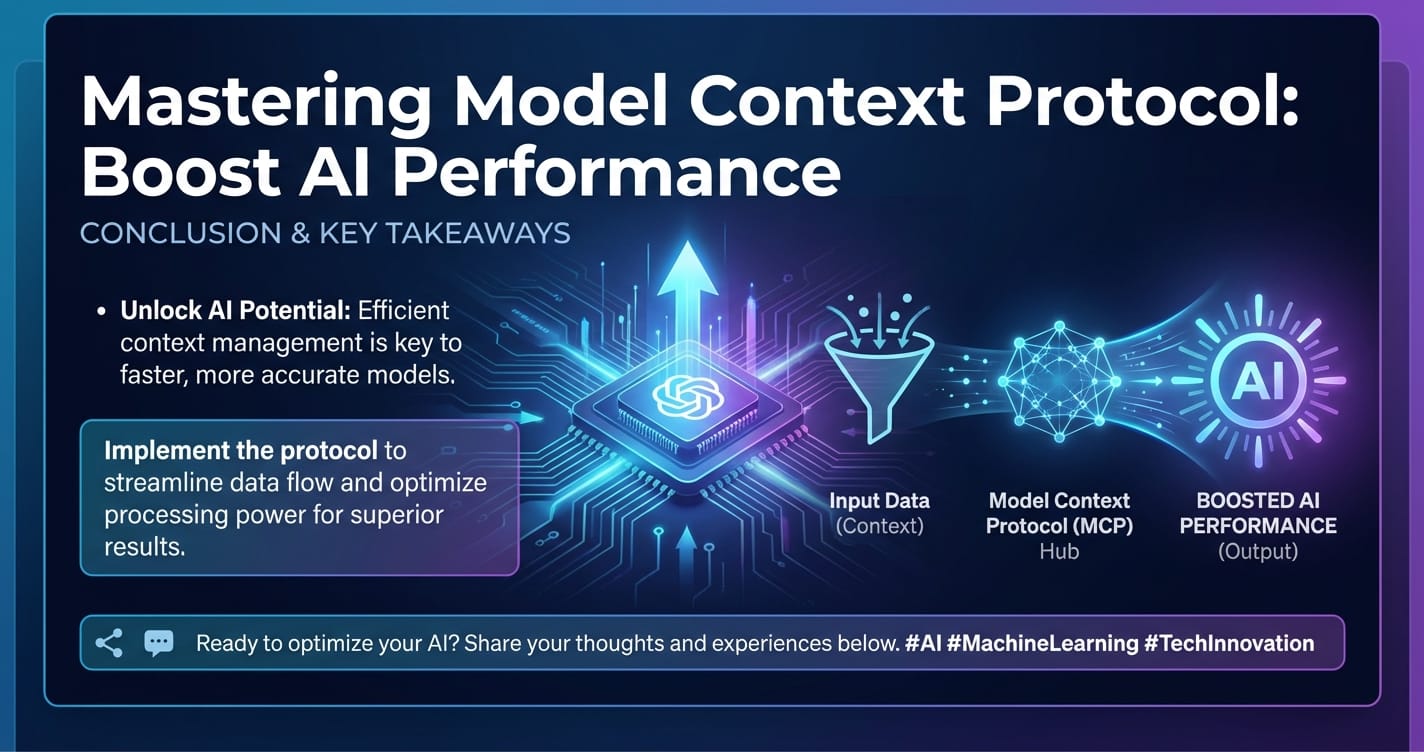
Mastering Model Context Protocol: Boost AI Performance


In the burgeoning landscape of Artificial Intelligence, where models are rapidly evolving from mere statistical predictors to sophisticated conversationalists and complex problem-solvers, one fundamental challenge persistently dictates their true prowess: context. Without a deep, nuanced understanding of the surrounding information, the most advanced algorithms risk becoming incoherent, irrelevant, or even erroneous. This is where the Model Context Protocol (MCP) emerges not just as a concept, but as a critical framework for unlocking the next generation of AI performance. It's the silent orchestrator behind intelligent conversations, accurate recommendations, and insightful analyses, determining an AI's ability to truly grasp the human experience and deliver meaningful interactions.
The journey towards building truly intelligent systems is paved with instances where a lack of context has led to comical blunders or, worse, critical failures. Imagine a chatbot that forgets your previous statements, a recommendation engine suggesting items you've already purchased, or a medical AI misinterpreting symptoms without access to a patient's full history. These scenarios underscore the profound necessity for AI models to not only process information but to understand it within a coherent narrative or situational framework. The context model within any AI system is its memory, its understanding of the environment, and its ability to connect disparate pieces of information into a cohesive whole. Mastering the Model Context Protocol is therefore not merely an optimization; it is a transformative imperative that elevates AI from rudimentary task execution to genuine cognitive assistance, profoundly boosting its utility and effectiveness across every conceivable application.
Chapter 1: The Foundational Role of Context in AI
The essence of intelligence, whether human or artificial, lies in its capacity to understand and respond appropriately to its environment. This capability is almost entirely dependent on context. In the realm of AI, "context" refers to the surrounding information, data, or circumstances that provide meaning to a specific piece of input or output. It's the backdrop against which all information is interpreted, influencing an AI's perception, decision-making, and generation processes. Without it, even the most sophisticated neural networks operate in a vacuum, their responses often generic, nonsensical, or profoundly misguided.
The types of context an AI might encounter are incredibly diverse. Linguistic context is perhaps the most immediately apparent, encompassing the words, phrases, and sentences that surround a particular term, influencing its meaning. For example, the word "bank" means something entirely different in "river bank" versus "savings bank." Beyond mere words, linguistic context extends to discourse coherence, understanding pronouns, and tracking conversational threads. Then there's temporal context, which relates to the time at which an event occurs or information is provided. A news article from last week has a different relevance than one from five minutes ago; a user's purchase history from yesterday is more indicative of current intent than one from five years ago. Furthermore, environmental context considers the physical or digital setting, user demographics, cultural norms, and even sensor data that might inform an AI's understanding. In autonomous driving, the environmental context includes road conditions, traffic, weather, and the presence of pedestrians, all of which dynamically influence decision-making.
The criticality of context becomes glaringly obvious when we consider instances of AI failures. Early AI systems, often rule-based or operating with limited memory, famously struggled with ambiguities and nuances. A simple question-answering system might fail if a query slightly deviates from its predefined patterns, precisely because it lacked the broader contextual understanding to infer intent or bridge semantic gaps. With the rise of large language models (LLMs), the problem hasn't vanished but rather transformed. While LLMs exhibit remarkable fluency, they can still "hallucinate" or generate plausible-sounding but factually incorrect information when they lack specific, relevant context. A model asked about a niche scientific topic without access to a specialized knowledge base will often invent details rather than admit ignorance, highlighting a profound contextual gap. Similarly, in image recognition, an object identified in isolation might be mistaken for something else; a banana could be misclassified if it's placed in an unusual setting, absent the contextual cues of a fruit bowl or a grocery store. These examples vividly illustrate that an AI's true intelligence is not just about processing raw data, but about synthesizing it within a rich, coherent context model.
Chapter 2: Understanding the Model Context Protocol (MCP)
At its heart, the Model Context Protocol (MCP) is a formalized approach – a collection of design principles, established techniques, and architectural patterns – meticulously crafted to manage, persist, retrieve, and dynamically integrate contextual information into AI models. It transcends simple data feeding; it's about engineering a sophisticated system that allows AI to maintain a coherent understanding across interactions, tasks, and even time. Think of it as the nervous system for an AI, facilitating the flow of essential background knowledge that shapes its every response and decision. The MCP is designed to overcome the inherent limitations of isolated processing, enabling AI to build a continuous, evolving understanding of its operational environment and user interactions.
The core principles guiding the development and implementation of an effective Model Context Protocol are multifaceted, each contributing to an AI system's overall intelligence and adaptability:
- Contextual Awareness: This foundational principle dictates that an AI system must actively recognize and extract relevant contextual cues from its inputs. This goes beyond merely identifying keywords; it involves understanding the semantic relationships, temporal dependencies, and user intentions embedded within the data. An MCP ensures that the AI is not just processing data points but is building a rich, multidimensional representation of the situation.
- State Preservation: Many AI interactions are sequential and require memory. State preservation ensures that critical information from previous turns, queries, or observations is retained and made accessible to the model in subsequent interactions. This could involve tracking user preferences, conversation history, ongoing tasks, or even long-term behavioral patterns. Without effective state preservation, an AI would perpetually operate as if it were encountering every interaction for the first time.
- Dynamic Adaptation: The world is not static, and neither should be an AI's understanding. Dynamic adaptation means the context model can evolve, update, and refine itself in real-time or near real-time based on new information, user feedback, or changes in the environment. This ensures the AI remains relevant and accurate, preventing its understanding from becoming stale or outdated.
- Efficiency and Scalability: Managing vast amounts of contextual data can be computationally intensive and resource-heavy. An effective MCP must be designed for efficiency, ensuring that context retrieval and integration do not introduce prohibitive latency or require excessive processing power. Furthermore, it must scale to handle a growing volume of interactions and an increasingly complex context landscape without degradation in performance. This often involves intelligent indexing, caching, and optimized data structures.
To operationalize these principles, any robust Model Context Protocol relies on several key components, each playing a vital role in the lifecycle of contextual information:
- Context Storage Mechanisms: This is where the contextual data resides. Solutions range from simple key-value stores for immediate conversational history to sophisticated vector databases for semantic context, knowledge graphs for relational context, and traditional relational databases for structured historical data. The choice of storage depends on the nature, volume, and retrieval patterns of the context. For instance, a vector database excels at storing embeddings of documents for semantic search, allowing an AI to find conceptually similar information quickly.
- Context Retrieval Strategies: Once context is stored, efficient mechanisms are needed to pull out the most relevant pieces when an AI model requires them. This can involve various techniques:
- Keyword Matching: Basic but effective for direct queries.
- Semantic Search: Using embedding similarity to find conceptually related information, even if exact keywords aren't present.
- Graph Traversal: Navigating knowledge graphs to uncover relationships and infer context.
- Temporal Filtering: Prioritizing recent information over older data.
- User Profile Matching: Retrieving context specific to a known user's preferences or history.
- Context Integration Layers: This component is responsible for injecting the retrieved context into the AI model in a usable format. For large language models, this often means concatenating the retrieved text with the user's prompt, effectively expanding the model's input window. For other models, it might involve feature engineering, where contextual attributes are fed as additional input vectors, or even architectural modifications to directly incorporate memory modules. The art here is to present the context in a way that the model can readily interpret and leverage for its task.
- Context Update/Evolution Mechanisms: As new interactions occur or the environment changes, the context needs to be updated. This could be as simple as appending new chat turns to a conversation history or as complex as incrementally updating a knowledge graph or fine-tuning a model with new data. These mechanisms ensure that the AI's understanding remains current and adapts to new information over time, preventing its context model from becoming stagnant or inaccurate.
By meticulously designing and implementing these components within a cohesive Model Context Protocol, developers can significantly enhance an AI's ability to understand, reason, and generate responses that are not only accurate but also deeply relevant and human-like.
Chapter 3: Challenges in Context Management for AI Models
While the imperative for effective context management is clear, its implementation presents a formidable array of technical and conceptual challenges. The journey to a truly robust Model Context Protocol is fraught with obstacles that require innovative solutions and careful architectural considerations. These challenges fundamentally limit an AI's ability to maintain a comprehensive and relevant context model, impacting its overall performance and reliability.
One of the most widely acknowledged challenges stems from Context Window Limitations. Modern large language models, particularly those based on the transformer architecture, have a finite "context window" – the maximum amount of input tokens they can process at one time. While these windows have grown significantly from a few hundred tokens to hundreds of thousands, or even millions in cutting-edge research, they are still inherently limited. Real-world interactions, especially long conversations, complex documents, or ongoing operational scenarios, often generate context that far exceeds these boundaries. The model is forced to either truncate information, leading to "forgetfulness," or employ complex external mechanisms to manage context, which introduces additional layers of complexity and potential points of failure. This limitation means an AI cannot simply "remember everything"; it must intelligently decide what to retain and what to discard.
Closely related to window limitations is the issue of Computational Overhead. Processing and managing large volumes of context is incredibly resource-intensive. Every additional piece of context fed to a model increases the computational cost in terms of memory usage, processing time, and energy consumption. For models with very large context windows, the quadratic complexity of attention mechanisms can quickly become a bottleneck. Furthermore, the processes of storing, retrieving, indexing, and updating context, especially in real-time for dynamic environments, add significant computational load to the overall system. Balancing the richness of context with the practical constraints of computational resources is a continuous engineering challenge.
Another critical dilemma is Recency vs. Relevance. In a stream of ongoing information, how does an AI decide which pieces of context are most important? Is the most recent statement always the most relevant, or could a much older, foundational piece of information from the beginning of a session be more crucial for the current task? For instance, in a long customer service chat, the customer's initial problem statement might be more relevant to the current troubleshooting step than the last few pleasantries. Designing retrieval strategies that intelligently weigh recency against semantic relevance, user intent, and domain-specific knowledge is complex. Simply taking the last 'N' tokens often proves insufficient for maintaining a truly coherent context model.
The phenomenon of Contextual Drift poses another significant challenge. Over extended interactions, the core topic or user intent can gradually shift, making previously relevant context less important, and potentially introducing noise. An AI might cling to outdated information, leading to responses that are slightly off-topic or misaligned with the user's evolving needs. Identifying when a contextual shift has occurred and adapting the active context accordingly, without losing sight of overall goals, requires sophisticated reasoning capabilities. This is particularly noticeable in open-ended conversations where the subject can meander over time.
Beyond textual data, Multi-modality Challenges arise when integrating context from different data types. An AI designed for medical diagnosis might need to consider textual patient history, image-based X-rays, audio recordings of symptoms, and structured lab results. Each modality presents its own challenges for representation, storage, and retrieval, and effectively fusing these disparate contextual elements into a unified context model for the AI to process is a frontier of active research. Ensuring that the relationships between these different types of context are preserved and interpretable by the model adds another layer of complexity.
Finally, ethical considerations are increasingly intertwined with context management. Bias in context is a significant concern; if the historical data used to build a context model reflects societal biases, the AI's subsequent responses will perpetuate and amplify those biases. Protecting privacy of stored context, especially in sensitive applications like healthcare or finance, is paramount. Storing detailed user interaction histories or personal data as context necessitates robust security measures, anonymization techniques, and strict adherence to data governance regulations. Designing an MCP that is not only effective but also fair, transparent, and privacy-preserving is a critical ethical responsibility. Addressing these multifaceted challenges is fundamental to truly mastering the Model Context Protocol and building trustworthy, high-performing AI systems.
Chapter 4: Current Techniques and Strategies for Implementing Model Context Protocol
The landscape of AI has seen a proliferation of ingenious methods to tackle the formidable challenges of context management. These techniques, each with its unique strengths and trade-offs, form the bedrock of current Model Context Protocol implementations, allowing AI systems to transcend their inherent limitations and foster more coherent, intelligent interactions. Understanding these strategies is crucial for anyone looking to build high-performance AI applications.
One of the simplest yet widely employed strategies, particularly in conversational AI, is the Sliding Window Approach. This method involves maintaining a fixed-size buffer of the most recent interactions or tokens. As new input arrives, the oldest context is discarded, and the new input is added, effectively creating a "sliding window" of recent memory. Its appeal lies in its simplicity and computational efficiency, as the model's input size remains constant. However, its major drawback is its susceptibility to losing crucial information that falls outside the window, regardless of its relevance. It prioritizes recency over lasting importance, making it less suitable for long, complex interactions where critical details might appear early on.
A more sophisticated and increasingly prevalent strategy is Retrieval-Augmented Generation (RAG). RAG architecture fundamentally enhances an AI model's contextual awareness by providing it with access to an external, dynamic knowledge base. Instead of relying solely on the information encoded during its training (which can be outdated or incomplete), a RAG system first retrieves relevant documents, passages, or facts from a curated data source based on the user's query and current context. These retrieved snippets are then provided as additional context to a large language model, which then generates a response.
Benefits of RAG: * Access to External Knowledge: RAG allows models to leverage vast, up-to-date, and domain-specific information that wasn't present in their original training data. * Reduced Hallucinations: By grounding responses in factual, retrieved information, RAG significantly diminishes the tendency of LLMs to generate plausible but incorrect statements. * Improved Factual Accuracy: Responses are more likely to be accurate and verifiable, as they are directly supported by the retrieved context. * Adaptability: The external knowledge base can be easily updated without retraining the entire AI model, making the system highly adaptable to evolving information.
Challenges of RAG: * Retrieval Quality: The effectiveness of RAG heavily depends on the quality and relevance of the retrieved documents. Poor retrieval can lead to irrelevant or misleading context, degrading the model's output. * Integration Complexity: Building and maintaining a robust retrieval system (e.g., semantic search indices, vector databases) requires significant engineering effort. * Latency: The retrieval step adds latency to the overall response time, which might be critical in real-time applications.
Fine-tuning and Continual Learning represent another powerful approach to imbue AI models with specific contextual understanding. Fine-tuning involves taking a pre-trained general-purpose model and further training it on a smaller, domain-specific dataset. This process adapts the model's internal weights and biases to better understand the jargon, patterns, and nuances specific to a particular context (e.g., legal documents, medical notes). While effective, fine-tuning can be computationally expensive and may lead to "catastrophic forgetting" where the model loses some of its general capabilities if not managed carefully. Continual Learning, on the other hand, aims to address this by allowing models to learn new information incrementally over time without forgetting previously acquired knowledge. This is crucial for environments where context is constantly evolving, such as a personalized AI assistant learning a user's changing preferences.
Memory Networks and External Memory Architectures offer more explicit ways for AI models to access and store context over long periods. Concepts like Neural Turing Machines (NTMs) and Differentiable Neural Computers (DNCs) introduce external memory modules that models can read from and write to using learned attention mechanisms. These architectures allow for a form of long-term memory that can store complex data structures and recall information selectively, going beyond the limitations of fixed-size context windows. While powerful in theory, these models are often complex to train and implement, limiting their widespread adoption in commercial applications compared to more practical RAG systems.
Prompt Engineering for Context has emerged as an art form in the era of large language models. Rather than relying on implicit context, prompt engineering involves meticulously crafting the input query to explicitly provide the model with all necessary background information, instructions, and examples. This can include: * Providing clear roles: "You are a helpful customer service agent..." * Setting the scene: "Given the following email conversation, summarize the key action points..." * Few-shot learning: Including a few input-output examples to demonstrate the desired behavior and contextual interpretation. * Explicitly stating constraints: "Ensure your response is under 100 words and avoids jargon."
Effective prompt engineering can significantly enhance a model's performance by guiding its attention to the most relevant aspects of the provided context, making it a critical skill for any AI practitioner.
Finally, Hierarchical Context Management involves organizing context at different levels of granularity. For instance, in a long dialogue, there might be a high-level conversation topic, several mid-level sub-topics, and fine-grained, turn-by-turn details. An MCP employing hierarchical context can selectively retrieve and integrate context relevant to the current level of abstraction, improving both efficiency and coherence. This approach helps the AI maintain both the forest and the trees, understanding the big picture while also grasping the specifics.
Each of these techniques contributes to building a more robust and intelligent context model for AI. The optimal Model Context Protocol often involves a combination of these strategies, carefully chosen and integrated to address the specific demands of the AI application and its contextual environment.
APIPark is a high-performance AI gateway that allows you to securely access the most comprehensive LLM APIs globally on the APIPark platform, including OpenAI, Anthropic, Mistral, Llama2, Google Gemini, and more.Try APIPark now! 👇👇👇
Chapter 5: Advanced Model Context Protocol Architectures and Innovations
As AI continues its rapid ascent, the quest for more sophisticated and adaptive Model Context Protocol architectures drives cutting-edge research and development. The limitations of current methods, particularly concerning the vastness and dynamism of real-world context, necessitate innovative solutions that go beyond simple retrieval or fixed windows. These advanced approaches are pushing the boundaries of what an AI's context model can comprehend and utilize, leading to truly intelligent systems.
One significant area of innovation is Dynamic Context Expansion/Compression. Instead of rigid context windows, new architectures are being developed that can intelligently expand or compress the context based on the current task's requirements and the available information. When a task demands deep historical recall, the context window might dynamically expand to encompass more past interactions or documents. Conversely, for simple, isolated queries, the context could be compressed to only the most salient points, conserving computational resources. This dynamic adaptability can involve techniques like summarization of past turns, selective pruning of irrelevant information using learned relevance scores, or even hierarchical representations where detailed context is stored but only selectively unfolded when needed. The goal is to maximize contextual relevance while minimizing computational overhead.
Graph-based Context Representation offers a powerful paradigm for managing complex, relational context. Instead of treating context as a flat sequence of text, this approach leverages knowledge graphs (KGs) to represent entities, their attributes, and the relationships between them. For instance, in a medical AI, a knowledge graph could link symptoms to diseases, drugs to side effects, and patients to their medical history. When a query comes in, the AI can traverse this graph to retrieve not just individual facts but entire webs of interconnected information, providing a richer and more nuanced context model. Techniques like Graph Neural Networks (GNNs) can then operate directly on these graph structures to infer complex contextual relationships, significantly enhancing the model's reasoning capabilities and its ability to answer intricate queries that require synthesizing information from multiple sources.
While fundamental to transformer architectures, the evolution of Self-Attention Mechanisms and Beyond continues to impact how context is processed. Researchers are exploring more efficient and effective attention mechanisms that can scale to much longer sequences without prohibitive computational costs. Sparse attention, linear attention, and various forms of hierarchical attention are designed to enable models to selectively focus on the most relevant parts of a massive context, mimicking human selective attention. Furthermore, hybrid architectures combining attention with recurrence or memory networks are aiming to build more robust long-term contextual understanding.
Personalized Context Models are becoming increasingly vital for AI systems that interact with individual users over extended periods. Instead of a generic context model, a personalized approach tailors the context to the specific user, entity, or even device. This involves storing and leveraging individual preferences, historical interactions, behavioral patterns, and demographic data to inform the AI's responses. For example, a personalized recommendation system would factor in a user's past purchases and browsing habits to suggest items, going beyond broad category trends. Building these individualized context models requires sophisticated data aggregation, user profiling, and robust security measures to protect sensitive personal information.
The challenge of ensuring the context is always up-to-date leads to innovations in Real-time Context Updates. In dynamic environments, such as financial trading, real-time logistics, or autonomous driving, context can change within milliseconds. Architectures are being developed to ingest and integrate new information into the context model almost instantaneously. This involves high-throughput data pipelines, incremental indexing of knowledge bases, and continuous learning techniques that allow models to adapt to new information without significant retraining. The goal is to prevent contextual staleness and ensure the AI always operates with the most current understanding of its environment.
As we delve into these advanced Model Context Protocol architectures, the complexity of integrating diverse AI models, each with its own contextual requirements and data formats, becomes apparent. This is precisely where platforms like APIPark play a pivotal role. APIPark, as an open-source AI gateway and API management platform, offers a unified API format for AI invocation, which standardizes how applications interact with various AI models. This standardization is invaluable for managing the diverse contextual needs across different models. Imagine an application that needs to perform sentiment analysis, translation, and data analysis using different underlying AI models. Each of these models might require a specific "context model" – a particular prompt structure, input schema, or historical data feed. APIPark's ability to encapsulate custom prompts into REST APIs simplifies this, allowing developers to quickly combine AI models with custom prompts to create new APIs that inherently manage and present the necessary context to the underlying AI, abstracting away the complexities of each model's native context handling mechanism. This centralized management and standardization significantly streamline the development and deployment of AI applications that rely on sophisticated Model Context Protocol strategies.
Chapter 6: Practical Applications: Boosting AI Performance with Effective MCP
The theoretical advancements in Model Context Protocol translate directly into tangible performance boosts across a myriad of real-world AI applications. By effectively managing and leveraging context, AI systems are moving beyond rudimentary tasks to deliver nuanced, accurate, and truly intelligent assistance. The impact of a well-implemented context model is evident in the quality of user interactions, the precision of predictions, and the overall reliability of AI-driven solutions.
In the domain of Conversational AI and Chatbots, the importance of an effective MCP cannot be overstated. A chatbot without context is like a person with severe short-term memory loss; every interaction starts anew, leading to frustrating repetitions and a complete lack of coherence. By mastering the Model Context Protocol, chatbots can maintain dialogue coherence over extended conversations, remembering previous turns, user preferences, and the overall goal of the interaction. This allows them to understand user intent as it evolves, answer follow-up questions accurately, and provide personalized recommendations or solutions. For instance, a customer service bot can recall a user's purchase history and previous support tickets, offering a far more efficient and satisfying experience than one that repeatedly asks for the same information. Effective MCP transforms a transactional bot into a truly assistive conversational agent.
Recommendation Systems are another prime beneficiary of advanced context management. While basic recommender systems might suggest items based on popular trends or broad categories, a system augmented with a rich context model can deliver highly personalized and relevant suggestions. This involves incorporating a user's real-time activity (e.g., current browsing session, recently viewed items), temporal context (e.g., time of day, seasonal trends), demographic context, and long-term purchase history. A recommendation engine leveraging a sophisticated MCP won't suggest winter coats in summer or repeatedly show items a user has already purchased. Instead, it might suggest complementary accessories for a recently bought item, or offer weekend activity recommendations based on location and current weather, significantly improving user engagement and conversion rates.
For developers and engineers, Code Generation and Assistance tools are becoming indispensable, and their intelligence is deeply tied to their contextual understanding. An AI pair programmer needs to comprehend the current project context – the programming language, existing code conventions, relevant libraries, the purpose of the function being written, and even the surrounding codebase structure. An advanced Model Context Protocol allows these tools to generate coherent, syntactically correct, and logically sound code snippets that fit seamlessly into the existing project. Without this context, the AI might suggest generic code that doesn't align with the project's architecture or coding style, making it more of a hindrance than a help. This boost in performance accelerates development cycles and reduces error rates.
In critical fields like Medical Diagnostics, the ability of AI to integrate vast amounts of context is revolutionary. A diagnostic AI needs to consider not just current symptoms but also a patient's entire medical history, family history, previous lab results, existing medications, allergies, and relevant research papers. An MCP that can efficiently retrieve and synthesize this diverse data into a coherent context model empowers the AI to provide more accurate differential diagnoses, identify potential drug interactions, and suggest personalized treatment plans. The system can act as a vigilant second opinion, significantly enhancing clinical decision-making and patient outcomes by ensuring no critical piece of information is overlooked.
Autonomous Systems, ranging from self-driving cars to industrial robots, rely profoundly on real-time environmental context. For a self-driving car, the context model includes immediate sensor data (lidar, camera, radar), GPS information, traffic patterns, road conditions, weather forecasts, and predictive behaviors of other vehicles and pedestrians. A sophisticated MCP enables the vehicle to process this dynamic, multi-modal context instantaneously, predict potential hazards, and make safe, informed decisions. Similarly, robotic systems in manufacturing or logistics use context (e.g., inventory levels, production schedules, sensor feedback) to optimize operations, identify anomalies, and adapt to changing conditions. The ability to maintain and update this context model in real-time is paramount for the safety and efficiency of these systems.
Finally, in Content Creation, whether it's generating marketing copy, news articles, or creative stories, a robust context model ensures consistency, coherence, and relevance. An AI generating a blog post about a specific topic needs context about the target audience, the desired tone, key messages, and relevant facts. For story writing, the AI must maintain character consistency, plot coherence, and world-building details across chapters. By effectively managing this narrative and informational context, AI-powered content creation tools can produce high-quality, engaging material that resonates with readers, drastically reducing the need for human editing and oversight.
| Application Area | Key Contextual Elements Leveraged | MCP Impact on Performance |
|---|---|---|
| Conversational AI | Dialogue history, user preferences, current task goals, sentiment | Coherence & Personalization: Chatbots remember past interactions, understand evolving intent, offer tailored responses, reducing frustration and improving user satisfaction. Avoids repetitive questioning. |
| Recommendation Systems | User's past purchases, browsing history, real-time activity, demographics, temporal trends | Relevance & Engagement: Suggestions are highly personalized and contextually appropriate (e.g., suggesting winter items in winter), leading to higher conversion rates and better user experience. Avoids redundant suggestions for already owned items. |
| Code Generation | Project structure, programming language, coding conventions, existing codebase, task requirements | Accuracy & Integration: Generated code seamlessly integrates into existing projects, adheres to style guides, and performs intended functions correctly, accelerating development and reducing debugging effort. |
| Medical Diagnostics | Patient history, lab results, medications, symptoms, family history, relevant research | Precision & Safety: AI provides more accurate diagnoses, identifies potential drug interactions, and flags critical historical details, enhancing clinical decision-making and preventing errors. |
| Autonomous Systems | Real-time sensor data (lidar, camera), GPS, traffic, weather, road conditions, object detection | Safety & Adaptability: Vehicles/robots make safer, more informed decisions in dynamic environments, anticipate hazards, and adapt to changing conditions in real-time. Crucial for predictive modeling and reactive control. |
| Content Creation | Topic, target audience, tone, style, factual data, narrative arc, character profiles | Consistency & Quality: Generated content maintains narrative coherence, factual accuracy, and appropriate tone throughout, requiring less human oversight and producing more engaging, publishable material. Reduces disjointed or contradictory outputs. |
Across these diverse applications, the common thread is that a superior Model Context Protocol acts as a force multiplier for AI performance. It transforms systems from static reactors to dynamic, adaptable, and genuinely intelligent agents capable of navigating the complexities of the real world.
Chapter 7: Implementing and Optimizing Your Model Context Protocol
Successfully implementing and continuously optimizing a robust Model Context Protocol is an intricate endeavor that demands careful planning, iterative development, and a deep understanding of both AI capabilities and application-specific requirements. It’s not a one-size-fits-all solution but a tailored architecture designed to maximize an AI's contextual awareness and operational efficiency. The journey involves strategic design choices, rigorous evaluation, and continuous refinement.
The initial phase of building an MCP centers around Design Considerations. This stage requires answering fundamental questions about the nature and lifecycle of context in your specific application: * Data Sources: Where does the contextual information originate? Is it user input, sensor data, historical databases, external APIs, or a combination? Understanding the provenance of context is crucial for designing appropriate ingestion pipelines. * Storage Mechanisms: Given the types and volume of context, what are the most suitable storage solutions? For short-term conversational memory, in-memory databases or simple data structures might suffice. For long-term semantic context, vector databases for embeddings, knowledge graphs, or specialized document stores might be necessary. Scalability, retrieval speed, and cost are key factors here. * Retrieval Speed and Latency: How quickly does context need to be retrieved? For real-time conversational AI, retrieval must be nearly instantaneous. For offline analysis, a few seconds might be acceptable. This dictates the choice of indexing strategies, caching mechanisms, and overall architecture. * Context Granularity: What level of detail is required for the context? Is it individual words, sentences, paragraphs, entire documents, or structured entities? This influences how context is represented and integrated into the model. * Integration with AI Models: How will the retrieved context be presented to the AI model? As part of the prompt, as separate input features, or integrated directly into a memory module? The compatibility with the chosen AI model architecture is paramount. * Update Frequency: How often does the context need to be refreshed or updated? Daily, hourly, or in real-time? This affects the design of data pipelines and incremental learning strategies.
Once an MCP is implemented, its effectiveness must be rigorously measured through Evaluation Metrics. These metrics go beyond typical AI performance indicators (like accuracy or F1 score) and focus specifically on the quality of contextual understanding: * Coherence and Consistency: Does the AI's response align logically with the preceding context? Does it avoid contradictions or factual errors based on the provided context? * Relevance: Is the context retrieved and used by the AI genuinely pertinent to the query or task? Metrics can assess the precision and recall of context retrieval. * Factual Accuracy: For RAG-based systems, is the generated output factually correct according to the retrieved context? * User Satisfaction: The ultimate measure for many applications. Do users feel the AI "understands" them and provides helpful, context-aware responses? This can be measured through surveys, feedback loops, or task completion rates. * Reduced Hallucination Rate: For generative models, a good MCP should significantly lower the incidence of fabricated information.
The operational backbone for building and managing sophisticated MCPs lies in effective Tooling and Infrastructure, often falling under the umbrella of MLOps (Machine Learning Operations). MLOps platforms provide the necessary ecosystem for: * Data Ingestion and Transformation: Tools for collecting, cleaning, and preprocessing contextual data from various sources. * Feature Stores: Centralized repositories for managing and serving contextual features (e.g., user profiles, embeddings of documents) consistently across training and inference. * Model Deployment and Monitoring: Systems for deploying AI models and their associated MCP components, monitoring their performance, and detecting contextual drift or failure. * Orchestration: Tools for managing the complex workflows involved in context retrieval, integration, and model inference. * Experimentation Platforms: For A/B testing different MCP strategies or context retrieval algorithms.
Adhering to Best Practices throughout the lifecycle of your MCP is crucial for long-term success: * Iterative Refinement: Context management is rarely perfect on the first attempt. Start with a simpler MCP and progressively add complexity and sophistication based on observed performance and user feedback. * A/B Testing: Experiment with different context retrieval algorithms, context window sizes, or integration strategies to empirically determine which approach yields the best results for your specific use case. * Monitoring and Alerting: Implement robust monitoring to track the quality of retrieved context, the latency of the MCP, and potential issues like contextual drift or data staleness. Set up alerts for deviations from expected performance. * Version Control for Context: Just as you version control your code and models, consider versioning your contextual data sources or knowledge graphs, especially if they are subject to frequent updates. This helps in reproducibility and debugging. * Human-in-the-Loop: For critical applications, design mechanisms for human oversight or correction, allowing experts to review and refine the context or correct instances where the AI misinterprets it. This continuous feedback loop is invaluable for learning and improvement. * Security and Privacy by Design: From the outset, embed robust security measures and privacy-preserving techniques (e.g., anonymization, access controls) into your MCP, especially when dealing with sensitive user or domain-specific data.
In conclusion, mastering the Model Context Protocol is an ongoing journey of engineering excellence, machine learning innovation, and thoughtful architectural design. By meticulously considering design choices, rigorously evaluating performance, leveraging appropriate tooling, and adhering to best practices, organizations can build AI systems that not only perform tasks efficiently but also demonstrate a profound, adaptive understanding of the world around them, truly boosting AI performance to unprecedented levels.
Conclusion
The odyssey of Artificial Intelligence, from its nascent symbolic beginnings to the sophisticated neural networks of today, has consistently revealed a profound truth: intelligence, in its most meaningful form, is inextricably linked to context. This extensive exploration of the Model Context Protocol (MCP) has illuminated its indispensable role in elevating AI systems from mere pattern recognition machines to truly understanding and responsive agents. We've dissected the foundational importance of context, delved into the core principles and components of an effective MCP, and confronted the formidable challenges that necessitate innovative solutions in context management.
From the simplistic elegance of sliding windows to the transformative power of Retrieval-Augmented Generation (RAG), and the intricate architectures of memory networks, the array of techniques available underscores the continuous innovation in this field. We've seen how platforms like APIPark contribute significantly by streamlining the integration and management of diverse AI models, thereby simplifying the underlying complexities of context handling for various AI services. The practical applications across conversational AI, recommendation systems, code generation, medical diagnostics, autonomous systems, and content creation vividly demonstrate that mastering the Model Context Protocol is not merely an academic exercise, but a critical imperative for achieving significant performance boosts and unlocking real-world value from AI.
Implementing and optimizing an MCP is an iterative process, demanding meticulous design considerations, rigorous evaluation through tailored metrics, the strategic deployment of robust MLOps tooling, and a steadfast commitment to best practices. As AI continues its relentless advance, the ability to build, manage, and evolve a dynamic and intelligent context model will remain at the vanguard of innovation. The future of AI is undeniably context-aware, and those who master the Model Context Protocol will be the architects of the next generation of intelligent systems that truly understand, adapt, and transform our world.
Frequently Asked Questions (FAQs)
1. What is the Model Context Protocol (MCP) and why is it important for AI? The Model Context Protocol (MCP) is a structured approach encompassing principles, techniques, and architectural patterns designed to manage, store, retrieve, and integrate contextual information into AI models. It's crucial because AI without context often produces irrelevant, incoherent, or erroneous outputs. MCP enables AI to maintain a coherent understanding across interactions, learn from past data, and make informed decisions, significantly boosting its performance and relevance in real-world applications by giving it a "memory" and situational awareness.
2. What are the biggest challenges in implementing an effective Model Context Protocol? Implementing an effective MCP faces several significant challenges. These include the inherent "context window" limitations of many AI models (especially large language models), the substantial computational overhead involved in processing and managing large amounts of contextual data, and the dilemma of balancing "recency" versus "relevance" when selecting information. Other challenges include contextual drift (where context becomes less relevant over time), integrating multi-modal context (text, images, audio), and addressing ethical concerns such as bias in contextual data and user privacy.
3. How does Retrieval-Augmented Generation (RAG) contribute to Model Context Protocol? Retrieval-Augmented Generation (RAG) is a powerful technique within the MCP framework. It enhances an AI model's contextual understanding by allowing it to first retrieve relevant information from an external, up-to-date knowledge base based on a query and then use this retrieved information as additional context to generate a response. This approach helps overcome the limitations of a model's static training data, reduces hallucinations, improves factual accuracy, and makes the AI more adaptable to evolving information without requiring a full retraining.
4. Can an effective MCP help reduce AI hallucinations? Yes, an effective Model Context Protocol, particularly through strategies like Retrieval-Augmented Generation (RAG), can significantly help reduce AI hallucinations. Hallucinations often occur when a generative AI model lacks specific, accurate information and "invents" plausible-sounding but incorrect facts. By providing the model with relevant, verified external context through the MCP, the AI is grounded in factual information, making it less likely to generate fabricated details and ensuring its responses are more accurate and reliable.
5. How do platforms like APIPark assist in mastering the Model Context Protocol? Platforms like APIPark play a crucial role by simplifying the integration and management of diverse AI models, each often requiring unique context handling. APIPark provides a unified API format for AI invocation, standardizing how applications interact with various models. It allows developers to encapsulate custom prompts—which are essentially specific contextual instructions for a model—into easily callable REST APIs. This abstraction helps manage the complexities of different context models required by various underlying AI services, making it easier for developers to build applications that leverage sophisticated MCP strategies efficiently and effectively.
🚀You can securely and efficiently call the OpenAI API on APIPark in just two steps:
Step 1: Deploy the APIPark AI gateway in 5 minutes.
APIPark is developed based on Golang, offering strong product performance and low development and maintenance costs. You can deploy APIPark with a single command line.
curl -sSO https://download.apipark.com/install/quick-start.sh; bash quick-start.sh

In my experience, you can see the successful deployment interface within 5 to 10 minutes. Then, you can log in to APIPark using your account.

Step 2: Call the OpenAI API.