Mastering Model Context Protocol: Build Smarter AI
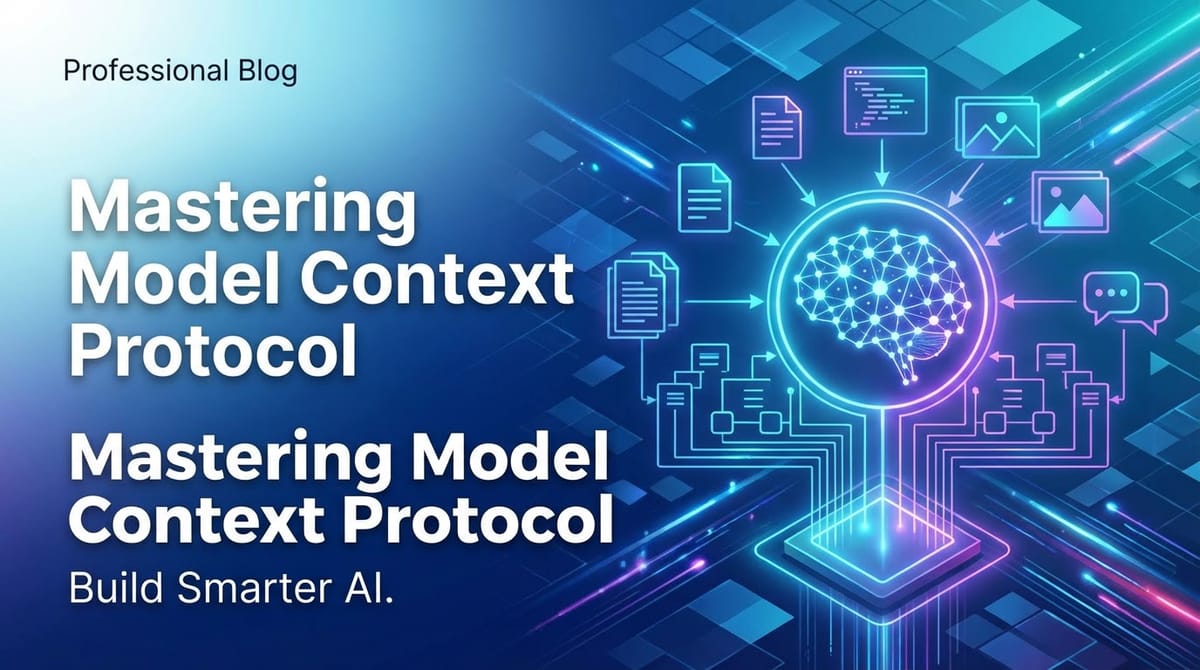


The landscape of artificial intelligence is in a perpetual state of flux, evolving at a breathtaking pace from rudimentary rule-based systems to the sophisticated deep learning models that now underpin much of our digital world. Yet, despite monumental strides in processing power and algorithmic complexity, a persistent challenge has remained, subtly hindering AI from achieving true human-like intelligence: the elusive grasp of "context." Imagine a brilliant scholar who, after every sentence uttered, suffers from amnesia, unable to recall the preceding conversation or the nuances of the person they are speaking with. Such is often the predicament of even the most advanced AI models today, capable of generating incredibly coherent and insightful responses in isolation, but frequently faltering when asked to maintain a prolonged, deeply contextualized interaction. This fundamental limitation has led to AI experiences that are often fragmented, generic, and frustratingly incapable of genuine understanding or personalized interaction.
This article delves into the critical necessity of a robust Model Context Protocol (MCP), a sophisticated framework designed to imbue AI systems with persistent memory, nuanced understanding, and adaptive intelligence. We will explore how mastering the Model Context Protocol is not merely an incremental improvement but a foundational shift, propelling AI from being merely powerful to becoming truly smart, empathetic, and indispensable. This journey will uncover the intricate mechanics of context management, its profound implications for AI architecture, and the transformative benefits that await enterprises and developers who champion this vital approach. By embracing MCP, we move closer to an era where AI doesn't just process information; it understands, remembers, and genuinely engages with the world, fostering interactions that are not just intelligent, but profoundly human-centric.
Deconstructing Context: The Core Element of Understanding in AI
Before embarking on the intricate journey of mastering the Model Context Protocol, it is imperative to deeply understand what "context" truly signifies within the realm of artificial intelligence. In human interaction, context is an unspoken omnipresent force, shaping every word we choose, every inference we draw, and every action we take. It's the silent narrator behind our conversations, the unseen director of our decisions. For AI, however, context is anything but inherent; it must be meticulously engineered, captured, represented, and utilized. Without a rich and dynamic understanding of context, even the most powerful AI models, particularly large language models (LLMs), can behave like a brilliant but naive prodigy – capable of astounding feats of information synthesis but utterly devoid of common sense, personal history, or situational awareness.
Context in AI extends far beyond the immediate input a model receives. It encompasses a vast tapestry of information, including but not limited to, the semantic relationships between words, the historical interactions a user has had with the system, their individual preferences, and even external environmental factors. To truly build smarter AI, we must move beyond simply feeding raw data into models and instead cultivate systems that can actively construct and maintain a sophisticated mental model of their operational environment, much like a human mind does.
What is "Context" in AI? Beyond Mere Input
At its simplest, context refers to the surrounding information that helps to clarify or specify the meaning of a given piece of data or an event. For an AI, this means providing the necessary background information for it to interpret a query, generate a response, or execute a task with accuracy and relevance. It's the difference between asking a search engine "tell me about parks" and asking a travel assistant "tell me about national parks near Denver for a family with young children, remembering my previous preference for hiking trails." The latter query is rich with explicit and implicit context, allowing for a far more tailored and useful response.
Consider the human analogy: When we engage in a conversation, our understanding is constantly informed by a myriad of factors. We remember what was said moments ago, who the person is, their emotional state, the shared history we have, the setting we're in, and even cultural norms. All these elements form our "context model," enabling us to grasp subtleties, infer intentions, and respond appropriately. Without this context, communication breaks down, leading to misunderstandings and frustrating interactions. Similarly, an AI system that lacks an effective context model is perpetually operating in a vacuum, leading to generic, irrelevant, or even erroneous outputs.
Types of Contextual Information
To effectively manage context, it's crucial to categorize and understand its different forms, each playing a vital role in building a comprehensive context model:
- Short-term/Conversational Context: This is the most immediate layer of context, encompassing the direct dialogue history within a single interaction session. For conversational AI, this means remembering the utterances, questions, and answers exchanged in the last few turns of a conversation. It's what allows a chatbot to understand "What about that one?" after discussing several product options. Without this, every query would be treated as the first, leading to disjointed and illogical conversations. The challenge here is not just storing the raw text, but also understanding the semantic links and dependencies between conversational turns, often requiring sophisticated linguistic analysis and summarization techniques to keep the context concise and relevant.
- Long-term/User-specific Context: This layer extends beyond a single session, capturing persistent information about an individual user. This includes their profile details (name, age, location), preferences (favorite genres, preferred communication style, accessibility needs), past actions (purchase history, browsing behavior, previously viewed items), and learned behaviors. For instance, an AI assistant that remembers a user always prefers vegan recipes or typically asks for stock market updates in the morning demonstrates a strong grasp of long-term user-specific context. This deepens personalization, making interactions feel genuinely tailored and anticipatory rather than merely reactive. Managing this type of context often involves storing structured and unstructured data across multiple sessions and potentially integrating with user management systems.
- Domain-specific/Factual Context: This refers to the specialized knowledge pertinent to a particular industry, topic, or organizational corpus. This can include technical jargon, regulatory guidelines, product specifications, company policies, or scientific facts. For a medical AI, this would be clinical guidelines and patient histories; for a legal AI, it would be case precedents and statutory laws. Integrating this kind of context prevents the AI from generating generic or factually incorrect information and ensures its responses are authoritative and precise within its designated domain. This often involves building and maintaining comprehensive knowledge bases, often in the form of knowledge graphs or specialized document repositories, which can be dynamically queried during AI interactions.
- Environmental/Situational Context: This outermost layer of context encompasses dynamic factors related to the AI's operational environment and the user's current situation. Examples include the current time and date, geographic location, the device being used (mobile vs. desktop), network conditions, and even external real-world events that might influence an interaction (e.g., weather forecasts, public holidays, current news headlines). An AI that understands it's morning and the user is on their commute might offer traffic updates, while an AI aware of a public holiday might suggest related activities. This type of context allows AI to be more adaptive, offering highly relevant and timely assistance by understanding "where" and "when" the interaction is occurring.
Why Current Models Struggle Without Explicit Context Management
Despite the impressive capabilities of modern AI models, particularly Large Language Models (LLMs) that can generate incredibly coherent and creative text, they inherently struggle with comprehensive context management without explicit engineering. This struggle stems from several architectural and practical limitations:
- Limited Token Windows (LLMs): A significant constraint for LLMs is their fixed "context window" or "token limit." While these windows are growing, they still represent a relatively small slice of information compared to a human's long-term memory. Models can only process and attend to a certain number of tokens (words or sub-words) at a time. If a conversation or document exceeds this limit, earlier parts of the context are simply forgotten or truncated, leading to disjointed interactions and a loss of historical understanding. This means that for a long conversation, the model might not remember the initial premise or critical details mentioned much earlier.
- Lack of Memory Across Sessions: Most AI models are stateless by default. Each interaction is treated as an independent event. Unless explicitly designed with a memory component, an AI has no recall of previous conversations, user preferences, or past actions. This leads to repetitive questions, generic responses, and a frustrating lack of personalization, as the AI essentially "restarts" its understanding with every new query. Building a truly intelligent system requires moving beyond this stateless paradigm.
- Prone to Hallucinations and Generic Responses: Without grounding in specific, verified context, AI models are more susceptible to "hallucinations" – generating plausible but factually incorrect or nonsensical information. They rely heavily on patterns learned during training, which might not always align with the real-world facts or specific user needs. When context is absent or vague, models tend to fall back on general knowledge or common phrases, leading to generic and unhelpful responses that lack specificity and relevance. A robust context model acts as an anchor, grounding the AI's outputs in reality.
- Inability to Personalize or Adapt: True intelligence often manifests in the ability to adapt and personalize. Without an explicit mechanism to manage and leverage user-specific or situational context, AI systems cannot tailor their interactions. They cannot learn from past mistakes, anticipate future needs, or adjust their communication style based on individual preferences. This lack of adaptability hinders the development of truly engaging and effective AI experiences.
In summary, while AI models are powerful pattern-matchers and data synthesizers, their inherent design does not equip them with human-like memory or contextual understanding. This gap is precisely what the Model Context Protocol is designed to bridge, transforming AI from a collection of isolated algorithms into deeply understanding, continuously learning, and genuinely intelligent systems. Mastering this protocol is not just about improving AI; it's about fundamentally redefining its capabilities and unlocking its true potential.
The Model Context Protocol (MCP): A Blueprint for Intelligence
The limitations inherent in current AI models, particularly their struggle with sustained contextual understanding, underscore the urgent need for a systematic and robust approach to context management. This is where the Model Context Protocol (MCP) emerges as a critical architectural and operational blueprint. The MCP is not a single tool or algorithm, but rather a comprehensive framework – a standardized set of principles, methods, and interfaces – specifically designed to capture, represent, store, retrieve, and dynamically update contextual information, ensuring that AI models possess a persistent, relevant, and evolving understanding of their operational environment. Its ultimate goal is to move AI beyond simple input-output processing, enabling it to engage in interactions that are deeply informed, highly personalized, and genuinely intelligent.
Defining the Model Context Protocol (MCP)
At its core, the Model Context Protocol defines the "how-to" of context for AI. It dictates how information surrounding an interaction, a user, a domain, or an environment is handled across an AI system's lifecycle. Think of it as the nervous system for an AI's memory and understanding. Without a well-defined MCP, each AI component might manage context in an ad-hoc, inconsistent, or inefficient manner, leading to fragmentation and hindering the system's overall intelligence.
A strong MCP ensures that:
- Consistency: Contextual data is treated uniformly across different AI services and interaction points.
- Relevance: Only the most pertinent context is presented to the AI model at any given time, avoiding information overload.
- Persistence: Contextual understanding can span across multiple interactions, sessions, and even different applications.
- Adaptability: The context model can evolve and learn from new interactions and changing environmental factors.
- Efficiency: Context management operations (capture, storage, retrieval) are optimized for performance and scalability.
By standardizing these aspects, the MCP allows developers to build AI systems that are not just reactive but truly proactive, predictive, and capable of nuanced understanding. It provides the necessary infrastructure for AI to develop a robust context model that can underpin sophisticated human-AI collaboration.
Core Components of a Robust MCP
A comprehensive Model Context Protocol is typically composed of several interconnected and interdependent modules, each performing a specialized function in the lifecycle of contextual information:
1. Context Capture & Extraction
This initial stage is responsible for identifying, collecting, and extracting relevant pieces of information from various incoming sources. These sources can be incredibly diverse, ranging from user inputs (text, voice commands, gestures), to sensor data (location, time, device state), to internal system events, and even external databases or APIs. The challenge here is to sift through noise and pinpoint exactly what is contextually significant.
- Techniques Employed:
- Named Entity Recognition (NER): Identifying and classifying proper nouns (people, organizations, locations), numerical expressions (dates, times, quantities), and other specific entities within text. For example, extracting "New York" as a location or "yesterday" as a date.
- Sentiment Analysis: Determining the emotional tone or attitude expressed in a piece of text (positive, negative, neutral). This can provide crucial emotional context for subsequent AI responses.
- Topic Modeling: Discovering abstract "topics" that occur in a collection of documents. This helps in understanding the overarching subject matter of an interaction or user interest.
- Summarization: Condensing long stretches of text or conversation into key points, especially crucial for managing conversational history within limited token windows.
- Schema Extraction: Identifying structured information (e.g., product IDs, service types) from unstructured text, often using rule-based systems or machine learning models trained on specific domains.
2. Context Representation & Encoding
Once raw contextual data is captured, it needs to be transformed into a standardized, machine-understandable format that AI models can efficiently process and utilize. The choice of representation method significantly impacts the efficiency of storage, retrieval, and integration.
- Methods and Formats:
- Vector Embeddings (Dense and Sparse): This is a cornerstone technique, especially for semantic context. Text, images, or even structured data are converted into high-dimensional numerical vectors where similar items are numerically closer in the vector space.
- Dense Embeddings: Generated by deep learning models (e.g., BERT, Word2Vec, OpenAI's embeddings) capture nuanced semantic relationships. They are excellent for similarity search and understanding meaning.
- Sparse Embeddings: Often based on techniques like TF-IDF or BM25, they represent word occurrences and are good for keyword-based retrieval and relevance ranking.
- Knowledge Graphs: A structured network of entities (nodes) and their relationships (edges). Ideal for representing complex factual knowledge, hierarchical structures, and intricate dependencies. For example, a knowledge graph can represent "Paris (entity) is_capital_of (relationship) France (entity)." They allow for powerful inference and querying.
- Structured Data (JSON, YAML, XML): For well-defined contextual information such as user profiles, system configurations, or API responses, structured data formats provide clear, explicit representations. These are easily parsable and queryable by traditional databases or object stores.
- Symbolic Representations: Rule-based systems, ontologies, and logical predicates can represent explicit knowledge and infer new facts based on predefined rules. While less common for general context, they are powerful in specific expert systems.
- Vector Embeddings (Dense and Sparse): This is a cornerstone technique, especially for semantic context. Text, images, or even structured data are converted into high-dimensional numerical vectors where similar items are numerically closer in the vector space.
3. Context Storage & Management
Efficient and persistent storage is paramount for any robust MCP. The chosen storage solutions must be capable of handling diverse data types, varying data volumes, and providing fast retrieval. The storage layer acts as the AI's long-term memory, holding everything from raw conversational turns to meticulously crafted knowledge graphs.
- Solutions and Technologies:
- Vector Databases (e.g., Pinecone, Weaviate, Milvus): Specifically optimized for storing and querying high-dimensional vector embeddings. They enable incredibly fast semantic similarity searches, which are crucial for retrieving relevant context based on meaning rather than just keywords. These are ideal for RAG (Retrieval Augmented Generation) architectures.
- Graph Databases (e.g., Neo4j, ArangoDB, Amazon Neptune): Excellent for storing knowledge graphs and representing complex, interconnected data. They allow for powerful traversal and pattern matching, making them ideal for understanding relationships between contextual elements.
- Relational Databases (e.g., PostgreSQL, MySQL): Highly effective for structured contextual data like user profiles, historical logs, or predefined settings. They offer strong consistency, transactional integrity, and mature querying capabilities.
- NoSQL Databases (e.g., MongoDB, Cassandra, Redis): Provide flexible schemas and high scalability for semi-structured or unstructured context. Redis, in particular, is often used for fast caching of short-term conversational context due to its in-memory nature.
- Specialized Memory Networks: Advanced research systems sometimes employ neural memory networks or external memory augmented neural networks that can dynamically learn to store and retrieve information, offering a more adaptive approach to context management.
4. Context Retrieval & Selection
This component is the brain of the MCP, responsible for dynamically fetching the most relevant and precise contextual information from the storage layer for a given AI task or query. The effectiveness of an AI's response hinges significantly on its ability to retrieve exactly what it needs, when it needs it.
- Strategies and Algorithms:
- Semantic Search: Using vector embeddings, this strategy retrieves context based on the meaning of the query rather than exact keyword matches. If a user asks about "eco-friendly travel," semantic search can retrieve documents discussing "sustainable tourism" or "green vacations."
- Keyword Matching: Traditional search techniques where context is retrieved based on the presence of specific keywords in the query and the stored data. While simpler, it can miss semantically related but lexically different information.
- Hybrid Retrieval: Combining semantic search with keyword matching for a more robust approach. For example, using semantic search to find broad relevant documents and then keyword filtering within those documents for precision.
- RAG (Retrieval Augmented Generation) Principles: A prominent paradigm where a retrieval component fetches relevant documents or knowledge snippets, which are then fed as augmented context to a generative AI model (like an LLM) to improve the factual accuracy and specificity of its output. This approach is fundamental to many advanced context-aware AI systems.
- Graph Traversal: For knowledge graphs, retrieval involves traversing the graph to find connected entities and relationships relevant to the query, allowing for inferential reasoning.
5. Context Update & Lifecycle Management
Context is rarely static; it evolves as interactions progress, user preferences change, and external information is updated. This component manages the dynamic nature of context, ensuring it remains fresh, relevant, and not overly burdened by outdated or irrelevant information. It defines how context grows, shrinks, and transforms over time.
- Principles and Mechanisms:
- Recency Bias: Giving more weight to recent interactions or information. In a conversation, the last few turns are often more important than the very first ones.
- Importance Weighting: Assigning higher importance scores to certain pieces of context based on predefined rules or learned patterns (e.g., user's explicit preferences might be more important than a casual mention).
- Summarization Techniques: Periodically summarizing older parts of a long conversation or document to condense them into a smaller, manageable form while retaining key information. This is vital for staying within token limits.
- Forgetting Mechanisms: Implementing strategies to prune or archive old, irrelevant, or low-importance context to prevent information overload and maintain efficiency. This could involve time-based expiration or least-recently-used (LRU) policies.
- Feedback Loops: Incorporating explicit or implicit user feedback to refine the context. If a user corrects the AI, that correction should update the underlying context model.
- Version Control: For critical knowledge bases or user profiles, versioning context allows for rollbacks and tracking changes over time.
6. Context Integration Layer
This final component defines the interfaces and mechanisms through which the managed context is seamlessly injected into the primary AI model's inference pipeline. It's the bridge that connects the dedicated context engine with the model that actually processes the input and generates output.
- Methods:
- Prompt Engineering: For LLMs, context is often injected directly into the prompt as prefix text, system messages, or examples (in-context learning).
- API Interfacing: Dedicated APIs allow AI services to query the context engine, retrieve relevant information, and then incorporate it into their processing logic.
- Model Adapters: Specific modules that preprocess input and context before feeding it to a core AI model, potentially reformatting or re-embedding the context to match the model's expected input structure.
By meticulously designing and implementing these core components, an organization can establish a robust Model Context Protocol that transforms its AI applications from simple tools into sophisticated, understanding, and truly intelligent partners. This systematic approach is the cornerstone of building smarter AI.
Architectural Patterns for Implementing MCP
Implementing a robust Model Context Protocol (MCP) requires careful consideration of architectural design. It's not just about selecting individual tools but about orchestrating them into a cohesive system that efficiently manages the flow and evolution of contextual information. These architectural patterns ensure that context is captured, stored, retrieved, and updated seamlessly, providing a dynamic and intelligent backdrop for AI operations.
The Context Engine: A Dedicated Module
A fundamental architectural pattern for MCP is the establishment of a dedicated Context Engine. This engine acts as the central intelligence unit for all context-related operations, decoupling context management from the core AI models themselves.
- Responsibilities:
- Context Orchestration: Managing the entire lifecycle of context, from extraction to storage, retrieval, and update.
- Data Integration: Consolidating contextual information from various sources (user inputs, external APIs, databases) into a unified context model.
- Standardized Access: Providing a clear, well-defined API (Application Programming Interface) for other AI services and applications to interact with the context. This promotes modularity and reusability.
- Performance Optimization: Implementing caching, indexing, and parallel processing to ensure low-latency context retrieval.
- Scalability: Designed to handle increasing volumes of contextual data and concurrent queries.
By centralizing these functions, the Context Engine ensures consistency in how context is handled across an enterprise's entire AI ecosystem. It acts as a single source of truth for contextual information, preventing redundancy and ensuring data integrity.
Pre-Inference Context Injection
One of the most common and effective architectural patterns involves injecting relevant context into the AI model before the inference process begins. This is particularly crucial for generative AI models like LLMs, where the input prompt significantly dictates the output.
- Mechanism:
- A user submits a query or initiates an interaction.
- The Context Engine, upon receiving the query, retrieves all relevant contextual information (e.g., recent conversation history, user preferences, relevant domain knowledge) based on the current input and the existing context model.
- This retrieved context is then formatted and prepended or interleaved with the user's current query, forming a comprehensive input prompt for the AI model.
- The AI model then processes this context-rich prompt, generating an output that is grounded in the provided background information.
- Benefits: Reduces the AI model's cognitive load, grounds its responses in factual or historical data, and helps mitigate hallucinations by providing specific, verified information. It directly influences the model's understanding and generation process, leading to more accurate and relevant outputs.
Post-Inference Context Update
Context is not static; it evolves with every interaction. Therefore, a critical architectural pattern involves updating the context model after the AI model has processed an input and generated an output. This creates a continuous learning loop.
- Mechanism:
- The AI model generates a response to a context-rich prompt.
- The Context Engine analyzes both the original input, the utilized context, and the AI's output.
- Relevant information from this interaction (e.g., newly stated user preferences, clarifications, successful task completions, newly generated factual insights) is then extracted.
- This new information is used to update the persistent context store, enriching the context model for future interactions.
- Benefits: Enables the AI system to "learn" from its interactions, adapt to changing user needs, refine its understanding, and maintain an up-to-date representation of the ongoing dialogue or user state. This makes the AI system more dynamic and responsive over time.
Hybrid Architectures
Many sophisticated MCP implementations leverage hybrid architectures, combining different storage, retrieval, and processing methods to optimize for various types of context and performance requirements.
- Examples:
- Short-term vs. Long-term Context: Using a fast, in-memory cache (like Redis) for immediate conversational context, while storing long-term user profiles and domain knowledge in a persistent vector database or knowledge graph.
- Structured vs. Unstructured Context: Storing structured user preferences in a relational database, while managing unstructured document context in a vector database for semantic search.
- Retrieval Augmented Generation (RAG) + Knowledge Graphs: Combining the power of semantic retrieval from vector databases for broad information with the inferential capabilities of knowledge graphs for structured reasoning and factual verification.
Hybrid architectures allow systems to capitalize on the strengths of different technologies, providing both speed for immediate needs and depth for complex reasoning, thereby constructing a more comprehensive and resilient context model.
The Role of API Gateways: Streamlining MCP Integration with APIPark
As organizations deploy a growing number of AI models and services, each potentially with unique context handling requirements, the complexity of integrating and managing them can become overwhelming. This is where AI gateways and API management platforms play an indispensable role in streamlining the implementation of the Model Context Protocol.
Platforms like APIPark offer a unified solution for managing diverse AI models and their associated data flows, which is directly beneficial for robust MCP implementation. APIPark is an open-source AI gateway and API developer portal designed to simplify the management, integration, and deployment of AI and REST services.
Here's how APIPark specifically aids in mastering the Model Context Protocol:
- Unified API Format for AI Invocation: A core challenge in integrating multiple AI models (e.g., one for sentiment analysis, another for content generation, a third for data extraction) is their disparate API specifications. APIPark standardizes the request data format across all integrated AI models. This means that regardless of the underlying AI model's native API, your application sends a consistent request. For context management, this is invaluable. It ensures that context, when passed to different AI services, adheres to a predictable format, simplifying the integration layer of your MCP. Changes in AI models or underlying context representation won't necessitate widespread application code changes, significantly reducing maintenance costs and increasing agility in evolving your context model.
- Prompt Encapsulation into REST API: The ability to combine AI models with custom prompts to create new APIs (e.g., a "sentiment analysis API" from a general-purpose LLM) is a powerful feature of APIPark. This allows developers to encapsulate sophisticated, context-aware prompts within reusable REST APIs. For instance, if your MCP requires a specific preamble or a particular structure for injecting conversational history, APIPark can wrap this complex prompt engineering into a simple API call. This abstraction simplifies how applications inject context, promoting consistency and reducing errors across different AI services. It effectively externalizes prompt logic, which can include context placeholders, making your Model Context Protocol more manageable and scalable.
- End-to-End API Lifecycle Management: Implementing an MCP involves continuous evolution of context models, retrieval strategies, and integration points. APIPark assists with managing the entire lifecycle of APIs, including design, publication, invocation, and decommission. As your context models evolve (e.g., adding new types of context, refining retrieval algorithms), new versions of AI services might be deployed. APIPark helps regulate API management processes, manage traffic forwarding, load balancing, and versioning of published APIs. This governance is critical for ensuring that updates to your Model Context Protocol are rolled out smoothly, without disrupting existing applications, and that different versions of context-aware services can coexist and be managed effectively.
In essence, while the Context Engine handles the internal mechanics of the MCP, platforms like APIPark provide the external scaffolding and standardization, making it easier to expose context-aware AI services, integrate them into broader applications, and manage their lifecycle. This symbiotic relationship between a dedicated Context Engine and an intelligent API gateway like ApiPark accelerates the development and deployment of truly smarter AI systems by simplifying the complexities of integrating and orchestrating diverse AI functionalities with a unified approach to context management.
The Transformative Benefits of Mastering MCP
Mastering the Model Context Protocol (MCP) represents a paradigm shift in how we conceive, design, and deploy artificial intelligence. It transcends incremental improvements, unlocking a profound transformation in AI's capabilities, reliability, and human-centricity. The strategic implementation of a robust MCP yields a cascade of benefits that are not just desirable but increasingly essential for building AI systems that are truly smart, adaptive, and valuable in real-world scenarios. By moving beyond reactive, stateless AI, we empower systems to exhibit a level of understanding and responsiveness previously unattainable.
Enhanced Accuracy and Relevance: AI That Truly Understands
One of the most immediate and significant benefits of a well-implemented MCP is a dramatic improvement in the accuracy and relevance of AI responses and actions. When an AI system operates with a rich, dynamic context model, it moves beyond superficial pattern matching to a deeper, more nuanced understanding of the user's intent, the ongoing situation, and the underlying domain.
- Precision in Response: Instead of generating generic answers, an AI informed by comprehensive context can provide highly specific and precise information. For example, a customer service AI that knows a user's purchase history and recent interactions can address their specific issue without repeated explanations, leading to more accurate troubleshooting and resolution.
- Reduced Ambiguity: Human language is inherently ambiguous. Words and phrases can have multiple meanings depending on the context. MCP helps the AI disambiguate queries by leveraging historical data, user preferences, and domain-specific knowledge, ensuring it interprets the user's intent correctly from the outset.
- Tailored Information Delivery: The relevance of information is subjective. What's relevant to one user might be noise to another. With a personal context model, the AI can filter and prioritize information, presenting only what is most pertinent to the individual user's current needs and long-term interests, thereby enhancing the overall utility of the AI.
Reduced Hallucinations and Errors: Grounding AI in Reality
One of the most vexing challenges with advanced generative AI models, particularly LLMs, is their propensity for "hallucinations" – generating factually incorrect, nonsensical, or misleading information with conviction. These errors can erode user trust and severely limit the reliability of AI systems in critical applications. MCP serves as a powerful antidote.
- Factual Grounding: By injecting verified domain-specific context (e.g., from a knowledge graph or document repository) directly into the AI's input, MCP grounds its responses in factual data. The AI is encouraged to retrieve and synthesize information from trusted sources rather than relying solely on its pre-trained statistical patterns, which can sometimes be flawed or outdated.
- Consistency Across Interactions: A persistent context model helps maintain logical consistency across prolonged interactions. If the AI has previously established a fact or made a commitment, the MCP ensures this information is accessible, preventing the AI from contradicting itself or forgetting crucial details in subsequent turns.
- Error Prevention: For task-oriented AIs, knowing the current state of a process (e.g., steps completed in an order, current configuration settings) prevents the AI from suggesting irrelevant actions or making redundant requests, thereby minimizing operational errors.
Profound Personalization: Tailoring Experiences to Individual Users
True intelligence is deeply personal. An AI that can adapt its behavior, language, and recommendations to individual users creates a far more engaging and satisfying experience. MCP is the engine of this personalization.
- Adaptive Communication: An AI with a strong context model can learn a user's preferred communication style (formal vs. informal, concise vs. verbose), their emotional state, or even their preferred language, and adjust its responses accordingly.
- Proactive Assistance: By understanding long-term user preferences, habits, and past interactions, the AI can anticipate needs and offer proactive assistance. For example, a virtual assistant that notices a user frequently orders coffee on Monday mornings might proactively ask if they'd like to place their usual order.
- Personalized Recommendations: Beyond simple collaborative filtering, context-aware recommendation systems can factor in real-time situational context (e.g., current location, weather, time of day) along with historical preferences to offer hyper-relevant suggestions for products, content, or services.
- Empathetic Interactions: By capturing and tracking user sentiment and emotional context, AI can respond with greater empathy, offering support or adjusting its tone to match the user's emotional state, fostering deeper trust and rapport.
Improved User Experience: More Natural, Fluent, and Helpful Interactions
The ultimate measure of AI's success lies in the quality of the user experience it delivers. MCP significantly elevates this experience by making AI interactions feel more natural, seamless, and genuinely helpful, mirroring human-to-human communication more closely.
- Seamless Conversational Flow: Users no longer need to repeat themselves or re-explain context at the beginning of every interaction. The AI "remembers," leading to fluent, continuous conversations that feel less like talking to a machine and more like engaging with an intelligent assistant.
- Reduced Frustration: The common frustrations associated with AI (repetition, misunderstanding, generic responses) are significantly mitigated when context is effectively managed. This leads to higher user satisfaction and reduced cognitive load for the user.
- Efficiency for Users: By understanding context, the AI can achieve user goals more quickly and with fewer turns. It can anticipate follow-up questions or proactively offer solutions, saving the user time and effort.
- Enhanced Trust and Reliability: When an AI consistently provides accurate, relevant, and personalized assistance, users develop a greater sense of trust in the system, viewing it as a reliable and intelligent partner rather than a mere tool.
Increased Efficiency and Cost-Effectiveness
While implementing an MCP requires an initial investment, it often leads to significant long-term efficiencies and cost savings, particularly in resource-intensive AI applications.
- Reduced Redundant Computations: By accurately retrieving relevant context, the AI model avoids re-processing or re-generating information that is already known or available. This can reduce the computational burden on expensive large models.
- Better Utilization of Expensive AI Model Calls: For pay-per-token or pay-per-call AI services, precise context ensures that model invocations are focused and productive. By providing exactly the right context, the AI is more likely to generate a useful response in a single call, reducing the need for iterative queries or correction prompts. This minimizes wasteful API calls.
- Faster Development Cycles: With a standardized MCP, developers spend less time reinventing context management for each new AI application. The modularity and reusability fostered by MCP accelerate development and deployment.
- Improved Automation Rates: More intelligent, context-aware AIs can handle a broader range of complex queries and tasks autonomously, reducing the need for human intervention and freeing up human agents for more intricate problems. This translates directly into operational cost savings.
Scalability and Adaptability: Building AI Systems That Grow and Learn
Modern AI systems need to be able to grow, learn, and adapt to new information and changing environments. MCP provides the foundational architecture for this dynamic evolution.
- Continuous Learning: The post-inference context update mechanism within MCP enables AI systems to continuously refine their context model based on new data and interactions. This means the AI gets smarter over time without requiring complete retraining cycles.
- Easier Integration of New Information: When new knowledge bases, data streams, or user segments are introduced, a well-defined MCP facilitates their seamless integration into the existing context framework, enriching the AI's overall understanding.
- Robustness to Change: By abstracting context management into a dedicated protocol, the core AI models become more robust. Changes in underlying data sources or the addition of new contextual dimensions can be managed by the MCP without necessitating significant modifications to the primary AI models.
- Support for Multi-Agent Systems: In complex AI ecosystems where multiple specialized AI agents collaborate, MCP provides the common language and memory infrastructure for these agents to share and maintain a consistent understanding of shared goals, environments, and tasks.
In summary, mastering the Model Context Protocol is not merely an option for advanced AI development; it is a strategic imperative. It elevates AI from being a collection of intelligent algorithms to a truly understanding, empathetic, and indispensable partner, driving unprecedented levels of accuracy, personalization, efficiency, and user satisfaction across a multitude of applications and industries.
APIPark is a high-performance AI gateway that allows you to securely access the most comprehensive LLM APIs globally on the APIPark platform, including OpenAI, Anthropic, Mistral, Llama2, Google Gemini, and more.Try APIPark now! 👇👇👇
Navigating the Challenges of MCP Implementation
While the benefits of mastering the Model Context Protocol (MCP) are profound, its implementation is not without its complexities. Building a robust, scalable, and secure MCP requires careful consideration of several technical and operational challenges. Successfully navigating these hurdles is key to unlocking the full potential of context-aware AI.
Data Volume and Velocity: Managing Vast Amounts of Dynamic Contextual Data
One of the most immediate challenges in implementing MCP is dealing with the sheer volume and high velocity of contextual data. Modern AI applications interact with thousands, if not millions, of users, generating vast amounts of conversational history, user preferences, real-time sensor data, and dynamic external information.
- Problem: Storing, indexing, and querying petabytes of constantly evolving context without performance degradation. Traditional database systems may struggle with the scale and semantic nature of this data. Maintaining a fresh context model across all users and interactions is resource-intensive.
- Solution Strategies:
- Distributed Storage: Utilizing distributed databases (e.g., Cassandra, MongoDB) or object storage (e.g., AWS S3, Google Cloud Storage) for massive scale and resilience.
- Real-time Processing Frameworks: Employing stream processing technologies (e.g., Apache Kafka, Apache Flink) to ingest, process, and update contextual data in real-time, ensuring the context model is always current.
- Efficient Indexing: Leveraging specialized indexing techniques like Hierarchical Navigable Small Worlds (HNSW) in vector databases for lightning-fast similarity searches across billions of embeddings.
- Context Pruning and Summarization: Implementing intelligent policies to summarize older context or remove irrelevant data to keep the active context model lean and efficient without losing critical information.
Latency and Real-time Processing: Retrieving Context Without Delay
AI interactions, especially conversational ones, demand near-instantaneous responses. The process of capturing, storing, retrieving, and injecting context must not introduce noticeable delays, as even a few hundred milliseconds of latency can severely degrade the user experience.
- Problem: The time taken to query multiple context sources, combine the results, and prepare the input for the AI model can accumulate, leading to slow responses.
- Solution Strategies:
- Optimized Retrieval Algorithms: Designing highly efficient semantic search and keyword matching algorithms, often backed by pre-computed indices and specialized data structures.
- Caching Mechanisms: Implementing multi-layer caching (e.g., in-memory caches like Redis for hot context, distributed caches for warm context) to store frequently accessed or recently used context closer to the AI models.
- Asynchronous Processing: Utilizing asynchronous programming patterns to fetch context from multiple sources concurrently, minimizing cumulative wait times.
- Pre-fetching: For predictive scenarios, proactively fetching likely needed context in anticipation of a user's next action or query.
- Edge Computing: Deploying context retrieval components closer to the user (e.g., on edge servers) to reduce network latency.
Context Consistency and Coherence: Ensuring Alignment and Preventing Conflicts
As contextual information flows from diverse sources and is updated over time, ensuring its consistency and coherence becomes a significant challenge. Conflicting pieces of information within the context model can lead to contradictory AI responses or logical errors.
- Problem: Different sources might provide conflicting facts, user preferences might change over time but not be immediately reflected, or summarized context might lose critical nuances.
- Solution Strategies:
- Strong Data Governance: Establishing clear rules and pipelines for data ingestion, validation, and reconciliation from various sources. Defining authoritative sources for specific types of context.
- Semantic Reasoning and Fusion: Developing mechanisms to intelligently merge and resolve conflicts between different pieces of context. This might involve weighting sources, temporal reasoning, or using logical inference to identify and correct inconsistencies.
- Version Control for Context: For critical, structured context (like knowledge graph entries or user profiles), implementing versioning systems allows for tracking changes, auditing, and rolling back to previous states if inconsistencies are detected.
- Feedback Loops with Human Oversight: Incorporating mechanisms for human experts to review and correct context when the AI encounters ambiguity or conflict, thereby improving the context model over time.
Privacy and Security: Handling Sensitive User and Domain-Specific Information
Contextual data often includes highly sensitive information, such as personal user data, proprietary business knowledge, or regulated industry-specific facts (e.g., medical records, financial details). Protecting this data is paramount for legal compliance, ethical responsibility, and maintaining user trust.
- Problem: Ensuring that sensitive context is stored securely, accessed only by authorized parties, and used in compliance with regulations like GDPR, HIPAA, CCPA, etc.
- Solution Strategies:
- Data Anonymization and Pseudonymization: Implementing techniques to strip identifiable information from context where possible, or replace it with pseudonyms, reducing privacy risks.
- Role-Based Access Control (RBAC): Implementing granular access controls to the context store, ensuring that only specific AI services or human operators with appropriate permissions can access particular types of sensitive context.
- Encryption at Rest and in Transit: Encrypting contextual data both when it's stored on disk (at rest) and when it's being transmitted between components (in transit) to protect against unauthorized access.
- Compliance Auditing: Regular audits and logging of context access and usage to demonstrate compliance with privacy regulations and identify potential breaches.
- Data Minimization: Only collecting and storing the absolute minimum amount of context required for the AI to function effectively, thereby reducing the attack surface.
Evaluating Context Quality: How to Measure Effectiveness
Unlike simple input-output metrics, evaluating the "quality" or "effectiveness" of context management is a complex task. How do we quantify whether the AI received the right context, and how much that context contributed to a better output?
- Problem: Lack of standardized metrics and methodologies to objectively assess the impact of MCP on AI performance and user experience.
- Solution Strategies:
- A/B Testing: Running experiments where different context management strategies (e.g., varying context window sizes, different retrieval algorithms) are tested against each other, measuring the impact on key performance indicators (KPIs) like task completion rates, accuracy, or user satisfaction.
- User Feedback and Surveys: Directly soliciting feedback from users on the relevance, helpfulness, and personalization of AI interactions.
- Specific Context-Aware Metrics: Developing custom metrics, such as:
- Context Recall: The percentage of truly relevant context snippets that were successfully retrieved and presented to the AI.
- Context Precision: The percentage of retrieved context snippets that were actually relevant and utilized by the AI.
- Context Utilization Rate: How often the AI model references or explicitly uses the provided context in its responses.
- Hallucination Rate Reduction: Measuring the decrease in factually incorrect statements attributable to better context.
- Human Annotation and Evaluation: Having human experts review AI outputs and the context provided, scoring the quality and relevance of the context.
- Proxy Metrics: Using metrics like "turns to resolution" in a conversational AI, where fewer turns often indicate better context understanding.
Model Agnosticism: Designing MCP for Versatility
The AI landscape is constantly evolving, with new models and frameworks emerging regularly. An MCP that is tightly coupled to a specific AI model or technology risks becoming quickly outdated.
- Problem: Designing a Model Context Protocol that can seamlessly integrate with and provide context to a variety of AI models (e.g., LLMs, image recognition models, specialized ML models) from different vendors or architectures.
- Solution Strategies:
- Standardized Interfaces: Defining clear, abstract APIs for the Context Engine that are independent of the underlying AI model's specific input requirements. This allows for easy swapping of AI models.
- Context Adapters: Developing lightweight adapter layers that can transform the standardized context output from the MCP into the specific input format required by different AI models.
- Modular Design: Architecting the MCP with highly decoupled components, allowing individual modules (e.g., context capture, storage, retrieval) to be updated or replaced without impacting the entire system.
- Data Format Flexibility: Designing context representation to be flexible enough to be converted into various formats (e.g., JSON, XML, vector arrays) that different models might expect.
Overcoming these challenges requires a combination of robust engineering, sophisticated data management, stringent security practices, and a commitment to continuous iteration and evaluation. By proactively addressing these hurdles, organizations can build an MCP that not only maximizes the intelligence of their AI systems but also ensures their long-term viability and trustworthiness.
Advanced Concepts and Future Directions in Context Modeling
The journey of mastering the Model Context Protocol (MCP) does not end with its foundational implementation. As AI continues its rapid evolution, so too will the sophistication of context modeling. Future directions in MCP aim to push the boundaries of AI understanding, making systems not just context-aware, but context-intelligent, proactive, and even self-improving. These advanced concepts promise to unlock new levels of AI capability, transforming how we interact with and rely on intelligent machines.
Multi-modal Context: Bridging Sensory Gaps
Current context modeling often focuses primarily on textual or structured data. However, the real world is inherently multi-modal, with information conveyed through sight, sound, and touch as much as through words. Integrating multi-modal context is the next frontier for comprehensive understanding.
- Concept: Extending the Model Context Protocol to capture, represent, and integrate contextual information derived from various sensory inputs simultaneously – text, images, audio, video, and even haptic feedback.
- Implications:
- An AI assistant could understand a user's query ("Find me a restaurant") while also analyzing their current location (GPS), the time of day, the visual cues from a camera feed (e.g., showing a user looking tired), and even the tone of their voice (indicating urgency or frustration).
- In industrial settings, AI could monitor machine performance by integrating sensor data (vibration, temperature) with maintenance logs and operator audio commands, building a richer context model for predictive maintenance.
- Challenges: Representing and fusing heterogeneous data types (e.g., how to combine image features with text embeddings), maintaining real-time performance across multiple modalities, and resolving ambiguities that arise from cross-modal inputs.
- Future Impact: Enables AI to perceive and understand the world more holistically, leading to more natural human-AI interaction in AR/VR, robotics, and smart environments.
Proactive Context Acquisition: AI That Seeks Understanding
Traditional MCP relies on passively receiving context or being prompted to retrieve it. Future AI systems will actively seek out the context they need, demonstrating a more intelligent and autonomous form of understanding.
- Concept: Developing AI models and context engines that can identify gaps in their current context model for a given task and proactively initiate actions to acquire missing information.
- Implications:
- If an AI is asked a complex question for which it lacks sufficient background, instead of stating "I don't know," it could internally formulate sub-queries to external knowledge bases, APIs, or even other specialized AI agents, enriching its context model before attempting an answer.
- An AI scheduling assistant, upon realizing it doesn't know a user's preference for meeting locations, could proactively check their calendar for past meeting venues or query a "preferences service" to fill the gap.
- Challenges: Defining clear triggers for proactive acquisition, managing the cost and latency of external queries, and ensuring the relevance and trustworthiness of newly acquired context.
- Future Impact: Leads to more resilient and resourceful AI systems that can independently resolve ambiguities and deepen their understanding without explicit user intervention, resembling human curiosity and problem-solving.
Explainable Context: Understanding Why the AI Responded
As AI systems become more complex and context-dependent, understanding why they arrived at a particular decision or generated a specific response becomes crucial for trust, debugging, and regulatory compliance (Explainable AI - XAI). Explainable context focuses on making the context selection process transparent.
- Concept: Developing mechanisms within the Model Context Protocol to log, visualize, and articulate which specific pieces of context were retrieved, how they were weighted, and how they influenced the AI's output.
- Implications:
- A medical AI providing a diagnosis could not only give the diagnosis but also highlight the specific patient history, clinical guidelines, and research papers from its context model that directly informed its conclusion.
- For regulatory auditing, an AI system could generate a "context trail" explaining precisely what information was used to comply with a specific policy, providing transparency and accountability.
- Challenges: Attributing influence in complex neural networks, balancing interpretability with performance, and presenting contextual explanations in a human-understandable format.
- Future Impact: Fosters greater trust in AI systems, aids in debugging and improving context model quality, and meets growing demands for transparency and accountability in AI decision-making.
Adaptive Context Learning: Self-Optimizing Context Strategies
Beyond simply updating the content of the context model, future MCPs will involve AI systems that can learn and adapt their own strategies for context management. This means the AI itself determines what context is most useful, how to store it, and when to retrieve it.
- Concept: Employing meta-learning or reinforcement learning techniques within the Model Context Protocol to dynamically optimize parameters such as context window size, retrieval algorithms, summarization thresholds, and forgetting policies based on observed performance and user feedback.
- Implications:
- An AI could learn that for customer support queries, recent conversational history is paramount, while for product recommendations, long-term user preferences and environmental context are more crucial. It would then dynamically adjust its context retrieval strategy accordingly.
- The system could adapt its summarization techniques to be more aggressive when facing token limits, or more verbose when high fidelity is required, without explicit human programming.
- Challenges: Designing robust reward functions for context optimization, ensuring stability during adaptive learning, and avoiding local optima in complex context landscapes.
- Future Impact: Creates highly efficient and truly autonomous AI systems where the context model itself becomes a learned and continuously optimizing entity, leading to self-improving AI.
Ethical Considerations in Context: Bias, Manipulation, and Autonomy
As AI's understanding becomes deeper through advanced context modeling, the ethical implications grow in significance. Biases in context, potential for manipulation, and questions of user autonomy become paramount.
- Concept: Integrating ethical frameworks and guardrails directly into the Model Context Protocol to ensure responsible context acquisition, utilization, and management.
- Implications:
- Bias Detection: MCPs will need mechanisms to detect and mitigate biases present in historical user data, external knowledge bases, or even the context extraction process itself.
- Preventing Manipulation: Designing systems to prevent the AI from using sensitive context to manipulate user behavior or exploit vulnerabilities.
- User Autonomy: Giving users greater control over their long-term context – what is stored, how it's used, and the ability to review and delete it. This includes explicit consent for context collection.
- Fairness in Contextualization: Ensuring that different user groups are treated fairly, and that context-aware personalization doesn't lead to discriminatory outcomes (e.g., redlining in financial services recommendations).
- Challenges: Quantifying ethical risks, embedding ethical reasoning into AI algorithms, and navigating the complex intersection of technology, law, and societal values.
- Future Impact: Develops AI systems that are not only intelligent but also ethically responsible, fostering trust and ensuring beneficial societal outcomes for truly smarter AI.
These advanced concepts paint a picture of a future where AI's understanding is not just broad, but also deep, adaptive, proactive, and ethically conscious. Mastering the Model Context Protocol today lays the essential groundwork for participating in and shaping this exciting future of truly intelligent and responsible AI.
Practical Steps to Begin Your MCP Journey
Embarking on the journey of mastering the Model Context Protocol (MCP) might seem daunting given its technical depth and extensive implications. However, like any complex endeavor, it's best approached through a structured, iterative process. By following these practical steps, organizations and developers can begin to integrate robust context management into their AI systems, moving incrementally towards building smarter, more capable AI. The key is to start small, learn, and expand.
Step 1: Define Your Contextual Needs
The very first and most crucial step is to clearly articulate what specific types of context are critical for your AI application to function effectively and provide value. Not all context is relevant for all applications, and attempting to capture everything can lead to complexity and inefficiency.
- Actionable Advice:
- Identify Key AI Use Cases: What problems are you trying to solve with AI? (e.g., customer support, personalized recommendations, content generation, data analysis).
- Brainstorm "Missing Information": For your identified use cases, what information does your current AI system often lack that leads to poor performance, generic responses, or user frustration? This directly points to the needed context.
- Categorize Context: Based on the types discussed earlier (short-term conversational, long-term user-specific, domain-specific, environmental), classify the identified contextual needs.
- Prioritize: Which types of context will yield the most immediate and significant benefits? Focus on these first. For example, for a chatbot, conversational history might be top priority, while for an e-commerce recommender, user preferences and browsing history might be paramount.
- Example: For a medical diagnostic AI, critical context might include: patient demographics (long-term user), current symptoms and medical history (domain-specific, long-term user), recent test results (short-term, domain-specific), and relevant clinical guidelines (domain-specific).
Step 2: Choose Your Context Representation
Once you know what context you need, the next step is to decide how to encode or represent this information in a machine-readable format. The choice of representation significantly impacts how effectively your AI models can utilize the context and how efficiently it can be stored and retrieved.
- Actionable Advice:
- Match Representation to Context Type:
- Textual Context (e.g., conversation turns, document chunks): Vector embeddings (dense) are highly effective for capturing semantic meaning and enabling similarity searches. Summarized text (raw or embedded) can conserve space.
- Structured Data (e.g., user profile fields, product attributes): JSON objects, key-value pairs, or relational table rows are suitable.
- Relational Knowledge (e.g., company hierarchy, product dependencies): Knowledge graphs are ideal for representing entities and their relationships.
- Consider Future Use: Will this context need to be queried semantically? Will it need to support complex reasoning? This will guide your choice between embeddings, structured data, or graph representations.
- Leverage Existing Formats: If you already have data in a structured format, consider how it can be directly incorporated or easily converted.
- Match Representation to Context Type:
Here’s a practical table illustrating how different context types can be represented and managed:
| Context Type | Example Data | Representation Method | Storage Solution | Retrieval Strategy | Key Challenges |
|---|---|---|---|---|---|
| Conversational History | "What was my last query?", "I'm looking for shoes." | Raw Text / Summarized Embeddings | Session-based cache / Vector Database | Keyword / Semantic Similarity | Token window limits, relevance decay |
| User Preferences | "Likes sci-fi, dark mode, prefers email" | Key-Value Pairs / Structured JSON | Relational DB / User Profile Service | Direct Lookup | Keeping preferences updated, privacy |
| Product Catalog | "iPhone 15 specs," "Samsung S24 features" | Knowledge Graph / Embeddings | Graph Database / Vector Database | Semantic Search / Graph Traversal | Data freshness, schema evolution |
| Environmental (Time) | "Current local time," "Season is Autumn" | DateTime Object / Enum | System Clock / Context Service | Direct Query | Real-time synchronization, accuracy |
| Document Repository | "Company policy doc A," "Research paper B" | Chunked Text / Embeddings | Document Store / Vector Database | RAG / Semantic Search | Document versioning, chunking strategy |
| User Activity Log | "Viewed product X," "Searched for Y" | Structured Log Entries (JSON) | Time-series DB / Log Analytics | Filtered Query / Aggregation | Volume, query performance |
Step 3: Select Your Storage & Retrieval Strategy
With defined context and representation, the next step is to choose the technologies and methods for persistently storing this context and efficiently retrieving it when needed. This is where your Context Engine starts to take shape.
- Actionable Advice:
- For Vector Embeddings: Investigate Vector Databases (e.g., Pinecone, Weaviate, Milvus). They are purpose-built for high-performance semantic search and are fundamental for RAG architectures.
- For Knowledge Graphs: Explore Graph Databases (e.g., Neo4j, ArangoDB) for their ability to store complex relationships and perform sophisticated graph traversals.
- For Structured Data (User Profiles, Settings): Traditional Relational Databases (PostgreSQL, MySQL) or NoSQL document stores (MongoDB) are often suitable due to their maturity, consistency, and query capabilities.
- For Short-term, High-Speed Context: Use in-memory data stores or caches like Redis for lightning-fast access to ephemeral session context.
- Combine Strategies (Hybrid): Most real-world MCPs will use a hybrid approach, combining different storage solutions optimized for different types of context to balance performance, scalability, and cost. For example, a Vector DB for document chunks, a Graph DB for product relationships, and a Redis cache for conversational history.
- Implement Retrieval Logic: Develop the logic that queries these stores based on the incoming user input and the current state, using semantic search, keyword matching, or hybrid approaches.
Step 4: Design the Context Lifecycle
Context is dynamic. It needs to be captured, evolve, and sometimes be discarded. Designing this lifecycle is crucial for maintaining a relevant, efficient, and up-to-date context model.
- Actionable Advice:
- Define Capture Points: Where and when will context be extracted? (e.g., after every user utterance, upon specific API calls, from real-time data streams).
- Update Rules: How will context be updated? (e.g., appending new conversation turns, overwriting old preferences, incremental updates to knowledge graphs).
- Summarization/Pruning Policies: How will context be condensed or removed over time to prevent it from becoming too large or stale? Consider:
- Time-based expiry: Remove conversational context after 24 hours.
- Size-based trimming: Summarize conversation history if it exceeds a certain token count.
- Importance-based retention: Keep highly important user preferences indefinitely.
- Feedback Loops: How will human corrections or successful task completions be used to refine and improve the quality of the stored context?
- Version Control: For critical context (like knowledge base entries), consider versioning to track changes and enable rollbacks.
Step 5: Integrate and Iterate
Once you have defined your needs, chosen representations, set up storage, and designed the lifecycle, it's time to integrate these components into your AI system and begin the iterative process of testing and refinement.
- Actionable Advice:
- Build the Context Integration Layer: Develop the code or APIs that sit between your AI models and your Context Engine. This layer is responsible for retrieving context, formatting it, and injecting it into the AI model's input prompt or processing pipeline.
- Start Small with a Pilot Project: Don't try to implement the full MCP for every AI application at once. Pick a high-impact, manageable use case to demonstrate value and learn from your initial implementation.
- Measure and Evaluate: Define clear metrics (as discussed in the challenges section) to assess the impact of your MCP. Are AI responses more accurate? Is user satisfaction higher? Are hallucinations reduced?
- Collect User Feedback: Actively solicit feedback from end-users to understand where context management can be improved.
- Refine and Optimize: Based on evaluation and feedback, continuously refine your context capture, representation, storage, retrieval, and update strategies. This is an ongoing process.
Step 6: Leverage Existing Tools and Platforms
Building a comprehensive MCP from scratch can be a significant undertaking. Fortunately, a growing ecosystem of tools and platforms can streamline many aspects of context management, accelerating your journey.
- Actionable Advice:
- Utilize Cloud AI Services: Cloud providers (AWS, Google Cloud, Azure) offer managed services for databases (vector, graph, relational), message queues, and AI models that can form parts of your MCP.
- Explore Open-Source Libraries: Leverage open-source libraries for embedding generation (Hugging Face Transformers), knowledge graph construction (NetworkX), or semantic search (Faiss, Annoy).
- Consider AI Gateways and API Management Platforms: For managing multiple AI models and standardizing their invocation, platforms like APIPark are invaluable.
- APIPark’s "Quick Integration of 100+ AI Models" and its "Unified API Format for AI Invocation" can drastically simplify how you connect your Context Engine to various AI services. By standardizing the interface, it ensures that your context payloads are consistently delivered and utilized, even as you integrate more diverse AI models into your ecosystem. This prevents the MCP from becoming a brittle, model-specific solution.
- Its "Prompt Encapsulation into REST API" feature allows you to embed complex context-aware prompting logic directly into reusable APIs, abstracting away the intricacies of context injection from your application developers.
- The "End-to-End API Lifecycle Management" offered by ApiPark also provides the governance layer for evolving your context-aware AI services, ensuring smooth versioning and deployment as your context model improves.
- APIPark Deployment: You can quickly deploy APIPark to get started with managing your AI services by running a single command line:
curl -sSO https://download.apipark.com/install/quick-start.sh; bash quick-start.sh
By following these practical steps, your organization can systematically build, integrate, and refine its Model Context Protocol, laying the groundwork for truly smarter, more intuitive, and highly effective AI applications. The journey is iterative, but the rewards of a deeply understanding AI are transformative.
Conclusion: The Path to Truly Intelligent AI
The evolution of artificial intelligence stands at a pivotal juncture. While raw computational power and sophisticated algorithms have propelled us into an era of unprecedented AI capabilities, the elusive mastery of "context" remains the ultimate frontier for achieving true, human-like intelligence. The journey through the intricacies of the Model Context Protocol (MCP) illuminates not just a technical enhancement, but a fundamental paradigm shift required to transcend the limitations of stateless, reactive AI.
We have explored how the absence of a robust context model leads to fragmented interactions, generic responses, and frustrating ambiguities, undermining the very promise of intelligent automation. In contrast, by meticulously designing and implementing a comprehensive Model Context Protocol—encompassing context capture, representation, storage, retrieval, update, and seamless integration—we empower AI systems with a persistent, dynamic, and nuanced understanding of their operational environment.
The transformative benefits of mastering MCP are unequivocal: AI systems become remarkably more accurate, relevant, and reliable, drastically reducing hallucinations and errors. They unlock profound levels of personalization, creating deeply engaging and empathetic user experiences. Furthermore, a well-implemented MCP drives significant efficiencies and cost-effectiveness, fostering scalable and adaptable AI architectures that learn and grow over time.
While the path to advanced context modeling is fraught with challenges—from managing data volume and velocity to ensuring consistency, security, and explainability—we have outlined practical strategies and architectural patterns to navigate these complexities. From dedicated Context Engines and hybrid storage solutions to the critical role of AI gateways like APIPark in streamlining the integration of diverse, context-aware AI services, the tools and methodologies for building smarter AI are within our grasp.
The future of AI is undeniably context-rich. It's a future where AI systems don't just process information; they understand its significance, remember past interactions, anticipate future needs, and adapt their behavior with a wisdom previously thought exclusive to human cognition. Mastering the Model Context Protocol is not merely an option; it is a strategic imperative for any enterprise or developer aspiring to build AI that truly comprehends, genuinely assists, and profoundly transforms our world. The era of truly intelligent AI is not merely coming; it is being built, one context-aware interaction at a time, by those who choose to embrace and master the power of MCP.
Frequently Asked Questions (FAQ)
1. What exactly is a Model Context Protocol (MCP) and why is it important for AI?
The Model Context Protocol (MCP) is a standardized framework of principles, methods, and interfaces for systematically managing contextual information within an AI system. It governs how an AI captures, represents, stores, retrieves, and updates relevant background knowledge, user history, and environmental factors. It's crucial because traditional AI models are often stateless and lack long-term memory, leading to generic responses, frequent misunderstandings, and an inability to personalize interactions. MCP provides the AI with a persistent "memory" and "understanding," enabling more accurate, relevant, and human-like interactions.
2. How does MCP help reduce "hallucinations" in AI models like LLMs?
AI hallucinations occur when a model generates plausible but factually incorrect information. MCP helps reduce this by providing factual grounding. By injecting verified domain-specific context (e.g., from knowledge graphs, structured databases, or reliable document repositories) directly into the AI's input, MCP encourages the model to retrieve and synthesize information from trusted sources rather than relying solely on its internal, potentially flawed or outdated, pre-trained knowledge. This grounds the AI's responses in reality, significantly improving their factual accuracy and reliability.
3. What are the main components of a robust Model Context Protocol?
A robust MCP typically comprises six core components: 1. Context Capture & Extraction: Identifying and extracting relevant information from various sources (user input, sensors, external data). 2. Context Representation & Encoding: Transforming raw context into a machine-understandable format (e.g., vector embeddings, knowledge graphs, structured data). 3. Context Storage & Management: Persistently storing contextual data in optimized solutions (e.g., vector databases, graph databases, relational databases). 4. Context Retrieval & Selection: Dynamically fetching the most relevant context for a given AI task (e.g., semantic search, RAG principles). 5. Context Update & Lifecycle Management: Mechanisms for evolving, refreshing, and pruning context over time (e.g., summarization, forgetting mechanisms). 6. Context Integration Layer: Seamlessly injecting managed context into the AI model's inference pipeline.
4. How do platforms like APIPark contribute to mastering the Model Context Protocol?
Platforms like APIPark serve as critical infrastructure for managing complex AI ecosystems, which indirectly yet profoundly supports MCP implementation. APIPark simplifies the integration of diverse AI models by providing a unified API format and enabling prompt encapsulation into reusable REST APIs. This standardization ensures that context, regardless of its underlying representation, can be consistently delivered to various AI services without requiring custom integrations for each model. Its end-to-end API lifecycle management also aids in governing context-aware AI services as your context model evolves, making it easier to deploy, version, and monitor. By abstracting away integration complexities, APIPark allows developers to focus more on refining the context model itself.
5. What are some of the key challenges in implementing MCP and how can they be addressed?
Implementing MCP comes with several challenges: * Data Volume & Velocity: Managing vast amounts of dynamic context. Solution: Use distributed storage, real-time processing frameworks, and efficient indexing. * Latency: Retrieving context without noticeable delays. Solution: Optimized retrieval algorithms, caching, and pre-fetching. * Consistency & Coherence: Ensuring context aligns across sources. Solution: Strong data governance, semantic reasoning, and version control. * Privacy & Security: Protecting sensitive contextual data. Solution: Anonymization, RBAC, encryption, and compliance auditing. * Evaluation: Measuring context quality. Solution: A/B testing, user feedback, and specific context-aware metrics (e.g., context recall/precision). * Model Agnosticism: Designing MCP to work across various AI models. Solution: Standardized interfaces and context adapters. Addressing these challenges requires robust engineering, smart data management, and continuous iteration.
🚀You can securely and efficiently call the OpenAI API on APIPark in just two steps:
Step 1: Deploy the APIPark AI gateway in 5 minutes.
APIPark is developed based on Golang, offering strong product performance and low development and maintenance costs. You can deploy APIPark with a single command line.
curl -sSO https://download.apipark.com/install/quick-start.sh; bash quick-start.sh

In my experience, you can see the successful deployment interface within 5 to 10 minutes. Then, you can log in to APIPark using your account.

Step 2: Call the OpenAI API.