Mastering Model Context Protocol for Advanced AI


The relentless march of artificial intelligence continues to reshape our world, moving beyond rudimentary automation to systems capable of nuanced understanding, creative generation, and intricate problem-solving. At the heart of this transformation lies an often-underestimated, yet profoundly critical, challenge: the effective management and utilization of contextual information. As AI models grow in complexity and scope, their ability to remember, understand, and leverage the surrounding context—whether it be prior conversations, user preferences, environmental states, or real-world knowledge—becomes the linchpin of their intelligence and utility. Without a robust framework for handling this multifaceted data, even the most sophisticated models can falter, producing irrelevant, incoherent, or even harmful outputs.
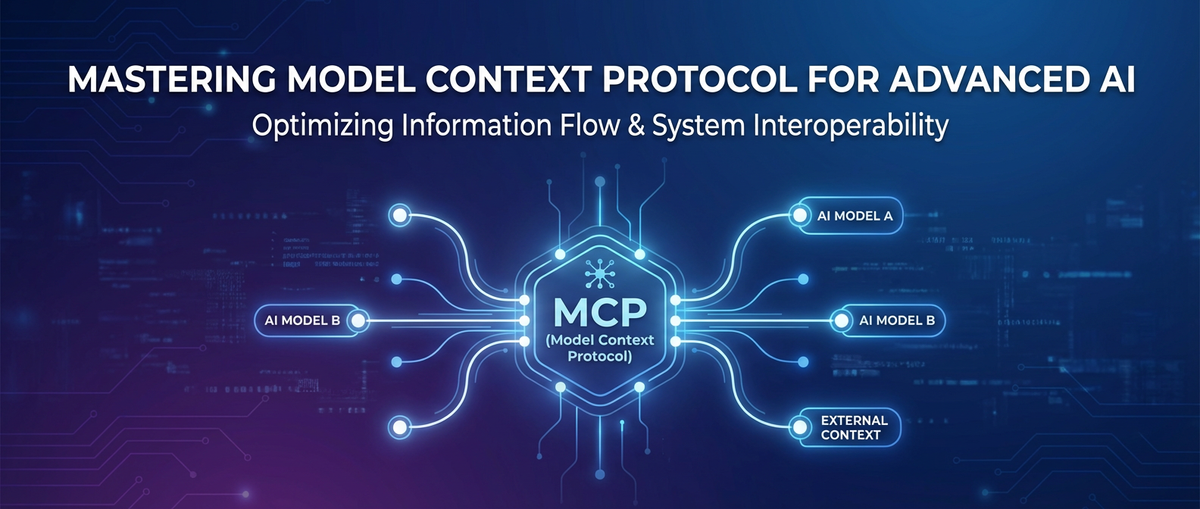
This comprehensive article delves into the concept of the Model Context Protocol (MCP), a foundational architectural and procedural framework designed to standardize and optimize how AI models perceive, process, and act upon context. We will embark on an in-depth exploration of MCP, dissecting its core components, architectural implications, and the advanced techniques required for its successful implementation. Furthermore, we will examine the indispensable role of an AI Gateway in facilitating these intricate contextual exchanges, highlight the tangible benefits of adopting MCP, and candidly address the inherent challenges that lie on the path to mastering it. Our journey will reveal how a well-defined Model Context Protocol is not merely an optimization but a fundamental prerequisite for unlocking the next generation of truly intelligent, adaptive, and human-centric AI systems.
1. The Evolving Landscape of AI and the Contextual Imperative
The trajectory of artificial intelligence has been nothing short of astonishing, characterized by rapid advancements that have propelled it from academic curiosity to an indispensable force across industries. Yet, with every leap forward, new complexities emerge, none more critical than the pervasive need for context. To truly unlock the potential of advanced AI, we must move beyond isolated queries and embrace a holistic understanding of the operational environment and past interactions.
1.1 From Simple Prompts to Complex Dialogues
In its nascent stages, AI primarily involved rule-based systems or simple machine learning models that responded to explicit, often atomic, inputs. A command like "turn on the light" or a query like "what is the capital of France?" required minimal, if any, contextual understanding beyond the immediate instruction. The interaction was transactional, self-contained, and devoid of memory. However, the advent of large language models (LLMs) and sophisticated generative AI has profoundly shifted this paradigm. Modern AI systems are increasingly expected to engage in protracted dialogues, understand implied meanings, follow complex multi-step instructions, and maintain a coherent narrative across extended interactions.
Consider the evolution from a simple search engine query to a multi-turn conversation with a sophisticated chatbot assistant. A user might start by asking about a specific product, then follow up with questions about its compatibility with other devices, its warranty, and finally, request a comparison with a competitor. Each subsequent query is inherently dependent on the information exchanged in previous turns. Without a mechanism to retain and correctly interpret this conversational history, the AI would treat each question as a new, unrelated request, leading to frustratingly disjointed and unhelpful responses. This demand for conversational continuity and deep understanding has elevated context from a desirable feature to an absolute necessity. Furthermore, the rise of multi-modal AI, capable of processing and generating content across text, images, audio, and video, further amplifies the contextual challenge, requiring the integration of diverse data types into a unified understanding.
1.2 The Nature of AI Context
Defining "context" in the realm of AI is crucial, as it encompasses a much broader spectrum than just the immediate conversational history. At its core, context refers to all the relevant information that provides meaning and clarity to an AI model's current task or query. This can be categorized into several layers:
- Conversational History: The most immediate and often recognized form of context, comprising previous utterances, questions, answers, and implied agreements within a single interaction session. This allows the AI to "remember" what has been discussed.
- User Profile and Preferences: Information about the individual user, such as their name, location, language preferences, past behaviors, interests, purchasing history, and explicit settings. This enables personalization and tailored responses.
- Environmental and Situational Context: Data about the current operating environment, including time of day, day of the week, weather conditions, device type, network status, or even real-world sensor data (e.g., smart home AI knowing which lights are on).
- Domain-Specific Knowledge: Background information pertinent to the subject matter of the interaction. For a medical AI, this would be medical literature; for a legal AI, legal precedents and statutes. This often involves retrieval-augmented generation (RAG) techniques, where relevant knowledge is dynamically fetched from external databases.
- System State: Internal parameters or states of the AI application itself. For instance, knowing which step of a multi-stage process the user is currently in, or whether a particular feature is enabled or disabled.
- External Data Feeds: Real-time or near real-time information pulled from external sources, such as stock prices, news headlines, traffic updates, or sensor readings.
The challenge lies not just in collecting this diverse array of information but in intelligently filtering, prioritizing, and presenting it to the AI model in a format it can effectively utilize.
1.3 Why Context Matters: The Pillars of Intelligent AI
The ability to manage and leverage context is not merely an enhancement; it is foundational to the very concept of intelligent AI. Its importance manifests across several critical dimensions:
- Enhanced Relevance and Accuracy: Context allows AI models to disambiguate ambiguous queries and provide responses that are precisely tailored to the user's intent and situation. For example, if a user asks "Tell me about them," the AI needs context (who "them" refers to from prior conversation) to provide a meaningful answer. Without it, the response is at best generic, at worst, incorrect.
- Improved Coherence and Consistency: In extended interactions, context ensures that the AI's responses remain consistent with previous statements and maintain a logical flow. This is vital for complex tasks like drafting documents, writing code, or developing creative content, where consistency in tone, style, and facts is paramount.
- Personalization and Engagement: By understanding user profiles and preferences, AI can deliver highly personalized experiences, making interactions feel more natural, intuitive, and genuinely helpful. A personalized learning AI, for instance, uses a student's performance history and learning style as context to adapt its teaching methods.
- Reduced Hallucination and Errors: One of the persistent challenges with generative AI is the tendency to "hallucinate" or invent facts. Providing relevant, factual context can significantly ground the model, reducing its reliance on internal, potentially incorrect, generalizations and steering it towards accurate, evidence-based responses.
- Complex Reasoning and Problem-Solving: Many real-world problems require combining multiple pieces of information and performing logical inferences. Context provides the necessary data points for AI models to engage in more sophisticated reasoning, enabling them to solve problems that would be impossible with isolated queries. For a medical diagnostic AI, the patient's full medical history, lab results, and current symptoms form the indispensable context for accurate diagnosis.
- Increased User Trust and Satisfaction: When an AI system consistently understands and responds appropriately, users develop a higher level of trust and satisfaction. This translates directly to better engagement, adoption, and ultimately, the successful deployment of AI solutions.
In essence, context transforms an AI from a mere pattern matcher into a system that can understand, reason, and interact in a way that truly approximates human intelligence.
1.4 Current Limitations Without Robust Context Management
Despite the spectacular progress in AI capabilities, the lack of a standardized and robust approach to context management continues to be a significant bottleneck. Without a well-defined Model Context Protocol, AI systems frequently encounter several critical limitations:
- Short-Term Memory and Disjointed Interactions: Most current AI models, especially those deployed as stateless API endpoints, have a very limited "memory" of past interactions. Each new request is often treated in isolation, leading to frustratingly repetitive questions, lack of continuity, and an inability to build on previous turns in a conversation. This forces users to constantly re-explain or reiterate information.
- Lack of Personalization and Generic Responses: Without access to persistent user profiles or behavioral history, AI systems cannot tailor their responses to individual needs or preferences. They resort to generic, one-size-fits-all answers, which diminishes user engagement and utility, making the interaction feel impersonal and less valuable.
- Increased Risk of Hallucinations and Irrelevant Output: When an AI model operates with insufficient or ambiguous context, it is more prone to generating information that is factually incorrect (hallucinating) or simply irrelevant to the user's true intent. This often happens because the model tries to fill in the blanks based on its pre-trained knowledge, which may not align with the specific situation.
- Difficulty with Complex, Multi-Step Tasks: Real-world problems are rarely solved in a single query. They often require a sequence of interactions, referencing previous steps, and accumulating information. Without a robust context management system, AI struggles with these multi-step processes, breaking down when the task demands sustained understanding and sequential reasoning.
- Inefficient Resource Utilization: Repeatedly sending the same contextual information with every request, or re-processing it, can be computationally inefficient and costly. A lack of smart context management can lead to redundant operations and higher latency, particularly in high-volume AI deployments.
- Security and Privacy Vulnerabilities: Ad-hoc context handling can create security loopholes. Sensitive user data, if not managed with explicit protocols for access control, encryption, and data retention, can be exposed or misused. Without a structured protocol, ensuring compliance with data privacy regulations becomes exceedingly difficult.
These limitations underscore the urgent need for a systematic, standardized approach to context—a Model Context Protocol—that can empower AI systems to transcend their current boundaries and achieve truly advanced intelligence.
2. Unpacking the Model Context Protocol (MCP) – A Foundational Framework
To overcome the challenges outlined, a robust and standardized approach to managing contextual information is indispensable. This is precisely where the Model Context Protocol (MCP) emerges as a critical architectural concept. MCP provides the blueprint for how AI systems, and the infrastructure supporting them, interact with, store, and leverage the context necessary for intelligent operation.
2.1 Defining Model Context Protocol (MCP)
The Model Context Protocol (MCP) can be formally defined as a standardized set of conventions, data structures, and communication mechanisms designed to facilitate the reliable, efficient, and secure exchange and management of contextual information between different components of an AI system, and crucially, between an AI system and its users or environment. Its primary purpose is to ensure that AI models always have access to the most relevant, up-to-date, and appropriately formatted context required to generate accurate, coherent, and personalized responses.
MCP is not a singular, off-the-shelf product but rather an architectural pattern and a set of principles that guide the design of context-aware AI applications. It addresses fundamental questions such as: * How is context represented? * Where is context stored? * How is context transmitted? * When is context created, updated, or purged? * How do we ensure consistency and security of context?
By establishing clear rules and methodologies, MCP aims to abstract away the complexities of context handling, allowing AI developers to focus on model logic rather than the plumbing of information flow. It seeks to bring order to what can often be a chaotic and inconsistent aspect of AI development, promoting interoperability and maintainability across diverse AI workloads.
2.2 Core Components of MCP
A comprehensive Model Context Protocol is built upon several interconnected core components, each playing a vital role in the lifecycle of contextual data. Understanding these components is key to designing an effective MCP implementation:
2.2.1 Context Representation
The first fundamental aspect of MCP is how context is structured and encoded. Raw, unstructured data is difficult for AI models to process efficiently. Therefore, context needs to be represented in a standardized, machine-readable format. * Structured Formats: Common choices include JSON (JavaScript Object Notation) due to its human-readability and widespread support, or Protobuf (Protocol Buffers) for its efficiency in serialization and deserialization, especially in high-performance or cross-language environments. These formats allow for clear key-value pairs, nested objects, and arrays to represent diverse contextual elements (e.g., {"user_id": "abc123", "session_id": "xyz456", "history": ["q1", "a1", "q2"], "preferences": {"theme": "dark"}}). * Semantic Representation: Beyond mere structure, context can also be represented semantically, often through embedding vectors. These numerical representations capture the meaning and relationships between contextual elements, allowing for similarity searches and more nuanced retrieval. For instance, a user's long-term interests might be represented as a dense vector, which can then be compared with the embeddings of available content. * Custom Schemas: For highly specialized domains, custom schemas (e.g., XML Schema, Avro) might be defined to enforce strict data types and relationships, ensuring data integrity and consistency across the context. The choice of representation depends on factors like the complexity of the context, the performance requirements, and the specific AI models being used.
2.2.2 Context Storage
Once represented, context needs to be stored effectively, often for varying durations and with different access patterns. The storage layer is critical for persistence and retrieval. * Temporary/In-Memory Storage: For short-term, session-based context (like a single conversational turn or a user's current interaction state), fast in-memory stores like Redis or application-level caches are ideal. They offer low-latency access but are volatile. * Persistent Storage: For long-term context, such as user profiles, preferences, or accumulated conversational history that needs to persist across sessions, robust databases are required. * Relational Databases (SQL): Excellent for structured metadata, user IDs, session pointers, and small, well-defined contextual attributes where ACID properties are important. * NoSQL Databases: Document databases (e.g., MongoDB, Couchbase) are highly flexible for storing dynamic, schema-less context; key-value stores (e.g., DynamoDB, Cassandra) offer high scalability for simple context lookups; and time-series databases are suitable for event-driven context. * Vector Databases: Increasingly important for storing semantic embeddings of conversational turns, documents, or user profiles. These allow for efficient similarity searches, crucial for Retrieval-Augmented Generation (RAG) approaches where relevant context is fetched based on semantic similarity to the current query. Examples include Pinecone, Weaviate, or Milvus. * Knowledge Graphs: For highly interconnected and complex contextual relationships (e.g., representing an enterprise knowledge base or intricate domain ontology), graph databases (e.g., Neo4j) can be highly effective, allowing for sophisticated reasoning over relationships.
The storage strategy often involves a hybrid approach, combining different types of databases to optimize for various context types and access patterns.
2.2.3 Context Transmission
The Model Context Protocol also dictates how context is moved between the client application, the AI Gateway, and the AI model itself. Efficient and reliable transmission is paramount. * HTTP/REST APIs: The most common method, especially for web-based interactions. Context can be passed in request headers, body, or URL parameters. While simple, care must be taken with large context sizes. * gRPC: A high-performance, language-agnostic RPC framework that uses Protocol Buffers for serialization. gRPC is well-suited for microservices architectures and scenarios requiring lower latency and higher throughput, making it ideal for transmitting complex contextual objects. * Message Queues/Event Streams: For asynchronous context updates or when context needs to be broadcast to multiple services, technologies like Kafka, RabbitMQ, or AWS SQS/SNS are highly effective. For example, a user preference change could be published as an event, allowing various AI services to update their contextual understanding. * WebSocket: For real-time, bidirectional communication, WebSockets can maintain a persistent connection, allowing for continuous context updates in applications like live chat assistants.
The choice of transmission protocol depends on latency requirements, data volume, system architecture, and the need for synchronous versus asynchronous communication.
2.2.4 Context Lifecycle Management
Managing the lifecycle of context is a critical aspect of MCP, ensuring that context is available when needed, but also appropriately purged or archived. * Creation: When is context first established? (e.g., at the start of a user session, upon first interaction). * Update: How is context modified? (e.g., a new conversational turn, a user updating their profile, a change in environmental data). This often involves versioning or overwriting. * Retrieval: How is context fetched when an AI model requires it? This could involve direct database lookups, cache hits, or complex queries combining multiple sources. * Expiration: How long should ephemeral context persist? (e.g., a conversation lasting 30 minutes, a session token expiring after an hour). Time-to-live (TTL) mechanisms are essential here. * Archival: For compliance, auditing, or future model training, older context might need to be moved to long-term, less accessible storage. * Purging/Deletion: How and when is context permanently removed, especially sensitive personal information, in compliance with privacy regulations (e.g., GDPR's "right to be forgotten").
Effective lifecycle management prevents context bloat, ensures data freshness, and addresses privacy requirements.
2.2.5 Context Segmentation and Prioritization
As context grows in volume and diversity, blindly feeding all available information to an AI model becomes inefficient and impractical, especially given the token limits of many LLMs. MCP must define strategies for: * Segmentation: Breaking down context into logical units. For instance, separating user preferences from conversational history, or current task context from long-term knowledge. This allows for targeted retrieval and processing. * Prioritization: Assigning relevance scores or importance levels to different pieces of context. Not all information is equally important at any given moment. For example, the last few turns of a conversation are often more critical than something said 20 turns ago. * Summarization/Compression: Techniques to reduce the size of context while retaining its essence. This can involve abstractive summarization of long chat histories or pruning less relevant details. * Windowing: Managing a sliding window of recent conversational history, especially relevant for LLMs with fixed context windows. Older turns might be summarized, dropped, or moved to a long-term memory store.
These strategies are crucial for optimizing performance, managing costs, and ensuring that the AI model receives the most salient information without being overwhelmed.
2.3 Key Principles Underlying MCP
Beyond its components, the Model Context Protocol is guided by several foundational principles that ensure its effectiveness, adaptability, and long-term viability:
- Modularity: The components of MCP (storage, transmission, representation) should be loosely coupled, allowing for independent development, deployment, and scaling. This enables swapping out a different database or transmission protocol without affecting the entire system.
- Extensibility: The protocol must be designed to easily incorporate new types of context, new AI models, or new data sources as they emerge. It should not be a rigid, fixed specification but rather an adaptable framework.
- Security: Contextual data, especially user-specific information, is often sensitive. MCP must incorporate robust security measures, including authentication, authorization, encryption (at rest and in transit), and auditing, to protect against unauthorized access and breaches.
- Efficiency: Context management should be optimized for both computational performance (low latency, high throughput) and resource utilization (memory, storage, bandwidth). This often involves intelligent caching, indexing, and data compression.
- Interoperability: Ideally, an MCP should be model-agnostic and platform-agnostic, allowing different AI models (from various providers or internal teams) to share and utilize context seamlessly. This promotes a unified AI ecosystem.
- Scalability: The protocol and its underlying infrastructure must be capable of handling increasing volumes of contextual data and concurrent requests as the AI system grows in usage and complexity.
- Observability: The ability to monitor, log, and trace the flow and state of context through the system is vital for debugging, performance optimization, and understanding AI behavior.
Adhering to these principles ensures that an MCP implementation is not only functional but also resilient, adaptable, and capable of supporting advanced AI systems at scale.
2.4 MCP vs. Traditional API Design
It's important to distinguish the Model Context Protocol from conventional API design, although MCP often leverages standard API technologies. Traditional REST or gRPC APIs are primarily concerned with defining endpoints, request/response formats, and basic data exchange for specific services or functionalities. They are often stateless by design, meaning each request contains all necessary information to fulfill the operation, or state is managed implicitly by the client.
While an AI system will undoubtedly use traditional APIs for general data retrieval or invoking model inferences, MCP introduces a layer of abstraction and specialization focused specifically on the complexities of context:
- Statefulness: MCP inherently deals with state (the current context), whereas traditional APIs often strive for statelessness for simplicity and scalability. MCP provides explicit mechanisms to manage and persist this state across multiple API calls.
- Semantic Understanding: MCP aims to provide context that helps the AI model understand the semantic meaning and intent, not just transmit raw data. This often involves pre-processing, retrieval-augmented generation (RAG), and sophisticated data orchestration before the data even reaches the model.
- Lifecycle Management: MCP explicitly defines how context evolves over time—its creation, updates, expiration, and archival. Traditional APIs typically don't dictate these lifecycle semantics beyond simple CRUD operations.
- Multi-Modal and Multi-Source Integration: MCP is designed to aggregate and synthesize context from a disparate array of sources (conversational history, user profiles, external sensors, databases) and across different modalities (text, image, audio), which goes beyond the scope of a single API endpoint.
- Optimization for AI Models: MCP considers the specific needs and limitations of AI models, such as token window management, semantic search, and computational efficiency for context processing, which are not typical concerns for general-purpose APIs.
- Protocol vs. Interface: A traditional API defines an interface to a service. MCP, on the other hand, defines a protocol for a cross-cutting concern (context) that impacts multiple services and components within an AI ecosystem. It's a set of rules and mechanisms that use APIs as transport.
In essence, while traditional APIs are the pipes and valves, the Model Context Protocol is the intelligent water management system that ensures the right amount of water, at the right temperature, reaches the right tap at the right time. It is a higher-level abstraction crucial for building truly intelligent and adaptive AI.
3. Architectural Implications and Implementation Strategies for MCP
Implementing a robust Model Context Protocol necessitates careful architectural planning and strategic choices across the entire AI system. It touches upon how data flows, where it is processed, and how different services collaborate to maintain a coherent understanding of the situation. This section explores the architectural considerations and practical strategies for bringing MCP to life.
3.1 Designing for Contextual AI Systems
Building AI systems that effectively leverage MCP requires a shift from monolithic design to a more modular, service-oriented architecture. At a high level, a contextual AI system incorporating MCP typically involves several layers:
- Client Layer: The user-facing application (web app, mobile app, voice assistant, IoT device) that initiates interactions and potentially collects initial contextual data. It sends requests to the AI Gateway.
- AI Gateway Layer: Acts as the primary entry point for all AI-related traffic. This layer is crucial for implementing MCP, as it can intercept, enrich, transform, and route requests based on contextual information.
- Context Management Service (CMS): A dedicated service responsible for the core functions of MCP: storing, retrieving, updating, and expiring context. It interacts with various context storage backends. This service abstracts the underlying storage mechanisms from other parts of the system.
- AI Orchestration Service: For complex multi-turn or multi-model interactions, this service coordinates calls to various specialized AI models, feeding them the appropriate context and combining their outputs. It might decide which AI model to invoke based on the current context (e.g., call a translation model if the user switches language).
- AI Model Services: Individual microservices wrapping specific AI models (e.g., LLM inference service, image recognition service, sentiment analysis service). These services receive pre-processed context and focus solely on generating their specific outputs.
- External Data Sources/Knowledge Bases: Databases, vector stores, real-time data feeds, or third-party APIs that provide additional contextual information for enrichment.
The flow typically involves a client request reaching the AI Gateway, which then consults the Context Management Service to retrieve and assemble the relevant context. This enriched context is then passed, potentially via an orchestration service, to the appropriate AI model service for inference. The model's response might then trigger an update to the context (e.g., adding the model's output to the conversational history) before being sent back through the gateway to the client.
3.2 The Role of an AI Gateway in MCP Implementation
An AI Gateway serves as a strategic control point in the architecture of any sophisticated AI system, and its role becomes absolutely indispensable when implementing a robust Model Context Protocol. It is far more than just a reverse proxy; it is an intelligent traffic cop, a data orchestrator, and a security enforcer specifically tailored for AI workloads.
Here's how an AI Gateway enhances and enables MCP:
- Context Interception and Enrichment: As all client requests flow through the AI Gateway, it can intercept them before they reach the backend AI models. At this stage, the gateway can enrich the incoming request with contextual data retrieved from the Context Management Service. For example, it can automatically append user profiles, session history, or device information to the prompt, ensuring the AI model receives a comprehensive context without the client needing to manage it. This offloads complexity from both client and AI model services.
- Routing Based on Context: With access to contextual information, the AI Gateway can intelligently route requests to different AI models or specialized backend services. For instance, if the context indicates a user is asking a finance-related question, the gateway might route it to a financial LLM; if it's a customer support query, it might go to a customer service bot model. This dynamic routing improves efficiency and allows for a modular AI backend.
- Caching Contextual Information: An AI Gateway can implement sophisticated caching mechanisms for frequently accessed contextual data. User profiles, common domain knowledge, or recently accessed session contexts can be stored at the gateway level, significantly reducing latency and load on backend context storage services. This is crucial for high-throughput AI applications.
- Security and Access Control for Context: Context often contains sensitive user data. The AI Gateway acts as the first line of defense, enforcing authentication and authorization policies before any context is accessed or transmitted to AI models. It can implement granular access controls, ensuring only authorized components retrieve specific types of contextual information. Data masking or anonymization of sensitive context can also occur at the gateway level.
- Unified API Format for AI Invocation: A key feature of an advanced AI Gateway is its ability to standardize the request and response formats for diverse AI models. This means clients can interact with a single, consistent API endpoint, and the gateway handles the necessary transformations to match the specific input/output requirements of different underlying AI models. This significantly simplifies application development and maintenance, aligning perfectly with the goal of a unified Model Context Protocol.
- Prompt Encapsulation and Management: The gateway can abstract away the complexity of crafting intricate prompts that combine user input with various contextual elements. It can encapsulate pre-defined prompts and dynamically inject contextual variables, allowing for consistent and versioned prompt engineering without requiring changes in the client application.
For example, consider an open-source AI gateway like APIPark. It is designed to be an all-in-one AI gateway and API developer portal, offering quick integration of over 100 AI models and providing a unified API format for AI invocation. This capability directly addresses the challenge of orchestrating diverse AI models and ensuring a consistent approach to feeding them context. By standardizing request data formats and allowing for prompt encapsulation into REST APIs, APIPark simplifies AI usage and maintenance, making it an invaluable tool for implementing sophisticated Model Context Protocol strategies. Furthermore, its end-to-end API lifecycle management and robust security features ensure that the entire context management pipeline is secure, scalable, and manageable. Its high performance, rivalling Nginx, ensures that context processing and AI invocations happen with minimal latency, crucial for real-time applications.
The AI Gateway, therefore, acts as the intelligent fabric that weaves together the disparate threads of an AI system, making the implementation of a coherent and effective Model Context Protocol not just feasible, but highly optimized and manageable.
3.3 Data Models for Context Storage
The choice and design of data models for context storage are paramount. Different types of context benefit from different storage paradigms. A multi-model database approach is often the most effective.
- Relational Databases (e.g., PostgreSQL, MySQL):
- Use Cases: Ideal for structured, tabular context like user metadata (ID, name, subscription status), session pointers, and audit logs. They are excellent for enforcing data integrity, complex queries involving joins, and scenarios where ACID properties (Atomicity, Consistency, Isolation, Durability) are critical.
- Data Model: Tables with defined schemas, foreign keys for relationships. For instance, a
Userstable, aSessionstable linked to users, andContextElementstables storing key-value pairs associated with sessions or users. - Pros: Strong consistency, mature tooling, complex query capabilities.
- Cons: Less flexible for rapidly evolving or semi-structured context, can struggle with very high write/read volumes for dynamic context.
- NoSQL Databases (e.g., MongoDB, DynamoDB, Cassandra):
- Use Cases: Highly flexible for storing semi-structured or unstructured context that changes frequently, such as raw conversational history, user preferences with dynamic attributes, or event logs.
- Data Model:
- Document Databases: Store context as JSON-like documents. E.g., a
sessiondocument could contain an array ofmessages,user_preferencesas a nested object, and currenttask_state. - Key-Value Stores: Simple, highly scalable for retrieving context by a unique key (e.g.,
user_id->user_profile_json). - Column-Family Stores: Good for very wide rows with varying columns, suitable for time-series context or event streams.
- Document Databases: Store context as JSON-like documents. E.g., a
- Pros: High scalability, schema flexibility, often high performance for specific access patterns.
- Cons: Weaker consistency models, limited complex query capabilities compared to SQL, can lead to data integrity issues if not carefully managed.
- Vector Databases (e.g., Pinecone, Weaviate, Milvus, Chroma):
- Use Cases: Essential for semantic context. Storing embeddings of conversational turns, documents, articles, user interests, or concepts. Crucial for Retrieval-Augmented Generation (RAG) where relevant context is dynamically pulled based on semantic similarity to the current query.
- Data Model: Stores high-dimensional numerical vectors (embeddings) along with associated metadata. Supports approximate nearest neighbor (ANN) search.
- Pros: Enables semantic search, allows AI to understand conceptual relevance, highly efficient for large-scale similarity lookups.
- Cons: Specialized, requires robust embedding generation pipelines, adds complexity to the data stack.
- Graph Databases (e.g., Neo4j, JanusGraph):
- Use Cases: For representing highly interconnected context, such as knowledge graphs that map relationships between entities (people, products, concepts, locations). Useful for complex reasoning, recommendations, and anomaly detection.
- Data Model: Nodes (entities) and edges (relationships) with properties. For example, a "User" node connected to "Product" nodes via "Purchased" edges.
- Pros: Excellent for traversing complex relationships, powerful for inferring new context from existing connections.
- Cons: Can be computationally intensive for very large graphs, requires a different mindset for data modeling.
A well-designed MCP will often integrate several of these data models, using each for its strengths. For example, a relational database might store core user IDs, a document database might store dynamic session history, and a vector database might hold embeddings of domain-specific knowledge, all orchestrated by the Context Management Service.
3.4 Context Window Management and Optimization
One of the most pressing practical challenges in implementing MCP, particularly with large language models, is the "context window" limitation. LLMs can only process a finite amount of input tokens at a time. Exceeding this limit results in truncation or errors. Effective MCP must incorporate strategies to manage this constraint while preserving critical information:
- Sliding Window: The most straightforward approach. Only the most recent
Nturns of a conversation are kept within the active context window. Older turns are discarded. This is simple but can lead to loss of important information from earlier in the conversation. - Summarization: As conversational history grows, older turns or less critical segments can be summarized by a smaller AI model or an extractive summarization algorithm. This compresses the information, allowing more historical data to fit within the context window. Summarization can be abstractive (generating new sentences) or extractive (picking key sentences).
- Retrieval-Augmented Generation (RAG): This powerful technique is central to advanced MCP. Instead of stuffing all possible context into the LLM's prompt, relevant context is dynamically retrieved from an external knowledge base (often a vector database) based on the current user query and immediate conversational history. For example, if a user asks about "product warranty," the system might search a knowledge base of product manuals, retrieve the relevant section, and inject only that section into the LLM's prompt. This significantly expands the effective knowledge base without hitting token limits.
- Context Compression with Embeddings: Rather than full text, older conversational turns or less critical pieces of context can be converted into dense embeddings. The LLM then receives the current query and a few relevant embeddings, which it can use to guide its generation, relying on its internal knowledge to expand on the embedded concepts.
- Hierarchical Context: Organize context into layers. For example, a "global context" (user profile, long-term preferences) is always available, a "session context" (current conversation) is ephemeral, and a "task context" (details of the current sub-task) is highly transient. The system can dynamically decide which layers of context to retrieve and present based on the immediate need.
- Lossy Compression: For less critical context, a lossy compression technique might be applied. This means intentionally discarding some details deemed less important, while retaining the core meaning.
The goal is to provide the AI model with the minimum sufficient context for its current task, balancing informativeness with computational efficiency and token limits. These optimization strategies are key to making advanced, long-form AI interactions feasible and performant.
3.5 Example Flow of an MCP-Enabled Interaction
Let's illustrate the practical application of the Model Context Protocol with a step-by-step example of a user interacting with an advanced AI assistant designed for technical support:
- User Initiates Query (Client Layer): A user types: "My API calls are failing with a 403 error, but my token should be valid." This request is sent to the AI Gateway.
- AI Gateway Intercepts and Authenticates (AI Gateway Layer):
- The AI Gateway receives the request.
- It authenticates the user based on their session token or API key.
- It logs the incoming request for auditing and performance monitoring (a feature provided by APIPark).
- Context Assembly and Enrichment (AI Gateway + Context Management Service):
- The AI Gateway makes a request to the Context Management Service (CMS), providing the
user_idandsession_id. - The CMS queries its various storage backends:
- Relational DB: Retrieves
user_profile(e.g., "Developer," "Premium Support Tier") and activesubscriptions. - Document DB: Retrieves
session_history(the last 5 turns of conversation, if any). - Vector DB: Performs a semantic search on the user's current query ("403 error, token valid") against a knowledge base of common API errors, developer documentation, and previous support tickets. It retrieves several highly relevant knowledge snippets.
- Relational DB: Retrieves
- The CMS aggregates this information into a structured
context_object. - The Gateway then injects this
context_objectinto the user's original query, constructing a comprehensive prompt for the LLM. Example prompt:{ "user_id": "usr_789", "user_profile": {"tier": "Premium", "role": "Developer"}, "session_history": [ {"speaker": "user", "text": "I can't log in."}, {"speaker": "assistant", "text": "Can you tell me more about the error?"} ], "current_query": "My API calls are failing with a 403 error, but my token should be valid.", "retrieved_knowledge": [ "Snippet 1: A 403 Forbidden error typically indicates insufficient permissions or an invalid/expired API key.", "Snippet 2: Check the scope of your API token; some operations require specific permissions.", "Snippet 3: Guide to refreshing expired API tokens." ] }
- The AI Gateway makes a request to the Context Management Service (CMS), providing the
- AI Model Inference (AI Model Service):
- The AI Gateway routes this enriched prompt to the appropriate AI Model Service (e.g., a fine-tuned LLM for technical support).
- The LLM processes the entire
context_objectto understand the nuanced problem, considering the user's role, previous attempts, and relevant documentation.
- AI Generates Response (AI Model Service):
- Based on the rich context, the LLM generates a detailed and relevant response. It doesn't just explain what a 403 error is; it suggests specific troubleshooting steps tailored to a "Developer" on "Premium Support" with a potentially "invalid token."
- Example Response: "A 403 error often points to insufficient permissions or an invalid API token, especially for Premium Developers. Please verify the scopes granted to your API token in your developer console, and ensure it hasn't expired. If you've recently renewed, try generating a new token. You can find more details on troubleshooting 403 errors in our API documentation here: [link]."
- Context Update and Response Transmission (AI Gateway + CMS + Client Layer):
- The AI Gateway receives the LLM's response.
- It sends an update to the Context Management Service to add the user's query and the AI's response to the
session_history. - The AI Gateway then sends the AI's response back to the client.
This detailed flow illustrates how the Model Context Protocol, orchestrated by an AI Gateway, ensures that the AI model operates with a complete and relevant understanding, leading to a significantly more intelligent and helpful interaction. The modularity provided by an AI Gateway like APIPark, with its unified API formats and prompt encapsulation features, streamlines the implementation of such complex contextual interactions, making the entire process more efficient and manageable.
APIPark is a high-performance AI gateway that allows you to securely access the most comprehensive LLM APIs globally on the APIPark platform, including OpenAI, Anthropic, Mistral, Llama2, Google Gemini, and more.Try APIPark now! 👇👇👇
4. Advanced Concepts and Techniques in Model Context Protocol
As AI systems mature and tackle increasingly complex tasks, the Model Context Protocol must evolve beyond basic conversational memory. This section delves into advanced concepts and techniques that push the boundaries of context management, enabling more sophisticated, secure, and dynamic AI behaviors.
4.1 Multi-Modal Context
The frontier of AI is rapidly expanding beyond text-based interactions to encompass multi-modal understanding. This means AI models can process and generate content across various data types: text, images, audio, and video. Integrating multi-modal context into the Model Context Protocol is crucial for building truly comprehensive AI systems.
- Definition: Multi-modal context refers to the collection and integration of information from two or more sensory modalities within a single contextual representation. For example, in a medical diagnosis scenario, the context might include a patient's textual medical history, an X-ray image, and an audio recording of their symptoms.
- Challenges:
- Heterogeneous Data Formats: Each modality comes with its own data format, processing requirements, and encoding challenges.
- Modality Alignment: The system needs to understand how information across different modalities relates to each other (e.g., connecting a textual description of a lesion to its visual representation in an image).
- Fusion Techniques: Developing methods to effectively combine and synthesize information from different modalities into a unified context representation that an AI model can consume. This often involves late fusion (merging after individual modality processing) or early fusion (merging raw data).
- Computational Overhead: Processing and embedding multiple modalities simultaneously can be computationally intensive.
- Implementation Strategies:
- Dedicated Feature Extractors: Each modality often requires specialized AI models (e.g., CNNs for images, Whisper for audio-to-text, LLMs for text) to extract relevant features or embeddings.
- Unified Embedding Space: The goal is to project features from different modalities into a common embedding space where their semantic relationships can be compared. For example, a "dog" in text should be semantically close to an image of a dog in the embedding space.
- Contextual Cross-Attention: In transformer architectures, cross-attention mechanisms can be used to allow one modality (eanc.g., text query) to 'attend' to relevant parts of another modality (e.g., regions of an image) to build a richer joint representation.
- APIs for Modality-Specific Context: The MCP would need to define specific data structures and endpoints for storing and retrieving image metadata, audio transcripts, video frames, along with their textual descriptions and temporal alignments.
- Applications: Multi-modal context is vital for applications like visual question answering (asking questions about an image), automated video content analysis, advanced robotics, augmented reality assistants, and comprehensive medical diagnostic tools. For example, a user describing a broken part (text) could upload an image of it, and the AI (using multi-modal context) could identify the part and suggest replacement options.
4.2 Long-Term Memory and Persistent Context
While current LLMs often struggle with long-term memory, the Model Context Protocol must facilitate systems that move beyond short-term conversational recall to truly persistent, evolving knowledge bases and individual user profiles. This involves establishing a "long-term memory" for AI.
- Distinction from Short-Term Context: Short-term context (e.g., current conversation window) is ephemeral and highly dynamic. Long-term memory stores information that persists across sessions, is less volatile, and represents cumulative knowledge.
- Components of Long-Term Memory:
- User Profiles: Comprehensive data about a user's demographics, preferences, interests, past behaviors, learning styles, and explicit settings. This information allows for deep personalization.
- Knowledge Bases: Structured repositories of domain-specific facts, rules, procedures, and relationships. This could be an internal company wiki, a collection of research papers, or a curated dataset of product specifications.
- Interaction Summaries/Learnings: Instead of storing entire raw conversations, key takeaways, decisions made, or insights gained from previous interactions can be summarized and stored. For instance, "User prefers dark mode for coding editor," or "User struggles with advanced Python concepts."
- Semantic Memory: A graph or vector representation of conceptual knowledge, allowing AI to recall facts and relationships semantically rather than just literally.
- Implementation Techniques:
- Vector Databases for Semantic Search: Embeddings of long-term knowledge and interaction summaries are stored in vector databases. When a new query comes, the system performs a semantic search to retrieve relevant long-term memories.
- Knowledge Graph Integration: Facts and relationships in long-term memory can be modeled as a knowledge graph, allowing the AI to perform complex inference and retrieve highly specific, related information.
- Hierarchical Storage: Combining fast caches for frequently accessed context, relational databases for structured profiles, and vector/graph databases for semantic knowledge.
- Active Recall/Consolidation: Periodically processing past interactions to extract and consolidate new facts or preferences into the long-term memory, preventing information overload and maintaining relevance.
- Benefits: Enables highly personalized experiences, allows AI to learn and adapt over time, supports continuous improvement, and provides a stable foundation of knowledge for diverse tasks.
4.3 Contextual Security and Privacy
Contextual data often contains highly sensitive information, from personal details to confidential business data. Ensuring its security and privacy is not just a regulatory requirement (e.g., GDPR, HIPAA) but a fundamental ethical imperative. The Model Context Protocol must bake in security and privacy by design.
- Data Anonymization and Encryption:
- Encryption at Rest and in Transit: All contextual data, whether stored in databases or transmitted across network boundaries, must be encrypted using strong cryptographic standards.
- Anonymization/Pseudonymization: For non-essential personal identifiers, data should be anonymized (irreversibly stripped of identifying information) or pseudonymized (identifiers replaced with unique, reversible tokens) before being processed by AI models or stored long-term.
- Tokenization: Sensitive data like credit card numbers or social security numbers should be replaced with non-sensitive tokens.
- Access Control and Granular Permissions:
- Role-Based Access Control (RBAC): Implement strict RBAC to ensure that only authorized services or users can access specific types of contextual information. For example, an analytics service might only need anonymized behavioral context, while a customer support agent needs access to specific user profile details.
- Attribute-Based Access Control (ABAC): More fine-grained control based on specific attributes of the user, the data, or the environment. E.g., only AI models certified for financial data can access financial context.
- Least Privilege Principle: AI models and services should only be granted access to the minimum amount of contextual information necessary to perform their current task.
- Compliance with Data Privacy Regulations:
- Right to Be Forgotten (GDPR): The MCP must include clear mechanisms for permanently deleting a user's context upon request, across all storage layers.
- Data Minimization: Only collect and store context that is genuinely necessary for the AI's function.
- Consent Management: If sensitive personal data is used for context, obtain explicit user consent and manage consent preferences within the MCP.
- Auditing and Logging: Comprehensive logging of all context access and modification events is crucial for demonstrating compliance and forensic analysis in case of a breach. An AI Gateway like APIPark with its detailed API call logging feature is essential here, providing an audit trail for every interaction involving context.
- Secure Multi-Party Computation (SMC) & Federated Learning: For highly sensitive contexts, explore advanced cryptographic techniques that allow AI models to learn from decentralized data without ever directly accessing the raw data itself, keeping context localized and private.
Contextual security and privacy are ongoing processes that require continuous monitoring, regular audits, and adaptation to evolving threats and regulations.
4.4 Dynamic Context Generation and Adaptation
Moving beyond static retrieval, advanced MCP involves mechanisms for dynamically generating new context or adapting existing context based on real-time feedback and the AI's internal reasoning.
- AI-Generated Context (Internal Monologue): Sophisticated AI agents might generate their own "internal monologue" or scratchpad notes as part of a reasoning process. This internal context—the steps they took, intermediate thoughts, or assumptions—can then be fed back into their own subsequent prompts, enabling multi-step reasoning and self-correction without external human intervention. This mimics human thought processes where we often break down problems and jot down notes.
- Context Adaptation Based on User Feedback: If a user explicitly corrects an AI's understanding ("No, I meant the other product"), the MCP should immediately update the relevant context (e.g., clarify entity resolution in the current session) to prevent future misinterpretations. This active learning from feedback is crucial for improving user experience.
- Environment Adaptation: For AI systems interacting with dynamic environments (e.g., robots, smart home systems), the context must constantly adapt to changes in the environment (e.g., "lights are on," "temperature is rising"). Sensors and real-time data feeds provide the input for this adaptation.
- Proactive Context Generation: An AI system might proactively fetch or generate context even before it's explicitly requested, based on predictive models. For example, if a user frequently asks about stock prices after discussing company news, the system might pre-fetch relevant stock data as context for the next turn.
- Contextual Refinement: AI models can be tasked with refining or synthesizing raw, verbose context into a more concise and useful form. For instance, a long customer service transcript could be summarized into key issues and resolutions by one AI, and that summary then used as context for another AI.
Dynamic context generation and adaptation empower AI to be more agile, responsive, and capable of handling unforeseen situations by continuously updating its understanding of the world.
4.5 Context Versioning and Rollback
In complex AI development and deployment scenarios, particularly in enterprise settings, managing different versions of contextual data becomes critical for debugging, reproducibility, and ensuring consistency across deployments.
- Definition: Context versioning involves tracking changes to contextual data over time, creating immutable snapshots or maintaining a historical record of updates. Rollback refers to the ability to revert to a previous state of context.
- Use Cases:
- Debugging: If an AI model produces an unexpected output, having the exact context that was fed to it at that moment (including all its constituent parts) is invaluable for debugging and root cause analysis.
- Reproducibility: For scientific research or regulatory compliance, it's often necessary to reproduce an AI's output given a specific input and context. Versioned context makes this possible.
- A/B Testing: When testing different AI models or prompt strategies, ensuring that all models receive the same version of the context (or controlled variations) is crucial for fair comparison.
- Model Training and Evaluation: Historical, versioned context can be used to retrain models or evaluate their performance against real-world interaction patterns.
- Audit Trails: For compliance reasons, maintaining a clear audit trail of who accessed or modified what context, and when, is essential.
- Implementation Strategies:
- Event Sourcing: Store all changes to context as a sequence of immutable events. The current state of context can be reconstructed by replaying these events. This provides a full historical ledger.
- Snapshotting: Periodically take a snapshot of the entire context state (e.g., at the end of a session, before a critical decision).
- Version Control for Context Schemas: Just like code, the schemas defining context structures can be versioned, allowing for backward and forward compatibility.
- Time-Stamping and Immutability: Each piece of contextual data can be timestamped, and for critical elements, immutable records can be created, with updates generating new records rather than modifying existing ones.
- Distributed Ledger Technologies: For highly sensitive and auditable contexts, blockchain or distributed ledger technologies could offer immutable, verifiable context histories.
Context versioning and rollback capabilities within the Model Context Protocol transform context from a transient state into a traceable, auditable, and manageable asset, significantly improving the robustness and reliability of advanced AI systems.
5. Benefits, Challenges, and Future of Model Context Protocol
The journey to mastering the Model Context Protocol is one that promises profound transformation in the capabilities of AI, yet it is also fraught with significant technical and operational challenges. Understanding both the immense benefits and the hurdles is essential for any organization venturing into advanced AI deployments.
5.1 Tangible Benefits of Adopting MCP
The strategic adoption of a well-defined Model Context Protocol delivers a myriad of tangible advantages that elevate AI systems from mere tools to intelligent, adaptive partners.
- Enhanced AI Accuracy and Relevance: By providing AI models with a comprehensive and pertinent understanding of the situation, MCP drastically improves the precision and applicability of their outputs. No longer do models operate in a vacuum; they respond with insights informed by history, user intent, and real-world data, leading to significantly fewer irrelevant or incorrect answers. For instance, a customer service AI, aware of a user's past purchase history and current subscription status via MCP, can directly address their specific issue rather than asking for redundant information.
- Improved User Experience and Personalization: The ability to remember past interactions, understand preferences, and adapt to individual needs creates a deeply personalized and natural user experience. Users feel understood and valued, leading to higher engagement, satisfaction, and trust. A personalized learning assistant, powered by MCP, can tailor educational content and pace based on a student's long-term performance and learning style, making the experience far more effective than a generic curriculum.
- Reduced Hallucination and Errors: One of the most significant pain points with generative AI is its propensity to "hallucinate" or invent facts. By grounding the model with verified, factual context retrieved and managed by MCP (especially through techniques like RAG), the likelihood of generating false or misleading information is dramatically reduced. The AI operates within a defined informational boundary, fostering reliability.
- Increased System Maintainability and Scalability: MCP enforces a structured approach to context, decoupling context management from core AI model logic. This modularity makes systems easier to maintain, update, and debug. Furthermore, by optimizing context storage, retrieval, and transmission, MCP enables AI systems to scale more efficiently, handling growing data volumes and user loads without disproportionate increases in latency or cost. An AI Gateway like APIPark is crucial here, providing the robust infrastructure for managing API lifecycles, load balancing, and high-performance traffic forwarding, all of which contribute to scalable and maintainable MCP implementations.
- Facilitated Development of More Complex AI Applications: Many advanced AI applications, from autonomous agents to sophisticated decision support systems, fundamentally rely on the ability to maintain and reason over complex, evolving context. MCP provides the necessary architectural foundation and operational framework to build these next-generation AI solutions, making previously intractable problems manageable. It enables multi-stage reasoning, adaptive planning, and intricate task execution that would be impossible with stateless AI interactions.
- Better Resource Utilization and Cost Efficiency: Intelligent context management, including caching, summarization, and retrieval-augmented generation, reduces the need to constantly re-process large amounts of data or to send excessively long prompts to expensive LLMs. By providing only the most relevant context, computational resources are used more efficiently, leading to reduced inference costs and faster response times.
5.2 Key Challenges in MCP Implementation
Despite the compelling benefits, implementing a robust Model Context Protocol is a complex undertaking, presenting several formidable challenges that require careful planning and execution.
- Complexity of Data Modeling and Integration: Context is inherently diverse, spanning structured user profiles, unstructured conversational history, real-time sensor data, and semantic embeddings. Designing a unified data model that can accommodate this heterogeneity, and integrating various storage systems (relational, NoSQL, vector, graph databases) into a cohesive MCP, is a significant architectural hurdle. Ensuring data consistency across these disparate systems is a non-trivial task.
- Scalability Issues with Large Context Volumes: As the number of users, interactions, and data sources grows, the volume of contextual data can quickly become enormous. Storing, indexing, and retrieving this vast amount of information with low latency and high throughput requires highly scalable infrastructure and optimized query patterns. Managing context windows for very long interactions (e.g., hours-long coding sessions or creative writing projects) further exacerbates this challenge.
- Computational Overhead of Context Processing: Before an AI model even receives a prompt, the MCP might need to perform several computationally intensive steps: retrieving context from multiple sources, merging it, summarizing it, converting it to embeddings, and potentially performing semantic searches. This pre-processing overhead can introduce latency, especially in real-time applications, and increase infrastructure costs. Balancing rich context with performance is a delicate act.
- Ensuring Consistency and Freshness of Context: In distributed AI systems, multiple services might update different parts of the context simultaneously. Ensuring that all AI models and services always operate with the most up-to-date and consistent view of the context is critical. Stale or inconsistent context can lead to incorrect AI behavior. Implementing distributed transactions, event-driven architectures, and cache invalidation strategies becomes essential.
- Security and Privacy Concerns: Context often contains sensitive Personally Identifiable Information (PII) or confidential business data. Securing this data against unauthorized access, ensuring compliance with evolving privacy regulations (GDPR, CCPA, HIPAA), and implementing robust anonymization, encryption, and access control mechanisms are paramount. The risk of data breaches and legal repercussions makes security a top priority, adding layers of complexity to the MCP design.
- Lack of Universal Standards: Currently, there is no single, universally adopted Model Context Protocol. This means each organization or even each AI project often has to define its own conventions, data schemas, and integration patterns. This fragmentation hinders interoperability, increases development effort, and makes it difficult to leverage off-the-shelf solutions for context management, thereby necessitating a tailored approach to MCP for each unique scenario.
5.3 Emerging Trends and the Future of MCP
The field of AI is characterized by relentless innovation, and the Model Context Protocol is no exception. Several emerging trends are shaping its future, promising even more sophisticated and seamless context management.
- Standardization Efforts: The fragmented landscape of context management is a clear bottleneck. As the importance of context grows, there will be increasing industry-wide efforts to develop and adopt common standards for context representation, exchange, and lifecycle management. This could manifest as open-source projects or industry consortia defining best practices and reference implementations, much like how OpenAPI/Swagger standardized API descriptions. A unified Model Context Protocol standard would greatly enhance interoperability.
- AI-Native Context Management Systems: We are likely to see the emergence of specialized, AI-native databases and platforms specifically designed for context management. These systems will go beyond general-purpose databases, offering built-in capabilities for semantic search, multi-modal context fusion, intelligent summarization, and dynamic context adaptation, specifically optimized for the needs of AI models. Vector databases are an early example of this trend.
- Integration with Autonomous AI Agents: The rise of autonomous AI agents, capable of independent planning, decision-making, and execution, will heavily rely on advanced MCP. These agents will need to maintain complex internal states, environmental models, and long-term memories to operate effectively. MCP will be crucial for enabling agents to share and update their contextual understanding, allowing for multi-agent collaboration and more robust autonomous systems.
- Edge Computing for Localized Context: As AI moves closer to the data source (edge devices like smart sensors, IoT devices, local servers), MCP will need to adapt to localized context management. Processing and storing context on the edge can reduce latency, enhance privacy, and enable offline AI capabilities. This will require lightweight context storage and processing mechanisms optimized for resource-constrained environments, with selective synchronization to cloud-based central context stores.
- Explainable AI (XAI) and Context Transparency: Future MCPs will increasingly incorporate features that enhance the explainability of AI decisions. By meticulously tracking the context that influenced an AI's output, systems can provide greater transparency, showing users or auditors precisely why an AI made a particular decision. This involves not just storing context but also attributing specific parts of the context to specific parts of the AI's reasoning process, fostering trust and accountability.
The future of Model Context Protocol is bright, moving towards more intelligent, standardized, and integrated approaches that will be fundamental to realizing the full potential of advanced AI.
5.4 Case Studies/Examples
To truly appreciate the power of a well-implemented Model Context Protocol, let's briefly consider its transformative potential in various domains:
- Personalized Learning Platforms: Imagine an AI tutor that remembers every concept a student has learned, every mistake they've made, their preferred learning style (visual, auditory), and even their current emotional state. An MCP in this scenario would store comprehensive student profiles, detailed learning histories (including performance on specific topics and time spent), and even real-time biometric data (e.g., from wearables). This rich context allows the AI to dynamically adapt its teaching approach, recommend personalized exercises, and provide targeted feedback, making learning incredibly efficient and engaging.
- Enterprise Knowledge Management (EKM) & Intelligent Assistants: For large corporations, information is vast and disparate. An MCP could power an internal AI assistant that, given an employee's query, understands their role, department, project they are working on, recent documents they viewed, and the specific company policies relevant to their query. It wouldn't just search for keywords; it would understand the intent within the employee's context, retrieving highly relevant internal documentation, connecting them with expert colleagues, or even generating project summaries based on existing data, significantly boosting productivity and decision-making.
- Creative AI and Content Generation: Consider an AI assisting a writer or designer. An MCP would maintain context of the ongoing creative project: its genre, style guidelines, character backstories, plot developments, and previous iterations. If a writer asks for "more dialogue for the protagonist," the AI, armed with the context of the protagonist's personality, recent events, and the overall narrative tone, can generate text that is not only coherent but also aligns perfectly with the creative vision, maintaining consistency across lengthy projects.
- Healthcare Decision Support: A diagnostic AI leveraging MCP could analyze a patient's full electronic health record (medical history, lab results, current symptoms, allergies), integrate real-time sensor data, and even cross-reference with the latest medical research. The context would be multi-modal and longitudinal. This comprehensive understanding allows the AI to suggest more accurate diagnoses, personalized treatment plans, and predict potential complications, significantly enhancing patient care and reducing medical errors.
These examples underscore that MCP isn't just about making AI better; it's about enabling AI to perform tasks and provide value that was previously unattainable, fundamentally changing how we interact with and benefit from intelligent systems.
Conclusion
The journey through the intricate landscape of the Model Context Protocol (MCP) reveals it not as a mere technical embellishment, but as the foundational bedrock upon which advanced artificial intelligence systems must be built. From the rudimentary, stateless interactions of early AI to the sophisticated, multi-modal, and deeply personalized experiences demanded today, the ability to effectively manage and leverage contextual information has emerged as the ultimate differentiator.
We have explored how MCP provides a standardized framework for context representation, storage, transmission, and lifecycle management, ensuring that AI models are perpetually informed by a holistic understanding of their operational environment, user histories, and underlying knowledge bases. The indispensable role of an AI Gateway in orchestrating these complex contextual flows—intercepting, enriching, routing, and securing data—has been highlighted as a critical enabler for scalable and robust MCP implementations. Platforms like APIPark, with their capabilities for unified API formats and comprehensive lifecycle management, exemplify how purpose-built AI gateways can simplify the complexities inherent in building context-aware AI.
While the benefits of enhanced accuracy, profound personalization, reduced errors, and greater system maintainability are clear, we acknowledge the substantial challenges: the complexity of integrating diverse data models, the immense scalability requirements for vast context volumes, the computational overhead, and the paramount need for stringent security and privacy measures. However, the future promises exciting advancements, with emerging trends pointing towards standardization, AI-native context management, and tighter integration with autonomous agents.
Ultimately, mastering the Model Context Protocol is about bridging the chasm between raw computational power and genuine intelligence. It transforms AI from a collection of isolated algorithms into coherent, adaptive, and truly understanding systems. As AI continues its inexorable march forward, those who skillfully implement and evolve their Model Context Protocol will be the ones who unlock its most profound and transformative potential, shaping a future where AI truly comprehends and collaborates with the world around it. The journey is complex, but the destination—a new era of intelligent machines—is undeniably worth the endeavor.
Frequently Asked Questions (FAQs)
1. What exactly is a Model Context Protocol (MCP) and how does it differ from a regular API? The Model Context Protocol (MCP) is a standardized set of conventions, data structures, and communication mechanisms specifically designed to manage and exchange contextual information for AI models. It goes beyond a regular API by focusing on the state and meaning of information across interactions. While a regular API defines endpoints for data exchange (e.g., getting user data), MCP defines how that data, along with conversational history, preferences, and external knowledge, is prepared, stored, and presented to an AI model to ensure it operates with a coherent understanding, often across multiple API calls. MCP is a higher-level architectural concept that uses APIs as its transport mechanism.
2. Why is context so important for advanced AI, and what happens without a good MCP? Context is crucial because it provides AI models with the necessary background information to understand nuanced queries, maintain coherent dialogues, personalize responses, and avoid errors like "hallucinations." Without a robust MCP, AI models suffer from short-term memory, treat each interaction in isolation (leading to repetitive questions), provide generic or irrelevant answers, and struggle with complex, multi-step tasks. This significantly degrades the user experience and limits the AI's ability to perform sophisticated reasoning.
3. What role does an AI Gateway play in implementing a Model Context Protocol? An AI Gateway acts as a central control point that significantly enhances MCP implementation. It intercepts incoming requests, enriches them with relevant contextual data (from user profiles, session history, knowledge bases), routes them intelligently to appropriate AI models, and enforces security and access controls over the contextual data. An AI Gateway like APIPark can also standardize API formats across diverse models and encapsulate complex prompts, streamlining the entire context management pipeline and improving efficiency, scalability, and security for the MCP.
4. How do AI systems handle the "context window" limitations of large language models (LLMs) within an MCP? The Model Context Protocol addresses LLM context window limits through several strategies. These include using a sliding window for recent interactions, summarizing older conversational turns, and employing Retrieval-Augmented Generation (RAG) techniques. RAG involves dynamically retrieving only the most relevant snippets of information from an external knowledge base (often a vector database) based on the current query, and injecting those snippets into the LLM's prompt. This allows the AI to access a vast amount of knowledge without exceeding the LLM's token limit, ensuring it receives the "minimum sufficient context."
5. What are the main challenges in developing and deploying a Model Context Protocol? Key challenges include the complexity of data modeling and integrating diverse data sources (e.g., relational, NoSQL, vector databases), ensuring scalability for large volumes of contextual data, managing the computational overhead of context processing, and maintaining consistency and freshness of context across distributed systems. Furthermore, guaranteeing the security and privacy of sensitive contextual data in compliance with regulations like GDPR is a significant concern. The current lack of universal MCP standards also means organizations often need to develop custom solutions, adding to the complexity.
🚀You can securely and efficiently call the OpenAI API on APIPark in just two steps:
Step 1: Deploy the APIPark AI gateway in 5 minutes.
APIPark is developed based on Golang, offering strong product performance and low development and maintenance costs. You can deploy APIPark with a single command line.
curl -sSO https://download.apipark.com/install/quick-start.sh; bash quick-start.sh

In my experience, you can see the successful deployment interface within 5 to 10 minutes. Then, you can log in to APIPark using your account.

Step 2: Call the OpenAI API.