Mastering mTLS: Essential Guide to Secure Communication
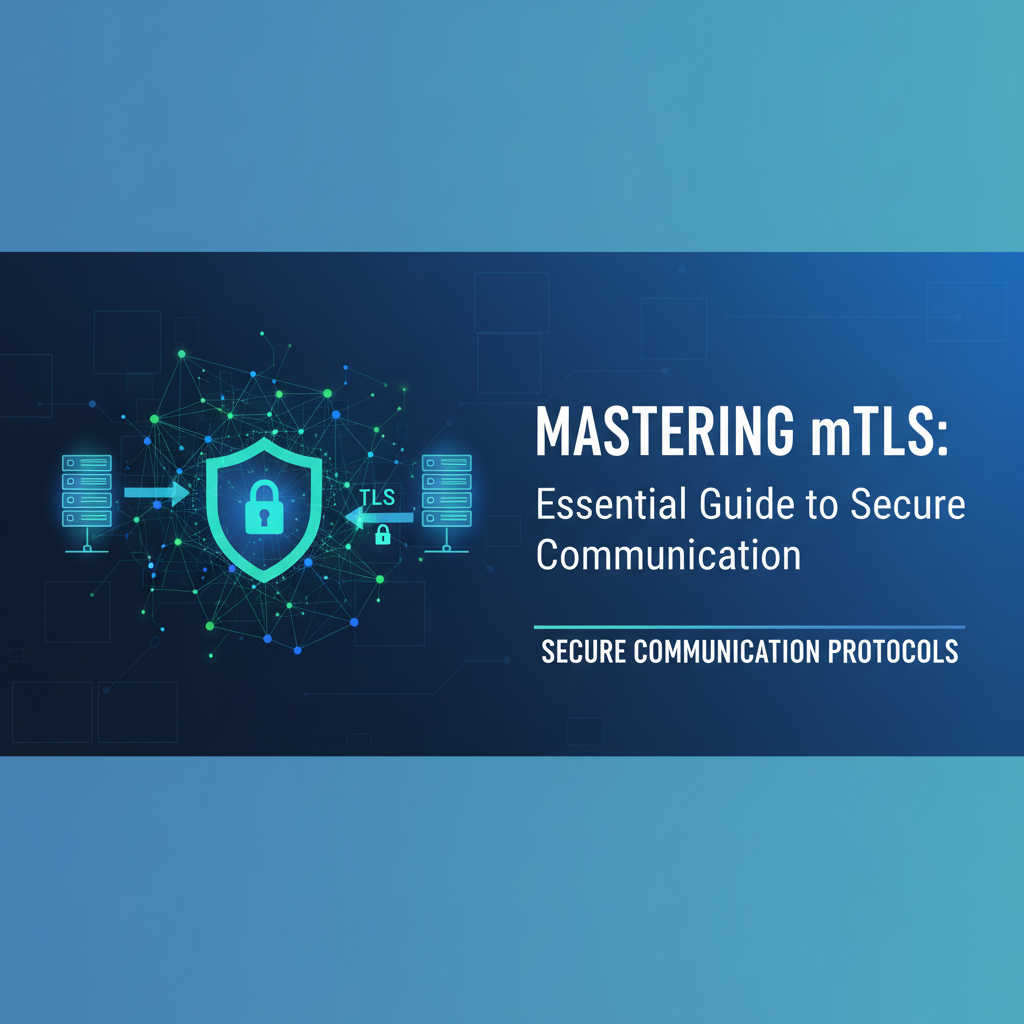


In the intricate tapestry of modern digital interactions, where data flows ceaselessly across networks, the bedrock of trust and integrity is fundamentally built upon secure communication. As organizations increasingly adopt distributed architectures, microservices, and cloud-native applications, the traditional perimeter-based security model has proven insufficient. The imperative to secure every interaction, irrespective of its origin or destination within an enterprise ecosystem, has propelled advanced security paradigms to the forefront. Among these, Mutual Transport Layer Security (mTLS) stands out as a robust mechanism, elevating the standard of cryptographic security from mere server authentication to a comprehensive, bi-directional verification process. This guide embarks on an exhaustive journey through the landscape of mTLS, dissecting its foundational principles, practical implementation nuances, and its pivotal role in fortifying the security posture of contemporary digital infrastructures.
The internet, by its very design, was not inherently secure. Early communication protocols offered little to no protection against eavesdropping, tampering, or impersonation. The advent of Secure Sockets Layer (SSL) and its successor, Transport Layer Security (TLS), marked a transformative leap forward, introducing cryptographic protocols designed to ensure privacy and data integrity between two communicating applications. While TLS effectively authenticates the server to the client, preventing malicious entities from impersonating legitimate services, it often leaves the client's identity unverified by the server. This unilateral authentication, while sufficient for many public-facing web applications, creates vulnerabilities in environments demanding a higher degree of trust and identity verification, such as inter-service communication within a microservices architecture, securing sensitive API endpoints, or authenticating IoT devices.
This is precisely where mTLS enters the narrative, offering a powerful extension to standard TLS by mandating that both the client and the server authenticate each other using digital certificates issued by trusted Certificate Authorities (CAs). This mutual verification establishes a higher level of trust, forming a cornerstone for "Zero Trust" security models where no entity, whether inside or outside the network perimeter, is inherently trusted. By understanding and meticulously implementing mTLS, organizations can dramatically enhance their defense mechanisms against a myriad of cyber threats, from sophisticated impersonation attacks to unauthorized data access. This guide will meticulously unravel the complexities of mTLS, from its cryptographic underpinnings and certificate management to its deployment within API Gateways and service meshes, equipping architects, developers, and security professionals with the knowledge to champion secure communication in an ever-evolving digital threat landscape.
Chapter 1: Understanding the Foundations of TLS
Before diving into the intricacies of Mutual TLS, it is indispensable to grasp the core mechanics and objectives of its predecessor and foundation: Transport Layer Security (TLS). TLS is the cryptographic protocol that ensures secure communication over a computer network, playing a ubiquitous role in securing web browsing (HTTPS), email (SMTPS, POP3S, IMAPS), voice over IP (VoIP), and countless other applications. It emerged as the successor to Secure Sockets Layer (SSL) and has since undergone several revisions, with TLS 1.2 and TLS 1.3 being the most prevalent versions in use today, each iteration bringing improvements in security, efficiency, and performance.
What is TLS? The Evolution from SSL
TLS operates at the transport layer of the OSI model, encrypting the data transmitted between applications and providing authentication and message integrity. Its primary goal is to establish a secure channel over an untrusted network, such as the internet, so that data exchanged between a client (e.g., a web browser) and a server (e.g., a web server) remains confidential, authentic, and untampered. The evolution from SSL to TLS was driven by the need to address cryptographic weaknesses discovered in earlier SSL versions and to enhance the protocol's robustness against evolving cyber threats. While the term "SSL" is still commonly used in casual conversation, especially when referring to the visual padlock icon in a browser, the underlying technology in modern systems is almost exclusively TLS.
Core Components of TLS
To achieve its security objectives, TLS relies on a sophisticated interplay of cryptographic primitives and established standards:
- Symmetric vs. Asymmetric Cryptography:
- Asymmetric Cryptography (Public-Key Cryptography): This involves a pair of mathematically linked keys: a public key and a private key. Data encrypted with one key can only be decrypted with the other. The public key can be freely distributed, while the private key must be kept secret. TLS uses asymmetric cryptography primarily for the initial secure key exchange during the handshake process and for server authentication. For instance, the server's public key (found in its digital certificate) is used by the client to encrypt a pre-master secret, which only the server can decrypt with its private key.
- Symmetric Cryptography: This uses a single secret key for both encryption and decryption. Once a secure channel is established using asymmetric cryptography, TLS switches to symmetric cryptography for encrypting the bulk of the application data. Symmetric encryption algorithms (e.g., AES, ChaCha20) are significantly faster than asymmetric ones, making them ideal for high-throughput data transmission.
- Digital Certificates (X.509 Standard): A digital certificate is an electronic document used to prove the ownership of a public key. In the context of TLS, server certificates are crucial for the client to verify the server's identity. These certificates conform to the X.509 standard and typically contain:
- The public key of the server.
- Information about the server (e.g., domain name, organization).
- Information about the Certificate Authority (CA) that issued the certificate.
- A digital signature from the CA, which verifies the certificate's authenticity and integrity.
- Validity dates (not before, not after).
- Certificate Authorities (CAs): CAs are trusted third-party entities that issue and manage digital certificates. They act as guarantors of identity in the digital world. When a client receives a server's certificate, it verifies the CA's signature using the CA's public key (which is pre-installed in its trusted root certificate store). If the signature is valid and the certificate chain leads back to a trusted root CA, the client can trust that the server is indeed who it claims to be. This hierarchical trust model is fundamental to the internet's security infrastructure.
- TLS Handshake Process (Detailed Steps): The TLS handshake is a complex, multi-step process that occurs before any application data is transmitted. Its purpose is to establish a secure communication channel by agreeing on cryptographic parameters, authenticating the server, and generating session keys.
- Client Hello: The client initiates the handshake by sending a "Client Hello" message. This message includes:
- The TLS version it supports (e.g., TLS 1.2, TLS 1.3).
- A list of cryptographic algorithms (cipher suites) it can use, in order of preference.
- A client-generated random byte string.
- The Server Name Indication (SNI), if applicable, indicating the hostname it wishes to connect to.
- Server Hello: The server responds with a "Server Hello" message, selecting the best TLS version and cipher suite from the client's list that it also supports. It also sends a server-generated random byte string.
- Certificate: The server sends its digital certificate (and potentially its full certificate chain up to a root CA) to the client.
- Server Key Exchange (Optional): If a Diffie-Hellman key exchange algorithm is used, the server sends its Diffie-Hellman public key parameters.
- Server Hello Done: The server sends a "Server Hello Done" message, indicating it has finished its initial handshake messages.
- Client Key Exchange: The client verifies the server's certificate (checking validity, trust chain, and hostname). If valid, the client then uses the server's public key (from the certificate) to encrypt a "pre-master secret" (or generates its own Diffie-Hellman parameters if using ephemeral Diffie-Hellman) and sends it to the server.
- Change Cipher Spec: The client sends a "Change Cipher Spec" message, signaling that all subsequent communication will be encrypted using the negotiated cipher suite and session keys derived from the pre-master secret.
- Finished: The client sends an encrypted "Finished" message, which is a hash of all handshake messages, verifying the integrity of the handshake.
- Server Change Cipher Spec & Finished: The server decrypts the pre-master secret using its private key, generates the same session keys as the client, sends its own "Change Cipher Spec" message, and finally an encrypted "Finished" message. At this point, a secure, encrypted, and authenticated channel is established, and application data can be exchanged securely.
- Client Hello: The client initiates the handshake by sending a "Client Hello" message. This message includes:
- Key Exchange: The process by which the client and server agree upon a shared secret key for symmetric encryption, without transmitting the key itself over the insecure network. Common methods include RSA (where the client encrypts a secret with the server's public key) and Diffie-Hellman (where both parties generate public/private key pairs and exchange public keys to derive a shared secret). Modern TLS versions favor Ephemeral Diffie-Hellman (DHE or ECDHE) for perfect forward secrecy, ensuring that if a server's private key is compromised in the future, past recorded conversations cannot be decrypted.
- Data Encryption: Once the session keys are established, all application data is encrypted using a symmetric encryption algorithm (e.g., AES-256 GCM) with these keys. This ensures the confidentiality of the data in transit.
- Message Authentication Codes (MACs): In addition to encryption, TLS also employs MACs (or Authenticated Encryption with Associated Data - AEAD modes like GCM in modern TLS) to ensure data integrity and authenticity. A MAC is a cryptographic checksum generated from the message content and the shared secret key. It allows the receiver to verify that the message has not been tampered with during transmission and that it originated from the legitimate sender.
Why TLS Alone Isn't Always Enough
While standard TLS offers robust server authentication and encrypts communication, its security model is fundamentally unilateral. The client authenticates the server, but the server does not authenticate the client. This means that as long as a client presents the correct credentials (e.g., username/password, API key), the server has no intrinsic way of verifying the client's actual identity based on cryptographic proof from its network endpoint. In scenarios where a server needs to ensure that only specifically authorized and cryptographically verified clients can connect—such as inter-service communication in a microservices architecture, securing sensitive internal APIs, or controlling access to an API Gateway—this lack of client authentication poses a significant security gap. This is precisely the gap that Mutual TLS is designed to fill, moving beyond mere server authenticity to establish trust in both directions.
Chapter 2: Delving into mTLS - Mutual TLS Authentication
Having established a solid understanding of standard TLS and its inherent server-side authentication, we now pivot to Mutual TLS (mTLS), a powerful enhancement that elevates the security paradigm by introducing reciprocal authentication. mTLS is not merely an optional add-on; it represents a fundamental shift towards a more resilient and trustworthy communication framework, particularly crucial in today's distributed and "Zero Trust" environments.
What is mTLS?
Mutual TLS, or mTLS, is a protocol that extends the standard TLS handshake by requiring both the client and the server to present and verify each other's digital certificates. While traditional TLS ensures the client can verify the server's identity, mTLS ensures that the server can also cryptographically verify the client's identity. This bi-directional verification process means that before any application data is exchanged, both parties have proven their identities to each other using trusted certificates issued by a mutually trusted Certificate Authority (CA). This creates a highly secure, authenticated, and encrypted communication channel where both endpoints are verified and trusted.
How mTLS Differs from One-Way TLS
The key differentiator between mTLS and one-way TLS lies in the client authentication step. In standard TLS, once the server presents its certificate and the client verifies it, the secure channel is established. The client might then send application-layer credentials (like username/password or API keys) for authorization. With mTLS, an additional critical step is introduced during the handshake:
- Standard TLS: Client authenticates Server.
- mTLS: Client authenticates Server, AND Server authenticates Client.
This client authentication happens at the network layer (Layer 4) using cryptographic proof, making it a much stronger form of identity verification than application-layer authentication alone. It also means that unauthorized clients cannot even initiate a connection or perform the TLS handshake if they do not possess a valid and trusted client certificate.
The mTLS Handshake Process (Detailed Steps)
The mTLS handshake largely mirrors the standard TLS handshake, but with a crucial additional phase where the client presents its certificate. Let's delineate the enhanced steps:
- Client Hello: The client initiates, sending its supported TLS versions, cipher suites, and a random byte string.
- Server Hello: The server responds with its chosen TLS version, cipher suite, and its own random byte string.
- Server Certificate: The server sends its digital certificate (and certificate chain) to the client.
- Certificate Request (NEW IN mTLS): This is the pivotal step that differentiates mTLS. The server sends a "Certificate Request" message to the client. This message specifies the types of certificates the server will accept and the list of acceptable Certificate Authorities (CAs) that it trusts to have issued those client certificates.
- Server Key Exchange (Optional): If using ephemeral Diffie-Hellman for key exchange, the server sends its parameters.
- Server Hello Done: The server indicates it has finished its initial handshake messages.
- Client Certificate (NEW IN mTLS): The client, upon receiving the "Certificate Request," locates an appropriate client certificate (and its chain) from its local store that is issued by one of the CAs trusted by the server. It then sends this client certificate to the server. If the client does not have a suitable certificate, it might terminate the connection or proceed without presenting one, depending on whether the server configured client certificate authentication as optional or mandatory. For strict mTLS, it is mandatory.
- Client Key Exchange: The client then verifies the server's certificate. If valid, it proceeds to generate and send the pre-master secret (encrypted with the server's public key) or its Diffie-Hellman parameters.
- Certificate Verify (NEW IN mTLS): The client generates a digital signature over a hash of all the handshake messages exchanged so far, using its private key associated with the client certificate. This signature is sent in the "Certificate Verify" message, proving to the server that the client is indeed the rightful owner of the client certificate it just presented.
- Change Cipher Spec (Client): The client sends a "Change Cipher Spec" message.
- Finished (Client): The client sends its encrypted "Finished" message, a hash of all handshake messages.
- Server Verification: The server performs crucial verification steps:
- It verifies the client's certificate (validity, trust chain against its list of trusted CAs, revocation status).
- It verifies the client's "Certificate Verify" signature using the public key from the client's certificate. This cryptographic proof ensures the client possesses the private key.
- If all verifications pass, the server trusts the client's identity.
- Change Cipher Spec (Server): The server sends its "Change Cipher Spec" message.
- Finished (Server): The server sends its encrypted "Finished" message.
Once these steps are successfully completed, a fully authenticated, encrypted, and integrity-protected channel is established, with both client and server cryptographically verified.
Key Benefits of mTLS
The introduction of client authentication via mTLS yields a cascade of significant security and operational advantages:
- Enhanced Security and Trust: By verifying both parties, mTLS creates a much higher level of trust. It ensures that only legitimate, cryptographically identified entities can communicate, dramatically reducing the risk of unauthorized access.
- Zero Trust Architecture Enablement: mTLS is a cornerstone of Zero Trust principles. In a Zero Trust model, no user or device is trusted by default, even if they are within the network perimeter. Every request must be authenticated and authorized. mTLS provides a powerful mechanism for cryptographic identity verification at the network layer, making it fundamental for implementing granular access policies.
- Fine-Grained Access Control: With client identities cryptographically verified, servers (or an API Gateway) can implement extremely precise access control policies based on the information contained within the client's certificate (e.g., organization, department, unique ID). This allows for dynamic and context-aware authorization decisions.
- Identity Verification for Both Client and Server: Beyond just encryption, mTLS guarantees who is on the other end of the connection, providing undeniable proof of identity that is much harder to spoof than traditional credentials.
- Protection Against Impersonation and Man-in-the-Middle (MitM) Attacks: Without mTLS, a malicious actor who manages to compromise a network could potentially impersonate a legitimate client to a server, or vice versa, if they acquire application-layer credentials. mTLS's cryptographic client authentication makes such impersonation significantly more difficult, as the attacker would need the client's private key.
- Stronger API Security: For API endpoints, mTLS provides an extremely robust layer of authentication. It ensures that only services or applications possessing valid client certificates can interact with your APIs, preventing unauthorized access even before application-layer authentication occurs.
Use Cases for mTLS
The robust security properties of mTLS make it indispensable across a wide array of modern architectural patterns and industry sectors:
- Microservices Communication (Service Mesh): In a microservices architecture, services often communicate with each other over the network. Securing this "East-West" traffic (inter-service communication) is paramount. A service mesh (e.g., Istio, Linkerd) leverages mTLS to automatically encrypt and authenticate all traffic between services, ensuring that only authorized microservices can interact. This prevents lateral movement of attackers within the network.
- API Security: Protecting APIs from unauthorized access is a critical concern for any organization. Deploying mTLS in front of APIs, especially internal or sensitive APIs accessed by other services or trusted partners, ensures that only cryptographically verified clients can even initiate a connection. This is often enforced at the API Gateway layer, acting as the first line of defense.
- IoT Device Authentication: Internet of Things (IoT) devices often operate in untrusted environments and require strong authentication to prevent spoofing and unauthorized data injection or control. mTLS provides a robust mechanism for IoT devices to authenticate themselves to backend servers and vice versa, using unique device certificates.
- B2B Communication: When businesses exchange sensitive data or interact with each other's systems, establishing trust is crucial. mTLS can secure direct B2B connections, ensuring that both participating organizations are cryptographically verified.
- Financial Services: The financial sector, with its stringent regulatory requirements and high-stakes transactions, heavily relies on robust security. mTLS is frequently used to secure banking APIs, payment gateways, and interbank communications, ensuring the integrity and confidentiality of sensitive financial data.
- Securing Internal Systems: For any internal system or application that holds sensitive data or performs critical operations, mTLS can be used to restrict access only to authorized internal clients or services, significantly reducing the internal attack surface.
In essence, mTLS transforms a merely encrypted channel into a mutually trusted and verified conduit, making it an indispensable tool for architects and security professionals aiming to build truly resilient and secure digital infrastructures. Its ability to cryptographically prove identity at the network layer provides a fundamental building block for advanced security postures, making it a cornerstone for future-proof security strategies.
Chapter 3: Certificates and Certificate Management for mTLS
The efficacy of mTLS hinges entirely on the proper issuance, management, and validation of digital certificates. Certificates are the digital identity documents for both clients and servers, and the underlying Public Key Infrastructure (PKI) is the system that creates, manages, distributes, uses, stores, and revokes these certificates. A thorough understanding of certificate mechanics and robust management practices is crucial for a successful and secure mTLS implementation.
Types of Certificates
While the fundamental structure of digital certificates (X.509 standard) remains consistent, their application in mTLS necessitates distinguishing between server and client certificates, each with specific attributes and usage policies.
- Server Certificates: These are the standard TLS certificates, primarily used to authenticate the server to the client. They contain the server's public key, its domain name(s) (Common Name and Subject Alternative Names), and are signed by a trusted Certificate Authority. Their "Extended Key Usage" (EKU) typically includes "Server Authentication."
- Client Certificates: These certificates are used to authenticate the client to the server. Like server certificates, they contain the client's public key and identity information, which might include an organizational unit, email address, or a unique identifier. Their EKU typically includes "Client Authentication." The identity information within client certificates is often used by the server (or an API Gateway) for authorization decisions after successful authentication.
Public Key Infrastructure (PKI) for mTLS
PKI is the framework that manages the public keys and private keys associated with digital certificates. For mTLS, the PKI plays an even more critical role as it must reliably issue and manage certificates for both server and client entities, and both sides must trust the CAs involved.
A typical PKI comprises:
- Certificate Authorities (CAs): These are the trusted entities that issue certificates. In an mTLS setup, you might have:
- Root CA: The top-level CA, whose certificate is self-signed and deeply trusted. Its public key is distributed widely (e.g., embedded in operating systems, browsers).
- Intermediate CAs: CAs signed by the Root CA. They issue end-entity certificates (server and client certificates) and help distribute the cryptographic load and compartmentalize risk. For mTLS, it's common for an organization to set up its own private PKI with a Root CA and one or more Intermediate CAs for issuing internal server and client certificates.
- Registration Authorities (RAs): These entities verify the identity of certificate requestors before forwarding requests to the CA for issuance.
- Certificate Revocation Lists (CRLs) / Online Certificate Status Protocol (OCSP) Responders: Mechanisms for revoking and checking the validity status of certificates that have been compromised or are no longer valid.
- Certificate Stores/Repositories: Databases or directories for storing and retrieving certificates and CRLs.
Setting up Your Own CA (OpenSSL Example)
For internal mTLS deployments, especially within a microservices architecture or to secure internal APIs, organizations often establish their own private PKI rather than relying on commercial CAs. This provides complete control over certificate issuance, revocation, and management. OpenSSL is a widely used open-source toolkit for cryptographic operations, including managing certificates and setting up a CA.
Conceptual Steps for a Basic Private CA using OpenSSL:
- Generate a Root CA Key and Self-Signed Certificate:
- Create a private key for your Root CA.
- Generate a self-signed certificate for the Root CA using this private key. This certificate is the trust anchor.
- Generate an Intermediate CA Key and Certificate (Recommended):
- Create a private key for an Intermediate CA.
- Generate a Certificate Signing Request (CSR) for the Intermediate CA.
- Sign the Intermediate CA's CSR with the Root CA's private key to issue the Intermediate CA certificate. This intermediate CA will then sign your end-entity certificates. This setup enhances security by allowing the Root CA to remain offline and reducing the impact of a compromised Intermediate CA.
- Generate Server and Client Keys and Certificates:
- For each server and client requiring mTLS, generate a unique private key.
- Generate a CSR for each entity, including appropriate
Common Name(CN) andSubject Alternative Names(SANs) for servers, and unique identifiers for clients. - Sign these CSRs with your Intermediate CA's private key to issue the final server and client certificates. Ensure the
Extended Key Usage(EKU) field is correctly set to "Server Authentication" for server certificates and "Client Authentication" for client certificates.
Example (Simplified OpenSSL Commands):
# 1. Create Root CA Key
openssl genrsa -aes256 -out ca.key 4096

# 2. Create Root CA Certificate
openssl req -x509 -new -nodes -key ca.key -sha256 -days 3650 -out ca.crt -config ca_root.cnf # ca_root.cnf defines CA properties

# 3. Create Server Key
openssl genrsa -out server.key 2048

# 4. Create Server CSR
openssl req -new -key server.key -out server.csr -config server.cnf # server.cnf defines server details and SANs

# 5. Sign Server CSR with Root CA (or Intermediate CA)
openssl x509 -req -in server.csr -CA ca.crt -CAkey ca.key -CAcreateserial -out server.crt -days 365 -sha256 -extfile server.cnf -extensions v3_req

# Similar steps for client certificates, using client.cnf
Note: ca_root.cnf, server.cnf, client.cnf are OpenSSL configuration files crucial for defining extensions like SANs and EKU, which are omitted here for brevity.
Managing Certificates: Lifecycle and Security
Effective certificate management is paramount to the security of an mTLS system. Neglecting any aspect of the certificate lifecycle can introduce significant vulnerabilities.
- Issuance: Certificates must be issued securely, ensuring the identity of the requester is thoroughly verified. Automated systems can streamline this, but human oversight is often necessary for critical certificates.
- Revocation: When a private key is compromised, a certificate is misused, or an entity (client/server) is decommissioned, its certificate must be immediately revoked.
- Certificate Revocation Lists (CRLs): Lists of revoked certificates published by the CA. Clients periodically download these lists to check if a certificate is revoked.
- Online Certificate Status Protocol (OCSP): A real-time protocol for checking certificate revocation status. Clients send a request to an OCSP responder, which returns a signed response indicating the certificate's status (good, revoked, unknown). OCSP is generally preferred for its timeliness.
- Renewal: Certificates have a finite lifespan. Before expiration, they must be renewed with a new validity period and potentially new keys. Automated renewal processes are highly recommended to prevent service outages due to expired certificates.
- Secure Storage: Private keys associated with certificates must be stored securely, ideally in hardware security modules (HSMs) or secure key vaults. Unauthorized access to a private key compromises the identity of the certificate holder. Client certificates and their private keys, for example, might be stored in a client application's secure store, a smart card, or a protected file system.
- Certificate Pinning: This is an advanced security measure where a client "pins" a specific server certificate or its CA's public key. This means the client will only accept that specific certificate or certificates signed by that specific CA, even if other valid certificates are presented. This helps prevent attacks where a malicious CA could issue a fraudulent certificate for a legitimate domain. While powerful, it adds complexity to certificate rotation and can lead to service outages if not managed meticulously.
Considerations for Certificate Chains and Trust Anchors
For mTLS to function correctly, both the client and the server must correctly validate the entire certificate chain presented by the other party.
- Trust Anchors: Each party must have the root (or intermediate) CA certificate of the other party's issuing CA in its trusted certificate store. For instance, the server must trust the CA that issued the client's certificate, and the client must trust the CA that issued the server's certificate.
- Chain of Trust: When a certificate is presented, the verifier must be able to trace its signature back up through the chain of intermediate CAs to a trusted root CA. If any certificate in the chain is missing, expired, or invalid, the verification fails, and the mTLS handshake is aborted.
Managing certificates effectively is not a trivial task, especially in large-scale deployments. It requires careful planning, robust automation, and continuous monitoring to ensure the integrity and availability of your mTLS-secured communication channels. Without a strong PKI foundation and diligent certificate lifecycle management, the strongest cryptographic protocols can still be undermined.
Chapter 4: Implementing mTLS in Practice
Implementing mTLS requires meticulous configuration on both the server and client sides, along with careful integration into existing infrastructure components like load balancers and API Gateways. This chapter delves into the practical aspects of setting up mTLS, providing conceptual guidance and highlighting common integration points.
Server-side Configuration
The server's role in mTLS is to request a client certificate, validate it against its trusted Certificate Authorities (CAs), and use the client's identity for access control. This typically involves configuring web servers, proxies, or API Gateways.
- Load Balancers/Proxies: In many architectures, load balancers (e.g., AWS ELB/ALB, Google Cloud Load Balancer, HAProxy) or API Gateway proxies sit in front of web servers. These components can be configured to terminate mTLS, perform client certificate validation, and then forward requests to backend services.
- Termination: The load balancer handles the entire mTLS handshake.
- Validation: It validates the client certificate against its configured trusted CAs.
- Forwarding: Upon successful mTLS authentication, the load balancer typically passes relevant client certificate information (e.g., common name, subject alternative names) to the backend services via HTTP headers, often over a new, potentially unencrypted, or internally encrypted (e.g., TLS) connection. This offloads the mTLS processing from individual backend services, centralizing security and improving efficiency.
Web Servers (Nginx, Apache): Common web servers can be configured to enforce mTLS for incoming connections.Nginx Configuration Example (Conceptual): ```nginx server { listen 443 ssl; server_name your.domain.com;
ssl_certificate /etc/nginx/ssl/server.crt;       # Server's public certificate
ssl_certificate_key /etc/nginx/ssl/server.key;   # Server's private key

ssl_client_certificate /etc/nginx/ssl/ca.crt;    # CA certificate(s) that signed client certificates
ssl_verify_client on;                            # 'on' for mandatory mTLS, 'optional' for optional client cert, 'off' for no client cert request

# Optionally, extract client certificate details for logging or application use
# This will set the $ssl_client_s_dn variable to the client's subject DN
# and $ssl_client_serial to the client's certificate serial number.
# These can be passed as headers to backend services for authorization.
proxy_set_header X-Client-DN $ssl_client_s_dn;
proxy_set_header X-Client-Serial $ssl_client_serial;
proxy_set_header X-Client-Verify $ssl_client_verify; # SUCCESS, FAILED:reason, NONE

location / {
    # Proxy to your backend application or service
    proxy_pass http://your_backend_service;
    proxy_redirect default;
    proxy_set_header Host $host;
    proxy_set_header X-Real-IP $remote_addr;
    proxy_set_header X-Forwarded-For $proxy_add_x_forwarded_for;
    proxy_set_header X-Forwarded-Proto $scheme;
}
} `` *ssl_client_certificate: Specifies the file containing trusted CA certificates (typically your intermediate CA or root CA) that Nginx will use to verify client certificates. *ssl_verify_client on: This directive is crucial for enforcing mTLS. It instructs Nginx to request a client certificate and fail the handshake if a valid one is not provided.optionalallows connections even if no client certificate is presented, or if it fails validation, butonmakes it mandatory. *proxy_set_header`: Demonstrates how information from the verified client certificate (like Subject DN, serial number, or verification status) can be extracted and passed to backend applications via HTTP headers for further authorization checks.Apache Configuration Example (Conceptual): ```apacheServerName your.domain.com SSLEngine on SSLCertificateFile "/techblog/en/etc/apache2/ssl/server.crt" SSLCertificateKeyFile "/techblog/en/etc/apache2/ssl/server.key" SSLCACertificateFile "/techblog/en/etc/apache2/ssl/ca.crt" # CA certificate(s) for client cert verification SSLVerifyClient require # 'require' for mandatory mTLS, 'optional' for optional client cert SSLVerifyDepth 10 # Max CA certs in client chain
# Optionally, pass client certificate info to backend via mod_headers
RequestHeader set X-Client-DN "%{SSL_CLIENT_S_DN}s"
RequestHeader set X-Client-Serial "%{SSL_CLIENT_SERIAL}s"
RequestHeader set X-Client-Verify "%{SSL_CLIENT_VERIFY}s"

<Location />
    ProxyPass http://your_backend_service/
    ProxyPassReverse http://your_backend_service/
</Location>
```
Client-side Configuration
The client's role is to possess a valid client certificate and its associated private key, present it during the mTLS handshake when requested by the server, and verify the server's certificate.
- Browser Interactions: While less common for automated client-to-server mTLS in the context of APIs, browsers can support client certificates, typically used with smart cards or security tokens for high-security web applications (e.g., government portals, financial institutions). The browser manages the client certificate and private key, presenting it to the server when requested. This requires the client certificate to be installed in the browser's certificate store.
Programming Languages: Most modern programming languages and their HTTP libraries provide mechanisms to configure mTLS for outgoing requests.Python (using requests library): ```python import requests
Path to client certificate file (containing cert and private key)
or a tuple (cert_file, key_file)
client_cert_path = ('/path/to/client.crt', '/path/to/client.key')
Path to the CA certificate that signed the server's certificate
server_ca_path = '/path/to/server_ca.crt'try: response = requests.get( 'https://your.mTLS.secured.api/', cert=client_cert_path, verify=server_ca_path # Verify server's cert against this CA ) response.raise_for_status() # Raise an exception for HTTP errors print("Successfully connected and authenticated:") print(response.text) except requests.exceptions.RequestException as e: print(f"Error during mTLS connection: {e}") ```Node.js (using https module): ```javascript const https = require('https'); const fs = require('fs');const options = { key: fs.readFileSync('/path/to/client.key'), cert: fs.readFileSync('/path/to/client.crt'), ca: fs.readFileSync('/path/to/server_ca.crt'), // CA that signed server's cert hostname: 'your.mTLS.secured.api', port: 443, path: '/', method: 'GET' };const req = https.request(options, (res) => { console.log('statusCode:', res.statusCode); res.on('data', (d) => { process.stdout.write(d); }); });req.on('error', (e) => { console.error('Error during mTLS connection:', e); }); req.end(); `` *Similar examples exist for Java (usingKeyStoreandTrustStore`), Go, and other languages.* The core principle is to specify the client's private key and certificate, and provide the trusted CA certificate(s) for server verification.
Integration with API Gateways
An API Gateway serves as a critical entry point for all API calls, acting as a proxy between clients and backend services. It is an ideal control point for enforcing mTLS, centralizing security policies, and offloading authentication from individual microservices.
- How an API Gateway Leverages mTLS: When mTLS is configured on an API Gateway, it becomes the first line of defense.
- Client Connection: A client attempts to connect to an API endpoint exposed by the API Gateway.
- mTLS Handshake: The API Gateway initiates an mTLS handshake, requesting a client certificate.
- Client Certificate Presentation: The client presents its certificate.
- Gateway Validation: The API Gateway validates the client certificate against its configured trusted CAs and checks for revocation.
- Access Decision: If the client certificate is valid and trusted, the API Gateway successfully authenticates the client. It can then extract client identity information from the certificate (e.g., common name, custom attributes) and use it for authorization decisions against specific APIs.
- Forwarding Request: Only authenticated requests are then forwarded to the appropriate backend service. The API Gateway might re-encrypt the connection to the backend (e.g., using standard TLS or another mTLS session for internal services), and often passes client identity details as HTTP headers to the backend for further application-layer authorization.
- Benefits of mTLS at the API Gateway Layer:
- Perimeter Security: The API Gateway acts as a robust security perimeter, rejecting unauthorized clients at the earliest possible stage, before they even reach your backend services.
- Unified Policy Enforcement: All mTLS policies (e.g., trusted CAs, revocation checks) are managed centrally at the gateway, simplifying configuration and ensuring consistency across all exposed APIs.
- Offloading Security: Backend services are relieved of the burden of performing mTLS authentication and certificate management, allowing them to focus on core business logic.
- Enhanced Auditability: The API Gateway can log detailed information about successful and failed mTLS handshakes, including client certificate details, providing a comprehensive audit trail.
- Granular Access Control: By extracting client identity from certificates, the gateway can enforce fine-grained, role-based, or attribute-based access control policies for different APIs or operations.
For robust API management and security, solutions like an API gateway become indispensable. A well-configured api gateway can centralize mTLS enforcement, ensuring that only authenticated and authorized clients or services can access your valuable backend apis. Platforms such as APIPark, an open-source AI gateway and API management platform, provide comprehensive tools for managing the entire API lifecycle, from design to deployment. While APIPark offers quick integration of 100+ AI models and unified API formats, its robust gateway capabilities also facilitate the implementation of advanced security measures like mTLS. APIPark's end-to-end API lifecycle management, independent API and access permissions for each tenant, and features like API resource access requiring approval can be significantly enhanced by a strong mTLS implementation at the gateway layer, offering enhanced control over access permissions and detailed call logging, which are critical for maintaining a secure and auditable API ecosystem. This combination of an intelligent API gateway and powerful cryptographic authentication ensures that your APIs are both accessible and profoundly secure.
APIPark is a high-performance AI gateway that allows you to securely access the most comprehensive LLM APIs globally on the APIPark platform, including OpenAI, Anthropic, Mistral, Llama2, Google Gemini, and more.Try APIPark now! 👇👇👇
Chapter 5: mTLS in Modern Architectures - Service Meshes and Microservices
The rise of microservices architectures has brought with it a paradigm shift in how applications are designed, deployed, and managed. While offering unprecedented agility and scalability, microservices also introduce significant complexity, particularly in securing the "East-West" traffic – the communication between services within the network. Traditional network security, focused on perimeter defense, often falls short in these highly dynamic and distributed environments. This is where mTLS, particularly when orchestrated by a service mesh, emerges as a critical enabler for robust security in modern microservices deployments.
Understanding Service Meshes
A service mesh is a dedicated infrastructure layer for handling service-to-service communication. It's designed to make communication between services fast, reliable, and secure. Rather than embedding communication logic (like retry mechanisms, load balancing, or security protocols) directly into each microservice, a service mesh abstracts this functionality into a separate layer. Key components of a service mesh include:
- Data Plane: Consists of intelligent proxies (often called "sidecar proxies" like Envoy) deployed alongside each service instance. All incoming and outgoing network traffic for a service is routed through its sidecar proxy.
- Control Plane: Manages and configures the proxies, providing features like traffic management, policy enforcement, observability, and, crucially, security.
How Service Meshes Automate and Manage mTLS Between Services
One of the most compelling features of a service mesh is its ability to automate and enforce mTLS for all inter-service communication. This addresses the challenge of manually configuring mTLS for potentially hundreds or thousands of microservice instances.
Here's how it typically works:
- Sidecar Proxy Injection: When a microservice is deployed within a service mesh (e.g., in a Kubernetes cluster), a sidecar proxy is automatically injected alongside it. This proxy intercepts all network traffic to and from the service.
- Identity Management: The control plane of the service mesh (e.g., Istio's Citadel or Linkerd's identity service) acts as a Certificate Authority (CA) or integrates with an existing CA. It automatically generates and distributes unique client certificates for each service instance and server certificates for the proxies themselves. These certificates contain service identity information (e.g.,
serviceaccount.namespace.cluster.local). - Automatic mTLS Handshake:
- When Service A wants to communicate with Service B, Service A's sidecar proxy initiates a connection to Service B's sidecar proxy.
- During the TLS handshake, Service A's proxy presents its client certificate to Service B's proxy, and Service B's proxy presents its server certificate to Service A's proxy.
- Both proxies perform mutual authentication, verifying each other's certificates against the trusted CA managed by the service mesh control plane.
- Upon successful mTLS, an encrypted and authenticated tunnel is established between the two sidecars.
- Application Agnostic: The beauty of this approach is that the application code within the microservice itself does not need to be aware of mTLS. The sidecar handles all the cryptographic operations, certificate management, and key rotation transparently.
- Policy Enforcement: The service mesh control plane allows administrators to define granular mTLS policies. For example, you can enforce strict mTLS for all traffic, or define exceptions for specific services. You can also specify which CAs are trusted for different service identities.
Benefits of mTLS in a Microservices Environment
The automation of mTLS by a service mesh provides profound benefits for securing microservices architectures:
- East-West Traffic Security: This is arguably the most critical benefit. By encrypting and authenticating all communication between services, mTLS within a service mesh protects against eavesdropping, tampering, and impersonation within the internal network. This is vital because internal networks are no longer implicitly trusted in a Zero Trust model. An attacker who gains a foothold in one service cannot easily move laterally to other services without being cryptographically authenticated.
- Zero Trust Segmentation: mTLS enables fine-grained network segmentation. Each service instance has a cryptographically verified identity. This allows the enforcement of "who can talk to whom" policies, ensuring that a compromised service cannot communicate with unauthorized services, effectively containing breaches.
- Reduced Attack Surface: Since mTLS is enforced at the network level by the sidecars, individual service developers no longer need to implement and manage TLS/mTLS within their application code. This reduces the attack surface associated with custom cryptographic implementations and ensures consistent security across the entire ecosystem.
- Simplified Operations: Automating certificate issuance, distribution, and rotation for thousands of microservice instances is an immense operational challenge. A service mesh abstracts this complexity, handling the entire certificate lifecycle on behalf of the services, drastically simplifying operational overhead.
- Identity-Based Authorization: With cryptographically verified service identities, authorization policies can be defined based on the identity of the calling service, rather than just IP addresses or network segments. For example, "Service A can only call API
/orderson Service B if it has a client certificate issued toservice-A.namespace." - Compliance and Auditability: The comprehensive security provided by automated mTLS aids in meeting stringent compliance requirements (e.g., PCI DSS, HIPAA) by ensuring data in transit is always encrypted and authenticated. Service meshes also provide detailed observability into communication patterns, which can aid in auditing and forensic analysis.
Challenges and Best Practices in Large-Scale Deployments
While incredibly powerful, deploying mTLS at scale within a service mesh presents its own set of challenges:
- Performance Overhead: While modern mTLS implementations are highly optimized, the cryptographic operations (handshake, encryption/decryption) still incur some CPU overhead and latency. This needs to be considered during capacity planning.
- Observability and Debugging: Troubleshooting mTLS issues (e.g., certificate mismatches, CA trust issues, expired certificates) can be complex, especially in a highly distributed system. Robust logging and metrics from the service mesh are essential.
- CA Management: While the service mesh automates certificate issuance, the underlying CA (whether internal or integrated with an external one) still needs careful management, including securing the CA root key, defining certificate policies, and ensuring proper revocation mechanisms.
- Gradual Rollout: For existing microservices, migrating to a full mTLS enforcement can be challenging. Service meshes often support a "permissive" mode where mTLS is attempted but not strictly required, allowing for a gradual rollout and testing.
- Integration with External Systems: When microservices need to communicate with external systems or legacy applications that do not support mTLS or a service mesh, specific egress policies and API Gateway configurations are necessary to bridge the security gap.
In summary, mTLS, particularly when seamlessly integrated and automated by a service mesh, is a game-changer for securing microservices architectures. It shifts the security posture from permeable perimeters to a granular, identity-centric model, making it a cornerstone of robust, Zero Trust-compliant cloud-native deployments. The ability to automatically authenticate and encrypt all inter-service communication transforms the security landscape, enabling organizations to build highly resilient and trustworthy distributed applications.
Chapter 6: Advanced Topics and Best Practices
Implementing mTLS effectively goes beyond basic configuration; it demands attention to performance, adherence to security best practices, and readiness to troubleshoot complex issues. This chapter delves into these advanced considerations, offering insights to optimize and maintain a robust mTLS environment.
Performance Considerations
While the security benefits of mTLS are undeniable, its cryptographic operations introduce a certain degree of overhead that must be strategically managed, especially in high-throughput or latency-sensitive environments.
- Handshake Overhead: Each new mTLS connection requires a handshake, which involves several round trips and cryptographic computations (key exchange, signature verification). This initial setup adds latency. For frequently communicating clients and servers, connection pooling and session resumption can mitigate this by reusing established secure channels or quickly re-establishing them without a full handshake.
- CPU Usage for Encryption/Decryption: The continuous encryption and decryption of data using symmetric algorithms consume CPU cycles. While modern CPUs have instructions to accelerate cryptographic operations (e.g., AES-NI), heavy traffic loads can still lead to increased CPU utilization.
- Hardware Acceleration: For extremely high-performance scenarios, dedicated hardware security modules (HSMs) or cryptographic accelerators can offload TLS/mTLS operations from the main CPU. HSMs are particularly valuable for securely storing and performing operations with private keys.
- TLS Versions and Cipher Suites: Using modern TLS versions (TLS 1.3 is highly recommended) and efficient cipher suites can significantly improve performance. TLS 1.3, for instance, has a streamlined handshake (often 1-RTT for new connections and 0-RTT for resumed connections) and removes deprecated, less efficient cryptographic algorithms.
- Certificate Size and Chain Length: Larger certificates or long certificate chains increase the amount of data exchanged during the handshake, adding minor latency. While generally not a major concern, keeping certificates concise and minimizing chain length (e.g., using one intermediate CA instead of several) can offer marginal gains.
Security Best Practices
The integrity of an mTLS system is only as strong as its weakest link. Adhering to rigorous security best practices across the entire lifecycle is crucial.
- Key Management:
- Secure Storage of Private Keys: Private keys are the crown jewels of mTLS. They must be stored in highly secure environments, such as HSMs, secure enclaves, or encrypted file systems, with restricted access.
- Key Rotation: Regularly rotate both CA keys and end-entity (server/client) private keys. This limits the window of exposure if a key is compromised. Automated key rotation, especially in service mesh environments, is highly beneficial.
- Regular Certificate Rotation: Certificates should have a reasonable validity period (e.g., 90 days to 1 year for end-entity certs, longer for CAs) and be renewed well before expiration. Automated tools should handle renewal to prevent outages.
- Auditing and Logging:
- Comprehensive Logs: Log all mTLS handshake events, including successful authentications, failed attempts (with reasons), certificate expiry warnings, and revocation checks.
- Centralized Logging: Aggregate logs from all mTLS-enabled components (API Gateways, web servers, microservices) into a centralized logging system for analysis and anomaly detection.
- Regular Audits: Periodically audit mTLS configurations, certificate stores, and logs to identify potential vulnerabilities or unauthorized access attempts.
- Robust Error Handling: Clients and servers should implement robust error handling for mTLS failures, providing clear (but not overly verbose to attackers) messages and gracefully degrading or terminating connections.
- Minimizing Attack Surface:
- Principle of Least Privilege: Ensure that the processes handling mTLS have only the necessary permissions to access private keys and certificates.
- Network Segmentation: Use network segmentation to restrict where mTLS-protected services can be accessed from, adding another layer of defense.
- Strict Validation of Client Certificates: Servers (and API Gateways) must perform thorough validation of client certificates:
- Trust Chain Validation: Ensure the certificate is signed by a trusted CA.
- Validity Dates: Check that the certificate is within its validity period.
- Revocation Status: Implement robust CRL or OCSP checks to ensure the certificate has not been revoked.
- Hostname/Identity Matching: For client certificates used for authorization, verify that the subject (e.g., Common Name or Subject Alternative Name) matches the expected identity of the client.
Troubleshooting Common mTLS Issues
Despite careful implementation, mTLS deployments can encounter problems. Effective troubleshooting requires understanding common failure points.
- Certificate Mismatches:
- Issue: The client presents a certificate not recognized or trusted by the server, or the server's certificate is not trusted by the client.
- Diagnosis: Check server logs for errors like "unknown CA," "certificate not in chain," or "client did not send certificate." On the client, verify the server's certificate chain.
- Resolution: Ensure both sides have the correct trusted CA certificates. Verify that the client certificate is indeed signed by a CA that the server trusts, and vice versa for the server certificate.
- CA Chain Issues:
- Issue: Intermediate CA certificates are missing in the chain presented, or the root CA is not trusted.
- Diagnosis: Error messages often indicate an "incomplete chain" or "unable to get local issuer certificate."
- Resolution: Ensure the server sends the full certificate chain (including intermediate CAs) up to a public root CA. For private PKI, ensure both client and server explicitly trust the correct root and intermediate CAs.
- Client Not Presenting Certificate:
- Issue: The server requests a client certificate, but the client fails to send one, or the client application isn't configured to send it.
- Diagnosis: Server logs show errors like "client did not present certificate" or "no client certificate presented."
- Resolution: Verify client-side configuration to ensure the client certificate and private key are correctly loaded and passed to the TLS stack. Check if the server's
ssl_verify_clientsetting (in Nginx) ison(mandatory) oroptional.
- Expired or Revoked Certificates:
- Issue: A certificate in the chain (either client or server) has expired or has been revoked.
- Diagnosis: Logs will clearly indicate "certificate expired" or "certificate revoked."
- Resolution: Renew expired certificates. For revoked certificates, issue new ones and ensure the old ones are no longer used. Confirm CRL/OCSP responders are accessible and up-to-date.
- Firewall Blocks:
- Issue: Firewalls or security groups might block access to CRL/OCSP endpoints, preventing certificate status checks.
- Diagnosis: Error messages related to network timeouts or failures when fetching revocation status.
- Resolution: Ensure network rules permit outbound connections from servers to CRL/OCSP endpoints.
Future Trends: Post-Quantum Cryptography Readiness, Hardware Security Modules (HSMs)
The cryptographic landscape is continually evolving. As quantum computing advances, the threat to current public-key cryptography (like RSA and ECC) becomes more tangible.
- Post-Quantum Cryptography (PQC) Readiness: Research and standardization efforts are underway to develop cryptographic algorithms resistant to quantum computer attacks. Organizations with long-term security horizons are starting to assess their readiness and plan for the eventual transition to PQC-compliant mTLS implementations. This involves understanding PQC algorithms (e.g., CRYSTALS-Dilithium, CRYSTALS-Kyber) and how they will integrate into TLS.
- Hardware Security Modules (HSMs): HSMs are specialized physical devices designed to protect cryptographic keys and accelerate cryptographic operations. Their importance in mTLS is growing, especially for protecting root CA keys, intermediate CA keys, and critical server private keys. HSMs provide a tamper-resistant environment, ensuring keys are never exposed in software and operations are performed securely. Integrating mTLS with HSMs significantly enhances the overall security posture by providing a strong root of trust for all cryptographic identities.
By proactively addressing performance, diligently adhering to security best practices, mastering troubleshooting techniques, and staying abreast of future cryptographic trends, organizations can build and maintain an mTLS infrastructure that is not only secure but also resilient and scalable against the backdrop of an ever-changing threat landscape.
Chapter 7: Challenges and Considerations
While mTLS offers unparalleled security benefits, its implementation is not without complexities and challenges. Organizations must thoroughly understand these aspects to plan for a successful deployment and sustainable operation. Ignoring these considerations can lead to operational overhead, system outages, and even new security vulnerabilities.
Complexity of Setup and Management
The most immediate challenge associated with mTLS is its inherent complexity compared to standard TLS or application-level authentication mechanisms.
- Public Key Infrastructure (PKI) Expertise: Setting up and managing a robust PKI, especially a private one, requires specialized knowledge. This includes understanding certificate standards (X.509), CA hierarchies, key generation, and certificate signing processes. Errors in PKI setup can compromise the entire security chain.
- Certificate Generation and Distribution: For every client and server participating in mTLS, unique certificates and private keys must be generated, securely distributed, and configured. In large microservices environments with hundreds or thousands of services, this manual process becomes unmanageable without automation (e.g., through a service mesh).
- Configuration Across Components: mTLS requires consistent configuration across multiple layers: clients, web servers, load balancers, proxies, and API Gateways. Inconsistencies or misconfigurations at any point can break the entire secure communication channel, leading to frustrating debugging sessions.
- Firewall and Network Policies: Network policies and firewalls must be carefully configured to allow the necessary traffic for the mTLS handshake and certificate validation (e.g., access to CRL/OCSP endpoints). Incorrect rules can prevent connections or cause validation failures.
Operational Overhead (Certificate Lifecycle)
The lifecycle management of certificates in an mTLS environment introduces significant ongoing operational overhead.
- Certificate Expiration: All certificates have a limited lifespan. Managing renewals for potentially thousands of client and server certificates can be a daunting task. Failure to renew certificates before they expire will lead to service outages as mTLS connections will cease to function. This risk is amplified in systems where different teams manage different services.
- Certificate Revocation: When a private key is compromised, or an entity (client/server) is decommissioned, its certificate must be immediately revoked to prevent unauthorized access. Implementing and maintaining efficient, real-time revocation mechanisms (like OCSP) is critical but adds complexity. Outdated CRLs or unreachable OCSP responders can lead to either security vulnerabilities (unrevoked certificates still accepted) or connectivity issues (legitimate certificates rejected).
- Key Rotation: Beyond certificate renewal, periodic rotation of the underlying private keys is a crucial security practice. This adds another layer of management for ensuring keys are regenerated, new certificates issued, and older ones decommissioned.
- Auditing and Monitoring: Continuous monitoring of certificate validity, revocation status, and mTLS handshake successes/failures is essential. Tools and processes must be in place to alert operators to impending expirations or security incidents.
Client Compatibility Issues
While mTLS is a standard protocol, specific client implementations and environments might present compatibility challenges.
- Application-Specific Implementations: Different programming languages and HTTP libraries have varying levels of support and different ways to configure client certificates and trusted CAs. Developers need to be knowledgeable about their specific tech stack's capabilities.
- Browser Support (Limited for API Clients): While browsers support client certificates, their use for general API access (outside of specific interactive web applications) is less common and often cumbersome, requiring manual certificate installation by end-users. This limits browser-based clients from participating in strict mTLS to APIs.
- IoT Device Constraints: Resource-constrained IoT devices might have limited processing power or memory to handle complex cryptographic operations or store large certificate chains, making mTLS implementation challenging.
Debugging Difficulties
Troubleshooting mTLS connection failures can be notoriously difficult due to the multi-layered nature of the protocol.
- Opaque Error Messages: Lower-level TLS libraries often produce cryptic error messages that don't immediately pinpoint the root cause (e.g., "TLS handshake failed," "protocol error").
- Distributed Nature: In a microservices environment, a failure could originate from an issue with the client certificate, the client's trust store, the server's certificate, the server's trust store, an intermediate proxy, or the underlying CA. Pinpointing the exact source of failure across multiple hops can be a significant time sink.
- Certificate Content Examination: Debugging often requires examining the actual content of certificates (e.g., validity dates, key usage, subject/issuer fields) and comparing them against expected values and trusted CA chains, which requires specific tools (like
openssl x509).
Scalability Challenges with PKI
Scaling the underlying PKI to support a massive number of mTLS clients and services can introduce architectural and performance challenges.
- CA Performance: A centralized CA needs to be highly available and performant to handle a continuous stream of certificate signing and revocation requests from numerous entities, especially in dynamic environments where services are frequently spun up and down.
- CRL/OCSP Infrastructure: The infrastructure for serving CRLs or responding to OCSP queries must be robust and scalable to avoid becoming a bottleneck or single point of failure. Clients rely on these services for real-time revocation status.
- Distributed CA Models: For extreme scale or geographical distribution, a single centralized CA might not suffice. Organizations might need to implement distributed CA models or integrate with cloud-native CA services to ensure high availability and low latency certificate services.
Despite these challenges, the unparalleled security posture offered by mTLS, particularly in Zero Trust and microservices environments, often outweighs the implementation complexities. Careful planning, strategic automation (especially with tools like service meshes and API Gateways), robust monitoring, and a deep understanding of cryptographic principles are essential for successfully deploying and maintaining mTLS at scale. Organizations that invest in these areas will reap the significant rewards of enhanced security and trust in their communication channels.
Conclusion
In an era defined by relentless digital transformation and an escalating landscape of cyber threats, the integrity and confidentiality of communication channels have become paramount. Our comprehensive exploration of mTLS, or Mutual Transport Layer Security, underscores its indispensable role in forging a fundamentally more secure and trustworthy digital ecosystem. From its foundational reliance on asymmetric and symmetric cryptography, digital certificates, and Certificate Authorities, mTLS elevates standard TLS by introducing mandatory client authentication, transforming unilateral trust into a robust, bi-directional verification process.
We have meticulously detailed the sophisticated mTLS handshake, highlighting how both client and server cryptographically verify each other's identities before any application data is exchanged. This reciprocal authentication forms the bedrock for critical security benefits: enabling true Zero Trust architectures, fortifying API security, securing sensitive inter-service communication in microservices environments, and providing an unwavering layer of protection against impersonation and Man-in-the-Middle attacks. The practical applications of mTLS are vast and varied, spanning microservices, IoT device authentication, B2B integrations, and stringent financial services, marking it as a versatile and potent security tool.
A significant portion of successful mTLS deployment hinges on meticulous certificate management—from secure issuance and storage to diligent revocation and timely renewal. The discussion around setting up a private PKI, utilizing tools like OpenSSL, underscores the control and flexibility organizations can gain over their cryptographic identities. Furthermore, we delved into the practical configurations for implementing mTLS on web servers like Nginx and Apache, and crucially, within API Gateways. An API Gateway, as exemplified by platforms like APIPark, emerges as a strategic enforcement point, centralizing mTLS policies, offloading authentication from backend services, and providing a powerful perimeter defense for valuable APIs. APIPark's comprehensive API management capabilities, combined with mTLS, create a highly secure and auditable API ecosystem, supporting everything from rapid AI model integration to granular access controls.
The synergy between mTLS and modern microservices architectures, particularly through the automation offered by service meshes (e.g., Istio, Linkerd), presents a transformative approach to securing East-West traffic. By transparently injecting sidecar proxies that handle mTLS for every service-to-service interaction, service meshes make identity-based security and fine-grained segmentation a reality, without burdening individual developers.
However, the journey to mastering mTLS is not without its challenges. The inherent complexity of PKI, the operational overhead of certificate lifecycle management, potential client compatibility issues, and the difficulties in debugging network-layer cryptographic failures demand careful planning, expertise, and robust automation. Organizations must consider performance implications, adhere to strict security best practices (especially around key management and auditing), and stay abreast of future trends like post-quantum cryptography to ensure their mTLS infrastructure remains resilient and future-proof.
In conclusion, mTLS is far more than just another security protocol; it is a fundamental shift in how trust is established and maintained in interconnected digital systems. By embracing and meticulously implementing mTLS, organizations can build communication channels that are not only encrypted but also mutually authenticated, forming an impenetrable foundation for secure, reliable, and compliant digital interactions. The effort invested in mastering mTLS is an investment in the foundational security posture of any modern enterprise, safeguarding data and identities in an increasingly complex and threat-laden digital world.
Frequently Asked Questions (FAQs)
1. What is the fundamental difference between TLS and mTLS? The fundamental difference lies in authentication. Standard TLS (one-way TLS) primarily authenticates the server to the client, ensuring the client is communicating with the legitimate server. mTLS (Mutual TLS), on the other hand, performs bi-directional authentication: the client authenticates the server, and critically, the server also authenticates the client using digital certificates. This establishes a higher level of trust, as both parties cryptographically verify each other's identities.
2. Why is mTLS considered a cornerstone of Zero Trust architectures? In a Zero Trust architecture, no entity, whether inside or outside the network perimeter, is implicitly trusted. Every request must be authenticated and authorized. mTLS provides cryptographic proof of identity at the network layer for both the client and the server. This means that before any data is exchanged, or any application-level authorization is performed, the identities of both communicating parties are verified, aligning perfectly with the "never trust, always verify" principle of Zero Trust.
3. What are the key components required to implement mTLS? To implement mTLS, you primarily need: * Digital Certificates: A server certificate (for the server to authenticate to the client) and client certificates (for clients to authenticate to the server). These certificates must be signed by trusted Certificate Authorities. * Private Keys: Each certificate must have an associated private key, which must be kept secret. * Certificate Authority (CA): A trusted entity (either a public CA or a private organizational CA) that issues and manages these certificates. Both clients and servers must trust the CA that issued the other party's certificate. * mTLS-Capable Software: Client applications, servers (like Nginx, Apache), load balancers, proxies, or API Gateways must be configured to support and enforce mTLS.
4. How does mTLS benefit microservices communication? In microservices, services often communicate with each other over internal networks. mTLS secures this "East-West" traffic by encrypting and mutually authenticating all inter-service communication. This prevents unauthorized services from impersonating legitimate ones, protects against lateral movement by attackers, and enables fine-grained identity-based authorization policies. Service meshes (e.g., Istio) commonly automate mTLS for microservices, transparently handling certificate management and cryptographic operations.
5. What are the main challenges of deploying and managing mTLS at scale? Deploying mTLS at scale comes with several challenges: * Complexity: Setting up and maintaining a Public Key Infrastructure (PKI) for potentially thousands of certificates is complex and requires specialized expertise. * Operational Overhead: Managing the entire certificate lifecycle (issuance, distribution, renewal, revocation) for a large number of certificates can be labor-intensive and error-prone without robust automation. * Debugging: Troubleshooting mTLS failures can be difficult due to cryptic error messages and the multi-layered nature of the protocol. * Performance: While optimized, cryptographic operations do introduce some CPU overhead and latency, which needs to be considered for high-performance systems.
🚀You can securely and efficiently call the OpenAI API on APIPark in just two steps:
Step 1: Deploy the APIPark AI gateway in 5 minutes.
APIPark is developed based on Golang, offering strong product performance and low development and maintenance costs. You can deploy APIPark with a single command line.
curl -sSO https://download.apipark.com/install/quick-start.sh; bash quick-start.sh

In my experience, you can see the successful deployment interface within 5 to 10 minutes. Then, you can log in to APIPark using your account.

Step 2: Call the OpenAI API.