Mastering PLM for LLM Product Development
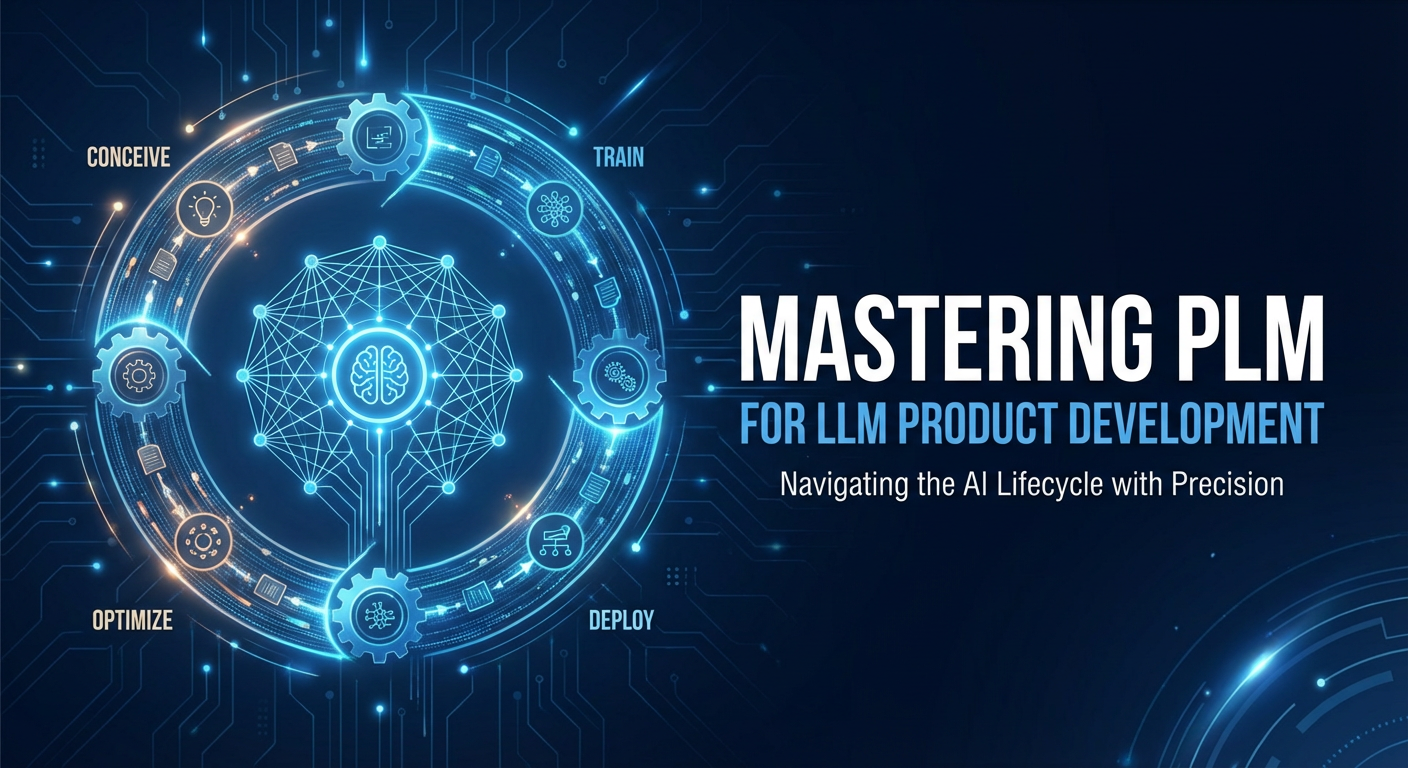


The advent of Large Language Models (LLMs) has heralded a new epoch in product development, fundamentally altering how we conceive, design, build, and deploy intelligent applications. From revolutionizing customer service chatbots to empowering sophisticated code generation tools and enabling dynamic content creation platforms, LLMs are undeniably reshaping the digital landscape. However, this transformative power comes with an unprecedented set of complexities that traditional Product Lifecycle Management (PLM) frameworks, designed primarily for physical goods or conventional software, are ill-equipped to handle. The lifecycle of an LLM-powered product extends far beyond mere code deployment; it encompasses the continuous evolution of data, prompts, models, and intricate interactions within a dynamic ecosystem. Successfully navigating this landscape demands a holistic and adaptive approach to PLM, one that inherently integrates the nuances of machine learning, ethical considerations, and robust operational governance.
This comprehensive guide delves into the specialized PLM methodologies essential for excelling in LLM product development. We will explore how traditional PLM phases—from ideation and design to development, deployment, and ongoing maintenance—must be re-envisioned through an AI-centric lens. Our journey will highlight the critical infrastructure and strategic frameworks, such as the LLM Gateway, Model Context Protocol, and API Governance, that form the bedrock of scalable, secure, and impactful LLM solutions. By embracing these principles, organizations can not only harness the full potential of LLMs but also mitigate the inherent risks, ensuring their AI products are robust, responsible, and truly revolutionary. The objective is to move beyond mere experimentation with LLMs towards establishing a mature, repeatable, and governable process for their integration into core product offerings, thereby securing a competitive edge in an increasingly AI-driven world.
1. The Evolving Landscape of LLM Product Development
The rapid advancements in artificial intelligence, particularly in the domain of Large Language Models, have sparked an unparalleled wave of innovation across industries. What began as a niche academic pursuit has quickly matured into a cornerstone technology, driving a paradigm shift in how businesses operate and how users interact with digital products. Understanding this new landscape is the first step toward effective PLM for LLM-powered solutions.
1.1 The LLM Revolution and its Implications
The past few years have witnessed an explosive growth in the capabilities and accessibility of LLMs. Models like OpenAI's GPT series, Google's Gemini, Meta's Llama, and a plethora of open-source alternatives have transcended mere natural language understanding to achieve impressive feats in generation, summarization, translation, and complex reasoning. These models can understand intricate prompts, generate human-quality text, write code, analyze sentiment, and even simulate human-like conversation with remarkable fluency. This exponential leap has profound implications for product development.
Firstly, LLMs democratize complex AI capabilities, making them accessible to a broader range of developers and businesses without requiring deep machine learning expertise from scratch. This has led to a proliferation of "AI-first" products and the rapid integration of AI features into existing applications. Secondly, the nature of these models—being probabilistic and highly data-driven—introduces a new set of challenges that traditional software development paradigms often overlook. The "product" is no longer just a deterministic piece of code; it's an intelligent system whose behavior is influenced by vast datasets, intricate model architectures, and the subtle art of prompt engineering. This requires a shift from purely "code-centric" development to a more "model-centric" or "data-centric" approach, where the quality and context of data, as well as the design of prompts, become paramount to the product's success and reliability. Furthermore, the ethical considerations, such as potential biases, hallucination tendencies, data privacy, and the sheer computational cost of operating these models, are no longer peripheral concerns but central design constraints that must be managed throughout the product's lifecycle. The speed at which new models emerge and old ones evolve also necessitates an agile and adaptable PLM strategy, capable of embracing continuous iteration and rapid integration of new technologies.
1.2 Why Traditional PLM Falls Short for LLMs
Traditional Product Lifecycle Management frameworks have served industries well for decades, meticulously guiding physical products from conception to retirement, or standard software applications through their development and maintenance cycles. These frameworks emphasize structured phases: requirements gathering, design, implementation, testing, deployment, and maintenance. While robust for predictable artifacts, they often falter when confronted with the unique characteristics of LLM-powered products, primarily because the "product" itself is far less tangible and more dynamic.
One major discrepancy lies in the nature of outputs. Traditional software yields deterministic results; given the same inputs, the output is consistently identical. LLMs, by contrast, are non-deterministic. Even with identical prompts, minor variations in output can occur due to their probabilistic nature, temperature settings, and internal states. This inherent variability complicates testing, quality assurance, and user expectation management. Moreover, the "components" of an LLM product are not just lines of code. They include the underlying foundational model (which might be external and constantly updated), the specific fine-tuning data, the retrieval augmentation strategy (RAG), and, crucially, the prompts themselves. Each of these components evolves independently and interacts in complex ways, demanding version control and change management far beyond traditional software repositories.
Furthermore, traditional PLM struggles with the concept of continuous learning and adaptation inherent in many LLM applications. An LLM product might need to be continually retrained, fine-tuned, or have its RAG sources updated based on new data or evolving user interactions. This necessitates an "always-on" development and operations loop, blurring the lines between deployment and further development. Ethical concerns, such as bias, fairness, and transparency, also take on a new dimension with LLMs. Identifying and mitigating bias requires ongoing monitoring and often model retraining, which is not a standard PLM phase for traditional products. The sheer speed of innovation in the LLM space also outpaces conventional, often slower, PLM cycles. By the time a product completes a lengthy traditional PLM phase, the underlying LLM technology or best practices might have significantly evolved, rendering parts of the initial design obsolete. Therefore, a specialized, agile, and AI-centric PLM approach is not merely an optimization but an absolute necessity for organizations aiming to succeed with LLM product development.
2. Core Tenets of PLM in the LLM Era
Adapting PLM for the age of LLMs requires a fundamental shift in perspective, moving beyond code and towards a more encompassing view of the product ecosystem. This involves redefining how we approach ideation, design, and development to account for the unique characteristics of generative AI.
2.1 Ideation and Requirements Definition for LLM Products
The initial phase of any product lifecycle, ideation and requirements definition, takes on a distinct character when dealing with LLMs. Unlike traditional software, where functionality can often be precisely specified, LLM capabilities are inherently more fluid and emergent. This necessitates a more exploratory and iterative approach to defining what an LLM product should do and how it should behave.
When initiating an LLM product, the focus shifts from merely identifying features to understanding user problems that can be uniquely addressed by generative AI. This often involves user story mapping exercises, where instead of detailing exact button clicks or data flows, product managers consider "what if" scenarios leveraging AI's ability to understand context, generate creative content, or synthesize information. For instance, rather than a fixed search query, an LLM product might allow for natural language questions, inferring intent and providing comprehensive, synthesized answers. Defining performance metrics also becomes more nuanced. Beyond traditional Key Performance Indicators (KPIs) like latency or uptime, LLM products require metrics that assess the quality of generated output. These can include "faithfulness" (is the output consistent with source information?), "coherence" (is the output logically structured and easy to understand?), "relevance" (does the output directly address the user's prompt?), "conciseness," and critically, "toxicity" or "bias" (does the output contain harmful or prejudiced content?). Establishing a clear rubric for these subjective qualities from the outset is paramount for guiding development and evaluating success. This often involves human-in-the-loop evaluation, where expert annotators assess outputs against predefined criteria, a process that must be integrated into the PLM from day one.
Furthermore, ethical considerations cannot be an afterthought; they must be woven into the very fabric of ideation. This includes proactively identifying potential biases in training data or model behavior, establishing guardrails against harmful content generation, ensuring user privacy, and considering the societal impact of the AI product. For example, if designing an LLM for medical advice, the requirements must strictly forbid giving definitive diagnoses and instead focus on informational support, clearly delineating the model's limitations. Prototyping with off-the-shelf LLMs becomes an essential early step, allowing teams to quickly validate concepts and understand the art of the possible without significant upfront investment in custom model training. This rapid experimentation helps in refining requirements based on actual model behavior rather than theoretical assumptions, leading to more robust and ethically sound product definitions. The iterative nature of prompt engineering also means that initial requirements are not static; they evolve as the team learns more about the model's capabilities and limitations, demanding a flexible and adaptive requirements management process.
2.2 Design and Development of LLM Solutions
The design and development phase for LLM products is characterized by its multidisciplinary nature, combining elements of traditional software engineering, data science, and novel disciplines like prompt engineering. This phase focuses on architecting the solution, preparing the necessary data, and carefully crafting the interaction logic with the LLM.
Prompt Engineering and Management
At the heart of many LLM applications lies prompt engineering—the art and science of crafting effective inputs (prompts) to guide the LLM's behavior and elicit desired outputs. In an LLM PLM context, prompt engineering moves beyond ad-hoc experimentation to become a systematic, versioned, and managed process. This involves developing a structured methodology for designing prompts, including defining prompt templates, few-shot examples, and specific instructions to steer the model. The concept of a "prompt library" or "prompt registry" is crucial here, serving as a centralized repository for all prompts used across different LLM features. Each prompt should be versioned, documented with its intended purpose, expected output characteristics, and associated performance metrics.
Effective prompt management also includes rigorous testing. Just as code undergoes unit and integration tests, prompts need evaluation against a diverse set of inputs to ensure consistency, accuracy, and adherence to safety guidelines. Tools that allow for A/B testing different prompt variations in production become invaluable, enabling continuous optimization based on real-world user interactions. The iterative nature of prompt refinement means that changes must be trackable, revertible, and understandable across the development team, integrating seamlessly with existing version control systems and CI/CD pipelines.
Data Curation and Management
The adage "garbage in, garbage out" is profoundly true for LLMs, whether for fine-tuning or for Retrieval Augmented Generation (RAG). High-quality, diverse, and ethically sourced data is the lifeblood of robust LLM products. Data curation involves a meticulous process of collecting, cleaning, labeling, and transforming data to suit the specific needs of the LLM application. For fine-tuning, this means creating highly specific, domain-relevant datasets that teach the model desired behaviors or knowledge. For RAG systems, it involves preparing a knowledge base that is accurate, up-to-date, and optimized for retrieval.
Data governance becomes paramount in this context, ensuring data quality, lineage, and compliance with privacy regulations (e.g., GDPR, CCPA). This includes tracking where data came from, who processed it, and how it was used to train or inform the model. Data versioning tools are essential to manage changes to training or retrieval datasets, ensuring reproducibility of model performance and allowing for rollbacks if data issues are discovered. Furthermore, annotation strategies and quality control for human-labeled data must be rigorously defined and executed, as the quality of these labels directly impacts the model's ability to learn and perform. Any biases present in the data will invariably be reflected, and often amplified, by the LLM, necessitating proactive measures for bias detection and mitigation throughout the data lifecycle.
Model Selection and Fine-tuning
The choice of the underlying LLM is a critical design decision with significant implications for performance, cost, and ethical compliance. Developers often face a choice between using powerful proprietary models (e.g., GPT-4, Claude) via their APIs or deploying open-source models (e.g., Llama, Mistral) that can be hosted and fine-tuned internally. Proprietary models offer cutting-edge performance with minimal infrastructure overhead, but come with per-token costs and vendor lock-in risks. Open-source models provide greater control, customization, and data privacy, but require substantial computational resources and ML engineering expertise for deployment and maintenance.
Fine-tuning strategies, such as Parameter-Efficient Fine-Tuning (PEFT) methods like LoRA, or full fine-tuning, are employed to adapt a foundational model to specific tasks or domains, improving performance and often reducing inference costs compared to generic models. This involves careful selection of fine-tuning datasets, hyperparameter tuning, and rigorous evaluation to prevent overfitting and ensure generalization. Resource management for model training and inference—including GPU provisioning, memory allocation, and distributed computing frameworks—becomes a critical aspect of the development phase, requiring collaboration between ML engineers and DevOps teams.
Architectural Considerations: Integrating LLMs into Applications
Integrating LLMs into existing or new applications necessitates thoughtful architectural design. A common pattern involves a microservices approach, where the LLM interaction logic is encapsulated in a dedicated service, separate from the core application logic. This promotes modularity, scalability, and independent deployment cycles. However, directly interacting with various LLM providers or internally deployed models can introduce significant complexity due to differing APIs, rate limits, authentication mechanisms, and cost structures.
This is precisely where an LLM Gateway becomes an indispensable architectural component. An LLM Gateway acts as a central intermediary layer between your application's front-end or back-end services and multiple LLM providers or locally hosted models. It abstracts away the complexities of different LLM APIs, providing a unified interface for applications to interact with any language model. This abstraction is vital for decoupling the application from specific LLM implementations, allowing developers to switch models, integrate new providers, or implement advanced routing logic without altering the core application code. The gateway can handle crucial functionalities such as load balancing requests across different model instances, caching common queries to reduce latency and cost, and enforcing rate limits. It also provides a centralized point for authentication, authorization, and logging of all LLM interactions, enhancing security and observability. For example, a single prompt might be routed to different models based on user tier, cost considerations, or specific feature requirements, all managed seamlessly by the gateway. This centralized control and abstraction provided by an LLM Gateway are fundamental for building scalable, resilient, and manageable LLM-powered products, directly enabling efficient PLM.
3. The Critical Role of an LLM Gateway and Model Context Protocol
As organizations move beyond experimental LLM use cases to deploy robust, production-grade AI applications, the need for sophisticated infrastructure to manage these interactions becomes paramount. Two key architectural components emerge as critical: the LLM Gateway and a well-defined Model Context Protocol. These elements are not merely optimizations; they are foundational pillars for scalable, secure, and intelligent LLM product development, directly influencing the efficiency and effectiveness of PLM.
3.1 What is an LLM Gateway and Why is it Indispensable?
An LLM Gateway is a specialized middleware layer that sits between your client applications (front-ends, microservices, business logic) and the diverse range of Large Language Model providers or internally hosted models. Its primary function is to abstract, manage, and optimize all interactions with LLMs, transforming a potentially chaotic direct-integration landscape into a streamlined, governed, and highly efficient system. Think of it as the air traffic controller for all your LLM requests, ensuring they reach their destination efficiently and safely.
The indispensability of an LLM Gateway stems from several critical benefits it provides:
- Abstraction and Decoupling: In a rapidly evolving AI landscape, relying directly on a single LLM provider's API creates vendor lock-in and significant refactoring effort if that provider's API changes or if you wish to switch to a different model (e.g., from GPT-4 to Gemini, or from a commercial model to an open-source alternative). An LLM Gateway provides a unified API interface to your applications, shielding them from the underlying complexities and variations of different LLM providers. This decoupling allows product teams to iterate on LLM choices and strategies without impacting core application logic, greatly enhancing agility within the PLM cycle.
- Load Balancing & Intelligent Routing: For high-traffic applications, a single LLM endpoint might become a bottleneck or be cost-prohibitive. An LLM Gateway can intelligently route requests across multiple instances of the same model, different models, or even different providers based on predefined policies. These policies could consider factors like cost-effectiveness, current load, model capability (e.g., routing complex reasoning tasks to a more powerful model, simpler tasks to a cheaper one), or geographic latency. This ensures optimal resource utilization and maintains service availability and performance under varying demands.
- Caching for Performance and Cost Reduction: Many LLM queries, especially common prompts or frequently accessed knowledge, can be repetitive. An LLM Gateway can implement robust caching mechanisms, storing previous LLM responses for a defined period. When a subsequent identical request comes in, the gateway can serve the cached response directly, significantly reducing latency, offloading the LLM provider, and critically, cutting down on token-based API costs. This optimization is vital for maintaining cost-efficiency and delivering snappy user experiences, directly impacting the operational expenditure aspect of PLM.
- Rate Limiting & Cost Management: LLM APIs often have rate limits (e.g., X requests per minute, Y tokens per second) to prevent abuse and manage infrastructure. Exceeding these limits can lead to service disruptions. An LLM Gateway enforces these rate limits centrally, preventing individual applications from overwhelming the LLM service. Furthermore, by providing a single point of entry, it enables granular cost tracking and budget controls for all LLM consumption, offering insights into where LLM resources are being utilized and allowing for proactive cost optimization strategies.
- Enhanced Security and Compliance: Centralizing LLM interactions through a gateway provides a single choke point for implementing robust security measures. This includes centralized authentication and authorization for all LLM API calls, input/output filtering to prevent data exfiltration or injection attacks, and compliance with data privacy regulations by ensuring sensitive information is not inadvertently sent to or stored by third-party LLM providers. All API keys and credentials for various LLM services can be securely managed within the gateway, reducing the attack surface.
- Comprehensive Observability: A unified gateway offers a consolidated view of all LLM interactions. It can log every request and response, record metadata such as latency, token usage, and error rates, and integrate with monitoring systems. This centralized logging and metrics collection are invaluable for debugging, performance analysis, auditing, and understanding how users are interacting with LLM features, feeding directly back into the continuous improvement phase of PLM.
Platforms like APIPark exemplify the power of a dedicated AI gateway, offering a compelling open-source solution for managing these complexities. APIPark stands out by providing quick integration of 100+ AI models, enabling a business to easily experiment with and switch between various foundational models without deep technical overhead. Its unified API format for AI invocation ensures that changes in underlying AI models or specific prompts do not necessitate costly alterations in your application code or microservices, thereby simplifying AI usage and significantly reducing maintenance costs throughout the product lifecycle. Furthermore, APIPark allows for prompt encapsulation into a standard REST API, transforming complex prompt engineering into easily consumable services, accelerating development and enabling efficient sharing of AI capabilities across teams. Such features are not merely convenient; they are foundational for building scalable, resilient, and cost-effective LLM products, directly supporting a sophisticated PLM strategy by abstracting complexity and providing essential governance.
3.2 The Importance of a Model Context Protocol
When interacting with LLMs, especially in conversational or multi-turn scenarios, the concept of "context" is paramount. An LLM, by its nature, processes input and generates output based on the immediate prompt it receives. Without a mechanism to carry forward the history of a conversation, user preferences, or relevant background information, each interaction would be isolated and fragmented, leading to a frustrating and unintelligent user experience. This is where a Model Context Protocol becomes essential.
A Model Context Protocol defines a standardized, systematic approach to managing and maintaining the conversational state and relevant contextual information across multiple LLM calls. It addresses the inherent statelessness of most LLM APIs by providing a framework for applications to persistently feed necessary context back into the model with each subsequent interaction.
The challenges without a robust Model Context Protocol are significant:
- Loss of Conversational Flow: Without remembering previous turns, an LLM cannot maintain a coherent conversation. Each response would be based solely on the last input, making it impossible to build complex interactions or answer follow-up questions.
- Context Window Limitations: Even advanced LLMs have a finite context window—the maximum number of tokens they can process in a single request. Long conversations or extensive background information can quickly exceed this limit, leading to truncated or incoherent responses. A protocol is needed to manage this window effectively, summarizing or retrieving only the most relevant parts of the history.
- Inconsistent User Experience: If the model "forgets" user preferences, previous decisions, or key details, the application will feel unintuitive and frustrating, diminishing user trust and adoption.
- Inefficient Token Usage: Naively sending the entire conversation history with every prompt can rapidly consume tokens, leading to increased API costs. An intelligent protocol can optimize this by only including essential context.
How a Model Context Protocol works typically involves several strategies:
- Prompt History Management: The most basic form involves appending previous turns of a conversation to the current prompt, ensuring the LLM "remembers" the dialogue. The protocol defines how much history to include (e.g., last N turns, until context window limit), how to format it, and how to handle summarization for longer dialogues.
- External Memory (Vector Databases): For long-term memory or vast knowledge bases, the protocol often integrates with external systems like vector databases. User queries are embedded, used to retrieve relevant chunks of information from the database, and then these retrieved chunks are injected into the LLM's prompt. This Retrieval Augmented Generation (RAG) dramatically expands the effective "memory" of the LLM beyond its immediate context window. The protocol specifies how to embed, retrieve, and insert this information consistently.
- Session Management: The protocol can manage user-specific session data, such as explicit preferences (e.g., preferred language, accessibility settings), implicit preferences (e.g., frequently asked topics), or ongoing tasks (e.g., current order details in a shopping application). This data is dynamically injected into prompts to personalize the LLM's responses.
- State Tracking and Agent Orchestration: For more complex multi-step tasks, the protocol might define how an AI agent tracks its current state, sub-goals, and tools it has used. This allows the agent to reason about its next steps and build a coherent plan, feeding contextually relevant information back to the LLM for each decision point.
Implementing a well-designed Model Context Protocol is critical for building robust, intelligent, and user-friendly LLM products. It directly impacts the quality of the LLM's responses, its ability to maintain coherent interactions, and the overall user experience. By standardizing how context is managed, it also simplifies development, reduces debugging efforts, and ensures consistency across different LLM applications within an organization, making it a vital component of the LLM product's architectural PLM.
4. Deployment, Operations, and Continuous Improvement
The journey of an LLM product does not end at development; in fact, its real-world performance, reliability, and impact are determined during the deployment and operational phases. These stages are characterized by continuous monitoring, optimization, and iterative improvement, forming a crucial loop within the PLM cycle that demands specialized MLOps practices, robust performance strategies, and unwavering attention to security.
4.1 MLOps for LLM Products
Machine Learning Operations (MLOps) is the discipline dedicated to deploying and maintaining machine learning models in production reliably and efficiently. For LLM products, MLOps takes on an elevated importance due to the dynamic nature of these models and their components. It extends beyond traditional DevOps to encompass the unique aspects of machine learning, from data pipelines to model serving.
Automated deployment pipelines are fundamental. This means not only automating the deployment of application code but also the deployment of new or fine-tuned LLMs, updated prompt templates, and refreshed RAG knowledge bases. A robust CI/CD (Continuous Integration/Continuous Deployment) pipeline for LLMs might involve: * Code Versioning: Standard practice for application code. * Data Versioning: Tracking changes in training, fine-tuning, or RAG data sets (e.g., using DVC or similar tools) to ensure reproducibility and rollback capabilities. * Prompt Versioning: Managing different versions of prompts used for various features, allowing for A/B testing and rollbacks. * Model Registry: A centralized repository for storing different versions of models, their metadata, performance metrics, and lineage. * Automated Testing: Extending beyond unit and integration tests to include model-specific evaluations, such as checking for hallucination rates, bias, adherence to safety policies, and specific task performance. * Deployment Automation: Orchestrating the deployment of new model versions or prompts to production environments, often through canary deployments or A/B testing frameworks to minimize risk.
Once deployed, continuous monitoring of model performance in production is critical. This involves tracking traditional system metrics like latency, throughput, and error rates, but also specific LLM metrics such as: * Model Drift: How the model's performance changes over time due to shifts in input data or user behavior. * Data Drift: Changes in the distribution of input data that could degrade model performance. * Bias and Fairness Metrics: Continuous evaluation for the emergence of unfair or biased outputs. * Hallucination Rate: Monitoring the frequency of factually incorrect or nonsensical generations. * Cost Monitoring: Tracking token usage and API costs per LLM interaction to manage budget effectively.
A/B testing is particularly valuable for LLM products. Given the non-deterministic nature and subjective quality of outputs, direct comparisons of different models, prompt variations, RAG configurations, or fine-tuning strategies in a live environment provide invaluable real-world data. MLOps workflows should enable easy setup, execution, and analysis of these experiments. Finally, robust rollback strategies are essential. If a newly deployed model or prompt version exhibits unexpected behavior, performance degradation, or introduces harmful biases, the MLOps pipeline must facilitate a rapid and seamless rollback to a stable previous version, minimizing user impact and maintaining product integrity.
4.2 Performance Optimization and Scalability
The computational demands of LLMs, both for inference and training, are substantial. Ensuring that an LLM product can scale to meet user demand while maintaining acceptable performance and managing costs is a continuous operational challenge. Effective performance optimization and scalability strategies are integral to long-term PLM success.
One primary focus for optimization is reducing inference cost and latency. Techniques include: * Model Quantization: Reducing the precision of model weights (e.g., from float32 to int8 or int4) to decrease memory footprint and accelerate computation, often with minimal impact on accuracy. * Model Pruning: Removing redundant or less important weights from a model to make it smaller and faster. * Knowledge Distillation: Training a smaller, "student" model to mimic the behavior of a larger, more complex "teacher" model, resulting in a faster and cheaper inference model. * Batching: Processing multiple user requests in a single batch on the GPU to maximize throughput, though this can introduce slight latency for individual requests. * Optimized Inference Engines: Using specialized inference frameworks like ONNX Runtime, TensorRT, or vLLM designed to accelerate LLM serving. * Prompt Engineering Optimization: Crafting more concise and efficient prompts that elicit desired responses with fewer tokens, directly reducing API costs and inference time.
Infrastructure scaling involves provisioning and managing the necessary hardware resources. For open-source LLMs hosted internally, this typically means scaling GPU clusters, ensuring sufficient memory and network bandwidth. Cloud providers offer specialized GPU instances and managed services for deploying and scaling AI models. Dynamic scaling capabilities, where resources are automatically adjusted based on real-time traffic and load, are crucial to handle fluctuating demand efficiently without over-provisioning or under-provisioning.
Crucially, the LLM Gateway plays a significant role in performance optimization and scalability. As discussed, its caching mechanisms reduce redundant calls to the LLM, dramatically cutting down latency and cost for repeat queries. Intelligent routing allows the gateway to direct traffic to the least busy or most cost-effective model instances. Load balancing capabilities ensure that no single model endpoint becomes overwhelmed, distributing requests across a cluster of models for maximum throughput. Furthermore, a gateway can provide a centralized point for implementing fallback strategies, routing requests to a simpler, faster, or even a human-in-the-loop system if the primary LLM is unavailable or under severe load. These capabilities are not just about raw speed; they are about building a resilient, cost-effective, and highly available LLM product that can serve a large user base reliably.
4.3 Security and Data Privacy in Production
Deploying LLM products introduces novel security and data privacy challenges that must be rigorously addressed throughout the product's operational lifecycle. The probabilistic nature of LLMs, their potential to generate unexpected content, and their interaction with sensitive data demand a proactive and multi-layered security strategy.
Input/Output Filtering is a critical line of defense. All user inputs to an LLM must be filtered to prevent prompt injection attacks, where malicious users attempt to manipulate the LLM's behavior or extract sensitive information by crafting specific prompts. Similarly, LLM outputs must be scrutinized to detect and redact sensitive information (e.g., PII, confidential data) that the model might inadvertently generate or to filter out harmful, biased, or inappropriate content before it reaches the user. This often involves integrating with content moderation APIs or developing custom filtering logic.
Compliance with regulations such as GDPR, HIPAA, CCPA, and industry-specific mandates is non-negotiable. This means ensuring that personal data is handled securely, with consent, and only for its intended purpose. If fine-tuning models with sensitive data, robust anonymization or synthetic data generation techniques must be employed. Organizations must understand and document the data handling practices of any third-party LLM providers they utilize, ensuring their policies align with compliance requirements. This also includes defining clear data retention policies for inputs, outputs, and any data used for fine-tuning, ensuring that data is not stored longer than necessary.
Secure access to models and data is paramount. All access to LLM APIs, internal model endpoints, and associated data stores must be secured with strong authentication and authorization mechanisms. This could involve API keys, OAuth tokens, or role-based access control (RBAC) systems. Network segmentation, firewalls, and secure communication protocols (e.g., HTTPS, VPNs) are essential to protect the communication channels between applications and LLMs. The LLM Gateway itself plays a crucial role here, acting as a security enforcement point, centralizing authentication, and potentially performing tokenization or encryption of data before it reaches the LLM.
Finally, audit trails and comprehensive logging are vital for both security and troubleshooting. Every LLM interaction—including inputs, outputs, timestamps, user IDs, and any moderation flags—should be securely logged. This detailed logging is indispensable for: * Incident Response: Quickly identifying the source and scope of security breaches or unexpected model behavior. * Compliance Audits: Demonstrating adherence to regulatory requirements regarding data handling and AI ethics. * Troubleshooting: Diagnosing issues with model performance, prompt effectiveness, or application integration. * Accountability: Establishing a clear record of how the LLM was used and what it produced.
APIPark offers robust support in this area with its powerful data analysis and detailed API call logging capabilities. The platform meticulously records every detail of each API call, which is invaluable for businesses to quickly trace and troubleshoot issues, ensuring system stability and data security. By centralizing this logging, APIPark not only aids in rapid problem resolution but also provides the necessary transparency for compliance and security audits, reinforcing the critical operational aspects of LLM PLM.
APIPark is a high-performance AI gateway that allows you to securely access the most comprehensive LLM APIs globally on the APIPark platform, including OpenAI, Anthropic, Mistral, Llama2, Google Gemini, and more.Try APIPark now! 👇👇👇
5. Governance and Lifecycle Management for LLM Products
The sheer power and evolving nature of LLMs necessitate a proactive and comprehensive approach to governance throughout their entire product lifecycle. Beyond technical deployment and operations, effective PLM for LLM products demands robust frameworks for managing APIs, ensuring ethical conduct, handling versions of diverse components, and systematically planning for eventual retirement.
5.1 Establishing Robust API Governance
In the realm of LLM product development, where interactions with models are predominantly mediated through APIs, API Governance transforms from a best practice into an absolute necessity. API Governance refers to the comprehensive set of rules, policies, processes, and standards that dictate how APIs are designed, developed, published, consumed, and retired. For LLM APIs, this framework ensures effectiveness, security, compliance, and consistent quality across an organization's AI ecosystem.
Why is robust API Governance so crucial for LLMs? * Preventing Misuse and Ensuring Responsible AI: LLM APIs, if not properly governed, can be misused for generating harmful content, spreading misinformation, or facilitating phishing attacks. Governance policies can define acceptable use, content filtering requirements, and monitoring protocols to prevent such scenarios, aligning with responsible AI principles. * Standardizing API Design and Documentation: Different LLMs may have varying API structures. A strong governance framework mandates a unified, consistent API design language and comprehensive documentation for all LLM-facing APIs. This reduces integration complexity for developers, improves usability, and accelerates development cycles. * Managing Access Control and Permissions: Not all users or applications should have the same level of access to all LLM functionalities. API Governance enables granular control over who can access which LLM API, with what permissions, and under what conditions. This is vital for managing sensitive data interactions and ensuring compliance. * Enforcing Security Policies: Beyond access control, governance dictates security standards for authentication (e.g., OAuth, API keys), authorization, encryption in transit and at rest, and rate limiting. It ensures that all LLM APIs adhere to the highest security postures to protect data and prevent attacks. * Version Control for LLM APIs and Prompts: Just as application code evolves, so do LLMs, their prompts, and the APIs exposing them. API Governance establishes clear versioning strategies for APIs, allowing for non-breaking changes and graceful deprecation of older versions. It also extends to versioning of underlying prompts and model configurations, ensuring reproducibility and controlled evolution of AI features. * Monitoring API Health and Usage: A core aspect of governance is continuous monitoring of API performance (latency, error rates), usage patterns, and adherence to security policies. This provides critical insights into API health, identifies potential bottlenecks or security threats, and informs future development decisions.
This is precisely where comprehensive API management platforms become indispensable. Solutions like APIPark offer end-to-end API lifecycle management, encompassing everything from API design and publication to invocation, monitoring, and eventual decommissioning. APIPark is designed to help regulate API management processes, manage traffic forwarding, load balancing, and versioning of published APIs. Its features for independent API and access permissions for each tenant (team) mean that different departments can securely manage their own applications and data while sharing underlying infrastructure. Furthermore, APIPark’s capability to activate subscription approval features ensures that callers must subscribe to an API and await administrator approval before invocation, preventing unauthorized API calls and potential data breaches. This robust suite of features directly addresses the complexities of API Governance in the LLM ecosystem, providing a centralized, secure, and efficient way to manage all AI-related API interactions. By streamlining API management, platforms like APIPark empower organizations to maintain control, ensure security, and accelerate the development and deployment of reliable LLM products, thereby enhancing the overall PLM process.
5.2 Ethical AI and Responsible Development
The ethical implications of LLMs are profound and necessitate their own dedicated stream within the PLM framework. Responsible development and deployment of LLM products demand a proactive, continuous engagement with ethical considerations, moving beyond mere compliance to foster a culture of mindful AI creation.
Bias detection and mitigation must be an ongoing process throughout the LLM lifecycle. From the initial data collection and curation (ensuring diverse and representative datasets) to model training (techniques like debiasing algorithms) and post-deployment monitoring (detecting and addressing emergent biases in real-world usage), every stage requires scrutiny. This involves regular audits of model outputs for fairness across different demographic groups and implementing feedback loops to correct identified biases through re-training or prompt adjustments.
Transparency and explainability (where technically feasible) are crucial for building trust. While fully "explaining" an LLM's internal reasoning remains a challenge, product teams should strive for transparency in its capabilities and limitations. This includes clearly communicating when users are interacting with an AI, defining the scope of the LLM's knowledge, and explaining any known biases or potential inaccuracies. For critical applications, efforts towards explainable AI (XAI) can help provide insights into why a model made a particular decision or generated a specific response, fostering greater accountability.
Regular ethical audits are essential check points. These audits should involve cross-functional teams, including ethicists, legal experts, product managers, and engineers, to systematically review the LLM product's impact, adherence to ethical guidelines, and compliance with emerging AI regulations. Defining acceptable use policies for LLM products is also paramount, clearly articulating what constitutes appropriate and inappropriate use of the AI system, and outlining consequences for violations. This includes guidelines on avoiding the generation of hate speech, misinformation, or content that infringes on intellectual property rights. The goal is to embed ethical considerations not as a one-time gate but as an intrinsic part of the continuous iteration and improvement loop in LLM PLM.
5.3 Versioning and Change Management for LLM Components
The dynamic nature of LLM products, composed of not just code but also data, models, and prompts, makes versioning and change management exceptionally complex yet vital. A robust PLM for LLMs must extend traditional version control paradigms to encompass all these evolving components, ensuring reproducibility, traceability, and controlled evolution.
Versioning must apply broadly: * Code: Standard application code, MLOps scripts, and API Gateway configurations. * Models: Different versions of foundational models (e.g., GPT-3.5 vs. GPT-4), fine-tuned models, and their respective checkpoints. Each model version should be associated with its training data, hyperparameters, and evaluation metrics. * Fine-tuning Data: The specific datasets used to fine-tune models must be versioned, enabling teams to reproduce training runs and understand how changes in data impact model performance. * Prompts: As a core element of LLM interaction, prompts must be versioned. This includes base prompts, template variables, and specific examples used in few-shot prompting. A robust prompt management system (often integrated with the LLM Gateway) ensures that changes to prompts are tracked, tested, and deployed in a controlled manner. * Retrieval Augmented Generation (RAG) Strategies and Data: If a RAG system is used, the version of the vector database, the embedding model, and the retrieval logic itself must be versioned to ensure consistency and allow for rollbacks.
Impact analysis of changes is crucial. Before deploying a new model version, updated prompt, or revised RAG strategy, product teams must assess its potential impact on performance, cost, security, and ethical considerations. This involves rigorous testing in staging environments and, ideally, A/B testing in production. A change management process should be in place to review and approve significant changes, ensuring all stakeholders are aware of and agree with the proposed modifications. This prevents unintended regressions and maintains product stability.
Release cycles for LLM products often need to be more agile than traditional software, given the rapid pace of innovation and the potential for continuous model improvement. However, this agility must be balanced with stability and thorough validation. Organizations might adopt a release train approach, where regular, predictable releases are scheduled, allowing for bundles of changes to be tested and deployed together. Alternatively, hotfixes for critical issues (e.g., security vulnerabilities, severe hallucinations) might follow an accelerated release path. The key is to establish a well-defined process that allows for both rapid iteration and responsible deployment, ensuring that all components of the LLM product are synchronized and thoroughly validated before reaching users.
5.4 Decommissioning and Archiving
The final, often overlooked, phase of PLM is decommissioning and archiving. For LLM products, this phase is particularly important due to data retention requirements, ethical obligations, and the need to manage accumulated intellectual property. A well-defined decommissioning strategy ensures a graceful and compliant retirement of LLM components.
Graceful retirement of older models or features is paramount to avoid breaking existing integrations or disrupting user workflows. This involves clear communication to users and developers about upcoming deprecations, providing ample time for migration to newer versions. The LLM Gateway can play a role here by intelligently routing requests from deprecated endpoints to newer alternatives, or providing helpful error messages for truly defunct features. This phased retirement ensures that the product portfolio remains lean, efficient, and up-to-date without causing unnecessary friction.
Data retention policies must be meticulously followed during decommissioning. This includes ensuring that any personal data or sensitive information used for fine-tuning or generated by the LLM is either securely deleted, anonymized, or archived according to regulatory requirements and internal policies. Simply deleting a model might not be enough; the associated data used to train or operate it must also be managed appropriately. This also applies to logs and audit trails, which may need to be retained for a certain period for compliance reasons, even after the LLM product itself is retired.
Ensuring compliance even after retirement is a critical, often legally mandated, aspect. Organizations must demonstrate that they have appropriately handled all data and model artifacts, even years after a product has been taken offline. This involves secure long-term archiving of relevant model versions, training data, and documentation that can be accessed for future audits or investigations. The goal is to systematically manage the entire lifecycle, from inception to a compliant and secure sunset, ensuring that the legacy of an LLM product does not become a future liability.
6. Practical Implementation Strategies and Best Practices
Successfully implementing PLM for LLM products requires more than just understanding the theoretical frameworks; it demands practical strategies, a capable team, and the right tooling. This section outlines key approaches and best practices for navigating the complexities of LLM development and ensuring long-term success.
6.1 Building a Cross-Functional LLM Product Team
The multidisciplinary nature of LLM development necessitates a truly cross-functional team, moving beyond traditional silos. No single role possesses all the expertise required to bring a responsible and effective LLM product to market. Effective collaboration among diverse specialists is the cornerstone of success.
Key roles within an LLM product team typically include: * Product Managers: Responsible for defining the product vision, user needs, and business value. For LLMs, they also need a strong understanding of AI capabilities and limitations, ethical considerations, and how to measure subjective AI performance. * ML Engineers: Focus on building, training, and deploying ML models, including fine-tuning LLMs, developing RAG systems, and optimizing inference. They are crucial for bridging the gap between research and production. * Prompt Engineers: Specialized in crafting, testing, and optimizing prompts to elicit desired behaviors from LLMs. They work closely with product and ML engineers to translate requirements into effective model instructions. * Data Scientists/Analysts: Essential for data collection, cleaning, annotation, bias detection, and performance evaluation. They provide the empirical basis for model improvements and ethical oversight. * Ethicists/Legal Experts: Crucial for identifying and mitigating ethical risks, ensuring compliance with AI regulations and data privacy laws, and guiding responsible AI development. * UI/UX Designers: Design intuitive interfaces for users to interact with LLM products, considering conversational design, error handling, and transparency regarding AI capabilities. * Software Engineers/Backend Developers: Integrate LLM services into existing applications, build scalable APIs, and manage backend infrastructure. * DevOps/MLOps Engineers: Automate deployment pipelines, monitor production systems, manage infrastructure, and ensure the reliability and scalability of LLM services.
Collaboration frameworks are essential to foster seamless communication and shared understanding among these diverse roles. Agile methodologies, such as Scrum or Kanban, are well-suited for the iterative nature of LLM development. Regular stand-ups, sprint reviews, and retrospective meetings help maintain alignment, address challenges promptly, and adapt to new insights. Establishing a shared glossary of terms, clear ownership of different components (e.g., who owns prompt updates vs. model updates), and common tooling facilitate a cohesive workflow, ensuring that ethical, technical, and business objectives are all addressed throughout the PLM.
6.2 Incremental Development and Iteration
Given the inherent uncertainties and rapid evolution in the LLM space, an incremental development and iterative approach is not just a preference but a necessity. Starting small, measuring, and continuously iterating allows teams to learn quickly, de-risk projects, and adapt to new discoveries without massive upfront investments.
The Minimum Viable Product (MVP) approach is particularly effective for LLM features. Instead of aiming for a fully polished, complex AI system from day one, identify the smallest possible LLM-powered feature that delivers core value. For example, a generative AI content tool might start with simple paragraph generation before attempting full article composition or image integration. This allows for early user feedback and validates fundamental assumptions about the LLM's utility and performance in a real-world context.
User feedback loops are paramount in this iterative process. Directly gathering input from early adopters helps identify issues like unexpected model behavior, low-quality generations, or prompt ambiguities. This feedback can then be used to refine prompts, improve fine-tuning data, or even guide the selection of a different foundational model. A/B testing different model configurations, prompt variations, or RAG strategies in production allows for data-driven iteration, systematically optimizing the LLM product based on quantifiable metrics like engagement, user satisfaction, or task completion rates. This continuous cycle of build, measure, learn is vital for maturing LLM products, progressively adding complexity and capability while ensuring relevance and quality.
6.3 Tooling and Ecosystem Considerations
The diverse needs of LLM PLM—from data management to model deployment and API governance—necessitate a robust and integrated tooling ecosystem. Selecting the right tools can significantly enhance efficiency, security, and scalability.
- MLOps Platforms: Comprehensive platforms like Kubeflow, MLflow, or commercial offerings (e.g., Azure ML, AWS SageMaker) provide end-to-end capabilities for managing the ML lifecycle. They offer features for data versioning, experiment tracking, model registry, and automated deployment pipelines, critical for orchestrating LLM development.
- Data Versioning Tools: Tools like DVC (Data Version Control) integrate with Git to version datasets and machine learning models, ensuring reproducibility of experiments and traceability of data changes.
- API Gateways: As highlighted, an LLM Gateway (such as APIPark) is fundamental for abstracting LLM complexities, providing unified access, managing traffic, and enforcing security policies. These platforms are crucial for bringing LLM capabilities into a governed enterprise environment. APIPark, for example, is not only an AI gateway but also a comprehensive API management platform, enabling businesses to manage the entire lifecycle of their APIs, including those powered by LLMs, with features like service sharing within teams, robust security, and high performance. Its capabilities extend to detailed API call logging and powerful data analysis, providing invaluable insights for continuous improvement and governance.
- Monitoring and Logging Solutions: Integrating with observability platforms (e.g., Prometheus, Grafana, Datadog, Splunk) for collecting metrics, logs, and traces from LLM services is essential. This allows for real-time monitoring of performance, cost, errors, and detecting model drift or anomalous behavior.
- Prompt Management Systems: Dedicated tools or internal frameworks for versioning, testing, and deploying prompts are emerging. These systems help manage the prompt lifecycle, ensuring consistency, quality, and easy collaboration among prompt engineers.
- Evaluation Frameworks: Libraries and platforms for evaluating LLM outputs against a range of metrics (e.g., faithfulness, coherence, toxicity, bias) are crucial for objective assessment and comparison of different models or prompt strategies. This often involves human-in-the-loop evaluation interfaces.
Building an integrated ecosystem of these tools, where data flows seamlessly and insights are shared across different stages of the PLM, is vital for managing the complexity and accelerating the pace of LLM product development.
6.4 Risk Management and Contingency Planning
The deployment of LLM products inherently carries significant risks, ranging from technical failures to ethical missteps and security vulnerabilities. A proactive approach to risk management and robust contingency planning are indispensable elements of a mature LLM PLM. This ensures business continuity, protects reputation, and maintains user trust.
One primary area of focus is addressing model failures, hallucinations, and security breaches. LLMs can produce factually incorrect information (hallucinations), generate inappropriate content, or be susceptible to prompt injection attacks. Risk management involves: * Proactive Threat Modeling: Identifying potential attack vectors and failure modes during the design phase. * Robust Testing: Beyond functional testing, this includes adversarial testing to probe for weaknesses in content moderation or security. * Real-time Monitoring: Continuously tracking for unusual output patterns, high error rates, or suspected malicious inputs.
Fallback mechanisms are critical for maintaining service reliability. If a primary LLM service becomes unavailable, produces poor quality outputs, or encounters a severe hallucination, a contingency plan should kick in. This could involve: * Routing to an Alternative Model: Switching to a different LLM (e.g., a smaller, more reliable model, or one from a different provider) via the LLM Gateway. * Human-in-the-Loop Review: Escalating problematic or high-risk outputs to human reviewers for correction or intervention. * Graceful Degradation: Providing a simpler, non-LLM powered experience, or temporarily disabling the problematic AI feature until it can be fixed. For example, a chatbot might revert to predefined responses or direct users to FAQs if the LLM backend fails. * Rate Limiting and Circuit Breakers: Implementing these at the LLM Gateway level to prevent cascading failures if an LLM service becomes overloaded or unresponsive.
Disaster recovery plans must be in place for LLM infrastructure, including data storage, model serving environments, and API Gateway instances. This involves regular backups, redundant deployments across different regions or cloud zones, and clear procedures for restoring services in the event of major outages. Importantly, the plan should also address data recovery and consistency for fine-tuning datasets and RAG knowledge bases. By systematically identifying potential risks, designing preventative measures, and establishing clear response protocols, organizations can build more resilient LLM products that can withstand the inevitable challenges of operating advanced AI in production, thereby safeguarding their investment and reputation throughout the product lifecycle.
7. The Synergy: Traditional PLM Stages Reimagined for LLMs
To further illustrate the transformation required, let's look at how traditional PLM stages map to and are redefined by the unique demands of LLM product development. This table highlights the critical differences and the necessity for specialized considerations.
| Traditional PLM Stage | Focus in Traditional PLM | Key Considerations & Adaptations for LLM Product PLM |
|---|---|---|
| 1. Ideation & Requirements | User stories, functional specs, clear use cases. | AI capability mapping, ethical guidelines from day one, prompt ideation, defining subjective metrics (coherence, relevance, toxicity), rapid prototyping with foundation models. |
| 2. Design & Architecture | Software modules, database schemas, system integrations. | LLM Gateway integration, Model Context Protocol design, RAG architecture, data pipelines for fine-tuning/retrieval, prompt management system, security by design. |
| 3. Development | Coding, unit testing, integration of software components. | Prompt engineering & versioning, data curation & cleaning, model fine-tuning & evaluation, MLOps pipeline development, API creation for LLM services. |
| 4. Testing & Quality Assurance | Functional testing, performance testing, security audits. | AI-specific evaluations (hallucination, bias, truthfulness, safety), adversarial testing, human-in-the-loop validation, A/B testing of prompts/models, compliance checks. |
| 5. Deployment | Software release, infrastructure provisioning. | Automated model/prompt deployment (CI/CD for ML artifacts), canary releases, blue/green deployments for LLMs, LLM Gateway configuration for routing/load balancing. |
| 6. Operations & Maintenance | Bug fixing, performance monitoring, scaling infrastructure. | Continuous model monitoring (drift, bias, hallucination), cost optimization, prompt updates, RAG knowledge base refreshing, incident response for AI failures, API Governance enforcement. |
| 7. End-of-Life & Retirement | Software deprecation, data archival. | Graceful model/prompt deprecation, data retention & deletion policies, ensuring ethical/legal compliance for archived data/models, transparent communication to users. |
This table underscores that while the overarching stages of PLM remain, their content and emphasis undergo a significant metamorphosis when applied to LLM products. The integration of AI-specific elements, particularly in areas of data, model behavior, and governance, is not merely additive but foundational to successful lifecycle management.
8. Conclusion
The journey of mastering Product Lifecycle Management for LLM product development is a complex yet immensely rewarding endeavor, essential for any organization aspiring to lead in the AI-first era. We have seen that the unique characteristics of Large Language Models – their probabilistic nature, dependence on vast and evolving datasets, ethical implications, and the rapid pace of innovation – demand a profound re-evaluation and adaptation of traditional PLM frameworks. This adaptation extends from the very first spark of an idea, where ethical considerations and the nuances of prompt engineering must be integrated into requirements definition, through the iterative design and development processes that prioritize data curation and architectural resilience.
Central to this new paradigm are critical infrastructural components and strategic methodologies. The LLM Gateway emerges as an indispensable abstraction layer, unifying access to diverse models, optimizing performance through caching and load balancing, and enforcing robust security policies. It acts as the intelligent traffic controller, ensuring scalable, cost-effective, and reliable interaction with the underlying LLMs. Similarly, a well-defined Model Context Protocol becomes the backbone for intelligent, multi-turn interactions, allowing LLM products to maintain conversational state and leverage external memory, thus delivering a truly coherent and personalized user experience.
Beyond technology, robust API Governance is paramount. It provides the necessary framework for managing the entire lifecycle of APIs that expose LLM capabilities, ensuring secure access, standardized design, compliance with regulations, and responsible use. Platforms like APIPark exemplify how an integrated AI gateway and API management solution can empower organizations to navigate these complexities, offering quick model integration, unified API formats, and comprehensive lifecycle management that directly supports strong governance and accelerated development.
Ultimately, mastering PLM for LLM product development is a continuous journey. It requires cross-functional teams, iterative development cycles, a sophisticated tooling ecosystem, and a proactive approach to risk management. By embracing these principles, organizations can not only unlock the transformative power of LLMs but also build AI products that are not just innovative and intelligent, but also responsible, secure, and sustainable in the long term. The future of product development is undeniably intertwined with AI, and a well-orchestrated LLM PLM strategy is the key to thriving in this exciting new frontier.
9. Frequently Asked Questions (FAQs)
Q1: What makes PLM for LLM products different from traditional software PLM?
A1: PLM for LLM products differs significantly due to the non-deterministic nature of LLM outputs, the dynamic evolution of models, prompts, and data, and the critical importance of ethical considerations like bias and hallucination. Traditional PLM focuses on deterministic code and physical products, whereas LLM PLM must manage a living, adapting system, including concepts like prompt versioning, model drift monitoring, and continuous ethical audits.
Q2: What is an LLM Gateway and why is it essential for my LLM product strategy?
A2: An LLM Gateway is a middleware layer that centralizes and manages all interactions between your applications and various LLM providers or models. It is essential because it provides abstraction (decoupling applications from specific LLM APIs), enables intelligent routing and load balancing, offers caching for performance and cost reduction, enforces rate limits, enhances security, and provides centralized observability. This single point of control streamlines management, improves scalability, and reduces operational overhead.
Q3: How does a Model Context Protocol enhance LLM product development?
A3: A Model Context Protocol provides a standardized way to manage and maintain conversational state, user preferences, and historical interactions across multiple LLM calls. It's crucial because LLMs are inherently stateless. The protocol allows LLM products to remember past interactions, inject relevant information from external memory (like vector databases in RAG systems), and manage the LLM's context window effectively, leading to more coherent, personalized, and intelligent user experiences.
Q4: Why is API Governance particularly important for LLM-powered applications?
A4: API Governance is vital for LLM-powered applications because it establishes the rules, policies, and processes for managing APIs that expose LLM functionalities. This ensures secure access, prevents misuse (e.g., generating harmful content), standardizes API design, manages access control, enforces security policies (authentication, authorization, rate limits), and enables version control for both the APIs and the underlying prompts or models. Without it, managing the complex interactions and potential risks of LLM APIs becomes unwieldy and insecure.
Q5: What are the key MLOps practices that should be integrated into LLM PLM?
A5: Key MLOps practices for LLM PLM include automated deployment pipelines for models and prompts, robust data versioning, comprehensive model registry, continuous monitoring for model drift, data drift, bias, and hallucination rates, and A/B testing frameworks for evaluating different model or prompt variations in production. These practices ensure the reliable, efficient, and ethical deployment and maintenance of LLM products, enabling continuous improvement throughout their lifecycle.
🚀You can securely and efficiently call the OpenAI API on APIPark in just two steps:
Step 1: Deploy the APIPark AI gateway in 5 minutes.
APIPark is developed based on Golang, offering strong product performance and low development and maintenance costs. You can deploy APIPark with a single command line.
curl -sSO https://download.apipark.com/install/quick-start.sh; bash quick-start.sh

In my experience, you can see the successful deployment interface within 5 to 10 minutes. Then, you can log in to APIPark using your account.

Step 2: Call the OpenAI API.