Mastering PLM for LLM Software Development
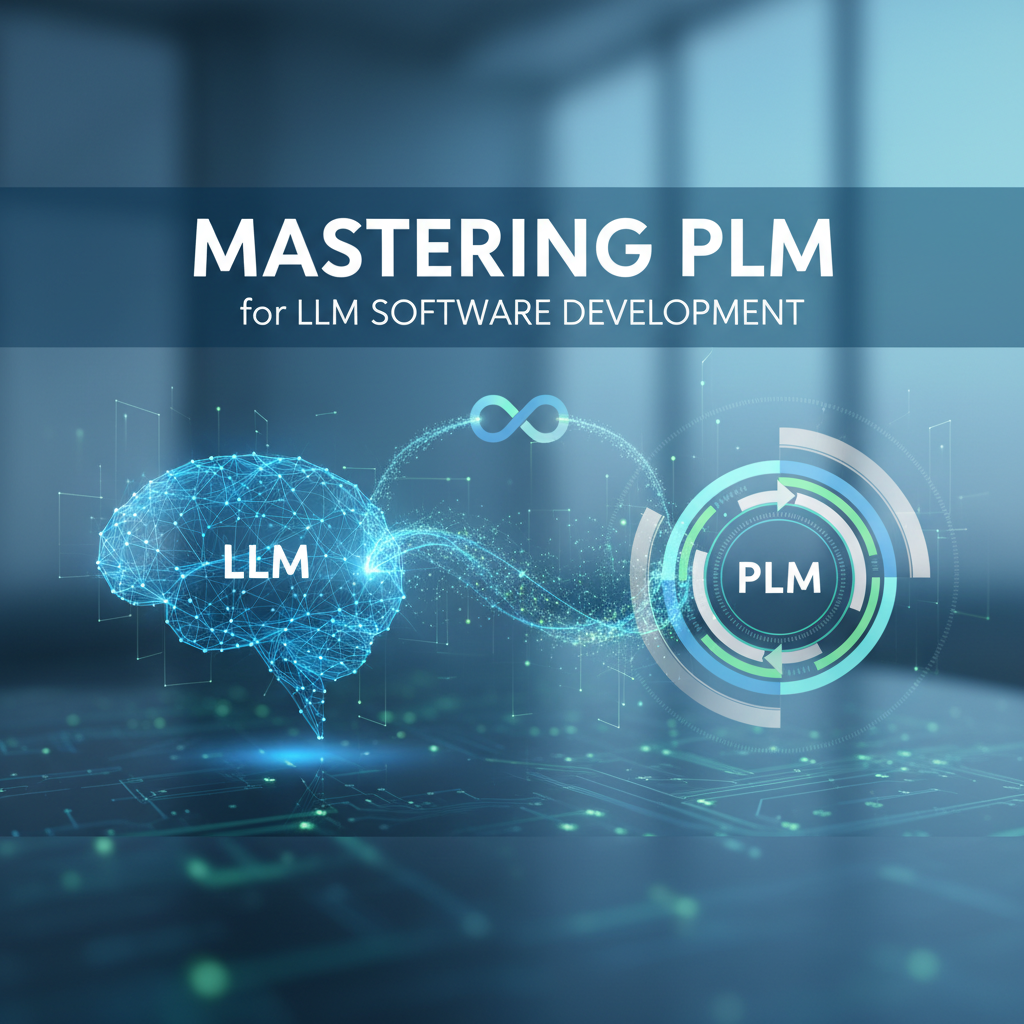


The advent of Large Language Models (LLMs) has heralded a transformative era in software development, injecting unprecedented capabilities into applications ranging from customer service chatbots to sophisticated data analysis tools. These powerful AI systems are not merely components; they are increasingly becoming the core intelligence driving next-generation software. However, the very power and dynamism that make LLMs revolutionary also introduce a labyrinth of complexities for developers and organizations. Managing the entire lifecycle of software built on or around LLMs—from conception and iterative development to deployment, monitoring, and eventual retirement—requires a robust, systematic approach. This is where the principles of Product Lifecycle Management (PLM), traditionally applied to physical products and then adapted for conventional software, become indispensable.
Traditional PLM provides a structured framework for managing the entire lifespan of a product, ensuring consistency, quality, and efficiency across all stages. For LLM-powered software, this framework must evolve to address unique challenges such as the fluidity of model versions, the iterative nature of prompt engineering, the complexities of data governance, and the critical need for continuous ethical and performance monitoring. Without a comprehensive PLM strategy tailored for LLM software, projects risk spiraling into unmanageable chaos, plagued by inconsistent model behavior, deployment nightmares, and escalating operational costs.
This extensive guide delves into how PLM principles can be effectively applied and adapted to the distinctive landscape of LLM software development. We will explore the architectural components critical for managing LLMs, including the pivotal roles of an LLM Gateway, an LLM Proxy, and the intricate considerations of a Model Context Protocol. By meticulously integrating these elements within a holistic PLM framework, organizations can not only harness the full potential of LLMs but also ensure their applications are resilient, scalable, ethical, and maintainable throughout their operational lifespan. This journey requires a deep understanding of both established software engineering practices and the novel demands imposed by generative AI, forging a path towards truly intelligent and sustainable software ecosystems.
1. Unpacking Product Lifecycle Management (PLM) in the Software Realm
At its core, Product Lifecycle Management (PLM) is a strategic approach to managing the entire journey of a product from its initial ideation through design, manufacturing, service, and disposal. Originating in the manufacturing sector to handle complex physical products, PLM has since been adapted to various industries, including software development, where it governs the evolution of digital products. The goal remains consistent: to optimize processes, enhance collaboration, reduce costs, improve quality, and accelerate time-to-market.
1.1. The Foundational Phases of Traditional PLM
In its classical interpretation, PLM typically encompasses several distinct but interconnected phases:
- Conception/Ideation: This initial stage involves identifying market needs, generating product ideas, conducting feasibility studies, and defining the product's vision and requirements. For physical goods, this might involve conceptual sketches or preliminary engineering designs.
- Design & Development: Here, the product takes shape. Detailed specifications are created, prototypes are built, and initial testing is performed. This phase is heavily iterative, involving constant refinement based on feedback and technical constraints.
- Manufacturing/Realization: This is where the product is actually produced. It involves setting up production lines, sourcing materials, assembly, and quality control. For software, this translates to coding, building, and compiling the application.
- Service & Support: Once deployed, products require ongoing maintenance, updates, and customer support. This phase ensures the product remains functional, relevant, and satisfies user needs over time.
- End-of-Life/Retirement: Eventually, products reach the end of their useful life. This phase involves managing obsolescence, discontinuation, and potential replacement strategies, including data migration or secure disposal.
1.2. Adapting PLM for Conventional Software Development
Translating these phases to the software world requires a nuanced understanding of digital artifacts.
- Conception becomes Requirements Gathering and Architectural Design: This involves defining user stories, functional and non-functional requirements, designing system architecture, and selecting technology stacks.
- Design & Development transforms into Coding, Unit Testing, and Integration: Developers write code, implement features, conduct unit tests, and integrate various modules. Version control systems (like Git) become paramount here to track changes and facilitate collaboration.
- Manufacturing/Realization is replaced by Build, Release, and Deployment: Continuous Integration/Continuous Delivery (CI/CD) pipelines automate the process of compiling code, running automated tests, packaging the application, and deploying it to target environments.
- Service & Support manifests as Maintenance, Updates, and Support: This includes bug fixes, performance optimizations, security patches, feature enhancements, and providing user assistance. Monitoring tools become essential to track application health and user experience.
- End-of-Life/Retirement involves Deprecation and Decommissioning: Older software versions or entire applications may be phased out, often replaced by newer iterations. Data archival and secure system shutdown are critical considerations.
1.3. Key Benefits of a PLM Mindset in Software Development
Embracing PLM principles offers substantial advantages for software organizations:
- Enhanced Traceability and Transparency: Every decision, change, and iteration can be traced back to its origin, providing a clear audit trail and fostering accountability.
- Improved Collaboration: A structured framework facilitates seamless communication and coordination among diverse teams—product managers, developers, QA engineers, operations, and even business stakeholders.
- Superior Quality Assurance: By integrating quality checks at every stage, from initial design reviews to automated testing and continuous monitoring, the overall reliability and robustness of the software are significantly improved.
- Cost Efficiency and Risk Management: Early identification of issues, standardized processes, and robust version control reduce rework, minimize errors, and mitigate potential risks associated with security vulnerabilities or compliance failures.
- Faster Time-to-Market: Streamlined workflows and automated processes accelerate the development and deployment cycles, allowing organizations to respond more quickly to market demands.
- Strategic Planning and Innovation: A holistic view of the product lifecycle enables better long-term planning, fostering continuous innovation and ensuring the software remains competitive and relevant.
However, despite these undeniable benefits, the dynamic and often opaque nature of LLM-powered software presents unprecedented challenges that push the boundaries of traditional software PLM. The "product" in LLM applications is no longer solely the code; it now encompasses the models themselves, the training data, the prompts, and the intricate interaction patterns that define the application's intelligence. Managing these new dimensions demands a tailored, adaptive PLM strategy.
2. The Unique Labyrinth of LLM Software Development Challenges
Building applications with Large Language Models introduces a complex array of challenges that go far beyond those encountered in conventional software engineering. The very nature of generative AI—its emergent behaviors, data dependency, and probabilistic outputs—necessitates a rethinking of how we manage the entire development lifecycle. Without addressing these specific hurdles, organizations risk building unstable, unpredictable, or even harmful LLM-powered systems.
2.1. Dynamic Model Management and Proliferation
Unlike static libraries or fixed algorithms, LLMs are living entities that evolve rapidly. * Model Versioning: Managing different versions of base models (e.g., GPT-3.5, GPT-4, Llama 2), fine-tuned models, or even task-specific smaller models is a significant undertaking. Each version may have different performance characteristics, cost implications, and even ethical biases. Tracking which application version uses which model version, and why, becomes critical for debugging and reproducibility. * Model Architecture Choices: The sheer variety of models—from proprietary APIs to open-source alternatives, varying in size, architecture, and computational requirements—introduces complexity. Deciding which model is optimal for a given task requires extensive experimentation and evaluation, and these choices may change over time as new models emerge. * Training Data Lineage: For fine-tuned or custom models, the training data is as crucial as the model architecture itself. Managing versions of training datasets, tracking their provenance, ensuring data quality, and documenting preprocessing steps are vital for understanding model behavior and diagnosing issues. Changes in training data can lead to subtle but significant shifts in model output. * Hyperparameter Tuning: The process of optimizing model performance involves extensive hyperparameter tuning. Tracking these configurations, the resulting model artifacts, and their associated performance metrics requires dedicated experimentation platforms to avoid a chaotic trial-and-error approach.
2.2. The Iterative and Delicate Art of Prompt Engineering Lifecycle
Prompts are the "code" of LLM applications, dictating the model's behavior and output. * Prompt Versioning and Control: Prompts are not static; they undergo constant iteration, refinement, and testing. A slight alteration in wording, structure, or even the inclusion of a few-shot examples can drastically change an LLM's response. Versioning prompts, similar to source code, is essential to track changes, revert to previous versions, and understand how prompt evolution impacts application performance. * Prompt Library Management: As applications scale, developers will accumulate a library of prompts for various tasks and use cases. Organizing, categorizing, and ensuring the reusability of these prompts across different features or services becomes a challenge. * Evaluation of Prompt Effectiveness: Evaluating prompts goes beyond simple unit testing. It often requires qualitative assessment, human-in-the-loop validation, and A/B testing to determine which prompt variations yield the best results for specific metrics (e.g., coherence, accuracy, conciseness, safety). The metrics themselves can be hard to define for subjective tasks. * Prompt Injectioin and Security: Malicious actors can attempt to "inject" harmful instructions into prompts, overriding intended behavior. Managing the security posture of prompts and implementing robust validation and filtering mechanisms is a continuous effort.
2.3. Navigating the Minefield of Data Governance
Data is the lifeblood of LLMs, but it also presents a significant source of complexity and risk. * Data Collection and Curation: The process of collecting, cleaning, annotating, and curating data for fine-tuning or RAG (Retrieval-Augmented Generation) purposes is resource-intensive and prone to errors. Ensuring the quality, relevance, and representativeness of this data is paramount. * Privacy and Compliance: LLMs handle vast amounts of data, which may include sensitive personal information. Adhering to data privacy regulations (e.g., GDPR, CCPA) across data collection, storage, processing, and model training phases is a non-negotiable requirement. * Bias and Fairness: Training data often reflects societal biases, which LLMs can amplify. Identifying, mitigating, and continuously monitoring for biases in model outputs is an ongoing ethical and technical challenge that requires careful data auditing and diverse testing sets. * Data Lineage and Provenance: Understanding the source, transformations, and usage of all data involved in training and inference is crucial for debugging, ensuring compliance, and explaining model behavior.
2.4. Comprehensive Evaluation, Monitoring, and Observability
The probabilistic nature of LLMs makes their behavior difficult to predict and their performance challenging to monitor. * Hallucinations and Factual Accuracy: LLMs can generate plausible but entirely false information (hallucinations). Continuously monitoring for factual inaccuracies, especially in critical applications, requires sophisticated evaluation techniques and human oversight. * Performance Drift: Model performance can degrade over time due to shifts in input data distributions ("data drift") or changes in real-world phenomena. Proactive monitoring for performance degradation and triggers for retraining are essential. * Cost Tracking and Optimization: LLM inference, especially with large proprietary models, can be expensive. Tracking API calls, token usage, and computational resources is vital for cost optimization and preventing unexpected expenditures. * Safety and Responsible AI: Monitoring for harmful outputs, toxic language, or misuse is a continuous process. Implementing guardrails, content moderation, and incident response mechanisms is critical for responsible deployment. * Explanation and Interpretability: Understanding why an LLM generated a particular output is often opaque. Developing methods for interpretability, even if partial, is important for trust and debugging.
2.5. Deployment, Scalability, and Integration Complexity
Bringing LLM-powered applications to production environments introduces specific operational hurdles. * Model Hosting and Serving: Deploying large models requires significant computational resources (GPUs) and specialized serving infrastructure for efficient inference. Managing latency, throughput, and resource allocation is complex. * Integration with Existing Systems: LLM services rarely operate in isolation. Integrating them seamlessly with existing backend systems, data pipelines, user interfaces, and business logic often requires robust API management and orchestration layers. * Real-time Inference vs. Batch Processing: Depending on the application, LLMs may need to perform real-time inference with low latency or process large batches of data efficiently. The choice impacts infrastructure design and cost.
2.6. Ethical, Legal, and Regulatory Compliance
The societal impact of LLMs places unique ethical and legal obligations on developers. * Fairness and Transparency: Ensuring that LLM applications operate fairly across different user groups and that their decision-making processes, to some extent, can be understood and explained is a growing requirement. * Copyright and Data Usage: The use of vast datasets for training LLMs raises questions about copyright, intellectual property, and fair use. Organizations must be diligent in their data sourcing and usage policies. * Emerging Regulations: The regulatory landscape for AI is rapidly evolving, with new laws and guidelines (e.g., EU AI Act) emerging to govern the development and deployment of AI systems. Staying compliant requires continuous monitoring and adaptation. * Accountability: Determining responsibility when an LLM produces erroneous or harmful output is a complex legal and ethical challenge that developers and organizations must grapple with.
Addressing these multifarious challenges effectively demands a systematic approach that transcends traditional software development methodologies. It requires a dedicated PLM framework that accounts for the dynamic, data-centric, and often unpredictable nature of LLM software, underpinned by specialized tools and architectural patterns.
3. Architecting for LLM Lifecycle Management: Essential Components
To effectively manage the intricate lifecycle of LLM software, a robust architectural foundation is paramount. This foundation comprises several specialized components designed to address the unique challenges of model, data, prompt, and experimentation management. By integrating these elements, organizations can establish a cohesive and controllable environment for LLM development, deployment, and evolution.
3.1. Comprehensive Model Versioning and Registry
The sheer number of LLM models, their versions, and their derivations (e.g., fine-tuned instances) necessitates a centralized, authoritative system for tracking. * Model Registry: This acts as a single source of truth for all models, storing metadata such as model name, version number, author, training date, architecture details, performance metrics, and dependencies. It should support various model formats (e.g., Hugging Face, PyTorch, TensorFlow) and provide clear mechanisms for tagging and categorization. * Version Control for Models: Beyond just storing, a robust system needs to manage the full version history of each model. This includes not only the model weights but also the code used to train or fine-tune it, the specific datasets leveraged, and the hyperparameters chosen. This ensures reproducibility, allowing developers to revert to previous versions if issues arise or to compare performance iterations. * Model Lineage and Provenance: Understanding the journey of a model from its foundational elements (pre-trained model, datasets) through various transformations (fine-tuning, quantization) is crucial. A model lineage system tracks these dependencies, providing an auditable trail that is vital for debugging, compliance, and explaining model behavior. * Model Governance and Access Control: The registry should also enforce access policies, dictating who can publish, retrieve, or deploy specific model versions. This is critical for security and for ensuring that only validated, approved models are used in production environments.
3.2. Robust Data Versioning and Lineage
Given that data is the fuel for LLMs, its meticulous management is non-negotiable. * Data Versioning Systems: Similar to code, datasets—especially those used for training, fine-tuning, or evaluation—must be versioned. Tools akin to Git for data (e.g., DVC, LakeFS) allow developers to track changes to datasets over time, commit new versions, and revert to previous states. This is crucial for debugging model regressions and ensuring reproducibility. * Data Pipelines and Transformations: The process of collecting, cleaning, transforming, and augmenting raw data into usable formats for LLM training is often complex. A robust system should manage and version these data pipelines, ensuring that every transformation step is recorded and can be reproduced. This includes scripts for data sampling, anonymization, labeling, and feature engineering. * Data Provenance and Source Tracking: Understanding where data originated, who contributed it, and under what licenses it can be used is vital for compliance, ethical considerations, and bias mitigation. The system should track the full lineage of data, from raw sources to processed datasets used by specific model versions. * Data Quality Monitoring: Automated checks for data quality, consistency, and integrity should be integrated into the data pipeline. Alerts for data drift or anomalies can trigger re-evaluation of models or retraining efforts.
3.3. Advanced Prompt Management Systems
Prompts are the interface to the LLM's intelligence, and their dynamic nature demands specialized management. * Prompt Versioning Control: Treat prompts like source code. Implement systems (e.g., dedicated prompt management platforms, Git repositories for prompt templates) that allow developers to version prompts, track changes, review historical iterations, and associate prompts with specific application features or model versions. This enables rollback and A/B testing of prompt variations. * Prompt Templating and Parameterization: Develop libraries of reusable prompt templates that can be dynamically populated with variables. This reduces redundancy, ensures consistency, and allows for rapid iteration. A template might define the role, core instructions, and output format, with placeholders for user input or contextual information. * Prompt Catalog and Discovery: As the number of prompts grows, a centralized catalog or registry is needed. This allows teams to discover existing prompts, understand their intended use cases, and promote best practices, preventing redundant efforts and ensuring consistency across applications. * Prompt Experimentation and Evaluation Frameworks: Tools that facilitate A/B testing of different prompts against a set of evaluation metrics (both automated and human-in-the-loop) are essential. This enables data-driven decisions on prompt optimization and helps in understanding the impact of prompt changes on model performance and user experience. * Prompt Security and Guardrails: Systems for validating, sanitizing, and filtering prompts can help mitigate risks like prompt injection attacks or the generation of harmful content. This might involve rule-based filters, secondary LLMs for safety checks, or human review workflows.
3.4. Experimentation and Evaluation Platforms
The iterative nature of LLM development relies heavily on experimentation. * Experiment Tracking: A platform to log all experiments, including chosen models, prompt versions, hyperparameters, datasets, and the resulting metrics (e.g., accuracy, perplexity, latency, cost). Tools like MLflow, Weights & Biases, or custom internal systems facilitate this. * Metric Management: Define and track a diverse set of metrics relevant to LLMs, including traditional NLP metrics (BLEU, ROUGE), as well as specific LLM-centric metrics like coherence, factuality, toxicity, bias, and human preference scores. * Human-in-the-Loop (HITL) Evaluation: Many LLM outputs require qualitative human judgment. Platforms should facilitate efficient HITL workflows for annotators to evaluate outputs, provide feedback, and help refine models or prompts. * Comparative Analysis: The ability to easily compare the performance of different model versions, prompt strategies, or fine-tuning approaches side-by-side is crucial for decision-making and continuous improvement.
3.5. CI/CD for LLMs: Automating the Lifecycle
Extending Continuous Integration/Continuous Delivery practices to LLMs is vital for agility and reliability. * Automated Testing Pipelines: Beyond traditional code tests, CI/CD for LLMs includes automated tests for prompt effectiveness, model regression, data quality, and safety guardrails. This might involve synthetic data generation, adversarial testing, and integration tests with the LLM API. * Automated Model Deployment: Once a model or prompt combination passes rigorous testing, the CI/CD pipeline should automate its deployment to various environments (staging, production), ensuring consistency and reducing manual errors. * Automated Retraining and Redeployment: Mechanisms to automatically trigger model retraining based on performance drift detection or new data availability, followed by automated re-evaluation and redeployment, can create a self-improving system. * Infrastructure as Code (IaC): Managing the underlying infrastructure for LLM serving (e.g., GPU clusters, Kubernetes configurations) using IaC ensures reproducibility and consistency across environments.
3.6. Robust Monitoring and Observability Systems
Post-deployment, continuous vigilance is key to maintaining LLM application health. * Performance Monitoring: Track latency, throughput, error rates, and resource utilization (CPU, GPU, memory) of LLM inference services. * Model Drift Detection: Monitor the statistical properties of input data and model outputs over time to detect shifts that could degrade performance. This includes data drift (changes in input distribution) and concept drift (changes in the relationship between inputs and outputs). * Safety and Bias Monitoring: Continuously scan LLM outputs for harmful content, toxic language, or signs of biased behavior. Implement alerting mechanisms and automated interventions where possible. * Cost Tracking and Allocation: Monitor token usage, API calls to external LLMs, and internal compute costs. Provide detailed breakdowns to attribute costs to specific features, users, or departments, enabling efficient budget management. * User Feedback Integration: Establish clear channels for users to report issues, provide feedback, and highlight areas for improvement, which can then feed back into the development cycle. * Centralized Logging and Tracing: Aggregate logs from LLM services, application logic, and infrastructure. Implement distributed tracing to follow the entire request path through an LLM-powered application, aiding in debugging and performance analysis. For managing and observing diverse API services, including LLM invocations, platforms like ApiPark offer comprehensive logging capabilities, recording every detail of each API call, enabling businesses to quickly trace and troubleshoot issues, ensuring system stability and data security. This type of detailed API call logging is invaluable for maintaining system health and optimizing LLM performance within a PLM framework.
By diligently building and integrating these components, organizations can establish a mature PLM framework specifically designed to navigate the complexities of LLM software development, ensuring controlled innovation and reliable operation.
4. Leveraging LLM Gateways and Proxies for Enhanced PLM
In the rapidly evolving landscape of LLM-powered applications, direct interaction with various LLM providers or locally hosted models can quickly become unwieldy. Each model might have a different API, varying authentication mechanisms, and distinct rate limits. This is where an LLM Gateway (often synonymous with an LLM Proxy) emerges as a critical architectural component, providing an intelligent abstraction layer that significantly enhances the Product Lifecycle Management of LLM software. It acts as a central control point, streamlining operations, improving security, and facilitating dynamic management of LLM interactions.
4.1. The Indispensable Role of an LLM Gateway/Proxy
An LLM Gateway is essentially an intermediary service that sits between your application and one or more Large Language Models. All requests from your application intended for an LLM are routed through this gateway, and all responses from the LLMs pass back through it before reaching your application. This centralized approach offers a multitude of benefits, transforming how LLMs are integrated, managed, and observed throughout their lifecycle.
4.2. Key Features and Benefits within a PLM Context
Integrating an LLM Gateway into your architecture provides strategic advantages for every phase of PLM for LLM software:
- Unified API Access and Abstraction:
- PLM Impact: Simplifies the "Design & Development" phase by providing a consistent interface regardless of the underlying LLM.
- Benefit: The gateway normalizes API requests and responses across diverse LLMs (e.g., OpenAI, Anthropic, open-source models like Llama), shielding your application from vendor-specific API changes. This abstraction layer means that if you decide to switch from one LLM to another, or use multiple LLMs simultaneously, your application code remains largely unaffected, drastically reducing integration effort and technical debt.
- Example: A request for text generation might look identical to your application, even if the gateway routes it to GPT-4, then Llama-2-70B, or a fine-tuned internal model based on real-time criteria. This flexibility accelerates iteration and reduces "lock-in" during the development and evolution stages.
- Intelligent Traffic Management and Routing:
- PLM Impact: Optimizes the "Deployment & Operations" phase by ensuring reliability, scalability, and cost efficiency.
- Benefit: The gateway can intelligently route requests based on various parameters:
- Load Balancing: Distribute requests across multiple instances of the same model or across different providers to prevent bottlenecks and ensure high availability.
- Failover: Automatically switch to a backup model or provider if the primary one experiences outages or performance degradation, enhancing application resilience.
- Version-based Routing: Direct requests from specific application versions to corresponding LLM versions (e.g., dev environment requests go to
LLM-v2-dev, production requests toLLM-v1-prod). - Contextual Routing: Route requests to different models based on their content, complexity, or user tier (e.g., simple queries to a cheaper, smaller model; complex, critical queries to a more powerful, expensive one). This dynamic routing is crucial for cost optimization and performance tuning.
- Enhanced Security and Authentication:
- PLM Impact: Fortifies the "Design & Development" and "Deployment & Operations" phases by centralizing security controls.
- Benefit: Instead of managing API keys for each LLM provider within your application, the gateway centralizes authentication. It can handle API key rotation, credential management, and enforce granular access control policies. It acts as a firewall, protecting your LLM backend endpoints and potentially sensitive data from direct exposure to the internet or unauthorized internal services. This significantly reduces the attack surface and simplifies security audits.
- Cost Optimization and Budget Management:
- PLM Impact: Directly contributes to the financial viability and sustainability throughout the entire "Maintenance & Evolution" phase.
- Benefit: By consolidating all LLM interactions, the gateway provides a single point for comprehensive cost tracking. It can log token usage, API calls, and associated costs across all models and applications. This data is invaluable for identifying cost inefficiencies, negotiating better rates with providers, and implementing intelligent routing strategies (e.g., favoring cheaper models for non-critical tasks) to stay within budget.
- Caching for Performance and Cost Reduction:
- PLM Impact: Boosts performance during "Deployment & Operations" and reduces operational costs.
- Benefit: The gateway can cache frequently requested LLM responses. If an identical prompt is received again, the cached response can be returned instantly, dramatically reducing latency and eliminating redundant API calls to the LLM, thus saving computational resources and money. This is particularly effective for static or common queries.
- Centralized Observability: Logging, Metrics, and Tracing:
- PLM Impact: Provides critical insights for the "Testing & Evaluation" and "Deployment & Operations" phases, essential for debugging and performance analysis.
- Benefit: All requests and responses passing through the gateway can be logged, providing a comprehensive audit trail of LLM interactions. This includes prompt inputs, model outputs, timestamps, latency, and errors. The gateway can also emit metrics (e.g., request volume, error rates, token usage) to monitoring systems, offering real-time insights into LLM performance and usage patterns. This centralized visibility is crucial for debugging issues, detecting performance regressions, and understanding model behavior in production. For this reason, platforms like ApiPark are engineered to provide detailed API call logging and powerful data analysis features, allowing teams to analyze historical call data to display long-term trends and performance changes, facilitating proactive maintenance and operational excellence. This capability perfectly aligns with the observability needs of an LLM Gateway.
- Prompt Templating, Management, and Orchestration:
- PLM Impact: Directly supports the "Design & Development" and "Testing & Evaluation" phases by streamlining prompt engineering.
- Benefit: An advanced LLM Gateway can host and manage prompt templates centrally. Instead of embedding prompts directly into application code, applications can call a named prompt via the gateway. This allows for dynamic A/B testing of different prompt versions without code changes, versioning of prompts, and immediate global updates to prompt strategies. The gateway can also orchestrate multi-step LLM interactions or chains of prompts, abstracting complex LLM workflows into simpler API calls for the application.
- Content Moderation and Safety Filters:
- PLM Impact: Crucial for the "Deployment & Operations" and "Maintenance & Evolution" phases, addressing ethical and safety concerns.
- Benefit: The gateway can implement content moderation filters on both incoming user prompts and outgoing LLM responses, preventing the generation of harmful, toxic, or inappropriate content. This can involve rule-based systems, external safety APIs, or even secondary LLMs specifically tasked with safety checks, acting as an essential guardrail.
4.3. The LLM Gateway as a Critical PLM Enabler
In essence, the LLM Gateway transforms LLM interaction from a bespoke, model-specific integration into a managed, controlled, and observable service. Within a PLM framework, it is instrumental in:
- Accelerating Iteration: By abstracting away model complexities and centralizing prompt management, developers can iterate faster on application features and prompt engineering strategies.
- Enabling Seamless Deployment: It provides the infrastructure for robust deployment, load balancing, and failover, ensuring applications remain performant and available.
- Facilitating Continuous Monitoring and Improvement: The centralized logging, metrics, and data analysis capabilities provide the bedrock for understanding LLM behavior in production, detecting issues, and feeding insights back into the development cycle for continuous improvement.
- Ensuring Governance and Compliance: Through centralized security, cost tracking, and content moderation, the gateway helps enforce organizational policies and navigate the evolving regulatory landscape for AI.
By integrating an LLM Gateway as a foundational element, organizations can imbue their LLM software development with the necessary control, flexibility, and insights required for successful PLM, transforming a complex and dynamic technology into a manageable and reliable product.
APIPark is a high-performance AI gateway that allows you to securely access the most comprehensive LLM APIs globally on the APIPark platform, including OpenAI, Anthropic, Mistral, Llama2, Google Gemini, and more.Try APIPark now! 👇👇👇
5. The Critical Role of Model Context Protocol in Advanced PLM
Beyond merely sending a prompt and receiving a response, the true power and utility of LLM-powered applications often lie in their ability to maintain and leverage context. A Model Context Protocol defines how this contextual information is managed, transmitted, and interpreted, becoming a cornerstone for sophisticated LLM applications and an indispensable element of their Product Lifecycle Management. Without a well-defined context protocol, LLM interactions remain stateless, limiting their depth, coherence, and usefulness in complex, multi-turn scenarios.
5.1. Demystifying Model Context Protocol
A Model Context Protocol isn't a single standard but rather a set of agreed-upon conventions and mechanisms for handling the persistent information that an LLM needs to reference beyond the immediate input. This includes conversational history, user preferences, external knowledge, system state, and more. It dictates:
- What information is considered context.
- How this context is structured and represented.
- How it is transmitted between the application and the LLM (potentially via an LLM Gateway).
- How the LLM (or an orchestrator) interprets and uses this context.
- Strategies for managing the evolving nature and finite size of context windows.
The evolution of LLMs has brought the concept of "context window" to the forefront – the limited number of tokens an LLM can process in a single input. Managing this constraint while maintaining rich, long-running interactions is the central challenge addressed by a robust Model Context Protocol.
5.2. Strategies for Effective Context Management within a Protocol
A well-architected Model Context Protocol typically incorporates several key strategies:
- Managing Session State and Conversational History:
- Challenge: LLMs are inherently stateless; each API call is treated independently unless historical turns are explicitly provided.
- Protocol Solution: The context protocol defines how previous user queries and LLM responses are stored, retrieved, and re-inserted into subsequent prompts. This involves:
- Truncation: For very long conversations, the protocol might define rules for truncating older turns to fit within the context window, prioritizing recent and relevant information.
- Summarization: More advanced protocols might employ a separate LLM or a custom summarization module to condense past conversation history into a concise summary that is then added to the current prompt, preserving key information without exceeding token limits.
- Storage Mechanisms: Specifying how conversation history is stored (e.g., in a session database, vector store, or temporary cache) and associated with unique user sessions.
- Integrating External Knowledge and Retrieval-Augmented Generation (RAG):
- Challenge: LLMs have limited knowledge based on their training data, which can become outdated or lack domain-specific details.
- Protocol Solution: The protocol formalizes the process of enriching LLM inputs with relevant information retrieved from external knowledge bases (databases, documents, APIs). This is the essence of RAG:
- Query Expansion/Generation: The protocol might specify how the LLM generates search queries based on the user's input, or how the application determines relevant keywords.
- Retrieval Mechanism: Defining how external data sources (e.g., vector databases containing embedded documents, traditional search engines) are queried to find relevant snippets.
- Context Injection: Structuring how these retrieved snippets are formatted and injected into the LLM's prompt, ensuring they are presented clearly and effectively (e.g., "Here is some relevant information: [retrieved text]. Based on this, answer the user's question: [user query]").
- Metadata Integration: The protocol can also define how metadata associated with retrieved documents (e.g., source, date, confidence score) is passed to the LLM or used by the application for source attribution or filtering.
- User Profiles and Preferences:
- Challenge: Generic LLM responses often lack personalization.
- Protocol Solution: The protocol dictates how persistent user data (e.g., name, language preference, interests, past interactions, role) is stored and dynamically inserted into prompts to personalize responses. This could be stored in a user profile database and fetched by the application or LLM Gateway before constructing the prompt.
- System State and Application Logic:
- Challenge: LLMs need to be aware of the current state of the application to provide contextually appropriate responses (e.g., "The user has item X in their cart," or "The user is in the checkout flow").
- Protocol Solution: The protocol defines how relevant application state variables are extracted, formatted, and included in the LLM's prompt. This might involve translating internal data structures into natural language descriptions or structured JSON objects that the LLM can interpret.
5.3. Versioning Context Strategies: A PLM Imperative
Just as models and prompts evolve, so too must the strategies for managing context. * Versioning Context Protocols: The specific rules, structures, and summarization algorithms defined within a Model Context Protocol are not static. They must be versioned. For example, ContextProtocol-v1 might use simple truncation, while ContextProtocol-v2 implements advanced RAG and LLM-based summarization. This versioning allows developers to track how context is handled over time and to roll back to previous strategies if a newer one introduces unforeseen issues or performance regressions. * A/B Testing Contextual Approaches: An LLM Gateway can be instrumental here, allowing different groups of users to experience applications leveraging different context management strategies (e.g., comparing ContextProtocol-v1 vs. ContextProtocol-v2). This enables data-driven decisions on which context management approach yields better user experience or performance. * Traceability of Context Decisions: Within a PLM framework, it's crucial to trace which application version and LLM version are using which Model Context Protocol version. This full lineage is vital for debugging, auditing, and understanding the complete behavior of an LLM-powered system.
5.4. Impact on User Experience, Application Logic, and PLM
The thoughtful implementation of a Model Context Protocol dramatically impacts various aspects of LLM software:
- Enhanced User Experience: By remembering conversational history and leveraging external knowledge, LLM applications can provide more natural, coherent, and accurate interactions, leading to higher user satisfaction.
- Simplified Application Logic: The protocol can abstract away the complexity of context management from core application code. The application simply provides the raw inputs, and the protocol (often implemented within the LLM Gateway or an orchestration layer) handles the sophisticated task of constructing the full, contextualized prompt.
- Improved Model Effectiveness: By providing LLMs with relevant and structured context, their ability to generate accurate, useful, and personalized responses is significantly boosted, reducing hallucinations and improving overall reliability.
- PLM Alignment: A well-defined Model Context Protocol becomes an integral part of the software product's design specifications. Its versioning and management fall under the umbrella of change control and configuration management, key aspects of PLM. It ensures that context handling is consistent across different environments and versions, improving maintainability and reducing the likelihood of unexpected behavior as the application evolves.
In conclusion, the Model Context Protocol is not an optional add-on but a fundamental component for building intelligent and robust LLM applications. By carefully designing, implementing, and versioning this protocol, organizations can unlock deeper, more meaningful interactions with LLMs, turning stateless models into intelligent conversational agents and ensuring that the crucial aspect of context is systematically managed throughout the entire PLM lifecycle.
6. Implementing a Comprehensive PLM Framework for LLM Software
Building a robust PLM framework for LLM software demands a structured approach, meticulously adapting each traditional PLM phase to account for the unique characteristics of generative AI. This involves integrating the specialized architectural components discussed previously into a cohesive lifecycle management strategy.
6.1. Phase 1: Conception & Research – Defining the Intelligent Core
This initial stage sets the strategic direction and foundational understanding for the LLM-powered product. * Problem Definition and Use Cases: Clearly articulate the problem the LLM solution aims to solve and define specific use cases. This might involve natural language understanding, content generation, code assistance, or conversational AI. Unlike traditional software, the problem space might be less defined, relying on the emergent capabilities of LLMs. * Initial Model Selection and Feasibility: Conduct preliminary research into available LLMs (proprietary APIs, open-source models), considering factors like cost, performance, latency, context window size, and ease of fine-tuning. Assess the technical feasibility of achieving the desired outcome with current LLM capabilities. This often involves small-scale proof-of-concept experiments. * Data Exploration and Availability: Identify potential data sources for training, fine-tuning, or retrieval-augmented generation (RAG). Evaluate data quality, volume, relevance, and compliance implications. Begin to outline a data acquisition and governance strategy. * Establishing Ethical Guidelines and Risk Assessment: Proactively identify potential ethical concerns, biases, and misuse risks associated with the LLM application. Define responsible AI principles, content moderation policies, and privacy considerations upfront. This is a crucial differentiator from traditional software PLM where ethical concerns might be an afterthought. * Requirements Gathering (LLM-Specific): Beyond functional requirements, define LLM-specific requirements such as acceptable hallucination rates, desired response fluency, persona consistency, and safety thresholds.
6.2. Phase 2: Design & Development – Crafting the LLM Application
This phase transforms conceptual ideas into tangible LLM-powered features and services. * Prompt Engineering and Iteration: This is a core activity. Developers craft initial prompts, experiment with different structures, few-shot examples, and roles. A dedicated prompt management system (as discussed in Section 3.3) is critical here, allowing for versioning, templating, and rapid iteration. Developers must regularly evaluate prompt effectiveness against specific metrics. * Model Fine-tuning and Customization: If a base LLM requires specialization, this phase involves gathering and annotating custom datasets, selecting fine-tuning techniques (e.g., LoRA, QLoRA), and training/evaluating the fine-tuned model. The model versioning and registry (Section 3.1) track these custom models and their associated training data. * Architecture Design (LLM-Centric): Design the overall system architecture, explicitly incorporating components like an LLM Gateway (Section 4) for API abstraction, traffic management, and security. Detail the Model Context Protocol (Section 5) – how context will be stored, managed, and transmitted (e.g., RAG pipelines, conversation history management). Define data pipelines for ingestion, processing, and storage. * Data Pipeline Design and Implementation: Build robust data pipelines for data acquisition, cleaning, transformation, and versioning (Section 3.2). For RAG systems, design and implement the vector database and retrieval mechanisms. * Code Development and Version Control: Implement the application logic, integrating with the LLM Gateway and other components. Standard software engineering practices like code reviews, unit testing, and continuous integration apply. All code, including prompt templates and model configuration files, should be under strict version control. * Instrumentation for Observability: Integrate logging, metrics, and tracing into all LLM interaction points from the outset, enabling comprehensive monitoring later (Section 3.6).
6.3. Phase 3: Testing & Evaluation – Validating Intelligence and Robustness
Rigorous testing is paramount to ensure the LLM application meets performance, safety, and ethical standards. * Unit and Integration Testing (LLM-Aware): Test individual prompt templates, context management logic, and the integration points with the LLM Gateway. Verify that the application correctly formats inputs and processes outputs. * LLM-Specific Evaluation: This goes beyond traditional software testing: * Prompt-level Evaluation: Test various prompt versions with diverse inputs to assess consistency, coherence, factual accuracy, and adherence to desired persona. * Model Performance Benchmarking: Evaluate fine-tuned models against specific datasets for task-specific metrics (e.g., F1-score for classification, ROUGE for summarization). * Adversarial Testing: Intentionally craft problematic inputs (e.g., prompt injections, ambiguous queries) to test the robustness of safety guardrails and system resilience. * Human-in-the-Loop (HITL) Evaluation: Engage human annotators to provide qualitative feedback on LLM outputs, especially for subjective tasks. This is crucial for detecting subtle biases, cultural nuances, or factual inaccuracies that automated metrics might miss. * A/B Testing: Utilize the LLM Gateway to A/B test different model versions, prompt strategies, or context management approaches with a subset of users or internal testers. Track key performance indicators (KPIs) like user engagement, task completion rates, and feedback. * Security Testing: Conduct vulnerability assessments, penetration testing, and specifically test for prompt injection vulnerabilities and data leakage risks. * Bias and Fairness Audits: Systematically test the LLM application's behavior across different demographic groups or sensitive topics to identify and mitigate biases. * Cost Prototyping: Estimate and validate the cost implications of different LLM usage patterns and integration strategies before full deployment.
6.4. Phase 4: Deployment & Operations – Bringing Intelligence to Life
This phase focuses on the reliable and efficient delivery and ongoing management of the LLM application in production. * Automated Deployment Pipelines (CI/CD for LLMs): Implement robust CI/CD pipelines (Section 3.5) that automate the entire deployment process. This includes building application code, packaging models, registering prompt versions, and deploying to production environments. The LLM Gateway itself is deployed as part of this infrastructure. * Infrastructure Provisioning: Provision and configure the necessary infrastructure for LLM serving (e.g., GPU instances, Kubernetes clusters), adhering to Infrastructure as Code (IaC) principles. * Continuous Monitoring and Alerting: Deploy comprehensive monitoring and observability systems (Section 3.6). This includes: * Performance Metrics: Latency, throughput, error rates of the application and the LLM Gateway. * Model Performance Metrics: Monitor for model drift, changes in response quality, and hallucination rates in production. * Cost Tracking: Monitor token usage and API costs in real-time, leveraging the LLM Gateway's capabilities. * Safety and Ethical Monitoring: Continuously scan inputs and outputs for harmful content, privacy violations, or signs of bias. Set up alerts for anomalies. * Feedback Loops: Establish clear mechanisms for collecting user feedback, bug reports, and performance issues from the production environment. This feedback is critical for informing the next iteration of the PLM cycle. * Version Management of Deployed Services: Ensure that different versions of the LLM application, underlying models, and prompt strategies can coexist and be managed independently, often facilitated by the routing capabilities of the LLM Gateway. * APIPark provides an excellent example of a platform that excels in API lifecycle management, including deployment and versioning. Its capabilities for end-to-end API lifecycle management help regulate API management processes, manage traffic forwarding, load balancing, and versioning of published APIs. This directly supports the robust deployment and operational needs of LLM-powered applications, ensuring smooth transitions and control over different API versions linked to various LLM models or prompt strategies.
6.5. Phase 5: Maintenance & Evolution – Sustaining and Enhancing Intelligence
The LLM product's lifecycle doesn't end after deployment; it continuously evolves and adapts. * Regular Model Updates and Retraining: Based on feedback and monitoring data, schedule periodic model retraining or fine-tuning with new data. This could be triggered automatically by drift detection. New model versions are then published to the model registry and deployed via CI/CD. * Prompt Optimization and Refinement: Continuously optimize prompts based on performance data, user feedback, and new LLM capabilities. The prompt management system facilitates controlled updates and A/B testing. * Adaptation to New LLMs and Technologies: As new, more capable, or cost-effective LLMs emerge, the LLM Gateway's abstraction layer allows for easier integration and migration. Teams can experiment with new models without rewriting core application logic. * Feature Enhancements: Develop and integrate new LLM-powered features, following the same iterative PLM process from conception to deployment. * Deprecation and Decommissioning: Strategically plan the retirement of outdated models, prompt versions, or entire LLM services. Ensure data archival, graceful shutdown, and seamless migration for users to newer versions. This phase requires careful communication and a clear understanding of dependencies, often managed through the PLM system's traceability features. * Regulatory Compliance Updates: Continuously monitor the evolving AI regulatory landscape and adapt the LLM application, data governance, and ethical guidelines to remain compliant.
By embracing this comprehensive, LLM-centric PLM framework, organizations can navigate the inherent complexities of generative AI, transforming it from a potential source of chaos into a powerful engine for innovation and sustainable product development.
7. Best Practices and Future Trends in LLM PLM
As the field of LLM software development matures, certain best practices are emerging as crucial for success, while future trends promise to further shape the landscape of PLM for intelligent systems. Adhering to these principles and anticipating future shifts will be vital for organizations aiming to build and sustain cutting-edge LLM applications.
7.1. Essential Best Practices for LLM PLM
- Treat Prompts as Code (and Data):
- Detail: Implement strict version control for all prompts, prompt templates, and few-shot examples. Store them in a dedicated repository (e.g., Git) or a prompt management system that allows for easy tracking of changes, collaboration, and rollback. Consider prompts as part of your codebase, subject to review, testing, and deployment pipelines. Additionally, treat the data used in prompts (e.g., few-shot examples) with the same rigor as training data, ensuring its quality and versioning.
- Why it's important: Prevents "prompt drift," ensures reproducibility of LLM behavior, and facilitates collaboration across teams. Without this, prompt changes can lead to undocumented and untraceable shifts in application performance.
- Establish Robust Data Governance and Lineage:
- Detail: Implement comprehensive policies and tools for managing all data involved in LLM applications—from raw training data to RAG documents and user interaction logs. This includes data versioning, quality checks, anonymization strategies, and clear documentation of data sources and transformations.
- Why it's important: Essential for mitigating bias, ensuring privacy compliance (e.g., GDPR, CCPA), debugging model issues, and building trust in the LLM's outputs. Poor data governance is a primary source of LLM failures.
- Embrace Centralized LLM Gateway Architecture:
- Detail: Make the LLM Gateway (or LLM Proxy) a non-negotiable architectural component from the outset. Leverage its capabilities for unified API abstraction, intelligent routing, security, cost tracking, and centralized observability.
- Why it's important: Provides a single point of control and management for all LLM interactions, significantly reducing complexity, enhancing security, enabling cost optimization, and facilitating seamless model or provider switching. It is the backbone for a scalable and resilient LLM PLM strategy.
- Prioritize Continuous Monitoring and Observability:
- Detail: Implement deep observability into every layer of your LLM stack—application logic, the LLM Gateway, and the models themselves. Track not just technical metrics (latency, error rates) but also LLM-specific metrics like hallucination rates, toxicity scores, bias indicators, and token usage. Establish robust alerting systems.
- Why it's important: LLM behavior is dynamic. Continuous monitoring allows for proactive detection of performance degradation, model drift, safety issues, and cost overruns in production, enabling rapid response and informed iteration.
- Automate Everything Possible (CI/CD for LLMs):
- Detail: Extend traditional CI/CD pipelines to encompass LLM-specific artifacts: automated testing of prompts, automated model evaluation, packaging of fine-tuned models, and automated deployment of LLM services.
- Why it's important: Accelerates iteration cycles, reduces manual errors, ensures consistency across environments, and enables rapid response to new data or model updates.
- Integrate Human-in-the-Loop (HITL) Processes:
- Detail: For critical applications or subjective tasks, design workflows that incorporate human oversight for prompt refinement, model output evaluation, and anomaly detection. This can involve human reviews for high-risk responses or feedback mechanisms for continuous improvement.
- Why it's important: Human judgment remains indispensable for addressing the nuances, ethical considerations, and qualitative aspects of LLM behavior that automated metrics struggle with.
- Design for Model Context Protocol from Day One:
- Detail: Proactively design and implement a robust Model Context Protocol that defines how conversation history, external knowledge (RAG), and user profiles are managed and injected into LLM prompts. Ensure this protocol is versioned and can evolve with the application.
- Why it's important: Enables sophisticated, personalized, and coherent LLM interactions, moving beyond stateless responses. It's fundamental for building truly intelligent conversational agents and complex AI workflows.
- Foster Cross-Functional Collaboration:
- Detail: Break down silos between data scientists, ML engineers, software developers, product managers, legal teams, and ethical AI specialists. Regular communication and shared understanding of the LLM's capabilities, limitations, and ethical implications are crucial.
- Why it's important: LLM development spans multiple disciplines. Effective collaboration ensures that technical feasibility aligns with business objectives, ethical guidelines are followed, and regulatory requirements are met across the entire product lifecycle.
7.2. Future Trends Shaping LLM PLM
The LLM landscape is constantly shifting, and future trends will undoubtedly introduce new complexities and opportunities for PLM:
- Foundation Model Marketplaces and Interoperability:
- Trend: An increasing number of foundation models from various providers (and open-source communities) will become available through centralized marketplaces. Focus will shift to interoperable formats and standardized APIs.
- PLM Impact: The LLM Gateway will become even more critical for abstracting away diversity, enabling rapid experimentation with new models, and managing licenses and costs across a broader ecosystem. The ability to seamlessly swap models will accelerate the "Design & Development" phase.
- Automated Prompt Optimization and Generation:
- Trend: AI systems (meta-LLMs) will emerge to automatically generate, test, and optimize prompts, reducing the manual effort of prompt engineering.
- PLM Impact: This will revolutionize the "Design & Development" phase, allowing for faster iteration and more robust prompt strategies. PLM systems will need to version not just human-crafted prompts but also the algorithms or models used to generate them.
- More Sophisticated Context Management and Long-Term Memory:
- Trend: Advances in Model Context Protocol will move beyond simple summarization and RAG to include more complex reasoning over long-term memory, potentially using external knowledge graphs or persistent neural stores.
- PLM Impact: Managing these sophisticated context systems will require specialized tools for debugging, auditing, and ensuring consistency over time, particularly in "Maintenance & Evolution."
- Enhanced AI Governance and Regulatory Frameworks:
- Trend: Governments and international bodies will continue to introduce stringent regulations (e.g., EU AI Act, US executive orders) governing AI development, deployment, and accountability.
- PLM Impact: Compliance will become an explicit and heavily audited phase within PLM. Systems will need to track model lineage, training data provenance, bias audits, and safety evaluations with increased rigor, potentially requiring automated compliance reporting features.
- Self-Improving LLM Systems and Adaptive Agents:
- Trend: LLM agents capable of autonomously learning from interactions, adapting their behavior, and even fine-tuning themselves in real-time will become more prevalent.
- PLM Impact: This introduces a radical shift. The "Maintenance & Evolution" phase will become highly dynamic, with systems requiring robust guardrails, continuous monitoring of learning processes, and mechanisms for human intervention to prevent unintended consequences or "runaway" AI behavior.
- Multimodal LLMs and Embodied AI:
- Trend: LLMs that can process and generate not just text, but also images, audio, video, and interact with the physical world through robotics.
- PLM Impact: This will expand the definition of "context" and "output," requiring new tools for managing multimodal data, evaluating multimodal model performance, and ensuring safety across different sensory modalities.
Navigating these future trends will require PLM frameworks for LLM software to remain agile, adaptable, and forward-thinking. The principles of rigorous lifecycle management, combined with an embrace of specialized tools like LLM Gateways and sophisticated Model Context Protocols, will continue to be the bedrock for mastering the development of intelligent applications.
Conclusion: Orchestrating Intelligence with PLM
The landscape of software development has been irrevocably reshaped by the emergence of Large Language Models. While these powerful tools promise unprecedented innovation, their inherent dynamism, complexity, and ethical considerations demand a systematic and robust approach to their management. Traditional Product Lifecycle Management (PLM) principles, when thoughtfully adapted, provide the essential framework for navigating this intricate journey, transforming the development of LLM-powered applications from an unpredictable endeavor into a controlled, efficient, and reliable process.
Throughout this extensive exploration, we have underscored that mastering PLM for LLM software development is not merely about managing code; it's about orchestrating a multifaceted ecosystem that includes models, data, prompts, and the intricate interactions between them. Key architectural components such as the LLM Gateway (or LLM Proxy) and a meticulously defined Model Context Protocol emerge as indispensable enablers within this framework.
The LLM Gateway acts as the central nervous system, abstracting away the complexities of diverse LLM providers, intelligently routing requests, fortifying security, optimizing costs, and providing critical centralized observability. Its ability to manage traffic, cache responses, and enforce policies ensures that LLM services are reliable, scalable, and cost-effective throughout their operational lifespan. This pivotal component allows organizations to iterate rapidly on LLM applications without fear of vendor lock-in or integration nightmares.
Equally vital is the Model Context Protocol, which elevates LLM interactions from stateless exchanges to rich, coherent conversations. By defining how conversational history, external knowledge through Retrieval-Augmented Generation (RAG), user preferences, and application state are managed and transmitted, this protocol ensures that LLMs provide intelligent, personalized, and contextually aware responses. Versioning these context strategies becomes a PLM imperative, allowing for continuous refinement and adaptation as applications evolve.
Implementing a comprehensive PLM framework for LLM software, from the initial conception and ethical considerations to iterative design, rigorous testing, automated deployment, continuous monitoring, and proactive evolution, is the only sustainable path forward. It demands treating prompts as first-class citizens, ensuring robust data governance, embedding human-in-the-loop processes, and fostering deep cross-functional collaboration.
As LLMs continue to advance, embracing these PLM principles will not only enable organizations to harness their transformative power effectively but also to build responsible, resilient, and continuously improving intelligent systems. The future of software development is intelligent, and its mastery lies in the diligent application of lifecycle management to its most dynamic components.
8. Frequently Asked Questions (FAQs)
Q1: What is PLM for LLM Software Development, and why is it important?
A1: PLM for LLM software development is a systematic approach to managing the entire lifecycle of applications powered by Large Language Models, from initial concept and design through development, deployment, operation, and eventual retirement. It adapts traditional Product Lifecycle Management principles to address the unique challenges of LLMs, such as dynamic model versions, iterative prompt engineering, complex data governance, and continuous ethical/performance monitoring. It's crucial because LLMs introduce significant complexities—including unpredictable behavior, rapid evolution, and high operational costs—that can lead to unstable, unmanageable, or even harmful applications without a structured management framework. By implementing PLM, organizations ensure consistency, quality, efficiency, and responsible innovation throughout their LLM product's lifespan.
Q2: How does an LLM Gateway (or LLM Proxy) enhance the PLM of LLM applications?
A2: An LLM Gateway acts as a centralized intermediary between your application and various LLMs, providing a critical abstraction layer that significantly enhances PLM across multiple phases. It offers unified API access, simplifying integration regardless of the underlying model. For "Deployment & Operations," it enables intelligent traffic management (load balancing, failover, version routing), centralized security controls, and comprehensive cost tracking and optimization. In "Testing & Evaluation," it facilitates A/B testing of models and prompts. For "Maintenance & Evolution," it allows seamless switching between LLM providers or models without application code changes, and provides centralized logging and metrics for continuous monitoring and improvement. Effectively, it provides a single point of control and observability, making LLM interactions more manageable, secure, scalable, and cost-efficient.
Q3: What is a Model Context Protocol, and why is it essential for sophisticated LLM applications?
A3: A Model Context Protocol defines the conventions and mechanisms for managing and transmitting persistent contextual information to an LLM beyond the immediate prompt. This includes conversational history, user preferences, external knowledge (via Retrieval-Augmented Generation or RAG), and application state. It's essential for sophisticated LLM applications because LLMs are inherently stateless; without explicitly provided context, they cannot maintain coherent, multi-turn conversations or leverage external, up-to-date information. A well-defined protocol ensures that LLMs provide more accurate, personalized, and relevant responses, leading to a significantly improved user experience and enabling complex AI workflows that go beyond simple question-answering. It allows for advanced strategies like summarizing long conversations or dynamically injecting retrieved documents, ensuring the LLM always has the most relevant information within its limited context window.
Q4: What are the biggest differences when applying PLM to LLM software compared to traditional software?
A4: The biggest differences stem from the unique characteristics of LLMs: 1. Dynamic Core: The "product" isn't just static code; it includes rapidly evolving models, training data, and prompts, all of which require versioning and lifecycle management. 2. Probabilistic Outputs: LLMs are non-deterministic, making testing, evaluation, and quality assurance more complex, often requiring human-in-the-loop validation and statistical monitoring for drift. 3. Data Centrality: Data governance, lineage, and bias mitigation for training/RAG data become paramount, far more critical than in traditional software. 4. Prompt Engineering: Prompts are a new form of "code" that needs its own lifecycle management (versioning, testing, deployment). 5. Ethical & Safety Concerns: Bias, hallucination, and misuse risks necessitate continuous ethical monitoring, guardrails, and compliance tracking from conception to retirement. 6. Cost Variability: LLM inference costs can fluctuate based on usage, model choice, and token counts, requiring active cost management and optimization strategies. These differences necessitate specialized tools, methodologies, and a more adaptive, data-driven approach within the PLM framework.
Q5: How can a platform like APIPark contribute to mastering PLM for LLM software development?
A5: ApiPark can significantly contribute to mastering PLM for LLM software development by serving as an all-in-one AI gateway and API management platform. Its features directly address several key PLM needs: * Unified API Format: Standardizes AI model invocation, enabling easy swapping of LLMs without application changes, crucial for "Design & Development" and "Maintenance & Evolution." * Prompt Encapsulation: Allows combining AI models with custom prompts into new APIs, simplifying prompt management and versioning within the "Design & Development" phase. * End-to-End API Lifecycle Management: Manages API design, publication, invocation, and decommission, regulating traffic, load balancing, and versioning for deployed LLM services, essential for "Deployment & Operations." * Detailed API Call Logging & Powerful Data Analysis: Provides comprehensive logs and analytics for all API calls, including LLM invocations. This is vital for "Testing & Evaluation" and "Deployment & Operations" by enabling quick troubleshooting, performance trend analysis, cost tracking, and proactive maintenance, all central to continuous improvement within PLM. * Performance: High performance for API traffic ensures LLM-powered applications remain responsive and scalable, a key operational requirement. By abstracting API complexities and offering robust management and observability tools, APIPark helps organizations manage, integrate, and deploy their LLM and REST services with greater ease, efficiency, and control throughout their entire lifecycle.
🚀You can securely and efficiently call the OpenAI API on APIPark in just two steps:
Step 1: Deploy the APIPark AI gateway in 5 minutes.
APIPark is developed based on Golang, offering strong product performance and low development and maintenance costs. You can deploy APIPark with a single command line.
curl -sSO https://download.apipark.com/install/quick-start.sh; bash quick-start.sh

In my experience, you can see the successful deployment interface within 5 to 10 minutes. Then, you can log in to APIPark using your account.

Step 2: Call the OpenAI API.