Mastering REST API Access Through GraphQL
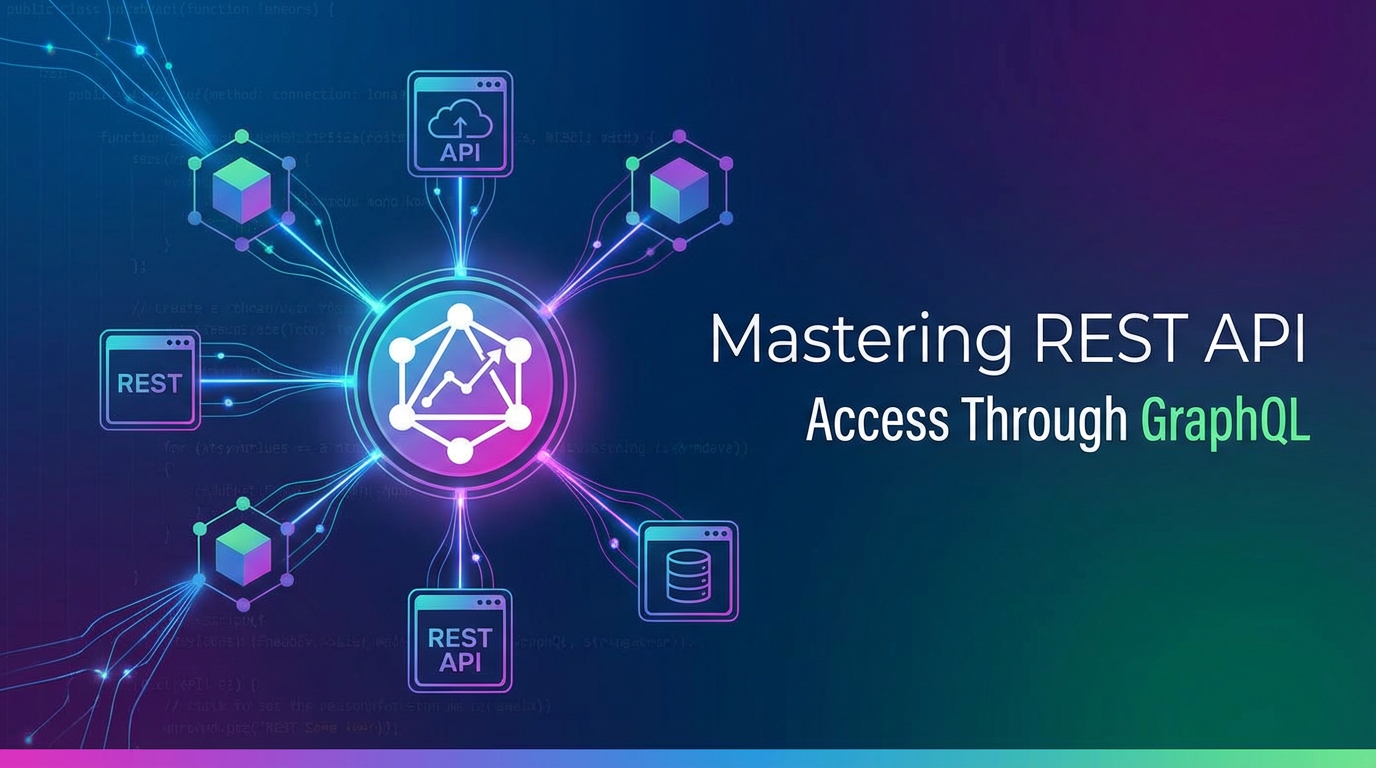


In the perpetually evolving landscape of digital services, the efficiency and flexibility with which applications communicate are paramount. For decades, Representational State Transfer (REST) has stood as the unchallenged titan of Application Programming Interface (API) design, forming the backbone of countless web services and mobile applications. Its simplicity, statelessness, and reliance on standard HTTP methods have made it an indispensable paradigm for exposing and consuming data across distributed systems. However, as the demands of modern user experiences grow increasingly complex, requiring richer, more dynamic data interactions across a multitude of client devices, the limitations of traditional RESTful APIs have begun to surface, prompting developers and architects to seek more adaptable solutions.
This quest for greater agility has led to the emergence of GraphQL, a powerful query language for APIs and a runtime for fulfilling those queries with your existing data. Initially developed by Facebook to address their own challenges with mobile data fetching, GraphQL has rapidly gained traction as a compelling alternative and, more often, a strategic complement to REST. The core promise of GraphQL lies in its ability to empower clients to request precisely the data they need, and nothing more, from a single endpoint. This capability fundamentally shifts the power dynamics of data fetching from the server to the client, ushering in an era of unprecedented flexibility and efficiency in data consumption.
The focus of this extensive exploration is not to pit GraphQL against REST in a zero-sum game, but rather to delve into the sophisticated art of mastering REST API access through GraphQL. This approach acknowledges the massive existing investment in RESTful services and seeks to leverage GraphQL as an intelligent, client-driven facade that streamlines access to these established data sources. We will uncover the "why," "what," and "how" of implementing a GraphQL layer over existing REST APIs, examining the architectural patterns, implementation intricacies, and profound benefits this hybrid strategy offers. Furthermore, we will critically evaluate the challenges inherent in such an integration, providing actionable insights and best practices for navigating the complexities of modern API management, including the crucial role played by API gateways in orchestrating these sophisticated interactions.
The Enduring Reign of REST and Its Unforeseen Bottlenecks
REST, an architectural style rather than a protocol, gained widespread acceptance due to its elegance and alignment with the principles of the web. It encourages the use of standard HTTP methods (GET, POST, PUT, DELETE) to manipulate resources identified by URLs, promoting a uniform interface and stateless interactions. This simplicity facilitated the rapid development of interconnected services, forming the foundation of microservice architectures and enabling the proliferation of web and mobile applications we experience today. Every time you interact with a social media feed, make an online purchase, or check a weather app, you are likely interacting with a myriad of RESTful APIs working in concert behind the scenes.
However, the very principles that afforded REST its widespread adoption also introduced inherent limitations when confronted with the dynamic and granular data requirements of contemporary applications. One of the most frequently cited issues is over-fetching, where a client receives more data than it actually requires for a particular UI component. For instance, fetching a list of user profiles might return fields like id, name, email, address, phone_number, date_joined, last_login, and preferences, even if the client only needs id and name to display a summary list. This unnecessary data transfer consumes bandwidth, increases processing overhead on both client and server, and can degrade application performance, especially in mobile environments with limited network connectivity.
Conversely, the problem of under-fetching arises when a client needs to make multiple requests to different endpoints to assemble all the necessary data for a single view. Imagine a scenario where a user profile page needs to display the user's basic information, their recent orders, and their shipping addresses. A RESTful approach might necessitate three separate API calls: one to /users/{id}, another to /users/{id}/orders, and a third to /users/{id}/addresses. Each of these requests incurs network latency, prolonging the loading time for the user interface and complicating client-side data orchestration. This common pattern, often referred to as the "N+1 problem" in a different context, effectively forces the client to perform complex data joins that could ideally be handled more efficiently on the server side.
Furthermore, the rigid structure of REST endpoints often necessitates API versioning, where new versions (/v1/users, /v2/users) are introduced to accommodate changes in data models or business logic. While essential for maintaining backward compatibility, versioning adds significant overhead in terms of maintenance, documentation, and client migration. Clients must explicitly update their integrations to leverage newer features, leading to fragmented ecosystems where different clients might be consuming different API versions simultaneously. The evolving nature of applications, particularly in agile development cycles, frequently demands rapid changes to data schemas, which can quickly turn REST API maintenance into a complex and time-consuming endeavor. These challenges underscore the growing need for a more adaptable, client-centric data fetching mechanism that can coexist with and enhance existing RESTful infrastructure.
Introducing GraphQL: A Paradigm Shift in Data Fetching
At its core, GraphQL is a powerful query language for APIs that empowers clients to articulate their precise data requirements with unparalleled specificity. Unlike REST, which typically exposes fixed data structures through predefined endpoints, GraphQL offers a single, intelligent endpoint capable of resolving any query or mutation described by a robust, strongly typed schema. This fundamental shift from resource-oriented fetching to client-driven data specification is what makes GraphQL such a compelling solution for modern application development.
The genesis of GraphQL at Facebook in 2012 was driven by the acute need to efficiently fetch complex, interconnected data for their mobile applications. Traditional REST APIs often forced mobile clients into inefficient patterns of over-fetching or under-fetching, leading to slow load times and excessive data consumption. GraphQL was conceived to solve these very problems, providing a declarative way for clients to request exactly what they need, eliminating redundant data transfers and reducing the number of round trips to the server. By opening up the source code in 2015, Facebook democratized this powerful technology, making it accessible to the broader development community.
The foundational pillars of GraphQL are its schema, types, queries, mutations, and subscriptions. The schema is the definitive contract between the client and the server, meticulously describing all the data that clients can query or modify. It is written using the GraphQL Schema Definition Language (SDL), a human-readable and platform-agnostic language that defines the various "types" of data available. For example, a User type might have fields like id (an ID), name (a String), email (a String), and posts (a list of Post types). This strong typing is crucial; it provides self-documentation for the API, enabling powerful tooling, client-side code generation, and robust validation at runtime.
A query in GraphQL is how clients request data. Instead of hitting /users for all users or /users/{id} for a specific user, a GraphQL client sends a query to a single endpoint, specifying not only the User type but also which specific fields of that user they are interested in. For example:
query GetUserProfile {
  user(id: "123") {
    name
    email
    posts {
      title
      createdAt
    }
  }
}
This single query would fetch the user with id "123", their name, email, and for each of their posts, only the title and creation timestamp. No over-fetching, no under-fetching, and critically, only one network request. The server, acting as a GraphQL runtime, processes this query, consults its schema, and then uses "resolvers" to fetch the requested data from various data sources (which could be databases, microservices, or crucially, existing REST APIs) before assembling it into a coherent JSON response that mirrors the query's structure.
Mutations, on the other hand, are the GraphQL equivalent of REST's POST, PUT, and DELETE operations, designed for modifying data on the server. Just like queries, mutations are strongly typed and allow clients to specify not only the input data but also the exact fields of the modified object they wish to receive back as a response. This allows for immediate feedback on the success or failure of an operation and provides updated data without additional round trips. For example, creating a new user might involve a mutation that returns the id and name of the newly created user:
mutation CreateNewUser($name: String!, $email: String!) {
  createUser(name: $name, email: $email) {
    id
    name
  }
}
Finally, subscriptions enable real-time data streaming from the server to the client, pushing updates whenever relevant data changes. This feature is particularly powerful for applications requiring live data feeds, such as chat applications, stock tickers, or collaborative editing tools, often implemented using WebSockets.
The power of GraphQL lies in this declarative, client-driven approach to data fetching. It provides a highly efficient and flexible interface, simplifying complex data interactions and significantly enhancing the developer experience by offering clear data contracts, powerful introspection capabilities, and a single, predictable entry point for all data operations. This makes it an ideal candidate for unifying access to disparate backend services, including a significant portion of the digital ecosystem still powered by traditional REST APIs.
The Strategic Imperative: Why GraphQL for RESTful Access?
The decision to introduce GraphQL as a layer over existing RESTful APIs is not merely a technical preference; it is a strategic maneuver aimed at optimizing the data consumption experience for clients while preserving the substantial investments made in existing backend infrastructure. This hybrid approach offers a compelling bridge between the legacy and the cutting-edge, enabling organizations to progressively modernize their API landscape without a costly and disruptive "rip and replace" operation.
One of the most compelling reasons for adopting GraphQL over REST is the unparalleled client flexibility it affords. With GraphQL, client developers are no longer constrained by the rigid structure of predefined REST endpoints. Instead, they gain the autonomy to compose highly specific queries that precisely match their UI's data requirements. This capability is revolutionary for applications that serve diverse client types—web, mobile (iOS and Android), and even IoT devices—each potentially requiring slightly different subsets of data from the same logical entities. A mobile app might need only a user's name and profile picture, while a web dashboard requires extensive demographic data, recent activity logs, and detailed performance metrics. GraphQL caters to both, allowing each client to define its unique data "shape" in a single request, thereby eliminating the need for client-specific REST endpoints or cumbersome parameter-based filtering mechanisms.
This client-driven data fetching directly addresses the twin scourges of over-fetching and under-fetching, which plague traditional RESTful integrations. By allowing clients to specify only the fields they need, GraphQL drastically reduces the amount of data transmitted over the network. For data-intensive applications, particularly those operating in bandwidth-constrained environments like mobile networks, this translates into significantly faster load times and reduced data costs for end-users. Conversely, the ability to fetch all related data for a particular view in a single round trip eradicates the N+1 problem inherent in under-fetching scenarios. Instead of making multiple sequential or parallel HTTP requests to assemble a complete data object, a GraphQL server orchestrates the data retrieval from various underlying REST APIs and consolidates it into a single, well-formed JSON response. This not only minimizes network latency but also simplifies client-side data management, as there is no longer a need to meticulously combine data from disparate responses.
Beyond efficiency, GraphQL significantly enhances the developer experience (DX). The strongly typed schema serves as a comprehensive, living documentation for the entire API. Developers can use powerful introspection tools (like GraphiQL or Apollo Studio) to explore the schema, understand available types and fields, and even auto-complete queries. This self-documenting nature drastically reduces the learning curve for new team members and accelerates feature development. Furthermore, with GraphQL, API evolution and versioning become substantially less burdensome. Instead of creating new /v2 endpoints for every change, new fields can be added to existing types, and old fields can be marked as deprecated in the schema, without breaking existing clients. Clients simply continue to query for the fields they understand, and the server gracefully handles the availability of new data. This allows for a more fluid and less disruptive evolution of the API, promoting continuous delivery and reducing the coordination overhead between backend and frontend teams.
Consider a practical use case in a large enterprise environment where numerous legacy systems expose their functionalities via REST APIs. Integrating a new customer-facing application might require combining data from a CRM system (REST), an order management system (REST), and a payment gateway (REST). Without GraphQL, the client application would have to manage multiple connections, authenticate separately with each, and then perform complex client-side data transformations and joins. By introducing a GraphQL layer, these disparate REST APIs are unified under a single, coherent graph. The GraphQL server, acting as a smart gateway, becomes responsible for knowing how to access and combine data from the CRM, order system, and payment gateway to fulfill a single client query, abstracting away the underlying complexity. This consolidation not only simplifies the client's architecture but also provides a consistent, high-level interface for all data interactions, making the system more maintainable and scalable. The strategic adoption of GraphQL for RESTful access is, therefore, a powerful accelerator for digital transformation, enabling organizations to unlock new levels of agility and efficiency in their API landscape.
Architectural Patterns: Implementing a GraphQL Layer Over REST
Integrating a GraphQL layer over existing RESTful APIs requires careful architectural consideration. The primary goal is to provide a unified GraphQL interface to clients while leveraging the existing business logic and data sources exposed by REST. Several architectural patterns can facilitate this integration, each with its own trade-offs in terms of complexity, performance, and maintainability. These patterns fundamentally involve creating a GraphQL server that acts as a facade, proxy, or gateway to the underlying REST services.
1. GraphQL as a Façade or Wrapper
This is perhaps the most straightforward and common pattern. In this setup, the GraphQL server is deployed as an application that sits "on top" of your existing REST APIs. The GraphQL schema defines the unified data model that clients will interact with. Each field in the GraphQL schema's query and mutation types is then mapped to one or more resolver functions. These resolver functions are responsible for making the actual HTTP requests to the underlying REST APIs to fetch or modify data.
How it works: * A client sends a GraphQL query to the GraphQL server. * The GraphQL server parses the query and identifies the required data fields. * For each field, the corresponding resolver function is invoked. * The resolver function makes one or more HTTP requests to the relevant REST endpoints. For example, a user resolver might call /users/{id} on a user service, and a posts resolver might call /users/{id}/posts on a blogging service. * The data returned from the REST APIs is then transformed and shaped according to the GraphQL query's structure. * Finally, the GraphQL server aggregates all the resolved data and sends a single, coherent JSON response back to the client.
Advantages: * Minimal disruption: Existing REST APIs remain untouched. * Incremental adoption: Can be introduced gradually for specific parts of the application. * Centralized logic: All data orchestration logic resides within the GraphQL server.
Disadvantages: * N+1 problem mitigation: Resolvers need to be carefully optimized to avoid making an excessive number of REST calls (e.g., fetching a list of users, then for each user, fetching their posts separately). Data loaders (batching and caching mechanisms) are crucial here. * Performance: Can introduce latency if resolvers make many sequential REST calls. * Complexity: The GraphQL server itself can become complex, especially when dealing with data transformations and error handling across multiple REST services.
2. GraphQL as an API Gateway
In more complex microservice architectures, an API gateway often serves as the single entry point for all client requests, routing them to the appropriate backend services. Integrating GraphQL into this architecture involves deploying the GraphQL server behind or as part of the API gateway. The API gateway can handle common concerns like authentication, authorization, rate limiting, and logging before forwarding the request to the GraphQL server, which then interacts with the REST APIs.
How it works: * Client sends a GraphQL request to the API gateway. * The API gateway performs initial security checks (authentication, rate limiting). * The gateway routes the GraphQL request to the dedicated GraphQL server. * The GraphQL server, as in the façade pattern, resolves the query by interacting with various downstream REST APIs. * Data is aggregated and returned through the API gateway to the client.
This pattern leverages the strengths of both technologies. The API gateway acts as a robust traffic controller and security enforcer, while the GraphQL server provides the flexible data fetching layer. This separation of concerns can lead to a more maintainable and scalable architecture.
For organizations looking to manage a vast array of APIs, including both REST and GraphQL, while also incorporating AI capabilities, a sophisticated API gateway solution like APIPark can be exceptionally beneficial. APIPark, as an open-source AI gateway and API management platform, provides end-to-end API lifecycle management, robust traffic control, and crucial security features such as subscription approval and detailed logging. It can act as the central nervous system for your API infrastructure, managing inbound requests, routing them intelligently to your GraphQL layer or directly to REST services, and enforcing policies. Its ability to quickly integrate 100+ AI models and encapsulate prompts into REST APIs also positions it as a powerful tool for modernizing any API ecosystem, ensuring that your GraphQL layer can not only access traditional REST data but also interact seamlessly with advanced AI services, all governed by a high-performance gateway solution.
3. Schema Stitching or Federation (for multiple GraphQL services)
While primarily designed for combining multiple GraphQL services, these patterns can be relevant when you start evolving some of your REST services into native GraphQL services. * Schema Stitching: Involves merging multiple GraphQL schemas into a single, unified schema. This is useful when different teams own different parts of the data graph, each exposing its own GraphQL API. The main GraphQL gateway service would then stitch these schemas together. * Federation: A more advanced approach, popularized by Apollo, where multiple independent GraphQL services (called "subgraphs") define their own schemas, and a "gateway" service (often an Apollo Gateway) combines these subgraphs into a unified graph at runtime. Each subgraph knows how to resolve its own types, and the gateway intelligently orchestrates queries across them.
Relevance to REST: As you gradually migrate parts of your RESTful backend to native GraphQL, these patterns become invaluable for maintaining a single, coherent GraphQL endpoint for your clients. The GraphQL façade pattern over REST can be seen as a stepping stone towards a federated GraphQL architecture, where the façade service itself might become one of the subgraphs.
The choice of architectural pattern depends heavily on the complexity of your existing REST APIs, the scale of your application, team structure, and future growth plans. For many organizations beginning their GraphQL journey with existing REST services, the GraphQL as a Façade/Wrapper pattern offers a practical and low-risk entry point, often enhanced by the robust capabilities of an API gateway for infrastructure management and security.
Comparing REST vs. GraphQL for Data Access
To better understand the paradigm shift and the strategic value of GraphQL in modern API landscapes, it's beneficial to compare its characteristics against those of traditional RESTful APIs. This table highlights key differences, particularly in the context of data access and client interaction, which are central to mastering REST API access through GraphQL.
| Feature | Traditional REST API | GraphQL API (especially over REST) |
|---|---|---|
| Data Fetching Model | Resource-oriented (client fetches predefined resources) | Client-driven (client requests specific data shape) |
| Endpoints | Multiple, resource-specific endpoints (e.g., /users, /posts/123) |
Single endpoint for all queries/mutations/subscriptions |
| Data Efficiency | Prone to over-fetching (too much data) and under-fetching (multiple requests) | Eliminates over-fetching and under-fetching; fetches exact data needed |
| Network Requests | Multiple HTTP requests for complex data views | Single HTTP request for complex data views |
| API Evolution | Often requires versioning (/v1, /v2) or new endpoints |
Add new fields without breaking changes; deprecate fields in schema |
| Client Flexibility | Limited; client adapts to server-defined resources | High; client defines required data shape |
| Documentation | Manual documentation (Swagger, OpenAPI) | Self-documenting via schema introspection (GraphiQL, Apollo Studio) |
| Caching | Leverages HTTP caching mechanisms (ETags, Cache-Control) |
More complex; often requires client-side caching or custom server-side logic |
| Server Complexity | Relatively simpler endpoints; logic distributed across services | Increased server-side complexity (resolvers, data loaders, orchestration) |
| Error Handling | HTTP status codes (4xx, 5xx); uniform error payloads | GraphQL errors array in response; 200 OK often, even with errors |
| Tooling | Curl, Postman, Swagger UI | GraphiQL, Apollo Client, Relay, GraphQL Code Generator |
This comparison underscores why a GraphQL layer, especially when built on top of existing REST, represents a significant upgrade in terms of client-side flexibility and efficiency, allowing organizations to maintain the benefits of their existing infrastructure while modernizing their data consumption strategy.
Implementation Deep Dive: Crafting the GraphQL Layer
Building a GraphQL layer over existing RESTful APIs involves several critical steps, from defining the schema to writing resolvers and managing data efficiently. This section will delve into the practical aspects of implementation, highlighting key considerations for ensuring a robust, performant, and maintainable GraphQL API.
1. Schema Definition: The Contract
The GraphQL schema is the most crucial component of your API. It serves as the definitive contract between your clients and your server, outlining all available data types, queries, mutations, and their relationships. When integrating with REST, the process involves mapping your existing RESTful resources and their attributes to GraphQL types and fields.
Steps: * Identify Core Resources: Start by identifying the main resources exposed by your REST APIs (e.g., User, Product, Order). Each resource typically translates to a GraphQL Object Type. * Define Fields: For each Object Type, define its fields and their respective types (e.g., id: ID!, name: String!, email: String). Pay attention to scalar types (String, Int, Float, Boolean, ID) and custom scalar types if needed (e.g., DateTime). * Establish Relationships: One of GraphQL's strengths is handling relationships. If a User has many Posts (fetched via /users/{id}/posts), define this relationship in the schema: posts: [Post!]. This allows clients to traverse the graph seamlessly. * Define Queries: Create a Query type that serves as the entry point for all data fetching. Map your REST GET endpoints to GraphQL queries. For example, GET /users/{id} becomes user(id: ID!): User and GET /users becomes users(limit: Int, offset: Int): [User!]. * Define Mutations: Create a Mutation type for all data modification operations (create, update, delete). Map your REST POST, PUT, PATCH, DELETE operations to GraphQL mutations. For instance, POST /users could be createUser(input: CreateUserInput!): User, where CreateUserInput is an Input Object Type defining the data required for creation. * Consider Custom Scalars and Enums: If your REST APIs return specific formats (e.g., date strings, complex enums), consider defining custom scalar types or enum types in GraphQL for better type safety and clarity.
Example Schema Snippet:
# types.graphql
type User {
  id: ID!
  name: String!
  email: String
  posts: [Post!]
}

type Post {
  id: ID!
  title: String!
  content: String
  author: User!
  createdAt: String
}

input CreateUserInput {
  name: String!
  email: String!
}

# queries_mutations.graphql
type Query {
  user(id: ID!): User
  users(limit: Int = 10, offset: Int = 0): [User!]
  post(id: ID!): Post
}

type Mutation {
  createUser(input: CreateUserInput!): User
  updateUser(id: ID!, input: CreateUserInput!): User # Reusing input type for simplicity
  deleteUser(id: ID!): Boolean
  createPost(title: String!, content: String!, authorId: ID!): Post
}
2. Resolvers: Bridging GraphQL to REST
Resolvers are the core logic that connects a field in your GraphQL schema to the actual data source, in this case, your REST APIs. Each field in your schema (especially within Query and Mutation types) needs a corresponding resolver function.
How Resolvers Work: A resolver function typically takes four arguments: 1. parent (or root): The result of the parent field's resolver. Useful for nested queries. 2. args: An object containing the arguments passed to the field in the query (e.g., id in user(id: "123")). 3. context: An object shared across all resolvers in a single request, often used for holding authentication tokens, data loaders, or shared utility functions. 4. info: An object containing information about the query execution state, including the requested fields.
Example Resolvers for the Schema Above:
// Using a hypothetical HTTP client for REST API calls
const apiClient = {
  get: async (url, config) => { /* ... fetch logic ... */ },
  post: async (url, data, config) => { /* ... fetch logic ... */ },
  put: async (url, data, config) => { /* ... fetch logic ... */ },
  delete: async (url, config) => { /* ... fetch logic ... */ },
};

const resolvers = {
  Query: {
    user: async (parent, { id }, context) => {
      // Calls GET /users/{id}
      const response = await apiClient.get(`http://rest-api.example.com/users/${id}`, {
        headers: { Authorization: context.token }
      });
      return response.data; // Assuming response.data is the user object
    },
    users: async (parent, { limit, offset }, context) => {
      // Calls GET /users?_limit={limit}&_start={offset}
      const response = await apiClient.get(`http://rest-api.example.com/users?_limit=${limit}&_start=${offset}`, {
        headers: { Authorization: context.token }
      });
      return response.data;
    },
    post: async (parent, { id }, context) => {
      const response = await apiClient.get(`http://rest-api.example.com/posts/${id}`, {
        headers: { Authorization: context.token }
      });
      return response.data;
    },
  },
  Mutation: {
    createUser: async (parent, { input }, context) => {
      const response = await apiClient.post('http://rest-api.example.com/users', input, {
        headers: { Authorization: context.token }
      });
      return response.data;
    },
    updateUser: async (parent, { id, input }, context) => {
      const response = await apiClient.put(`http://rest-api.example.com/users/${id}`, input, {
        headers: { Authorization: context.token }
      });
      return response.data;
    },
    deleteUser: async (parent, { id }, context) => {
      await apiClient.delete(`http://rest-api.example.com/users/${id}`, {
        headers: { Authorization: context.token }
      });
      return true; // Indicate success
    },
    createPost: async (parent, { title, content, authorId }, context) => {
      const response = await apiClient.post('http://rest-api.example.com/posts', { title, content, authorId }, {
        headers: { Authorization: context.token }
      });
      return response.data;
    }
  },
  User: {
    // This resolver is for the 'posts' field *within* the User type
    // It will be called for each user object
    posts: async (parent, args, context) => {
      // 'parent' here is the User object resolved by the parent 'user' or 'users' query
      const response = await apiClient.get(`http://rest-api.example.com/users/${parent.id}/posts`, {
        headers: { Authorization: context.token }
      });
      return response.data;
    }
  },
  Post: {
    // This resolver is for the 'author' field *within* the Post type
    author: async (parent, args, context) => {
      // 'parent' here is the Post object
      const response = await apiClient.get(`http://rest-api.example.com/users/${parent.authorId}`, {
        headers: { Authorization: context.token }
      });
      return response.data;
    }
  }
};
3. Data Sources and Caching Strategies (The N+1 Problem)
The N+1 problem is a significant performance bottleneck in GraphQL resolvers that interact with backend APIs. If you fetch a list of N users, and then for each user, you fetch their M posts, you could end up making N + N*M requests to your REST APIs. This is highly inefficient.
Solutions: * Data Loaders (Batching): The most common and effective solution is to use dataloader (a library popularized by Facebook). Data loaders batch multiple individual requests for the same data type into a single request to the backend API. For example, if multiple resolvers request User objects with different IDs, a data loader would collect all these IDs over a short period and then make one single REST call like GET /users?ids=1,2,3 to fetch all users in one go. Data loaders also provide a per-request caching mechanism, ensuring that if the same ID is requested multiple times within a single GraphQL query, the API is only hit once.
```javascript
// Example DataLoader for users
import DataLoader from 'dataloader';

const createUserLoader = (token) =>
  new DataLoader(async (ids) => {
    // This function will receive an array of user IDs
    // Make a single REST call to fetch all users by ID
    const response = await apiClient.get(`http://rest-api.example.com/users?ids=${ids.join(',')}`, {
      headers: { Authorization: token }
    });
    const users = response.data;
    // DataLoader expects the returned array to be in the same order as the input IDs
    return ids.map((id) => users.find((user) => user.id === id));
  });

// In your context creation for each request:
const context = ({ req }) => ({
  token: req.headers.authorization,
  userLoader: createUserLoader(req.headers.authorization), // create a new loader for each request
});

// In a resolver (e.g., Post.author):
const resolvers = {
    Post: {
        author: async (parent, args, context) => {
            return context.userLoader.load(parent.authorId); // DataLoader handles batching and caching
        }
    }
};
```
- Caching at the REST API Layer: Implement proper caching headers (
Cache-Control,ETag,Last-Modified) in your underlying REST APIs. Your GraphQL server can then leverage these HTTP caching mechanisms. - Response Transformation: Sometimes, a single REST endpoint might return a larger dataset than needed for a specific GraphQL field. The resolver can then transform this response, extracting only the relevant parts, further optimizing data transfer.
4. Error Handling
Consistent error handling is vital for a robust API. In GraphQL, errors are typically returned in a dedicated errors array within the GraphQL response, even if the main data field contains partial data. HTTP status codes for GraphQL responses are usually 200 OK, unless there's a fundamental server error (e.g., network issue, server crash).
Strategies: * Propagate REST Errors: When a REST API call fails, capture its error details (status code, error message) and transform them into a GraphQL error object. You can define custom error types in your GraphQL schema (e.g., UserNotFoundError) to provide structured error responses to clients. * Centralized Error Handling: Implement a global error handler in your GraphQL server to catch unhandled exceptions and format them consistently. * Logging: Ensure comprehensive logging of all errors, both from your GraphQL server and the underlying REST APIs, to facilitate debugging and monitoring.
5. Authentication and Authorization
Integrating with existing REST authentication and authorization mechanisms is crucial. * Authentication: The GraphQL server should forward the client's authentication credentials (e.g., JWT token, API key) to the underlying REST APIs. This token can be stored in the context object of the GraphQL request. * Authorization: * Field-level Authorization: Implement logic in resolvers to check if the authenticated user has permission to access specific fields. If not, either return null for that field or throw an authorization error. * Directive-based Authorization: Use custom GraphQL directives (e.g., @auth(roles: ["ADMIN"])) to declaratively specify authorization rules in your schema, which are then enforced by a custom directive visitor at runtime. * REST API Layer Authorization: Rely on the authorization mechanisms already present in your REST APIs. If a REST API returns a 401 Unauthorized or 403 Forbidden, the GraphQL resolver should capture this and translate it into an appropriate GraphQL error.
These implementation details highlight the engineering effort involved in building a high-quality GraphQL layer over existing REST. While it introduces server-side complexity, the benefits in terms of client flexibility, efficiency, and developer experience often outweigh these challenges, especially when supported by mature tooling and architectural patterns.
APIPark is a high-performance AI gateway that allows you to securely access the most comprehensive LLM APIs globally on the APIPark platform, including OpenAI, Anthropic, Mistral, Llama2, Google Gemini, and more.Try APIPark now! 👇👇👇
Benefits and Transformative Use Cases
Adopting GraphQL as a sophisticated access layer for existing REST APIs is not merely a technical upgrade; it's a strategic move that delivers tangible benefits across the entire application development lifecycle, from client experience to backend maintenance. The transformative power of this approach becomes evident in several key areas and compelling use cases.
1. Improved Client Flexibility and Control
The most immediate and impactful benefit is the unprecedented flexibility granted to client developers. With GraphQL, clients gain the power to dictate precisely what data they need, fostering a truly client-driven development paradigm. * Tailored Data Fetching: A single GraphQL endpoint can serve vastly different data requirements for various clients (web, mobile, smartwatches, IoT). A mobile application can request a lean subset of data for a fast, responsive UI, while a desktop dashboard can query for rich, detailed datasets without requiring separate API endpoints or excessive server-side parameterization. * Reduced Development Cycles: Front-end teams can rapidly iterate on UI designs and data requirements without constantly coordinating with backend teams for new API endpoints or data adjustments. They simply update their GraphQL queries, significantly accelerating feature delivery and reducing inter-team dependencies. * Simplified Client-Side Code: By consolidating multiple REST requests into a single GraphQL query, client-side data fetching logic becomes dramatically simpler. There's less need for complex state management to combine data from various API responses, leading to cleaner, more maintainable frontend codebases.
2. Enhanced Performance and Efficiency
The performance gains derived from optimized data fetching are substantial, particularly for mobile and single-page applications. * Elimination of Over-fetching: By requesting only the necessary fields, the amount of data transferred over the network is minimized. This reduces bandwidth consumption and improves loading times, a critical factor for users on mobile data plans or in regions with slower internet connectivity. * Mitigation of Under-fetching (N+1 Problem): Consolidating multiple data requirements into a single query eliminates the need for numerous round trips to the server. Instead of fetching a user, then their posts, then the comments on each post, all this data can be retrieved in one optimized request. Even if the GraphQL server makes multiple internal REST calls, these are typically executed in parallel (where possible) and aggregated before sending a single response to the client, hiding the complexity and latency from the end-user. This optimization of network chattiness profoundly impacts perceived application speed. * Efficient Mobile App Data Sync: GraphQL is a natural fit for mobile applications. It enables selective data synchronization, allowing apps to fetch only changed or updated data, further conserving battery life and network resources.
3. Streamlined API Evolution and Versioning
One of the most persistent headaches in traditional REST API management is versioning. As product requirements change, data models evolve, and new features are introduced, developers often resort to creating new API versions (e.g., /v2/users) to avoid breaking existing clients. This leads to maintenance nightmares, fragmented client ecosystems, and prolonged support for deprecated versions. * Additive API Design: GraphQL promotes an additive API design philosophy. New fields and types can be added to the schema without affecting existing queries. Clients simply won't request the new fields until they are updated. * Graceful Deprecation: Old fields can be marked as deprecated in the schema, with clear messages to clients about their replacement. This provides a soft transition path for clients to adopt newer features without immediate breakage, minimizing the friction associated with API changes. * Single, Consistent API: Instead of managing multiple versions of REST APIs, a single GraphQL endpoint can evolve gracefully over time, offering a stable and predictable interface for all clients.
4. Enhanced Developer Experience (DX) and Tooling
GraphQL significantly improves the developer experience for both frontend and backend teams. * Self-Documenting Schema: The strongly typed GraphQL schema serves as a comprehensive, real-time documentation of your entire API. Tools like GraphiQL or Apollo Studio provide an interactive query explorer, enabling developers to discover available data, test queries, and understand relationships without consulting external documentation. * Type Safety and Autocompletion: With GraphQL, clients know exactly what data they can expect. This enables powerful client-side tooling, including auto-completion for queries and mutations in IDEs, compile-time validation of queries, and automatic generation of type definitions for various programming languages. This drastically reduces runtime errors and speeds up development. * Unified Data Graph: For complex systems comprising multiple microservices and legacy REST APIs, GraphQL acts as a unifying layer, presenting a single, coherent "data graph" to clients. This abstraction simplifies client interaction with a fragmented backend, making it feel like a single, cohesive service.
Transformative Use Cases:
- Aggregating Disparate Microservices: In a microservice architecture, different services might expose their data via REST. A GraphQL layer can act as an aggregation point, combining data from many services (e.g.,
Userservice,Orderservice,Inventoryservice) into a single, cohesive response for a client requesting a complex view like a "Customer Dashboard." This is especially valuable in scenarios where an existing microservice ecosystem needs a unified client-facing API. - Modernizing Legacy Systems: Many enterprises possess critical legacy systems that only expose data through older REST APIs or even SOAP. A GraphQL façade can provide a modern, flexible interface to these systems without requiring a complete rewrite, extending their lifespan and unlocking new integration possibilities.
- Optimizing Mobile and IoT Applications: Due to network constraints and the need for highly specific data, mobile and IoT devices greatly benefit from GraphQL's ability to fetch only the required data in a single request, leading to faster apps and lower data consumption.
- Rich Client Dashboards and Analytics: Applications that display complex dashboards, often requiring data from many different sources and presenting it in various widgets, can leverage GraphQL to efficiently fetch all necessary data in one go, dramatically improving load times and responsiveness.
- AI Integration with Existing APIs: As organizations increasingly incorporate AI into their applications, GraphQL can facilitate the interaction with AI services. For instance, an AI service (perhaps exposed via REST) might provide sentiment analysis for customer reviews. A GraphQL layer can expose a
sentimentAnalysisfield on aReviewtype, transparently calling the AI REST API and integrating its results into the existing data graph. Here, a robust API gateway like APIPark becomes indispensable, offering a unified platform to manage both traditional REST APIs and new AI model integrations. APIPark's feature of encapsulating prompts into REST APIs means that even complex AI functionalities can be easily exposed and consumed through a GraphQL layer, further bridging the gap between existing data and intelligent services, all while benefiting from enterprise-grade API lifecycle management and high performance.
In essence, mastering REST API access through GraphQL is about strategic modernization. It's about empowering clients, enhancing performance, simplifying API evolution, and improving the developer experience, all while maximizing the value of existing backend investments.
Challenges and Considerations in GraphQL Over REST Implementation
While the benefits of implementing a GraphQL layer over existing REST APIs are compelling, this architectural decision is not without its challenges. Developers and architects must approach such an integration with a clear understanding of the complexities involved to ensure a successful and scalable deployment. Overlooking these considerations can lead to performance bottlenecks, increased development overhead, and security vulnerabilities.
1. Increased Server-Side Complexity
Introducing a GraphQL server adds an additional layer of abstraction and logic to your architecture. The GraphQL server, acting as the intelligent gateway between clients and disparate REST services, becomes responsible for: * Orchestration: Coordinating calls to multiple REST APIs, potentially transforming data from one service's format to another. * Schema Management: Maintaining a coherent GraphQL schema that accurately reflects and potentially extends the underlying REST data models. * Resolver Logic: Writing and maintaining resolver functions that map GraphQL fields to REST endpoint calls, handling arguments, errors, and data transformations. This can become intricate, especially for deeply nested or highly interconnected data. * N+1 Problem Mitigation: Implementing sophisticated data loader patterns to batch and cache requests, which requires careful design and testing to avoid performance regressions.
This increased complexity on the server side demands skilled developers with a strong understanding of both GraphQL principles and the intricacies of the underlying REST APIs.
2. The N+1 Problem and Performance Optimization
As discussed, the N+1 problem is a primary concern. If not properly addressed, a GraphQL server can inadvertently generate a cascade of individual REST requests, negating the performance benefits it aims to provide. * Data Loader Implementation: While data loaders are the standard solution, implementing them correctly across all resolvers and ensuring they effectively batch and cache requests can be challenging, especially for complex relationships and diverse REST endpoint behaviors. * Monitoring and Profiling: Without robust monitoring and profiling tools, identifying N+1 issues and other performance bottlenecks within the GraphQL layer can be difficult. It's crucial to track resolver execution times, API call counts, and network latency to underlying REST services. * Throttling and Rate Limiting: The underlying REST APIs might have their own rate limits. The GraphQL server, by consolidating multiple client requests into potentially fewer, larger backend calls, can inadvertently hit these limits more aggressively. Implementing smart throttling within resolvers or at the gateway level for backend calls is essential.
3. Caching Complexities
Traditional REST APIs benefit from HTTP caching mechanisms (e.g., Cache-Control headers, ETags) at various layers (CDN, browser, proxy servers) because resources are identified by unique URLs. In GraphQL, with a single endpoint and dynamic queries, this form of caching is less straightforward. * No Universal HTTP Caching: Since all GraphQL queries typically go to /graphql via POST (which is generally not cached by default by CDNs or browsers), traditional HTTP caching is less effective for query results. * Fragment-level Caching: Caching must often be implemented at a more granular level (e.g., caching individual objects or fragments of objects). This requires sophisticated client-side caching libraries (like Apollo Client) or custom server-side caching logic that invalidates cached data based on content, not just URLs. * Distributed Caching: For highly dynamic data accessed via REST, a distributed cache (e.g., Redis) might be needed at the GraphQL server layer to store the results of REST API calls, further adding to architectural complexity.
4. Security Implications
Introducing a GraphQL layer modifies the attack surface of your API. * Deep Query Attacks: Malicious clients could craft extremely deep or complex nested queries, potentially overwhelming your GraphQL server or the underlying REST APIs by causing an excessive number of resolver calls. * Solution: Implement query depth limiting (restricting how many levels deep a query can go) and query complexity analysis (assigning a cost to each field and rejecting queries exceeding a total cost threshold). * Rate Limiting: While an API gateway can provide blanket rate limiting for the GraphQL endpoint, it's also important to consider rate limiting at the resolver level or based on the cost of a query to prevent resource exhaustion of specific backend REST APIs. * Authentication and Authorization: Ensuring consistent authentication and authorization across the GraphQL layer and all underlying REST APIs is critical. The GraphQL server must correctly propagate client credentials and enforce access control policies, ensuring that a user authorized to access a specific field in GraphQL is also authorized to access the corresponding data from the REST API. This can be particularly challenging when combining data from multiple REST services with different authorization schemes. A robust API gateway like APIPark offers centralized access control and subscription approval features, which are vital for preventing unauthorized API calls and potential data breaches, especially in a complex, multi-layered architecture involving GraphQL and numerous REST services.
5. Managing Subscriptions and Real-time Data
If your GraphQL layer includes subscriptions for real-time data, integrating this with REST APIs that typically follow a request-response model can be tricky. * Polling or Webhooks: To provide real-time updates via GraphQL subscriptions from REST data, the GraphQL server might need to poll the underlying REST APIs or rely on webhooks from those services to trigger updates. This introduces additional complexity in event handling and state management. * Scalability: Managing a large number of concurrent subscription clients requires robust server-side infrastructure and careful resource management.
Addressing these challenges requires a thoughtful design, robust implementation, and continuous monitoring. While the initial investment in overcoming these hurdles can be significant, the long-term benefits in terms of client flexibility, performance, and developer velocity often justify the effort. A well-designed GraphQL layer, supported by an intelligent API gateway, can transform a collection of disparate REST APIs into a powerful, unified data graph.
The Indispensable Role of API Gateways in a GraphQL-over-REST Architecture
In the intricate dance of modern microservices and diverse API paradigms, the role of an API gateway transcends simple request routing. For an architecture that leverages GraphQL as a façade over existing REST APIs, an API gateway becomes an absolutely indispensable component, acting as the intelligent control plane that orchestrates, secures, and optimizes the flow of traffic. It provides a crucial layer of enterprise-grade management that complements the client-centric flexibility of GraphQL.
What is an API Gateway?
An API gateway is a single entry point for all client requests, often residing at the edge of your network. It acts as a reverse proxy, accepting API calls and routing them to the appropriate backend services. Beyond mere routing, a sophisticated gateway provides a plethora of cross-cutting concerns, abstracting them away from individual microservices and the GraphQL layer itself. These concerns typically include: * Authentication and Authorization: Verifying client identities and permissions before requests reach backend services. * Rate Limiting and Throttling: Protecting backend services from overload by limiting the number of requests clients can make within a given timeframe. * Traffic Management: Load balancing, canary deployments, A/B testing, and intelligent routing based on various criteria. * Caching: Caching responses to reduce load on backend services and improve latency. * Logging and Monitoring: Centralized collection of API call metrics, logs, and tracing information. * Transformation and Protocol Translation: Modifying requests or responses, or even translating between different protocols (e.g., HTTP to gRPC). * Security Policies: Enforcing WAF rules, IP whitelisting/blacklisting, and other security measures.
How API Gateways Complement GraphQL (Especially over REST)
When GraphQL is used as a unifying layer over REST, the API gateway provides critical capabilities that enhance the entire system's reliability, security, and scalability.
- Centralized Security and Access Control:
- Pre-Authentication: The API gateway can handle initial authentication checks (e.g., validating JWT tokens, API keys) before forwarding requests to the GraphQL server. This offloads security logic from the GraphQL layer, allowing it to focus purely on data resolution.
- Authorization Enforcement: Beyond simple authentication, an API gateway can enforce coarse-grained authorization policies (e.g., only authenticated users can access the
/graphqlendpoint) or even more granular subscription-based access control. For instance, APIPark, an open-source AI gateway and API management platform, features a robust subscription approval system. This ensures that callers must subscribe to an API and await administrator approval before they can invoke it, preventing unauthorized API calls and potential data breaches, which is crucial when your GraphQL layer is exposing sensitive data from underlying REST services. - DDoS Protection: By sitting at the edge, the gateway can absorb and mitigate Distributed Denial of Service (DDoS) attacks, protecting the GraphQL server and backend REST APIs from direct exposure.
- Robust Traffic Management and Performance:
- Rate Limiting and Throttling: Even with GraphQL's query complexity analysis, an API gateway provides an essential blanket layer of rate limiting, protecting the entire GraphQL service from abusive clients. It can also manage burst limits and quotas, ensuring fair usage.
- Load Balancing: The gateway efficiently distributes incoming GraphQL requests across multiple instances of your GraphQL server, ensuring high availability and scalability. This is critical for handling large-scale traffic, with solutions like APIPark boasting performance rivaling Nginx, capable of over 20,000 TPS with modest resources and supporting cluster deployment.
- Circuit Breaking: If an underlying REST API becomes unhealthy or unresponsive, the gateway can implement circuit breaking, preventing the GraphQL server from continuously attempting to call the failing service, thus maintaining overall system stability.
- Caching (Partial): While GraphQL's dynamic queries make full HTTP caching challenging, the gateway can cache static assets or even specific, well-defined GraphQL queries that are known to produce static results for a period.
- Unified Observability and Monitoring:
- Centralized Logging: An API gateway centralizes API call logging, providing a single point to collect metrics, request/response payloads, and error details. This is incredibly valuable for debugging, auditing, and understanding the overall health of your API ecosystem. APIPark, for example, offers detailed API call logging, recording every detail of each API call, which helps businesses quickly trace and troubleshoot issues and ensure system stability.
- Analytics and Insights: By aggregating data from all API traffic, the gateway can provide powerful data analysis capabilities. APIPark analyzes historical call data to display long-term trends and performance changes, helping businesses with preventive maintenance and capacity planning before issues occur. This comprehensive visibility is essential for optimizing the performance of both your GraphQL layer and the underlying REST APIs.
- Simplified API Lifecycle Management:
- Discovery and Documentation: An API gateway often integrates with developer portals, making it easier for client developers to discover available APIs, including your GraphQL endpoint, and access documentation.
- Version Management (External): While GraphQL handles internal schema evolution gracefully, an API gateway can manage external versions of your GraphQL API endpoint if, for instance, you need to expose different GraphQL schemas for different client segments or manage a complete architectural shift.
- Service Sharing: Platforms like APIPark allow for the centralized display of all API services, making it easy for different departments and teams to find and use the required API services. This promotes internal API reusability and governance.
In essence, an API gateway doesn't just route traffic; it acts as a strategic control point for your entire API infrastructure. When integrating GraphQL over REST, the gateway empowers you to centralize security, optimize performance, streamline operations, and enhance observability, freeing your GraphQL server to focus on its core strength: providing a flexible, client-driven data fetching experience. Solutions like APIPark exemplify how a modern API gateway can efficiently tie together the disparate elements of a complex API ecosystem, ensuring that your GraphQL-powered access to REST data is not only efficient and flexible but also secure, scalable, and manageable at an enterprise level. It represents a crucial layer of governance and performance enhancement, ensuring that the innovation brought by GraphQL is underpinned by robust operational stability.
Best Practices for Successful Adoption
Implementing a GraphQL layer over existing REST APIs is a significant undertaking that requires careful planning and execution. To maximize the benefits and mitigate the challenges, adhering to a set of best practices is crucial for ensuring a smooth adoption, a performant system, and a maintainable codebase.
1. Incremental Adoption and Phased Rollout
Avoid the "big bang" approach. Instead of trying to expose your entire REST API landscape through GraphQL at once, start small. * Identify High-Value Targets: Begin by wrapping a few core REST APIs or critical data entities that frequently cause over-fetching or under-fetching issues for clients. * Start with New Features/Clients: Introduce GraphQL for new client applications or new features within existing applications. This allows you to gain experience and demonstrate value without disrupting existing stable integrations. * Gradual Schema Expansion: As you gain confidence, incrementally expand your GraphQL schema to cover more of your existing REST functionality.
2. Design a Coherent GraphQL Schema
The schema is the cornerstone of your GraphQL API. Invest significant time and effort in its design. * Client-First Design: Focus on what clients need, not just a direct mirror of your REST resources. Think about the "data graph" from the client's perspective, representing entities and their relationships naturally. * Consistency: Maintain consistent naming conventions, argument patterns, and error structures across your entire schema. * Strong Typing: Leverage GraphQL's type system fully. Define custom scalar types for specific data formats (e.g., DateTime, JSON) and use enums where appropriate to constrain choices. * Documentation: Document your schema thoroughly using descriptions for types, fields, and arguments. This makes your API self-explanatory and easy to consume. * Avoid Over-Normalization: While it's tempting to perfectly normalize your GraphQL types, sometimes a slight denormalization (e.g., embedding a few common fields from a related entity) can simplify client queries and reduce resolver complexity.
3. Master Data Loaders for Performance
The N+1 problem is arguably the biggest performance trap when integrating GraphQL with REST. Data loaders are non-negotiable for any performant GraphQL server. * Implement Early and Consistently: Integrate data loaders for all fields that fetch collections or related objects from underlying APIs in your resolvers. * One Loader Per Type: Generally, create one data loader per data type (e.g., userLoader, postLoader). * Batching and Caching: Ensure your data loaders effectively batch multiple individual requests into a single backend call and cache results within the context of a single GraphQL request to prevent redundant fetches. * Monitoring Data Loader Efficiency: Monitor the performance of your data loaders to ensure they are correctly reducing the number of backend API calls.
4. Implement Robust Error Handling and Logging
A resilient API communicates errors clearly and consistently. * Standardized Error Responses: Define a consistent structure for error messages, ideally using GraphQL's errors array, and potentially custom error types within your schema. * Translate REST Errors: Gracefully translate errors received from underlying REST APIs into client-friendly GraphQL errors, obscuring backend implementation details where appropriate. * Comprehensive Logging: Implement detailed logging within your GraphQL server, capturing query details, resolver execution times, errors, and traces of calls to backend REST APIs. This is critical for debugging and performance analysis. Centralized logging provided by an API gateway like APIPark is invaluable for this purpose, offering comprehensive records of every API call detail.
5. Secure Your GraphQL Endpoint
GraphQL's flexibility can be a security vulnerability if not properly managed. * Authentication and Authorization: Integrate your existing API gateway or implement robust authentication (e.g., JWT validation) and authorization (field-level access control, role-based checks) within your GraphQL server. * Query Depth and Complexity Limiting: Implement mechanisms to prevent malicious or overly complex queries from overwhelming your server and backend services. This limits the depth of nested fields a client can request and assigns a cost to each field to prevent resource exhaustion. * Rate Limiting: Leverage your API gateway (e.g., APIPark) to enforce global rate limits on your GraphQL endpoint. Consider more granular rate limiting at the resolver level for expensive operations. * Input Validation: Thoroughly validate all input arguments to mutations and queries, just as you would for REST APIs, to prevent injection attacks and ensure data integrity.
6. Leverage Existing API Gateway Capabilities
An API gateway is your first line of defense and management. * Offload Cross-Cutting Concerns: Use your API gateway (such as APIPark) to handle concerns like authentication, basic rate limiting, request/response logging, and traffic management before requests even hit your GraphQL server. This simplifies your GraphQL server and keeps it focused on data resolution. * Unified API Management: Integrate your GraphQL endpoint into your existing API management platform to benefit from its governance, monitoring, and developer portal features. This provides a single pane of glass for all your APIs, regardless of their underlying technology.
7. Comprehensive Testing
Thorough testing is paramount for a stable GraphQL API. * Unit Tests for Resolvers: Test individual resolver functions to ensure they correctly interact with backend REST APIs and transform data. * Integration Tests: Write tests that send actual GraphQL queries and mutations to your server, verifying end-to-end functionality, including interactions with underlying REST services. * Performance Tests: Benchmark your GraphQL server under load to identify bottlenecks and ensure it can handle expected traffic volumes. * Schema Validation: Use tools to automatically validate your schema against best practices and ensure it remains consistent.
By following these best practices, organizations can confidently embark on the journey of mastering REST API access through GraphQL, unlocking a new era of client flexibility, performance, and developer efficiency while safeguarding their existing investments in RESTful infrastructure. This hybrid approach is not just a technical solution but a strategic enabler for building adaptable and future-proof digital experiences.
Future Trends and the Evolving API Landscape
The world of APIs is in a constant state of flux, driven by an insatiable demand for faster, more intelligent, and more integrated digital experiences. As organizations master the art of exposing REST APIs through GraphQL, they also need to keep an eye on emerging trends that will shape the next generation of API design and consumption. The journey to a fully optimized API ecosystem is ongoing, with GraphQL itself continuing to evolve and new paradigms emerging.
1. GraphQL Subscriptions for Real-time Applications
While we've touched upon subscriptions, their role is only set to grow. With the proliferation of real-time applications—chat platforms, live dashboards, collaborative tools, instant notifications—the ability to push data updates from the server to clients as they happen is becoming a fundamental requirement. GraphQL subscriptions, often implemented over WebSockets, provide a powerful, declarative way to achieve this. Integrating subscriptions into a GraphQL layer over REST requires creative solutions, such as leveraging webhooks from underlying REST services to trigger GraphQL subscription events, or implementing polling mechanisms with careful optimization. The future will likely see more standardized patterns and tooling for bridging traditional request-response APIs with real-time GraphQL capabilities.
2. GraphQL Federation: Scaling the Data Graph
As organizations grow, so does the complexity of their data. A single monolithic GraphQL server that wraps all REST APIs can eventually become a bottleneck and a single point of failure in terms of development velocity. GraphQL Federation, particularly popularized by Apollo, addresses this by allowing multiple independent GraphQL services (called "subgraphs") to collectively form a single, unified data graph. Each subgraph is typically owned by a different team or microservice, responsible for a specific domain. A central "GraphQL Gateway" (often an Apollo Gateway) then orchestrates queries across these subgraphs at runtime.
The implication for a GraphQL-over-REST strategy is profound. Organizations can gradually transition specific REST APIs into native GraphQL subgraphs, maintaining a unified client-facing API while distributing the ownership and development of the data graph across multiple teams. This allows for scalable development, independent deployments, and specialized domain expertise, moving towards a truly distributed GraphQL architecture. This pattern aligns well with an overall microservice strategy, where the GraphQL layer evolves from a monolithic facade to a composite gateway composed of federated services.
3. Serverless GraphQL and Edge Computing
The rise of serverless computing platforms (AWS Lambda, Google Cloud Functions, Azure Functions) provides an attractive deployment model for GraphQL resolvers. Each resolver can potentially be a small, independent serverless function, scaling automatically and costing only for actual usage. This can simplify infrastructure management, especially for event-driven architectures. Combining this with edge computing (running parts of the GraphQL API closer to the end-users) can further reduce latency and improve responsiveness, particularly for global applications. This decentralization of the GraphQL runtime will push the boundaries of performance and scalability.
4. Hybrid API Architectures and Protocol Agnosticism
The future API landscape will likely be increasingly hybrid. There won't be a single "winner" between REST, GraphQL, gRPC, or other emerging protocols. Instead, organizations will adopt the best tool for the job. GraphQL will continue to excel at flexible client-driven data fetching, gRPC for high-performance microservice communication, and REST for exposing stable, resource-oriented public APIs. The role of intelligent API gateways will become even more critical in this polyglot environment, providing a unified management plane and facilitating protocol translation, allowing various backend services to communicate efficiently while exposing a cohesive interface to diverse clients. Solutions like APIPark are already moving in this direction, providing a comprehensive management platform for REST, AI models, and the ability to encapsulate different functionalities into manageable APIs, setting the stage for more complex hybrid integrations.
5. AI-Powered API Management and Discovery
As AI continues to mature, it will inevitably find its way into API management itself. Imagine API gateways (like APIPark with its AI integration capabilities) that can automatically detect API usage patterns, suggest optimizations, predict load spikes, or even intelligently generate boilerplate code for client integrations based on natural language descriptions of desired data. AI could also play a significant role in API discovery, helping developers find the most relevant APIs or data points within a vast graph based on their project's requirements, further accelerating development velocity. The ability of APIPark to quickly integrate 100+ AI models and unify their invocation format positions it well for this future, allowing organizations to seamlessly weave AI capabilities into their API ecosystem and manage them alongside traditional REST and GraphQL interfaces.
The journey of mastering REST API access through GraphQL is an ongoing process of innovation and adaptation. By understanding current best practices and keeping an eye on these future trends, organizations can ensure their API strategies remain agile, performant, and ready to meet the ever-increasing demands of the digital world. The core principle remains: to deliver data to clients in the most efficient, flexible, and developer-friendly way possible, continuously leveraging new technologies to enhance existing infrastructure rather than simply replacing it.
Conclusion: A Synergistic Future for APIs
The digital world thrives on connectivity, and at the heart of this intricate web of interactions lie Application Programming Interfaces. For years, REST has served as the ubiquitous standard, facilitating seamless communication across myriad services and applications. Its robustness and simplicity have cemented its place as a foundational technology in nearly every modern software stack. However, as the complexity of client-side data requirements has escalated, particularly with the proliferation of diverse devices and dynamic user interfaces, the inherent limitations of traditional RESTful patterns have become increasingly apparent. Issues such as over-fetching, under-fetching, and the challenges of API versioning have prompted a critical re-evaluation of how we expose and consume data.
In response to these evolving needs, GraphQL has emerged not as a replacement for REST, but as a powerful, client-centric complement. This extensive exploration has demonstrated the profound strategic value of mastering REST API access through GraphQL. By architecting a GraphQL layer as an intelligent facade or gateway over existing REST APIs, organizations can unlock a new realm of flexibility, efficiency, and enhanced developer experience, all while preserving their substantial investments in established backend infrastructure. This hybrid approach represents a sophisticated evolutionary step, allowing clients to precisely articulate their data needs, dramatically reducing network chatter, and streamlining the process of API evolution.
We have delved into the various architectural patterns for this integration, from simple façades to more complex gateway integrations, emphasizing the need for robust resolvers and effective data loader implementations to combat the N+1 problem. The intricate details of schema design, error handling, and security considerations have been laid bare, providing a roadmap for successful implementation. Crucially, the indispensable role of a dedicated API gateway has been highlighted, acting as the central nervous system for API traffic, enforcing security policies, managing rate limits, providing comprehensive monitoring, and generally alleviating cross-cutting concerns from the GraphQL layer itself. Solutions like APIPark exemplify how a modern API gateway can efficiently integrate and manage a diverse API landscape, including both traditional REST APIs and cutting-edge AI services, ensuring high performance, robust security, and simplified lifecycle management.
Ultimately, the decision to implement GraphQL over REST is a strategic one, aimed at future-proofing your API ecosystem. It's about empowering your front-end teams with unprecedented control over data fetching, leading to faster development cycles and superior user experiences. It's about optimizing network resource usage, critical for mobile and global applications. And it's about making your APIs more adaptable and resilient to change without incurring the overhead of constant versioning.
The API landscape is dynamic, with GraphQL, REST, and other paradigms continuing to evolve and coexist. The future will undoubtedly feature increasingly hybrid architectures, where the intelligent orchestration provided by API gateways will become even more critical. By embracing a thoughtful, incremental adoption strategy, focusing on schema design, optimizing performance with data loaders, and leveraging the comprehensive capabilities of an API gateway, organizations can confidently navigate this complex terrain. Mastering REST API access through GraphQL is more than just a technical solution; it's a commitment to building a more agile, efficient, and user-centric digital future.
Frequently Asked Questions (FAQ)
1. What is the primary benefit of using GraphQL to access existing REST APIs?
The primary benefit is achieving client flexibility and efficiency. GraphQL allows clients to request precisely the data they need from a single endpoint, eliminating the problems of over-fetching (receiving too much data) and under-fetching (requiring multiple requests to get all data) common with REST. This results in faster application load times, reduced network usage, and a simpler client-side data fetching logic, all while leveraging your existing REST infrastructure.
2. Does implementing GraphQL over REST mean I have to rewrite my existing REST services?
No, absolutely not. The core idea behind this architecture is to wrap your existing REST services with a GraphQL layer. Your REST APIs continue to function as they always have, providing the underlying business logic and data. The GraphQL server acts as a facade, translating GraphQL queries into calls to your REST APIs, aggregating the results, and shaping them according to the client's request. This allows for incremental adoption and preserves your existing investment.
3. What is the "N+1 problem" in a GraphQL-over-REST context and how is it solved?
The "N+1 problem" occurs when a GraphQL query, particularly one involving nested relationships (e.g., fetching N users, then for each user, fetching their posts), results in an excessive number of individual calls to the backend REST APIs. If N is large, this can severely impact performance. The most effective solution is using Data Loaders. Data loaders are a batching and caching utility that collect multiple requests for the same type of data over a short period and then make a single, optimized request to the backend API (e.g., fetching all user IDs in one GET /users?ids=1,2,3 call). They also cache results per request to prevent duplicate fetches.
4. How does an API Gateway fit into a GraphQL-over-REST architecture?
An API gateway serves as an indispensable control plane for your entire API infrastructure. In a GraphQL-over-REST setup, it typically sits in front of your GraphQL server (which then calls your REST APIs). The gateway offloads crucial cross-cutting concerns such as authentication, authorization (e.g., subscription approval as provided by APIPark), rate limiting, traffic management, centralized logging, and security. This frees your GraphQL server to focus purely on data resolution, making the entire system more robust, secure, scalable, and manageable. It's the first line of defense and a central point for observability.
5. What are some key challenges when combining GraphQL with existing REST APIs?
Key challenges include: 1. Increased Server-Side Complexity: The GraphQL server needs to handle schema definition, resolver logic, data orchestration, and transformation between GraphQL and REST data models. 2. Performance Optimization: Mitigating the N+1 problem with data loaders and ensuring efficient backend calls requires careful implementation. 3. Caching: Traditional HTTP caching is less effective for GraphQL, requiring more granular, often client-side or custom server-side caching strategies. 4. Security: Protecting against deep or complex queries, implementing fine-grained authorization (field-level), and ensuring consistent authentication across layers. 5. Error Handling: Translating diverse errors from multiple REST APIs into a consistent GraphQL error format. Despite these challenges, the long-term benefits typically outweigh the initial investment.
🚀You can securely and efficiently call the OpenAI API on APIPark in just two steps:
Step 1: Deploy the APIPark AI gateway in 5 minutes.
APIPark is developed based on Golang, offering strong product performance and low development and maintenance costs. You can deploy APIPark with a single command line.
curl -sSO https://download.apipark.com/install/quick-start.sh; bash quick-start.sh

In my experience, you can see the successful deployment interface within 5 to 10 minutes. Then, you can log in to APIPark using your account.

Step 2: Call the OpenAI API.