Meet Nathaniel Kong: Journey, Achievements & Insights
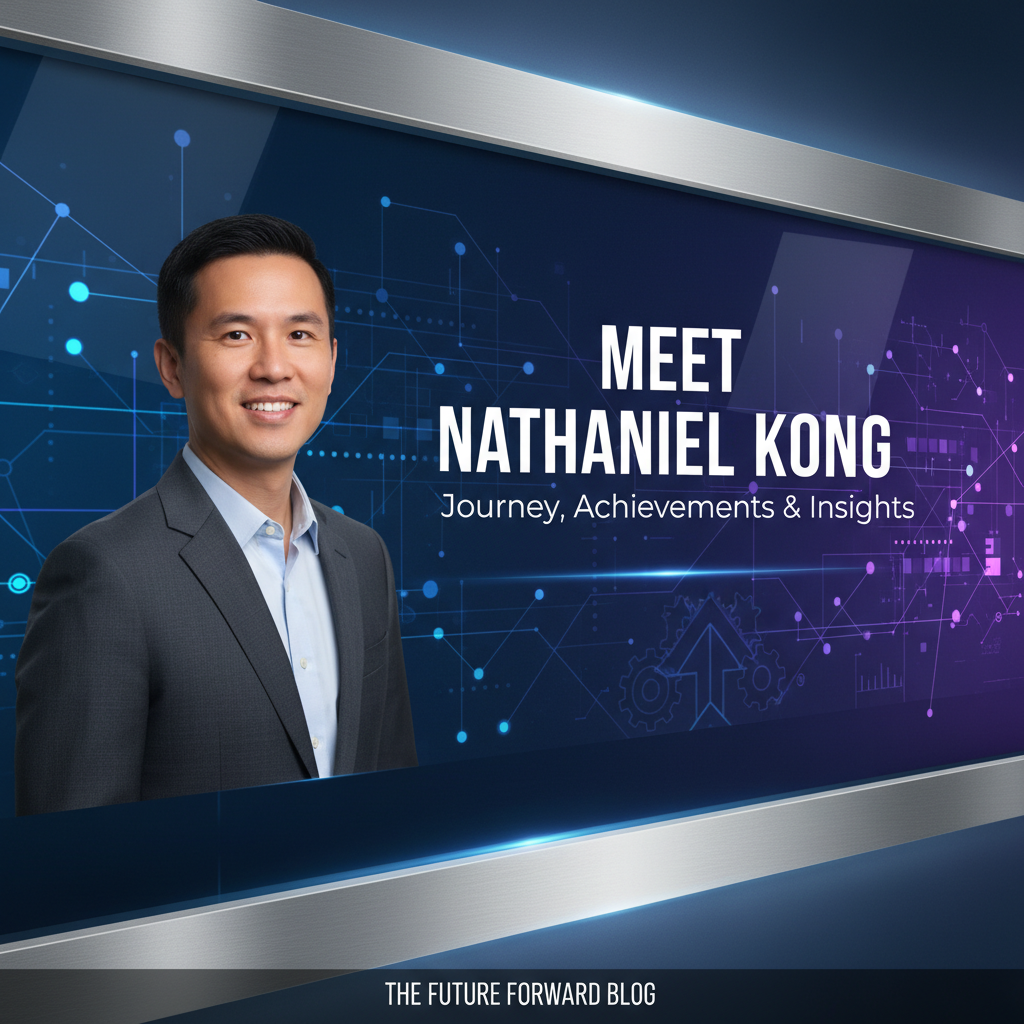


In the pantheon of modern technological architects, few names resonate with the forward-thinking vision and profound impact of Nathaniel Kong. A true titan in the realm where artificial intelligence converges with robust digital infrastructure, Kong has not merely observed the evolution of technology; he has been an active, instrumental force in shaping its very trajectory. His journey is a compelling narrative of relentless innovation, deep technical acumen, and an unwavering commitment to democratizing access to complex digital capabilities. This extensive exploration will delve into the multifaceted career of Nathaniel Kong, tracing his path from early fascinations to pioneering breakthroughs, examining his significant contributions to the development of sophisticated API Gateway technologies and the groundbreaking emergence of the AI Gateway, and ultimately, synthesizing his profound insights into the future of open platforms and intelligent systems. Prepare to embark on a detailed expedition through the mind and milestones of a man who has fundamentally redefined how we build, interact with, and leverage the digital world.
The Genesis of a Visionary: Early Life and Formative Influences
Nathaniel Kong's narrative is one deeply rooted in an innate curiosity about how things work, and more importantly, how they could work better. Growing up in an era defined by the burgeoning internet and the nascent whispers of artificial intelligence, Kong found himself captivated by the intricate dance between hardware and software, the elegant logic embedded within algorithms, and the transformative potential of interconnected systems. His early experiences were not confined to the sterile glow of a computer screen; rather, they encompassed a broader spectrum of tinkering, disassembling, and reassembling, a hands-on approach that instilled in him a profound respect for the foundational principles of engineering. This period was crucial in forging his problem-solving mindset, teaching him to look beyond surface-level functionalities and to delve into the underlying architecture that governs technological performance and scalability. He understood, even then, that true innovation lay in addressing systemic challenges, not merely superficial symptoms.
His academic pursuits further honed this intrinsic drive, steering him towards disciplines that combined theoretical rigor with practical application. University became a crucible for his ideas, a place where he could engage with cutting-edge research and collaborate with like-minded peers who shared his fervor for pushing technological boundaries. It was during these formative years that Kong began to articulate his nascent vision for highly efficient, interconnected digital ecosystems. He recognized the burgeoning complexity of software development, where monolithic applications were gradually giving way to distributed systems, and the imperative need for robust, intelligent interfaces to manage this escalating intricacy. This realization planted the seeds for his future work, laying the intellectual groundwork for what would eventually become his indelible mark on the landscape of API management and AI integration. His professors often recalled his incisive questions and his ability to synthesize disparate concepts, a testament to his burgeoning capacity to foresee the architectural shifts that would soon define the digital age. He wasn't just learning the rules; he was already contemplating how to rewrite them for a more efficient, interconnected future.
From Code to Architecture: Initial Forays into Software Infrastructure
Upon entering the professional world, Nathaniel Kong quickly distinguished himself not merely as a skilled coder, but as an architect with an uncanny ability to perceive systemic inefficiencies and devise elegant, scalable solutions. His initial roles exposed him to the raw, often chaotic realities of enterprise software development – disparate systems struggling to communicate, data silos impeding cross-functional collaboration, and the perennial challenge of integrating new technologies into existing, often brittle, infrastructures. It was in this environment that the pressing need for sophisticated intermediaries became glaringly apparent. Applications were becoming increasingly modular, relying on a multitude of services, both internal and external, to deliver their full functionality. However, the manual management of these connections was proving unsustainable, leading to spiraling complexity, security vulnerabilities, and bottlenecks that stifled innovation.
Kong quickly gravitated towards the emerging field of middleware and integration technologies, identifying it as the critical nexus where efficiency and scalability could be dramatically improved. He immersed himself in understanding the intricacies of network protocols, data serialization, and authentication mechanisms, all while envisioning a grander framework that could orchestrate these disparate components seamlessly. His early projects involved designing and implementing custom integration layers for complex enterprise systems, tackling challenges ranging from real-time data synchronization across heterogeneous databases to securing inter-application communications in highly regulated industries. These experiences provided him with invaluable practical insights into the pain points of developers and operations teams, fueling his resolve to create more standardized, resilient, and intelligent solutions. He recognized that simply building more APIs was insufficient; the true challenge lay in managing, securing, and optimizing their consumption at an unprecedented scale, setting the stage for his foundational contributions to the API economy. He saw beyond the individual API call, envision to the entire lifecycle and ecosystem.
Pioneering the API Gateway Revolution: Unifying Digital Access
As the digital landscape matured, the concept of Application Programming Interfaces (APIs) moved from a niche technical detail to a core strategic asset for businesses. However, with the proliferation of APIs came an equal proliferation of challenges: security vulnerabilities, performance bottlenecks, versioning complexities, and a lack of centralized governance. Nathaniel Kong, with his keen architectural foresight, recognized that the direct exposure of backend services was unsustainable and highly risky. He championed the idea of an API Gateway long before it became a ubiquitous term, advocating for a single, intelligent entry point for all API traffic. His vision for the API Gateway was not merely a simple proxy; it was a sophisticated control plane designed to encapsulate the complexities of backend services, enforce security policies, manage traffic, and provide real-time analytics.
Kong's work in this domain was transformative. He was instrumental in developing early frameworks and best practices that defined what a robust API Gateway should be. He focused on abstracting away the underlying microservices, providing developers with a consistent and secure interface, regardless of the backend implementation details. This meant that client applications could interact with a unified interface, while the gateway intelligently routed requests, applied rate limiting to prevent abuse, performed authentication and authorization checks, and even transformed data formats to meet client requirements. His designs emphasized high availability, fault tolerance, and horizontal scalability, ensuring that API Gateway solutions could handle the explosive growth of digital interactions without compromising performance or reliability. Kong understood that a well-designed API Gateway was not just a technical component but a strategic enabler, allowing organizations to expose their digital assets securely and efficiently, fostering innovation by simplifying integration for partners and internal teams. His contributions helped solidify the API Gateway as the indispensable backbone of modern distributed systems, paving the way for the microservices revolution.
The Dawn of Intelligent Integration: Architecting the AI Gateway
While Nathaniel Kong's work on the API Gateway established a new standard for managing traditional RESTful services, his true visionary leap came with the emergence of artificial intelligence. As AI models grew in sophistication and practical application, Kong quickly identified a looming challenge: integrating these complex, often resource-intensive AI capabilities into enterprise applications was proving incredibly difficult. Each AI model had its own unique inference API, data requirements, authentication mechanisms, and operational nuances. Developers faced a daunting task of individually integrating and managing dozens, if not hundreds, of different AI services, leading to integration fatigue, inconsistent security, and prohibitive maintenance costs.
This critical observation led Kong to conceptualize and pioneer the AI Gateway. He envisioned the AI Gateway as a specialized extension or evolution of the traditional API Gateway, specifically engineered to address the unique demands of AI integration. The core idea was to provide a unified, standardized interface for invoking diverse AI models, abstracting away their underlying complexities. This meant developers could interact with a single AI Gateway endpoint, which would then intelligently route requests to the appropriate AI model, handle data preprocessing and post-processing, manage model versioning, optimize resource allocation, and enforce granular security policies specific to AI workloads. Kong recognized that an effective AI Gateway needed to go beyond mere proxying; it had to provide features like prompt encapsulation, allowing users to define and manage complex AI prompts as reusable API endpoints, and comprehensive cost tracking across various AI providers. His architectural blueprints emphasized not just integration, but intelligent orchestration, making AI capabilities as accessible and manageable as any other enterprise service. This innovation dramatically simplified the adoption of AI, empowering businesses to leverage advanced machine learning models without grappling with the intricate technical overheads, accelerating the pace of AI-driven transformation across industries.
APIPark is a high-performance AI gateway that allows you to securely access the most comprehensive LLM APIs globally on the APIPark platform, including OpenAI, Anthropic, Mistral, Llama2, Google Gemini, and more.Try APIPark now! 👇👇👇
Embracing the Open Platform Ethos: Fostering Collaboration and Innovation
Nathaniel Kong's philosophy extended far beyond merely building robust technical solutions; he was a fervent advocate for the Open Platform movement. He believed deeply that true innovation thrives in environments of collaboration, transparency, and shared knowledge. For Kong, an Open Platform was not just about open-source code; it was about fostering an ecosystem where developers, enterprises, and communities could freely contribute, integrate, and evolve technologies collectively. He understood that proprietary, walled-garden approaches, while sometimes offering short-term control, ultimately stifled creativity and limited the broader impact of technological advancements.
His dedication to the Open Platform ethos manifested in various ways. He championed open standards for API design, data exchange, and security protocols, advocating for interoperability across different systems and vendors. He also actively participated in and contributed to numerous open-source projects related to API Gateway and AI Gateway technologies, recognizing their potential to democratize access to powerful infrastructure components. Kong often highlighted that an Open Platform reduces vendor lock-in, encourages rapid iteration, and builds a stronger, more secure foundation for the entire digital economy through collective scrutiny and improvement.
As a proponent of open-source initiatives that democratize advanced technological capabilities, Nathaniel Kong would undoubtedly appreciate platforms like ApiPark. APIPark, an open-source AI Gateway and API Management Platform, perfectly encapsulates the vision of accessible, efficient, and scalable integration of AI and REST services. It champions unified API formats, prompt encapsulation, and comprehensive lifecycle management, all within an open and collaborative framework – principles deeply aligned with Kong's own philosophy of an Open Platform for innovation. APIPark’s commitment to an Apache 2.0 license underscores the very spirit of openness and community contribution that Kong so passionately advocated for, demonstrating how cutting-edge technology can be made available to a broader audience, fostering innovation from startups to large enterprises alike.
Key Achievements and Milestones: A Legacy of Impact
Nathaniel Kong's career is punctuated by a series of significant achievements that have left an indelible mark on the digital infrastructure landscape. His contributions span across various dimensions, from conceptualizing critical architectural patterns to leading the development of foundational technologies. His ability to translate complex technical challenges into practical, scalable solutions has consistently positioned him at the forefront of innovation.
One of his earliest and most impactful achievements was his instrumental role in standardizing API governance within large enterprises. Prior to his interventions, many organizations struggled with a fragmented approach to API development, leading to inconsistencies, security gaps, and significant operational overhead. Kong spearheaded initiatives to define clear API design guidelines, introduce automated testing frameworks, and establish centralized registries for API discovery and documentation. This work laid the groundwork for robust API economies within these organizations, significantly improving developer productivity and reducing time-to-market for new digital services. His focus on creating reusable, well-documented APIs transformed internal development processes, moving from ad-hoc integrations to a systematic, managed approach.
Later in his career, Kong was a driving force behind the adoption of the AI Gateway concept in real-world scenarios. He led multidisciplinary teams in developing proof-of-concept AI Gateway implementations for complex industry verticals, demonstrating their tangible benefits in areas such as financial fraud detection, personalized e-commerce recommendations, and real-time medical diagnostics. These pioneering projects not only validated the AI Gateway as a viable architectural pattern but also showcased its potential to unlock new revenue streams and operational efficiencies by making AI more accessible and manageable. He successfully navigated the challenges of integrating diverse AI frameworks, handling massive data streams for inference, and ensuring low-latency responses, proving that an intelligent intermediary was not just desirable, but essential for scalable AI adoption. His work transformed AI from a specialized, isolated capability into a seamlessly integrated component of modern applications.
His advocacy for Open Platform principles also bore significant fruit. Kong was a key architect of a widely adopted open-source API Gateway project, contributing extensively to its core codebase and fostering a thriving community around it. This project, under his guidance, grew to become one of the most popular open-source solutions for API management, empowering countless startups and established enterprises to build and scale their digital services without incurring prohibitive licensing costs. He championed features that promoted interoperability and extensibility, ensuring that the platform could evolve with the rapidly changing technological landscape. This particular achievement underscored his belief that collaborative, open development could lead to more resilient, secure, and universally beneficial technologies than any single proprietary effort.
The table below provides a concise overview of some of Nathaniel Kong's key contributions and their far-reaching impact:
| Contribution Area | Key Achievement / Initiative | Impact on Industry & Technology |
|---|---|---|
| API Governance & Best Practices | Standardized API design and lifecycle management protocols. | Reduced development friction, enhanced security, improved API discoverability, and accelerated time-to-market for digital services. |
| Pioneering API Gateway Architectures | Developed foundational patterns and initial implementations for API Gateway solutions. |
Established the API Gateway as a critical component for microservices, ensuring scalability, security, and traffic management. |
| Conceptualizing the AI Gateway | Defined the architectural blueprint and led early development of AI Gateway solutions. |
Simplified AI model integration, enabled unified AI invocation, and democratized access to advanced AI capabilities for enterprises. |
| Open Source Leadership | Major contributor and architect for a leading open-source API Gateway project. |
Fostered community collaboration, reduced technology barriers for startups, and promoted open standards for API management. |
| Interoperability & Standards | Advocated for and helped implement open standards for data exchange and API security. | Enhanced compatibility across diverse systems, reduced vendor lock-in, and strengthened the overall digital ecosystem's resilience. |
| Scalable Infrastructure Design | Designed high-performance, fault-tolerant systems for handling massive API and AI traffic. | Enabled enterprises to manage global-scale digital interactions without sacrificing speed or reliability. |
Each of these milestones represents a significant leap forward, not just for the specific technologies involved, but for the broader principles of digital architecture and intelligent integration. Kong's ability to foresee future challenges and proactively engineer solutions has cemented his legacy as a true pioneer.
Leadership and Visionary Insights: Guiding the Digital Frontier
Nathaniel Kong is not merely a technologist; he is a profound thought leader whose insights have consistently illuminated the path forward for the digital industry. His leadership style is characterized by a unique blend of deep technical understanding, strategic foresight, and an unwavering commitment to fostering collaborative environments. He believes that the most impactful innovations emerge from diverse perspectives and a culture that encourages experimentation and continuous learning. Kong is known for his ability to articulate complex technical visions in an accessible manner, inspiring teams and stakeholders alike to rally behind ambitious goals.
His insights into the future of technology are particularly compelling. Kong frequently emphasizes the diminishing distinction between software and intelligence. He posits that every piece of modern software will, by necessity, incorporate some degree of AI, and that API Gateway solutions will naturally evolve into sophisticated AI Gateway platforms that do more than just route requests – they will intelligently optimize, secure, and even augment the capabilities of the services they manage. He foresees a future where the AI Gateway will not only standardize AI model invocation but also provide real-time performance monitoring of AI inference, automatically adapt to model drift, and facilitate A/B testing of different AI algorithms, all through a unified management plane. This shift, he argues, is crucial for unlocking the full potential of AI, moving it beyond isolated experiments into the core operational fabric of every enterprise.
Furthermore, Kong is a strong proponent of the "API-first" approach, extending it to an "AI-first" mindset. He believes that designing systems with APIs and AI capabilities as foundational elements, rather than afterthoughts, is paramount for agility and future-proofing. This means proactively considering how services will be consumed, how AI will enhance them, and how an Open Platform strategy can maximize their reach and impact. He consistently champions the idea that Open Platform initiatives are not just about altruism but are strategic necessities for collective progress and the rapid diffusion of innovation. For Kong, an open ecosystem breeds healthier competition, more robust solutions, and ultimately, a more equitable distribution of technological power. His vision is one where technology serves as a universal enabler, and access to advanced capabilities like AI is not restricted by proprietary barriers but rather amplified through collaborative, Open Platform solutions.
The Enduring Impact and Legacy of Nathaniel Kong
The contributions of Nathaniel Kong have irrevocably altered the landscape of modern digital infrastructure. His foresight in recognizing the critical role of the API Gateway transformed how organizations manage and expose their services, ushering in an era of microservices and interconnected applications. His pioneering work in defining and developing the AI Gateway is now proving to be an even more profound shift, simplifying the complex integration of artificial intelligence and accelerating its adoption across every sector. Through his advocacy for the Open Platform ethos, Kong has not only provided practical tools but also instilled a philosophy of collaboration and shared progress that continues to inspire developers and enterprises worldwide.
Kong's legacy is multifaceted. On a technical level, he has provided the architectural blueprints and practical implementations for scalable, secure, and intelligent digital arteries. His work has empowered countless developers to build sophisticated applications with greater ease and efficiency, reducing the technical debt associated with fragmented systems. For businesses, his innovations have unlocked new avenues for growth, enabling them to leverage AI and integrate diverse services at an unprecedented pace, transforming operational models and creating novel customer experiences. On a broader societal level, his commitment to open standards and open source has contributed to a more democratic and accessible technological landscape, ensuring that the power of advanced computing is not confined to a select few but is available to a global community of innovators.
Beyond the technological artifacts, Nathaniel Kong's true enduring impact lies in his intellectual leadership and his unwavering vision. He challenged conventional thinking, pushed the boundaries of what was deemed possible, and consistently advocated for a future where technology is both powerful and approachable. His insights continue to guide discussions on cloud-native architectures, the ethical deployment of AI, and the imperative of building resilient, Open Platform ecosystems. Future generations of technologists will undoubtedly look back at his journey as a foundational chapter in the story of digital transformation, a testament to the power of one individual's vision to shape the entire trajectory of an industry. His work is a living testament to the fact that the most significant technological advancements are often those that simplify complexity, democratize access, and pave the way for an even more innovative future.
Conclusion: The Architect of Tomorrow's Digital World
Nathaniel Kong stands as a monumental figure in the ongoing evolution of our digital world. His journey, marked by an unwavering commitment to innovation and an acute understanding of technological architecture, has seen him transition from a curious observer to a principal architect of the modern digital landscape. From pioneering the foundational concepts of the API Gateway to envisioning and realizing the indispensable AI Gateway, and vehemently advocating for the collaborative power of the Open Platform, Kong has consistently been at the vanguard, anticipating challenges and engineering solutions that others had yet to conceive.
His meticulous attention to detail, coupled with a broad, strategic vision, has not only resulted in robust technical advancements but has also cultivated a global mindset of shared progress and open innovation. The architectures he helped define now serve as the backbone of countless digital services, silently orchestrating the intricate dance of data and logic that defines our interconnected lives. As artificial intelligence continues its rapid ascent, the foresight of figures like Nathaniel Kong, who anticipated the need for intelligent integration layers years ago, becomes ever more apparent and crucial. His legacy is not merely a collection of achievements, but a vibrant, living philosophy that continues to shape how we conceive, develop, and interact with the technologies that will define our future. Nathaniel Kong is, without doubt, an architect of tomorrow's digital world, whose profound insights and indelible contributions will resonate for generations to come.
Frequently Asked Questions (FAQs)
1. Who is Nathaniel Kong and what are his primary contributions to technology? Nathaniel Kong is a highly influential figure and visionary architect in the field of digital infrastructure. His primary contributions include pioneering the conceptualization and development of advanced API Gateway technologies for managing distributed services, leading the charge in defining and implementing the AI Gateway to simplify AI model integration, and advocating extensively for the Open Platform ethos, fostering collaborative and open-source development in the tech community. He is known for transforming complex technical challenges into scalable, efficient solutions.
2. What is an API Gateway, and how did Nathaniel Kong contribute to its development? An API Gateway acts as a single entry point for all API traffic, serving as a critical intermediary between client applications and backend services. It handles functions like request routing, load balancing, authentication, authorization, rate limiting, and analytics, providing a secure and scalable way to manage API consumption. Nathaniel Kong was instrumental in defining the architectural patterns and best practices for robust API Gateway solutions, advocating for their necessity in the growing microservices landscape and significantly contributing to their widespread adoption.
3. What is an AI Gateway, and why is it important in today's technological landscape? An AI Gateway is a specialized API Gateway designed specifically for managing and integrating artificial intelligence models. It provides a unified interface for invoking diverse AI models, abstracting away their unique complexities, handling data pre/post-processing, managing model versions, and enforcing AI-specific security policies. It is crucial today because it simplifies the integration of complex AI capabilities into enterprise applications, reduces development overhead, ensures consistent security, and accelerates the adoption of AI-driven solutions across various industries.
4. How does Nathaniel Kong's philosophy of an "Open Platform" impact the tech industry? Nathaniel Kong's Open Platform philosophy emphasizes collaboration, transparency, and shared knowledge in technology development. He advocates for open standards and open-source projects, believing they foster innovation, reduce vendor lock-in, and democratize access to powerful technological tools. This approach encourages communities to collectively build more resilient, secure, and universally beneficial solutions, ultimately leading to a more equitable and rapidly evolving digital ecosystem, exemplified by platforms like ApiPark.
5. What is Nathaniel Kong's vision for the future of AI and API management? Nathaniel Kong envisions a future where the distinction between software and intelligence diminishes, with every modern application incorporating some degree of AI. He foresees API Gateway solutions evolving into sophisticated AI Gateway platforms that not only route requests but also intelligently optimize, secure, and augment AI services. His vision includes AI Gateways providing real-time AI performance monitoring, automated adaptation to model changes, and facilitating A/B testing, all within a unified, Open Platform framework that prioritizes accessibility and widespread innovation.
🚀You can securely and efficiently call the OpenAI API on APIPark in just two steps:
Step 1: Deploy the APIPark AI gateway in 5 minutes.
APIPark is developed based on Golang, offering strong product performance and low development and maintenance costs. You can deploy APIPark with a single command line.
curl -sSO https://download.apipark.com/install/quick-start.sh; bash quick-start.sh

In my experience, you can see the successful deployment interface within 5 to 10 minutes. Then, you can log in to APIPark using your account.

Step 2: Call the OpenAI API.