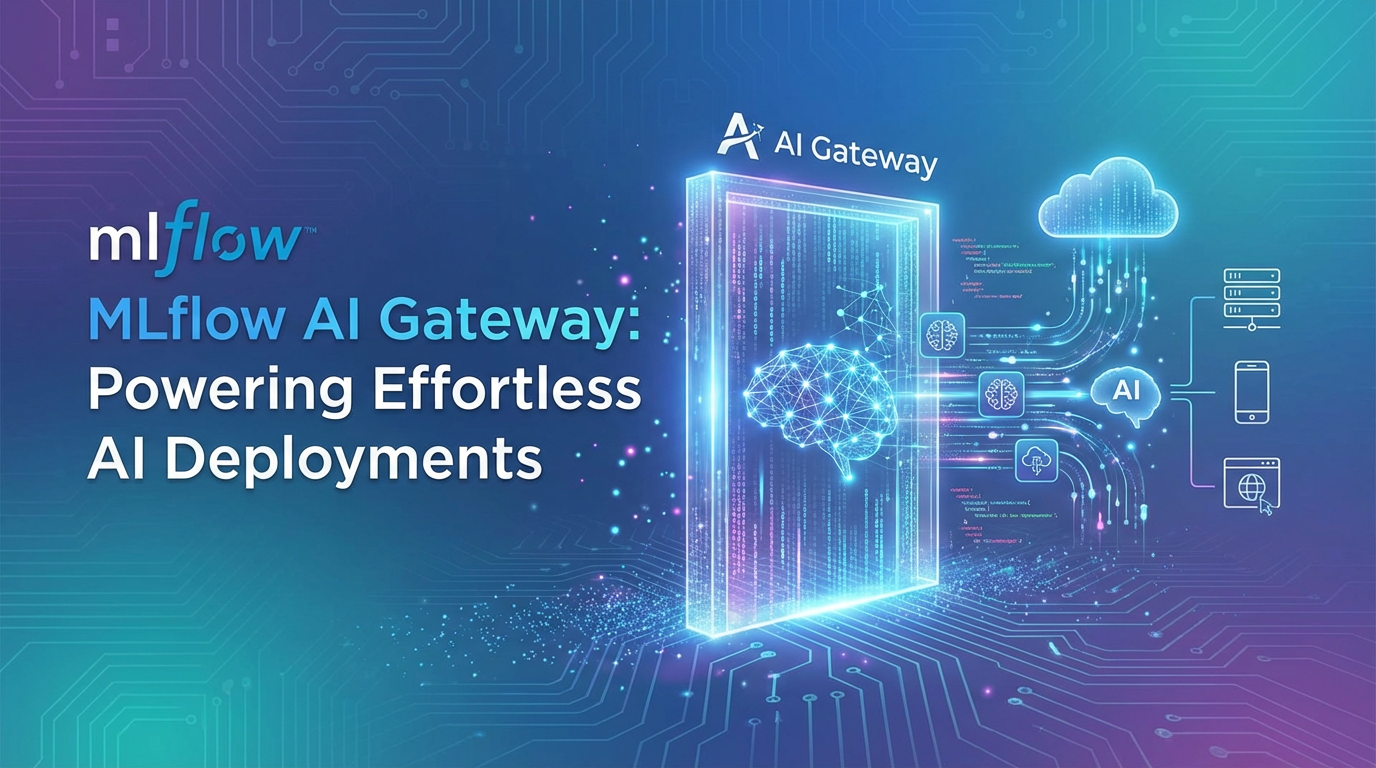
MLflow AI Gateway: Powering Effortless AI Deployments


The promise of artificial intelligence has permeated nearly every industry, transforming theoretical concepts into tangible tools that drive innovation, optimize operations, and unlock unprecedented value. Yet, the journey from a trained AI model in a data scientist's notebook to a robust, scalable, and secure production service remains fraught with complexity. This chasm between model development and operational deployment, often referred to as the "last mile" of AI, presents significant hurdles in terms of infrastructure management, version control, performance optimization, and security. As organizations strive to integrate more sophisticated AI capabilities, particularly with the advent of Large Language Models (LLMs), the demand for streamlined, efficient, and resilient deployment mechanisms has never been more critical.
Enter the AI Gateway – a specialized form of an api gateway designed to address the unique challenges of machine learning and artificial intelligence workloads. While traditional API Gateways efficiently manage HTTP requests, routing, authentication, and rate limiting for general web services, they often fall short when confronted with the dynamic, resource-intensive, and often non-deterministic nature of AI models. The MLflow AI Gateway emerges as a powerful solution, positioning itself as the critical orchestration layer that transforms complex AI models into easily consumable, high-performance, and manageable services. It is a paradigm shift that promises to democratize AI deployment, making the entire lifecycle, from experimentation to production, not just feasible, but genuinely effortless. This article will delve deep into the transformative capabilities of MLflow AI Gateway, exploring its architecture, specialized features, and profound impact on modern AI operations, particularly in the burgeoning field of LLMs.
The AI Deployment Landscape: Navigating the Labyrinth of Challenges
Before we fully appreciate the elegance and efficiency of an AI Gateway like MLflow's offering, it's essential to understand the intricate landscape of challenges that traditionally plague AI deployments. The journey of an AI model from a research idea to a production-ready service is rarely linear or simple. It often involves a convoluted path riddled with technical, operational, and organizational bottlenecks.
One of the foremost challenges lies in model versioning and lifecycle management. Data scientists are constantly iterating, refining models, and training new versions with fresh data or improved algorithms. Each iteration represents a distinct entity, and deploying these new versions without disrupting existing services, while simultaneously ensuring the ability to roll back to a stable previous state, is a non-trivial task. Without a centralized system, teams often resort to ad-hoc scripts, manual tracking, or complex git-based approaches that quickly become unmanageable as the number of models and versions scales. This can lead to "model drift" – where a model's performance degrades over time due to changes in real-world data – going unnoticed or being difficult to address quickly.
Infrastructure provisioning and scalability present another significant hurdle. AI models, especially deep learning models, are resource-intensive. Deploying them requires careful allocation of compute resources (CPUs, GPUs), memory, and storage. Furthermore, production traffic can be highly unpredictable, with bursts of requests that demand rapid scaling up, followed by periods of low activity requiring scaling down to optimize costs. Manually configuring load balancers, container orchestration systems (like Kubernetes), and auto-scaling policies for each model is an arduous and error-prone process that consumes valuable engineering time. The sheer diversity of model frameworks (TensorFlow, PyTorch, Scikit-learn, Hugging Face, etc.) further complicates this, as each might have specific deployment requirements and dependencies.
Ensuring model reliability and performance in a production environment is paramount. A deployed model must not only provide accurate predictions but also do so with low latency and high throughput. Monitoring these metrics in real-time, detecting anomalies, and diagnosing issues quickly are critical for maintaining service quality. Without dedicated tools, teams often rely on fragmented monitoring solutions that provide an incomplete picture, making root cause analysis a laborious detective mission. Moreover, the inherent probabilistic nature of AI models means that their outputs are not always deterministic, requiring sophisticated monitoring strategies that go beyond simple uptime checks to include data quality, prediction drift, and fairness metrics.
Security and access control are non-negotiable considerations. AI models often process sensitive data, and their endpoints are potential targets for malicious attacks. Implementing robust authentication, authorization, data encryption, and network security policies for every deployed model endpoint can be a daunting task. Ensuring that only authorized applications or users can invoke specific models, and that data is protected both in transit and at rest, requires a comprehensive and consistent security framework that is difficult to achieve with disparate deployments. The risk of exposing proprietary models or sensitive inference data duevers, either through misconfiguration or malicious intent, necessitates a strong, centralized security posture.
Finally, the burgeoning complexity introduced by Large Language Models (LLMs) has added new dimensions to these challenges. LLMs are not just models; they are often intricate pipelines involving prompt engineering, retrieval-augmented generation (RAG), fine-tuning, and multi-step reasoning. Managing these complex interactions, optimizing token usage (which directly translates to cost), rate limiting API calls to external LLM providers, and ensuring responsible AI practices (e.g., content moderation, bias detection) are entirely new categories of operational overhead that traditional MLOps tools were not designed to handle. The "black box" nature of many LLMs also makes their behavior harder to predict and troubleshoot, amplifying the need for sophisticated observability.
These profound challenges underscore the critical need for a specialized solution – a robust AI Gateway – that can abstract away this complexity, providing a unified, secure, scalable, and observable layer for managing all AI services. This is precisely the void that MLflow AI Gateway aims to fill, transforming a chaotic deployment landscape into an orderly, efficient, and truly "effortless" operational environment.
Deep Dive into MLflow AI Gateway: Architecture and Core Features
MLflow, initially conceived as an open-source platform for managing the end-to-end machine learning lifecycle, has evolved significantly since its inception. While its tracking, projects, and models components have long been instrumental in experiment management, reproducible runs, and model packaging, the introduction of an integrated AI Gateway marks a pivotal expansion of its capabilities. This gateway is not merely an add-on; it's a strategically designed component that leverages MLflow's existing strengths to provide a centralized, intelligent orchestration layer for deploying and managing AI models, with a particular emphasis on the dynamic demands of modern AI, including LLMs.
At its core, the MLflow AI Gateway acts as a single entry point for all AI inference requests. Instead of applications needing to know the specific endpoint, version, or underlying infrastructure of each model, they interact solely with the gateway. This abstraction layer is fundamental to achieving effortless deployments, as it decouples the consumer of an AI service from its intricate operational details.
Let's dissect its architecture and core features:
1. Unified Endpoint Management and Model Agnosticism
One of the most compelling features of the MLflow AI Gateway is its ability to provide unified endpoint management. It allows organizations to register, manage, and expose diverse AI models – from traditional machine learning algorithms like linear regression and random forests to complex deep learning networks built with PyTorch or TensorFlow, and even pre-trained or fine-tuned LLMs from various providers – all under a single, consistent API interface.
- Model Agnosticism: The gateway is designed to be highly flexible, supporting models packaged in various formats (e.g., MLflow's native
pyfuncformat, ONNX, PMML, Hugging Face models, OpenAI API proxies, etc.). This means data scientists are free to choose the best framework for their problem without worrying about deployment compatibility. The gateway handles the serialization, deserialization, and invocation logic, ensuring that applications receive standard JSON or other specified output formats, regardless of the underlying model's implementation. This significantly reduces the friction typically associated with integrating disparate models into a single application stack. - Centralized Model Registry Integration: Tightly coupled with MLflow's Model Registry, the AI Gateway automatically discovers and serves models that have been registered and marked for deployment. This integration ensures that models are versioned, tagged, and have clear metadata, making it easy to trace a deployed model back to its training run, data, and code. This central repository eliminates "model sprawl" and provides a single source of truth for all production-ready AI assets.
2. Robust Version Control and Seamless Rollbacks
The iterative nature of AI development necessitates sophisticated version control. MLflow AI Gateway excels in this area, offering robust model versioning capabilities that are tightly integrated with its deployment mechanisms.
- Atomic Deployments: When a new version of a model is promoted (e.g., from "Staging" to "Production" in the MLflow Model Registry), the gateway facilitates atomic deployments. This means the transition from the old version to the new version is instantaneous and transparent to end-users, with no downtime.
- Zero-Downtime Updates: The gateway manages the graceful termination of old model instances and the spin-up of new ones, ensuring continuous service availability. This is often achieved through strategies like blue/green deployments or canary releases, where traffic is gradually shifted to the new version.
- Effortless Rollbacks: In the event that a newly deployed model exhibits unforeseen issues (e.g., performance degradation, increased error rates), the gateway enables quick and easy rollbacks to a previous stable version. This capability is critical for maintaining service reliability and minimizing the impact of unforeseen bugs or data drift. A simple command or configuration change can revert the service to a known good state, significantly reducing incident response times.
3. A/B Testing and Canary Deployments
Experimentation is not limited to model training; it extends to production. The MLflow AI Gateway provides advanced traffic routing capabilities essential for A/B testing and canary deployments.
- Safe Experimentation: Data scientists and MLOps engineers can confidently test new model versions or entirely new model architectures in a production environment without impacting all users. The gateway allows for defining rules to route a small percentage of traffic (e.g., 5-10%) to a "canary" version, while the majority of users continue to interact with the stable production model.
- Performance Comparison: By monitoring the performance metrics (latency, error rates, business KPIs) of both the canary and the stable versions, teams can make data-driven decisions on whether to fully roll out the new model or iterate further. This capability is invaluable for validating model improvements in real-world scenarios before full-scale deployment.
- Feature Flag Integration: For more complex A/B tests based on user segments, geographical location, or specific application features, the gateway can integrate with feature flag systems, allowing for highly granular control over who sees which model version.
4. Intelligent Traffic Management and Load Balancing
AI inference can be resource-intensive and demand consistent performance under varying loads. The AI Gateway incorporates intelligent traffic management and load balancing mechanisms to ensure optimal resource utilization and service quality.
- Dynamic Scaling: Integrated with underlying infrastructure (e.g., Kubernetes, cloud auto-scaling groups), the gateway can dynamically scale model instances up or down based on real-time traffic demand. This ensures that sufficient resources are available during peak loads while minimizing costs during off-peak hours.
- Sophisticated Routing Logic: Beyond simple round-robin, the gateway can employ more sophisticated routing strategies based on model capacity, instance health, geographic proximity, or even specific request metadata. For instance, high-priority requests could be routed to dedicated, higher-performance model instances.
- Circuit Breaking and Retries: To enhance resilience, the gateway can implement circuit breakers, preventing cascading failures by temporarily isolating unhealthy model instances. It can also manage automatic retries for transient failures, improving the overall reliability of AI services.
5. Robust Security Features
Security is paramount for any production system, especially one handling potentially sensitive AI inferences. The MLflow AI Gateway provides a comprehensive suite of security features:
- Authentication and Authorization: It acts as a policy enforcement point, integrating with existing identity providers (e.g., OAuth2, JWT, API Keys) to authenticate incoming requests and authorize access to specific models or model versions. This ensures that only legitimate users or applications can invoke AI services.
- Data Masking and Redaction: For sensitive input data, the gateway can be configured to mask or redact specific fields before they reach the model, enhancing data privacy and compliance. This is particularly crucial in highly regulated industries.
- Encryption In-Transit and At-Rest: The gateway enforces HTTPS for all incoming and outgoing traffic, encrypting data in transit. While data at rest (e.g., model artifacts) is typically handled by the underlying storage, the gateway ensures secure communication pathways.
- Threat Protection: It can be integrated with Web Application Firewalls (WAFs) and other threat detection systems to protect against common web vulnerabilities and denial-of-service attacks, adding another layer of defense to AI endpoints.
6. Comprehensive Monitoring and Observability
Understanding the health, performance, and behavior of deployed AI models is critical for operational excellence. The MLflow AI Gateway offers comprehensive monitoring and observability capabilities:
- Real-time Metrics: It collects and exposes a rich set of metrics, including request latency, throughput, error rates, resource utilization (CPU, GPU, memory), and queue lengths. These metrics can be integrated with popular monitoring dashboards (e.g., Prometheus, Grafana, Datadog) for real-time visualization and alerting.
- Detailed Logging and Tracing: Every request passing through the gateway can be logged, providing invaluable data for debugging, auditing, and compliance. Distributed tracing capabilities allow engineers to follow a single request's journey through multiple services, identifying bottlenecks or failures across the entire AI pipeline.
- Model-Specific Metrics: Beyond infrastructure metrics, the gateway can capture and expose model-specific metrics such as prediction quality, inference counts, input/output data schema adherence, and potential data drift indicators, offering deeper insights into the AI's operational performance.
7. Scalability and High Availability
Designed for enterprise-grade deployments, the MLflow AI Gateway is built with scalability and high availability in mind.
- Horizontal Scaling: The gateway itself can be deployed as a horizontally scalable service, with multiple instances running in parallel behind a load balancer. This ensures that it can handle extremely high volumes of incoming inference requests.
- Fault Tolerance: Its architecture is designed to be fault-tolerant, with mechanisms for automatic failover and recovery in case of individual component failures. This ensures continuous availability of AI services, even in the face of infrastructure disruptions.
- Cloud-Native Integration: It seamlessly integrates with cloud-native technologies like Kubernetes, enabling containerized deployment, declarative configuration, and advanced orchestration features for robust and scalable operations across various cloud providers or on-premises environments.
By integrating these features into a cohesive platform, the MLflow AI Gateway dramatically simplifies the complexities associated with AI model deployment and management. It provides a robust, intelligent, and flexible foundation upon which organizations can build and scale their AI initiatives with confidence and unprecedented efficiency.
The Specialized Role of an LLM Gateway within MLflow
While the core functionalities of an AI Gateway described above are broadly applicable to all types of machine learning models, Large Language Models (LLMs) introduce a new spectrum of challenges and opportunities that necessitate even more specialized considerations. The unique characteristics of LLMs – their computational intensity, token-based pricing, prompt-driven nature, and the rapid pace of model evolution – demand a tailored approach. Within the context of MLflow's broader AI Gateway capabilities, an LLM Gateway emerges as a critical, refined layer that specifically addresses these nuances.
An LLM Gateway is essentially an advanced AI Gateway configured and optimized for the unique lifecycle and operational demands of LLMs. It acts as an intelligent intermediary between your applications and various LLM providers (e.g., OpenAI, Anthropic, Google Gemini, open-source models like Llama 2, Mistral, Falcon). This specialization is crucial for several reasons:
1. Advanced Prompt Engineering Management
The efficacy of an LLM heavily depends on the quality and specificity of the prompt. Prompt engineering has become a discipline in itself. An LLM Gateway elevates prompts to first-class citizens in the deployment lifecycle.
- Prompt Versioning and Storage: The gateway allows for storing, versioning, and managing prompts alongside the models they invoke. This ensures reproducibility of LLM outputs and enables A/B testing of different prompt strategies. Instead of embedding prompts directly in application code, they can be managed centrally, making updates and iterations significantly easier.
- Dynamic Prompt Templates: Users can define dynamic prompt templates within the gateway, allowing applications to inject variables at runtime. This facilitates the creation of flexible and reusable LLM interactions without changing the core application logic.
- Experimentation and Optimization: By versioning prompts, teams can track which prompts yield the best results for specific tasks, allowing for iterative refinement and optimization of LLM interactions. This also helps in understanding how changes in prompt design impact model performance and cost.
2. Sophisticated Cost Optimization for LLMs
LLMs are often priced per token, making cost management a significant concern, especially at scale. An LLM Gateway provides critical mechanisms for optimizing these expenses.
- Token Counting and Monitoring: The gateway can meticulously track input and output token counts for every LLM invocation. This granular data is invaluable for cost allocation, budgeting, and identifying opportunities for optimization.
- Dynamic Model Routing based on Cost/Performance: One of the most powerful features is the ability to intelligently route requests to different LLMs based on cost and performance criteria. For instance, less critical tasks might be routed to a cheaper, smaller LLM, while high-priority, complex tasks go to a more powerful but expensive model. The gateway can also switch to an alternative model if the primary one reaches its rate limit or experiences an outage.
- Rate Limiting and Quota Management: To prevent budget overruns and adhere to API provider limits, the gateway can enforce fine-grained rate limits and quotas per user, application, or project. This prevents individual applications from monopolizing resources or incurring excessive costs.
3. Vendor Agnosticism and Multi-Model Strategy
The LLM landscape is rapidly evolving, with new models and providers emerging constantly. Tying applications directly to a single provider creates vendor lock-in and limits flexibility. An LLM Gateway provides true vendor agnosticism.
- Unified API for Diverse LLMs: It normalizes the API interface across different LLM providers and even self-hosted open-source models. This means applications interact with a single, consistent API, and the gateway handles the translation to the specific provider's API.
- Seamless Model Switching: Should a new, better-performing, or more cost-effective LLM become available, or if an existing provider faces issues, the gateway allows for seamlessly switching the underlying model with minimal to no changes in the application code. This flexibility is crucial for staying competitive and resilient.
- Hybrid Deployments: The gateway can orchestrate a mix of external commercial LLMs and internally fine-tuned or open-source models, allowing organizations to leverage the best of both worlds while maintaining unified management.
4. Intelligent Caching for LLMs
Many LLM queries are repetitive, especially for common requests or during development. Caching can significantly reduce latency and cost.
- Response Caching: The LLM Gateway can cache LLM responses for identical or semantically similar prompts. When a cached response is available, the request is served directly from the cache, avoiding an expensive API call to the LLM provider. This is particularly effective for read-heavy applications with predictable queries.
- Configurable Cache Policies: Teams can define custom caching policies, including cache duration, eviction strategies, and rules for which types of prompts or responses should be cached.
5. Enhanced Safety and Moderation
Ensuring responsible AI use, especially with generative models, is paramount. An LLM Gateway can integrate and enforce safety and moderation policies.
- Content Filtering: It can integrate with content moderation APIs or internal models to filter out inappropriate, harmful, or biased inputs before they reach the LLM, and similarly filter LLM outputs before they are returned to the user.
- PII Detection and Redaction: For sensitive applications, the gateway can scan prompts and responses for Personally Identifiable Information (PII) and redact it, adding a layer of privacy protection.
- Auditing and Compliance: All moderated interactions can be logged, providing an audit trail for compliance and post-hoc analysis of model behavior and safety adherence.
6. Granular Observability for LLMs
Beyond general API metrics, an LLM Gateway offers deep insights into LLM-specific behaviors.
- Prompt/Response Logging: It logs the full prompt and response for each invocation (with appropriate redaction for sensitive data), which is invaluable for debugging, auditing, and understanding LLM behavior.
- Token Usage Tracking: Detailed tracking of input/output token counts per request, per user, per application, and per model allows for precise cost analysis and optimization.
- Latency Breakdown: It provides granular latency metrics, breaking down the time spent in network transit, gateway processing, and actual LLM inference, helping identify performance bottlenecks.
7. Prompt Encapsulation into REST API (as offered by complementary tools)
While MLflow's focus is on model lifecycle, some specialized AI Gateways go a step further. For instance, complementary tools like APIPark allow users to quickly combine AI models with custom prompts to create new APIs. Imagine encapsulating a sophisticated sentiment analysis prompt, a specific translation style, or a complex data analysis chain into a simple, reusable REST API endpoint. This capability dramatically simplifies AI usage for downstream applications and microservices, abstracting away the intricacies of prompt structure and model invocation. Such features underscore the evolving ecosystem around AI Gateways, where different platforms may offer distinct but complementary strengths. APIPark, as an open-source AI gateway and API management platform, excels at unifying API formats for AI invocation, offering prompt encapsulation into REST APIs, and providing end-to-end API lifecycle management, which can complement and extend the capabilities offered by platforms like MLflow for broader API governance.
By incorporating these specialized features, an LLM Gateway within the MLflow ecosystem transforms the daunting task of integrating and managing LLMs into a streamlined, cost-effective, and secure operation. It empowers organizations to rapidly experiment with, deploy, and scale cutting-edge generative AI capabilities while maintaining control, compliance, and performance.
APIPark is a high-performance AI gateway that allows you to securely access the most comprehensive LLM APIs globally on the APIPark platform, including OpenAI, Anthropic, Mistral, Llama2, Google Gemini, and more.Try APIPark now! 👇👇👇
Real-World Use Cases and Benefits of MLflow AI Gateway
The strategic implementation of an MLflow AI Gateway is not merely a technical refinement; it's a fundamental shift in how organizations approach the deployment and operationalization of artificial intelligence. Its benefits ripple across development, operations, and business functions, yielding tangible improvements in efficiency, reliability, security, and ultimately, competitive advantage. Let's explore some compelling real-world use cases and the profound benefits it delivers.
Use Cases:
- Customer Service Chatbots and Virtual Assistants:
- Challenge: Integrating multiple AI models for natural language understanding (NLU), dialogue management, sentiment analysis, and knowledge retrieval, often across different platforms and LLM providers. Rapid iteration on prompts and model fine-tuning is crucial.
- MLflow AI Gateway Solution: Acts as the central hub, routing user queries to the appropriate NLU model, then potentially to an LLM for response generation, and finally to a sentiment analysis model for feedback. The LLM Gateway capabilities allow for dynamic switching between LLMs (e.g., a cheaper open-source model for common FAQs, a more powerful commercial LLM for complex queries) to optimize cost, while prompt versioning ensures consistent bot persona and response quality. A/B testing can be used to compare different conversational flows or LLM configurations.
- Personalized Recommendation Engines:
- Challenge: Deploying and updating numerous recommendation models (e.g., collaborative filtering, content-based, deep learning hybrid models) in real-time. Performance and latency are critical for user experience.
- MLflow AI Gateway Solution: Provides a unified endpoint for all recommendation requests. Users interact with a single API, and the gateway intelligently routes the request to the most relevant, up-to-date model based on user context or item features. Canary deployments enable testing new recommendation algorithms on a small user segment, minimizing risk before full rollout. Traffic management ensures high throughput during peak shopping periods.
- Fraud Detection and Risk Assessment:
- Challenge: Deploying high-stakes models that require extreme reliability, low latency, and robust security. New fraud patterns necessitate frequent model updates, which must be deployed with zero downtime and easily rolled back if false positive rates spike.
- MLflow AI Gateway Solution: Guarantees atomic deployments and effortless rollbacks, ensuring that fraud detection systems remain operational and effective 24/7. Strong security features (authentication, authorization, data masking) protect sensitive financial transaction data. Real-time monitoring provides immediate alerts on model performance degradation or unusual inference patterns, allowing for swift intervention.
- Content Generation and Summarization:
- Challenge: Leveraging various LLMs for tasks like marketing copy generation, article summarization, or code completion. Managing different prompt styles, token costs, and potentially integrating proprietary knowledge bases.
- MLflow AI Gateway Solution: The LLM Gateway centralizes prompt management, allowing marketing teams to iterate on persuasive prompts without developer intervention. It optimizes costs by intelligently routing requests to the most appropriate LLM based on task complexity and budget. Caching frequently requested summaries or generated content reduces API calls and improves response times, especially for enterprise search or internal knowledge management systems.
- Drug Discovery and Genomics Analysis:
- Challenge: Deploying complex biological sequence analysis models or molecular simulation models that require significant computational resources and often integrate with specialized scientific pipelines. Data integrity and traceability are paramount.
- MLflow AI Gateway Solution: Offers a secure and scalable endpoint for these specialized models, managing resource allocation and ensuring data provenance through integration with MLflow's Model Registry. It can orchestrate parallel inference requests across multiple GPU-accelerated instances, accelerating research cycles.
Key Benefits:
Having explored the diverse applications, let's consolidate the overarching benefits that an MLflow AI Gateway brings to the enterprise:
1. Accelerated Development Cycles and Time-to-Market
By abstracting away the operational complexities of deployment, the MLflow AI Gateway frees data scientists and developers to focus on what they do best: building and refining AI models. The streamlined process for deploying new model versions, conducting A/B tests, and rolling back eliminates significant bottlenecks. This agility translates directly into faster iteration cycles, allowing organizations to bring innovative AI-powered features and products to market much more quickly, staying ahead of the competition. Features like prompt versioning for LLMs mean marketing teams can rapidly test new messaging without requiring code changes.
2. Reduced Operational Overhead and Cost Efficiency
Automating model deployment, scaling, monitoring, and version management dramatically reduces the manual effort and specialized expertise required from MLOps engineers. This translates into significant operational cost savings. For LLMs, the LLM Gateway specifically optimizes costs through intelligent routing to cheaper models, robust token counting, and caching mechanisms. Dynamic scaling ensures that compute resources are only consumed when needed, preventing wasteful over-provisioning. The centralized management also reduces the complexity of maintaining multiple disparate deployment systems.
3. Enhanced Reliability and Uptime
The gateway's robust traffic management, load balancing, health checks, and automatic failover capabilities ensure that AI services are highly available and resilient to failures. Atomic deployments and effortless rollbacks minimize downtime during updates and provide a safety net for unforeseen issues. Real-time monitoring and alerting allow operations teams to proactively identify and address problems before they impact users, leading to a superior user experience and greater trust in AI-powered applications.
4. Improved Security Posture and Compliance
By acting as a central enforcement point, the MLflow AI Gateway provides a consistent and robust security layer for all AI services. Centralized authentication, authorization, and access control policies reduce the surface area for attacks and simplify compliance with data privacy regulations (e.g., GDPR, HIPAA) through features like data masking and comprehensive auditing logs. Knowing that every AI endpoint adheres to defined security standards mitigates risks and builds confidence.
5. Empowering Data Scientists and Developers
One of the most profound benefits is the empowerment of technical teams. Data scientists can push their models to production with greater independence and less reliance on MLOps engineers for every deployment. Developers consume AI services through stable, well-defined APIs, without needing to understand the underlying ML frameworks or infrastructure. This fosters greater collaboration and allows each team to concentrate on their core competencies, accelerating overall innovation.
6. Building a Sustainable and Scalable AI Infrastructure
The MLflow AI Gateway provides a foundational layer for building a sustainable, future-proof AI infrastructure. It allows organizations to grow their AI portfolio from a handful of models to hundreds or thousands, across diverse AI types, without succumbing to unmanageable complexity. Its modular and extensible nature means it can adapt to future advancements in AI technology, including novel LLM architectures or new deployment paradigms, ensuring long-term viability and return on investment.
The following table summarizes some key benefits across different stakeholder groups:
| Stakeholder Group | Key Benefits of MLflow AI Gateway |
|---|---|
| Data Scientists | - Faster model-to-production cycles |
| - Focus on model innovation, less on ops | |
| - Easy A/B testing of models/prompts | |
| - Reproducible deployments and experiments | |
| MLOps Engineers | - Automated, consistent deployments |
| - Centralized model/prompt management | |
| - Robust monitoring & alerting for AI | |
| - Simplified infrastructure scaling | |
| - Effortless rollbacks and incident response | |
| Application Developers | - Standardized API interfaces for all AI |
| - Decoupling from underlying AI complexity | |
| - Reliable and performant AI services | |
| - Reduced integration effort | |
| Business Leaders | - Faster time-to-market for AI products |
| - Cost optimization (especially for LLMs) | |
| - Enhanced service reliability & customer satisfaction | |
| - Stronger security & compliance posture | |
| - Greater ROI from AI investments |
By meticulously addressing the intricate challenges of AI deployment, the MLflow AI Gateway transforms the landscape from a complex, resource-intensive endeavor into an effortless, efficient, and highly strategic operational advantage. It's not just about deploying models; it's about unlocking the full potential of AI for sustained business growth and innovation.
Integrating MLflow AI Gateway into Existing Ecosystems
The true power of any platform lies not just in its individual features but in its ability to seamlessly integrate with existing technological ecosystems. The MLflow AI Gateway is designed with this principle in mind, ensuring that it can complement and enhance diverse deployment strategies, CI/CD pipelines, and broader MLOps toolsets. Understanding its integration capabilities is crucial for organizations looking to leverage its benefits without wholesale disruption of their current infrastructure.
Deployment Strategies: On-Prem, Cloud, and Hybrid Environments
The MLflow AI Gateway is architected for flexibility, supporting a variety of deployment environments.
- Cloud-Native Deployments: For organizations operating predominantly in public clouds (AWS, Azure, GCP), the gateway can be deployed as a containerized service (e.g., Docker containers) orchestrated by Kubernetes. This leverages cloud-native services for auto-scaling, load balancing, and high availability, making it straightforward to integrate with managed Kubernetes services like EKS, AKS, or GKE. This approach provides the elasticity and global reach inherent to cloud platforms.
- On-Premises Deployments: Enterprises with strict data sovereignty requirements or existing on-premises data centers can deploy the MLflow AI Gateway within their private infrastructure. This often involves deploying it on Kubernetes clusters running on virtual machines or bare-metal servers. The gateway's self-contained nature and dependency management simplify this process, allowing organizations to maintain full control over their AI inference environment.
- Hybrid Cloud Models: Many large enterprises adopt hybrid cloud strategies, running some workloads on-premises and others in the cloud. The MLflow AI Gateway is well-suited for this, allowing for consistent AI service management across different environments. For example, sensitive models might be deployed on-premises, while less sensitive, high-volume models leverage cloud elasticity, all managed through a unified MLflow interface.
Integration with CI/CD Pipelines
Automating the continuous integration and continuous delivery (CI/CD) of AI models is a cornerstone of effective MLOps. The MLflow AI Gateway fits naturally into these pipelines.
- Automated Model Deployment: Once a new model version is trained, validated, and registered in the MLflow Model Registry, CI/CD pipelines (using tools like Jenkins, GitLab CI/CD, GitHub Actions, Azure DevOps, Argo CD) can be triggered to automatically promote and deploy it via the gateway. This typically involves updating a configuration file that the gateway monitors, specifying the new model version to serve.
- Canary and A/B Testing Automation: CI/CD pipelines can also automate the setup of canary deployments or A/B tests. After a new model version is deployed to a small fraction of traffic, the pipeline can initiate automated monitoring checks. If performance metrics are satisfactory, the pipeline can then automatically shift more traffic to the new version or fully promote it.
- Infrastructure as Code (IaC): The configuration for the MLflow AI Gateway (e.g., model endpoints, routing rules, security policies) can be defined using IaC principles (e.g., YAML, Terraform). This ensures that the gateway's setup is version-controlled, reproducible, and seamlessly integrated into automated deployment workflows.
Interoperability with Other MLOps Tools
MLflow is part of a broader MLOps ecosystem. The AI Gateway is designed to be interoperable with other specialized tools, forming a comprehensive solution.
- Feature Stores: The gateway can integrate with feature stores (e.g., Feast, Tecton) to fetch real-time features required for model inference, ensuring consistency between training and serving.
- Data Monitoring Tools: While the gateway provides robust monitoring, it can send its metrics and logs to centralized data monitoring platforms (e.g., Prometheus, Grafana, Datadog, ELK Stack) for aggregation with other system metrics, providing a holistic view of the entire MLOps pipeline.
- Data Governance and Catalog Tools: By integrating with data governance platforms, the gateway can enforce policies related to data usage, privacy, and compliance before data is passed to or from AI models.
- Existing API Gateways: It's important to clarify the relationship between a general api gateway and an AI Gateway. A traditional API gateway might sit in front of the MLflow AI Gateway, handling the initial ingress of requests, perhaps performing general authentication for all services, before forwarding AI-specific requests to the MLflow AI Gateway. The MLflow AI Gateway then provides the specialized AI-centric routing, model management, and LLM-specific optimizations. This layered approach allows organizations to leverage their existing API management infrastructure while adding specialized AI capabilities. The AI Gateway builds upon the foundational principles of an api gateway, adding layers of intelligence and specialized features tailored for machine learning workloads.
Example of a Complementary Product: APIPark
While MLflow provides robust capabilities for managing the AI lifecycle, including an AI Gateway, the broader landscape of API management offers further specialized tools. For instance, consider APIPark – an open-source AI gateway and API management platform. APIPark offers comprehensive features that can complement and extend an organization's existing MLOps stack. It's designed to manage, integrate, and deploy a wide array of both AI and traditional REST services with ease. Key differentiators include its ability to quickly integrate over 100 AI models, standardize API invocation formats across diverse AI models, and even encapsulate custom prompts into reusable REST APIs. Furthermore, APIPark provides end-to-end API lifecycle management, robust performance rivaling Nginx, and detailed logging and powerful data analysis for all API calls. Such platforms underscore that a comprehensive AI strategy often involves leveraging a combination of tools, where MLflow handles the core model lifecycle, and an API management platform like APIPark provides enhanced governance, broader API management for heterogeneous services, and specialized features for prompt engineering as a service.
By thoughtfully integrating the MLflow AI Gateway into their existing infrastructure and workflows, organizations can create a cohesive, efficient, and powerful MLOps ecosystem. This integration ensures that the investment in AI model development translates into tangible, production-ready applications that are scalable, secure, and easily manageable, bridging the gap between innovative research and real-world impact. The flexibility to deploy on various platforms, coupled with seamless integration into CI/CD and complementary tools, solidifies its position as a cornerstone of modern AI operations.
Best Practices for Implementing an AI Gateway with MLflow
Implementing an AI Gateway, particularly one as comprehensive as MLflow's offering, is a strategic undertaking that requires careful planning and adherence to best practices. A well-executed implementation ensures not only technical success but also maximizes the business value derived from AI investments. Here are key best practices to guide organizations through this journey:
1. Start Small, Scale Gradually
The temptation might be to migrate all AI deployments to the gateway at once. However, a phased approach is often more effective and less risky. * Pilot Project: Begin by identifying a non-critical AI model or a new, low-stakes project to serve as a pilot. This allows teams to gain experience with the MLflow AI Gateway's configuration, deployment, and monitoring without impacting core business operations. * Iterative Expansion: Once the pilot is successful, gradually migrate more critical models or introduce the gateway to more complex projects. This iterative scaling allows for continuous learning, refinement of processes, and adaptation to specific organizational needs. * Focus on Foundational Services: Prioritize deploying foundational AI services (e.g., common NLP embeddings, simple classification models) through the gateway first. These often serve as dependencies for more complex applications, making their stable and efficient deployment critical.
2. Define Clear Access Policies and Security Controls
Security should be a non-negotiable priority from day one. The gateway is a critical control point for AI services. * Least Privilege Principle: Implement authentication and authorization based on the principle of least privilege. Grant applications and users only the necessary permissions to invoke specific models or model versions. * Centralized Identity Management: Integrate the MLflow AI Gateway with your organization's existing identity and access management (IAM) system (e.g., Okta, Azure AD, AWS IAM) to streamline user and service account management. * Data Protection: Implement data masking or redaction for sensitive information passed through the gateway. Ensure HTTPS is enforced for all traffic and consider end-to-end encryption. Regularly audit access logs for suspicious activity. * API Key Management: For external or third-party integrations, establish a robust API key management system, ensuring keys are rotated regularly and securely stored.
3. Implement Robust Monitoring, Alerting, and Observability
Visibility into the gateway's operation and the performance of served models is paramount for reliability and debugging. * Comprehensive Metrics Collection: Collect a wide array of metrics, including request volume, latency, error rates, resource utilization (CPU, GPU, memory), and model-specific performance indicators (e.g., prediction accuracy, data drift). * Integrate with Centralized Monitoring: Forward all metrics and logs from the gateway to a centralized monitoring and logging platform (e.g., Prometheus/Grafana, ELK Stack, Splunk, cloud-native monitoring services). This provides a single pane of glass for all operational insights. * Proactive Alerting: Configure alerts for critical thresholds (e.g., high error rates, increased latency, resource saturation) to ensure MLOps teams are notified immediately of potential issues, enabling proactive problem resolution. * Distributed Tracing: Leverage distributed tracing to gain end-to-end visibility into request flows, especially when multiple models or services are chained, simplifying the debugging of complex AI pipelines.
4. Version Everything (Models, Prompts, and Configurations)
Consistency and reproducibility are hallmarks of a robust MLOps pipeline. * Model Versioning: Utilize MLflow's Model Registry to manage different versions of your models, complete with metadata, lineage, and associated metrics. The gateway should always refer to specific model versions, not just "latest." * Prompt Versioning (for LLMs): For LLM applications, treat prompts as code. Version control prompt templates and configurations, ideally within MLflow or a similar system, to track changes and enable reproducible experimentation and deployment. * Gateway Configuration as Code: Manage the gateway's configuration (e.g., routing rules, security policies, scaling parameters) using Infrastructure as Code (IaC) tools (e.g., Terraform, Ansible, Kubernetes YAML). Store these configurations in a version control system (e.g., Git) to track changes, facilitate collaboration, and enable automated rollbacks.
5. Embrace Automation for CI/CD
Manual processes are prone to errors and bottlenecks. Automate as much of the deployment and management workflow as possible. * Automated Testing: Integrate automated tests for models (e.g., unit tests, integration tests, performance tests) into your CI/CD pipeline. Only models that pass these tests should be eligible for deployment through the gateway. * Automated Deployment Pipelines: Set up CI/CD pipelines to automatically deploy new model versions or update gateway configurations upon successful code merges or model promotions in the registry. * Automated Rollbacks: Design pipelines that can automatically trigger rollbacks to previous stable versions if monitoring systems detect critical issues after a new deployment. * Infrastructure Automation: Automate the provisioning and scaling of the underlying infrastructure that hosts the MLflow AI Gateway and its served models.
6. Adopt a Security-First Mindset
Beyond access policies, consider broader security aspects. * Regular Security Audits: Conduct periodic security audits and penetration tests on the MLflow AI Gateway and its deployed services. * Dependency Scanning: Regularly scan dependencies of the gateway and model serving containers for known vulnerabilities. * Network Segmentation: Deploy the gateway in a well-segmented network, isolating it from public internet access where possible and restricting communication to only necessary services. * Responsible AI Practices: For LLMs, integrate content moderation, bias detection, and responsible use policies directly into the gateway's workflow where possible, or through integrated external services.
7. Consider Hybrid and Multi-Cloud Architectures
As organizations grow, their infrastructure needs evolve. * Hybrid Approach: Evaluate if a hybrid deployment, where the gateway manages models both on-premises and in the cloud, offers the best balance of data sovereignty, performance, and cost. * Multi-Cloud Strategy: For global reach or resilience, explore deploying MLflow AI Gateway across multiple cloud providers. This requires careful consideration of data transfer, consistent configuration, and unified monitoring. * Leverage Cloud Provider Features: While MLflow provides core gateway functionalities, don't shy away from leveraging cloud provider-specific features (e.g., managed load balancers, CDN, DDoS protection) to enhance performance, security, and scalability.
By meticulously following these best practices, organizations can maximize the benefits of the MLflow AI Gateway, transforming it into a robust, efficient, and secure cornerstone of their AI strategy. This disciplined approach ensures that AI initiatives are not only innovative but also sustainable, scalable, and resilient in the face of evolving business demands and technological landscapes.
Conclusion: The Era of Effortless AI Deployments
The journey of artificial intelligence from nascent research to indispensable business driver has been marked by both exhilarating breakthroughs and persistent operational challenges. Historically, the "last mile" of AI – bridging the gap between a trained model and a robust production service – has been a formidable barrier, consuming disproportionate engineering resources and slowing the pace of innovation. From managing disparate model versions and frameworks to ensuring scalability, security, and cost-effectiveness, the complexities have often overshadowed the transformative potential of AI itself.
The emergence of specialized AI Gateway solutions, particularly the MLflow AI Gateway, represents a pivotal turning point in this narrative. By acting as an intelligent, unified orchestration layer, it meticulously addresses the multifaceted demands of modern AI deployments. We've delved into its comprehensive features, from agnostic model serving and robust version control to intelligent traffic management, stringent security protocols, and granular observability. These capabilities collectively abstract away the underlying infrastructure complexities, empowering data scientists to iterate faster and developers to seamlessly integrate AI into their applications.
Crucially, the MLflow AI Gateway demonstrates its profound value in the rapidly expanding domain of Large Language Models. Its specialized LLM Gateway functionalities – including advanced prompt engineering management, sophisticated cost optimization through dynamic model routing and token tracking, true vendor agnosticism, and intelligent caching – are specifically tailored to tame the unique operational and economic challenges posed by generative AI. It transforms the daunting task of deploying and managing LLMs into a streamlined, cost-efficient, and secure operation, enabling organizations to fully harness the power of these groundbreaking models without incurring prohibitive overheads or sacrificing agility.
The real-world benefits are undeniable: accelerated development cycles leading to faster time-to-market, significant reductions in operational overhead and cost (especially for LLMs), enhanced reliability and unwavering uptime for critical AI services, a fortified security posture that instills confidence, and ultimately, the empowerment of technical teams to focus on innovation rather than infrastructure. By adhering to best practices – starting small, prioritizing security, implementing robust monitoring, versioning everything, and embracing automation – organizations can seamlessly integrate the MLflow AI Gateway into their existing MLOps ecosystems, whether on-premises, in the cloud, or in hybrid environments.
In essence, the MLflow AI Gateway is more than just a piece of infrastructure; it is an enabler. It shifts the paradigm from arduous, error-prone manual deployments to automated, intelligent, and truly effortless AI operations. As AI continues its relentless march of progress, expanding into every facet of business and society, solutions like the MLflow AI Gateway will be indispensable, ensuring that the promise of artificial intelligence is not merely realized, but scaled sustainably, securely, and with unprecedented efficiency. The era of effortless AI deployments is not just on the horizon; it is here, powered by the transformative capabilities of specialized AI Gateways.
5 FAQs
Q1: What is the primary difference between a traditional API Gateway and an MLflow AI Gateway? A1: A traditional API Gateway primarily focuses on general HTTP request routing, authentication, rate limiting, and traffic management for RESTful services. While it provides a foundational layer, an MLflow AI Gateway is specialized for machine learning workloads. It adds AI-specific capabilities like model versioning, A/B testing for models, intelligent routing based on model performance, model agnosticism (supporting various ML frameworks), and crucial features for LLMs such as prompt management, token counting, cost optimization, and vendor agnosticism across different LLM providers. Essentially, an AI Gateway builds upon the API Gateway concept with intelligence tailored for the unique lifecycle and operational demands of AI.
Q2: How does the MLflow AI Gateway help with managing the cost of Large Language Models (LLMs)? A2: The MLflow AI Gateway, acting as an LLM Gateway, offers several cost optimization features. It meticulously tracks input and output token counts for every LLM invocation, providing granular cost data. Crucially, it enables dynamic model routing, allowing organizations to send less critical or simpler requests to cheaper, smaller LLMs, while complex queries are routed to more powerful (and often more expensive) models. It can also switch between LLM providers based on real-time pricing or availability, and implement caching for repetitive queries, significantly reducing API calls and associated token costs.
Q3: Can the MLflow AI Gateway handle both traditional machine learning models and deep learning models (including LLMs) simultaneously? A3: Yes, absolutely. One of the core strengths of the MLflow AI Gateway is its model agnosticism and unified endpoint management. It is designed to serve a diverse range of AI models, from traditional ML algorithms (like scikit-learn models) to complex deep learning models built with frameworks like PyTorch or TensorFlow, and also integrate with or serve Large Language Models (LLMs) from various providers or custom fine-tuned versions. It provides a consistent API interface for all these models, simplifying application integration regardless of the underlying model technology.
Q4: What role does prompt versioning play in the MLflow AI Gateway for LLM deployments? A4: Prompt versioning is a critical feature for LLM deployments within the MLflow AI Gateway. Given that the performance and behavior of LLMs are heavily influenced by the prompts they receive, being able to version, track, and manage these prompts as first-class citizens is essential. It allows teams to experiment with different prompt strategies, A/B test their effectiveness, and ensure reproducibility of LLM outputs. This also decouples prompt logic from application code, making it easier to update or refine prompts without redeploying the entire application, and facilitates auditing for compliance and responsible AI practices.
Q5: How does MLflow AI Gateway contribute to a more secure AI deployment process? A5: MLflow AI Gateway enhances security by providing a centralized enforcement point for all AI services. It integrates with existing identity providers for robust authentication and authorization, ensuring only authorized users or applications can invoke specific models. It supports data masking and redaction for sensitive input data, enforces HTTPS for encrypted communication, and can be integrated with broader security tools like Web Application Firewalls. By centralizing security policies and providing detailed audit logs, it significantly reduces the attack surface, simplifies compliance efforts, and improves the overall security posture of AI deployments.
🚀You can securely and efficiently call the OpenAI API on APIPark in just two steps:
Step 1: Deploy the APIPark AI gateway in 5 minutes.
APIPark is developed based on Golang, offering strong product performance and low development and maintenance costs. You can deploy APIPark with a single command line.
curl -sSO https://download.apipark.com/install/quick-start.sh; bash quick-start.sh

In my experience, you can see the successful deployment interface within 5 to 10 minutes. Then, you can log in to APIPark using your account.

Step 2: Call the OpenAI API.