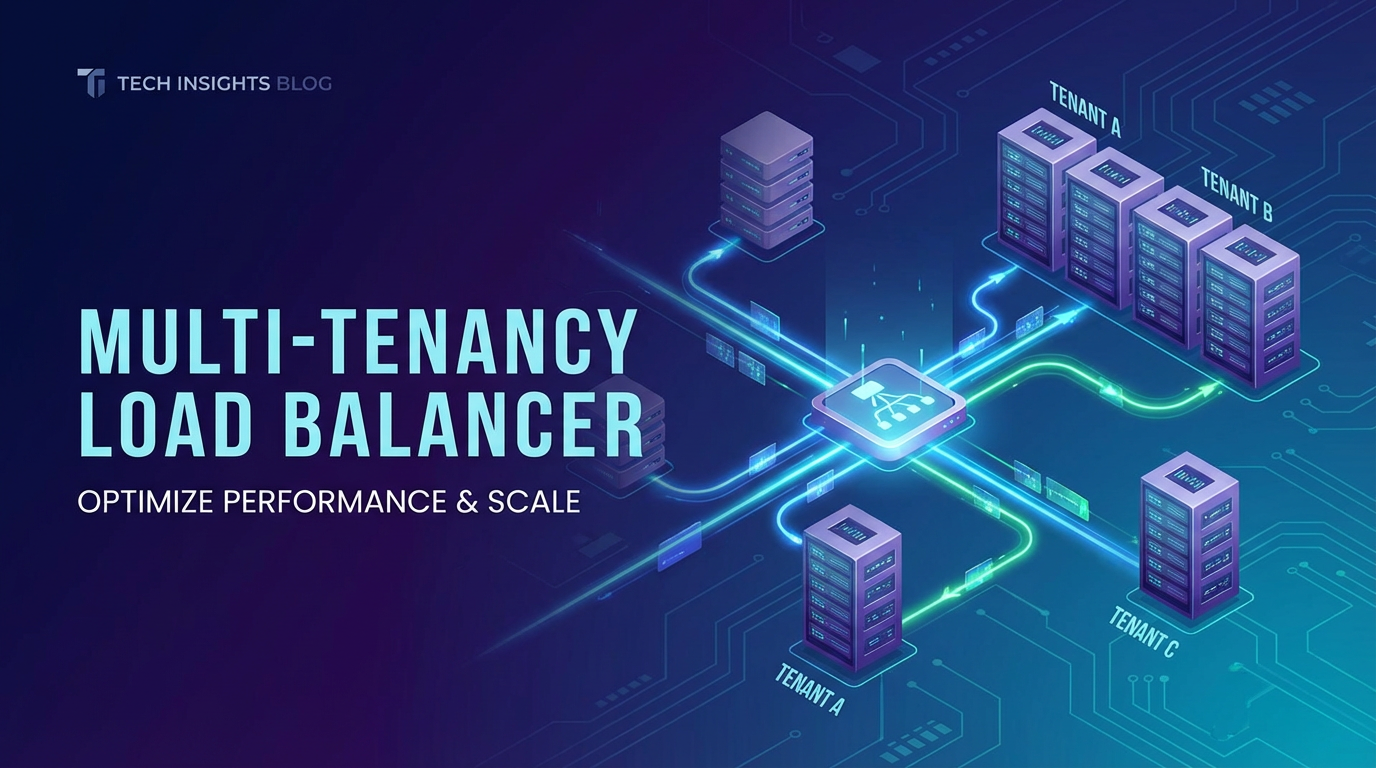
Multi Tenancy Load Balancer: Optimize Performance & Scale


The digital landscape of today is profoundly shaped by two critical architectural paradigms: multi-tenancy and load balancing. As businesses increasingly migrate to cloud-native environments, build Software-as-a-Service (SaaS) offerings, and manage complex microservices architectures, the ability to efficiently serve multiple customers or internal teams from a shared infrastructure becomes paramount. This quest for efficiency is inextricably linked with the need for robust performance, unwavering availability, and seamless scalability. A multi-tenancy load balancer sits at the intersection of these demands, serving as a sophisticated traffic orchestrator that ensures each tenant receives optimal service while resources are utilized with maximum efficacy. This extensive exploration will delve into the intricate mechanics, profound benefits, inherent challenges, and advanced strategies associated with designing, implementing, and managing multi-tenant load balancing solutions, aiming to unravel how they unlock unparalleled performance and scale for modern digital platforms.
Understanding the Pillars: Multi-Tenancy and Load Balancing
To fully appreciate the nuanced role of a multi-tenancy load balancer, it's essential to first establish a solid understanding of its foundational components. Both multi-tenancy and load balancing are architectural cornerstones, each addressing distinct yet complementary challenges in distributed systems.
The Essence of Multi-Tenancy
Multi-tenancy is an architectural principle where a single instance of a software application and its underlying infrastructure serves multiple distinct customer organizations, known as tenants. In this model, each tenant’s data and configurations are logically isolated and remain invisible to other tenants, even though they share the same physical or virtual resources. This isolation is crucial for security, privacy, and customization, giving each tenant the illusion of a dedicated application instance. The primary motivation behind adopting a multi-tenant architecture is often resource optimization and cost reduction. By pooling resources like computing power, storage, and network bandwidth across numerous tenants, providers can achieve significant economies of scale. Instead of deploying and maintaining separate software instances for every client, a single codebase and infrastructure footprint can cater to a vast customer base. This approach simplifies maintenance, upgrades, and operational overhead, as changes applied to the single instance benefit all tenants simultaneously.
Consider a popular SaaS platform like a Customer Relationship Management (CRM) system. When hundreds or thousands of businesses subscribe to this CRM, the provider doesn't spin up a completely new server and database for each one. Instead, they run a single, highly scalable application that uses logical separation to segregate the data and user experiences for each company. Tenant A's sales leads are distinct from Tenant B's, even though both are stored within the same underlying database system and processed by the same application servers. This architectural choice inherently introduces complexities related to data segregation, security policies, and ensuring fair resource allocation, preventing a "noisy neighbor" scenario where one tenant's heavy usage impacts others. The goal is to provide a consistent, high-quality experience for all, irrespective of their size or traffic patterns.
The Dynamics of Load Balancing
Load balancing, at its core, is the process of distributing incoming network traffic across a group of backend servers or resources, often referred to as a server farm or pool. The primary objective is to optimize resource utilization, maximize throughput, minimize response time, and avoid overloading any single server. By intelligently spreading the workload, load balancers ensure high availability and reliability, as well as providing the necessary horizontal scalability to handle surges in traffic or accommodate growth. When one server fails, the load balancer automatically redirects traffic to the healthy servers, maintaining service continuity without manual intervention. This proactive approach to traffic management is indispensable for any modern web application or service that expects significant user engagement.
Load balancers can operate at different layers of the OSI model. Layer 4 load balancers distribute traffic based on network-layer information such as IP addresses and port numbers. They are fast and efficient but have limited visibility into the application-layer content. In contrast, Layer 7 load balancers operate at the application layer, allowing them to make more intelligent routing decisions based on HTTP headers, cookies, URL paths, and even the content of the request itself. This deeper insight enables advanced features like content-based routing, SSL termination, and cookie persistence, which are crucial for complex applications. Various algorithms dictate how traffic is distributed, ranging from simple methods like Round Robin, where requests are forwarded sequentially to each server in the pool, to more sophisticated algorithms like Least Connections, which sends new requests to the server with the fewest active connections, ensuring a more even distribution of current workload. The strategic deployment of load balancers is a foundational element in building resilient, high-performing, and scalable distributed systems, acting as the intelligent gateway to an application's backend.
The Synergy: Multi-Tenancy and Load Balancing in Concert
The convergence of multi-tenancy and load balancing creates a powerful synergy, addressing the unique challenges posed by shared infrastructure environments. In a multi-tenant application, requests from various tenants arrive at the system, and these requests must be efficiently routed, processed, and responded to, all while maintaining strict tenant isolation and ensuring equitable resource distribution. This is precisely where a multi-tenancy load balancer becomes an indispensable component, acting as the first point of contact for all incoming traffic and intelligently directing it to the appropriate backend resources.
Imagine a cloud service provider offering a suite of APIs to thousands of different businesses. Each business is a tenant, utilizing shared compute resources behind a common endpoint. Without a sophisticated load balancing mechanism, a sudden spike in requests from one large tenant could overwhelm a single application server, leading to degraded performance or even outages for all other tenants sharing that server. A multi-tenancy aware load balancer mitigates this by distributing these requests across a pool of application servers, ensuring that no single server becomes a bottleneck. Furthermore, it can apply tenant-specific routing rules, performance policies, and security controls, effectively isolating the impact of one tenant's traffic from another while maximizing the utilization of the underlying infrastructure. This intelligent orchestration is not merely about distributing requests; it's about context-aware distribution, ensuring that the architectural benefits of multi-tenancy—cost savings and simplified management—are fully realized without compromising performance, reliability, or security for any individual tenant. It's the critical piece that allows shared infrastructure to feel like dedicated infrastructure to each user.
Key Challenges in Multi-Tenant Load Balancing
While the benefits of combining multi-tenancy with load balancing are compelling, the implementation is not without its complexities. Several significant challenges must be meticulously addressed to ensure a successful and robust solution. Overlooking these aspects can lead to performance degradation, security vulnerabilities, and ultimately, an unsatisfactory experience for tenants.
Tenant Isolation and "Noisy Neighbor" Prevention
One of the foremost challenges is maintaining robust tenant isolation. In a shared environment, it's crucial to ensure that the activities of one tenant do not negatively impact the performance or data security of another. This is often referred to as the "noisy neighbor" problem. If Tenant A initiates a computationally intensive operation or experiences a massive traffic surge, it should not consume excessive shared resources to the detriment of Tenant B, which might only be performing light operations. A multi-tenant load balancer must implement mechanisms to prevent this, such as intelligent queuing, priority-based routing, or even dedicated resource pools for high-priority tenants, while still managing the overall traffic flow. Achieving true isolation requires not just network separation but also resource governance at the application and infrastructure layers, making the load balancer a critical enabler in this multi-layered defense.
Performance Predictability and Service Level Agreements (SLAs)
Ensuring consistent and predictable performance across all tenants is another significant hurdle. Each tenant may have different usage patterns, traffic volumes, and performance expectations, often codified in Service Level Agreements (SLAs). The load balancer must be capable of dynamically adjusting its distribution strategies to meet these diverse SLAs. This might involve real-time monitoring of server loads and tenant-specific metrics, and then making routing decisions that prioritize requests from tenants with stricter performance guarantees. Predictive analytics, integrated with the load balancer, can anticipate traffic spikes and proactively scale resources or adjust routing, moving beyond reactive load distribution to truly proactive performance management. The complexity arises from balancing the need for global efficiency with individual tenant satisfaction, especially when resource contention is high.
Robust Security and Data Segregation
Security is paramount in any multi-tenant environment. The load balancer, being the entry point for all traffic, plays a pivotal role in enforcing security policies and ensuring data segregation. This includes preventing cross-tenant data leakage, mitigating various cyber threats (like DDoS attacks, SQL injection, cross-site scripting), and enforcing granular access controls. The load balancer must be capable of deep packet inspection, integrating with Web Application Firewalls (WAFs), and applying tenant-specific security policies. For instance, requests from Tenant X might need to be routed through a specific security appliance or use a particular set of encryption protocols, while Tenant Y has different requirements. The ability to handle diverse security profiles for different tenants at the edge, before traffic even reaches the application servers, adds a crucial layer of defense and complexity to the load balancer's responsibilities.
Cost Efficiency and Resource Optimization
While multi-tenancy aims for cost efficiency, optimizing resource utilization in a load-balanced multi-tenant environment presents its own challenges. Over-provisioning resources to guarantee peak performance for all tenants simultaneously can negate the cost benefits. Conversely, under-provisioning can lead to performance bottlenecks and SLA violations. The load balancer must dynamically scale resources up or down based on aggregated and tenant-specific demand, ideally integrating with cloud auto-scaling groups or container orchestration platforms. This involves sophisticated metrics collection and intelligent decision-making to strike a delicate balance between cost, performance, and availability. Implementing efficient resource sharing while ensuring performance isolation is a constant balancing act that requires continuous monitoring and adaptation.
Dynamic Scaling and Elasticity
Modern multi-tenant applications are expected to be highly elastic, capable of scaling seamlessly to meet fluctuating demand. This requires the load balancer to be equally dynamic, able to quickly discover new backend instances, remove unhealthy ones, and re-distribute traffic without service disruption. In containerized environments managed by Kubernetes, for example, the load balancer needs to integrate tightly with the orchestration system to adapt to changes in the pod landscape. For a multi-tenant application, not only the overall load changes, but also the load profile of individual tenants can change dramatically. A truly dynamic multi-tenant load balancer must be able to recognize these shifts and intelligently re-route traffic or trigger scaling actions to maintain optimal performance for all, a task that goes far beyond simple static configuration.
Architectural Patterns for Multi-Tenant Load Balancers
Designing a multi-tenant load balancing solution involves choosing from several architectural patterns, each with its own trade-offs in terms of isolation, cost, and complexity. The choice often depends on the specific requirements of the application, the sensitivity of tenant data, and the desired level of resource sharing.
Dedicated Load Balancers per Tenant
At one end of the spectrum is the dedicated load balancer per tenant approach. In this model, each tenant is allocated its own distinct load balancer instance, whether it's a physical appliance, a virtual machine, or a cloud-native load balancer. This provides the highest degree of isolation. Traffic for Tenant A goes through Load Balancer A, and traffic for Tenant B goes through Load Balancer B.
Pros: * Maximum Isolation: Performance, security, and configuration are entirely separate for each tenant. A problem with one tenant's load balancer will not affect others. * Simple Configuration: Rules can be tailored precisely to a single tenant's needs without worrying about cross-tenant impact. * Enhanced Security: Security policies are tenant-specific, reducing the risk of security misconfigurations affecting multiple tenants. * Clear Attribution of Costs: Resource usage and associated costs are easily attributable to individual tenants.
Cons: * High Cost: Each load balancer instance incurs its own cost, leading to significant expenses as the number of tenants grows. This can quickly become economically unfeasible for a large number of smaller tenants. * Increased Management Overhead: Managing numerous individual load balancers requires more operational effort, including patching, monitoring, and configuring each instance separately. * Underutilization of Resources: Dedicated load balancers may often sit idle or be underutilized if a tenant's traffic is low, leading to inefficient resource consumption.
This pattern is typically reserved for enterprise-grade tenants with extremely strict isolation requirements, very high traffic volumes, or unique security and compliance mandates where cost is a secondary concern.
Shared Load Balancer with Tenant-Aware Routing
The most common and widely adopted architectural pattern for multi-tenant applications is a shared load balancer with tenant-aware routing. In this model, a single load balancer instance (or a cluster of instances for high availability) serves all tenants. The intelligence lies in the load balancer's ability to inspect incoming requests and route them to the correct backend service or application instance based on tenant-specific identifiers.
Mechanism: Tenant identification typically occurs at Layer 7 (application layer) by inspecting: * Host Headers: The most common method, where each tenant accesses the application via a unique subdomain (e.g., tenantA.yourdomain.com, tenantB.yourdomain.com). The load balancer uses the Host header to determine the tenant. * URL Paths: Tenants might be identified by a segment in the URL (e.g., yourdomain.com/tenantA/dashboard, yourdomain.com/tenantB/products). * Custom HTTP Headers: Applications can embed a Tenant-ID in a custom header, which the load balancer then uses for routing. * Cookies: Tenant information stored in cookies can also be used for routing.
Pros: * Cost Efficiency: Significant cost savings due to sharing a single, high-capacity load balancer instance across all tenants. * Simplified Management: Centralized management of one load balancer instance reduces operational overhead. * High Resource Utilization: Resources are pooled and dynamically allocated across tenants, leading to better overall utilization. * Flexible Scaling: The shared load balancer can scale horizontally to handle aggregate tenant traffic, and backend application instances can scale based on tenant-specific demands.
Cons: * Complex Configuration: Routing rules can become very intricate, especially with many tenants and dynamic backend environments. * Potential for "Noisy Neighbor": While intelligent routing helps, aggregate traffic can still strain the shared load balancer itself, or a backend pool shared by multiple tenants, if resource isolation isn't carefully managed. * Security Complexity: Ensuring strict data and access segregation requires careful configuration and continuous monitoring to prevent cross-tenant security breaches. * Slightly Less Isolation: A misconfiguration or performance issue with the shared load balancer could potentially affect all tenants.
This pattern represents the optimal balance for most SaaS providers, balancing cost and management efficiency with acceptable levels of isolation and performance. Platforms offering API management capabilities, such as APIPark, often leverage shared load balancing patterns as part of their robust traffic forwarding and tenant isolation mechanisms, ensuring efficient and secure operations across diverse user bases while managing the full API lifecycle.
Hierarchical Load Balancing (Global and Regional/Tenant-Specific)
A more advanced pattern involves a hierarchical structure, typically seen in large-scale global deployments. Here, a Global Server Load Balancer (GSLB) sits at the top, distributing traffic across different geographical regions or data centers. Within each region, a more localized multi-tenant load balancer (often a shared instance as described above) handles the distribution to backend application servers specific to that region or tenant cluster.
Mechanism: * GSLB: Routes users to the closest or least loaded regional data center, improving latency and disaster recovery. * Regional LBs: Within each region, these LBs implement tenant-aware routing to direct requests to the appropriate backend application instances for the tenants hosted in that region.
Pros: * Global Scalability and Redundancy: Provides geographic load distribution and disaster recovery capabilities. * Improved Latency: Users are routed to geographically closer data centers. * Hybrid Isolation: Combines the benefits of shared LBs within regions with global distribution.
Cons: * Highest Complexity: Significant architectural and operational complexity due to multiple layers of load balancing. * Increased Cost: Multiple layers of load balancers and infrastructure across different regions add to the overall expense. * Synchronized Configuration: Maintaining consistent routing and security policies across multiple layers and regions can be challenging.
This pattern is ideal for global SaaS providers or large enterprises operating across multiple continents, requiring extreme resilience, low latency for a distributed user base, and granular control over traffic flow.
Each architectural pattern serves different needs, and a pragmatic approach often involves selecting the pattern that best aligns with the business requirements, technical capabilities, and risk tolerance. The continuous evolution of cloud-native technologies and sophisticated API Gateway solutions further influences these architectural decisions, enabling more dynamic and intelligent traffic management at the edge.
Core Features and Capabilities of a Multi-Tenant Load Balancer
A multi-tenant load balancer is far more than a simple traffic distributor. It's an intelligent orchestrator equipped with a rich set of features designed to enhance performance, bolster security, and simplify the management of complex shared environments. These capabilities are crucial for maintaining the integrity and efficiency of multi-tenant applications.
Advanced Traffic Distribution Algorithms
Beyond the basic Round Robin or Least Connections, a multi-tenant load balancer often employs sophisticated algorithms that consider the context of the request and the state of the backend. * Tenant-Aware Hashing: Instead of just hashing the client IP, the load balancer might hash a tenant ID (extracted from a header or URL) to consistently route a tenant's requests to the same backend server (sticky sessions). This can improve cache hit rates and simplify session management for specific tenants. * Weighted Least Connections/Round Robin: Allows administrators to assign different weights to backend servers, reflecting their capacity or performance. A more powerful server might receive a higher weight, thus more traffic. In a multi-tenant setup, this could mean assigning higher weights to servers hosting more critical or performance-sensitive tenants. * URL/Content-Based Routing: As discussed, this is fundamental for multi-tenancy. Requests can be routed based on specific URL paths, query parameters, or content within the HTTP body, allowing different parts of a multi-tenant application (e.g., admin portal vs. user dashboard) to be served by different backend pools. * Least Bandwidth/Throughput: Routes new connections to the server currently handling the least amount of traffic volume, optimizing for network capacity.
These advanced algorithms enable granular control over how each tenant's traffic is handled, ensuring optimal resource allocation and preventing resource starvation for any single tenant.
Comprehensive Health Checks
Effective load balancing relies on accurately knowing the health and availability of backend servers. Multi-tenant load balancers perform continuous, active health checks to monitor the status of each server in the pool. * Ping (ICMP): Basic network reachability check. * TCP Connect: Verifies that a server is listening on a specific port. * HTTP/HTTPS: Sends an HTTP request to a specific URL and expects a healthy status code (e.g., 200 OK). This is crucial for verifying that the application itself is responsive, not just the server. * Custom Scripts: Allows for highly specific checks, such as querying a database or an internal API endpoint to ensure deeper application functionality. * Tenant-Specific Health Checks: In some advanced scenarios, a load balancer might even perform tenant-specific health checks, ensuring that not only the application is up, but that it's also responsive for a particular tenant's data.
If a server fails a health check, the load balancer automatically takes it out of rotation and redirects traffic to healthy servers, preventing requests from being sent to unresponsive instances. This ensures high availability and resilience for all tenants.
SSL/TLS Offloading and Centralized Certificate Management
SSL/TLS offloading is a critical feature where the load balancer handles the encryption and decryption of traffic, relieving backend servers of this computationally intensive task. * Performance Enhancement: By offloading SSL, backend servers can focus solely on processing application logic, leading to improved performance and reduced CPU utilization. * Simplified Certificate Management: All SSL certificates are managed centrally on the load balancer, simplifying renewals and updates across potentially hundreds or thousands of backend servers. This is particularly beneficial in multi-tenant environments where numerous subdomains (one per tenant) might require their own certificates or wildcards. * Enhanced Security: The load balancer can enforce stronger TLS versions and ciphers, acting as a security policy enforcement point at the edge of the network. It can also inspect decrypted traffic for malicious content before re-encrypting it and sending it to the backend.
Content-Based Routing and URL Rewriting
As mentioned in architectural patterns, content-based routing is vital for multi-tenancy. The load balancer can inspect Layer 7 attributes like HTTP headers, cookies, URL paths, and query parameters to make routing decisions. * Tenant-Specific Backends: Route requests to different backend server pools based on the Host header (e.g., tenantA.example.com to Pool A, tenantB.example.com to Pool B). * API Versioning: If an API Gateway is integrated or the load balancer acts as one, it can route requests to different API versions (e.g., /api/v1 to old services, /api/v2 to new services). * URL Rewriting: The load balancer can modify URLs before forwarding them to backend servers, allowing for cleaner external URLs while maintaining complex internal routing. This enables greater flexibility in evolving backend services without impacting client applications.
Rate Limiting and Throttling
To prevent abuse, ensure fair resource allocation, and protect backend services from being overwhelmed, multi-tenant load balancers offer sophisticated rate limiting and throttling capabilities. * Global Rate Limiting: Limits the total number of requests the entire system can handle. * Tenant-Specific Rate Limiting: Crucially, allows setting specific limits for each tenant (e.g., Tenant A can make 1000 requests/minute, Tenant B 100 requests/minute) based on their subscription tier or contracted usage. This directly combats the "noisy neighbor" problem. * Burst Control: Allows temporary spikes in traffic while still enforcing long-term limits. * Throttling: Delays requests beyond a certain threshold rather than outright rejecting them, providing a smoother experience.
These features are essential for enforcing resource governance in a multi-tenant environment, ensuring that all tenants receive their allocated share of resources and that no single tenant can monopolize the system.
Access Control and Authentication Integration
The load balancer often serves as an enforcement point for access control and can integrate with various authentication systems. * IP Whitelisting/Blacklisting: Blocks or allows traffic from specific IP addresses or ranges. * Client Certificate Authentication: Verifies the identity of clients using mTLS. * Integration with Identity Providers: For some advanced load balancers or API Gateway products, they can integrate with OAuth2, OpenID Connect, or SAML providers to authenticate users at the edge before forwarding requests to backend services. This ensures that only authorized users, potentially belonging to specific tenants, can even reach the application.
Detailed Logging and Monitoring
Visibility into traffic patterns and system performance is critical for troubleshooting, security auditing, and capacity planning in a multi-tenant environment. * Access Logs: Records every request, including source IP, destination, URL, tenant ID (if identified), response time, and status code. * Error Logs: Captures details about failed requests or load balancer issues. * Metrics: Provides real-time data on active connections, throughput, CPU usage, health check status, and latency. * Tenant-Specific Metrics: Crucially, the load balancer should provide metrics broken down by tenant, allowing providers to understand individual tenant usage and performance impacts.
These logs and metrics, when integrated with external monitoring systems, provide invaluable insights into the behavior of the multi-tenant application, enabling proactive problem resolution and performance optimization. Robust logging and analysis capabilities are also core features of platforms like APIPark, allowing businesses to trace, troubleshoot, and analyze every API call, enhancing system stability and security in multi-tenant contexts.
Each of these features contributes to making a multi-tenant load balancer a sophisticated and indispensable component, transforming raw network traffic into intelligently managed, secure, and highly available service delivery for diverse tenants.
Strategies for Optimizing Performance in Multi-Tenant Load Balancing
Optimizing performance in a multi-tenant load-balanced environment goes beyond simply distributing traffic. It involves a holistic approach that targets every layer of the application delivery stack, ensuring that requests are processed with minimal latency and maximum efficiency for all tenants.
Caching Mechanisms at the Edge
Implementing caching at the load balancer level (edge caching) is one of the most effective strategies for improving performance. * Reduced Backend Load: By caching frequently accessed static content (images, CSS, JavaScript files) or even dynamic API responses (where appropriate and safe for multi-tenancy), the load balancer can serve these requests directly without forwarding them to backend servers. This significantly reduces the load on the application tier. * Lower Latency: Cached responses are delivered much faster, as they don't incur the round-trip delay to the backend. * Tenant-Specific Caching: For multi-tenant applications, careful consideration is needed. Caching must be tenant-aware, ensuring that Tenant A's cached data is never served to Tenant B. This can be achieved by using cache keys that include the tenant ID, or by deploying separate cache instances for tenants with highly sensitive or unique data. For shared, generic content, a common cache is fine. * Cache Invalidation Strategies: Implementing effective cache invalidation policies is crucial to ensure that tenants always receive the most up-to-date information. This could involve time-to-live (TTL) settings or programmatic invalidation upon data changes.
HTTP Compression (Gzip, Brotli)
Applying HTTP compression is another straightforward yet powerful optimization technique. * Reduced Bandwidth Usage: Before sending responses to clients, the load balancer can compress the data (e.g., using Gzip or Brotli algorithms). This reduces the amount of data transferred over the network, leading to faster download times, especially for larger responses. * Faster Page Loads: Smaller response sizes translate directly into faster page loading for end-users, improving the overall perceived performance for all tenants. * Backend CPU Offload: While compression itself consumes some CPU cycles, offloading this task to the load balancer prevents backend servers from spending their valuable processing power on compression, allowing them to focus on application logic.
This is a universally beneficial optimization that has a significant impact on client-side performance across all tenants.
Connection Pooling and Multiplexing
Efficient management of network connections is vital for performance. * Connection Pooling to Backend: The load balancer can maintain a pool of persistent connections to backend servers. When a new client request arrives, instead of establishing a new TCP connection to the backend, the load balancer reuses an existing one from the pool. This reduces the overhead of TCP handshakes and SSL negotiation for each request, significantly speeding up communication. * HTTP/2 Multiplexing: Modern load balancers support HTTP/2, which allows multiple client requests to be sent over a single TCP connection. This reduces the number of connections needed and eliminates head-of-line blocking, further enhancing performance. The load balancer can convert HTTP/1.1 client requests to HTTP/2 for backend communication, or vice-versa, depending on client and server capabilities.
These techniques minimize the latency associated with establishing and tearing down connections, making the entire request-response cycle more efficient.
Intelligent Routing and Prioritization
Leveraging advanced routing capabilities to make more informed decisions about where to send traffic is crucial for performance optimization in multi-tenant setups. * Least Response Time/Least Latency: Instead of just counting connections, the load balancer can actively monitor the response times of backend servers and route new requests to the server that is currently responding fastest. This ensures that traffic is always directed to the most performant available instance. * Proximity-Based Routing (Geo-targeting): For globally distributed multi-tenant applications, routing users to the geographically closest data center or server pool minimizes network latency, providing a faster experience. This is often achieved with Global Server Load Balancing (GSLB) that directs users to regional load balancers. * Tenant Prioritization: In scenarios where SLAs differ, the load balancer can prioritize traffic from high-tier tenants. For example, if two tenants are competing for resources, the load balancer might give preference to the premium tenant's requests, ensuring their performance guarantees are met even under heavy load. This requires careful configuration and monitoring to prevent lower-priority tenants from being completely starved. * Circuit Breaking: Implementing circuit breakers prevents the load balancer from continuously sending requests to failing or slow backend services, giving them time to recover and protecting the overall system from cascading failures. This also ensures that healthy services are not overwhelmed by attempting to handle traffic meant for failing ones.
These strategies allow the multi-tenant load balancer to not only distribute load but to intelligently optimize the path and processing of requests, ensuring a high-quality experience for all users while respecting tenant-specific requirements and agreements. The continuous monitoring and analytical capabilities, which platforms like APIPark also offer for API calls, are indispensable for informing these intelligent routing decisions and understanding their impact.
APIPark is a high-performance AI gateway that allows you to securely access the most comprehensive LLM APIs globally on the APIPark platform, including OpenAI, Anthropic, Mistral, Llama2, Google Gemini, and more.Try APIPark now! 👇👇👇
Strategies for Achieving Scalability in Multi-Tenant Load Balancing
Scalability is not merely about handling more traffic; it's about the ability of a system to grow gracefully and cost-effectively to meet increasing demand without compromising performance or availability. For multi-tenant applications, achieving scalability is a multifaceted challenge that the load balancer plays a central role in addressing.
Horizontal vs. Vertical Scaling
- Horizontal Scaling (Scale Out): This is the preferred method for modern cloud-native and multi-tenant applications. It involves adding more instances of a resource (e.g., more backend servers, more load balancer instances) to distribute the load.
- For Load Balancers: Deploying multiple load balancer instances behind a higher-level DNS-based load balancer or a cloud-provider's internal load balancer ensures that the load balancer itself doesn't become a single point of failure or a bottleneck. Each load balancer instance can then manage a subset of the tenant traffic.
- For Backend Services: Adding more application server instances, often within auto-scaling groups, allows the multi-tenant application to handle increased demand from all tenants. The load balancer automatically detects and incorporates these new instances into its distribution pool.
- Vertical Scaling (Scale Up): This involves increasing the capacity of existing resources (e.g., upgrading a server with more CPU, memory, or network bandwidth). While simpler to implement initially, it has physical limits and often incurs higher costs per unit of performance compared to horizontal scaling. For multi-tenant load balancers, vertical scaling might be used for initial setup or specific high-performance requirements, but horizontal scaling is typically favored for long-term growth.
Auto-Scaling Integration
Tightly integrating the multi-tenant load balancer with auto-scaling mechanisms is fundamental for dynamic scalability. * Backend Auto-Scaling Groups: The load balancer should be configured to work seamlessly with cloud provider auto-scaling groups or Kubernetes Horizontal Pod Autoscalers. When backend server load (e.g., CPU utilization, request queue length) crosses predefined thresholds, new instances are automatically launched. The load balancer then automatically registers these new instances and starts distributing traffic to them. When load decreases, instances are terminated, optimizing costs. * Load Balancer Auto-Scaling: In cloud environments, the load balancer itself can often auto-scale its capacity based on traffic volume. This ensures that the load balancer always has sufficient capacity to handle incoming requests from all tenants without becoming a bottleneck.
This dynamic elasticity ensures that resources are always aligned with demand, preventing over-provisioning during low usage and under-provisioning during peak times.
Elastic Infrastructure and Cloud-Native Load Balancers
Leveraging cloud-native load balancers and elastic infrastructure is a game-changer for multi-tenant scalability. * Managed Services: Cloud providers (AWS ELB/ALB, Azure Load Balancer/Application Gateway, Google Cloud Load Balancer) offer fully managed load balancing services that inherently provide high availability and scalability. They are designed to handle massive traffic volumes and integrate seamlessly with other cloud services like auto-scaling groups, WAFs, and DNS. * Dynamic Resource Allocation: Cloud infrastructure allows for on-demand provisioning and de-provisioning of compute, network, and storage resources. This elasticity is perfectly suited for multi-tenant applications, which often experience unpredictable and fluctuating workloads across their diverse tenant base. The load balancer acts as the intelligent front-end, abstracting this dynamic backend from the clients. * Kubernetes Ingress Controllers/Service Meshes: In containerized multi-tenant environments, Ingress controllers (like NGINX Ingress, Traefik) and service meshes (like Istio, Linkerd) provide highly sophisticated load balancing and traffic management capabilities within the cluster. They can handle tenant-aware routing, service discovery, and fine-grained traffic policies at the microservice level, often working in conjunction with an external cloud load balancer that fronts the entire cluster.
Global Server Load Balancing (GSLB) for Geographic Distribution
For multi-tenant applications serving a global user base, GSLB is essential for scalability and resilience. * Disaster Recovery: GSLB can route traffic away from a failing data center to a healthy one in another region, providing business continuity for all tenants. * Improved Latency: By directing users to the geographically closest data center, GSLB minimizes network latency, improving response times and user experience across all tenants globally. * Follow-the-Sun Operations: For operations that require 24/7 support, GSLB can shift traffic to data centers where operational teams are active, aligning resources with demand. * Multi-Region Redundancy: Provides a robust architecture where the failure of an entire region does not lead to a global outage for the multi-tenant platform.
Implementing these strategies allows multi-tenant applications to achieve a level of scalability that can gracefully accommodate growth from a few tenants to thousands, ensuring consistent performance and availability regardless of the load. This adaptability is critical for long-term success in the dynamic cloud environment.
Security Considerations in Multi-Tenant Load Balancing
Given that a multi-tenant load balancer is the primary entry point for all tenant traffic, it inherently bears significant responsibility for the security posture of the entire system. Ensuring robust security at this layer is paramount to protect sensitive tenant data, prevent unauthorized access, and mitigate various cyber threats.
Data Isolation and Privacy
The core principle of multi-tenancy—logical isolation of tenant data—must be enforced rigorously at the load balancer level. * Tenant ID Validation: The load balancer can perform initial validation of tenant identifiers in requests, rejecting malformed or unauthorized tenant IDs before they reach backend services. * Context-Based Security Policies: Different tenants may have different security requirements or compliance mandates. The load balancer should be able to apply tenant-specific security policies, such as requiring specific authentication mechanisms or enforcing certain encryption standards, based on the identified tenant. * Preventing Cross-Tenant Data Leakage: While actual data segregation occurs in backend databases and application logic, the load balancer's routing decisions must prevent any misrouting that could expose one tenant's data to another. Careful configuration of content-based routing rules is crucial here.
DDoS Protection and Mitigation
Distributed Denial of Service (DDoS) attacks can overwhelm a multi-tenant application, making it unavailable to all tenants. The load balancer is the first line of defense. * Traffic Filtering: Identifies and blocks malicious traffic patterns, such as SYN floods, UDP floods, or HTTP GET floods. * Rate Limiting: As discussed, tenant-specific and global rate limiting prevents individual tenants or malicious actors from monopolizing resources. * Anomaly Detection: Advanced load balancers, often integrated with specialized DDoS mitigation services, can detect unusual traffic volumes or patterns and automatically apply countermeasures. * IP Reputation Blocking: Blocks traffic from known malicious IP addresses or ranges.
Cloud-native load balancers often have integrated DDoS protection services, providing a scalable defense against these attacks.
Web Application Firewall (WAF) Integration
A WAF provides application-layer security, protecting against common web exploits and vulnerabilities. * SQL Injection, XSS, CSRF Protection: A WAF integrated with or embedded in the load balancer inspects incoming requests and outgoing responses for known attack patterns, blocking malicious payloads before they reach the backend application. * OWASP Top 10 Coverage: WAFs are designed to protect against vulnerabilities identified in the OWASP Top 10 list, which represents the most critical web application security risks. * Custom Rules: Allows administrators to define custom security rules to protect against specific threats or vulnerabilities unique to the multi-tenant application.
Deploying a WAF at the load balancer ensures that all tenant traffic is inspected and protected before it consumes valuable backend resources.
Secure Access to Control Plane and Management Interfaces
The management interface of the multi-tenant load balancer itself is a critical security perimeter. * Role-Based Access Control (RBAC): Ensures that only authorized personnel can access and modify load balancer configurations, with permissions strictly limited to their roles. * Multi-Factor Authentication (MFA): Requires multiple forms of verification for administrative access, significantly reducing the risk of unauthorized configuration changes. * Audit Logging: Detailed logs of all configuration changes and administrative actions should be maintained for security auditing and compliance purposes. * Network Segmentation: The management interface should be isolated on a separate, secure network segment, inaccessible from public internet.
Encryption In-Transit and At Rest
While the load balancer handles SSL/TLS offloading, ensuring end-to-end encryption is vital. * Client-to-Load Balancer (Frontend Encryption): Always enforce HTTPS for external client connections. * Load Balancer-to-Backend (Backend Encryption): For highly sensitive data or strict compliance, the load balancer should re-encrypt traffic before forwarding it to backend servers (known as "re-encryption" or "full-chain SSL"). This protects data even within the internal network. * Key Management: Securely manage SSL/TLS certificates and private keys, ideally using hardware security modules (HSMs) or cloud key management services.
Auditing and Compliance
For many multi-tenant applications, especially those handling sensitive data (e.g., healthcare, financial), compliance with regulations like GDPR, HIPAA, or PCI DSS is mandatory. * Detailed Logging: The load balancer's comprehensive access and error logs are invaluable for demonstrating compliance and for forensic analysis in case of a security incident. These logs must capture tenant-specific identifiers to track individual tenant activity. * Policy Enforcement Records: Document how security policies (rate limiting, access control) are applied and enforced for each tenant. * Regular Audits: Periodically audit load balancer configurations and logs to ensure ongoing compliance and identify potential vulnerabilities.
By diligently addressing these security considerations, a multi-tenant load balancer transforms into a robust security gatekeeper, safeguarding the application and its diverse tenant base from a multitude of threats while maintaining a high standard of data privacy and integrity.
Operational Aspects and Management of Multi-Tenant Load Balancers
Managing a multi-tenant load balancer in production requires more than just initial configuration. It involves a continuous cycle of monitoring, automation, and integration to ensure optimal performance, high availability, and efficient resource utilization for all tenants. Effective operational practices are crucial for long-term success and for maintaining SLAs.
Centralized Management Interfaces
For complex multi-tenant environments, a centralized management interface for the load balancer is indispensable. * Unified Dashboard: A single pane of glass to view the status, performance metrics, and configuration of all load balancer instances and their associated backend pools. This dashboard should ideally provide tenant-specific views, allowing operations teams to quickly identify issues affecting individual tenants. * Configuration Management: Tools within the interface to easily create, modify, and delete virtual servers, backend pools, health monitors, and routing rules. * Policy Management: Centralized control over security policies (WAF rules, rate limits), SSL profiles, and content routing rules. * Audit Trails: Features to track who made which configuration changes and when, crucial for security and compliance.
Cloud-native load balancers benefit greatly from their respective cloud provider's console and APIs, offering robust centralized management.
Automation and Infrastructure as Code (IaC)
Manual configuration of load balancers, especially in dynamic multi-tenant environments, is prone to errors and cannot scale. Automation is key. * Terraform, CloudFormation, Ansible: Using IaC tools allows load balancer configurations to be defined in code, version-controlled, and deployed consistently across environments. This includes defining virtual IPs, listener ports, health checks, backend server pools, and routing rules. * Dynamic Configuration Updates: Integrating with service discovery mechanisms (like Consul, etcd, or Kubernetes) allows the load balancer to automatically update its backend server lists as application instances scale up or down, or as new microservices are deployed. This is critical for elastic multi-tenant applications. * Automated Testing: Including load balancer configurations in automated testing pipelines ensures that changes do not introduce regressions or security vulnerabilities.
Automation reduces operational toil, improves reliability, and speeds up deployment cycles, which is particularly beneficial when managing the varied needs of multiple tenants.
Integration with Monitoring and Alerting Systems
Proactive monitoring and alerting are vital for detecting and responding to issues before they impact tenants. * Metrics Export: The load balancer should export comprehensive metrics (connections, throughput, latency, error rates, CPU/memory usage) to centralized monitoring systems like Prometheus, Datadog, or New Relic. Crucially, these metrics should ideally be broken down by tenant. * Custom Dashboards: Create dashboards that visualize key performance indicators (KPIs) for the load balancer and its backend services, with specific views for individual tenants or tenant groups. * Threshold-Based Alerts: Configure alerts to trigger when metrics cross predefined thresholds (e.g., high error rates for a specific tenant, low available capacity in a backend pool, load balancer CPU usage spikes). These alerts should be routed to appropriate on-call teams. * Log Aggregation: Centralize load balancer access and error logs in platforms like ELK Stack (Elasticsearch, Logstash, Kibana) or Splunk for detailed analysis, troubleshooting, and security auditing.
APIs for Programmatic Control and Extensibility
Modern load balancers and especially API Gateway solutions offer rich APIs, enabling programmatic control and deep integration with other systems. * Dynamic Rule Management: Other internal systems (e.g., a tenant management system) can use these APIs to dynamically add or modify tenant-specific routing rules, rate limits, or security policies on the load balancer as tenants onboard, upgrade their plans, or change their configurations. * Orchestration Integration: Integrate with orchestration platforms to automate the entire lifecycle of backend services, from deployment to scaling, ensuring the load balancer always has the most up-to-date information. * Custom Workflow Automation: Build custom automation workflows that respond to alerts (e.g., automatically adding capacity if a specific tenant's traffic increases rapidly) or perform routine tasks like certificate renewals.
For platforms managing a myriad of APIs, especially in a multi-tenant setup, robust API management platforms like APIPark become indispensable. They not only offer advanced API lifecycle management but also integrate features for traffic forwarding, load balancing, and independent access permissions for each tenant, ensuring efficient and secure operations across diverse user bases. This integration highlights how the concept of load balancing extends from infrastructure to application-specific traffic management within an API Gateway, providing granular control and visibility for multi-tenant API consumption.
By embracing these operational best practices, organizations can ensure that their multi-tenant load balancing infrastructure remains robust, adaptable, and highly performant, consistently delivering a high-quality experience to all tenants while minimizing operational overhead.
Use Cases and Industry Examples for Multi-Tenant Load Balancing
The principles of multi-tenancy and load balancing are pervasive across various industries and application types. Understanding their practical application helps illustrate their profound impact on modern digital infrastructure.
Software-as-a-Service (SaaS) Providers
SaaS is perhaps the most direct and common use case for multi-tenant load balancing. Companies offering services like CRM, ERP, project management tools, collaboration platforms, or marketing automation software depend heavily on this architecture. * Example: A popular online productivity suite provides its service to hundreds of thousands of businesses globally. Each business is a tenant, accessing the suite via a unique subdomain (e.g., companyX.productivitysuite.com). A multi-tenant load balancer (e.g., AWS Application Load Balancer or an NGINX Plus instance) sits at the edge, inspecting the Host header to route requests to the correct backend application servers that manage companyX's data and user sessions. It also applies rate limits based on each company's subscription tier, ensuring fair usage and preventing any single company from overwhelming shared resources. This setup allows the SaaS provider to onboard new customers rapidly, offer competitive pricing, and streamline updates across its entire customer base. The load balancer also performs SSL offloading, simplifying certificate management for potentially thousands of subdomains.
Cloud Service Providers (IaaS, PaaS, FaaS)
The very fabric of cloud computing relies on multi-tenancy and sophisticated load balancing. * Example: A major Infrastructure-as-a-Service (IaaS) provider offers virtual machines, databases, and storage. While users perceive dedicated resources, the underlying hypervisors, network infrastructure, and storage arrays are shared. Cloud load balancers (e.g., AWS Elastic Load Balancing, Azure Load Balancer) are fundamental components, distributing traffic to customer-provisioned virtual servers or container clusters. They handle billions of requests per second, ensuring high availability and fault tolerance for diverse customer workloads. For Platform-as-a-Service (PaaS) offerings, like managed database services or application hosting platforms, the load balancer routes requests to specific customer instances of databases or application containers, often employing tenant-aware routing based on connection strings or metadata.
Microservices Architectures with Shared Infrastructure
Many enterprises are adopting microservices, and when these are deployed on shared Kubernetes clusters or similar container orchestration platforms, multi-tenancy principles often apply, even if the "tenants" are internal teams or different business units. * Example: A large e-commerce company has dozens of microservices (e.g., product catalog, order processing, user authentication) deployed on a shared Kubernetes cluster. Different development teams might own different sets of microservices, effectively acting as "internal tenants" sharing the compute infrastructure. An Ingress controller (acting as a multi-tenant load balancer/ API Gateway) fronts the cluster, routing requests based on URL paths or service names to the correct microservice. For instance, /api/products goes to the product catalog service, and /api/users goes to the user service. The Ingress controller ensures that traffic is evenly distributed across multiple pods of each microservice, and can apply tenant-specific rate limits (e.g., limiting requests from a specific internal API consumer) or security policies.
Content Delivery Networks (CDNs)
CDNs are a prime example of geographically distributed multi-tenancy. * Example: A CDN provider hosts static and dynamic content for thousands of websites and applications (tenants) globally. When a user requests content, a DNS-based GSLB directs them to the closest CDN edge node. This edge node acts as a multi-tenant load balancer, serving the cached content for the specific tenant (website) from its local cache or forwarding the request to the origin server if not cached, ensuring optimal performance and availability worldwide. The CDN system is inherently multi-tenant, pooling massive global resources to serve diverse content providers.
Enterprise API Gateways
As mentioned previously, robust API Gateway solutions are essentially specialized multi-tenant load balancers for API traffic. * Example: An enterprise deploys an API Gateway to expose its internal services as APIs to external partners and mobile applications. Each partner or application can be considered a tenant, with unique access keys and rate limits. The API Gateway handles authentication (often using tenant-specific API keys or OAuth tokens), applies tenant-specific rate limits, transforms API requests, and then routes them to the appropriate backend microservices. Products like APIPark specialize in this domain, providing an API Gateway and API management platform that facilitates multi-tenant API invocation, lifecycle management, and ensures independent permissions for each tenant while sharing underlying infrastructure, demonstrating a direct application of multi-tenant load balancing principles at the application layer.
These diverse examples underscore the versatility and critical importance of multi-tenant load balancing across a broad spectrum of modern digital infrastructure, from global web services to intricate internal microservice ecosystems.
Choosing the Right Multi-Tenant Load Balancer Solution
Selecting the appropriate multi-tenant load balancer is a strategic decision that can significantly impact performance, scalability, security, and operational costs. The choice is not one-size-fits-all and depends heavily on specific organizational requirements and infrastructure.
Factors to Consider
- Performance Requirements:
- Throughput (TPS/CPS): How many requests per second or connections per second does the load balancer need to handle?
- Latency: What are the acceptable latency targets for different tenants?
- Peak vs. Average Load: The solution must be able to handle peak traffic spikes gracefully without degrading performance for any tenant.
- Scalability Needs:
- Number of Tenants: How many tenants do you anticipate supporting initially and in the future?
- Backend Instances: How many backend servers or application instances will the load balancer manage?
- Geographic Distribution: Do you need to serve tenants globally, requiring GSLB capabilities?
- Elasticity: Does the solution integrate with auto-scaling mechanisms for dynamic capacity adjustments?
- Feature Set and Capabilities:
- Layer 4 vs. Layer 7: Does your application require advanced Layer 7 features like content-based routing, URL rewriting, SSL offloading, and WAF capabilities?
- Multi-Tenancy Features: Does it offer tenant-specific rate limiting, access control, and routing rules?
- Security Features: Integrated WAF, DDoS protection, advanced SSL/TLS management, client authentication.
- Observability: Robust logging, monitoring, and alerting capabilities, ideally with tenant-specific metrics.
- API for Management: Does it provide a comprehensive API for programmatic control and automation?
- Cost and Licensing:
- Hardware vs. Software: Hardware appliances often have high upfront costs but predictable performance. Software-defined solutions (virtual appliances, cloud-native) offer more flexibility and often a pay-as-you-go model.
- Cloud-Native Pricing: Understand the cost model for cloud load balancers (per hour, per data processed, per connection, per rule).
- Licensing Models: For commercial software load balancers, consider perpetual licenses vs. subscription models, and how scaling impacts licensing costs.
- Deployment Model (Cloud vs. On-Premise vs. Hybrid):
- Cloud-Native: If your application is entirely in the cloud, cloud provider's managed load balancers are often the easiest and most scalable option. They offer deep integration with other cloud services.
- On-Premise: For private data centers, you might choose physical appliances (e.g., F5 BIG-IP, Citrix ADC) or software-based solutions (e.g., NGINX Plus, HAProxy Enterprise, Kemp LoadMaster).
- Hybrid: A mix of both, often requiring a unified management plane or compatible solutions.
- Integration Ecosystem:
- Monitoring Tools: Can it integrate with your existing monitoring and alerting stack?
- CI/CD Pipelines: Does it support Infrastructure as Code (IaC) tools like Terraform or Ansible for automated deployment?
- Identity Providers: Can it integrate with your authentication systems for granular access control?
- Container Orchestration: For Kubernetes or similar, how well does it integrate as an Ingress controller or service mesh component?
- Vendor Support and Community:
- Commercial Support: For critical production systems, reliable vendor support is essential.
- Open-Source vs. Commercial: Open-source options (HAProxy, NGINX Open Source) offer flexibility and community support but might require more in-house expertise. Commercial versions often add enterprise-grade features and professional support.
Common Solutions Landscape
| Solution Category | Examples | Key Characteristics | Best Suited For |
|---|---|---|---|
| Cloud-Native LBs | AWS ALB/NLB, Azure Application Gateway/LB, Google Cloud LB | Fully managed, highly scalable, integrated with other cloud services, pay-as-you-go, robust auto-scaling and security features. Excellent for multi-tenant applications entirely hosted in a single cloud. | Cloud-first strategies, SaaS providers, high elasticity needs. |
| Commercial Software LBs | NGINX Plus, HAProxy Enterprise, Kemp LoadMaster, F5 BIG-IP Virtual Edition, Citrix ADC VPX | Software-defined, can run on-premise or in cloud VMs. Offer advanced Layer 7 features, comprehensive management UIs, strong security features (WAF), and enterprise support. Provide excellent control and flexibility. NGINX Plus is particularly popular for high-performance API Gateway use cases, often in multi-tenant contexts. | Hybrid cloud, complex on-premise, highly customized routing, large enterprises. |
| Open-Source Software LBs | NGINX Open Source, HAProxy, Envoy Proxy | Free, highly performant, flexible, and extensible. Require significant in-house expertise for configuration, management, and support. Ideal for deep customization and for teams with strong DevOps capabilities. Envoy Proxy is often used as a data plane for service meshes (e.g., Istio) and offers advanced traffic management capabilities suitable for complex microservices in multi-tenant clusters. | Cost-conscious, highly technical teams, specialized use cases, Kubernetes Ingress. |
| API Gateways | APIPark, Kong, Apigee, Mulesoft, Azure API Management | Specialized for managing API traffic. Offer features like authentication, authorization, rate limiting, request/response transformation, API versioning, and developer portals. Many provide multi-tenancy features for API consumers, often built on top of or integrated with underlying load balancing mechanisms. They are crucial for exposing and governing APIs in a multi-tenant fashion, handling the "last mile" of intelligent traffic management for APIs. | Exposing and managing APIs, partner integrations, internal API marketplaces. |
Making an informed decision requires a thorough assessment of current and future needs, aligning technical capabilities with business objectives. The landscape is rich with options, each providing distinct advantages for specific multi-tenant scenarios.
The Future of Multi-Tenant Load Balancing
The field of multi-tenant load balancing is continuously evolving, driven by advancements in cloud computing, artificial intelligence, and new networking paradigms. Several key trends are shaping its future.
AI/ML-Driven Intelligent Load Balancing
The integration of Artificial Intelligence (AI) and Machine Learning (ML) is poised to revolutionize load balancing. * Predictive Scaling: Instead of reactively scaling based on current load, AI/ML models can analyze historical traffic patterns, seasonal trends, and even external events to predict future demand. This enables the load balancer to proactively provision resources, ensuring optimal performance and cost efficiency for all tenants before traffic surges occur. * Adaptive Routing: AI algorithms can learn and adapt routing decisions in real-time based on a multitude of factors beyond simple metrics, such as network conditions, application performance, tenant-specific SLAs, and even sentiment analysis of system logs. This allows for highly intelligent traffic distribution that can dynamically optimize for factors like cost, latency, or throughput for individual tenants. * Anomaly Detection: ML models can identify subtle anomalies in traffic patterns or application behavior that might indicate a developing issue or a security threat (e.g., a "noisy neighbor" or a nascent DDoS attack). The load balancer can then automatically take corrective action, such as isolating the offending tenant or re-routing traffic. * Self-Optimizing Systems: The ultimate vision is a self-optimizing multi-tenant load balancing system that continuously learns, adapts, and fine-tunes its parameters without human intervention, ensuring peak performance and efficiency around the clock.
Deeper Integration with Service Mesh
In microservices architectures, service meshes (like Istio, Linkerd, Consul Connect) are gaining prominence for managing inter-service communication. * Fine-Grained Traffic Control: While an external load balancer handles ingress traffic to the cluster, service meshes extend load balancing and traffic management capabilities to the intra-cluster level. This allows for extremely granular control over traffic between microservices, including tenant-aware routing, retries, circuit breaking, and canary deployments for individual tenants or features. * Unified Policy Enforcement: The future will see tighter integration between the external multi-tenant load balancer/ API Gateway and the internal service mesh. This allows for a unified policy enforcement model, where security, rate limiting, and routing rules are consistently applied from the edge of the network all the way down to individual microservices within the cluster, and all in a multi-tenant context. * Enhanced Observability: Service meshes provide deep observability into inter-service communication. When combined with the load balancer's edge observability, this creates a comprehensive view of how each tenant's requests flow through the entire distributed system, aiding in performance tuning and troubleshooting.
Edge Computing and 5G Influence
The rise of edge computing and the rollout of 5G networks will further push load balancing intelligence closer to the user. * Ultra-Low Latency: Multi-tenant applications will deploy smaller, distributed load balancers at the network edge, leveraging 5G's low latency to process requests closer to the end-users. This is especially critical for real-time applications and IoT services where every millisecond counts for multi-tenant interactions. * Distributed Multi-Tenancy: The concept of multi-tenancy will extend to edge locations, where load balancers will manage shared resources across different tenants at localized points of presence, providing hyper-local service delivery. * Enhanced Security at the Edge: Distributing security intelligence, including WAFs and DDoS protection, to edge load balancers will provide faster response times to threats and reduce the attack surface for multi-tenant applications.
Serverless and Function-as-a-Service (FaaS) Integration
Serverless architectures are inherently multi-tenant, and load balancing plays a crucial role here as well. * Event-Driven Scaling: Load balancers will become even more adept at integrating with serverless platforms, routing event-driven invocations to functions, and leveraging the automatic scaling capabilities of FaaS. * Cold Start Optimization: Future load balancers might employ intelligent routing or pre-warming strategies to mitigate cold start issues in serverless functions, ensuring consistent performance for tenants even with highly elastic workloads.
These future trends highlight a move towards more intelligent, autonomous, and deeply integrated multi-tenant load balancing solutions. As applications become more distributed, dynamic, and diverse, the load balancer will evolve from a static traffic manager into a sophisticated, AI-powered orchestrator that understands the context of each tenant and dynamically adapts the entire application delivery chain to meet evolving demands. The role of the API Gateway will continue to expand in this future, serving as the intelligent entry point for such distributed, multi-tenant systems.
Conclusion
The multi-tenancy load balancer stands as an indispensable architectural cornerstone in the modern digital landscape. Its ability to intelligently distribute traffic, optimize resource utilization, and enforce stringent security policies across diverse tenant populations is not merely a technical advantage but a fundamental enabler for the economic viability and operational efficiency of cloud-native applications, SaaS platforms, and sophisticated microservices architectures. We have journeyed through the foundational concepts of multi-tenancy and load balancing, dissected the intricate challenges they present when combined, and explored the myriad architectural patterns, core features, and advanced strategies that converge to deliver unparalleled performance and scale.
From ensuring robust tenant isolation and predictable performance to fortifying security at the network's edge and driving cost efficiency through dynamic scaling, the multi-tenant load balancer acts as the primary orchestrator. Its operational management demands a blend of centralized control, automation, and deep observability, leveraging tools and platforms that provide programmatic access and detailed insights into traffic flows. The landscape of solutions, ranging from cloud-native services to robust commercial API Gateway platforms like APIPark, offers a rich array of choices, each tailored to specific requirements and deployment models.
Looking ahead, the evolution of this critical component is exciting, promising AI/ML-driven intelligence for predictive scaling and adaptive routing, seamless integration with service meshes for fine-grained control, and the expansion of its reach to the very edge of the network. As businesses continue their inexorable march towards shared, scalable, and resilient digital infrastructure, the multi-tenancy load balancer will remain at the forefront, not just as a traffic cop, but as a strategic asset that unlocks the full potential of shared resources, ensuring every tenant, regardless of size or demand, experiences optimal performance and unwavering reliability. Its strategic importance will only grow, cementing its status as a pivotal technology for thriving in the age of pervasive cloud computing and complex distributed systems.
Frequently Asked Questions (FAQs)
Q1: What is the primary benefit of using a multi-tenancy load balancer compared to a standard load balancer? A1: The primary benefit is its ability to intelligently manage and distribute traffic while being aware of multiple distinct tenants sharing the same underlying infrastructure. Unlike a standard load balancer that simply distributes overall load, a multi-tenancy load balancer can apply tenant-specific routing rules, rate limits, security policies, and even performance guarantees. This ensures robust tenant isolation, prevents the "noisy neighbor" problem, and optimizes resource utilization across diverse customer bases, which is crucial for SaaS platforms and cloud services.
Q2: How does a multi-tenancy load balancer ensure data isolation between tenants? A2: While actual data segregation primarily occurs at the application and database layers, the load balancer plays a crucial role by enforcing tenant-aware routing. It inspects incoming requests (e.g., HTTP host headers, URL paths, or custom headers containing tenant IDs) to ensure that each request is directed to the correct backend service instance or logical segment associated with that specific tenant. It can also apply tenant-specific access controls and security policies, preventing unauthorized cross-tenant access at the edge, even if the backend services share physical resources.
Q3: Can a multi-tenancy load balancer help with the "noisy neighbor" problem? A3: Absolutely. The "noisy neighbor" problem occurs when one tenant's heavy usage disproportionately consumes shared resources, negatively impacting other tenants. A multi-tenancy load balancer mitigates this by implementing tenant-specific rate limiting and throttling, ensuring that no single tenant can monopolize system resources. It can also employ intelligent routing algorithms that consider individual tenant loads or prioritize traffic based on SLAs, distributing requests across backend servers in a way that minimizes contention and ensures fair resource allocation for all tenants.
Q4: What are the key differences between a multi-tenancy load balancer and an API Gateway in a multi-tenant context? A4: While there's overlap, an API Gateway is a specialized form of a load balancer, particularly for API traffic, operating at a higher abstraction level (Layer 7). A multi-tenancy load balancer focuses broadly on distributing network traffic to backend services, often based on basic tenant identifiers like hostnames. An API Gateway, like APIPark, offers more advanced API-specific functionalities in a multi-tenant context, such as API key management, authentication/authorization, request/response transformation, versioning, and developer portals, in addition to basic traffic forwarding and load balancing. An API Gateway often sits behind a broader multi-tenancy load balancer or incorporates its own multi-tenant load balancing capabilities specific to APIs.
Q5: What deployment options are available for multi-tenancy load balancers? A5: There are several common deployment options: 1. Cloud-Native Load Balancers: Fully managed services offered by cloud providers (e.g., AWS ALB, Azure Application Gateway) that are highly scalable and integrate seamlessly with other cloud services. Ideal for cloud-first strategies. 2. Commercial Software Load Balancers: Software-defined solutions (e.g., NGINX Plus, HAProxy Enterprise) that can run on-premise, in virtual machines, or in cloud environments. They offer advanced features and enterprise support. 3. Open-Source Software Load Balancers: Free options (e.g., NGINX Open Source, HAProxy) that provide high performance and flexibility but require more in-house expertise for management and support. Often used in Kubernetes as Ingress controllers. 4. Hardware Load Balancers: Physical appliances (e.g., F5 BIG-IP) for on-premise data centers, offering dedicated performance but higher upfront costs. The choice depends on infrastructure, budget, desired feature set, and operational expertise.
🚀You can securely and efficiently call the OpenAI API on APIPark in just two steps:
Step 1: Deploy the APIPark AI gateway in 5 minutes.
APIPark is developed based on Golang, offering strong product performance and low development and maintenance costs. You can deploy APIPark with a single command line.
curl -sSO https://download.apipark.com/install/quick-start.sh; bash quick-start.sh

In my experience, you can see the successful deployment interface within 5 to 10 minutes. Then, you can log in to APIPark using your account.

Step 2: Call the OpenAI API.