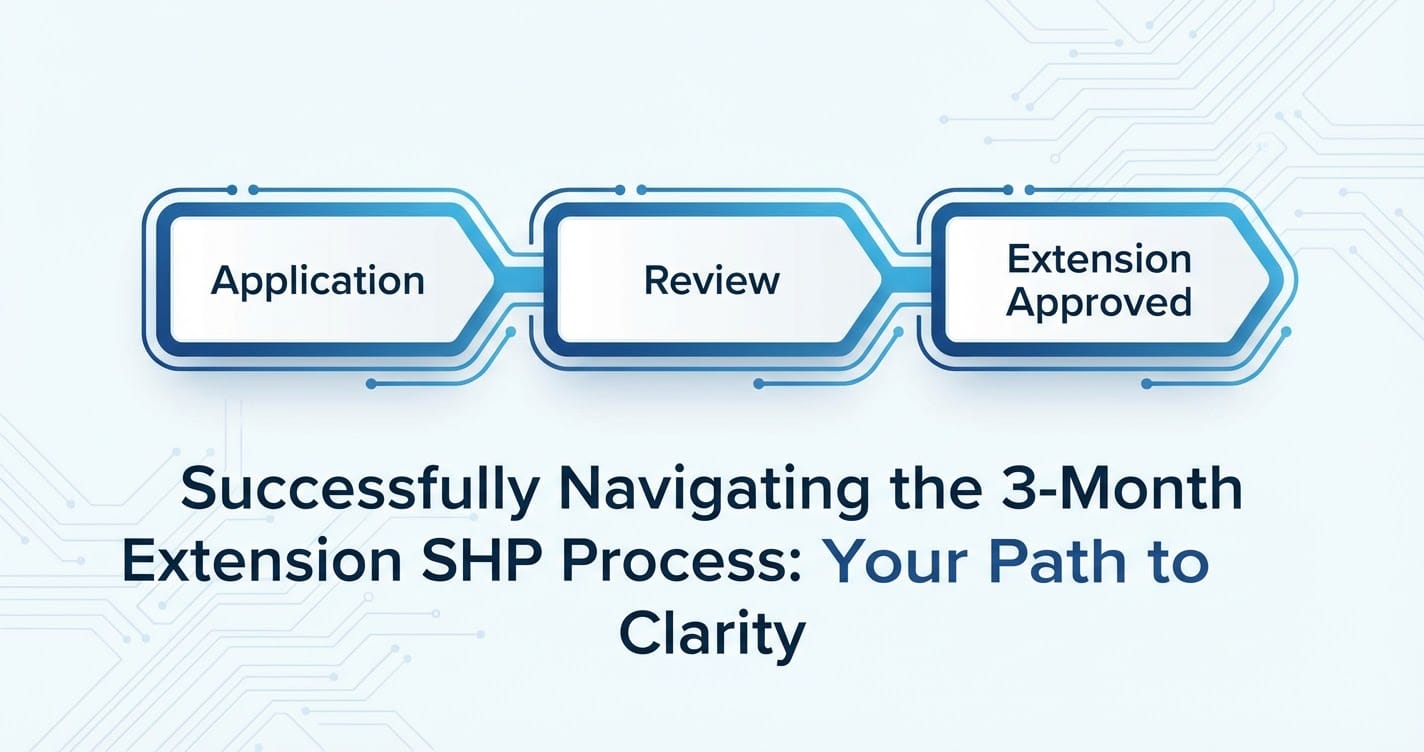
Navigating the 3-Month Extension SHP Process


In the relentless march of digital transformation, Application Programming Interfaces (APIs) have transcended their role as mere technical connectors to become the foundational sinews of modern enterprise. They are the conduits through which data flows, services integrate, and innovation scales. Yet, the true power of APIs is only unlocked when managed within a coherent, strategic framework—a "Strategic Harmonization Protocol" (SHP). This protocol dictates how APIs are designed, developed, deployed, and deprecated, ensuring consistency, security, and scalability across an organization's digital ecosystem. The need for a structured process for extending and evolving this SHP, particularly over a focused period like three months, is paramount for any organization aiming to remain competitive and agile.
This comprehensive guide delves into the intricate process of executing a 3-month extension cycle for an existing Strategic Harmonization Protocol, focusing intently on the pivotal roles of the API, the gateway, and the overarching concept of an Open Platform. We will explore the strategic imperatives, tactical maneuvers, and technical considerations involved in expanding an API ecosystem, detailing the critical activities that unfold month by month. From the initial discovery and design to rigorous development, robust integration, and ultimate deployment and optimization, each phase is crucial for ensuring that new services not only integrate seamlessly but also enhance the security, performance, and developer experience of the entire platform. This structured approach is not just about adding new functionalities; it's about intelligently evolving your digital capabilities to meet tomorrow's demands, safeguard against emerging threats, and foster a vibrant, collaborative digital future.
The Indispensable Role of Strategic API Extension in the Digital Age
The digital landscape is in a perpetual state of flux, driven by technological advancements, shifting market demands, and evolving customer expectations. In this dynamic environment, merely maintaining an existing set of APIs is insufficient; continuous, strategic extension is an absolute necessity for survival and growth. Enterprises must continually introduce new services, integrate cutting-edge technologies like artificial intelligence and machine learning, and adapt to emerging business models. Without a robust framework for managing this expansion, organizations risk fragmentation, security vulnerabilities, and a sluggish pace of innovation that ultimately undermines their competitive edge.
The imperative for strategic API extension stems from several critical factors. Firstly, market demands are insatiable. Customers and partners consistently seek richer functionalities, more seamless integrations, and access to an ever-growing array of data and services. This push from the demand side necessitates a proactive approach to developing and exposing new APIs. Secondly, the rapid evolution of technology, particularly in areas like AI, demands that existing systems can easily integrate with these new capabilities. This often means extending or re-architecting APIs to handle new data types, interaction patterns, or even entirely new service paradigms. For example, integrating a large language model into an existing product requires carefully designed APIs that can handle prompt inputs, manage context, and process complex outputs reliably and efficiently.
However, this rapid extension introduces a host of challenges. Without proper governance, new APIs can proliferate without standardized design principles, leading to inconsistent interfaces, increased complexity for developers, and ultimately, higher maintenance costs. Security is another paramount concern; each new API represents a potential attack vector, demanding rigorous adherence to security best practices from conception through deployment. Scalability, performance, and reliability must also be meticulously planned for, as successful APIs often experience exponential growth in traffic, putting immense pressure on underlying infrastructure.
This is precisely where the API gateway emerges as an indispensable component. Far more than a simple proxy, an API gateway acts as the central nervous system for an organization's API ecosystem. It is the first point of contact for all external (and often internal) API requests, providing a unified enforcement point for security policies, traffic management, caching, and analytics. When extending an SHP, the gateway becomes the critical infrastructure layer that abstracts the complexity of backend services, ensuring that new APIs can be integrated and exposed without disrupting existing operations or compromising the integrity of the overall system. It provides the necessary abstraction and policy enforcement to manage the burgeoning number of APIs, making it feasible to scale services securely and efficiently.
Furthermore, the ultimate goal of strategic API extension is often the cultivation of an Open Platform. An Open Platform is not merely a collection of exposed APIs; it's an ecosystem designed to foster innovation, collaboration, and value creation by external developers, partners, and even internal teams. It embodies a philosophy of shared resources, standardized access, and clear governance. Achieving this vision requires not only robust APIs and a capable gateway but also a comprehensive developer portal, detailed documentation, and a supportive community. The 3-month SHP extension process, therefore, is not just a technical exercise; it's a strategic initiative to deepen the roots of an Open Platform, expanding its capabilities and inviting greater participation from its community, ultimately driving broader adoption and unlocking new avenues for business growth. By navigating this extension process with diligence and foresight, organizations can transform their digital assets into a dynamic engine of continuous innovation.
Deconstructing the SHP: Foundations of an API Strategy
Before embarking on any extension, it is critical to thoroughly understand the existing Strategic Harmonization Protocol (SHP). This protocol is the bedrock of an organization's API strategy, encompassing a holistic set of guidelines, standards, and practices that govern the entire API lifecycle. A well-defined SHP ensures that all APIs, regardless of their origin or purpose, adhere to a consistent methodology, which is vital for maintainability, security, and developer experience. Without a clear understanding of the existing SHP, any attempt at extension risks introducing inconsistencies, technical debt, and potential vulnerabilities, thereby undermining the very purpose of strategic growth.
At its core, an SHP comprises several key pillars. Firstly, API governance establishes the rules and processes for API design, approval, and retirement. This includes defining ownership, responsibility, and decision-making workflows. It mandates the use of specific architectural styles (e.g., RESTful, GraphQL, event-driven), naming conventions, and data formats to ensure uniformity across the entire API landscape. Consistency in design vastly reduces the learning curve for developers, both internal and external, fostering greater adoption and reducing errors.
Secondly, security policies are woven into every fabric of the SHP. This means defining mandatory authentication mechanisms (e.g., OAuth 2.0, API keys, JWTs), authorization models (e.g., role-based access control), encryption standards (e.g., TLS 1.2+), and threat detection/prevention strategies (e.g., WAF integration, rate limiting, bot protection). An effective SHP ensures that security is "baked in" from the design phase, rather than bolted on as an afterthought, providing a robust defense against an increasingly sophisticated threat landscape. These policies are often enforced at the API gateway level, providing a centralized control point for security measures.
Thirdly, lifecycle management within the SHP dictates how APIs evolve from conception to deprecation. This includes versioning strategies, clear communication protocols for changes, and graceful retirement plans. A well-managed API lifecycle prevents breaking changes for consumers, ensures proper documentation is maintained, and facilitates a smooth transition for API users as new versions are introduced. It prevents the accumulation of zombie APIs that consume resources and pose security risks.
Fourthly, the SHP emphasizes the importance of documentation and developer experience (DX). Comprehensive, up-to-date documentation (e.g., OpenAPI specifications, tutorials, SDKs) is non-negotiable for an Open Platform to thrive. The SHP should mandate a consistent approach to documentation generation and maintenance, ensuring that developers can easily discover, understand, and integrate with APIs. A positive developer experience is a direct driver of adoption and innovation, and it hinges on the clarity and completeness of the provided resources. This includes interactive API explorers, code examples in multiple languages, and sandbox environments for testing.
Finally, monitoring and analytics are integral components. The SHP requires mechanisms for tracking API usage, performance metrics, error rates, and security incidents. This data is crucial for understanding API health, identifying areas for optimization, and demonstrating business value. The API gateway often serves as the primary source for this telemetry, aggregating logs and metrics across all managed APIs.
Understanding these foundational elements of the existing SHP is the critical first step. It allows the organization to identify gaps, areas for improvement, and potential conflicts that might arise during the extension process. It provides the essential context for defining the scope of the 3-month extension cycle, ensuring that any new initiatives align with and strengthen the overall strategic vision for the organization's digital offerings and its ambition to foster a vibrant Open Platform. This meticulous preparatory work ensures that the subsequent months of discovery, development, and deployment are built upon a solid, coherent strategy, rather than ad-hoc decisions, paving the way for a successful and impactful expansion.
Month 1: Discovery, Definition, and Design – The Blueprint Phase
The inaugural month of the SHP extension process is dedicated to meticulous discovery, clear definition, and robust design. This is the blueprint phase, where strategic objectives are translated into tangible requirements and architectural plans for new APIs and enhanced Open Platform capabilities. This period demands intensive collaboration, foresight, and adherence to established governance principles to lay a strong foundation for the subsequent development and deployment cycles. Rushing this stage often leads to costly rework, security vulnerabilities, and a fractured user experience further down the line.
Needs Assessment and Strategic Alignment
The first critical step involves a comprehensive needs assessment. This isn't merely about gathering a wishlist; it's about deeply understanding the business objectives that necessitate new API functionalities or the enhancement of existing ones. What new products or services does the organization aim to launch? How can AI integration provide a competitive advantage, and what API surfaces are needed to expose these AI capabilities? Are there specific pain points for current API consumers that need to be addressed through an Open Platform improvement? This assessment involves interviewing business stakeholders, product managers, sales teams, and even existing API consumers. The outcome should be a prioritized list of features, services, and integrations that the extended SHP will support.
Simultaneously, it’s imperative to ensure alignment across all key stakeholders. This includes not only business and product teams but also engineering, security, legal, and compliance departments. Everyone involved must understand the strategic rationale behind the extensions, the potential impact on existing systems, and the shared responsibilities. Early engagement of security teams, for instance, ensures that security-by-design principles are integrated from the very beginning, rather than being an afterthought. Legal teams can advise on data privacy regulations (e.g., GDPR, CCPA) that might impact new data exposures through APIs.
API Design Principles and Specification
With needs identified, the focus shifts to designing the new APIs. This is where the existing SHP's governance rules regarding architectural styles (e.g., RESTful principles for resource-oriented APIs, GraphQL for flexible data queries, event-driven architectures for real-time notifications) become critical. Consistency in design is paramount for an Open Platform's usability. This includes:
- Resource Naming and URI Structure: Clear, predictable, and logical resource paths.
- Data Models: Standardized request and response payloads, typically using JSON or XML schemas.
- Error Handling: Consistent error codes and descriptive messages that help developers debug effectively.
- Versioning Strategy: Clearly defined approach for handling API evolution without breaking existing client applications (e.g., URI versioning, header versioning).
- Authentication and Authorization: Specifying the required security mechanisms for each endpoint, aligning with the SHP's security policies.
The output of this design phase is typically a detailed API specification document, often in a machine-readable format like OpenAPI (formerly Swagger). This specification acts as a contract between the API provider and consumer, enabling parallel development and serving as the definitive source of truth for the API's behavior. It also facilitates the automatic generation of documentation and client SDKs, significantly improving the developer experience on an Open Platform.
Architectural Implications for the API Gateway
The design phase must also consider the implications for the API gateway. As the central traffic cop and policy enforcement point, the gateway plays a crucial role in the successful deployment of new APIs. Questions to address include:
- Routing Rules: How will the new APIs be routed to their backend services? This might involve configuring new paths, hosts, or load balancing rules within the gateway.
- Policy Enforcement: Which security, rate limiting, caching, or transformation policies need to be applied to these new APIs? The gateway can enforce authentication checks, authorize access based on scopes, limit request rates to prevent abuse, and cache responses to improve performance, thereby offloading these concerns from individual backend services.
- Protocol Translation: If new backend services use different protocols than the exposed API (e.g., a gRPC backend exposed as a REST API), the gateway might need to perform protocol translation.
- Observability: How will the gateway contribute to monitoring and logging for these new APIs? Ensuring consistent logging formats and metrics exposure.
This deep consideration of the gateway's role ensures that it can effectively manage the new APIs from day one, upholding the security, performance, and governance standards set by the SHP.
Initial Documentation and Prototyping
To validate designs and gather early feedback, initial documentation and prototyping are invaluable. Interactive mock servers, built from OpenAPI specifications, allow client developers to start integrating with the new APIs even before the backend services are fully implemented. This "contract-first" approach significantly accelerates development cycles and reduces integration headaches. The developer portal, as a key component of the Open Platform, should be prepared to host this new documentation and any associated sandbox environments.
As teams begin designing new APIs and considering their integration, a platform like ApiPark becomes invaluable. Its ability to quickly integrate 100+ AI models and encapsulate prompts into REST APIs streamlines the design and prototyping phase. By standardizing the request data format across various AI models, APIPark ensures that even complex AI functionalities can be easily exposed as consistent APIs, aligning with the SHP's design principles. This capability allows developers to rapidly create new APIs, such as sentiment analysis or translation APIs, directly from custom prompts, ensuring that new services align with the overarching Strategic Harmonization Protocol from day one and are ready for exposure on the Open Platform. This proactive approach in Month 1 mitigates risks, fosters collaboration, and establishes a robust framework for the subsequent development and deployment efforts, preventing costly course corrections in later stages.
Month 2: Development, Integration, and Implementation – The Building Phase
Having established a solid blueprint in Month 1, the second month of the SHP extension process is characterized by intensive development, meticulous integration, and the practical implementation of new APIs and enhanced Open Platform features. This is where the designs come to life, requiring robust engineering practices, continuous testing, and careful configuration of the API gateway to ensure seamless operation and adherence to the SHP. This phase is highly iterative, often involving multiple cycles of coding, testing, and refinement, underscoring the importance of agile methodologies and collaborative teamwork.
API Development and Backend Service Construction
This is the core coding phase. Backend development teams work diligently to implement the services that power the newly designed APIs. This involves writing efficient, secure, and scalable code, adhering to the organization's coding standards and architectural patterns. For AI-driven APIs, this might include integrating with machine learning models, managing model inference, and handling complex data transformations. Emphasis is placed on:
- Modularity: Designing backend services to be loosely coupled, allowing for independent deployment and scaling.
- Performance: Optimizing database queries, caching strategies, and computational logic to ensure low latency and high throughput.
- Resilience: Implementing circuit breakers, retry mechanisms, and graceful degradation strategies to handle failures robustly.
- Security: Embedding security measures directly into the code, such as input validation, output encoding, and proper handling of sensitive data, complementing the security enforced by the API gateway.
Throughout this process, continuous integration (CI) pipelines are essential. Each code change is automatically built, tested, and validated, catching errors early and maintaining a stable codebase.
Gateway Configuration and Policy Enforcement
While backend services are being developed, the operations or platform team focuses on configuring the API gateway to manage the new APIs. This involves translating the design specifications from Month 1 into concrete gateway policies and routing rules:
- Routing and Load Balancing: Defining how incoming requests for new APIs are forwarded to the appropriate backend services. This includes setting up load balancers to distribute traffic efficiently across multiple instances of backend services, ensuring high availability and scalability. The gateway acts as a smart router, intelligently directing traffic based on various criteria (e.g., path, headers, query parameters).
- Traffic Management: Implementing policies for rate limiting, burst control, and quotas to protect backend services from overload and abuse. These controls are crucial for maintaining the stability of the Open Platform and ensuring fair usage among consumers.
- Security Implementation: Activating and configuring the authentication and authorization policies designed in Month 1. This includes setting up OAuth 2.0 flows, validating API keys, enforcing JWT validation, and applying IP whitelists or blacklists. The gateway serves as the primary enforcement point for these security policies, offloading the burden from individual backend services.
- Data Transformation and Orchestration: For complex scenarios, the gateway might be configured to transform request or response payloads, enrich requests with additional data, or even orchestrate calls to multiple backend services before returning a unified response to the client. This capability significantly simplifies the client-side integration with an Open Platform that might have a fragmented backend architecture.
- Logging and Monitoring Setup: Ensuring that the gateway is configured to capture comprehensive logs and metrics for the new APIs, which will be vital for observability in Month 3. This includes detailed request/response logging, error reporting, and performance metrics.
Developer Portal Integration and Discoverability
As APIs become functional, they need to be made discoverable on the Open Platform through the developer portal. This involves:
- Publishing API Documentation: Ensuring that the OpenAPI specifications, tutorials, and usage examples are up-to-date and easily accessible.
- Sandbox Environments: Providing sandboxed versions of the new APIs for developers to experiment with without impacting production systems.
- Subscription Management: Setting up mechanisms for developers to discover and subscribe to the new APIs, potentially requiring approval workflows.
The goal is to provide a seamless and intuitive experience for developers, encouraging adoption and fostering innovation within the Open Platform ecosystem.
Rigorous Testing and Validation
Testing is paramount throughout Month 2. It’s an ongoing process, not a final step:
- Unit and Integration Testing: Developers write tests to verify the functionality of individual code units and the interaction between different service components.
- End-to-End Testing: Simulating real-world scenarios to ensure that the entire API flow, from client request through the gateway to backend services and back, works as expected.
- Performance and Load Testing: Subjecting APIs to anticipated and peak load conditions to identify bottlenecks and ensure they can meet performance SLAs. This is crucial for maintaining the reliability and responsiveness of an Open Platform.
- Security Testing: Conducting penetration testing, vulnerability scanning, and fuzz testing to uncover potential security flaws. This includes testing the gateway's security policies and the backend API implementations.
- Contract Testing: Verifying that API implementations adhere strictly to their OpenAPI specifications, preventing discrepancies between documentation and actual behavior.
For instance, platforms like ApiPark offer end-to-end API lifecycle management, which proves invaluable during this building phase. APIPark assists with governing the entire process, including designing, publishing, invoking, and decommissioning APIs. It helps regulate API management processes, manage traffic forwarding, load balancing, and versioning of published APIs, directly addressing critical configurations on the API gateway. Its stated performance, rivaling Nginx with over 20,000 TPS on modest hardware, ensures that the configured gateway can handle the scale required for a robust Open Platform, validating the performance aspects during rigorous testing. Moreover, APIPark’s capability to share API services within teams and provide independent API and access permissions for each tenant supports a structured internal development environment, aligning with the SHP's governance for collaborative and secure API development. This structured development and integration, underpinned by powerful tooling, ensures that the APIs are not just functional, but also secure, performant, and perfectly aligned with the Strategic Harmonization Protocol.
APIPark is a high-performance AI gateway that allows you to securely access the most comprehensive LLM APIs globally on the APIPark platform, including OpenAI, Anthropic, Mistral, Llama2, Google Gemini, and more.Try APIPark now! 👇👇👇
Month 3: Deployment, Monitoring, and Optimization – The Refinement Phase
The final month of the SHP extension process culminates in the strategic deployment of new APIs and enhanced Open Platform features, followed by an intensive period of monitoring, analysis, and continuous optimization. This phase is not merely about "flipping a switch"; it's about carefully rolling out changes, vigilantly observing their impact, and iteratively refining the entire system to ensure stability, performance, and long-term success. A robust feedback loop and proactive management are critical to embedding the new extensions seamlessly into the broader SHP.
Phased Deployment Strategies
Deployment of new APIs and API gateway configurations should rarely be a single, monolithic event. Instead, organizations typically adopt phased deployment strategies to minimize risk and allow for rapid rollback if issues arise. Common strategies include:
- Canary Releases: Gradually rolling out the new API version or feature to a small subset of users (e.g., 1-5%) before increasing the exposure. This allows for real-world testing under controlled conditions, identifying and rectifying issues before they impact a larger audience.
- Blue-Green Deployments: Maintaining two identical production environments (blue for the current version, green for the new version). Traffic is routed entirely to the blue environment while the green environment is tested. Once validated, traffic is seamlessly switched to the green environment, providing near-zero downtime and an easy rollback option.
- Feature Flags/Toggles: Using configuration flags to enable or disable new features dynamically. This allows for A/B testing, gradual rollout to specific user segments, and quick disabling of problematic features without requiring a full redeployment.
These strategies are often managed and orchestrated through the API gateway, which controls traffic routing to different versions of backend services based on deployment strategy, client attributes, or other criteria. This intelligent traffic management capability of the gateway is crucial for maintaining a high level of availability and a positive user experience on the Open Platform during transitions.
Comprehensive Monitoring and Alerting
Once deployed, continuous and comprehensive monitoring becomes paramount. This isn't just about ensuring services are "up"; it's about understanding their health, performance, and security posture in real-time. The API gateway serves as a vital aggregation point for monitoring data:
- API Performance Metrics: Tracking key indicators such as latency, throughput (requests per second), error rates, and resource utilization (CPU, memory) for each API.
- System Health Metrics: Monitoring the underlying infrastructure (servers, databases, network) that supports the APIs.
- Log Aggregation: Centralizing logs from the API gateway, backend services, and other components. This allows for quick diagnosis of issues and provides an audit trail for security and compliance.
- Alerting: Configuring automated alerts for predefined thresholds (e.g., error rate exceeding 1%, latency spikes, security anomalies). Alerts should be routed to appropriate teams for immediate investigation and resolution.
- Distributed Tracing: Implementing tracing to follow a request's journey across multiple microservices and the gateway, identifying bottlenecks and dependencies in complex architectures.
Effective monitoring provides the visibility needed to identify and address issues proactively, ensuring the stability and reliability of the entire Open Platform.
Performance Optimization and Security Audits
Based on monitoring data, Month 3 involves continuous optimization. This iterative process aims to squeeze out maximum performance and ensure bulletproof security:
- Performance Tuning: Analyzing latency reports and resource usage to identify bottlenecks. This might involve optimizing database queries, improving caching strategies (often managed by the gateway), refining code, or horizontally scaling backend services.
- Cost Optimization: Identifying inefficient resource usage and optimizing infrastructure to reduce operational costs without sacrificing performance.
- Security Audits: Regular security reviews, penetration testing, and vulnerability assessments continue to be performed to identify and remediate any newly discovered weaknesses. This includes reviewing API gateway configurations for adherence to security policies and compliance standards.
- Compliance Checks: Ensuring that new APIs and their data handling comply with relevant industry regulations and data privacy laws.
Feedback Loops and Iteration
A thriving Open Platform is built on feedback. Month 3 emphasizes establishing robust feedback loops:
- Developer Feedback: Gathering insights from API consumers through forums, surveys, and direct channels. Are the new APIs easy to use? Is the documentation clear? Are there missing features?
- Internal Feedback: Collecting input from product, engineering, and support teams on operational challenges, performance issues, and user experience.
- Data Analysis: Leveraging advanced analytics to understand API usage patterns, popular endpoints, and potential areas for improvement or new feature development.
This feedback informs future iterations of the SHP, ensuring that the Open Platform evolves in response to real-world needs and usage.
Maintaining the SHP and Future Growth
The 3-month extension process concludes, but the Strategic Harmonization Protocol itself is a living document. Month 3 is also about reflecting on the process, updating the SHP with lessons learned, and planning for future extension cycles. This ensures that the organization continuously improves its API management capabilities and remains agile in the face of evolving technological and business landscapes.
ApiPark's powerful data analysis and detailed API call logging provide invaluable insights during this refinement phase. Its comprehensive logging capabilities record every detail of each API call, allowing businesses to quickly trace and troubleshoot issues in API calls, ensuring system stability and data security. The platform's ability to analyze historical call data and display long-term trends helps with preventive maintenance, identifying potential problems before they escalate. Furthermore, APIPark’s feature for independent API and access permissions for each tenant, coupled with optional subscription approval features, significantly enhances security and resource management post-deployment, preventing unauthorized API calls and potential data breaches. This robust monitoring, analysis, and security framework is essential for the sustained success of any Open Platform, providing the confidence needed to scale and innovate further. By diligently executing Month 3, organizations cement the strategic value of their API extensions, transforming initial blueprints into stable, performant, and secure components of their digital infrastructure.
The API Gateway as the Core of SHP Extension
In the intricate tapestry of modern digital infrastructure, the API gateway stands as an architectural linchpin, especially when orchestrating the extension of a Strategic Harmonization Protocol (SHP). It is far more than a simple reverse proxy; it is an intelligent traffic manager, a vigilant security guard, a robust performance optimizer, and a critical enabler of the Open Platform vision. Its multifaceted role makes it indispensable for managing the complexity, ensuring the consistency, and enhancing the scalability of an expanding API ecosystem.
Centralized Security Enforcement
One of the most critical functions of an API gateway is centralized security enforcement. As new APIs are introduced or existing ones are extended under the SHP, the gateway acts as the first line of defense against a myriad of cyber threats. It can implement and enforce a wide array of security policies consistently across all APIs, regardless of their backend implementation:
- Authentication: Validating API keys, JWTs (JSON Web Tokens), OAuth 2.0 tokens, and other credentials.
- Authorization: Enforcing fine-grained access control based on user roles, scopes, or contextual attributes.
- Rate Limiting and Throttling: Protecting backend services from denial-of-service (DoS) attacks and abusive usage by limiting the number of requests clients can make within a specified timeframe.
- IP Whitelisting/Blacklisting: Controlling access based on source IP addresses.
- Input Validation: Sanity-checking request payloads to prevent common attacks like SQL injection and cross-site scripting (XSS) before they reach backend services.
- Encryption (TLS/SSL Termination): Handling SSL/TLS termination, decrypting incoming traffic, and re-encrypting it for backend communication, ensuring secure data transit.
By centralizing these security concerns at the gateway, individual backend services are relieved of this burden, allowing developers to focus on core business logic while maintaining a strong, consistent security posture across the entire Open Platform.
Advanced Traffic Management
The API gateway is a master of traffic orchestration. As the number of APIs grows and traffic scales, the gateway ensures that requests are routed efficiently and reliably:
- Load Balancing: Distributing incoming requests across multiple instances of backend services to optimize resource utilization and ensure high availability.
- Routing and Rewriting: Directing requests to the correct backend service based on URL path, HTTP headers, query parameters, or other criteria. It can also rewrite URLs or modify headers as requests traverse the gateway.
- Circuit Breaking: Automatically detecting and preventing calls to unhealthy backend services, thus preventing cascading failures and improving the overall resilience of the Open Platform.
- Retries and Timeouts: Implementing intelligent retry mechanisms for transient failures and setting appropriate timeouts to prevent long-running requests from tying up resources.
- Versioning and Canary Releases: Facilitating the deployment of multiple API versions concurrently and directing traffic to specific versions for phased rollouts or A/B testing, as discussed in Month 3.
Protocol Translation and Aggregation
In heterogeneous environments, the gateway can bridge different communication protocols. It can expose a unified RESTful API while communicating with backend services using gRPC, SOAP, or message queues. Furthermore, for complex requests, the gateway can aggregate responses from multiple backend services into a single, simplified response for the client, reducing chatty communication and simplifying client-side development for an Open Platform.
Performance Optimization
Beyond traffic management, the API gateway actively contributes to performance optimization:
- Caching: Caching responses for frequently requested data, significantly reducing the load on backend services and improving response times for clients.
- Compression: Compressing response payloads to minimize network bandwidth usage and accelerate data transfer.
- Latency Reduction: By being strategically positioned close to client applications or at edge locations, the gateway can reduce round-trip times.
Observability and Analytics
The API gateway is a rich source of operational intelligence. It can generate comprehensive logs and metrics for every API call, providing invaluable data for:
- Monitoring: Real-time visibility into API performance, error rates, and traffic patterns.
- Troubleshooting: Detailed logs aid in quickly diagnosing and resolving issues across the distributed system.
- Analytics: Providing insights into API usage, adoption trends, and business value, informing future development and strategic decisions for the Open Platform.
Table: Robust API Gateway vs. Basic Reverse Proxy
| Feature/Capability | Robust API Gateway (e.g., APIPark, Kong, Apigee) | Basic Reverse Proxy (e.g., Nginx, HAProxy) |
|---|---|---|
| Primary Function | Comprehensive API management, policy enforcement, full lifecycle control | Forward/reverse traffic, load balancing, SSL termination |
| Security | Centralized authN/authZ (OAuth, JWT), rate limiting, WAF, API key management, DoS protection | Basic IP filtering, SSL/TLS, (requires external modules for advanced security) |
| Traffic Management | Advanced routing, circuit breaking, retries, throttling, request/response transformation, canary deployments | Basic path/host routing, round-robin load balancing |
| Protocol Translation | Yes (e.g., REST to gRPC), request/response transformation | No (primarily layer 4/7 pass-through) |
| Caching | Sophisticated caching at the edge, invalidation strategies | Basic file/proxy caching |
| Developer Portal | Integrated developer portal, API documentation, subscription workflows, analytics | None (requires separate implementation) |
| Monitoring/Analytics | Detailed API-specific metrics, logging, distributed tracing integration | Basic access logs, general network metrics |
| Monetization | Often includes features for API metering, billing, and developer plans | None |
| Lifecycle Mgmt. | End-to-end API lifecycle support (design, publish, version, deprecate) | No direct API lifecycle management |
| Extensibility | Plugin architecture, custom policy injection, scripting capabilities | Limited, often requires recompilation or complex configuration |
The API gateway is therefore not just an operational necessity but a strategic asset that underpins the entire SHP extension process. It provides the control, security, and scalability required to manage a complex API landscape, acting as the intelligent facade that presents a unified, secure, and performant Open Platform to the world. Without a capable gateway, the vision of a harmonized, extensible API ecosystem would remain largely unfulfilled.
Cultivating an Open Platform Ecosystem
Beyond the technical functionalities of APIs and the robust management capabilities of an API gateway, the true measure of a successful Strategic Harmonization Protocol (SHP) extension lies in its ability to cultivate a thriving Open Platform ecosystem. An Open Platform is not merely a collection of exposed APIs; it's a strategic philosophy, a vibrant community, and a powerful engine for innovation that extends an organization's reach and multiplies its capabilities. It transforms an enterprise from a monolithic entity into a central hub around which partners, developers, and even competitors can build new value.
The Developer Experience (DX) as a Core Tenet
At the heart of any successful Open Platform is an exceptional Developer Experience (DX). Developers are the primary consumers of APIs, and their ability to easily discover, understand, integrate, and build upon your services directly correlates with the platform's adoption and success. A positive DX encompasses several crucial elements:
- Comprehensive and Accurate Documentation: This is the bedrock. Up-to-date OpenAPI specifications, clear tutorials, practical code examples in multiple languages, and exhaustive reference guides are non-negotiable. The documentation should be easily searchable and navigable.
- Intuitive Developer Portal: The developer portal acts as the single point of truth for all API-related resources. It should offer self-service capabilities for API discovery, subscription management, API key generation, and access to sandbox environments for testing. The portal should be user-friendly, well-designed, and regularly updated.
- SDKs and Code Samples: Providing Software Development Kits (SDKs) for popular programming languages significantly lowers the barrier to entry, allowing developers to integrate with APIs more quickly and with fewer errors.
- Support and Community: Accessible support channels (forums, chat, dedicated support teams) are vital for resolving issues and answering questions. A vibrant community fosters peer-to-peer learning, sharing of best practices, and collaborative problem-solving, creating a sense of ownership and engagement.
The SHP extension process, particularly in Month 2 and Month 3, must actively prioritize and invest in these DX components. New APIs must be immediately documented, integrated into the developer portal, and accompanied by relevant code samples to ensure they are consumable from day one.
Building a Community and Fostering Collaboration
An Open Platform thrives on community engagement. This involves actively fostering interaction and collaboration among developers:
- Forums and Discussion Boards: Providing spaces for developers to ask questions, share insights, and discuss challenges.
- Hackathons and Workshops: Organizing events that encourage developers to experiment with the APIs, build innovative applications, and provide direct feedback. These events can generate novel use cases and identify areas for platform improvement.
- Showcasing Success Stories: Highlighting applications and solutions built on the platform to inspire others and demonstrate the platform's potential.
- Feedback Mechanisms: Establishing clear channels for developers to submit bug reports, feature requests, and general feedback. This demonstrates that their input is valued and contributes to the platform's evolution.
This sense of community transforms passive API consumers into active contributors and advocates, significantly expanding the platform's influence and innovative capacity.
Monetization Strategies and Business Value
While not all Open Platforms are designed for direct monetization, many serve as significant revenue drivers or strategic assets that unlock new business opportunities. The SHP extension might involve:
- Tiered API Access: Offering different service levels (e.g., free tier, premium tier) with varying rate limits, performance guarantees, and feature sets.
- Usage-Based Billing: Charging developers based on the volume of API calls, data processed, or specific feature usage.
- Partnerships and Reselling: Enabling partners to integrate and resell services built on the platform, expanding market reach.
- Indirect Value Generation: For internal platforms, the value is often derived from increased operational efficiency, accelerated time-to-market for new products, and enhanced data accessibility across departments.
Regardless of the specific strategy, the API gateway plays a crucial role in metering API usage, enforcing quotas, and providing the necessary data for billing and analytics, thereby directly supporting the monetization model. The detailed API call logging and powerful data analysis features, for instance, offered by platforms like ApiPark, are instrumental in understanding API consumption patterns, ensuring accurate billing, and identifying valuable trends that can inform future platform evolution and monetization strategies. This capability directly supports businesses in leveraging their APIs as true revenue-generating assets.
The Long-Term Value of a Well-Managed Open Platform
A meticulously managed Open Platform, underpinned by a robust SHP and a capable API gateway, offers profound long-term value:
- Accelerated Innovation: By exposing capabilities through well-defined APIs, organizations enable rapid experimentation and development, both internally and externally.
- Enhanced Agility: The modular nature of APIs allows for quicker adaptation to market changes and the seamless integration of new technologies, such as advanced AI models.
- New Revenue Streams: Direct monetization or the creation of new products and services through ecosystem partnerships.
- Increased Market Reach: Extending services and functionalities to a wider audience through third-party integrations.
- Improved Efficiency: Reducing redundant efforts by promoting API reuse across the organization.
- Stronger Security Posture: Centralized control and enforcement of security policies across all digital interfaces.
The cultivation of an Open Platform ecosystem is a continuous journey, not a destination. It requires ongoing investment in technology, community, and strategy. The 3-month SHP extension process serves as a focused sprint within this larger marathon, ensuring that the platform continually evolves, remains relevant, and continues to deliver exceptional value to its diverse stakeholders. It's about building a sustainable foundation for future digital growth, where the sum of collaborative efforts far exceeds what any single entity could achieve alone.
Challenges and Mitigation Strategies in SHP Extension
Even with the most meticulously planned 3-month SHP extension process, challenges are inevitable. The dynamic nature of technology, the complexity of organizational structures, and the unpredictable ebb and flow of market demands can introduce friction, delays, and unforeseen complications. Recognizing these potential pitfalls and developing proactive mitigation strategies is crucial for ensuring the successful evolution of an API ecosystem and the sustained health of an Open Platform.
1. Technical Debt and Legacy Systems
Challenge: New APIs often need to integrate with existing, sometimes outdated, legacy systems that may not adhere to modern architectural patterns or performance expectations. This can introduce technical debt, slow down development, and become a bottleneck for the performance and scalability of the new services, hindering the overall Open Platform vision.
Mitigation: * Strategic Abstraction: Utilize the API gateway to abstract the complexities of legacy systems. The gateway can perform protocol translation, data transformation, and even minor business logic orchestration to present a modern, consistent API interface to consumers, shielding them from backend intricacies. * Incremental Modernization: Avoid "big bang" rewrites. Instead, identify critical legacy components and prioritize their modernization or encapsulation within microservices. Use a "strangler pattern" to gradually replace old functionalities with new APIs, piece by piece, rather than trying to overhaul everything at once. * Clear Documentation of Limitations: Transparently document any limitations or performance characteristics inherited from legacy systems, setting realistic expectations for developers interacting with these APIs on the Open Platform.
2. Evolving Standards and Technological Shifts
Challenge: The API landscape is constantly evolving, with new architectural styles (e.g., GraphQL, event-driven APIs), security protocols, and integration patterns emerging regularly. Staying abreast of these changes and deciding which to adopt can be overwhelming, potentially leading to inconsistencies in the SHP or missed opportunities.
Mitigation: * Dedicated API Governance Team: Establish a core team or committee responsible for monitoring industry trends, evaluating new technologies, and updating the SHP accordingly. This team ensures that the Open Platform remains current and competitive. * Flexible Gateway Architecture: Choose an API gateway that is highly extensible and configurable, allowing for the adoption of new protocols or security standards without requiring a complete overhaul. Platforms like ApiPark with their ability to quickly integrate 100+ AI models and offer unified API formats, exemplify this flexibility, enabling rapid adaptation to new technological shifts. * Pilot Programs: Implement small-scale pilot programs to test new technologies or standards before widespread adoption, assessing their suitability and impact on the existing API ecosystem.
3. Security Threats and Compliance Requirements
Challenge: Each new API exposed, and each extension to the Open Platform, presents a potential new attack surface. Keeping up with evolving cyber threats, ensuring compliance with data privacy regulations (e.g., GDPR, CCPA, HIPAA), and consistently applying security best practices across a growing number of APIs is a continuous and complex undertaking.
Mitigation: * Security-by-Design: Embed security considerations into every phase of the SHP extension, from initial design (Month 1) to deployment and monitoring (Month 3). This includes threat modeling, static/dynamic analysis, and regular penetration testing. * Automated Security Policies at the Gateway: Leverage the API gateway to enforce automated security policies, such as authentication, authorization, rate limiting, and web application firewall (WAF) rules. This provides a consistent and scalable layer of defense. * Continuous Monitoring and Auditing: Implement robust monitoring and logging of all API traffic and security events. Regularly audit access controls, data flows, and compliance with regulations. Features like APIPark's detailed API call logging and powerful data analysis are crucial for identifying anomalies and ensuring continuous adherence to security protocols and regulatory requirements, safeguarding the Open Platform. * Regular Training: Ensure that all developers and operations personnel are regularly trained on the latest security best practices and compliance requirements.
4. Organizational Resistance and Silos
Challenge: Extending an SHP and evolving an Open Platform often requires significant organizational change, breaking down departmental silos and fostering greater collaboration. Resistance can arise from teams accustomed to traditional, isolated development practices or from concerns about data sharing and control.
Mitigation: * Executive Buy-in and Sponsorship: Secure strong support from senior leadership to champion the API strategy and emphasize its strategic importance to the entire organization. * Cross-Functional Teams: Establish cross-functional teams (product, engineering, security, operations) responsible for the entire API lifecycle. This fosters shared ownership and breaks down silos. * Clear Communication and Education: Articulate the benefits of the SHP and Open Platform vision to all stakeholders. Provide training and workshops to educate teams on new tools, processes, and the value of API-first thinking. * Incentivization: Create incentives for teams to contribute to and adopt the Open Platform, such as internal recognition programs for successful API implementations or integrations.
5. Scalability and Performance Bottlenecks
Challenge: As the Open Platform gains traction and API usage grows, ensuring consistent scalability and performance becomes critical. Bottlenecks can emerge in backend services, the API gateway, or the underlying infrastructure, leading to degraded user experience and potential downtime.
Mitigation: * Microservices Architecture: Design backend services using a microservices architecture where appropriate, allowing for independent scaling of individual components. * Horizontal Scaling: Implement infrastructure that supports horizontal scaling (adding more instances) for both backend services and the API gateway to handle increased load. * Performance Testing: Conduct rigorous performance and load testing (as outlined in Month 2) before deployment and continuously monitor performance in production (Month 3). * Distributed Caching: Utilize distributed caching mechanisms, often integrated with the API gateway, to reduce load on databases and backend services. * Cloud-Native Solutions: Leverage cloud providers' elastic scaling capabilities, auto-scaling groups, and managed services to build a highly scalable and resilient Open Platform. For example, APIPark’s performance, rivaling Nginx with robust TPS capabilities and support for cluster deployment, directly addresses the need for handling large-scale traffic, ensuring that performance bottlenecks are minimized even under peak loads.
By proactively addressing these challenges, organizations can navigate the complexities of SHP extension with greater confidence, ensuring that their API strategies continue to evolve effectively and their Open Platform remains a robust and reliable engine for digital innovation. The journey is continuous, but with careful planning and agile adaptation, success is well within reach.
Conclusion: The Continuous Evolution of the Strategic Harmonization Protocol
The journey of navigating the 3-month extension of a Strategic Harmonization Protocol (SHP) is a testament to the dynamic and indispensable nature of Application Programming Interfaces in the modern digital landscape. This structured approach, meticulously detailed month by month, underscores that extending an API ecosystem is far more than a technical task; it is a strategic imperative that directly influences an organization's agility, security, and capacity for innovation. From the initial strategic alignment and meticulous design of new API functionalities in Month 1, through the rigorous development, integration, and API gateway configuration in Month 2, to the final, critical phase of deployment, monitoring, and continuous optimization in Month 3, each step is vital for building a resilient and expansive Open Platform.
We have explored how a well-defined SHP acts as the guiding star, ensuring consistency, security, and scalability across all digital interactions. The API gateway emerges as the operational heartbeat of this entire process, serving as the central nervous system for security enforcement, traffic management, performance optimization, and observability. It is the intelligent facade that translates complex backend architectures into consumable, consistent APIs, thereby empowering the broader Open Platform vision. This platform, in turn, is not just a repository of services but a vibrant ecosystem cultivated through exceptional developer experience, active community engagement, and intelligent monetization strategies.
The challenges inherent in such an extension—ranging from technical debt and rapidly evolving standards to security threats and organizational resistance—are significant. However, with proactive mitigation strategies, including strategic abstraction, continuous learning, security-by-design principles, and fostering cross-functional collaboration, these obstacles can be overcome. Tools and platforms like ApiPark play a crucial role by offering robust API management, AI gateway capabilities, unified API formats, and powerful analytics, all of which streamline the complexities of API lifecycle governance and facilitate the rapid, secure, and performant extension of any SHP.
As we look towards the future, the evolution of APIs will continue to accelerate, driven by pervasive AI integration, the proliferation of event-driven architectures, and an ever-increasing demand for real-time data exchange. Organizations that embrace a continuous, structured approach to SHP extension will be best positioned to harness these trends, transforming their digital assets into powerful engines of growth and competitive differentiation. The 3-month extension is merely a cycle within a perpetual journey—a commitment to intelligent, adaptable, and secure digital expansion that ensures an Open Platform not only survives but thrives in an increasingly interconnected world. By consistently revisiting, refining, and extending their Strategic Harmonization Protocol, enterprises can confidently build the digital future, one API at a time.
Frequently Asked Questions (FAQs)
1. What is a Strategic Harmonization Protocol (SHP) in the context of API management, and why is its extension important? A Strategic Harmonization Protocol (SHP) is a comprehensive framework of guidelines, standards, and practices that govern the entire lifecycle of an organization's APIs. It ensures consistency in design, robust security, and efficient management across all APIs. Its extension is crucial for growth because it allows organizations to systematically introduce new services, integrate emerging technologies (like AI), adapt to market demands, and expand their digital capabilities without compromising consistency, security, or scalability. It's about planned, structured growth rather than ad-hoc additions.
2. How does an API Gateway specifically support the 3-month SHP extension process, particularly regarding an Open Platform? An API Gateway is central to the SHP extension. It acts as a unified entry point for all API traffic, enforcing security policies (authentication, authorization, rate limiting), managing traffic (load balancing, routing, throttling), and optimizing performance (caching). During the 3-month extension, the gateway is configured to handle new APIs, apply consistent policies across them, abstract backend complexities, and provide critical monitoring data. For an Open Platform, it ensures that new services are securely exposed, easily discoverable, and performant for external developers, maintaining a consistent developer experience and upholding the integrity of the entire ecosystem.
3. What are the key activities in each month of the 3-month SHP Extension Process? * Month 1 (Discovery, Definition, Design): Focuses on strategic alignment, needs assessment, detailed API design (e.g., OpenAPI specifications), outlining security requirements, and planning for gateway integration. This is the blueprint phase. * Month 2 (Development, Integration, Implementation): Involves building backend services, configuring the API Gateway for new APIs, integrating services, preparing developer portal documentation, and conducting extensive unit, integration, and performance testing. This is the hands-on building phase. * Month 3 (Deployment, Monitoring, Optimization): Centers on phased deployment strategies, comprehensive real-time monitoring of performance and security, continuous optimization based on feedback and analytics, and establishing robust feedback loops for ongoing iteration. This is the refinement and operationalization phase.
4. How can an organization effectively manage security and compliance when extending its APIs and Open Platform? Effective security and compliance management requires a multi-faceted approach. It begins with "security-by-design" embedded in Month 1, ensuring security is integrated from the start. Leverage the API Gateway for centralized enforcement of authentication, authorization, rate limiting, and WAF rules. Implement continuous monitoring, logging, and auditing of all API traffic (as detailed in Month 3) to detect and respond to threats proactively. Regularly conduct penetration testing and vulnerability assessments, and ensure all API development and deployment practices comply with relevant data privacy regulations like GDPR or HIPAA.
5. How does a platform like APIPark contribute to the success of an SHP extension and the development of an Open Platform? APIPark is an open-source AI Gateway and API Management Platform that significantly streamlines the SHP extension. It enables quick integration of 100+ AI models with a unified API format, simplifying the design and development of AI-powered APIs (relevant in Month 1 and 2). Its end-to-end API lifecycle management helps govern design, publication, invocation, and versioning, managing critical gateway functions like traffic forwarding and load balancing. APIPark's performance rivaling Nginx ensures scalability, while its detailed API call logging and powerful data analysis features are crucial for monitoring, troubleshooting, and optimizing APIs in Month 3. Furthermore, its support for independent API and access permissions for tenants enhances security and control, which are vital for a robust and secure Open Platform.
🚀You can securely and efficiently call the OpenAI API on APIPark in just two steps:
Step 1: Deploy the APIPark AI gateway in 5 minutes.
APIPark is developed based on Golang, offering strong product performance and low development and maintenance costs. You can deploy APIPark with a single command line.
curl -sSO https://download.apipark.com/install/quick-start.sh; bash quick-start.sh

In my experience, you can see the successful deployment interface within 5 to 10 minutes. Then, you can log in to APIPark using your account.

Step 2: Call the OpenAI API.