Next-Gen Smart AI Gateway: Revolutionizing Connectivity & Efficiency


Introduction
The digital era is witnessing a remarkable transformation with the integration of Artificial Intelligence (AI) into various industries. At the heart of this revolution lies the AI Gateway, a pivotal component that facilitates seamless connectivity and efficiency in AI-driven systems. This article delves into the intricacies of the next-generation smart AI Gateway, exploring its features, benefits, and the impact it has on modern businesses.
Understanding the AI Gateway
What is an AI Gateway?
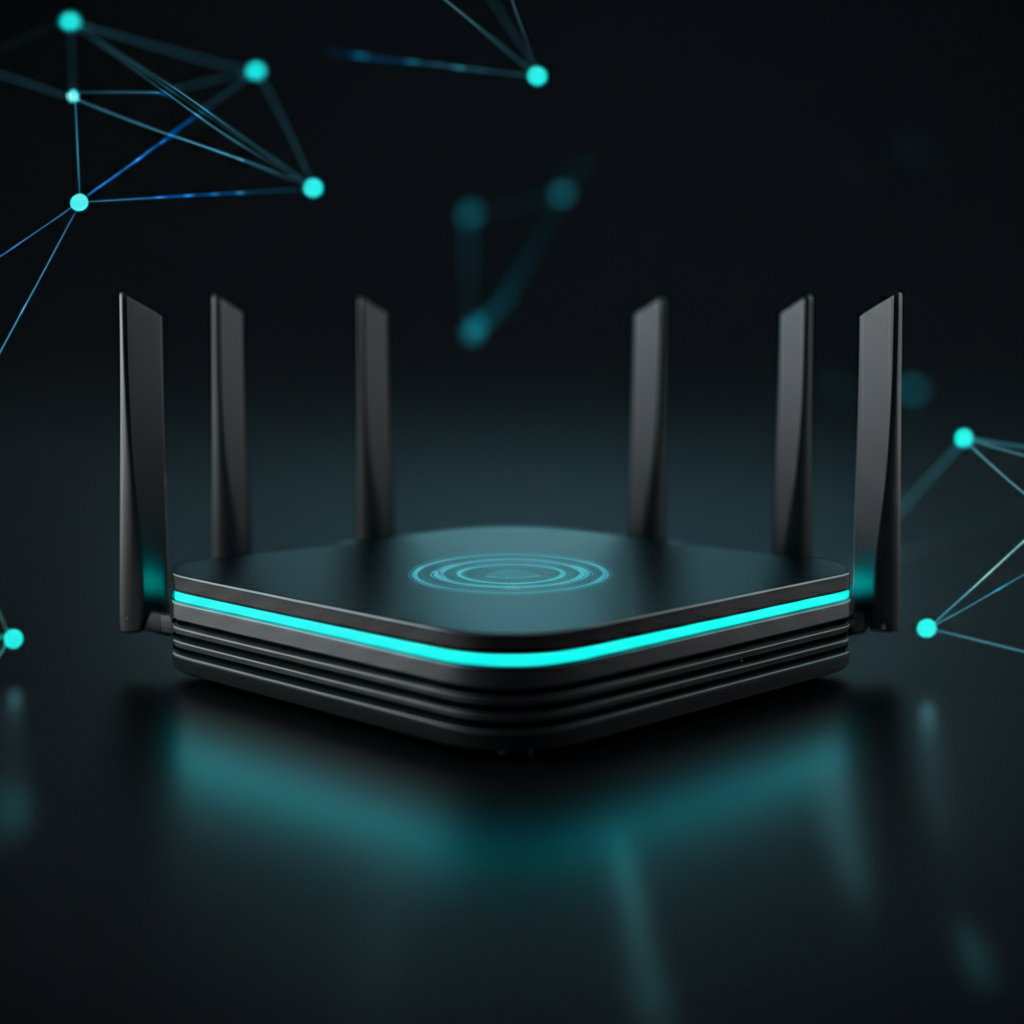
An AI Gateway is a device or software application that serves as a bridge between the physical world and the digital realm. It acts as an interface for AI systems to interact with external devices, sensors, and applications. The primary function of an AI Gateway is to preprocess data, perform computations, and facilitate real-time communication between various components of an AI system.
Key Components of an AI Gateway
- Data Collection & Preprocessing: AI Gateways are equipped with sensors and data collection mechanisms to gather data from the environment.
- Data Processing: They process raw data to extract relevant information and prepare it for analysis.
- AI Model Execution: AI Gateways execute AI models on the collected data to derive insights and make decisions.
- Communication Interface: They provide interfaces for data exchange with other devices, systems, and applications.
The Evolution of AI Gateways
Traditional AI Gateways
Early AI Gateways were primarily hardware-based, with limited processing capabilities and connectivity options. They were primarily used in specific vertical industries and had limited scalability.
Next-Gen AI Gateways
The next generation of AI Gateways is characterized by the following features:
- Increased Processing Power: Next-gen AI Gateways are equipped with more powerful processors to handle complex AI models and real-time data processing.
- Enhanced Connectivity: They offer better connectivity options, including Wi-Fi, Bluetooth, and cellular networks, to connect with a wide range of devices.
- Open Platforms: Next-gen AI Gateways are designed as open platforms, allowing developers to integrate various AI models and applications.
- Scalability: They are designed to be scalable, enabling businesses to expand their AI systems as their needs grow.
APIPark is a high-performance AI gateway that allows you to securely access the most comprehensive LLM APIs globally on the APIPark platform, including OpenAI, Anthropic, Mistral, Llama2, Google Gemini, and more.Try APIPark now! 👇👇👇
The Role of API in AI Gateways
API (Application Programming Interface) plays a crucial role in the functionality of AI Gateways. APIs allow different software applications to communicate with each other, enabling seamless integration and interoperability. In the context of AI Gateways, APIs facilitate the following:
- Integration of AI Models: APIs enable the integration of various AI models into the AI Gateway, allowing for a wide range of applications.
- Data Exchange: APIs facilitate the exchange of data between the AI Gateway and other devices and systems.
- Remote Access: APIs allow remote access to the AI Gateway, enabling developers and users to manage and monitor it from anywhere.
APIPark: A Game-Changer in AI Gateway Solutions
APIPark is a leading provider of AI Gateway solutions. It is an open-source AI Gateway and API management platform designed to simplify the integration, deployment, and management of AI services. Here are some key features of APIPark:
| Feature | Description |
|---|---|
| Quick Integration of 100+ AI Models | APIPark offers the capability to integrate a variety of AI models with a unified management system for authentication and cost tracking. |
| Unified API Format for AI Invocation | It standardizes the request data format across all AI models, ensuring that changes in AI models or prompts do not affect the application or microservices. |
| Prompt Encapsulation into REST API | Users can quickly combine AI models with custom prompts to create new APIs, such as sentiment analysis, translation, or data analysis APIs. |
| End-to-End API Lifecycle Management | APIPark assists with managing the entire lifecycle of APIs, including design, publication, invocation, and decommission. |
| API Service Sharing within Teams | The platform allows for the centralized display of all API services, making it easy for different departments and teams to find and use the required API services. |
How APIPark Adds Value
- Simplified AI Integration: APIPark simplifies the process of integrating AI models into existing systems, reducing the time and effort required for development.
- Enhanced Security: APIPark provides robust security features, ensuring that sensitive data is protected.
- Scalability: APIPark is designed to be scalable, enabling businesses to expand their AI systems as their needs grow.
- Cost-Effective: APIPark is an open-source platform, making it cost-effective for businesses.
Case Study: Transforming Retail with AI
One of the most compelling use cases of AI Gateways is in the retail industry. By leveraging AI Gateways, retailers can enhance customer experience, optimize inventory management, and streamline operations.
Use Case: A major retail chain implemented an AI Gateway to analyze customer data, including purchase history, browsing behavior, and demographic information. The AI Gateway integrated various AI models, such as machine learning and natural language processing, to gain insights into customer preferences and behavior. This enabled the retailer to personalize marketing campaigns, optimize inventory management, and improve customer satisfaction.
Conclusion
The next-generation smart AI Gateway is revolutionizing connectivity and efficiency in AI-driven systems. By leveraging the power of AI and APIs, businesses can unlock new opportunities and drive innovation. APIPark is at the forefront of this revolution, offering a comprehensive AI Gateway solution that simplifies the integration, deployment, and management of AI services. As AI continues to evolve, the role of AI Gateways will become even more critical in shaping the future of digital transformation.
Frequently Asked Questions (FAQs)
1. What is the difference between a traditional AI Gateway and a next-gen AI Gateway?
A traditional AI Gateway is typically hardware-based, with limited processing power and connectivity options. Next-gen AI Gateways are more powerful, offer enhanced connectivity, and are designed as open platforms for easy integration with various AI models and applications.
2. How does APIPark simplify AI integration?
APIPark simplifies AI integration by providing a unified management system for integrating various AI models. It also offers a standardized API format for AI invocation, ensuring seamless integration with existing systems.
3. What are the benefits of using APIPark for AI Gateway solutions?
APIPark offers several benefits, including simplified AI integration, enhanced security, scalability, and cost-effectiveness.
4. How can an AI Gateway be used in the retail industry?
AI Gateways can be used in the retail industry to analyze customer data, personalize marketing campaigns, optimize inventory management, and improve customer satisfaction.
5. What are the key features of APIPark?
APIPark offers several key features, including quick integration of 100+ AI models, unified API format for AI invocation, prompt encapsulation into REST API, end-to-end API lifecycle management, and API service sharing within teams.
🚀You can securely and efficiently call the OpenAI API on APIPark in just two steps:
Step 1: Deploy the APIPark AI gateway in 5 minutes.
APIPark is developed based on Golang, offering strong product performance and low development and maintenance costs. You can deploy APIPark with a single command line.
curl -sSO https://download.apipark.com/install/quick-start.sh; bash quick-start.sh

In my experience, you can see the successful deployment interface within 5 to 10 minutes. Then, you can log in to APIPark using your account.

Step 2: Call the OpenAI API.