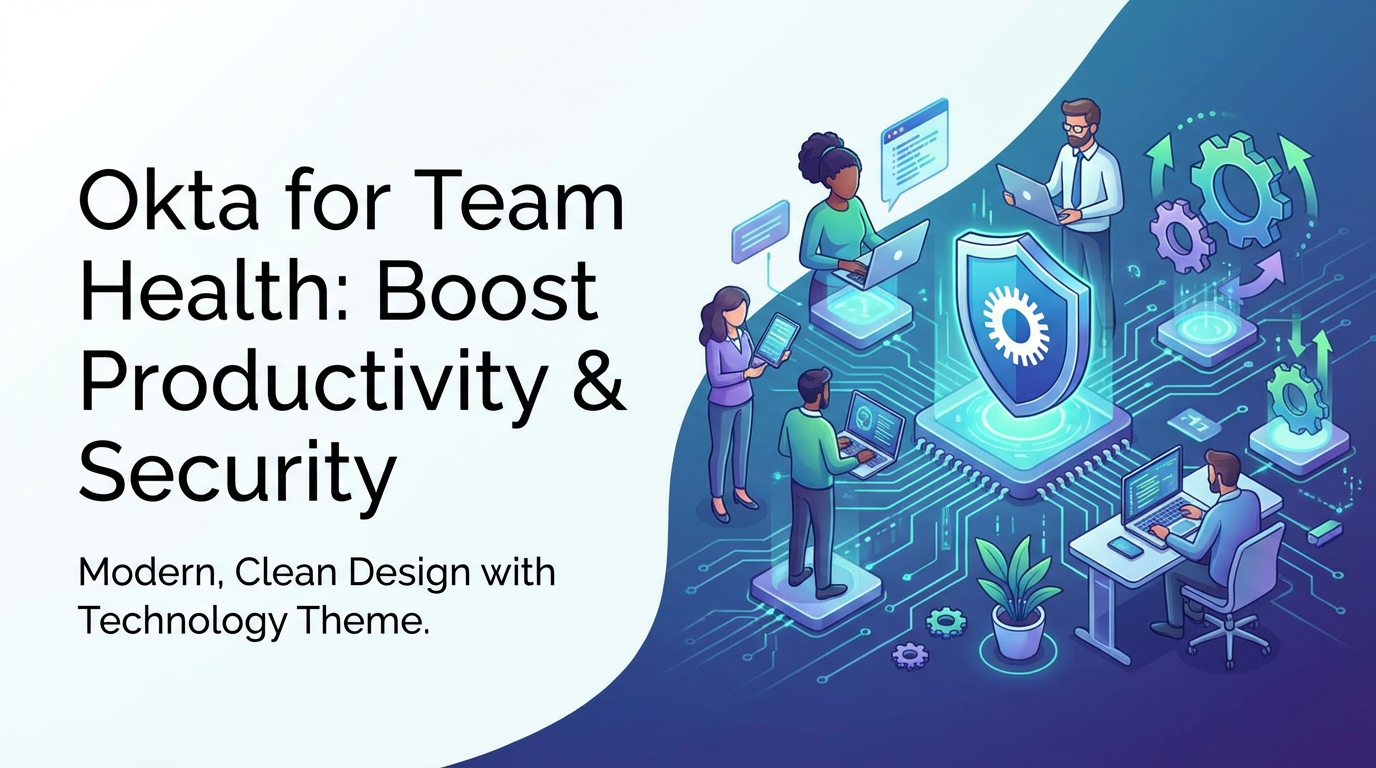
Okta for Team Health: Boost Productivity & Security


In today's dynamic and increasingly complex business landscape, the concept of "team health" has transcended mere employee satisfaction, evolving into a critical indicator of an organization's overall resilience, innovation capacity, and sustained success. A healthy team is one that is productive, secure, collaborative, and adaptable, operating within an environment that empowers its members while rigorously safeguarding its digital assets. As organizations navigate the challenges of hybrid work models, distributed teams, and an ever-expanding digital footprint, the tools and strategies adopted to support team health become paramount. Among these, identity and access management (IAM) solutions stand out as foundational pillars, with Okta emerging as a leading Open Platform that fundamentally transforms how teams operate, enhance their productivity, and fortify their security posture.
This comprehensive exploration delves into how Okta, through its robust identity cloud, serves as an indispensable enabler of team health. We will unpack the intricate ways in which Okta boosts productivity by streamlining access and automating processes, while simultaneously bolstering security through intelligent authentication and granular access controls. From the seamless onboarding of new talent to the secure collaboration across diverse applications, Okta provides a unified, intelligent gateway for all digital interactions, ensuring that teams can focus on innovation and value creation without being hampered by friction or exposed to undue risk.
The Evolving Landscape of Team Health: Challenges and Imperatives
The notion of team health has never been more multifaceted. Beyond traditional metrics like morale and retention, it now encompasses factors such as digital agility, cyber resilience, and the seamless integration of technology into daily workflows. Modern teams are often geographically dispersed, leveraging a multitude of cloud-based applications, and collaborating across various platforms. This distributed and interconnected reality, while offering unprecedented flexibility and reach, simultaneously introduces a complex array of challenges that can undermine both productivity and security if not addressed strategically.
One of the foremost challenges is the proliferation of digital identities and access points. Employees, contractors, and partners routinely interact with dozens, if not hundreds, of applications, each potentially requiring separate credentials. This fragmentation leads to "password fatigue," a phenomenon where users struggle to remember complex, unique passwords for every service, often resorting to insecure practices like reusing passwords or jotting them down. The cognitive load associated with managing multiple logins severely impacts productivity, wasting valuable time and causing frustration. Moreover, it creates a significant security vulnerability, as a single compromised credential can grant an attacker access to multiple critical systems.
Another significant hurdle is the management of user lifecycles. In a rapidly evolving workforce, the processes of onboarding new employees, managing role changes, and offboarding departing team members can be cumbersome and error-prone. Manual provisioning and deprovisioning of access across numerous applications are not only inefficient but also pose substantial security risks. Delays in granting access can hinder productivity for new hires, while forgotten deprovisioning of access for former employees creates persistent backdoors for potential breaches.
The escalating threat landscape further exacerbates these challenges. Cyberattacks are growing in sophistication and frequency, with identity-based attacks, such as phishing, credential stuffing, and account takeover, being among the most common vectors. Teams must operate within an environment where every login attempt could potentially be malicious, every file transfer could contain malware, and every communication could be a phishing attempt. Protecting against these threats without impeding legitimate work requires a delicate balance – one that traditional, perimeter-based security models are ill-equipped to provide in a cloud-first world.
Finally, the demand for agility and innovation necessitates an Open Platform approach to technology adoption. Teams need the flexibility to integrate new tools, develop custom applications, and leverage cutting-edge technologies like artificial intelligence without being locked into rigid ecosystems. However, this openness must not come at the expense of security or manageability. The ability to connect diverse applications, services, and microservices securely and efficiently is crucial for fostering innovation, but it also means managing a growing surface area for potential vulnerabilities, often involving complex api integrations. Without a centralized and intelligent system to manage these connections, the benefits of an open ecosystem can quickly be overshadowed by operational overhead and security concerns.
It is against this backdrop of intricate challenges that Okta emerges not merely as an identity provider, but as a strategic partner in cultivating a healthy, productive, and secure team environment. By addressing these foundational issues, Okta empowers organizations to unlock their full potential, enabling their teams to thrive in the digital age.
Pillar 1: Boosting Productivity through Seamless Access and Automation with Okta
Productivity is the lifeblood of any successful organization, and in the digital era, it is inextricably linked to how efficiently employees can access the tools and information they need. Okta revolutionizes this aspect of team health by transforming fragmented, cumbersome access experiences into a unified, frictionless journey. By simplifying and automating identity-related tasks, Okta liberates teams from digital friction, allowing them to channel their energies into core business objectives.
Single Sign-On (SSO): The Gateway to Uninterrupted Workflows
At the heart of Okta's productivity-enhancing capabilities lies Single Sign-On (SSO). SSO enables users to log in once with a single set of credentials and gain access to all their approved applications, whether they are in the cloud, on-premises, or mobile. This seemingly simple feature has profound implications for team productivity:
- Elimination of Password Fatigue: Employees no longer need to remember dozens of complex passwords, drastically reducing the mental burden and frustration associated with managing multiple logins. This frees up cognitive resources that can instead be directed towards problem-solving and creative tasks.
- Reduced Login Time: The repetitive act of logging into each application individually consumes significant amounts of time throughout the workday. With SSO, these minutes are reclaimed, accumulating into substantial time savings across an entire team, allowing them to start their work quicker and maintain flow.
- Streamlined Access to All Tools: From productivity suites like Microsoft 365 and Google Workspace to specialized CRM, ERP, HR, and development tools, SSO provides a unified entry point. This makes application discovery and adoption easier, ensuring that employees can leverage the full spectrum of tools available to them without access barriers.
- Enhanced User Experience (UX): A seamless login experience directly contributes to employee satisfaction. When technology works effortlessly, it reduces stress and fosters a more positive relationship between employees and their digital workspace, thereby improving overall team morale and health.
- Fewer Helpdesk Tickets: A significant portion of IT helpdesk requests typically revolve around password resets and login issues. SSO dramatically reduces these incidents, freeing up IT staff to focus on more strategic initiatives and reducing downtime for end-users. This efficiency gain ripples through the entire organization, improving the productivity of both end-users and support teams.
Universal Directory (UD): A Centralized Hub for Identity Management
Okta's Universal Directory (UD) acts as a single, authoritative source for all user identities within an organization. It aggregates user attributes from various sources, such as Active Directory, LDAP, HR systems, and other cloud directories, into a unified profile. This centralization is a game-changer for productivity:
- Simplified User Management: Instead of managing identities across disparate systems, IT administrators have a single console to create, update, and manage user profiles. This drastically reduces administrative overhead and potential for errors, ensuring data consistency across the organization.
- Automated Provisioning and Deprovisioning (Lifecycle Management): UD integrates seamlessly with Okta Lifecycle Management, automating the process of granting and revoking access to applications based on user roles and status. When a new employee is onboarded, their profile in UD triggers automatic provisioning to all necessary applications. Conversely, when an employee departs or changes roles, access is automatically revoked or modified. This eliminates manual tasks, accelerates onboarding, and ensures security by promptly removing access for departing employees, preventing potential data breaches. For instance, a new marketing specialist can have immediate access to CRM, marketing automation, and analytics platforms from day one, without waiting days for IT to manually set up accounts.
- Consistent Data for All Applications: By maintaining a consistent and accurate user profile in the Universal Directory, all integrated applications receive reliable information. This prevents data discrepancies that can lead to access issues or incorrect permissions, ensuring that teams always work with accurate user data.
- Support for Diverse Identity Types: UD is flexible enough to manage not only employee identities but also those of contractors, partners, and even customers, providing a holistic view of all users interacting with the organization's digital resources. This comprehensive approach simplifies identity governance for extended teams and external collaborators.
Adaptive Multi-Factor Authentication (MFA): Secure Yet Frictionless Access
While security is paramount, it should not come at the expense of productivity. Okta's Adaptive MFA strikes a perfect balance, requiring additional verification factors only when necessary, based on contextual risk signals.
- Reduced Friction for Low-Risk Logins: For trusted devices, familiar locations, or within corporate networks, MFA prompts can be intelligently bypassed or reduced to simpler factors. This means that for the vast majority of daily interactions, users experience a smooth, uninterrupted login, preserving productivity.
- Increased Security for High-Risk Logins: When an unusual login attempt is detected (e.g., from an unknown device, an unfamiliar geographic location, or after a history of suspicious activity), Okta automatically steps up authentication, requiring stronger factors like biometrics, push notifications, or hardware tokens. This proactive security measure protects against account takeover without burdening users during routine activities.
- User Empowerment: Adaptive MFA empowers users by providing a secure and flexible experience. They don't feel constantly hindered by security measures, but rather protected by an intelligent system that understands their context. This leads to higher user adoption of security policies and improved overall team health.
Through these interwoven features, Okta transforms the often-cumbersome process of accessing digital tools into a powerful enabler of productivity. Teams spend less time managing logins and more time focusing on their strategic contributions, fostering an environment where efficiency and innovation can flourish.
Pillar 2: Fortifying Security with Robust Identity Management
In the current threat landscape, identity has become the new security perimeter. A breach often begins with compromised credentials, making robust identity management the cornerstone of an effective security strategy. Okta provides a comprehensive suite of security features that protect organizations from modern cyber threats, ensuring that team health is not undermined by vulnerabilities.
Embracing Zero Trust Principles: "Never Trust, Always Verify"
Okta is a fundamental enabler of a Zero Trust security model, an approach that dictates "never trust, always verify." In a world where the traditional network perimeter has dissolved, Zero Trust assumes that no user or device, whether inside or outside the corporate network, can be implicitly trusted. Every access request must be authenticated, authorized, and continuously validated.
- Granular Access Control: Okta enables organizations to implement least privilege access, ensuring that users only have access to the specific applications and data they need to perform their job functions, and nothing more. This significantly reduces the attack surface and limits the potential damage from a compromised account.
- Contextual Access Policies: Beyond simple "yes/no" access, Okta allows for the creation of sophisticated, context-aware access policies. These policies can evaluate multiple factors in real-time – user identity, device posture (managed/unmanaged, compliant/non-compliant), location, network, and application sensitivity – to determine whether access should be granted, denied, or require additional authentication. For example, a user attempting to access sensitive financial data from an unmanaged personal device outside office hours might be denied access or prompted for biometric verification, even if they are using correct credentials.
- Continuous Monitoring and Validation: The Zero Trust model advocates for continuous validation throughout a user's session. Okta's integration with security tools and its ability to re-evaluate access policies based on changes in context (e.g., a device falling out of compliance) helps maintain a secure posture throughout the user journey.
Advanced Threat Detection and Prevention
Okta goes beyond simple authentication by incorporating advanced capabilities to detect and prevent identity-based attacks.
- Behavioral Analytics: Okta continuously analyzes user behavior patterns, establishing a baseline of normal activity. Any deviation from this baseline, such as unusual login locations, access attempts to applications not typically used, or rapid successions of failed logins, can trigger alerts or step-up authentication. This proactive detection helps identify and neutralize threats like account takeover attempts before they can cause significant damage.
- ThreatInsight: Okta ThreatInsight leverages the collective intelligence from its vast network of customers to identify and block malicious IP addresses, known attackers, and common attack patterns in real-time. This global threat intelligence acts as a powerful first line of defense, preventing a wide range of attacks such as credential stuffing and brute-force attempts from reaching an organization's internal systems.
- Phishing Resistance: With support for FIDO2/WebAuthn standards, Okta enables phishing-resistant authentication methods, such as security keys. These methods ensure that even if a user is tricked into entering their credentials on a fake website, the authentication factor cannot be captured and replayed by an attacker, providing a superior level of protection against sophisticated phishing campaigns.
- API Security: In an interconnected world, securing access to APIs is as crucial as securing user access to applications. Okta API Access Management allows organizations to secure their own custom APIs and microservices, ensuring that only authorized users and applications can access them. This includes support for industry standards like OAuth 2.0 and OpenID Connect, enabling fine-grained authorization policies and protecting the critical data and functionality exposed through apis. By acting as a central gateway for API authorization, Okta ensures consistent security policies across all integrated services, which is vital for maintaining the integrity of modern applications and data flows.
Compliance and Governance Simplified
Maintaining compliance with regulatory mandates (e.g., GDPR, HIPAA, SOC 2) and internal security policies can be an arduous task. Okta simplifies this by providing centralized visibility and control over access, making audit processes more manageable.
- Audit Trails and Reporting: Okta generates comprehensive audit trails for all identity-related events, including login attempts, access grants, role changes, and administrative actions. These detailed logs are invaluable for demonstrating compliance to auditors and for forensic analysis in the event of a security incident.
- Access Reviews: Okta facilitates regular access reviews, allowing organizations to periodically verify that users still have the appropriate level of access. This proactive measure helps prevent privilege creep and ensures that access rights align with current job responsibilities, a key requirement for many compliance frameworks.
- Policy Enforcement: By enforcing security policies consistently across all applications and users, Okta helps organizations maintain a strong governance posture. This includes policies related to password complexity, MFA requirements, session lifetimes, and device trust, ensuring that every user interaction adheres to predefined security standards.
Through these rigorous security measures, Okta acts as an unyielding fortress protecting an organization's digital assets. It instills confidence within the team, knowing that their work environment is secure, allowing them to collaborate and innovate without constant fear of cyber threats. This foundational security is indispensable for sustaining long-term team health.
Pillar 3: Fostering Collaboration and Innovation through an Open Platform
A truly healthy team is one that can collaborate effectively, innovate rapidly, and leverage the best tools available, regardless of vendor. Okta's identity cloud is not a closed ecosystem; it is an Open Platform designed for unparalleled integration and extensibility, which directly fuels collaboration and accelerates innovation across the enterprise.
Unrivaled Integration Ecosystem
Okta boasts the industry's broadest and deepest integration network, connecting to thousands of cloud and on-premises applications. This extensive ecosystem is a game-changer for collaboration and innovation:
- Best-of-Breed Tooling: Teams are no longer forced to compromise on application choices due to integration complexities. Okta's integrations allow organizations to adopt the best tools for every specific function – be it communication, project management, design, development, or data analytics – and still provide a unified, secure access experience. This flexibility empowers teams to use tools they are most productive and comfortable with, fostering greater job satisfaction and efficiency.
- Seamless Cross-Application Workflows: With Okta connecting various applications, workflows that span multiple services become seamless. For instance, a sales team can effortlessly move from their CRM to a collaboration platform and then to a document management system, all authenticated by Okta. This fluidity reduces context switching and ensures that critical information flows freely across the tools teams use daily.
- Rapid Adoption of New Technologies: As new applications and services emerge, Okta's integration capabilities allow for their rapid and secure deployment. This agility means teams can quickly experiment with and adopt innovative solutions, maintaining a competitive edge without compromising security or creating IT headaches.
Developer Tools and Robust APIs
Okta understands that innovation often comes from within, driven by developers building custom applications and extending existing functionalities. As an Open Platform, Okta provides a comprehensive set of developer tools and robust apis, empowering teams to build and integrate with unprecedented flexibility.
- API-First Approach: Okta itself is built with an API-first approach, meaning virtually every capability offered by Okta is exposed through well-documented, RESTful APIs. This allows developers to programmatically manage users, applications, policies, and more, enabling deep customization and automation. For example, a development team can use Okta's APIs to integrate identity into their custom-built internal applications, ensuring that these applications benefit from the same level of security and access management as commercial off-the-shelf software.
- SDKs and Developer Kits: Okta provides Software Development Kits (SDKs) for various programming languages and platforms, simplifying the process of integrating Okta's identity services into custom applications. This drastically reduces development time and effort, allowing developers to focus on core application logic rather than reinventing authentication and authorization mechanisms.
- Customizable Workflows and Hooks: Developers can leverage Okta's custom workflows and hooks to trigger actions in external systems based on identity events. For instance, when a new user is created in Okta, a custom hook could automatically create an entry in an HR system or trigger a welcome email from a marketing automation platform. This level of programmability allows teams to tailor their identity infrastructure to perfectly align with unique business processes and foster innovation.
- Secure API Access for Internal Services: As teams build their own microservices and expose them via APIs, securing these endpoints becomes paramount. Okta provides API Access Management, allowing development teams to enforce strong authentication and authorization policies for their internal apis. This ensures that only authorized applications and users can interact with these services, protecting sensitive data and preventing unauthorized access.
Complementing Enterprise Identity with Advanced API Management
When discussing how organizations, particularly their development and operations teams, leverage an Open Platform approach for innovation, the conversation naturally extends to how they manage the entire lifecycle of their apis – whether these are internal services, external partner integrations, or cutting-edge AI-powered applications. While Okta secures who can access an API, the management of the API itself, including its deployment, versioning, performance, and consumption, requires a dedicated solution.
This is precisely where platforms like APIPark become invaluable. APIPark, an open-source AI gateway and API management platform, complements enterprise identity solutions by streamlining the exposure and consumption of critical digital resources, especially for teams looking to harness the power of AI. It acts as a powerful gateway for both AI and traditional REST services, enabling:
- Quick Integration of 100+ AI Models: Teams can rapidly integrate a diverse array of AI models, unified under a single management system for authentication and cost tracking. This significantly accelerates the adoption and deployment of AI-driven features in applications.
- Unified API Format for AI Invocation: APIPark standardizes the request data format across all AI models. This means changes in underlying AI models or prompts do not disrupt consuming applications or microservices, simplifying maintenance and ensuring consistency in AI usage.
- Prompt Encapsulation into REST API: Users can quickly combine AI models with custom prompts to create new APIs, such as sentiment analysis or translation services, making AI capabilities easily consumable as standard RESTful endpoints for internal or external developers.
- End-to-End API Lifecycle Management: From design and publication to invocation and decommissioning, APIPark assists with managing the entire lifecycle of APIs. It helps regulate API management processes, manage traffic forwarding, load balancing, and versioning, ensuring robust and scalable api operations.
- API Service Sharing within Teams: The platform centralizes the display of all API services, making it effortless for different departments and teams to discover and utilize necessary API services, fostering internal collaboration and reusability of digital assets.
- Independent API and Access Permissions for Each Tenant: APIPark supports multi-tenancy, allowing for the creation of multiple teams (tenants) with independent applications, data, and security policies, while sharing underlying infrastructure to improve resource utilization and reduce operational costs.
- API Resource Access Requires Approval: For sensitive APIs, APIPark enables subscription approval features, ensuring callers must subscribe to an API and await administrator approval before invocation, preventing unauthorized API calls and potential data breaches.
- Performance and Scalability: With high performance rivaling Nginx, APIPark can handle large-scale traffic, supporting cluster deployment to ensure reliability and responsiveness for even the most demanding applications.
- Detailed API Call Logging and Data Analysis: Comprehensive logging records every detail of each API call, enabling businesses to quickly trace and troubleshoot issues, ensuring system stability and data security. Powerful data analysis tools also display long-term trends and performance changes, aiding in preventive maintenance.
By integrating solutions like APIPark alongside Okta, organizations establish a formidable ecosystem that not only manages who can access resources but also how those resources (especially APIs and AI services) are exposed, managed, and consumed. This holistic approach ensures that innovation is both accelerated and securely governed, a critical component of truly healthy and high-performing teams. The synergy between Okta's identity management and APIPark's API gateway and management capabilities creates an environment where developers can build, integrate, and deploy services with maximum efficiency and security, solidifying the organization's Open Platform strategy.
Fostering a Culture of Innovation and Digital Dexterity
The combination of seamless access, robust security, and an Open Platform approach cultivates a culture where teams are encouraged to explore new technologies, integrate innovative solutions, and collaborate freely.
- Empowered Developers: Developers gain the tools and flexibility to integrate identity into their applications without having to become security experts. This shifts their focus from basic security plumbing to building features that add direct business value.
- Enhanced Inter-Departmental Collaboration: By standardizing access and providing a unified identity layer, Okta breaks down silos between departments. Teams can securely share resources and collaborate on projects involving multiple applications, improving cross-functional efficiency and knowledge sharing.
- Agility in Digital Transformation: For organizations undergoing digital transformation, Okta provides the underlying identity fabric that enables a smooth transition to cloud services, microservices architectures, and modern application development. This agility is essential for staying competitive and responsive to market changes.
In essence, Okta acts as the central nervous system for an organization's digital identity, connecting all the disparate parts into a cohesive, intelligent whole. This interconnectedness is what empowers teams to move faster, work smarter, and innovate more boldly, contributing directly to their overall health and the organization's strategic success.
Deep Dive into Key Okta Features and their Impact on Team Health
To fully appreciate Okta's transformative power, a closer look at how specific features directly translate into tangible benefits for team health is essential. Each component of the Okta Identity Cloud is meticulously designed to address specific challenges related to productivity, security, and the broader employee experience.
Okta Workforce Identity Cloud: A Holistic Approach
Okta's flagship offering, the Workforce Identity Cloud, encompasses several core products that together form a comprehensive identity solution.
- Single Sign-On (SSO): As detailed, SSO significantly reduces password-related friction. The impact extends beyond individual users to the entire IT department, which sees a drastic reduction in helpdesk calls for password resets. This allows IT staff to focus on more strategic, value-added projects rather than repetitive support tasks, boosting their own team's productivity and morale. For end-users, the ability to effortlessly switch between applications fosters a state of "flow" in their work, preventing interruptions that break concentration and reduce efficiency. This psychological benefit is a direct contributor to team health, reducing stress and increasing job satisfaction.
- Multi-Factor Authentication (MFA): Beyond preventing breaches, adaptive MFA impacts team health by fostering a sense of security without hindering daily operations. When MFA is intelligently applied, it reinforces the message that security is a shared responsibility, but one that is managed smartly by the organization. Employees appreciate that they are protected from sophisticated threats without being constantly inconvenienced. This balance builds trust in the security framework and encourages adoption, making the entire team more resilient against identity-based attacks.
- Lifecycle Management (LCM): The automation provided by LCM has a profound impact on team health from day one. For new hires, immediate access to all necessary tools means they can contribute effectively without frustrating delays, leading to higher engagement and faster ramp-up times. For HR and IT teams, the automation frees them from manual, error-prone tasks, allowing them to focus on strategic workforce planning and higher-level support. For departing employees, instant deprovisioning mitigates insider threat risks and ensures a clean break, protecting the organization's data and reputation, and providing peace of mind for the security team. This efficiency across the entire employee lifecycle streamlines operations and reduces stress for all stakeholders.
- Universal Directory (UD): UD simplifies identity management, ensuring that accurate and up-to-date user information is consistently maintained across all systems. This consistency is crucial for secure and efficient operations. It prevents "shadow IT" scenarios where users create rogue accounts due to difficulties accessing approved applications. It also supports better data governance and compliance, strengthening the organization's overall security posture. For team health, a well-managed directory means reliable access, fewer discrepancies, and a clearer picture of who has access to what, reducing audit complexities and enhancing administrative productivity.
- API Access Management: Securing access to APIs is increasingly critical as organizations adopt microservices and expose their functionality programmatically. Okta's API Access Management allows development teams to build secure APIs from the ground up, enforcing robust authentication and authorization policies. This capability ensures that as teams innovate and leverage their APIs for new services or integrations (potentially using platforms like APIPark), they do so within a secure framework. It empowers developers to be more productive by providing them with a secure, standard way to build API access, rather than having to custom-code authorization logic for every new service. This is vital for maintaining the integrity and security of the entire application ecosystem, particularly as the number of inter-connected services grows.
The Impact on Specific Team Roles
Okta's benefits are not abstract; they manifest in concrete improvements for various team roles:
- For End-Users: Less time spent on logins and password resets, immediate access to tools, consistent and secure experience across devices. This translates to higher job satisfaction, reduced frustration, and increased focus on core responsibilities.
- For IT and Helpdesk Teams: Drastically reduced password reset tickets, automated provisioning/deprovisioning, centralized identity management, allowing them to pivot from reactive support to proactive strategic initiatives. This boosts their own productivity and morale.
- For Security Teams: Enhanced visibility into access patterns, real-time threat detection, enforcement of Zero Trust principles, simplified compliance audits. This provides a stronger defensive posture, reduces the risk of breaches, and frees up security professionals to focus on advanced threat intelligence and strategic security architecture.
- For Developers: Simplified integration of identity into custom applications, robust API security, access to comprehensive SDKs and APIs, accelerating development cycles and fostering innovation without compromising security. This empowers them to build more securely and efficiently.
- For HR Teams: Streamlined onboarding and offboarding processes, ensuring new hires are productive faster and departing employees have their access promptly revoked. This improves operational efficiency and reduces administrative burden.
By understanding the direct impact of each Okta feature on different team members and processes, it becomes clear how Okta collectively contributes to a healthier, more productive, and inherently more secure organizational environment. The synergy between these features creates a robust identity fabric that underpins all digital interactions, allowing teams to perform at their best.
APIPark is a high-performance AI gateway that allows you to securely access the most comprehensive LLM APIs globally on the APIPark platform, including OpenAI, Anthropic, Mistral, Llama2, Google Gemini, and more.Try APIPark now! 👇👇👇
The Strategic Advantage of an Open Platform Approach
In the quest for sustained team health and organizational agility, the choice of technology platforms holds immense strategic weight. Okta's commitment to being an Open Platform is not just a technical specification; it's a strategic philosophy that provides enduring advantages, particularly in an era defined by rapid technological evolution and complex integration needs. An open platform fosters flexibility, encourages innovation, and ensures future-readiness, directly impacting the long-term health and adaptability of an organization's teams.
Flexibility and Extensibility
A truly Open Platform distinguishes itself by its ability to integrate seamlessly with a vast array of existing and emerging technologies, rather than forcing organizations into a monolithic, proprietary ecosystem. Okta embodies this by offering:
- Vendor Neutrality: Okta is designed to work with virtually any application, cloud service, or on-premises system. This vendor-agnostic approach means organizations are not locked into specific providers for their critical business applications. Teams can choose the best-of-breed tools for their specific needs, whether it's a CRM from Salesforce, a collaboration suite from Microsoft, or a custom application built on a specific cloud provider. This flexibility ensures that teams always have access to the most effective tools, enhancing their productivity and satisfaction.
- Customization through APIs: As discussed, Okta's extensive and well-documented apis allow organizations to tailor their identity solutions to unique business requirements. Developers can build custom integrations, automate complex workflows, and extend Okta's functionality to perfectly fit their operational landscape. This extensibility ensures that the identity platform evolves with the business, rather than becoming a bottleneck, allowing teams to innovate without being constrained by rigid infrastructure.
- Adaptability to Evolving Needs: Business needs change rapidly. An Open Platform like Okta can adapt by integrating new services, responding to new compliance requirements, or scaling to accommodate growth without requiring a complete overhaul of the identity infrastructure. This inherent adaptability supports team health by providing a stable yet flexible foundation, reducing the disruption and stress associated with technological shifts.
Integration Ecosystem: Powering Collaboration and Data Flow
The breadth and depth of Okta's integration ecosystem are a direct testament to its Open Platform philosophy, and they are critical for fostering collaboration and efficient data flow within and across teams.
- Unified Access to All Resources: Okta provides a single pane of glass for accessing thousands of applications. This uniformity reduces cognitive load for users and simplifies administration for IT. For development teams, the ability to integrate identity into any application, regardless of its underlying technology stack, streamlines the deployment of new services and encourages the adoption of microservices architectures.
- Secure Data Exchange: Beyond simply enabling access, Okta's integrations facilitate secure data exchange between applications. By consistently applying identity and access policies, Okta ensures that data shared between connected services adheres to governance rules, protecting sensitive information and maintaining data integrity. This is crucial for collaborative projects where information flows between multiple departmental tools.
- Accelerated Digital Transformation: For organizations on a journey of digital transformation, an Open Platform identity solution acts as an accelerator. It removes identity as a barrier to cloud adoption, integration of legacy systems with modern cloud services, and the development of new digital products. Teams can leverage the full potential of cloud computing and modern application architectures, driving innovation and agility across the enterprise.
Future-Proofing the Organization
Investing in an Open Platform like Okta is akin to future-proofing an organization's identity infrastructure.
- Protection Against Obsolescence: Proprietary, closed systems risk becoming obsolete as technology advances, requiring costly and disruptive replacements. Okta's Open Platform approach, with its continuous updates and support for open standards (like SAML, OIDC, SCIM, FIDO2), ensures that the identity solution remains current and compatible with future technologies.
- Leveraging Community and Innovation: An Open Platform benefits from a broader community of developers and partners who contribute to its ecosystem. This collective innovation ensures a richer feature set, more integrations, and quicker response to emerging threats and opportunities. Solutions like APIPark, being open-source, exemplify this collaborative spirit, constantly evolving through community contributions.
- Strategic Flexibility for Mergers & Acquisitions: For organizations that grow through M&A, an Open Platform identity solution significantly simplifies the integration of new business units. Okta can quickly onboard users and applications from acquired companies, streamlining the integration process and minimizing disruption to team productivity.
The strategic advantage of Okta's Open Platform is its ability to create an adaptable, resilient, and innovation-driven environment. It empowers teams by providing them with the freedom to choose the best tools, collaborate seamlessly, and contribute to an agile organization that is well-prepared for the challenges and opportunities of the future. This foundational flexibility is a critical component of sustaining long-term team health and organizational success.
Addressing the "Gateway" Concept in Modern Security Architecture
The term "gateway" holds significant meaning in network and security architecture, typically referring to a point of entry or control for traffic. In the context of Okta and team health, the concept of a gateway extends beyond mere network routing to encompass a broader role in controlling access and securing digital interactions.
Okta as an Identity Gateway for Applications
At its core, Okta functions as an identity gateway for all applications and services an organization uses. It acts as the primary point of entry for users seeking access to digital resources, performing crucial identity verification and authorization functions before access is granted.
- Centralized Access Control: Instead of individual applications managing their own authentication, Okta centralizes this function. All login attempts, whether for a SaaS application, an on-premises system, or a custom-built service, are routed through Okta. This ensures consistent security policies are applied across the entire application portfolio.
- Policy Enforcement Point: As an identity gateway, Okta enforces the organization's access policies (e.g., MFA requirements, device trust, location restrictions) before a user ever reaches the target application. This proactive enforcement prevents unauthorized access attempts from reaching critical resources, thereby reducing the attack surface.
- Traffic Management (from an Identity Perspective): Okta intelligently directs user traffic to the correct application after successful authentication, abstracting away the underlying complexities of where an application is hosted or how it's integrated. This creates a seamless experience for users and simplifies the architecture for IT.
- API Security Gateway (for Authorization): When it comes to securing APIs, Okta's API Access Management functions as an authorization gateway. It doesn't necessarily proxy API traffic in the traditional network sense, but it acts as the authoritative decision point for who can call which API and what actions they can perform. It issues access tokens (e.g., OAuth 2.0 tokens) that API gateways and microservices can then validate to ensure authorized access. This clear separation of concerns – Okta handling authorization and an API gateway (like APIPark) handling traffic routing and management – creates a robust security posture.
Interacting with Traditional API Gateways and AI Gateways
While Okta serves as the identity gateway, it often works in conjunction with traditional API gateways, reverse proxies, and specialized AI gateways to provide end-to-end security and management for digital services.
- Complementary Roles: An API gateway (like Nginx, Kong, or APIPark) primarily handles network traffic routing, load balancing, rate limiting, and often initial authentication or pre-authorization. Okta's role is to verify the identity of the user or client making the API call and to authorize their access based on policies. The API gateway can then leverage the identity and authorization information provided by Okta (e.g., through an OAuth token) to make fine-grained access decisions at the resource level.
- Securing the API Lifecycle: Consider a scenario where a development team builds an AI-powered service exposed via an API.
- Identity and Authorization (Okta): A user or client application first authenticates with Okta to obtain an access token, proving their identity and demonstrating their authorized scope of access to the AI service.
- API Gateway (APIPark): The request, along with the Okta-issued token, then hits an API gateway like APIPark. APIPark, designed as an open-source AI gateway and API management platform, can validate the Okta token, perform its own traffic management functions (e.g., rate limiting for the specific API, load balancing across AI model instances), and route the request to the underlying AI service.
- Unified Management: This synergy provides a robust security and management layer. Okta ensures that only trusted identities can even attempt to access the service, while APIPark manages the operational aspects of the api, ensuring performance, scalability, and detailed monitoring of all API calls. It also standardizes the way AI models are invoked, encapsulating prompts into REST apis, further simplifying the developer experience.
- Enhanced Security Posture: By combining Okta as the identity gateway with an API gateway solution, organizations achieve a multi-layered security approach. Okta protects the "who" and "why" of access, while the API gateway protects the "how" and "where" of service consumption. This comprehensive strategy is essential for protecting the integrity, confidentiality, and availability of all digital assets, particularly in complex microservices environments that heavily rely on apis and potentially AI models.
In essence, Okta broadens the traditional understanding of a gateway by making identity the central control point for access. It integrates seamlessly with network and API gateways to form a cohesive, intelligent security and management infrastructure, vital for supporting highly productive and secure teams in the age of distributed computing and AI-driven innovation.
Measuring Success: Metrics for Team Health Improved by Okta
Quantifying the impact of an identity solution like Okta on "team health" requires looking beyond traditional security metrics. It involves assessing improvements in productivity, security posture, and employee satisfaction, which collectively contribute to a healthier and more resilient workforce. Here's how organizations can measure success:
| Metric Category | Specific Metric | Okta's Impact |
|---|---|---|
| Productivity | 1. Average Login Time | Reduction in average time spent logging into applications. With SSO, users log in once and access multiple apps. Okta streamlines the initial login and eliminates subsequent logins, saving precious minutes per user per day. This can be measured by comparing pre-Okta login times (e.g., tracking manual entries) with post-Okta SSO login times. |
| 2. Helpdesk Tickets for Password Resets | Significant decrease in tickets related to password resets and login issues. SSO and self-service password reset capabilities drastically reduce the burden on IT helpdesks. A direct measure of efficiency gain for IT teams, freeing them for strategic work. This can be tracked by analyzing helpdesk ticketing system data before and after Okta deployment. | |
| 3. Employee Onboarding Time to Productivity | Faster time for new hires to gain access to all necessary applications and become productive. Automated provisioning through Lifecycle Management ensures new employees have immediate access, reducing delays and improving their initial experience and contribution. Measured by comparing time-to-first-contribution or access completion for new hires. | |
| 4. Application Adoption Rate | Increased adoption of sanctioned applications. When access is seamless and secure via SSO, employees are more likely to use approved tools, rather than resorting to insecure "shadow IT" solutions, boosting overall team efficiency and data governance. Tracked via application usage metrics provided by Okta and individual application vendors. | |
| Security Posture | 5. Number of Identity-Related Security Incidents | Reduction in successful identity-based attacks (e.g., account takeovers, credential stuffing). Adaptive MFA, ThreatInsight, and phishing resistance features actively prevent breaches originating from compromised credentials. Measured by internal security incident reports and post-mortem analyses. |
| 6. Compliance Audit Readiness/Efficiency | Reduced time and effort required for compliance audits. Centralized logging, access reviews, and consistent policy enforcement simplify the process of demonstrating compliance with regulatory requirements (e.g., SOC 2, ISO 27001). Measured by comparing audit preparation time and findings before and after Okta implementation. | |
| 7. MFA Adoption Rate | High percentage of users enrolling in and consistently using MFA. Okta's adaptive and user-friendly MFA encourages adoption, significantly strengthening security against phishing and credential theft. Tracked directly within Okta's admin console. | |
| 8. Time to Deprovision Access for Departing Employees | Near-instantaneous revocation of access for departing employees. Automated deprovisioning through Lifecycle Management eliminates security gaps and reduces the risk of insider threats. Measured by comparing the average time from employee departure to full access revocation. | |
| Employee Experience | 9. Employee Satisfaction (related to IT/Access) | Improved employee sentiment regarding ease of access, IT support, and overall digital experience. Reduced friction and enhanced security contribute to a more positive work environment. Can be measured through internal surveys, net promoter scores (eNPS), or feedback mechanisms. |
| 10. IT & Security Team Morale/Retention | Improved morale and retention within IT and security teams. By automating tedious tasks and providing robust security tools, Okta reduces burnout and allows these critical teams to focus on more challenging and rewarding work. Can be measured through internal team surveys, feedback, and retention rates within these departments. |
By tracking these key metrics, organizations can clearly demonstrate the return on investment from their Okta deployment, showcasing how it directly enhances productivity, fortifies security, and contributes to a healthier, more engaged, and resilient team overall. This data-driven approach allows for continuous improvement and strategic alignment of identity initiatives with broader business objectives.
Implementation Considerations for Optimal Team Health
Deploying an identity solution like Okta is a strategic undertaking that extends beyond technical installation. To maximize its impact on team health, careful planning, thoughtful execution, and ongoing management are essential.
1. Strategic Planning and Vision Alignment
Before any technical implementation, it is crucial to establish a clear vision for how Okta will serve the organization's strategic goals regarding productivity, security, and innovation.
- Define Objectives: What specific problems are you trying to solve? Is it reducing helpdesk tickets, strengthening security against phishing, streamlining onboarding, or enabling a Zero Trust architecture? Clear objectives will guide the implementation and allow for measurable success.
- Stakeholder Engagement: Involve key stakeholders from IT, Security, HR, Legal, and Business Units early in the process. Their input is vital for understanding diverse needs, building consensus, and ensuring user adoption. Okta impacts every department, so a unified vision is critical.
- Identity Strategy Blueprint: Develop a comprehensive identity strategy that outlines current state, desired future state, and a roadmap for achieving it with Okta. This includes defining identity sources, application inventory, access policies, and integration priorities.
2. Phased Rollout and Change Management
A "big bang" approach can be disruptive and lead to user resistance. A phased rollout, coupled with robust change management, is usually more effective.
- Pilot Program: Start with a small pilot group (e.g., an IT team or a specific department) to gather feedback, identify pain points, and refine the deployment process before a broader rollout.
- Prioritize Applications: Begin with a few high-value or commonly used applications (e.g., email, collaboration tools) to demonstrate immediate value and build user confidence. Gradually add more applications.
- Communication Strategy: Develop a clear and consistent communication plan. Inform users about the upcoming changes, explain the benefits (e.g., "easier logins," "more secure work"), and provide clear instructions. Transparency reduces anxiety and fosters acceptance.
- Training and Support: Provide adequate training for end-users, IT administrators, and helpdesk staff. This can include webinars, documentation, FAQs, and easily accessible support channels. Emphasize the "how-to" and "why."
3. Data Migration and Integration
Accurate data and seamless integration are foundational to Okta's effectiveness.
- Directory Integration: Carefully plan the integration with existing identity sources, such as Active Directory or LDAP. Decide on the authoritative source for user attributes and how synchronization will occur.
- Application Onboarding: Systematically onboard applications into Okta, configuring SSO, provisioning, and MFA policies for each. This requires understanding each application's unique integration requirements.
- API Integrations: For custom applications or services, leverage Okta's APIs and SDKs to integrate identity natively. For broader API management, consider how Okta's API Access Management will work in conjunction with API gateways like APIPark to secure the exposure and consumption of your organization's API ecosystem. This ensures a consistent security posture across all digital assets.
- Clean Data: Prioritize data hygiene. Clean up outdated or duplicate user accounts in existing directories before migrating to Okta's Universal Directory to ensure a clean and accurate identity repository.
4. Policy Definition and Enforcement
The effectiveness of Okta's security and productivity features hinges on well-defined policies.
- Access Policies: Design granular access policies based on user roles, group memberships, device posture, location, and network. Implement least privilege access.
- MFA Policies: Define adaptive MFA policies that balance security and user experience. Determine when and where stronger authentication factors are required.
- Lifecycle Management Rules: Configure automated provisioning and deprovisioning rules based on HR triggers or directory changes, ensuring consistency and security across the employee lifecycle.
- Regular Review: Policies are not static. Regularly review and update access, MFA, and lifecycle policies to adapt to evolving business needs, new applications, and changing threat landscapes.
5. Ongoing Monitoring and Optimization
Okta is a dynamic platform that requires continuous attention to maintain optimal performance and security.
- Monitor Logs and Alerts: Regularly monitor Okta's audit logs and security alerts for suspicious activity or policy violations. Utilize Okta ThreatInsight and behavioral analytics to proactively identify threats.
- Performance Monitoring: Track application access times and user feedback to ensure the system is performing optimally and not introducing friction.
- User Feedback Loop: Establish channels for ongoing user feedback. Regularly collect input from employees to identify areas for improvement and ensure the identity solution continues to meet their needs.
- Leverage New Features: Okta frequently releases new features and capabilities. Stay informed and actively explore how these can be leveraged to further enhance team health, productivity, and security.
By adhering to these implementation considerations, organizations can ensure that their Okta deployment is not just a technical project, but a strategic investment that fundamentally strengthens team health, fostering an environment where productivity and security go hand-in-hand, paving the way for sustained growth and innovation.
Conclusion: Okta as the Catalyst for a Resilient and Productive Future
In the complex tapestry of the modern enterprise, where digital transformation is a constant, and the lines between work and life increasingly blur, the health of a team has become an indispensable barometer of success. A healthy team is one that is empowered by technology, secure in its operations, and frictionless in its collaboration. As we have thoroughly explored, Okta stands as a pivotal enabler of this holistic team health, fundamentally reshaping how organizations approach productivity, security, and innovation.
By serving as an intelligent identity gateway, Okta unifies access to disparate applications, liberating teams from the shackles of password fatigue and fragmented logins through the power of Single Sign-On. This streamlined experience directly translates into reclaimed time, reduced cognitive load, and a significant boost in daily productivity. Coupled with the automation of lifecycle management, Okta ensures that the employee journey, from seamless onboarding to secure offboarding, is efficient and secure, allowing teams to focus on their core competencies rather than administrative overhead.
On the security front, Okta provides an impenetrable fortress, built on the principles of Zero Trust. Its adaptive Multi-Factor Authentication, advanced threat detection capabilities, and granular access controls protect organizations against an ever-evolving landscape of cyber threats, particularly those targeting identities. By reducing the risk of breaches and ensuring compliance, Okta instills a deep sense of confidence and trust within the team, allowing them to collaborate and innovate without the constant specter of cyber vulnerabilities. This robust security posture is not just a technical achievement; it's a psychological boon that fosters peace of mind and resilience.
Furthermore, Okta’s essence as an Open Platform is its most profound strategic advantage. Its expansive integration ecosystem and robust apis empower organizations to adopt best-of-breed tools, build custom solutions, and integrate cutting-edge technologies like AI with unprecedented flexibility and security. This openness fosters a culture of collaboration and innovation, enabling teams to adapt quickly to market changes and drive digital transformation. In this context, platforms like APIPark, an open-source AI gateway and API management platform, become essential complements, streamlining the management and secure consumption of complex API ecosystems, particularly for AI-driven services, further solidifying the organization's Open Platform strategy and enhancing developer productivity.
Ultimately, Okta is more than just an identity and access management solution; it is a strategic investment in the foundational health of an organization's most valuable asset: its people. By providing secure, seamless access to the digital world, Okta empowers teams to achieve their full potential, fostering an environment where productivity, security, and innovation thrive in harmony. In a future where agility and resilience are paramount, Okta is the catalyst for a healthier, more dynamic, and ultimately, more successful enterprise.
Frequently Asked Questions (FAQs)
1. What is "Team Health" in the context of Okta, and why is it important? Team health, in the context of Okta, refers to the overall well-being and effectiveness of an organization's workforce, encompassing their productivity, security, collaboration capabilities, and job satisfaction in the digital environment. It's important because a healthy team is more efficient, resilient against threats, innovative, and ultimately contributes more significantly to business success. Okta directly impacts team health by reducing digital friction, enhancing security, and enabling seamless access to critical tools.
2. How does Okta improve productivity for teams? Okta boosts productivity primarily through Single Sign-On (SSO), which eliminates password fatigue and reduces login times across multiple applications. Its Lifecycle Management automates onboarding and offboarding, accelerating time to productivity for new hires and reducing administrative overhead for IT and HR. Additionally, adaptive Multi-Factor Authentication (MFA) provides strong security without hindering legitimate work, allowing employees to focus on their tasks rather than security hurdles.
3. What role does Okta play in an organization's security posture? Okta acts as a foundational pillar for an organization's security by implementing Zero Trust principles. It ensures granular access control, applies contextual access policies, and offers advanced threat detection capabilities like behavioral analytics and ThreatInsight to prevent identity-based attacks. Okta also plays a key role in API security through API Access Management and helps organizations meet compliance requirements by providing comprehensive audit trails and facilitating access reviews.
4. How does Okta function as an "Open Platform," and what are the benefits? Okta is an Open Platform because it boasts an extensive integration ecosystem with thousands of applications and provides robust, well-documented APIs and SDKs for custom development. This openness allows organizations to choose best-of-breed tools, customize identity workflows, and integrate with any system (including specialized api gateways like APIPark). The benefits include flexibility, accelerated innovation, future-proofing against technological changes, and enhanced collaboration by enabling secure data flow across diverse applications.
5. Where does APIPark fit into an Okta-secured environment? While Okta secures who can access applications and apis (identity and authorization), APIPark, as an open-source AI gateway and API management platform, manages the operational aspects of the APIs themselves. It can validate Okta-issued tokens for authorization, while also handling traffic routing, load balancing, API lifecycle management, and providing a unified gateway for both traditional REST and AI-powered services. In an Okta-secured environment, APIPark complements identity management by ensuring efficient, scalable, and secure exposure and consumption of an organization's entire API ecosystem, especially for teams leveraging an Open Platform approach to integrate AI models and custom services.
🚀You can securely and efficiently call the OpenAI API on APIPark in just two steps:
Step 1: Deploy the APIPark AI gateway in 5 minutes.
APIPark is developed based on Golang, offering strong product performance and low development and maintenance costs. You can deploy APIPark with a single command line.
curl -sSO https://download.apipark.com/install/quick-start.sh; bash quick-start.sh

In my experience, you can see the successful deployment interface within 5 to 10 minutes. Then, you can log in to APIPark using your account.

Step 2: Call the OpenAI API.