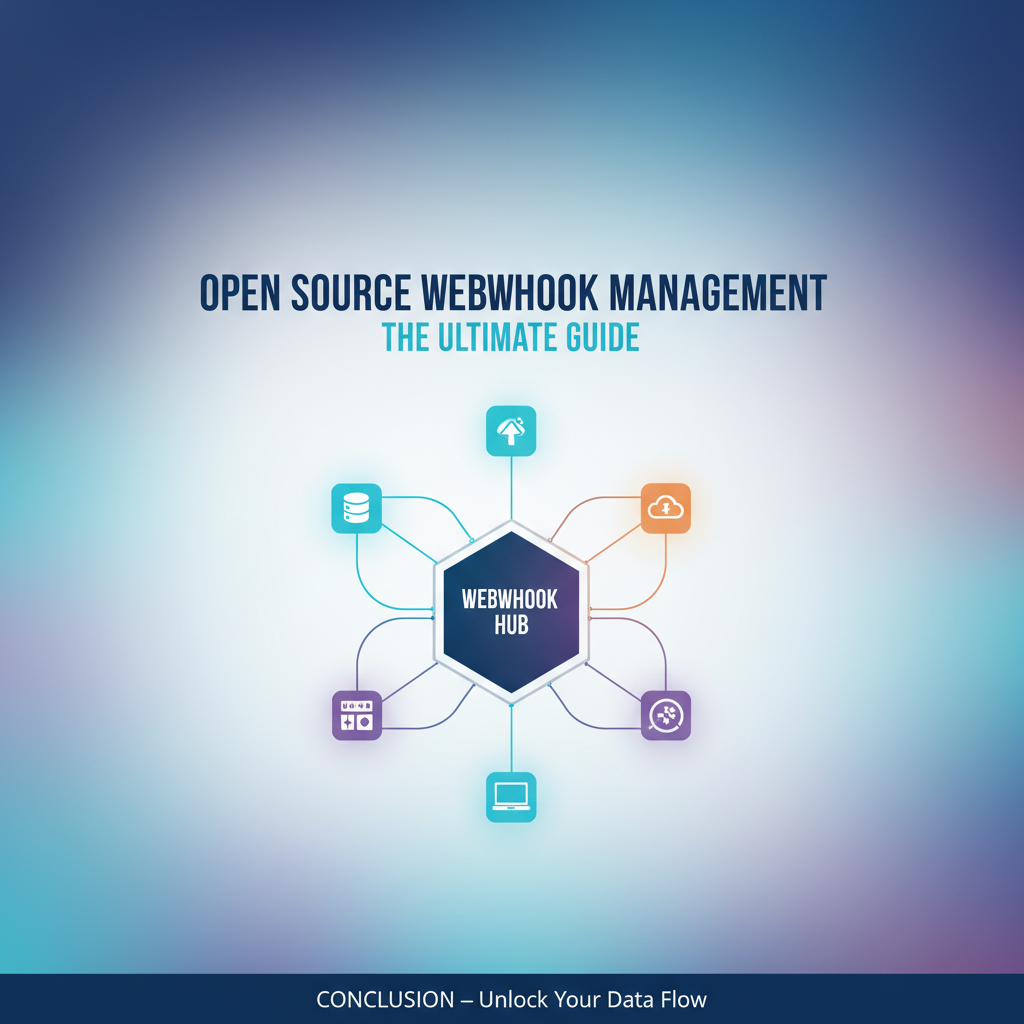
Open Source Webhook Management: The Ultimate Guide


In the rapidly evolving landscape of modern software development, where real-time interactions and event-driven architectures have become the bedrock of resilient and responsive applications, webhooks stand as a crucial, yet often underestimated, communication mechanism. Far beyond simple callbacks, webhooks represent the pulsating heart of systems that demand immediate, asynchronous notification and action. They enable disparate services to "talk" to each other without constant polling, fostering a more efficient and dynamic digital ecosystem. From payment processing updates and continuous integration/continuous deployment (CI/CD) pipelines to instant chat notifications and IoT sensor alerts, webhooks empower applications to react to events as they happen, creating seamless user experiences and robust backend operations.
However, the sheer simplicity of sending an HTTP POST request belies the significant complexities involved in managing webhooks at scale. Ensuring reliable delivery, robust security, efficient scaling, and comprehensive observability across a multitude of external services presents a formidable challenge. This is where the concept of open source webhook management emerges as a powerful paradigm. By leveraging the principles of transparency, community collaboration, and unhindered flexibility, open source solutions offer developers and enterprises a pathway to tame the intricacies of webhook infrastructure, building systems that are not only powerful but also adaptable, cost-effective, and future-proof.
This ultimate guide delves deep into the world of open source webhook management, unraveling its core concepts, exploring essential features, dissecting architectural patterns, and providing best practices for building, deploying, and maintaining a robust event-driven infrastructure. We will navigate through the critical considerations that transform a basic webhook implementation into a sophisticated, managed system, emphasizing how an Open Platform approach, underpinned by robust API strategies and complemented by powerful API Gateway technologies, can unlock unprecedented levels of control and innovation. Join us as we explore how open source tools and methodologies empower organizations to harness the full potential of webhooks, driving the next generation of real-time applications.
I. The Pulsating Heartbeat of Modern Systems – Understanding Open Source Webhook Management
At its core, a webhook is a user-defined HTTP callback that is triggered by an event. When that event occurs in a source system, the source makes an HTTP request to the URL configured by the user – the webhook endpoint. This seemingly straightforward mechanism is a cornerstone of asynchronous communication, enabling systems to notify each other in real-time about significant state changes or occurrences without needing continuous, resource-intensive polling. Imagine a payment gateway notifying your e-commerce platform the moment a transaction is successful, or a Git repository alerting your CI/CD pipeline upon a new code commit. These are classic examples of webhooks in action, driving immediate follow-up actions and automating workflows that would otherwise require constant manual intervention or inefficient polling loops.
The rise of event-driven architectures has propelled webhooks from niche utility to fundamental necessity. In microservices environments, where independent services communicate predominantly through events, webhooks provide a flexible and widely adopted method for outbound notifications to external partners or even between internal services where a direct message queue might be overkill or inaccessible. They form a critical link in the chain of reactivity, allowing applications to respond dynamically to a constantly changing digital environment.
However, managing webhooks effectively is a far cry from simply implementing a single endpoint. As systems grow in complexity and the volume of events escalates, organizations encounter a myriad of challenges: ensuring every event is delivered reliably, handling transient network failures, securing sensitive payloads, processing events at massive scale, and providing visibility into the entire delivery lifecycle. Without a robust management layer, webhooks can quickly become a source of instability, data loss, and operational headaches. This is precisely where the concept of open source webhook management steps in, offering a structured, transparent, and community-driven approach to tackle these complexities head-on.
The imperative of open source in this domain is multi-faceted. Firstly, it offers unparalleled flexibility and customization. Proprietary solutions often impose rigid structures and limitations, forcing businesses to adapt their workflows to the tool. Open source, conversely, provides the underlying code, allowing developers to tailor the management system precisely to their unique operational requirements, integrate it seamlessly with existing infrastructure, and evolve it as their needs change. Secondly, open source fosters transparency and enhances security. The code is publicly auditable, meaning vulnerabilities can be identified and patched by a global community of experts much faster than might be possible within a closed-source ecosystem. This collective scrutiny builds trust and ensures a more secure foundation for sensitive event data. Finally, the cost-effectiveness of open source, eliminating prohibitive licensing fees and reducing vendor lock-in, makes sophisticated webhook management accessible to organizations of all sizes, from startups to large enterprises. It represents an Open Platform philosophy, where shared innovation drives progress, rather than proprietary constraints.
This guide is designed to demystify open source approaches to webhook management, transforming it from a collection of disparate components into a cohesive, strategic capability. We will explore how open source tools, frameworks, and methodologies can be combined to build a powerful, resilient, and observable webhook infrastructure that not only handles the current demands of real-time systems but is also primed for future growth and innovation. Throughout our exploration, we will highlight how core API principles underpin webhook design and how an API Gateway can serve as a pivotal architectural component, reinforcing security, scalability, and discoverability in your event-driven landscape.
II. The Anatomy of a Webhook: Deconstructing the Event Delivery Mechanism
To effectively manage webhooks, one must first grasp their fundamental anatomy and the mechanisms that drive their operation. At its heart, a webhook is a simple concept: an automated message sent from an application when a specific event occurs. Unlike traditional API calls where a client explicitly requests data from a server, webhooks represent a "reverse API" – the server pushes data to the client when something happens, eliminating the need for the client to constantly poll for updates. This paradigm shift from pull to push is what makes webhooks so efficient for real-time communication.
The core components of a webhook interaction involve:
- The Publisher (or Source System): This is the application or service where the event originates. When a predefined event occurs (e.g., a new user registers, an order status changes, a code repository receives a push), the publisher is responsible for detecting it and initiating the webhook notification.
- The Event: The specific occurrence that triggers the webhook. Events are typically well-defined and carry contextual data relevant to what transpired.
- The Payload: The actual data package sent by the publisher. This is typically a JSON or XML document containing information about the event, such as its type, timestamp, and specific data related to the event (e.g., user ID, order details, commit message). The structure of this payload is crucial for the subscriber to correctly interpret the event.
- The Webhook Endpoint (or URL): This is the specific URL provided by the subscriber to the publisher. When an event occurs, the publisher sends an HTTP POST request containing the payload to this endpoint. This URL acts as the digital mailbox for incoming events.
- The Subscriber (or Consuming System): This is the application or service that registers the webhook endpoint and expects to receive event notifications. Upon receiving a webhook, the subscriber processes the payload and performs the necessary actions, such as updating a database, triggering another workflow, or sending a notification.
The entire communication hinges on the ubiquitous HTTP protocol. Webhooks almost exclusively utilize HTTP POST requests, where the event payload is carried in the request body. HTTP headers are also critical, often containing metadata like content type, unique identifiers, and, most importantly for security, digital signatures. The subscriber's endpoint, upon successful receipt and processing of the webhook, is expected to return an HTTP 2xx status code (e.g., 200 OK, 202 Accepted) to acknowledge successful receipt. Any other status code, particularly 4xx or 5xx, signals a failure, which the publisher's system (or your webhook management layer) should interpret as a delivery issue requiring retry logic.
Common use cases for webhooks are incredibly diverse and pervasive across various industries:
- CI/CD Pipelines: Git platforms (GitHub, GitLab, Bitbucket) use webhooks to trigger automated builds, tests, and deployments when code is pushed, merged, or pull requests are opened.
- Payment Gateways: Stripe, PayPal, and other financial services send webhooks to notify merchants of successful payments, failed transactions, refunds, or subscription changes, enabling real-time inventory updates or order fulfillment.
- CRM Updates: Salesforce or other CRM systems can use webhooks to notify external applications when a lead is created, an opportunity is closed, or a customer record is updated, facilitating data synchronization across different platforms.
- Chat and Communication Platforms: Slack, Discord, and Microsoft Teams allow webhooks to be used for sending notifications from external services directly into chat channels, such as build failures, new support tickets, or critical system alerts.
- IoT and Sensor Data: Edge devices can send webhooks to a central platform when a specific threshold is crossed (e.g., temperature too high, motion detected), triggering immediate alerts or automated responses.
While the basic mechanism is simple, implementing webhooks reliably at scale introduces significant challenges. Reliability is paramount: what happens if the subscriber's server is temporarily down, or the network connection drops? Security is non-negotiable: how do you ensure the incoming webhook is genuinely from the expected sender and hasn't been tampered with? Scalability becomes an issue when hundreds or thousands of events per second need to be processed. Finally, visibility and debugging: how do you trace a failed webhook delivery and understand why it failed? These are the complex questions that open source webhook management solutions aim to answer, transforming the raw power of webhooks into a robust, observable, and secure communication backbone.
III. The "Why" Behind Open Source Webhook Management
The decision to adopt an open source approach for webhook management is driven by a compelling confluence of strategic, technical, and economic factors. While commercial webhook management services offer convenience, they often come with limitations that open source solutions are uniquely positioned to overcome. The philosophy underpinning "open source" aligns perfectly with the agile, interconnected nature of modern software development, emphasizing flexibility, transparency, and community-driven innovation. This makes it an ideal choice for a critical infrastructure component like webhook handling, which sits at the intersection of internal and external service communication.
Cost Efficiency: Liberating Budgets for Innovation
One of the most immediate and tangible benefits of open source webhook management is its inherent cost-efficiency. Proprietary solutions often entail recurring licensing fees, subscription costs that scale with usage, and potentially expensive support contracts. These costs can quickly accumulate, especially for organizations with high event volumes or multiple applications requiring webhook capabilities. Open source, by its very nature, eliminates these licensing fees. While there are still operational costs associated with hosting infrastructure, maintaining servers, and dedicating developer resources for setup and customization, the long-term Total Cost of Ownership (TCO) is often significantly lower. This reallocation of budget from licensing to core development and infrastructure improvements allows companies to invest more in innovation, rather than simply maintaining their existing stack. For startups and smaller businesses, this can be the difference between being able to afford a robust webhook system or having to compromise on reliability and features.
Flexibility and Customization: Tailoring to Unique Needs
No two businesses are exactly alike, and neither are their event-driven architectures. Proprietary webhook management services, by necessity, offer a generalized set of features designed to serve a broad market. This can lead to situations where a business needs a specific integration, a unique retry strategy, a particular security protocol, or a custom dashboard visualization that the off-the-shelf solution simply doesn't provide. The beauty of open source lies in its unparalleled flexibility. With access to the source code, development teams can entirely customize the webhook management system to fit their precise requirements. They can integrate it deeply with existing monitoring tools, extend its functionality with custom plugins, adapt it to legacy systems, or even modify its core behavior to optimize for highly specialized workflows. This level of granular control ensures that the webhook infrastructure truly serves the business, rather than forcing the business to conform to the tool's limitations. It embodies the essence of an Open Platform – a foundation that can be built upon and shaped without artificial barriers.
Transparency and Enhanced Security: The Power of Community Scrutiny
Security is paramount when dealing with real-time event data, which can often contain sensitive business or user information. In a closed-source environment, organizations must implicitly trust the vendor's security practices and hope that any vulnerabilities are promptly identified and patched internally. Open source, conversely, offers a level of transparency that proprietary solutions cannot match. The entire codebase is publicly available for scrutiny by a global community of developers, security researchers, and enthusiasts. This collective auditing process means that potential vulnerabilities are often discovered and reported much faster, leading to quicker patch releases and a more robust security posture. Furthermore, organizations can conduct their own internal security audits on the open source code, ensuring compliance with internal policies and regulatory requirements. This transparency builds a higher degree of confidence in the integrity and security of the webhook management system, a crucial factor when an API Gateway or other critical infrastructure components are handling sensitive data flows.
Vendor Lock-in Avoidance: Freedom to Evolve
Committing to a proprietary service, particularly for a fundamental infrastructure component, carries the inherent risk of vendor lock-in. Switching providers later can be a complex, costly, and time-consuming endeavor, often requiring significant refactoring of existing integrations and data migration. Open source mitigates this risk almost entirely. Since you own and control the code, you are not dependent on a single vendor's roadmap, pricing changes, or business continuity. If a particular open source project becomes unmaintained or no longer meets your needs, you have the flexibility to fork the project, migrate to another open source alternative, or even maintain it internally. This freedom ensures that your webhook management strategy remains agile and adaptable, safeguarding your long-term technological independence.
Community and Innovation: Collaborative Development at Its Best
The open source model thrives on community collaboration. Developers from around the world contribute code, report bugs, suggest features, and provide support. This collective intelligence leads to rapid innovation, diverse perspectives, and a continuous cycle of improvement. An active open source project benefits from a broader talent pool than any single company could ever assemble, leading to faster development of new features, more comprehensive documentation, and a more resilient ecosystem. For organizations adopting open source webhook management, this means access to a constantly evolving, well-supported, and feature-rich platform driven by the needs and contributions of its users.
Control and Ownership: Mastering Your Infrastructure
Ultimately, adopting open source webhook management grants organizations unparalleled control and ownership over their critical event infrastructure. You decide where it's deployed (on-premises, private cloud, public cloud), how it's configured, and how it integrates with the rest of your stack. This level of control extends to data governance, performance tuning, and operational procedures. Unlike managed services where you cede some control to the provider, open source empowers you to become the master of your own webhook destiny, ensuring that this vital communication layer operates precisely as you intend, fully aligned with your organizational goals and compliance requirements. This complete control is essential when integrating with an API Gateway and other core infrastructure elements that manage crucial API traffic.
In summary, the choice for open source webhook management is a strategic investment in flexibility, security, control, and long-term sustainability. It moves beyond mere cost savings to fundamentally empower development teams, fostering an environment of innovation and adaptability in the dynamic world of real-time event processing.
IV. Core Components and Essential Features of an Open Source Webhook Management System
Building a robust open source webhook management system involves more than just setting up an endpoint to receive POST requests. It requires a sophisticated orchestration of components designed to ensure reliability, security, scalability, and observability across the entire event delivery lifecycle. Each feature addresses a specific challenge inherent in managing asynchronous, real-time communication.
1. Webhook Ingestion & Validation: The First Line of Defense
The entry point for all incoming webhooks is the ingestion layer, which must be resilient and intelligent. * Receiving Endpoints: These are the public-facing URLs that external publishers send their webhooks to. They must be highly available, capable of handling burst traffic, and ideally behind an API Gateway for initial traffic management, load balancing, and potentially rate limiting. The endpoints should be designed to quickly acknowledge receipt with a 2xx HTTP status code, deferring heavy processing to later stages to avoid timeouts for the publisher. * Payload Validation: Before any processing begins, the incoming webhook payload must be validated against a predefined schema. This ensures data integrity and prevents malformed or malicious payloads from disrupting the system. Validation can include checking for required fields, data types, and specific formats. * Authentication & Authorization: Crucially, the system must verify the authenticity of the incoming webhook. This can be achieved through various mechanisms: * API Keys: Publishers include a secret key in an HTTP header or query parameter. * Basic Authentication: Using username/password credentials. * JWTs (JSON Web Tokens): More sophisticated authentication for trusted integrations. * Signature Verification: This is the most common and robust method. The publisher generates a cryptographic signature (e.g., HMAC-SHA256) of the payload using a shared secret and includes it in an HTTP header. The webhook management system then recalculates the signature using its copy of the secret and compares it to the incoming signature. A mismatch indicates either a tampered payload or an unauthorized sender. This mechanism is critical for ensuring the integrity and authenticity of the webhook.
2. Event Storage & Persistence: The Safety Net
Once ingested and validated, the event needs to be durably stored and made available for processing. This is where queuing and persistence mechanisms come into play. * Reliable Queuing: Events should be immediately pushed into a durable message queue (e.g., Apache Kafka, RabbitMQ, Redis Streams) after ingestion. This decouples the ingestion process from the processing logic, preventing data loss if downstream services are temporarily unavailable or overwhelmed. Queues provide a buffer, ensuring that events are not lost and can be processed asynchronously at a sustainable rate. * Idempotency: Webhook deliveries can sometimes be duplicated due to network retries or misconfigurations. The system should incorporate mechanisms to ensure that processing an event multiple times yields the same result as processing it once. This is often achieved by including a unique event ID in the payload and having consumers track processed IDs. * Event Store: Beyond queuing, a persistent event store (e.g., a dedicated database table or a specialized event store like EventStoreDB) can act as a comprehensive ledger of all received and processed webhooks. This provides an audit trail, enables historical analysis, and facilitates replaying events if necessary for debugging or recovery.
3. Delivery Mechanism & Retry Logic: Ensuring Event Reach
The core challenge of webhooks is reliable delivery to external, potentially unreliable, subscriber endpoints. * Asynchronous Delivery: Processing and delivering webhooks should always be asynchronous to avoid blocking the ingestion pipeline. Dedicated worker processes or serverless functions fetch events from the queue and attempt delivery. * Exponential Backoff & Jitter: When a webhook delivery fails (e.g., subscriber endpoint returns a 5xx error), the system should implement a sophisticated retry mechanism. Exponential backoff means increasing the delay between successive retries (e.g., 1s, 2s, 4s, 8s...). Jitter (adding a small random delay) prevents all failed webhooks from retrying simultaneously, which could overwhelm a recovering subscriber. * Dead-Letter Queues (DLQ): If a webhook consistently fails to deliver after a predefined number of retries, it should be moved to a Dead-Letter Queue. This prevents perpetually failing messages from clogging the main queue and provides a separate pool for manual inspection, analysis, and potential re-processing. * Circuit Breakers: To protect both the webhook management system and the subscriber, circuit breakers should be implemented. If a subscriber endpoint consistently fails for a certain period, the circuit breaker "opens," temporarily stopping further delivery attempts to that endpoint. After a set time, it "half-opens" to test the endpoint, closing if successful or reopening if failures persist. This prevents overwhelming unhealthy services and conserves resources.
4. Security Considerations: Protecting the Event Stream
Security is paramount for any API or event-driven system. * HTTPS Everywhere: All communication, both inbound (from publisher to your system) and outbound (from your system to subscriber), must be encrypted using HTTPS to protect data in transit from eavesdropping and tampering. * Webhook Secrets & Signatures: As mentioned in ingestion, HMAC-SHA256 signatures are vital for verifying the authenticity and integrity of incoming webhooks. Similarly, for outbound webhooks you publish, providing a signing secret to your subscribers allows them to verify your authenticity. * IP Whitelisting/Blacklisting: For critical integrations, you might restrict incoming webhooks to specific IP ranges (whitelisting) or block known malicious IPs (blacklisting) at the API Gateway level or within your webhook service. * Payload Encryption (at rest/in transit): If very sensitive data is involved, consider encrypting the payload itself, both when stored (at rest) and potentially within the payload even before HTTPS encryption (in transit). * Least Privilege: Ensure that the webhook processing components have only the minimum necessary permissions to perform their tasks.
5. Scalability and High Availability: Handling Volume and Ensuring Uptime
A robust system must be able to handle fluctuating event volumes and remain operational even in the face of component failures. * Distributed Architecture: Components like ingestors, queues, and delivery workers should be designed for horizontal scaling, meaning you can add more instances as traffic increases. * Load Balancing: Incoming webhook requests should be distributed across multiple ingestion endpoints using load balancers (often handled by an API Gateway). * Redundancy: Every critical component (queues, databases, worker instances) should have redundant backups or be deployed in a highly available configuration across multiple availability zones to prevent single points of failure. * Geo-Distribution: For global applications, deploying webhook infrastructure in multiple geographical regions can reduce latency and provide disaster recovery capabilities.
6. Monitoring, Logging & Observability: Seeing What's Happening
Without visibility, managing a complex distributed system is impossible. * Comprehensive Event Logging: Detailed logs must be captured for every stage of a webhook's journey: ingestion, validation, queuing, delivery attempts (successes and failures), retries, and final status. Logs should include request headers, payloads (with sensitive data masked), response codes, and timestamps. * Metrics & Dashboards: Key performance indicators (KPIs) should be collected and visualized in dashboards. These include: * Ingestion rate (webhooks/second) * Queue depth * Delivery success rate * Delivery failure rate (broken down by error type) * Average delivery latency * Number of retries * DLQ size * Alerting: Proactive alerts should be configured for critical thresholds, such as a sudden drop in success rates, an increase in DLQ size, or prolonged delivery delays. * Tracing: Distributed tracing tools (e.g., OpenTelemetry, Jaeger) can provide end-to-end visibility of an event's flow through the entire system, helping to pinpoint bottlenecks and diagnose complex issues across multiple services.
7. Developer Experience (DX) & User Interface: Empowering Users
While a robust backend is crucial, a good user experience for both internal developers and external subscribers is essential for successful adoption. * Webhook Portal/Dashboard: A user-friendly web interface allows developers to: * Configure new webhook subscriptions (e.g., specify event types, destination URLs). * View the status of past webhook deliveries. * Inspect webhook payloads and responses. * Manually retry failed webhooks. * Manage shared secrets for signature verification. * Keywords: This is a strong tie-in with an API Gateway developer portal concept. * API Documentation: Clear, concise, and comprehensive documentation is vital for external subscribers. It should detail webhook payload schemas, authentication methods, expected response codes, and retry policies. * Testing Tools: Providing tools to simulate incoming webhooks or to replay historical events significantly aids in debugging and development. A "webhook sandbox" or a simple "webhook.site"-like capability can be invaluable.
By carefully implementing these core components and features, organizations can build an open source webhook management system that not only handles the current demands of real-time event processing but is also scalable, secure, and maintainable for the long term. This comprehensive approach ensures that every event contributes meaningfully to the overall responsiveness and efficiency of the interconnected applications.
V. Architectural Patterns for Open Source Webhook Management
The design of an open source webhook management system can vary significantly depending on existing infrastructure, scale requirements, and team expertise. There are several prevalent architectural patterns, each offering distinct advantages and trade-offs. Understanding these patterns is crucial for selecting or constructing a solution that aligns with an organization's strategic goals and operational capabilities. The role of an API Gateway is often pivotal in many of these designs, acting as a crucial intermediary for both inbound and outbound event flows.
The "Build Your Own" Approach: Leveraging Message Queues and Cloud-Native Services
For organizations with significant internal development capabilities and a desire for maximum control, building a custom webhook management system from foundational open source components is a viable and often preferred path. This approach allows for deep integration with existing systems and tailored functionality.
- Leveraging Message Queues (Kafka, RabbitMQ, Redis Streams): Message queues form the backbone of most custom webhook management systems.
- Apache Kafka: A distributed streaming platform known for its high-throughput, fault-tolerant, and real-time capabilities. It's excellent for handling massive volumes of events, providing durable storage, and enabling multiple consumers. An incoming webhook can be immediately published to a Kafka topic. Dedicated worker applications (Kafka Consumers) then read from these topics, process the events, and attempt delivery to subscriber endpoints. Its partitioning model naturally supports scalability.
- RabbitMQ: A widely adopted open source message broker implementing the Advanced Message Queuing Protocol (AMQP). It offers flexible routing, reliable message delivery guarantees, and sophisticated retry mechanisms. It's often favored for scenarios requiring fine-grained control over message routing and strong transactional guarantees.
- Redis Streams: A data structure in Redis that provides a log-like data structure, enabling append-only entries, consumer groups, and persistence. It offers a simpler, high-performance alternative for less complex queuing needs or as a component in a broader Redis-based microservices architecture. The "build your own" approach typically involves: an HTTP service (e.g., using Node.js Express, Spring Boot, Python Flask) to expose webhook ingestion endpoints, a message queue to buffer and persist events, and a set of worker services to consume from the queue, implement retry logic, and handle HTTP delivery to subscriber URLs.
- Using Cloud-Native Services (AWS SQS/SNS, Azure Event Grid, GCP Pub/Sub): While not strictly "open source" in the traditional sense, these managed cloud services often expose open standard APIs and can be integrated with open source codebases. They provide highly scalable, fault-tolerant queuing and pub/sub capabilities as a service, significantly reducing operational overhead for managing the queue infrastructure itself. For instance, an incoming webhook could trigger an AWS Lambda function that publishes to an SNS topic or SQS queue, with other Lambda functions handling the outbound delivery. This hybrid approach combines the flexibility of custom code with the scalability and reliability of managed cloud services.
- Frameworks and Libraries: Open source frameworks and libraries can expedite development. For example, Spring Cloud Stream (for Java), Celery (for Python), or various npm packages for Node.js can simplify the integration with message queues and the implementation of asynchronous worker processes.
Adopting Dedicated Open Source Solutions
While a fully "dedicated open source webhook manager" with the same level of ubiquity as, say, an open source API Gateway like Kong or Apache APISIX, is less common as an all-in-one product, there are several projects and patterns that aim to fulfill this role or provide substantial components. Projects like Hookdeck (which offers an open source core for part of its offering) or various community-driven efforts often focus on specific aspects like retry logic, dashboarding, or security. The pattern here is to adopt a pre-built, albeit potentially specialized, open source application that directly addresses webhook management challenges, rather than building every component from scratch. These solutions typically provide: * A pre-configured ingestion endpoint. * Built-in queueing and persistence. * Sophisticated retry and dead-letter queue mechanisms. * A user interface for monitoring and configuration. * Security features like signature verification. The advantage is a faster time to market and less boilerplate code, though they might offer less customization than a purely DIY approach.
Hybrid Approaches: Blending the Best of Both Worlds
Many organizations find success in a hybrid model, combining managed cloud services or existing infrastructure with custom open source code. For example, using a cloud-managed message queue for reliability and scalability, coupled with custom-developed, open source worker services that implement unique business logic for webhook delivery. Or, leveraging an existing API Gateway for initial ingress, then routing to custom open source processing services. This strategy allows teams to focus their development efforts on the unique challenges of their business logic while offloading common infrastructure concerns to robust, managed platforms.
The Role of an API Gateway: A Pivotal Architectural Component
Regardless of the chosen pattern, an API Gateway often plays a crucial and multifaceted role in an open source webhook management architecture. It sits at the edge of your network, acting as a single entry point for all API calls, including webhooks.
- For Inbound Webhooks:
- Authentication & Authorization: The API Gateway can be the first line of defense, validating API keys, JWTs, or even performing preliminary signature verification before forwarding the webhook to an internal service. This offloads security concerns from the core webhook processing logic.
- Rate Limiting & Throttling: It can protect your webhook ingestion services from being overwhelmed by malicious or misconfigured publishers, ensuring stability under heavy load.
- Traffic Management: Load balancing, routing, and even canary deployments for your webhook ingestion endpoints can be managed by the gateway. This provides a robust and scalable ingress point for all webhook traffic.
- Request/Response Transformation: The gateway can normalize incoming webhook payloads or add standard headers before forwarding them, simplifying downstream processing.
- For Outbound Webhooks:
- Centralized Security Policy Enforcement: If your webhook management system needs to integrate with internal services or other secure endpoints before delivering events externally, an API Gateway can enforce consistent security policies for these internal API calls.
- Monitoring and Logging: The gateway can capture detailed logs of all incoming requests, providing valuable data for observability and security auditing, complementing the logging within the webhook management system itself.
For example, an organization might deploy an Open Platform like ApiPark as their primary API Gateway. APIPark, an open-source AI gateway and API management platform, excels at providing end-to-end API lifecycle management with performance rivaling Nginx, detailed call logging, and powerful data analysis. While primarily an API Gateway, it can serve as a critical layer for initial reception of webhook payloads, handling authentication, rate limiting, and secure traffic forwarding to your internal webhook processing services. This allows your custom open source webhook management components to focus purely on event processing and reliable delivery, offloading the perimeter security and traffic management to a specialized, high-performance gateway like APIPark. Such an integrated approach ensures that your entire api ecosystem, including event-driven notifications, operates efficiently, securely, and with comprehensive observability.
The table below provides a comparative look at different open source webhook management approaches, highlighting their complexity, scalability, and typical use cases, which should further illuminate the decision-making process.
VI. Integrating Webhooks with Your Ecosystem
The true power of webhooks is realized not in their isolated function, but in their seamless integration with the broader application ecosystem. An open source webhook management system acts as a central nervous system for events, connecting various internal and external services, data pipelines, and user-facing applications. Effective integration requires careful planning to ensure data consistency, security, and operational efficiency across disparate platforms.
Internal Service Communication: The Fabric of Microservices
In modern microservices architectures, services often communicate by emitting and reacting to events. Webhooks, while commonly associated with external notifications, can also serve as a flexible mechanism for internal service communication, especially for less tightly coupled interactions or when bridging different eventing paradigms. * Decoupled Services: Instead of direct API calls that create tight coupling, a service can emit an event via your internal webhook management system, and other interested internal services can subscribe to receive these events. This allows services to evolve independently without breaking dependencies. * Event Buses and Message Brokers: Your open source webhook management system can integrate directly with existing internal event buses or message brokers (like Kafka or RabbitMQ). When an external webhook is received and processed, the internal system can translate it into an internal event format and publish it to the enterprise's central event bus. Conversely, internal events destined for external webhooks can be picked up from the bus by your webhook delivery workers. This creates a unified event flow, where external events seamlessly trigger internal workflows and vice-versa. * Triggering Microservices: A well-managed incoming webhook can trigger specific functions or microservices within your architecture. For example, a "payment_successful" webhook from a payment gateway could trigger a "fulfill_order" service, an "update_inventory" service, and a "send_customer_email" service, all orchestrated by the internal event bus after the webhook has been processed by your management system.
External Integrations: Bridging Your Application with the World
The primary role of many webhooks is to facilitate communication with third-party SaaS platforms, partner systems, or external APIs. * SaaS Platform Connectivity: Integrate with CRM systems (Salesforce, HubSpot), marketing automation platforms (Mailchimp), project management tools (Jira, Asana), or communication platforms (Slack, Twilio). Your system can send webhooks to these platforms to trigger actions or receive webhooks from them to update your internal state. * Partner APIs: For business-to-business (B2B) integrations, webhooks offer a real-time method for partners to exchange information, such as inventory updates, shipping notifications, or order confirmations, without the need for constant polling of their respective APIs. * Consuming Third-Party Webhooks: Your open source webhook management system acts as the reliable receiver for webhooks from external vendors. It ensures that even if a vendor's system sends a burst of events or retries aggressively, your internal systems are protected and can process events at a controlled pace.
Data Pipelines: Fueling Real-time Analytics and ETL
Webhooks are a rich source of real-time data that can feed into analytical pipelines and data warehousing solutions. * Real-time Data Ingestion: Events received via webhooks (e.g., user activity, payment events, sensor readings) can be streamed directly into a data lake or data warehouse for immediate analysis. Your webhook management system can publish these processed events to a data streaming platform (like Kafka) which then connects to analytical tools. * ETL Processes: Webhooks can trigger Extract, Transform, Load (ETL) processes. For example, a "data_updated" webhook could initiate a job to extract relevant data, transform it, and load it into a business intelligence (BI) dashboard. * Monitoring and Auditing: Beyond direct business value, webhook events themselves provide valuable telemetry. Logs and metrics from your webhook management system (delivery times, failure rates, payload sizes) can be integrated into your observability stack for overall system health monitoring and auditing.
Security Best Practices in Integration: Trust but Verify
When integrating webhooks, security must remain a top priority, especially when dealing with external entities. * Mutual TLS (mTLS): For highly sensitive or critical integrations, consider implementing mutual TLS. This ensures that both the client (your webhook sender) and the server (the subscriber) verify each other's certificates, establishing a highly secure, encrypted channel. * OAuth for API Calls: If your webhook processing involves making subsequent API calls to secure internal or external services, use robust authorization mechanisms like OAuth 2.0. Your webhook management system should be configured to securely obtain and manage access tokens. * Data Masking and Redaction: Before logging or storing webhook payloads, ensure that any highly sensitive information (e.g., credit card numbers, PII) is appropriately masked, encrypted, or redacted, especially when dealing with external integrations where you might not control the full data lifecycle. * Input Sanitization: When webhook data is used to update databases or trigger commands, always sanitize and validate input to prevent SQL injection, cross-site scripting (XSS), or other code injection attacks. * Endpoint Security: Ensure that your webhook reception endpoints are always behind an API Gateway and protected by firewalls, and that your internal network segments processing webhooks are isolated.
By thoughtfully integrating your open source webhook management system into your broader ecosystem, you can unlock its full potential, creating a cohesive, responsive, and secure environment where events drive intelligent actions across all your applications and partners. The emphasis on an Open Platform approach facilitates this integration, allowing for the flexible adoption of open standards and protocols to connect a diverse array of services.
APIPark is a high-performance AI gateway that allows you to securely access the most comprehensive LLM APIs globally on the APIPark platform, including OpenAI, Anthropic, Mistral, Llama2, Google Gemini, and more.Try APIPark now! 👇👇👇
VII. Advanced Concepts in Webhook Management
As organizations mature in their adoption of event-driven architectures and the scale of their operations increases, the capabilities of their webhook management systems must evolve beyond basic reliable delivery. Advanced concepts address complex scenarios, optimize resource utilization, and lay the groundwork for truly reactive and resilient applications.
Fan-out Webhooks: Broadcasting Events Efficiently
Traditional webhook delivery typically involves sending an event to a single, predefined subscriber endpoint. However, many real-world scenarios require a single event to be distributed to multiple, distinct subscribers, each with potentially different processing needs and delivery requirements. This is known as "fan-out." * Use Cases: * A "customer_created" event might need to be sent to a CRM, a marketing automation platform, an analytics system, and an internal invoicing service simultaneously. * A "product_price_updated" event could notify multiple resellers' APIs, update internal cache services, and trigger a notification to customer-facing applications. * Implementation: An open source webhook management system facilitates fan-out by allowing a single incoming event to be mapped to multiple outgoing webhook subscriptions. Internally, this often means publishing the event to a message queue, from which multiple worker processes, each responsible for a different subscriber, consume and attempt delivery. Each subscriber can have its own delivery parameters, retry policies, and authentication credentials. This decoupling ensures that a delivery failure to one subscriber does not impact deliveries to others. Effectively, the system transforms a single event into a series of independent outbound webhook notifications, each managed with its own lifecycle.
Event Sourcing & CQRS: Deepening Event-Driven Architectures
Webhooks are fundamentally about event notification. When integrated with advanced architectural patterns like Event Sourcing and Command Query Responsibility Segregation (CQRS), they can become an even more powerful component of a truly event-driven enterprise. * Event Sourcing: Instead of storing the current state of an application directly, event sourcing stores every change to the application's state as a sequence of immutable events. These events are the "source of truth." Webhooks can be triggered directly from these domain events in the event store, providing a highly consistent and auditable foundation for external notifications. For example, a "user_profile_updated" domain event from your event store could trigger a webhook to a third-party CRM. * CQRS: CQRS separates the read (query) and write (command) models of an application. Commands generate events, which are then persisted and used to update read models. Webhooks can originate from either the command side (notifying of an action taken) or the read side (notifying of a specific queryable state change). Integrating webhooks into a CQRS architecture allows for fine-grained control over when and what external systems are notified, based on specific business processes. This ensures that webhooks reflect actual, validated state transitions within the system.
Serverless Webhooks: Cost-Effective and Scalable Event Handling
The rise of serverless computing (Function-as-a-Service, FaaS) offers a compelling model for handling webhooks, especially for bursty, event-driven workloads. * Leveraging FaaS: Cloud providers like AWS Lambda, Azure Functions, and Google Cloud Functions can be used to build highly scalable and cost-effective webhook ingestion and processing components. An incoming webhook can directly trigger a serverless function (e.g., via an API Gateway endpoint configured to invoke Lambda). This function can then validate the payload, publish it to a message queue, and even attempt initial delivery. * Benefits: * Auto-scaling: Serverless functions automatically scale up and down based on demand, eliminating the need to provision and manage servers. This is ideal for webhook traffic, which can often be unpredictable. * Cost Efficiency: You only pay for the compute time consumed by your functions, making it very cost-effective for workloads with intermittent or highly variable event volumes. * Reduced Operational Overhead: The cloud provider manages the underlying infrastructure, allowing developers to focus purely on the webhook logic. * Considerations: While powerful, serverless architectures require careful design, especially regarding cold starts, maximum execution times, and monitoring across distributed functions. Integrating an open source webhook management system with serverless functions provides the best of both worlds: the operational simplicity of serverless combined with the flexibility and transparency of open source code for core logic like retry mechanisms and security.
Multi-tenancy: Supporting Multiple Clients within a Single System
For SaaS providers or platforms that offer webhook capabilities to numerous independent customers or teams, implementing multi-tenancy in the webhook management system is crucial. * Definition: Multi-tenancy allows a single instance of the webhook management application to serve multiple tenants (customers or organizations) securely and efficiently, each with their own isolated data, configurations, and permissions. * Key Considerations: * Data Isolation: Ensuring that one tenant's webhook data (subscriptions, logs, secrets) is never accessible by another tenant. This requires careful database schema design, proper partitioning, and stringent access controls. * Configuration Isolation: Each tenant needs their own set of webhook subscriptions, unique shared secrets, and delivery preferences. The system must provide a mechanism for tenants to self-manage their webhook settings via a dedicated portal or API. * Resource Allocation: Fairly distributing resources (CPU, memory, outbound bandwidth) among tenants to prevent "noisy neighbor" issues, where one tenant's heavy usage impacts others. * Security: Robust authentication and authorization at the tenant level are paramount, ensuring that only authenticated and authorized tenants can manage or view their own webhooks. * Implementation: Open source multi-tenant architectures often leverage database schemas with tenant IDs, shared message queues with tenant-specific topics or routing keys, and authentication systems that enforce tenant-level permissions. Building such a system from open source components offers maximum control over isolation and resource management, allowing for customization that perfectly fits the SaaS product's specific needs.
Webhooks and AI/ML Workflows: The Intelligent Event Trigger
The convergence of event-driven systems and Artificial Intelligence/Machine Learning opens new possibilities for intelligent, automated workflows. Webhooks play a crucial role as triggers and communicators in these advanced scenarios. * Triggering AI Models: An incoming webhook can signal the availability of new data, triggering an AI model to perform analysis. For example, an "image_uploaded" webhook could trigger a computer vision model to categorize the image, or a "new_review" webhook could trigger a sentiment analysis model. * Delivering AI Results: Conversely, once an AI model has completed its processing, it can emit a webhook containing its findings. For instance, a fraud detection model could send a "fraud_alert" webhook to a security system, or a recommendation engine could send a "personalized_offer" webhook to a marketing platform. * Real-time Decision Making: By integrating webhooks with AI/ML, organizations can build systems that react intelligently and in real-time to complex events, automating decisions and driving dynamic responses. This is particularly valuable in areas like dynamic pricing, personalized content delivery, and proactive anomaly detection.
In this context, an API Gateway that also understands and manages AI services becomes incredibly powerful. An Open Platform like ApiPark, for example, an open-source AI gateway and API management platform, is specifically designed to quickly integrate over 100 AI models and provide a unified API format for AI invocation. When discussing advanced webhook scenarios involving AI, it's natural to consider how a platform like APIPark could seamlessly manage the APIs that trigger these AI workflows or receive their results, ensuring secure, high-performance, and unified governance across both traditional APIs and AI-driven event streams. This synergy allows organizations to build truly intelligent, event-driven applications that react with precision and insight.
These advanced concepts elevate open source webhook management from a simple delivery mechanism to a strategic component capable of powering complex, intelligent, and highly scalable event-driven architectures. By embracing these patterns, organizations can unlock deeper levels of automation, real-time responsiveness, and analytical power within their systems.
VIII. APIPark: Enhancing the Open Source Ecosystem
While this guide primarily focuses on the specific domain of open source webhook management, it's crucial to acknowledge how complementary technologies, particularly robust API Gateway solutions, can significantly enhance and integrate with an event-driven architecture. Webhooks, at their core, are a form of reverse API, and their effective management often benefits immensely from the same principles and infrastructure applied to traditional API governance.
For organizations seeking to unify their API management strategies, including the secure and efficient handling of inbound and outbound event notifications, an Open Platform like ApiPark can serve as a critical layer. APIPark is an open-source AI gateway and API management platform that offers an end-to-end API lifecycle management solution, providing unparalleled performance that rivals even Nginx, along with detailed call logging and powerful data analysis capabilities.
In the context of webhook management, APIPark can act as a crucial first line of defense for inbound webhooks. It can effectively handle the initial reception of webhook payloads, applying stringent security policies such as authentication, authorization, and rate limiting before forwarding them to your dedicated open source webhook processing services. This offloads significant security and traffic management responsibilities from your custom webhook handlers, allowing them to focus purely on event processing and reliable delivery. Furthermore, its advanced logging and monitoring features provide comprehensive observability across all API and service interactions, giving you a holistic view of your event flows.
Moreover, as we've discussed advanced topics such as the integration of webhooks with AI/ML workflows, APIPark's specialized capabilities shine. It's designed to quickly integrate over 100 AI models and standardize the request data format for AI invocation. This means that if your webhooks trigger AI models or receive results from them, APIPark can streamline the API interactions with these models, ensuring consistency, security, and traceability within your AI-driven event streams. By leveraging an Open Platform like APIPark, organizations gain a powerful, flexible, and high-performance API Gateway that not only secures and manages their traditional APIs but also intelligently integrates with and enhances their open source webhook management infrastructure, fostering a cohesive and highly efficient event-driven ecosystem.
IX. A Comparative Look at Open Source Webhook Management Approaches
The choice of approach for open source webhook management profoundly impacts complexity, scalability, and operational overhead. Below is a comparative table highlighting three common patterns, outlining their characteristics, benefits, and drawbacks. This helps in understanding where dedicated open source solutions fit and how they relate to broader architectural patterns involving message queues or serverless functions.
| Feature / Approach | DIY with Message Queue (e.g., Kafka/RabbitMQ) | Dedicated Open Source Webhook Manager (Pattern) | Serverless Cloud Functions (e.g., AWS Lambda, Azure Functions) |
|---|---|---|---|
| Description | Custom-built system using open source queueing infrastructure (e.g., Kafka, RabbitMQ) for event buffering and custom workers for delivery. | Leveraging a pre-built open source application or framework specifically designed for webhook management. (Less common as a single, ubiquitous tool, more as a set of features). | Using managed Function-as-a-Service (FaaS) to handle webhook ingestion, processing, and delivery. |
| Complexity | High: Requires significant engineering effort for infrastructure setup, custom code for ingestion, retry logic, delivery, monitoring, and UI. | Medium: Requires deployment and configuration of the tool, some custom integration; features like retries & dashboards are often built-in. | Low-Medium: Configuration of functions, triggers, and permissions; custom code for specific webhook logic. |
| Scalability | Very High: Inherently scalable with distributed message queues; horizontal scaling of custom workers. | High: If the dedicated solution is designed for distributed deployment and leverages scalable components. | Very High: Automatic scaling by cloud provider based on event volume; truly elastic. |
| Reliability | High: Achieved through durable queues, custom retry mechanisms, and robust error handling. Requires careful implementation. | High: Built-in retry logic, Dead-Letter Queues (DLQs), and error reporting. | High: Managed service reliability, often with built-in retries for function invocations. |
| Customization | Extremely High: Full control over every aspect of the code and infrastructure; tailor-made solutions. | High: Can extend or modify the source code; configuration options allow for significant adaptation. | High: Code logic within functions is fully customizable; strong integration with other cloud services. |
| Maintenance Overhead | High: Managing queue infrastructure, custom application code, deployments, and patching. | Medium: Application updates, security patches, managing underlying infrastructure (if self-hosted). | Low: Platform manages server infrastructure; focus on code maintenance and updates. |
| Cost Model | Infrastructure costs (servers, storage) + significant development/maintenance effort. | Infrastructure costs + some development/integration effort. May involve commercial support for some solutions. | Pay-per-execution and resource consumption; highly cost-effective for intermittent workloads. |
| Core Use Case | High-volume, complex event processing; deep integration with existing event buses; maximum architectural control. | Streamlined management of outbound webhooks for multiple subscribers; good developer experience with a UI. | Event-driven, bursty workloads; rapid prototyping; ideal for simple, self-contained webhook handling. |
| Key Benefit | Maximum control, integrates seamlessly with existing enterprise event backbone, ultimate flexibility. | Faster setup for common webhook challenges, reduced boilerplate, potentially better DX with pre-built UIs. | Extreme cost-efficiency for variable loads, minimal operational burden, highly resilient by design. |
| Drawbacks | Long development cycle, high initial investment, requires specialized expertise in distributed systems. | May not fit all unique requirements without code modification; less flexibility than pure DIY. | Vendor lock-in to cloud platform, potential for cold start latencies, debugging distributed serverless functions can be complex. |
X. Best Practices for Open Source Webhook Management
Implementing an open source webhook management system effectively requires adherence to a set of best practices that address reliability, security, performance, and maintainability. These practices ensure that your event-driven architecture remains robust, scalable, and easy to operate.
- Design for Failure (Assume Unreliability):
- Always use asynchronous processing: Never block an incoming webhook request while processing the event. Quickly acknowledge receipt (2xx HTTP status) and hand off the event to a message queue for background processing.
- Implement robust retry logic: Assume subscriber endpoints will fail. Use exponential backoff with jitter for retries. Define a maximum number of retries before moving the event to a Dead-Letter Queue (DLQ).
- Utilize Dead-Letter Queues (DLQs): All persistently failing events should end up in a DLQ for manual inspection and analysis. This prevents data loss and ensures that systemic issues are identified.
- Implement Circuit Breakers: Protect your system and subscriber services by temporarily halting delivery attempts to endpoints that are consistently failing. This prevents cascading failures and allows unhealthy services to recover.
- Embrace Idempotency in Event Processing:
- Design consumers to handle duplicate events: Due to retries or network issues, webhooks might be delivered multiple times. Consumers should be designed to produce the same result regardless of how many times they receive the same event. This is typically achieved by including a unique event ID in the payload and tracking processed IDs.
- Secure by Design:
- Enforce HTTPS for all communication: Encrypt all inbound and outbound webhook traffic to protect data in transit from eavesdropping and tampering.
- Implement Signature Verification: For inbound webhooks, always verify the cryptographic signature (e.g., HMAC-SHA256) using a shared secret. This authenticates the sender and ensures payload integrity. For outbound webhooks, provide your subscribers with a shared secret to allow them to verify your authenticity.
- Utilize an API Gateway for perimeter security: Position an API Gateway in front of your webhook ingestion endpoints to handle authentication, authorization, rate limiting, and IP whitelisting/blacklisting. This acts as a crucial first line of defense.
- Sanitize and validate all incoming data: Never trust incoming webhook payloads. Validate schemas, sanitize input, and escape data to prevent injection attacks (SQL, XSS, etc.).
- Mask or encrypt sensitive data: Ensure that personally identifiable information (PII) or other sensitive data in webhook payloads is masked in logs and encrypted when stored at rest.
- Monitor Everything with Precision:
- Collect comprehensive metrics: Track key performance indicators (KPIs) such as ingestion rate, queue depth, delivery success/failure rates (broken down by error type), average delivery latency, retry counts, and DLQ size.
- Create intuitive dashboards: Visualize these metrics in real-time dashboards to provide immediate insights into system health and performance.
- Configure proactive alerts: Set up alerts for critical thresholds (e.g., high failure rates, growing DLQ, prolonged delivery delays) to notify operations teams of issues before they become outages.
- Implement distributed tracing: Use tools like OpenTelemetry or Jaeger to trace the end-to-end journey of a webhook through your system, aiding in debugging and performance analysis.
- Version Your Webhooks for Graceful Evolution:
- Use clear versioning strategies: As your application evolves, webhook payloads and behaviors may change. Adopt explicit versioning (e.g.,
/v1/webhooks,/v2/webhooksorX-Webhook-Versionheader) to avoid breaking existing integrations. - Support backward compatibility: When possible, make additive changes to payloads and maintain compatibility with older versions for a transition period.
- Use clear versioning strategies: As your application evolves, webhook payloads and behaviors may change. Adopt explicit versioning (e.g.,
- Provide Clear and Accessible Documentation:
- Document payload schemas: Clearly define the structure and data types of all webhook payloads. Use tools like OpenAPI/Swagger for automated documentation generation for your APIs and webhook definitions.
- Detail authentication and security mechanisms: Provide explicit instructions on how to authenticate and verify the authenticity of your webhooks (e.g., how to generate and verify signatures).
- Outline retry policies and error codes: Inform subscribers about your system's retry logic, including delays and maximum attempts, and explain common error codes and their meanings.
- Offer examples and test tools: Provide code examples in multiple languages and offer a sandbox environment or a tool to replay or simulate webhooks for easy testing.
- Respect Rate Limits for Outbound Delivery:
- When delivering webhooks to external services, be mindful of their rate limits. Implement mechanisms within your system to throttle outbound deliveries to specific endpoints if necessary, to avoid overwhelming subscribers and getting blacklisted.
- Test Thoroughly and Continuously:
- Unit and integration tests: Thoroughly test individual components and their interactions (e.g., payload validation, queueing, retry logic).
- Load testing: Simulate high volumes of incoming and outgoing webhooks to ensure your system can handle peak loads without performance degradation.
- Chaos engineering: Introduce controlled failures (e.g., network latency, service outages) to test the resilience and recovery mechanisms of your webhook management system.
By embedding these best practices into your development and operational workflows, organizations can build open source webhook management systems that are not only powerful and flexible but also resilient, secure, and maintainable in the long run. The commitment to an Open Platform model naturally encourages many of these practices, fostering an environment of shared knowledge and continuous improvement.
XI. The Future of Open Source Eventing and Webhook Management
The trajectory of open source eventing and webhook management is shaped by several powerful trends that are redefining how applications communicate and react to change. As systems become more distributed, real-time, and intelligent, the tools and methodologies for managing event streams must evolve in lockstep, with open source continuing to play a pivotal role in driving innovation and standardization.
Serverless Dominance: The Pervasive FaaS Model
The serverless paradigm, particularly Function-as-a-Service (FaaS), is poised for continued dominance in event processing. Its inherent auto-scaling, pay-per-execution model, and reduced operational overhead make it an ideal fit for the bursty, asynchronous nature of webhook traffic. Future open source webhook management solutions will increasingly integrate with or be built upon serverless platforms, offering developers greater agility and cost efficiency. The focus will shift from managing infrastructure to orchestrating event functions and data flows across these managed services, potentially even offering open source function templates or frameworks specifically tailored for webhook handling within FaaS environments. This will extend the Open Platform philosophy to encompass the serverless ecosystem.
Event Mesh Architectures: Decoupled and Distributed Event Routing
As enterprises move towards highly distributed microservices and adopt multi-cloud or hybrid-cloud strategies, the concept of an "event mesh" is gaining traction. An event mesh is a distributed network of event brokers (like Kafka or RabbitMQ clusters) that allows events to be published and subscribed to across different environments, applications, and geographies without direct point-to-point connections. * Decentralized Event Routing: Webhooks will increasingly become part of this broader event mesh. Incoming webhooks might be translated into standardized events that traverse the mesh, reaching multiple subscribers globally. * Enhanced Discoverability and Governance: Open source tools will emerge to help manage and visualize these complex event meshes, providing a unified view of event flows, including those originating from or terminating in webhooks. This will be critical for maintaining governance over vast, distributed event landscapes. * Interoperability: The event mesh aims to improve interoperability between disparate systems, making it easier for open source webhook management solutions to integrate with a wide array of internal and external services.
Standardization: Towards Universal Event Protocols
The proliferation of event formats and protocols can lead to integration headaches. Efforts towards standardization, such as CloudEvents (a CNCF project), aim to provide a universal format for describing event data. * Simplified Integration: Future open source webhook management systems will natively support and encourage the use of such standardized event formats, simplifying data parsing and ensuring consistency across different publishers and subscribers. * Enhanced Portability: Adherence to open standards makes event data and webhook configurations more portable across different platforms and cloud providers, reducing vendor lock-in and fostering a truly Open Platform ecosystem. * Metadata Richness: Standardized event formats often include rich metadata (event type, source, timestamp, correlation ID), which is invaluable for monitoring, tracing, and debugging in distributed systems, directly benefiting webhook observability.
AI/ML Integration: Webhooks as Triggers for Intelligent Workflows
The convergence of AI/ML with event-driven architectures represents a significant frontier. Webhooks will play an increasingly vital role in enabling intelligent, real-time decision-making and automation. * AI-driven Event Processing: Webhooks could trigger AI models for real-time data analysis, anomaly detection, or predictive insights. The results from these AI models could then be emitted as new webhooks, feeding back into the system to drive automated actions or provide intelligent notifications. * Smart Webhook Management: AI/ML might even be applied to the webhook management system itself, for example, to dynamically adjust retry strategies based on historical subscriber reliability, predict potential failures, or intelligently route events based on load and latency. * AI Gateways: As discussed with ApiPark, dedicated AI Gateways will become crucial for managing the specific challenges of AI model APIs, ensuring secure, performant, and versioned access to intelligent services, which webhooks will frequently interact with. This deep integration will empower organizations to build truly intelligent, reactive systems.
Edge Computing: Processing Events Closer to the Source
With the rise of IoT and real-time demands in diverse physical locations, edge computing will influence webhook management. * Reduced Latency: Processing events and sending webhooks closer to their origin point (at the edge) can significantly reduce latency, crucial for applications like autonomous vehicles or industrial automation. * Local Event Processing: Open source webhook management components might be deployed at the edge to handle local event ingestion, filtering, and initial processing before forwarding only critical events to central cloud systems, optimizing bandwidth and compute resources.
The enduring power of the Open Platform model will continue to fuel these advancements. By fostering collaboration, transparency, and flexibility, open source ensures that the future of eventing and webhook management remains adaptable, innovative, and accessible to a global community of developers and enterprises. This collective effort will drive the creation of ever more sophisticated, resilient, and intelligent real-time systems that form the backbone of the digital future.
XII. Conclusion: Empowering Real-time Systems with Open Source Flexibility
We have journeyed through the intricate landscape of open source webhook management, uncovering its fundamental principles, dissecting its core components, exploring diverse architectural patterns, and highlighting best practices for its implementation. What began as a simple mechanism for real-time notification has evolved into a critical element of modern, event-driven architectures, underpinning the responsiveness and resilience of applications across every industry. From ensuring the reliable delivery of critical business events to seamlessly integrating disparate services and fueling real-time data pipelines, webhooks are undeniably the pulsating heartbeat of today's interconnected digital world.
The choice to embrace an open source approach for webhook management is more than just a technical decision; it is a strategic commitment to flexibility, transparency, security, and long-term control. By leveraging the power of community-driven innovation, organizations can build custom-tailored solutions that precisely meet their unique operational requirements, avoid restrictive vendor lock-in, and significantly reduce the total cost of ownership. The inherent auditability of open source code fosters a higher degree of trust and accelerates the remediation of security vulnerabilities, providing a robust foundation for handling sensitive event data.
We’ve seen how core API principles are intrinsic to webhook design and how an API Gateway plays an indispensable role in securing, scaling, and managing the ingress and egress of event notifications. Solutions like ApiPark, an open-source AI gateway and API management platform, exemplify how a high-performance API Gateway can complement and enhance your open source webhook management strategy, offering unified governance, detailed observability, and even specialized capabilities for AI-driven event workflows. It reinforces the concept that a truly Open Platform approach allows for the harmonious integration of diverse, powerful tools to create a cohesive and highly efficient ecosystem.
Looking ahead, the future of open source eventing promises even greater sophistication, driven by advancements in serverless computing, the emergence of event mesh architectures, and the ongoing standardization of event protocols. The integration of AI/ML will unlock intelligent, self-optimizing event workflows, transforming how systems react and adapt in real-time. Throughout these transformations, the collaborative spirit and inherent adaptability of open source will remain the driving force, empowering developers and enterprises to continuously innovate and build the next generation of resilient, scalable, and secure event-driven applications.
In essence, mastering open source webhook management is about empowering your real-time systems with the flexibility to adapt, the resilience to endure, and the transparency to continuously improve. It's about harnessing the collective power of a global community to build an event infrastructure that not only meets the demands of today but is also primed for the challenges and opportunities of tomorrow.
XIII. Five Frequently Asked Questions (FAQs)
1. What is the primary difference between a webhook and a traditional API? A traditional API (Application Programming Interface) typically involves a client making a request to a server, and the server then sends a response. This is a "pull" model, where the client actively asks for information. A webhook, conversely, is a "push" model. It's a user-defined HTTP callback that is triggered by an event in a source system. When the event occurs, the source system automatically sends an HTTP request (usually a POST) with a payload of data to a URL provided by the subscriber. So, the key difference is active request (API) vs. passive notification (webhook).
2. Why should I consider open source for webhook management instead of a commercial solution? Open source webhook management offers several significant advantages: * Flexibility & Customization: You have full access to the source code, allowing you to tailor the system precisely to your unique requirements and integrate it deeply with your existing infrastructure. * Cost-Effectiveness: It eliminates licensing fees and reduces vendor lock-in, leading to a lower Total Cost of Ownership (TCO) in the long run. * Transparency & Security: The public nature of the code allows for community scrutiny, leading to faster identification and patching of vulnerabilities, enhancing security. * Control & Ownership: You maintain full control over your infrastructure, data, and deployment strategies, free from dependency on a single vendor's roadmap.
3. What are the most critical features an open source webhook management system should have for reliability? For reliability, an open source webhook management system absolutely must include: * Asynchronous Processing: To prevent blocking and ensure quick acknowledgment. * Durable Message Queues: To buffer events and prevent data loss during outages or processing backlogs. * Robust Retry Logic: Including exponential backoff and jitter, to handle transient network failures or subscriber unavailability. * Dead-Letter Queues (DLQs): To capture and isolate events that consistently fail delivery for manual investigation. * Idempotency Mechanisms: To ensure that processing a webhook multiple times (due to retries) yields the same result as processing it once.
4. How does an API Gateway integrate with open source webhook management? An API Gateway plays a crucial role in enhancing open source webhook management. For inbound webhooks, it acts as the first line of defense, providing centralized authentication, authorization, rate limiting, and traffic management before forwarding the webhook to your internal processing services. This offloads these critical functions, improving the security and stability of your webhook ingestion. For outbound webhooks, while not directly involved in delivery, a gateway can manage internal API calls made by your webhook system, ensuring consistent security and performance across all API interactions, and providing consolidated logging and monitoring for both traditional APIs and event streams.
5. What security measures are essential for managing webhooks, especially with sensitive data? When handling webhooks, especially with sensitive data, the following security measures are essential: * HTTPS Everywhere: All communication must be encrypted. * Signature Verification: Implement cryptographic signature verification (e.g., HMAC-SHA256) for both inbound and outbound webhooks to authenticate the sender and ensure payload integrity. * API Key/Token Authentication: Use strong, rotating API keys or secure tokens for authentication. * Payload Validation & Sanitization: Never trust incoming data; validate schemas and sanitize input to prevent injection attacks. * Data Masking/Encryption: Mask sensitive data in logs and encrypt it when stored at rest. * IP Whitelisting/Blacklisting: Restrict access to your webhook endpoints to known, trusted IP ranges where feasible, ideally at the API Gateway level. * Least Privilege: Ensure that your webhook processing components have only the minimum necessary permissions.
🚀You can securely and efficiently call the OpenAI API on APIPark in just two steps:
Step 1: Deploy the APIPark AI gateway in 5 minutes.
APIPark is developed based on Golang, offering strong product performance and low development and maintenance costs. You can deploy APIPark with a single command line.
curl -sSO https://download.apipark.com/install/quick-start.sh; bash quick-start.sh

In my experience, you can see the successful deployment interface within 5 to 10 minutes. Then, you can log in to APIPark using your account.

Step 2: Call the OpenAI API.