OpenAPI Default vs. 200: Guide to Response Handling
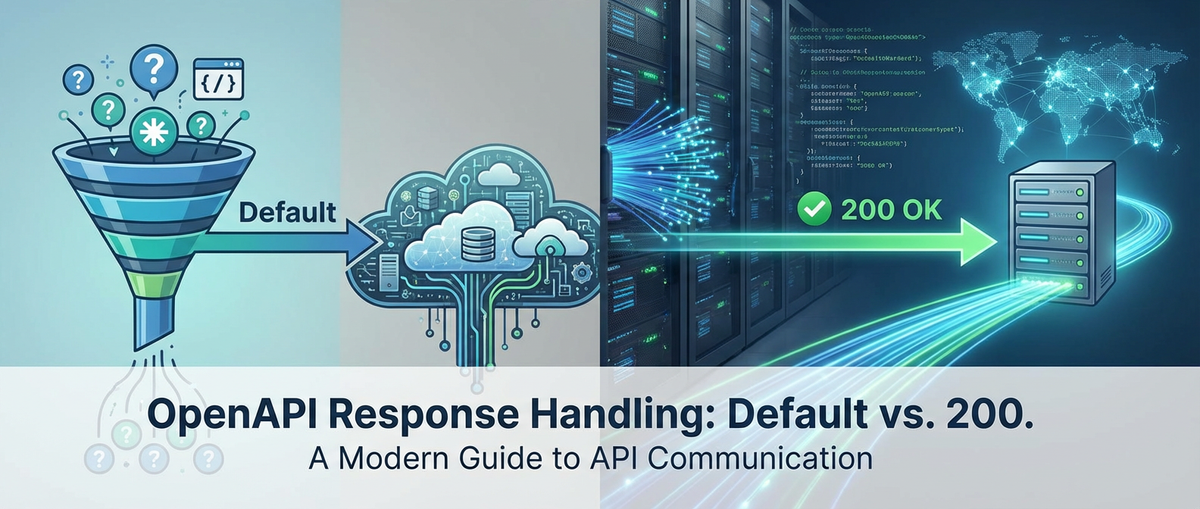


In the intricate world of modern software development, Application Programming Interfaces (APIs) serve as the fundamental backbone, enabling diverse systems to communicate seamlessly. As the complexity of distributed architectures grows, the clarity and precision with which these APIs are defined become paramount. The OpenAPI Specification (OAS) has emerged as the industry's de facto standard for describing RESTful APIs, providing a language-agnostic, human-readable, and machine-readable interface definition. Within the OpenAPI ecosystem, one of the most critical, yet often misunderstood, aspects lies in the art of defining API responses. Specifically, the distinction and strategic usage of the default response versus specific HTTP status code responses, such as 200 OK, often pose a challenge for both API designers and consumers.
This comprehensive guide delves deep into the nuances of OpenAPI response handling, meticulously dissecting the roles of 200 OK and the default response. We will explore their individual purposes, best practices for their implementation, and the profound implications they have for the reliability, maintainability, and usability of your APIs. Understanding these concepts is not merely a matter of technical adherence; it is about crafting an API contract that is unambiguous, resilient, and fosters a superior developer experience. By the end of this exploration, API developers will possess the insights necessary to design robust, predictable, and well-documented APIs that stand the test of time, minimizing integration headaches and maximizing operational efficiency.
Part 1: The Foundational Pillars of OpenAPI Response Handling
Before we immerse ourselves in the specifics of default and 200 responses, it is essential to establish a solid understanding of the underlying principles of OpenAPI and HTTP status codes, which form the bedrock of effective response handling. A well-designed api relies heavily on these foundations.
What is the OpenAPI Specification (OAS)? Unlocking API Clarity
The OpenAPI Specification (OAS) is a powerful, standardized, language-agnostic interface for describing RESTful APIs. It allows both humans and machines to discover and understand the capabilities of a service without access to source code, documentation, or network traffic inspection. Born from the Swagger Specification, OpenAPI has evolved into a robust framework maintained by the OpenAPI Initiative, a collaborative project of the Linux Foundation. Its primary purpose is to define an API's operations, parameters, authentication methods, and, crucially, its expected responses.
The benefits of adopting OpenAPI are manifold and touch every stage of the API lifecycle. For instance, it provides a single source of truth for your API's interface, significantly improving communication between frontend and backend teams. It enables the automatic generation of interactive documentation, such as Swagger UI, making it incredibly easy for developers to explore and test API endpoints. Furthermore, OpenAPI definitions can be used to generate server stubs and client SDKs in various programming languages, accelerating development cycles and reducing boilerplate code. This tooling support also extends to validation, testing, and monitoring, ensuring that the API implementation adheres strictly to its contract. Without a clear and comprehensive OpenAPI definition, an api risks becoming a black box, leading to integration friction, errors, and increased development costs.
Within an OpenAPI document, the /paths object is where each individual API endpoint (e.g., /users/{id}) and its associated HTTP methods (GET, POST, PUT, DELETE) are defined. Inside each method definition, a critical sub-object is /responses. This /responses object is a map of possible HTTP status codes, or the special default keyword, to their corresponding response descriptions. Each response object itself contains a description field, which is vital for human understanding, and a content field, which describes the payload (e.g., JSON, XML) and its schema. Headers that might be returned with the response can also be defined, providing additional metadata to the client. The precision and detail within these response objects are what transform a mere definition into a comprehensive contract.
HTTP Status Codes: The Universal Language of the Web
HTTP status codes are three-digit integers returned by a server in response to a client's request. They are a fundamental component of the HTTP protocol, serving as a standardized mechanism to convey the outcome of an API operation. These codes are not just arbitrary numbers; they are semantically rich signals, categorizing responses into distinct groups, each with a specific meaning. Understanding and correctly applying these status codes is crucial for designing an api that is intuitive, predictable, and robust.
The HTTP status codes are broadly categorized as follows: * 1xx Informational: Indicates that the request was received and understood. It is a provisional response, waiting for the final response. (e.g., 100 Continue, 101 Switching Protocols) * 2xx Success: Indicates that the action requested by the client was received, understood, and accepted. These are the codes we generally strive for. (e.g., 200 OK, 201 Created, 204 No Content) * 3xx Redirection: Indicates that further action needs to be taken by the user agent to fulfill the request. (e.g., 301 Moved Permanently, 302 Found, 304 Not Modified) * 4xx Client Error: Indicates that the client seems to have made an error. The server cannot or will not process the request. (e.g., 400 Bad Request, 401 Unauthorized, 403 Forbidden, 404 Not Found, 429 Too Many Requests) * 5xx Server Error: Indicates that the server failed to fulfill an apparently valid request. These often point to issues on the API provider's side. (e.g., 500 Internal Server Error, 502 Bad Gateway, 503 Service Unavailable)
The semantic meaning behind each code is incredibly powerful. A 404 Not Found immediately tells the client that the requested resource does not exist, distinct from a 401 Unauthorized which indicates a lack of authentication. Similarly, a 201 Created implies that a new resource has been successfully provisioned, usually with a Location header pointing to its new URI, which is different from a 200 OK that might signify a successful retrieval or update. By correctly leveraging these status codes, API designers provide crucial context to API consumers, enabling them to build more intelligent and resilient client applications that can react appropriately to various outcomes. Deviating from these widely accepted semantics can lead to confusion, misinterpretation, and ultimately, a poor developer experience.
Response Objects in OpenAPI: Crafting the Contract
Within the OpenAPI specification, a Response Object provides a detailed description of a single response from an API operation. This object is highly structured and allows for meticulous definition of every aspect of an anticipated API reply. The primary components of a Response Object are:
description(Required): This is a human-readable text providing a brief explanation of the response. It is crucial for documentation and should clearly articulate the meaning and context of the response. For a200 OKresponse, it might describe the successful outcome and the nature of the returned data. For an error response, it should explain why the error occurred and what it signifies. A detaileddescriptionis invaluable for anyone trying to understand and integrate with theapi.headers(Optional): This object allows the definition of any HTTP headers that are expected to be returned with this response. Each header can have its own schema description, similar to parameters, enabling precise validation and documentation of custom headers or standard ones that carry specific meaning (e.g.,X-Rate-Limit-Remaining,Location).content(Optional): This is arguably the most important part of aResponse Objectfor responses that carry a payload. It's a map of media types (e.g.,application/json,application/xml,text/plain) to their respective schema definitions. Each media type entry specifies the structure and data types of the actual body that the API will return. For instance, anapplication/jsonentry would typically reference a schema defined in the#/components/schemassection, outlining the JSON structure. This field is where you define the precise shape of the data payload returned upon success or error, enabling strong typing and validation on the client side.links(Optional): Introduced in OpenAPI 3.0,linksprovide a way to describe how relationships between resources are expressed in the API responses. This is particularly useful for HATEOAS (Hypermedia As The Engine Of Application State) principles, allowing clients to discover related operations dynamically from a response. For example, a201 Createdresponse for a new user might include a link to retrieve that user's details.
The careful construction of these Response Objects forms the core contract of your api. Every field within them contributes to the overall clarity and usability. A well-defined content schema allows client-side code generators to create accurate data models. A clear description ensures that developers understand the implications of each response. Together, these elements transform an abstract API concept into a concrete, predictable, and consumable service interface. Neglecting the detail in these objects inevitably leads to ambiguities, unexpected data structures, and ultimately, integration nightmares for API consumers.
Part 2: Deconstructing the 200 OK Response – The Epitome of Success
The 200 OK status code is perhaps the most ubiquitous and recognizable symbol of success in the HTTP protocol. It signifies that the client's request was successfully received, understood, and processed by the server. In the context of an OpenAPI definition, explicitly defining the 200 OK response is fundamental to communicating the primary, intended outcome of any API operation.
The Quintessential Success Response: 200 OK
At its core, 200 OK indicates that the request has succeeded. The actual meaning of "success" can vary slightly depending on the HTTP method employed: * For a GET request, 200 OK means that the requested resource has been successfully retrieved and is included in the response body. * For a POST request, while 201 Created is often more appropriate for new resource creation, a 200 OK might be returned if the POST operation resulted in a modification or an accepted action without creating a new distinct resource. For example, a POST to trigger a specific process or calculation might return 200 OK with the result. * For PUT or PATCH requests, 200 OK signifies that the resource at the target URI has been successfully updated with the contents provided in the request body. If the PUT operation resulted in a new resource (which is less common for PUT but possible if the client provides the URI), 201 Created would be more accurate. * For a DELETE request, a 200 OK might be returned if the deletion was successful and the response body contains data (e.g., a status message). However, 204 No Content is often preferred for DELETE operations where no content needs to be returned.
The crucial takeaway is that 200 OK unequivocally communicates an expected, positive outcome. It signals to the client that their operation was completed as intended, and any data returned in the response body is the result of that successful operation. This predictability is vital for client applications, allowing them to confidently parse the response and proceed with subsequent logic.
Designing 200 Responses in OpenAPI: Precision in Success
When defining a 200 OK response in your OpenAPI specification, the goal is to be as precise and descriptive as possible about the data payload that a successful call will yield. This involves carefully structuring the content field and referencing appropriate schemas.
Consider a GET endpoint for retrieving user details: /users/{id}. A typical OpenAPI definition for its 200 OK response would look like this:
paths:
  /users/{id}:
    get:
      summary: Retrieve user details by ID
      parameters:
        - in: path
          name: id
          required: true
          schema:
            type: string
            format: uuid
          description: Unique identifier of the user.
      responses:
        '200':
          description: Successfully retrieved user details.
          content:
            application/json:
              schema:
                $ref: '#/components/schemas/User'
        '404':
          description: User not found.
          content:
            application/json:
              schema:
                $ref: '#/components/schemas/Error'
In this example, the 200 response clearly states that upon success, the api will return application/json content conforming to the User schema. The User schema, defined separately in #/components/schemas, would then detail fields such as id, name, email, etc., along with their types and constraints. This level of detail empowers client-side tools to generate robust data models, ensuring type safety and reducing runtime errors. The description: Successfully retrieved user details further clarifies the positive outcome for human readers.
For operations that might return different content types, the content map can include multiple entries. For instance, an endpoint that can return either JSON or XML could specify:
        '200':
          description: Success with either JSON or XML data.
          content:
            application/json:
              schema:
                $ref: '#/components/schemas/User'
            application/xml:
              schema:
                $ref: '#/components/schemas/UserXml' # A different schema for XML representation
This explicit mapping ensures that clients understand all possible successful representations and can tailor their request headers (e.g., Accept: application/xml) accordingly.
Nuances and Best Practices for 200 and Other Success Codes
While 200 OK is the most common success code, it's crucial to distinguish it from other 2xx codes, as each carries a slightly different semantic meaning that can profoundly impact client behavior and API design.
201 Created: This code should be used when a new resource has been successfully created as a result of aPOSTrequest. A best practice is to include aLocationheader in the response, pointing to the URI of the newly created resource. The response body can also contain a representation of the created resource.yaml paths: /users: post: summary: Create a new user requestBody: required: true content: application/json: schema: $ref: '#/components/schemas/NewUserRequest' responses: '201': description: User successfully created. headers: Location: description: URI of the newly created user resource. schema: type: string format: uri content: application/json: schema: $ref: '#/components/schemas/User'Using201 Createdinstead of200 OKfor resource creation provides explicit semantic meaning, allowing clients to understand that a new entity now exists and where it can be accessed.204 No Content: This code indicates that the request was successfully processed, but the server is not returning any content in the response body. This is particularly suitable forDELETEoperations orPUT/PATCHoperations where the client doesn't need a confirmation payload, only an acknowledgment of success.yaml paths: /users/{id}: delete: summary: Delete a user by ID parameters: - in: path name: id required: true schema: type: string format: uuid description: Unique identifier of the user to delete. responses: '204': description: User successfully deleted. No content returned.Returning204 No Contentis more efficient than200 OKwith an empty body, as it explicitly communicates the absence of a payload, saving bandwidth and reducing potential parsing ambiguities on the client side.202 Accepted: This code signifies that the request has been accepted for processing, but the processing has not been completed. The request might be handled asynchronously. The client should not assume that the request has been successful immediately. This is often accompanied by aLocationheader pointing to a status endpoint where the client can check the progress of the asynchronous operation.
The key best practice for 200 OK and other 2xx responses is to always be explicit about the most common and expected successful outcome. If an operation always returns a User object upon success, define 200 with the User schema. If it always creates a resource, use 201. This level of specificity greatly enhances the clarity of your api contract, making it much easier for developers to integrate with and build reliable applications on top of your service. Avoiding ambiguity in success responses is just as important as clarity in error responses.
Part 3: Embracing the default Response – The Safety Net for Unspecified Outcomes
While specific success codes like 200 OK meticulously detail the anticipated positive outcomes, real-world apis rarely operate in such a pristine environment. Unexpected errors, unhandled exceptions, or less common client-side issues are inevitable. This is where the default response in OpenAPI steps in, acting as a crucial safety net for any HTTP status code not explicitly defined.
What is the default Response in OpenAPI? The Catch-All Mechanism
In the OpenAPI specification, the default keyword within the /responses object is a special designator that serves as a catch-all for any HTTP status code that is not explicitly enumerated for a given operation. It is not a default success response, nor is it exclusively a default error response. Instead, it is a fallback mechanism designed to cover all unspecified response scenarios. When an API returns a status code that isn't 200, 201, 400, 404, or any other explicitly defined code for that operation, the default response definition is used.
This mechanism is incredibly powerful because it allows API designers to define a generic response structure, often an error payload, that applies to a wide range of unforeseen or less common situations. Without the default response, any unlisted status code would leave the client guessing about the response format, leading to fragile integrations and potential runtime crashes. The default response thus ensures that even in unexpected circumstances, the api adheres to a predictable contract, at least for its error reporting structure.
It's important to clarify that the default response does not override more specific status code definitions. If an operation explicitly defines a 400 Bad Request response, and the server returns 400, then the 400 definition will be used, not the default. The default only comes into play when a specific status code is not defined in the OpenAPI document.
When and Why to Use default: The Pragmatic Approach to Error Handling
The primary utility of the default response lies in its ability to standardize error reporting for generalized or unexpected scenarios. Here are key situations and reasons why default is an invaluable tool:
- Simplifying Error Handling: Many
apis have a common structure for error payloads, regardless of the specific error code (especially for4xxclient errors or5xxserver errors). By defining adefaultresponse with a generic error schema (e.g.,{ "code": "string", "message": "string" }), you can avoid repeating this schema for every single possible error status code (e.g.,400,401,403,404,409,429,500,502,503, etc.). This significantly reduces the verbosity of yourOpenAPIdocument and makes it easier to maintain. - Catching Unforeseen Server Errors (5xx): Server-side issues, such as database outages, unhandled exceptions in code, or third-party service failures, often manifest as
5xxerrors (500 Internal Server Error,502 Bad Gateway,503 Service Unavailable). While you might explicitly define500for critical, well-known internal errors, it's impractical to anticipate and document every single possible5xxscenario. Thedefaultresponse serves as an excellent catch-all for these server-generated errors, ensuring that clients always receive a consistent error structure, even for catastrophic failures. - Handling Less Common Client Errors (4xx) Economically: While critical client errors like
400 Bad Requestor404 Not Foundshould often be explicitly defined due to their frequency and specific context, many other4xxcodes might occur less frequently or have a highly generic error payload. For instance, a403 Forbiddenmight just return a simple message, without requiring a unique, complex schema. Thedefaultresponse can efficiently cover these, reducing the "noise" in yourOpenAPIdefinition without sacrificing clarity for the most common errors. - Promoting Consistency in Error Reporting: A crucial aspect of a good
apiis predictability, not just in success but also in failure. By defining adefaultresponse with a standard error format, you enforce a consistent way yourapicommunicates problems across all endpoints, for all unspecified error types. This consistency makes it much easier for client applications to implement a generalized error handling mechanism, rather than having to parse vastly different error payloads for every possible status code. This can be especially important for complex systems, where different microservices might contribute to a singleapigateway response. - Future-Proofing: As your
apievolves, new error conditions or HTTP status codes might emerge. Rather than having to update everyOpenAPIdefinition for every operation to add a new error code, thedefaultresponse provides a level of future-proofing, gracefully handling any status code that hasn't been explicitly accounted for yet.
Designing default Responses: A Generic Error Schema
When designing a default response, the focus should be on creating a generic, yet informative, error schema that can accommodate various types of problems. A common approach is to define a reusable Error schema in the #/components/schemas section and reference it within the default response.
Here's an example:
components:
  schemas:
    Error:
      type: object
      properties:
        code:
          type: string
          description: A unique error code identifying the type of error.
          example: "INTERNAL_SERVER_ERROR"
        message:
          type: string
          description: A human-readable message describing the error.
          example: "An unexpected server error occurred. Please try again later."
        details:
          type: array
          items:
            type: object
            properties:
              field:
                type: string
                description: The specific field that caused the error (e.g., for validation errors).
              issue:
                type: string
                description: The specific issue with the field.
          description: Optional list of specific details for the error (e.g., validation issues).
      required:
        - code
        - message

paths:
  /users/{id}:
    get:
      summary: Retrieve user details by ID
      # ... (parameters as before)
      responses:
        '200':
          description: Successfully retrieved user details.
          content:
            application/json:
              schema:
                $ref: '#/components/schemas/User'
        '404':
          description: User not found.
          content:
            application/json:
              schema:
                $ref: '#/components/schemas/Error' # Explicit 404 uses the Error schema
        default:
          description: An unexpected error occurred.
          content:
            application/json:
              schema:
                $ref: '#/components/schemas/Error' # Default also uses the Error schema
In this setup, the default response clearly states An unexpected error occurred. in its description, and its content specifies application/json conforming to the reusable Error schema. This means that if the server returns, for example, a 500 Internal Server Error, a 401 Unauthorized (if not explicitly defined), or any other undocumented status code, the client can reliably expect a JSON payload matching the Error schema.
The use of a generic Error schema with fields like code, message, and optional details provides sufficient flexibility to convey different error contexts within a consistent structure. The code field can be used for programmatic identification of error types, while the message is for human consumption. details can be particularly useful for validation errors, providing specific field-level feedback.
Crucially, the description for the default response should be general enough to cover all possible unspecified scenarios. Phrases like "An unexpected error occurred," "Generic error response," or "Any other unhandled error" are appropriate. It signals to consumers that while they won't get specific documentation for every potential error, they can count on a standardized format to parse and handle any deviation from the explicitly defined responses. This commitment to consistency, even in failure, significantly improves the resilience and user-friendliness of an api.
APIPark is a high-performance AI gateway that allows you to securely access the most comprehensive LLM APIs globally on the APIPark platform, including OpenAI, Anthropic, Mistral, Llama2, Google Gemini, and more.Try APIPark now! 👇👇👇
Part 4: default vs. 200 – A Direct Comparison and Strategic Implications
Having examined 200 OK and default responses individually, it's time to place them side-by-side to highlight their fundamental differences and discuss the strategic considerations for their implementation in an OpenAPI definition. These two concepts, while distinct, are complementary and vital for a comprehensive api contract.
Fundamental Differences: Specificity vs. Generality
The core distinction between 200 OK and default can be summarized as specificity versus generality:
200 OK(and other specific 2xx codes): Represents a specific, explicit, and expected successful outcome. It defines the exact payload and headers that will be returned when an operation completes without any issues. Clients can rely on strong typing and predictable data structures for these responses. It's about documenting the "happy path" with utmost precision.defaultresponse: Represents a generic, implicit fallback for any HTTP status code not explicitly defined. It's primarily used to standardize the structure of unforeseen or less common error responses, ensuring that clients always receive a predictable error payload, even when the specific error code isn't documented. It's about providing a safety net for "unhappy paths" that weren't specifically anticipated.
Think of it like a legal contract: 200 OK specifies the terms of a successful agreement, detailing what each party receives. The default response, on the other hand, outlines the general terms for breach of contract or unforeseen circumstances, ensuring there's always a defined procedure, even if the exact nature of the problem isn't explicitly listed in the main clauses.
Use Cases and Best Practices for Each
A well-designed OpenAPI specification leverages both 200 OK and default strategically:
- Always Define
200(and other 2xx for success) Explicitly: The success path is the most critical and frequently used aspect of anyapi. It should be documented with absolute clarity. Always define200 OK(or201 Created,204 No Content, etc.) for every operation that has a distinct successful outcome and payload. Provide a detailed schema for the success payload. This is the cornerstone of a predictableapi. - Use
defaultPrimarily for Non-Success Scenarios as a Safety Net: Thedefaultresponse is best utilized as a catch-all for errors. While you should explicitly define common and critical client errors (e.g.,400 Bad Request,401 Unauthorized,404 Not Found,429 Too Many Requests,500 Internal Server Errorif it has a unique meaning or payload) if they warrant specific documentation or have unique response bodies, thedefaultresponse is perfect for:- All
5xxserver errors: Unless a500error has a highly specific meaning and payload,defaultis an excellent choice for generic server issues. - Less common
4xxclient errors: Errors like405 Method Not Allowed,406 Not Acceptable,409 Conflict(if not explicitly handled with a specific payload), or415 Unsupported Media Typemight occur but not require individual explicit definitions if their error payload can fit a generic structure. - Undocumented or future errors: Any error status code that the API might return but hasn't been explicitly listed.
- All
- Define Specific Error Codes When Necessary: Do not rely solely on
defaultfor all errors. If an error code carries a specific business meaning or requires a unique payload structure for the client to react intelligently, define it explicitly. For example, a400 Bad Requestmight include an array of validation errors, while a404 Not Foundmight just return a simple message. If these payloads differ significantly from your genericdefaulterror structure, they warrant their own explicit definition. Thedefaultshould fill the gaps, not replace specific, actionable error messages.- Example Strategy:
- Explicit Success:
200,201,204(with specific schemas). - Explicit Critical Client Errors:
400(for validation issues, with specific error details schema),401(for auth failure),403(for permission denied),404(for resource not found). - Explicit Critical Server Errors:
500(if there's a unique payload for critical internal errors). - Catch-all for everything else:
default(with a genericErrorschema).
- Explicit Success:
- Example Strategy:
Impact on API Consumers (Clients)
The choices made in defining 200 and default responses have significant ramifications for developers consuming the api:
- Predictable Success with
200: When200 OKis explicitly defined with a clear schema, client-side code generators can create strongly typed objects or data structures. This means developers can write code that confidently expects a specific data shape upon success, reducing the need for runtime checks and casting. It leads to more robust, compile-time safe client applications. For example, aUserobject retrieved via aGETrequest will be immediately available with its defined properties. - Defensive Programming with
default: When adefaultresponse is used, client applications need to be more defensive. They cannot assume a specific HTTP status code (other than the explicitly defined ones) and must instead check the actual status code returned by the server. They then parse thedefaulterror payload, which is generic. This means handling potential exceptions or generic error objects. While the structure of thedefaulterror is known, the specific HTTP status code that triggered it must be inspected to understand the exact nature of the problem (e.g., distinguishing between a500and a429when both fall underdefault). - Importance of Clear Documentation: Regardless of whether
200ordefaultis used, thedescriptionfield in theOpenAPIspecification is paramount. For200, it confirms the successful outcome. Fordefault, it explains that an unspecified error occurred and directs the client on how to interpret the generic error payload. Comprehensive documentation reduces the learning curve and prevents integration errors.
Impact on API Providers (Servers)
API providers also face distinct implications based on their response handling choices:
- Careful Implementation for
200: Server-side code must rigorously ensure that200 OK(and other 2xx codes) are returned precisely when the operation is successful and that the payload strictly adheres to the defined schema. Any deviation (e.g., missing fields, incorrect data types) will break the API contract and cause issues for clients expecting strong typing. - Consistent Error Mapping for
default: Implementing thedefaultresponse requires a robust error handling strategy on the server. Any unhandled exception or unspecified error condition must be caught and transformed into the generic error structure defined by thedefaultresponse. This usually involves a global exception handler or middleware that catches all errors, logs them internally, and then serializes them into theErrorschema before sending the appropriate (often500or4xxif no specific code is mapped) status code and body. Consistency in this mapping is paramount to ensure theapiremains predictable even in failure. - Maintenance and Evolution: A well-structured
OpenAPIdefinition with a balanced use of explicit codes anddefaultis easier to maintain. As the API evolves, adding a new explicit error type means defining a new status code response. However, if a new, unexpected error arises, thedefaultmechanism ensures theapidoesn't return an entirely unknown response structure, providing a stable fallback.
Ultimately, the strategic interplay between explicit 200 responses and the pragmatic default response allows api designers to create a contract that is both precise for expected outcomes and resilient for unforeseen circumstances. This balance is key to building an api that developers love to use and that operates reliably over time.
Part 5: Advanced Response Handling and Real-World Scenarios
The careful balance between specific HTTP status codes and the default response is a cornerstone of robust API design. However, real-world APIs often encounter more complex scenarios that necessitate a deeper understanding of advanced response handling techniques. This includes strategies for combining default with specific errors, standardizing error objects, and leveraging modern API management platforms.
Combining default with Specific Error Codes: A Hybrid Approach
The most effective strategy for response handling in OpenAPI is not an either/or choice between default and specific error codes, but rather a judicious combination of both. The goal is to maximize clarity for common and critical scenarios while providing a robust fallback for all others.
Here’s a general strategy: 1. Always define success codes (2xx) explicitly: As discussed, 200 OK, 201 Created, 204 No Content should always be meticulously defined with their specific schemas. 2. Define highly common and business-critical client errors (4xx) explicitly: * 400 Bad Request: Often used for validation errors (invalid input, missing required fields). A specific 400 response might include an array of detailed error messages, field by field, which is more specific than a generic default error. * 401 Unauthorized: For authentication failures. * 403 Forbidden: For authorization failures (user authenticated but lacks permissions). * 404 Not Found: For when a requested resource does not exist. * 429 Too Many Requests: If your api implements rate limiting, defining 429 explicitly allows you to include specific headers like Retry-After or a custom payload explaining the rate limit policy. 3. Define critical server errors (5xx) explicitly if they have unique meaning: A 500 Internal Server Error might be explicitly defined if, for example, your api sometimes returns a specific diagnostic ID for server issues that clients can use to report problems. 4. Use default for everything else: For all other less common 4xx errors (e.g., 405 Method Not Allowed, 406 Not Acceptable, 415 Unsupported Media Type, 409 Conflict if generic) and any 5xx errors not explicitly defined, the default response serves as the catch-all. This ensures that even obscure or unforeseen errors return a consistent, parsable payload.
The rule for OpenAPI parsing is: if an explicit status code (e.g., 400) is returned and defined, that definition is used. If a status code is returned and is not explicitly defined, then the default definition is applied. This "least specific" rule makes the hybrid approach highly effective. You prioritize explicit definitions for predictable, actionable responses and rely on default for the rest, ensuring no response is completely undocumented in terms of its structure.
Error Object Standardization: Reusability and Consistency
A crucial best practice for handling errors, whether via specific 4xx/5xx responses or the default response, is to standardize your error object structure. This typically involves defining a reusable schema in the #/components/schemas section and then referencing it across all your error responses.
For instance, consider a common ErrorResponse schema:
components:
  schemas:
    ErrorResponse:
      type: object
      properties:
        timestamp:
          type: string
          format: date-time
          description: The date and time the error occurred.
        status:
          type: integer
          description: The HTTP status code of the error.
        error:
          type: string
          description: A brief, human-readable description of the error.
        message:
          type: string
          description: A more detailed message providing context or guidance.
        path:
          type: string
          description: The request URI for which the error occurred.
        errorCode:
          type: string
          description: An application-specific error code for programmatic handling.
        details:
          type: array
          items:
            type: object
            properties:
              field:
                type: string
              issue:
                type: string
          description: Specific validation errors or other granular details.
      required:
        - timestamp
        - status
        - error
        - message
Then, for specific error codes and the default response, you would simply reference this schema:
responses:
  '200':
    # ... (success definition)
  '400':
    description: Invalid input provided.
    content:
      application/json:
        schema:
          $ref: '#/components/schemas/ErrorResponse'
  '404':
    description: Resource not found.
    content:
      application/json:
        schema:
          $ref: '#/components/schemas/ErrorResponse'
  default:
    description: An unexpected server error occurred.
    content:
      application/json:
        schema:
          $ref: '#/components/schemas/ErrorResponse'
This approach offers several significant advantages: * Consistency: All error responses, regardless of their specific HTTP status code, will share the same fundamental structure. * Reusability: The error schema is defined once and reused everywhere, reducing redundancy and improving maintainability of the OpenAPI document. * Client Simplification: Clients can implement a single error parsing logic that works for all error responses, making integration far simpler and less prone to errors. They don't have to write custom parsers for 400 errors vs. 404 errors vs. default errors. * Improved Tooling: Code generators can produce strong types for this universal ErrorResponse object, further enhancing client-side robustness.
Complex Scenarios
Beyond standard success and error handling, some API patterns require specific attention to response definitions:
- Asynchronous Operations (
202 Accepted): For long-running processes that cannot be completed synchronously, returning202 Acceptedis appropriate. The response should indicate that the request has been received for processing but not yet completed. It's often accompanied by aLocationheader pointing to a status endpoint where the client can poll for the operation's completion, or anidin the body to reference the job. TheOpenAPIdefinition for202would then specify these details. - Partial Success/Failure: While HTTP status codes are generally singular, there are cases where an operation might partially succeed (e.g., batch processing where some items fail). In such scenarios, it's often best to return a
200 OK(as the request itself was processed successfully, even if the internal outcome was mixed) with a response body that explicitly details the success and failure status of individual components. TheOpenAPIschema for this200response would then clearly outline this mixed status payload. - Versioning and Response Changes: As an API evolves, response schemas may change.
OpenAPIhelps in documenting these changes, especially when usingapiversioning (e.g.,v1,v2). Each version'sOpenAPIdefinition would accurately reflect its respective response structures, ensuring clients always refer to the correct contract for their targetapiversion.
The Role of API Gateways in Response Handling
API gateways play a pivotal role in enforcing and standardizing response handling across an entire API ecosystem. Acting as an intermediary between clients and backend services, a gateway can perform various functions that directly impact how 200 OK and default responses are managed.
APIPark, for instance, an open-source AI gateway and API management platform, is specifically designed to centralize and streamline the management of API lifecycles. Platforms like APIPark provide robust solutions for managing the entire API lifecycle, which naturally extends to how responses, especially errors, are handled and exposed. This platform allows for the unification of API formats, which is critical for consistent response handling. Imagine a scenario where multiple backend microservices return slightly different error structures for 400 Bad Request or 500 Internal Server Error. An API gateway like ApiPark can be configured to intercept these varied responses and transform them into a single, standardized error format, such as the ErrorResponse schema discussed earlier, before forwarding them to the client. This ensures that irrespective of the backend implementation, API consumers always receive a predictable error payload, enhancing overall API reliability and developer experience. By standardizing API invocation formats and managing the API lifecycle, APIPark ensures that even complex default error structures are consistently managed and presented to consumers, enhancing overall API reliability and developer experience. Furthermore, its ability to provide detailed API call logging and powerful data analysis allows operators to monitor actual response behavior, ensuring adherence to OpenAPI specifications and quickly identifying deviations, thereby providing insights into how often default errors are being triggered and from which backend services.
API gateways can also: * Enforce consistent headers: Add or modify headers for all responses, ensuring security or caching policies are uniformly applied. * Global error handling: Centralize error logging and metric collection for all responses, offering a consolidated view of api health and performance. * Transform payloads: Modify response bodies to conform to specific OpenAPI schemas, bridging gaps between backend implementations and the published api contract. This is particularly useful for ensuring default error payloads are consistently structured. * Rate limiting responses: Automatically return 429 Too Many Requests with appropriate headers when limits are exceeded, ensuring consistency across all endpoints.
By offloading these concerns to a dedicated API management platform, developers can focus on core business logic, confident that response handling, including the critical distinction between 200 OK and default error reporting, is consistently applied and managed.
Table: Comparison of 200 OK and default Responses in OpenAPI
To summarize the key differences and applications, the following table provides a concise comparison between 200 OK and the default response in the context of OpenAPI specification:
| Feature | 200 OK Response |
default Response |
|---|---|---|
| Status Specificity | Explicitly defined for the 200 HTTP status code. |
Catch-all for any HTTP status code not explicitly defined for an operation. |
| Purpose | Document the primary successful outcome of an operation. | Provide a generic fallback for unspecified (often error) outcomes. |
| Type of Outcome | Always represents a success (request received, understood, processed). | Can represent any outcome (success, client error, server error) not explicitly listed. Typically used for errors. |
| Expected Content | Specific, well-defined payload schema for the successful data. | Generic payload schema, typically an ErrorResponse for consistent error reporting. |
| Client Expectation | Clients can expect a precise data structure and strongly type their parsing logic. | Clients must be defensive, checking the actual status code and parsing a generic structure. |
| Server Implementation | Server must return 200 (or other 2xx) with a payload matching the specific schema upon success. |
Server must map all unhandled errors/unspecified responses to the default error schema. |
| When to Use | For all expected successful responses where a payload is returned (e.g., GET data retrieval, successful PUT/PATCH). |
For all unexpected or less common error responses not explicitly defined (e.g., 5xx server errors, generic 4xx client errors). |
| Example Scenario | GET /users/{id} returns a User object. |
GET /users/{id} returns a 500 Internal Server Error (unhandled exception). |
| Redundancy | Crucial for clarity, should always be explicitly defined. | Reduces redundancy by covering many error codes with one definition. |
| Flexibility | Highly specific, less flexible for varied responses. | Highly flexible, covers a broad range of unspecified responses. |
Part 6: Practical Implementation and Tools for Effective Response Handling
The theoretical understanding of 200 OK versus default responses translates into practical benefits only when applied correctly within the API development lifecycle. This involves leveraging design principles, appropriate tooling, and rigorous testing to ensure the OpenAPI specification accurately reflects the API's behavior and promotes seamless integration.
Designing with OAS: Iteration and Validation
Effective OpenAPI design is an iterative process that requires careful consideration of every aspect of an API's interaction, including its responses. Tools play a vital role in this process:
- Swagger UI / Swagger Editor: These tools allow developers to write
OpenAPIdefinitions in YAML or JSON and immediately visualize the generated interactive documentation. Swagger Editor provides real-time validation against theOpenAPIschema, highlighting errors and best practice violations. This immediate feedback loop is invaluable for refining response definitions, ensuring that200 OKschemas are well-formed anddefaulterror structures are consistent. - Stoplight Studio / Postman: These advanced platforms offer more comprehensive API design environments, often with visual editors, mocking capabilities, and collaboration features. They help teams design APIs contract-first, where the
OpenAPIspecification is the primary artifact. This ensures that response handling, including the delicate balance between200 OKanddefault, is decided upfront and consistently applied across all endpoints. Postman collections can be generated directly from anOpenAPIspec, allowing for immediate testing of200 OKpaths and various error scenarios, including those falling underdefault. - IDE Extensions: Many Integrated Development Environments (IDEs) offer extensions for
OpenAPIediting, providing syntax highlighting, auto-completion, and validation, streamlining the process of writing and maintainingOpenAPIdocuments.
The principle here is to start with the OpenAPI definition, get it right, and then implement the API. This "contract-first" approach ensures that both API producers and consumers are aligned on the expected api behavior, including all response types.
Code Generation Implications: Bridging the Gap
One of the most powerful features of OpenAPI is its ability to facilitate code generation for both client SDKs and server stubs. The precise definition of 200 OK and default responses directly impacts the quality and usability of this generated code:
- Strong Typing for
200Responses: When a200 OKresponse is defined with a detailed schema (e.g.,$ref: '#/components/schemas/User'), client SDK generators will produce strongly typed data models (e.g.,Userclass in Java,Userinterface in TypeScript). This allows client developers to interact with the successful response using familiar object-oriented paradigms, accessing properties directly (e.g.,user.id,user.name) with full compile-time safety and IDE auto-completion. This greatly reduces boilerplate and potential runtime errors. - Generic Exception Handling for
default: For thedefaultresponse, code generators will typically create a generic exception or error object. When an API call returns a status code that falls underdefault, the generated client code will throw this generic exception. Client developers then need to catch this exception and inspect its properties (e.g., the HTTP status code, theerrorCode,messagefrom thedefaulterror schema) to determine the exact nature of the problem. While not as strongly typed as a200response, it still provides a structured way to handle all unspecified errors, preventing crashes and allowing for predictable error recovery.
The accuracy of your OpenAPI definition, especially in its response sections, directly translates into the quality and developer-friendliness of generated SDKs, making it easier for consumers to integrate and reducing the burden on API providers to manually create and maintain SDKs.
Testing Response Handling: Ensuring Contract Adherence
Thorough testing is crucial to ensure that an API's actual behavior matches its OpenAPI contract. This includes validating all defined responses:
- Unit Tests for Specific Status Codes: Server-side unit tests should verify that the API returns the correct HTTP status code (
200 OK,201 Created,400 Bad Request,404 Not Found, etc.) under various conditions. They should also assert that the response body conforms exactly to the schema defined in theOpenAPIspecification for that status code. - Integration Tests for End-to-End Flow: Integration tests should simulate real-world client interactions, covering both successful paths (
200 OKand other 2xx codes) and various error paths. This includes testing scenarios that would trigger4xxand5xxerrors, and critically, ensuring that any unspecified errors correctly fall back to thedefaultresponse structure. - Contract Testing: This is a powerful technique where tests are written against the
OpenAPIspecification itself. Tools like Dredd or Pact can consume yourOpenAPIdocument and automatically generate tests to verify that your API's responses (including headers, status codes, and body schemas) strictly adhere to the contract. Contract testing is particularly effective for ensuring that thedefaultresponse logic is correctly implemented, as it can test against any status code not explicitly listed, confirming it falls back to thedefaultschema. - Monitoring and Alerting: Post-deployment, API monitoring tools can continuously check the health and adherence of your API responses. If an API starts returning responses that don't match its
OpenAPIspecification, or ifdefaulterrors spike unexpectedly, these tools can trigger alerts, enabling rapid detection and resolution of issues. This proactive approach is essential for maintaining a reliableapi.
By combining these design, implementation, and testing strategies, API teams can confidently build and deploy APIs whose response handling is not only compliant with the OpenAPI specification but also robust, predictable, and resilient in real-world scenarios, thereby elevating the overall quality and trustworthiness of the api ecosystem.
Conclusion
The OpenAPI Specification serves as the foundational contract for modern API ecosystems, providing unparalleled clarity and enabling sophisticated tooling. Within this powerful framework, the meticulous definition of API responses stands out as a critical determinant of an API's usability and reliability. Our deep dive into the default response versus specific status codes like 200 OK has illuminated their distinct yet complementary roles in crafting a truly robust api.
The 200 OK response, alongside other 2xx success codes, represents the pinnacle of API design precision. By explicitly defining the schemas for successful operations, API designers empower clients with strong typing and predictable data structures, paving the way for seamless integration and compile-time safety. This dedication to documenting the "happy path" with absolute clarity minimizes ambiguity and fosters a confident developer experience.
Conversely, the default response emerges as the essential safety net, providing a standardized fallback for any HTTP status code not explicitly enumerated. It addresses the inherent unpredictability of complex systems, ensuring that even unforeseen errors or less common scenarios return a consistent, parsable error payload. This proactive approach to generalized error handling prevents integration fragility and allows client applications to implement resilient, catch-all error recovery mechanisms.
The most effective API design embraces a hybrid strategy: leveraging specific status codes for common, well-understood outcomes (both success and critical errors) while entrusting the default response with the task of standardizing all other unspecified scenarios. Tools for OpenAPI design, code generation, and rigorous testing, including contract testing, are indispensable in bringing this strategy to life, ensuring that the API's actual behavior consistently aligns with its defined contract. Furthermore, API management platforms like APIPark play a pivotal role in enforcing these standards at scale, unifying diverse backend responses into a cohesive, predictable API interface for consumers.
Ultimately, a well-defined OpenAPI specification, with careful attention to the nuances of response handling, is not merely a technical exercise; it is a strategic investment in the long-term success of an API. It is the cornerstone upon which reliable integrations are built, developer friction is minimized, and a thriving API ecosystem can flourish. By mastering the art of default vs. 200 response handling, API designers can elevate their services from mere data conduits to truly intelligent, predictable, and resilient interfaces that drive innovation and connectivity across the digital landscape.
Frequently Asked Questions (FAQ)
1. What is the fundamental difference between 200 OK and default in OpenAPI responses?
The fundamental difference lies in their specificity and purpose. 200 OK is a specific HTTP status code that explicitly defines the expected successful response, including its precise payload schema, for a given API operation. It documents the "happy path." The default response, on the other hand, is a catch-all fallback that applies to any HTTP status code not explicitly defined for an operation. It's primarily used to standardize the structure of unforeseen or less common error responses, ensuring clients always receive a predictable error payload even for undocumented error codes, acting as a safety net.
2. When should I use default versus defining every possible error status code explicitly?
A balanced approach is best. You should always define common success codes (e.g., 200 OK, 201 Created, 204 No Content) explicitly with their precise schemas. For errors, define critical and common client-side (4xx) and server-side (5xx) errors explicitly if they have unique business meanings or specific error payload structures (e.g., 400 Bad Request for validation errors with field-specific details, 404 Not Found, 401 Unauthorized, 429 Too Many Requests). Use the default response as a catch-all for all other less common 4xx errors and any 5xx server errors not explicitly covered. This ensures clarity for frequently encountered issues while providing a consistent fallback for all other scenarios, simplifying both documentation and client-side error handling.
3. Can the default response also define a successful outcome?
While technically the default response can apply to any status code not explicitly defined, including success codes, it is strongly discouraged to rely on default for successful outcomes. The OpenAPI specification is designed for explicit documentation of expected behavior. Successful responses are the most critical part of an API's contract and should always be defined with precise 200 OK (or other 2xx) entries. Using default for success would create ambiguity and hinder client-side strong typing and predictable integration. Its practical and recommended use is primarily for standardizing unspecified error responses.
4. How does defining default and 200 responses impact API consumers and client-side code generation?
For API consumers, explicitly defined 200 OK responses lead to predictable success paths. Client-side code generators (e.g., from Swagger Codegen) can create strongly typed data models for these responses, allowing developers to interact with the successful payload using compile-time safe objects. For responses falling under default, clients need to adopt a more defensive approach. The generated code will typically throw a generic exception or return a generic error object. Clients must then inspect the actual HTTP status code and parse the generic error payload to understand the specific issue, though the structure of the error payload itself will be consistent thanks to the default definition. This ensures robustness even for unexpected errors.
5. What role do API gateways, like APIPark, play in managing default and 200 responses?
API gateways like ApiPark are instrumental in ensuring consistent and robust response handling across an API ecosystem. They can enforce standardization by intercepting responses from backend services and transforming them to align with the OpenAPI specification. For instance, a gateway can ensure that all backend errors, regardless of their original format, are converted into the generic ErrorResponse schema defined by the default response before being sent to the client. This guarantees a unified error experience for consumers. Similarly, they can validate 200 OK responses or enrich them with additional headers. By centralizing API management, gateways help maintain a consistent API contract, improve security, and provide detailed logging and analytics on all types of responses, including how often default error paths are being triggered.
🚀You can securely and efficiently call the OpenAI API on APIPark in just two steps:
Step 1: Deploy the APIPark AI gateway in 5 minutes.
APIPark is developed based on Golang, offering strong product performance and low development and maintenance costs. You can deploy APIPark with a single command line.
curl -sSO https://download.apipark.com/install/quick-start.sh; bash quick-start.sh

In my experience, you can see the successful deployment interface within 5 to 10 minutes. Then, you can log in to APIPark using your account.

Step 2: Call the OpenAI API.