OpenAPI: Default vs 200 Responses Explained
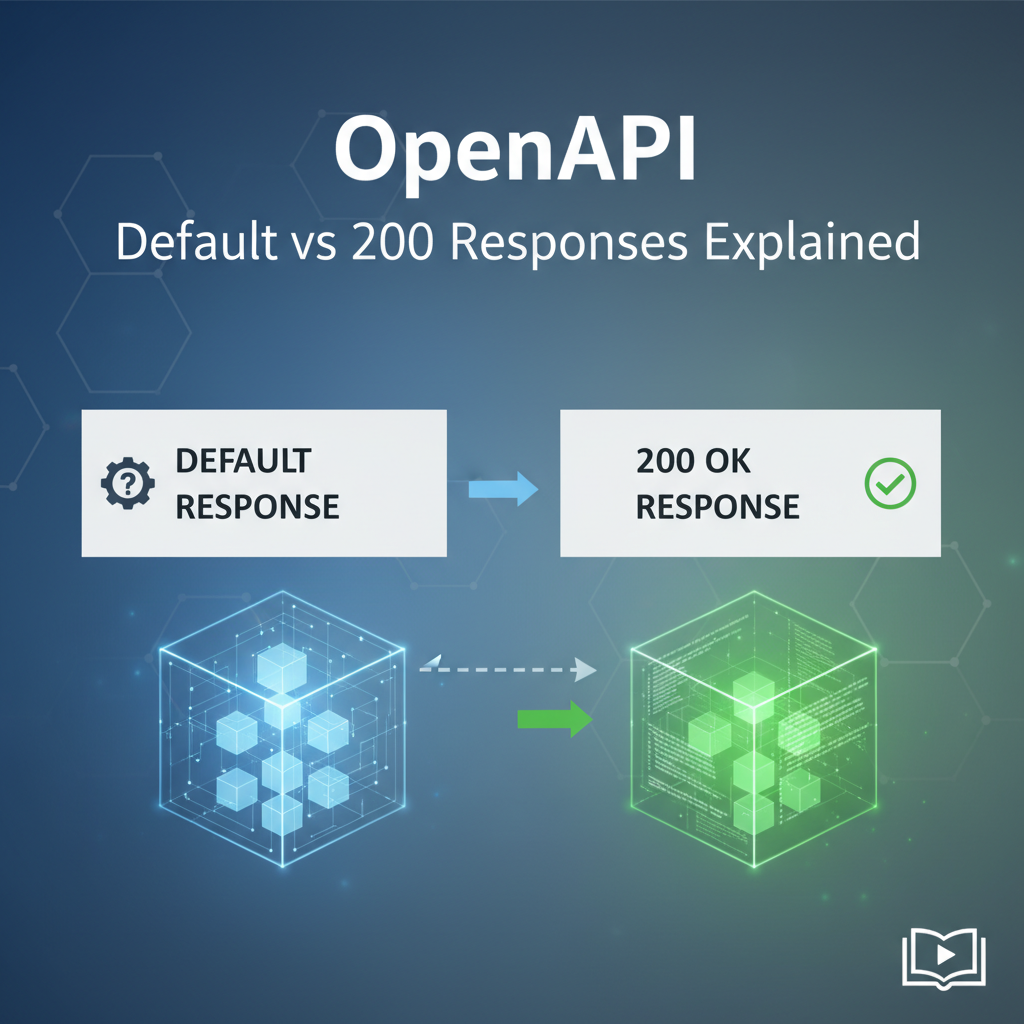


In the sprawling, interconnected universe of modern software, Application Programming Interfaces (APIs) serve as the fundamental connective tissue, allowing diverse systems to communicate, share data, and orchestrate complex operations seamlessly. At the heart of designing and documenting these critical interfaces lies the OpenAPI Specification (OAS), a powerful, language-agnostic standard that describes the capabilities of an API in a human-readable and machine-readable format. It's the blueprint, the contract, the ultimate source of truth for an API, guiding developers, enabling automated tooling, and fostering clarity across the entire development lifecycle.
Within this comprehensive specification, the definition of responses stands out as a paramount concern. An API call, after all, is a two-way street: a request goes out, and a response comes back. The nature and structure of that response dictate how the client application reacts, how errors are handled, and how effectively developers can integrate with the API. While the OpenAPI Specification allows for the explicit definition of various HTTP status code responses, two particular response objects often cause confusion or warrant careful consideration: the highly specific 200 OK response and the more enigmatic default response. Understanding their distinct roles, their semantic implications, and their optimal usage is not merely a matter of syntax; it is foundational to building robust, predictable, and developer-friendly APIs.
This article embarks on a comprehensive exploration of these two crucial response types within the OpenAPI ecosystem. We will dissect their individual characteristics, delve into the scenarios where each is most appropriately employed, and illuminate the subtle yet significant differences that set them apart. By the end of this journey, you will possess a profound understanding of how to leverage 200 OK for successful outcomes and strategically deploy default responses as a robust safety net, thereby elevating your API design to new heights of clarity and resilience. We aim to move beyond superficial explanations, providing detailed insights and practical examples that empower you to craft OpenAPI definitions that truly serve as an unambiguous and comprehensive contract for your API. The meticulous definition of responses, often perceived as a tedious task, is, in reality, an investment in the long-term maintainability, usability, and success of any API project.
The Foundational Role of OpenAPI Specification in API Design
Before diving into the specifics of response objects, it is imperative to re-establish the overarching significance of the OpenAPI Specification itself. Born from the Swagger Specification, OAS has evolved into the de facto standard for describing RESTful APIs. Its core mission is to create a universally understandable format that can describe an API's capabilities, inputs, outputs, and security schemes in a way that is both human-readable (for documentation) and machine-readable (for automated processes).
The power of an OpenAPI definition lies in its ability to act as a single source of truth for an API. For developers consuming an api, an OpenAPI document eliminates ambiguity by clearly outlining:
- Endpoints and Operations: What api paths are available (e.g.,
/users,/products/{id}) and what HTTP methods can be used on them (GET, POST, PUT, DELETE). - Parameters: What inputs are expected for each operation, including path parameters, query parameters, header parameters, and request bodies, along with their data types, formats, and required status.
- Authentication and Authorization: How clients can authenticate with the api (e.g., API keys, OAuth2) and what security scopes are required.
- Responses: Crucially, what outputs can be expected from each operation, distinguishing between successful outcomes and various error conditions.
This structured approach fosters consistency across an API landscape, which is particularly vital for larger organizations managing numerous services. When an api is well-defined using OpenAPI, it becomes possible to:
- Generate Documentation: Tools can automatically create interactive api documentation (like Swagger UI or Redoc) directly from the specification, ensuring the documentation is always up-to-date with the code.
- Generate Client SDKs: Client libraries in various programming languages can be scaffolded from the spec, accelerating client-side development and reducing boilerplate code.
- Generate Server Stubs: Server-side code can also be generated, providing a starting point for api implementation and enforcing adherence to the defined contract.
- Automate Testing: Test suites can be built to validate that the api's actual behavior matches its OpenAPI definition, catching discrepancies early in the development cycle.
- Enable API Gateways and Management Platforms: Platforms can ingest OpenAPI definitions to configure routing, apply policies, enforce security, and provide monitoring for APIs, greatly simplifying api governance.
Without a clear and comprehensive OpenAPI definition, an api becomes a black box, requiring developers to rely on tribal knowledge, trial and error, or outdated external documentation. This not only slows down integration efforts but also significantly increases the likelihood of errors and inconsistencies. Therefore, understanding and meticulously defining every aspect of an OpenAPI document, especially the critical responses object, is not merely a technical detail but a strategic imperative for building scalable and maintainable api ecosystems. The clarity it brings minimizes friction and maximizes productivity for all stakeholders involved in the api's lifecycle.
Deconstructing OpenAPI Responses: A General Overview
The responses object within an OpenAPI operation is where the API contract truly shines a light on what clients can expect to receive after sending a request. It's a map of possible HTTP status codes, each pointing to a Response Object that meticulously describes the expected payload and any associated headers. This level of detail is paramount for client-side development, allowing consumers to anticipate the structure of successful data, gracefully handle errors, and build robust integration logic.
Let's break down the general anatomy of an OpenAPI Response Object:
responses:
  '200':
    description: A successful response with the requested resource.
    content:
      application/json:
        schema:
          $ref: '#/components/schemas/User'
        examples:
          johnDoe:
            summary: Example of a single user
            value:
              id: 123
              name: John Doe
              email: john.doe@example.com
    headers:
      X-RateLimit-Limit:
        description: The number of allowed requests in the current period.
        schema:
          type: integer
      X-RateLimit-Remaining:
        description: The number of remaining requests in the current period.
        schema:
          type: integer
  # ... other responses like '400', '404', '500', or 'default'
Every Response Object typically contains the following key elements:
description(Required): This field is a human-readable text providing a brief summary of the response. It's not just a superficial label; it's a critical piece of documentation that explains the context and meaning of the status code. For instance, adescriptionfor a200response might be "A list of users successfully retrieved," while a404might say "The requested resource was not found." Clear and concise descriptions are invaluable for developers consuming the API, helping them quickly understand what each response signifies without needing to dive into the schema details immediately. In automated documentation tools, this description often appears prominently, guiding users through the API's behavior. A well-written description can preempt many common integration questions and streamline the onboarding process for new API consumers.content(Optional): This is arguably the most crucial part of aResponse Objectwhen the API is expected to return data in its body. Thecontentfield is a map where keys are media types (e.g.,application/json,text/plain,application/xml,image/png) and values areMediaType Objects. This structure allows an API to specify different response payloads for different content types.- Media Type: The key in the
contentmap, likeapplication/json, explicitly states the format of the data being returned. An API might supportapplication/jsonfor structured data andtext/plainfor simple messages, for example. schema: Within eachMediaType Object, theschemafield uses the OpenAPI Schema Object to describe the structure of the data returned in the response body. This is typically where you reference a reusable schema defined in#/components/schemas, ensuring consistency and DRY (Don't Repeat Yourself) principles. For instance,schema: { $ref: '#/components/schemas/User' }indicates that the response body conforms to theUserschema. This allows clients to accurately parse the returned data and develop robust data models.examples: This field provides concrete examples of the response body for a given media type. These examples are incredibly helpful for client developers, serving as a clear illustration of what the actual data will look like. OpenAPI supports multiple named examples, each with asummaryandvalue. Examples can significantly reduce the integration time as developers can see immediate working samples rather than inferring from schemas alone. They act as a sandbox for understanding the API's output before even making a real call.
- Media Type: The key in the
headers(Optional): This field is a map of possible response headers that the API might send back, beyond the standard HTTP headers. Each entry in the map corresponds to a header name (e.g.,X-RateLimit-Limit,ETag) and contains aHeader Object. AHeader Objectis similar to aParameter Objectand describes the header's data type, format, and an optional description. For example, an api might returnX-Request-IDto help trace requests, or pagination-related headers likeX-Total-Count. Documenting these custom headers is vital for clients that need to interpret or react to them. For example, a client consuming an api might need to know aboutX-RateLimit-Remainingto adjust its call frequency and avoid hitting rate limits.links(Optional): Thelinksobject allows you to define relationships between different operations in your API. It describes how to construct a new API request from the current response. While a powerful feature for hypermedia-driven APIs, it's less commonly used in simpler REST apis and often outside the direct scope of basic response definition discussions, but worth noting for comprehensive API design.
By meticulously defining each of these components for every expected HTTP status code, an OpenAPI definition transforms into an invaluable contract. It minimizes misinterpretations, speeds up development, and provides a clear roadmap for how clients should interact with and react to the API's responses. This granular detail, particularly within the content and description fields, is what distinguishes a well-documented api from one that leaves developers guessing. It contributes directly to a superior developer experience, making the api easier and more enjoyable to consume.
The 200 OK Response: The Pillar of Success
In the vast lexicon of HTTP status codes, the 200 OK response stands as the most fundamental and widely recognized symbol of success. When an API returns a 200 OK, it unequivocally communicates to the client that the request was received, understood, processed, and the operation completed without any error. More often than not, this success is accompanied by the desired data payload in the response body, making it the workhorse of data retrieval and successful state changes in many API interactions.
Semantic Meaning and When to Use It
The semantic meaning of 200 OK is straightforward: everything went as planned. The server successfully processed the request, and the response body contains the result of that successful operation. This is in contrast to, say, a 201 Created (which signifies a new resource has been created) or a 204 No Content (which means the server successfully processed the request but there's no data to return). While 201 and 204 are also successful responses, 200 OK is specifically used when:
- Retrieving a Resource (GET request): This is its most common application. When a client performs a
GETrequest to retrieve a user, a list of products, or a specific document, a200 OKresponse indicates that the resource was found and its representation is included in the response body. - Successful Query or Search: Similar to resource retrieval, if an API provides a search endpoint, a
200 OKwould accompany the results of that search query. - Successful Update (PUT/PATCH request, if returning updated state): Although
204 No Contentis often preferred for updates where the client doesn't need the entire updated resource back, a200 OKcan be used if the API returns the full or partial updated representation of the resource in the response body. - Successful Deletion (if returning confirmation): Less common, as
204 No Contentis often used for successful deletions. However, if the API returns a confirmation message or details about the deleted resource,200 OKmight be appropriate. - Processing a Command (POST request, if not creating a new resource): For operations that trigger a process or calculation without creating a new entity, a
200 OKcan signal successful execution and return the result of that process.
Detailed Structure for 200 OK
When defining a 200 OK response in OpenAPI, meticulous detail is key to providing a clear contract for clients.
paths:
  /users/{userId}:
    get:
      summary: Retrieve a specific user by ID
      operationId: getUserById
      parameters:
        - in: path
          name: userId
          required: true
          schema:
            type: integer
            format: int64
          description: Numeric ID of the user to retrieve
      responses:
        '200':
          description: Successfully retrieved the user's details.
          content:
            application/json:
              schema:
                $ref: '#/components/schemas/User'
              examples:
                exampleUser:
                  summary: A typical user object
                  value:
                    id: 123
                    name: Alice Smith
                    email: alice.smith@example.com
                    status: active
                    created_at: '2023-10-27T10:00:00Z'
          headers:
            X-Request-ID:
              description: A unique ID for the request, useful for tracing.
              schema:
                type: string
            Cache-Control:
              description: Caching policy for the response.
              schema:
                type: string
                enum: [ 'no-cache', 'max-age=60' ]
        '404':
          description: User not found.
          content:
            application/json:
              schema:
                $ref: '#/components/schemas/Error'
              examples:
                notFoundError:
                  value:
                    code: 'USER_NOT_FOUND'
                    message: 'The user with ID 123 was not found.'
        # ... other error responses or default
components:
  schemas:
    User:
      type: object
      properties:
        id:
          type: integer
          format: int64
          description: Unique identifier for the user.
        name:
          type: string
          description: The user's full name.
        email:
          type: string
          format: email
          description: The user's email address.
        status:
          type: string
          enum: [ 'active', 'inactive', 'pending' ]
          description: Current status of the user account.
        created_at:
          type: string
          format: date-time
          description: Timestamp when the user account was created.
      required:
        - id
        - name
        - email
    Error:
      type: object
      properties:
        code:
          type: string
          description: A specific error code for the client to interpret.
        message:
          type: string
          description: A human-readable error message.
      required:
        - code
        - message
In this example:
description:"Successfully retrieved the user's details."provides immediate clarity. It's concise and accurately reflects the outcome.content: Specifies that the API will returnapplication/json.schema:$ref: '#/components/schemas/User'points to a reusableUserschema definition. This is a best practice, promoting consistency and reducing redundancy across your API. TheUserschema then details all expected fields, their types, and descriptions, allowing client-side code to be generated or manually structured correctly.examples: TheexampleUserprovides a concrete, real-world instance of what aUserobject looks like. This is incredibly valuable for developers, offering a tangible reference point that is often easier to digest than a pure schema definition. It validates the schema and provides immediate context.
headers: In this case,X-Request-IDandCache-Controlare explicitly documented. This informs the client that these headers might be present and what their expected values or semantics are. For instance,Cache-Controlprovides guidance on how the client (or an intermediary proxy) should cache the response, enhancing performance and reducing server load.
Best Practices for 200 OK Responses
- Always Include a Schema if Data is Returned: Never leave the
contentfield empty or without aschemaif your200 OKresponse is meant to carry data. An empty200 OKis ambiguous; use204 No Contentif no body is intended. The schema is the foundation for client-side data binding and validation. - Provide Meaningful Examples: As demonstrated, examples are crucial. They provide a tangible reference point and greatly assist in client development and testing. Aim for examples that represent typical, happy-path scenarios.
- Be Specific with Media Types: If your API can return data in multiple formats (e.g., JSON and XML), define both under the
contentobject. - Document Custom Headers: Any non-standard HTTP headers that your API returns as part of a successful response should be clearly documented in the
headerssection. This ensures clients can properly interpret and react to them. - Use
200 OKfor its Intended Purpose: While flexible, remember its primary semantic meaning. Avoid using200 OKwith an error payload; that's a misuse of the status code and hinders proper error handling. Always strive for the most semantically appropriate success code (e.g.,201 Createdfor resource creation,202 Acceptedfor asynchronous processing).
By rigorously applying these principles when defining 200 OK responses, you ensure that your OpenAPI specification acts as a precise and invaluable guide for anyone interacting with your API. It fosters confidence in the API's reliability and significantly improves the overall developer experience, which is a hallmark of a well-designed API.
Embracing the default Response: Catch-All and Unforeseen Scenarios
While specific HTTP status codes like 200 OK, 400 Bad Request, 404 Not Found, or 500 Internal Server Error are meticulously defined within an OpenAPI operation's responses object, there exists a unique and powerful construct known as the default response. This special response object serves a critical role in API design: it acts as a catch-all for any HTTP status code that is not explicitly defined elsewhere for a given operation. Its purpose is to provide a fallback mechanism, ensuring that clients always have a general understanding of the error structure they might encounter, even for unexpected or undocumented situations.
Semantic Meaning and When to Use It
The default response does not represent a specific HTTP status code. Instead, it represents "any HTTP status code not covered by the other response definitions for this operation." This is a crucial distinction. It's not a substitute for defining common error codes (like 400 or 404), but rather a safeguard for everything else.
Consider these scenarios where default response proves invaluable:
- Undocumented Server-Side Errors: An API might encounter internal server errors (
500 Internal Server Error), gateway timeouts (504 Gateway Timeout), or other unforeseen issues that were not explicitly documented in the OpenAPI specification. Thedefaultresponse provides a consistent schema for these generic error conditions. - Future-Proofing: As an API evolves, new error conditions might emerge. Instead of immediately having to update every operation's response definitions, the
defaultresponse offers a temporary, graceful fallback until more specific error codes can be defined. - Simplified Client Error Handling: For a client developer, encountering an HTTP status code that is not explicitly defined in the API's documentation can lead to unexpected behavior or crashes. By defining a
defaultresponse, the client can always expect a certain error payload structure, allowing them to implement generic error handling logic (e.g., displaying a "Something went wrong" message with a generic error code) rather than crashing or presenting a raw, unhandled server response. - Reduced Documentation Overhead for Less Critical Errors: While major error conditions should always be explicit, very rare or highly generic error types might be adequately covered by
defaultwithout cluttering the specification with numerous specific error codes.
It's important to reiterate that default is a safety net, not a primary tool for error handling. Best practices dictate explicitly defining common and expected error codes (e.g., 400 for client-side validation failures, 401 for authentication, 403 for authorization, 404 for resource not found). The default response then catches the remainder.
Structure for default Responses
A default response typically defines a generic error object schema that can encapsulate various types of unexpected errors. This schema should ideally be consistent across your entire API to provide a unified error experience.
paths:
  /products:
    post:
      summary: Create a new product
      operationId: createProduct
      requestBody:
        required: true
        content:
          application/json:
            schema:
              $ref: '#/components/schemas/ProductCreate'
      responses:
        '201':
          description: Product successfully created.
          content:
            application/json:
              schema:
                $ref: '#/components/schemas/Product'
        '400':
          description: Invalid input provided.
          content:
            application/json:
              schema:
                $ref: '#/components/schemas/ValidationError'
              examples:
                invalidInput:
                  value:
                    code: 'VALIDATION_ERROR'
                    message: 'Invalid product name or price.'
                    details:
                      - field: 'name'
                        error: 'Must be at least 3 characters long'
                      - field: 'price'
                        error: 'Must be a positive number'
        default: # The catch-all response
          description: An unexpected error occurred.
          content:
            application/json:
              schema:
                $ref: '#/components/schemas/GenericError'
              examples:
                genericApiError:
                  summary: Generic server error
                  value:
                    code: 'INTERNAL_SERVER_ERROR'
                    message: 'An unexpected internal server error occurred. Please try again later.'
                    timestamp: '2023-10-27T10:30:00Z'

components:
  schemas:
    ProductCreate:
      type: object
      properties:
        name: { type: string, minLength: 3 }
        description: { type: string }
        price: { type: number, format: float, minimum: 0 }
      required: [ name, price ]
    Product:
      type: object
      allOf:
        - $ref: '#/components/schemas/ProductCreate'
        - type: object
          properties:
            id: { type: integer, format: int64 }
            created_at: { type: string, format: date-time }
          required: [ id, created_at ]
    ValidationError:
      type: object
      properties:
        code: { type: string }
        message: { type: string }
        details:
          type: array
          items:
            type: object
            properties:
              field: { type: string }
              error: { type: string }
      required: [ code, message, details ]
    GenericError:
      type: object
      properties:
        code:
          type: string
          description: An application-specific error code.
        message:
          type: string
          description: A human-readable message describing the error.
        timestamp:
          type: string
          format: date-time
          description: The time when the error occurred.
      required: [ code, message ]
In this default response example:
description:"An unexpected error occurred."provides a general explanation for any unspecified error.content: Specifiesapplication/jsonas the media type.schema:$ref: '#/components/schemas/GenericError'points to a reusableGenericErrorschema. This schema defines common fields likecode(an application-specific error code),message(a human-readable description), andtimestamp. This standardized structure allows client applications to parse and display a consistent error message regardless of the underlying issue.examples:genericApiErroroffers a concrete example of what this general error payload would look like. This helps client developers understand the expected format, even if the exact error code or message might vary.
Best Practices for default Responses
- Define a Consistent Generic Error Schema: The most important rule for
defaultresponses is to use a standardized error schema across all your operations. This consistency significantly simplifies client error handling logic. Clients can implement a single parser for your generic error structure, knowing it will apply to any undocumented status code. - Use as a Safety Net, Not a Primary Handler: Do not rely on
defaultfor common, expected errors (like400,401,403,404,429). These should always be explicitly defined with their specific schemas and descriptions. Thedefaultresponse should truly be for the "unexpected" or "unhandled" cases. - Provide a Clear, but General Description: The
descriptionfordefaultshould be broad enough to cover various scenarios, such as "An unexpected server error occurred," or "An unforeseen issue prevented the request from completing." - Include Useful (but Non-Specific) Information: Your
GenericErrorschema should provide enough information for a client to display a helpful message to the user, and potentially for developers to start debugging (e.g., an internal trace ID, if safe to expose). However, avoid leaking sensitive server-side details. - Avoid Over-Reliance: If you find yourself consistently relying on the
defaultresponse for errors that occur frequently or are semantically important, it's a strong indicator that you should explicitly define those specific error codes instead. The goal is to maximize clarity for API consumers.
By thoughtfully incorporating the default response into your OpenAPI definitions, you create a more robust and fault-tolerant API. It acts as a testament to diligent API design, showing that you've considered not only the happy paths and common errors but also the unforeseen circumstances, ultimately leading to a more stable and predictable API ecosystem.
As the complexity of API ecosystems grows, ensuring consistency and adherence to these meticulously defined OpenAPI responses becomes a significant challenge. This is where robust API management platforms play a pivotal role. Platforms like APIPark offer comprehensive solutions to help developers and enterprises manage, integrate, and deploy AI and REST services with ease. APIPark's capabilities in end-to-end API lifecycle management, unified API formats, and service sharing within teams directly address the need for structured and consistent API definitions, making it easier to enforce best practices for responses like 200 OK and default across an organization.
APIPark is a high-performance AI gateway that allows you to securely access the most comprehensive LLM APIs globally on the APIPark platform, including OpenAI, Anthropic, Mistral, Llama2, Google Gemini, and more.Try APIPark now! 👇👇👇
default vs. 200 Responses: A Comprehensive Comparison
The discussion of 200 OK and default responses within OpenAPI highlights two fundamentally different approaches to documenting API outcomes. While 200 OK deals with the expected successful flow, default addresses the spectrum of unexpected or uncategorized outcomes. Understanding their distinct roles and the implications of choosing one over the other (or using them in conjunction) is vital for crafting truly robust and developer-friendly API contracts. Let's delve into a comprehensive comparison.
Core Differences and Semantic Implications
- Purpose and Intent:
200 OK: Exclusively signifies a successful operation where the request was fully understood and processed, and the server is returning the expected data. Its intent is to define the "happy path" or one of the clearly defined successful outcomes of an API call. It carries a positive, affirmative semantic meaning.default: Serves as a catch-all for any HTTP status code that has not been explicitly defined in theresponsesobject for a particular operation. Its intent is to provide a fallback error structure for unexpected, unhandled, or future error conditions. It carries a semantic meaning of "something went wrong, and it wasn't one of the specific errors we documented."
- Specificity:
200 OK: Highly specific. It corresponds to exactly one HTTP status code (200). The schema and description associated with it are tailored precisely to the expected successful payload for that specific status.default: Generic. It covers an entire range of potential HTTP status codes (e.g.,401,403,404,429,500,502,503,504, etc., if they are not explicitly listed). Its schema must be broad enough to accommodate various error types, leading to a less specific error message or payload.
- Client Behavior Implications:
200 OK: When a client receives a200 OK, it knows exactly what data structure to expect. It can confidently parse the response body into predefined objects, proceed with subsequent logic, and update its UI/state accordingly. This predictability is crucial for seamless integration.default: When a client receives an undocumented HTTP status code, it falls back to thedefaultresponse definition. This means the client can at least parse a generic error structure, preventing crashes. However, it cannot perform specific error handling tailored to the actual problem. It can display a general error message, log the issue, or prompt the user to retry, but lacks the granular insight that specific error codes provide.
- Documentation Clarity:
200 OK: Contributes to highly explicit and clear documentation for the primary success case. Developers can quickly see the exact payload for a successful response.default: While providing a fallback, its very nature means it documents unspecified outcomes. This can sometimes be a double-edged sword: it offers safety but, if overused or relied upon, can obscure actual, common error conditions that should have explicit documentation.
Coexistence and Best Practices for Usage
It's important to understand that default and 200 OK are not mutually exclusive; they coexist within the same responses object. A well-designed API will almost always have a 200 OK (or another specific success code like 201 or 204) defined. It may also include a default response.
Here's how they typically interact and when to choose which approach:
When to Use 200 OK (or other explicit success codes):
- For all primary successful outcomes: Every operation should clearly define what a successful response looks like. If data is returned, define the
schemaand provideexamples. - To guide client-side data parsing:
200 OKprovides the precise contract for data received by the client. - To enable specific success path logic: Clients often have different workflows for different successful outcomes (e.g., displaying a newly created item vs. showing a list of existing items).
When to Use default:
- As a robust fallback for all unspecified errors: It's your safety net. If an HTTP status code isn't explicitly defined (e.g.,
401,403,404,500), the client should still know what kind of error payload to expect from thedefaultresponse. - To handle truly unexpected server errors: Things like
500 Internal Server Erroroften fall into thedefaultcategory, unless you have specific, common5xxerrors you want to detail. - To ensure consistent generic error reporting: Even if the underlying error is unknown,
defaultallows the API to return a standardized error structure, making it easier for client applications to display user-friendly messages rather than raw server traces.
When to Avoid default:
- For common, predictable errors: Errors like "invalid input" (
400), "unauthorized" (401), "forbidden" (403), "not found" (404), "rate limit exceeded" (429) should always be explicitly defined. These are expected failure modes that clients need to handle specifically. Relying ondefaultfor these would diminish the API's clarity and utility. - To hide poor API design:
defaultshould not be an excuse to avoid documenting known error conditions. Its presence should indicate thoroughness, not laziness.
Comparative Table: 200 OK vs. default Response
To crystallize the distinctions, here's a direct comparison:
| Feature | 200 OK Response |
default Response |
|---|---|---|
| Purpose | Explicitly defines a successful outcome. | Catch-all for any unspecified status code. |
| Specificity | Highly specific, for one status code (200). |
Generic, covers a range of codes (e.g., 4xx, 5xx if not explicitly defined). |
| Semantic Value | "This is what you expect when things go right." | "This is what you get when things go unexpectedly or aren't explicitly documented." |
| Client Behavior | Clients parse expected successful data and proceed with intended logic. | Clients handle a generic error structure, often logging and displaying a general error message. |
| Documentation Clarity | Provides clear documentation for the primary success path. | Documents a fallback error structure, useful for robustness but less specific. |
| Schema Content | Specific schema for the returned data (e.g., User object, Product array). |
Generic error schema (e.g., Error object with code, message). |
| Best Use Case | For primary successful operations (e.g., GET resource, POST result). | For unhandled server errors, network issues, or truly unexpected scenarios. |
| Usage Advice | Always define explicitly, with detailed schema and examples. | Use as a safety net; avoid relying on it for common, expected errors which should be explicit. |
By thoughtfully combining explicit definitions for successful and common error outcomes with a robust default response for all other scenarios, API designers can achieve a balance between precise documentation and comprehensive error handling. This dual approach ensures that API consumers receive maximum clarity for expected behaviors while being gracefully protected from unforeseen circumstances, leading to a superior and more reliable API integration experience. This level of meticulousness in api contract definition is a hallmark of truly professional api management.
Beyond Basics: Advanced Considerations for Response Definitions
Defining 200 OK and default responses are critical foundational steps, but the OpenAPI Specification offers a deeper arsenal for crafting truly sophisticated and developer-friendly response definitions. Moving beyond the basics involves leveraging features that promote reusability, cater to diverse client needs, and maintain consistency across a complex API landscape.
1. Response Reuse with $ref
Just as schemas are defined once in #/components/schemas and referenced throughout, OpenAPI allows for the definition of reusable Response Objects in #/components/responses. This is an extremely powerful pattern, especially for common error responses or boilerplate success messages.
Imagine an API where every 401 Unauthorized response consistently returns the same error payload:
components:
  responses:
    UnauthorizedError:
      description: Authentication required or invalid credentials.
      content:
        application/json:
          schema:
            $ref: '#/components/schemas/GenericError'
          examples:
            unauthorized:
              value:
                code: 'UNAUTHORIZED'
                message: 'Access token is missing or invalid.'

paths:
  /users:
    get:
      summary: Get all users
      responses:
        '200':
          description: A list of users.
          content:
            application/json:
              schema:
                type: array
                items:
                  $ref: '#/components/schemas/User'
        '401':
          $ref: '#/components/responses/UnauthorizedError' # Reuse here
  /products:
    post:
      summary: Create a new product
      responses:
        '201':
          description: Product created.
          content:
            application/json:
              schema:
                $ref: '#/components/schemas/Product'
        '401':
          $ref: '#/components/responses/UnauthorizedError' # And here
This approach drastically reduces redundancy, makes the specification easier to read, and most importantly, ensures absolute consistency in error payloads across your entire API. If the UnauthorizedError schema ever changes, you only need to update it in one place.
2. Multiple Media Types for content
APIs are not always limited to JSON. Depending on the use case, an API might need to return data in various formats. The content field elegantly handles this by allowing multiple media type definitions for a single response status code.
responses:
  '200':
    description: Report data in various formats.
    content:
      application/json:
        schema:
          $ref: '#/components/schemas/ReportSummary'
      application/xml:
        schema:
          $ref: '#/components/schemas/ReportSummaryXml'
      text/csv:
        schema:
          type: string
          format: binary # For CSV files
        examples:
          csvExample:
            value: |
              header1,header2,header3
              value1,value2,value3
      image/png:
        schema:
          type: string
          format: binary # For image files
This clearly communicates to the client that they can request different representations of the same resource by setting the Accept header in their request. It enables the API to be more versatile and cater to diverse integration requirements without requiring separate endpoints for each format.
3. Using examples and externalDocs for Richer Context
We've touched upon examples within the content object. Beyond simple inline values, OpenAPI allows for more sophisticated usage:
- Named Examples: Providing multiple named examples for different scenarios (e.g.,
userActive,userInactive) can be highly illustrative. - External Examples: For very large or complex examples, you can reference an external file using
externalValue:yaml content: application/json: schema: $ref: '#/components/schemas/LargeDataSet' examples: fullExample: summary: A comprehensive data set example externalValue: 'https://example.com/api/examples/largedata.json'
The externalDocs field, while primarily used at the root of the OpenAPI document or for individual schemas, can also be attached to specific responses if there's external documentation relevant only to that response (e.g., a link to an error code registry or a detailed explanation of a complex success payload).
4. Consistent Error Payloads
While default provides a generic fallback, consistency in all error payloads (whether 400, 404, 500, or default) is a cornerstone of a user-friendly API. A client should ideally parse a single Error schema regardless of the specific error code, with fields like code, message, details, and traceId.
components:
  schemas:
    ApiError:
      type: object
      properties:
        code:
          type: string
          description: A unique, machine-readable error code.
        message:
          type: string
          description: A human-readable message for the client.
        details:
          type: array
          items:
            type: string
          description: Optional additional details or validation errors.
        traceId:
          type: string
          description: Unique request ID for tracing issues.
      required: [ code, message ]

  responses:
    BadRequest:
      description: Invalid request payload or parameters.
      content:
        application/json:
          schema:
            $ref: '#/components/schemas/ApiError'
    NotFound:
      description: The requested resource was not found.
      content:
        application/json:
          schema:
            $ref: '#/components/schemas/ApiError'
    InternalServerError:
      description: An unexpected server-side error occurred.
      content:
        application/json:
          schema:
            $ref: '#/components/schemas/ApiError'
This ensures that regardless of the specific error, the client knows how to extract key information, leading to more robust error handling logic.
5. Version Control and API Evolution's Impact on Responses
As APIs evolve, responses may change. New fields might be added, existing ones deprecated, or entirely new schemas introduced. It's crucial that your OpenAPI definition reflects these changes accurately and that versioning strategies (e.g., URL versioning, header versioning) are applied consistently, especially when response structures change. Tools and platforms that leverage OpenAPI, like API gateways and API management systems, rely on these definitions to properly route, transform, and document API traffic. Clear versioning in your OpenAPI definition helps clients understand which response schema to expect based on the API version they are consuming.
By integrating these advanced considerations, API designers can move beyond simply documenting what an API does to creating a comprehensive, maintainable, and highly consumable api contract. These practices not only enhance the developer experience but also significantly contribute to the long-term health and stability of the API ecosystem. The investment in detailed and reusable response definitions pays dividends in reduced integration time, fewer errors, and a more predictable development environment.
Best Practices for Crafting Robust OpenAPI Responses
The quality of an API's OpenAPI definition directly impacts its usability, maintainability, and ultimately, its success. While syntax is important, adhering to best practices ensures that your response definitions are not just technically correct, but also maximally helpful and unambiguous for API consumers. Here's a curated list of best practices for crafting robust OpenAPI responses:
- Be Explicit and Comprehensive for Expected Outcomes:
- Document Every Expected Status Code: Never leave your clients guessing. For every operation, explicitly define all expected successful (
2xx) and error (4xx,5xx) HTTP status codes. This includes common ones like200,201,204,400,401,403,404,429, and500. - Use
defaultas a Safety Net, Not a Primary Handler: As discussed,defaultis for unspecified status codes. Avoid using it for predictable, common error scenarios that warrant their own explicit definitions. If an error happens frequently or has a specific client-side action associated with it, it deserves its own dedicated response definition.
- Document Every Expected Status Code: Never leave your clients guessing. For every operation, explicitly define all expected successful (
- Provide Clear and Meaningful Descriptions:
- Concise Summaries: Every
Response Objectand its containedschemaandheadersshould have a clear, concisedescription. These descriptions are the primary way human developers understand the intent and content of a response. - Contextual Information: For error responses, explain why that error might occur (e.g., "Invalid input data provided by the client," "The requested resource could not be found"). For success responses, briefly explain what the returned data represents.
- Concise Summaries: Every
- Ensure Consistency in Error Payloads:
- Standardized Error Schema: Adopt a single, reusable
Errorschema (e.g.,#/components/schemas/ApiError) for all error responses. This schema should include consistent fields likecode(machine-readable),message(human-readable), and optionaldetailsortraceId. - Avoid Overloading
200 OKwith Errors: Never return an error payload with a200 OKstatus code. This violates HTTP semantics and makes error handling unnecessarily complex for clients. Use appropriate4xxor5xxcodes for errors.
- Standardized Error Schema: Adopt a single, reusable
- Leverage Schemas and Examples Effectively:
- Always Include Schemas for Data: If a response contains a body (especially for
2xxresponses), always define its structure using aschema. Use$refto#/components/schemasfor reusable schema definitions. - Provide Realistic Examples: Concrete
examplesfor both successful data and error payloads are invaluable. They illustrate the expected structure and content, greatly assisting client developers in understanding and integrating with the API. Consider multiple examples for different scenarios. - Detailed Schemas for
content: Beyond the top-level schema, ensure that all properties within the schema are also well-described, including their types, formats, constraints (e.g.,minLength,maximum), and required status.
- Always Include Schemas for Data: If a response contains a body (especially for
- Document All Custom Headers:
- Explicit Header Definitions: Any non-standard HTTP headers that your API returns (e.g.,
X-RateLimit-Limit,ETag,X-Request-ID, pagination headers) must be explicitly documented in theheaderssection of theResponse Object. Include their type, format, and description. This ensures clients know about and can react to these important pieces of information.
- Explicit Header Definitions: Any non-standard HTTP headers that your API returns (e.g.,
- Promote Reusability with
#/components/responses:- Define Reusable Responses: For common error types (e.g.,
Unauthorized,NotFound,InternalServerError) or standard success messages, define them once in#/components/responsesand then reference them using$refthroughout your API operations. This reduces redundancy, improves consistency, and simplifies maintenance.
- Define Reusable Responses: For common error types (e.g.,
- Keep Documentation Synchronized with Implementation:
- Treat OpenAPI as the Source of Truth: Your OpenAPI definition should always accurately reflect the current behavior of your API. Inconsistencies between the spec and the actual implementation lead to confusion, broken integrations, and a poor developer experience. Implement automated checks to validate that your API adheres to its published contract.
- Iterate and Update: As your API evolves, regularly update its OpenAPI definition to reflect new endpoints, modified parameters, or changed response structures.
- Consider Security Implications:
- Avoid Leaking Sensitive Information: Especially in error responses, be cautious about exposing internal server details, stack traces, or other sensitive information that could aid attackers. Generic, high-level error messages are often safer.
By diligently following these best practices, API designers and developers can transform their OpenAPI definitions into powerful, unambiguous contracts that serve as the foundation for efficient development, reliable integrations, and a positive overall experience for everyone interacting with the API. A well-crafted response definition is not just documentation; it's a critical component of the API's architecture, enabling seamless communication and interaction in the complex digital landscape.
Conclusion
The journey through the intricate landscape of OpenAPI response definitions, particularly focusing on the contrasting yet complementary roles of 200 OK and default responses, underscores a fundamental truth in API design: precision and clarity are paramount. An API is only as good as its contract, and within that contract, the responses object dictates how the client perceives the API's behavior, handles data, and recovers from errors.
We have seen that the 200 OK response serves as the unequivocal signal of success, delivering expected data with a precise structure. It is the cornerstone of the "happy path," demanding meticulous definition of schemas and illustrative examples to guide client-side parsing and logic. Its explicit nature leaves no room for ambiguity when an operation completes as intended.
Conversely, the default response, while generic, emerges as a vital safety net. It safeguards clients from encountering unforeseen or undocumented HTTP status codes, ensuring that even in unexpected scenarios, a standardized error payload can be parsed. This mechanism is crucial for API resilience, preventing crashes and allowing for graceful degradation when the unpredictable occurs. However, its power lies in its judicious application, serving as a fallback rather than a replacement for explicitly defining common and predictable error conditions.
The detailed comparison revealed that these two response types, though seemingly disparate, are integral to a holistic API contract. 200 OK delivers the promise, while default offers the assurance of graceful failure for everything else. Marrying specific success and common error responses with a robust default ensures a complete and resilient API specification.
Ultimately, the investment in meticulously crafting OpenAPI response definitions pays dividends across the entire API lifecycle. It streamlines client development, enhances automated documentation, facilitates robust testing, and empowers API management platforms to effectively govern and monitor API traffic. For developers, operations personnel, and business managers alike, a well-defined api governance solution, exemplified by detailed response contracts, enhances efficiency, bolsters security, and optimizes data exchange. In a world increasingly driven by interconnected systems, a clear, comprehensive, and accurate OpenAPI definition with perfectly articulated responses is not merely a technical formality—it is the bedrock upon which successful digital ecosystems are built, fostering trust, accelerating innovation, and ensuring the long-term viability of your API.
Frequently Asked Questions (FAQs)
1. What is the primary difference between a 200 OK response and a default response in OpenAPI? The primary difference lies in their specificity and purpose. A 200 OK response explicitly defines the structure and content of a successful API call, meaning the request was processed without errors and expected data is returned. The default response, on the other hand, is a catch-all; it defines the structure for any HTTP status code that is not explicitly defined elsewhere for that operation. It acts as a fallback for unexpected errors or undocumented status codes.
2. Should I always include a default response in my OpenAPI specification? While not strictly required by the OpenAPI Specification, it is highly recommended as a best practice. Including a default response significantly enhances the robustness and fault tolerance of your API. It ensures that clients always have a consistent error payload structure to parse, even for unforeseen or unhandled server-side issues, preventing crashes and improving the developer experience by providing a predictable fallback.
3. When should I define specific error codes (like 400, 404) instead of relying on the default response? You should always define specific error codes for common, expected, and semantically meaningful error conditions. This includes errors like 400 Bad Request (for client input validation), 401 Unauthorized, 403 Forbidden, 404 Not Found, and 429 Too Many Requests. Relying on default for these would diminish your API's clarity and prevent clients from implementing specific error-handling logic. The default response should truly be reserved for truly unexpected or unhandled scenarios.
4. Can a 200 OK response contain an error message in its body? No, a 200 OK response should never contain an error message or an error payload in its body. This is an anti-pattern that violates HTTP semantics and makes error handling extremely confusing for clients. 200 OK semantically means "success." If an error occurred, even a business logic error, an appropriate 4xx (client error) or 5xx (server error) HTTP status code should be returned, along with a clearly defined error payload in its body.
5. How do OpenAPI response definitions contribute to API management platforms like APIPark? Meticulously defined OpenAPI response definitions are crucial for API management platforms like APIPark. These platforms leverage the OpenAPI contract to: * Generate Documentation: Automatically provide accurate, up-to-date documentation for API consumers. * Enforce Policies: Use schemas to validate incoming and outgoing data, ensuring responses adhere to the defined contract. * Traffic Management: Understand expected payloads for intelligent routing and load balancing. * Monitoring and Analytics: Log and analyze response structures, codes, and performance metrics for troubleshooting and optimization. * API Lifecycle Management: Ensure consistency and governance across API versions and deployments, making it easier to share and manage API services within and across teams.
🚀You can securely and efficiently call the OpenAI API on APIPark in just two steps:
Step 1: Deploy the APIPark AI gateway in 5 minutes.
APIPark is developed based on Golang, offering strong product performance and low development and maintenance costs. You can deploy APIPark with a single command line.
curl -sSO https://download.apipark.com/install/quick-start.sh; bash quick-start.sh

In my experience, you can see the successful deployment interface within 5 to 10 minutes. Then, you can log in to APIPark using your account.

Step 2: Call the OpenAI API.