Optimize Hypercare Feedback for Post-Launch Success
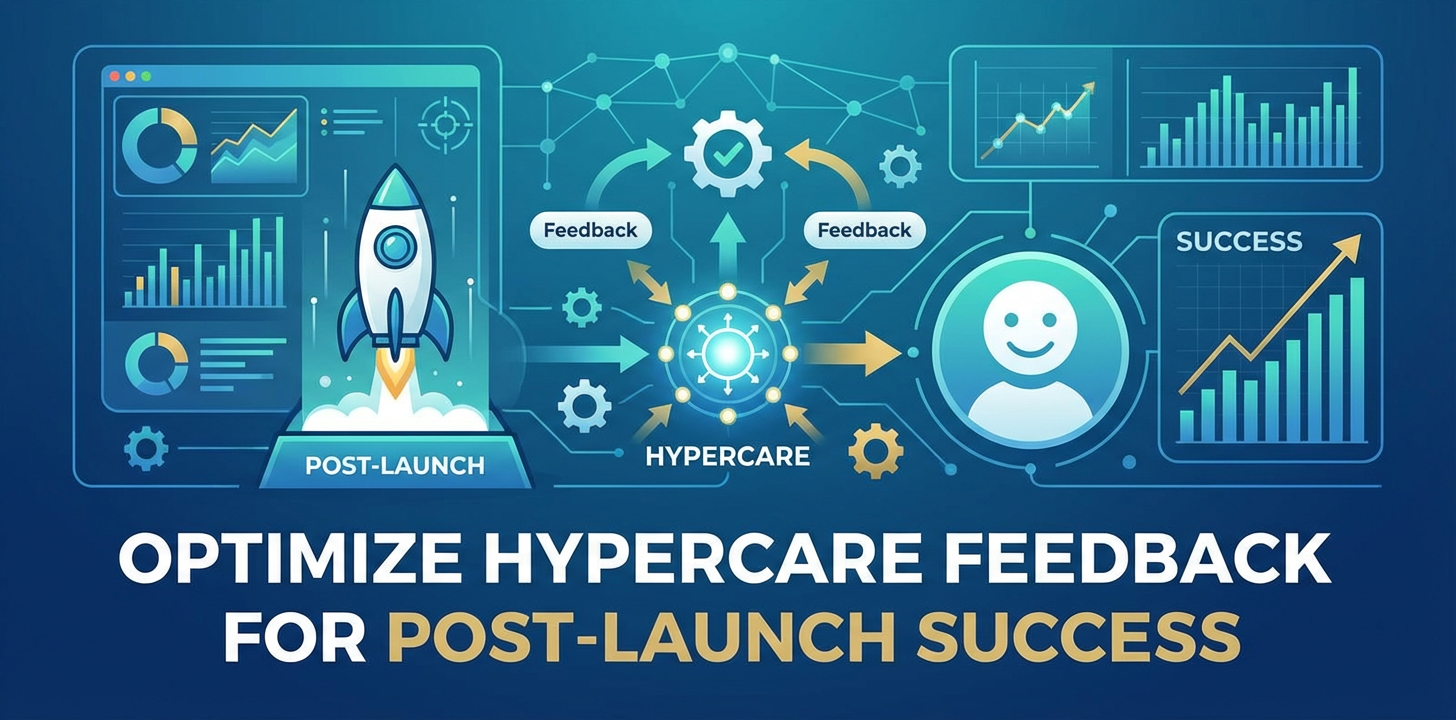


The moment a new product, service, or significant feature is launched into the eager hands of users is a culmination of immense effort, strategic planning, and countless hours of development. Yet, this "go-live" moment is not an endpoint, but rather the challenging dawn of a critical phase: Hypercare. Often misunderstood or underestimated, Hypercare is the intensive period immediately following a launch, characterized by heightened monitoring, rapid response to issues, and an unwavering focus on user satisfaction and system stability. It is during this crucible of real-world usage that the true mettle of a product is tested, and the quality of its feedback mechanisms dictates not just immediate crisis management, but the long-term trajectory of its success.
Optimizing Hypercare feedback is paramount for achieving sustained post-launch triumph. It transcends merely fixing bugs; it encompasses a holistic approach to understanding user interaction, identifying unforeseen challenges, and making agile, data-driven decisions that refine the product and solidify its market position. Without a robust and systematic strategy for collecting, processing, and actioning this vital stream of information, even the most innovative products risk faltering under the weight of unforeseen issues, user frustration, and missed opportunities for improvement. This comprehensive guide will delve deep into the intricacies of Hypercare, exploring methodologies, tools, and best practices designed to transform post-launch feedback from a chaotic deluge into a structured, actionable blueprint for continuous enhancement and enduring success. We will navigate the landscape of feedback types and sources, dissect effective collection and prioritization techniques, and highlight how pivotal technologies, including advanced API Gateway solutions and robust API Governance frameworks, play a crucial role in safeguarding system integrity and informing strategic iterations, especially for applications leveraging cutting-edge AI models through an LLM Gateway.
Understanding Hypercare: Beyond the Basics of Launch Support
At its core, Hypercare represents an elevated level of support and vigilance initiated immediately after a significant product or system deployment. It's an intense, concentrated period where development, operations, and support teams work in concert, often around the clock, to ensure the new offering stabilizes, performs as expected, and meets user needs. Unlike standard operational support, Hypercare is proactive, highly responsive, and typically involves direct engagement from senior technical personnel who were intimately involved in the product's development. This critical phase acknowledges that no matter how rigorous pre-launch testing may be, real-world conditions introduce variables that are impossible to fully replicate in a controlled environment. User behavior, unanticipated system integrations, peak load scenarios, and unforeseen edge cases inevitably emerge, making the Hypercare period indispensable for validating assumptions, identifying genuine issues, and building confidence in the new solution.
The scope of Hypercare extends far beyond simply triaging bug reports. It encompasses continuous monitoring of system performance, infrastructure health, security vulnerabilities, and data integrity. Teams are tasked with observing user adoption patterns, detecting usability bottlenecks, and gathering qualitative feedback on the overall user experience. This heightened state of alert is a strategic investment, providing a safety net that catches critical issues before they escalate into widespread outages or user exodus. A well-executed Hypercare phase mitigates risks such as reputational damage, financial losses from service disruptions, and the erosion of user trust. It serves as a rapid feedback loop, allowing organizations to quickly pivot, release hotfixes, or adjust strategic priorities based on tangible, real-time insights from the field. Typically, Hypercare lasts anywhere from a few days to several weeks, with its duration dictated by the complexity of the launch, the criticality of the system, and the volume and severity of issues encountered. As stability increases and feedback normalizes, the system gradually transitions into standard operational support, but the lessons learned and processes established during Hypercare leave an indelible mark on future development and support strategies. Neglecting to dedicate adequate resources and a structured approach to Hypercare feedback is akin to launching a ship without a compass; it leaves the product adrift in uncharted waters, vulnerable to unseen perils and unlikely to reach its intended destination of sustained success.
The Diverse Landscape of Post-Launch Feedback
The feedback generated during the Hypercare phase is a rich, multifaceted tapestry of user experiences, technical observations, and operational insights. It rarely arrives in a neatly packaged format, instead emerging from a multitude of sources and manifesting in various forms. Understanding this diverse landscape is the first step toward effective management and optimization. Without a clear classification and systematic approach to gathering this data, organizations risk being overwhelmed by noise, failing to identify critical patterns, and missing opportunities for rapid resolution and strategic improvement.
Feedback can be broadly categorized into several types, each offering a unique lens into the product's post-launch performance:
- Bug Reports and Defects: These are perhaps the most urgent and common forms of Hypercare feedback. They describe instances where the product is not performing according to specifications or is exhibiting unintended behavior. This could range from minor UI glitches to critical system failures, data corruption, or security vulnerabilities. Detailed bug reports often include steps to reproduce the issue, expected versus actual results, and screenshots or video recordings.
- Performance Issues: Users frequently report slow load times, unresponsive interfaces, excessive resource consumption (e.g., battery drain on mobile), or general sluggishness. These indicate underlying architectural or optimization challenges that might not have manifested under testing conditions but become apparent with real-world traffic patterns and diverse user environments.
- Usability Concerns: Feedback in this category highlights areas where the product is difficult to understand, navigate, or use efficiently. Users might express frustration with confusing workflows, unclear instructions, counter-intuitive design elements, or features that don't meet their expectations for ease of use. This qualitative feedback is crucial for refining the user experience (UX) and user interface (UI).
- Feature Requests and Enhancements: While Hypercare focuses on stability, users often immediately begin to envision how the product could be even better. They might suggest new functionalities, modifications to existing features, or integrations with other tools. While not always critical for immediate Hypercare resolution, these requests provide valuable insights for the product roadmap.
- Integration Challenges: Modern products rarely exist in a vacuum. Feedback might highlight difficulties in connecting with other systems, APIs, or third-party services. This is especially relevant for enterprise solutions or platforms designed for extensive interoperability, where issues with API Gateway configurations or protocol mismatches can become evident.
- Positive Reinforcement: Equally important, though sometimes overlooked, is positive feedback. Understanding what users love about the product, which features they find most valuable, and where the experience exceeds their expectations helps validate design choices and provides direction for future development and marketing efforts.
- Security Concerns: Reports of suspicious activity, unauthorized access attempts, or concerns about data privacy fall into this critical category. These require immediate investigation and often leverage robust API Governance principles to secure endpoints and data flows.
These diverse feedback types originate from an equally varied array of sources, each requiring specific collection strategies:
- Direct User Contact: This includes customer support tickets (email, phone, chat), direct messages on social media, in-app feedback forms, and dedicated feedback portals. This is often the most detailed and immediate source.
- Internal Team Observations: Developers, QA testers, product managers, and sales teams interacting with the product post-launch often identify issues or areas for improvement themselves. Internal test accounts and shadow usage can reveal valuable insights.
- Automated Monitoring and Alerting: System performance monitoring tools, error logging services, and crash reporting platforms provide invaluable objective data on system health, uptime, response times, and error rates. These are typically the first to flag critical issues.
- Social Media and Online Forums: Public discussions, reviews, and complaints on platforms like Twitter, Reddit, product-specific forums, and review sites (e.g., app store reviews) offer a broad sentiment overview and can sometimes highlight widespread issues.
- User Behavior Analytics: Tools that track user journeys, click paths, heatmaps, and session recordings can reveal usability bottlenecks and areas of confusion without users explicitly stating them.
- Scheduled Check-ins/Surveys: For enterprise clients or key user groups, direct interviews, beta user forums, or structured surveys can elicit in-depth qualitative feedback.
The sheer volume and unstructured nature of this feedback present significant challenges. Without proper mechanisms, teams can drown in data, struggle with duplicate reports, lack the necessary context to resolve issues, and miss critical signals amidst the noise. Therefore, establishing structured feedback channels, employing categorization techniques, and leveraging technological solutions are absolutely essential for transforming this raw data into actionable intelligence, paving the way for a successful Hypercare period and a thriving post-launch product.
Strategies for Effective Hypercare Feedback Collection
The efficacy of your Hypercare phase hinges directly on the robustness of your feedback collection strategies. It's not enough to simply open a support channel; a truly optimized approach involves establishing multiple, clear, and easy-to-use avenues for feedback, coupled with proactive monitoring that anticipates issues before they are explicitly reported. The goal is to cast a wide net while simultaneously providing structured pathways for detailed, actionable insights.
Establishing Clear and Accessible Channels
The easier it is for users to provide feedback, the more likely they are to do so, and often, the more detailed that feedback will be.
- Dedicated Support Hotlines and Email Addresses: For critical enterprise products or services, a dedicated Hypercare hotline or email address provides a direct and urgent communication channel. This ensures that users experiencing severe issues can immediately reach a trained support team, often staffed by senior engineers or product specialists during this intensive period. The clarity of "this is for Hypercare issues only" helps manage expectations and triage effectively.
- In-App Feedback Forms and Widgets: Integrating feedback mechanisms directly into the product itself is highly effective. These can be simple "Report a Bug" buttons, satisfaction surveys (e.g., NPS prompts), or context-sensitive feedback widgets that allow users to highlight specific elements on a page or screen. Tools like Intercom, UserVoice, or custom-built solutions can facilitate this. The advantage here is the immediate context; users can provide feedback right at the moment they encounter an issue, often pre-populating with diagnostic information like browser version, operating system, or device type.
- User Forums and Community Platforms: Creating a dedicated online forum or community space for your product allows users to share experiences, ask questions, and report issues in a public setting. This fosters a sense of community, allows users to self-help, and helps identify widespread issues. Furthermore, it can reduce the direct load on support channels as users often find solutions or similar reports from their peers. Platforms like Discourse or dedicated sections within existing community hubs can serve this purpose.
- Scheduled Check-ins with Key Users/Stakeholders: For B2B products or those with high-value clients, proactive engagement is crucial. Regularly scheduled meetings, calls, or surveys with key users, project sponsors, and business stakeholders during Hypercare provide valuable qualitative feedback. These interactions can uncover strategic implications of issues, gather nuanced usability insights, and gauge overall satisfaction beyond just technical bug reports.
- Integration with Existing CRM/Helpdesk Systems: All feedback, regardless of its origin, should ideally flow into a centralized system. Integrating in-app forms, email support, and even social media mentions into a comprehensive helpdesk platform (e.g., Zendesk, Salesforce Service Cloud, Jira Service Management) ensures that all feedback is logged, tracked, and assigned. This provides a single source of truth, prevents duplication, and facilitates a clear audit trail for resolution.
Proactive Monitoring and Detection
While direct user feedback is invaluable, waiting for users to report every issue is a reactive and often insufficient strategy. Proactive monitoring provides an early warning system, allowing teams to detect and address problems before they significantly impact the user experience or become widely reported.
- Performance Monitoring Tools: Implementing robust application performance monitoring (APM) tools (e.g., Datadog, New Relic, Dynatrace) is non-negotiable during Hypercare. These tools track crucial metrics like response times, error rates, server health, database performance, and transaction throughput. They can issue alerts when predefined thresholds are breached, indicating potential bottlenecks or failures. For applications heavily reliant on external services or microservices, monitoring the API Gateway becomes particularly critical, ensuring consistent response times and successful transaction completions across all integrated systems.
- Log Analysis for Error Patterns: Comprehensive logging is the digital breadcrumb trail of your application. During Hypercare, a centralized log management system (e.g., ELK Stack, Splunk, LogRhythm) allows teams to aggregate, search, and analyze logs from all components of the system. This helps in quickly identifying error patterns, tracing the root cause of issues, and correlating events across different services. This is especially vital when debugging complex distributed systems or issues related to specific API calls.
- User Behavior Analytics: Tools like Google Analytics, Mixpanel, Amplitude, or Hotjar provide insights into how users are actually interacting with the product. They can reveal unexpected usage patterns, areas where users abandon workflows, or elements they repeatedly click on. Heatmaps, session recordings, and funnel analysis can pinpoint usability issues that users might not articulate verbally.
- Sentiment Analysis of Social Media/Review Sites: Leveraging tools that perform sentiment analysis on public mentions of your product can provide an early indicator of widespread dissatisfaction or emerging problems. While often less detailed, a sudden dip in sentiment on Twitter or an increase in negative app store reviews can signal a systemic issue requiring immediate attention.
- Crash Reporting and Error Tracking: Tools like Sentry, Crashlytics, or Bugsnag automatically capture and report application crashes, unhandled exceptions, and JavaScript errors. These provide detailed stack traces and environmental information, significantly accelerating the debugging process, especially for client-side or mobile application issues.
Training and Empowerment
Effective feedback collection isn't just about tools; it's about people and processes.
- Training Support Staff on Hypercare Protocols: Your frontline support team is the first point of contact for many users. They must be thoroughly trained on Hypercare-specific escalation paths, severity classifications, and communication protocols. They need to understand the critical difference between a standard support query and a Hypercare-level issue requiring immediate action from core engineering teams.
- Empowering Users to Provide Detailed Feedback: Guide users on how to provide helpful feedback. In-app forms can include prompts for specific details (e.g., "What were you trying to do?", "What happened instead?", "Any error messages?"). Providing examples of good feedback can significantly improve the quality of submissions.
- Internal Communication Plans for Feedback Escalation: A clear internal communication matrix is essential. Who needs to be notified when a critical bug is reported? What are the service level agreements (SLAs) for different severity levels? How do different teams (support, dev, QA, product) collaborate in real-time to address Hypercare issues? Establishing a dedicated communication channel (e.g., a Slack channel or Microsoft Teams group) for Hypercare alerts ensures rapid dissemination of information.
By strategically combining these direct and proactive methods, organizations can build a robust feedback collection engine for the Hypercare phase. This comprehensive approach ensures that no critical issue goes unnoticed, no valuable insight is lost, and the product is continuously refined based on a clear understanding of real-world performance and user needs.
Processing and Prioritizing Hypercare Feedback
Collecting feedback is merely the first step; its true value is unlocked through efficient processing and intelligent prioritization. During Hypercare, the volume of incoming data can be overwhelming, and not all feedback carries equal weight. Without a systematic approach to organize, analyze, and rank issues, teams risk wasting resources on minor problems while critical flaws escalate. This stage transforms raw data into actionable intelligence, guiding rapid response and strategic decision-making.
The Necessity of a Centralized Feedback Hub
The fragmented nature of feedback sources necessitates a single, unified system for aggregation. A centralized feedback hub acts as the "single source of truth," where all reported issues, observations, and requests converge.
- Tools for Aggregation and Categorization: Project management tools like Jira, Azure DevOps, or Asana, combined with helpdesk systems such as Zendesk or Freshdesk, are indispensable. These platforms allow for the ingestion of feedback from various channels (email, in-app forms, direct reports) into a structured format, typically as "tickets" or "issues." Each entry should capture essential details: who reported it, when, what the issue is, and any associated technical information. The goal is to move beyond disparate spreadsheets or email threads and establish a standardized intake process that ensures no feedback is lost or overlooked.
Systematic Categorization and Tagging
Once feedback is centralized, the next critical step is to impose order through rigorous categorization and tagging. This allows for rapid filtering, analysis, and assignment.
- Defining Categories: Establish clear, predefined categories for incoming feedback. Common categories include:
- Bug/Defect: Something is broken or not working as intended.
- Enhancement/Feature Request: Suggestion for new functionality or improvement to existing one.
- Usability Issue: Difficulty in interacting with the product.
- Performance Issue: Slowdowns, unresponsiveness.
- Security Concern: Potential vulnerability or unauthorized access.
- Question/Support Request: General query that doesn't fit other categories.
- Leveraging Tags and Metadata: Beyond primary categories, use tags (labels) to add granular detail. Examples include:
- Product Area: e.g., "Login," "Dashboard," "Payments," "Reports."
- Component: e.g., "Frontend," "Backend," "Database," "Integration XYZ."
- User Segment: e.g., "Admin," "End User," "External Partner."
- Platform: e.g., "Web," "iOS," "Android," "API."
- Integration Specifics: e.g., "Auth0 Integration," "CRM Sync Issue."
- This detailed tagging is particularly crucial for complex systems that rely heavily on APIs. Ensuring that internal and external APIs—especially those managed by an API Gateway or an LLM Gateway if AI models are involved—are well-documented and their performance metrics are part of the feedback loop, allows for effective API Governance checks on stability and compliance. If an issue is tagged as "API-ServiceX-Timeout" or "LLM-Response-Format-Error," it immediately directs the team to the relevant system component, which might be managed via a specialized gateway. This level of detail is vital for resolving issues reported during Hypercare, as it allows developers to quickly pinpoint whether a problem lies in the application logic, the network, or the underlying API infrastructure.
Prioritization Frameworks: Deciding What Matters Most
With a structured and categorized backlog of feedback, the challenge shifts to deciding which items demand immediate attention. Prioritization during Hypercare is a dynamic process, often requiring rapid consensus and a clear understanding of business impact and user experience.
- Impact vs. Effort Matrix: A common prioritization tool. Issues with high impact (e.g., critical business functionality broken, widespread user lockout) and low effort to fix are tackled first. High impact, high effort items are planned for subsequent sprints or more substantial hotfixes. Low impact items might be deferred or addressed in standard maintenance cycles.
- MoSCoW Method (Must-have, Should-have, Could-have, Won't-have): This framework categorizes items based on their necessity. "Must-haves" are non-negotiable for the product's basic functionality or safety. "Should-haves" are important but not essential. "Could-haves" are desirable but not critical. "Won't-haves" are out of scope for the current phase. During Hypercare, most urgent feedback will fall into the "Must-have" category.
- Urgency and Severity Scales: A quantitative approach that assigns a numerical value to both the urgency (how quickly it needs to be fixed) and severity (how bad the impact is).
- Severity:
- Critical: System down, major data loss, security breach, core functionality unusable for many users.
- High: Significant functionality impacted, workaround exists but is cumbersome, affects a moderate number of users.
- Medium: Minor functionality impacted, aesthetic issues, affects few users.
- Low: Cosmetic issues, trivial errors.
- Urgency:
- Immediate: Requires hotfix within hours.
- High: Requires fix within 24-48 hours.
- Medium: Requires fix within the next release cycle.
- Low: Can be scheduled for future consideration. Combining these (e.g., Critical/Immediate) provides a clear directive for the Hypercare team.
- Severity:
- The Role of Business Value and Strategic Alignment: Ultimately, prioritization should align with the product's strategic goals and business value. A critical bug affecting revenue generation or compliance requirements will naturally take precedence over a minor UI glitch, even if the latter is reported more frequently. Product managers and key stakeholders play a crucial role in this strategic alignment, ensuring that the Hypercare team's efforts are always directed towards maximizing business continuity and user satisfaction.
Data Analysis Techniques
Beyond individual issue prioritization, analyzing the aggregated feedback data reveals overarching trends and systemic issues.
- Quantitative Analysis: Track the frequency of specific bug reports, the number of users affected by a particular issue, and the overall volume of feedback per category. Spikes in reports for a specific module or feature indicate a deeper underlying problem.
- Qualitative Analysis: Don't just count; understand the 'why.' Read through the details of feedback, identify common pain points expressed by users, and look for recurring themes in their narratives. This helps uncover root causes beyond the surface-level symptom.
- Identifying Trends and Patterns: Are similar issues being reported across different user segments or platforms? Are performance bottlenecks consistently appearing after certain user actions? Are specific third-party integrations constantly failing? Identifying these patterns allows for more comprehensive solutions rather than just patching individual instances. This is where the logging and monitoring capabilities provided by an API Gateway are invaluable, as they can reveal patterns of API call failures, unusual latency, or specific error codes, providing direct evidence for problem areas.
By rigorously processing and intelligently prioritizing Hypercare feedback, organizations can maintain control over the post-launch chaos. This structured approach enables rapid identification of critical issues, efficient allocation of resources, and data-driven decisions that propel the product toward stability and sustained success.
APIPark is a high-performance AI gateway that allows you to securely access the most comprehensive LLM APIs globally on the APIPark platform, including OpenAI, Anthropic, Mistral, Llama2, Google Gemini, and more.Try APIPark now! 👇👇👇
Actioning Feedback: From Insight to Improvement
The true measure of optimized Hypercare feedback isn't just in how effectively it's collected and prioritized, but in how swiftly and strategically it's acted upon. This phase transforms raw feedback and insightful analysis into tangible improvements, ensuring that the product evolves based on real-world usage and that users feel heard and valued. It requires a seamless orchestration of technical teams, clear communication, and an agile development mindset.
Structured Resolution Process
A well-defined process is the backbone of efficient feedback actioning, especially during the high-pressure Hypercare period.
- Assigning Ownership for Feedback Items: Every prioritized feedback item, whether a bug, a performance issue, or a critical usability concern, must have a clear owner. This is typically a developer, a QA engineer, or a product specialist responsible for investigating, resolving, and seeing the issue through to completion. Ownership ensures accountability and prevents items from falling through the cracks.
- Service Level Agreements (SLAs) for Response and Resolution Times: Establish explicit SLAs for different feedback severities. A critical bug might have an SLA of "response within 1 hour, resolution within 4 hours," while a high-priority usability issue might be "response within 4 hours, resolution within 24 hours." These SLAs drive the urgency and focus of the Hypercare team, ensuring that critical issues are addressed with the appropriate speed.
- Cross-Functional Team Collaboration: Hypercare issues rarely reside neatly within one team's domain. A performance issue might involve developers (code optimization), operations (server scaling), and network engineers (API latency). A bug might require input from product (clarifying intent), QA (reproduction steps), and development. Establishing dedicated Hypercare "war rooms" (physical or virtual), daily stand-ups, and streamlined communication channels (e.g., a shared Slack channel for alerts and updates) fosters rapid cross-functional collaboration.
- Root Cause Analysis: Beyond simply fixing the symptom, encourage teams to perform a root cause analysis for recurring or critical issues. Understanding why a problem occurred—whether it was a design flaw, a coding error, an infrastructure misconfiguration, or an oversight in testing—is crucial for preventing similar issues in the future. This transforms reactive firefighting into proactive learning and systemic improvement.
The Critical Communication Loop
Effective communication is not an afterthought; it's an integral part of actioning feedback. It builds trust, manages expectations, and demonstrates responsiveness.
- Informing Users About the Status of Their Feedback: Close the loop with users who submitted feedback. A simple automated email acknowledging receipt, followed by updates on status (e.g., "received," "investigating," "fix deployed"), can significantly enhance user satisfaction. For critical issues, personalized communication is essential. Transparency about known issues and their expected resolution times can also prevent duplicate reports and reduce user frustration.
- Public Communication About Patches, Updates, and New Features: Regularly communicate product updates, bug fixes, and new features driven by Hypercare feedback. Release notes, blog posts, in-app notifications, or social media updates inform the broader user base about ongoing improvements. Highlighting how user feedback directly led to an improvement reinforces the value of their input.
- Internal Knowledge Base Updates: As issues are resolved and best practices emerge, update internal knowledge bases, FAQs, and troubleshooting guides. This empowers support teams with the latest information, reduces reliance on developers for known issues, and ensures consistent messaging.
Iterative Development Cycles
Hypercare feedback isn't just about immediate fixes; it's about informing the continuous evolution of the product.
- Integrating Hypercare Feedback into Agile Sprints: For products managed with agile methodologies, Hypercare feedback should feed directly into subsequent sprint planning. Critical hotfixes might necessitate an emergency sprint, while high-priority enhancements or less urgent bug fixes can be added to the product backlog for consideration in upcoming sprints. This ensures that the product roadmap remains dynamic and responsive to real-world needs.
- Short-term Fixes vs. Long-term Strategic Enhancements: Distinguish between immediate workarounds or quick fixes (patches) and more fundamental architectural changes or strategic enhancements. During Hypercare, the focus is primarily on stabilization and critical fixes. Longer-term, more complex improvements identified during Hypercare can be planned for future development phases, ensuring that the immediate pressure of the Hypercare period doesn't lead to rushed or suboptimal long-term solutions.
The Role of API Management Platforms
In today's interconnected digital landscape, most products rely heavily on APIs—both internal and external—to deliver their functionality. The stability and performance of these underlying services are paramount, and issues here can profoundly impact user experience and the nature of Hypercare feedback.
This is where sophisticated API management platforms become invaluable. They don't just facilitate the deployment of APIs; they provide critical tools for monitoring, securing, and governing them, directly supporting the resolution of Hypercare issues. For instance, APIPark, an open-source AI gateway and API management platform, offers comprehensive features crucial for optimizing Hypercare. By providing "End-to-End API Lifecycle Management," APIPark helps teams design, publish, invoke, and decommission APIs with greater control and visibility. Its "Detailed API Call Logging" feature records every aspect of each API call, enabling businesses to quickly trace and troubleshoot issues in API calls—a lifesaver when debugging problems reported during Hypercare related to integrations, data retrieval, or service unavailability. If users report that a specific feature is slow or failing, APIPark's logs can reveal whether the underlying API call failed, timed out, or returned an unexpected response, pinpointing the exact layer of the issue. Furthermore, its ability to support "Quick Integration of 100+ AI Models" with a "Unified API Format for AI Invocation" ensures that if your product leverages AI, the complexities of managing various LLM endpoints are abstracted, providing a stable and consistent interface. Any feedback related to AI model performance or integration can be more easily diagnosed and resolved because the LLM Gateway functionality within APIPark standardizes access and provides granular logging. This level of insight and control over the API infrastructure directly translates into faster issue resolution and a more stable post-launch experience, reducing the volume of critical feedback during Hypercare.
By systematically actioning feedback, fostering strong communication, embracing iterative development, and leveraging powerful API management tools like APIPark, organizations can navigate the Hypercare phase with confidence. This proactive and responsive approach ensures that the initial launch is not just a moment of release, but the beginning of a continuous journey of improvement, leading to a resilient product and a satisfied user base.
Key Tools and Technologies for Hypercare Feedback Optimization
Optimizing Hypercare feedback requires more than just well-defined processes; it necessitates the intelligent deployment of a robust toolkit. Modern technology provides an array of platforms and applications designed to streamline every aspect of feedback management, from collection and analysis to resolution and communication. Choosing the right tools can significantly enhance efficiency, reduce manual effort, and provide deeper insights, ultimately contributing to a smoother Hypercare period and greater post-launch success.
Here's a breakdown of essential categories and examples:
- Helpdesk/Customer Relationship Management (CRM) Software:
- Purpose: Centralizing all customer interactions, feedback, and support requests. These platforms are the primary "single source of truth" for user-reported issues.
- Features: Ticket creation, assignment, tracking, escalation, knowledge base integration, SLA management, multi-channel support (email, chat, phone, in-app).
- Examples:
- Zendesk: A highly popular, scalable platform offering extensive features for customer support, including ticketing, live chat, and a robust knowledge base.
- Salesforce Service Cloud: A comprehensive CRM suite that extends to customer service, providing powerful case management, omnichannel support, and analytics.
- Jira Service Management: Ideal for teams already using Jira for development, offering IT service management capabilities, self-service portals, and tight integration with development workflows.
- Project Management Tools:
- Purpose: Managing the tasks associated with resolving feedback, coordinating development efforts, and tracking progress. These tools bridge the gap between reported issues and their technical resolution.
- Features: Task assignment, sprints/kanban boards, backlog management, status tracking, dependency mapping, reporting.
- Examples:
- Jira Software: Dominant in agile software development, excellent for managing bug backlogs, feature requests, and linking them directly to development cycles.
- Asana/Trello: More general-purpose project management tools that can be adapted for Hypercare task tracking, offering flexibility and visual workflows.
- Azure DevOps: A comprehensive suite of development tools, including boards for agile planning, repos for code management, and pipelines for CI/CD, all integrated.
- User Analytics Platforms:
- Purpose: Understanding user behavior, identifying usage patterns, and proactively detecting usability issues or areas of friction. These provide objective data to complement subjective feedback.
- Features: Funnel analysis, retention tracking, session recordings, heatmaps, A/B testing, user journey mapping.
- Examples:
- Google Analytics: Widely used for website and app analytics, tracking traffic, conversions, and user demographics.
- Mixpanel/Amplitude: Specialized in product analytics, focusing on user engagement, event tracking, and cohort analysis.
- Hotjar: Provides visual insights with heatmaps, session recordings, and on-site surveys, ideal for understanding "why" users behave a certain way.
- Monitoring and Logging Tools:
- Purpose: Providing real-time visibility into system performance, infrastructure health, and application errors. These are critical for proactive issue detection and root cause analysis.
- Features: Application Performance Monitoring (APM), infrastructure monitoring, log aggregation, alerting, dashboarding, distributed tracing.
- Examples:
- Datadog/New Relic/Dynatrace: Comprehensive APM solutions that monitor everything from code-level performance to infrastructure and user experience.
- Splunk/ELK Stack (Elasticsearch, Logstash, Kibana): Powerful platforms for log management, aggregation, searching, and visualization, essential for debugging complex issues.
- Sentry/Bugsnag: Dedicated crash reporting and error tracking tools that provide detailed context for application failures, including stack traces and user information.
- Feedback Widgets and Survey Tools:
- Purpose: Directly collecting structured feedback from users within the product interface or via targeted surveys.
- Features: In-app pop-ups, modal forms, NPS surveys, CSAT surveys, feature request boards.
- Examples:
- Intercom: Combines chat, helpdesk, and in-app messaging to facilitate direct user communication and feedback collection.
- UserVoice: Specializes in idea management and feedback collection, allowing users to submit and vote on feature requests.
- Typeform/SurveyMonkey: Versatile survey tools for gathering structured quantitative and qualitative feedback.
- Specialized API Gateways and API Management Platforms:
- Purpose: Managing, securing, and monitoring the APIs that underpin modern applications. Crucial for products with extensive microservice architectures or external integrations.
- Features: Traffic routing, load balancing, authentication/authorization, rate limiting, caching, detailed logging, analytics, API lifecycle management.
- Relevance to Hypercare: When issues arise, an API Gateway provides the visibility into API call failures, latency, and error rates. It allows teams to quickly diagnose whether a problem is with the application's logic or with the underlying API infrastructure. Effective API Governance, facilitated by these platforms, ensures that all APIs adhere to predefined standards, security policies, and performance benchmarks, which is critical for post-launch stability.
- LLM Gateway: For products integrating AI models, especially large language models (LLMs), a specialized LLM Gateway (often a feature within a broader API Gateway) becomes essential. It standardizes access to various AI models, handles authentication, cost tracking, and often unifies diverse API formats. This is invaluable during Hypercare for isolating issues related to AI model performance, response consistency, or integration. If an AI-powered feature isn't working as expected, the LLM Gateway's logs can pinpoint whether the issue is with the prompt, the model's output, or the gateway itself.
- Example: APIPark: This is where a product like APIPark truly shines. As an open-source AI gateway and API management platform, APIPark provides robust solutions for many of these challenges. Its capabilities extend beyond typical API Gateways, offering specialized features for AI models. With "Quick Integration of 100+ AI Models" and a "Unified API Format for AI Invocation," it directly addresses the complexities of integrating AI services, which are often at the core of new product launches. If Hypercare feedback points to issues with an AI-driven feature, APIPark's "Detailed API Call Logging" and "Powerful Data Analysis" capabilities become indispensable for tracing the exact API calls, understanding their performance, and quickly identifying the root cause—whether it's an API latency problem, a model output error, or an integration fault. This not only streamlines troubleshooting but also ensures that the underlying AI services are stable and performant, directly impacting the quality of the post-launch experience and the types of feedback received. The "End-to-End API Lifecycle Management" offered by APIPark is a strong example of how comprehensive API Governance can prevent issues, making the Hypercare period smoother. Its performance, rivaling Nginx, ensures that the gateway itself doesn't become a bottleneck during peak Hypercare traffic.
Table: Comparison of Feedback Collection Methods and Their Hypercare Value
| Method | Primary Purpose | Pros | Cons | Hypercare Value |
|---|---|---|---|---|
| In-App Feedback Forms | Direct, contextual issue reporting | High context, immediate submission, easy for users | Can disrupt user flow, may require technical implementation for each platform | High for immediate bug reports & usability issues, specific to current context |
| Dedicated Support Channels | Critical issue resolution, personalized help | Direct human interaction, detailed problem description, empathy | High overhead, potential for emotional responses, slower initial triage | Essential for critical "system down" issues, builds user trust, rich qualitative data |
| Performance Monitoring | Proactive system health, error detection | Real-time alerts, objective data, preemptive issue identification | Requires expertise to configure/interpret, may not explain why something is happening | Critical for proactive detection of system stability issues, performance bottlenecks |
| Log Analysis | Deep technical debugging, root cause analysis | Granular technical details, invaluable for complex system troubleshooting | Requires specialized tools & skills, can be overwhelming volume of data | Unlocks root causes of technical failures, traces API call paths & errors |
| User Behavior Analytics | Understanding user journeys, usability issues | Reveals unspoken user pain points, validates design assumptions | Doesn't explain why behavior occurs, can be privacy-sensitive | Highlights UX/UI friction points, identifies adoption barriers |
| Social Media Monitoring | Public sentiment, widespread issue detection | Broad reach, early warning for viral issues, unprompted feedback | High noise-to-signal ratio, limited detail, requires sentiment analysis | Gauge public perception, detect widespread dissatisfaction, brand reputation monitoring |
| Scheduled User Interviews | In-depth qualitative insights, strategic feedback | Rich context, deep understanding of user needs, strong relationship building | Time-consuming, limited scalability, potential for bias | Strategic input for future roadmap, validates long-term product vision |
By strategically implementing a combination of these tools, organizations can build a comprehensive and efficient system for optimizing Hypercare feedback. The synergy between helpdesk, development, monitoring, and specialized API management platforms like APIPark ensures that feedback is not only captured but effectively translated into action, leading to a more stable, user-centric, and successful product.
Measuring Success and Continuous Improvement
The Hypercare phase, by its very nature, is a temporary, intensive period. However, its true value extends far beyond the initial weeks post-launch. To truly optimize Hypercare feedback for post-launch success, it's imperative to establish clear metrics for measuring its effectiveness and to embed the lessons learned into a culture of continuous improvement. This ensures that the efforts expended during Hypercare not only stabilize the current product but also refine processes for future launches and product iterations.
Key Performance Indicators (KPIs) for Hypercare Success
Measuring the impact of your Hypercare strategy requires focusing on specific, quantifiable metrics that reflect stability, efficiency, and user satisfaction.
- Time to Resolution (TTR) for Critical Issues: This KPI measures the average time taken from when a critical bug or performance issue is reported to when it is fully resolved and deployed. A decreasing TTR indicates improved efficiency in the Hypercare team's responsiveness and resolution process. For API-dependent products, this might also involve tracking TTR for issues specifically related to the API Gateway or LLM Gateway.
- Number of Critical Bugs Reported/Resolved: Tracking the absolute count and the ratio of resolved to reported critical issues provides a direct measure of product stability and the Hypercare team's effectiveness. Ideally, the number of new critical bugs should sharply decline over the Hypercare period.
- Customer Satisfaction Score (CSAT) and Net Promoter Score (NPS): While not exclusive to Hypercare, these metrics are crucial for gauging overall user sentiment. CSAT (e.g., "How satisfied are you with the resolution of your issue?") can be measured directly after support interactions, while NPS (e.g., "How likely are you to recommend our product?") provides a broader view of loyalty. Positive trends in these scores indicate that the product is stabilizing and meeting user expectations.
- Churn Rate Reduction/User Retention: For products where churn can be directly attributed to post-launch issues, monitoring the churn rate during and immediately after Hypercare can indicate the success of stabilization efforts. Conversely, high user retention implies a positive initial experience.
- System Uptime and Performance Metrics: These are objective indicators of product health. Uptime percentage, average response times for key transactions, and error rates (e.g., 5xx errors from the API Gateway) directly reflect the system's stability. Consistent high uptime and low error rates signify a successful Hypercare period from a technical standpoint.
- Backlog Growth Rate: Monitor how quickly the backlog of reported issues grows versus how quickly items are closed. A declining growth rate indicates that the team is gaining control over the influx of feedback.
- Resource Utilization During Hypercare: While not a direct success metric for the product, tracking resource utilization (e.g., developer hours spent on bug fixes, support tickets handled) helps assess the efficiency and sustainability of the Hypercare operation itself, informing future planning.
Post-Hypercare Review: Learning and Adapting
Once the intense Hypercare period formally concludes, a structured review is essential to distill insights and institutionalize lessons learned.
- Lessons Learned Workshop: Convene a cross-functional workshop involving all teams involved in the launch and Hypercare (development, QA, product, support, operations, marketing). Discuss:
- What went well?
- What challenges were faced?
- What were the biggest surprises (both positive and negative)?
- Which issues consumed the most resources?
- How effective were the feedback collection and resolution processes?
- How could the product be improved based on Hypercare insights?
- How could the Hypercare process itself be improved for the next launch?
- Documentation of Best Practices: Formalize the successful strategies, tools, and processes identified during the review. Create a "Hypercare Playbook" or update existing launch procedures to incorporate these learnings. This ensures that valuable knowledge isn't lost and future launches benefit from past experiences.
- Updating Future Launch Playbooks: Integrate the refined Hypercare strategies directly into the organization's broader product launch framework. This includes checklist items for establishing feedback channels, defining SLAs, allocating resources, and configuring monitoring tools, including specialized considerations for API Governance and managing API Gateways for microservices or LLM Gateways for AI integrations.
Embedding a Culture of Continuous Feedback
The end of Hypercare should not signify the end of active feedback management. Instead, it should transition into a standard, ongoing practice that is deeply embedded in the organizational culture.
- Making Feedback a Continuous Process: Shift from a reactive, intensive Hypercare mindset to a proactive, continuous improvement loop. Encourage all teams to regularly seek, analyze, and act on feedback. This means integrating feedback into regular sprint reviews, product roadmap planning, and operational dashboards.
- Encouraging Internal Teams to Seek and Act on Feedback: Foster an environment where every employee, from engineers to marketers, feels responsible for understanding and addressing user needs. Provide easy access to feedback data and empower teams to propose solutions.
- Maintaining a Feedback Loop with Users: Continue to communicate product updates, solicit input through surveys, and engage with users in communities. This sustained interaction ensures that the product continues to evolve in alignment with user expectations and market demands, long after the initial post-launch intensity has faded.
Optimizing Hypercare feedback is not a temporary fix; it is a foundational pillar of sustained product success. By meticulously measuring performance, conducting thorough post-mortems, and embedding a culture of continuous learning and improvement, organizations can transform the challenging post-launch period into a powerful catalyst for growth, innovation, and lasting user satisfaction. The insights gained from Hypercare feedback provide an invaluable compass, guiding the product's journey toward maturity and market leadership.
Conclusion
The journey from product conceptualization to successful market adoption is fraught with challenges, yet few phases are as critical and demanding as Hypercare. This intensive post-launch period, a delicate balancing act of rapid response and meticulous observation, fundamentally dictates the trajectory of a product's future. As we have explored, optimizing Hypercare feedback is far more than a reactive bug-fixing exercise; it is a strategic imperative that underpins system stability, cultivates user satisfaction, and fuels the engine of continuous innovation.
We've delved into the multifaceted nature of post-launch feedback, recognizing its diverse forms—from critical bug reports to subtle usability nuances and invaluable feature requests—and the myriad sources from which it emanates. Establishing clear, accessible collection channels and implementing proactive monitoring strategies are the foundational steps to harnessing this torrent of information. Critically, we emphasized the necessity of a centralized feedback hub, rigorous categorization, and intelligent prioritization frameworks to transform raw data into actionable insights, ensuring that resources are always directed towards addressing the most impactful issues first.
Actioning this feedback involves a structured resolution process, seamless cross-functional collaboration, and an unwavering commitment to transparent communication with users. In this modern, interconnected landscape, the role of sophisticated API management platforms like APIPark cannot be overstated. By providing robust API Gateway capabilities, specialized LLM Gateway functionality for AI-driven products, and comprehensive API Governance features, these platforms offer the visibility, control, and performance necessary to diagnose and resolve underlying service issues quickly, thereby directly enhancing the stability of the product and the quality of the user experience during Hypercare.
Ultimately, the optimization of Hypercare feedback culminates in a cycle of continuous improvement. By defining clear KPIs, conducting thorough post-mortems, and embedding a culture that values and acts upon user input, organizations can transform the lessons learned during this crucible into a powerful blueprint for future success. Hypercare is not an end point, but a crucial beginning—a vital learning phase that shapes the product's evolution, solidifies its market position, and fosters a lasting relationship of trust with its users. Embracing its challenges with strategic rigor and technological acumen is the surest path to not just surviving, but thriving in the competitive post-launch landscape.
5 FAQs
Q1: What exactly is Hypercare and why is it so important after a product launch? A1: Hypercare is an intensive, elevated period of support and monitoring immediately following a significant product or system launch. It's critical because, despite extensive pre-launch testing, real-world usage often uncovers unforeseen bugs, performance bottlenecks, and usability issues. Hypercare ensures rapid issue identification, resolution, and system stabilization, mitigating risks like user dissatisfaction, reputational damage, and financial losses, thereby laying a stable foundation for long-term product success.
Q2: How does an API Gateway or LLM Gateway contribute to optimizing Hypercare feedback? A2: API Gateways (and specialized LLM Gateways for AI models) are crucial because modern applications heavily rely on APIs. During Hypercare, these gateways provide central control, monitoring, and logging for all API traffic. If users report issues (e.g., slow features, data errors), the gateway's detailed logs and analytics can quickly pinpoint whether the problem lies in an API call's latency, failure rate, or an incorrect response, allowing for faster diagnosis and resolution. For AI features, an LLM Gateway standardizes interaction with various AI models, making it easier to troubleshoot model-related performance or output issues. This visibility significantly streamlines the debugging process for feedback related to underlying service infrastructure.
Q3: What are the biggest challenges in managing Hypercare feedback and how can they be overcome? A3: The biggest challenges include the sheer volume of feedback, lack of context in reports, duplication of issues, and difficulty in prioritizing. These can be overcome by: 1. Centralizing Feedback: Using helpdesk/project management tools (e.g., Jira, Zendesk) as a single source of truth. 2. Systematic Categorization & Tagging: Applying clear labels (bug, performance, UI, security) and metadata to organize feedback. 3. Prioritization Frameworks: Using methods like Impact vs. Effort or Urgency/Severity scales to focus on critical issues. 4. Proactive Monitoring: Leveraging APM and logging tools to detect issues before users report them. 5. Cross-functional Collaboration: Establishing clear communication and escalation paths among dev, QA, product, and support teams.
Q4: How can API Governance improve the Hypercare process? A4: API Governance establishes the policies, standards, and processes for designing, developing, deploying, and managing APIs. During Hypercare, strong API Governance ensures that APIs are built with security, performance, and reliability in mind, proactively preventing many issues that would otherwise generate feedback. It dictates consistent documentation, versioning, error handling, and security protocols, making APIs easier to integrate and troubleshoot. This reduces the likelihood of integration-related bugs and performance problems, leading to a smoother Hypercare period and fewer critical issues reported by users.
Q5: What are the key metrics to track to determine if Hypercare was successful? A5: Key metrics for Hypercare success include: * Time to Resolution (TTR) for Critical Issues: How quickly high-priority problems are fixed. * Number of Critical Bugs Reported/Resolved: Indicating stability and team effectiveness. * Customer Satisfaction Score (CSAT) / Net Promoter Score (NPS): Gauging overall user sentiment. * System Uptime and Performance Metrics: Objective indicators of system health (e.g., response times, error rates). * Backlog Growth Rate: Measuring the team's ability to keep pace with incoming issues. A positive trend across these metrics, particularly a decline in critical issues and an improvement in user satisfaction, signifies a successful Hypercare phase.
🚀You can securely and efficiently call the OpenAI API on APIPark in just two steps:
Step 1: Deploy the APIPark AI gateway in 5 minutes.
APIPark is developed based on Golang, offering strong product performance and low development and maintenance costs. You can deploy APIPark with a single command line.
curl -sSO https://download.apipark.com/install/quick-start.sh; bash quick-start.sh

In my experience, you can see the successful deployment interface within 5 to 10 minutes. Then, you can log in to APIPark using your account.

Step 2: Call the OpenAI API.