Optimize Performance with a Multi Tenancy Load Balancer
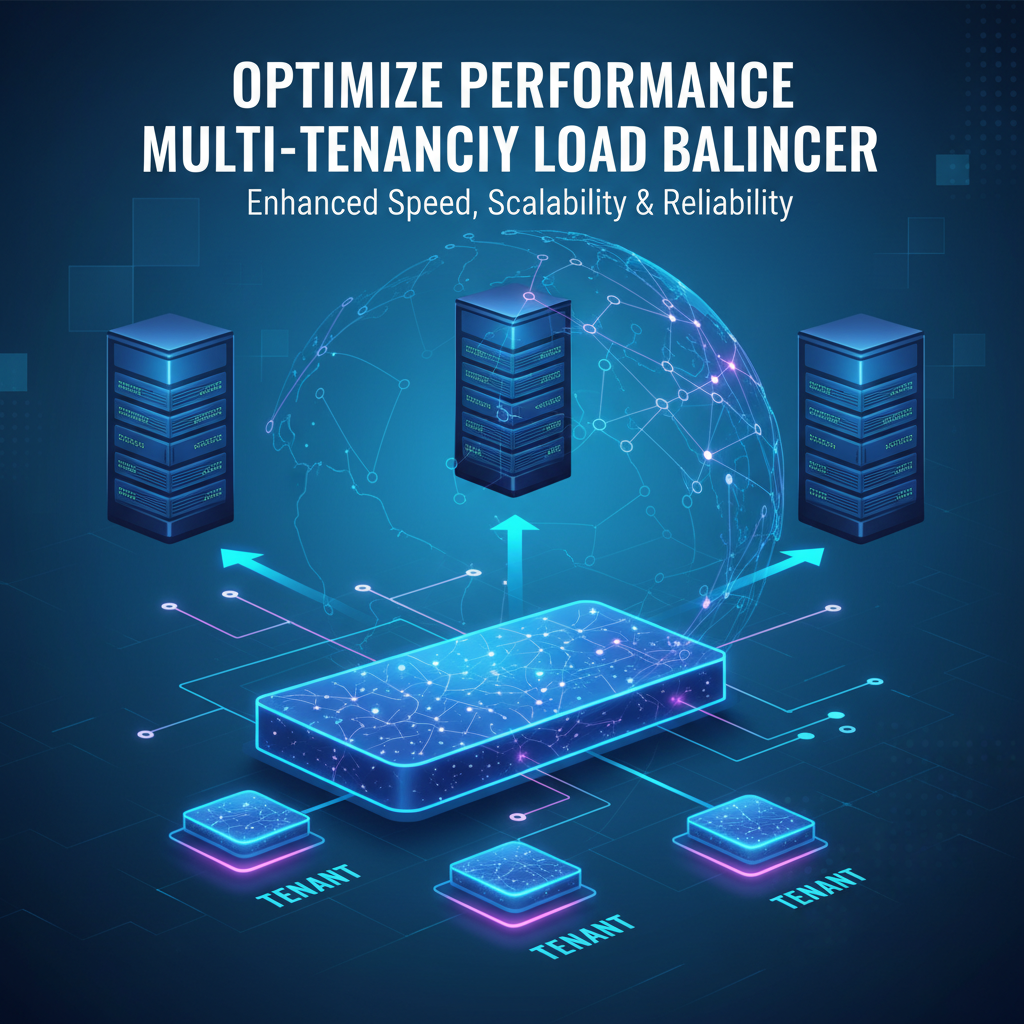


In the increasingly interconnected and digitally driven landscape, businesses of all sizes are grappling with the imperative to deliver exceptional performance, unwavering reliability, and scalable services to their diverse user bases. The demands placed on modern digital infrastructure are unprecedented, requiring sophisticated architectural solutions that can efficiently manage vast amounts of traffic, ensure high availability, and cater to the specific needs of multiple distinct entities or "tenants" simultaneously. This intricate balancing act is where the concept of a multi-tenancy load balancer emerges not merely as an optional enhancement, but as a foundational pillar for achieving optimal performance in shared environments.
This comprehensive exploration delves into the profound impact of multi-tenancy load balancers on performance optimization. We will unravel the core principles of load balancing and multi-tenancy, examining how their synergistic combination addresses critical challenges in scalability, resource utilization, security, and operational complexity. From understanding the fundamental mechanics to exploring advanced architectural patterns, key features, and real-world applications, this article aims to provide an exhaustive guide for architects, engineers, and business leaders seeking to harness the full potential of these indispensable components. Furthermore, we will illustrate how such robust infrastructure underpins the efficiency and reliability of critical services, including modern API management platforms and API gateways, which are central to today's digital economy.
Understanding Load Balancing in Modern Architectures
At its core, load balancing is the strategic distribution of incoming network traffic across a group of backend servers, often referred to as a server farm or pool. The primary objective is to enhance the responsiveness and availability of applications and websites by preventing any single server from becoming a bottleneck. Without effective load balancing, a sudden surge in user requests could overwhelm a single server, leading to slow response times, service outages, and a severely degraded user experience. Modern digital services, from e-commerce platforms to real-time communication applications, are inherently distributed and rely heavily on robust load balancing to function optimally.
The Fundamental Mechanism of Load Balancing
When a client sends a request to a service, the load balancer intercepts this request before forwarding it to one of the available backend servers. The method by which the load balancer chooses a server is determined by a configured algorithm. Common load balancing algorithms include:
- Round Robin: Distributes requests sequentially to each server in the pool. It's simple but doesn't account for server load.
- Weighted Round Robin: Similar to round robin, but assigns a weight to each server, directing more requests to servers with higher weights (e.g., more powerful servers).
- Least Connection: Directs new requests to the server with the fewest active connections, ensuring more even distribution based on current workload.
- Weighted Least Connection: An extension of least connection, also considering server weights.
- Least Response Time: Sends requests to the server with the fastest response time and fewest active connections.
- IP Hash: Uses a hash of the client's IP address to determine which server receives the request, ensuring that a particular client consistently connects to the same server. This is useful for session persistence.
Beyond these algorithms, load balancers continuously monitor the health of their backend servers. If a server fails a health check (e.g., it stops responding to pings or HTTP requests), the load balancer automatically removes it from the pool, preventing traffic from being sent to an unhealthy instance. Once the server recovers, it is reintegrated into the pool. This automated health checking is crucial for maintaining high availability and seamless service delivery, providing a critical layer of resilience that dramatically improves overall system performance and uptime.
Types of Load Balancers
Load balancers come in various forms, each suited for different layers of the network stack and architectural needs. Understanding these distinctions is vital for designing an efficient and performant infrastructure.
- Network Layer (Layer 4) Load Balancers: These operate at the transport layer of the OSI model, primarily dealing with IP addresses and ports. They distribute traffic based on network-level information such as source and destination IP addresses and ports. L4 load balancers are incredibly fast and efficient because they do not inspect the content of the packets. They are ideal for high-volume, low-latency traffic where simple connection distribution is sufficient. While powerful, their lack of application-level awareness means they cannot make routing decisions based on HTTP headers, cookies, or URL paths, limiting their utility for complex application requirements.
- Application Layer (Layer 7) Load Balancers: Operating at the application layer, these load balancers can inspect the content of application-level messages, such as HTTP/HTTPS requests. This deeper insight allows for more intelligent and sophisticated routing decisions. L7 load balancers can route requests based on URL paths, host headers, cookies, and other application-specific data. They can also perform SSL/TLS termination, offloading encryption/decryption tasks from backend servers, and enabling features like content-based routing, URL rewriting, and caching. This advanced functionality comes with a slightly higher processing overhead compared to L4, but the benefits in terms of flexibility and application performance optimization often outweigh this minor trade-off, especially for complex web services and API traffic.
- Hardware Load Balancers: These are dedicated physical appliances designed specifically for load balancing. They offer extremely high performance, low latency, and advanced features, often including specialized hardware for SSL/TLS offloading and DDoS protection. Hardware load balancers are typically deployed in large data centers and enterprise environments where maximum throughput and reliability are paramount. However, they are expensive, require significant upfront investment, and can be less flexible or slower to scale than software-based solutions.
- Software Load Balancers: These are applications that run on standard servers or virtual machines. They offer greater flexibility, easier scalability, and lower cost compared to hardware appliances. Software load balancers can be deployed on-premises, in virtualized environments, or within cloud platforms. Popular examples include Nginx, HAProxy, and various cloud provider load balancing services (e.g., AWS ELB/ALB, Google Cloud Load Balancing, Azure Load Balancer). Their ability to scale horizontally by adding more instances makes them particularly well-suited for dynamic cloud environments where traffic patterns can fluctuate dramatically.
- Cloud Load Balancers: These are managed services offered by cloud providers, abstracting away the underlying infrastructure. They provide highly scalable, highly available, and fully managed load balancing solutions that integrate seamlessly with other cloud services. Cloud load balancers often support both L4 and L7 capabilities, auto-scaling, health checks, and global traffic distribution. Their pay-as-you-go model makes them cost-effective for businesses of all sizes, eliminating the need for upfront hardware investments and complex operational management.
Why Load Balancing is Critical for Performance
The indispensable role of load balancing in optimizing system performance cannot be overstated. Its benefits extend across several critical dimensions:
- Enhanced High Availability and Reliability: By distributing traffic across multiple servers, load balancers eliminate single points of failure. If one server goes down, traffic is automatically redirected to healthy servers, ensuring continuous service availability. This resilience is paramount for maintaining business continuity and customer trust.
- Improved Scalability: Load balancing enables applications to scale horizontally. As demand increases, new servers can be added to the backend pool, and the load balancer automatically includes them in the distribution. This allows applications to handle increased traffic volumes without re-architecting the entire system, providing a flexible and cost-effective scaling strategy.
- Reduced Latency and Faster Response Times: By preventing any single server from being overloaded, load balancers ensure that requests are processed efficiently. Distributing the workload evenly means individual requests spend less time waiting in queues, leading to faster response times and a smoother user experience. For latency-sensitive applications or real-time APIs, this can be the difference between a satisfied user and a frustrated one.
- Efficient Resource Utilization: Load balancers help in making the most of available server resources. By intelligently distributing requests based on server capacity and current load, they ensure that no server is sitting idle while others are overstretched. This optimizes infrastructure costs by maximizing the efficiency of existing hardware and software investments.
- Seamless Maintenance and Upgrades: With a load balancer in place, individual backend servers can be taken offline for maintenance, upgrades, or patching without interrupting service. Traffic is simply diverted to the remaining healthy servers, allowing for zero-downtime operations, which is crucial for modern DevOps practices and continuous delivery pipelines.
- Increased Security: Many modern load balancers offer integrated security features such as DDoS protection, SSL/TLS offloading, and Web Application Firewall (WAF) capabilities. By terminating SSL/TLS connections at the load balancer, backend servers are relieved of CPU-intensive encryption tasks, improving their performance. Furthermore, by acting as a single entry point, the load balancer can scrutinize incoming traffic for malicious patterns, shielding backend services from direct attacks. For services like an API gateway, which are often exposed to external clients, these security layers provided by the load balancer are vital for protecting sensitive data and maintaining the integrity of the system.
The sheer complexity and scale of modern applications, often comprising numerous microservices and external APIs, necessitate robust load balancing solutions. Without them, maintaining consistent performance, ensuring high availability, and managing the dynamic demands of a global user base would be an insurmountable challenge.
The Paradigm of Multi-Tenancy
Multi-tenancy is an architectural principle where a single instance of a software application or a single infrastructure environment serves multiple distinct customer groups, referred to as "tenants." Each tenant is provided with a dedicated share of the application's resources, data, and configurations, while logically remaining isolated from other tenants. This paradigm stands in contrast to single-tenancy, where each customer has their own dedicated instance of the application and underlying infrastructure. Multi-tenancy has become a dominant model for Software-as-a-Service (SaaS) providers, cloud platforms, and large enterprises managing diverse internal departments or business units.
Defining Multi-Tenancy and Its Core Characteristics
In a multi-tenant system, tenants typically share the same application code, database schema (though data is partitioned), and infrastructure components like servers, networks, and storage. The isolation is achieved logically, often through identifiers in the database, separate schemas, or virtualized environments. Key characteristics that define a multi-tenant architecture include:
- Shared Infrastructure: Multiple tenants utilize the same physical or virtual hardware resources. This is the cornerstone of cost efficiency.
- Logical Data Isolation: While data may reside in the same database, mechanisms are in place to ensure that each tenant can only access and manipulate their own data. This is typically achieved through tenant IDs embedded in data records or database schema separation.
- Configurable Tenant-Specific Settings: Each tenant can customize certain aspects of the application or service, such as user interfaces, workflows, and access controls, without affecting other tenants.
- Scalability: The architecture is designed to scale efficiently as more tenants are added, leveraging the shared resources.
- Centralized Management: Updates, maintenance, and security patches can be applied once to the single instance, benefiting all tenants simultaneously.
Advantages of Adopting a Multi-Tenancy Model
The adoption of multi-tenancy brings forth a compelling array of benefits, particularly for organizations aiming for operational efficiency, cost reduction, and rapid scalability.
- Cost Efficiency: This is perhaps the most significant advantage. By sharing underlying infrastructure, software licenses, and operational overheads across multiple tenants, the per-tenant cost is dramatically reduced. This makes services more affordable for customers and increases profit margins for providers. Resources like CPU, memory, storage, and network bandwidth are pooled and utilized more efficiently, avoiding the underutilization often seen in single-tenant deployments.
- Simplified Management and Maintenance: Managing a single instance of an application or infrastructure is far less complex than managing hundreds or thousands of individual instances. Software updates, security patches, and bug fixes can be deployed centrally, ensuring all tenants benefit from the latest features and security improvements immediately and uniformly. This streamlines IT operations, reduces maintenance windows, and frees up engineering resources to focus on innovation rather than repetitive administrative tasks.
- Faster Deployment and Onboarding: New tenants can be provisioned rapidly by simply allocating them a logical space within the existing shared environment. There's no need to spin up entirely new infrastructure or deploy fresh instances of the application, which significantly accelerates the onboarding process and time-to-market for services. This agility is crucial for growing SaaS businesses.
- Enhanced Scalability for Tenants: A well-designed multi-tenant system can offer superior scalability. As a tenant's usage grows, they can often seamlessly consume more shared resources without requiring a full system migration. The platform can scale horizontally by adding more shared servers, benefiting all tenants collectively. This allows tenants to scale on demand without incurring the full cost and complexity of managing their own dedicated infrastructure.
- Consolidated Monitoring and Analytics: With a single codebase and shared infrastructure, monitoring and collecting performance metrics and usage data across all tenants become more centralized and comprehensive. This provides valuable insights into overall system health, resource consumption patterns, and tenant-specific usage trends, enabling proactive issue resolution and informed capacity planning.
Challenges and Considerations in Multi-Tenancy
Despite its numerous advantages, multi-tenancy introduces a unique set of challenges that must be meticulously addressed to ensure a robust, secure, and performant environment. Neglecting these considerations can lead to significant operational headaches and compromise the integrity of the service.
- Isolation and Security: Ensuring strict logical and data isolation between tenants is paramount. A breach in one tenant's data or configuration must not affect others. This requires robust access control mechanisms, encryption, and careful architectural design to prevent unauthorized cross-tenant access. The risk of "noisy neighbors" – where one tenant's heavy usage impacts the performance of others – also poses a security and performance isolation challenge.
- Performance Isolation (Noisy Neighbor Problem): If one tenant consumes a disproportionate amount of shared resources (CPU, memory, network bandwidth, database I/O), it can negatively impact the performance experienced by other tenants. This "noisy neighbor" problem is a critical performance challenge in multi-tenant systems. Mechanisms like resource quotas, rate limiting, and quality of service (QoS) guarantees are essential to mitigate this.
- Complex Configuration and Customization: While tenants may share a core application, they often require some level of customization. Balancing the need for tenant-specific configurations with the simplicity of a shared instance can be challenging. Extensive customization can lead to complexity in maintenance and updates, eroding some of the benefits of multi-tenancy.
- Data Locality and Compliance: For global deployments, data residency requirements and compliance regulations can complicate multi-tenancy. Ensuring a tenant's data remains within a specific geographic region while sharing a global infrastructure requires sophisticated data partitioning and routing strategies.
- Backup and Recovery: Performing backups and recoveries in a multi-tenant database can be more complex than in single-tenant environments. Granular recovery for a specific tenant without affecting others requires careful planning and specialized tools.
- Tenant Offboarding: When a tenant leaves, ensuring all their data is completely purged and resources are properly de-allocated without impacting other tenants requires well-defined processes.
- Scalability Limitations: While multi-tenancy generally enhances scalability, there can be limits to horizontal scaling for a single application instance if the underlying architecture (e.g., a monolithic database) becomes a bottleneck. Designing for elastic scalability from the outset is crucial.
Addressing these challenges effectively requires a thoughtful approach to architecture, robust engineering practices, and careful selection of technologies. The goal is to maximize the benefits of shared resources while providing each tenant with a user experience that feels dedicated and secure.
The Synergy: Multi-Tenancy Load Balancers
The intersection of load balancing principles with multi-tenancy requirements gives rise to the multi-tenancy load balancer – a sophisticated component designed to manage and optimize traffic for multiple distinct tenants sharing an underlying infrastructure. This specialized load balancer is not just about distributing requests; it's about intelligent distribution, isolation, and policy enforcement on a per-tenant basis, ensuring that each tenant receives optimal performance and security without interference from others.
What is a Multi-Tenancy Load Balancer?
A multi-tenancy load balancer acts as the intelligent front door for a shared application or service, abstracting the complexity of the backend infrastructure while providing a customized experience for each tenant. Instead of simply routing traffic to a pool of undifferentiated servers, it understands the concept of a "tenant" and applies specific rules, policies, and resource allocations based on that understanding.
Typically, a multi-tenancy load balancer identifies the tenant associated with an incoming request through various means, such as:
- Host Header: The domain name in the HTTP request (e.g.,
tenant1.example.comvs.tenant2.example.com). - URL Path: A specific path segment in the URL (e.g.,
example.com/tenant1/apivs.example.com/tenant2/api). - Custom HTTP Headers: Application-specific headers carrying a tenant ID.
- Client IP Address: Less common for direct tenant identification, but sometimes used in conjunction with other methods or for specific enterprise VPN scenarios.
Once the tenant is identified, the load balancer applies a set of rules unique to that tenant, directing the request to the appropriate backend pool of servers dedicated to (or preferentially serving) that tenant, or applying specific QoS policies before forwarding it to a shared pool.
Core Functions of a Multi-Tenancy Load Balancer
The advanced capabilities of a multi-tenancy load balancer extend significantly beyond basic traffic distribution:
- Tenant-Aware Request Routing: This is the most fundamental function. The load balancer intelligently routes requests based on the identified tenant. For instance, requests for
tenantA.example.commight go to server pool A, while requests fortenantB.example.comgo to server pool B, even if both pools are hosted on the same physical infrastructure. This allows for logical separation of backend resources per tenant. - Policy Enforcement per Tenant: Crucially, the load balancer can apply different security, traffic management, and performance policies to each tenant. This could include:
- Rate Limiting: Limiting the number of requests a specific tenant can send per unit of time, preventing one tenant from monopolizing resources.
- Access Control Lists (ACLs): Defining which IP ranges or client types can access a particular tenant's services.
- Custom SSL/TLS Certificates: Allowing each tenant to use their own SSL certificate for their specific domain, enhancing branding and security.
- WAF Rules: Applying tenant-specific Web Application Firewall rules to protect their segment of the application from common web exploits.
- Resource Allocation and Quality of Service (QoS) per Tenant: To mitigate the "noisy neighbor" problem, multi-tenancy load balancers can implement QoS policies. This might involve:
- Bandwidth Prioritization: Giving priority to mission-critical tenants during network congestion.
- Guaranteed Throughput: Allocating a minimum amount of bandwidth or connections to premium tenants.
- Connection Limits: Setting a maximum number of concurrent connections for each tenant. These mechanisms ensure that one tenant's heavy usage does not degrade the experience for others, preserving performance isolation.
- Monitoring Tenant-Specific Traffic and Performance: A robust multi-tenancy load balancer provides granular monitoring and analytics capabilities. It can track metrics such as:
- Requests per second (RPS) for each tenant.
- Latency experienced by each tenant.
- Error rates specific to a tenant's traffic.
- Resource consumption (e.g., CPU, memory on backend servers) attributed to each tenant. This detailed visibility is essential for troubleshooting tenant-specific issues, identifying performance bottlenecks, and performing accurate billing based on usage.
Key Benefits for Performance Optimization
The strategic deployment of a multi-tenancy load balancer yields significant performance advantages, directly addressing many of the challenges inherent in shared environments:
- Enhanced Resource Utilization: By centralizing the management of traffic for multiple tenants, the load balancer ensures that the underlying shared infrastructure (servers, network interfaces) is utilized much more efficiently. Idle capacity from one tenant can be dynamically allocated to another experiencing a surge, maximizing ROI on hardware and reducing overall operational costs.
- Improved Scalability and Elasticity: A multi-tenancy load balancer acts as a flexible layer that allows each tenant's services to scale independently or the entire shared infrastructure to scale gracefully. When a tenant experiences increased demand, the load balancer can direct traffic to additional backend instances provisioned specifically for that tenant, or intelligently distribute the load across a larger pool of shared resources. This elasticity means that the overall system can handle growth across many tenants without requiring constant manual reconfigurations.
- Stronger Isolation and Security: By enforcing tenant-specific policies at the network edge, the load balancer provides a critical layer of isolation. This prevents cross-tenant data leakage, unauthorized access, and performance interference. Features like dedicated SSL certificates, tenant-specific WAF rules, and segregated backend server pools significantly enhance the security posture of each tenant's environment, fostering trust and compliance.
- Optimized Latency and Responsiveness: Intelligent routing decisions based on tenant identification ensure that requests are directed to the most appropriate and available backend resources. This minimizes request queuing, reduces processing time, and ultimately lowers latency for each tenant. For applications that require high responsiveness, such as real-time APIs or interactive user interfaces, this optimization is paramount. Geographically aware multi-tenancy load balancers can also route requests to the nearest data center serving a specific tenant, further reducing latency.
- Simplified Management and Operations: While the configuration of tenant-specific policies can be complex, the overall management of the shared environment is simplified. A single, centralized load balancer handles traffic distribution, health checks, and policy enforcement for all tenants. This reduces the number of individual components to manage, streamlines monitoring, and simplifies troubleshooting across the entire multi-tenant platform. Updates and maintenance of the load balancer itself benefit all tenants concurrently, reducing operational overhead.
- Granular Performance Control: The ability to apply QoS and rate limiting policies on a per-tenant basis allows for fine-grained control over performance. Providers can offer different service tiers (e.g., "premium" tenants with higher guaranteed throughput) and ensure that lower-tier tenants don't inadvertently degrade the experience for others, effectively managing performance expectations and service level agreements (SLAs).
In essence, a multi-tenancy load balancer transforms a collection of undifferentiated resources into a highly intelligent, tenant-aware service delivery platform. It is the architectural linchpin that enables shared infrastructure to deliver dedicated performance, robust security, and unparalleled scalability to each individual tenant, making it an indispensable tool in modern cloud and SaaS environments.
Architectural Patterns and Deployment Strategies
Deploying a multi-tenancy load balancer effectively requires careful consideration of various architectural patterns and deployment strategies. The choice often depends on factors such as the desired level of tenant isolation, performance requirements, cost constraints, and the specific nature of the applications being served, including whether they involve API gateways or direct API endpoints.
Single Load Balancer, Multiple Backends per Tenant
This is a common and often cost-effective pattern, particularly for multi-tenant SaaS applications. In this setup, a single, powerful load balancer (either hardware or software-based) is deployed as the entry point for all tenants. This load balancer is configured with rules to identify the tenant from the incoming request (e.g., via host header, URL path, or custom header) and then route that request to a specific backend pool dedicated to that tenant.
- How it Works: All incoming traffic hits the same load balancer IP/hostname. The load balancer performs L7 inspection to determine the tenant. Based on this tenant ID, it then forwards the request to the appropriate backend server group. For example,
tenantA.app.commight be routed to a set of VMs runningTenant A's application instances, whiletenantB.app.comis routed to another set of VMs forTenant B. - Advantages:
- Cost Efficiency: Shared load balancer resource reduces overall infrastructure costs.
- Simplified Network Topology: Fewer public IP addresses and DNS entries required.
- Centralized Control: All traffic policies, security rules, and monitoring are managed from a single point.
- Disadvantages:
- "Noisy Neighbor" Risk at LB Level: While backend server resources are isolated, the load balancer itself is a shared resource. A misconfigured tenant or a DDoS attack targeting one tenant could potentially impact the load balancer's performance for all tenants.
- Configuration Complexity: As the number of tenants grows, managing tenant-specific routing rules and policies on a single load balancer can become intricate.
- Limited Customization: Each tenant shares the same load balancer instance, meaning they cannot have entirely custom load balancer configurations.
Dedicated Virtual Load Balancers per Tenant
In scenarios demanding higher isolation, greater customization, or stricter performance guarantees, deploying dedicated virtual load balancers (VLB) or even physically separate load balancer instances for each tenant is often preferred. This pattern is commonly observed in public cloud environments where tenants can provision their own application load balancers within their Virtual Private Clouds (VPCs) or isolated network segments.
- How it Works: Each tenant effectively has their own load balancer instance. This could be a separate VM running a software load balancer, or a dedicated instance of a cloud provider's managed load balancing service. Traffic for
tenantAgoes toVLB_A, and traffic fortenantBgoes toVLB_B. Each VLB then routes traffic to the respective tenant's backend servers. - Advantages:
- Strong Isolation: Complete performance and security isolation at the load balancer layer. A problem with one tenant's VLB will not affect others.
- Customization: Each tenant can have a fully customized load balancer configuration, including specific algorithms, health checks, SSL certificates, and WAF rules.
- Simpler Configuration per VLB: Each VLB only needs to be configured for a single tenant, reducing complexity from a per-instance perspective.
- Clearer Billing: Resource consumption for load balancing is directly attributable to each tenant.
- Disadvantages:
- Higher Cost: Each VLB instance incurs its own cost, leading to significantly higher overall infrastructure expenses as the number of tenants grows.
- Increased Management Overhead: While individual VLB configurations are simpler, managing a large number of separate VLB instances can introduce operational complexity.
- Resource Sprawl: Potentially leads to underutilized VLB instances if a tenant has low traffic, but still requires a dedicated load balancer.
Shared Control Plane, Dedicated Data Plane
This advanced pattern offers a hybrid approach, aiming to strike a balance between cost efficiency and isolation. It leverages a centralized control plane for configuration and management, while the data plane (where actual traffic forwarding occurs) is distributed and potentially tenant-specific. This is often implemented using modern load balancing solutions or service mesh technologies.
- How it Works: A central management system (the control plane) defines and pushes configuration policies, routing rules, and security settings for all tenants. These configurations are then applied to a distributed set of proxies or data plane components that actually handle the traffic. These data plane components might be deployed as sidecars next to each application instance (in a service mesh), or as virtualized proxies that are tenant-aware.
- Advantages:
- Scalability and Performance: The data plane can scale independently to handle high traffic volumes, while the control plane remains lightweight.
- Granular Control: Offers detailed, tenant-specific policy enforcement.
- Operational Efficiency: Centralized management of policies simplifies configuration and updates across a large fleet of distributed proxies.
- Cost-Effectiveness: Shared control plane reduces management overhead, while data plane components can be optimized for resource usage.
- Disadvantages:
- Increased Complexity: Implementing and managing a shared control plane with a distributed data plane can be significantly more complex than simpler load balancer deployments.
- Maturity of Tools: Requires sophisticated tools and platforms (e.g., Kubernetes Ingress with advanced controllers, service mesh solutions like Istio or Linkerd).
Layer 4 vs. Layer 7 Considerations for Multi-Tenancy
The choice between Layer 4 (L4) and Layer 7 (L7) load balancing is crucial in a multi-tenant context, especially when dealing with various services, including API gateways and raw APIs.
- Layer 4 Multi-Tenancy:
- Identification: L4 load balancers typically identify tenants based on source/destination IP and port. This means each tenant would often require a unique IP address or a range of ports, which can be challenging to manage at scale.
- Use Cases: Best for simpler multi-tenant setups where a tenant maps directly to a specific IP or port, or where the application itself handles tenant identification after the L4 load balancer. It's suitable for high-throughput, low-latency traffic like gaming servers or certain internal services.
- Performance: Extremely fast, as it doesn't inspect application content.
- Limitations: Limited intelligence for tenant-specific routing based on application logic (e.g., URL paths, host headers).
- Layer 7 Multi-Tenancy:
- Identification: L7 load balancers excel at tenant identification using application-layer attributes like HTTP host headers (e.g.,
tenant1.example.com), URL paths (example.com/tenant1), or custom HTTP headers. This allows many tenants to share the same IP address and port, simplifying network configuration. - Use Cases: Ideal for web applications, microservices, and especially API gateways and individual APIs. L7 allows for advanced features like SSL termination per tenant, content-based routing, and WAF protection. Platforms like APIPark, an open-source AI gateway and API management platform, would almost certainly leverage L7 multi-tenancy load balancing to manage diverse API integrations for different teams and projects.
- Performance: Slightly higher latency than L4 due to content inspection, but the benefits of intelligent routing and rich features often outweigh this.
- Flexibility: Offers unparalleled flexibility for routing, policy enforcement, and customization per tenant.
- Identification: L7 load balancers excel at tenant identification using application-layer attributes like HTTP host headers (e.g.,
For most modern multi-tenant applications, particularly those exposing HTTP/HTTPS-based services or APIs, an L7 multi-tenancy load balancer is the preferred choice due to its ability to perform intelligent, tenant-aware routing and apply granular policies.
Hybrid Deployments and Global Traffic Distribution
In complex enterprise environments or for global SaaS offerings, hybrid deployments and global traffic distribution strategies further enhance performance and resilience.
- Hybrid Deployments: Combining on-premise infrastructure with cloud resources requires load balancers that can span these environments. A global DNS-based load balancer (GSLB) can direct users to the closest or healthiest data center (on-premise or cloud), which then forwards traffic to a local multi-tenancy load balancer. This provides geographical redundancy and reduces latency for globally distributed tenants.
- Global Traffic Distribution: For truly global applications, distributing tenant traffic across multiple regions or continents is essential for performance and disaster recovery. GSLB can direct traffic based on user location, ensuring that a European tenant connects to a European data center while an Asian tenant connects to an Asian one. Each regional data center would then employ a multi-tenancy load balancer to manage local tenant traffic. This significantly reduces latency and improves the user experience for geographically dispersed tenants.
The selection of an architectural pattern and deployment strategy for a multi-tenancy load balancer is a critical design decision. It directly impacts the scalability, security, cost, and overall performance that tenants will experience. A thorough understanding of these options allows organizations to build resilient and highly optimized multi-tenant platforms.
Key Features and Capabilities for Performance Optimization
A sophisticated multi-tenancy load balancer is equipped with a rich set of features designed specifically to optimize performance, enhance security, and ensure seamless operation within shared environments. These capabilities go beyond basic traffic distribution, enabling granular control and intelligent management of tenant-specific workloads.
Tenant-Aware Routing and Content Switching
At the heart of multi-tenancy load balancing is the ability to perform highly intelligent, tenant-aware routing. This means the load balancer doesn't just send traffic to any available server; it directs requests to the specific backend pool or application instance designated for that tenant.
- Host-Based Routing: One of the most common methods. The load balancer inspects the
Hostheader in an HTTP/HTTPS request (e.g.,tenantA.example.comortenantB.saasprovider.com) and routes the request to the corresponding backend services for that specific tenant. This allows multiple tenants to share the same IP address for the load balancer while maintaining distinct external URLs and backend infrastructure. - URL-Path Based Routing: Requests can be routed based on specific path segments in the URL (e.g.,
/tenantA/api/v1vs./tenantB/web). This is particularly useful when tenants share a common base domain or when different services within a tenant's application are routed to distinct microservices. - Header-Based Routing: For more advanced scenarios, custom HTTP headers can carry tenant identification or other routing metadata. The load balancer can inspect these headers and direct traffic accordingly. This is often used in microservices architectures or when integrating with specific API gateway setups where an internal tenant ID might be passed.
- Cookie-Based Routing: In some cases, a load balancer might use a tenant identifier stored in a cookie to maintain session persistence or to route a user to a specific instance group for their tenant.
These routing capabilities are essential for ensuring that each tenant's requests reach their intended destination efficiently, minimizing processing overhead and ensuring logical isolation even on shared infrastructure.
Traffic Shaping, Rate Limiting, and Quality of Service (QoS)
To combat the "noisy neighbor" problem and guarantee performance for all tenants, multi-tenancy load balancers offer powerful traffic management features:
- Rate Limiting: This feature prevents any single tenant from overwhelming shared resources by restricting the number of requests they can make within a specified time frame (e.g., 1000 requests per second per tenant). If a tenant exceeds their limit, subsequent requests might be dropped or queued, protecting the overall system stability for other tenants.
- Burst Limiting: Allows tenants to briefly exceed their normal rate limits for short periods, accommodating natural spikes in traffic without penalizing legitimate bursts.
- Bandwidth Throttling: Controls the amount of network bandwidth a specific tenant can consume, ensuring fair allocation across all tenants.
- Quality of Service (QoS): More advanced load balancers can implement QoS policies, prioritizing traffic from high-priority tenants or mission-critical APIs. This ensures that even under heavy load, essential services for key tenants maintain their performance levels, while lower-priority traffic might experience slightly increased latency. QoS can involve differentiated services code point (DSCP) marking, queue management, and weighted fair queuing.
These mechanisms are crucial for maintaining performance isolation and guaranteeing service levels, making the multi-tenant environment predictable and reliable for all users.
SSL/TLS Termination and Offloading per Tenant
Handling encrypted traffic (HTTPS) is a significant computational burden. Multi-tenancy load balancers optimize this process while providing tenant-specific security:
- Centralized SSL/TLS Termination: The load balancer can terminate incoming SSL/TLS connections at the edge. This means the CPU-intensive decryption process happens on the load balancer, offloading this task from the backend application servers. Backend servers can then communicate with the load balancer using unencrypted (or re-encrypted) HTTP, reducing their workload and allowing them to focus on application logic. This dramatically improves backend server performance.
- Tenant-Specific SSL Certificates: A key multi-tenancy feature is the ability to manage and present different SSL certificates for each tenant's domain. This allows
tenantA.comto use its own certificate, whiletenantB.comuses theirs, all handled by the same load balancer instance. This is vital for branding, trust, and satisfying tenant-specific security requirements. - Certificate Management: Advanced load balancers often include features for automated certificate provisioning, renewal (e.g., with ACME/Let's Encrypt integration), and revocation, simplifying the operational overhead for a large number of tenant certificates.
Offloading SSL/TLS processing and managing tenant-specific certificates are critical for both performance and security, providing a seamless and secure experience for each tenant.
Session Persistence (Sticky Sessions)
For stateful applications or those requiring users to interact with the same backend server throughout their session (e.g., shopping carts, login sessions), session persistence is vital.
- Cookie-Based Persistence: The load balancer inserts a cookie into the client's browser, containing information about the backend server that served the initial request. Subsequent requests with that cookie are then routed to the same server.
- IP-Hash Persistence: Uses a hash of the client's IP address to consistently direct traffic from that IP to the same backend server. While simpler, it's less effective with dynamic IPs or when multiple users share a NAT'd IP.
- TLS Session ID Persistence: For HTTPS traffic, the load balancer can use the TLS session ID to maintain persistence.
In a multi-tenant environment, session persistence ensures that a tenant's users remain connected to the appropriate application instance, preventing data loss or inconsistent experiences, which is crucial for the reliability of any API that manages user state.
Health Checks and Auto-Scaling Integration
To maintain high availability and dynamic scalability, multi-tenancy load balancers constantly monitor the health of their backend services:
- Granular Health Checks: The load balancer performs regular health checks (e.g., TCP checks, HTTP GET requests, custom scripts) on each backend server, often specific to a tenant's service. If a server fails a check, it's immediately marked as unhealthy and removed from the active pool, preventing traffic from being sent to a failing instance.
- Integration with Auto-Scaling Groups: Load balancers can integrate with cloud auto-scaling services or container orchestrators (like Kubernetes). When an auto-scaling group adds or removes backend instances based on load, the load balancer automatically updates its server pool, ensuring that new instances receive traffic and decommissioned instances are gracefully removed. This dynamic adjustment is fundamental for elastic scalability in multi-tenant cloud environments.
This continuous monitoring and dynamic adjustment ensure that each tenant's services remain highly available and can scale effectively to meet fluctuating demand, contributing directly to overall system performance and resilience.
Advanced Analytics and Monitoring per Tenant
Visibility into the performance and usage of each tenant's services is indispensable for troubleshooting, capacity planning, and maintaining SLAs.
- Per-Tenant Metrics: The load balancer can provide detailed metrics for each tenant, including:
- Requests per second (RPS)
- Latency (average, p90, p99)
- Throughput (bandwidth consumed)
- Error rates (e.g., 4xx, 5xx responses)
- Number of active connections
- Logging: Comprehensive logging of all requests, including tenant identifiers, allows for detailed auditing, security analysis, and pinpointing of performance issues.
- Dashboard Integration: Data from the load balancer can be integrated with monitoring dashboards (e.g., Grafana, Splunk) to visualize tenant-specific performance trends and set up alerts for anomalies.
This granular visibility empowers operations teams to proactively identify and resolve performance bottlenecks, ensure fair resource allocation, and accurately report on service quality to individual tenants.
Web Application Firewall (WAF) and Security Policies
Many modern multi-tenancy load balancers incorporate WAF capabilities and allow for the application of granular security policies:
- Tenant-Specific WAF Rules: Each tenant might have unique security requirements or be susceptible to different types of attacks. The load balancer can apply a specific set of WAF rules for each tenant, protecting their applications from common web vulnerabilities like SQL injection, cross-site scripting (XSS), and DDoS attacks.
- Access Control Lists (ACLs): Define which source IP addresses or regions are allowed to access a particular tenant's services, providing a first line of defense against unauthorized access.
- Bot Protection: Identify and mitigate malicious bot traffic, ensuring that legitimate tenant traffic is not impacted by automated attacks.
By consolidating security enforcement at the edge of the network, the load balancer enhances the overall security posture for all tenants, safeguarding data and maintaining the integrity of the shared platform.
APIPark is a high-performance AI gateway that allows you to securely access the most comprehensive LLM APIs globally on the APIPark platform, including OpenAI, Anthropic, Mistral, Llama2, Google Gemini, and more.Try APIPark now! 👇👇👇
The Role of Multi-Tenancy Load Balancers in API Ecosystems
Modern digital ecosystems are increasingly powered by APIs – the connective tissue that allows disparate applications, services, and devices to communicate and exchange data. In this API-driven world, the efficiency, security, and scalability of API delivery are paramount. Multi-tenancy load balancers play a critical, often foundational, role in optimizing the performance and management of complex API ecosystems, especially when dealing with diverse services like an API gateway.
Managing Diverse APIs and API Gateways for Multiple Tenants
In a multi-tenant environment, various tenants might expose their own distinct API services, or consume a common set of APIs with tenant-specific configurations. A multi-tenancy load balancer acts as the intelligent director for all this API traffic.
- Tenant-Specific API Endpoints: A single load balancer can front multiple sets of API endpoints, each belonging to a different tenant. For example,
api.tenantA.com/v1/dataandapi.tenantB.com/v1/metricscan both be served by the same load balancer, which then routes them to their respective backend API services. This simplifies the public exposure of diverse tenant APIs. - Consolidating API Gateways: An API gateway itself can be deployed in a multi-tenant fashion, or multiple dedicated API gateway instances might serve different tenants. A multi-tenancy load balancer is ideally positioned in front of these API gateways. It directs incoming API requests to the correct API gateway instance responsible for that tenant, or to the multi-tenant API gateway which then handles tenant-specific routing and policies further downstream.
- Hybrid API Deployments: For organizations with a mix of internal and external APIs, or those leveraging hybrid cloud strategies, a multi-tenancy load balancer can unify access. It can direct external partners to a public-facing API gateway while routing internal applications to a private API gateway or directly to internal APIs, all while maintaining tenant separation.
This layered approach ensures that API traffic is efficiently channeled to the correct processing logic, whether it's a dedicated API service or an overarching API gateway.
Performance Optimization for API Consumers
The responsiveness of APIs directly impacts the performance of the applications that consume them. Multi-tenancy load balancers are key to ensuring low latency and high availability for API calls across all tenants.
- Reduced Latency: By intelligently routing API requests to the least-burdened and closest backend API instances (for a given tenant), the load balancer minimizes network delays and processing queues. This is crucial for real-time APIs where every millisecond counts, such as financial trading APIs or IoT data streams.
- High Availability for APIs: If a backend API service instance for a particular tenant becomes unresponsive, the multi-tenancy load balancer automatically detects the failure and routes subsequent API calls to healthy instances, ensuring continuous API availability. This resilience prevents service disruptions for API consumers, bolstering the reliability of integrated systems.
- Consistent API Performance: Through QoS and rate-limiting policies, the load balancer ensures that no single tenant's heavy API usage degrades the performance for others. This provides a consistent and predictable API experience for all consumers, crucial for maintaining Service Level Agreements (SLAs) with tenants.
Enhanced Security for APIs
APIs are often entry points to sensitive data and critical business logic, making their security paramount. Multi-tenancy load balancers contribute significantly to the security posture of an API ecosystem.
- Centralized SSL/TLS for API Endpoints: Terminating SSL/TLS at the load balancer provides a secure entry point for all API calls, encrypting data in transit. The ability to manage tenant-specific certificates for their API domains enhances trust and compliance.
- API Security Policies: The load balancer can enforce security policies such as IP whitelisting/blacklisting, geographical access restrictions, and even basic DDoS protection, shielding backend API services from direct attacks.
- WAF for API Protection: Applying Web Application Firewall rules at the load balancer level protects API endpoints from common web vulnerabilities that target the underlying application logic, such as injection attacks or broken authentication attempts. For example, a multi-tenancy load balancer could apply specific WAF rules to protect a tenant's payment API from known exploits.
- Authentication and Authorization Offloading: While an API gateway typically handles deep API authentication and authorization, a load balancer can perform initial checks or integrate with identity providers for basic authentication before forwarding requests, adding another layer of defense.
API Management Integration and Value Proposition
The multi-tenancy load balancer inherently supports and enhances modern API management platforms. These platforms often serve as centralized hubs for publishing, securing, and analyzing APIs, and they thrive on the robust traffic management capabilities of load balancers.
For platforms like APIPark, an open-source AI gateway and API management platform, a multi-tenancy load balancer is absolutely critical. APIPark is designed to help developers and enterprises manage, integrate, and deploy AI and REST services with ease, offering features like quick integration of 100+ AI models, unified API formats for AI invocation, and end-to-end API lifecycle management. When multiple teams or tenants leverage APIPark to create and manage their own specialized APIs (e.g., encapsulating prompts into REST APIs for sentiment analysis or translation), the underlying multi-tenancy load balancer ensures:
- Dedicated Performance for Each Team: APIPark promises "Performance Rivaling Nginx" with over 20,000 TPS on modest hardware. A multi-tenancy load balancer guarantees that each team (tenant) using APIPark receives its share of this performance, preventing any single team's heavy usage (e.g., intensive AI model inference calls) from degrading the experience for others.
- Robust Isolation for API Resources: APIPark explicitly supports "Independent API and Access Permissions for Each Tenant," allowing the creation of multiple teams with independent applications, data, user configurations, and security policies. The multi-tenancy load balancer acts as the first line of defense, ensuring that traffic for
teamA.apipark.com(orapipark.com/teamA) is routed exclusively toteamA's managed APIs and resources within APIPark, preventing cross-tenant access at the network edge. - Controlled Access and Security: With APIPark's "API Resource Access Requires Approval" feature, the load balancer can complement this by enforcing initial network-level access controls before requests even reach the API gateway's subscription approval logic, adding an extra layer of security and helping prevent unauthorized API calls.
- Scalable API Delivery: As APIPark users integrate more AI models and create more custom APIs, the multi-tenancy load balancer ensures the underlying infrastructure scales efficiently, directing traffic to newly provisioned API instances and backend services managed by APIPark without manual intervention.
In essence, the multi-tenancy load balancer provides the foundational network infrastructure that allows an API gateway like APIPark to deliver its promise of efficient, secure, and scalable API management for a diverse set of tenants. It abstracts the underlying network complexity, enabling the API gateway to focus on its core logic of API governance, security, and transformation, while still benefiting from robust performance and isolation at the edge.
Monitoring and Analytics for API Usage
For providers of multi-tenant API services, granular monitoring of API usage and performance per tenant is crucial for billing, capacity planning, and troubleshooting.
- Tenant-Specific API Metrics: The multi-tenancy load balancer can collect and expose metrics on API calls per tenant, including call volume, latency, and error rates. This data can be aggregated and analyzed by the API gateway (like APIPark's "Detailed API Call Logging" and "Powerful Data Analysis" features) or external monitoring systems.
- Usage-Based Billing: Accurate per-tenant API traffic statistics from the load balancer enable fair and transparent usage-based billing models, which are common in API economy.
- Proactive Issue Detection: By tracking tenant-specific API performance, anomalies or degradations affecting a particular tenant can be quickly identified and addressed before they impact other tenants or escalate into widespread issues.
The combined power of a multi-tenancy load balancer and an advanced API gateway creates a highly optimized, secure, and manageable ecosystem for delivering modern API services to a diverse clientele. It is an architecture built for the demands of the digital future, where APIs are at the forefront of innovation.
Challenges and Considerations for Implementation
While the benefits of multi-tenancy load balancers are substantial, their effective implementation comes with a unique set of challenges and considerations. Navigating these complexities is crucial for realizing the full potential of this architectural pattern and avoiding pitfalls that could compromise performance, security, or operational efficiency.
Complexity of Configuration and Management
One of the primary challenges lies in the inherent complexity of configuring and managing a multi-tenancy load balancer, particularly as the number of tenants and their specific requirements grow.
- Rule Proliferation: Each tenant may require unique routing rules, SSL certificates, rate limits, WAF policies, and backend server pools. Managing hundreds or thousands of such tenant-specific configurations on a single load balancer can lead to a massive and unwieldy rule set. This complexity increases the risk of misconfigurations, which can have cascading effects across multiple tenants.
- Policy Synchronization: Ensuring that policies are consistently applied and updated across potentially distributed load balancer instances (e.g., in a global deployment) requires robust automation and configuration management tools. Manual management quickly becomes unsustainable and error-prone.
- Change Management: Deploying changes or updates to load balancer configurations for one tenant without inadvertently affecting others demands rigorous testing and a sophisticated change management process. Even a small error can lead to widespread service disruption.
- Skill Set Requirements: Operating and troubleshooting complex multi-tenancy load balancers often requires specialized networking, security, and application architecture skills, which may not be readily available in all organizations.
Mitigating this complexity often involves leveraging Infrastructure as Code (IaC) principles, automation tools (like Ansible, Terraform), and highly capable orchestration platforms that can abstract away some of the underlying configuration details.
Ensuring Robust Security Isolation
While multi-tenancy load balancers enhance security, maintaining strict isolation between tenants remains a continuous challenge. A security vulnerability or misconfiguration in one tenant's setup must not expose or impact other tenants.
- Data Leakage Prevention: Mechanisms must be watertight to prevent data from one tenant being accidentally or maliciously routed to another. This includes secure tenant identification logic and strict access controls on backend resources.
- Cross-Tenant Attacks: Protecting against attacks where a compromised tenant environment could be used as a launchpad to attack other tenants or the shared infrastructure requires multi-layered security. This includes network segmentation, advanced WAF rules, and real-time threat detection.
- Certificate Management Security: Managing a large number of SSL/TLS certificates for different tenants, including their private keys, requires a secure certificate management system to prevent unauthorized access or compromise.
- Authentication and Authorization: While the load balancer can provide initial authentication, the deeper per-tenant authorization logic often resides further downstream (e.g., in the API gateway or application). Ensuring this chain of trust and isolation is unbroken is critical.
Regular security audits, penetration testing, and adhering to compliance standards (e.g., GDPR, HIPAA) are essential to maintain a secure multi-tenant environment.
Performance Overhead of the Load Balancer Itself
While load balancers are designed for performance, they are not without their own overhead. In a multi-tenant context, this overhead can become a significant consideration.
- CPU and Memory Consumption: Deep packet inspection (for L7 load balancing), SSL/TLS termination, WAF processing, and complex rule evaluation all consume CPU and memory resources on the load balancer itself. With a high volume of tenant-specific policies and traffic, the load balancer can become a bottleneck if not adequately provisioned.
- Increased Latency: Although marginal, each hop through a load balancer adds a small amount of latency. For highly sensitive, low-latency applications, this must be factored in.
- Scalability of the Load Balancer: The load balancer itself must be highly scalable to handle the aggregated traffic of all tenants. This often means deploying redundant load balancer instances, using active-passive or active-active configurations, and ensuring horizontal scalability of the load balancer solution itself.
Careful capacity planning, performance testing, and selecting a load balancing solution known for its high-throughput capabilities (like hardware appliances or optimized software solutions) are vital.
Cost Management and Resource Allocation
Balancing the desire for strong tenant isolation with cost efficiency is a perpetual challenge in multi-tenancy.
- Shared vs. Dedicated Resources: While sharing load balancer instances saves costs, providing dedicated virtual load balancers per tenant offers better isolation but comes at a higher price point. Finding the right balance for different tenant tiers or requirements is crucial.
- Cloud Cost Optimization: In cloud environments, managed load balancer services often have usage-based billing. Understanding how tenant traffic patterns translate into costs and optimizing configurations (e.g., using shared LBs where appropriate, or scaling down dedicated VLBs during off-peak hours) is important.
- Fair Resource Sharing: Designing QoS and rate-limiting policies to ensure fair resource allocation without over-provisioning or under-provisioning for any tenant is a delicate balance. This often requires robust monitoring and iterative refinement of policies.
- Licensing Costs: For commercial load balancer solutions, licensing can be a significant cost factor, especially in large-scale multi-tenant deployments. Open-source alternatives can mitigate this, but may introduce higher operational overhead.
Comprehensive Monitoring and Alerting
Effective troubleshooting and proactive management in a multi-tenant environment hinge on granular monitoring and alerting capabilities.
- Tenant-Specific Visibility: It's essential to not just monitor the overall health of the load balancer, but also to gain detailed insights into the traffic, performance, and errors specific to each tenant. This allows operations teams to pinpoint issues affecting individual tenants without sifting through aggregate data.
- Proactive Alerting: Configuring alerts that trigger when a tenant's specific traffic volume, error rates, or latency breaches predefined thresholds is crucial for proactive issue resolution. This includes alerts for "noisy neighbor" scenarios.
- Data Aggregation and Correlation: Correlating load balancer metrics with backend application metrics and logs (including those from an API gateway like APIPark) is vital for understanding the root cause of performance issues that might span multiple layers of the stack.
- Logging and Auditing: Comprehensive and structured logging, including tenant identifiers, is critical for auditing, security investigations, and debugging. Centralized log management systems are indispensable here.
Vendor Lock-in and Portability
Choosing a multi-tenancy load balancer solution, especially in cloud environments, can lead to vendor lock-in.
- Cloud-Native vs. Vendor-Neutral: Cloud provider load balancers (e.g., AWS ALB, Azure Application Gateway) offer deep integration with other cloud services but can make migration to another cloud provider challenging. Vendor-neutral software load balancers (e.g., Nginx, HAProxy) offer greater portability but require more self-management.
- Feature Parity: Ensuring that a chosen solution provides the necessary multi-tenancy features (e.g., tenant-specific SSL, WAF, advanced routing) without being overly proprietary is important for long-term flexibility.
Careful evaluation of deployment options, total cost of ownership, and strategic long-term goals is necessary when selecting a multi-tenancy load balancer solution. Despite these challenges, the strategic advantages in performance, scalability, and security offered by these components make them an indispensable part of modern multi-tenant architectures.
Real-World Use Cases and Industry Applications
The principles and technologies behind multi-tenancy load balancers are not confined to theoretical discussions; they are deeply embedded in the operational fabric of numerous industries and underpin the functioning of many ubiquitous digital services. Their ability to deliver high performance, robust isolation, and cost efficiency in shared environments makes them a critical component across a broad spectrum of real-world applications.
SaaS Providers
Perhaps the most prominent beneficiaries of multi-tenancy load balancers are Software-as-a-Service (SaaS) providers. The multi-tenant model is the very foundation of most SaaS offerings, where a single instance of an application serves thousands or millions of customers, each perceiving it as their own dedicated service.
- Cloud-Based Business Applications: From CRM platforms like Salesforce to ERP systems, project management tools, and HR software, SaaS providers rely on multi-tenancy load balancers to intelligently route traffic for each customer domain (e.g.,
mycompany.salesforce.com) to shared application servers. This ensures thatCompany A's users accessCompany A's data and configurations, whileCompany B's users are directed to their respective environment, all behind a common entry point. The load balancer ensures performance isolation, preventing one customer's heavy usage from impacting another's experience, which is paramount for meeting strict SLAs. - Collaboration and Productivity Tools: Platforms like Slack, Microsoft 365, or Google Workspace operate on a massive multi-tenant scale. Their underlying infrastructure utilizes multi-tenancy load balancers to distribute millions of user requests across vast server farms, ensuring real-time responsiveness for chat, document editing, and video conferencing, while maintaining the logical separation of each organization's data and settings.
- API-as-a-Service Providers: Many businesses offer specialized APIs as a service (e.g., payment APIs, communication APIs, data enrichment APIs). A multi-tenancy load balancer is crucial here to manage the API calls from hundreds or thousands of different client applications, each with potentially distinct rate limits, security policies, and usage patterns. It ensures that the shared API gateway infrastructure can handle aggregated demand while providing consistent performance to each API consumer.
Cloud Service Providers
Public cloud providers (AWS, Azure, Google Cloud, Alibaba Cloud) are effectively the largest multi-tenant environments on the planet. They offer virtualized load balancing as a service, allowing their customers (who are effectively tenants) to deploy their own multi-tenancy solutions.
- Managed Load Balancing Services: Cloud providers offer services like AWS Application Load Balancer (ALB), Google Cloud Load Balancing, and Azure Application Gateway. These are themselves highly scalable, multi-tenant systems. When a customer provisions an ALB, they are effectively getting a dedicated virtual multi-tenancy load balancer that manages traffic to their own backend services (which might themselves be multi-tenant or single-tenant). This allows cloud users to leverage the benefits of multi-tenancy load balancing without managing the underlying infrastructure.
- Kubernetes Ingress Controllers: In containerized environments managed by Kubernetes, Ingress Controllers often act as multi-tenancy load balancers. They direct external traffic to different services (which can belong to different tenants or applications) within the cluster based on hostnames, paths, or other L7 rules. This is fundamental for exposing APIs and microservices securely and efficiently in a multi-tenant Kubernetes cluster.
Enterprise IT and Internal Shared Services
Large enterprises often have numerous departments, business units, or project teams that require access to shared internal applications or infrastructure. Multi-tenancy load balancers help consolidate these resources, reduce costs, and improve management.
- Shared Internal Application Platforms: A centralized IT department might host a common application platform (e.g., a shared CI/CD pipeline, a logging service, an internal API gateway) that serves various internal teams. A multi-tenancy load balancer ensures that each team's requests are routed to their designated logical environment within the shared platform, with appropriate resource isolation and access controls.
- Virtual Desktop Infrastructure (VDI): In VDI environments, multiple users or departments might share underlying compute resources. Load balancers distribute user connections to available virtual desktops, ensuring optimal session performance and resource utilization.
- Data Center Consolidation: Companies consolidating multiple data centers or migrating to hybrid cloud models use multi-tenancy load balancers to create a unified access layer. This layer intelligently routes traffic for different internal applications or business units to the correct backend location (on-premise or cloud), simplifying access and improving resilience.
IoT Platforms
The Internet of Things (IoT) presents a unique challenge due to the massive scale of connected devices and the diversity of their data. Multi-tenancy load balancers are crucial for managing this influx of machine-to-machine traffic.
- Device Connectivity and Ingestion: IoT platforms often ingest data from millions of devices, each potentially belonging to a different customer or solution. A multi-tenancy load balancer can handle the immense volume of incoming device connections and data streams, routing them to tenant-specific data ingestion pipelines or processing engines.
- API for Device Management: Many IoT platforms expose APIs for managing devices, collecting data, or triggering actions. A multi-tenancy load balancer ensures that each customer's API calls are routed securely and efficiently to their dedicated API endpoints and backend services, preventing cross-tenant interference and ensuring low latency for device commands.
Gaming and Media Streaming Services
Online gaming and media streaming services demand extremely high performance, low latency, and massive scalability, often serving millions of concurrent users who can be considered 'tenants' in a broad sense due to their distinct sessions and preferences.
- Global Content Delivery Networks (CDNs): CDNs leverage geographically distributed load balancers and caching mechanisms to deliver content (e.g., video, game assets) to users from the closest server, dramatically reducing latency and improving streaming quality.
- Multiplayer Gaming Servers: For online multiplayer games, multi-tenancy load balancers direct players to game servers optimized for their region and connection quality, ensuring a smooth and responsive gaming experience while distributing the load across many server instances.
These diverse applications underscore the versatility and critical importance of multi-tenancy load balancers. They are not just network devices; they are strategic enablers that allow organizations to build scalable, secure, and highly performant shared digital platforms, maximizing resource efficiency while delivering exceptional service to every individual tenant or user.
Future Trends in Multi-Tenancy Load Balancing
The landscape of cloud computing and distributed systems is constantly evolving, and multi-tenancy load balancing is no exception. As architectures become more complex and demands for real-time performance and intelligent automation grow, the capabilities of load balancers are expanding to meet these new challenges. Several key trends are shaping the future of multi-tenancy load balancing, promising even greater efficiency, resilience, and intelligence.
Service Mesh Integration
The rise of microservices and containerized applications has introduced the concept of the service mesh, an infrastructure layer that handles inter-service communication. Service meshes (like Istio, Linkerd, Consul Connect) essentially provide a data plane (proxies like Envoy) and a control plane for managing traffic, security, and observability within the application layer.
- Complementary Roles: Multi-tenancy load balancers typically operate at the edge, routing external traffic into a cluster or infrastructure. Service meshes operate within the cluster, managing traffic between microservices. In the future, we'll see deeper integration where the edge multi-tenancy load balancer intelligently hands off requests to the service mesh, which then applies fine-grained, tenant-aware policies for internal service-to-service communication.
- Enhanced Tenant-Awareness: The service mesh can extend tenant awareness deeper into the application stack, allowing for per-tenant traffic routing, circuit breaking, and retry policies at the microservice level, further isolating tenants and optimizing performance beyond what the edge load balancer alone can provide.
- Unified Policy Enforcement: The control plane of a multi-tenancy load balancer could potentially converge with the control plane of a service mesh, offering a single point of truth for defining and enforcing tenant-specific policies from the network edge all the way to individual microservices. This would create a truly end-to-end multi-tenant traffic management system.
AI/ML-Driven Optimization
The application of artificial intelligence and machine learning to load balancing is poised to bring unprecedented levels of automation and optimization.
- Predictive Load Balancing: Instead of reacting to current load, AI/ML models can analyze historical traffic patterns, resource utilization, and application performance metrics to predict future demand for each tenant. The load balancer can then proactively adjust routing decisions, provision resources, or scale backend services before bottlenecks occur.
- Anomaly Detection: Machine learning algorithms can detect unusual traffic patterns, performance degradations, or security threats specific to a tenant, providing early warnings and enabling automated responses (e.g., rate-limiting a malicious tenant, rerouting traffic away from a failing backend).
- Adaptive QoS: AI can dynamically adjust QoS policies for tenants based on real-time application performance, business priorities, and fluctuating resource availability, ensuring optimal performance for critical services while gracefully degrading less critical ones under extreme load.
- Self-Optimizing Systems: The ultimate goal is a self-optimizing load balancing system that continuously learns, adapts, and fine-tunes its routing algorithms and policies for each tenant to achieve the best possible performance, cost efficiency, and reliability without human intervention.
Edge Computing and Geographically Distributed Load Balancing
As applications and data move closer to end-users to reduce latency, edge computing is gaining prominence. Multi-tenancy load balancers are evolving to play a crucial role in this distributed landscape.
- Load Balancing at the Edge: Instead of centralizing load balancers in core data centers, future architectures will deploy smaller, multi-tenant load balancer instances at the network edge, closer to users and IoT devices. This significantly reduces latency by processing requests geographically closer to the source.
- Global Traffic Management for Tenants: For global multi-tenant SaaS providers, geographically distributed load balancers will intelligently direct tenant traffic to the closest available data center or edge node, providing a localized experience. This includes advanced capabilities like DNS-based global server load balancing (GSLB) with tenant-aware routing.
- IoT Device Multi-Tenancy: In the context of IoT, edge multi-tenancy load balancers will be essential for handling the massive scale of diverse device connections, routing data streams from specific tenants' devices to their respective ingestion and processing pipelines with minimal latency.
Serverless Architectures and Function-as-a-Service (FaaS) Load Balancing
The shift towards serverless computing fundamentally changes how applications are deployed and scaled. Multi-tennancy load balancers must adapt to this paradigm.
- Event-Driven Load Balancing: In a serverless world, the load balancer needs to be highly responsive to events that trigger function invocations. It will dynamically route requests to serverless functions, often applying tenant-specific logic to determine which function version or instance to invoke.
- Dynamic Scaling and Resource Allocation: Serverless platforms inherently handle dynamic scaling. The multi-tenancy load balancer will integrate seamlessly with these platforms, allowing for elastic scaling of tenant-specific functions without pre-provisioning.
- API Gateway as Serverless Load Balancer: Cloud-native API gateways often act as the entry point for serverless functions, performing a role akin to a multi-tenancy load balancer by routing requests to the correct function based on path, headers, and tenant context. The future will see these API gateways become even more intelligent and tenant-aware in their serverless routing capabilities.
Enhanced Observability and Telemetry
As systems become more distributed and complex, deep observability is paramount. Future multi-tenancy load balancers will offer even richer telemetry and integration with advanced monitoring platforms.
- Granular Per-Tenant Telemetry: Beyond basic metrics, future load balancers will provide detailed per-tenant tracing, distributed logging, and richer metrics that offer end-to-end visibility into the request lifecycle.
- Open Standards and Integration: Increased adoption of open standards (like OpenTelemetry) will enable seamless integration of load balancer metrics and traces into unified observability platforms, allowing for better correlation of issues across the entire multi-tenant stack.
- Proactive Performance Insights: Leveraging AI/ML, these observability tools will not just report on current state but will proactively identify potential performance degradations, "noisy neighbor" scenarios, or security anomalies specific to a tenant, providing actionable insights before they impact user experience.
These trends highlight a future where multi-tenancy load balancers are not just efficient traffic distributors, but highly intelligent, adaptive, and autonomous components capable of ensuring optimal performance, security, and scalability in even the most complex and dynamic multi-tenant environments. They will continue to be a foundational layer for delivering the next generation of cloud-native and API-driven services.
Conclusion
In the intricate tapestry of modern digital infrastructure, the multi-tenancy load balancer stands out as an indispensable architectural cornerstone. As businesses increasingly embrace shared service models, from global SaaS platforms to internal enterprise applications and dynamic API ecosystems, the ability to efficiently, securely, and scalably serve multiple distinct tenants from a common infrastructure becomes paramount. This comprehensive exploration has illuminated the profound impact of multi-tenancy load balancers on achieving these objectives.
We began by dissecting the fundamental role of load balancing in enhancing performance, ensuring high availability, and enabling scalability across various layers of the network. We then delved into the paradigm of multi-tenancy, appreciating its compelling advantages in cost efficiency and simplified management, while also acknowledging the inherent challenges it presents in isolation and performance consistency. The true synergy emerges when these two concepts intertwine, giving rise to multi-tenancy load balancers capable of intelligent, tenant-aware traffic distribution and policy enforcement.
The core functions of these specialized load balancers – from sophisticated routing based on host headers or URL paths, to granular traffic shaping, rate limiting, and robust QoS controls – are all meticulously designed to optimize performance. Their ability to handle tenant-specific SSL/TLS termination, maintain session persistence, integrate with auto-scaling mechanisms, and provide detailed per-tenant analytics directly translates into reduced latency, increased throughput, and an exceptionally reliable experience for every tenant. Furthermore, we highlighted how these features are critical for securing and managing diverse APIs and API gateways, ensuring that vital digital connections remain performant and protected. Solutions like APIPark, an open-source AI gateway and API management platform, inherently benefit from such robust multi-tenancy load balancing, providing the crucial infrastructure for delivering dedicated performance and isolation to each team or tenant utilizing its powerful API capabilities.
While the implementation of multi-tenancy load balancers introduces complexities related to configuration management, security isolation, and operational overhead, the strategic advantages far outweigh these challenges. Thoughtful design, leveraging automation, and continuous monitoring are key to unlocking their full potential. Looking ahead, the integration with service meshes, the advent of AI/ML-driven optimization, the decentralization through edge computing, and seamless adaptability to serverless paradigms promise an even more intelligent and resilient future for multi-tenancy load balancing.
Ultimately, optimizing performance in a multi-tenant world is not merely about raw speed; it's about delivering consistent, secure, and predictable performance to each individual tenant while maximizing the efficiency of shared resources. The multi-tenancy load balancer is the strategic enabler that transforms a collective infrastructure into a collection of virtually dedicated, high-performing services, cementing its status as an indispensable component in the architecture of modern digital success.
FAQ
Here are 5 frequently asked questions about multi-tenancy load balancers:
- What is the primary difference between a standard load balancer and a multi-tenancy load balancer? A standard load balancer primarily distributes incoming traffic across a pool of identical backend servers based on simple algorithms, aiming to prevent server overload and ensure basic availability. It treats all traffic uniformly. A multi-tenancy load balancer, on the other hand, is specifically designed to understand and differentiate between multiple "tenants" (distinct customer groups or applications) sharing the same infrastructure. It applies tenant-specific routing rules, security policies (like dedicated SSL certificates or WAF rules), performance controls (like rate limiting or QoS), and monitoring capabilities. This allows each tenant to experience dedicated performance and isolation, even while sharing underlying resources.
- How do multi-tenancy load balancers address the "noisy neighbor" problem? The "noisy neighbor" problem occurs when one tenant's heavy resource consumption negatively impacts the performance experienced by other tenants in a shared environment. Multi-tenancy load balancers mitigate this through several key features:
- Rate Limiting: Restricting the number of requests a specific tenant can send over a period.
- Bandwidth Throttling: Limiting the network bandwidth a tenant can consume.
- Quality of Service (QoS): Prioritizing traffic for critical tenants or services.
- Resource Allocation: Directing tenants to dedicated backend pools, or enforcing fair share of resources even in shared pools. These mechanisms ensure that no single tenant can monopolize shared resources, thereby preserving performance consistency for all.
- Can a multi-tenancy load balancer provide strong security isolation between tenants? Yes, multi-tenancy load balancers significantly enhance security isolation. They achieve this by:
- Tenant-Specific SSL/TLS: Allowing each tenant to use and manage their own SSL certificates for their domains, ensuring encrypted communication.
- Per-Tenant WAF Rules: Applying distinct Web Application Firewall rules to protect each tenant's application from specific vulnerabilities.
- Access Control Lists (ACLs): Defining granular access policies (e.g., IP whitelisting) for each tenant's resources.
- Segregated Backend Pools: Routing traffic to isolated backend server pools dedicated to specific tenants.
- Traffic Scrubbing: Inspecting traffic for malicious patterns before it reaches backend services. These features create multiple layers of defense, significantly reducing the risk of cross-tenant data leakage or attacks.
- What role do multi-tenancy load balancers play in an API-driven architecture, especially with an API gateway? In an API-driven architecture, multi-tenancy load balancers are crucial for managing the diverse traffic of different API consumers or providers. They can sit in front of one or more API gateways (like APIPark) to:
- Route API Traffic: Direct API calls to the correct API gateway instance or backend API service based on tenant ID, host header, or URL path.
- Optimize API Performance: Ensure low latency and high availability for API calls through intelligent distribution and health checks.
- Secure APIs: Provide initial security layers such as SSL/TLS termination, WAF protection, and rate limiting for each tenant's API endpoints.
- Scale API Services: Dynamically adjust to fluctuating API call volumes across tenants, integrating with auto-scaling groups for backend API services. They act as the intelligent entry point, allowing the API gateway to focus on its core logic of API governance, authentication, and transformation.
- Are multi-tenancy load balancers exclusively for cloud environments, or can they be used on-premises? While multi-tenancy load balancers are widely adopted and offered as managed services in cloud environments (e.g., AWS ALB, Azure Application Gateway), they are not exclusive to the cloud. Many software-based load balancers (like Nginx, HAProxy) and hardware appliances can be deployed on-premises to support multi-tenant applications running in private data centers. The core principles and features apply regardless of the deployment location, allowing enterprises to consolidate resources and optimize performance for various internal departments or shared applications within their own infrastructure.
🚀You can securely and efficiently call the OpenAI API on APIPark in just two steps:
Step 1: Deploy the APIPark AI gateway in 5 minutes.
APIPark is developed based on Golang, offering strong product performance and low development and maintenance costs. You can deploy APIPark with a single command line.
curl -sSO https://download.apipark.com/install/quick-start.sh; bash quick-start.sh

In my experience, you can see the successful deployment interface within 5 to 10 minutes. Then, you can log in to APIPark using your account.

Step 2: Call the OpenAI API.