Optimize Your AI with an LLM Gateway
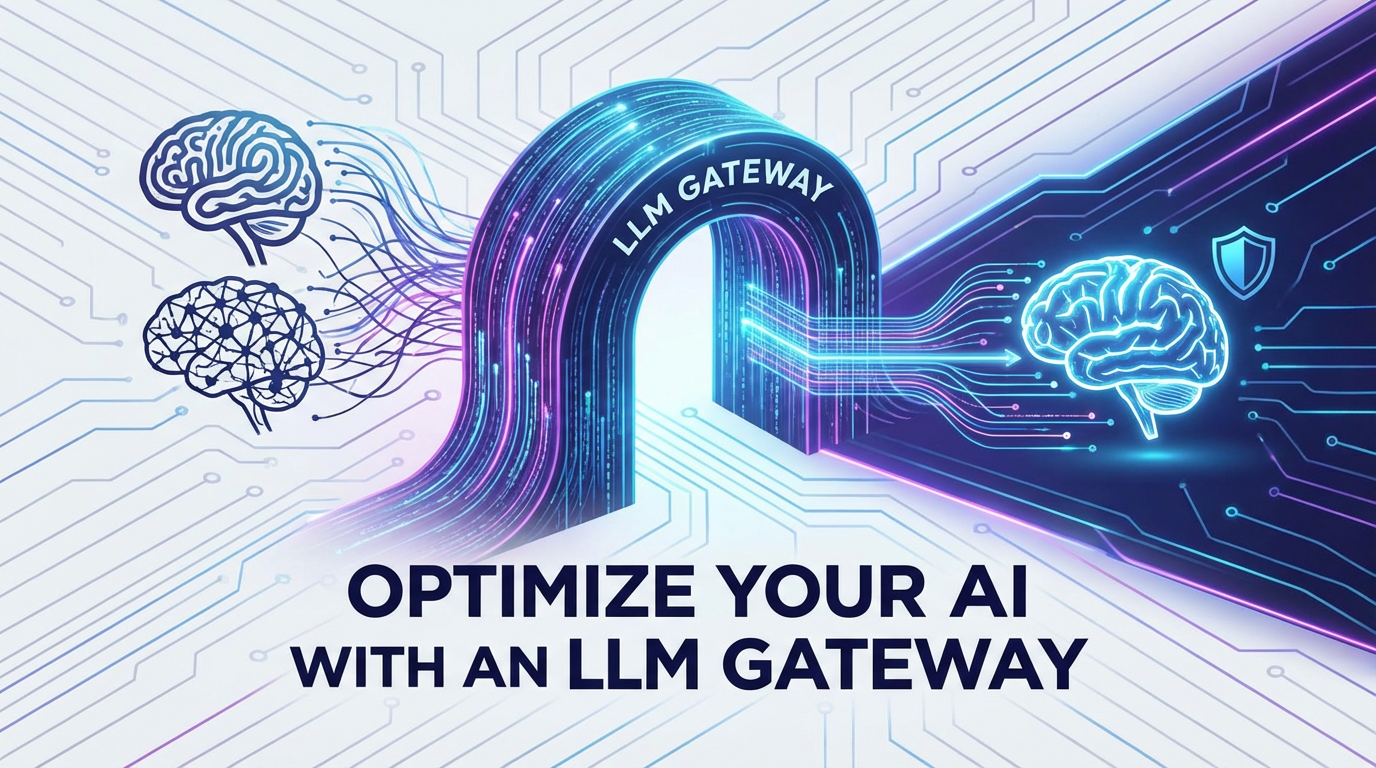


The relentless march of artificial intelligence continues to reshape industries, redefine human-computer interaction, and unlock unprecedented levels of productivity and innovation. At the heart of this revolution are Large Language Models (LLMs), sophisticated AI systems capable of understanding, generating, and processing human language with remarkable fluency and coherence. From powering chatbots and virtual assistants to automating content creation, enhancing data analysis, and driving complex decision-making processes, LLMs are quickly becoming indispensable tools for businesses and developers alike. However, as organizations increasingly integrate these powerful models into their applications and workflows, they encounter a burgeoning set of challenges related to management, security, performance, and cost. Navigating the complex ecosystem of diverse LLM providers, model versions, and API protocols can quickly become an arduous task, hindering innovation and introducing operational inefficiencies. This is precisely where the concept of an LLM Gateway emerges as a critical architectural component, offering a strategic solution to abstract away complexity, enhance control, and unlock the full potential of AI integration. Often referred to interchangeably as an AI Gateway or an LLM Proxy, this intermediary layer stands as the bedrock for building robust, scalable, and secure AI-powered applications. This comprehensive guide will delve deep into the anatomy, benefits, implementation, and future trajectory of LLM Gateways, illuminating how they serve as the indispensable infrastructure for optimizing your AI strategy and ensuring a seamless, governed interaction with the ever-evolving landscape of artificial intelligence.
The Burgeoning Landscape of AI and Large Language Models
The past few years have witnessed an explosive growth in the development and deployment of Large Language Models. Initially confined to research labs, these models have rapidly matured, becoming accessible through various APIs and open-source releases. Companies like OpenAI, Anthropic, Google, and Meta have pushed the boundaries, offering models such as GPT, Claude, Gemini, and Llama, each with unique strengths, pricing structures, and API specifications. This diversity, while a testament to rapid innovation, concurrently presents a formidable challenge for developers and enterprises. The allure of leveraging the best model for a specific task, or even combining multiple models for complex workflows, is undeniable. However, the practicalities of integrating and managing this heterogeneous environment can quickly become overwhelming, creating a fragmented, costly, and difficult-to-maintain AI infrastructure.
The Inherent Challenges of Direct LLM Integration
Directly integrating and managing multiple LLMs across an organization introduces a myriad of complexities that can stifle agility and elevate operational overheads. Understanding these challenges is the first step toward appreciating the transformative value of an LLM Gateway.
- API Proliferation and Fragmentation: Each LLM provider typically offers its own unique API, with distinct authentication mechanisms, data formats, error codes, and rate limits. Integrating five different LLMs could mean maintaining five separate codebases for API interaction, significantly increasing development time and maintenance burden. Any change to a provider's API requires immediate updates across all dependent applications.
- Security Vulnerabilities and Access Control: Exposing application secrets (like API keys) directly within client-side code or even scattered across numerous backend services poses a significant security risk. Furthermore, managing granular access control – determining which users or applications can invoke specific models, with what permissions, and under what conditions – becomes a monumental task without a centralized control point. The risk of unauthorized access, prompt injection attacks, and data leakage grows exponentially with decentralized management.
- Performance Bottlenecks and Latency Management: Relying on external LLM services inherently introduces network latency. Without intelligent routing and caching, applications can suffer from slow response times, degrading user experience. Managing concurrent requests, applying rate limiting to stay within provider quotas, and ensuring high availability across multiple models or instances requires sophisticated traffic management capabilities that are typically absent in direct integrations.
- Cost Management and Optimization: LLM usage is often priced per token, making cost control a critical concern. Without a centralized system to monitor usage, track expenditures, and intelligently route requests to more cost-effective models when appropriate, expenses can quickly spiral out of control. Accurately attributing costs to specific departments, projects, or users becomes nearly impossible.
- Complexity of Prompt Engineering and Model Versioning: Crafting effective prompts is an iterative process requiring experimentation and fine-tuning. Managing different prompt versions, A/B testing variations, and ensuring consistency across applications becomes cumbersome without a dedicated system. Moreover, LLM providers frequently update their models, introducing new versions that might require application-level changes or re-validation.
- Observability, Monitoring, and Troubleshooting: Understanding how LLMs are being used, identifying performance bottlenecks, tracking errors, and troubleshooting issues across multiple disparate services is incredibly difficult. A lack of centralized logging, metrics, and alerting means organizations operate in the dark, reacting to problems rather than proactively preventing them.
- Scalability and Resilience: As AI adoption within an organization grows, the demand for LLM inference scales dramatically. Designing applications to gracefully handle increased load, manage failovers between different LLM providers, and ensure continuous service availability requires a robust architectural layer that can abstract these complexities away from the core application logic.
These challenges underscore the necessity for a strategic architectural component that can consolidate, manage, and optimize all interactions with LLMs. This is the foundational problem that an AI Gateway is designed to solve.
Understanding the LLM Gateway / AI Gateway / LLM Proxy
At its core, an LLM Gateway (also interchangeably known as an AI Gateway or an LLM Proxy) is an intermediary service that sits between your applications and the various Large Language Models you interact with. Conceptually, it functions much like a traditional API Gateway does for microservices, but it is specifically designed and optimized for the unique requirements of AI and LLM interactions. Instead of applications directly calling LLM provider APIs, they send requests to the LLM Gateway, which then intelligently forwards, processes, and manages these requests before sending them to the appropriate underlying LLM.
This architectural pattern introduces a crucial layer of abstraction, control, and intelligence. It centralizes the management of all LLM interactions, providing a single point of entry for your applications and a single point of control for your operations teams. By acting as a sophisticated traffic cop and an intelligent translator, an LLM Gateway transforms a chaotic and fragmented LLM landscape into a streamlined, secure, and highly optimized AI infrastructure. It decouples your application logic from the underlying LLM specifics, allowing for greater flexibility, resilience, and future-proofing in an rapidly evolving AI ecosystem.
Core Functions and Architectural Role
The primary role of an LLM Gateway is to mediate and enhance communication between client applications and one or more LLM services. Its architectural placement allows it to perform a variety of crucial functions that are difficult or inefficient to implement at the application level:
- Request Routing: Directs incoming requests to the most appropriate LLM based on predefined rules, load, cost, or performance metrics.
- Protocol Translation/Standardization: Unifies diverse LLM APIs into a single, consistent interface for client applications.
- Security Enforcement: Applies authentication, authorization, rate limiting, and input/output sanitization policies.
- Traffic Management: Handles load balancing, caching, and request prioritization.
- Observability: Collects logs, metrics, and traces for monitoring, analytics, and auditing.
- Transformation: Modifies requests or responses, such as injecting context, reformatting data, or redacting sensitive information.
By centralizing these concerns, the LLM Proxy paradigm empowers organizations to build more resilient, scalable, and cost-effective AI applications without embedding these complexities directly into their core business logic.
Key Features and Benefits of an LLM Gateway
The strategic adoption of an LLM Gateway brings a multitude of powerful features and tangible benefits that directly address the challenges of modern AI integration. These features not only simplify development but also significantly enhance the security, performance, cost-efficiency, and overall governance of your AI operations.
1. Unified API Endpoint and Abstraction
One of the most immediate and profound benefits of an LLM Gateway is its ability to provide a single, consistent API endpoint for all LLM interactions, regardless of the underlying model or provider.
- Simplifying Integration Across Multiple LLMs: Instead of writing bespoke code for OpenAI's API, then Google's, then Anthropic's, your applications interact with one standardized interface provided by the gateway. This significantly reduces development overhead and accelerates the integration process. Imagine wanting to experiment with a new open-source model like Llama 3; with a gateway, the application doesn't change, only the gateway's configuration.
- Standardizing Request/Response Formats: Different LLMs often have varying request payloads (e.g.,
promptvs.messages) and response structures. The gateway normalizes these differences, presenting a uniform interface to your applications. This means your application code can be written once, interacting with a predictable format, and the gateway handles the necessary translations behind the scenes. - Decoupling Applications from Specific LLM Providers: This is a critical advantage for future-proofing. If you decide to switch from one LLM provider to another due to cost, performance, or feature set, your applications remain blissfully unaware. Only the gateway's configuration needs to be updated. This eliminates vendor lock-in at the application layer, fostering greater agility and flexibility in your AI strategy.
- Seamless Model Switching and Versioning: The gateway allows you to route requests to different model versions or entirely different models based on criteria like user group, request type, or even A/B testing configurations, all without altering application code. This is invaluable for gradual rollouts of new models or for directing specific queries to specialized models. For instance, less complex queries might go to a smaller, cheaper model, while intricate ones are routed to a more powerful, expensive counterpart.
- APIPark's Role in Unification: A powerful example of this capability is found in products like APIPark. APIPark, as an open-source AI gateway and API management platform, excels at offering the capability to integrate a variety of AI models with a unified management system. This includes abstracting away the complexities of different authentication mechanisms and cost tracking unique to each provider. Crucially, APIPark provides a unified API format for AI invocation, ensuring that changes in AI models or prompts do not affect the application or microservices. This standardization is a cornerstone of simplifying AI usage and significantly reducing maintenance costs for enterprises.
2. Robust Security and Access Control
Security is paramount when dealing with AI, especially when sensitive data might be involved. An AI Gateway acts as a powerful security enforcement point, centralizing controls that would otherwise be scattered and difficult to manage.
- Centralized Authentication and Authorization: The gateway can enforce robust authentication mechanisms (e.g., API keys, OAuth 2.0, JWT) before any request reaches an LLM. It can then apply fine-grained authorization policies, determining which users, applications, or teams are permitted to access specific LLMs, perform certain operations (e.g., generate text, embed data), or consume a defined quota. This prevents unauthorized access to valuable AI resources and sensitive data.
- Rate Limiting and Throttling: LLM providers often impose rate limits to prevent abuse and manage their infrastructure load. An LLM Gateway can implement its own intelligent rate limiting policies, protecting your applications from hitting provider limits and ensuring fair usage across your internal teams. It can also throttle requests if an internal system is overloaded, providing a buffer. This capability is critical for cost control and maintaining service stability.
- Input/Output Sanitization and Validation: To prevent prompt injection attacks, where malicious users try to manipulate an LLM's behavior, the gateway can inspect and sanitize incoming prompts. Similarly, it can validate LLM responses to ensure they adhere to expected formats or content policies, flagging or redacting potentially harmful or inappropriate outputs before they reach the end-user. This mitigates risks like data leakage or the generation of undesirable content.
- Data Masking and Redaction: For applications handling sensitive information, the LLM Proxy can be configured to automatically identify and redact or mask Personally Identifiable Information (PII) or other confidential data in both requests sent to the LLM and responses received back. This significantly enhances data privacy and compliance with regulations like GDPR or HIPAA, reducing the risk of exposing sensitive data to external models.
- Auditing and Compliance: With all LLM traffic flowing through a single point, the gateway can maintain comprehensive audit trails of every request and response. This logging is invaluable for security forensics, compliance reporting, and debugging, providing an irrefutable record of who accessed what, when, and with what outcome.
- Tenant-Specific Permissions and Approval Workflows: Platforms designed for multi-tenant environments, such as APIPark, offer advanced security features. APIPark enables the creation of multiple teams (tenants), each with independent applications, data, user configurations, and security policies, all while sharing underlying applications and infrastructure to improve resource utilization. Furthermore, APIPark allows for the activation of subscription approval features, ensuring that callers must subscribe to an API and await administrator approval before they can invoke it. This prevents unauthorized API calls and significantly reduces potential data breaches, adding an extra layer of governance and control.
3. Enhanced Performance and Scalability
Performance and scalability are critical for any production-grade AI application. An LLM Gateway can drastically improve both by intelligently managing traffic and optimizing interactions with LLMs.
- Intelligent Load Balancing: The gateway can distribute incoming requests across multiple instances of an LLM (if self-hosted) or even across different LLM providers (e.g., routing 80% to OpenAI, 20% to Anthropic) based on real-time performance metrics, cost considerations, or specific business rules. This prevents any single model from becoming a bottleneck and enhances overall system resilience and availability.
- Response Caching: For repetitive queries or prompts that frequently yield the same response, the LLM Gateway can cache the LLM's output. Subsequent identical requests can then be served directly from the cache, drastically reducing latency, offloading the LLM, and significantly cutting down on token usage costs. This is particularly effective for common questions in a customer support chatbot or frequently requested content summaries.
- Request Prioritization: In scenarios where some requests are more critical than others (e.g., real-time customer support vs. batch content generation), the gateway can implement quality-of-service (QoS) rules to prioritize high-importance requests, ensuring they receive faster processing even under heavy load.
- Asynchronous Processing and Queuing: For long-running or batch LLM tasks, the gateway can offload requests to an asynchronous processing queue, allowing the client application to receive an immediate acknowledgment and then retrieve the result later. This improves client responsiveness and prevents timeouts.
- Performance Rivaling High-Performance Proxies: The underlying architecture of a well-designed AI Gateway can achieve impressive performance metrics. For example, APIPark boasts performance rivaling Nginx, capable of achieving over 20,000 TPS (transactions per second) with just an 8-core CPU and 8GB of memory. This level of efficiency, combined with support for cluster deployment, ensures that the gateway itself is not a bottleneck and can handle large-scale traffic, providing a robust foundation for even the most demanding AI applications.
4. Granular Cost Management and Optimization
Controlling the cost of LLM inference is a major concern, as charges are often based on token usage. An LLM Gateway provides the visibility and control necessary to manage and optimize these expenditures effectively.
- Detailed Token Usage Monitoring: The gateway can meticulously track token consumption for every request, providing precise insights into how much each user, application, or project is spending on LLMs. This granular data is essential for accurate cost allocation and budget planning.
- Intelligent Tiered Routing: By implementing smart routing rules, the gateway can direct requests to the most cost-effective LLM based on the query's complexity or criticality. For instance, simple sentiment analysis might be routed to a cheaper, smaller model, while complex creative writing tasks are sent to a premium, more capable model. This ensures optimal resource allocation without compromising quality where it matters.
- Budget Enforcement and Alerts: Organizations can set spending limits at various levels (per user, per team, per project) within the gateway. When these limits are approached or exceeded, the gateway can trigger alerts or even temporarily block further requests, preventing unexpected cost overruns.
- Cost Attribution and Reporting: The centralized nature of the gateway allows for clear attribution of LLM costs, making it easy to generate reports for financial reconciliation, departmental chargebacks, and performance reviews. This transparency empowers teams to be more accountable for their AI spending.
5. Comprehensive Observability and Monitoring
Understanding the health, usage patterns, and performance of your LLM interactions is crucial for maintaining stable and efficient AI applications. An AI Gateway centralizes observability, turning opaque LLM calls into transparent, actionable insights.
- Comprehensive Logging: Every request and response passing through the gateway can be meticulously logged, capturing details such as timestamps, client IDs, requested LLM, input/output tokens, latency, status codes, and any errors. This detailed logging is indispensable for debugging, auditing, and security analysis.
- Rich Analytics and Reporting: By aggregating and analyzing the collected logs and metrics, the gateway can generate powerful analytics dashboards. These dashboards can visualize trends in usage, identify peak demand periods, highlight performance bottlenecks (e.g., average latency per model), and track error rates. This data empowers teams to make informed decisions about model selection, capacity planning, and optimization strategies.
- Proactive Alerting: The gateway can be configured to trigger alerts based on predefined thresholds, such as an increase in error rates from a specific LLM provider, unusually high latency, or excessive token usage. This enables proactive intervention, allowing operations teams to address issues before they significantly impact users.
- Deep-Dive Analysis Capabilities: APIPark provides powerful data analysis features, dissecting historical call data to display long-term trends and performance changes. This predictive capability helps businesses engage in preventive maintenance, addressing potential issues before they escalate into critical problems. Moreover, APIPark offers detailed API call logging, recording every intricate detail of each API call. This comprehensive logging allows businesses to quickly trace and troubleshoot issues in API calls, ensuring system stability and data security, and providing an unparalleled level of transparency into AI operations.
6. Advanced Prompt Management and Engineering
Effective prompt engineering is vital for getting the best results from LLMs. An LLM Gateway can elevate prompt management from ad-hoc processes to a standardized, version-controlled practice.
- Centralized Prompt Storage and Versioning: Prompts can be stored, managed, and versioned directly within the gateway. This ensures consistency across all applications using a particular prompt and provides a clear history of changes. Developers can easily retrieve specific prompt versions for testing or rollback if needed.
- Prompt Templating and Dynamic Insertion: The gateway can support prompt templating, allowing for the dynamic insertion of variables or contextual information into a base prompt. For instance, a common customer service prompt can be dynamically filled with customer details or recent interaction history, ensuring personalized and relevant responses without hardcoding details into the application.
- A/B Testing and Experimentation: A powerful feature is the ability to easily A/B test different prompt variations to determine which yields the best results (e.g., higher accuracy, better user satisfaction, lower token count). The gateway can route a percentage of traffic to each prompt variant and collect metrics, enabling data-driven optimization of prompt strategies.
- Prompt Encapsulation into REST API: APIPark exemplifies this with its capability for prompt encapsulation into a REST API. Users can quickly combine AI models with custom prompts to create new, specialized APIs, such as a dedicated sentiment analysis API, a translation API, or a data summarization API. This transforms prompt engineering outputs into reusable, composable services, greatly enhancing modularity and developer efficiency.
7. Enhanced Developer Experience and API Lifecycle Management
An AI Gateway significantly streamlines the developer experience, making it easier for teams to discover, integrate, and manage AI services. It also plays a crucial role in the broader API lifecycle.
- Self-Service Developer Portal: A well-implemented gateway often comes with or integrates into a developer portal. This portal serves as a central hub where developers can discover available AI services, access comprehensive documentation, review usage policies, and generate their own API keys, fostering self-sufficiency and reducing friction.
- End-to-End API Lifecycle Management: Beyond just proxying, an advanced LLM Gateway like APIPark assists with managing the entire lifecycle of APIs. This includes initial design, publication, invocation, and eventual decommissioning. It helps regulate API management processes, manage traffic forwarding, load balancing, and versioning of published APIs. This holistic approach ensures that AI services are treated as first-class citizens within an organization's API ecosystem.
- Facilitating API Service Sharing within Teams: In larger organizations, different departments or teams might create specialized AI services. The gateway, especially when paired with a developer portal, allows for the centralized display of all API services. This makes it incredibly easy for different departments and teams to find, understand, and reuse the required AI services, fostering collaboration and preventing redundant development efforts.
Use Cases and Applications of an LLM Gateway
The versatility and robustness of an LLM Gateway make it applicable across a wide array of scenarios and industries, transforming how organizations build, deploy, and manage their AI applications.
1. Enterprise AI Applications
For large enterprises deploying AI across various departments, an LLM Gateway is indispensable. * Customer Service Chatbots: Companies can use the gateway to route customer queries to different LLMs based on complexity or specific customer segments. Basic FAQs might go to a cheaper, faster model, while complex issues are escalated to a more powerful LLM or a human agent. The gateway ensures consistent responses, enforces security policies for sensitive customer data, and optimizes costs. * Content Generation and Curation: Marketing, sales, and content teams can leverage LLMs for generating marketing copy, social media posts, email campaigns, or internal reports. The gateway can manage access to these models, track usage for cost allocation, and apply templates to ensure brand voice consistency across all generated content. * Data Analysis and Summarization: Financial analysts, researchers, and business intelligence teams can use LLMs to summarize large documents, extract key insights from unstructured data, or generate natural language reports. The gateway secures data access, ensures compliance, and provides performance monitoring for these critical analytical workloads. * Internal Knowledge Management: Building internal AI assistants that can quickly retrieve information from vast internal knowledge bases (e.g., policy documents, technical manuals) requires robust LLM integration. The gateway ensures secure access to sensitive internal data, manages model versions, and monitors usage for continuous improvement.
2. SaaS Platforms Integrating LLMs
Software-as-a-Service (SaaS) providers can leverage an AI Gateway to seamlessly embed LLM capabilities into their offerings, creating powerful new features for their users. * Enhanced Productivity Tools: A project management SaaS might integrate an LLM to auto-summarize meeting notes or generate action items. A writing assistant SaaS could offer multiple LLM options (e.g., "formal tone" vs. "casual tone") managed by the gateway, with transparent cost tracking for different tiers. * Personalized User Experiences: An e-commerce platform could use LLMs for personalized product recommendations or dynamic product descriptions, routed through a gateway that handles model selection and performance optimization. * Multi-tenant AI Solutions: For SaaS platforms serving numerous clients, the gateway is crucial for providing independent API and access permissions for each tenant, ensuring data isolation, custom configurations, and segregated usage tracking, all while sharing the underlying LLM infrastructure.
3. R&D and Experimentation with Multiple Models
For research and development teams, the LLM Gateway accelerates experimentation and model evaluation. * A/B Testing and Model Comparison: Researchers can easily set up A/B tests between different LLM providers or different fine-tuned versions of a model, routing a percentage of traffic to each and collecting metrics through the gateway for objective comparison. This facilitates rapid iteration and selection of the best-performing models. * Prompt Engineering Workbench: The gateway can serve as a centralized platform for developing, versioning, and testing prompts across various models, allowing prompt engineers to collaborate and optimize outputs systematically. The ability to encapsulate prompts into dedicated APIs (as with APIPark) further streamlines this process. * Access to Cutting-Edge Models: As new LLMs emerge, the gateway provides a rapid integration path, allowing R&D teams to quickly experiment with the latest advancements without disrupting existing applications.
4. Building Multi-Tenant AI Solutions
Developing platforms that offer AI capabilities to multiple distinct clients or departments presents unique challenges in isolation and resource management. * Resource Isolation and Customization: An AI Gateway can create virtual instances or "tenants" for each client, providing them with independent configurations, API keys, usage limits, and even access to specific models, while still leveraging a shared underlying infrastructure. This improves resource utilization and reduces operational costs compared to deploying separate LLM infrastructure for each tenant. * Policy Enforcement per Tenant: Security, rate limiting, and cost tracking policies can be applied at the tenant level. This ensures that one tenant's activities don't negatively impact others (noisy neighbor problem) and that each client's specific compliance requirements are met. * Reporting and Billing: The gateway centralizes usage data, enabling accurate billing and detailed reporting for each tenant, providing transparency and facilitating chargebacks.
In essence, an LLM Gateway transforms the complex, fragmented world of LLM integration into a manageable, secure, and highly efficient ecosystem, allowing organizations to focus on building innovative AI-powered solutions rather than wrestling with infrastructure challenges.
APIPark is a high-performance AI gateway that allows you to securely access the most comprehensive LLM APIs globally on the APIPark platform, including OpenAI, Anthropic, Mistral, Llama2, Google Gemini, and more.Try APIPark now! 👇👇👇
Implementing an LLM Gateway: Build vs. Buy and Key Considerations
Once the strategic importance of an LLM Gateway is recognized, the next critical decision involves its implementation. Organizations typically face a "build vs. buy" dilemma, each path offering distinct advantages and disadvantages. Regardless of the approach, several key considerations must guide the selection and deployment process.
Build vs. Buy Decision
The choice between developing a custom LLM Gateway in-house and adopting a commercial or open-source solution depends heavily on an organization's specific needs, resources, and strategic priorities.
1. Custom Solutions (Build)
Pros: * Full Customization: Tailored precisely to unique organizational requirements, integration points, and niche features. * Complete Control: Full ownership of the codebase, allowing for independent evolution and debugging. * No Vendor Lock-in: Avoids reliance on external vendors for features, support, or pricing models.
Cons: * High Development Cost & Time: Requires significant engineering effort, skilled personnel, and ongoing maintenance. * Operational Overhead: Responsible for all aspects, including infrastructure, scaling, security updates, and bug fixes. * Feature Lag: Difficult to keep pace with the rapid innovation in the LLM space compared to specialized product teams. * Risk of Reinventing the Wheel: Many core features (authentication, rate limiting, caching) are generic and widely available in existing solutions.
2. Commercial Products (Buy)
Pros: * Rich Feature Set: Typically offers a comprehensive suite of features out-of-the-box, developed and refined by experts. * Professional Support: Access to dedicated technical support, SLAs, and often consulting services. * Faster Time-to-Market: Quicker deployment and integration, allowing focus on core business logic. * Reduced Operational Burden: Vendor manages maintenance, security patches, and updates.
Cons: * Vendor Lock-in: Reliance on a specific vendor for features, pricing, and product roadmap. * Cost: Licensing fees can be substantial, especially for enterprise-grade features and high usage. * Limited Customization: May not perfectly align with highly specific or niche requirements. * Data Privacy Concerns: May involve data flowing through a third-party service, requiring careful due diligence.
3. Open-Source Solutions
Pros: * Cost-Effective: Often free to use, significantly reducing initial investment. * Flexibility and Transparency: Source code is accessible, allowing for auditing, customization, and community contributions. * Community Support: Vibrant communities can provide support, contribute features, and identify bugs. * No Vendor Lock-in (Software): You own the deployed software, even if you pay for commercial support.
Cons: * Self-Support (if no commercial offering): Requires internal expertise for deployment, maintenance, and troubleshooting without dedicated vendor support. * Varying Maturity: Quality, documentation, and feature sets can vary widely between projects. * Integration Effort: May require significant effort to integrate with existing infrastructure and services. * Security Responsibility: Maintaining security patches and configurations is an internal responsibility.
APIPark as a Hybrid Option: This is where solutions like APIPark offer a compelling hybrid approach. APIPark is an open-source AI gateway and API management platform released under the Apache 2.0 license. This means organizations can leverage its robust open-source capabilities for free, gaining flexibility and transparency. For those seeking advanced features and professional technical support, APIPark also offers a commercial version tailored for leading enterprises. This blend provides the best of both worlds: control and cost-efficiency for basic needs, with a clear upgrade path to enterprise-grade support and enhanced functionality. Its quick deployment with a single command (curl -sSO https://download.apipark.com/install/quick-start.sh; bash quick-start.sh) further lowers the barrier to entry, making it an attractive option for rapid prototyping and production deployments alike.
Key Considerations for Selection
Regardless of the build or buy decision, the following factors are crucial when selecting or designing an LLM Gateway:
- Scalability Requirements:
- Anticipated Load: How many concurrent requests will the gateway need to handle?
- Growth Projections: How will traffic grow over time? The gateway must be able to scale horizontally and vertically without becoming a bottleneck.
- Load Balancing and High Availability: Does it support distributing traffic across multiple instances and ensuring continuous service even if one instance fails?
- Security Posture:
- Authentication & Authorization: What mechanisms are supported (API keys, OAuth, JWT)? Can it integrate with existing identity providers (IdP)? Does it offer fine-grained access control?
- Data Protection: Are features like data masking, encryption in transit/at rest, and input/output sanitization available? How does it handle sensitive information?
- Compliance: Does it help meet regulatory requirements (GDPR, HIPAA, etc.) by providing audit trails and data governance features?
- Integration Ecosystem:
- Supported LLMs: Which LLM providers and models does it natively support? How easy is it to add new ones?
- Existing Infrastructure: Can it integrate smoothly with your current cloud environment (AWS, Azure, GCP), Kubernetes clusters, monitoring tools (Prometheus, Grafana), and logging systems (Splunk, ELK Stack)?
- Developer Tooling: Does it offer SDKs, client libraries, or clear documentation to facilitate integration by application developers?
- Feature Set Alignment with Needs:
- Core Gateway Features: Does it cover essential needs like request routing, rate limiting, caching, and logging?
- Advanced LLM-Specific Features: Does it offer prompt management, cost optimization (tiered routing), response transformation, or A/B testing capabilities?
- Developer Portal: Is there a self-service portal for API discovery and management?
- Developer Experience (DX):
- Ease of Configuration: How straightforward is it to configure routes, policies, and integrations?
- Documentation: Is the documentation comprehensive, clear, and up-to-date?
- Troubleshooting: How easy is it for developers to understand errors and troubleshoot issues through the gateway?
- Cost Structure (for commercial/cloud options):
- Pricing Model: Is it subscription-based, usage-based, or hybrid? How does it scale with increased traffic or features?
- Total Cost of Ownership (TCO): Beyond licensing, consider infrastructure costs, maintenance, support, and potential savings from LLM cost optimization.
- Deployment Options:
- On-premises: Can it be deployed in your own data center?
- Cloud-native: Does it support deployment on specific cloud platforms (AWS EC2, Kubernetes on EKS/AKS/GKE)?
- Hybrid: Can it manage LLMs across both on-premises and cloud environments?
Deployment Strategies
Once an LLM Gateway solution is chosen, its effective deployment is crucial for operational success.
- Containerization (Docker, Kubernetes): This is the most common and recommended approach. Packaging the gateway as Docker containers allows for consistent deployment across different environments. Orchestrators like Kubernetes provide robust capabilities for scaling, self-healing, service discovery, and declarative management, making it ideal for high-availability and large-scale deployments.
- Cloud-Native Deployments: Leveraging cloud provider services (e.g., AWS Fargate, Azure Container Instances, Google Cloud Run) can simplify infrastructure management, allowing teams to focus solely on the gateway's configuration and operation without managing underlying servers.
- Hybrid Approaches: For organizations with existing on-premises infrastructure and cloud deployments, a hybrid gateway solution might be necessary, potentially using a combination of on-premises gateway instances for internal applications and cloud-based instances for public-facing services.
The careful selection and strategic deployment of an AI Gateway are foundational to building a resilient, secure, and cost-effective AI infrastructure that can adapt to the dynamic nature of the LLM landscape.
Challenges and Best Practices with LLM Gateways
While an LLM Gateway offers immense benefits, its implementation and ongoing management are not without challenges. Understanding these potential hurdles and adopting best practices can significantly improve its effectiveness and ensure long-term success.
Common Challenges
- Latency Overhead: Introducing an additional network hop (the gateway) between the application and the LLM can inherently add a small amount of latency. While often negligible for many applications, for extremely low-latency use cases, this needs careful consideration.
- Mitigation: Optimize the gateway's own performance, deploy it geographically close to both applications and LLMs, and leverage caching aggressively to reduce the need for external LLM calls.
- Complexity of Configuration: A highly configurable AI Gateway can become complex to set up and manage, especially with a multitude of routing rules, security policies, and prompt templates. Misconfigurations can lead to service disruptions or security vulnerabilities.
- Mitigation: Adopt infrastructure-as-code (IaC) practices for gateway configuration, use clear and modular configuration files, and invest in robust testing and validation pipelines.
- Vendor Lock-in (for Proprietary Solutions): Choosing a proprietary LLM Gateway can lead to vendor lock-in, making it difficult to switch to another solution later if requirements change or the vendor's roadmap diverges.
- Mitigation: Prioritize open standards and open-source solutions where possible, or opt for hybrid approaches like APIPark which offers both open-source flexibility and commercial support. Design your application's interaction with the gateway to be as generic as possible.
- Keeping Up with Rapid LLM Advancements: The LLM landscape evolves at a breakneck pace. New models, improved APIs, and novel techniques emerge constantly. The gateway must be agile enough to integrate these new developments quickly.
- Mitigation: Choose a gateway that actively supports and updates its integrations with major LLM providers. Ensure the architecture allows for easy extension and customization to integrate emerging models.
- Ensuring Data Privacy and Compliance: While the gateway can enforce data masking, the very act of passing data through an intermediary requires careful consideration of data residency, privacy regulations, and trust boundaries.
- Mitigation: Conduct thorough data flow analyses. Ensure the gateway itself is compliant (e.g., SOC 2, ISO 27001 certified if it's a managed service). Deploy the gateway within your own trusted network or cloud account where possible to retain full control over data.
- Resource Over-provisioning or Under-provisioning: Incorrectly sizing the gateway's infrastructure can lead to wasted resources (over-provisioning) or performance bottlenecks and outages (under-provisioning).
- Mitigation: Leverage detailed monitoring and analytics to understand actual traffic patterns. Implement auto-scaling capabilities in containerized deployments (e.g., Kubernetes HPA) to dynamically adjust resources.
Best Practices for Maximizing LLM Gateway Effectiveness
- Start with a Clear Understanding of Needs: Before implementing or choosing an LLM Proxy, thoroughly define your organizational requirements. What LLMs do you use? What are your security, performance, cost, and compliance priorities? This clarity will guide your selection and configuration.
- Prioritize Security from Day One: Security should not be an afterthought. Implement strong authentication and authorization policies from the outset. Regularly audit access logs, configure input validation to prevent prompt injection, and ensure data masking is active for sensitive information. Treat the gateway as a critical security perimeter.
- Design for Scalability and Resilience: Assume high traffic and potential failures. Deploy the gateway in a highly available configuration (e.g., across multiple availability zones). Implement robust load balancing, failover mechanisms, and circuit breakers to handle upstream LLM provider outages gracefully. Leverage container orchestration for dynamic scaling.
- Implement Robust Monitoring and Alerting: Configure comprehensive logging, metrics collection, and tracing for every request passing through the gateway. Integrate with your existing observability stack (e.g., Prometheus, Grafana, ELK, Splunk). Set up proactive alerts for performance degradation, high error rates, or unusual cost spikes to enable rapid response.
- Embrace Modularity and Extensibility: Design your gateway configuration to be modular, separating concerns like routing rules, security policies, and prompt templates. Choose a solution that is extensible, allowing you to easily add custom logic or integrate with new LLMs as your needs evolve.
- Regularly Review and Update Configurations: The AI landscape is dynamic. Regularly review your gateway's configurations, prompt templates, and routing rules. Update them to reflect new LLM versions, pricing changes, or improved prompt engineering techniques. This iterative approach ensures the gateway remains optimized and effective.
- Involve Developers Early: Engage your application developers in the gateway design and implementation process. Their insights into integration challenges and desired features are invaluable. Provide excellent documentation, client libraries, and a user-friendly developer portal to foster adoption.
- Automate Everything Possible: From deployment (IaC) to testing, configuration updates, and monitoring, automate as many gateway-related tasks as possible. This reduces human error, increases efficiency, and ensures consistency.
By addressing potential challenges proactively and adhering to these best practices, organizations can fully leverage the power of an LLM Gateway to build a resilient, secure, and future-proof AI infrastructure.
The Future of LLM Gateways
The rapid evolution of AI, particularly in the domain of Large Language Models, suggests that the role of the LLM Gateway will continue to expand and deepen. What began as a sophisticated proxy is poised to transform into an even more intelligent and integral component of the broader AI ecosystem. The future will see these gateways becoming more adaptive, context-aware, and deeply integrated into the entire AI lifecycle.
1. Deeper Integration with MLOps Pipelines
As organizations mature their AI operations, the distinction between development, deployment, and management blurs. Future AI Gateways will integrate more seamlessly with MLOps platforms, becoming a central hub for model deployment, versioning, and A/B testing within the inference pipeline. They will likely: * Automate Gateway Configuration: Automatically update routing rules and security policies based on new model deployments or retired versions from MLOps pipelines. * Provide Inference Feedback: Feed real-time inference data (performance, cost, user satisfaction metrics) back into MLOps for continuous model improvement and re-training. * Support Model Governance: Enforce model usage policies, lineage tracking, and compliance checks at the inference layer as part of the MLOps workflow.
2. Advanced AI-Driven Routing and Optimization
Current gateways offer rule-based routing. The next generation will leverage AI to optimize their own operations. * Dynamic Load Balancing: Intelligent agents within the gateway will predict LLM load, latency, and cost in real-time to make dynamic routing decisions for optimal performance and efficiency, even across regions or cloud providers. * Context-Aware Routing: The gateway could analyze the semantic content of a prompt to route it to the most suitable specialized LLM (e.g., legal queries to a legal LLM, creative tasks to a generative art LLM), even if the application isn't explicitly aware of these specializations. * Proactive Cost Management: AI algorithms will learn usage patterns and automatically adjust routing to lower-cost models when quality degradation is acceptable, or proactively alert on unusual spending.
3. Edge AI Gateway Capabilities
As AI models become more efficient, there's a growing push for inference at the edge—closer to data sources and users. * Local Inference Management: LLM Gateways will extend to manage local, smaller LLMs running on edge devices, routing requests intelligently between local models and cloud-based models based on connectivity, latency, and data privacy needs. * Offline Capabilities: Providing limited LLM capabilities even when internet connectivity is intermittent, by caching models or leveraging on-device inference. * Data Minimization at the Edge: Pre-processing and filtering data on edge gateways to send only essential information to cloud LLMs, enhancing privacy and reducing bandwidth usage.
4. Even Deeper Integration with Data Governance and Compliance Frameworks
With increasing regulation around AI and data, gateways will become even more critical for compliance. * Automated Data Lineage: Tracking the origin and transformation of data as it passes through the gateway to and from LLMs, providing a clear audit trail for compliance. * Enhanced PII Detection and Redaction: More sophisticated, context-aware PII detection and redaction, potentially using smaller, specialized AI models within the gateway itself. * Compliance-as-Code: Allowing organizations to define compliance policies as code that the gateway automatically enforces, such as data residency rules or consent management.
5. Support for Multimodal AI and Beyond
The future of AI is not just language; it's multimodal, encompassing vision, audio, and other data types. * Multimodal Proxying: AI Gateways will evolve to handle and route requests for multimodal LLMs, processing diverse input types (text, image, audio) and orchestrating interactions with various specialized models. * Unified API for AI Modalities: Providing a single, consistent API for applications to interact with any AI modality, abstracting away the underlying complexity of vision models, speech-to-text, text-to-speech, etc. * AI Orchestration Platforms: The LLM Gateway may merge or integrate deeply with broader AI orchestration platforms that manage complex AI workflows involving multiple AI models, data pipelines, and decision points.
6. Enhanced Developer Experience with No-Code/Low-Code Tools
To democratize AI development, future gateways will offer more intuitive interfaces. * Visual Configuration Tools: Drag-and-drop interfaces for defining routing rules, security policies, and prompt templates, making it easier for non-technical users to manage AI interactions. * Integrated AI Dev Environments: Combining prompt engineering, model testing, and gateway configuration into a single, seamless developer environment.
The evolution of the LLM Gateway is not merely about incremental improvements; it's about its transformation into an intelligent, autonomous, and foundational component that will enable organizations to navigate the ever-expanding universe of AI with unprecedented control, efficiency, and innovation. It will move beyond being just a technical proxy to becoming a strategic enabler for an organization's entire AI strategy.
Conclusion
The era of artificial intelligence is here, driven by the remarkable capabilities of Large Language Models. As these powerful models become integral to countless applications, the need for a robust, intelligent, and flexible management layer has never been more pressing. The LLM Gateway, often referred to as an AI Gateway or an LLM Proxy, stands as the indispensable architectural solution to navigate the complexities, optimize the performance, and secure the interactions with the diverse and rapidly evolving LLM landscape.
By providing a unified API endpoint, enforcing stringent security and access controls, optimizing performance through intelligent routing and caching, and meticulously managing costs, an LLM Gateway transforms a fragmented ecosystem into a streamlined, cohesive, and highly efficient AI infrastructure. It empowers organizations to abstract away the intricate details of model integration, allowing developers to focus on building innovative applications rather than wrestling with API variations, authentication nuances, or operational challenges.
The benefits extend far beyond technical efficiency; an AI Gateway fosters strategic agility, enabling organizations to easily experiment with new models, switch providers, and adapt to emerging AI advancements without disrupting existing services. It ensures compliance, enhances observability, and provides the granular control necessary to responsibly scale AI adoption across the enterprise.
Looking ahead, the LLM Gateway is poised to evolve further, deepening its integration with MLOps, leveraging AI for self-optimization, expanding to multimodal and edge AI, and becoming an even more critical component for data governance and compliance. For any organization serious about harnessing the full potential of Large Language Models—securely, efficiently, and cost-effectively—implementing a well-chosen and well-managed LLM Gateway is not just an option, but a fundamental necessity. It is the architectural cornerstone that will define success in the intelligent future.
Comparison of Gateway Features: Traditional API Gateway vs. LLM Gateway
This table highlights the distinctions between a traditional API Gateway, designed for RESTful microservices, and an LLM Gateway, tailored for the unique challenges of Large Language Models.
| Feature Area | Traditional API Gateway | LLM Gateway (AI Gateway / LLM Proxy) |
|---|---|---|
| Primary Purpose | Manage and secure microservices/REST APIs. | Manage, secure, and optimize interactions with LLMs. |
| Core Abstraction | Backend services, monolithic applications. | Diverse LLM providers (OpenAI, Anthropic, Google, custom), model versions. |
| API Standardization | Unifies various REST API versions/endpoints. | Standardizes LLM API formats (e.g., prompt vs. messages), unifies chat/completion APIs. |
| Authentication/Authz | API keys, OAuth, JWT for service access. | API keys, OAuth, JWT, plus fine-grained access to specific LLMs/features. |
| Rate Limiting | Prevents service overload, per-user/app limits. | Prevents service overload, per-user/app limits, plus respects LLM provider rate limits. |
| Caching | Caches static/dynamic service responses for performance. | Caches LLM responses for common prompts to reduce latency and token costs. |
| Traffic Management | Load balancing, routing to service instances. | Load balancing, routing to LLM instances, plus intelligent routing by cost, quality, or context. |
| Security Enhancements | Request/response validation, WAF. | Request/response validation, WAF, plus prompt injection prevention, data masking/PII redaction, output sanitization. |
| Cost Management | Not a primary feature, sometimes tracks API calls. | Critical feature: Tracks token usage, implements tiered routing to optimize costs, sets spending limits. |
| Observability | Logs API calls, service metrics. | Logs LLM requests/responses, token counts, latency, cost, plus detailed prompt/response analysis. |
| Version Management | Manages API versions (v1, v2). | Manages LLM model versions (e.g., GPT-3.5 vs. GPT-4), plus prompt template versions. |
| Prompt Engineering | Not applicable. | Core feature: Centralized prompt storage, templating, A/B testing prompts, prompt encapsulation. |
| Specific Challenges | Microservice sprawl, breaking changes. | LLM API diversity, rapid model evolution, token economics, prompt security. |
Frequently Asked Questions (FAQs)
1. What is an LLM Gateway and why do I need one?
An LLM Gateway (also known as an AI Gateway or LLM Proxy) is an intermediary service that sits between your applications and the various Large Language Models (LLMs) you use. You need one to centralize, secure, optimize, and manage all your interactions with LLMs. It addresses challenges like integrating diverse LLM APIs, ensuring security, managing costs, improving performance, and streamlining prompt engineering, preventing a fragmented and costly AI infrastructure.
2. What are the main benefits of using an LLM Gateway?
The main benefits include: * Unified Access: A single API endpoint for all LLMs, simplifying integration and reducing vendor lock-in. * Enhanced Security: Centralized authentication, authorization, rate limiting, and data masking to protect sensitive data and prevent abuse. * Cost Optimization: Monitoring token usage, intelligent routing to cheaper models, and budget enforcement to control LLM expenses. * Improved Performance: Caching repetitive queries, load balancing, and intelligent routing reduce latency and improve responsiveness. * Streamlined Prompt Management: Centralized storage, versioning, templating, and A/B testing of prompts. * Better Observability: Comprehensive logging, metrics, and analytics for usage, performance, and error tracking.
3. How does an LLM Gateway help with cost management?
An LLM Gateway provides granular visibility into token usage and expenditures across different models, users, and projects. It can implement intelligent routing rules to direct requests to the most cost-effective LLM based on query complexity or criticality (e.g., a cheaper model for simple queries, a premium model for complex ones). Additionally, caching capabilities reduce the need for repeat calls to expensive LLMs, and budget enforcement can prevent unexpected overspending.
4. Can an LLM Gateway improve the security of my AI applications?
Absolutely. An LLM Gateway significantly enhances security by acting as a central enforcement point. It handles authentication and authorization for all LLM calls, ensuring only authorized applications and users can access models. It can also implement rate limiting to prevent abuse, sanitize input to protect against prompt injection attacks, and redact or mask sensitive Personally Identifiable Information (PII) in both requests and responses to comply with data privacy regulations. Detailed logging also provides crucial audit trails for security forensics.
5. Is it better to build my own LLM Gateway or use an existing solution like APIPark?
The "build vs. buy" decision depends on your resources and specific needs. Building a custom gateway offers full customization but requires significant development and maintenance effort. Commercial solutions provide rich features and professional support but might lead to vendor lock-in and higher costs. Open-source solutions like APIPark offer a compelling middle ground: they are free to use, highly flexible, and allow for customization. APIPark, for instance, provides a robust open-source foundation with features like quick integration of 100+ AI models, unified API formats, and end-to-end API lifecycle management, while also offering a commercial version for advanced features and dedicated support. For most organizations, leveraging a well-maintained open-source or commercial solution is more efficient than building from scratch.
🚀You can securely and efficiently call the OpenAI API on APIPark in just two steps:
Step 1: Deploy the APIPark AI gateway in 5 minutes.
APIPark is developed based on Golang, offering strong product performance and low development and maintenance costs. You can deploy APIPark with a single command line.
curl -sSO https://download.apipark.com/install/quick-start.sh; bash quick-start.sh

In my experience, you can see the successful deployment interface within 5 to 10 minutes. Then, you can log in to APIPark using your account.

Step 2: Call the OpenAI API.