Optimizing PLM for LLM Software Development Success


The advent of Large Language Models (LLMs) has fundamentally reshaped the landscape of software development, ushering in an era of unprecedented innovation and complexity. From sophisticated chatbots and intelligent content generation tools to advanced code assistants and intricate data analysis systems, LLMs are quickly becoming the bedrock of next-generation applications. However, harnessing their full potential demands more than just cutting-edge AI research; it requires a disciplined, systematic approach to manage their entire lifecycle. This is where the principles of Product Lifecycle Management (PLM), traditionally applied to physical goods and conventional software, emerge as an indispensable framework. By strategically adapting PLM methodologies, organizations can navigate the unique challenges of LLM software development, ensuring quality, security, scalability, and ultimately, sustainable success in a rapidly evolving technological domain.
The journey of an LLM-powered product, much like any other complex system, begins with an idea and culminates in retirement, traversing numerous intricate stages in between. Unlike traditional software, LLM development grapples with the inherent unpredictability of emergent behaviors, the dynamism of massive datasets, the critical nuances of prompt engineering, and an ever-present ethical dimension. Without a robust, optimized PLM strategy, organizations risk falling into a vortex of unmanaged data, untracked model versions, inconsistent deployments, and unforeseen vulnerabilities. This comprehensive exploration will delve into how an optimized PLM framework can provide the necessary structure, governance, and agility to transform the promise of LLMs into tangible, high-value, and reliable software products, with a particular focus on the vital role of LLM Gateway, LLM Proxy, and AI Gateway solutions in streamlining deployment and operations.
The Paradigm Shift: Understanding the Unique Dynamics of LLM Software Development
The transition to LLM-centric software development represents more than just an incremental update; it's a fundamental paradigm shift that introduces a new set of complexities and opportunities. Unlike traditional software where logic is explicitly coded and deterministic, LLM software operates on probabilistic reasoning derived from vast datasets, leading to behaviors that can be difficult to predict, interpret, or even fully explain. This inherent non-determinism, coupled with other distinctive characteristics, necessitates a tailored approach to lifecycle management.
One of the most profound characteristics of LLM software is its data-driven nature. The performance, capabilities, and even biases of an LLM are inextricably linked to the quality, quantity, and diversity of the data it was trained on. This introduces significant challenges around data governance, lineage tracking, privacy, and continuous data curation. Organizations must contend with managing not just the model artifact, but the entire data pipeline that feeds and refines it, ensuring that data is ethically sourced, consistently updated, and securely stored. Any shift in the underlying data distribution, known as data drift, can subtly or dramatically alter model performance, making continuous monitoring and data versioning critical.
Another unique aspect is the prominence of prompt engineering. In traditional software, developers write functions and APIs; in LLM software, they craft prompts. These prompts are not mere inputs; they are a critical component of the application's logic, guiding the model's behavior and shaping its outputs. The effectiveness of an LLM application often hinges more on the quality and specificity of its prompts than on any complex post-processing logic. This elevates prompt engineering to a first-class citizen in the development process, demanding systematic version control, testing, optimization, and management akin to source code. Changes to a prompt can have as significant an impact as changes to a code base, requiring careful validation and deployment strategies.
Furthermore, LLMs present unprecedented computational demands for training and fine-tuning, alongside the ongoing inference costs. This necessitates sophisticated resource management, cost optimization strategies, and scalable infrastructure. The rapid evolution of LLM architectures and capabilities also means that models can quickly become outdated, or new, more efficient alternatives may emerge, requiring organizations to maintain agility in model selection and integration. This dynamic environment contrasts sharply with the relatively stable dependencies often found in conventional software.
Ethical considerations and safety are also amplified in the LLM domain. The potential for generating harmful content, perpetuating biases, disseminating misinformation, or infringing on privacy is a constant concern. Robust PLM for LLMs must incorporate continuous ethical reviews, bias detection mechanisms, red-teaming exercises, and strict guardrails throughout the entire lifecycle, from data acquisition to model deployment and post-release monitoring. These are not merely compliance checkboxes but fundamental design principles that ensure responsible AI development.
Finally, the very architecture of LLM applications often involves orchestrating multiple models, external tools, and intricate data flows, frequently relying on complex chains of prompts and responses (e.g., in RAG architectures or agentic systems). This complexity further underscores the need for a structured PLM approach that can manage these interconnected components as a cohesive product, rather than disparate elements. Without such a framework, organizations risk fragmented development efforts, inconsistent user experiences, and substantial operational overheads, making it exceedingly difficult to achieve predictable, high-quality, and scalable LLM software products.
Traditional Product Lifecycle Management (PLM): A Time-Tested Framework
To understand how PLM can be optimized for LLMs, it's essential to revisit its foundational principles. Product Lifecycle Management (PLM) is a strategic, enterprise-wide approach to managing the entire lifecycle of a product from its conception, through design and manufacturing, to service and disposal. While traditionally associated with physical goods in industries like automotive, aerospace, and manufacturing, its core tenets are universally applicable to any complex product, including software. The primary goal of PLM is to integrate people, data, processes, and business systems, providing a product information backbone for companies and their extended enterprises.
The traditional PLM framework typically encompasses several distinct but interconnected stages:
- Conception & Ideation: This initial phase involves market research, needs assessment, feasibility studies, and the generation of product ideas. It's about defining the 'what' and 'why' – identifying problems to solve, understanding customer requirements, and evaluating technical and business viability. Intellectual property considerations and initial concept sketching are often part of this stage. The outcome is a clear product vision and preliminary requirements.
- Design & Development: Here, the conceptual ideas are translated into detailed designs and specifications. For physical products, this includes CAD modeling, engineering analyses, material selection, and prototyping. For traditional software, it involves architectural design, module definition, API specifications, and database schema design. This phase focuses on 'how' the product will be built, ensuring that designs meet requirements and are manufacturable or implementable. Collaboration among various engineering disciplines is paramount.
- Manufacturing & Production: This stage brings the design to life. For physical products, it encompasses supply chain management, assembly, quality control, and mass production. For conventional software, this is akin to coding, building, and initial internal testing, preparing the software for release. Efficiency, cost optimization, and adherence to quality standards are key considerations during this phase. It's where the product moves from a design blueprint to a tangible artifact ready for deployment.
- Service & Support: Once a product is launched, this phase focuses on customer satisfaction, maintenance, and continuous improvement. This includes offering technical support, providing spare parts, handling warranties, issuing software patches, and gathering user feedback. The goal is to extend the product's lifespan, ensure its optimal performance in the field, and collect insights that can inform future product iterations or new product development. User feedback is a critical input for continuous improvement cycles.
- Retirement & Disposal: Eventually, every product reaches the end of its useful life. This phase involves managing the product's end-of-life, which can include decommissioning, responsible recycling, data archival, and discontinuation of support. Strategic planning here minimizes environmental impact, ensures data compliance, and manages customer expectations during transitions to newer products.
Across all these stages, several cross-cutting themes are central to PLM:
- Data Management: Centralized management of all product-related data, from specifications and designs to test results and customer feedback, ensuring consistency and accessibility.
- Version Control: Tracking changes to designs, components, and documentation over time, enabling traceability and rollback capabilities.
- Process Management: Defining, standardizing, and automating workflows to ensure efficiency, quality, and compliance.
- Collaboration: Facilitating seamless communication and information sharing among internal teams, suppliers, and customers.
- Compliance: Ensuring adherence to regulatory requirements, industry standards, and internal policies throughout the product's lifecycle.
The inherent value of traditional PLM lies in its ability to bring structure, visibility, and control to complex product development efforts. By breaking down silos and integrating information, PLM helps reduce time-to-market, improve product quality, lower development costs, and enhance innovation. These core benefits are precisely what make a tailored PLM approach so critical for navigating the tumultuous yet promising waters of LLM software development.
Bridging the Gap: Tailoring PLM for the LLM Software Lifecycle
Adapting the established tenets of PLM to the dynamic and idiosyncratic nature of LLM software development requires a thoughtful reinterpretation of each stage. While the overarching phases remain conceptually similar, their specific activities, challenges, and success metrics are profoundly different. Here, we map the traditional PLM stages onto the unique lifecycle of LLM-powered applications, highlighting the critical adjustments needed for optimization.
Phase 1: Conception & Ideation (LLM Strategy & Use Case Definition)
In the realm of LLM software, this initial phase transcends simple market analysis and delves deeply into the realm of feasibility, ethical implications, and the intrinsic capabilities of AI models. It begins with identifying clear business problems or opportunities that LLMs are uniquely positioned to address. This involves:
- Problem Identification & Value Proposition: Moving beyond "we need an LLM" to "how can an LLM solve a specific customer pain point or unlock new value?" This might involve automating customer support, enhancing content creation, or improving data insights.
- LLM Model Suitability & Landscape Analysis: Instead of just technical feasibility, this involves assessing the current LLM landscape. Which models (open-source, proprietary APIs like OpenAI, Anthropic, Google) are best suited for the task? What are their strengths, limitations, and cost implications? This also includes evaluating potential for fine-tuning vs. prompt engineering.
- Initial Data Feasibility & Availability Assessment: Can the necessary data be acquired, cleaned, and ethically used to train or fine-tune an LLM, or to provide context for a RAG system? What are the privacy, security, and governance implications of this data?
- Ethical Impact Assessment (EIA): A crucial early step. What are the potential societal impacts, biases, or misuse risks of the proposed LLM application? How will fairness, transparency, and accountability be addressed from the outset? This isn't an afterthought but a foundational design constraint.
- Prompt Engineering Concept & Initial Schemas: Even at this early stage, thinking about the core prompts or interaction patterns can inform model selection and data needs. What kind of inputs and outputs will define the user experience?
- Resource and Skill Assessment: Do we have the computational resources, AI expertise, and data engineering capabilities required for this project?
The outcome of this phase is not just a product concept, but a well-defined LLM strategy, a clear target use case, an initial understanding of data and model requirements, and a foundational ethical framework for the project.
Phase 2: Design & Planning (Data Engineering, Model Selection & Prompt Design)
This phase is where the strategic vision begins to take concrete shape, focusing heavily on the building blocks of LLMs: data, models, and prompts.
- Comprehensive Data Engineering & Governance: This is far more involved than traditional data schema design. It encompasses:
- Data Acquisition & Ingestion: Defining sources, methods, and pipelines for gathering diverse and relevant datasets.
- Data Cleaning, Preprocessing & Transformation: Addressing noise, inconsistencies, and formatting data for model consumption.
- Data Annotation & Labeling (if fine-tuning): Meticulously labeling datasets to guide model learning, often requiring human expertise.
- Data Versioning & Lineage: Crucially, every dataset used for training, fine-tuning, or testing must be versioned and its lineage traceable, allowing for reproducibility and debugging. This also includes establishing robust access controls and privacy-preserving mechanisms.
- Model Selection & Architecture Design:
- Base Model Selection: Deciding between open-source foundational models (e.g., Llama 2, Mistral), commercial API-based models (e.g., GPT-4, Claude), or a hybrid approach. This involves benchmarks, cost analysis, and evaluation of security features.
- Architectural Pattern: Designing how the LLM will integrate into the larger application. Will it be a standalone API, part of a Retrieval-Augmented Generation (RAG) system, or an agentic framework orchestrating multiple tools?
- Fine-tuning Strategy (if applicable): Planning for domain adaptation, task-specific specialization, or alignment. This includes defining the fine-tuning dataset, hyperparameters, and training infrastructure.
- Advanced Prompt Engineering & Input/Output Design:
- System Prompt Design: Crafting the overarching instructions that guide the LLM's behavior and persona.
- Few-Shot Learning Strategy: Designing examples within prompts to guide the model towards desired outputs.
- Chained Prompts & Orchestration Logic: For complex tasks, designing sequences of prompts and intermediate processing steps.
- Output Parsing & Validation: Defining how the LLM's often unstructured output will be consumed, validated, and integrated into the application.
- Prompt Versioning: Treating prompts as critical artifacts, managing their evolution with version control systems.
- Evaluation Metric Definition: Establishing clear, measurable criteria for success beyond traditional software metrics. This includes accuracy, fluency, coherence, relevance, safety, and potential bias, often requiring both automated and human evaluation.
- Infrastructure Planning: Detailing the compute, storage, and networking requirements for training, deployment, and ongoing inference, considering scalability and cost.
This phase results in a comprehensive technical specification covering data pipelines, chosen models, prompt structures, architectural design, and a robust evaluation plan, laying the groundwork for development.
Phase 3: Development & Testing (Model Training, Fine-tuning & Validation)
This stage involves the iterative process of bringing the LLM application to life, a cycle characterized by experimentation, rigorous testing, and continuous refinement.
- Iterative Model Training & Fine-tuning:
- This isn't a one-off event. It involves cycles of data preparation, model training (or fine-tuning), and evaluation.
- Experiment tracking tools are essential to record hyperparameters, model weights, training data versions, and performance metrics for each experiment.
- Resource management tools ensure efficient utilization of GPUs and other compute resources.
- Robust & Multi-faceted Testing:
- Functional Testing: Ensuring the LLM performs the intended task accurately and reliably across various inputs.
- Performance Testing: Evaluating latency, throughput, and resource consumption under different loads.
- Safety & Bias Testing (Red-Teaming): Actively probing the model for vulnerabilities, toxic outputs, biased responses, and alignment failures. This involves adversarial prompt engineering and systematic evaluation against known bias datasets.
- Adversarial Testing: Attempting to trick or confuse the model with specially crafted inputs to identify robustness issues.
- Prompt Validation & A/B Testing: Systematically testing different prompt variations to optimize performance and desired behavior.
- Human-in-the-Loop Evaluation: For many LLM tasks, human review of outputs is indispensable for assessing quality, nuance, and safety that automated metrics might miss.
- Version Control for All Artifacts:
- Beyond code, this includes model artifacts (weights, configurations), data versions (datasets used for training, validation, testing), and most critically, prompt versions. A change to a single prompt can alter model behavior significantly, so traceability is paramount.
- A robust model registry is crucial here, serving as a centralized repository for all trained models, their metadata, lineage, and performance history.
- Continuous Integration/Continuous Delivery (CI/CD) for LLMs: Adapting CI/CD pipelines to incorporate model training, testing, and deployment steps. This might involve automatically running tests on new data, triggering fine-tuning jobs, and deploying validated model versions.
- Security Audits: Reviewing the model and its integration points for potential vulnerabilities, such as prompt injection attacks, data leakage risks, or unauthorized access.
The output of this phase is a thoroughly tested, validated, and version-controlled LLM and its associated artifacts (prompts, data), ready for deployment into production environments. This process demands a high degree of automation and meticulous record-keeping to ensure reproducibility and reliability.
Phase 4: Deployment & Operations (MLOps for LLMs)
This is perhaps the most critical phase where the developed LLM application is released into the wild and continuously managed. The focus here is on reliability, scalability, security, and cost-efficiency, often falling under the umbrella of MLOps.
- Infrastructure Provisioning & Deployment: Setting up the necessary compute (GPUs/CPUs), memory, and network resources. This often involves containerization (Docker) and orchestration (Kubernetes) for scalable, portable deployments.
- Continuous Integration/Delivery (CI/CD) for LLMs: Extending the pipelines from development to automate the deployment of new model versions, updated prompts, and application code. This minimizes downtime and ensures rapid iteration.
- Scalability & Load Balancing: Designing the infrastructure to handle fluctuating user loads, ensuring low latency and high availability. This might involve auto-scaling groups, distributed inference, and efficient resource allocation.
- Comprehensive Monitoring & Observability:
- Performance Monitoring: Tracking key metrics like latency, throughput, error rates, and resource utilization.
- Model Drift Detection: Continuously monitoring input data distribution and model output patterns to detect concept drift or data drift, which can degrade performance over time.
- Safety & Bias Monitoring: Real-time monitoring of LLM outputs for any signs of harmful content, toxicity, or biased responses, often with automated filters and human escalation.
- Cost Monitoring: Tracking API calls, token usage, and computational costs to optimize spending.
- Prompt Monitoring: Analyzing the types of prompts being submitted and their effectiveness, identifying areas for prompt refinement.
- Security Posture & Access Control: Implementing robust security measures:
- Input/Output Filtering: Sanitizing user inputs to prevent prompt injection and filtering model outputs to remove sensitive or harmful content.
- Authentication & Authorization: Securing access to LLM APIs and underlying data.
- Data Encryption: Ensuring data at rest and in transit is encrypted.
- Audit Logging: Comprehensive logging of all model interactions for compliance and troubleshooting.
This is precisely where the role of specialized tooling, particularly an LLM Gateway, LLM Proxy, or AI Gateway, becomes not just beneficial but indispensable. These platforms act as a crucial intermediary layer between your applications and the LLM APIs (whether hosted internally or externally).
An LLM Gateway or LLM Proxy provides a unified entry point for all LLM interactions, abstracting away the complexities of managing multiple models or API providers. Instead of integrating directly with various LLM providers, applications route requests through the gateway. This offers several immediate advantages:
- Unified API Format: It standardizes request and response formats across different LLMs, meaning if you switch from one model to another, your application code doesn't need significant changes.
- Centralized Security: Implements robust authentication, authorization, and rate-limiting policies at a single point, protecting your LLMs from abuse and unauthorized access.
- Cost Optimization: Provides granular control over API usage, enabling cost tracking per user, application, or model, and often incorporating caching mechanisms to reduce redundant calls.
- Observability: Centralizes logging, tracing, and monitoring of all LLM requests, offering a holistic view of usage, performance, and errors across your entire AI infrastructure.
- Model Routing & Load Balancing: Intelligently routes requests to the most appropriate LLM based on criteria like cost, performance, or specific task requirements, and balances load across multiple instances.
- Prompt Management: Can enforce prompt templates, inject safety prompts, or even manage prompt versioning at the gateway level.
- Caching: Caches frequent LLM responses to reduce latency and API costs.
For organizations seeking an robust, open-source solution to manage their AI and REST services, an all-in-one AI Gateway and API developer portal like APIPark becomes invaluable. APIPark, as an AI Gateway and LLM Proxy, addresses many of the challenges inherent in scaling and securing LLM deployments. It offers quick integration of 100+ AI models, a unified API format for AI invocation, and allows for prompt encapsulation into new REST APIs. Beyond just AI models, it provides end-to-end API lifecycle management, ensuring that every interaction with your LLM-powered applications is managed efficiently and securely. Features like independent API and access permissions for each tenant, subscription approval, and performance rivaling Nginx highlight its capability to handle complex enterprise needs, acting as a crucial LLM Gateway for any serious LLM development effort. With its powerful data analysis and detailed API call logging, APIPark ensures businesses maintain full visibility and control over their LLM operations, streamlining the deployment process and safeguarding against potential issues.
Phase 5: Service, Support & Improvement (Feedback Loops & Continuous Learning)
Post-deployment, the focus shifts to ensuring the LLM application continues to meet user needs, performs optimally, and evolves with new data and insights.
- User Feedback Collection & Analysis: Establishing channels for users to provide feedback on LLM responses. This feedback is critical for identifying areas for improvement, detecting subtle biases, or pinpointing model misunderstandings. Qualitative analysis of feedback often complements quantitative metrics.
- Continuous Model Refinement & Re-training: Based on performance monitoring, drift detection, and user feedback, models may need periodic re-training or fine-tuning. This often involves incorporating new, labeled data or adjusting prompt strategies.
- Prompt Optimization & A/B Testing: Continuously experimenting with different prompt variations in production environments (e.g., via A/B testing managed by the LLM Gateway) to optimize for desired outcomes, reduce costs, or improve safety.
- Ethical Reviews & Audits: Ongoing monitoring and periodic audits to ensure the LLM application remains compliant with ethical guidelines and company policies, adapting to new societal expectations or regulatory changes.
- Knowledge Management & Documentation: Maintaining up-to-date documentation on model versions, prompt best practices, deployment configurations, and operational insights. This is crucial for onboarding new team members and ensuring institutional knowledge retention.
- Feature Expansion & Iteration: Leveraging insights from usage and feedback to plan and develop new features or capabilities for the LLM application, driving continuous innovation.
This iterative process of learning and refinement ensures that the LLM product remains relevant, performs robustly, and continuously adds value, adapting to the dynamic environment it operates within.
Phase 6: Retirement & Archival (Model Deprecation & Data Retention)
Even LLM applications have a lifespan. Managing their end-of-life is crucial for resource management, compliance, and strategic transitions.
- Model Deprecation Strategy: Planning the phasing out of older LLM versions or entire applications. This includes communicating changes to users, providing migration paths to newer alternatives, and ensuring a smooth transition.
- Data Retention & Archival: Implementing clear policies for retaining or deleting training data, interaction logs, and model artifacts in accordance with data privacy regulations (e.g., GDPR, CCPA) and internal compliance requirements. This ensures responsible data management even after the model is no longer active.
- Infrastructure Decommissioning: Safely shutting down and de-provisioning compute and storage resources associated with the retired LLM to minimize costs and security risks.
- Knowledge Transfer & Post-Mortem Analysis: Documenting lessons learned from the entire LLM product lifecycle, from initial conception to retirement. This invaluable knowledge informs future LLM projects, helping to refine processes and avoid past mistakes.
By systematically applying these adapted PLM stages, organizations can bring order, foresight, and control to the inherently complex and often chaotic world of LLM software development. This structured approach moves LLM projects from experimental endeavors to mature, manageable, and highly valuable product offerings.
Key Pillars of an Optimized PLM Framework for LLMs
An effective PLM framework for LLM software isn't just a sequential process; it's built upon several foundational pillars that permeate all lifecycle stages. These pillars ensure robustness, scalability, and ethical integrity.
Comprehensive Data Governance & Lifecycle Management
At the heart of any successful LLM product is its data. An optimized PLM framework mandates stringent data governance, encompassing:
- Data Lineage & Provenance: Every piece of data used for training, fine-tuning, or inference must have a clear history, showing its origin, transformations, and usage. This is vital for debugging, auditing, and ensuring compliance.
- Data Quality & Integrity: Establishing processes and automated checks to ensure data accuracy, consistency, and completeness. Poor data quality directly translates to poor LLM performance and introduces biases.
- Data Versioning & Reproducibility: Just like code, datasets evolve. A robust system for versioning datasets allows developers to revert to previous versions, reproduce model training runs, and understand the impact of data changes. Tools like DVC (Data Version Control) or LakeFS are invaluable here.
- Data Security & Privacy: Implementing strong access controls, encryption, anonymization techniques, and compliance frameworks (e.g., GDPR, HIPAA) to protect sensitive data used by or generated by LLMs. This is paramount given the potential for LLMs to inadvertently reveal private information.
- Data Retention Policies: Defining clear guidelines for how long data is stored, when it should be archived, and when it must be securely deleted, balancing regulatory compliance with operational needs.
Robust Model Lifecycle Management
Managing the models themselves is equally critical. This pillar focuses on ensuring every model artifact is tracked, understood, and managed throughout its existence.
- Model Registry: A centralized repository for all models, including foundational models, fine-tuned versions, and their associated metadata (training data versions, hyperparameters, performance metrics, ethical assessments). This registry acts as the single source of truth for all models.
- Model Versioning: Each iteration of a model, whether due to new training data, fine-tuning, or architectural changes, must be versioned. This enables rollbacks, A/B testing, and clear understanding of which model is deployed where.
- Model Lineage & Traceability: The ability to trace a deployed model back to its training data, code, and configuration. This is essential for debugging, understanding behavior, and regulatory compliance.
- Performance Tracking: Continuous monitoring of model performance against predefined metrics in both development and production environments, identifying degradation or improvements.
- Model Explainability (XAI): Where possible, integrating tools and methodologies to understand why an LLM made a particular decision or generated a specific output, improving trust and debuggability.
Advanced Prompt Engineering & Management
As a primary interface to LLMs, prompts are crucial assets that require dedicated management.
- Prompt Version Control: Treating prompts as code, using Git or similar systems to track changes, review, and approve iterations. This prevents undocumented changes from breaking applications.
- Prompt Libraries & Templates: Creating reusable libraries of high-performing prompts and templates for common tasks, promoting consistency and best practices across teams.
- Dynamic Prompt Generation: Developing systems to dynamically generate or adapt prompts based on user context or external data, moving beyond static inputs.
- Prompt Testing & Evaluation: Systematically testing prompt variations for effectiveness, safety, and bias, often involving A/B testing and human feedback loops.
- Safety Prompt & Guardrail Management: Centralizing the management of prompts designed to prevent harmful or inappropriate LLM outputs, ensuring they are consistently applied and updated.
Automated MLOps & Deployment Pipelines
Streamlining the transition from development to production is vital for rapid iteration and reliability.
- CI/CD for LLMs: Adapting Continuous Integration and Continuous Delivery pipelines to automate the building, testing, and deployment of LLM-powered applications. This includes automating model training/fine-tuning, prompt validation, and model artifact deployment.
- Infrastructure as Code (IaC): Managing LLM deployment infrastructure (compute, storage, networking) through code, ensuring consistency, reproducibility, and scalability.
- Automated Monitoring & Alerting: Setting up automated systems to continuously monitor model performance, data drift, safety metrics, and infrastructure health, with proactive alerts for anomalies.
- Rollback Capabilities: Designing deployment strategies that allow for rapid and safe rollback to previous stable versions of models or applications in case of issues.
Dynamic Infrastructure & Scalability
LLMs are resource-intensive. An optimized PLM ensures the underlying infrastructure can meet demand efficiently.
- Scalable Compute Resources: Utilizing cloud-native services or on-premise solutions that can dynamically scale GPU/CPU and memory resources based on inference load or training demands.
- Cost Optimization Strategies: Implementing strategies like spot instances, reserved instances, or serverless functions to manage the high computational costs associated with LLMs.
- Containerization & Orchestration: Using Docker and Kubernetes to ensure portability, efficient resource utilization, and simplified deployment of LLM services.
- Edge Deployment Considerations: For specific use cases, planning for optimized LLM inference at the edge, requiring specialized hardware and smaller models.
Proactive Security & Compliance
Given the sensitive nature of data processed by LLMs, security and compliance are paramount.
- Prompt Injection Prevention: Implementing mechanisms (e.g., input sanitization, input validation, context separation, fine-tuning for robustness) to protect against malicious prompts that could hijack model behavior.
- Data Leakage Prevention: Ensuring LLMs do not inadvertently reveal sensitive training data or private user information in their outputs.
- Access Control & Authentication: Implementing granular access controls for LLM APIs, internal tools, and data stores. An LLM Gateway or AI Gateway is crucial for centralizing and enforcing these policies.
- Audit Trails & Logging: Maintaining detailed, immutable logs of all LLM interactions, data accesses, and system changes for compliance, forensics, and debugging.
- Regulatory Compliance: Actively addressing regulations like GDPR, CCPA, upcoming AI acts, and industry-specific standards in the design and operation of LLM applications.
Integrated Observability & Monitoring
Understanding the behavior and performance of LLMs in production is essential for continuous improvement and stability.
- Holistic Monitoring Dashboards: Centralized dashboards that provide real-time insights into model performance, usage patterns, cost, latency, error rates, and resource consumption.
- Anomaly Detection: Automated systems to detect unusual patterns in LLM outputs, usage, or performance that might indicate drift, bias, or malicious activity.
- Feedback Integration: Seamlessly integrating user feedback and human evaluation into the monitoring loop to capture qualitative insights that automated metrics might miss.
- Root Cause Analysis Tools: Capabilities to quickly pinpoint the origin of issues, whether it's a model bug, a data drift problem, an infrastructure bottleneck, or a poorly designed prompt.
Collaborative Ecosystem & Governance
Finally, LLM development is inherently interdisciplinary, requiring seamless collaboration and clear governance.
- Cross-functional Teams: Establishing teams that bring together AI researchers, prompt engineers, data scientists, software developers, MLOps engineers, legal experts, and ethicists.
- Clear Roles & Responsibilities: Defining who is responsible for data governance, model validation, prompt engineering, deployment, and ethical oversight.
- Standardized Workflows: Documenting and standardizing processes for model development, testing, deployment, and maintenance to ensure consistency and efficiency.
- Communication & Knowledge Sharing: Implementing tools and practices that facilitate effective communication and knowledge transfer across the entire lifecycle, preventing silos.
By meticulously building upon these eight pillars, organizations can construct a robust and adaptive PLM framework that not only manages the complexities of LLM software development but also fosters innovation, ensures ethical deployment, and drives sustainable success.
APIPark is a high-performance AI gateway that allows you to securely access the most comprehensive LLM APIs globally on the APIPark platform, including OpenAI, Anthropic, Mistral, Llama2, Google Gemini, and more.Try APIPark now! 👇👇👇
The Indispensable Role of Specialized Platforms and Tools
The complexity of LLM software development necessitates a sophisticated toolchain that goes beyond traditional software development kits. Specialized platforms and tools are crucial for implementing the optimized PLM framework discussed, particularly in managing the unique challenges related to data, models, prompts, and deployment.
MLOps Platforms
Modern MLOps platforms are increasingly tailored to address the specific needs of machine learning, and by extension, LLM lifecycles. These platforms provide integrated environments for:
- Experiment Tracking: Recording all details of training runs, including code versions, hyperparameters, datasets, and performance metrics.
- Model Registries: Centralized repositories for versioning, storing, and managing trained models, along with their metadata and lineage.
- Feature Stores: Managing and serving features (data inputs) consistently across training and inference.
- Pipeline Orchestration: Automating the entire ML workflow, from data ingestion to model deployment, often integrating with CI/CD systems.
- Monitoring & Alerting: Providing dashboards and alerts for model performance, data drift, and infrastructure health in production.
These platforms are the backbone for implementing robust model lifecycle management and automated MLOps pipelines within the LLM PLM.
Data Versioning and Management Tools
Given the data-centric nature of LLMs, dedicated tools for data versioning and management are critical:
- DVC (Data Version Control), LakeFS, or Delta Lake: These tools allow data scientists and engineers to version control their datasets, track changes, and link data versions to specific model training runs. This ensures reproducibility and helps in debugging data-related issues.
- Data Quality & Validation Tools: Systems that automatically profile datasets, identify anomalies, and enforce data quality rules, preventing bad data from entering the LLM pipeline.
- Privacy-Preserving AI Tools: Technologies for differential privacy, federated learning, or secure multi-party computation can help organizations use sensitive data for LLM training while protecting individual privacy.
Prompt Management Platforms
As prompt engineering evolves into a distinct discipline, specialized tools are emerging to manage this critical asset:
- Prompt Hubs/Registries: Centralized repositories for storing, versioning, and sharing prompts, prompt templates, and few-shot examples across teams.
- Prompt Testing Frameworks: Tools that allow for systematic testing of prompt variations against predefined evaluation criteria, often integrating with A/B testing capabilities.
- Prompt Guardrail Solutions: Platforms that help enforce safety rules and ethical guidelines by automatically injecting safety prompts or filtering harmful outputs at the inference layer.
The Power of AI Gateways, LLM Proxies, and LLM Gateways
Among the specialized tools, AI Gateways, LLM Proxies, and LLM Gateways stand out as particularly transformative for managing the deployment and operational phases of LLM software. These terms are often used interchangeably, referring to a critical intermediary layer that sits between your applications and the underlying LLM services. They are designed to abstract away the complexities of interacting with multiple AI models and APIs, providing a single, unified, and controlled point of access.
The functionalities provided by an LLM Gateway are extensive and directly address many PLM challenges:
- Unified Access & Abstraction: Imagine having multiple LLM providers (OpenAI, Anthropic, local open-source models) and even different versions of your own fine-tuned models. An LLM Proxy allows your application to interact with a single API endpoint, and the proxy intelligently routes the request to the appropriate LLM. This simplifies development, reduces integration effort, and future-proofs your application against changes in LLM providers or models.
- Centralized Security & Access Control: This is paramount. An AI Gateway can enforce robust authentication and authorization mechanisms (e.g., API keys, OAuth, JWT) for all LLM interactions. It can also implement input and output filtering to prevent prompt injection attacks or to sanitize responses that might contain sensitive information or harmful content. Subscription approval features ensure only authorized callers can invoke specific APIs.
- Rate Limiting & Quota Management: To prevent abuse, control costs, and ensure fair resource allocation, an LLM Gateway can enforce rate limits on requests per user, application, or time period. It can also manage quotas for token usage or API calls, helping to keep costs in check.
- Cost Optimization & Tracking: By centralizing all LLM calls, an AI Gateway provides granular visibility into spending. It can track costs per model, per user, per application, or per tenant, enabling accurate billing and cost allocation. Caching frequent requests is another powerful cost-saving feature.
- Observability & Analytics: Detailed logging of every API call, including request/response payloads, latency, and error codes, is crucial. An LLM Gateway provides a single source for comprehensive monitoring, data analysis, and anomaly detection. This helps in quickly debugging issues, understanding usage patterns, and making informed decisions for optimization, much like APIPark's powerful data analysis and detailed call logging features.
- Model Routing & Load Balancing: For organizations using multiple LLMs or different instances of the same model, an LLM Gateway can intelligently route requests based on criteria like cost, performance, model capabilities, or even A/B testing configurations. It can also distribute load across multiple model instances for high availability and scalability.
- Prompt Management & Templating: An AI Gateway can serve as a centralized hub for managing prompt templates, injecting system prompts, or enforcing specific prompt structures before requests are sent to the LLM. This ensures consistency and simplifies prompt version control.
- Performance & Scalability: High-performance gateways, like APIPark which boasts performance rivaling Nginx, can handle tens of thousands of transactions per second (TPS) and support cluster deployment, ensuring your LLM applications remain responsive even under heavy load.
The integration of an LLM Gateway like APIPark is a strategic move for any enterprise serious about LLM software development. APIPark, as an open-source AI gateway and API management platform, directly addresses these critical needs. It enables the quick integration of over 100 AI models, standardizes API formats for unified AI invocation, and allows developers to encapsulate custom prompts into new REST APIs. Its comprehensive features, including end-to-end API lifecycle management, independent access permissions for each tenant, and robust security through subscription approval, make it an indispensable tool for establishing a well-governed and scalable LLM ecosystem. By centralizing management, boosting performance, and providing powerful data insights, APIPark significantly enhances the operational efficiency and security posture of LLM deployments, serving as a pivotal component in an optimized PLM framework for AI.
This array of specialized tools, with AI Gateways at the forefront for operational excellence, ensures that every facet of the LLM software lifecycle, from data curation to model deployment and continuous improvement, is managed with precision, efficiency, and robustness. They are the enablers that transform theoretical PLM principles into practical, actionable strategies for LLM success.
| PLM Stage for LLMs | Key Activities | Critical Tools & Enablers | Primary Goal |
|---|---|---|---|
| 1. Conception & Ideation | Problem Identification, LLM Feasibility, Ethical Impact Assessment, Initial Use Case Definition, Resource Planning. | Strategic Roadmapping Tools, Market Research Platforms, Ethical AI Frameworks. | Define clear, viable, and ethical LLM use cases. |
| 2. Design & Planning | Data Acquisition/Cleaning/Annotation/Versioning, Model Selection (base LLM, architecture), Advanced Prompt Engineering, Evaluation Metric Definition, Infrastructure Design. | Data Governance Platforms, DVC/LakeFS (Data Versioning), MLOps Platforms (e.g., for feature stores), Prompt Management Systems, Cloud Infrastructure Planning Tools. | Establish robust data pipelines, select optimal models, design effective prompts, and plan infrastructure. |
| 3. Development & Testing | Iterative Model Training/Fine-tuning, Comprehensive Testing (functional, safety, bias, adversarial), Prompt Validation/A/B Testing, Model & Prompt Versioning, Experiment Tracking. | MLOps Platforms (Experiment Tracking, Model Registry), Data Versioning Tools, Prompt Testing Frameworks, Automated Testing Suites, CI/CD Pipelines. | Build, validate, and refine high-quality, safe, and performant LLM artifacts (models, data, prompts). |
| 4. Deployment & Operations | Infrastructure Provisioning, CI/CD for LLMs, Scalability & Load Balancing, Comprehensive Monitoring (performance, drift, safety, cost), Security (input/output filtering, access control), API Management. | Containerization (Docker), Orchestration (Kubernetes), MLOps Platforms (Deployment, Monitoring), LLM Gateway / LLM Proxy / AI Gateway (e.g., APIPark), Observability Tools (Prometheus, Grafana). | Deploy and maintain LLM applications reliably, securely, scalably, and cost-effectively in production. |
| 5. Service & Improvement | User Feedback Collection, Continuous Model Refinement, Prompt Optimization (A/B testing), Ongoing Ethical Reviews, Knowledge Management, Feature Iteration. | Feedback Systems, A/B Testing Frameworks (often integrated in Gateways), MLOps Platforms (for re-training), Documentation & Wiki Systems. | Ensure continuous learning, adaptation, and enhancement of the LLM product based on real-world usage and feedback. |
| 6. Retirement & Archival | Model Deprecation Planning, Data Retention & Archival, Infrastructure Decommissioning, Post-Mortem Analysis, Knowledge Transfer. | Data Archival Solutions, Compliance & Governance Platforms, Decommissioning Tools, Knowledge Base Systems. | Responsibly manage the end-of-life of LLM products, ensuring compliance, resource efficiency, and knowledge capture. |
Benefits of Adopting an Optimized PLM for LLM Software
The deliberate adoption of an optimized PLM framework for LLM software development yields a multitude of significant benefits that extend across technical, operational, business, and ethical dimensions. These advantages are crucial for any organization aiming to move beyond experimental LLM projects to robust, production-grade AI solutions.
Accelerated Innovation & Time-to-Market
By bringing structure and clarity to the complex LLM lifecycle, an optimized PLM significantly shortens the development cycle. Standardized processes for data preparation, model training, prompt design, and deployment reduce guesswork and rework. A well-defined PLM, supported by tools like an LLM Gateway that streamlines integration and deployment, allows teams to iterate faster, test hypotheses more efficiently, and quickly bring new LLM-powered features or products to market. This agility is a critical competitive advantage in the fast-paced AI landscape, enabling organizations to capture market opportunities sooner. Furthermore, clear versioning of models and prompts means that successful experiments can be quickly promoted to production, and less effective ones can be easily rolled back, minimizing the risk of deployment.
Enhanced Model Quality & Reliability
One of the primary goals of PLM is to ensure product quality. For LLMs, this translates to consistently high-performing, reliable, and predictable models. Through systematic data governance, rigorous multi-faceted testing (including functional, performance, safety, and bias testing), and continuous monitoring in production, an optimized PLM framework catches issues early. Robust version control for models, data, and prompts ensures reproducibility and traceability, allowing teams to pinpoint the source of any degradation and rectify it quickly. This structured approach drastically reduces the likelihood of deploying models that produce hallucinated, biased, or irrelevant outputs, thereby boosting user trust and satisfaction.
Strengthened Security & Compliance Posture
The sensitive nature of data processed by LLMs, coupled with the potential for novel attack vectors (like prompt injection), makes security and compliance paramount. An optimized PLM embeds security and privacy considerations into every stage, from initial data acquisition to model deployment and retirement. This includes enforcing data anonymization, robust access controls, secure API management (facilitated by an AI Gateway or LLM Proxy), comprehensive audit logging, and proactive vulnerability assessments. By integrating ethical impact assessments and continuous safety monitoring, organizations can proactively address biases and prevent the generation of harmful content, ensuring adherence to evolving AI regulations and internal ethical guidelines, thereby mitigating legal and reputational risks.
Improved Resource Efficiency & Cost Optimization
LLMs are notoriously resource-intensive, both in terms of computational power and human expertise. An optimized PLM helps to manage these resources more efficiently. Through clear planning and design, organizations can select the most cost-effective models and infrastructure. Centralized monitoring and cost tracking, often provided by an LLM Gateway, enable precise allocation and optimization of compute and API expenses. By streamlining workflows and automating repetitive tasks through MLOps pipelines, human effort is maximized, and costly manual interventions are minimized. Furthermore, early identification of issues through rigorous testing and monitoring reduces the cost of fixing problems post-deployment, preventing expensive outages or performance degradation.
Better Collaboration & Knowledge Transfer
LLM software development is an interdisciplinary endeavor. An optimized PLM framework breaks down organizational silos by establishing standardized processes, centralized data/model/prompt repositories, and clear communication channels. A shared understanding of the product lifecycle and the tools involved (like a common AI Gateway for all LLM interactions) fosters seamless collaboration between data scientists, prompt engineers, MLOps specialists, software developers, and business stakeholders. This also ensures that institutional knowledge about models, data, and prompts is captured and shared, reducing reliance on individual experts and accelerating the onboarding of new team members, making the entire operation more resilient and scalable.
Sustainable Competitive Advantage
Ultimately, the cumulative effect of these benefits is the establishment of a sustainable competitive advantage. Organizations that can consistently develop, deploy, and manage high-quality, secure, and cost-effective LLM-powered applications will outperform those operating in a chaotic, unstructured manner. An optimized PLM provides the foundation for continuous innovation, allowing companies to adapt quickly to new LLM advancements, evolve their products, and maintain leadership in an rapidly changing AI market. It transforms LLM development from a series of ad-hoc projects into a predictable, robust, and strategic capability.
By embracing an optimized PLM approach, organizations are not just managing LLMs; they are mastering the art and science of bringing powerful, ethical, and valuable AI products to the world, ensuring long-term success in the intelligent era.
Challenges and Future Directions in LLM PLM
While the benefits of an optimized PLM for LLM software are substantial, the journey is not without its challenges. The rapid pace of innovation in the LLM space, coupled with the inherent complexities of AI, presents unique hurdles that necessitate continuous adaptation and foresight.
One of the most significant challenges is the ever-evolving landscape of LLMs themselves. New foundational models, architectures, and fine-tuning techniques emerge at a dizzying pace. What is state-of-the-art today might be obsolete tomorrow. This fluidity makes long-term architectural planning difficult and demands a PLM framework that is incredibly agile and capable of rapid iteration and model switching. The need for flexible LLM Gateways that can easily integrate new models and provide backward compatibility becomes even more pronounced.
The deepening ethical and regulatory considerations also pose a complex challenge. As LLMs become more integrated into critical applications, the scrutiny around bias, fairness, transparency, privacy, and safety will only intensify. Regulatory bodies worldwide are working on AI acts and guidelines, which will impose new compliance requirements on the entire LLM lifecycle. An optimized PLM must anticipate and integrate these evolving legal and ethical frameworks, making ethical AI governance a continuous and central concern rather than a mere compliance checklist. The "right to explanation" in particular poses a significant challenge for opaque LLM models.
Data scarcity and quality for specialized domains remain a persistent problem. While general-purpose LLMs are powerful, fine-tuning or augmenting them for niche enterprise applications often requires high-quality, domain-specific data that may be difficult or expensive to acquire and curate. The PLM framework needs to include robust strategies for synthetic data generation, knowledge distillation, and efficient few-shot or zero-shot learning to overcome these data limitations.
Cost management and optimization will continue to be a major hurdle. The computational demands of large-scale LLM training and inference can be prohibitive. As LLM usage scales, organizations will need increasingly sophisticated cost-tracking, optimization, and allocation strategies, often facilitated by advanced features within AI Gateways that provide granular insights into token usage and resource consumption. Balancing performance requirements with budget constraints will require continuous innovation in model compression, efficient inference, and intelligent load balancing.
The integration of LLMs into complex enterprise systems also presents significant technical challenges. Legacy systems, diverse data formats, and existing security protocols often complicate the seamless integration of LLM-powered microservices. The LLM Gateway plays a vital role here, abstracting away much of this complexity, but a holistic PLM strategy must account for enterprise architecture considerations and interoperability from the design phase.
Explaining LLM decisions (Explainable AI - XAI) is another area of active research that will profoundly impact PLM. As LLMs move into regulated industries, the ability to explain why a model generated a particular output will become a non-negotiable requirement. Future PLM frameworks will need to integrate more robust XAI tools and methodologies, from model interpretability techniques to audit trails of prompt engineering decisions, to provide transparency and build trust.
Looking ahead, the future of LLM PLM will likely see:
- Increased automation: More sophisticated MLOps platforms will automate not just deployment, but also continuous fine-tuning, automated prompt optimization, and proactive bias mitigation.
- Enhanced AI-driven governance: LLMs themselves might be used to monitor and govern other LLMs, detecting anomalies, ensuring compliance with ethical guidelines, or even suggesting prompt improvements.
- Modular and composable AI architectures: The development of more standardized, interoperable LLM components will simplify the design and development phases, making it easier to swap out models, prompts, and tools.
- Federated and distributed LLM training: To address privacy concerns and data sovereignty, more PLM strategies will need to incorporate methods for training and fine-tuning LLMs across distributed datasets without centralizing raw data.
- Adaptive and self-optimizing LLMs: Future LLM systems may be designed to autonomously learn and adapt from real-time feedback, requiring PLM frameworks to manage continuous, potentially unsupervised, model evolution.
Navigating these challenges and embracing these future directions will require organizations to foster a culture of continuous learning, experimentation, and adaptability. The core principles of PLM—structure, governance, and systematic management—will remain the guiding lights, but their application will need to evolve dynamically with the intelligence they aim to manage.
Conclusion: Mastering the AI Frontier with Structured Excellence
The era of Large Language Models marks a pivotal moment in technological advancement, offering unprecedented opportunities to create intelligent, responsive, and transformative software. However, the sheer complexity, dynamism, and inherent ethical considerations of LLM software development demand a level of rigor and foresight that traditional software development approaches often cannot provide. This is precisely why an optimized Product Lifecycle Management (PLM) framework is not merely beneficial but utterly indispensable for achieving success in this new frontier.
By reinterpreting and adapting the time-tested stages of PLM—from strategic conception and meticulous design to iterative development, robust deployment, continuous service, and responsible retirement—organizations can bring clarity and control to the often-chaotic world of LLM projects. This structured approach ensures that every aspect, from comprehensive data governance and meticulous model versioning to advanced prompt engineering and automated MLOps pipelines, is managed with precision and purpose. Critical pillars such as proactive security, integrated observability, and a collaborative ecosystem further fortify this framework, mitigating risks and accelerating innovation.
The pivotal role of specialized tools, especially AI Gateways, LLM Proxies, and LLM Gateways, cannot be overstated. These platforms serve as the operational backbone, abstracting complexities, centralizing security, optimizing costs, and providing critical insights into LLM interactions. Solutions like APIPark exemplify how a robust open-source AI Gateway can streamline the management, integration, and deployment of diverse AI models, ensuring that LLM-powered applications are not only performant and scalable but also secure and compliant.
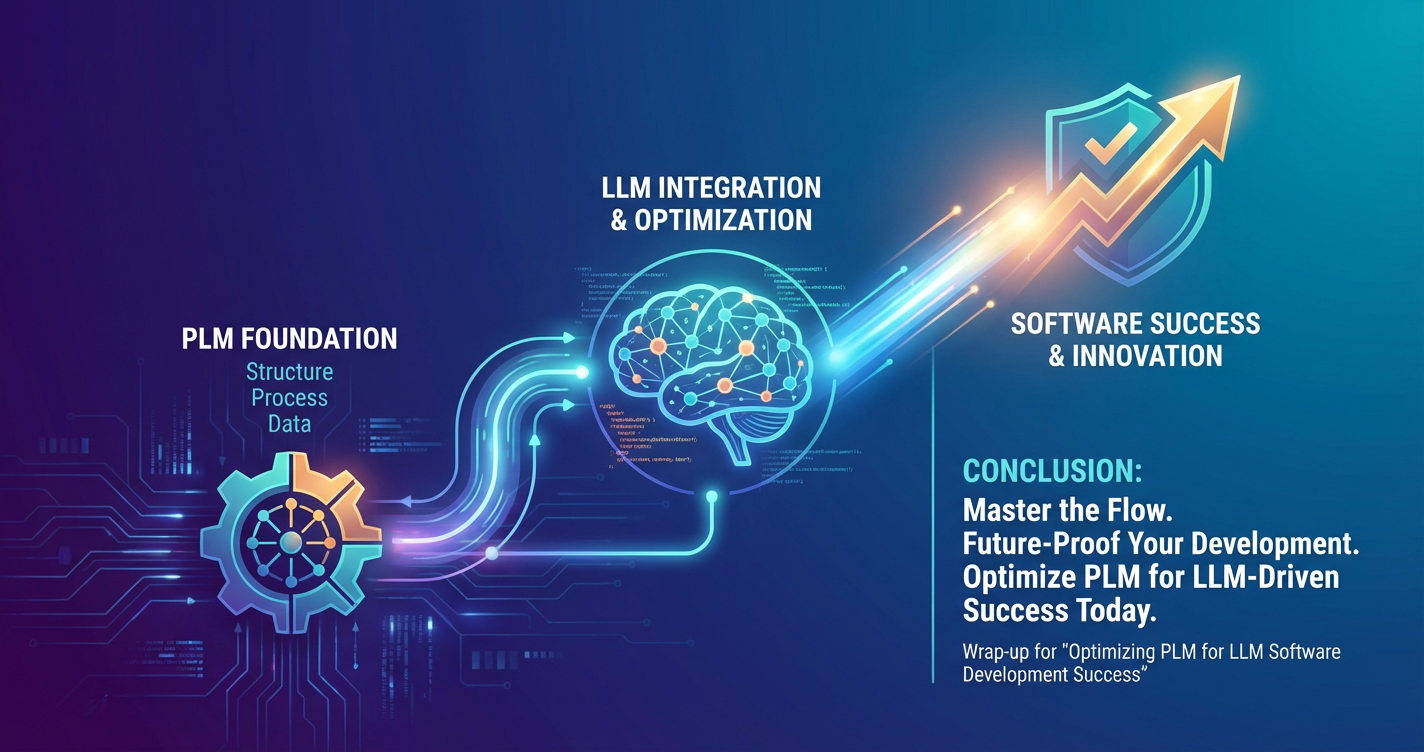
Ultimately, the benefits of adopting an optimized PLM for LLM software are profound: faster time-to-market, enhanced model quality and reliability, strengthened security and compliance, improved resource efficiency, better collaboration, and a sustainable competitive advantage. While challenges such as the rapid evolution of LLMs, deepening ethical considerations, and cost management will persist, a resilient and adaptive PLM framework provides the strategic blueprint to navigate these complexities. By embracing structured excellence, organizations can confidently master the AI frontier, transforming the boundless potential of LLMs into tangible, ethical, and high-impact software solutions that drive progress and redefine industries for years to come.
5 Frequently Asked Questions (FAQs)
1. What is the primary difference between traditional PLM and PLM for LLM software? The primary difference lies in the nature of the product components and their lifecycle considerations. Traditional PLM focuses on physical product parts, mechanical designs, or explicit software code. PLM for LLM software, however, emphasizes the lifecycle management of data (training data, inference data), models (foundational models, fine-tuned models, model versions), and prompts (prompt engineering, prompt versions, safety prompts). It also uniquely incorporates continuous ethical assessments, bias detection, and complex MLOps (Machine Learning Operations) for deployment and monitoring, which are less central in traditional PLM.
2. Why are AI Gateways / LLM Proxies essential for LLM development? AI Gateways (or LLM Proxies / LLM Gateways) are essential because they act as a unified, intelligent intermediary layer between your applications and various LLM services. They provide a single point of control for managing security (authentication, authorization, input/output filtering), optimizing costs (rate limiting, caching, cost tracking), enhancing performance (load balancing, intelligent routing), and improving observability (centralized logging, monitoring). They abstract away the complexity of integrating with multiple LLM providers and models, ensuring consistency, scalability, and robust governance for all AI interactions, significantly streamlining the operational phase of LLM PLM.
3. How does prompt management fit into the LLM PLM framework? Prompt management is a critical and distinct pillar within the LLM PLM framework, treated with the same rigor as code or data management. It involves the systematic creation, testing, version control, and deployment of prompts. Just as source code, every prompt (or prompt template) iteration needs to be tracked, reviewed, and validated. Prompt management ensures consistency in model behavior, enables A/B testing of prompt effectiveness, and allows for rapid iteration and rollback of prompt changes, directly impacting the quality and safety of the LLM application.
4. What are the biggest ethical considerations in LLM software PLM? The biggest ethical considerations in LLM software PLM revolve around bias, fairness, transparency, privacy, and safety. This includes ensuring that training data is fair and representative to prevent the LLM from perpetuating or amplifying societal biases. PLM must integrate continuous ethical impact assessments, bias detection mechanisms, red-teaming exercises to identify harmful content generation, and robust privacy-preserving techniques for data handling. The framework must also address the challenge of LLM "hallucinations" and the potential for misuse, designing systems to promote responsible and trustworthy AI.
5. Can an existing PLM system be adapted for LLM software, or is a new one needed? An existing PLM system can often be adapted and extended for LLM software, rather than requiring an entirely new system from scratch. The core principles of lifecycle management, version control, and process governance are foundational. However, significant customizations and integrations with specialized tools are necessary. This involves adding specific modules for data versioning, model registries, prompt management, MLOps pipelines, and AI Gateway solutions. The adaptation requires rethinking workflows to accommodate the iterative, data-driven, and probabilistic nature of LLM development, rather than merely grafting LLM components onto an existing, rigid framework.
🚀You can securely and efficiently call the OpenAI API on APIPark in just two steps:
Step 1: Deploy the APIPark AI gateway in 5 minutes.
APIPark is developed based on Golang, offering strong product performance and low development and maintenance costs. You can deploy APIPark with a single command line.
curl -sSO https://download.apipark.com/install/quick-start.sh; bash quick-start.sh

In my experience, you can see the successful deployment interface within 5 to 10 minutes. Then, you can log in to APIPark using your account.

Step 2: Call the OpenAI API.