Optimizing PLM in LLM Software Development


The advent of Large Language Models (LLMs) has heralded a transformative era in software development, fundamentally altering how applications are conceived, built, and interact with the world. These sophisticated AI systems, capable of understanding, generating, and processing human-like text, are rapidly being integrated into an ever-expanding array of products and services, from advanced chatbots and content generation tools to intelligent data analysis platforms and sophisticated developer assistants. However, the unique characteristics of LLM-powered software – including their probabilistic nature, reliance on vast datasets, continuous learning cycles, and inherent ethical considerations – introduce complexities that far exceed those encountered in traditional software engineering. Developing, deploying, and maintaining these intelligent systems demand a more structured, yet adaptable, approach. This is where the principles of Product Lifecycle Management (PLM), traditionally a cornerstone of manufacturing and hardware development, become not just relevant but absolutely critical for bringing order, efficiency, and robust governance to the chaotic frontier of LLM software development.
Adapting PLM for LLMs means establishing comprehensive strategies and robust frameworks that guide an LLM-powered product from its initial conceptualization through design, development, testing, deployment, ongoing maintenance, and eventual retirement. It necessitates a holistic view that encompasses not only the code and infrastructure but also the models themselves, the training data, the prompt engineering strategies, and the critical LLM Gateway and API Gateway infrastructure that underpins their interaction with the broader ecosystem. Furthermore, an effective PLM strategy for LLMs must embed rigorous API Governance from the outset, ensuring security, compliance, performance, and controlled evolution across the entire lifecycle. This article delves deep into how PLM principles can be effectively applied and optimized within the LLM software development landscape, exploring the unique challenges, best practices, and the pivotal role played by modern gateway solutions and stringent governance frameworks in navigating this exciting yet complex domain.
I. Understanding Product Lifecycle Management (PLM) in the Software Context
Product Lifecycle Management (PLM) is a strategic, enterprise-wide business concept that manages the entire lifecycle of a product from its initial conception, through design and manufacture, to service and disposal. While its origins are deeply rooted in industries dealing with physical products like automotive, aerospace, and electronics, the core tenets of PLM—structured process management, data visibility, collaboration, and continuous improvement—are profoundly applicable and increasingly vital for complex software systems, especially those incorporating advanced AI like LLMs. In the software domain, PLM extends beyond merely managing code; it encompasses the strategic oversight of requirements, architecture, development, testing, deployment, maintenance, and eventual obsolescence of software solutions. It aims to streamline operations, reduce time-to-market, enhance product quality, and ensure regulatory compliance by providing a single source of truth for all product-related information and activities.
Traditionally, software development often adopted more agile, iterative models that, while excellent for rapid feature delivery, sometimes lacked the holistic, long-term strategic planning and governance that PLM offers. However, as software systems grow in complexity, scale, and criticality, and particularly with the integration of AI components, the need for a more structured, lifecycle-oriented approach becomes apparent. PLM in software ensures that decisions made at the early stages about architecture, security, and scalability resonate positively throughout the product’s life, rather than becoming technical debt or insurmountable challenges later on. It emphasizes forward-thinking design, robust change management, and comprehensive documentation, all of which are essential for maintaining sophisticated, evolving systems like those built around LLMs.
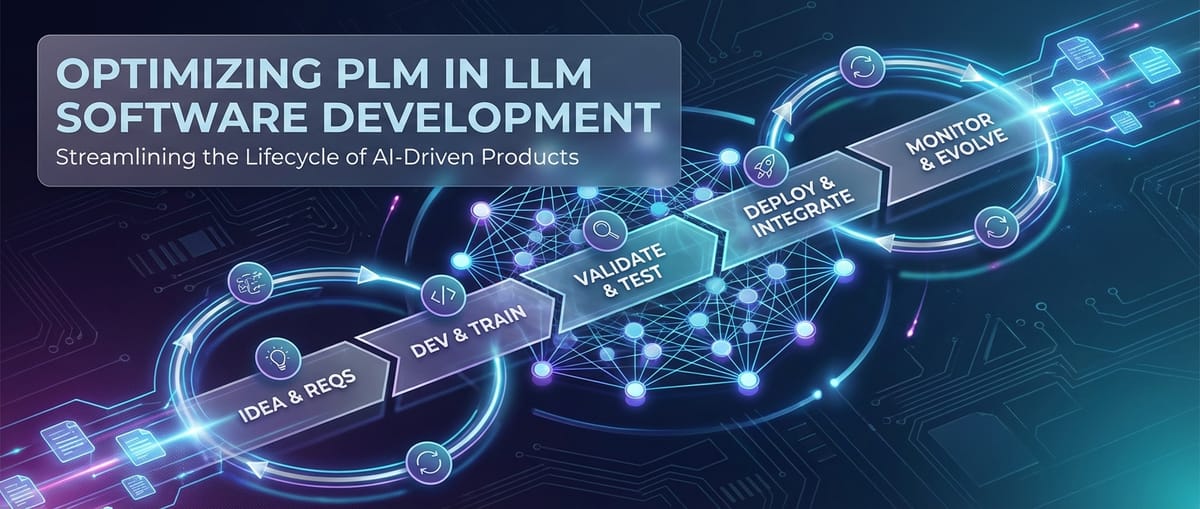
Let's delineate the key phases of PLM and highlight their specific implications for LLM-based software:
- Conception & Ideation: This initial phase involves identifying market needs, defining product vision, scoping functionalities, and assessing technical and business feasibility. For LLMs, this means rigorously evaluating potential use cases, understanding the specific problems an LLM can solve, considering data availability and quality for training, and performing an early-stage ethical risk assessment. It’s about asking: "Can an LLM genuinely add value here, and what are the potential pitfalls?"
- Design & Planning: In this phase, detailed specifications are created, architecture is defined, and development plans are laid out. For LLM software, this involves selecting appropriate models (open-source, proprietary, custom-trained), designing prompt engineering strategies, planning data acquisition and preprocessing, outlining integration points (e.g., via an LLM Gateway or API Gateway), and establishing monitoring and evaluation metrics. Security and privacy by design are paramount here, especially given the sensitive nature of data often processed by LLMs.
- Development & Implementation: This is where the product is built. For LLM applications, it's not just coding traditional software logic but also engineering prompts, fine-tuning models, developing data pipelines, building user interfaces, and integrating with external services. This phase requires meticulous version control for code, models, data, and prompts, as changes in any component can significantly impact the LLM's behavior.
- Testing & Validation: Rigorous testing is crucial to ensure the software meets specifications and quality standards. For LLMs, this extends beyond traditional unit and integration tests to include prompt robustness testing, bias detection, factual accuracy checks, performance benchmarks, and adversarial testing to uncover vulnerabilities or unintended behaviors. This phase must validate the LLM's outputs against defined criteria and ensure ethical guidelines are met.
- Deployment & Launch: This phase involves releasing the product to users, managing infrastructure, and scaling operations. For LLM applications, it requires careful orchestration of model serving, traffic management (often handled by an LLM Gateway or API Gateway), monitoring performance and cost in real-time, and implementing rollback strategies for unexpected issues. Ensuring high availability and low latency is critical for user experience.
- Maintenance, Iteration & Optimization: Post-launch, products require ongoing support, bug fixes, feature enhancements, and performance optimization. LLM applications demand continuous monitoring for model drift, retraining with new data, A/B testing prompt variations, and integrating user feedback for iterative improvements. This phase is characterized by a continuous loop of learning and adaptation, often facilitated by robust MLOps practices.
- Retirement & Decommissioning: Eventually, products reach the end of their useful life and must be gracefully retired. For LLM software, this involves securely archiving or deleting sensitive data, managing model version deprecation, ensuring smooth transition for users, and maintaining compliance with data retention policies.
By applying this structured PLM framework, organizations can better manage the inherent complexities and rapid evolution cycles of LLM-powered software, fostering innovation while mitigating risks and ensuring long-term sustainability.
II. The Unique Landscape of LLM Software Development
The emergence of Large Language Models has introduced a paradigm shift in software development, creating a unique landscape rife with both unprecedented opportunities and novel challenges. Unlike traditional software, which operates on deterministic logic and explicit rules, LLM-powered applications inherently deal with probabilistic outputs, emergent behaviors, and a profound reliance on vast, often opaque, datasets. Understanding these distinctive characteristics is paramount for effectively applying PLM principles and ensuring the robust development of intelligent systems.
A. Generative AI's Paradigm Shift
The fundamental shift brought by generative AI, particularly LLMs, lies in moving from explicit programming of every function to guiding a highly capable model through natural language instructions—prompts. This means:
- From Deterministic Logic to Probabilistic Outputs: Traditional software functions are predictable; given the same input, they produce the same output. LLMs, however, are statistical engines that generate outputs probabilistically. This non-deterministic nature complicates testing, validation, and debugging, requiring new metrics for evaluating performance and reliability. Developers must learn to embrace and manage variability rather than striving for absolute predictability.
- Prompt Engineering as a New Development Skill: Crafting effective prompts has become a critical skill, often replacing or complementing traditional coding. Prompt engineering involves designing clear, concise, and contextually rich instructions to elicit desired responses from an LLM. This iterative process of refinement, experimentation, and optimization is a core development activity, demanding dedicated tools, version control, and evaluation frameworks.
- Model Selection and Evolving Capabilities: The LLM landscape is characterized by rapid innovation, with new models, architectures, and capabilities emerging constantly. Developers must navigate a complex ecosystem of proprietary models (e.g., OpenAI's GPT series, Anthropic's Claude) and open-source alternatives (e.g., Llama, Mistral). The choice of model impacts performance, cost, ethical considerations, and integration complexity. Furthermore, models are continuously updated, often without full transparency into changes, posing challenges for maintaining consistent application behavior and requiring continuous adaptation.
B. Data Management and Ethical Considerations
Data is the lifeblood of LLMs, both for their initial training and for any subsequent fine-tuning or contextualization. The management of this data, coupled with profound ethical considerations, forms another unique facet of LLM development:
- Training Data, Fine-tuning Data, Inference Data: Each type of data presents distinct challenges. Initial training data for foundation models is massive and often sourced from the public internet, carrying inherent biases. Fine-tuning involves curating smaller, task-specific datasets, requiring careful annotation and quality control. Inference data—the inputs provided by users—must be handled with utmost privacy and security. Managing the provenance, quality, and lifecycle of these diverse data types is complex.
- Bias, Fairness, Transparency, Explainability: LLMs learn from the data they are trained on, meaning they can inadvertently perpetuate and even amplify societal biases present in that data. Addressing bias and ensuring fairness in LLM outputs is a continuous ethical challenge, requiring proactive measures in data curation, model evaluation, and output moderation. Achieving transparency regarding how an LLM arrived at a particular answer (explainability) remains an active area of research, but its importance for critical applications cannot be overstated.
- Privacy and Data Security: LLM applications often process sensitive user data. Ensuring robust data privacy (e.g., anonymization, differential privacy) and stringent security measures against data leakage or adversarial attacks is paramount. The architecture must account for data ingress and egress, ensuring that sensitive information is never inappropriately exposed or stored, especially when interacting with third-party LLM providers.
C. Continuous Learning and Iteration
Unlike traditional software which might have discrete update cycles, LLM applications often operate in a state of continuous evolution and learning:
- RAG, Fine-tuning, Continuous Pre-training: Techniques like Retrieval Augmented Generation (RAG) allow LLMs to draw upon external, up-to-date knowledge bases, necessitating robust data indexing and retrieval pipelines. Fine-tuning adapts a base model to specific tasks or domains, requiring ongoing management of training datasets and model versions. For highly critical or rapidly evolving domains, continuous pre-training may even be necessary, demanding massive computational resources and sophisticated MLOps pipelines.
- Model Drift and Performance Monitoring: LLMs can experience "model drift," where their performance degrades over time due as the real-world data they encounter diverges from their training data. This necessitates continuous monitoring of key performance indicators, output quality, and user feedback loops. Proactive detection of drift and automated retraining or fine-tuning mechanisms are essential for maintaining application efficacy.
D. Interacting with LLMs: The Need for Robust Interfaces
Connecting applications to LLMs, whether they are hosted internally or by third-party providers, introduces another layer of complexity. These interactions are almost universally facilitated through APIs.
- The Role of APIs and Gateways: Applications don't directly "talk" to the complex neural networks of an LLM. Instead, they interact via well-defined Application Programming Interfaces (APIs). As organizations increasingly leverage multiple LLMs from various providers or deploy their own custom models, managing these diverse API endpoints, ensuring consistent interaction patterns, and applying centralized policies becomes a significant challenge. This is precisely where specialized LLM Gateway solutions become indispensable. An LLM Gateway acts as an intelligent proxy, abstracting away the complexities of different LLM providers, standardizing invocation, and offering crucial services like load balancing, cost tracking, security, and observability across all LLM interactions. Similarly, a broader API Gateway provides robust management for the entire API ecosystem, ensuring secure and scalable connectivity not just to LLMs, but to all microservices that compose an intelligent application.
In summary, LLM software development is a dynamic, multidisciplinary field demanding an integrated approach that spans data science, machine learning engineering, traditional software engineering, and a deep understanding of ethical implications. The probabilistic nature, data dependency, continuous evolution, and the critical role of robust API interfaces necessitate a sophisticated PLM strategy tailored specifically for these intelligent systems.
III. Integrating PLM Principles into LLM Software Development
Integrating traditional PLM principles into the unique lifecycle of LLM software development requires a thoughtful adaptation of each phase to address the specific challenges and opportunities presented by generative AI. This adaptation is crucial for building robust, scalable, secure, and ethically sound LLM-powered applications.
A. Strategic Planning & Ideation
The initial phase, traditionally focused on market analysis and product definition, gains several critical dimensions in the LLM context:
- Defining Use Cases, Business Value, and Ethical Guidelines from the Start: Before writing any code or prompting a model, organizations must clearly articulate why an LLM is the right solution. What specific business problems will it solve? What is the quantifiable value proposition? Crucially, this phase must also involve a proactive and comprehensive ethical risk assessment. This includes identifying potential biases, misuse scenarios, privacy implications, and ensuring alignment with organizational values and regulatory frameworks. "Shift-left" on ethics means embedding these considerations at the very earliest ideation stage, rather than treating them as an afterthought.
- Feasibility Studies for LLM Integration: Not every problem is best solved by an LLM. This phase involves deep dives into technical feasibility (e.g., availability of necessary data for fine-tuning, computational resources, integration complexity), operational feasibility (e.g., maintaining model performance, monitoring costs), and ethical feasibility (e.g., can we mitigate identified risks?). It might involve initial small-scale experiments or proof-of-concepts to validate assumptions about model capabilities and data requirements.
- Version Control for Prompts and Model Configurations: While seemingly a development-phase concern, establishing a system for versioning prompts and model configurations (e.g., temperature, top_p) at the planning stage is a strategic decision. As different use cases or product features are conceptualized, the initial prompt structures or model choices should be documented and versioned, laying the groundwork for systematic iteration and comparison throughout the development lifecycle. This prevents "prompt sprawl" and ensures traceability.
B. Design & Architecture for Scalability and Resilience
The architectural design for LLM applications must explicitly address the probabilistic nature of models, the need for continuous updates, and the imperative for high availability and security:
- Modular Design for LLM Components: Architectural decisions should promote modularity, separating core application logic from LLM interaction logic, prompt management, and data handling. This allows for easier swapping of LLMs, independent updates to prompt strategies, and more manageable testing. For instance, an application might have a "prompt layer" that abstracts the specifics of generating prompts for different models, and a "model interaction layer" that handles API calls to various LLM providers, potentially routing them through an LLM Gateway.
- Separation of Concerns (Application Logic vs. LLM Interaction): Clear boundaries between traditional software components and LLM-specific logic are vital. This includes distinct data pipelines for training, fine-tuning, and inference. The application should be designed to handle potential failures or unexpected outputs from the LLM gracefully, perhaps through fallback mechanisms or human-in-the-loop interventions.
- Emphasis on Asynchronous Operations and Fallbacks: Given that LLM inferences can introduce latency, and external LLM services can experience outages, architectural designs must prioritize asynchronous processing to maintain application responsiveness. Implementing robust fallback strategies—such as serving cached responses, reverting to simpler rule-based logic, or gracefully degrading functionality—is critical for resilience. Circuit breakers and retry mechanisms should be standard.
- Data Flow and Security Architecture: A detailed data flow diagram illustrating how data enters the application, interacts with the LLM, and is processed and stored is essential. This forms the basis for designing a secure architecture that incorporates encryption at rest and in transit, strict access controls, data masking for sensitive information, and compliance with data residency requirements. The role of an API Gateway or LLM Gateway in enforcing these security policies at the edge becomes paramount.
C. Development & Prompt Engineering Best Practices
The development phase for LLM software extends beyond traditional coding to encompass the iterative art and science of prompt engineering:
- Version Control for Prompts, Chains, and Agents: Just as source code is versioned, so too must be prompts. A change in a single word or punctuation mark in a prompt can drastically alter an LLM's output. Therefore, prompts, prompt templates, and the complex "chains" or "agents" that orchestrate multiple LLM calls or tools, must be meticulously versioned. This allows developers to track changes, revert to previous versions, and compare the performance of different prompt strategies. This is a functionality increasingly offered by sophisticated LLM Gateway solutions.
- Prompt Testing and Evaluation Frameworks: Manual inspection of LLM outputs is neither scalable nor reliable. Development must incorporate automated or semi-automated frameworks for testing prompts. This involves creating diverse test datasets (including adversarial examples), defining evaluation metrics (e.g., factual accuracy, relevance, coherence, safety, bias), and systematically running prompts against these datasets. Tools for prompt-driven development often integrate with these frameworks.
- Collaborative Development Workflows: Building LLM applications is often a cross-functional endeavor involving software engineers, ML engineers, data scientists, domain experts, and UX designers. PLM emphasizes collaboration, which in this context means shared platforms for prompt experimentation, joint review processes for model outputs, and integrated tools that support the entire team.
- Standardizing LLM Invocation: To ensure consistency and simplify development across different teams and projects, it's crucial to standardize how LLMs are invoked. This is where an LLM Gateway becomes invaluable. It can provide a unified API interface for various underlying LLMs, abstracting away provider-specific nuances. For instance, developers can call a single endpoint on the gateway, and the gateway handles the routing, authentication, and potential transformations needed for OpenAI, Anthropic, or a custom model. This drastically simplifies the developer experience and reduces maintenance overhead. An example of such a platform is ApiPark, which offers quick integration of 100+ AI models and a unified API format for AI invocation, ensuring that changes in AI models or prompts do not affect the application or microservices.
D. Rigorous Testing and Evaluation
Testing LLM-powered applications is significantly more complex than traditional software due to the non-deterministic nature of outputs and the broad range of potential behaviors:
- Functional Testing, Performance Testing, Security Testing: Standard testing practices remain essential. Functional tests ensure the application's non-LLM components work as expected. Performance tests evaluate latency, throughput, and scalability under load, especially considering the potential overhead of LLM calls. Security testing must probe for prompt injection vulnerabilities, data leakage risks, and unauthorized access attempts.
- Evaluation of LLM Outputs (e.g., Accuracy, Relevance, Safety, Bias): This is a specialized area of testing. It involves both quantitative metrics (e.g., ROUGE for summarization, BLEU for translation, or F1 score for classification) and qualitative human evaluation. Automated tools can help detect hallucination, toxic language, or biased outputs, but human review remains crucial for subjective quality and safety assessments. Test suites must include a wide variety of inputs designed to stress the model and uncover edge cases.
- Adversarial Testing: Proactively attempting to "break" the LLM application by providing malicious or tricky inputs is vital. This helps identify prompt injection vulnerabilities, jailbreaks, or ways users could manipulate the system for unintended purposes.
- A/B Testing for Prompt Variations: Given the sensitivity of LLM performance to prompt design, A/B testing different prompt versions in a controlled environment is a powerful technique for continuous optimization. This allows developers to gather data on which prompt strategies yield superior results for specific tasks before full deployment.
E. Deployment, Monitoring, and Operations
The deployment and operational phases are critical for ensuring the sustained performance, security, and cost-efficiency of LLM applications:
- Blue/Green Deployments, Canary Releases for LLM Updates: Deploying new LLM models, fine-tuned versions, or significantly altered prompt strategies requires careful risk mitigation. Blue/Green deployments allow a new version to run alongside the old, while canary releases direct a small percentage of traffic to the new version before a full rollout. These strategies minimize disruption and allow for real-time monitoring of the new version's performance and behavior.
- Real-time Monitoring of Model Performance, Latency, Cost: Continuous observability is non-negotiable. This involves monitoring key metrics like inference latency, throughput, error rates, token usage, and API costs from LLM providers. Anomaly detection systems should flag unusual spikes or drops, which could indicate model drift, API issues, or security threats.
- Automated Alerting for Deviations: Tightly integrated alerting systems are necessary to notify operations teams of performance degradation, security incidents, or unexpected cost overruns. Alerts should be actionable and provide sufficient context for rapid troubleshooting.
- Rollback Strategies: Despite rigorous testing, unforeseen issues can arise post-deployment. Robust rollback strategies, enabling quick reversion to a previous, stable version of the LLM application (including prompts and model configurations), are essential for minimizing downtime and impact.
- Crucial Role of API Gateway and LLM Gateway: This is where the infrastructure becomes the backbone of robust operations. An API Gateway acts as the single entry point for all API calls, handling traffic forwarding, load balancing, authentication, authorization, rate limiting, and caching for all services, including those interacting with LLMs. An LLM Gateway specializes this role for AI services, providing a unified management layer for multiple LLM providers. It can perform intelligent routing (e.g., sending sensitive requests to an on-premises model, or routing based on cost/latency), enforce security policies specific to AI calls, track token usage for cost analysis, and centralize logging of all LLM interactions. ApiPark offers end-to-end API lifecycle management, assisting with traffic forwarding, load balancing, and versioning of published APIs, and its performance rivals Nginx, capable of handling over 20,000 TPS. These gateways are instrumental in managing the dynamic nature of LLM interactions.
F. Maintenance, Iteration, and Evolution
LLM applications are rarely "done"; they are continuously evolving systems:
- Continuous Integration/Continuous Deployment (CI/CD) for LLM Applications: CI/CD pipelines need to be extended to accommodate LLM-specific artifacts, including prompt versions, model weights, and data pipelines. Automated tests, including prompt evaluation frameworks, should be integrated into the pipeline to ensure that every change is validated before deployment.
- Model Retraining Pipelines: As model drift occurs or new data becomes available, automated retraining pipelines are essential. These pipelines should handle data ingestion, preprocessing, model training, validation, and versioning, ensuring that the application can seamlessly switch to improved models without manual intervention.
- Feedback Loops for User Input and Performance Data: Collecting and analyzing user feedback (e.g., thumbs up/down, corrections) is crucial for identifying areas for improvement. This feedback, along with performance data from monitoring systems, should feed back into the ideation and development phases, forming a continuous improvement loop.
- Managing Deprecation of Old Models/Prompts: Just as software components are deprecated, so too must be older LLM models or prompt strategies that are no longer effective or efficient. A clear deprecation policy, including communication to users and transition plans, is vital for managing the evolution of the LLM application ecosystem.
G. Decommissioning and Archiving
The end of an LLM product's life requires careful planning to ensure compliance and data security:
- Data Retention Policies, Model Archiving: Organizations must adhere to data retention policies, securely archiving or deleting sensitive data that was used by or generated by the LLM. Older model versions might need to be archived for compliance or audit purposes, even if no longer active.
- Secure Data Destruction: When an LLM application is decommissioned, all associated data, including training data, inference logs, and intermediate processing results, must be securely destroyed in accordance with legal and regulatory requirements. This is especially critical for personally identifiable information (PII) or other sensitive data.
- Transition Planning: If an LLM-powered feature is being replaced by another, a smooth transition plan for users and data migration is essential to minimize disruption.
By meticulously integrating these adapted PLM principles, organizations can establish a robust, sustainable, and ethically responsible framework for developing and managing their LLM software portfolio.
APIPark is a high-performance AI gateway that allows you to securely access the most comprehensive LLM APIs globally on the APIPark platform, including OpenAI, Anthropic, Mistral, Llama2, Google Gemini, and more.Try APIPark now! 👇👇👇
IV. The Indispensable Role of Gateways and Governance in LLM PLM
In the complex and rapidly evolving world of LLM software development, the infrastructure that manages interaction with these intelligent models, coupled with the overarching policies that govern their use, becomes absolutely critical. This section delves into the transformative roles of specialized gateways and comprehensive governance frameworks.
A. The Power of an LLM Gateway
As organizations integrate a growing number of LLMs—from various third-party providers to internally fine-tuned models—the challenge of managing these diverse interfaces, optimizing their usage, and ensuring their security rapidly escalates. This is where the LLM Gateway emerges as an indispensable architectural component.
- Definition and Functionality: An LLM Gateway (also often referred to as an AI Gateway or AI Proxy) is a specialized type of API Gateway designed specifically to manage and proxy requests to Large Language Models and other AI services. It acts as a central control plane and a unified access point for all LLM interactions, abstracting away the underlying complexities and differences between various model providers and versions.
- Key Benefits:
- Unified API for Diverse Models: The most significant advantage is providing a single, consistent API interface to access multiple LLMs (e.g., OpenAI, Anthropic, Google Gemini, custom Hugging Face models). This standardization shields application developers from provider-specific API changes, authentication methods, and data formats, simplifying integration and reducing developer effort. ApiPark excels here, offering quick integration of 100+ AI models and a unified API format for AI invocation, ensuring seamless interaction across a broad spectrum of models.
- Load Balancing and Failover across Models/Providers: An LLM Gateway can intelligently distribute requests across multiple instances of the same model or even across different model providers based on predefined policies (e.g., cost, latency, availability). If one provider experiences an outage or performance degradation, the gateway can automatically reroute requests to an alternative, ensuring high availability and resilience.
- Cost Optimization and Tracking: LLM usage often incurs significant costs, usually based on token consumption. An LLM Gateway can meticulously track token usage per application, user, or team, providing detailed insights for cost attribution and optimization. It can also enforce spending limits, implement caching for frequently requested prompts to reduce redundant LLM calls, and route requests to the most cost-effective model for a given task.
- Caching Mechanisms: For repetitive prompts or common queries, an LLM Gateway can cache responses, serving them directly without making a new call to the underlying LLM. This significantly reduces latency and API costs, improving overall application performance and user experience.
- Security: Authentication, Authorization, Rate Limiting: As a central proxy, the LLM Gateway is an ideal place to enforce robust security policies. It can manage API keys, OAuth tokens, and other authentication methods; enforce fine-grained authorization rules based on user roles or application permissions; and apply rate limiting to prevent abuse or control resource consumption. This is critical for preventing unauthorized access and managing resource allocation, a feature supported by ApiPark through its independent API and access permissions for each tenant and approval workflows.
- Observability: Logging, Monitoring, Analytics: The gateway can capture comprehensive logs for every LLM interaction, including requests, responses, timestamps, and metadata. This centralized logging is invaluable for debugging, performance analysis, security auditing, and compliance. Detailed monitoring of latency, error rates, and token usage provides crucial operational insights. ApiPark offers detailed API call logging and powerful data analysis, allowing businesses to trace issues, monitor trends, and perform preventive maintenance.
- Prompt Management and Versioning: More advanced LLM Gateways can offer features for managing and versioning prompts, allowing developers to define, store, and update prompt templates centrally. This ensures consistency, facilitates A/B testing of different prompts, and enables easier rollback to previous prompt versions, all without altering application code. This effectively brings the "prompt engineering" aspect of LLM development under a controlled, versioned lifecycle.
- Transformation and Moderation: The gateway can transform requests or responses to meet specific requirements, such as stripping sensitive information before sending it to an external LLM or formatting LLM outputs for a specific application. It can also integrate with content moderation APIs to filter out harmful or inappropriate LLM generations before they reach end-users.
By centralizing and standardizing LLM interactions, an LLM Gateway significantly simplifies the development and operation of AI-powered applications, making the PLM of LLM software far more manageable and efficient.
B. API Gateway: The Foundation for Connectivity
While an LLM Gateway is specialized for AI, the broader API Gateway concept remains fundamental, often serving as the underlying infrastructure or a complementary layer for the LLM Gateway itself.
- Traditional Role: An API Gateway acts as the single entry point for a group of microservices or backend services, handling client requests and routing them to the appropriate service. It provides critical cross-cutting concerns such as authentication, authorization, rate limiting, traffic management, caching, and monitoring. In a microservices architecture, it protects backend services from direct exposure, simplifies client-side consumption, and offers centralized control.
- Extended Role in LLM Context: In an LLM-powered application, the API Gateway manages not only the calls to the LLM Gateway (if present) but also to all other non-LLM specific services that compose the intelligent application. This could include user authentication services, data retrieval services (e.g., for RAG), payment processing, or custom business logic. An API Gateway can also handle the initial validation and routing of requests that might eventually lead to an LLM call. It ensures that the entire application ecosystem, including its AI components, is securely and efficiently interconnected.
- Benefits: Traffic management (routing, load balancing), security (authentication, authorization, threat protection), protocol translation, analytics, and serving as a developer portal for API discovery.
- Overlap and Synergy between API Gateway and LLM Gateway: An LLM Gateway can be viewed as a specialized API Gateway tailored for the unique requirements of AI services. Often, an LLM Gateway might be implemented on top of or alongside a general-purpose API Gateway. The API Gateway provides the foundational infrastructure for managing all external and internal API traffic, while the LLM Gateway adds specific intelligence and capabilities for AI model interactions. Together, they create a robust and secure API landscape essential for modern LLM PLM.
C. Elevating with API Governance
The proliferation of APIs, especially those interacting with complex LLMs, necessitates a robust framework of API Governance. Without it, organizations risk security breaches, inconsistent developer experiences, compliance failures, and spiraling costs.
- Definition: API Governance is the set of rules, processes, and tools that ensure APIs—including those for LLM invocation—are designed, developed, deployed, and managed consistently, securely, and efficiently across an organization. It provides the necessary structure to manage the lifecycle of APIs effectively, aligning them with business objectives and regulatory requirements.
- Pillars of API Governance:
- Standardization: Enforcing consistent API design principles, naming conventions, data formats (e.g., OpenAPI specifications), and versioning strategies. This improves developer experience and reduces integration friction.
- Security: Implementing robust authentication mechanisms (e.g., OAuth, API Keys), authorization policies (RBAC, ABAC), data encryption, vulnerability scanning, and threat protection measures (e.g., WAF, API Firewalls).
- Performance: Defining Service Level Agreements (SLAs) for latency and availability, establishing monitoring frameworks, and optimizing API performance through caching, efficient data transfer, and scaling strategies.
- Compliance: Ensuring APIs adhere to relevant industry regulations (e.g., GDPR, HIPAA, CCPA) and internal company policies, especially regarding data privacy and ethical AI use.
- Lifecycle Management: Establishing clear processes for API design review, publication, deprecation, and retirement, ensuring that APIs evolve in a controlled and predictable manner.
- Visibility & Discovery: Providing a centralized API catalog or developer portal to make APIs easily discoverable, understandable, and consumable by internal and external developers. ApiPark facilitates this by allowing for the centralized display of all API services, making it easy for different departments and teams to find and use the required API services.
- API Governance in the LLM Context:
- Governing Prompt Design and Usage: Establishing guidelines for prompt engineering, including best practices for clarity, safety, and effectiveness. Policies might dictate sensitive data handling within prompts or enforce specific response formats.
- Ensuring Ethical AI Use through Policy Enforcement: API Governance is the vehicle for enforcing ethical AI policies at the technical layer. This can include preventing certain types of requests, filtering LLM outputs for toxicity or bias, and ensuring that usage aligns with responsible AI principles.
- Managing Access to Sensitive Models/Data: Through an API Gateway or LLM Gateway, governance policies can dictate who can access which LLMs, with what permissions, and under what conditions, especially for models handling highly sensitive data. ApiPark ensures this through independent API and access permissions for each tenant, and by requiring approval for API resource access, preventing unauthorized API calls and potential data breaches.
- Controlling Costs and Resource Allocation: Governance policies can be implemented to control token usage, enforce quotas, and prioritize access based on business needs, preventing runaway cloud costs associated with LLM inference.
- Controlled Evolution and Deprecation: For LLM models and their associated APIs, governance ensures a structured approach to introducing new model versions, updating prompt strategies, and deprecating older endpoints, minimizing disruption to dependent applications.
The symbiotic relationship between an LLM Gateway, an API Gateway, and robust API Governance is foundational to optimizing PLM in LLM software development. These elements provide the necessary control, visibility, and automation to manage the inherent complexities of AI, transforming potential chaos into structured, secure, and efficient innovation. An open-source AI gateway and API management platform like ApiPark, launched by Eolink, stands as a prime example of a comprehensive solution offering these critical features, enabling enterprises to enhance efficiency, security, and data optimization across their API and AI ecosystems.
V. Best Practices for Optimizing PLM in LLM Software Development
Optimizing Product Lifecycle Management for LLM software development necessitates a tailored approach that integrates the traditional strengths of PLM with the specific demands of AI. By adopting a set of best practices, organizations can navigate the complexities of LLMs, foster innovation, and build robust, responsible, and scalable intelligent applications.
- Adopt a "Shift-Left" Approach to Ethics and Security:
- Detail: Integrate ethical AI considerations and robust security measures from the very first phase of PLM (ideation and planning). This means conducting thorough ethical risk assessments, bias audits, and privacy impact analyses at the project's inception, rather than as a post-development afterthought. Similarly, "security by design" is paramount, ensuring that data encryption, access controls, and vulnerability scanning are architected into the system from the ground up. This proactive approach significantly reduces the cost and complexity of remediation later in the lifecycle and ensures that ethical and secure foundations are integral to the product's DNA.
- Impact: Prevents costly retrofits, mitigates reputational risks, builds user trust, and ensures regulatory compliance from day one.
- Implement Robust Version Control for Everything (Code, Models, Data, Prompts, Configurations):
- Detail: In LLM development, "everything" is mutable and impactful. Beyond traditional code, this extends to training datasets, fine-tuned model weights, prompt templates (including few-shot examples and system messages), and infrastructure configurations. Utilizing tools like Git for code and prompts, DVC or MLflow for data and model versioning, and configuration management systems for infrastructure ensures a complete audit trail. This allows developers to reproduce experiments, track changes across the entire stack, and confidently revert to previous stable states.
- Impact: Ensures traceability, reproducibility, facilitates debugging, supports collaborative development, and enables controlled iteration.
- Embrace MLOps/LLMOps Principles:
- Detail: Machine Learning Operations (MLOps) and its LLM-specific variant (LLMOps) are crucial for industrializing the development, deployment, and maintenance of AI applications. This involves automating the entire lifecycle, from data ingestion and model training to deployment, monitoring, and retraining. Key components include CI/CD pipelines tailored for ML artifacts, automated model validation, continuous monitoring for model drift, and intelligent retraining triggers. MLOps platforms provide the infrastructure to manage the continuous learning cycles inherent in LLM applications.
- Impact: Accelerates time-to-market, improves model reliability, reduces operational overhead, and enables continuous improvement loops.
- Prioritize Observability: Comprehensive Logging, Tracing, Monitoring:
- Detail: Given the non-deterministic nature of LLMs, understanding why an LLM produced a particular output is critical for debugging, optimizing, and ensuring safety. Implement comprehensive logging of all LLM requests and responses, including prompts, model parameters, and generated outputs. Utilize distributed tracing to track user requests across multiple services and LLM calls. Establish real-time monitoring dashboards for key metrics such as latency, error rates, token usage, cost, and qualitative output assessments (e.g., toxicity scores). This level of observability is facilitated significantly by the detailed logging capabilities of an LLM Gateway or API Gateway.
- Impact: Enables rapid issue identification and resolution, facilitates performance optimization, helps manage costs, and provides critical data for compliance and auditing.
- Establish Clear API Governance Policies for All LLM Interactions:
- Detail: Formulate and enforce comprehensive API Governance policies that specifically address LLM interactions. This includes standardization of prompt formats and response structures, strict authentication and authorization rules for LLM APIs, rate limits to prevent abuse and control costs, and policies for data handling (masking, encryption) when interacting with external LLMs. These policies should be enforced at the API Gateway and LLM Gateway layers to ensure consistent application across all services and teams. Mechanisms like those found in ApiPark allowing for subscription approval for API access are crucial elements of robust governance.
- Impact: Enhances security, ensures compliance, provides consistent developer experience, manages costs, and reduces operational risks associated with LLM usage.
- Leverage LLM Gateway and API Gateway for Centralized Control and Management:
- Detail: As detailed previously, deploy an LLM Gateway as a single, intelligent entry point for all LLM calls. This gateway should handle unified API access, load balancing, cost tracking, security enforcement (authentication, authorization, rate limiting), and centralized logging. Complement this with a robust API Gateway for managing all other microservices and integrating the LLM components into the broader application ecosystem. These gateways act as powerful control planes for implementing governance policies and abstracting away complexity for developers.
- Impact: Simplifies integration, improves security, optimizes performance and cost, enhances observability, and enables flexible management of diverse LLM providers.
- Foster Cross-functional Collaboration:
- Detail: LLM software development is inherently interdisciplinary. Encourage close collaboration between AI researchers, ML engineers, software developers, data scientists, prompt engineers, domain experts, legal teams, and ethics committees throughout the entire PLM. Establish clear communication channels, shared goals, and integrated tooling to facilitate this collaboration, ensuring diverse perspectives are incorporated at every stage from ideation to deployment and beyond.
- Impact: Leads to more innovative solutions, reduces friction, ensures comprehensive risk assessment, and builds a shared understanding of product goals and ethical responsibilities.
- Invest in Continuous Learning and Adaptation:
- Detail: The LLM landscape is evolving at an unprecedented pace. Organizations must cultivate a culture of continuous learning, dedicating resources to training, research, and experimentation with new models, techniques, and tools. This adaptability is crucial for staying competitive and leveraging the latest advancements while also understanding and mitigating emerging risks. Regular reviews of PLM processes themselves are also necessary to ensure they remain relevant and effective for this rapidly changing domain.
- Impact: Fosters innovation, maintains competitive advantage, improves team skills, and ensures the PLM framework remains agile and responsive.
By consciously implementing these best practices, organizations can move beyond mere experimentation with LLMs to truly industrialize their development, creating a sustainable, secure, and highly efficient ecosystem for intelligent software. This optimization of PLM is not just about managing complexity; it's about unlocking the full potential of large language models responsibly and effectively.
VI. Challenges and Future Outlook
While the application of PLM principles, supported by robust gateways and governance, offers a clear path to optimizing LLM software development, the journey is not without significant challenges. The landscape of generative AI is still nascent and incredibly dynamic, presenting hurdles that demand continuous innovation and adaptation.
Challenges:
- Rapid Pace of LLM Evolution: The sheer speed at which new LLM models, architectures, and capabilities emerge is a double-edged sword. While it fuels innovation, it creates a constant pressure for development teams to keep pace, requiring frequent model updates, prompt re-engineering, and architectural adjustments. This rapid iteration can strain PLM processes that are designed for more stable product lifecycles. Managing model deprecation, ensuring backward compatibility, and planning for seamless transitions become ongoing operational challenges.
- Regulatory Uncertainty: The legal and ethical frameworks surrounding AI, particularly LLMs, are still in their infancy. Governments worldwide are grappling with how to regulate areas like data privacy, bias, intellectual property generated by AI, and accountability for AI decisions. This regulatory uncertainty creates a moving target for compliance within PLM, requiring organizations to build adaptable systems and processes that can quickly incorporate new legal requirements.
- Scaling Ethical Considerations: While "shift-left" on ethics is a best practice, scaling ethical AI across a large portfolio of LLM-powered products, each with unique use cases and potential risks, is immensely complex. Detecting subtle biases, preventing misuse, ensuring fairness, and achieving explainability at scale requires sophisticated tools, continuous monitoring, and dedicated human oversight, which can be resource-intensive.
- Managing Cost vs. Performance Trade-offs: LLMs, especially large proprietary models, can be expensive to run, with costs fluctuating based on token usage, model choice, and API provider. Optimizing for performance (latency, accuracy) often comes at a cost, creating continuous trade-offs. Balancing these factors while ensuring the application meets its business objectives and user expectations requires sophisticated cost management strategies, often facilitated by the tracking and routing capabilities of an LLM Gateway.
- Data Quality and Provenance: The adage "garbage in, garbage out" holds profoundly true for LLMs. Ensuring the quality, relevance, and ethical sourcing of training and fine-tuning data is a perpetual challenge. Managing data provenance across vast datasets, addressing data drift, and maintaining data privacy and security are complex data engineering tasks that directly impact the LLM's performance and safety.
- Talent Gap: The specialized skill sets required for LLM development, including prompt engineering, MLOps, ethical AI, and data governance, are in high demand and short supply. Building and retaining cross-functional teams with these diverse capabilities remains a significant hurdle for many organizations.
Future Outlook:
Despite these challenges, the future of optimizing PLM in LLM software development is characterized by promising advancements and evolving best practices:
- More Sophisticated LLM Gateways Becoming Standard: As the LLM ecosystem matures, highly intelligent and feature-rich LLM Gateway solutions will become ubiquitous. These gateways will likely integrate advanced capabilities for dynamic prompt optimization, intelligent routing based on real-time model performance/cost, comprehensive ethical AI monitoring, and built-in prompt marketplaces. Platforms like ApiPark are paving the way by offering robust feature sets for AI model integration and management, showcasing the value proposition of such specialized gateways.
- Deeper Integration of AI Governance Tools: We will see a greater emergence and adoption of specialized AI governance tools that seamlessly integrate with existing PLM and MLOps platforms. These tools will automate policy enforcement, provide auditable trails of ethical reviews, monitor for compliance risks, and offer more proactive bias detection and mitigation strategies throughout the LLM lifecycle. The principles of API Governance will expand to encompass explicit ethical and AI-specific policies.
- Specialized PLM Platforms for AI: Just as PLM evolved for traditional software, we may see the emergence of highly specialized PLM platforms designed exclusively for AI and ML models. These platforms would offer tailored functionalities for managing model versions, data lineage, prompt libraries, ethical AI assessments, and regulatory compliance across the entire AI product lifecycle, from research to retirement.
- Increased Automation in LLM Lifecycle: The trend towards greater automation will continue, extending to every stage of the LLM lifecycle. This includes automated prompt generation and testing, self-optimizing LLM pipelines, autonomous detection and mitigation of model drift, and intelligent agents assisting in model selection and fine-tuning. This automation will free human experts to focus on higher-level strategic and creative tasks.
- Hybrid and Federated AI Architectures: Organizations will increasingly adopt hybrid AI architectures, combining proprietary cloud-based LLMs with smaller, fine-tuned open-source models deployed on-premises or at the edge. This approach will be driven by data privacy concerns, cost optimization, and the need for specific domain expertise. API Gateway and LLM Gateway solutions will be crucial for seamlessly managing these federated deployments, ensuring consistent access and governance across diverse environments.
The optimization of PLM in LLM software development is not merely a technical exercise but a strategic imperative. By proactively addressing the unique challenges and embracing evolving best practices, organizations can harness the revolutionary power of LLMs to create innovative, ethical, and sustainable products that drive significant value in the digital age.
Conclusion
The journey through the intricate landscape of Large Language Model software development reveals a profound truth: without the guiding hand of robust Product Lifecycle Management (PLM), the inherent complexities, rapid iterations, and ethical considerations of AI can quickly overwhelm even the most capable development teams. From the initial spark of an idea to the ultimate retirement of an LLM-powered product, a structured, adaptive PLM framework provides the essential scaffolding for innovation, ensuring that these transformative technologies are built responsibly, efficiently, and at scale.
We have explored how PLM phases—from ideation and design to development, testing, deployment, and ongoing maintenance—must be thoughtfully adapted to accommodate the probabilistic nature of LLMs, the critical role of prompt engineering, the imperative of data governance, and the continuous learning cycles that define modern AI. Integrating "shift-left" approaches to ethics and security, embracing MLOps, and committing to comprehensive observability are not merely suggestions but foundational pillars for success.
Crucially, the architecture and infrastructure play a pivotal role in operationalizing this optimized PLM. The LLM Gateway emerges as an indispensable control plane, unifying diverse AI models, streamlining authentication, optimizing costs, and providing critical observability across all LLM interactions. Complementing this, the broader API Gateway provides the bedrock for secure and scalable connectivity to the entire microservices ecosystem. Overlaying these technical layers is the strategic imperative of API Governance, which establishes the policies, processes, and standards necessary to ensure consistency, security, compliance, and controlled evolution of all APIs, including those powering LLM-driven applications. Platforms like ApiPark offer concrete solutions by combining the features of an AI Gateway with robust API management and governance capabilities, embodying many of the best practices discussed.
By meticulously integrating PLM principles with the specialized requirements of LLMs, and by leveraging powerful tools like the LLM Gateway, API Gateway, and comprehensive API Governance, organizations can transform the often-chaotic process of AI development into a predictable, manageable, and highly effective endeavor. This integrated approach not only mitigates risks and enhances efficiency but also unlocks the full, responsible potential of Large Language Models, paving the way for a future where intelligent software is not just revolutionary, but also reliable, ethical, and sustainable.
Frequently Asked Questions (FAQs)
- What is Product Lifecycle Management (PLM) in the context of LLM software development? PLM in LLM software development is a strategic framework that manages the entire lifecycle of an LLM-powered application, from initial concept and design through development, testing, deployment, ongoing maintenance, and eventual retirement. It adapts traditional PLM principles to address the unique complexities of LLMs, such as prompt engineering, model versioning, data management, continuous learning, and ethical considerations, ensuring a structured, efficient, and responsible development process.
- Why is an LLM Gateway essential for developing LLM-powered applications? An LLM Gateway (or AI Gateway) is essential because it acts as a central proxy for all interactions with Large Language Models. It provides a unified API interface for diverse LLM providers, handles load balancing, optimizes costs through caching and intelligent routing, enforces security policies (authentication, authorization, rate limiting), and centralizes logging and monitoring. This significantly simplifies development, improves operational efficiency, enhances security, and ensures consistent management of multiple LLM models and providers, abstracting away their underlying complexities.
- How do API Gateway and LLM Gateway differ, and how do they work together? An API Gateway is a general-purpose entry point for managing all API traffic to microservices, handling functions like routing, security, and analytics for any backend service. An LLM Gateway is a specialized type of API Gateway specifically designed for AI services, adding capabilities tailored to LLMs such as unified model invocation, prompt management, and AI-specific cost tracking. They work together seamlessly: the API Gateway can manage overall application traffic, including requests routed to the LLM Gateway, while the LLM Gateway then intelligently handles the LLM-specific interactions. This layered approach provides comprehensive management for the entire intelligent application ecosystem.
- What role does API Governance play in the secure and efficient management of LLM applications? API Governance establishes the rules, processes, and tools that ensure all APIs, including those used to interact with LLMs, are designed, developed, deployed, and managed consistently, securely, and efficiently. In the LLM context, it's crucial for:
- Standardization: Consistent prompt design and invocation.
- Security: Robust authentication, authorization, and data privacy for LLM interactions.
- Compliance: Adhering to ethical AI guidelines and data regulations.
- Cost Control: Managing token usage and resource allocation.
- Lifecycle Management: Controlled evolution and deprecation of LLM models and prompts. It provides the necessary oversight to mitigate risks and maximize value.
- What are some key best practices for ethical AI considerations in LLM PLM? Key best practices for ethical AI in LLM PLM include:
- "Shift-Left" Ethics: Integrating ethical risk assessments, bias audits, and privacy impact analyses from the very initial ideation phase.
- Data Provenance and Quality: Meticulously managing the origin, quality, and potential biases of training and fine-tuning data.
- Bias Detection & Mitigation: Implementing automated tools and human oversight for continuous monitoring and mitigation of biased outputs.
- Transparency and Explainability: Striving for greater understanding of model decisions where possible, and clearly communicating limitations to users.
- Robust Content Moderation: Filtering LLM outputs for harmful, toxic, or inappropriate content.
- User Feedback Loops: Incorporating user feedback to continuously improve safety and fairness. These practices are often enforced and monitored through robust API Governance policies and capabilities within an LLM Gateway.
🚀You can securely and efficiently call the OpenAI API on APIPark in just two steps:
Step 1: Deploy the APIPark AI gateway in 5 minutes.
APIPark is developed based on Golang, offering strong product performance and low development and maintenance costs. You can deploy APIPark with a single command line.
curl -sSO https://download.apipark.com/install/quick-start.sh; bash quick-start.sh

In my experience, you can see the successful deployment interface within 5 to 10 minutes. Then, you can log in to APIPark using your account.

Step 2: Call the OpenAI API.