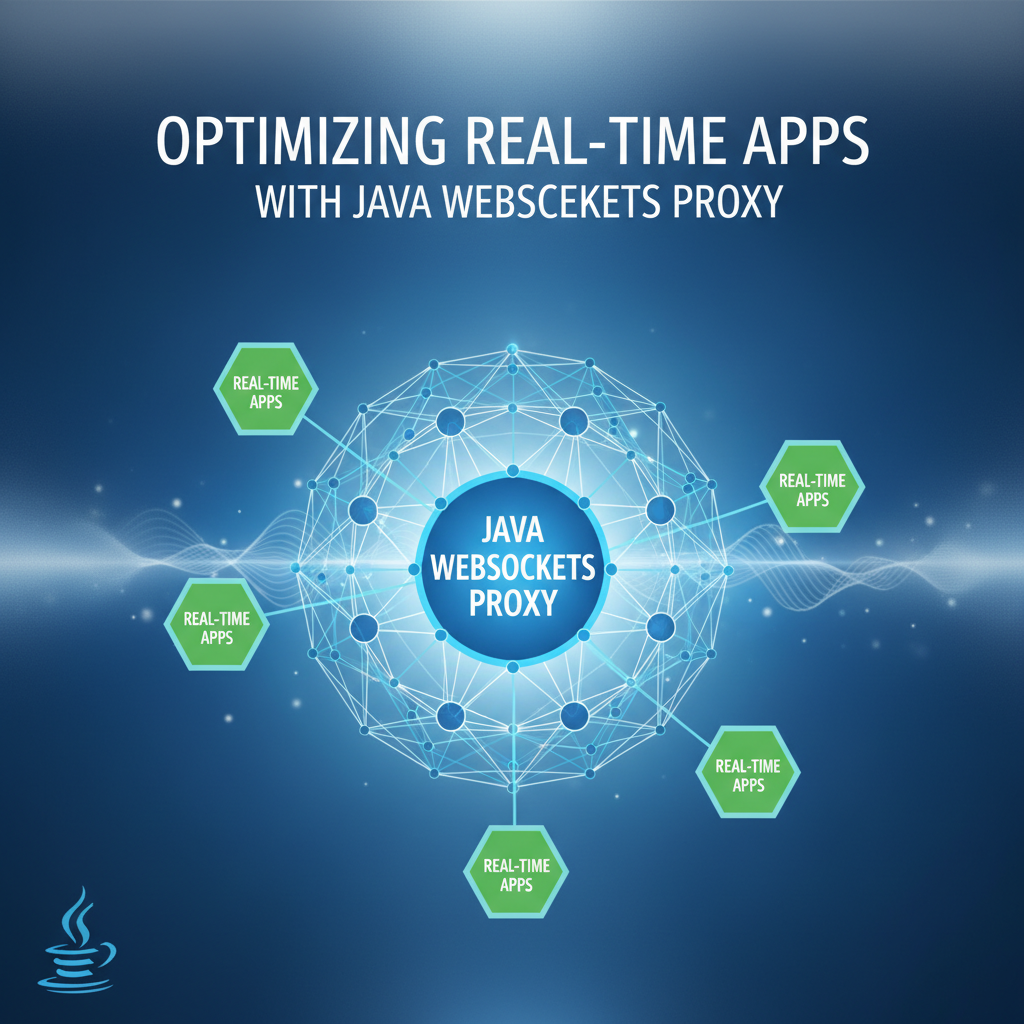
Optimizing Real-time Apps with Java WebSockets Proxy


The digital landscape of today is characterized by an insatiable demand for instant gratification and seamless, dynamic interactions. From collaborative document editing and live chat applications to financial trading platforms, online gaming, and sophisticated Internet of Things (IoT) dashboards, real-time functionality has evolved from a niche feature into a fundamental expectation. Users no longer tolerate stale data or delayed updates; they crave experiences that mirror the immediacy of the physical world. This shift has placed immense pressure on developers and architects to build applications capable of delivering data streams with minimal latency, high throughput, and unwavering reliability.
Traditional web communication protocols, primarily built around the request-response model of HTTP, often struggle to meet these stringent real-time requirements efficiently. While ingenious techniques like long polling and Server-Sent Events (SSE) offered interim solutions, they frequently introduced complexities, overheads, and scalability challenges. The advent of WebSockets marked a pivotal moment, providing a true bidirectional, full-duplex communication channel over a single, persistent TCP connection. This innovation dramatically reduced latency and overhead, fundamentally transforming the capabilities of web applications.
However, the journey from implementing a basic WebSocket connection to building a robust, scalable, and secure real-time application is fraught with engineering complexities. Raw WebSocket implementations, while powerful, expose developers to low-level concerns such as connection management, load balancing, security vulnerabilities, and intricate routing logic in distributed environments. These challenges can quickly overwhelm development teams, diverting valuable resources from core application logic to infrastructure concerns.
This is where the strategic deployment of a Java WebSockets Proxy emerges as a game-changer. By acting as an intermediary between clients and backend WebSocket services, a proxy can abstract away many of these complexities, offering a centralized point for managing, securing, and optimizing real-time traffic. Leveraging the robust, high-performance capabilities of the Java ecosystem, such a proxy can offload critical functions like TLS termination, authentication, authorization, load balancing, and connection multiplexing, thereby enhancing the overall efficiency, resilience, and security of real-time applications. This comprehensive exploration delves into the foundational principles of WebSockets, the architectural rationale for employing a Java WebSockets Proxy, practical implementation strategies, and the profound benefits it delivers in the quest for truly optimized real-time experiences.
The Imperative for Real-time Applications in the Modern Digital Ecosystem
The drive towards real-time functionality is not merely a technological trend; it is a fundamental shift in user expectations and business requirements across diverse industries. In an increasingly interconnected world, the ability to transmit and receive information instantaneously dictates competitive advantage, user satisfaction, and operational efficiency. Understanding the breadth and depth of this imperative is crucial to appreciating the solutions that enable it.
Consider the landscape of modern applications where real-time interactions are not just desired but absolutely essential. Financial trading platforms, for instance, demand millisecond-level updates on stock prices, order books, and trade executions; even a fractional delay can lead to significant financial losses or missed opportunities. Similarly, in online gaming, the synchronous actions of multiple players, coordinated movements, and instant feedback loops are paramount to an immersive and fair gaming experience. Any lag or desynchronization can severely degrade the user experience, leading to frustration and player churn.
Beyond these high-stakes environments, real-time capabilities underpin much of our daily digital lives. Chat applications, from enterprise collaboration tools like Slack to consumer messaging services, rely entirely on the immediate delivery of messages to facilitate fluid conversations. Collaborative document editing tools, such as Google Docs or Microsoft 365, allow multiple users to edit the same document concurrently, with changes appearing instantly across all participants' screens, making teamwork seamless and efficient. Even seemingly passive applications like sports scoreboards, news feeds, and weather alerts benefit immensely from real-time data push, keeping users constantly updated without requiring manual refreshes.
The Internet of Things (IoT) revolution further amplifies the need for real-time data processing. Smart homes, industrial automation systems, connected vehicles, and environmental monitoring networks generate vast streams of sensor data that often require immediate analysis and action. A delay in processing a critical sensor reading could mean the difference between preventing a machine failure or experiencing costly downtime, or even between averting a disaster and suffering significant damage. In these scenarios, real-time responsiveness isn't just about convenience; it's about safety, security, and operational continuity.
Defining "real-time" in this context typically refers to systems that process and respond to events within a specified and often very short time frame, typically measured in milliseconds or even microseconds. Key characteristics include low latency, meaning minimal delay between an event occurring and its notification or processing; high throughput, the ability to handle a large volume of concurrent events and data streams; and continuous data flow, eliminating the need for periodic polling.
Traditional client-server models, primarily built upon HTTP/1.x, were fundamentally designed for a request-response paradigm. A client initiates a request, and the server responds. While robust for fetching static content or performing transactional operations, this model becomes highly inefficient for real-time data push. Techniques like short polling, where clients repeatedly send requests at short intervals, generate excessive network traffic and server load, often returning no new data. Long polling offers a slight improvement by holding the connection open until new data is available or a timeout occurs, but it still involves establishing new connections periodically, contributing to latency and resource consumption. These HTTP-based workarounds, while functional to a degree, highlight the inherent limitations of a protocol not originally conceived for persistent, bidirectional, low-latency communication. The architectural overheads and resource inefficiencies associated with these methods underscored the urgent need for a more purpose-built solution, paving the way for the widespread adoption of WebSockets.
Unveiling WebSockets: The Foundation of Modern Real-time Communication
To truly optimize real-time applications, one must first grasp the core technology that underpins them: WebSockets. Emerging as a standardized protocol (RFC 6455) within the HTML5 suite, WebSockets fundamentally redesigned how web clients and servers communicate, moving beyond the inherent limitations of traditional HTTP. They offer a powerful, efficient, and elegant solution for establishing persistent, bidirectional communication channels, essential for the dynamic, interactive experiences users now demand.
At its heart, a WebSocket connection begins as a standard HTTP request, but one that includes an "Upgrade" header. This initial HTTP handshake serves as a negotiation phase. The client sends a request to the server, signaling its desire to upgrade the connection from HTTP to WebSocket. If the server supports the WebSocket protocol and agrees to the upgrade, it responds with an appropriate HTTP status code (101 Switching Protocols) and the necessary WebSocket-specific headers. Once this handshake is successfully completed, the underlying TCP connection is repurposed, transforming from a transient HTTP conduit into a persistent, full-duplex WebSocket channel. From this point onward, both the client and the server can send data to each other simultaneously, at any time, without the overhead of establishing new connections or including verbose HTTP headers with every message.
The key advantages of WebSockets are numerous and directly address the shortcomings of HTTP for real-time scenarios:
- Full-Duplex Communication: This is arguably the most significant advantage. Unlike HTTP's half-duplex, request-response model, WebSockets allow data to flow in both directions concurrently over the same connection. This means the server can push data to the client whenever new information becomes available, and the client can send data back, all without waiting for the other party to finish. This bidirectional capability is vital for interactive applications like chat, gaming, and collaborative tools.
- Low Overhead: After the initial handshake, WebSocket communication operates with minimal overhead. Data is transmitted in frames, which are much smaller than HTTP requests or responses. Each frame includes a small header (typically 2 to 14 bytes) followed by the payload. This contrasts sharply with HTTP, where every request and response carries significant header information, even for small data transfers. The reduced overhead translates directly into more efficient network usage and lower latency.
- Persistent Connection: Unlike HTTP, which typically closes the connection after each request-response cycle (unless keep-alive is used, which is still half-duplex and has limitations), a WebSocket connection remains open and active until explicitly closed by either the client or the server. This eliminates the overhead of repeatedly setting up and tearing down TCP connections, significantly reducing latency and resource consumption, especially for applications requiring frequent updates.
- Reduced Latency: The combination of full-duplex communication and persistent, low-overhead connections dramatically reduces the time it takes for data to travel between client and server. This near real-time data transfer is critical for applications where even slight delays can impact functionality or user experience.
To put this into perspective, consider a simple comparison between HTTP and WebSockets for a real-time use case:
| Feature | HTTP (Polling/Long Polling) | WebSockets |
|---|---|---|
| Communication Model | Half-duplex (request-response) | Full-duplex (bidirectional) |
| Connection Lifespan | Short-lived (per request/response) or periodically re-established | Persistent (until explicitly closed) |
| Overhead per Message | High (full HTTP headers) | Low (minimal WebSocket frame headers post-handshake) |
| Latency | Higher (due to connection setup, polling intervals) | Lower (persistent connection, immediate push) |
| Resource Usage | Higher (repeated connection setup, more open connections) | Lower (single persistent connection) |
| Server Push Capability | Simulated (long polling) or limited (SSE) | Native and highly efficient |
| Use Case Suitability | Static content, transactional APIs | Real-time chat, gaming, live updates, IoT, collaboration |
While Server-Sent Events (SSE) also offer a server-to-client push mechanism, they are limited to unidirectional communication, making them suitable for scenarios like news feeds or stock tickers where the client primarily consumes data, but less ideal for truly interactive applications requiring constant bidirectional flow. WebSockets fill this gap perfectly, providing the robust communication backbone necessary for the most demanding real-time applications. Understanding these fundamental principles is the first step towards architecting effective and optimized real-time solutions.
Challenges in Scaling and Managing Raw WebSockets
While WebSockets provide an undeniable technological leap for real-time applications, their raw implementation presents a unique set of engineering and operational challenges, particularly as applications scale in complexity and user base. Overlooking these complexities can lead to unstable systems, security vulnerabilities, and exorbitant maintenance costs. Effectively addressing these issues often necessitates the introduction of intermediary components, such as a proxy.
- Connection Management and Statefulness: Unlike stateless HTTP, WebSockets are inherently stateful. Each client establishes a persistent connection, and the server must maintain information about this connection and potentially the client's session state. Managing thousands or millions of concurrent, long-lived connections efficiently becomes a significant challenge. This includes tracking active connections, handling disconnections and reconnections gracefully, and ensuring that messages are routed to the correct client sessions. Without proper management, connection pools can exhaust server resources, leading to performance degradation or outright crashes.
- Load Balancing Across Multiple Servers: In a distributed system, incoming WebSocket connections need to be distributed across multiple backend servers to handle high traffic volumes and ensure high availability. However, due to the stateful nature of WebSockets, simple round-robin load balancing is often insufficient. If a client's connection is suddenly routed to a different server mid-session, any state maintained on the original server is lost, disrupting the user experience. This necessitates "sticky sessions" or "session affinity," where a client's subsequent messages on an established WebSocket connection are consistently routed to the same backend server. Implementing sticky sessions adds complexity to the load balancer configuration and can impact resource utilization if not carefully managed.
- Security Considerations: WebSockets, like any network protocol, are susceptible to various security threats.
- Origin Validation: Ensuring that WebSocket connections only originate from trusted domains is crucial to prevent Cross-Site WebSocket Hijacking (CSWSH) attacks.
- DDoS Attacks: Malicious actors can flood WebSocket servers with a massive number of connection requests or messages, leading to resource exhaustion and denial of service.
- Authentication and Authorization: Establishing the identity of a WebSocket client and determining its permissions to access certain data streams or send specific messages is paramount. This often involves integrating with existing authentication systems (e.g., JWTs, OAuth2) and enforcing fine-grained authorization policies for real-time interactions. Implementing these directly within every backend WebSocket service can lead to inconsistent security postures and duplicated effort.
- TLS/SSL Management: While WebSockets can run over plain TCP, secure WebSocket connections (WSS) use TLS/SSL encryption, which adds computational overhead for certificate management, key exchange, and encryption/decryption.
- Complexity of Custom Implementations: Building a robust WebSocket server from scratch requires deep expertise in network programming, concurrency, and protocol handling. Developers must manage threading models, I/O operations, error handling, and message parsing, which can be a significant undertaking. While frameworks simplify this, integrating them into complex enterprise architectures still demands careful design and implementation to ensure scalability and reliability.
- Cross-Origin Issues (CORS for WebSockets): Similar to HTTP, browsers enforce same-origin policy for WebSockets. While the WebSocket handshake explicitly includes an
Originheader that servers can check, managing these policies across different backend services can become cumbersome, particularly in microservices architectures where WebSocket services might be deployed on different subdomains or ports. - Protocol Translation and Interception: In some advanced scenarios, there might be a need to inspect, modify, or even translate WebSocket messages before they reach the backend service, or before they are sent back to the client. This could be for auditing, content filtering, data transformation, or integrating with other messaging systems. Performing such deep packet inspection and modification directly within the application logic can introduce significant performance bottlenecks and complexity.
- Monitoring, Logging, and Observability: Troubleshooting issues in real-time applications requires detailed insights into connection status, message flow, latency, and error rates. Collecting, aggregating, and analyzing logs and metrics from potentially dozens or hundreds of backend WebSocket services can be a daunting task. Centralized logging and monitoring become essential, but implementing these directly in every service adds boilerplate code and can impact application performance.
These challenges highlight that while WebSockets offer a powerful primitive for real-time communication, their effective deployment in production-grade, high-scale environments demands a sophisticated architectural approach. It's precisely these complexities that a well-designed WebSocket proxy aims to mitigate, allowing backend services to focus purely on business logic rather than infrastructure concerns.
The Role of a Proxy in Real-time Architectures
In the intricate landscape of modern application architecture, proxies serve as indispensable intermediaries, sitting between clients and servers to facilitate, enhance, and secure network traffic. For real-time applications built on WebSockets, the role of a proxy transcends mere forwarding; it becomes a critical component for achieving scalability, resilience, security, and operational efficiency. Understanding the fundamental nature of proxies and their specific benefits for WebSockets is key to optimizing real-time systems.
Fundamentally, a proxy server is a server application that acts as an intermediary for requests from clients seeking resources from other servers. There are two primary types:
- Forward Proxy: Sits in front of clients, forwarding their requests to external servers. It typically enhances client anonymity and security, or filters outbound content.
- Reverse Proxy: Sits in front of one or more backend servers, intercepting client requests and forwarding them to the appropriate server. The client perceives the reverse proxy as the origin server. This is the type most relevant to optimizing real-time applications.
Why a Reverse Proxy for WebSockets?
A reverse proxy for WebSockets is specifically configured to understand and handle the WebSocket protocol upgrade handshake, and then to forward subsequent WebSocket frames between the client and the chosen backend WebSocket server. This seemingly simple function unlocks a multitude of benefits that are critical for robust real-time applications:
- Connection Termination and Offloading: The proxy can terminate the TLS/SSL connection from the client. This means the backend WebSocket servers don't need to handle the computationally intensive encryption/decryption, freeing up their CPU cycles for application logic. The proxy can then establish a new, potentially unencrypted (within a secure internal network) or re-encrypted connection to the backend, simplifying certificate management and reducing load on application servers.
- Load Balancing and High Availability: Perhaps one of the most crucial roles, a WebSocket proxy can distribute incoming connections across a pool of backend WebSocket servers. Advanced load balancing algorithms (e.g., round-robin, least connections, IP hash) can be employed. Crucially, for stateful WebSocket connections, the proxy can maintain "sticky sessions" or "session affinity," ensuring that a client's persistent connection is consistently routed to the same backend server throughout its lifecycle. This is vital for maintaining session state and preventing disruptions. Health checks performed by the proxy against backend servers ensure that traffic is only directed to healthy instances, enhancing overall system availability and fault tolerance.
- Security Enhancements: A proxy acts as the first line of defense for backend WebSocket services.
- DDoS Protection & Rate Limiting: The proxy can detect and mitigate Denial-of-Service attacks by limiting the number of new connections or messages from a single source within a given timeframe.
- Authentication & Authorization: The proxy can handle initial authentication (e.g., validating JWTs or API keys in the WebSocket handshake) and even basic authorization checks before forwarding the connection to a backend service. This centralizes security logic and protects backend services from unauthorized access.
- Origin Validation: It can enforce strict origin checks, preventing connections from untrusted domains and mitigating Cross-Site WebSocket Hijacking attacks.
- Web Application Firewall (WAF) Integration: Proxies can integrate with WAFs to inspect WebSocket message payloads for malicious patterns, SQL injection attempts, or cross-site scripting (XSS) attacks.
- Protocol Bridging/Transformation: In complex architectures, a proxy might do more than just forward. It could transform WebSocket messages into a different protocol (e.g., AMQP, Kafka, HTTP) for consumption by other microservices, or vice-versa. This facilitates interoperability between diverse components that might not natively speak WebSockets.
- Centralized Logging and Monitoring: By acting as a single entry point, the proxy can capture comprehensive logs for all WebSocket connections and message traffic. This centralized logging simplifies debugging, auditing, and performance analysis. Metrics such as connection counts, message rates, and error rates can be collected at the proxy level, providing invaluable insights into the health and performance of the real-time system.
- Decoupling Clients from Backend Services: The proxy introduces a layer of abstraction. Clients connect to the proxy, unaware of the specific backend server handling their connection. This allows backend services to scale horizontally, undergo maintenance, or be updated without direct client-side configuration changes, improving agility and maintainability.
- API Management Integration: For organizations that manage a wide array of APIs (REST, WebSockets, gRPC, etc.), an API gateway – which is essentially an advanced reverse proxy – can provide a unified management layer. This allows for consistent application of policies across all API types.
In essence, a WebSocket proxy takes on many of the arduous, cross-cutting concerns that would otherwise burden each individual backend WebSocket service. It elevates the real-time architecture from a collection of isolated endpoints to a cohesive, secure, and scalable system, allowing developers to focus their efforts on delivering innovative application features rather than reinventing infrastructure solutions. This strategic placement of a proxy is foundational to achieving true optimization in real-time applications.
Java's Ecosystem for WebSockets: Robust Foundations for Real-time
The Java ecosystem, renowned for its maturity, performance, and extensive libraries, provides a powerful and versatile foundation for building and managing WebSocket-based real-time applications. From high-level frameworks that abstract away much of the complexity to low-level networking libraries offering granular control, Java offers a spectrum of tools tailored to different architectural needs. Understanding these options is crucial for anyone looking to build an efficient Java WebSockets Proxy or backend services.
1. Java EE (Jakarta EE) WebSocket API (JSR 356)
JSR 356, formally known as the Java API for WebSockets, introduced native WebSocket support into the Java Enterprise Edition (now Jakarta EE). This standardized API provides a straightforward, annotation-driven approach to creating WebSocket endpoints.
- Key Features:
@ServerEndpoint: An annotation used to declare a class as a WebSocket endpoint, specifying the URI path (e.g.,@ServerEndpoint("/techblog/en/websocket/{username}")).@OnOpen,@OnMessage,@OnClose,@OnError: Annotations for methods that handle lifecycle events: when a connection is established, when a message is received, when a connection is closed, and when an error occurs.SessionObject: Represents the WebSocket connection to a client, allowing sending messages, closing connections, and managing session state.MessageHandling: Supports various message types including text, binary, and custom Java objects (via encoders/decoders).- Container Integration: Works seamlessly with Java EE application servers like Apache Tomcat, Eclipse Jetty, GlassFish, and WildFly, which provide the underlying WebSocket runtime.
- Benefits: Standardization, ease of use for basic scenarios, good integration with existing Java EE applications.
- Considerations: Can become verbose for complex message routing or high-performance, low-level control. Scalability often depends on the underlying application server's WebSocket implementation.
2. Spring Framework (Spring WebSockets, Spring Boot)
Spring, particularly with Spring Boot, has become the de facto standard for building modern Java applications. Its WebSocket support seamlessly integrates with the broader Spring ecosystem, providing powerful abstractions and features.
- Spring WebSockets Module:
- Abstraction over JSR 356: While it can use JSR 356 as an underlying runtime, Spring WebSockets adds higher-level abstractions and integrations.
- STOMP (Simple Text-Orientated Message Protocol): Spring strongly promotes the use of STOMP over WebSockets. STOMP adds a layer of messaging semantics (send, subscribe, publish/subscribe, message headers) over raw WebSockets, making it easier to build complex messaging applications, especially with message brokers like RabbitMQ or ActiveMQ.
- Message Broker Integration: Easily integrates with external message brokers (e.g., RabbitMQ, ActiveMQ, Kafka) or provides an in-memory broker, enabling scaling beyond a single server.
- Security: Seamless integration with Spring Security for authentication and authorization of WebSocket connections and messages.
- Templates:
WebSocketTemplatefor client-side WebSocket communication.
- Spring Boot:
- Auto-configuration: Simplifies setup with minimal configuration. Just add
spring-boot-starter-websocketto your dependencies. - Embedded Servers: Allows embedding Tomcat, Jetty, or Undertow, all of which have robust WebSocket capabilities.
- Developer Experience: Rapid development, convention over configuration, and a vast community make it highly productive.
- Auto-configuration: Simplifies setup with minimal configuration. Just add
- Benefits: High productivity, powerful abstractions (especially STOMP), seamless security integration, excellent for enterprise-grade applications, strong community support.
- Considerations: STOMP adds a layer of protocol, which might be overkill for very simple, raw WebSocket communication.
3. Netty: High-Performance Network Application Framework
For situations demanding the utmost performance, low-level control, and highly optimized network I/O, Netty stands out. It's an asynchronous, event-driven network application framework for rapid development of maintainable high-performance protocol servers and clients. Many other frameworks and servers (like Cassandra, Spark, and even parts of Spring's WebFlux) use Netty internally.
- Key Features:
- Non-Blocking I/O (NIO): Leverages Java NIO for highly scalable and efficient I/O operations, minimizing thread contention.
- Event-Driven Architecture: Uses a reactor pattern where events (like connection establishment, data arrival) trigger handlers.
- ByteBuf: An optimized byte buffer implementation for efficient data manipulation.
- Pipeline and Handlers: A highly modular and extensible pipeline model where custom handlers can intercept and process network events and data. This is perfect for building proxies that need to manipulate messages.
- Extensive Protocol Support: Includes out-of-the-box support for HTTP, WebSockets, SSL/TLS, and many other common network protocols.
- Benefits: Exceptional performance, fine-grained control over network stack, highly scalable, ideal for building custom proxies, gateways, or high-throughput messaging systems.
- Considerations: Steeper learning curve compared to higher-level frameworks. Requires more boilerplate code for basic setup.
4. Undertow, Jetty, and Apache Tomcat
These are popular Java servlet containers and application servers, all of which provide robust support for the JSR 356 WebSocket API, and often have their own optimized WebSocket implementations.
- Undertow: A lightweight, high-performance web server developed by JBoss. Known for its flexibility and speed, it's often favored in microservices architectures and embedded scenarios. It has excellent WebSocket support.
- Jetty: A widely used, embeddable, and lightweight web server and servlet engine. It has a mature and performant WebSocket implementation, often praised for its modularity.
- Apache Tomcat: The most ubiquitous servlet container. It provides a solid and reliable implementation of the JSR 356 WebSocket API.
These servers act as the runtime environment for WebSocket applications built with JSR 356 or Spring WebSockets. When building a Java WebSockets Proxy, one might use Netty for the proxy itself due to its performance, or leverage the embedded WebSocket capabilities of Spring Boot with one of these servers for the backend WebSocket services.
The diversity of the Java ecosystem ensures that developers have powerful tools at their disposal, whether they need rapid development with Spring Boot, standardized enterprise features with Jakarta EE, or unparalleled performance and control with Netty. This rich toolkit forms the bedrock for architecting sophisticated Java WebSockets Proxies.
APIPark is a high-performance AI gateway that allows you to securely access the most comprehensive LLM APIs globally on the APIPark platform, including OpenAI, Anthropic, Mistral, Llama2, Google Gemini, and more.Try APIPark now! 👇👇👇
Building a Java WebSockets Proxy – Architectures and Implementations
The decision to build a Java WebSockets Proxy typically arises from the need for highly customized logic, deep integration with existing Java systems, or situations where off-the-shelf proxies don't fully meet specific operational or security requirements. While general-purpose proxies like Nginx or HAProxy offer robust WebSocket proxying capabilities, a Java-based solution provides unparalleled flexibility.
1. Understanding the Core Concept: Reverse Proxy for WebSockets
Before diving into Java-specific implementations, it's important to grasp how a reverse proxy handles WebSockets. Unlike HTTP requests, which are typically short-lived, WebSocket connections involve an initial HTTP handshake and then a long-lived, upgraded connection. A reverse proxy needs to:
- Intercept the HTTP Upgrade Request: Recognize the
Upgrade: websocketandConnection: Upgradeheaders in the incoming client request. - Forward the Upgrade Request: Pass this request to a chosen backend WebSocket server.
- Manage the Upgraded Connection: Once the backend server responds with
101 Switching Protocols, the proxy establishes a persistent connection between the client and the backend, acting as a transparent tunnel for WebSocket frames. It must intelligently route incoming frames from the client to the backend and outgoing frames from the backend to the client.
For context, let's briefly look at how established proxies handle this:
- HAProxy: Another powerful, high-performance load balancer and proxy. It can also handle WebSocket traffic by using
mode httpandoption http-server-closewith appropriate header settings for the upgrade. It's particularly strong for advanced load balancing algorithms and health checks.
Nginx: A popular choice for reverse proxying. Its configuration for WebSocket proxying involves the proxy_pass directive, ensuring the Upgrade and Connection headers are correctly passed. It automatically handles the HTTP to WebSocket protocol upgrade. ```nginx http { map $http_upgrade $connection_upgrade { default upgrade; '' close; } server { listen 80; server_name example.com;
    location /ws/ {
        proxy_pass http://backend_websocket_servers; # Point to your upstream group
        proxy_http_version 1.1;
        proxy_set_header Upgrade $http_upgrade;
        proxy_set_header Connection $connection_upgrade;
        proxy_read_timeout 86400s; # Adjust for long-lived connections
    }
}
upstream backend_websocket_servers {
    server websocket_server1:8080;
    server websocket_server2:8080;
    # Add more backend servers
}
} ``` Nginx excels at performance and simplicity for basic proxying.
2. A Java-based Application-Level WebSocket Proxy: The "Why" and "How"
Why build one in Java when Nginx or HAProxy exist? * Custom Business Logic: Intercepting, inspecting, modifying, or even generating WebSocket messages based on complex business rules. * Deep Integration: Seamlessly integrating with existing Java-based authentication systems, message brokers (like Kafka or RabbitMQ), or data processing pipelines. * Unified Technology Stack: Maintaining a single language (Java) across the entire application stack simplifies development, deployment, and maintenance. * Advanced Observability: Injecting custom metrics, tracing, and logging logic directly into the message flow.
Design Patterns for a Java WebSocket Proxy:
- Simple Forwarding Proxy: The most basic form. It accepts a WebSocket connection from a client, establishes a new WebSocket connection to a backend server, and then transparently forwards messages between the two. This acts purely as a tunnel.
- Message Bus Integration Proxy: Instead of directly forwarding to a backend WebSocket server, the proxy terminates the client's WebSocket connection and publishes incoming messages to a message broker (e.g., Kafka, RabbitMQ, Redis Pub/Sub). Similarly, it subscribes to messages from the broker and pushes them back to connected clients. This decouples clients from specific backend services, enables massive scalability, and facilitates complex event-driven architectures.
- Application-Specific Proxy with Logic: This combines forwarding with active processing. The proxy might authenticate messages, enrich them with metadata, apply rate limits, filter content, or even implement basic routing logic based on message content before forwarding.
Key Components of a Java WebSocket Proxy:
Regardless of the design pattern, a Java WebSocket proxy will typically consist of:
- Inbound WebSocket Server: Responsible for accepting client WebSocket connections. This could be built using:
- Netty: Provides the highest level of control and performance. You'd implement a Netty channel pipeline with WebSocket
handshake,encoder,decoder, and customChannelInboundHandlerfor message processing. - Spring Boot with Embedded Container (e.g., Tomcat/Jetty): Leverages Spring's WebSocket support. This is quicker to set up for basic proxying where Spring's abstractions are beneficial. You'd set up a
@ServerEndpointor Spring'sWebSocketHandlerto accept incoming connections.
- Netty: Provides the highest level of control and performance. You'd implement a Netty channel pipeline with WebSocket
- Outbound Communication Module: Responsible for connecting to backend services.
- WebSocket Client: If forwarding to another WebSocket service, a Java WebSocket client (e.g., Spring's
WebSocketConnectionManager, Netty'sWebSocketClientHandler) would be used to establish outbound WebSocket connections. - Message Broker Client: If integrating with a message bus, clients for Kafka, RabbitMQ, etc., would be used to publish/subscribe messages.
- HTTP Client: For initial authentication or supplementary REST API calls.
- WebSocket Client: If forwarding to another WebSocket service, a Java WebSocket client (e.g., Spring's
- Message Routing/Processing Logic: The core intelligence of the proxy. This component decides where to send an incoming message, applies any business rules, security checks, or transformations.
- Connection/Session Management: Tracking active client connections, their associated backend connections (if applicable), and any state.
- Authentication/Authorization Module: Integrating with security frameworks to validate client credentials during the handshake or per message.
- Logging/Monitoring: Capturing detailed insights into connections, messages, and errors.
3. Implementation Details with Java Technologies:
Using Netty for a High-Performance Proxy
Netty is an excellent choice for building a custom, high-performance WebSocket proxy from the ground up due to its non-blocking I/O model and flexible pipeline architecture.
Conceptual Flow (Netty):
- Server Bootstrap: Start a Netty
ServerBootstrapto listen for incoming connections on a specific port. - Channel Pipeline Configuration:
- Add
HttpServerCodecto handle HTTP requests (including the WebSocket upgrade). - Add
HttpObjectAggregatorto combine HTTP message fragments. - Add
WebSocketServerProtocolHandlerto handle the WebSocket handshake and frame decoding/encoding. - Add a custom
ProxyWebSocketInboundHandler(your core logic).
- Add
ProxyWebSocketInboundHandler:channelActive(ctx): When a new client WebSocket connection is established, initiate an outbound WebSocket connection to a selected backend server (e.g., chosen via a load balancing strategy).channelRead0(ctx, WebSocketFrame frame): When a WebSocket frame arrives from the client:- Inspect the frame (e.g., for authentication tokens, message type).
- Apply custom logic (rate limiting, content filtering, message transformation).
- Forward the frame to the corresponding backend WebSocket connection.
channelInactive(ctx): When a client disconnects, close the corresponding backend connection.- Outbound Handler: You'd also have a
ProxyWebSocketOutboundHandlerfor frames coming from the backend to the client.
Load Balancing (Netty-based): For load balancing, you'd maintain a list of backend WebSocket server addresses. When channelActive is called, your handler would use a custom load balancing strategy (e.g., round-robin, least connections) to select a backend. For sticky sessions, you might store the chosen backend for a client's session in a distributed cache (like Redis) keyed by a unique client identifier.
Using Spring Boot for a Simpler Proxy (Message Bus Driven)
While Spring Boot can be used for direct forwarding, it often shines when combined with message brokers for a more scalable and decoupled architecture.
Conceptual Flow (Spring Boot + Message Broker):
- Spring WebSocket Server:
- Create a Spring Boot application with
spring-boot-starter-websocketandspring-boot-starter-amqp(for RabbitMQ) orspring-kafka. - Define a
@ServerEndpointor implementWebSocketHandlerto accept client connections. - In the
handleTextMessage(or similar) method:- Receive client message.
- Perform authentication/authorization using Spring Security.
- Publish the message to a specific topic/queue in your message broker.
- Create a Spring Boot application with
- Spring Message Listener:
- Implement
@RabbitListeneror@KafkaListenerto consume messages from the message broker. - When a message is received (from any backend service):
- Retrieve the target client's WebSocket session (stored in a map or distributed cache).
- Send the message to that client's session using
session.sendMessage().
- Implement
Session Management (Spring Boot): For session affinity and routing, you'd typically manage active WebSocket sessions. When a client connects, store its WebSocketSession object (or a unique identifier) in a ConcurrentHashMap for a single-instance proxy, or in a distributed cache (like Redis) for a clustered proxy. This allows you to map incoming messages from the message broker to the correct client session.
Trade-offs: * Netty: Offers maximum performance and control, ideal for extreme customization, but requires more low-level coding. * Spring Boot: Higher productivity, rich ecosystem, good for integrating with enterprise services, well-suited for message-broker-driven proxies, but might have slightly more overhead than pure Netty.
Building a Java WebSockets proxy is a significant architectural decision that empowers developers to tailor real-time communication infrastructure precisely to their application's unique demands, offering unparalleled flexibility in control, security, and scalability.
Advanced Optimization Techniques with a Java WebSockets Proxy
The deployment of a Java WebSockets proxy is merely the first step towards creating a truly optimized real-time application. To leverage its full potential, a deeper dive into advanced optimization techniques is required, focusing on load balancing, security, scalability, resilience, and observability. These layers of enhancement transform a basic proxy into a highly robust and efficient real-time traffic manager.
1. Load Balancing Strategies for Stateful WebSockets
Effective load balancing is paramount for scaling WebSocket applications. The stateful nature of WebSockets necessitates more sophisticated strategies than simple round-robin for HTTP.
- Sticky Sessions (Session Affinity): This is the most common and critical strategy for WebSockets. Once a client establishes a connection with a backend server through the proxy, subsequent messages for that connection must always be routed to the same backend server.
- Implementation: The proxy can use various methods to achieve stickiness:
- Cookie-based: The proxy injects a cookie into the client's initial HTTP handshake response (before upgrade), containing an identifier for the chosen backend. The client then sends this cookie with subsequent requests (though primarily the handshake, as the WebSocket connection is persistent).
- IP Hash: The client's IP address is hashed to consistently route it to the same backend server. This is simpler but less effective if many clients share an IP (e.g., behind a NAT).
- Header-based: Extracting a unique identifier from a custom header (e.g., an authentication token) in the handshake request to map to a backend.
- Challenges: Sticky sessions can lead to uneven load distribution if certain clients maintain very active or long-lived connections, potentially creating "hot spots" on specific backend servers.
- Implementation: The proxy can use various methods to achieve stickiness:
- Backend Health Checks: The proxy must continuously monitor the health of its backend WebSocket servers. If a server becomes unresponsive or unhealthy, the proxy should immediately stop directing new connections to it and gracefully re-route existing ones (if possible, though usually existing connections will simply drop).
- Types: TCP checks (basic connectivity), HTTP checks (for application status endpoints), or even custom WebSocket ping/pong checks.
- Implementation: A dedicated health check module within the Java proxy or leveraging features of underlying frameworks (e.g., Spring Boot Actuator endpoints for backend services).
- Graceful Shutdown and Connection Draining: When a backend server needs to be taken offline for maintenance or updates, the proxy should support graceful shutdown. This involves:
- Stopping new connections: The proxy ceases directing new WebSocket connections to the server being drained.
- Draining existing connections: Allowing existing connections to naturally terminate, or providing a timeout after which the server forcefully closes remaining connections. This minimizes disruption to active users.
2. Security Enhancements at the Proxy Layer
The proxy serves as a crucial security enforcement point, protecting backend services from various threats.
- TLS/SSL Termination: Offloading TLS handshake and encryption/decryption from backend servers to the proxy significantly reduces their computational burden. The proxy handles certificates, key management, and cryptographic operations. Internal communication from the proxy to backend servers can then occur over a trusted, private network, potentially unencrypted for performance, or re-encrypted with internal certificates.
- DDoS Protection and Rate Limiting:
- Connection Rate Limiting: Limiting the number of new WebSocket connections that can be established per IP address or per client identifier within a specific time window.
- Message Rate Limiting: Restricting the number of WebSocket messages a client can send per second to prevent flooding and abuse.
- Payload Size Limits: Rejecting excessively large WebSocket messages that could be part of a resource exhaustion attack.
- Authentication and Authorization:
- Token Validation: The proxy can intercept the WebSocket handshake, extract authentication tokens (e.g., JWTs from a query parameter or custom header), validate them against an identity provider, and inject user principal information into the backend request headers before forwarding. This ensures only authenticated clients establish connections.
- Access Control: Based on authenticated user roles or permissions, the proxy can enforce fine-grained access control, denying WebSocket connections or specific message types if the client lacks the necessary authorization.
- Origin Validation: Strictly checking the
Originheader in the WebSocket handshake to ensure connections only come from approved domains, preventing Cross-Site WebSocket Hijacking.
- Web Application Firewall (WAF) Integration: Integrating the proxy with a WAF can provide deeper inspection of WebSocket message payloads for known attack patterns, such as SQL injection or XSS, offering an additional layer of defense.
3. Scalability and Resilience Strategies
A proxy itself needs to be scalable and resilient to avoid becoming a single point of failure.
- Horizontal Scaling of the Proxy Layer: Deploy multiple instances of the Java WebSockets proxy behind a network load balancer (e.g., AWS ELB, Google Cloud Load Balancer, or even another Nginx instance). This distributes the load on the proxy itself and provides high availability.
- Circuit Breakers and Bulkhead Patterns:
- Circuit Breaker: If a backend WebSocket service is failing repeatedly, the proxy can temporarily "trip" a circuit breaker, preventing further requests from being sent to that backend for a period. This gives the failing service time to recover and prevents cascading failures.
- Bulkhead: Isolating different parts of the system so that a failure in one area doesn't bring down the entire system. For example, dedicating separate connection pools or thread pools in the proxy for different types of backend WebSocket services.
- Graceful Degradation: In extreme load or partial failure scenarios, the proxy can implement strategies to maintain core functionality while shedding less critical features. For instance, prioritizing certain message types or temporarily disabling less important data streams.
- Zero-Downtime Deployments: Orchestrating deployments of the proxy and backend services to ensure continuous availability. This often involves techniques like blue/green deployments or canary releases, facilitated by the load balancer.
4. Monitoring and Observability
Visibility into the real-time message flow and connection status is critical for troubleshooting and performance tuning.
- Centralized Logging: The proxy should generate comprehensive logs for connection establishments, disconnections, message traffic (metadata, not necessarily full payload for privacy), errors, and security events. These logs should be streamed to a centralized logging system (e.g., ELK Stack, Splunk, Loki) for aggregation, searching, and analysis.
- Metrics Collection:
- Connection Metrics: Number of active connections, new connections per second, disconnected connections.
- Message Metrics: Messages sent/received per second, message size distribution, message types.
- Latency Metrics: Time taken to forward messages, end-to-end latency.
- Error Rates: Number of connection errors, message processing errors.
- System Metrics: CPU, memory, network I/O of the proxy instances.
- These metrics should be exposed in a format consumable by monitoring systems like Prometheus and visualized with tools like Grafana.
- Distributed Tracing: For complex microservices architectures, distributed tracing (e.g., using Jaeger or Zipkin via OpenTelemetry) allows tracking a single WebSocket message's journey across multiple services and the proxy, providing invaluable insights into latency bottlenecks and execution paths.
By diligently implementing these advanced optimization techniques, a Java WebSockets proxy transcends its basic forwarding role, becoming a sophisticated and indispensable component for building, scaling, securing, and operating highly performant and resilient real-time applications.
Case Studies and Real-World Applications
The theoretical benefits of a Java WebSockets proxy become most apparent when observing its impact in real-world scenarios. Across various industries, this architectural component has proven instrumental in overcoming the challenges of real-time communication at scale, enabling complex, interactive experiences that were once difficult or impossible to achieve with traditional protocols.
1. Massive Multiplayer Online (MMO) Gaming
MMO games are perhaps the quintessential example of applications demanding extreme real-time performance and scalability. Thousands, or even millions, of players interact simultaneously within a shared virtual world, requiring constant updates on player positions, actions, chat messages, and game state.
- Challenge: Managing hundreds of thousands of concurrent, persistent WebSocket connections, distributing game state updates efficiently, preventing cheating, and mitigating DDoS attacks.
- Proxy Solution: A Java WebSockets proxy, often built with Netty for its raw performance, sits at the edge of the game server infrastructure.
- Load Balancing: Distributes players across multiple game server instances (shards), often using sticky sessions based on player ID or game room ID to ensure consistent routing.
- Security: Terminates TLS, performs initial authentication (e.g., validating player session tokens), and applies basic rate limiting to prevent message spam or connection floods that could disrupt the game. It might also validate the origin of connections to prevent rogue clients.
- Message Filtering/Processing: In some advanced setups, the proxy might even perform rudimentary message validation or content filtering (e.g., for profanity in chat messages) before forwarding to the game servers, reducing load on core game logic.
- Scalability: Allows game servers to scale horizontally without exposing their internal network topology to clients.
2. Live Financial Trading Platforms
In the fast-paced world of financial markets, every millisecond counts. Traders need instant access to real-time stock quotes, order book depth, trade executions, and news feeds to make critical decisions.
- Challenge: Delivering high-volume, low-latency market data to thousands of professional traders globally, ensuring data integrity, security, and compliance.
- Proxy Solution: A Java WebSockets proxy is often deployed in a high-throughput, low-latency environment.
- Market Data Distribution: The proxy subscribes to various financial data feeds (internal and external) and intelligently pushes relevant updates to subscribed clients via WebSockets.
- Throttling and Rate Limiting: Enforces granular rate limits based on client subscriptions or account tiers to prevent individual clients from overwhelming the system.
- Authentication and Entitlement: Verifies client identities and ensures they are authorized to receive specific data streams (e.g., access to particular stock exchanges or premium data feeds). This is critical for regulatory compliance.
- Data Aggregation/Transformation: Might perform minor data aggregation or formatting before pushing to clients, customizing the feed based on client preferences.
- Resilience: Employs active-passive or active-active configurations with automatic failover to ensure uninterrupted data flow even during component failures.
3. Large-Scale Collaborative Document Editing Tools
Applications like Google Docs, Figma, or Microsoft 365's real-time co-authoring features enable multiple users to edit a single document concurrently, with changes appearing instantly for all participants.
- Challenge: Synchronizing changes from multiple clients, resolving conflicts, distributing updates efficiently, and maintaining session state for complex objects (documents, design files).
- Proxy Solution: A Java WebSockets proxy acts as a centralized coordination point.
- Document-Specific Routing: Routes clients to specific backend document servers responsible for managing the state of a particular document, ensuring all collaborators on a single document are routed to the same logical backend.
- Operational Transformation (OT) or Conflict-Free Replicated Data Types (CRDTs): While the core OT/CRDT logic resides in the backend, the proxy ensures that all client-generated operations reach the correct backend in order, and that transformed updates are consistently pushed back to all relevant clients.
- Scalability: Allows the backend document processing services to scale independently of the client connection management, with the proxy handling the connection multiplexing.
- Security: Authenticates users and ensures they have edit permissions for the specific document they are connecting to.
4. IoT Dashboards and Control Systems
Monitoring and controlling vast networks of IoT devices in real-time is crucial for smart cities, industrial automation, and environmental monitoring.
- Challenge: Ingesting massive volumes of data from diverse devices, pushing aggregated insights to user dashboards, and sending control commands back to devices with low latency.
- Proxy Solution: A Java WebSockets proxy, often combined with a message broker, forms the backbone of the real-time data pipeline.
- Device-to-Dashboard Gateway: Acts as a gateway for real-time sensor data. Devices might send data via MQTT or other protocols to an ingest service, which then publishes to a message broker. The WebSocket proxy subscribes to relevant topics in the broker and pushes aggregated or filtered data to connected dashboard clients.
- Command and Control: Enables operators to send commands from a dashboard to specific devices. The WebSocket proxy forwards these commands to the appropriate message queue, which is then consumed by the target device or a device management service.
- Data Filtering and Enrichment: Can perform real-time filtering, aggregation, or enrichment of data streams before presenting them to the dashboard, reducing network traffic and client-side processing.
- Multi-tenancy: In multi-tenant IoT platforms, the proxy ensures that each tenant's dashboard only receives data from their authorized devices.
These examples vividly illustrate how a well-implemented Java WebSockets proxy elevates real-time applications from mere functionality to robust, scalable, and secure systems capable of meeting the most demanding user and business expectations. It abstracts away complexity, enhances performance, and serves as a critical enabler for the next generation of interactive digital experiences.
The Broader Context: API Management and Gateways with APIPark
While a dedicated Java WebSockets proxy focuses on the granular specifics of WebSocket traffic, managing the full spectrum of an application's interfaces, including RESTful APIs that often accompany or initiate WebSocket connections, demands a more comprehensive approach: an API Gateway. It's in this broader context of robust API management that platforms like APIPark offer immense value, providing the infrastructure to secure, monitor, and scale your diverse API landscape, ensuring that even your WebSocket-backed services are integrated into a cohesive, manageable ecosystem.
An API Gateway is far more than a simple reverse proxy. It serves as a single entry point for all client requests, routing them to the appropriate backend services. This architecture provides numerous benefits that extend beyond basic traffic forwarding:
- Unified Access: Provides a consistent public interface for a multitude of backend services, regardless of their underlying protocols (HTTP/REST, WebSockets, gRPC, etc.).
- Security Enforcement: Centralizes authentication, authorization, rate limiting, and other security policies, protecting backend services from direct exposure to the internet.
- Traffic Management: Handles load balancing, routing, request/response transformation, caching, and circuit breaking.
- API Lifecycle Management: Assists with the entire lifecycle of APIs, including design, publication, invocation, versioning, and decommissioning.
- Monitoring and Analytics: Collects detailed metrics and logs for all API calls, providing insights into usage, performance, and errors.
- Developer Portal: Offers a centralized platform for developers to discover, subscribe to, and test APIs, fostering internal and external API consumption.
For organizations building complex real-time applications, managing the exposed backend services—whether they are RESTful endpoints for initial authentication and metadata retrieval, or WebSocket connections for continuous data streams—through a centralized, powerful gateway becomes paramount. A system with real-time WebSocket components often has companion REST APIs: * Initial user authentication (e.g., login via REST, then receive a token for WebSocket). * Fetching historical data or configuration (e.g., getting past chat messages or game state). * Managing user profiles or preferences (via REST). * Triggering non-real-time actions (e.g., creating a new game session via REST, then joining it via WebSocket).
APIPark, an open-source AI gateway and API management platform, excels at governing such a diverse API landscape. While its primary focus is on simplifying the integration and management of 100+ AI models and encapsulating prompts into REST APIs, its core capabilities are universally applicable to any robust API deployment, including those fronting real-time WebSocket services alongside their companion REST APIs.
Here’s how APIPark’s features align with and complement the management of real-time applications and their associated APIs:
- End-to-End API Lifecycle Management: APIPark assists with managing the entire lifecycle of APIs, from design and publication to invocation and decommissioning. This capability is critical for regulating API management processes, managing traffic forwarding, load balancing, and versioning for all your APIs, including the REST endpoints that set up or support your WebSocket connections. It ensures a consistent and controlled environment for all your service interfaces.
- Performance Rivaling Nginx: With just an 8-core CPU and 8GB of memory, APIPark can achieve over 20,000 TPS, supporting cluster deployment to handle large-scale traffic. This high-performance backend is crucial for an API Gateway that must handle immense volumes of requests without becoming a bottleneck, whether those are for REST APIs or potentially high-frequency, short-lived WebSocket handshakes and their related HTTP requests. While not a direct WebSocket proxy, its underlying performance for HTTP traffic is foundational for any API architecture.
- Detailed API Call Logging & Powerful Data Analysis: APIPark provides comprehensive logging, recording every detail of each API call. This allows businesses to quickly trace and troubleshoot issues in API calls (e.g., authentication failures for WebSocket handshakes, errors in companion REST calls), ensuring system stability and data security. Furthermore, its data analysis capabilities display long-term trends and performance changes, helping with preventive maintenance—insights invaluable for real-time systems where proactive issue identification is key.
- Independent API and Access Permissions for Each Tenant: APIPark enables the creation of multiple teams (tenants), each with independent applications, data, user configurations, and security policies. This multi-tenancy support is vital for large enterprises or SaaS platforms that need to isolate customer environments while sharing underlying infrastructure, which is a common requirement for scalable real-time applications.
- API Resource Access Requires Approval: APIPark allows for subscription approval features, ensuring that callers must subscribe to an API and await administrator approval. This prevents unauthorized API calls and potential data breaches, offering a controlled access mechanism for sensitive real-time data or control APIs.
- API Service Sharing within Teams: The platform allows for the centralized display of all API services, making it easy for different departments and teams to find and use required API services. In a large organization, this improves discoverability for both REST APIs and documented real-time (WebSocket) services, fostering collaboration and reuse.
By integrating your real-time application's API endpoints (both REST and potentially managing the fronting of WebSockets if the gateway supports it or managing companion REST APIs for setup) into a platform like APIPark, you gain a powerful, unified layer for security, governance, and observability. It provides the structured environment necessary to manage the complexity of modern distributed systems, ensuring that even your high-performance, real-time Java WebSockets proxy operates within a well-governed and secure API gateway framework, streamlining development, enhancing security, and optimizing overall performance.
Conclusion
The pursuit of truly optimized real-time applications stands as a defining challenge in contemporary software development, driven by an ever-increasing user demand for immediacy and seamless interaction. While WebSockets provide the fundamental plumbing for full-duplex, low-latency communication, building and scaling production-grade real-time systems atop raw WebSocket implementations is fraught with complexities related to connection management, load balancing, security, and operational visibility. It is precisely these multifaceted challenges that underscore the profound value of strategically deploying a Java WebSockets Proxy.
Throughout this comprehensive exploration, we have delved into the core imperative for real-time applications across diverse sectors, from the adrenaline-fueled world of online gaming to the precision of financial trading and the pervasive connectivity of IoT. We dissected the foundational principles of WebSockets, highlighting their distinct advantages over traditional HTTP for continuous data streams. Critically, we identified the inherent difficulties in managing raw WebSockets at scale, setting the stage for the introduction of the proxy as an indispensable architectural component.
A Java WebSockets proxy acts as a robust intermediary, offloading critical cross-cutting concerns from backend services. It centralizes functionalities such as TLS termination, advanced load balancing (especially vital for stateful WebSocket connections with sticky sessions), stringent security enforcement (including DDoS protection, rate limiting, and sophisticated authentication/authorization), and comprehensive logging and monitoring. By abstracting these complexities, the proxy empowers backend developers to concentrate purely on business logic, leading to more agile development cycles and more maintainable codebases. The rich Java ecosystem, with high-performance frameworks like Netty and developer-friendly options like Spring WebSockets, provides a versatile toolkit for crafting custom, highly optimized proxy solutions tailored to specific application needs.
Furthermore, we examined advanced optimization techniques that elevate a simple proxy into a sophisticated traffic manager. These encompass intelligent load balancing strategies for stateful connections, multi-layered security protocols, robust scalability patterns (like horizontal scaling and circuit breakers), and unparalleled observability through centralized logging, metrics, and distributed tracing. Real-world case studies in gaming, finance, collaboration, and IoT vividly demonstrated how these principles translate into tangible benefits, enabling applications to handle massive concurrency, deliver data with minimal latency, and maintain unwavering resilience.
Finally, we broadened our perspective to encompass the role of a full-fledged API gateway in the larger context of API management, recognizing that real-time WebSocket services often coexist with and are initiated by traditional RESTful APIs. It is here that platforms like APIPark emerge as crucial enablers. While primarily an AI gateway, APIPark's fundamental strengths in API lifecycle management, high-performance traffic handling, granular security policies, and deep observability—features universally critical for any robust API deployment—make it an ideal candidate for managing the broader API landscape surrounding real-time applications. By integrating companion REST APIs and potentially fronting the WebSocket connections, APIPark ensures that all application interfaces, including those powering real-time experiences, operate within a secure, governed, and highly performant ecosystem.
In conclusion, optimizing real-time applications with a Java WebSockets proxy is not merely a technical implementation detail; it is a strategic architectural decision that yields profound benefits in terms of performance, security, scalability, and operational efficiency. Coupled with the overarching governance capabilities of an API gateway like APIPark, organizations can build future-proof real-time systems that not only meet but exceed the escalating demands of the modern digital era.
Frequently Asked Questions (FAQ)
1. What is a Java WebSockets Proxy and why is it necessary for real-time applications?
A Java WebSockets Proxy is an intermediary server application, built using Java technologies, that sits between WebSocket clients and backend WebSocket services. It's necessary because raw WebSocket implementations struggle with scalability, security, and management challenges in production environments. The proxy offloads critical functions like load balancing, TLS termination, authentication, rate limiting, and centralized logging, allowing backend services to focus purely on business logic and significantly improving the efficiency, resilience, and security of real-time applications.
2. How does a Java WebSockets Proxy handle load balancing for stateful connections?
For stateful WebSocket connections, simple round-robin load balancing is insufficient as it can break session state. A Java WebSockets Proxy employs "sticky sessions" (session affinity) to ensure that once a client's WebSocket connection is established with a particular backend server, all subsequent messages for that connection are consistently routed to the same server. This can be achieved through mechanisms like cookie-based routing, IP hashing, or by mapping client identifiers to backend instances in a distributed cache. The proxy also performs health checks to route traffic only to healthy backend servers.
3. What security benefits does a Java WebSockets Proxy offer?
A proxy significantly enhances security by acting as a single enforcement point. It can terminate TLS/SSL connections, offloading encryption from backend servers. It implements DDoS protection and rate limiting to prevent resource exhaustion attacks. Crucially, it centralizes authentication and authorization, validating client credentials (e.g., JWTs) during the WebSocket handshake and enforcing access control before forwarding connections or messages. It also performs origin validation to prevent Cross-Site WebSocket Hijacking and can integrate with Web Application Firewalls (WAFs) for deeper payload inspection.
4. Can a Java WebSockets Proxy replace a traditional API Gateway?
No, a Java WebSockets Proxy and a traditional API Gateway serve different, albeit complementary, purposes. A Java WebSockets Proxy is typically focused on optimizing and securing the specific mechanics of WebSocket traffic. An API Gateway, however, provides a more comprehensive, higher-level management layer for all types of APIs (REST, WebSockets, gRPC, etc.). It offers full API lifecycle management, unified traffic control, advanced analytics, and developer portals. In many architectures, a WebSocket proxy might operate behind an API Gateway (or the Gateway itself might incorporate basic WebSocket proxying) to manage specific real-time traffic, while the Gateway handles broader API governance and other API types.
5. What Java technologies are commonly used to build a WebSockets Proxy?
The Java ecosystem offers several robust options. For maximum performance and low-level control, the Netty framework is a popular choice, known for its asynchronous, event-driven architecture. For more rapid development and integration with existing enterprise systems, Spring Framework's Spring WebSockets module, especially when coupled with Spring Boot, provides higher-level abstractions and seamless integration with message brokers (like Kafka or RabbitMQ) for scalable, message-bus-driven proxy architectures. Additionally, the standard Jakarta EE (JSR 356) WebSocket API can be used, often running on embedded or standalone application servers like Apache Tomcat or Eclipse Jetty.
🚀You can securely and efficiently call the OpenAI API on APIPark in just two steps:
Step 1: Deploy the APIPark AI gateway in 5 minutes.
APIPark is developed based on Golang, offering strong product performance and low development and maintenance costs. You can deploy APIPark with a single command line.
curl -sSO https://download.apipark.com/install/quick-start.sh; bash quick-start.sh

In my experience, you can see the successful deployment interface within 5 to 10 minutes. Then, you can log in to APIPark using your account.

Step 2: Call the OpenAI API.