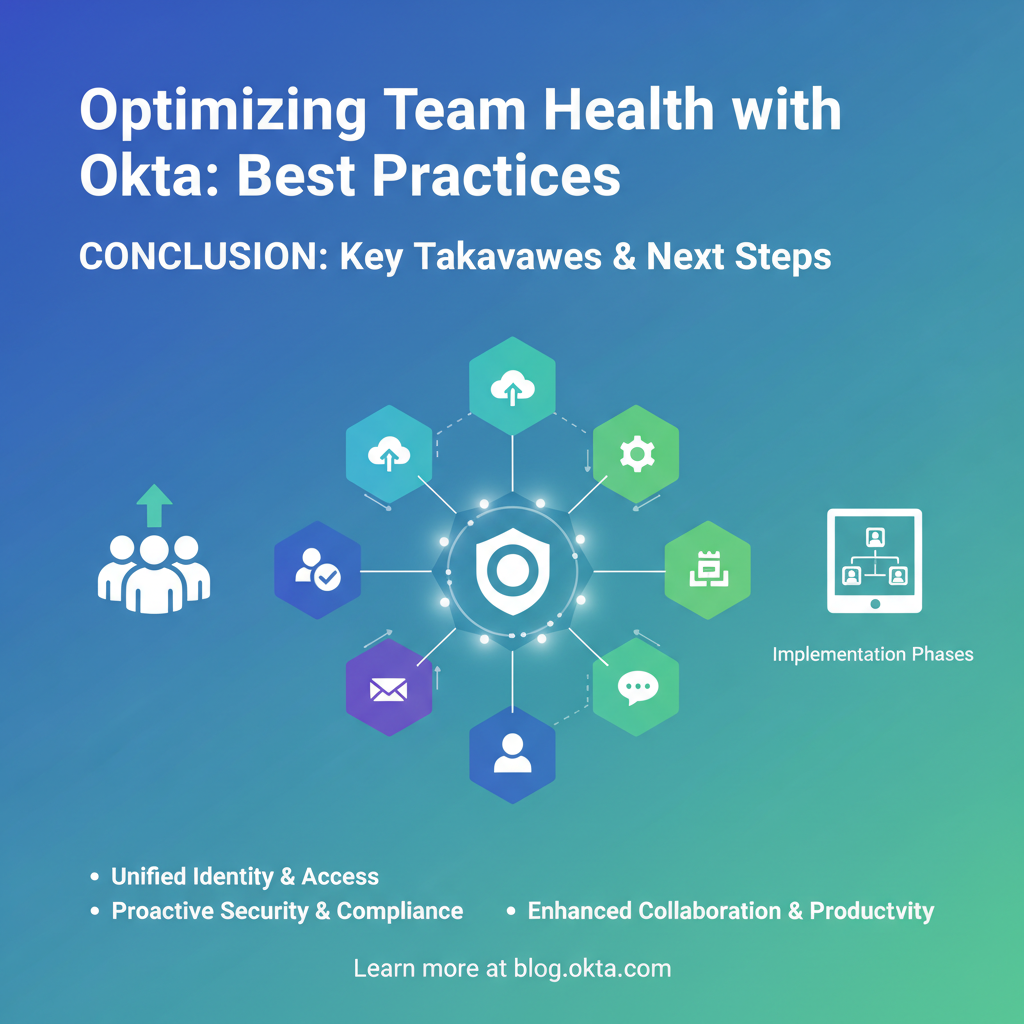
Optimizing Team Health with Okta: Best Practices


The modern enterprise thrives not just on technological prowess but on the well-being and efficiency of its human capital. In an increasingly complex digital landscape, where distributed teams and a myriad of applications are the norm, optimizing team health has become a strategic imperative. This goes beyond mere physical well-being; it encompasses mental clarity, productivity, a sense of security, and the frictionless execution of daily tasks. Technology, far from being a detractor, can be a powerful enabler of this holistic team health. Among the pantheon of enterprise tools, Okta emerges as a pivotal player, not just as an identity and access management (IAM) solution, but as a foundational element that underpins a healthy, secure, and productive team environment.
This comprehensive exploration delves into how Okta, through its robust feature set and strategic implementation, can transform an organization's approach to team health. We will examine best practices that span from enhancing security and streamlining access to fostering collaboration and empowering employees, all while subtly integrating the critical concepts of api, gateway, and Open Platform that characterize modern IT infrastructure. The goal is to articulate a vision where identity management is not merely a technical function but a strategic lever for organizational flourishing.
The Evolving Definition of Team Health in the Digital Age
Traditionally, team health might have conjured images of ergonomic chairs, wellness programs, and team-building exercises. While these elements remain vital, the digital transformation has added layers of complexity and opportunity. In today's context, a healthy team is one that experiences:
- Seamless Productivity: Employees can access the tools and resources they need, when they need them, without frustrating roadblocks.
- Reduced Cognitive Load: Less time spent on administrative tasks like password resets, application logins, or navigating complex access permissions.
- Enhanced Security Awareness, Not Anxiety: A secure environment where employees trust their data is protected, without feeling overly surveilled or burdened by security protocols.
- Strong Collaboration and Integration: Tools work together harmonmatically, fostering communication and shared progress rather than creating silos.
- Empowerment and Autonomy: Employees feel trusted and capable of managing their own digital identities and accessing necessary resources efficiently.
- Resilience to Change: The ability to adapt quickly to new applications, remote work models, or evolving security threats without significant disruption to workflow or morale.
Okta, at its core, addresses many of these foundational aspects by providing a unified, secure, and user-friendly experience for accessing digital resources. It streamlines the often-cumbersome process of identity verification and application access, thereby directly alleviating common sources of friction and anxiety that can erode team health.
Okta's Foundational Role: Secure and Frictionless Access
At the heart of Okta's contribution to team health is its ability to centralize and simplify access to myriad applications. In an average enterprise, an employee might need to interact with dozens of cloud applications daily – from communication platforms like Slack or Microsoft Teams, to CRM systems, HR portals, project management tools, and specialized industry-specific software. Each of these traditionally comes with its own login credentials, often leading to password fatigue, forgotten passwords, and a frustrating start to the workday.
Okta resolves this through Single Sign-On (SSO). With SSO, employees log in once to Okta, and are then seamlessly granted access to all their authorized applications without needing to re-enter credentials. This is more than just a convenience; it's a significant psychological relief. Imagine the cumulative time and mental energy saved over weeks and months when employees no longer struggle with multiple logins. This reduction in micro-frustrations directly translates into improved focus, higher productivity, and a more positive daily experience.
Furthermore, Okta’s role as an identity orchestrator extends to Automated Provisioning and Deprovisioning. When a new employee joins, Okta can automatically create accounts for them across all necessary applications, assigning appropriate roles and permissions. Conversely, when an employee leaves, Okta instantly revokes access to all systems, ensuring security and compliance. This automation not only saves significant time for IT departments but also eliminates the common stressors associated with onboarding new team members or offboarding departing ones. New hires can hit the ground running, feeling valued and supported from day one, while departures are managed smoothly without security vulnerabilities or lingering access issues. This smooth lifecycle management fosters a sense of organizational professionalism and efficiency, which are silent but powerful contributors to overall team health. The clarity and predictability offered by such systems alleviate anxieties related to access, ensuring that everyone knows exactly what they are entitled to, and that the system is fair and consistent.
Enhancing Productivity and Collaboration Through Identity Management
Beyond basic access, Okta actively enhances productivity and fosters collaboration by breaking down barriers that often arise from disparate systems. Its ability to integrate with a vast ecosystem of applications makes it a central nervous system for digital workflows.
One key aspect is the facilitation of cross-functional collaboration. Teams often rely on specialized tools that may not inherently communicate with each other. For instance, a marketing team might use a particular analytics platform, while the sales team relies on a CRM, and product development uses a project management suite. Okta ensures that access to these various tools is consistent and managed centrally. When a project requires input from members across different departments, Okta’s integrated identity approach means that accessing shared resources or specific tools for that project is a seamless experience, rather than a hurdle involving new logins or access requests. This creates an environment where inter-departmental cooperation is technologically supported, rather than hindered, contributing to a more cohesive and productive workforce.
Moreover, Okta’s Self-Service Password Reset (SSPR) and Self-Service Application Request features are invaluable. Employees can reset their own passwords securely, reducing the burden on IT helpdesks and eliminating downtime caused by forgotten credentials. Similarly, the ability to request access to new applications through a simple, guided Okta interface empowers employees, giving them more autonomy over their digital toolkit while maintaining IT oversight. This sense of empowerment, coupled with the immediate resolution of common IT issues, significantly boosts morale and reduces the frustrating dependence on IT support for routine matters, freeing up IT staff to focus on more strategic initiatives. The immediate gratification of solving one's own problem, rather than waiting for help, contributes positively to an individual's sense of agency and efficacy within the organization.
The very nature of how applications connect and interact in a modern enterprise often relies on underlying Application Programming Interfaces (APIs). Okta, itself an advanced cloud service, extensively leverages APIs to integrate with other platforms, automate workflows, and provide its rich functionality. When we talk about Okta provisioning users to Salesforce, or connecting to an HR system for employee data synchronization, these interactions are fundamentally driven by APIs. Okta acts as an orchestrator, using its own APIs to interact with the APIs of other applications. This invisible layer of connectivity ensures that the front-end user experience of seamless access is built upon a robust, API-driven backend. Without well-designed and securely managed APIs, such integrations would be cumbersome, brittle, or impossible, leading to system inefficiencies that directly impact team productivity and, by extension, team health. Understanding this underlying reliance on apis helps in appreciating the complexity and sophistication that Okta brings to the table, making the digital workspace feel effortlessly integrated for the end-user.
Strengthening Security Posture without Compromising User Experience
Security is paramount, but often it comes at the cost of user convenience. Overly complex security protocols can breed frustration, shadow IT (where employees find workarounds), and a general sense of resentment. Okta masterfully balances robust security with an intuitive user experience, thereby contributing significantly to team health by instilling confidence rather than anxiety.
Multi-Factor Authentication (MFA) is a cornerstone of modern security, and Okta makes it palatable. Instead of tedious complex passwords, Okta allows for a variety of MFA options, from push notifications on mobile devices to biometric scans or hardware tokens. Employees can choose methods that are convenient for them, making security a seamless part of their routine rather than an irritating extra step. This not only significantly reduces the risk of credential theft but also gives employees peace of mind, knowing their accounts are well-protected. A team that feels secure is a team that can focus on its primary objectives without undue worry about cyber threats.
Adaptive Access Policies further refine this balance. Okta can dynamically adjust security requirements based on context. For example, if an employee logs in from a known corporate network, a simple password might suffice. However, if they attempt to access sensitive data from an unfamiliar location or device, Okta might automatically prompt for an additional MFA factor. This intelligent approach minimizes friction for routine activities while escalating security precisely when it's needed most. It's a proactive defense mechanism that doesn't burden users unnecessarily, thereby preventing security measures from becoming a source of stress or inefficiency. The sophisticated decision-making engine behind adaptive access relies heavily on real-time data analysis and intelligent policies, creating a dynamic and responsive security gateway. This gateway is not just for preventing unauthorized access, but for tailoring the level of access control to the specific context of the user and device, which is a significant leap beyond static security rules.
Furthermore, Okta’s capabilities extend to Threat Detection and Remediation. By monitoring login patterns and user behavior across the entire application landscape, Okta can detect anomalous activities – such as unusual login locations, repeated failed login attempts, or attempts to access unauthorized applications. These early warnings enable IT teams to proactively investigate and neutralize threats, often before any significant damage occurs. This proactive security posture protects organizational data and infrastructure, but equally importantly, it protects employees from being unwitting participants in security breaches or having their accounts compromised. Knowing that a sophisticated system is constantly vigilant against threats provides a profound sense of security for the entire team, allowing them to concentrate on their work rather than constantly worrying about digital vulnerabilities. This contributes to a healthier work environment by fostering trust and reducing background anxiety related to data breaches.
Streamlining IT Operations and Fostering Efficiency
While the direct benefits to end-users are evident, Okta's impact on team health is equally profound for IT and security teams. By automating and centralizing identity management, Okta frees up valuable IT resources, allowing them to focus on strategic initiatives rather than reactive firefighting.
Consider the traditional IT workload: hundreds of helpdesk tickets for password resets, manual user provisioning for every new hire, deprovisioning for every departure, and constant auditing of access rights. This often leads to IT burnout, frustration, and a reactive posture. Okta significantly reduces this burden.
Reduced Helpdesk Volume: With SSO, SSPR, and self-service application requests, the sheer volume of identity-related helpdesk tickets plummets. This means IT staff are no longer bogged down by repetitive, low-value tasks. They can dedicate their expertise to more complex system improvements, security enhancements, or strategic technology planning, which are far more engaging and impactful. This shift improves IT team morale and reduces stress, directly contributing to their team health.
Simplified Audits and Compliance: Okta provides a centralized audit trail of all user activities – who accessed what, when, and from where. This dramatically simplifies compliance reporting for various regulations (e.g., GDPR, HIPAA, SOC2). Instead of laboriously compiling data from disparate systems, IT and compliance teams can generate comprehensive reports with ease. This reduces the stress and manual effort associated with audits, ensuring that the organization remains compliant without overburdening its personnel. The ability to demonstrate a strong security posture effortlessly reinforces the organization's credibility and professionalism, impacting internal perceptions positively.
Centralized Management and Control: Okta consolidates identity management across all applications, providing a single pane of glass for administrators. This means IT teams don't have to learn and manage separate identity systems for each application. This standardization reduces complexity, minimizes errors, and makes it easier to enforce consistent security policies across the entire organization. This unified approach to access control functions very much like a sophisticated gateway for all enterprise applications. Instead of each application having its own separate entrance and security checkpoint, Okta acts as the central, intelligent gateway through which all users pass, ensuring consistent authentication and authorization before granting access to any resource. This architectural simplification is a huge boon for operational efficiency and IT team health.
The efficiency gains from Okta are not just about saving money; they are about reclaiming time, reducing stress, and enabling IT teams to be more proactive and innovative. A healthy IT team is crucial for the health of the entire organization, as they are the backbone of all digital operations.
Understanding the Role of an API Gateway in the Broader IT Ecosystem
While Okta acts as an identity gateway for users accessing applications, it's important to understand that the concept of a gateway is pervasive in modern IT infrastructure, especially concerning apis. An API Gateway, such as ApiPark – an open-source AI gateway and API management platform – serves a distinct but complementary purpose. Where Okta manages who can access a service (authentication and authorization), an API Gateway manages how services are accessed and utilized by applications, often focusing on traffic management, security policies (like rate limiting, request validation), and routing for the APIs themselves.
For example, Okta ensures an employee is authenticated to use a CRM. However, if a custom internal application needs to query that CRM's API for specific data, an API Gateway might sit in front of the CRM's API. This gateway would handle tasks like applying rate limits to the internal application, transforming request formats, or routing requests to different versions of the CRM API. In a scenario where an organization is heavily leveraging AI models, an AI Gateway like ApiPark becomes even more critical. It can unify API formats for AI invocation, manage authentication for multiple AI models, encapsulate prompts into REST APIs, and provide detailed call logging and data analysis. These functions are vital for securing, scaling, and optimizing the use of AI services, which can indirectly contribute to team health by ensuring robust, reliable, and secure AI-driven tools are available to employees.
Thus, while Okta is the identity gateway for humans and applications, platforms like ApiPark are the dedicated gateways for managing the apis that power these applications, including cutting-edge AI services. Both are essential components of a robust, secure, and efficient IT infrastructure that supports healthy team operations. The natural synergy between these technologies, though distinct in their primary functions, underpins the seamless digital experience that fosters team health. The secure access provided by Okta for user authentication complements the secure, managed access to underlying services provided by an API Gateway.
APIPark is a high-performance AI gateway that allows you to securely access the most comprehensive LLM APIs globally on the APIPark platform, including OpenAI, Anthropic, Mistral, Llama2, Google Gemini, and more.Try APIPark now! 👇👇👇
Fostering a Culture of Trust and Efficiency with an Open Platform Approach
Beyond the technical functionalities, Okta’s philosophy as an Open Platform contributes significantly to building trust and efficiency within an organization. An Open Platform approach emphasizes interoperability, flexibility, and extensibility, allowing organizations to integrate best-of-breed tools rather than being locked into a single vendor's ecosystem.
Okta’s adherence to open standards (like SAML, OAuth, OpenID Connect) and its extensive network of pre-built integrations mean that it can connect with virtually any application or service an organization uses or chooses to adopt in the future. This flexibility is crucial for team health. It means:
- Choice and Best-of-Breed Tools: Teams are not forced to use suboptimal tools just because they fit into a rigid ecosystem. They can select the applications that best meet their specific needs, enhancing productivity and job satisfaction. This autonomy and access to effective tools directly impact performance and morale.
- Future-Proofing: As technology evolves, an
Open Platformlike Okta can adapt. It can integrate with new cloud services, security tools, and even emerging technologies like AI platforms, without requiring a complete overhaul of the identity infrastructure. This agility reduces long-term stress and uncertainty for both IT and end-users. - Developer Empowerment: Okta provides rich APIs and SDKs, allowing developers to build custom integrations, extend Okta’s functionality, and embed identity services directly into their own applications. This empowers internal development teams to create tailored solutions that perfectly fit unique business needs, further streamlining workflows and enhancing employee experience. This aspect ties directly back to the
apikeyword; Okta itself offers a powerful set of APIs, making it anOpen Platformfor developers to build upon. This contrasts with closed systems that restrict external interactions, thereby limiting innovation and flexibility.
An organization that leverages an Open Platform strategy signals trust in its teams to choose and utilize the right tools, and in its IT department to manage a flexible, integrated environment. This trust permeates the organizational culture, leading to a more engaged, autonomous, and ultimately, healthier workforce. When employees know that their digital environment is designed to be adaptable and integrate the best available solutions, it instills a sense of confidence and professionalism in the organization's technological foresight.
Best Practices for Implementing Okta to Optimize Team Health
Merely deploying Okta is not enough; its true potential in optimizing team health is realized through thoughtful implementation and continuous refinement. Here are key best practices:
- Strategic Planning and Phased Rollout:
- Assess current state: Understand existing identity challenges, pain points for users and IT, and desired outcomes for team health. Identify the most problematic applications or workflows first.
- Define clear objectives: What specific improvements to team health are you targeting? (e.g., reduce password reset tickets by X%, improve new hire onboarding time by Y%).
- Pilot programs: Start with a small, receptive team or department. Gather feedback, iterate, and refine the implementation before a broader rollout. This allows for fine-tuning and avoids organization-wide disruption, building confidence in the new system.
- Communicate effectively: Clearly articulate the "why" – how Okta will benefit individual employees and the team as a whole, focusing on convenience, security, and productivity gains.
- User-Centric Configuration:
- Prioritize SSO for all critical applications: Ensure that the most frequently used and business-critical applications are integrated with SSO first. This delivers immediate, tangible benefits to users.
- Offer intuitive MFA options: Provide a range of MFA factors (Okta Verify push, biometric, SMS, FIDO2) and guide users to choose the most convenient and secure option for them. Avoid forcing inconvenient methods unless absolutely necessary.
- Simplify self-service: Design clear, easy-to-follow workflows for password resets and application requests. Provide in-app guidance and context-sensitive help.
- Personalized dashboards: Encourage users to customize their Okta dashboard with their most-used applications, making their digital workspace truly their own.
- Robust Security Policies and Governance:
- Implement Adaptive Access: Leverage Okta's contextual access policies to dynamically enforce security based on user location, device posture, network, and application sensitivity. This ensures strong security without unnecessary friction.
- Automate lifecycle management: Fully automate provisioning and deprovisioning to ensure security from day one to the last day of employment. This reduces manual errors and ensures consistent access policies.
- Regular Access Reviews: Periodically review user access rights to ensure they align with current roles and responsibilities, adhering to the principle of least privilege. Okta's reporting features simplify this process.
- Integrate with SIEM/Security Tools: Feed Okta's audit logs into Security Information and Event Management (SIEM) systems for comprehensive threat detection and incident response.
- Continuous Training and Support:
- Onboarding for new hires: Integrate Okta training into the new hire onboarding process, demonstrating its benefits and how to use it effectively from the start.
- Ongoing education: Provide resources (knowledge base articles, video tutorials, live sessions) for common tasks, new features, and security best practices.
- Empower IT Champions: Train key IT staff and department champions to be first-line responders for Okta-related questions, decentralizing support and providing quicker resolutions.
- Feedback loops: Establish channels for users to provide feedback on their Okta experience, ensuring continuous improvement.
- Leveraging Okta as an Open Platform:
- Explore Integrations: Actively seek out and implement Okta's pre-built integrations with productivity tools, HR systems, and industry-specific applications to maximize the "single pane of glass" experience.
- Utilize Okta APIs for Customization: For unique business needs, leverage Okta's developer APIs to build custom connectors, automate complex workflows, or embed identity features directly into custom applications. This is where an organization might also consider using an API management platform like ApiPark to manage these custom APIs, ensuring they are secure, performant, and well-documented for internal or external consumption. APIPark's capabilities in unifying API formats and encapsulating prompts into REST APIs could be particularly beneficial if an organization is integrating Okta with custom AI solutions or internally developed services.
- Embrace Open Standards: Ensure any new applications or services being adopted also support open identity standards, making future integration with Okta seamless.
By adhering to these best practices, organizations can transform Okta from a mere security tool into a powerful enabler of a robust, efficient, and healthy team environment. The focus shifts from managing identities to empowering individuals and fostering collective success.
Measuring the Impact on Team Health
Quantifying the benefits of an identity management solution on something as nuanced as "team health" can seem challenging, but it is achievable through both qualitative and quantitative metrics.
Quantitative Metrics: * Reduced Helpdesk Tickets: Track the number of password reset requests, application access requests, and other identity-related support tickets before and after Okta implementation. A significant reduction indicates improved efficiency and reduced user frustration. * Onboarding/Offboarding Efficiency: Measure the time it takes to provision/deprovision users across all applications. Faster times indicate greater efficiency and a smoother experience. * Application Adoption Rates: Monitor the usage of integrated applications. Easier access via SSO can lead to higher adoption rates for beneficial tools. * Security Incident Reduction: Track the number of successful phishing attempts, credential stuffing attacks, or unauthorized access incidents. Okta's enhanced security features should lead to a measurable decrease. * Compliance Audit Time: Measure the time and resources required to complete security and compliance audits. Okta's centralized logging and reporting should significantly reduce this.
Qualitative Metrics: * Employee Surveys: Conduct regular anonymous surveys asking about ease of access, security confidence, satisfaction with IT support, and overall digital workflow experience. Look for improvements in these areas. * Focus Groups: Engage with different departments and roles to gather deeper insights into their daily challenges and how Okta has impacted their work experience. * Productivity and Morale Observations: While harder to quantify directly, observe anecdotal evidence of improved morale, less time spent on administrative tasks, and greater focus on core work. Look for comments indicating reduced stress or frustration with technology. * Feedback from IT Staff: Solicit direct feedback from IT and security teams regarding their workload, stress levels, and ability to focus on strategic initiatives.
| Metric Category | Pre-Okta Scenario (Typical) | Post-Okta Scenario (Optimized) | Impact on Team Health |
|---|---|---|---|
| Password Resets | 5-10 tickets/day (per 100 users) | 1-2 tickets/day (per 100 users) | Reduced frustration, saved time, lower cognitive load for employees; freed-up IT resources. |
| App Access Time | Multiple logins (30-60 seconds per app) | Single login (5-10 seconds for all apps) | Enhanced productivity, seamless workflow, less daily friction for users. |
| Onboarding Time | 2-3 days for full app access | 0.5-1 day for full app access | New hires feel supported, productive faster; HR/IT efficiency improved. |
| Offboarding Security | Manual deprovisioning, potential lingering access | Instant, automated deprovisioning | Reduced security risk, peace of mind for security team; professional exit process. |
| Security Incidents | Higher risk of credential theft, phishing | Significantly lower risk with MFA & adaptive access | Increased confidence, reduced anxiety about cyber threats; data integrity. |
| IT Staff Stress | High, reactive, repetitive tasks | Lower, strategic, proactive initiatives | Improved IT team morale, higher job satisfaction, focus on innovation. |
| User Experience | Frustrating, cumbersome logins | Smooth, effortless access | Enhanced job satisfaction, positive relationship with technology, reduced digital fatigue. |
By establishing clear baselines and consistently monitoring these metrics, organizations can demonstrate a compelling return on investment not just in security or efficiency, but directly in the well-being and productivity of their most valuable asset: their team.
Future Trends: Evolving Identity, AI's Role, and Continuous Adaptation
The landscape of identity and access management is far from static. As technology continues its rapid evolution, so too will the methods and expectations around identity. Future trends will further intertwine with the pursuit of optimal team health, with Okta poised to adapt and lead.
One significant trend is the rise of Passwordless Authentication. Technologies like FIDO2, biometric authentication, and magic links are reducing reliance on traditional passwords. Okta is at the forefront of this movement, offering and integrating these passwordless options. For team health, this means an even greater reduction in cognitive load, elimination of password-related stress, and a more natural, seamless login experience. Imagine a workday where your identity is effortlessly verified, allowing you to dive straight into tasks without a single keystroke for login.
The increasing integration of Artificial Intelligence (AI) into enterprise operations also presents new considerations. AI models, like those used for natural language processing or predictive analytics, often require access to sensitive data and systems. Managing access for these AI entities, ensuring they operate within defined parameters, and auditing their activities will become critical. This is where the intersection of identity management and specialized API management solutions, like ApiPark, becomes particularly relevant. While Okta manages human and application identities, an AI Gateway like APIPark is designed to manage the specific api calls to AI models, ensuring they are authenticated, authorized, and governed effectively. This combined approach ensures that AI enhances team productivity and health, rather than introducing new security or management complexities. As organizations increasingly adopt AI, managing access to these powerful tools securely and efficiently becomes paramount, directly impacting the quality and reliability of services available to teams.
Furthermore, the concept of Continuous Adaptive Trust will become more prevalent. Rather than a one-time access decision, identity verification will be an ongoing process, constantly assessing risk based on user behavior, device health, network conditions, and data sensitivity. This dynamic approach will provide even stronger security without sacrificing convenience, as security measures only escalate when genuine risk is detected. For teams, this translates into a highly secure yet minimally intrusive environment, fostering trust in the system's ability to protect them proactively.
Finally, the shift towards a truly Open Platform ecosystem will accelerate. Organizations will demand even greater interoperability, requiring identity solutions that can seamlessly connect to an ever-expanding array of cloud services, custom applications, and emerging technologies. Okta's foundational commitment to an Open Platform strategy positions it well to continue facilitating this integration, ensuring that teams always have access to the best tools available, regardless of vendor. This flexibility is key to organizational resilience and the long-term health of teams in a rapidly changing world. The ability to integrate new services with minimal friction, thanks to robust APIs and an open architecture, means less disruption and more continuous productivity, which are direct benefits to team well-being.
Conclusion
Optimizing team health in the digital era is a multifaceted endeavor, extending far beyond traditional wellness programs to encompass every aspect of an employee's interaction with technology. Okta stands as a crucial enabler in this pursuit, transforming identity and access management from a mere technical necessity into a strategic driver of organizational well-being.
By providing secure, frictionless access through SSO and automated lifecycle management, Okta alleviates daily frustrations and boosts productivity. It enhances security without burdening users, leveraging MFA and adaptive policies to create a confident and protected workforce. For IT teams, Okta streamlines operations, reducing helpdesk strain and freeing resources for strategic innovation, thereby improving their own team health. Critically, Okta's strong api capabilities ensure deep integration with the broader enterprise technology stack, while its role as an identity gateway centralizes and fortifies access controls. Finally, its commitment to being an Open Platform fosters flexibility, empowers choice, and future-proofs the organization against rapid technological shifts.
The strategic implementation of Okta, guided by best practices, yields measurable benefits, from reduced helpdesk tickets and faster onboarding to enhanced security posture and improved employee satisfaction. In an interconnected world, where the boundaries between work and life often blur, providing a secure, efficient, and empowering digital experience is not just good practice – it is fundamental to nurturing a healthy, engaged, and resilient team capable of thriving in any environment. Okta helps lay this vital foundation, proving that intelligent identity management is truly at the heart of optimizing team health.
5 Frequently Asked Questions (FAQs)
1. How does Okta directly contribute to employee productivity? Okta primarily boosts productivity through Single Sign-On (SSO), which eliminates the need for employees to remember and re-enter credentials for multiple applications, saving significant time and reducing mental fatigue. Additionally, features like automated provisioning quickly grant new hires access to necessary tools, allowing them to become productive faster, and self-service password resets minimize downtime caused by forgotten logins.
2. Is Okta just a security tool, or does it have other benefits for team health? While Okta is a powerful security tool, its benefits extend far beyond. It significantly contributes to team health by reducing friction in daily workflows, minimizing employee frustration with technology, enhancing collaboration by simplifying access to shared resources, and empowering employees through self-service capabilities. By making digital interactions seamless and secure, Okta fosters a more positive, efficient, and less stressful work environment.
3. How does Okta's "Open Platform" approach benefit my organization? Okta's "Open Platform" approach, built on open standards and robust APIs, provides flexibility and choice. It allows organizations to integrate Okta with virtually any application, ensuring teams can use best-of-breed tools without vendor lock-in. This adaptability future-proofs your IT infrastructure, empowers internal developers to build custom solutions, and ultimately contributes to team health by providing tailored, effective tools and reducing operational headaches.
4. How does Okta relate to other "gateway" technologies like an API Gateway? Okta acts as an identity gateway or access gateway, centrally managing who (users and applications) can access various enterprise resources. It focuses on authentication and authorization for end-users. An API Gateway, like ApiPark, on the other hand, is designed to manage how APIs (Application Programming Interfaces) are consumed by other applications, handling tasks like traffic management, security policies for API calls (e.g., rate limiting), and routing. While distinct, both are crucial components of a secure and efficient digital infrastructure, with Okta ensuring secure user access, and an API Gateway ensuring secure and managed service access.
5. What are the first steps to implementing Okta to improve team health? Begin with strategic planning: assess your current identity challenges and pain points. Define clear objectives for how Okta will improve team health (e.g., reducing helpdesk tickets, faster onboarding). Start with a phased rollout, perhaps with a pilot team, to gather feedback and refine your implementation. Crucially, prioritize integrating Okta with your most frequently used applications and communicate the benefits clearly to your employees to ensure high adoption and positive impact.
🚀You can securely and efficiently call the OpenAI API on APIPark in just two steps:
Step 1: Deploy the APIPark AI gateway in 5 minutes.
APIPark is developed based on Golang, offering strong product performance and low development and maintenance costs. You can deploy APIPark with a single command line.
curl -sSO https://download.apipark.com/install/quick-start.sh; bash quick-start.sh

In my experience, you can see the successful deployment interface within 5 to 10 minutes. Then, you can log in to APIPark using your account.

Step 2: Call the OpenAI API.