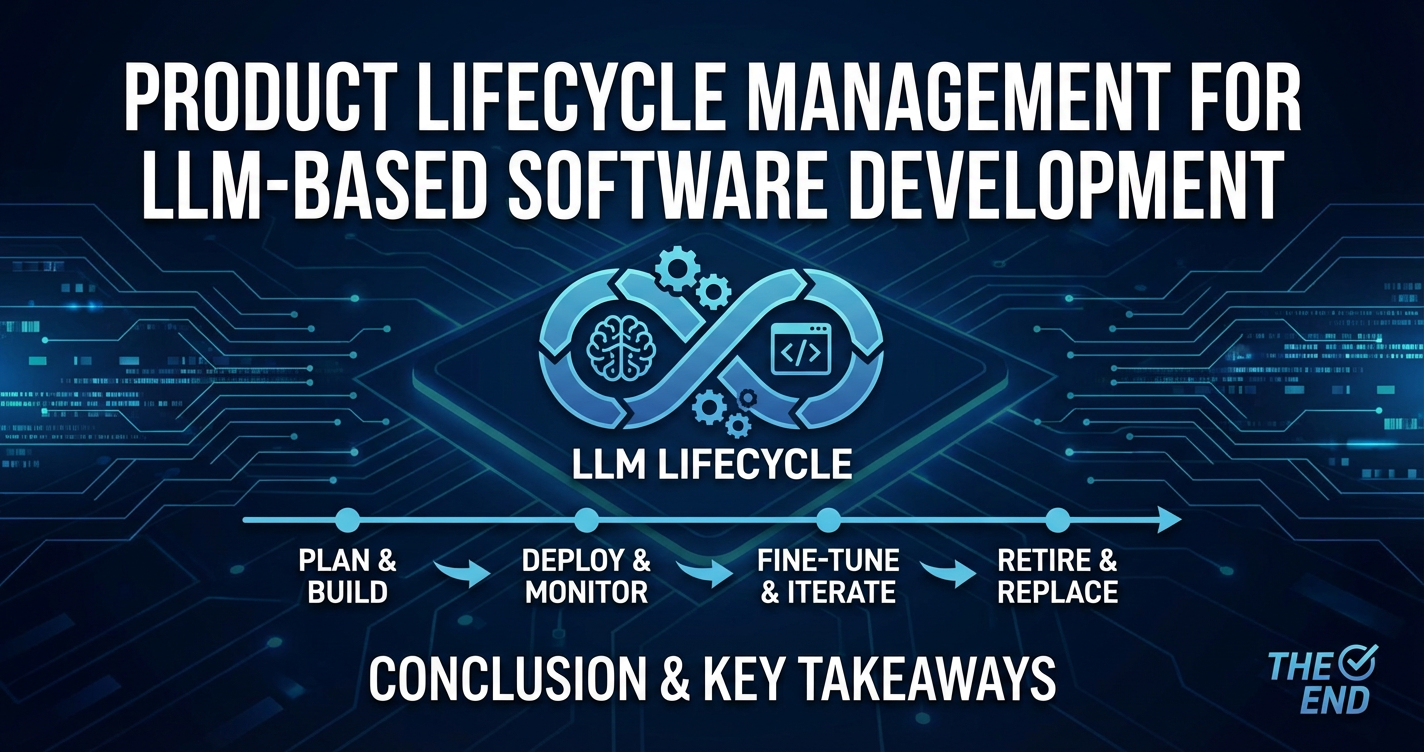
Product Lifecycle Management for LLM-Based Software Development
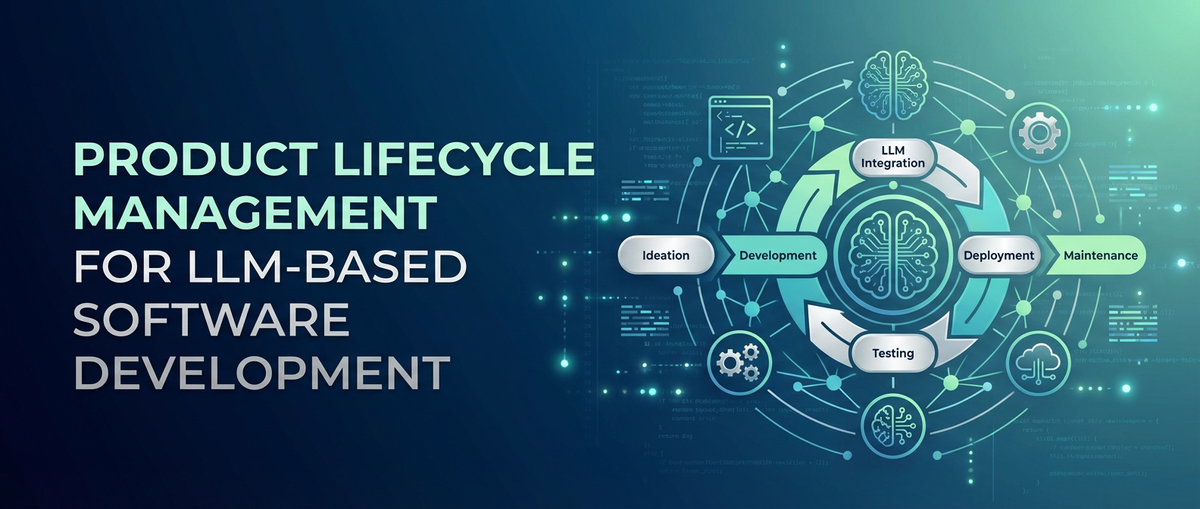


The advent of Large Language Models (LLMs) has heralded a transformative era in software development, fundamentally altering how applications are conceived, designed, built, and maintained. These powerful AI systems, capable of understanding, generating, and manipulating human language with unprecedented fluency, are now the core intelligence powering a vast array of new software products, from sophisticated chatbots and intelligent assistants to automated content creation tools and advanced code generators. This profound shift, however, brings with it a unique set of challenges and complexities that traditional software Product Lifecycle Management (PLM) methodologies are often ill-equipped to handle. The probabilistic nature of LLM outputs, their heavy reliance on vast datasets, the dynamic landscape of model evolution, and the emergent behaviors they exhibit necessitate a re-evaluation and adaptation of established PLM frameworks.
Traditional PLM focuses on the entire lifespan of a product, from ideation and design to development, testing, deployment, and eventual decommissioning. It provides a structured approach to manage the flow of information, processes, and resources across these stages, ensuring efficiency, quality, and strategic alignment. For LLM-based software, this foundational need for robust lifecycle management remains, but the nuances introduced by generative AI demand a specialized lens. We must account for the unique characteristics of "AI components" – not just static code but dynamic models, prompts, and training data – and integrate their distinct lifecycles into the broader product management strategy. This article delves into a comprehensive Product Lifecycle Management framework tailored specifically for LLM-based software development. We will explore how each traditional PLM phase is reimagined and augmented to address the intricacies of generative AI, emphasizing strategic planning, architectural design, iterative development, rigorous testing, robust deployment, and continuous maintenance. Throughout this exploration, we will highlight the critical roles of enabling technologies such as the LLM Gateway and the conceptual framework of a Model Context Protocol (MCP), which are pivotal in managing the complexity and ensuring the reliability and scalability of these cutting-edge applications. By adopting such a specialized PLM approach, organizations can navigate the complexities of LLM-based software development effectively, accelerate innovation, mitigate risks, and ensure the long-term success of their AI-powered products.
The Shifting Paradigm: LLMs and Software Development
The integration of Large Language Models into software development represents a seismic shift, moving beyond the traditional deterministic programming paradigms to embrace a world of probabilistic outputs and emergent behaviors. Historically, software development relied on explicitly defined rules and logic, where inputs predictably led to outputs. Developers crafted algorithms, designed data structures, and wrote code that executed with precise, repeatable outcomes, contingent only on the correctness of the logic. The PLM for such software focused on managing these well-defined components, tracking code versions, ensuring functional requirements were met, and validating against explicit specifications.
However, LLMs introduce an entirely new dimension. Their generative capabilities allow them to produce diverse and often novel outputs based on subtle variations in input prompts, making their behavior less predictable and harder to precisely control. Prompt engineering, the art and science of crafting effective inputs to guide LLMs, has emerged as a new form of programming, demanding a different skill set and a new set of tools. Developers are no longer just instructing machines; they are conversing with them, fine-tuning their "understanding" through iterative prompt refinement. This shift profoundly impacts every stage of the product lifecycle.
One of the most significant changes lies in the nature of "requirements." For traditional software, requirements are often static and fully specifiable upfront. For LLM-based systems, requirements can be fluid, evolving as the capabilities and limitations of the model are discovered through experimentation. The concept of "bugs" also transforms; an LLM might produce factually incorrect information (hallucinations), exhibit biases present in its training data, or fail to adhere to desired tones and styles, none of which fit neatly into a traditional "logic error" category. Furthermore, the performance of an LLM is inextricably linked to the quality and diversity of its training data, adding a complex data management layer to the PLM that was less prominent in code-centric development. Ethical considerations, such as bias, fairness, and transparency, move from being peripheral concerns to central design and evaluation criteria, given the potential societal impact of generative AI.
Traditional PLM frameworks, while robust for their intended purpose, often fall short when confronted with these LLM-specific challenges. For instance, version control extends beyond mere code to encompass model weights, training datasets, and prompt templates, each requiring meticulous tracking and reproducibility. Testing strategies must evolve from validating deterministic functions to evaluating subjective qualities like coherence, relevance, and safety, often requiring human-in-the-loop validation. Deployment strategies must account for the substantial computational resources LLMs demand, along with dynamic routing and load balancing of API calls to various models. The very definition of "product success" broadens to include metrics like user engagement with generated content, reduction in human effort, and the avoidance of undesirable AI behaviors, rather than just functional correctness and performance benchmarks. The inherent unpredictability and emergent properties of LLMs force a more adaptive, iterative, and data-centric approach to product management, making a specialized PLM not just beneficial, but essential.
Phase 1: Strategic Planning and Conception for LLM Products
The initial phase of any product lifecycle, strategic planning and conception, lays the groundwork for success. For LLM-based software, this phase is even more critical, demanding a deeper consideration of the unique opportunities and inherent complexities presented by generative AI. It's not merely about identifying a problem, but about discerning how an LLM can uniquely and effectively solve it, while simultaneously navigating the ethical, technical, and economic landscapes.
A. Ideation and Market Research
The journey begins with identifying compelling problems that LLMs are uniquely positioned to address. This requires a nuanced understanding of LLM capabilities – their strengths in natural language understanding, generation, summarization, and translation – balanced against their current limitations, such as factual inaccuracies, logical reasoning gaps, and susceptibility to biases. Brainstorming sessions should push beyond superficial applications to uncover use cases where human-like text generation or comprehension can create significant value. For instance, instead of just a simple chatbot, consider an intelligent assistant that synthesizes complex information from multiple sources to answer nuanced queries, or a writing tool that adapts its style and tone to match specific brand guidelines.
Crucial to this stage is comprehensive market research. This involves deep dives into potential user needs and pain points, meticulously analyzing existing solutions (both AI-driven and traditional), and identifying gaps that an LLM-powered product could fill. Competitive analysis within the rapidly evolving LLM space is paramount; understanding what competitors are offering, their chosen models, and their go-to-market strategies provides vital intelligence. This research should also encompass an understanding of user readiness and willingness to adopt AI-powered tools, assessing potential apprehension or trust issues that might need to be addressed in the product design and messaging. Feasibility studies, encompassing technical viability (can an LLM achieve the desired outcome?), ethical implications (are there risks of bias or misuse?), and economic viability (is there a sustainable business model?), are non-negotiable before proceeding.
B. Defining Product Vision and Scope
With a clear problem identified, the next step is to articulate a compelling product vision and define its scope. This vision must clearly state what problem the LLM product solves, for whom, and what unique value it delivers. For example, a vision might be: "To empower marketing teams with an AI co-pilot that generates highly personalized and contextually relevant campaign copy at scale, reducing manual effort by 70%." This vision then informs the core features and differentiating factors. Will the product leverage multiple LLMs? Will it specialize in a particular domain? How will it handle sensitive information? The scope must be carefully delineated, establishing a Minimum Viable Product (MVP) that allows for rapid iteration and learning, rather than attempting to solve every possible problem at once.
Establishing initial success metrics is equally vital. These metrics extend beyond traditional KPIs like user adoption or revenue. For LLM products, they might include metrics related to the quality of generated output (e.g., human-rated relevance, coherence, factual accuracy), efficiency gains (e.g., time saved in content creation), or even the reduction of harmful outputs. These metrics serve as guiding stars throughout the development process, ensuring that the product stays aligned with its strategic goals and delivers tangible value.
C. Technology Stack and Model Selection
One of the most significant decisions in the conception phase for an LLM product revolves around the underlying AI technology stack. This involves a critical choice between proprietary models (e.g., OpenAI's GPT series, Google's Gemini, Anthropic's Claude) and open-source alternatives (e.g., Llama 2, Mistral, Falcon). Each option presents a trade-off between cost, performance, flexibility, and control. Proprietary models often offer state-of-the-art performance with less operational overhead, but come with API costs and vendor lock-in risks. Open-source models provide greater control, customization possibilities (through fine-tuning), and potentially lower long-term inference costs, but require significant in-house expertise for deployment and management.
Further, deciding between solely relying on prompt engineering (where the base LLM is used as-is, with carefully crafted inputs) and fine-tuning (adapting a pre-trained LLM on a specific dataset) is crucial. Fine-tuning can yield highly specialized and domain-specific performance but demands data curation, computational resources, and a robust MLOps pipeline. Infrastructure considerations are also paramount: will the LLM components be hosted on-premise for maximum data privacy and control, or will cloud-based solutions (AWS Sagemaker, Azure ML, Google Cloud AI Platform) be leveraged for scalability and managed services?
Crucially, from this early stage, organizations should consider the role of an LLM Gateway. An LLM Gateway acts as an intelligent intermediary between your application and various LLM providers. By abstracting the complexities of multiple LLM APIs, it offers a single point of entry for all AI model invocations. Even if only one LLM is initially chosen, planning for a gateway lays the groundwork for future flexibility, allowing for seamless switching between models, A/B testing, and centralized management of authentication, rate limiting, and cost tracking. This foresight can prevent significant architectural rework down the line and is a cornerstone of a scalable and resilient LLM product strategy.
D. Ethical Considerations and Responsible AI
Ethical considerations are not an afterthought for LLM products; they are foundational to the strategic planning phase. The potential for LLMs to perpetuate biases, generate harmful content, or violate privacy demands proactive and integrated responsible AI practices.
- Bias Detection and Mitigation: Identifying and mitigating biases present in training data or inherent in the model's responses is critical. This involves planning for bias audits, developing fairness metrics, and potentially employing techniques like debiasing datasets or carefully crafting prompts to reduce biased outputs.
- Privacy and Data Governance: LLMs interact with user data, sometimes sensitive. Robust data governance policies must be established from the outset, covering data collection, storage, processing, and usage in accordance with privacy regulations (e.g., GDPR, CCPA). Planning for data anonymization, differential privacy, and secure data handling is essential.
- Explainability and Transparency: While true "explainability" for complex LLMs remains an active research area, products should strive for transparency where possible. This might involve clearly communicating to users that they are interacting with an AI, providing confidence scores for generated content, or indicating the sources of information.
- Legal and Regulatory Compliance: The regulatory landscape for AI is rapidly evolving. Products must be designed with an eye towards current and anticipated regulations, such as the EU AI Act. This involves consulting legal experts and building compliance checks into the product development lifecycle.
Integrating these ethical considerations upfront helps in building trustworthy AI products, mitigating reputational risks, and fostering user adoption. Ignoring them can lead to significant financial penalties, loss of user trust, and ultimately, product failure.
Phase 2: Design and Architecture for LLM-Centric Systems
Once the strategic planning is complete, the next critical phase involves designing the architecture and key components of the LLM-based system. This stage translates the product vision into a tangible technical blueprint, addressing how LLMs will integrate with the broader application, how data will flow, and how the system will manage the unique challenges of generative AI.
A. System Architecture Design
Integrating LLMs effectively often requires a thoughtful approach to system architecture, particularly when embedding them into existing microservices or building new, AI-first applications. The design must accommodate the distinct operational characteristics of LLMs, which typically involve API calls to external services or locally hosted models, often requiring significant computational resources and generating non-deterministic outputs.
A common pattern involves encapsulating LLM interactions within dedicated microservices. These services can handle prompt construction, API calls to the LLM provider, response parsing, error handling, and basic output validation. This modularity ensures that changes to the LLM (e.g., switching providers, updating models) or prompt engineering techniques can be managed centrally without impacting the entire application. Data pipelines for training, fine-tuning, and inference are another crucial architectural consideration. This includes systems for data ingestion, cleaning, transformation, and storage, ensuring a continuous supply of high-quality data for model updates and a robust flow for real-time inference.
User interface (UI) design for LLM applications also presents unique challenges. Beyond traditional UI/UX principles, designers must consider how users will interact with prompts (e.g., structured forms, free-text inputs), how LLM outputs will be presented (e.g., clearly labeled as AI-generated, editable, with revision history), and how feedback mechanisms will be incorporated to continuously improve the model's performance. Scalability and resilience planning are paramount. LLM inference can be computationally intensive and subject to rate limits or outages from external providers. The architecture must include mechanisms for load balancing, caching frequently requested LLM responses, implementing circuit breakers, and designing graceful degradation strategies to ensure the application remains responsive even if an LLM service is temporarily unavailable.
B. Prompt Engineering Design
Prompt engineering, often described as the "new programming language" for LLMs, requires a structured design approach. It's not just about crafting a single query but designing a system of prompts that guides the LLM to perform complex tasks reliably and consistently. This involves developing a taxonomy of prompt types (e.g., few-shot, zero-shot, chain-of-thought, persona-based), establishing best practices for prompt construction (e.g., clarity, specificity, avoiding ambiguity), and creating templates for various use cases.
Iterative prompt refinement is central to this design phase. Designers and prompt engineers will experiment with different phrasings, examples, and contextual information to optimize LLM outputs for desired quality, accuracy, and adherence to specific instructions. Tools for prompt versioning become essential, akin to code version control, allowing teams to track changes, revert to previous versions, and conduct A/B tests on different prompt strategies. Furthermore, designing for prompt robustness involves anticipating potential adversarial prompts or "prompt injections" that could lead the LLM to generate undesirable or harmful content. This might include incorporating input sanitization, guardrails, or instruction tuning to enhance the model's resilience.
C. Data Management Strategy
A robust data management strategy is foundational for any LLM-based product, underpinning its performance, reliability, and ethical standing. This strategy encompasses the entire data lifecycle, from collection to deletion. For fine-tuning LLMs, specific datasets need to be meticulously collected, cleaned, and annotated. This often involves significant human effort to ensure data quality, relevance, and representativeness, directly impacting the specialized capabilities of the fine-tuned model. Data governance, security, and privacy are non-negotiable. Policies must be established for who can access what data, how it is stored (encrypted at rest and in transit), and how it complies with relevant regulations like GDPR or HIPAA. Mechanisms for secure data sharing, anonymization, and auditing are essential.
Furthermore, integrating feature stores and vector databases into the architecture can significantly enhance LLM applications. Feature stores provide a centralized repository for curated, versioned, and easily accessible features that can be used to enrich prompts or fine-tune models. Vector databases, on the other hand, are critical for Retrieval-Augmented Generation (RAG) architectures, allowing the LLM to retrieve relevant external knowledge (stored as vector embeddings) before generating a response, thereby reducing hallucinations and grounding responses in factual information. The design phase must outline how these data components will be integrated, managed, and scaled within the overall system.
D. Implementing an LLM Gateway
The decision to implement an LLM Gateway is one of the most strategic architectural choices for LLM-based software, offering a centralized point of control and abstraction for all interactions with Large Language Models. In a landscape where organizations might be experimenting with multiple LLM providers, open-source models, or various versions of their own fine-tuned models, an LLM Gateway becomes indispensable.
An LLM Gateway sits between your application and the actual LLM endpoints. Its primary role is to abstract away the complexities and differences of various LLM APIs, providing a unified interface for your developers. This means applications don't need to be rewritten if you switch from, say, OpenAI to Anthropic, or integrate a self-hosted Llama 2 model. The gateway handles the translation and routing. Beyond abstraction, an LLM Gateway provides critical functionalities for robust operations:
- Centralized Control and Management: It allows for a single point to manage API keys, access permissions, and configurations for all LLMs.
- Traffic Management: Features like load balancing across multiple LLM instances (or providers), rate limiting to prevent abuse or control costs, and caching frequent requests significantly improve performance and resource utilization.
- Security: The gateway can enforce robust security policies, including authentication, authorization, input/output sanitization, and threat detection, protecting both your application and the LLM from malicious inputs or data exfiltration.
- Cost Optimization: By monitoring token usage, applying intelligent routing (e.g., using cheaper models for simpler tasks), and caching, a gateway can dramatically reduce LLM inference costs.
- Observability and Analytics: It provides a central place for logging all LLM calls, responses, latencies, and costs, offering invaluable data for monitoring, troubleshooting, and performance analysis.
For enterprises looking to streamline the management of multiple AI models and ensure unified API invocation, a robust solution like APIPark, an open-source AI gateway and API management platform, becomes indispensable. APIPark offers quick integration of 100+ AI models and standardizes request data formats, significantly simplifying AI usage and maintenance costs. It functions as a single entry point for all API services, providing centralized control over traffic forwarding, load balancing, and API versioning. Furthermore, APIPark enables performance rivaling Nginx, detailed API call logging, and powerful data analysis, making it an ideal choice for managing the entire API lifecycle of LLM-based applications. Explore more about its capabilities at ApiPark. By adopting an LLM Gateway early in the design phase, organizations build a flexible, scalable, and secure foundation for their LLM-powered products, mitigating vendor lock-in and simplifying future model iterations.
E. Designing for Model Context Protocol (MCP) and State Management
One of the most profound challenges in building complex, interactive LLM applications is managing the "context" or state across multiple turns of a conversation or a series of user interactions. LLMs inherently have a finite context window, meaning they can only "remember" a limited amount of preceding information in a single API call. This is where the concept of a Model Context Protocol (MCP) becomes crucial.
A Model Context Protocol can be thought of as a standardized approach or framework for managing and persisting conversational or transactional context across various LLM interactions. It addresses how information that is relevant to an ongoing interaction, but might exceed an LLM's direct input window, is stored, retrieved, and re-inserted into future prompts. Explicitly designing an MCP involves:
- Context Chunking and Summarization: Breaking down long conversations or documents into manageable chunks and summarizing them to fit within the LLM's context window.
- External Memory Systems: Implementing databases (like vector databases for RAG) or session stores to hold long-term conversational history or relevant external knowledge. The
MCPdictates how this external memory is accessed and integrated. - Conversation State Management: Defining how the application tracks the user's intent, relevant entities, and past actions to inform future prompts and guide the LLM's responses. This could involve finite state machines or more complex semantic understanding.
- Retrieval-Augmented Generation (RAG): The
MCPprovides the blueprint for how relevant documents or data points are retrieved from external knowledge bases (e.g., enterprise databases, documentation, user manuals) and then dynamically injected into the LLM's prompt, effectively extending its knowledge base beyond its training data. - Versioning of Context: Just as code and prompts are versioned, the strategies for managing context, including summarization algorithms, retrieval methods, and state schemas, may also require version control as the application evolves.
The importance of a consistent MCP cannot be overstated. Without it, LLM applications struggle with coherence, frequently "forget" past interactions, and fail to provide truly personalized or continuous experiences. Designing a robust MCP ensures that the application maintains a rich and relevant understanding of the ongoing interaction, allowing the LLM to generate more accurate, relevant, and engaging responses. It's a fundamental architectural decision that impacts the intelligence and usability of the entire LLM product.
Phase 3: Development and Iteration
The development and iteration phase for LLM-based software is characterized by its emphasis on experimentation, rapid prototyping, and continuous feedback loops. Unlike traditional software development where requirements are often fixed, LLM product development thrives on agility, constantly adapting to new insights gained from model outputs, user interactions, and evolving prompt engineering techniques.
A. Agile Methodologies for LLM Development
Agile methodologies, such as Scrum or Kanban, are particularly well-suited for LLM development. Their iterative nature, focus on short development cycles (sprints), and continuous feedback loops align perfectly with the exploratory nature of working with generative AI. Instead of lengthy upfront design phases, teams can prioritize building minimal, testable features powered by LLMs, gather rapid feedback, and iterate quickly. This might involve setting up experiments to compare different prompt strategies, fine-tuning small models on specific datasets, or integrating new LLM APIs to assess their performance for a given task.
Continuous Integration/Continuous Deployment (CI/CD) pipelines become even more critical in this context. For LLM applications, CI/CD extends beyond just code to include prompt versioning, model updates (e.g., new fine-tuned weights), and even data schema changes for Model Context Protocol implementations. Automated testing within the pipeline should not only check code quality but also run evaluation suites against LLM outputs, ensuring that new changes do not introduce regressions or degrade performance. This enables developers to maintain a consistent pace of innovation while ensuring quality and stability.
B. Prompt Development and Optimization
Prompt development is a core activity in this phase, often involving a dedicated role for "prompt engineers." This is an iterative process of crafting, testing, and refining the instructions given to the LLM to elicit desired behaviors. Tools for prompt versioning are essential, allowing teams to track every iteration of a prompt, understand its impact on model output, and revert to previous versions if needed. This is akin to how source code management systems handle code changes.
Various techniques are employed for prompt optimization: * Chain-of-Thought (CoT) Prompting: Guiding the LLM through a series of logical steps to arrive at a solution, often improving accuracy for complex reasoning tasks. * Few-Shot Learning: Providing the LLM with a few examples of desired input-output pairs to help it understand the task and generate more accurate responses. * Self-Correction/Self-Refinement: Designing prompts that ask the LLM to evaluate its own output and suggest improvements, or to generate multiple options and select the best one based on criteria provided in the prompt. * Persona-Based Prompting: Instructing the LLM to adopt a specific persona (e.g., an expert doctor, a friendly customer service agent) to influence its tone and style.
Automated prompt testing frameworks can be developed to evaluate prompts against a set of expected outputs or quality metrics, allowing for systematic iteration and improvement. This phase is characterized by a "test-and-learn" approach, where hypotheses about prompt effectiveness are constantly validated through empirical testing.
C. Model Fine-tuning and Training
For applications requiring highly specialized or domain-specific knowledge, or desiring a particular style that general-purpose LLMs cannot easily replicate, model fine-tuning becomes a crucial activity. This involves taking a pre-trained LLM and further training it on a smaller, curated dataset relevant to the specific task or domain.
- Data Preparation and Curation: This is perhaps the most time-consuming and critical aspect. It involves gathering high-quality, task-specific data, cleaning it meticulously (removing noise, duplicates, irrelevant information), and often annotating it to create supervised examples. The quality of this fine-tuning data directly correlates with the performance of the specialized model.
- Choosing Appropriate Fine-tuning Techniques: Techniques like LoRA (Low-Rank Adaptation) or QLoRA allow for efficient fine-tuning by only training a small number of additional parameters, significantly reducing computational requirements and memory footprint compared to full fine-tuning. P-tuning and Prompt Tuning are other methods that learn to optimize soft prompts without changing the base model weights, offering a balance between performance and efficiency.
- Hyperparameter Tuning and Experimental Tracking: Fine-tuning involves selecting optimal hyperparameters (e.g., learning rate, batch size, number of epochs). MLOps platforms and experimental tracking tools are vital to manage these experiments, log results, and compare different fine-tuned models. This ensures reproducibility and helps in identifying the best-performing models for deployment.
The output of this sub-phase is often a new version of the LLM model, ready for integration and rigorous testing within the application.
D. Integration with Core Application Logic
Once prompts are refined and models potentially fine-tuned, the LLM component must be seamlessly integrated with the core application logic. This involves defining clear API integration patterns, ensuring robust communication between the application and the LLM (or the LLM Gateway). Modern practices favor asynchronous communication to handle the variable latency of LLM calls, preventing the main application thread from blocking.
Robust error handling and fallback mechanisms are essential. LLMs can fail in various ways: API errors, rate limits, generating irrelevant or harmful content, or simply being too slow. The application logic must gracefully handle these scenarios, perhaps by retrying calls, falling back to simpler rules-based logic, or informing the user of a temporary issue. Managing LLM latency and throughput within application flows is also critical for user experience. Techniques like streaming partial LLM responses to the user, breaking down complex tasks into smaller, parallelizable LLM calls, or pre-caching common responses can improve perceived performance. This ensures that the intelligence provided by the LLM is delivered efficiently and reliably within the context of the user's interaction.
E. Leveraging LLM Gateway Features
During the development and iteration phase, the LLM Gateway becomes an active partner in the development workflow, providing tools and features that accelerate experimentation and ensure stability.
- A/B Testing Different Prompts or Models: An
LLM Gatewaycan be configured to route a percentage of traffic to different versions of prompts or even entirely different LLMs. This enables developers to conduct live A/B tests, comparing the performance and user satisfaction of various LLM strategies in a production environment without deploying separate application versions. This is invaluable for rapid iteration and data-driven decision-making. - Applying Rate Limiting and Access Control: As developers integrate LLMs into various parts of the application, the gateway can enforce consistent rate limits per user, per API key, or per endpoint, preventing unintended cost spikes or abuse. It can also manage granular access control, ensuring that only authorized services or users can invoke specific LLM functions.
- Monitoring API Calls for Performance and Cost: The gateway's centralized logging and analytics capabilities provide real-time visibility into LLM API calls. Developers can monitor latency, error rates, token usage, and associated costs for different models and prompts. This allows for immediate identification of performance bottlenecks, cost overruns, or unexpected model behaviors, enabling quick adjustments and optimizations during development.
By actively leveraging the features of an LLM Gateway throughout development, teams can iterate faster, experiment more confidently, and build more robust and cost-effective LLM-based applications.
Phase 4: Testing, Validation, and Quality Assurance
Testing and quality assurance for LLM-based software presents a paradigm shift from traditional methods. The probabilistic and often opaque nature of LLMs means that deterministic testing, which relies on predictable inputs yielding predictable outputs, is insufficient. This phase demands a multifaceted approach that embraces qualitative evaluation, human judgment, and advanced statistical methods to ensure the LLM product is not only functional but also reliable, safe, and aligned with its intended purpose.
A. Unique Challenges in LLM Testing
The inherent characteristics of LLMs introduce several unprecedented testing challenges:
- Non-determinism and Variability of Outputs: Given the same prompt, an LLM might produce slightly different responses each time due to its stochastic nature. This makes direct assertion testing difficult. Testers must evaluate a range of possible outputs rather than a single correct one.
- Evaluating Subjective Quality: Many LLM applications involve tasks where "correctness" is subjective, such as creativity, coherence, tone, or style. Evaluating these requires human judgment and often sophisticated rating scales, making automated assessment difficult.
- Hallucinations and Factual Errors: LLMs can confidently generate information that is factually incorrect or entirely fabricated. Detecting these "hallucinations" requires robust validation against external knowledge sources or human review, especially for applications where accuracy is paramount (e.g., medical, legal, financial).
- Robustness to Adversarial Prompts: LLMs are susceptible to "prompt injection" attacks, where malicious users try to override the model's instructions or extract sensitive information. Testing must include red-teaming efforts to proactively identify and mitigate these vulnerabilities.
B. Comprehensive Testing Strategies
To address these challenges, a layered and comprehensive testing strategy is essential for LLM-based systems:
- Unit Testing: Focuses on individual components. For LLM applications, this means testing the efficacy of individual prompts to produce desired outputs under controlled conditions. It also involves testing utility functions that prepare inputs for the LLM, parse its outputs, or manage aspects of the
Model Context Protocol. This might involve asserting that a prompt consistently generates a response in JSON format, or that a sentiment analysis prompt correctly identifies positive and negative examples. - Integration Testing: Verifies the interaction between the LLM component and other parts of the system, including databases, external APIs, and the
LLM Gateway. For instance, testing if the application correctly sends requests through theLLM Gateway, interprets the responses, and updates theModel Context Protocolas expected. This ensures data flows correctly and components communicate as designed. - End-to-End Testing: Simulates realistic user journeys through the entire application, evaluating the overall behavior and user experience. This involves feeding a sequence of user inputs, observing the LLM's responses, and verifying that the complete system functions as intended from the user's perspective. It's crucial for catching issues that arise from complex interactions between various system parts.
- Regression Testing: A critical component, especially given the iterative nature of LLM development. Whenever prompts are changed, models are fine-tuned, or the
Model Context Protocolis updated, regression tests ensure that previously working functionalities and desired LLM behaviors have not been inadvertently degraded. This requires maintaining a comprehensive suite of tests that can be run automatically.
C. Evaluation Metrics and Benchmarking
Beyond traditional software metrics, LLM applications require specialized evaluation methods:
- Traditional NLP Metrics: While useful for some tasks (e.g., summarization, machine translation), metrics like BLEU or ROUGE may not fully capture the quality of generative text. For tasks requiring nuanced understanding or creativity, they often fall short.
- Human-in-the-Loop Evaluation: For subjective tasks, human evaluation remains the gold standard. A/B testing different model versions or prompt strategies with human raters can provide invaluable qualitative feedback on relevance, coherence, helpfulness, and style. This is crucial for establishing user satisfaction.
- Automated Evaluation with Reference Outputs: For tasks with clear, objective answers, automated tests can compare LLM outputs against a predefined set of correct reference outputs. However, given LLM variability, this often requires flexible matching algorithms rather than exact string comparisons.
- LLM-as-a-Judge: Emerging techniques involve using a stronger, more capable LLM to evaluate the outputs of another LLM. While not perfect, this can offer a scalable way to automate parts of the subjective evaluation process.
- Establishing Performance Baselines: For each LLM version, prompt strategy, or
Model Context Protocolimplementation, clear performance baselines must be established. This involves defining a set of representative test cases and metrics that can be used to compare future iterations and ensure continuous improvement without regression.
D. Red Teaming and Adversarial Testing
Given the potential for misuse and harmful outputs, proactive red teaming is an indispensable part of LLM testing. This involves intentionally trying to "break" the LLM system by:
- Prompt Injection: Attempting to bypass safety filters or core instructions by inserting malicious or manipulative prompts.
- Data Exfiltration: Trying to trick the LLM into revealing sensitive information it might have been trained on or has access to through context.
- Bias Exploitation: Deliberately crafting prompts that could trigger biased or discriminatory responses from the model.
- Stress Testing
Model Context Protocol: Ensuring that the context management system is robust to unexpected inputs, very long conversations, or attempts to confuse its state.
These efforts help in identifying vulnerabilities before they are exploited in the wild, allowing for proactive mitigation strategies.
E. Ensuring Data Quality and Security
The data used to train, fine-tune, and run LLM applications is as critical as the models themselves. Testing must extend to data quality and security:
- Validation of Input Data: Ensuring that all input data, whether user queries or data fed through the
Model Context Protocol, conforms to expected schemas and business rules. Invalid or malicious input can degrade LLM performance or create security risks. - Penetration Testing and Vulnerability Scanning: Beyond testing the LLM's outputs, the entire system infrastructure, including the application code, databases,
LLM Gateway, and any cloud services, must undergo rigorous penetration testing and vulnerability scanning to identify and fix security flaws. This is paramount to protect sensitive data and prevent unauthorized access.
By adopting this comprehensive and adaptive approach to testing, validation, and quality assurance, organizations can build LLM-based products that are not only innovative but also reliable, secure, and responsible.
APIPark is a high-performance AI gateway that allows you to securely access the most comprehensive LLM APIs globally on the APIPark platform, including OpenAI, Anthropic, Mistral, Llama2, Google Gemini, and more.Try APIPark now! 👇👇👇
Phase 5: Deployment and Operations
The deployment and operations phase for LLM-based software is where the designed and developed product comes to life in a production environment. This phase emphasizes reliability, scalability, security, and efficient resource utilization, addressing the unique operational demands of generative AI models.
A. Deployment Strategies
Deploying LLM applications often involves specialized strategies to handle their computational intensity and ensure seamless updates:
- Containerization (Docker, Kubernetes): Packaging LLM models, their dependencies, and the application logic into containers is a standard practice. Docker provides portability and reproducible environments, while Kubernetes orchestrates these containers, managing deployment, scaling, and self-healing for robust production environments. This is particularly useful for self-hosting open-source LLMs or fine-tuned models.
- Blue/Green Deployments and Canary Releases: Given the non-deterministic nature and potential for regressions in LLM behavior, gradual rollout strategies are crucial. Blue/green deployments involve running two identical production environments, only one of which serves live traffic. New LLM versions or application updates are deployed to the "green" environment, thoroughly tested, and then traffic is gradually switched over. Canary releases route a small percentage of user traffic to the new version first, allowing for real-world testing with a limited impact before a full rollout. These strategies minimize risk and allow for quick rollbacks if issues arise.
- Infrastructure as Code (IaC): Tools like Terraform or AWS CloudFormation enable defining and managing infrastructure (servers, networks, databases, container orchestrators) through code. This ensures that environments are reproducible, consistent, and can be version-controlled, which is vital for deploying complex LLM architectures and their associated data pipelines.
B. Monitoring and Observability
Comprehensive monitoring and observability are non-negotiable for LLM-based systems, extending beyond traditional application metrics to capture LLM-specific operational data:
- Key Metrics: Beyond standard application metrics like CPU usage, memory, network I/O, and disk space, critical LLM-specific metrics include:
- Latency: Time taken for an LLM to generate a response.
- Throughput: Number of requests processed per second.
- Error Rates: Percentage of failed LLM calls.
- Token Usage: Number of input and output tokens consumed, directly impacting cost.
- Cost: Real-time tracking of expenses from LLM API providers.
- LLM-Specific Logs: Detailed logging is crucial. This should include:
- Input Prompts: The exact prompts sent to the LLM (with appropriate redaction for sensitive data).
- Output Responses: The LLM's complete generated response.
- Internal Reasoning Steps: If the LLM provides intermediate thoughts (e.g., CoT prompting), logging these can aid debugging.
- Confidence Scores: If available, logging the model's confidence in its output.
- Alerting Mechanisms: Setting up alerts for anomalies in these metrics is vital. For example, alerts for sudden increases in latency, error rates, or token usage could indicate a performance degradation, a malicious attack, or an unexpected cost spike.
- Using
LLM Gatewayfor Centralized Logging and Analytics: AnLLM Gatewayserves as an ideal central point for capturing all LLM-related logs and metrics. It can aggregate data from multiple LLM providers and models, providing a unified dashboard for observability. This simplifies troubleshooting, performance tuning, and cost management across diverse LLM deployments.
C. Performance Optimization
Optimizing the performance of LLM applications in production involves several strategies to enhance speed, reduce latency, and efficiently utilize resources:
- Caching Strategies: For frequently asked or predictable LLM queries, caching previous responses can significantly reduce latency and API costs. Intelligent caching mechanisms can invalidate cached entries when underlying data or model versions change.
- Batching Requests: When possible, sending multiple independent prompts to an LLM in a single batch request can improve throughput and reduce per-request overhead, especially when interacting with external LLM APIs.
- Optimizing Model Inference: For self-hosted or fine-tuned models, techniques like model quantization (reducing precision of weights) or distillation (training a smaller "student" model to mimic a larger "teacher" model) can drastically reduce memory footprint and increase inference speed with minimal impact on quality. Using optimized inference engines (e.g., NVIDIA TensorRT, OpenVINO) is also common.
- Dynamic Resource Allocation: Leveraging cloud auto-scaling groups or Kubernetes horizontal pod autoscalers can dynamically adjust computational resources based on demand, ensuring that the application can handle peak loads without over-provisioning during off-peak times.
D. Security and Access Control
Security is paramount in deploying LLM applications, especially given their interaction with potentially sensitive data and public APIs:
- API Key Management and OAuth2: Securely managing API keys for LLM providers is critical. Using secrets management systems and rotating keys regularly is essential. For user-facing applications, implementing OAuth2 or similar authentication/authorization protocols ensures that only legitimate users can access LLM-powered features.
- Role-Based Access Control (RBAC): Implementing RBAC ensures that different users and teams within an organization have appropriate levels of access to LLM services, prompts, and associated data. For example, prompt engineers might have access to prompt configuration, while only administrators can deploy new model versions.
- Data Encryption in Transit and at Rest: All data transmitted to and from LLMs (via the
LLM Gatewayor directly) should be encrypted using TLS/SSL. Similarly, all data stored (e.g., user context in theModel Context Protocol, fine-tuning data) must be encrypted at rest in databases and storage systems. - Implementing Robust Security Policies at the
LLM GatewayLevel: TheLLM Gatewayacts as a crucial security enforcement point. It can implement Web Application Firewall (WAF) functionalities, detect and block malicious requests (e.g., prompt injection attempts), enforce data redaction policies, and audit all API access. This centralized security layer is essential for protecting the entire LLM ecosystem.
E. Managing the Model Context Protocol (MCP) in Production
The Model Context Protocol (MCP), which manages the conversational or transactional state for LLM interactions, requires careful operational management in production:
- Ensuring Context Persistence and Retrieval Reliability: The systems responsible for storing and retrieving context (e.g., vector databases, Redis, SQL databases) must be highly available and performant. Downtime or latency in context retrieval can severely degrade the user experience of stateful LLM applications.
- Scaling Context Storage: As user engagement grows, the volume of context data can become substantial. The
MCPinfrastructure must be designed to scale horizontally to accommodate increasing storage and retrieval demands, ensuring that performance does not degrade under load. - Monitoring
MCPIntegrity and Consistency: It's vital to monitor the health and consistency of the context management system. Anomalies in context data, retrieval errors, or performance bottlenecks can indicate issues that need immediate attention to prevent the LLM from generating irrelevant or incorrect responses due to a "loss of memory." This may involve specific dashboards or alerts for theMCPcomponents.
By diligently managing deployment, operations, monitoring, security, and the Model Context Protocol, organizations can ensure their LLM-based products run reliably, efficiently, and securely in a dynamic production environment.
Phase 6: Maintenance, Iteration, and Evolution
The maintenance, iteration, and evolution phase for LLM-based software is a continuous cycle, recognizing that generative AI products are never truly "finished." This phase is about sustained value delivery, adapting to an ever-evolving technological landscape, and responding to dynamic user needs and feedback. It requires a proactive approach to improvement, cost management, and ethical oversight.
A. Continuous Improvement and Feedback Loops
At the heart of sustained LLM product success is a robust system for continuous improvement. This involves establishing effective feedback loops from various sources:
- Collecting User Feedback: Directly soliciting user feedback through in-app surveys, sentiment analysis of interactions, or dedicated support channels provides invaluable insights into the LLM's performance, areas of frustration, and opportunities for new features. Users might report instances of hallucinations, irrelevant responses, or desirable new capabilities.
- Analyzing Logs and Telemetry: Detailed analysis of logs captured through the
LLM Gatewayand other system components can reveal patterns in user interaction, common failure modes, specific prompts that lead to poor outputs, and performance bottlenecks. This data-driven approach helps identify high-impact areas for improvement. - Regular Model Retraining and Fine-tuning: Based on collected feedback and performance metrics, models may need regular retraining or fine-tuning. This could involve updating the training data with new examples, addressing specific biases identified in outputs, or adapting to new linguistic trends. The cadence of retraining depends on the application's domain and the rate of change in its underlying data.
B. Versioning and Rollbacks
Managing changes in LLM-based products is significantly more complex than traditional software due to the intertwined nature of code, models, data, and prompts. A robust versioning strategy is critical:
- Managing Versions of Models, Prompts, Data, and Application Code: Each of these components must be versioned independently yet also tracked in relation to the others. A specific application version might rely on a specific version of a fine-tuned model, a particular set of prompt templates, and a certain schema for the
Model Context Protocol. Establishing a consistent naming convention and metadata for these interdependencies is crucial. - Ability to Roll Back to Previous Stable Versions: The iterative nature of LLM development means that new versions might introduce unforeseen regressions or undesirable behaviors. The system must be designed to allow for rapid and reliable rollbacks to previously stable versions of the entire stack (code, model, prompts,
MCPconfigurations). This capability is a cornerstone of mitigating risks and ensuring continuous service availability. - The
LLM GatewayCan Facilitate Traffic Routing to Different Versions: AnLLM Gatewayis an excellent tool for managing rollbacks. It can be configured to dynamically route traffic away from a problematic new LLM version or prompt set back to a known stable version with minimal downtime, providing an essential safety net during continuous deployment.
C. Adapting to Evolving LLM Landscape
The field of Large Language Models is characterized by rapid innovation. New models, architectures, and research breakthroughs emerge constantly. Staying competitive requires active engagement with this evolving landscape:
- Staying Abreast of New Models, Architectures, and Research: Product teams need to dedicate resources to monitor academic research, industry announcements, and open-source projects. This includes evaluating the potential benefits of new, more powerful, or more efficient models (e.g., new GPT versions, advanced open-source models) for their product.
- Evaluating New Techniques for Prompt Engineering or Fine-tuning: New prompt engineering strategies (e.g., advanced CoT variants, tree-of-thought) or fine-tuning methods are constantly being developed. Teams should experiment with these to see if they can yield better performance, reduce costs, or unlock new capabilities.
- Strategic Decisions on Upgrading or Switching LLM Providers: The
LLM Gatewayprovides the architectural flexibility to switch LLM providers or integrate new models with minimal disruption. Strategic decisions on when to upgrade to a newer version of an existing model, or when to switch to an entirely different provider (e.g., due to cost, performance, or specific features), are crucial for long-term product viability. This adaptability prevents vendor lock-in and allows the product to leverage state-of-the-art AI.
D. Cost Management
LLM usage can incur significant operational costs, particularly for high-volume applications interacting with proprietary models. Proactive cost management is an ongoing concern:
- Monitoring Token Usage and API Costs: Continuous monitoring of token usage and API expenditures (often provided by the
LLM Gateway) is essential. Dashboards should provide granular breakdowns by feature, user, or time period to identify cost drivers. - Optimizing Prompt Length and Model Choice: Shorter, more concise prompts reduce token usage and thus cost. Strategically choosing the right model for the right task (e.g., using a cheaper, smaller model for simple classifications vs. a larger, more expensive model for complex generation) can lead to substantial savings.
- Negotiating with LLM Providers: For high-volume usage, negotiating custom pricing tiers or enterprise agreements with LLM providers can significantly reduce per-token costs.
- The
LLM GatewayCan Provide Detailed Cost Breakdowns: By centralizing all LLM calls, theLLM Gatewayoffers the unique ability to track and attribute costs granularly, making it easier to optimize spending and identify areas for efficiency improvements.
E. Ethical Audits and Compliance Updates
The ethical and regulatory landscape for AI is dynamic, necessitating ongoing oversight:
- Regularly Reviewing the LLM System for Bias, Fairness, and Privacy Issues: As models are updated or new data is introduced, their ethical performance can change. Regular audits for bias, fairness, and privacy breaches are critical. This may involve re-running fairness metrics, conducting red-teaming exercises for bias, and reviewing data access logs.
- Adapting to New Regulations (e.g., AI Act, GDPR Updates): Legal and regulatory bodies are continuously issuing new guidelines and laws for AI. The product management team must stay informed and adapt the product and its underlying processes to ensure ongoing compliance, mitigating legal and reputational risks.
This continuous phase of maintenance, iteration, and evolution ensures that an LLM-based product remains competitive, cost-effective, ethically sound, and continuously delivers value throughout its lifespan.
Phase 7: End-of-Life and Decommissioning
Even the most successful products eventually reach the end of their useful life. For LLM-based software, the end-of-life (EOL) and decommissioning phase requires careful planning due to the complexities of data retention, model legacy, and potential user dependence. A structured approach ensures a graceful retirement, compliance with regulations, and a smooth transition for users.
A. Sunset Planning
The decision to sunset an LLM-based product or a significant LLM feature should be made proactively, based on factors such as declining user engagement, prohibitive maintenance costs, emergence of superior alternatives, or strategic shifts. Once the decision is made, a comprehensive sunset plan is crucial:
- Notifying Users and Stakeholders: Transparent and timely communication with users, internal stakeholders, and partners is paramount. This includes providing ample notice about the upcoming decommissioning, explaining the reasons, and outlining the timeline. Clear guidance on data migration options, alternative solutions, or replacement products should be offered to minimize disruption.
- Data Retention Policies for Models and Associated Data: Before decommissioning, existing data retention policies must be reviewed and strictly adhered to. This applies not only to user-generated data but also to fine-tuning datasets, prompt logs,
Model Context Protocolstates, and model checkpoints. Understanding which data needs to be retained for regulatory compliance, historical analysis, or potential future use, and for how long, is essential. - Transitioning Users to Alternative Solutions: For users who rely heavily on the product, a plan for transitioning them to an alternative solution (either internal or external) should be provided. This might involve data export features, guidance on migrating workflows, or even offering support for adopting a successor product.
B. Data Archiving and Deletion
Data management in the decommissioning phase is critical, balancing the need for compliance with privacy requirements:
- Securely Archiving Relevant Data for Compliance: Certain data, such as transaction logs, audit trails from the
LLM Gateway, or model evaluation reports, may need to be archived for specific periods to meet regulatory, legal, or internal auditing requirements. This archived data must be stored securely, encrypted, and accessible only to authorized personnel. - Securely Deleting Sensitive Data to Prevent Breaches: All sensitive user data, personally identifiable information (PII), and any data that is no longer required for compliance or legitimate business purposes must be securely and irreversibly deleted. This includes data stored in databases, caches (e.g., from the
Model Context Protocol), logs, and backup systems. Standard industry practices for data sanitization and deletion should be followed to prevent accidental exposure or recovery.
C. System Decommissioning
The final steps involve the technical shutdown of the LLM product infrastructure:
- Gracefully Shutting Down Services, Including the
LLM Gateway: All application services, backend processes, and specifically theLLM Gatewayshould be gracefully shut down. This involves ensuring that no new requests are processed, existing requests are completed or properly terminated, and any active connections are closed. For anLLM Gateway, this means diverting all traffic away from its endpoints before initiating shutdown. - Releasing Infrastructure Resources: Once services are offline and data is handled, all associated infrastructure resources (virtual machines, containers, databases, storage, network components) in cloud environments or on-premise must be de-provisioned and released. This ensures that ongoing costs are eliminated and resources are freed up.
- Documenting the Decommissioning Process: Comprehensive documentation of the entire decommissioning process, including timelines, steps taken, data handled, and resources de-provisioned, is crucial. This serves as an audit trail, helps in future decommissioning efforts, and provides a historical record of the product's lifecycle.
The meticulous handling of the end-of-life phase is as important as the initial development, reflecting an organization's commitment to responsible product management, data governance, and customer trust.
Key Technologies and Frameworks in LLM PLM
Effective Product Lifecycle Management for LLM-based software heavily relies on a suite of specialized technologies and conceptual frameworks that address the unique demands of generative AI. These tools provide the necessary infrastructure, abstraction, and insights to manage complex LLM systems throughout their lifespan.
A. LLM Gateways
LLM Gateways are arguably one of the most critical infrastructural components in the PLM for LLM-based software. They provide a vital layer of abstraction and control, sitting between your applications and the various Large Language Models they consume. Their importance cannot be overstated, especially as organizations move beyond a single LLM to integrate multiple models from different providers or even self-host their own.
Reiterating their importance: An LLM Gateway centralizes the management of all LLM interactions. Without it, each application would need to directly integrate with individual LLM APIs, handling distinct authentication methods, rate limits, and data formats. This leads to brittle architectures, vendor lock-in, and significant operational overhead. A gateway solves this by providing a unified API endpoint for developers, abstracting away the underlying LLM complexities.
Deep dive into features (representative example with APIPark): * Traffic Management & Load Balancing: The gateway can intelligent route requests to different LLMs or instances based on load, cost, or performance characteristics. This allows for dynamic scaling and resilience. * Caching: For common or predictable queries, the gateway can cache LLM responses, significantly reducing latency and API costs. * Security Policies: It acts as a crucial enforcement point for security. Features like API key management, OAuth2 integration, IP whitelisting, and input/output content filtering protect against unauthorized access, prompt injections, and the leakage of sensitive information. * API Versioning: The gateway can manage multiple versions of prompts and models, allowing for A/B testing, canary releases, and seamless rollbacks without impacting the client application. This is vital for continuous iteration. * Detailed Analytics and Monitoring: A comprehensive LLM Gateway provides granular logs of every LLM call, including prompt, response, latency, token usage, and cost. This data is invaluable for performance tuning, cost optimization, and debugging. For example, APIPark offers detailed API call logging, recording every aspect of each interaction, which empowers businesses to quickly trace and troubleshoot issues, ensuring system stability and data security. Furthermore, APIPark analyzes historical call data to display long-term trends and performance changes, facilitating proactive maintenance. * Cost Optimization: By centralizing billing data and allowing for intelligent routing to cheaper models for simpler tasks, the gateway helps control and reduce LLM expenditure. * Prompt Encapsulation: Some gateways, like APIPark, allow users to quickly combine AI models with custom prompts to create new, specialized REST APIs (e.g., sentiment analysis, translation). This accelerates development and democratizes AI access within an organization. * Multi-Tenancy and Access Permissions: For large enterprises, managing access for different teams or departments is key. APIPark enables the creation of multiple tenants, each with independent applications, data, user configurations, and security policies, all while sharing underlying infrastructure to improve resource utilization and reduce operational costs.
An LLM Gateway like APIPark is not just an API proxy; it's a strategic platform that empowers organizations to manage their AI investments efficiently, securely, and scalably. Its open-source nature under Apache 2.0 further enhances flexibility and community-driven development.
B. Model Context Protocols (MCP)
As discussed earlier, Model Context Protocols (MCP) are not a single piece of software but rather a conceptual framework or a set of defined strategies and implementations for managing and persisting the contextual information that LLMs need to maintain coherence and relevance across interactions.
Emphasizing standardization and management of context: The core idea behind an MCP is to standardize how context is handled. This means defining data models for conversational state, establishing mechanisms for context serialization and deserialization, and outlining strategies for retrieval and injection of relevant information into prompts. For complex, stateful LLM applications (e.g., multi-turn conversational agents, long-form content generation assistants), a well-defined MCP is paramount to overcome the LLM's inherent context window limitations and prevent it from "forgetting" past interactions.
How MCP fits into larger data architectures: An MCP typically integrates with various data stores: * Vector Databases: For Retrieval-Augmented Generation (RAG), vector databases store embeddings of external knowledge documents, allowing the MCP to retrieve semantically similar chunks of information to augment prompts. * Traditional Databases (SQL/NoSQL): For storing structured conversational state, user preferences, or system-level context that needs to persist across sessions. * Caching Layers (e.g., Redis): For rapidly accessing short-term conversational history or frequently used contextual elements.
The MCP dictates the flow and transformation of this context data, ensuring it is always available, relevant, and properly formatted for the LLM. It defines the rules for how context is summarized, chunked, retrieved, and ultimately injected into the prompt template.
C. MLOps Platforms
MLOps (Machine Learning Operations) platforms provide a comprehensive set of tools and practices for managing the entire machine learning lifecycle, from data preparation and model training to deployment, monitoring, and governance. For LLM PLM, MLOps platforms are crucial for: * Experiment Tracking: Logging and comparing different model training runs, hyperparameter configurations, and fine-tuning experiments. * Model Versioning and Registry: Storing and managing different versions of fine-tuned LLMs, along with their metadata, performance metrics, and lineage. * Automated Pipelines: Orchestrating data ingestion, feature engineering, model training, and deployment processes using CI/CD. * Monitoring Model Drift: Detecting when the performance of a deployed LLM degrades due to changes in real-world data distribution or user behavior.
Platforms like MLflow, Kubeflow, or cloud-specific MLOps services (AWS Sagemaker, Azure ML, Google Cloud Vertex AI) help streamline the operational aspects of LLM development.
D. Prompt Engineering Frameworks
Given the centrality of prompt engineering, specialized frameworks are emerging to support this new programming paradigm: * Prompt Versioning Systems: Tools that allow prompt engineers to track changes to prompts, experiment with different versions, and revert to previous states, similar to Git for code. * Prompt Testing Frameworks: Enable automated testing of prompts against predefined test cases or evaluation criteria, helping to ensure consistency and quality of LLM outputs. * Prompt Templates and Generators: Libraries that facilitate the creation and management of complex prompt templates, allowing for dynamic injection of context and variables. * Guardrail Frameworks: Tools that help implement safety measures and content moderation for LLM outputs, defining rules and filters to prevent the generation of harmful or off-topic content.
These frameworks streamline the iterative process of prompt development and ensure that prompts are managed as first-class assets within the PLM.
E. Observability Tools
Traditional observability tools (e.g., Prometheus, Grafana, ELK Stack) are augmented with LLM-specific capabilities: * LLM-specific Monitoring Dashboards: Visualizing key metrics like token usage, cost, latency, error rates, and specific LLM output quality scores. * Distributed Tracing for LLM Calls: Tracing the full path of a user request through various microservices and LLM interactions to pinpoint performance bottlenecks or failures. * Semantic Monitoring: Tools that can analyze the content of LLM outputs for specific patterns, anomalies, or deviations from expected behavior (e.g., detecting sentiment shifts, topic drift, or the presence of specific keywords).
The detailed API call logging and powerful data analysis capabilities offered by platforms like APIPark are excellent examples of integrated observability within the LLM ecosystem, providing the insights needed for continuous optimization and issue resolution.
By strategically adopting and integrating these key technologies and frameworks, organizations can build a robust and future-proof Product Lifecycle Management system capable of harnessing the full potential of Large Language Models.
Building a Resilient and Future-Proof LLM PLM
The journey through the Product Lifecycle Management for LLM-based software development reveals a landscape of unprecedented complexity and opportunity. Building a resilient and future-proof PLM in this domain requires more than just adopting new tools; it demands a fundamental shift in mindset, embracing adaptability, collaboration, and continuous learning. The inherent dynamism of LLMs—their evolving capabilities, the unpredictable nature of their outputs, and the rapid pace of technological advancements—means that traditional, rigid PLM approaches are destined to falter. Instead, success hinges on establishing a framework that is inherently flexible, iterative, and deeply rooted in responsible AI principles.
First and foremost, embrace modularity and abstraction. The architectural design should prioritize components that can be easily swapped, updated, or scaled. This means encapsulating LLM interactions behind well-defined APIs, preferably managed by a robust LLM Gateway. Such a gateway not only abstracts away the specificities of different LLM providers and versions but also centralizes crucial functions like security, traffic management, cost control, and observability. This modularity ensures that the core application logic remains decoupled from the rapidly changing LLM landscape, enabling faster adaptation to new models or technologies without extensive architectural overhauls. Similarly, a well-defined Model Context Protocol (MCP) that separates context management from core LLM invocation allows for independent evolution of how state is handled, ensuring flexibility as applications grow in complexity.
Second, prioritize data quality and governance at every stage. LLMs are profoundly data-driven, and their performance, reliability, and ethical behavior are directly tied to the quality of the data they are trained on and the data they process in production. This necessitates robust data pipelines for collection, cleaning, annotation, and storage. Strict data governance policies, including clear data ownership, access controls, privacy safeguards, and retention schedules, are non-negotiable. An LLM Gateway can contribute significantly here by enforcing data redaction or anonymization at the API level and providing detailed audit trails of data flowing through LLM interactions. Neglecting data quality or governance can lead to biased outputs, factual inaccuracies, and severe compliance risks, undermining the entire product.
Third, foster interdisciplinary collaboration. LLM product development is inherently a team sport, requiring seamless interaction between diverse skill sets. This includes AI researchers and prompt engineers who understand the nuances of model behavior, software developers who build robust and scalable applications, data scientists who manage and analyze data, UX designers who craft intuitive interfaces for AI interactions, and ethicists who ensure responsible AI principles are upheld. Effective communication channels, shared understanding of goals, and integrated workflows are crucial to navigate the complex interplay between model capabilities, application logic, and user experience.
Fourth, cultivate a culture of continuous learning and adaptation. The LLM space is in constant flux. New models, techniques, and best practices emerge with dizzying speed. A resilient PLM must institutionalize mechanisms for continuous learning, experimentation, and rapid iteration. This involves dedicating resources to research and development, maintaining an active awareness of industry trends, and fostering an environment where teams can quickly prototype, test, and deploy new LLM-driven features. Agile methodologies and robust CI/CD pipelines, integrated with the LLM Gateway for A/B testing and canary deployments, are essential enablers of this adaptive culture.
Finally, the strategic adoption of tools like the LLM Gateway and principled approaches to Model Context Protocol are not mere optional extras; they are foundational pillars. They provide the necessary infrastructure for managing complexity, ensuring security, optimizing costs, and maintaining flexibility. By weaving these technologies and principles into the fabric of their PLM strategy, organizations can build LLM-based software products that are not only innovative and performant today but also robust, scalable, and adaptable to the challenges and opportunities of tomorrow's AI landscape.
Conclusion
The evolution of Product Lifecycle Management for LLM-based software development represents a critical juncture in the technological landscape. The shift from deterministic code to probabilistic generative models has introduced a new layer of complexity, demanding a reimagined approach to how products are conceived, designed, developed, tested, deployed, maintained, and eventually retired. We have explored how each traditional PLM phase is uniquely impacted by the characteristics of Large Language Models, from the ethical considerations in strategic planning to the nuanced challenges of testing non-deterministic outputs and the continuous vigilance required in maintenance.
The journey highlighted the indispensable role of enabling technologies and frameworks. The LLM Gateway, as a centralized abstraction layer, emerges as a vital component for managing multi-model strategies, ensuring security, optimizing costs, and providing unparalleled observability. Similarly, a well-defined Model Context Protocol (MCP) is crucial for maintaining conversational coherence and enabling stateful, intelligent interactions that transcend the LLM's inherent context window limitations. These tools, alongside agile methodologies, robust MLOps practices, and dedicated prompt engineering efforts, form the bedrock of a successful LLM PLM.
Ultimately, building successful LLM-based software products requires more than just technical prowess; it demands a holistic, adaptive, and ethically conscious approach. Organizations must embrace modular architectures, prioritize data quality, foster interdisciplinary collaboration, and cultivate a culture of continuous learning and rapid iteration. By doing so, they can navigate the complexities of generative AI, mitigate its inherent risks, and unlock the transformative potential of Large Language Models to create innovative, valuable, and future-proof software solutions. The future of software is inextricably linked with AI, and a specialized, comprehensive PLM is the compass that will guide us through this exciting, ever-evolving frontier.
FAQ
Q1: How does Product Lifecycle Management (PLM) for LLM-based software differ from traditional software PLM? A1: PLM for LLM-based software differs significantly by accounting for the probabilistic and non-deterministic nature of LLM outputs, compared to traditional software's deterministic logic. It expands beyond managing code to include the lifecycle of models, training data, and prompts. This necessitates new approaches for testing (evaluating subjective quality, managing hallucinations), deployment (considering model versions and inference costs), and maintenance (continuous fine-tuning, bias mitigation). Concepts like LLM Gateway for managing multiple AI models and Model Context Protocol (MCP) for handling conversational state become central, which are not typically found in traditional PLM.
Q2: What is an LLM Gateway and why is it crucial for LLM-based software development? A2: An LLM Gateway is an intelligent intermediary that sits between your application and various Large Language Models. It provides a unified API endpoint, abstracting away the complexities of different LLM providers (e.g., OpenAI, Anthropic, self-hosted models). It's crucial because it offers centralized control for traffic management (load balancing, rate limiting), enhances security (authentication, input sanitization), optimizes costs (monitoring token usage, intelligent routing), enables A/B testing of different models or prompts, and provides comprehensive logging and analytics. This makes LLM integration more robust, flexible, and scalable, preventing vendor lock-in and simplifying operations. APIPark is an example of such an open-source AI gateway.
Q3: What is the Model Context Protocol (MCP) and why is it important in LLM applications? A3: The Model Context Protocol (MCP) refers to a structured approach or framework for managing and persisting the contextual information that LLMs need to maintain coherence and relevance across multiple turns of a conversation or a series of interactions. LLMs have limited "memory" (context window); the MCP helps overcome this by defining how relevant information (e.g., past conversation turns, user preferences, external knowledge from vector databases) is stored, retrieved, summarized, and dynamically injected into future prompts. It's critical for building stateful, intelligent LLM applications that can remember previous interactions and provide consistent, relevant responses, significantly reducing "hallucinations" and improving user experience.
Q4: What are the biggest challenges in testing LLM-based software? A4: Testing LLM-based software faces unique challenges due to the non-deterministic nature of LLM outputs, making direct assertion testing difficult. Key challenges include evaluating subjective qualities (e.g., creativity, coherence, tone), detecting and mitigating hallucinations (factually incorrect information), ensuring robustness against adversarial prompts (prompt injection attacks), and managing biases. This requires a shift towards comprehensive strategies involving human-in-the-loop evaluation, sophisticated automated metrics, red teaming, and meticulous data quality validation, in addition to traditional unit, integration, and end-to-end testing.
Q5: How can organizations ensure the responsible and ethical development of LLM products throughout their lifecycle? A5: Ensuring responsible and ethical development requires embedding ethical considerations into every PLM phase. This starts with proactive bias detection and mitigation during strategic planning and data curation. Privacy and data governance policies must be established from the outset, covering data collection, storage, and usage. Throughout development and testing, red-teaming efforts should actively seek out vulnerabilities, biases, and harmful outputs. In deployment and maintenance, continuous monitoring for ethical performance, regular audits, and adaptation to evolving legal and regulatory compliance (like the EU AI Act) are crucial. Transparency with users about AI interaction and clear error handling also contribute to building trustworthy LLM products.
🚀You can securely and efficiently call the OpenAI API on APIPark in just two steps:
Step 1: Deploy the APIPark AI gateway in 5 minutes.
APIPark is developed based on Golang, offering strong product performance and low development and maintenance costs. You can deploy APIPark with a single command line.
curl -sSO https://download.apipark.com/install/quick-start.sh; bash quick-start.sh

In my experience, you can see the successful deployment interface within 5 to 10 minutes. Then, you can log in to APIPark using your account.

Step 2: Call the OpenAI API.