Product Lifecycle Management for LLM Product Development
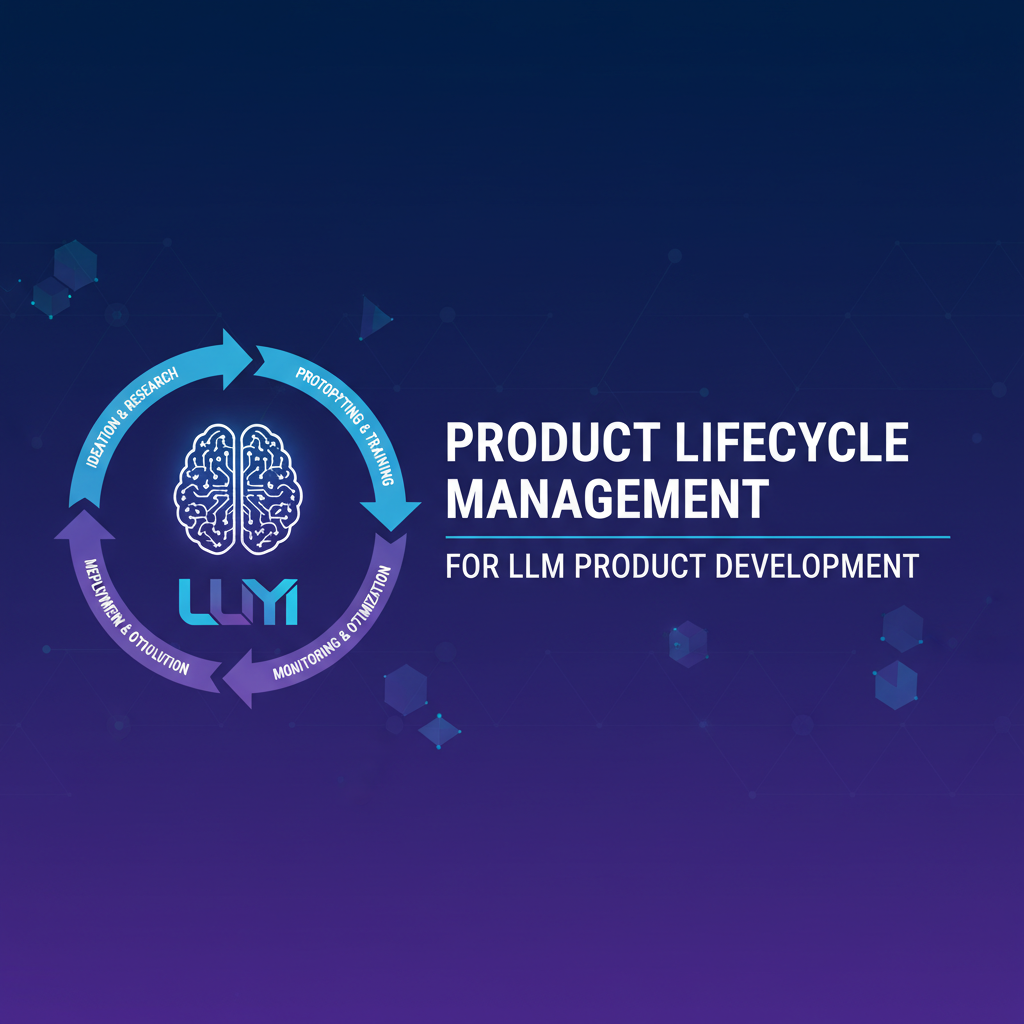


The advent of Large Language Models (LLMs) has undeniably ushered in a new era of technological innovation, profoundly reshaping the landscape of software development. These sophisticated AI models, capable of understanding, generating, and manipulating human language with unprecedented fluency, are now at the core of a myriad of groundbreaking products, from intelligent virtual assistants and sophisticated content creation tools to advanced data analysis platforms and hyper-personalized customer experiences. However, the journey from a nascent LLM concept to a market-ready, sustainable, and impactful product is fraught with unique complexities that extend far beyond traditional software engineering paradigms. It involves a delicate interplay of cutting-edge AI research, intricate data pipelines, ethical considerations, and robust deployment strategies, all while grappling with the inherent unpredictability and dynamism of generative AI.
In this rapidly evolving environment, a structured and comprehensive approach is not merely beneficial—it is absolutely indispensable for success. This is where Product Lifecycle Management (PLM) emerges as a critical framework. Traditionally applied to manufacturing and software development, PLM offers a systematic methodology for managing a product's entire journey, from its initial ideation and design through development, testing, deployment, maintenance, and eventual decommissioning. For LLM-powered products, PLM must be thoughtfully adapted and expanded to address the distinct challenges posed by AI, such as managing model versions, mitigating biases, ensuring ethical deployment, and continuously adapting to new data and user interactions. Without a robust PLM strategy, LLM projects risk spiraling into unmanageable complexity, encountering unforeseen technical hurdles, ethical dilemmas, and ultimately failing to deliver on their transformative potential.
This extensive exploration delves deep into the application of Product Lifecycle Management principles specifically tailored for the development of LLM products. We will dissect each critical phase, highlighting the unique considerations and best practices required to navigate this innovative domain successfully. From the initial spark of an idea to the continuous iteration and maintenance of a live product, we will explore how strategic planning, rigorous execution, and adaptive methodologies can transform promising LLM concepts into stable, secure, high-performing, and ethically sound market solutions. The journey involves not just technical prowess but also a profound understanding of user needs, ethical implications, and the dynamic nature of AI itself, making PLM an indispensable compass in the uncharted territories of generative AI product development.
Phase 1: Ideation and Discovery – Laying the Foundation for LLM Innovation
The genesis of any successful LLM product begins long before a single line of code is written or a model is fine-tuned. It starts with a rigorous and insightful Ideation and Discovery phase, which is arguably the most crucial for setting the trajectory of the entire product lifecycle. This initial stage is not just about brainstorming innovative ideas; it's about deeply understanding market needs, identifying solvable problems, assessing technical feasibility, and laying a robust ethical groundwork. Without this foundational clarity, even the most advanced LLM technology risks being misapplied or developing into a solution in search of a problem.
Market Research and Problem Identification: The first step involves extensive market research to pinpoint genuine pain points, unmet needs, or inefficiencies that LLMs are uniquely positioned to address. This goes beyond superficial trends and delves into understanding user behaviors, existing workflows, and the shortcomings of current solutions. For instance, while a general-purpose chatbot might seem appealing, a focused LLM product designed to specifically automate customer support for complex technical queries within a specific industry solves a much more defined and valuable problem. This research should encompass competitive analysis, identifying what current LLM products or traditional solutions exist, and where significant gaps or opportunities for differentiation lie. Customer interviews, surveys, and ethnographic studies can provide rich qualitative data, illuminating the precise context in which an LLM solution would add the most value.
Feasibility Studies and Value Proposition: Once a potential problem space is identified, a thorough feasibility study is imperative. This involves a multi-faceted evaluation, encompassing technical, operational, economic, and ethical dimensions. Technically, it requires assessing whether current LLM capabilities (both open-source and proprietary) are mature enough to tackle the identified problem effectively. Does the task require nuanced understanding, complex reasoning, or highly specific domain knowledge that might necessitate extensive fine-tuning or a Retrieval-Augmented Generation (RAG) architecture? Operationally, how would the LLM product integrate into existing systems and workflows? Economically, what is the potential return on investment, considering development costs, inference costs, and maintenance? Crucially, for LLMs, an ethical feasibility study is paramount from day one. This involves proactively identifying potential risks such as bias propagation, data privacy concerns, misuse, or the generation of harmful content. Establishing a clear value proposition—what unique benefits the LLM product will deliver and to whom—is the culmination of this assessment. It articulates why this product needs to exist and what distinct advantage it offers over alternatives.
Defining the Problem Statement and Target Audience: With market understanding and feasibility insights in hand, the next critical step is to articulate a precise and unambiguous problem statement. This statement should clearly define the specific challenge the LLM product aims to solve, for which particular user group, and why the current solutions are inadequate. For example, instead of "make a smart writing assistant," a refined problem statement might be: "Content marketers struggle to generate diverse, SEO-friendly article ideas quickly, leading to creative blocks and inefficient content pipelines." This clarity then informs the detailed definition of the target audience, including their demographics, psychographics, needs, and existing behaviors. Understanding the target audience deeply informs prompt engineering strategies, UI/UX design, and even the choice of LLM architecture.
Initial Concept Validation and MVPs: Before committing significant resources, initial concepts should be validated. This often involves creating low-fidelity prototypes, mock-ups, or even "Wizard of Oz" experiments where human operators simulate the LLM's responses. The goal is to gather early feedback on the core idea, user desirability, and potential user flows without extensive development. User stories, which describe desired functionalities from the perspective of an end-user, become invaluable tools at this stage, helping to capture requirements in a user-centric manner. These early validation efforts are instrumental in refining the product vision and ensuring that the subsequent development aligns with genuine user needs and market demand.
Data Acquisition Strategy and Ethical Considerations: Unlike traditional software, LLM products are inherently data-driven. Therefore, a comprehensive data acquisition strategy must be formulated during discovery. This includes identifying potential sources of training data (public datasets, proprietary data, synthetic data), assessing their quality, relevance, and representativeness, and crucially, evaluating their ethical implications. Considerations around data privacy (GDPR, CCPA compliance), consent, bias, and intellectual property rights are non-negotiable. Establishing a robust data governance framework from the outset ensures that data collection and usage are not only effective but also responsible and compliant with relevant regulations, minimizing future risks and building user trust. This proactive approach to data and ethics forms a bedrock for responsible LLM product development, avoiding costly pitfalls down the line.
Phase 2: Design and Development – Crafting the LLM Product's Core
With a clear vision established during the Ideation and Discovery phase, the focus shifts to the meticulous Design and Development of the LLM product. This phase is a complex interplay of architectural planning, model engineering, API development, and user experience design, all converging to build the core functionality of the product. It’s where abstract concepts are transformed into tangible, functional components, demanding both technical prowess and strategic foresight.
Architecture Design: The Blueprint of Intelligence: At the heart of any LLM product lies its architecture. This design phase involves critical decisions that will dictate the product's performance, scalability, and maintainability. Developers must choose between leveraging existing large-scale proprietary LLMs (like OpenAI's GPT series or Anthropic's Claude) via their APIs, or opting for open-source models that can be fine-tuned and deployed on custom infrastructure. Each choice carries implications for cost, data privacy, control, and performance. Beyond the core LLM, the architecture must account for several other crucial components:
- Prompt Engineering Strategies: Designing effective prompts is an art and a science. The architecture should accommodate dynamic prompt generation, template management, and versioning of prompts to ensure consistent and optimal model responses. This includes strategies for few-shot learning, chain-of-thought prompting, and self-consistency.
- Data Pipeline Design: This is crucial for both training/fine-tuning and for real-time inference, especially for RAG (Retrieval-Augmented Generation) architectures. The pipeline must handle data ingestion from various sources, transformation (cleaning, chunking, embedding), and storage (vector databases for semantic search). A robust data pipeline ensures the LLM has access to the most relevant and up-to-date information, significantly enhancing its utility and accuracy.
- Integration Points: LLM products rarely operate in isolation. They need to seamlessly integrate with existing enterprise systems, third-party services, and user interfaces. Designing clear, well-documented integration points (APIs, webhooks, message queues) is paramount for ensuring smooth data flow and functionality. This also includes planning for authentication, authorization, and data encryption across these integration layers.
Model Development and Fine-tuning: Sculpting the Intelligence: This sub-phase involves the actual creation or adaptation of the LLM itself. If an existing foundation model is used, the focus shifts to:
- Pre-training and Fine-tuning: Depending on the specific domain and task, the chosen LLM might require further fine-tuning on proprietary or domain-specific datasets. This process refines the model's understanding and generation capabilities, making it more specialized and accurate for the product's intended use case. This involves careful dataset curation, annotation, and splitting for training, validation, and testing.
- RAG Implementation: For many applications requiring up-to-date information or specific factual accuracy, RAG is a game-changer. This involves building a retrieval mechanism that fetches relevant information from external knowledge bases before passing it to the LLM. Designing the indexing strategy, embedding models, and retrieval algorithms is a key part of this development.
- Experimentation and Evaluation Metrics: Throughout development, continuous experimentation is vital. This involves testing different model architectures, fine-tuning techniques, prompt strategies, and RAG configurations. Establishing clear, quantifiable evaluation metrics (e.g., perplexity, BLEU score for generation, F1-score for classification, human evaluations for subjective quality) is essential for objectively comparing experiments and guiding development towards optimal performance.
API Development and Integration: The Gateway to Generative AI: The power of an LLM product is often unlocked through its Application Programming Interfaces (APIs). These APIs serve as the primary interface for applications and microservices to interact with the LLM's capabilities.
- Exposing LLM Capabilities via APIs: The LLM's functions (e.g., text generation, summarization, translation, Q&A) must be encapsulated into well-defined, robust, and user-friendly APIs. This involves designing clear endpoints, request/response schemas, and error handling mechanisms.
- The Critical Role of an LLM Gateway: As LLM products become more complex, integrating multiple models, managing diverse user access patterns, and ensuring performance, the importance of a dedicated LLM Gateway cannot be overstated. An LLM Gateway acts as a central control plane for all interactions with the underlying AI models. It provides crucial functionalities such as:A powerful platform like ApiPark exemplifies a comprehensive AI gateway and API management platform. It allows for the quick integration of 100+ AI models, offering a unified management system for authentication and cost tracking, crucial for complex LLM product ecosystems. By standardizing the request data format across various AI models, APIPark ensures that underlying model changes or prompt modifications do not cascade into application-level disruptions, significantly simplifying AI usage and reducing maintenance overhead. This capability is vital for product teams looking to maintain agility and easily swap or update LLMs without re-engineering their entire application stack.
- Unified Access Control: Centralized authentication and authorization for different users and applications.
- Rate Limiting and Throttling: Preventing abuse and ensuring fair usage across tenants.
- Load Balancing: Distributing requests across multiple model instances or different LLMs for optimal performance and resilience.
- Version Management: Seamlessly routing requests to different model versions, allowing for blue/green deployments and A/B testing without disrupting end-user applications.
- Cost Tracking and Analytics: Monitoring API usage and associated inference costs across various models and users.
- Data Masking and Security: Implementing security policies to protect sensitive data flowing through the gateway.
- Implementing API Governance Principles: From the initial design, robust API Governance is essential. This includes defining standards for API design, documentation, security protocols, versioning strategies, and lifecycle management. Without clear governance, API sprawl, security vulnerabilities, and integration headaches can quickly derail an LLM product. API Governance ensures consistency, maintainability, and security across all exposed services, fostering collaboration within teams and ensuring external consumers can confidently integrate with the product. APIPark, with its end-to-end API Lifecycle Management features, from design to publication, invocation, and decommission, directly supports strong API Governance by regulating management processes, traffic forwarding, load balancing, and versioning of published APIs.
User Interface/Experience (UI/UX) Design: Bridging AI and Humanity: How users interact with the LLM product is as critical as the underlying AI itself.
- Designing for Conversational Interfaces: Many LLM products rely on natural language interactions. UI/UX design must focus on creating intuitive, responsive, and forgiving conversational interfaces. This includes considerations for turn-taking, managing conversation history, displaying model confidence, and providing clear feedback.
- Clarity and Error Handling: Given the probabilistic nature of LLMs, designing for potential inaccuracies or unexpected responses is crucial. The UI should clearly communicate limitations, offer ways for users to provide feedback, and gracefully handle errors or model failures. Strategies for presenting model-generated content (e.g., distinguishing between AI-generated and human-edited content) are also important.
- User Feedback Mechanisms: Integrating mechanisms for users to rate responses, report issues, or suggest improvements directly feeds back into the continuous improvement cycle of the LLM and the product itself.
The Design and Development phase transforms the LLM concept into a tangible product. It requires meticulous planning, deep technical expertise across AI, software engineering, and user experience, and a strong emphasis on robust API management and governance to ensure the final product is not only intelligent but also reliable, secure, and user-friendly.
Phase 3: Testing and Validation – Ensuring Quality and Trustworthiness
The Testing and Validation phase is paramount in the Product Lifecycle Management of LLM products, serving as a critical gate before deployment. Unlike traditional software, where testing often focuses on deterministic outcomes, LLM product testing must contend with the probabilistic and sometimes unpredictable nature of generative AI. This necessitates a multi-faceted approach, encompassing not only functional and performance aspects but also deep dives into accuracy, bias, security, and human-computer interaction. The goal is to ensure the product is robust, reliable, trustworthy, and delivers on its intended value proposition without introducing unintended harm.
Functional Testing: Verifying Core Capabilities: Functional testing confirms that all explicit requirements and features of the LLM product operate as intended. This includes: * API Functionality: Ensuring that all API endpoints exposed by the LLM Gateway (or directly by the LLM service) correctly receive requests, process them, and return appropriate responses, adhering to defined schemas and security protocols. This involves testing various input permutations, boundary conditions, and error states. * Integration Testing: Verifying seamless interaction between the LLM component and other modules of the product, such as data retrieval systems (for RAG), user interfaces, and external third-party services. Data flow, authentication handshakes, and event triggers must be validated across the entire integrated system. * Feature-Specific Validation: Testing individual functionalities, such as text generation for specific prompts, summarization accuracy, translation correctness, or contextual Q&A capabilities. This often involves creating a comprehensive suite of test cases that cover the breadth of expected user interactions.
Performance Testing: Scalability and Responsiveness: Performance testing is crucial for ensuring the LLM product can handle anticipated load and provide a responsive user experience. Key metrics include: * Latency: Measuring the time taken for the LLM to process a request and return a response. This is particularly important for real-time applications like chatbots. * Throughput: Assessing the number of requests the system can handle per unit of time (e.g., requests per second, or TPS), especially under peak load conditions. * Scalability: Evaluating how effectively the system can scale its resources (e.g., GPU instances, database connections) to accommodate increasing demand without degradation in performance. This often involves stress testing and load testing scenarios to identify bottlenecks. * Resource Utilization: Monitoring CPU, memory, and GPU usage during inference to optimize infrastructure costs and efficiency.
Accuracy and Quality Testing: Evaluating LLM Outputs: This is perhaps the most distinctive and challenging aspect of LLM product testing, as it deals with the subjective and nuanced quality of AI-generated content. * Evaluating LLM Outputs against Human Benchmarks: For tasks like summarization or translation, human evaluators can assess the quality of LLM outputs against expertly crafted human references. For generative tasks, human judgment on coherence, relevance, creativity, and factual accuracy is often indispensable. * Metrics for Relevance, Coherence, and Factual Correctness: While human evaluation is gold standard, automated metrics can provide scale. Metrics like ROUGE (for summarization), BLEU (for translation), and F1-score (for classification) can offer quantitative insights. However, for open-ended generation, these metrics are often insufficient, necessitating innovative approaches like LLM-as-a-judge or prompt-based evaluation frameworks. * Adversarial Testing and Robustness: This involves probing the LLM for vulnerabilities, such as prompt injection attacks where malicious users try to manipulate the model's behavior. It also includes testing robustness against edge cases, ambiguous inputs, or slight perturbations in prompts to ensure consistent and reliable responses. This helps identify and mitigate potential failures in the Model Context Protocol and other critical functions. * Hallucination Detection: Developing strategies to detect and minimize "hallucinations" – instances where the LLM generates factually incorrect but confident-sounding information. This might involve cross-referencing against external knowledge bases or flagging content for human review.
Bias and Fairness Testing: A Non-Negotiable Imperative: Given the potential for LLMs to perpetuate or amplify societal biases present in their training data, rigorous bias and fairness testing is absolutely critical. * Identifying and Mitigating Biases: This involves systematically evaluating the model's outputs for evidence of unfair or discriminatory treatment across different demographic groups (gender, race, ethnicity, age, etc.). Techniques include creating targeted test sets with diverse representations, using fairness metrics (e.g., disparate impact, equalized odds), and analyzing sentiment or tone toward specific groups. * Ethical AI Review: Beyond technical testing, an ethical review panel should assess the product's potential societal impact, ensuring it aligns with ethical guidelines and avoids perpetuating harmful stereotypes or misinformation. This includes scrutinizing the data used for fine-tuning and the prompts designed to guide the model.
Security Testing: Protecting the AI Frontier: LLM products present new attack vectors that must be rigorously tested. * Data Security: Ensuring that sensitive user data and proprietary information processed by the LLM and the surrounding infrastructure are encrypted, stored securely, and not inadvertently exposed or used in model training without consent. * Vulnerability Assessment: Standard security practices like penetration testing, vulnerability scanning, and code reviews are applied to the entire system, including the LLM Gateway, APIs, and underlying infrastructure. * Protection against Malicious Use: Testing for prompt injection, data exfiltration through clever prompting, and other adversarial attacks that aim to hijack or misuse the LLM's capabilities.
User Acceptance Testing (UAT): Real-World Validation: UAT brings real users into the testing process, allowing them to interact with the LLM product in scenarios reflecting actual usage. * Real-World Usage and Feedback: Users provide invaluable feedback on usability, perceived accuracy, helpfulness, and overall satisfaction. This helps uncover issues that automated tests might miss and validates whether the product truly solves the intended problem. * Iterative Refinement: Feedback from UAT directly informs further refinements to the LLM, prompt engineering, UI/UX, and features, ensuring the product is truly user-centric.
Model Context Protocol Validation: For conversational AI or applications requiring persistent memory, validating the Model Context Protocol is crucial. * Context Persistence: Ensuring that the LLM accurately maintains and leverages conversational history or external knowledge over multiple turns or sessions. This involves testing scenarios with long conversations, interleaved topics, and complex referential expressions. * Context Window Management: Verifying that the protocol handles the LLM's context window limits effectively, summarizing or retrieving relevant past information without losing critical details. This includes testing various strategies for managing token limits and ensuring efficient information retrieval.
The Testing and Validation phase for LLM products is a complex, iterative, and indispensable process. It demands a blend of traditional software testing methodologies with specialized AI-specific evaluation techniques, a keen eye for ethical considerations, and a commitment to continuous improvement. By thoroughly scrutinizing every aspect of the LLM product, development teams can build confidence in its quality, ensure its trustworthiness, and prepare it for a successful deployment.
Phase 4: Deployment and Operations – Bringing LLM Products to Life
The Deployment and Operations phase marks the transition of the LLM product from development environments to live production systems, making it accessible to end-users. This stage is not merely about launching; it's about establishing a resilient, scalable, and secure operational framework that ensures the LLM product functions optimally under real-world conditions. It demands meticulous planning for infrastructure, continuous monitoring, and proactive management to sustain performance, manage costs, and adapt to evolving demands.
Deployment Strategies: From Staging to Production: Choosing the right deployment strategy is fundamental and depends heavily on factors like expected traffic, latency requirements, budget, and data residency needs. * Cloud Deployment: The most common approach, leveraging public cloud providers (AWS, Azure, Google Cloud) for their scalability, managed services, and global reach. This involves deploying LLM inference endpoints, associated APIs, and data pipelines on cloud instances or serverless functions. * On-Premise/Hybrid Deployment: For organizations with stringent data sovereignty requirements, high-security needs, or existing on-premise infrastructure, deploying LLMs locally or in a hybrid cloud model can be necessary. This often entails managing dedicated hardware (GPUs), networking, and security patches. * Containerization (Docker, Kubernetes): Regardless of the underlying infrastructure, containerization has become a standard practice for deploying LLM products. Packaging the LLM, its dependencies, and inference server into Docker containers ensures consistency across environments and simplifies deployment. Orchestration tools like Kubernetes provide automated scaling, load balancing, and self-healing capabilities, which are critical for managing complex LLM microservices architectures. * Edge Deployment: For applications requiring extremely low latency or offline capabilities (e.g., on-device AI), deploying smaller, optimized LLMs to edge devices (smartphones, IoT devices) is an emerging strategy, though it comes with constraints on model size and computational resources.
Monitoring and Observability: The Eyes and Ears of Live Systems: Once deployed, continuous monitoring is non-negotiable to ensure the LLM product remains healthy, performs as expected, and quickly alerts teams to potential issues. * Model Performance Monitoring: This goes beyond traditional system metrics. It involves tracking key AI-specific indicators such as: * Model Drift: Detecting changes in input data distribution or real-world concept drift that can degrade model accuracy over time. * Accuracy Decay: Continuously evaluating the model's output quality against benchmarks or human feedback to identify performance degradation. * Latency and Throughput: Real-time monitoring of response times and request volumes for the LLM inference endpoint. * API Usage Metrics: Tracking the number of API calls, error rates, and response times for all APIs exposed, particularly those managed by an LLM Gateway like ApiPark. APIPark's detailed API call logging capabilities are invaluable here, recording every detail of each API call to help businesses quickly trace and troubleshoot issues, ensuring system stability and data security. * Infrastructure Monitoring: Standard monitoring of CPU, memory, GPU utilization, disk I/O, and network activity across all servers and services supporting the LLM product. * Cost Tracking: Given the often significant inference costs associated with LLMs, robust cost monitoring is essential. This involves tracking API usage with different LLM providers, GPU compute hours, and storage costs to manage budgets effectively. * Logging and Alerting: Centralized logging of all application, API, and model events. Implementing intelligent alerting mechanisms that notify engineers of anomalies, performance degradation, or security incidents in real-time.
Scaling and Reliability: Building for Resilience: LLM products, especially those facing high user demand, must be designed for both horizontal and vertical scalability, along with high reliability. * High Availability: Implementing redundant systems, failover mechanisms, and disaster recovery plans to ensure the LLM product remains accessible even in the event of component failures or regional outages. This includes geographically distributed deployments. * Elastic Scaling: Architecting the system to automatically scale resources up or down based on real-time demand. For LLMs, this often means dynamically provisioning or de-provisioning GPU instances or adjusting the number of replicas for inference services. Kubernetes, often used with an LLM Gateway like APIPark, is excellent for this. * Load Balancing: Distributing incoming API requests across multiple LLM instances or different geographical regions to optimize performance and prevent any single point of failure from becoming a bottleneck. APIPark supports cluster deployment to handle large-scale traffic and provides traffic forwarding and load balancing features.
Security Posture: Ongoing Vigilance: Deployment intensifies security considerations, demanding a proactive and continuous security posture. * Continuous Threat Detection: Implementing security information and event management (SIEM) systems and intrusion detection/prevention systems (IDS/IPS) to monitor for malicious activities and prompt injection attempts. * Vulnerability Management: Regularly scanning for software vulnerabilities in dependencies, operating systems, and custom code. Applying security patches and updates promptly. * Access Control: Ensuring strict adherence to the principle of least privilege for all users and services interacting with the LLM product, especially those using APIs governed by an API Governance platform. * Data Encryption: Encrypting data at rest and in transit, both for user inputs to the LLM and the LLM's outputs, to protect sensitive information.
Feedback Loops and Version Management: The Engine of Evolution: Deployment is not the end but a new beginning for continuous learning and improvement. * Collecting User Feedback and Analytics: Gathering qualitative feedback from users (surveys, support tickets) and quantitative data (usage patterns, feature adoption) to identify areas for improvement and new feature development. * Model Retraining Data: The interactions with the live product generate new data that can be invaluable for retraining and improving the LLM. Establishing pipelines to capture, curate, and annotate this data responsibly is essential. * Version Management of Models and APIs: Managing different versions of the underlying LLM and the APIs that expose its capabilities. This allows for gradual rollouts, A/B testing, and easy rollback in case of issues. An LLM Gateway is critical here, enabling routing requests to specific model versions, managing traffic split, and ensuring that API consumers are not disrupted by underlying model updates. APIPark’s end-to-end API lifecycle management assists in versioning published APIs, which is vital for seamless evolution of LLM products.
The Deployment and Operations phase for LLM products is a dynamic and demanding stage that requires a blend of advanced infrastructure management, AI-specific monitoring, and stringent security practices. By establishing a robust operational framework, development teams can ensure their LLM products are not only launched successfully but also sustained, optimized, and continuously improved in the wild, delivering long-term value to users and the business.
APIPark is a high-performance AI gateway that allows you to securely access the most comprehensive LLM APIs globally on the APIPark platform, including OpenAI, Anthropic, Mistral, Llama2, Google Gemini, and more.Try APIPark now! 👇👇👇
Phase 5: Maintenance and Iteration – Sustaining LLM Product Excellence
The Maintenance and Iteration phase represents the continuous evolution of an LLM product after its initial deployment. In the rapidly advancing world of AI, a "fire and forget" approach is a recipe for obsolescence. This phase is characterized by ongoing vigilance, proactive problem-solving, and strategic enhancements, ensuring the LLM product remains relevant, high-performing, secure, and aligned with user needs and ethical standards. It is an iterative loop of learning, adapting, and refining, central to the long-term success and sustainability of any AI-powered solution.
Continuous Improvement: The Agile Principle Applied to AI: Embracing an agile mindset is crucial during this phase. LLM products are living entities that benefit immensely from continuous feedback and incremental enhancements. * Agile Methodologies for LLM Product Development: Applying agile sprints to identify, prioritize, develop, and deploy new features or model improvements. This allows teams to respond quickly to market changes, user feedback, and emerging AI research. * Feature Enhancements based on User Feedback: Actively collecting and analyzing user feedback (via support channels, surveys, in-app analytics) to identify desired new features, usability issues, or areas where the LLM's performance can be improved. This direct feedback loop ensures the product evolves in a user-centric manner. * Bug Fixes and Performance Optimizations: Continuously monitoring for bugs, glitches, or performance bottlenecks identified through monitoring systems or user reports. Promptly addressing these issues is vital for maintaining user satisfaction and system reliability.
Model Retraining and Updates: Adapting to a Dynamic World: LLMs are highly sensitive to data distributions and can suffer from "model drift" if not regularly updated. * Addressing Data Drift and Improving Performance: As real-world data evolves, the LLM's understanding can degrade. Regular retraining on fresh, relevant data is essential to maintain or improve accuracy. This involves setting up automated data pipelines to collect new interaction data, clean it, annotate it, and use it to fine-tune or re-train the model. * Incorporating New Research and Model Architectures: The field of LLMs is advancing at an unprecedented pace. Staying abreast of new research, more efficient model architectures, or improved training techniques allows teams to strategically upgrade their underlying LLMs, potentially leading to significant performance gains or cost reductions. * Version Management for Models: Meticulously managing different versions of the LLM is paramount. This includes documenting changes, tracking performance across versions, and implementing strategies for phased rollouts (e.g., A/B testing) to validate new models before full deployment. An LLM Gateway plays a crucial role here, facilitating seamless updates by routing specific user segments or applications to newer model versions, allowing for controlled experimentation and minimizing disruption. This capability prevents breaking changes for dependent applications, which is a cornerstone of effective API Governance.
Ethical Oversight and Compliance: Navigating the Moral Landscape: Ethical considerations for LLM products are not a one-time check but an ongoing responsibility. * Regular Reviews of Societal Impact: Periodically reviewing the LLM product's real-world impact to identify any unintended negative consequences, biases, or misuse cases that may emerge over time. This involves engaging with ethical AI experts, legal counsel, and user communities. * Compliance with Evolving Regulations: Staying informed about new data privacy laws (e.g., updates to GDPR, CCPA) and emerging AI regulations (e.g., EU AI Act). Ensuring the LLM product remains compliant through data governance adjustments, transparency features, and consent mechanisms. * Mitigation of Emerging Biases or Harmful Outputs: Continuously monitoring for new forms of bias or the generation of harmful content that might not have been detected during initial testing. Developing and implementing new safeguards or retraining strategies to address these issues promptly.
Decommissioning: Graceful End-of-Life Management: While the focus is often on creation, knowing when and how to retire an LLM product or specific models is equally important. * Planning for End-of-Life for Models or Products: Establishing clear criteria for when an LLM model version should be retired (e.g., replaced by a superior version, security vulnerability, high cost-to-performance ratio). Similarly, defining criteria for the decommissioning of an entire LLM product that no longer serves a market need or becomes technically unsustainable. * Data Archiving and Compliance: Ensuring that all data associated with a decommissioned product or model is properly archived, securely deleted, or anonymized in compliance with data retention policies and legal requirements. * User Communication and Transition: For products nearing end-of-life, transparent communication with users and providing clear migration paths or alternatives is essential to maintain trust and minimize disruption.
The Maintenance and Iteration phase ensures that an LLM product remains a valuable asset throughout its lifecycle. It embodies the principle that product development is a continuous journey of learning, adaptation, and improvement. By prioritizing ongoing model updates, ethical oversight, and agile development practices, organizations can sustain the excellence of their LLM products, delivering enduring value in a rapidly changing technological landscape.
The Indispensable Role of API Governance in LLM Product Lifecycle Management
In the intricate tapestry of LLM product development, where numerous models, data pipelines, and application layers converge, the concept of API Governance transcends mere technical best practices to become a strategic imperative. It acts as the backbone of stability, security, and scalability, ensuring that the intelligent core of an LLM product—its exposed functionalities via APIs—is managed with the utmost precision and foresight. Without a robust API Governance framework, even the most innovative LLM can lead to chaos, hindering collaboration, increasing security risks, and escalating operational costs.
API Governance for LLM products encompasses a set of rules, processes, and tools designed to manage the entire lifecycle of APIs, from their initial design and documentation to deployment, versioning, monitoring, and eventual deprecation. Its primary goal is to ensure consistency, reliability, security, and reusability across all APIs, especially those that serve as the gateway to powerful and complex LLM capabilities.
Standardization and Consistency: One of the most significant benefits of strong API Governance is the standardization it enforces. In an LLM ecosystem, this means defining consistent API design principles for interacting with various models, managing context, and handling output formats. For instance, whether an application integrates with a sentiment analysis LLM or a content generation LLM, standardized request and response structures, error codes, and authentication methods simplify integration efforts for developers. This consistency not only reduces cognitive load but also accelerates development cycles, as engineers don't need to learn a new integration pattern for every LLM capability.
Enhanced Security Posture: LLM APIs are potent tools, and their misuse can lead to significant security breaches, data exfiltration, or even malicious content generation. API Governance establishes rigorous security protocols, including: * Authentication and Authorization: Implementing robust mechanisms (e.g., OAuth 2.0, API keys, JWTs) to verify user identities and control their access privileges to specific LLM functionalities. * Rate Limiting and Throttling: Preventing API abuse, denial-of-service attacks, and ensuring fair usage by limiting the number of requests a user or application can make within a given timeframe. * Input Validation and Output Sanitization: Protecting against prompt injection attacks and ensuring that LLM outputs do not contain harmful or malformed data that could exploit downstream applications. * Data Masking and Encryption: Enforcing policies to mask or encrypt sensitive data exchanged through APIs, crucial for maintaining data privacy and regulatory compliance.
Version Management and Compatibility: The world of LLMs is characterized by rapid iteration, with models being updated, fine-tuned, or replaced frequently. API Governance provides a structured approach to versioning APIs, ensuring that updates to the underlying LLM do not break existing applications. This involves: * Semantic Versioning: Clearly communicating breaking changes, new features, and bug fixes. * Graceful Deprecation: Providing ample notice and transition periods when retiring older API versions, allowing consumers to adapt their integrations without disruption. * Backward Compatibility: Striving to maintain backward compatibility where possible, or clearly delineating when a new API version introduces breaking changes. An LLM Gateway with robust API governance features, such as ApiPark, becomes indispensable here. APIPark's end-to-end API lifecycle management capabilities, including the management of traffic forwarding, load balancing, and versioning of published APIs, directly address these challenges. Its ability to create multiple teams (tenants) with independent applications, data, and security policies, while sharing underlying infrastructure, further enhances secure and controlled API access and version management.
Improved Discoverability and Documentation: For LLM products with a growing suite of capabilities, well-documented APIs are crucial for internal teams and external developers. API Governance mandates comprehensive and standardized documentation, including: * API Specifications: Using tools like OpenAPI (Swagger) to define API endpoints, parameters, request/response models, and authentication requirements. * Usage Examples and SDKs: Providing code examples and client SDKs in various programming languages to simplify integration. * Developer Portals: Centralized platforms where developers can discover, learn about, and subscribe to APIs. APIPark, as an API developer portal, centralizes the display of all API services, making it easy for different departments and teams to find and use required services. It also allows for subscription approval features, ensuring controlled access to sensitive LLM APIs.
Fostering Collaboration and Reducing Risk: By standardizing practices and centralizing management, API Governance fosters better collaboration between development teams, AI researchers, and operations personnel. It reduces the risk of ad-hoc API creation, which often leads to inconsistencies, technical debt, and security vulnerabilities. The platform’s ability to allow API resource access to require approval further solidifies controlled collaboration and security.
Optimizing Performance and Cost: Effective governance also involves monitoring API usage patterns, identifying underperforming APIs, and optimizing their underlying infrastructure. Features like APIPark's powerful data analysis, which analyzes historical call data to display long-term trends and performance changes, can help businesses with preventive maintenance before issues occur, thereby optimizing resource utilization and managing inference costs more effectively.
In essence, API Governance is not just about control; it's about enabling innovation responsibly. For LLM product development, it ensures that the powerful capabilities of generative AI are exposed, managed, and consumed in a manner that is secure, efficient, scalable, and aligned with the overarching product vision and ethical guidelines. It transforms potential chaos into a well-orchestrated symphony of intelligent services, driving the product's long-term success.
Leveraging Model Context Protocol for Enhanced LLM Products
The ability of Large Language Models to generate coherent and contextually relevant text is foundational to their utility. However, for an LLM product to truly shine in applications like conversational AI, sophisticated content creation, or long-form reasoning, it must effectively manage and leverage Model Context Protocol. This protocol refers to the systematic approach and mechanisms employed to feed relevant historical information, external data, or ongoing conversational state to an LLM, thereby enhancing its understanding and improving the quality and consistency of its responses. Without a well-defined Model Context Protocol, LLMs risk generating generic, repetitive, or factually inaccurate outputs, severely limiting their real-world applicability.
What is Model Context Protocol? At its core, an LLM processes information based on the input it receives—its "context window." However, this window has a finite size (measured in tokens), posing a significant challenge for applications requiring prolonged interactions or access to vast amounts of external knowledge. A Model Context Protocol is the engineering strategy to overcome this limitation. It involves:
- Context Aggregation: Collecting all relevant pieces of information (e.g., previous turns in a conversation, user profile data, retrieved documents, internal knowledge base entries).
- Context Management: Strategically selecting, summarizing, or transforming this aggregated information to fit within the LLM's context window, prioritizing the most salient details.
- Context Injection: Structuring and inserting the managed context into the LLM's prompt in a way that maximizes its understanding and influences its output appropriately.
Importance for Stateful Conversations: For conversational AI products (chatbots, virtual assistants), an effective Model Context Protocol is indispensable for maintaining stateful interactions. Without it, the LLM treats each user query as a standalone request, leading to responses that lack coherence, forget previous user statements, or require users to constantly repeat information. A robust protocol ensures: * Coherent Dialogues: The LLM remembers what was discussed earlier, allowing for natural, flowing conversations with relevant follow-up questions and answers. * Personalization: Context can include user preferences, interaction history, or demographic data, enabling the LLM to tailor responses to individual users. * Task Completion: In goal-oriented conversations (e.g., booking a flight, troubleshooting a problem), the protocol ensures the LLM keeps track of sub-goals, completed steps, and remaining information needed to fulfill the user's request.
Enhancing Complex Reasoning and Long-Form Content Generation: Beyond simple conversations, the Model Context Protocol significantly elevates LLMs' capabilities for more complex tasks: * Complex Reasoning: For tasks requiring multi-step reasoning or logical deduction, the protocol allows injecting intermediate thoughts, retrieved facts, or problem-solving steps into the LLM's context. This facilitates chain-of-thought prompting and enables the LLM to "think" more systematically, leading to more accurate and robust answers. * Long-Form Content Generation: When generating long articles, reports, or creative narratives, simply relying on the LLM's inherent context window is often insufficient. The protocol can manage a broader context, including outlines, reference materials, style guides, and previously generated sections, ensuring the entire output remains consistent, comprehensive, and aligned with the overarching theme. This prevents repetition, ensures logical flow, and maintains stylistic consistency across large documents.
Challenges and Solutions for Implementation: Implementing an effective Model Context Protocol comes with its own set of challenges:
- Token Limit Constraints: The finite context window means careful selection and summarization are required.
- Solution: Techniques like conversation summarization, semantic search to retrieve only the most relevant past turns, or hierarchical context management where only high-level summaries are retained, can extend the effective memory.
- Computational Overhead: Processing and managing large contexts can increase latency and inference costs.
- Solution: Optimizing retrieval mechanisms (e.g., efficient vector databases), caching frequently used context snippets, and utilizing models that support larger context windows can mitigate this.
- Information Overload: Providing too much irrelevant information can confuse the LLM or lead to "lost in the middle" phenomena.
- Solution: Sophisticated ranking algorithms for retrieved documents, prompt engineering to highlight key information, and continuous testing to determine the optimal context size and content are necessary.
- Data Privacy and Security: Context often includes sensitive user information.
- Solution: Implementing robust data masking, encryption, and anonymization techniques, along with strict access controls and data retention policies, is crucial.
The Model Context Protocol is a vital engineering discipline that transforms raw LLM capabilities into truly intelligent, context-aware, and highly functional products. By strategically managing the flow and presentation of information to the LLM, product developers can unlock its full potential, delivering a superior user experience and tackling increasingly complex challenges with generative AI.
Conclusion: Navigating the Generative AI Frontier with PLM
The journey of developing an LLM product is a testament to the dynamic interplay between cutting-edge artificial intelligence, meticulous engineering, and astute product strategy. As we have thoroughly explored, navigating this complex landscape successfully demands far more than just technological prowess; it requires a systematic, disciplined, and adaptive approach encapsulated by Product Lifecycle Management (PLM). From the nascent spark of an idea in the Ideation and Discovery phase to the continuous evolution and eventual decommissioning in Maintenance and Iteration, each stage presents unique challenges and opportunities that, if addressed strategically, pave the way for groundbreaking innovation.
The inherent complexities of LLM products—their probabilistic nature, the critical role of data, evolving ethical considerations, and the rapid pace of model advancements—underscore the indispensable value of a well-defined PLM framework. It provides the necessary structure to manage the entire product journey, ensuring that development is not just agile but also responsible, secure, and aligned with market needs. Key considerations, such as the imperative of robust API Governance for managing and securing LLM functionalities, the necessity of an LLM Gateway for unifying model access and optimizing performance, and the strategic implementation of a Model Context Protocol for enhancing AI intelligence, are not mere features but foundational pillars for building sustainable and impactful LLM products.
Moreover, the emphasis on continuous testing—extending beyond functional checks to include accuracy, bias, and security evaluations—and the commitment to ongoing iteration and ethical oversight are vital for maintaining trust and relevance in a rapidly changing world. The generative AI era is still in its nascent stages, constantly presenting new frontiers and unforeseen challenges. By embedding PLM principles, development teams can transform uncertainty into opportunity, ensuring their LLM products are not only technically advanced but also ethically sound, resilient, and capable of delivering enduring value to users and society alike. The future of innovation lies in our ability to manage these powerful technologies with foresight and discipline, and PLM is the compass guiding us forward.
Frequently Asked Questions (FAQs)
1. What are the unique challenges of Product Lifecycle Management for LLM products compared to traditional software? LLM products introduce unique challenges such due to their probabilistic nature, reliance on vast and often evolving datasets, the potential for bias and "hallucinations," and the rapid pace of model innovation. PLM for LLMs must specifically address continuous model monitoring for drift, ethical AI considerations (bias detection, fairness, transparency), intricate data governance, managing frequent model and prompt updates, and specialized testing methodologies that go beyond deterministic outcomes. Traditional software PLM focuses more on feature sets and code stability, while LLM PLM balances these with model performance, data integrity, and ethical implications.
2. How does an LLM Gateway contribute to effective PLM for LLM products? An LLM Gateway is a critical component for effective PLM by centralizing the management of all interactions with underlying LLMs. It streamlines various PLM phases by providing unified API access, enabling robust API Governance (authentication, authorization, rate limiting), facilitating seamless version management and A/B testing of different LLM models without disrupting dependent applications, and offering detailed monitoring and cost tracking. Platforms like ApiPark exemplify how an LLM Gateway simplifies integration, ensures security, and optimizes the performance and scalability of LLM products throughout their lifecycle.
3. Why is API Governance so important in the context of LLM product development? API Governance is crucial because LLM capabilities are typically exposed via APIs, making them the primary interface for applications and users. Robust governance ensures standardization across diverse LLM services, enhancing discoverability and developer experience. Critically, it establishes stringent security protocols (like authentication, authorization, and rate limiting) to protect sensitive data and prevent misuse of powerful AI models. Furthermore, it defines processes for versioning and deprecation, ensuring smooth updates and backward compatibility, which is vital in a rapidly evolving LLM landscape. Without strong API Governance, LLM products risk security vulnerabilities, integration complexities, and difficulties in scaling and maintaining their services.
4. What is the "Model Context Protocol" and why is it essential for LLM products? The Model Context Protocol refers to the systematic approach and mechanisms used to feed relevant historical information, external data, or ongoing conversational state to an LLM, thereby improving its understanding and response quality. It's essential because LLMs have finite "context windows" (token limits). A well-designed protocol overcomes this by strategically selecting, summarizing, and injecting crucial information into prompts. This enables stateful conversations (remembering past interactions), facilitates complex reasoning, and allows for the generation of coherent, long-form content, transforming generic LLM outputs into highly relevant and intelligent product experiences.
5. What are the key ethical considerations that must be integrated throughout the LLM PLM process? Ethical considerations are paramount at every stage of LLM PLM. In Ideation, it involves proactively identifying potential biases in data sources and assessing societal impact. During Design and Development, it means implementing bias mitigation strategies, designing for transparency, and ensuring data privacy. Testing and Validation must include rigorous bias detection, fairness evaluations, and adversarial testing to prevent harmful outputs. In Deployment and Operations, continuous monitoring for emerging biases and unintended consequences is critical, while Maintenance and Iteration requires regular ethical reviews and adaptation to evolving AI regulations. Integrating these considerations ensures LLM products are not only effective but also responsible, trustworthy, and beneficial to society.
🚀You can securely and efficiently call the OpenAI API on APIPark in just two steps:
Step 1: Deploy the APIPark AI gateway in 5 minutes.
APIPark is developed based on Golang, offering strong product performance and low development and maintenance costs. You can deploy APIPark with a single command line.
curl -sSO https://download.apipark.com/install/quick-start.sh; bash quick-start.sh

In my experience, you can see the successful deployment interface within 5 to 10 minutes. Then, you can log in to APIPark using your account.

Step 2: Call the OpenAI API.