Routing Table eBPF: Boost Network Performance & Control
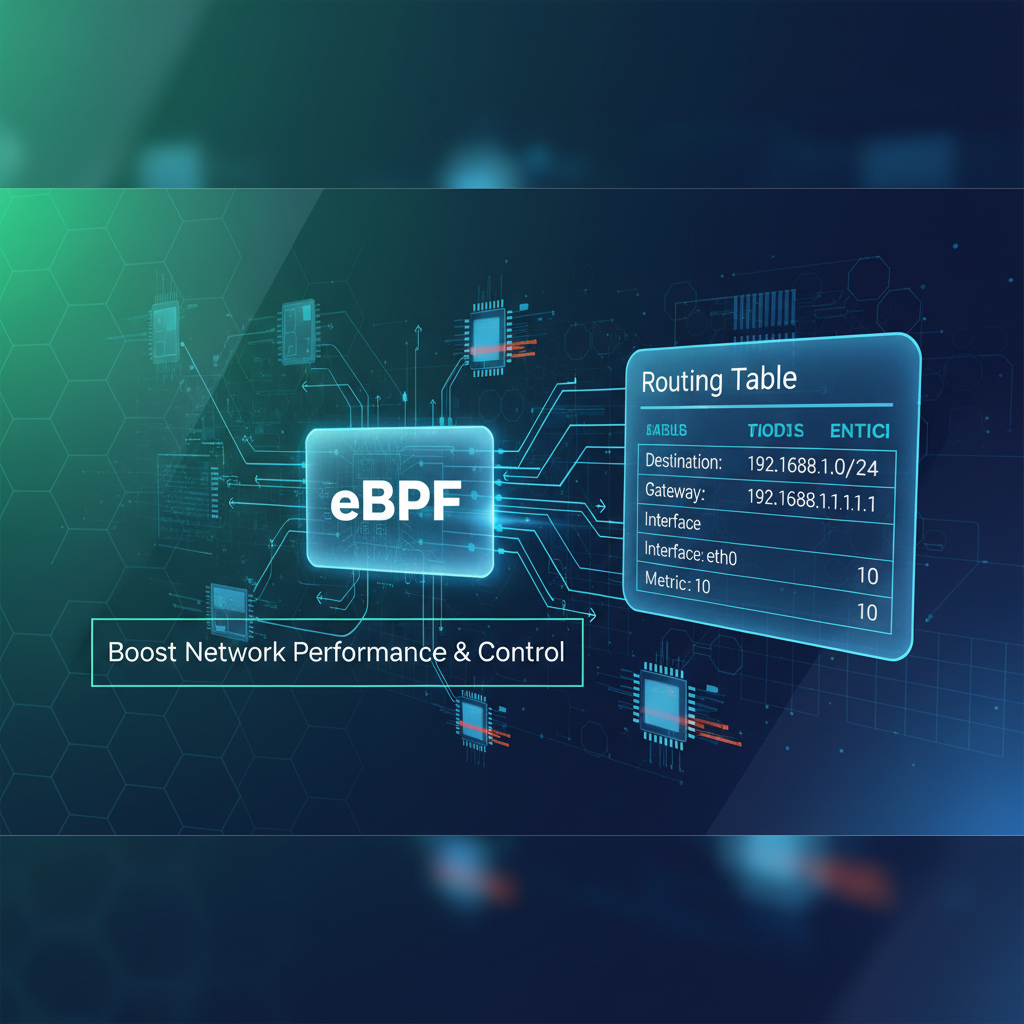


In the intricate world of modern networking, where data flows ceaselessly across vast digital landscapes, the efficiency and responsiveness of the underlying infrastructure are paramount. The traditional mechanisms for network routing, while foundational, are increasingly challenged by the demands of cloud-native applications, real-time data processing, and the explosive growth of connected devices. Enterprises and developers alike are constantly seeking innovative solutions to not only manage but actively enhance network performance and control. This quest for superior network alchemy has illuminated a powerful new paradigm: the marriage of routing tables with eBPF (extended Berkeley Packet Filter).
eBPF represents a revolutionary shift in how we interact with the Linux kernel, transforming it from a static, monolithic entity into a dynamic, programmable platform. By allowing custom programs to run safely within the kernel without modifying its source code or loading modules, eBPF unlocks unprecedented capabilities for monitoring, security, and, most critically, network performance optimization. This article delves deep into the transformative potential of eBPF when applied to network routing tables, exploring how it empowers organizations to achieve unprecedented levels of network control, boost throughput, and drastically reduce latency, thereby laying a robust foundation for the next generation of networked services, from simple APIs to sophisticated AI applications.
The Foundation: Understanding Network Routing and Its Traditional Limitations
To truly appreciate the paradigm shift brought about by eBPF, one must first grasp the complexities and inherent limitations of conventional network routing. At its core, network routing is the process of selecting a path for traffic on a network, guiding packets from their source to their destination across potentially diverse and geographically dispersed networks. This seemingly simple task is orchestrated by a complex interplay of hardware, software, and standardized protocols.
The Kernel's Routing Table: The Heart of Packet Forwarding
Every device capable of IP communication, from your smartphone to a colossal data center server, maintains a routing table. In the context of a Linux server, this table resides within the kernel and is known as the Forwarding Information Base (FIB). The FIB is a critical data structure that stores information about known network destinations and the "next hop" (the gateway or interface) to reach them. When a packet arrives at a network interface, the kernel performs a lookup in its FIB to determine where to send that packet next. This lookup is typically based on the packet's destination IP address, employing algorithms like Longest Prefix Match (LPM) to find the most specific route.
The routes within the FIB can be populated in several ways: * Directly Connected Routes: Automatically generated for interfaces that are up and have an IP address. * Static Routes: Manually configured by administrators for specific destinations or policies. These offer simplicity for small, stable networks but become unmanageable and inflexible in large, dynamic environments. * Dynamic Routes: Learned through routing protocols such as OSPF (Open Shortest Path First), BGP (Border Gateway Protocol), or RIP (Routing Information Protocol). These protocols allow routers to exchange routing information automatically, adapting to network topology changes. While dynamic routing offers resilience and scalability, it comes with overhead in terms of protocol messages, convergence times, and the computational resources required for route calculations.
The Bottlenecks of Traditional Routing
While robust and proven, traditional routing mechanisms face several significant challenges in the face of modern networking demands:
- Fixed Kernel Logic: The routing logic embedded within the kernel is generally static and general-purpose. Any deviation from this standard behavior, such as implementing highly specific traffic engineering policies or custom load balancing algorithms, often requires complex workarounds, user-space proxies, or even kernel modifications. These solutions are typically inefficient, introduce context switching overhead, or are fraught with stability risks.
- Performance Overheads: Each packet traversing the kernel's network stack incurs a series of processing steps: network interface card (NIC) driver processing, buffer allocation, protocol header parsing, checksum validation, routing table lookup, firewall checks (Netfilter), and finally, transmission via the outgoing interface driver. While optimized over decades, this sequence can introduce latency and consume significant CPU cycles, especially for high-throughput, low-latency applications. For example, processing millions of packets per second, the cumulative overhead becomes a severe bottleneck.
- Limited Programmability and Agility: Adapting routing decisions to real-time events, application-specific requirements, or dynamic security threats is cumbersome. Changing routing policies often involves modifying firewall rules, adjusting routing tables manually, or reconfiguring routing protocols, which can be slow, error-prone, and disruptive. This lack of agility hinders rapid deployment and adaptation in fast-evolving environments like microservices architectures or serverless functions.
- Observability Gaps: While tools exist to inspect routing tables and monitor network traffic, gaining deep, per-packet insights into why a particular routing decision was made or how a specific flow is being handled within the kernel remains challenging. Debugging complex network issues often relies on guesswork and indirect metrics, leading to prolonged troubleshooting times.
- Context Switching: When network packets are processed by user-space applications (e.g., a software load balancer or a proxy), they must transition between kernel space and user space. Each context switch is an expensive operation, involving saving and restoring CPU registers, switching memory mappings, and flushing CPU caches. For high-volume traffic, these context switches can severely impact performance, negating the benefits of user-space programmability.
These limitations highlight a fundamental need for a more flexible, performant, and programmable approach to network routing – a need that eBPF is uniquely positioned to address. The ability to inject custom logic directly into the kernel's data path, at critical junctures, without incurring traditional overheads, fundamentally reshapes the possibilities for network control and optimization.
Demystifying eBPF: A Revolution in Kernel Programmability
The extended Berkeley Packet Filter (eBPF) is not merely an incremental improvement; it is a profound architectural shift in how operating systems can be extended and customized. Originating from its predecessor, the classic BPF (cBPF), which allowed users to filter network packets efficiently, eBPF has blossomed into a general-purpose, in-kernel virtual machine that can execute sandboxed programs in various kernel hook points. This evolution has opened doors to unprecedented innovation in networking, security, and observability.
What is eBPF? The Core Concepts
At its heart, eBPF allows developers to write small programs that can be loaded into the Linux kernel and executed when specific events occur. Unlike traditional kernel modules, eBPF programs are not compiled with the kernel source, nor do they run with arbitrary kernel privileges. Instead, they are subject to a stringent verification process and run within a controlled, secure environment.
Key components and concepts of eBPF include:
- The eBPF Virtual Machine (VM): This is a small, efficient virtual machine embedded within the kernel. It executes eBPF bytecode, which is typically compiled from a higher-level language like C (using Clang/LLVM) or Rust. This VM provides a safe execution environment, preventing programs from crashing the kernel.
- eBPF Programs: These are the custom logic written by developers. They attach to specific "hook points" within the kernel, such as network device drivers, system call entries/exits, or kernel tracepoints. When an event triggers at a hook point, the associated eBPF program is executed. Examples of relevant program types for networking include:
- XDP (eXpress Data Path) Programs: Attach directly to the network interface driver, allowing programs to run at the absolute earliest point when a packet arrives. This provides extreme performance for packet processing before the kernel's network stack even sees the packet.
- TC (Traffic Control) Programs: Attach to the ingress or egress qdiscs (queuing disciplines) within the Linux traffic control subsystem. These programs can inspect, modify, redirect, or drop packets at a later stage in the network stack, offering more flexibility than XDP but with slightly higher latency.
- Socket Programs: Can attach to sockets to filter traffic or apply custom processing to socket data.
- eBPF Maps: These are essential data structures that allow eBPF programs to store and share state, both among themselves and with user-space applications. Maps are generic key-value stores that persist beyond the lifetime of a single eBPF program execution. Common map types include:
- Hash Maps: For efficient key-value lookups, perfect for storing connection tracking information, IP-to-policy mappings, or custom routing entries.
- Array Maps: Simple, fixed-size arrays.
- Longest Prefix Match (LPM) Maps: Crucial for routing, these maps efficiently perform IP address lookups based on subnet masks, mimicking the functionality of a kernel FIB.
- Ring Buffer Maps: For high-performance data transfer from kernel-space eBPF programs to user-space applications.
- The eBPF Verifier: Before any eBPF program is loaded into the kernel, it undergoes a rigorous verification process by the eBPF verifier. This security gate ensures that programs are safe to execute, do not contain infinite loops, do not access invalid memory addresses, and do not crash the kernel. This sandboxing mechanism is a cornerstone of eBPF's security model, allowing untrusted code to run within the kernel's highest privilege level without compromising system stability.
- JIT Compiler (Just-In-Time): Once verified, the eBPF bytecode is translated into native machine code by a JIT compiler. This allows eBPF programs to run at near-native CPU speeds, eliminating the performance overhead typically associated with virtual machines or interpreters.
Why eBPF is Revolutionary for Networking
The implications of eBPF's design for networking are profound:
- Kernel-Level Performance with User-Level Flexibility: eBPF offers the best of both worlds. Programs execute directly in the kernel's fast path, avoiding context switches and minimizing latency, yet they are developed and deployed with the agility and safety typically associated with user-space applications.
- Deep Observability: By attaching to virtually any kernel hook point, eBPF programs can collect highly granular data about network traffic, system calls, and internal kernel operations, providing unparalleled visibility into system behavior. This dramatically simplifies debugging and performance tuning.
- Dynamic and Programmable Network Control: Instead of relying on static kernel logic or cumbersome user-space proxies, eBPF allows network architects to implement dynamic, custom network policies and forwarding logic directly within the kernel. This enables real-time adaptation to changing network conditions, application requirements, and security threats.
- Enhanced Security: eBPF can inspect and enforce policies on network packets, system calls, and process behavior at a very low level, creating powerful, performant, and flexible security mechanisms that can respond instantly to threats.
- Reduced Resource Consumption: By performing tasks efficiently in the kernel, eBPF can reduce CPU utilization and memory footprint compared to traditional methods that involve heavy context switching or user-space daemon overhead.
In essence, eBPF transforms the Linux kernel into a programmable data plane, empowering network engineers and developers to craft highly optimized, custom network solutions that were previously impossible or impractical. This capability is particularly impactful when applied to the core function of network routing.
eBPF's Role in Modern Routing Tables: Elevating Network Performance and Control
The traditional routing table, a static artifact of network configuration, finds a dynamic and powerful counterpart in eBPF. By embedding programmable logic directly into the kernel's network stack, eBPF doesn't replace the kernel's FIB entirely but rather augments, accelerates, and deeply customizes its behavior. This synergy unlocks a new era of network performance, agility, and granular control.
Dynamic Routing Logic Beyond Standard Protocols
One of the most compelling aspects of eBPF is its ability to implement custom routing logic that transcends the capabilities of conventional routing protocols. While OSPF and BGP are excellent for general-purpose route advertisement and topology discovery, they are not designed for highly specific, application-aware routing decisions or ultra-low-latency forwarding.
With eBPF, a developer can: * Application-Aware Routing: Route traffic based on application-specific metadata (e.g., HTTP headers, Kafka topic names, gRPC service names) that is not part of the standard IP/TCP/UDP headers. An eBPF program attached at the TC layer could parse these higher-layer protocols and direct traffic to specific backend instances or optimize paths based on the application's current health or load. * Policy-Based Routing (PBR) on Steroids: Implement highly complex and dynamic PBR rules directly in the kernel, without relying on complex ip rules or iptables configurations. For instance, traffic from a specific user group could be routed through a dedicated VPN tunnel, or latency-sensitive traffic could bypass certain network hops, all decided by an eBPF program evaluating context in real-time. * Real-time Route Adjustment: An eBPF program can react to external signals (e.g., changes in backend service health, surge in traffic to a specific endpoint reported by a user-space agent) and dynamically modify how packets are forwarded. This can involve updating eBPF maps acting as custom routing tables, allowing for immediate route shifts without waiting for routing protocol convergence.
Accelerated Packet Forwarding: The Power of XDP
The eXpress Data Path (XDP) is perhaps the most celebrated eBPF program type for network performance. XDP programs execute directly after the network interface card (NIC) driver receives a packet, before it has even entered the kernel's main network stack. This "early attach" point provides several critical advantages for routing:
- Bypassing the Kernel Stack: XDP allows for actions like dropping, redirecting, or forwarding packets without traversing the full kernel network stack, including routing table lookups, Netfilter, and complex protocol processing. This drastically reduces CPU cycles per packet and minimizes latency.
- Custom Fast-Path Routing: An XDP program can implement its own custom Layer 3/4 forwarding logic. For example, it could parse the destination IP address of an incoming packet, perform a lookup in an eBPF LPM map (which acts as a highly optimized, custom routing table), and then redirect the packet to a specific outbound interface or even to another CPU core for further processing, all at line rate.
- DDoS Mitigation: By identifying malicious traffic patterns at the earliest possible point, XDP programs can drop attack packets before they consume significant kernel resources, effectively acting as a highly performant, in-kernel firewall for specific attack vectors.
This direct-to-driver programmability is unparalleled, enabling network functions that are orders of magnitude faster than traditional methods.
Traffic Engineering & Advanced Load Balancing
eBPF profoundly enhances traffic engineering and load balancing capabilities, moving beyond simple round-robin or least-connection algorithms.
- Intelligent ECMP (Equal-Cost Multi-Path): While the kernel supports ECMP to distribute traffic across multiple paths of equal cost, eBPF can introduce much more sophisticated load-balancing logic. An eBPF program can inspect per-flow characteristics (e.g., source/destination IP, port, protocol, even application payload data), and distribute traffic across ECMP paths based on current link utilization, backend server load, or application-specific metrics obtained from user-space via maps.
- Connection-Aware Routing: For stateful applications, maintaining session affinity is crucial. eBPF can use hash maps to store connection information and ensure that all packets belonging to a specific flow are consistently routed to the same backend server, even if network conditions change or new routes become available.
- Path Optimization: In multi-homed environments or networks with diverse link types, eBPF can dynamically choose the optimal path for different types of traffic based on real-time latency measurements, available bandwidth, or cost policies. This goes beyond static routing table metrics.
Enhanced Security Policies and Micro-segmentation
eBPF offers unprecedented granular control over network traffic, which translates directly into superior security policy enforcement.
- Micro-segmentation: By attaching eBPF programs at various network stack points, traffic can be inspected and filtered based on highly specific criteria, including process IDs, user IDs, container labels, or even specific API endpoints being accessed. This enables true micro-segmentation, where policies are enforced right at the network edge of each workload, effectively limiting lateral movement of threats.
- Zero-Trust Networking: eBPF can enforce "least privilege" principles by allowing only explicitly authorized communication paths between services or workloads, regardless of their network location. This is far more dynamic and granular than traditional firewall rules.
- Protocol Fuzzing and Anomaly Detection: eBPF programs can deeply inspect packet payloads for anomalies or protocol violations that indicate malicious activity, dropping or redirecting suspect traffic without impacting legitimate flows.
Observability & Debugging: Unveiling Network Secrets
The deep introspection capabilities of eBPF are invaluable for understanding and debugging network behavior, especially complex routing decisions.
- Per-Packet Traceability: An eBPF program can log details of every packet as it traverses the kernel's network stack, including which routing rule was hit, which firewall chain it passed through, and how much latency was incurred at each stage. This level of detail is impossible with traditional tools.
- Custom Metrics and Telemetry: Beyond standard network counters, eBPF can extract and aggregate custom metrics (e.g., number of packets routed via a specific custom policy, latency distribution for a particular application flow) and export them to user-space monitoring systems.
- Live Debugging: eBPF allows for dynamic attachment of debugging probes, enabling engineers to inspect kernel internal state and trace execution paths in real-time without modifying or recompiling the kernel. This drastically reduces the time required to diagnose elusive network problems.
By integrating eBPF into the routing infrastructure, organizations gain a robust platform for both performance optimization and deep operational insight. The ability to precisely control and understand how packets are forwarded lays the groundwork for highly resilient, scalable, and secure network environments.
Technical Deep Dive: Implementing eBPF for Routing Enhancements
Leveraging eBPF for advanced routing requires an understanding of specific eBPF program types, map structures, and the ecosystem of tools available. The journey involves crafting C code, compiling it to eBPF bytecode, loading it into the kernel, and orchestrating its interaction with user-space applications.
Key eBPF Program Types for Routing
While eBPF offers a plethora of program types, a few are particularly relevant for direct and indirect routing enhancements:
- XDP (eXpress Data Path) Programs:
- Attachment Point: Attached directly to the network interface driver (e.g.,
ethtool -X etho xdp obj /path/to/prog.o). - Execution Context: Runs extremely early, before memory allocation, checksum verification, or general kernel network stack processing.
- Routing Relevance: Ideal for ultra-fast, basic Layer 3/4 forwarding decisions. An XDP program can implement a custom forwarding engine, looking up destination IPs in an eBPF map and directing packets to another interface or CPU queue. It can also perform fast drops for unwanted traffic, effectively preventing it from ever reaching the main routing table.
- Return Codes:
XDP_PASS(continue to kernel stack),XDP_DROP(discard packet),XDP_REDIRECT(send to another interface/CPU),XDP_TX(send back out on the same interface).
- Attachment Point: Attached directly to the network interface driver (e.g.,
- TC (Traffic Control) Programs:
- Attachment Point: Attached to a network interface's ingress or egress queuing discipline (qdisc) (e.g.,
tc filter add dev eth0 ingress bpf ...). - Execution Context: Runs later than XDP, but still within the kernel, after initial driver processing and buffer allocation. Has access to a richer context, including more network metadata.
- Routing Relevance: Offers more sophisticated control. TC eBPF programs can:
- Modify packet headers (e.g., change destination IP for policy-based forwarding or NAT-like behavior).
- Redirect packets to specific interfaces or even to other network namespaces.
- Implement advanced QoS and rate limiting policies, influencing which packets get priority in forwarding queues.
- Enforce complex policy-based routing rules that depend on multiple packet fields or external state maintained in eBPF maps.
- Collect detailed per-flow metrics for traffic engineering decisions.
- Attachment Point: Attached to a network interface's ingress or egress queuing discipline (qdisc) (e.g.,
eBPF Maps: State Management for Dynamic Routing
eBPF maps are crucial for making routing decisions dynamic and stateful. They act as shared memory between eBPF programs and user-space, as well as between different eBPF program invocations.
BPF_MAP_TYPE_HASH: A general-purpose hash table. Can store mappings from source IP to an egress interface, or connection tracking data for load balancing, enabling routing based on connection state.BPF_MAP_TYPE_LPM_TRIE(Longest Prefix Match Trie): This map type is specifically designed for routing table lookups. It efficiently finds the most specific route (longest prefix) for a given IP address. An eBPF program can populate an LPM map with custom routing entries (destination CIDR, next-hop information), effectively creating a custom routing table that it can query instead of or in conjunction with the kernel's FIB. This is exceptionally powerful for implementing very specific, high-performance forwarding rules.BPF_MAP_TYPE_ARRAY: Simple arrays, useful for counters or fixed-size lookup tables.BPF_MAP_TYPE_PERCPU_ARRAY/BPF_MAP_TYPE_PERCPU_HASH: Maps where each CPU core has its own independent storage, reducing contention for shared resources and improving performance in multi-core environments, especially for collecting per-CPU statistics relevant to routing decisions.
Interaction with Kernel Routing Tables
eBPF programs typically don't directly modify the kernel's main FIB. Instead, they influence or bypass its decisions. * Bypassing: XDP programs are the prime example. They can make a forwarding decision and redirect a packet without ever consulting the kernel's FIB. * Influencing: TC programs can redirect a packet to a different network namespace, effectively handing it off to a different routing context. They can also modify packet headers (e.g., destination IP) such that when the packet does hit the kernel's FIB, it follows a different path based on the altered headers. * Augmenting: User-space applications can populate eBPF maps with custom routing logic. An eBPF program can then query these maps first. If a match is found, it performs the custom action; otherwise, it passes the packet to the kernel's default routing process.
Tools and Ecosystem
Developing and deploying eBPF programs for routing requires a robust toolchain:
- LLVM/Clang: The standard compiler for eBPF programs. C or Rust code is compiled into eBPF bytecode.
libbpf: A low-level eBPF library that simplifies loading, attaching, and interacting with eBPF programs and maps from user space. It handles the intricacies of system calls and verifier interactions.- BCC (BPF Compiler Collection): A toolkit that provides Python and C++ bindings for
libbpf, offering a higher-level abstraction. BCC is excellent for rapid prototyping and developing eBPF-based tools. - Cilium: A prominent open-source project that uses eBPF extensively for networking, security, and observability in Kubernetes and cloud-native environments. Cilium leverages eBPF for high-performance load balancing, network policy enforcement, and efficient routing within clusters, often using eBPF LPM maps for optimized forwarding.
iproute2: The standard Linux networking utility, which now includes commands for attaching TC eBPF programs.
Example Scenario: Custom Load Balancing with eBPF
Consider a scenario where an organization needs to implement highly customized load balancing for its API endpoints, ensuring that requests to a specific API version are routed to a particular set of backend services, potentially with a different load-balancing algorithm (e.g., consistent hashing) than the default.
- eBPF Program (C): A TC eBPF program is written to attach to the ingress of the network interface. This program would:
- Parse the incoming packet's Layer 4 (TCP/UDP) and potentially Layer 7 (HTTP/gRPC) headers if they are easily accessible or if the program knows how to skip layers.
- Extract relevant information, such as the destination port (for a specific API service) or perhaps a custom header indicating an API version.
- Perform a lookup in an eBPF hash map that stores backend server IP addresses and their current load.
- Apply a custom load-balancing algorithm (e.g., consistent hashing based on source IP or a specific request ID) to select a backend.
- Modify the packet's destination IP address and MAC address to redirect it to the chosen backend server.
- Update per-CPU counters in another eBPF map to track traffic distribution.
- eBPF Maps:
backend_servers(Hash Map): Stores IP addresses of available backend servers, their health status, and perhaps current load. User-space updates this map dynamically.custom_route_rules(Hash Map/LPM Map): Stores mappings of API versions or specific API paths to preferred backend pools.connection_table(Hash Map): Stores active connection details to ensure session affinity.
- User-Space Daemon (Go/Python): A user-space agent continuously monitors the health and load of backend services. It updates the
backend_serversandcustom_route_ruleseBPF maps in real-time. It also reads telemetry data from the eBPF programs (e.g., via a ring buffer map) to provide real-time dashboards and alerts.
This setup allows for extremely fast, in-kernel load balancing decisions that are fully customizable, avoiding the overhead of user-space proxies while offering superior control and observability.
APIPark is a high-performance AI gateway that allows you to securely access the most comprehensive LLM APIs globally on the APIPark platform, including OpenAI, Anthropic, Mistral, Llama2, Google Gemini, and more.Try APIPark now! 👇👇👇
The API Gateway Context: Blending eBPF with Service Management
The efficiency of underlying network infrastructure is absolutely critical for the performance and reliability of high-level application services. This is particularly true for platforms like API Gateways, which stand as central traffic managers, orchestrating communication between clients and myriad backend services. A robust API Gateway needs a network backbone that can handle immense traffic volumes with minimal latency, provide sophisticated routing, and offer deep insights for operational excellence.
Consider an ApiPark – an open-source AI Gateway and API management platform. APIPark is designed to manage, integrate, and deploy both traditional REST services and advanced AI models. Its key features include quick integration of 100+ AI models, unified API invocation formats, prompt encapsulation into REST APIs, and end-to-end API lifecycle management. These functionalities demand an underlying network infrastructure that is not just reliable but exceptionally performant and intelligent.
Here's how eBPF-enhanced routing directly benefits an API Gateway like APIPark:
- High-Performance Traffic Forwarding: API Gateways are bottleneck points. Every request, whether for a traditional
apicall or a complex query to anAI Gateway’s large language model (LLM), passes through it. By leveraging eBPF, the network layer can offload basic forwarding, load balancing, and filtering decisions directly to the kernel's fast path using XDP or TC programs. This means:- Reduced Latency: Requests spend less time traversing the kernel stack before reaching the API Gateway's process.
- Increased Throughput: More packets can be processed per second, allowing the API Gateway to handle a larger volume of concurrent
api gatewayrequests. - Efficient Load Balancing: eBPF can distribute incoming requests to multiple instances of the API Gateway, or even directly to backend services (bypassing the gateway for specific paths if policies allow), based on highly dynamic, application-aware metrics.
- Sophisticated Routing Logic for AI Services: APIPark handles a diverse set of AI models. Routing decisions for these might be more complex than for traditional REST APIs. For instance, requests for a high-cost, high-accuracy AI model might need to be routed to dedicated, powerful GPU-backed servers, while requests for a lighter, faster model go to more general-purpose CPUs.
- eBPF programs can inspect Layer 7 headers (e.g., HTTP
Host,User-Agent, or even custom headers indicating model preference) and make routing decisions based on these attributes, steering traffic to the appropriate backendAI Gatewayservice instance or specificapiendpoint. - This dynamic, context-aware routing ensures that AI model invocations are always directed to the most suitable and available resources, optimizing both cost and performance.
- eBPF programs can inspect Layer 7 headers (e.g., HTTP
- Robust Security and Micro-segmentation: API Gateways are prime targets for attacks. eBPF can provide an additional, highly effective layer of defense right in the kernel:
- Pre-emptive Filtering: Malicious traffic patterns (e.g., known bad IPs, malformed requests attempting buffer overflows) can be detected and dropped by an XDP program before they even reach the API Gateway application.
- Fine-grained Access Control: eBPF can enforce granular network policies, ensuring that only authorized traffic reaches the API Gateway, and that the gateway itself can only communicate with approved backend services. This is crucial for protecting the integrity of both internal and external
apicalls.
- Deep Observability for Troubleshooting: When issues arise with an
apicall or anAI Gatewayinvocation, rapid diagnosis is key.- eBPF can provide per-packet visibility into exactly how a request traversed the network, reached the API Gateway, and was routed to a backend. This data includes timestamps, latency at various kernel hooks, and the specific routing decisions made.
- This granular telemetry helps APIPark operators quickly identify network bottlenecks, misconfigurations, or service availability issues that might be impacting
apiperformance, leading to faster MTTR (Mean Time To Resolution).
- Traffic Management and QOS: For an
api gatewaymanaging both critical and non-critical traffic, eBPF can prioritize certainapicalls or AI model requests over others.- High-priority enterprise
apicalls could be assigned to dedicated queues or given preferential treatment by TC eBPF programs, ensuring low latency even under heavy load. - This allows APIPark to offer differentiated services, maintaining performance for mission-critical applications while efficiently handling less urgent requests.
- High-priority enterprise
In summary, while APIPark provides the sophisticated application-level api management and AI gateway functionalities, eBPF provides the foundational, high-performance, and programmable network layer. This synergistic relationship ensures that APIPark – and indeed any advanced application platform – can operate at peak efficiency, delivering robust, low-latency, and secure services to its users. The ability to control and optimize routing at such a low level with eBPF directly translates into a superior experience for developers and end-users interacting with the APIs and AI models exposed through the api gateway.
Challenges and Considerations in Adopting eBPF for Routing
While eBPF offers revolutionary capabilities for boosting network performance and control, its adoption is not without challenges. Implementing and managing eBPF-based routing solutions requires a deep understanding of networking, kernel internals, and specific eBPF programming paradigms.
1. Complexity of Development
- Steep Learning Curve: Developing eBPF programs, especially for complex networking tasks, involves writing C code (or Rust) that interacts directly with kernel data structures and helper functions. This requires familiarity with kernel-level programming concepts, memory management within strict kernel constraints, and the eBPF instruction set. Debugging eBPF programs, which run inside the kernel and have limited debugging tools compared to user-space applications, adds another layer of complexity.
- Kernel API Changes: The eBPF ecosystem, while maturing rapidly, is still evolving. Kernel APIs, helper functions, and map types can change between kernel versions, potentially requiring updates to eBPF programs. While
libbpfand CO-RE (Compile Once – Run Everywhere) aim to mitigate this, developers still need to stay abreast of kernel developments.
2. Security Implications and the Verifier
- Kernel-Level Execution: Despite running in a sandboxed VM, eBPF programs execute within the kernel's most privileged context. A subtle bug or a maliciously crafted program could, theoretically, bypass the verifier and lead to kernel instability or security vulnerabilities.
- Verifier Constraints: The eBPF verifier is extremely strict by design to ensure kernel stability. It rejects programs that might loop infinitely, access invalid memory, or perform unsafe operations. While this is critical for security, it can sometimes make developing complex logic challenging, as the verifier might reject valid but non-obvious code paths. Developers must learn to write code that satisfies the verifier's stringent rules.
- Capabilities Management: Loading eBPF programs often requires
CAP_BPForCAP_NET_ADMINcapabilities, which are highly privileged. Proper security practices are essential to ensure that only trusted and well-vetted programs are loaded and executed.
3. Debugging and Troubleshooting
- Limited Debugging Tools: Unlike user-space programs, traditional debuggers like
gdbcannot directly attach to eBPF programs running in the kernel. Debugging primarily relies on print statements (viabpf_printk), tracing tools likebpftoolandperf, and analyzing verifier output. This can be a time-consuming and challenging process. - Observability is Key: While eBPF enhances observability, debugging a malfunctioning eBPF program itself requires specific techniques and a good understanding of the eBPF program's interaction with the kernel. Misconfigured maps or incorrect logic can lead to dropped packets or unexpected routing behavior that is difficult to trace without proper telemetry from the eBPF program itself.
4. Interoperability with Existing Infrastructure
- Integration with Traditional Networking: Introducing eBPF-based routing means integrating it with existing routing protocols (BGP, OSPF), firewall rules (Netfilter/iptables), and network devices. Ensuring seamless interoperability and avoiding conflicts between eBPF logic and traditional kernel networking subsystems requires careful design and testing.
- Hardware Offloading: Some advanced NICs can offload eBPF programs (XDP) directly to the hardware. While this offers immense performance gains, it also introduces hardware-specific considerations and might limit the complexity of programs that can be offloaded. Ensuring portability across different NICs and drivers can be a concern.
5. Orchestration and Management at Scale
- Deployment and Lifecycle Management: In large-scale deployments, such as Kubernetes clusters, managing the lifecycle of eBPF programs (loading, attaching, updating, detaching) across hundreds or thousands of nodes becomes a significant operational challenge. Projects like Cilium provide high-level abstractions for this, but building custom solutions requires robust orchestration.
- Monitoring and Alerting: While eBPF provides rich telemetry, integrating this data into existing monitoring and alerting systems requires dedicated pipelines and dashboards. Interpreting low-level eBPF metrics in the context of high-level application performance demands specialized expertise.
6. Resource Consumption
- CPU Cycles: While eBPF is highly efficient, complex eBPF programs that perform extensive packet parsing or map lookups can still consume significant CPU cycles, especially at very high packet rates. Careful optimization and benchmarking are essential to ensure that the performance gains outweigh the computational cost.
- Memory Usage: eBPF maps consume kernel memory. Large maps, particularly those used for custom routing tables or connection tracking, need to be carefully sized and managed to avoid excessive memory consumption.
Despite these challenges, the benefits of eBPF for network routing are so compelling that the industry is actively working on mitigating these issues through improved tools, better documentation, and higher-level frameworks. The increasing maturity of the eBPF ecosystem and the growing community support are steadily lowering the barrier to entry, making these powerful capabilities more accessible to a broader range of organizations. The investment in overcoming these challenges often yields significant returns in terms of network performance, flexibility, and control.
The Future of Routing with eBPF: Towards a Fully Programmable Network
The trajectory of eBPF integration into networking suggests a future where routing is not just automated but intelligently programmable, highly adaptable, and deeply integrated with application demands. This evolution promises to redefine how networks operate, making them truly agile and responsive to the needs of the digital age.
Continued Innovation and Feature Expansion
The eBPF ecosystem is one of the most vibrant areas of kernel development. We can anticipate:
- New Hook Points and Program Types: As more kernel subsystems expose eBPF hooks, the scope for programmable control will expand further. This could include even finer-grained control over network namespaces, routing policy agents, or even hardware-specific network functions.
- Enhanced Helper Functions: The set of helper functions available to eBPF programs, which allow them to interact with kernel services (e.g., retrieve current time, generate random numbers, access specific kernel data structures), will continue to grow, enabling more sophisticated logic within eBPF programs.
- Advanced Map Types: Innovations in eBPF map types will facilitate more complex data structures and algorithms, further optimizing lookup performance and state management for dynamic routing tables.
- Hardware Acceleration and SmartNICs: The trend of offloading eBPF programs to programmable NICs (SmartNICs) will accelerate. This allows network processing to occur directly on the network card, completely bypassing the host CPU for certain tasks, leading to unprecedented throughput and ultra-low latency. This is particularly transformative for routing, as core forwarding decisions could be made at line rate on the NIC itself.
Integration with Higher-Level Orchestrators
The true power of eBPF is amplified when it's integrated seamlessly into higher-level orchestration systems.
- Cloud-Native Networking: Projects like Cilium already demonstrate how eBPF can provide the backbone for Kubernetes networking, service mesh, and network policy enforcement. The future will see even deeper integration, where routing policies are automatically generated and deployed via eBPF based on application deployments, service dependencies, and declared intent in cloud-native platforms.
- SDN and NFV Revolution: eBPF is perfectly positioned to serve as the programmable data plane for Software-Defined Networking (SDN) and Network Function Virtualization (NFV) architectures. Instead of proprietary hardware or monolithic virtual network functions, eBPF can implement highly optimized and customizable virtual routers, firewalls, and load balancers directly within the kernel of commodity servers.
- Intent-Based Networking: As networks become more complex, the goal is to shift from configuring individual devices to declaring network "intent." eBPF will play a crucial role in translating this high-level intent into executable, performant kernel-level routing and forwarding policies, dynamically adapting the network to meet business objectives.
Potential for Completely Software-Defined Routing and Network Agility
The ultimate vision for eBPF in routing is a network that is entirely software-defined, agile, and self-optimizing.
- Self-Healing Networks: With eBPF's deep observability and programmable control, networks can become truly self-healing. eBPF programs can detect anomalies, identify faulty paths or congested links in real-time, and automatically re-route traffic to optimal paths without human intervention, ensuring continuous service availability.
- Application-Driven Networks: Routing decisions will no longer be solely based on IP addresses but will be deeply informed by application-layer context. An eBPF-driven network can dynamically prioritize traffic for critical applications, allocate bandwidth based on real-time service level agreements (SLAs), and adapt routing based on the specific needs of microservices or AI workloads. This is crucial for environments where performance requirements vary wildly across different services.
- Edge Computing and 5G Networks: At the edge, where resources are often constrained and latency is paramount, eBPF offers a lightweight yet powerful way to implement sophisticated routing, security, and traffic management functions directly on edge devices, optimizing connectivity for IoT and real-time applications. The ability to perform complex packet processing on the host itself will be vital for 5G core networks and MEC (Multi-access Edge Computing) deployments.
- Security as an Integrated Fabric: Instead of bolt-on security appliances, eBPF will allow security policies to be woven directly into the network's fabric. Routing decisions will intrinsically consider security posture, dynamically isolating compromised workloads or enforcing zero-trust principles at every network hop.
The future of network routing with eBPF promises a landscape where networks are not just pathways for data but intelligent, programmable entities that actively contribute to the performance, security, and resilience of applications. This transition from static, hardware-centric routing to dynamic, software-defined kernel-level control represents a fundamental shift, empowering organizations to build infrastructures capable of supporting the most demanding and innovative technologies of tomorrow.
Conclusion
The journey through the intricate world of network routing, from its traditional kernel-bound limitations to the boundless possibilities unleashed by eBPF, reveals a landscape undergoing a profound transformation. We've explored how eBPF, through its unique ability to execute safe, programmable code directly within the Linux kernel, is fundamentally reshaping the capabilities of network routing tables. No longer are we constrained by static configurations or rigid protocol logic; instead, we are empowered to craft highly optimized, dynamic, and application-aware routing solutions that address the escalating demands of modern digital infrastructure.
From the unparalleled speeds achieved by XDP, bypassing the entire kernel stack for critical forwarding decisions, to the sophisticated policy enforcement enabled by TC programs, eBPF imbues network architects and engineers with unprecedented control. It allows for the creation of custom load-balancing algorithms, granular security policies for micro-segmentation, and an unparalleled level of observability that demystifies complex network behavior. The benefits translate directly into lower latency, higher throughput, and significantly enhanced network resilience, forming a robust foundation for all networked services.
Moreover, we've seen how a highly efficient underlying network, optimized with eBPF, becomes an indispensable asset for advanced platforms like an ApiPark. As an open-source AI Gateway and API management platform, APIPark relies on superior network performance to seamlessly manage diverse API traffic and integrate sophisticated AI models. The ability of eBPF to intelligently route and secure these api and AI Gateway requests directly contributes to the platform's ability to deliver high-performance, secure, and reliable services, showcasing the tangible impact of kernel-level programmability on high-level application delivery.
While the adoption of eBPF presents challenges, including a steep learning curve and debugging complexities, the burgeoning ecosystem of tools, frameworks, and community support is steadily paving the way for broader accessibility. The future of routing is undoubtedly programmable, agile, and self-optimizing, with eBPF at its core. It promises networks that are not just conduits for data but intelligent partners in delivering the next generation of cloud-native applications, AI-driven services, and real-time experiences. By embracing eBPF, organizations can move beyond merely managing their networks to actively controlling and enhancing them, unlocking unprecedented levels of performance, security, and innovation.
Frequently Asked Questions (FAQ)
1. What is eBPF and how does it relate to network routing?
eBPF (extended Berkeley Packet Filter) is a revolutionary technology that allows developers to run custom programs safely within the Linux kernel. When applied to network routing, eBPF programs can attach to various points in the kernel's network stack (like network interface drivers or traffic control queues) to inspect, modify, redirect, or drop packets based on custom logic. This enables dynamic and high-performance routing decisions that go beyond the capabilities of the kernel's traditional routing table (FIB), offering unparalleled control and efficiency.
2. How does eBPF improve network performance compared to traditional routing?
eBPF improves network performance primarily through two mechanisms: * Bypassing the Kernel Stack: With XDP (eXpress Data Path) programs, eBPF can process packets at the earliest possible point, directly after they arrive at the NIC, before they enter the full kernel network stack. This significantly reduces CPU cycles per packet and minimizes latency by avoiding expensive operations like memory allocation, checksums, and deep routing table lookups for simple forwarding tasks. * In-Kernel Programmability: By executing custom logic directly within the kernel, eBPF avoids costly context switches between kernel and user space. This allows for highly optimized and flexible routing, load balancing, and filtering decisions to be made at near-native speeds.
3. Can eBPF replace the traditional kernel routing table entirely?
No, eBPF typically augments and enhances the traditional kernel routing table (FIB) rather than completely replacing it. While eBPF programs, especially those leveraging LPM (Longest Prefix Match) maps, can implement custom routing logic that effectively acts as a separate, highly optimized routing table, they often work in conjunction with the kernel's FIB. For instance, an eBPF program might handle specific, high-volume traffic flows with custom rules, while general traffic still relies on the kernel's default routing decisions. This hybrid approach offers both flexibility and robustness.
4. What are some practical use cases for eBPF in enhancing routing?
eBPF has numerous practical applications for routing: * Custom Load Balancing: Implementing sophisticated, application-aware load balancing algorithms that consider backend health, application-level headers, or other dynamic metrics. * Advanced Traffic Engineering: Dynamically steering traffic based on real-time network conditions, QoS requirements, or specific application needs, e.g., for microservices or AI model invocation through an AI Gateway. * In-Kernel Security Policies: Enforcing highly granular network policies and micro-segmentation, effectively acting as an in-kernel firewall that can drop malicious traffic at line rate. * Observability and Debugging: Gaining deep, per-packet insights into routing decisions and network flow, invaluable for troubleshooting complex network issues. * DDoS Mitigation: Rapidly dropping attack traffic at the NIC level using XDP before it consumes significant system resources.
5. What is the role of eBPF in enabling high-performance API Gateways and AI services?
eBPF plays a crucial role in providing the high-performance, secure, and intelligent network foundation that platforms like API Gateways and AI services require. For an API Gateway, eBPF can: * Accelerate API traffic: By optimizing packet forwarding and load balancing at the kernel level, ensuring low latency and high throughput for API requests. * Enable intelligent routing for AI models: Routing requests to specific AI models or specialized backend resources (e.g., GPU servers) based on application-layer context. * Enhance security: Providing deep packet inspection and pre-emptive filtering to protect the API Gateway from attacks and enforce granular access control. * Improve observability: Offering detailed insights into network performance and traffic flow, essential for monitoring and troubleshooting API service delivery.
In essence, eBPF ensures that the underlying network infrastructure is as agile and performant as the advanced services it supports, directly contributing to the efficiency and reliability of API and AI platform operations.
🚀You can securely and efficiently call the OpenAI API on APIPark in just two steps:
Step 1: Deploy the APIPark AI gateway in 5 minutes.
APIPark is developed based on Golang, offering strong product performance and low development and maintenance costs. You can deploy APIPark with a single command line.
curl -sSO https://download.apipark.com/install/quick-start.sh; bash quick-start.sh

In my experience, you can see the successful deployment interface within 5 to 10 minutes. Then, you can log in to APIPark using your account.

Step 2: Call the OpenAI API.