Safe AI Gateway: Secure Your AI's Future


The relentless march of artificial intelligence continues to reshape industries, redefine workflows, and unlock unprecedented levels of efficiency and innovation. From sophisticated language models driving customer service to predictive analytics optimizing supply chains, AI is no longer a futuristic concept but a ubiquitous and indispensable component of modern enterprise. However, with this profound power comes an equally profound responsibility: the imperative to secure AI systems against a rapidly evolving landscape of threats. The integration of AI models, particularly Large Language Models (LLMs), into critical business operations introduces complex security, governance, and operational challenges that traditional IT infrastructures are ill-equipped to handle. Organizations are grappling with issues ranging from data privacy breaches and model manipulation to unauthorized access, compliance pitfalls, and escalating operational costs. As AI becomes the neural network of the modern enterprise, safeguarding its integrity and efficacy becomes paramount.
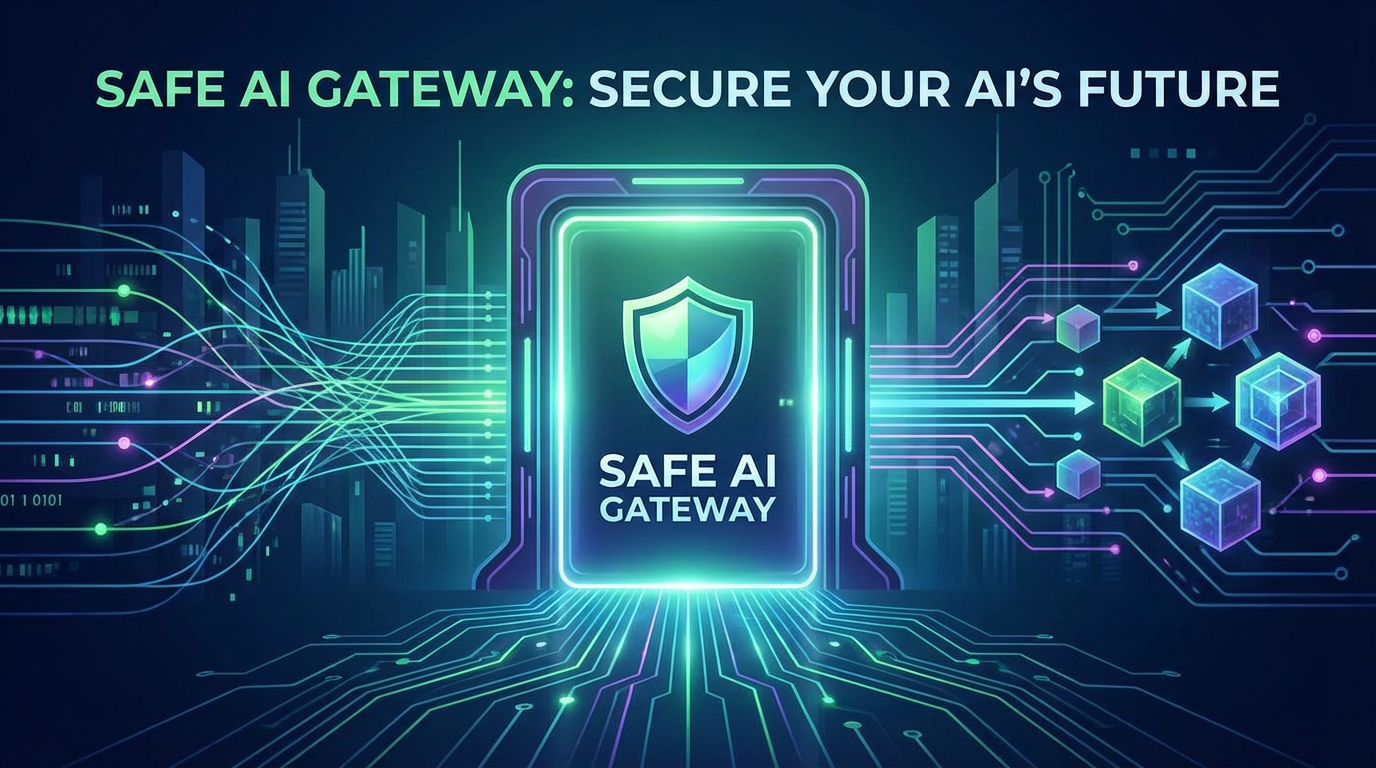
Enter the AI Gateway – a critical piece of infrastructure emerging as the definitive solution to these multifaceted challenges. Positioned as the central control point for all AI interactions, an AI Gateway acts as a secure intermediary between AI consumers (applications, users) and the underlying AI models (whether internal, external, or a mix). It’s not merely a simple proxy; it’s a sophisticated layer designed to enforce security policies, manage traffic, optimize performance, monitor usage, and standardize access across a diverse ecosystem of AI services. This specialized gateway concept builds upon the foundational principles of a traditional API Gateway, extending its capabilities to address the unique complexities inherent in AI and especially LLM interactions. For organizations venturing deeper into the AI frontier, understanding, implementing, and leveraging a robust AI Gateway is no longer optional; it is the cornerstone of a secure, compliant, and cost-effective AI strategy, crucial for realizing the full, unbridled potential of artificial intelligence while mitigating its inherent risks. It ensures that the future powered by AI is not only intelligent but also inherently secure and controllable.
The AI Revolution and Its Unforeseen Vulnerabilities
The advent of artificial intelligence, particularly the recent explosion in capabilities of Large Language Models (LLMs), has ushered in a technological renaissance, promising to revolutionize every facet of human endeavor. Businesses worldwide are rapidly integrating AI into their core operations, leveraging its power for tasks ranging from automated content generation, complex data analysis, and predictive maintenance to personalized customer experiences and groundbreaking scientific research. The appeal is undeniable: AI offers unparalleled efficiency gains, fosters innovation, and unlocks entirely new capabilities that were previously unimaginable. Companies are seeing dramatic improvements in productivity, reductions in operational costs, and the ability to derive deeper, more actionable insights from vast datasets. The competitive landscape is shifting, and those who embrace AI effectively are poised to dominate their respective markets.
However, beneath this veneer of limitless potential lies a growing tangle of unforeseen vulnerabilities and intricate challenges that demand immediate and sophisticated attention. The very nature of AI, especially its reliance on vast amounts of data and its often opaque decision-making processes, introduces a new breed of security and governance risks that far exceed the scope of traditional IT security paradigms. One of the most pressing concerns is the potential for data breaches. As sensitive corporate data, personal identifiable information (PII), or even confidential intellectual property flows to and from AI models, the attack surface expands dramatically. Without proper controls, this data could be intercepted, logged inappropriately, or inadvertently exposed, leading to severe financial penalties, reputational damage, and loss of customer trust. The sheer volume and sensitivity of data processed by AI make it a prime target for malicious actors.
Beyond data exposure, model manipulation presents an insidious threat. Techniques like prompt injection, where attackers craft malicious inputs to trick an LLM into performing unintended actions (e.g., revealing sensitive information, generating harmful content, or bypassing safety protocols), are becoming increasingly sophisticated. Adversarial attacks, designed to subtly alter inputs to cause a model to misclassify or err, pose significant risks in critical applications like autonomous vehicles or medical diagnostics. Such manipulations can lead to erroneous decisions, system failures, or even facilitate further exploits. The black-box nature of many advanced AI models often makes it difficult to detect these subtle manipulations until it's too late.
Furthermore, the risk of unauthorized access and abuse of AI resources is a constant specter. Without robust authentication and authorization mechanisms, external attackers or even disgruntled insiders could gain access to powerful AI models, using them for illicit purposes, depleting computational resources, or disrupting critical services. The commoditization of powerful AI capabilities means that an unauthorized user with access to an enterprise’s AI infrastructure could potentially cause widespread damage or generate significant financial liabilities.
Compliance issues are another significant headache. Regulations like GDPR, HIPAA, CCPA, and emerging AI-specific laws (e.g., the EU AI Act) impose strict requirements on how data is collected, processed, and used by AI systems. Ensuring that AI interactions comply with these mandates, especially concerning data residency, consent, and explainability, is a daunting task. Failure to comply can result in exorbitant fines and severe legal repercussions, adding a layer of regulatory complexity that traditional systems rarely encounter. The transparency and auditability often required by these regulations are inherently challenging for complex, generative AI models.
Finally, operational challenges such as performance bottlenecks and cost overruns can quickly erode the benefits of AI. Uncontrolled or inefficient calls to AI models, especially expensive proprietary LLMs, can quickly accumulate substantial costs. Without effective traffic management, AI endpoints can become overloaded, leading to degraded performance, service outages, and frustrated users. Moreover, the proliferation of "Shadow AI" – unmanaged AI usage within an organization, where employees or departments use public AI tools without official oversight – creates critical security gaps, introduces unvetted data flows, and fragments the organizational security posture. These unmanaged AI interactions bypass existing security controls, making it impossible to track data, ensure compliance, or prevent the leakage of proprietary information.
In light of these formidable challenges, it becomes abundantly clear that traditional network firewalls, endpoint security solutions, and basic API management tools are simply insufficient. They were not designed to understand the nuanced context of AI interactions, to detect prompt injections, to manage token usage, or to enforce AI-specific compliance policies. A new, specialized layer of defense and management is urgently required – one that can provide a dedicated perimeter for AI, safeguarding its future and ensuring its responsible evolution within the enterprise.
What is an AI Gateway? Defining the Modern Perimeter
In the burgeoning landscape of artificial intelligence, where models are rapidly becoming integral to every business function, the need for a specialized control plane has never been more acute. This control plane is precisely what an AI Gateway embodies. At its core, an AI Gateway is a single, centralized entry point for all interactions with artificial intelligence models, serving as a critical intermediary between applications, users, and the diverse array of AI services they consume. Think of it as the secure, intelligent border control for your AI ecosystem – every request to an AI model and every response from it must pass through this gateway, where it is inspected, managed, secured, and optimized according.
The fundamental concept builds upon the established principles of a traditional API Gateway, which provides a foundational layer for managing, securing, and routing API traffic. However, an AI Gateway extends these capabilities dramatically to address the unique complexities and vulnerabilities inherent in AI interactions, particularly with Large Language Models (LLMs). While a general API Gateway might handle a REST API for a database or a microservice, an AI Gateway is specifically engineered to understand the semantics of AI requests, such as prompts, model parameters, and streaming responses, and to apply AI-specific policies.
The key functions of an AI Gateway are multifaceted and indispensable for modern AI deployments:
- Authentication and Authorization: This is the bedrock of any secure system. An AI Gateway rigorously verifies the identity of every user or application attempting to access an AI model. It then determines precisely what actions that authenticated entity is permitted to perform (e.g., access specific models, submit certain types of prompts, or retrieve specific data). This granular access control prevents unauthorized usage and ensures that sensitive AI capabilities are only accessible to approved parties, bolstering overall system integrity.
- Traffic Management: As AI usage scales, managing the flow of requests becomes crucial. An AI Gateway implements robust traffic management policies, including rate limiting (to prevent abuse and ensure fair access), load balancing (distributing requests across multiple model instances or providers to prevent bottlenecks and ensure high availability), and intelligent routing (directing requests to the most appropriate, available, or cost-effective model). This ensures consistent performance and reliability, even under heavy load.
- Security Policies: This is where the AI Gateway truly differentiates itself. It acts as an intelligent firewall for AI, applying specialized security policies. This includes threat detection mechanisms to identify and mitigate prompt injection attacks, adversarial inputs, and other AI-specific exploits. It can also perform data sanitization, stripping out or masking sensitive information from prompts before they reach the AI model, and filtering potentially harmful or biased outputs from the model before they reach the end-user.
- Observability: Understanding how AI models are being used, by whom, and with what results is vital for debugging, optimization, and compliance. An AI Gateway provides comprehensive observability features, including detailed logging of every AI interaction (inputs, outputs, user, timestamps, tokens used), real-time monitoring of model performance and availability, and robust analytics to track usage patterns, identify anomalies, and manage costs effectively. This wealth of data is invaluable for operational insights.
- Cost Management: AI model invocations, especially those involving large language models, can quickly become expensive. An AI Gateway offers powerful cost management capabilities by tracking token usage, enforcing quotas per user or application, and even intelligently routing requests to cheaper models when appropriate, or caching frequently requested responses to reduce redundant calls. This ensures that AI expenditures remain within budget and are optimized for efficiency.
- Unified API Interface: One of the greatest challenges in managing a diverse AI ecosystem is the sheer variety of models, each with its own API, data formats, and authentication mechanisms. An AI Gateway provides a single, standardized API for interacting with all underlying AI models. This abstraction layer means that applications don't need to be rewritten every time a new model is introduced or an existing one is updated, drastically simplifying integration and reducing development overhead. For instance, a platform like APIPark excels in this area, offering a unified API format for AI invocation that ensures changes in AI models or prompts do not affect the application, thereby simplifying AI usage and maintenance costs. It standardizes the request data format across all AI models, which is a game-changer for scalability and maintainability.
The distinction between a general API Gateway and a specialized AI Gateway (or LLM Gateway) is crucial here. While an API Gateway provides the foundational framework for managing any type of API, an AI Gateway builds on this by adding AI-specific intelligence. For example, it might analyze the content of a prompt for malicious intent, manage token budgets, handle streaming responses from generative models, or ensure model output adheres to ethical guidelines. An LLM Gateway is a further specialization within the AI Gateway category, focusing specifically on the unique needs of Large Language Models. This includes advanced prompt engineering capabilities (e.g., templating, chaining, few-shot learning), sophisticated token management for cost and context control, and specialized security measures to combat prompt injection and data exfiltration specific to generative AI. In essence, while all AI Gateways are a type of API Gateway, they are far more advanced, offering a tailored, intelligent perimeter designed to secure, manage, and optimize the complex and rapidly evolving world of artificial intelligence. They are the essential infrastructure for any enterprise serious about leveraging AI safely and efficiently.
The Pillars of Security: How an AI Gateway Protects Your AI Infrastructure
In an era where AI models are increasingly handling sensitive data and making critical decisions, the security posture of your AI infrastructure is non-negotiable. An AI Gateway serves as the primary enforcement point, erecting robust pillars of security that shield your AI models and the data they process from a myriad of threats. This comprehensive approach ensures not only protection but also compliance and responsible AI deployment.
Access Control and Identity Management
The first and most fundamental pillar is robust access control. An AI Gateway acts as the gatekeeper, ensuring that only authorized users, applications, and services can interact with your AI models. It goes beyond simple user/password checks, offering granular permissions that dictate precisely which models an entity can access, what operations they can perform (e.g., read-only, generate, fine-tune), and even the rate at which they can make requests. This prevents unauthorized usage and significantly reduces the attack surface. The gateway typically integrates seamlessly with existing Identity and Access Management (IAM) systems (like OAuth2, OpenID Connect, LDAP, or corporate directories), centralizing identity management and ensuring a consistent security policy across the enterprise. Furthermore, implementing multi-factor authentication (MFA) for accessing the gateway adds an extra layer of security, making it exponentially harder for attackers to gain illicit entry even if they compromise credentials. Solutions like APIPark exemplify this, offering features such as "Independent API and Access Permissions for Each Tenant," allowing enterprises to create multiple teams (tenants) each with independent applications, data, user configurations, and security policies. Moreover, APIPark’s "API Resource Access Requires Approval" feature ensures that callers must subscribe to an API and await administrator approval before invocation, thereby preventing unauthorized API calls and potential data breaches, offering a robust defense against insider threats and external attacks.
Data Protection and Privacy
The flow of data through AI models is a major privacy concern. An AI Gateway is instrumental in safeguarding this data both in transit and at rest. All communications between the consuming application and the AI model, routed through the gateway, should be encrypted using industry-standard protocols like TLS/SSL, protecting against eavesdropping and man-in-the-middle attacks. For sensitive inputs or outputs, the gateway can perform data masking and redaction. This means that personally identifiable information (PII), protected health information (PHI), or other confidential data can be automatically obscured or removed from prompts before they are sent to the AI model, and from responses before they reach the end-user. This mitigates the risk of sensitive data exposure, especially when using third-party AI services. Crucially, the gateway helps ensure compliance with privacy regulations (e.g., GDPR, HIPAA) by enforcing data residency rules, processing consent, and preventing the inadvertent leakage of sensitive data to unapproved or external AI models. It acts as a shield, preventing proprietary information from being unwittingly absorbed into publicly trained models or exposed through logging.
Threat Detection and Mitigation
AI systems, especially LLMs, are susceptible to unique forms of attack. An AI Gateway is specifically designed to detect and mitigate these threats in real-time. Prompt injection detection and sanitization are paramount. The gateway can analyze incoming prompts for malicious patterns, keywords, or structures that indicate an attempt to manipulate the AI model, bypass its safety features, or extract sensitive information. Upon detection, it can either block the request, sanitize the prompt, or alert security teams. Similarly, output filtering capabilities prevent the AI model from generating harmful, biased, or inappropriate responses. This is critical for maintaining brand reputation and preventing the dissemination of misinformation or offensive content. Furthermore, the gateway can employ heuristics and machine learning to identify adversarial attack patterns, where subtle changes to input data are designed to trick the model into making incorrect predictions. It also provides essential protection against common web threats like DDoS attacks targeting AI endpoints, ensuring service availability even under duress.
Auditing and Compliance
Transparency and accountability are vital for responsible AI. An AI Gateway provides comprehensive logging capabilities, recording every detail of every AI interaction. This includes the originating user/application, the AI model invoked, the full input prompt, the model's output, the timestamps, token usage, and any errors encountered. This detailed audit trail is invaluable for debugging, performance analysis, and, most importantly, for demonstrating regulatory compliance. For example, APIPark offers "Detailed API Call Logging," meticulously recording every aspect of API calls, which is essential for quickly tracing and troubleshooting issues, thereby ensuring system stability and data security. These logs serve as irrefutable evidence for auditors, allowing organizations to prove that their AI systems are operating within established policies and legal frameworks. By enforcing policies at the gateway level, organizations can maintain control over their AI usage and quickly generate reports for compliance requirements, showcasing adherence to data governance and ethical AI principles.
Model Governance and Versioning
As organizations adopt multiple AI models from various providers, or develop their own, managing this diverse ecosystem becomes complex. An AI Gateway provides a single pane of glass for centralized management of multiple AI models. It allows organizations to define which models are approved for use, apply consistent security and usage policies across them, and even abstract away their individual APIs. This facilitates model versioning, allowing for controlled updates and rollbacks. New versions of models can be deployed behind the gateway in a controlled manner, perhaps via canary deployments or A/B testing, ensuring stability and performance before a full rollout. The gateway also enables prompt encapsulation into REST API – a feature like that found in APIPark. This allows users to quickly combine AI models with custom prompts to create new, reusable APIs (e.g., a sentiment analysis API, a translation API), which significantly streamlines development, ensures consistency, and applies governance to prompt engineering itself. This comprehensive approach to model governance ensures that only approved, secure, and compliant AI models are actively used within the enterprise, providing a critical layer of control over the dynamic AI landscape.
APIPark is a high-performance AI gateway that allows you to securely access the most comprehensive LLM APIs globally on the APIPark platform, including OpenAI, Anthropic, Mistral, Llama2, Google Gemini, and more.Try APIPark now! 👇👇👇
Beyond Security: Operational Benefits and Strategic Advantages of an AI Gateway
While security is a primary driver for adopting an AI Gateway, its value extends far beyond mere protection. A well-implemented AI Gateway delivers a suite of operational benefits and strategic advantages that significantly enhance efficiency, reduce costs, and accelerate the development and deployment of AI-powered solutions. It transforms the chaotic landscape of AI models into a well-managed, high-performing, and easily scalable ecosystem.
Cost Optimization
One of the most immediate and tangible benefits of an AI Gateway is its ability to significantly optimize costs associated with AI model usage. Many advanced AI models, particularly proprietary LLMs, operate on a pay-per-token or pay-per-request basis, making uncontrolled usage a potential financial drain. An AI Gateway empowers organizations with granular usage monitoring and quota enforcement. It can track every token consumed and every API call made, allowing administrators to set budget caps, rate limits, and usage quotas for individual users, teams, or applications. This prevents unexpected cost spikes and ensures that AI resources are utilized judiciously. Furthermore, an intelligent gateway can perform intelligent routing to cheaper or more efficient models. If multiple models offer similar capabilities but at different price points or performance levels, the gateway can dynamically direct requests to the most cost-effective option available, without requiring changes in the consuming application. Another powerful cost-saving feature is caching. For frequently asked questions or common AI tasks, the gateway can store responses and serve them directly from the cache, dramatically reducing the number of costly calls to the underlying AI models and simultaneously improving response times. APIPark provides capabilities for cost tracking and unified management for authentication and cost tracking across over 100 integrated AI models, making it an excellent example of how an AI Gateway can bring financial discipline to AI deployments.
Performance Enhancement
Beyond cost, an AI Gateway plays a pivotal role in boosting the performance and responsiveness of AI-powered applications. By acting as a central traffic manager, it can implement sophisticated load balancing strategies, distributing incoming requests across multiple instances of an AI model or across different model providers. This prevents any single endpoint from becoming a bottleneck, ensuring high availability and consistent low latency. As mentioned earlier, caching not only saves costs but also dramatically reduces response times for repetitive queries, making AI applications feel snappier and more responsive to end-users. Additionally, rate limiting protects AI endpoints from being overwhelmed by a sudden surge in traffic, preventing service degradation or outages, and maintaining a stable quality of service. For example, APIPark boasts impressive performance metrics, rivaling Nginx with the ability to achieve over 20,000 TPS (transactions per second) on modest hardware (8-core CPU, 8GB memory) and supporting cluster deployment for handling large-scale traffic, demonstrating the gateway's critical role in maintaining high performance and scalability.
Simplified Integration and Development
The diverse and rapidly evolving landscape of AI models presents a significant integration challenge for developers. Each model often has its own unique API, authentication method, and data format, leading to significant development overhead. An AI Gateway solves this by providing a unified API for various AI models. It acts as an abstraction layer, normalizing inputs and outputs across different models, so developers only need to learn one consistent interface. This significantly streamlines development efforts and reduces the time-to-market for new AI applications. APIPark, for instance, offers "Quick Integration of 100+ AI Models" and a "Unified API Format for AI Invocation," ensuring that developers can integrate a variety of AI models with a single management system for authentication and cost tracking. This standardization simplifies AI usage, drastically cutting down maintenance costs and enabling rapid AI application development without the burden of constant API renegotiation. Furthermore, by abstracting underlying model complexities, developers can focus on building innovative applications rather than wrestling with the intricacies of different model providers.
Scalability and Reliability
For enterprises planning to scale their AI initiatives, an AI Gateway is an indispensable component. It enables seamless scaling of AI workloads by intelligently routing requests to available resources, whether they are on-premises models, cloud-based services, or a hybrid combination. In the event of an AI model instance failing, the gateway can instantly redirect traffic to healthy instances, providing robust failover mechanisms and ensuring high availability for critical AI services. This resilience is paramount for business continuity and user satisfaction.
Team Collaboration and Efficiency
In larger organizations, different departments or teams often require access to various AI services. An AI Gateway fosters centralized discovery and sharing of AI services. It provides a single catalog where all available AI APIs are published, making it easy for internal teams to find, understand, and consume the AI capabilities they need. This eliminates redundant development, promotes reuse, and ensures standardized access and usage patterns across the organization. APIPark's "API Service Sharing within Teams" feature centralizes the display of all API services, facilitating easy discovery and utilization by different departments, significantly boosting internal collaboration and operational efficiency.
Data Analysis and Insights
The comprehensive logging capabilities of an AI Gateway provide a rich source of data for operational insights. Beyond simple monitoring, an AI Gateway like APIPark offers "Powerful Data Analysis" features. It analyzes historical call data to display long-term trends, identify performance changes, detect anomalies, and understand usage patterns. This powerful analytical capability helps businesses with preventive maintenance, allowing them to proactively address potential issues before they impact services, optimize resource allocation, and refine their AI strategy based on real-world usage data. These insights are crucial for continuous improvement and strategic planning in the AI domain.
In essence, an AI Gateway transforms AI infrastructure from a potential liability into a strategic asset. By moving beyond basic security to offer comprehensive management, optimization, and collaboration features, it empowers organizations to fully embrace the AI revolution with confidence, knowing their systems are not only secure but also efficient, scalable, and strategically aligned with their business objectives.
Choosing the Right AI Gateway: Key Considerations and Features
Selecting the appropriate AI Gateway is a critical strategic decision that will profoundly impact the security, performance, cost-efficiency, and long-term scalability of your AI initiatives. Given the rapid evolution of AI technology and the diverse range of available solutions, a thorough evaluation process is essential. Here are the key considerations and features to look for when choosing the right AI Gateway for your enterprise:
1. Security Features
Security must be the paramount concern. An effective AI Gateway should provide an ironclad defense for your AI models and data. * Comprehensive Authentication & Authorization: Look for granular role-based access control (RBAC), multi-factor authentication (MFA) support, and seamless integration with your existing Identity and Access Management (IAM) systems (e.g., OAuth2, LDAP, SAML). The ability to define per-API, per-user, or per-application access policies is crucial. * Data Protection: Ensure the gateway supports encryption in transit (TLS/SSL) and offers robust data masking, redaction, or tokenization capabilities to protect sensitive information (PII, PHI) in prompts and responses. Compliance with data residency requirements is also key for global operations. * Threat Detection & Mitigation: This includes specialized features for AI-specific attacks, such as prompt injection detection, adversarial input filtering, and output content moderation (e.g., filtering for bias, toxicity, or PII leakage). DDoS protection and general API security features like SQL injection prevention are also vital. * Auditability & Compliance: The gateway must provide detailed, immutable logging of all AI interactions for audit trails, incident response, and demonstrating compliance with regulatory frameworks (GDPR, HIPAA, SOC 2, etc.).
2. Scalability and Performance
Your AI Gateway must be able to grow with your AI demands without becoming a bottleneck. * High Throughput & Low Latency: Evaluate the gateway's ability to handle a high volume of requests (TPS) with minimal latency. Benchmarks, like APIPark's claim of over 20,000 TPS, can be a good indicator, but always consider real-world scenarios. * Load Balancing & High Availability: Look for built-in capabilities to distribute traffic across multiple AI model instances or providers, ensuring continuous service even if one component fails. Cluster deployment support is essential for enterprise-grade reliability. * Caching Mechanisms: An effective caching layer can significantly reduce latency and costs by serving frequently requested AI responses directly, rather than hitting the underlying models repeatedly.
3. Ease of Integration and Deployment
The value of an AI Gateway is maximized when it's easy to integrate into your existing ecosystem and quick to deploy. * Unified API Interface: This is a major efficiency driver. The gateway should abstract away the complexities of different AI model APIs (e.g., OpenAI, Google Gemini, internal models) into a single, consistent interface for your developers. APIPark is a strong example with its "Quick Integration of 100+ AI Models" and "Unified API Format for AI Invocation," simplifying the integration process immensely. * Quick Deployment: Look for solutions that offer straightforward installation and configuration. A single command-line deployment, as offered by APIPark (e.g., curl -sSO https://download.apipark.com/install/quick-start.sh; bash quick-start.sh), can significantly accelerate time-to-value. * Compatibility: Ensure it integrates well with your existing development tools, CI/CD pipelines, and cloud infrastructure. * Developer Experience: A well-designed developer portal provided by the gateway can greatly enhance internal team efficiency by offering clear API documentation, easy discovery, and simplified subscription processes.
4. Observability
Understanding the health, usage, and performance of your AI services is crucial for optimization and troubleshooting. * Robust Logging: Detailed logging of every API call, including request/response payloads (with sensitive data masked), user IDs, timestamps, token counts, and error codes. * Real-time Monitoring & Alerting: Dashboards and alerts for key metrics like latency, error rates, throughput, and resource utilization. * Advanced Analytics: Capabilities to analyze historical data, identify trends, detect anomalies, and provide insights into cost drivers and performance bottlenecks. APIPark's "Powerful Data Analysis" for long-term trends and preventive maintenance is a prime example of this.
5. Flexibility and Customization
Your AI needs will evolve, so your gateway should be adaptable. * Support for Diverse AI Models: Ability to integrate and manage a wide range of AI models, including LLMs, traditional ML models, open-source models, and proprietary APIs. * Custom Policy Enforcement: The ability to define and apply custom business logic, security rules, and prompt engineering strategies (e.g., prompt templating, chaining) at the gateway layer. * Prompt Encapsulation: Features like APIPark's ability to "Prompt Encapsulation into REST API" are incredibly valuable, allowing you to turn complex AI tasks with specific prompts into simple, reusable API endpoints.
6. Open Source vs. Commercial
This decision often comes down to budget, control, and support needs. * Open Source: Offers transparency, community support, and often lower initial costs, with the flexibility to customize. However, it may require more in-house expertise for setup, maintenance, and advanced features. APIPark is an excellent example of an open-source AI gateway under the Apache 2.0 license, providing a strong foundation for startups and developers. * Commercial: Typically provides professional support, advanced features, and often a more polished user experience. It comes with a higher upfront or recurring cost but can reduce operational overhead and provide enterprise-grade reliability and SLAs. APIPark also offers a commercial version with advanced features and professional technical support for leading enterprises, demonstrating a hybrid model that caters to different organizational needs.
7. Lifecycle Management and Multi-tenancy
For complex enterprise environments, these features are essential. * End-to-End API Lifecycle Management: The gateway should assist with managing APIs from design and publication through invocation and decommission, including traffic forwarding, load balancing, and versioning. This comprehensive approach is highlighted by APIPark's capabilities. * Multi-tenancy: For organizations with multiple teams or business units, the ability to create separate tenants with independent applications, data, user configurations, and security policies, while sharing underlying infrastructure, is a significant advantage. This feature, offered by APIPark, improves resource utilization and reduces operational costs.
To illustrate these considerations, here's a feature comparison table that can be used during evaluation:
| Feature Category | Specific Feature | Importance Level | Example Benefit |
|---|---|---|---|
| Security | Authentication & Authorization | Critical | Prevents unauthorized access; enforces granular permissions for models. |
| Data Masking/Redaction | High | Protects sensitive PII/PHI from being sent to or stored by AI models. | |
| Prompt Injection Detection | High | Guards against adversarial manipulation of AI models, preserving integrity. | |
| Performance | Load Balancing & Failover | Critical | Ensures high availability and distributes requests efficiently, preventing bottlenecks. |
| Caching | High | Reduces latency for common queries, improving user experience and cutting costs. | |
| High Throughput (TPS) | High | Handles large volumes of AI requests without degradation. | |
| Management | Unified API Interface | Critical | Simplifies integration of diverse AI models, reducing dev effort. |
| Cost Tracking & Quotas | High | Optimizes expenditure, prevents budget overruns, ensures efficient resource use. | |
| Logging & Monitoring | Critical | Provides visibility into usage, aids debugging, and ensures compliance. | |
| Model Versioning | Medium | Facilitates controlled updates and A/B testing of AI models safely. | |
| Development | Prompt Encapsulation | High | Turns complex, reusable prompts into simple API endpoints. |
| Developer Portal | Medium | Streamlines API discovery, documentation, and consumption for internal teams. | |
| Operational | Multi-tenancy Support | High | Isolates teams/applications while sharing infrastructure, improving efficiency. |
| Quick Deployment | High | Accelerates time-to-value for new AI initiatives. |
By carefully weighing these factors against your specific organizational requirements, security posture, and budget, you can select an AI Gateway that not only secures your AI's future but also accelerates your journey toward intelligent and innovative solutions.
Conclusion
The era of artificial intelligence is undeniably here, bringing with it a tidal wave of transformative potential for every industry and organization. From automating complex tasks to uncovering unprecedented insights, AI models, especially sophisticated Large Language Models, are rapidly becoming the central nervous system of modern enterprises. However, this profound technological leap introduces an equally significant array of security, operational, and governance challenges that demand a specialized and robust solution. Traditional security measures, designed for static applications and predictable data flows, simply cannot contend with the dynamic, data-intensive, and often opaque nature of AI interactions.
The AI Gateway emerges not just as a desirable tool, but as an indispensable architectural component for any enterprise serious about leveraging AI responsibly and securely. It acts as the intelligent sentinel at the gates of your AI ecosystem, meticulously inspecting, managing, and optimizing every interaction between your applications and the underlying AI models. By centralizing control, an AI Gateway fortifies your AI infrastructure against a multitude of threats, from insidious prompt injection attacks and data exfiltration to unauthorized access and compliance violations. It provides the critical pillars of security, including granular access control, comprehensive data protection, real-time threat detection, and an auditable trail for regulatory compliance.
Beyond its foundational security capabilities, the strategic advantages of an AI Gateway are equally compelling. It empowers organizations to achieve significant cost optimization through intelligent routing, caching, and usage quotas, ensuring that AI investments yield maximum returns without budget overruns. It dramatically enhances performance and reliability through load balancing, failover mechanisms, and high throughput, guaranteeing a seamless and responsive user experience. Furthermore, an AI Gateway radically simplifies integration and development by offering a unified API interface that abstracts away the complexities of diverse AI models, accelerating the pace of innovation and reducing developer overhead. Capabilities like those offered by APIPark, an open-source AI gateway with a unified API format and quick integration for over 100 AI models, perfectly illustrate how these solutions streamline development and reduce maintenance costs. From streamlining team collaboration to providing powerful data analytics for proactive maintenance and strategic decision-making, the operational benefits are extensive and profound.
As AI continues its rapid evolution, so too will the challenges and the solutions designed to address them. The AI Gateway is a dynamic and evolving technology, poised to adapt to new AI models, new attack vectors, and new regulatory requirements. Embracing an AI Gateway is more than just adopting a piece of technology; it is about cultivating a proactive and intelligent security posture that ensures the integrity, efficiency, and trustworthiness of your AI future. By establishing this critical control plane, organizations can confidently unlock the full potential of artificial intelligence, transforming innovation into secure, compliant, and sustainable business advantage. Secure your AI's future today by placing an intelligent gateway at its core.
Frequently Asked Questions (FAQs)
Q1: What is the primary difference between a traditional API Gateway and an AI Gateway?
A1: While an API Gateway provides foundational management for any type of API (authentication, routing, rate limiting), an AI Gateway specializes in AI-specific interactions. It extends these capabilities to include AI-specific security threats (like prompt injection), model governance (versioning, prompt encapsulation), cost optimization for token usage, and unified interfaces for diverse AI models (like LLMs). Essentially, all AI Gateways are API Gateways, but they offer advanced, tailored features for the unique complexities of artificial intelligence.
Q2: How does an AI Gateway help in mitigating prompt injection attacks?
A2: An AI Gateway acts as a crucial interception point for all prompts sent to AI models. It employs specialized algorithms and heuristics to analyze incoming prompts for malicious patterns, keywords, or structures characteristic of prompt injection attempts. Upon detection, the gateway can then block the request, sanitize the prompt to remove the malicious elements, or alert security teams, preventing the underlying AI model from being manipulated or exploited.
Q3: Can an AI Gateway help manage costs associated with using Large Language Models (LLMs)?
A3: Absolutely. LLMs often incur costs based on token usage. An AI Gateway can rigorously track token consumption per user, application, or model. It enables administrators to set granular quotas, enforce rate limits, and even route requests to more cost-effective models when available. Additionally, intelligent caching for frequently asked questions or common prompts significantly reduces the number of costly calls to the underlying LLM, leading to substantial cost savings.
Q4: Is an AI Gateway necessary if my organization only uses one AI model?
A4: While the benefits of abstraction and multi-model management might seem less critical with a single model, an AI Gateway is still highly recommended. It provides essential security layers (authentication, authorization, data protection, threat detection), robust logging for compliance and auditing, performance optimization, and consistent policy enforcement that are crucial even for a single AI endpoint. It ensures that even a single model is secure, managed, and compliant from day one, preparing your infrastructure for future AI expansion.
Q5: What is APIPark, and how does it relate to the concept of an AI Gateway?
A5: APIPark is an open-source AI gateway and API management platform. It directly embodies the principles and features discussed for an AI Gateway. APIPark allows for the quick integration of over 100 AI models, provides a unified API format to simplify AI invocation, enables prompt encapsulation into REST APIs, and offers comprehensive API lifecycle management. It also focuses on security features like access approval and independent permissions, alongside performance (20,000+ TPS) and powerful data analysis, making it a robust solution for securing and managing an organization's AI and API services.
🚀You can securely and efficiently call the OpenAI API on APIPark in just two steps:
Step 1: Deploy the APIPark AI gateway in 5 minutes.
APIPark is developed based on Golang, offering strong product performance and low development and maintenance costs. You can deploy APIPark with a single command line.
curl -sSO https://download.apipark.com/install/quick-start.sh; bash quick-start.sh

In my experience, you can see the successful deployment interface within 5 to 10 minutes. Then, you can log in to APIPark using your account.

Step 2: Call the OpenAI API.