Secure & Scale Your LLMs: Why You Need an LLM Proxy
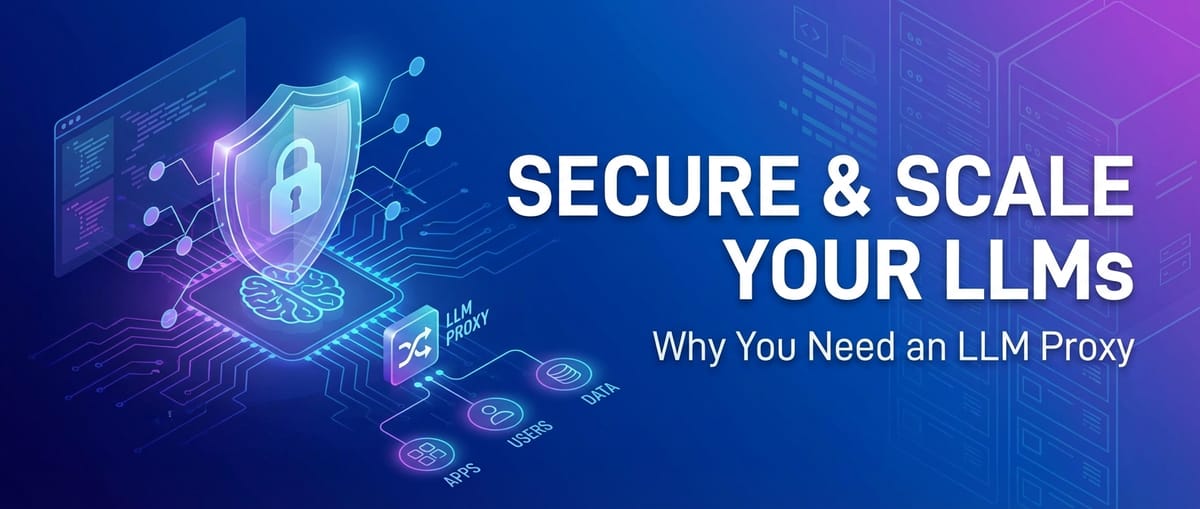


The landscape of artificial intelligence has undergone a seismic shift with the emergence and rapid proliferation of Large Language Models (LLMs). From powering sophisticated chatbots to automating content creation, generating code, and revolutionizing data analysis, LLMs like GPT-3, GPT-4, Llama, and Claude are no longer confined to research labs; they are increasingly becoming the neural network of enterprise operations. Businesses across every sector are scrambling to integrate these powerful capabilities, recognizing their potential to unlock unprecedented levels of productivity, innovation, and competitive advantage. However, this transformative power comes with a unique set of challenges. Directly integrating and managing LLMs across an organization can quickly become a labyrinth of security vulnerabilities, escalating costs, performance bottlenecks, and operational complexities. It’s in this intricate environment that a critical piece of infrastructure emerges as indispensable: the LLM Proxy, often synonymous with an LLM Gateway or the broader AI Gateway. These solutions act as the intelligent intermediary, transforming the chaotic direct access to LLM APIs into a streamlined, secure, cost-effective, and scalable operation. This comprehensive article delves into why an LLM Proxy, LLM Gateway, or AI Gateway is not just a convenience, but an absolute necessity for any organization looking to responsibly and effectively leverage the full potential of large language models.
The LLM Revolution and Its Growing Pains: Navigating the New Frontier of AI
The advent of Large Language Models marks a pivotal moment in the history of technology, akin to the rise of the internet or cloud computing. These models, trained on vast datasets, possess an astonishing ability to understand, generate, and manipulate human language, opening up a universe of applications previously relegated to science fiction. Enterprises, quick to grasp the strategic implications, are integrating LLMs into everything from customer service and marketing to software development and scientific research. The benefits are clear: enhanced efficiency, accelerated innovation cycles, personalized user experiences, and the automation of tedious, time-consuming tasks.
However, the rapid adoption of LLMs has also unearthed a new class of operational and architectural complexities that demand sophisticated solutions. The immediate enthusiasm for integrating these powerful models often overlooks the intricate challenges that arise when moving from experimental prototypes to production-grade applications. Organizations quickly find themselves grappling with a multitude of issues that can undermine their AI initiatives, leading to security breaches, ballooning costs, unreliable performance, and a tangled mess of integrations. Understanding these growing pains is the first step towards appreciating the vital role of an intermediary layer like an LLM Proxy or LLM Gateway.
Security and Data Privacy: A Fortress Under Siege
One of the most pressing concerns for any enterprise interacting with LLMs is security and the protection of sensitive data. When applications directly send prompts and receive responses from external LLM APIs, a significant attack surface is created. Organizations must contend with several critical vulnerabilities:
- Prompt Injection: Malicious actors can craft inputs designed to bypass or manipulate the LLM's intended behavior, potentially leading to unauthorized data access, generation of harmful content, or even code execution if the LLM is connected to other systems. Protecting against these sophisticated attacks requires more than just basic input validation; it necessitates intelligent filtering and contextual understanding.
- Data Leakage: Sending proprietary business data, customer Personally Identifiable Information (PII), or Protected Health Information (PHI) directly to third-party LLM providers poses immense risks. Without proper controls, sensitive information can inadvertently be exposed, stored, or processed in ways that violate privacy regulations and internal compliance policies. The risk of inadvertently training a third-party model on an organization's confidential data is a persistent concern.
- Unauthorized Access: Managing API keys for multiple LLM services across various applications and development teams can become a logistical nightmare. A compromised API key can grant attackers unfettered access to an organization's LLM budget, potentially leading to significant financial losses or abuse of services for illicit purposes. Centralized authentication and authorization are paramount.
- Compliance and Governance: Industries are subject to stringent regulations like GDPR, HIPAA, CCPA, and various industry-specific data residency requirements. Directly calling LLM APIs without an intermediary makes it incredibly difficult to enforce these compliance mandates, such as ensuring data is processed only in specific geographic regions or that audit trails are meticulously maintained for every interaction.
Cost Management: The Unseen Drain
While LLMs offer immense value, their usage comes with a per-token or per-call cost that can quickly skyrocket if not carefully managed. The pay-as-you-go model, while flexible, can be a double-edged sword:
- Uncontrolled Spend: Without visibility and control, individual developers or applications can inadvertently generate massive API calls, leading to budget overruns. The subtle difference in token counts for various prompts or models can result in significant financial discrepancies over time.
- Lack of Granularity: Most LLM providers offer high-level usage reports, but they often lack the granularity required by enterprises to attribute costs to specific teams, projects, or even individual features within an application. This makes cost allocation and optimization extremely challenging.
- Inefficient Usage: Redundant calls, unoptimized prompts, or calling expensive models for simple tasks can inflate costs unnecessarily. Caching, for instance, is a critical strategy to reduce repeated calls for identical or similar requests, directly impacting the bottom line.
- Vendor Lock-in and Price Volatility: Relying on a single LLM provider exposes an organization to potential price hikes or changes in terms of service. The ability to dynamically switch between providers based on cost-effectiveness for specific tasks is a powerful, yet often absent, feature in direct integration models.
Performance and Reliability: The Quest for Consistency
The seamless user experience hinges on the performance and reliability of the underlying LLM infrastructure. Direct API calls introduce several vulnerabilities:
- Latency Variability: Network latency, API processing times, and model inference speeds can fluctuate, leading to inconsistent response times that degrade the user experience. For real-time applications, even slight delays can be detrimental.
- Rate Limits and Throttling: LLM providers impose strict rate limits to prevent abuse and manage their infrastructure load. Exceeding these limits can result in blocked requests, errors, and service interruptions, leading to application downtime or degraded functionality.
- Vendor Outages and Downtime: No service is immune to outages. A direct dependency on a single LLM provider means that any disruption on their end directly impacts an organization's applications, leading to potential business continuity issues.
- Model Versioning and Updates: LLMs are constantly evolving. New versions are released, existing ones are updated, and sometimes deprecated. Managing these changes directly across multiple applications can be a maintenance headache, requiring constant code updates and re-deployments to maintain compatibility.
Complexity and Management Overhead: The Integration Maze
Integrating multiple LLMs from different providers, or even different versions of the same model, introduces substantial operational complexity:
- Disparate APIs: Each LLM provider often has its own unique API endpoints, data formats, authentication mechanisms, and rate limit structures. This heterogeneity forces developers to write specific integration code for each model, increasing development effort and maintenance burden.
- Prompt Engineering and Versioning: Crafting effective prompts is an art and a science. Managing, versioning, and sharing these prompts across teams and applications without a centralized system leads to fragmentation, inconsistency, and lost institutional knowledge.
- Multi-Model Orchestration: Advanced applications often require the ability to dynamically route requests to different LLMs based on task complexity, cost, or performance. Building this intelligent routing logic from scratch is a non-trivial engineering challenge.
- Observability Gap: Without a centralized point of control, it's difficult to gain a holistic view of LLM usage, performance metrics, and error rates across the entire organization. This lack of comprehensive logging, monitoring, and tracing makes debugging and performance optimization incredibly difficult.
These formidable challenges highlight a fundamental truth: while LLMs are powerful, their direct, unmanaged consumption is fraught with peril. It's an environment ripe for an intelligent intermediary, a specialized piece of infrastructure designed to abstract away these complexities and provide a secure, scalable, and manageable layer for LLM interactions. This is precisely the void filled by the LLM Proxy, LLM Gateway, and AI Gateway.
Understanding the Core Concepts: LLM Proxy, LLM Gateway, AI Gateway
As organizations increasingly rely on advanced AI models, the need for a sophisticated management layer has become paramount. While the terms LLM Proxy, LLM Gateway, and AI Gateway are often used interchangeably, especially in the context of Large Language Models, they represent a spectrum of functionality, from basic request forwarding to comprehensive API management for an entire AI ecosystem. Understanding the nuances of each term is crucial for selecting the right solution for specific organizational needs. However, it's important to recognize that the lines between these definitions are blurring rapidly as solutions evolve to offer more comprehensive features.
Defining LLM Proxy: The Essential Intermediary
At its most fundamental level, an LLM Proxy acts as an intermediary layer between an application and one or more Large Language Model (LLM) providers. Its core function is to intercept requests from client applications, forward them to the appropriate LLM service, and then return the LLM's response back to the client. Think of it as a specialized reverse proxy, but specifically tailored for AI API calls.
The primary motivations for implementing a simple LLM Proxy are often centered around core operational enhancements:
- Request Routing: A proxy can direct requests to different LLM endpoints based on predefined rules, such as balancing load across multiple API keys, or routing requests to specific model versions.
- Basic Caching: For repetitive queries or common prompts, an LLM proxy can store responses and serve them directly from its cache, significantly reducing latency and decreasing the number of calls made to the actual LLM provider, thereby saving costs.
- Rate Limiting: It can enforce usage limits on a per-user, per-application, or global basis, preventing any single client from overwhelming the LLM service or exhausting budget allocations. This also helps in adhering to provider-specific API rate limits.
- Simple Logging: A proxy can log details of incoming requests and outgoing responses, providing a basic audit trail for debugging and monitoring usage patterns.
- Unified Endpoint: It offers a single entry point for all LLM interactions, even if the backend consists of multiple LLM providers or models, simplifying client-side integration.
An LLM Proxy is an excellent starting point for organizations seeking to gain basic control and efficiency over their LLM consumption. It addresses immediate concerns like cost reduction through caching and performance improvement through rate limiting, while providing a rudimentary layer of observability. However, its scope is generally limited to these foundational network and traffic management functions, lacking deeper AI-specific or enterprise-grade API management capabilities.
Defining LLM Gateway: Elevating Control and Intelligence
An LLM Gateway takes the foundational capabilities of an LLM Proxy and significantly expands upon them, transforming a simple pass-through mechanism into an intelligent control plane for LLM interactions. While the term "LLM Gateway" is often used interchangeably with "LLM Proxy" in casual conversation, a true LLM Gateway offers a much richer set of features designed to address more complex enterprise requirements.
Key advanced features that distinguish an LLM Gateway include:
- Centralized Authentication and Authorization: Beyond mere API key management, an LLM Gateway can integrate with enterprise identity providers (e.g., OAuth, OpenID Connect, LDAP) to enforce role-based access control, ensuring that only authorized users or applications can invoke specific LLMs or access certain functionalities.
- Advanced Analytics and Observability: It provides comprehensive metrics on usage, performance (latency, error rates), and cost attribution, often with dashboards and reporting tools. This goes beyond simple logs, offering actionable insights for optimization and troubleshooting.
- Prompt Management and Versioning: A gateway can act as a repository for managing, versioning, and testing prompts. This allows developers to standardize prompts, conduct A/B tests on different prompt strategies, and ensure consistency across applications without embedding prompts directly into application code. Solutions like APIPark offer "Prompt Encapsulation into REST API," allowing users to combine AI models with custom prompts to create new, specialized APIs, streamlining prompt management and reusability.
- Multi-Model Orchestration and Intelligent Routing: An LLM Gateway can dynamically route requests to different LLMs (e.g., GPT-4, Llama 2, Claude, or even specialized fine-tuned models) based on predefined criteria such as cost, performance, task type, or current load. This enables true vendor flexibility and cost optimization. APIPark supports "Quick Integration of 100+ AI Models" and provides a "Unified API Format for AI Invocation," simplifying multi-model management.
- Data Masking and Redaction: To protect sensitive information, an LLM Gateway can automatically identify and redact or mask PII/PHI from prompts before they are sent to the LLM and from responses before they are returned to the client, greatly enhancing data privacy and compliance.
- Security Policies and Threat Detection: It can implement more sophisticated security policies, including Web Application Firewall (WAF) like features specifically tuned for LLM interactions, to detect and mitigate prompt injection attacks, data exfiltration attempts, and other AI-specific threats.
- API Lifecycle Management: Beyond just proxying, an LLM Gateway often includes features for managing the entire lifecycle of AI APIs, from design and publication to versioning, deprecation, and comprehensive documentation for developers. APIPark provides "End-to-End API Lifecycle Management," assisting with design, publication, invocation, and decommissioning, ensuring robust governance.
An LLM Gateway is designed for organizations that require robust control, deep insights, enhanced security, and the flexibility to manage a diverse and evolving portfolio of large language models. It transforms LLM consumption from a chaotic set of direct integrations into a well-governed, optimized, and secure ecosystem.
Defining AI Gateway: The Unified AI Control Plane
The term AI Gateway is the most expansive of the three. It encompasses all the capabilities of an LLM Gateway but extends its reach beyond just large language models to manage any Artificial Intelligence service. This includes traditional machine learning models, computer vision APIs, speech-to-text and text-to-speech services, recommendation engines, and other specialized AI microservices.
An AI Gateway serves as a unified control plane for an organization's entire AI consumption, regardless of whether the AI service is hosted internally, by a cloud provider, or by a third-party vendor. Its mission is to standardize access, governance, and observability across all AI APIs.
Key differentiators of an AI Gateway include:
- Holistic AI API Management: It provides a single point of entry and management for all types of AI services, promoting consistency in how AI is consumed and governed across the enterprise.
- Broader Integration Landscape: While an LLM Gateway focuses on LLM providers, an AI Gateway is built to integrate seamlessly with a wider array of AI technologies and frameworks.
- Standardized Interfaces for Diverse AI: It aims to normalize the invocation patterns, authentication methods, and data formats across disparate AI services, reducing the integration burden for developers who no longer need to learn the idiosyncrasies of each individual AI API. APIPark, for example, explicitly highlights its "Unified API Format for AI Invocation" which ensures that changes in AI models or prompts do not affect the application, simplifying AI usage and maintenance costs, a core tenet of an effective AI Gateway.
- Comprehensive AI Governance: Managing the lifecycle, access, and performance of all AI models becomes streamlined. This includes data provenance, model versioning, and ethical AI considerations across a broader spectrum of AI applications.
In essence, an AI Gateway is the strategic choice for organizations that are not only heavily invested in LLMs but also leverage a diverse array of other AI technologies. It provides a future-proof architecture that can adapt as the AI landscape continues to evolve, ensuring that all AI assets are managed securely, efficiently, and consistently.
While the terms LLM Proxy, LLM Gateway, and AI Gateway each have distinct theoretical definitions, the market trend is towards converged solutions. Many products marketed as "LLM Proxies" or "LLM Gateways" today offer features traditionally associated with full-fledged AI Gateways, blurring the lines in practice. For the remainder of this discussion, we will often use "LLM Gateway" or "AI Gateway" as the primary term to represent these comprehensive intermediary solutions, acknowledging that they encompass and extend beyond the basic "LLM Proxy" functionalities. The critical takeaway is that an intelligent intermediary layer is no longer optional but an absolute necessity for robust LLM and broader AI integration.
Key Benefits of Implementing an LLM Proxy / LLM Gateway / AI Gateway
The strategic adoption of an LLM Proxy, LLM Gateway, or AI Gateway provides a myriad of advantages that fundamentally transform how enterprises interact with and manage their large language models and other AI services. These benefits extend across security, performance, cost, operational efficiency, and developer experience, making such a solution an indispensable component of modern AI infrastructure. By abstracting away complexity and centralizing control, these gateways empower organizations to harness AI's full potential responsibly and effectively.
Enhanced Security and Compliance: Building an Impenetrable AI Perimeter
Security is paramount in the age of AI, especially when dealing with sensitive data and powerful generative models. An LLM Gateway acts as a critical security enforcement point, fortifying the perimeter around your AI interactions.
- Centralized Authentication and Authorization: Instead of scattering API keys or managing disparate authentication mechanisms across applications, an LLM Gateway centralizes this process. It can integrate with existing enterprise identity providers (e.g., OAuth 2.0, OpenID Connect, SAML, LDAP), allowing for robust Role-Based Access Control (RBAC). This ensures that only authorized users or applications can access specific LLMs or functionalities, significantly reducing the risk of unauthorized access due to compromised credentials. Furthermore, solutions like APIPark enhance this by enabling "Independent API and Access Permissions for Each Tenant," allowing distinct teams or departments to manage their applications, users, and security policies while leveraging shared infrastructure, providing granular control and improved resource utilization.
- Data Masking and Redaction: Protecting Personally Identifiable Information (PII) and Protected Health Information (PHI) is a top priority. An LLM Gateway can be configured to automatically detect and mask, redact, or encrypt sensitive data within prompts before they are sent to the LLM, and within responses before they are returned to the client. This crucial feature helps maintain data privacy, comply with regulations like GDPR and HIPAA, and prevents accidental exposure to third-party models.
- Prompt Injection Protection: LLMs are vulnerable to prompt injection attacks, where malicious inputs manipulate the model's behavior. An LLM Gateway can employ sophisticated filtering, sanitization techniques, and even AI-powered threat detection to identify and block such nefarious prompts, safeguarding the model's integrity and preventing unintended actions or data breaches.
- Threat Detection and Prevention: Beyond prompt injection, the gateway can monitor for unusual traffic patterns, repeated failed authentication attempts, or other indicators of compromise, acting as an intelligent firewall for AI services. It can implement Web Application Firewall (WAF)-like rules specifically tailored for AI API traffic, adding an extra layer of defense.
- Compliance and Audit Trails: Meeting regulatory requirements (e.g., data residency, auditability) is simplified with a centralized gateway. It can enforce policies that dictate where data is processed, ensure that all interactions are logged, and provide a comprehensive audit trail for every prompt and response. APIPark’s feature, "API Resource Access Requires Approval," further strengthens compliance by mandating subscriptions and administrator approval for API invocation, preventing unauthorized access and potential data breaches, while its "Detailed API Call Logging" provides comprehensive records for troubleshooting and audit purposes. This granular logging is indispensable for demonstrating compliance and swiftly addressing any security incidents.
Optimized Performance and Reliability: Ensuring Seamless AI Delivery
An LLM Gateway plays a pivotal role in optimizing the performance and bolstering the reliability of your AI-powered applications, ensuring a consistently smooth user experience even under heavy load.
- Caching: This is perhaps one of the most impactful features for both performance and cost. For common queries or repeated requests, the gateway can store LLM responses in a cache and serve them directly, significantly reducing latency and obviating the need to call the expensive external LLM API. This not only speeds up response times for end-users but also dramatically cuts down on token consumption and associated costs. Intelligent caching strategies can be implemented, considering factors like prompt similarity and response freshness.
- Rate Limiting and Throttling: To prevent abuse, manage API quotas, and ensure fair resource allocation, the gateway can enforce flexible rate limits. These can be applied globally, per-user, per-application, or per-API key. When limits are approached, the gateway can gracefully throttle requests or queue them, preventing service interruptions and ensuring adherence to provider-imposed limits, which might otherwise lead to costly errors or outright service denials.
- Load Balancing and Failover: For mission-critical applications, relying on a single LLM provider or instance is a single point of failure. An LLM Gateway can intelligently distribute requests across multiple LLM providers or multiple instances of the same model. If one provider experiences an outage or performance degradation, the gateway can automatically reroute traffic to a healthy alternative, ensuring high availability and business continuity. This flexibility is key to mitigating vendor-specific reliability issues.
- Retry Mechanisms: Transient network errors or temporary API unavailability are common in distributed systems. A sophisticated LLM Gateway can implement intelligent retry logic with exponential backoff, automatically retrying failed requests without burdening the client application, thereby improving the perceived reliability of the LLM service.
- Queueing: During peak loads or sudden bursts of requests, a gateway can temporarily queue requests to prevent overwhelming the downstream LLM service. This helps maintain stability and allows the LLM to process requests at a manageable pace, preventing a cascade of errors.
Cost Management and Optimization: Taming the AI Budget Beast
The "pay-as-you-go" model of LLMs can lead to unpredictable and rapidly escalating costs if not meticulously managed. An LLM Gateway offers powerful tools to gain granular control over expenditures and optimize your AI budget.
- Unified Billing and Cost Tracking: The gateway provides a centralized point to monitor all LLM API calls and token consumption across the organization. This allows for detailed cost attribution, enabling businesses to understand exactly which teams, applications, or even specific features are incurring what costs. This granular visibility is crucial for budget forecasting and internal chargebacks. APIPark’s comprehensive logging and data analysis features contribute directly to this, providing insights into historical call data and long-term trends to help manage costs effectively.
- Intelligent Routing for Cost-Effectiveness: Different LLMs from various providers, or even different versions of the same model, come with varying price points and performance characteristics. An LLM Gateway can implement intelligent routing rules to direct requests to the most cost-effective model for a given task, without sacrificing quality. For instance, simple classification tasks might go to a cheaper, smaller model, while complex generative tasks might be routed to a more powerful, albeit more expensive, LLM.
- Caching's Direct Cost Impact: As mentioned earlier, caching directly reduces the number of API calls made to the LLM provider. Each cached response is a saved token count, leading to tangible cost reductions, especially for frequently accessed information.
- Quota Management: Beyond rate limiting, an LLM Gateway can enforce hard quotas on usage for specific teams, projects, or users within defined timeframes. Once a quota is met, subsequent requests can be blocked or rerouted to a less expensive alternative, preventing budget overruns.
- Vendor Negotiation Leverage: With detailed usage data aggregated by the gateway, organizations gain significant leverage in negotiations with LLM providers, as they have a clear understanding of their consumption patterns and can negotiate bulk discounts or custom pricing tiers.
Simplified Multi-Model and Multi-Vendor Management: Agility in a Dynamic Landscape
The LLM ecosystem is characterized by rapid innovation, with new models and providers emerging constantly. An LLM Gateway provides the agility needed to navigate this dynamic environment without constant code refactoring.
- Abstraction Layer: The gateway creates a crucial abstraction layer between your applications and the underlying LLM providers. Applications communicate with the gateway's standardized API, completely decoupled from the specific APIs of individual LLMs. This means your application code remains stable even if you switch LLM providers or integrate new models.
- Unified API Interface: Different LLM providers often have unique API structures, request formats, and response schemas. The LLM Gateway can normalize these disparate interfaces into a single, consistent API for your developers. APIPark excels in this area with its "Unified API Format for AI Invocation," which ensures that application code does not need to change even if the underlying AI model or prompt is updated, drastically simplifying integration and maintenance.
- Easy Model Switching and A/B Testing: Want to evaluate a new LLM from a different vendor or test a fine-tuned version of an existing model? With an LLM Gateway, you can seamlessly switch the backend model with a configuration change, without altering your application code. This also enables A/B testing different models or prompt strategies to determine which performs best for specific use cases, based on metrics gathered by the gateway.
- Reduced Vendor Lock-in: By abstracting away the specifics of each LLM provider, an LLM Gateway significantly reduces vendor lock-in. Organizations gain the flexibility to switch providers based on performance, cost, features, or reliability without incurring substantial re-development costs, fostering a more competitive and innovative environment.
- Prompt Management and Versioning: Effective prompt engineering is crucial. A gateway can centralize the management, versioning, and sharing of prompts, allowing teams to collaborate on prompt development, test different versions, and ensure consistency across applications. This is further enabled by features like APIPark’s "Prompt Encapsulation into REST API," which allows users to combine AI models with custom prompts to create new, reusable APIs, simplifying prompt lifecycle management.
Advanced Observability and Analytics: Gaining Deep Insights into AI Usage
Understanding how LLMs are being used, how they are performing, and where bottlenecks exist is critical for optimization and problem-solving. An LLM Gateway provides a centralized hub for comprehensive observability.
- Comprehensive Logging: Every interaction with an LLM – the incoming prompt, the outgoing request to the LLM provider, the LLM's response, and the final response returned to the client – can be meticulously logged. This includes timestamps, user IDs, application IDs, token counts, latency, and error codes. APIPark’s "Detailed API Call Logging" captures every detail of each API call, enabling businesses to quickly trace and troubleshoot issues, ensuring system stability and data security.
- Monitoring and Alerting: Real-time monitoring of key metrics such as request volume, latency, error rates, token consumption, and cache hit ratios allows operations teams to quickly identify anomalies or performance degradations. Customizable alerts can be configured to notify relevant personnel when predefined thresholds are breached, enabling proactive intervention.
- Metrics and Dashboards: The raw log data is transformed into actionable metrics and visualized through intuitive dashboards. These dashboards provide a holistic view of LLM usage patterns, performance trends, cost breakdowns, and security events. APIPark further enhances this with "Powerful Data Analysis," analyzing historical call data to display long-term trends and performance changes, helping businesses with preventive maintenance before issues occur.
- Tracing: For complex applications involving multiple LLM calls or chained AI services, distributed tracing capabilities within the gateway can provide end-to-end visibility, helping developers and SREs pinpoint the exact source of latency or errors within a complex AI workflow. This is invaluable for debugging and optimizing intricate AI systems.
Enhanced Developer Experience and Productivity: Empowering Your Teams
An LLM Gateway doesn't just benefit operations and security; it significantly improves the day-to-day experience for developers, fostering greater productivity and faster innovation.
- Centralized Access Point and Simplified Integration: Developers interact with a single, well-documented API endpoint provided by the gateway, rather than needing to learn and integrate with multiple, disparate LLM provider APIs. This streamlines the development process, reduces boilerplate code, and accelerates time-to-market for AI-powered features.
- API Lifecycle Management: A comprehensive gateway helps manage the entire lifecycle of AI APIs, from their initial design and publication to versioning, deprecation, and eventual decommissioning. This includes features for managing traffic forwarding, load balancing, and versioning of published APIs, as offered by APIPark’s "End-to-End API Lifecycle Management." This structured approach ensures consistency and maintainability.
- API Service Sharing within Teams: The platform allows for the centralized display of all API services, making it easy for different departments and teams to discover, understand, and use the required API services. This fosters collaboration and prevents redundant development efforts. APIPark specifically enables "API Service Sharing within Teams," promoting a collaborative environment where developers can easily find and utilize existing AI capabilities.
- Self-Service and Documentation: A well-implemented gateway often includes a developer portal with comprehensive documentation, API explorers, and sandboxes, enabling developers to quickly understand and integrate AI services without constant intervention from platform engineers.
- Focus on Business Logic: By handling the complexities of LLM integration, security, and optimization, the gateway frees developers to focus on building innovative features and core business logic, rather than spending time on infrastructure concerns.
In summary, the implementation of an LLM Proxy, LLM Gateway, or AI Gateway is not merely a technical decision; it is a strategic imperative. It lays the foundational infrastructure for an organization to securely, efficiently, and scalably integrate LLMs and other AI services into its operations, driving innovation while mitigating risks and controlling costs. The convergence of these capabilities into robust platforms like APIPark underscores their essential role in the modern enterprise AI landscape.
APIPark is a high-performance AI gateway that allows you to securely access the most comprehensive LLM APIs globally on the APIPark platform, including OpenAI, Anthropic, Mistral, Llama2, Google Gemini, and more.Try APIPark now! 👇👇👇
Choosing the Right LLM Proxy / LLM Gateway / AI Gateway Solution: A Strategic Decision
Selecting the appropriate LLM Proxy, LLM Gateway, or AI Gateway solution is a critical decision that can significantly impact an organization's AI strategy, operational efficiency, and long-term scalability. The market offers a growing array of options, from open-source tools to commercial enterprise platforms, and even the possibility of building a custom solution. Each approach has its merits and drawbacks, necessitating careful consideration of an organization's specific needs, resources, and strategic objectives.
Self-Built vs. Off-the-Shelf: The Buy-or-Build Dilemma
The first major choice often revolves around whether to develop an in-house solution or to leverage a commercially available or open-source product.
Self-Built Solution: * Pros: * Tailored to Exact Needs: A custom solution can be precisely designed to fit unique organizational requirements, existing infrastructure, and specific LLM usage patterns. * Full Control: Complete control over the codebase, features, security implementations, and roadmap. * Deep Integration: Can be deeply integrated with existing internal systems (e.g., identity management, billing, monitoring). * Cons: * High Development Cost & Time: Building a production-grade gateway with features like caching, rate limiting, authentication, logging, and multi-model routing is a significant engineering undertaking, requiring substantial investment in time and resources. * Ongoing Maintenance Burden: Maintenance, bug fixes, security patches, and feature enhancements fall entirely on the internal team. This can become a considerable operational overhead. * Lack of Evolving Expertise: Keeping up with the rapidly changing LLM landscape (new models, API changes, security vulnerabilities) requires continuous effort and specialized expertise. * Delayed Time-to-Market: The development cycle for a robust solution can delay the deployment of AI-powered applications.
Off-the-Shelf (Commercial or Open-Source) Solution: * Pros: * Faster Deployment: Can be implemented much more quickly, allowing organizations to start leveraging AI capabilities sooner. APIPark, for instance, highlights its capability for quick deployment in just 5 minutes with a single command line, significantly reducing time-to-value. * Lower Upfront Development Cost: Eliminates the need for extensive in-house development, shifting costs to licensing, subscription, or community contribution. * Feature-Rich: Commercial products, and mature open-source projects, often come with a wide array of pre-built features and integrations, benefiting from community contributions or vendor R&D. * Expertise and Support: Commercial vendors offer professional support, while open-source projects benefit from a community of contributors and documentation. APIPark provides both an open-source version for basic needs and a commercial version with advanced features and professional technical support for enterprises. * Reduced Maintenance Burden: The vendor or community is responsible for core maintenance, updates, and security patches. * Cons: * Less Customization: May not perfectly align with every unique organizational requirement, potentially necessitating workarounds or compromises. * Vendor Lock-in (Commercial): Dependence on a single vendor for commercial solutions. * Cost (Commercial): Recurring licensing or subscription fees can be substantial for advanced features. * Learning Curve: Users need to learn the specific configurations and operational procedures of the chosen product.
For most organizations, especially those that are not core infrastructure providers, an off-the-shelf solution (either open-source or commercial) represents a more pragmatic and efficient path, allowing them to focus engineering efforts on core business logic rather than re-inventing foundational infrastructure.
Key Features to Look For: A Comprehensive Checklist
Once the buy-or-build decision is made, evaluating specific solutions requires a detailed checklist of essential and desirable features.
- Scalability and Performance:
- High Throughput: Can the gateway handle thousands or even tens of thousands of requests per second (TPS) without performance degradation? APIPark boasts "Performance Rivaling Nginx," achieving over 20,000 TPS with modest hardware and supporting cluster deployment for large-scale traffic, indicating robust scalability.
- Low Latency: Does it add minimal overhead to LLM response times?
- Cluster Deployment: Does it support horizontal scaling and high availability across multiple nodes?
- Caching Efficiency: How intelligent is its caching mechanism (e.g., semantic caching, configurable expiry)?
- Security Features:
- Centralized Authentication & Authorization: Support for OAuth, OpenID Connect, API Keys, RBAC, integration with enterprise identity systems.
- Data Masking/Redaction: Ability to automatically identify and protect sensitive data in prompts and responses.
- Prompt Injection Mitigation: Techniques to detect and prevent malicious prompt manipulation.
- Threat Detection: AI-specific security analysis, WAF-like capabilities.
- Compliance Support: Features that aid in GDPR, HIPAA, data residency, and other regulatory compliance.
- Access Approval & Tenant Isolation: Like APIPark's "API Resource Access Requires Approval" and "Independent API and Access Permissions for Each Tenant" which are crucial for security and multi-tenancy.
- Cost Optimization Tools:
- Granular Cost Tracking: Detailed reports on token usage, cost attribution by user/team/application.
- Intelligent Routing: Policies to route requests to the most cost-effective model based on task, load, or time of day.
- Quota Management: Ability to set and enforce usage limits.
- Caching Impact: Clear metrics on cost savings due to caching.
- Multi-Model and Multi-Vendor Support:
- Unified API Interface: Does it abstract away differences between various LLM providers (e.g., OpenAI, Anthropic, Google, custom models)? APIPark offers a "Quick Integration of 100+ AI Models" and a "Unified API Format for AI Invocation," which directly addresses this need.
- Dynamic Routing: Capacity to switch between models based on performance, cost, or specific criteria.
- Model Versioning: Easy management of different versions of the same LLM.
- Observability Suite:
- Comprehensive Logging: Detailed logs of all requests, responses, errors, and metadata. APIPark provides "Detailed API Call Logging" to record every detail for tracing and troubleshooting.
- Monitoring and Alerting: Real-time dashboards, customizable alerts for performance, errors, and usage.
- Powerful Data Analysis: Tools to analyze historical trends, identify anomalies, and derive insights (e.g., APIPark’s "Powerful Data Analysis").
- Tracing: Support for distributed tracing to debug complex AI workflows.
- Developer Experience Features:
- Developer Portal: User-friendly interface for API discovery, documentation, and testing.
- Prompt Management: Centralized repository for prompts, versioning, and A/B testing capabilities. APIPark’s "Prompt Encapsulation into REST API" is a prime example of enhancing prompt reusability and management.
- API Lifecycle Management: Tools for designing, publishing, versioning, and deprecating AI APIs (e.g., APIPark’s "End-to-End API Lifecycle Management").
- Team Collaboration: Features for sharing API services and collaborating on AI projects (e.g., APIPark’s "API Service Sharing within Teams").
- Deployment Flexibility:
- Cloud-Native: Containerization (Docker, Kubernetes), cloud provider integrations.
- On-Premise/Hybrid: Ability to deploy in private data centers for specific compliance or security needs.
- Ease of Deployment: Simple installation and configuration processes.
- Open Source vs. Commercial Offerings:
- Open Source (e.g., APIPark's core offering): Offers transparency, community support, and flexibility, but may require more in-house expertise for setup and maintenance.
- Commercial (e.g., APIPark's commercial version): Provides professional support, potentially more advanced features, and a polished user experience, but comes with licensing costs.
Comparative Table: Key Features Across Gateway Types
To further illustrate the progression of capabilities, let's consider a simplified comparison of what one might expect from each type of solution:
| Feature | Benefit | LLM Proxy (Basic) | LLM Gateway (Advanced) | AI Gateway (Comprehensive) |
|---|---|---|---|---|
| Request Routing | Distribute traffic, basic failover | Yes | Yes | Yes |
| Caching | Reduce latency & cost | Basic | Advanced (semantic, configurable) | Advanced |
| Rate Limiting | Prevent abuse, manage quotas | Yes | Yes | Yes |
| Centralized Auth/AuthZ | Secure access, RBAC | Limited (API keys) | Yes (integrates with IdPs) | Yes |
| Data Masking/Redaction | Protect sensitive PII/PHI | No | Often | Yes |
| Prompt Injection Prev. | Mitigate security risks | Limited | Yes (pattern matching, AI) | Yes |
| Cost Tracking | Monitor spend, allocate budget | Basic (log parsing) | Granular (dashboards) | Granular & Predictive |
| Intelligent Routing | Optimize cost/performance across models | No | Yes | Yes |
| Unified API Format | Simplify dev, reduce vendor lock-in | No | Yes (for LLMs) | Yes (for all AI APIs, like APIPark) |
| Prompt Management | Versioning, A/B testing prompts | No | Yes | Yes |
| API Lifecycle Mgmt. | Design, publish, version, deprecate APIs | No | Yes (for LLM APIs) | Yes (for all AI APIs, like APIPark) |
| Advanced Observability | Real-time monitoring, deep analytics | Basic logs | Comprehensive metrics, alerts | Holistic AI insights |
| Team Collaboration | Share services, foster innovation | No | Limited | Yes (developer portal, like APIPark) |
| Performance (TPS) | Handle high traffic | Moderate | High | Very High (e.g., 20k+ TPS for APIPark) |
Ultimately, the choice depends on an organization's immediate needs, its strategic AI roadmap, existing technical stack, and budget. For many, a solution like APIPark, which provides a robust open-source foundation with enterprise-grade features and commercial support options, offers a compelling balance of flexibility, power, and cost-effectiveness. It represents a forward-thinking choice for managing the complexities of both current LLM deployments and future AI integrations.
Real-World Use Cases and Implementations: Where the Gateway Shines
The theoretical benefits of an LLM Proxy, LLM Gateway, or AI Gateway become strikingly clear when viewed through the lens of real-world applications. These intelligent intermediaries are not just abstract architectural components; they are essential enablers for deploying, securing, and scaling AI-powered features across diverse enterprise scenarios. From enhancing customer interactions to streamlining internal operations, the gateway acts as the backbone, providing the necessary infrastructure to bring sophisticated AI capabilities to life.
Enterprise Chatbots and Virtual Assistants: The Front Line of AI Engagement
One of the most common and impactful applications of LLMs is in enterprise chatbots and virtual assistants. These systems are often the first point of contact for customers or employees, handling inquiries, providing support, and automating routine tasks.
- Intelligent Routing based on Intent: An LLM Gateway can analyze the user's query and dynamically route it to the most appropriate LLM. For instance, a simple factual question might go to a cheaper, faster LLM, while a complex problem requiring multi-turn conversation or sensitive data might be directed to a more powerful, secure, and context-aware model. If the query falls outside the capabilities of an LLM (e.g., retrieving specific database records), the gateway can route it to a traditional REST API, creating a seamless hybrid AI experience.
- Context Management and Conversation History: While LLMs are stateless, a gateway can help manage conversational context by storing and selectively forwarding relevant parts of the conversation history with each new prompt, ensuring the LLM maintains coherence without excessive token usage.
- Security for Sensitive Interactions: When chatbots handle customer PII (e.g., account numbers, personal details), the gateway can automatically mask or redact this sensitive information before sending prompts to the LLM. It also enforces authorization, ensuring that only authenticated users can access specific chatbot functionalities that might expose internal data.
- A/B Testing Model Performance: A customer support team might want to test if a new LLM version or a different prompt strategy improves resolution rates or customer satisfaction. The gateway can split traffic, sending a percentage of queries to the experimental model/prompt and collecting metrics to compare performance, all without impacting the core application logic.
Content Generation and Curation Platforms: Fueling Creative and Marketing Workflows
LLMs are revolutionizing content creation, from marketing copy and social media posts to legal documents and technical manuals. An LLM Gateway is critical for managing these generative workloads.
- Dynamic Model Selection for Content Types: A marketing platform might need to generate short, punchy headlines (cheaper, faster LLM) for social media, while requiring long-form, SEO-optimized articles (more powerful, context-aware LLM). The gateway intelligently routes the request to the appropriate model based on the content type specified, optimizing both cost and quality.
- Prompt Management and Version Control: Content teams often experiment with various prompts to achieve specific tones, styles, or lengths. The gateway can centralize these prompts, allowing for version control, collaborative editing, and easy deployment of winning prompt strategies across different content generation modules. This ensures brand consistency and efficiency.
- Cost Optimization through Caching and Deduplication: If multiple content creators are working on similar topics or generating variants of a common theme, the gateway can cache common responses or detect duplicate requests, significantly reducing API calls and associated costs.
- Integration with Enterprise Workflows: The gateway can serve as an API for content generation, allowing existing Content Management Systems (CMS) or marketing automation platforms to easily trigger LLM calls through a standardized interface, abstracting away the underlying AI complexities.
Developer Tools and API Aggregators: Building the Future of Software Development
The developer ecosystem is increasingly leveraging AI for code generation, debugging, and documentation. AI Gateways play a crucial role in empowering these tools.
- Unified Access to Diverse AI Services: A developer platform might integrate various AI capabilities: code generation (LLM), code vulnerability scanning (specialized ML model), and natural language processing for documentation (another LLM). An AI Gateway provides a single, unified API for developers to access all these services, regardless of the underlying provider or model type. APIPark directly supports this with its "Quick Integration of 100+ AI Models" and "Unified API Format for AI Invocation," simplifying how developers interact with a vast AI landscape.
- API Lifecycle Management for AI: For platforms that expose AI capabilities as APIs to their own users, the gateway facilitates full API lifecycle management – from publishing different versions of a code generation API to managing access control for specific AI functionalities. APIPark’s "End-to-End API Lifecycle Management" is ideally suited for such scenarios.
- Performance and Rate Limiting for Developer APIs: Ensuring fair usage and preventing abuse by external developers is crucial. The gateway imposes rate limits, quotas, and robust authentication mechanisms on its exposed AI APIs, protecting the backend LLM resources.
- Detailed Usage Analytics: Tracking which AI models are most popular, which APIs are frequently called, and where errors occur provides invaluable insights for improving developer tools and prioritizing future AI integrations.
Data Analysis and Business Intelligence: Unlocking Insights from Unstructured Data
LLMs are transforming how businesses extract insights from vast amounts of unstructured text data, from customer reviews to internal reports.
- Natural Language Querying: A business intelligence platform can use an LLM, via the gateway, to allow users to ask questions in natural language and receive synthesized answers or data summaries. The gateway ensures these queries are routed to the most appropriate analytical LLM and handles any data masking for sensitive fields.
- Sentiment Analysis and Summarization: The gateway can orchestrate calls to LLMs for tasks like summarizing long customer feedback documents or performing sentiment analysis on social media mentions. Intelligent routing can select specialized models for these specific tasks to maximize accuracy and efficiency.
- Compliance and Data Governance: When analyzing sensitive internal data, the gateway ensures that all interactions with LLMs comply with internal data governance policies, potentially keeping specific data on-premise or ensuring it never leaves a particular geographical region.
- Auditability: Every analytical query and LLM response is logged by the gateway, providing an auditable trail for data governance and regulatory compliance purposes, critical in sectors like finance or healthcare.
Customer Support Automation: Elevating Service with AI
Integrating LLMs into customer support workflows can significantly enhance efficiency and customer satisfaction, but requires careful management.
- Pre-processing and Routing of Support Tickets: An LLM Gateway can process incoming support tickets, using an LLM to categorize them, identify urgent issues, and even draft initial responses. Based on the categorization, tickets can be routed to human agents or to specialized LLMs for more complex resolution.
- Agent Assist Tools: LLMs, accessed via the gateway, can provide real-time suggestions or knowledge base lookups for human agents, improving response accuracy and speed. The gateway ensures these suggestions are contextually relevant and secure.
- Cost Management for High-Volume Support: With potentially millions of customer interactions, cost optimization through caching, intelligent model selection, and quota management is paramount to making AI-driven support economically viable.
- Monitoring and Quality Assurance: The gateway's logging and analytics features can be used to monitor the quality of LLM-generated responses, identify areas for prompt improvement, and ensure that AI assistance maintains a high standard of customer service.
In all these scenarios, the LLM Proxy, LLM Gateway, or AI Gateway moves beyond being a mere technical component to become a strategic asset. It provides the necessary controls, optimizations, and security measures to transition LLMs from experimental tools to reliable, scalable, and integral parts of an enterprise's operational fabric. The capability to seamlessly integrate, manage, and scale diverse AI models with features like those offered by APIPark is what empowers businesses to truly unlock the transformative power of artificial intelligence.
The Future of LLM Management: Evolving with the AI Frontier
The rapid evolution of Large Language Models shows no signs of slowing down. As these models become more sophisticated, specialized, and deeply embedded in enterprise operations, the role of the LLM Proxy, LLM Gateway, and AI Gateway will become even more critical and multifaceted. The future of LLM management will be characterized by an increasing need for adaptive, intelligent, and robust infrastructure to navigate emerging complexities and harness new capabilities responsibly.
Increasing Complexity of AI Ecosystems: More Models, More Data, More Challenges
The landscape of AI is diversifying. We are moving beyond a few dominant foundation models to an explosion of specialized LLMs, smaller, more efficient models (Small Language Models or SLMs), multimodal models that handle text, image, and audio, and custom fine-tuned models tailored for specific industry niches. Managing this growing menagerie of AI assets, each with its own APIs, pricing structures, and performance characteristics, will be a significant challenge.
- Orchestration of Heterogeneous Models: Future AI Gateways will need to orchestrate increasingly complex workflows involving multiple types of AI models – an LLM for content generation, a computer vision model for image analysis, and a traditional ML model for predictive analytics – all within a single application flow. This will require sophisticated routing logic, data transformation capabilities, and robust error handling across disparate AI services.
- Managing Fine-tuned and Local Models: As enterprises fine-tune open-source models (like Llama) on their proprietary data for enhanced performance or privacy, the gateway will need to seamlessly integrate both external cloud-based LLMs and internally hosted, fine-tuned models, providing a unified management plane.
- Edge AI Integration: The deployment of smaller, more specialized AI models at the edge (on devices or in localized data centers) will become more common. Future AI Gateways might extend their reach to manage these edge deployments, optimizing data flow and inference closer to the source of data generation.
Greater Emphasis on Ethical AI, Bias Detection, and Explainability: Responsible AI by Design
As AI's influence grows, so does the scrutiny on its ethical implications. Concerns about bias, fairness, transparency, and potential misuse will drive the need for gateways to incorporate advanced capabilities for responsible AI.
- Bias Detection and Mitigation: Future LLM Gateways might include real-time monitoring for biased outputs, potentially identifying and flagging responses that exhibit unfairness or discrimination based on demographic attributes. They could even implement pre-processing or post-processing filters to mitigate detected biases.
- Explainability (XAI): While LLMs are often black boxes, gateways could contribute to explainability by logging not just the input and output, but also intermediate reasoning steps, confidence scores, or the specific prompt variations used. This helps in understanding why an LLM produced a certain output, crucial for compliance and trustworthiness.
- Content Moderation and Safety Filters: Beyond basic prompt injection protection, advanced gateways will integrate sophisticated content moderation capabilities to prevent the generation of harmful, illegal, or unethical content, aligning with internal policies and external regulations.
Rise of Specialized LLMs and Smaller Models: Efficiency and Niche Applications
The trend towards domain-specific or task-specific LLMs and smaller models will continue, driven by cost efficiency, performance, and the need for specialized knowledge.
- Intelligent Model Matching: AI Gateways will evolve to become even more adept at dynamically selecting the best model for a given task, not just based on cost or general performance, but also on its specialized knowledge domain, fine-tuning, and efficiency profile. This will maximize both effectiveness and resource utilization.
- Knowledge Graph Integration: For highly specialized applications, LLMs will increasingly be augmented with knowledge graphs or enterprise data sources. The gateway could facilitate this RAG (Retrieval Augmented Generation) architecture, managing the retrieval process and integrating it seamlessly with LLM calls.
- Focus on Cost-Performance Trade-offs: The gateway will provide more granular control and analytics to help organizations navigate the complex cost-performance trade-offs across a diverse set of models, from powerful but expensive foundation models to highly efficient, specialized SLMs.
The LLM Proxy, LLM Gateway, and AI Gateway will become Even More Critical
In this evolving landscape, the intermediary layer – be it an LLM Proxy, LLM Gateway, or AI Gateway – will solidify its position as foundational infrastructure. It will evolve beyond traffic management to become a sophisticated AI operations (AIOps) platform, integrating deeper into the entire AI lifecycle.
- Integrated Fine-tuning Management: Gateways might offer features to manage the fine-tuning process of internal models, tracking datasets, model versions, and deployment cycles, directly linking to how these models are exposed via the gateway.
- Automated Policy Enforcement: Policies for security, cost, performance, and compliance will become increasingly automated and enforced at the gateway level, reducing manual oversight.
- Hybrid and Multi-Cloud AI Strategy: As enterprises leverage AI services across various cloud providers and on-premise deployments, the AI Gateway will become the unifying abstraction layer, providing consistent management across this hybrid infrastructure.
- Enhanced Developer Productivity: The gateway will continue to simplify AI consumption for developers, offering more advanced tools for prompt engineering, API discovery, and collaboration. APIPark, as an open-source AI gateway and API management platform, is already positioned to play a significant role in this future. Its "Quick Integration of 100+ AI Models" and "End-to-End API Lifecycle Management" capabilities will be essential for organizations navigating the increasingly diverse and complex AI landscape. By providing a unified approach to managing and deploying AI and REST services, APIPark enables enterprises to stay agile and innovative, leveraging the best of open-source flexibility and enterprise-grade features.
The future of LLM management is one of increasing complexity, greater potential, and heightened responsibility. The LLM Proxy, LLM Gateway, and AI Gateway will not just adapt to these changes; they will actively shape how enterprises harness the power of AI, ensuring that innovation is pursued securely, efficiently, and ethically.
Conclusion: The Indispensable Bridge to the AI Future
The integration of Large Language Models into enterprise operations marks a transformative era, promising unparalleled innovation and efficiency. However, the path to fully realizing this potential is paved with significant challenges: ensuring robust security, controlling escalating costs, maintaining consistent performance, and managing a rapidly evolving, complex AI ecosystem. Directly interfacing with myriad LLM APIs exposes organizations to vulnerabilities, operational overheads, and a lack of granular control that can quickly undermine even the most ambitious AI initiatives.
It is precisely these critical pain points that underscore the indispensable role of the LLM Proxy, LLM Gateway, and the more encompassing AI Gateway. These intelligent intermediaries are not optional add-ons; they are foundational components of a mature, secure, and scalable AI infrastructure. By acting as a single, unified control plane, they abstract away the complexities of multiple LLM providers and models, providing a centralized point for policy enforcement, performance optimization, and comprehensive observability.
Through features like centralized authentication and data masking, these gateways fortify your AI perimeter against sophisticated threats and ensure compliance with stringent data privacy regulations. Their intelligent caching, rate limiting, and dynamic routing capabilities translate directly into significant cost savings and superior application performance. Moreover, by standardizing API interactions and facilitating prompt management, they dramatically enhance developer productivity and reduce the risk of vendor lock-in, enabling organizations to adapt swiftly to the dynamic AI landscape. Platforms like APIPark, an open-source AI Gateway and API Management Platform, exemplify this crucial convergence, offering features from quick integration of diverse AI models to end-to-end API lifecycle management, thereby empowering developers and enterprises to manage and deploy AI services with unprecedented ease and security.
As AI continues its relentless march forward, becoming ever more embedded in critical business functions, the need for robust governance, meticulous optimization, and ironclad security will only intensify. The LLM Proxy, LLM Gateway, and AI Gateway stand as the essential bridge, connecting the raw power of large language models with the practical demands of enterprise-grade operations. For any organization serious about responsibly and effectively leveraging the profound capabilities of AI, investing in such a solution is not just a wise decision—it is a strategic imperative for navigating and leading in the AI-powered future.
Frequently Asked Questions (FAQs)
1. What is the fundamental difference between an LLM Proxy, an LLM Gateway, and an AI Gateway?
While often used interchangeably, these terms represent a spectrum of functionality. An LLM Proxy is typically a simpler intermediary that primarily handles basic request routing, caching, and rate limiting for Large Language Model (LLM) APIs. An LLM Gateway extends this with advanced features like centralized authentication, intelligent multi-model routing, prompt management, detailed analytics, and sophisticated security policies specifically for LLMs. An AI Gateway is the most comprehensive, managing not just LLMs but any AI service (e.g., computer vision, traditional machine learning models), providing a unified control plane for an organization's entire AI ecosystem, standardizing API formats and governance across diverse AI technologies, much like APIPark does for over 100 AI models.
2. Why can't I just call LLM APIs directly from my applications? What are the risks?
While technically possible, direct LLM API calls introduce significant risks and operational challenges. These include security vulnerabilities like prompt injection and data leakage of sensitive information to third-party providers, uncontrolled cost overruns due to lack of granular monitoring and optimization, performance bottlenecks from unmanaged rate limits and latency, vendor lock-in due to disparate APIs, and a massive increase in management complexity for multiple models and versions. An LLM Gateway mitigates these by providing a centralized, secure, and optimized layer.
3. How does an LLM Gateway specifically help with cost management for LLMs?
An LLM Gateway offers several mechanisms for cost optimization. It provides granular cost tracking and attribution, allowing organizations to pinpoint exact expenditures by team or application. Intelligent routing enables requests to be sent to the most cost-effective LLM for a given task, while caching reduces redundant API calls, directly saving on token consumption. Furthermore, it allows for setting and enforcing usage quotas, preventing budget overruns and ensuring efficient resource allocation.
4. Is an AI Gateway only for Large Language Models, or can it manage other types of AI?
No, an AI Gateway is designed to manage a broad spectrum of Artificial Intelligence services, not exclusively Large Language Models. It serves as a unified platform for any AI API, including traditional machine learning models, computer vision APIs, speech-to-text services, and more. The goal of an AI Gateway is to standardize the management, security, and consumption of all AI assets across an enterprise, regardless of their underlying technology or provider, fostering a holistic approach to AI integration.
5. What key features should I prioritize when choosing an LLM Proxy/Gateway solution for my enterprise?
When selecting an LLM Proxy or AI Gateway, prioritize features such as robust security (centralized authentication, data masking, prompt injection prevention, audit logs), high scalability and performance (caching, rate limiting, load balancing, high TPS like APIPark's 20,000+ TPS capability), comprehensive cost management and optimization tools, support for multi-model/multi-vendor integration with a unified API format, advanced observability (detailed logging, monitoring, analytics), and strong developer experience features (API lifecycle management, prompt management, developer portal, team collaboration). Consider also deployment flexibility (on-premise, cloud, hybrid) and the level of commercial support or open-source community backing.
🚀You can securely and efficiently call the OpenAI API on APIPark in just two steps:
Step 1: Deploy the APIPark AI gateway in 5 minutes.
APIPark is developed based on Golang, offering strong product performance and low development and maintenance costs. You can deploy APIPark with a single command line.
curl -sSO https://download.apipark.com/install/quick-start.sh; bash quick-start.sh

In my experience, you can see the successful deployment interface within 5 to 10 minutes. Then, you can log in to APIPark using your account.

Step 2: Call the OpenAI API.