Secure Your Data: The Importance of JWT Access Token Encryption


In the rapidly evolving digital landscape, where applications communicate seamlessly across complex architectures, the integrity and confidentiality of data have become paramount. The explosion of microservices and cloud-native applications has cemented the api as the fundamental building block for modern software ecosystems, acting as the intricate capillaries through which vital data flows. With this increasing reliance on APIs, robust security mechanisms are not merely an add-on but a foundational requirement. Among the myriad of security protocols, JSON Web Tokens (JWTs) have emerged as a dominant standard for authentication and authorization, offering a compact, URL-safe means of representing claims to be transferred between two parties. However, while JWTs provide an elegant solution for verifying identity and permissions, their default implementation often overlooks a critical layer of protection: data confidentiality. This oversight can expose sensitive information within the token's payload, presenting a significant vulnerability in the security posture of an application. The journey to truly secure digital interactions, therefore, must extend beyond mere authentication to embrace the crucial practice of JWT access token encryption, thereby fortifying the backbone of data exchange and ensuring comprehensive API Governance.
This extensive exploration will delve into the intricacies of JWTs, unveil the inherent risks associated with unencrypted tokens, and make an unequivocal case for the necessity of encrypting JWT access tokens. We will traverse the landscape of modern API security, dissecting the architecture and vulnerabilities that necessitate such a defense. Furthermore, we will detail the mechanisms and best practices for implementing robust encryption, considering the critical role of key management and performance trade-offs. By understanding these principles, organizations can move towards a more resilient security framework, safeguarding user data and maintaining trust in an interconnected world. The objective is to provide a comprehensive guide that not only elucidates the technical aspects of JWT encryption but also positions it within the broader strategic imperative of API Governance, demonstrating how a multi-layered approach to security, often orchestrated by an api gateway, is indispensable for protecting sensitive assets against an ever-growing array of threats.
1. The Landscape of Modern API Security: A Foundation Built on Trust and Vulnerability
The digital economy thrives on connectivity, and at the heart of this intricate web lies the api. From mobile banking to social media platforms, from enterprise resource planning systems to smart home devices, APIs facilitate the constant, ubiquitous exchange of data that powers our modern world. They serve as the programmatic interfaces that allow disparate software components to communicate, enabling the creation of rich, integrated experiences for users and efficient operations for businesses. However, this very ubiquity and power also render APIs attractive targets for malicious actors. The sheer volume and sensitivity of data flowing through these interfaces make API security a non-negotiable aspect of any digital strategy. Without stringent security measures, APIs become open conduits for data breaches, unauthorized access, service disruptions, and ultimately, a catastrophic loss of trust and financial repercussions.
The risks associated with insecure APIs are multifaceted and severe. Data breaches, perhaps the most publicized and damaging outcome, can expose sensitive personally identifiable information (PII), financial records, intellectual property, and proprietary business data. Such breaches not only lead to significant regulatory fines and legal liabilities but also erode customer confidence, causing irreparable damage to brand reputation. Unauthorized access, stemming from weak authentication, broken authorization, or token manipulation, allows malicious users to impersonate legitimate users or gain elevated privileges, leading to data exfiltration or system compromise. Furthermore, API vulnerabilities can be exploited for denial-of-service (DoS) attacks, overwhelming systems and rendering services unavailable, which can have immediate and devastating impacts on business continuity and revenue. Compliance failures are another critical consequence, as regulatory frameworks like GDPR, HIPAA, and CCPA impose strict requirements on data protection and privacy, making robust API security an absolute necessity for legal adherence.
The concept of an "attack surface" is particularly relevant in api-driven architectures. Every endpoint, every parameter, every header, and every token potentially represents an entry point for an attacker. As systems become more distributed and interconnected, the attack surface expands exponentially, making traditional perimeter-based security models increasingly inadequate. The firewall, once considered the primary bastion of defense, can no longer provide sufficient protection when data needs to flow freely and securely between internal microservices, external partners, and user applications. This paradigm shift necessitates a move towards more granular, context-aware, and token-based security mechanisms that can protect individual data exchanges, regardless of their origin or destination.
In this context, an api gateway emerges as a critical enforcement point for security policies. Positioned at the entry point of an API ecosystem, the api gateway acts as a proxy, inspecting incoming requests, enforcing authentication and authorization rules, performing rate limiting, and routing traffic to the appropriate backend services. It serves as the first line of defense, capable of validating tokens, blocking malicious requests, and applying various security transformations before requests ever reach the core application logic. This centralized control point is instrumental in implementing consistent security across a diverse set of APIs, making it a cornerstone for effective API Governance. However, even with a sophisticated api gateway in place, the inherent security of the tokens themselves, particularly JWTs, remains a paramount concern. While an api gateway can validate a JWT's signature to ensure its integrity and authenticity, it cannot, by default, protect the confidentiality of the claims contained within an unencrypted token if that token is intercepted or logged inappropriately. This fundamental limitation underscores the necessity of considering encryption for sensitive JWT access tokens.
2. Understanding JSON Web Tokens (JWTs): A Stateless Approach to Authentication
JSON Web Tokens (JWTs) have revolutionized the way authentication and authorization are managed in modern web and mobile applications. Their widespread adoption is primarily due to their stateless nature, compactness, and interoperability, making them an ideal choice for distributed systems and microservices architectures. To appreciate the importance of encrypting these tokens, one must first grasp their fundamental structure and operational principles.
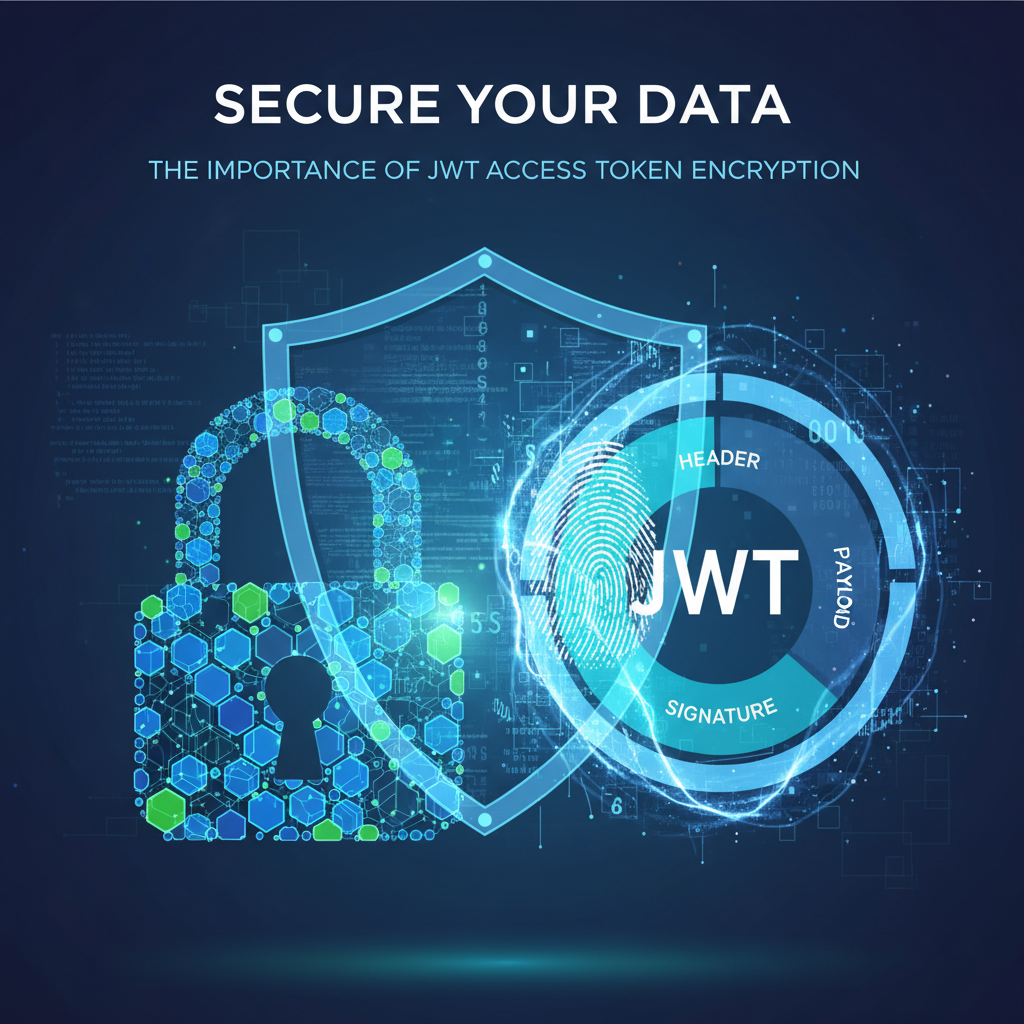
A JWT is essentially a compact, URL-safe means of representing claims to be transferred between two parties. These claims are pieces of information regarding an entity (typically a user) and additional data. A JWT is composed of three parts, separated by dots, each base64url-encoded:
- Header: The header typically consists of two parts: the type of the token (JWT) and the signing algorithm being used (e.g., HMAC SHA256 or RSA). For example:
json { "alg": "HS256", "typ": "JWT" }This part determines how the token is signed and what type of token it is. - Payload: The payload contains the claims. Claims are statements about an entity (typically the user) and additional data. There are three types of claims:
- Registered claims: These are predefined claims that are not mandatory but recommended to provide a set of useful, interoperable claims. Examples include
iss(issuer),exp(expiration time),sub(subject),aud(audience),nbf(not before),iat(issued at), andjti(JWT ID). - Public claims: These can be defined by users or organizations but should be registered in the IANA JSON Web Token Claims Registry or be collision-resistant.
- Private claims: These are custom claims created to share information between parties that agree on their use. They are neither registered nor public. For example, a payload might look like:
json { "sub": "user123", "name": "John Doe", "admin": true, "email": "john.doe@example.com", "tenant_id": "abc-corp" }This is where potentially sensitive user or application data resides.
- Registered claims: These are predefined claims that are not mandatory but recommended to provide a set of useful, interoperable claims. Examples include
- Signature: To create the signature, the encoded header, the encoded payload, a secret, and the algorithm specified in the header are taken. This signature is used to verify that the sender of the JWT is who it says it is and to ensure that the message hasn't been changed along the way. The signature is calculated as:
HMACSHA256(base64UrlEncode(header) + "." + base64UrlEncode(payload), secret)
Once these three parts are combined, you get a JWT that looks something like: eyJhbGciOiJIUzI1NiIsInR5cCI6IkpXVCJ9.eyJzdWIiOiIxMjM0NTY3ODkwIiwibmFtZSI6IkpvaG4gRG9lIiwiaWF0IjoxNTE2MjM5MDIyfQ.SflKxwRJSMeKKF2QT4fwpMeJf36POk6yJV_adQssw5c
How JWTs work in authentication and authorization flows is relatively straightforward. When a user successfully authenticates (e.g., logs in with username and password) with an Identity Provider (IdP) or authentication server, the server issues a JWT. This token, typically an access token, is then sent back to the client application. For subsequent requests to protected resources, the client includes this JWT in the Authorization header, usually prefixed with Bearer. The resource server (or an api gateway acting on its behalf) then receives the token, verifies its signature using the secret key (known only to the IdP and resource server), checks its expiration, and validates other claims. If valid, the server trusts the information in the payload and grants access to the requested resource without needing to query a session database or the IdP for every request.
The advantages of JWTs are significant: * Statelessness: The server does not need to store session information. Each request contains all the necessary information, which is highly beneficial for scalability in distributed systems. This reduces server load and simplifies horizontal scaling. * Scalability: Because no session state is maintained on the server, JWTs are inherently scalable. Any server can process any request from a client once the token is verified. * Interoperability: JWTs are an open standard (RFC 7519) and can be used across various programming languages and platforms, fostering seamless integration in diverse ecosystems. * Compactness: Due to their small size, JWTs can be easily transmitted through URL, POST parameter, or inside an HTTP header. * Decentralization: They can be generated by one server and verified by multiple others, enabling single sign-on (SSO) scenarios across different applications and microservices.
However, a crucial misconception about JWTs often leads to security vulnerabilities: JWTs are not inherently encrypted; they are signed. The signature protects the token's integrity and authenticity, ensuring that the claims have not been tampered with and that the token originates from a trusted issuer. It does not provide confidentiality. Anyone who intercepts a JWT can easily decode the base64url-encoded header and payload to read all the claims within it. While this might be acceptable for non-sensitive claims like a user ID or role, it becomes a severe security risk when the payload contains personally identifiable information (PII), confidential business data, or any information that should not be visible to unauthorized parties. This fundamental lack of confidentiality in standard, signed-only JWTs is precisely why access token encryption becomes an imperative. The api gateway, while capable of validating the signature, cannot magically hide the payload's contents if it's merely signed and not encrypted. This leads us directly to the inherent vulnerabilities.
3. The Inherent Vulnerabilities of Unencrypted JWT Access Tokens
While JWTs offer undeniable benefits in terms of statelessness and scalability for authentication and authorization, their default implementation, which relies solely on signing for integrity verification, introduces significant security vulnerabilities. The crucial point often missed is that a signed JWT (JWS) ensures that the token has not been tampered with and comes from a legitimate source, but it does not inherently protect the confidentiality of the data contained within its payload. This distinction is vital, as the "access token" in the context of OAuth 2.0 and OpenID Connect (OIDC) often carries more than just a simple user ID; it can encapsulate a rich set of claims necessary for fine-grained authorization decisions or to streamline application logic. When these claims are not encrypted, they become an open book for anyone who intercepts the token, leading to a host of potential security risks.
One of the most immediate and concerning vulnerabilities is the exposure of sensitive PII/data in the payload. Even if a JWT is securely signed, its header and payload are merely base64url-encoded, not encrypted. This means that any party gaining access to the token can easily decode these parts and read all the claims. Imagine an access token that, for efficiency or convenience, includes a user's full name, email address, social security number, account balance, or internal corporate identifiers. If such a token is intercepted, perhaps through a compromised client-side application, an insecure log, or even via legitimate debugging tools, all this sensitive data is instantly exposed. This directly contradicts privacy principles and regulatory requirements like GDPR, HIPAA, and CCPA, which mandate strict protection of personal and sensitive data. The api gateway, while validating the token's signature, will still process the clear-text payload, and if that payload contains sensitive information, the potential for unauthorized exposure exists at any point the token is handled.
Another significant risk involves eavesdropping or Man-in-the-Middle (MitM) attacks if the transport layer (HTTPS) is compromised or misconfigured. While the industry standard dictates that JWTs should always be transmitted over HTTPS (TLS/SSL), relying solely on transport-layer security can be a single point of failure. A misconfigured server, an outdated TLS version, a compromised certificate, or a sophisticated attacker capable of bypassing TLS can allow an adversary to intercept network traffic. If the intercepted JWT access token is unencrypted, the attacker gains immediate access to all claims within the payload. While end-to-end TLS is paramount, it is a perimeter defense. Once a token leaves the TLS tunnel (e.g., at an internal logging system, or in memory on a client), its confidentiality is no longer guaranteed by TLS alone. This highlights the "defense-in-depth" principle: even with robust transport security, an additional layer of confidentiality for the token's contents is prudent.
Logging vulnerabilities present a practical and pervasive threat. Many applications and api gateway solutions, for debugging, auditing, or operational monitoring purposes, log incoming requests and responses. If unencrypted JWTs are included in these logs, they become a permanent record of potentially sensitive information. These logs might be stored on disk, potentially without the same stringent access controls as application databases, or transmitted to third-party logging services. A breach of the logging system or an insider threat could then expose a vast repository of sensitive data contained within logged JWTs. Furthermore, developers or operations teams might inadvertently expose these logs, making the information accessible to unauthorized personnel. The same applies to developer tools or browser developer consoles where tokens might be visible during client-side debugging.
While proper token management (e.g., short expiry times, robust revocation mechanisms) can mitigate some risks, replay attacks can still pose a threat in specific scenarios, even with signed tokens. If an attacker intercepts a valid, unexpired access token, they can replay it to gain unauthorized access to resources, assuming the resource server doesn't have robust mechanisms to detect replays (e.g., by tracking jti claims and invalidating them after first use, which adds state back to a "stateless" system). While encryption doesn't prevent replay, it ensures that even if a token is replayed, the attacker cannot read or modify its internal claims, potentially limiting the scope of the attack if the token's claims were sensitive.
Side-channel attacks could also exploit the presence of sensitive, unencrypted claims. For instance, an attacker observing network traffic patterns might infer information based on the size or structure of certain claims, even without decrypting the payload. While less direct, this illustrates how any clear-text information can potentially be a leakage point.
Ultimately, the most critical vulnerability is the lack of confidentiality: anyone with access to an unencrypted JWT can read its claims. This is a fundamental design choice in JWS (JSON Web Signature) that prioritizes integrity and authenticity over secrecy. While appropriate for public claims or data that is not sensitive, it becomes a severe flaw when dealing with PII, protected health information (PHI), financial data, or proprietary business intelligence. The decision to include such information in an access token without encryption is a direct path to a data privacy incident.
Therefore, while an api gateway is adept at validating and enforcing policies around JWTs, and API Governance mandates careful handling of these tokens, the foundational step of encrypting the access token's payload is essential. It provides an indispensable layer of defense, ensuring that even if a token is intercepted or improperly logged, its sensitive contents remain protected, unintelligible to anyone without the appropriate decryption key. This shifts the security paradigm from merely trusting the issuer and the integrity of the token to ensuring the absolute confidentiality of its contents, aligning with a robust defense-in-depth strategy.
4. The Case for JWT Access Token Encryption: Elevating Data Confidentiality
Given the inherent vulnerabilities of unencrypted JWT access tokens, the case for encryption becomes not just compelling but essential, especially when dealing with sensitive data. The practice of encrypting JWTs is precisely what JSON Web Encryption (JWE) was designed for, offering a critical layer of confidentiality that complements the integrity and authenticity provided by JSON Web Signatures (JWS). Understanding JWE, how it works, and its profound benefits is crucial for building truly secure api ecosystems.
What is JWT Encryption (JWE)? Distinction from JWS
JSON Web Encryption (JWE) is a standard (RFC 7516) that defines a compact, URL-safe means of representing encrypted content. Unlike JWS, which uses digital signatures to ensure the integrity and authenticity of claims, JWE uses cryptographic encryption to ensure the confidentiality of the claims. This means that the contents of a JWE token are unintelligible to anyone who does not possess the correct decryption key, even if they manage to intercept the token.
A JWE token has a different structure compared to a JWS. It consists of five base64url-encoded parts, separated by dots:
- Header: Specifies the encryption algorithms used (e.g., key management algorithm, content encryption algorithm).
- Encrypted Key: This is the content encryption key (CEK) that has been encrypted using the key management algorithm specified in the header.
- Initialization Vector (IV): A random value used in conjunction with the content encryption algorithm to ensure that identical plaintexts produce different ciphertexts.
- Ciphertext: The actual encrypted payload (the original claims).
- Authentication Tag: Used to authenticate the ciphertext and any associated authenticated data, providing integrity protection.
The key distinction between JWS and JWE can be summarized simply: * JWS (JSON Web Signature): Provides integrity and authenticity. It tells you who issued the token and confirms that the token hasn't been tampered with. The payload is readable by anyone. * JWE (JSON Web Encryption): Provides confidentiality. It ensures that the payload is unreadable by unauthorized parties. It can be used in conjunction with JWS, meaning a token can be both signed and encrypted for maximum security (often referred to as a nested JWT, e.g., JWS encrypted by JWE).
How JWE Works: Symmetrical vs. Asymmetrical Encryption
The process of JWE involves several cryptographic steps, typically utilizing both symmetric and asymmetric encryption:
- Generate a Content Encryption Key (CEK): A random, symmetric key (CEK) is generated for encrypting the actual payload. This key is often discarded after the token's use or expiry, adhering to ephemeral key practices.
- Encrypt the Payload: The actual JWT claims (the original payload) are encrypted using the CEK and a symmetric content encryption algorithm (e.g., AES-GCM, AES-CBC) specified in the JWE header. This produces the Ciphertext. An Initialization Vector (IV) is also generated and included.
- Encrypt the CEK: The symmetric CEK itself is then encrypted. This is typically done using an asymmetric key pair (public key encryption) or a shared symmetric key (key wrapping).
- Asymmetric Encryption (e.g., RSA-OAEP): If using asymmetric encryption, the recipient's public key is used to encrypt the CEK. Only the corresponding private key can decrypt it. This is ideal when the issuer and recipient do not share a pre-agreed symmetric key. The encrypted CEK becomes the Encrypted Key part of the JWE.
- Symmetric Encryption (e.g., AES Key Wrap): If the issuer and recipient share a common symmetric key (a Key Encryption Key, KEK), this KEK can be used to encrypt the CEK. This is often more performant but requires careful key distribution.
- Generate Authentication Tag: An authentication tag is generated over the ciphertext and potentially other authenticated data (like the JWE header) to ensure integrity, even after encryption. This is typically part of authenticated encryption modes like GCM.
- Assemble JWE: The encoded header, encrypted CEK, IV, ciphertext, and authentication tag are combined to form the final JWE token.
When the recipient receives the JWE token: 1. They first decrypt the Encrypted Key (the CEK) using their private key (if asymmetric encryption was used) or the shared symmetric KEK. 2. Once the CEK is recovered, they use it, along with the IV, to decrypt the Ciphertext to retrieve the original JWT payload. 3. The Authentication Tag is verified during decryption to ensure the integrity of the encrypted data and that it hasn't been tampered with.
Benefits of Encryption: A Paradigm Shift in Confidentiality
The decision to encrypt JWT access tokens brings a multitude of security advantages, fundamentally elevating data confidentiality within your api architecture:
- Confidentiality: Protecting Sensitive Data within the Payload: This is the primary benefit. By encrypting the payload, you ensure that any sensitive claims (PII, financial data, internal identifiers, confidential business logic flags) remain unreadable to unauthorized entities, even if the token is intercepted. This is a critical defense against data leakage.
- Mitigation of Data Exposure Risks: Encryption drastically reduces the risk of data exposure through various vectors:
- Logging: If an encrypted token ends up in logs, the sensitive claims within it remain protected. While the token itself is visible, its contents are not.
- Client-Side Compromise: Should a client application (e.g., a browser extension, mobile app, or desktop application) be compromised, an attacker gaining access to the token cannot immediately decipher its sensitive claims without the decryption key, which ideally resides only on trusted servers.
- Man-in-the-Middle (MitM) beyond TLS: While TLS is crucial, encryption provides an additional layer of defense. If TLS is somehow bypassed or compromised at a specific point, the encrypted token still protects its contents.
- Debugging/Development Environments: Prevents accidental exposure of sensitive claims during development or debugging when tokens might be handled carelessly or displayed in plain text in tools.
- Enhanced Privacy: For users, knowing that their sensitive data, even when encapsulated in an access token, is encrypted provides a stronger sense of privacy. This aligns with modern user expectations and ethical data handling practices.
- Compliance Requirements (GDPR, HIPAA, CCPA, etc.): Many data protection regulations mandate the encryption of sensitive data both "at rest" and "in transit." While HTTPS addresses data in transit, JWT encryption addresses "data at rest" within the token itself, particularly when it's stored temporarily on a client or in logs. It provides a demonstrable measure for protecting PII, PHI, and other regulated data, significantly bolstering an organization's compliance posture. This is a strong argument for robust
API Governancepractices that include token encryption.
When is Encryption Most Critical?
While encryption is generally good practice, it becomes critically important in specific scenarios: * Highly Sensitive Claims: Any access token containing PII (e.g., email, name, address, ID numbers), financial data, health information, or proprietary business logic flags absolutely demands encryption. * Long-Lived Tokens: Although JWT access tokens should generally be short-lived, some architectural constraints might necessitate longer expiration times. The longer a token lives, the higher the risk of interception and exploitation, making encryption even more vital. * Public Client Applications: Applications that run in untrusted environments (e.g., single-page applications in a browser, mobile apps where the device itself could be compromised) are more susceptible to token leakage. Encrypting tokens sent to these clients adds a crucial layer of protection. * Multi-tenant Architectures: In systems where tokens might carry tenant-specific or cross-tenant sensitive information, encryption ensures data isolation and prevents one tenant's data from being exposed if another tenant's token is compromised. * Decentralized Authorization: When tokens are consumed by multiple independent microservices, each potentially with different security contexts, encryption ensures that sensitive data is only readable by those services specifically authorized and equipped with the decryption key.
In essence, JWT access token encryption transforms a merely signed token into a truly confidential one. It represents a significant step forward in securing the integrity of data within distributed systems, moving beyond basic authentication to a comprehensive strategy that embraces the confidentiality of every piece of sensitive information exchanged via api calls. This advanced security posture is a cornerstone of modern API Governance, demonstrating a commitment to protecting user data and maintaining the highest standards of digital trust.
APIPark is a high-performance AI gateway that allows you to securely access the most comprehensive LLM APIs globally on the APIPark platform, including OpenAI, Anthropic, Mistral, Llama2, Google Gemini, and more.Try APIPark now! 👇👇👇
5. Implementing JWT Access Token Encryption: Best Practices and Challenges
Implementing JWT access token encryption effectively requires careful consideration of cryptographic principles, key management strategies, performance implications, and interoperability. It's a complex endeavor that, while offering significant security benefits, also introduces new layers of operational overhead and potential pitfalls. Adhering to best practices and understanding the challenges upfront is crucial for a successful deployment.
Key Management: The Cornerstone of Encryption
The security of encrypted JWTs hinges entirely on the robust management of cryptographic keys. If keys are compromised, the encryption becomes worthless. This is arguably the most critical and challenging aspect of implementing JWE.
- Key Generation: Keys must be generated using cryptographically secure random number generators. They should be of sufficient length (e.g., 256-bit for AES) and designed for their specific purpose (e.g., content encryption keys, key encryption keys).
- Key Rotation: Keys should be regularly rotated (e.g., every few months, or more frequently for high-security environments). This limits the window of exposure if a key is compromised. When rotating, new keys are used for encryption, while old keys must remain available for decrypting tokens issued with them until those tokens expire.
- Key Storage: Keys should never be hardcoded or stored in plain text. Secure storage mechanisms are imperative:
- Hardware Security Modules (HSMs): For the highest level of security, HSMs provide a tamper-resistant environment for generating, storing, and using cryptographic keys. Keys never leave the HSM.
- Key Management Systems (KMS): Cloud providers (AWS KMS, Azure Key Vault, Google Cloud KMS) offer managed KMS solutions that securely store and manage cryptographic keys, allowing applications to request cryptographic operations without direct access to the keys.
- Secret Management Tools: Tools like HashiCorp Vault can securely store and dynamically provide secrets, including encryption keys, to applications.
- Symmetric vs. Asymmetric Encryption for JWE:
- Symmetric (Shared Secret) Keys: Simpler to implement in terms of key management if there are only two parties (issuer and recipient) who can securely share a secret key. Performance is generally faster. However, key distribution and rotation among many parties become complex and risky.
- Asymmetric (Public/Private Key Pairs): More complex to manage initially, as it involves public key distribution. The issuer encrypts with the recipient's public key, and the recipient decrypts with their private key. This scales better for multiple recipients, as each recipient only needs to manage their private key, and issuers only need to distribute their public key. The private key never leaves the recipient's control.
Algorithms: Choosing Appropriate Cryptographic Standards
Selecting the right algorithms for both key management and content encryption is vital. The JWT (JWA) specification provides a range of options, but not all are equally secure or performant.
- Key Management Algorithms (
algin JWE Header): These encrypt the Content Encryption Key (CEK).- RSA-OAEP, RSA-OAEP-256, RSA-OAEP-384, RSA-OAEP-512: Asymmetric encryption algorithms, suitable for encrypting the CEK with a recipient's public key. RSA-OAEP variants are recommended over older RSA-PKCS1_1_5 for better security.
- A128KW, A192KW, A256KW (AES Key Wrap): Symmetric key wrap algorithms, suitable when the issuer and recipient share a symmetric Key Encryption Key (KEK).
- dir (Direct Encryption): Not recommended for production as it means the CEK is directly used and is effectively the KEK. It bypasses the encryption of the CEK, simplifying the process but significantly increasing key management burden if the CEK is long-lived or shared directly.
- Content Encryption Algorithms (
encin JWE Header): These encrypt the actual payload.- A128CBC-HS256, A192CBC-HS384, A256CBC-HS512 (AES_CBC_HMAC_SHA2): Provide both confidentiality (AES-CBC) and integrity (HMAC-SHA2). These are older but still widely used.
- A128GCM, A192GCM, A256GCM (AES-GCM): Authenticated Encryption with Associated Data (AEAD) algorithms. These are generally preferred as they provide confidentiality and integrity in a single pass, often with better performance and simpler implementation. They are widely considered the gold standard for symmetric encryption in modern protocols.
It's crucial to use robust, well-vetted, and currently recommended algorithms to avoid known cryptographic weaknesses. Regular review of cryptographic standards and recommendations (e.g., NIST guidelines) is advised.
Integration Points: Where Encryption and Decryption Occur
The process of encrypting and decrypting JWTs needs to be carefully orchestrated across different components of your api ecosystem.
- Identity Provider (IdP) / Authorization Server: This is typically where the JWT access token is generated and, crucially, where it should be encrypted if sensitive claims are present. The IdP would generate the claims, sign them (JWS), then encrypt the entire signed JWT (JWE) using the intended recipient's public key or a shared symmetric key.
- Client (Application): The client receives the encrypted JWT. It should treat it as an opaque blob and simply transmit it in subsequent requests to resource servers. The client should not be expected to decrypt the token, as this would expose the decryption key to a potentially untrusted environment.
- Resource Server / Microservice: This is the ultimate recipient of the JWT. It receives the encrypted token, decrypts it using its private key or shared symmetric key, and then verifies the signature of the nested JWS (if the token was signed then encrypted). Once decrypted and verified, the resource server can safely read and use the claims for authorization.
- The Role of the
API Gateway: Anapi gatewaycan play a multifaceted role in handling encrypted tokens, depending on the desired architecture:- Transparent Forwarding: In the simplest case, the
api gatewaymight simply validate the token's presence, perform basic routing, and forward the opaque encrypted JWT to the backend resource server for decryption. The gateway might not even need to understand the token's contents. - Decryption and Policy Enforcement: A more advanced
api gatewaycould be configured to decrypt encrypted JWTs (using its own private key or shared symmetric key), validate the signature, extract claims, and then use these claims for sophisticated policy enforcement (e.g., fine-grained authorization, rate limiting based on user roles, routing based on tenant IDs). After processing, it might re-encrypt the token (or issue a new, simpler signed token) before forwarding it to internal microservices, thus providing a security boundary. This approach offloads decryption complexity from individual microservices and centralizes security logic, aligning perfectly withAPI Governanceobjectives. - Token Transformation: The
api gatewaycan also transform an encrypted JWT from an external issuer into a different, potentially simpler, internal token format for consumption by internal services, further decoupling security concerns.
- Transparent Forwarding: In the simplest case, the
For robust API Governance, an api gateway solution like APIPark can be invaluable. APIPark, as an open-source AI gateway and API management platform, offers powerful capabilities for managing the entire API lifecycle, including security policies, access control, and traffic management. Its ability to manage API services, handle authentication, and enforce security policies makes it an ideal component for integrating and orchestrating the handling of JWTs, whether signed or encrypted. By providing a centralized point for API lifecycle management, APIPark can help ensure that JWT access tokens, including their encryption and decryption, are handled consistently and securely across the entire API ecosystem, thereby enhancing overall security and operational efficiency. It enables teams to define and enforce granular access permissions and API resource access approval workflows, which are critical for robust security.
Performance Overhead: Balancing Security with Efficiency
Encryption and decryption operations introduce computational overhead. For high-throughput apis, this can impact latency and server CPU utilization.
- Asymmetric Encryption (RSA-OAEP) is computationally expensive. Decrypting the CEK using a private key is slower than symmetric decryption. This overhead is generally acceptable for one-time key decryption per token, but it's a consideration.
- Symmetric Encryption (AES-GCM) is much faster. The actual content encryption and decryption using the CEK are relatively efficient, especially with modern hardware acceleration.
- Trade-offs: Organizations must balance the level of security required against the performance impact. For extremely high-volume, low-latency APIs where sensitive data is minimal, encryption might be selectively applied or foregone in favor of strict TLS and very short-lived tokens. However, for APIs handling PII or financial data, the security imperative almost always outweighs minor performance costs. Performance benchmarks and load testing are essential to quantify the impact in your specific environment.
Interoperability: Ensuring All Parties Speak the Same Language
For JWT encryption to work, all parties involved (issuer, api gateway, resource servers) must agree on and correctly implement the same JWE algorithms and key management schemes.
- Standard Compliance: Strict adherence to RFC 7516 (JWE) and related specifications (JWA, JWK) is paramount. Using standard-compliant libraries is strongly recommended.
- Configuration Management: Clear documentation and consistent configuration across all services regarding encryption algorithms, key IDs (KIDs), and key sources are necessary to avoid decryption failures.
- Key Exchange: Secure key exchange and distribution mechanisms must be in place. This can be challenging, especially in multi-party or evolving environments.
Error Handling and Debugging: More Complex with Encryption
Debugging issues with encrypted JWTs can be significantly more challenging than with signed tokens.
- Opaque Tokens: Encrypted tokens are opaque. If a token fails to decrypt or verify, troubleshooting requires access to the decryption keys and careful logging (without exposing sensitive data).
- Detailed Logging: Implement detailed, but secure, logging for encryption/decryption processes, especially failure points. Error messages should be informative enough for developers but not leak sensitive information to attackers.
- Development Tools: Special tooling might be needed in development environments to decrypt and inspect tokens safely, separate from production systems.
In summary, implementing JWT access token encryption is a sophisticated task that demands a deep understanding of cryptography, meticulous key management, and a robust API Governance strategy. While the challenges are real, the benefits in terms of data confidentiality, privacy compliance, and overall security posture are immense. By thoughtfully addressing these considerations, organizations can leverage the power of JWE to protect their most sensitive data flowing through apis, building a resilient and trustworthy digital infrastructure.
Table: JWS vs. JWE and Their Use Cases
To further clarify the distinct roles and benefits of JSON Web Signatures (JWS) and JSON Web Encryption (JWE), the following table provides a comparative overview, illustrating why both can be necessary components of a comprehensive API Governance strategy.
| Feature | JWS (JSON Web Signature) | JWE (JSON Web Encryption) |
|---|---|---|
| Primary Goal | Integrity & Authenticity | Confidentiality |
| What it Protects | Ensures the token hasn't been tampered with; verifies issuer. | Ensures the token's content is unreadable to unauthorized parties. |
| Visibility of Payload | Readable (Base64url encoded, not encrypted) | Unreadable (Encrypted ciphertext) |
| Typical Use Case | Authentication (verifying user identity), Authorization (verifying claims). | Protecting sensitive data (PII, financial info) within the token payload. |
| Key Type for Operation | Symmetric (HMAC) or Asymmetric (RSA, ECDSA) signing keys. | Symmetric (AES-GCM) for content encryption, Asymmetric (RSA-OAEP) or Symmetric (AES Key Wrap) for key encryption. |
| Performance Impact | Minimal overhead (primarily hashing). | Higher overhead (full encryption/decryption, key management). |
| Structure | Header.Payload.Signature (3 parts) | Header.EncryptedKey.IV.Ciphertext.AuthTag (5 parts) |
| Compliance Benefit | Verifiable audit trail for token origin. | Adherence to data privacy regulations (GDPR, HIPAA, CCPA). |
| API Gateway Role | Validate signature, extract claims (if needed for policy). | Decrypt, validate signature, extract claims (if configured). |
| Example Scenario | An access token indicating user_id: 123 and role: guest (non-sensitive claims). |
An access token containing user_id: 123, email: user@example.com, account_balance: $5000, tenant_id: ABC-Corp (sensitive claims). |
| Can be Combined? | Yes, a JWS can be nested within a JWE payload for both integrity and confidentiality. | Yes, a JWE can encapsulate a JWS for a "signed and then encrypted" token. |
This table clearly illustrates that JWS and JWE address different aspects of security. While JWS confirms who is sending the message and that it hasn't changed, JWE ensures that only the intended recipient can read the message. For the highest level of security, particularly when an access token contains sensitive claims, combining both (signing the token first, then encrypting the signed token) is often the recommended approach. This ensures that the token's contents are confidential, and its origin and integrity can still be verified upon decryption.
6. The Broader Context: API Governance and Security Frameworks
Integrating JWT access token encryption is not an isolated technical task; it's a strategic move that must be firmly rooted within a comprehensive API Governance framework and broader organizational security policies. Effective API Governance ensures that all APIs, from their inception to their decommissioning, adhere to established standards, best practices, and security requirements. Encryption of sensitive access tokens serves as a vital component of this overarching strategy, reinforcing an organization's commitment to data protection and regulatory compliance.
API Governance encompasses the entire API lifecycle, from design and development to deployment, management, and retirement. Security must be an integral consideration at every stage, not an afterthought. This means defining clear security policies, standards, and guidelines that dictate how APIs are built, exposed, and consumed. For instance, a robust API Governance framework would mandate: * Secure by Design: APIs are designed with security in mind from day one, incorporating threat modeling and security architecture reviews. * Standardized Authentication and Authorization: Consistent use of secure protocols like OAuth 2.0 and OpenID Connect, with clear rules for token issuance, validation, and revocation. * Data Classification and Protection: A policy for classifying data sensitivity (e.g., public, internal, confidential, restricted) and dictating the appropriate protection mechanisms, including mandatory encryption for certain data types in tokens. * Regular Security Audits: Continuous monitoring, vulnerability scanning, and penetration testing of APIs. * Documentation and Training: Clear documentation of security policies and comprehensive training for developers and operations teams on secure API development practices.
Integrating token encryption into the Secure Development Lifecycle (SDLC) is crucial. This means: * Requirements Gathering: Identifying sensitive data that will be carried in access tokens and specifying encryption as a mandatory requirement. * Design Phase: Architects must choose appropriate JWE algorithms and key management strategies, considering the interoperability requirements between different services and the api gateway. * Development Phase: Developers must use secure, standard-compliant libraries for JWT creation, signing, and encryption. Code reviews should explicitly check for secure token handling. * Testing Phase: Security testing must include verifying that encrypted tokens are correctly generated and decrypted, and that sensitive data remains protected if tokens are intercepted. Performance testing should also account for the overhead introduced by encryption. * Deployment and Operations: Ensure secure key management systems are in place, api gateways are correctly configured, and logging practices do not inadvertently expose sensitive encrypted tokens.
Continuous monitoring and auditing of API security are indispensable. This involves: * Real-time Monitoring: Tracking API traffic, detecting anomalous behavior, and identifying potential attacks. * Log Analysis: Securely analyzing access logs for signs of intrusion or abuse, ensuring that sensitive data from tokens is not leaked in logs. * Compliance Audits: Regularly verifying adherence to internal security policies and external regulatory requirements.
This is where platforms like APIPark provide significant value. An API Gateway is a central enforcement point in an api ecosystem, making it an ideal candidate for facilitating comprehensive API Governance. APIPark, as an open-source AI gateway and API management platform, offers a robust solution for managing the entire API lifecycle, which naturally includes integrating and enforcing security policies. Its capabilities extend to: * Centralized API Management: APIPark allows for the centralized display and management of all API services, ensuring consistent security application across the board. This is crucial for maintaining unified API Governance. * Access Control and Permissions: APIPark enables the creation of multiple tenants (teams) with independent applications, data, user configurations, and security policies. It also supports subscription approval features, requiring callers to subscribe to an API and await administrator approval before invocation. This granular control is vital for preventing unauthorized API calls and potential data breaches, which is directly relevant to protecting tokens. * Security Policy Enforcement: As an API Gateway, APIPark can be configured to validate JWTs (including potentially decrypting them if acting as a central security enforcement point), apply rate limiting, perform input validation, and manage traffic forwarding and load balancing securely. * Detailed Call Logging and Analytics: APIPark provides comprehensive logging of every API call, which is essential for traceability and troubleshooting. This logging, when carefully configured, can ensure that while call details are captured, sensitive encrypted token contents are not inadvertently exposed. Its powerful data analysis capabilities help identify trends and potential issues, enabling proactive security maintenance.
By leveraging an API Gateway like APIPark, organizations can effectively implement a holistic API Governance strategy. It helps regulate API management processes, manage traffic forwarding, load balancing, and versioning of published APIs while enforcing critical security measures. This ensures that the technical implementation of JWT encryption is supported by a robust operational framework, enabling the secure and efficient deployment of APIs.
Finally, compliance and regulatory requirements increasingly drive security decisions. Regulations such as GDPR (General Data Protection Regulation) in Europe, HIPAA (Health Insurance Portability and Accountability Act) in the U.S., and CCPA (California Consumer Privacy Act) in California, all impose strict requirements on the protection of personal data. Encryption, particularly for data in transit and at rest (even temporarily within a token), is a key measure to demonstrate compliance. By encrypting sensitive claims within JWT access tokens, organizations can significantly strengthen their compliance posture, reducing the risk of hefty fines and legal ramifications. This demonstrates a proactive and responsible approach to data stewardship, fostering trust with users and stakeholders.
In conclusion, JWT access token encryption is more than a technical trick; it's a strategic imperative that fits snugly into a robust API Governance framework. It underscores a commitment to protecting sensitive data, adhering to regulatory mandates, and building a secure and trustworthy digital ecosystem. Through careful planning, the right tools like API Gateways, and continuous vigilance, organizations can harness the power of encryption to secure their APIs and the valuable data they carry.
7. Beyond Encryption: A Multi-Layered Security Approach
While JWT access token encryption is a powerful tool for safeguarding the confidentiality of sensitive claims, it is crucial to understand that it is not a silver bullet. Security, especially in complex api-driven environments, is inherently a multi-layered challenge that requires a holistic, defense-in-depth approach. Encryption addresses confidentiality, but it doesn't solve all security problems. A truly robust security posture for APIs necessitates a combination of multiple protective measures, each designed to mitigate different types of threats. Relying solely on encryption, without addressing other vulnerabilities, would leave significant gaps in your security framework.
Here are key complementary security measures that must be implemented alongside JWT encryption:
- Importance of HTTPS (TLS 1.2/1.3): This cannot be overstated. Even with encrypted JWTs, all
apicommunication must occur over HTTPS with strong TLS protocols (TLS 1.2 or 1.3). HTTPS encrypts the entire communication channel, protecting against eavesdropping and Man-in-the-Middle (MitM) attacks at the network layer. While JWT encryption protects the token's contents even if intercepted, HTTPS prevents the interception in the first place, or at least makes it significantly harder. It's the first and most fundamental layer of defense for data in transit. Misconfigurations, such as weak cipher suites, outdated TLS versions, or invalid certificates, must be rigorously avoided. - Token Revocation Mechanisms: JWTs, by design, are stateless. Once issued, a signed JWT is generally valid until its expiration time. This can be problematic if a token is compromised before it expires, as it can still be used for unauthorized access. Effective token revocation mechanisms are thus essential.
- Short Expiry Times: Issue JWT access tokens with very short lifespans (e.g., 5-15 minutes). This limits the window of opportunity for an attacker to exploit a compromised token.
- Refresh Tokens: Use longer-lived refresh tokens (which should be more securely stored, often HTTP-only, secure cookies or dedicated storage) to obtain new, short-lived access tokens. If a refresh token is compromised, it can be individually revoked on the authorization server.
- Blacklisting/Denylisting: Maintain a server-side list of revoked JWTs (identified by their
jticlaim). While this reintroduces some state, it's a necessary compromise for critical security scenarios. Theapi gatewayor resource servers would check this list for every incoming token.
- Rate Limiting and Throttling: Prevent abuse and brute-force attacks by limiting the number of requests a user or
apiclient can make within a given timeframe. This helps protect against denial-of-service (DoS) attacks, credential stuffing, and excessive data scraping. Anapi gatewayis an ideal place to enforce these policies, ensuring that malicious traffic is blocked before it reaches backend services. - Input Validation and Sanitization: All input received by an
api, whether in headers, query parameters, or request bodies, must be rigorously validated and sanitized. This prevents common vulnerabilities like SQL injection, cross-site scripting (XSS), command injection, and other forms of data manipulation or code execution attacks. Input validation ensures that data conforms to expected formats and types, while sanitization removes or neutralizes potentially malicious content. - Secure Coding Practices: Developers must adhere to secure coding principles and best practices throughout the SDLC. This includes:
- Least Privilege: Applications and services should only have the minimum necessary permissions to perform their functions.
- Error Handling: Implement robust error handling that does not leak sensitive information (e.g., stack traces, internal server details).
- Dependency Management: Regularly update and patch all third-party libraries and frameworks to address known vulnerabilities.
- Configuration Management: Securely configure all application components, removing default credentials and unnecessary features.
- Regular Security Audits and Penetration Testing: Proactive security assessments are critical for identifying vulnerabilities before malicious actors do.
- Vulnerability Assessments: Use automated tools to scan for common security flaws.
- Penetration Testing: Engage ethical hackers to simulate real-world attacks, attempting to exploit vulnerabilities in your APIs and systems.
- Code Reviews: Conduct thorough security-focused code reviews to catch potential issues early in the development cycle.
- The
API Gatewayas a Crucial Enforcement Point: As repeatedly highlighted, theapi gatewayplays a pivotal role in enforcing many of these security layers.- It can enforce HTTPS, validate JWTs (signatures and potentially decrypting encrypted tokens), manage token revocation checks, apply rate limits, and even perform basic input validation.
- By centralizing these security concerns at the
api gatewaylevel, individual microservices can focus on their core business logic, simplifying their development and reducing the burden of security implementation. This consistent enforcement across all APIs is a cornerstone of effectiveAPI Governance. - Platforms like APIPark, with their high performance and comprehensive API management features, are engineered to serve as such robust enforcement points, supporting complex security policies and integrating seamlessly into existing infrastructure. With capabilities like performance rivaling Nginx and powerful data analysis, APIPark ensures that these security layers are not only in place but also operate efficiently and effectively under load.
In conclusion, while encrypting JWT access tokens provides an essential layer of confidentiality, it must be viewed as one component within a broader, multi-layered security strategy. A truly secure api ecosystem combines robust transport security, meticulous token management, stringent input validation, proactive threat mitigation, and continuous security monitoring. This comprehensive approach, often orchestrated and enforced by a well-configured api gateway under strong API Governance principles, is the only way to genuinely protect your data against the diverse and evolving threats in the digital landscape.
Conclusion
In an era defined by ubiquitous connectivity and the relentless flow of digital information, securing the channels through which data travels is not merely an option but a fundamental prerequisite for trust and operational integrity. APIs have emerged as the indispensable conduits for this data exchange, forming the very backbone of modern applications and interconnected systems. JSON Web Tokens (JWTs), while providing a compact and scalable solution for authentication and authorization, present a critical vulnerability if their payload, especially when containing sensitive data, remains unencrypted. This extensive discussion has laid bare the inherent risks of such an oversight, emphasizing that a signed token, while authentic and tamper-proof, does not guarantee confidentiality.
We have meticulously explored how unencrypted JWT access tokens can expose personally identifiable information, confidential business data, and other sensitive claims to eavesdropping, logging vulnerabilities, and various forms of unauthorized access. This clear and present danger underscores the paramount importance of embracing JWT access token encryption as a non-negotiable security measure. By implementing JSON Web Encryption (JWE), organizations can introduce a vital layer of confidentiality, ensuring that even if a token is intercepted, its sensitive contents remain unintelligible to anyone without the appropriate decryption key. This elevates data protection from mere integrity to absolute secrecy, aligning with stringent privacy regulations and fostering greater user confidence.
The journey to secure data, however, extends beyond the technical implementation of encryption. It necessitates a holistic approach, where JWT encryption is seamlessly integrated into a comprehensive API Governance framework. This framework demands meticulous key management, the selection of robust cryptographic algorithms, and thoughtful integration across the entire api ecosystem—from identity providers to resource servers, and critically, at the api gateway. An api gateway, such as APIPark, serves as an indispensable enforcement point, capable of validating, decrypting, and applying sophisticated security policies to these tokens, thereby centralizing and streamlining security management across diverse API landscapes. By leveraging such platforms, organizations can ensure consistent application of security rules, efficient traffic management, and robust access control, all of which are pillars of strong API Governance.
Ultimately, true digital security is a multi-layered endeavor. While JWT encryption fortifies the confidentiality of token contents, it must be complemented by a suite of other essential security practices: strict adherence to HTTPS, robust token revocation mechanisms, intelligent rate limiting, rigorous input validation, secure coding practices, and continuous security audits. Each layer contributes to a resilient defense-in-depth strategy, collectively safeguarding against a diverse array of cyber threats.
In conclusion, the secure handling of data, particularly within the dynamic realm of API interactions, is an ongoing imperative. The proactive encryption of JWT access tokens represents a significant leap forward in protecting sensitive information, meeting compliance obligations, and upholding the integrity of digital trust. By thoughtfully adopting this practice as a core component of a comprehensive API Governance strategy, organizations can not only mitigate risks but also build a more secure, resilient, and trustworthy digital future. Proactive security, underpinned by robust encryption and strategic api gateway deployment, is not merely a technical choice but a strategic business mandate in the relentless pursuit of data protection.
5 FAQs
1. What is the fundamental difference between a signed JWT (JWS) and an encrypted JWT (JWE)? A signed JWT (JWS) ensures the token's integrity and authenticity, meaning it verifies who issued the token and confirms that its contents have not been tampered with since issuance. However, the payload of a JWS is merely base64url-encoded, making its contents readable by anyone who intercepts it. An encrypted JWT (JWE), on the other hand, provides confidentiality by encrypting the token's payload. This means that even if a JWE is intercepted, its sensitive claims remain unintelligible to unauthorized parties without the correct decryption key. For maximum security, particularly with sensitive data, a JWT can be both signed and then encrypted (nested JWT), ensuring both authenticity/integrity and confidentiality.
2. Why isn't transmitting JWTs over HTTPS (TLS/SSL) sufficient for security? While transmitting JWTs over HTTPS (TLS/SSL) is absolutely essential and provides a fundamental layer of security by encrypting the entire communication channel, it's not always sufficient on its own. HTTPS protects data "in transit" over the network. However, once a JWT is no longer in transit—for example, if it's logged by an application or an api gateway in plain text, stored temporarily on a client device, or exposed in a client-side debugging tool—its contents are no longer protected by TLS. If that JWT contains sensitive information and is not encrypted, this data can be exposed. JWT encryption adds a crucial "defense-in-depth" layer, protecting the confidentiality of the token's payload itself, irrespective of the transport layer's state.
3. What are the main challenges in implementing JWT access token encryption? Implementing JWT access token encryption introduces several challenges, primarily centered around cryptographic key management. This includes securely generating, storing (e.g., using HSMs or KMS), and rotating keys, which is a complex operational task. Deciding on appropriate encryption algorithms (both for key management and content encryption) that offer a balance between security and performance is another challenge. Furthermore, integrating encryption/decryption processes across various components (Identity Provider, api gateway, resource servers) while ensuring interoperability and handling performance overhead can be intricate. Debugging encrypted tokens also becomes more difficult as their contents are not readily inspectable.
4. How does an api gateway contribute to the security of encrypted JWTs and API Governance? An api gateway plays a critical role in the security of encrypted JWTs and API Governance. As a central enforcement point, it can be configured to: * Handle Decryption: Decrypt encrypted JWTs using its private key or a shared symmetric key, offloading this complexity from backend services. * Validate Signatures: After decryption, verify the signature of the nested signed JWT to ensure integrity and authenticity. * Enforce Policies: Use the extracted claims (from the decrypted token) to enforce fine-grained authorization policies, rate limiting, and other access controls. * Centralized Logging: Provide detailed, secure logging of API calls, ensuring sensitive token contents are not exposed. * API Governance: Facilitate overall API Governance by standardizing security policies, managing API lifecycle, and providing consistent security enforcement across all APIs, thereby reducing the attack surface and ensuring compliance.
5. When is JWT access token encryption most necessary, and when might it be optional? JWT access token encryption is most necessary when the token's payload contains any sensitive data that should not be visible to unauthorized parties. This includes Personally Identifiable Information (PII) like email addresses, names, or national ID numbers; financial information; protected health information (PHI); or internal business identifiers/flags. It's also highly recommended for long-lived tokens or tokens used in public client applications where the client environment might be less trusted. Encryption might be considered optional (though still good practice) for tokens that contain only non-sensitive, public claims, such as a generic user ID or role that conveys no private information. In such cases, relying solely on JWS (for integrity/authenticity) and strong HTTPS for transport security might suffice, especially if performance is a critical constraint. However, a cautious approach would always lean towards encryption for any data that could be deemed even mildly confidential.
🚀You can securely and efficiently call the OpenAI API on APIPark in just two steps:
Step 1: Deploy the APIPark AI gateway in 5 minutes.
APIPark is developed based on Golang, offering strong product performance and low development and maintenance costs. You can deploy APIPark with a single command line.
curl -sSO https://download.apipark.com/install/quick-start.sh; bash quick-start.sh

In my experience, you can see the successful deployment interface within 5 to 10 minutes. Then, you can log in to APIPark using your account.

Step 2: Call the OpenAI API.