SOAP Calls vs REST: Which API Is Right for You?


In the intricate tapestry of modern software development, Application Programming Interfaces, or APIs, serve as the crucial threads that weave disparate systems into a cohesive and functional whole. They are the silent workhorses enabling everything from the simplest mobile application fetching weather data to complex enterprise systems processing millions of financial transactions daily. Without robust and well-designed APIs, the interconnected digital world we inhabit would grind to a halt. The choice of which API architectural style to employ for a particular project is not merely a technical decision; it's a strategic one that profoundly impacts a system's scalability, performance, security, and maintainability. This choice often boils down to a fundamental dilemma: whether to opt for the established, rigidly structured world of SOAP (Simple Object Access Protocol) or embrace the flexible, resource-oriented paradigm of REST (Representational State Transfer).
This article aims to provide an exhaustive, in-depth comparison of these two dominant API styles, dissecting their underlying principles, strengths, weaknesses, and ideal use cases. We will explore the historical context that shaped their evolution, delve into their technical intricacies, and equip you with the knowledge necessary to make an informed decision tailored to your specific project requirements. Understanding the nuances between SOAP and REST, along with the critical role of supporting infrastructure like an api gateway, is paramount for any developer, architect, or business leader navigating the complex landscape of distributed systems. Our journey will illuminate the path toward selecting the API that truly aligns with your strategic objectives, ensuring your software solutions are not just functional, but also resilient, efficient, and future-proof.
Understanding APIs: The Digital Connectors
At its core, an API is a set of definitions and protocols that allows different software applications to communicate with each other. Think of it as a waiter in a restaurant: you, the client, make a request (order food) through the waiter, who then communicates with the kitchen (the server or service provider) to fulfill your order. You don't need to know how the kitchen prepares the food; you just need to know how to interact with the waiter to get what you want. Similarly, an API abstracts the underlying complexities of a system, exposing only the necessary functionalities and data points that other applications need to interact with it. This abstraction is incredibly powerful, fostering modularity, encouraging code reuse, and accelerating development cycles.
The widespread adoption of APIs has revolutionized how software is built and consumed. Businesses now rely heavily on third-party services for functionalities like payment processing, identity verification, mapping, and analytics, all facilitated through APIs. This ecosystem of interconnected services forms the backbone of the modern digital economy. For instance, when you use a mobile banking app, APIs are at work behind the scenes, securely connecting your device to the bank's servers to fetch account balances, process transactions, and display statements. When you book a flight, multiple APIs are often invoked, interacting with airline systems, payment gateways, and potentially even hotel or car rental services. The ability to integrate diverse systems seamlessly through a standardized interface is what makes APIs indispensable in today's interconnected world.
However, the proliferation of APIs also introduces challenges in terms of management, security, and scalability. As the number of api calls and integrations grows, so does the complexity of monitoring performance, enforcing security policies, and managing access. This is where an api gateway becomes an essential piece of infrastructure. An api gateway acts as a single entry point for all API calls, sitting between clients and the backend services. It can handle a multitude of concerns that are common to all APIs, such as authentication, authorization, rate limiting, traffic management, caching, and monitoring, offloading these responsibilities from individual backend services. This not only simplifies the development of each service but also provides a centralized control plane for API governance, enhancing security and optimizing performance across the entire API landscape. Whether you choose SOAP or REST, an api gateway often plays a pivotal role in ensuring the smooth and secure operation of your integrated systems, providing a unified access point and enforcing consistent policies.
Diving Deep into SOAP (Simple Object Access Protocol)
SOAP, or Simple Object Access Protocol, emerged in the late 1990s as a foundational technology for building distributed web services. Conceived primarily by Microsoft, it quickly gained traction in enterprise environments due to its robust features, standardization, and ability to handle complex, mission-critical operations. SOAP is fundamentally a protocol, meaning it defines a strict set of rules for structuring messages and dictating how interactions between services should occur. It is inherently XML-based, relying heavily on XML's structured nature to define message formats, types, and operations. This strict adherence to XML, while making it verbose, also provides a powerful framework for type safety and comprehensive description.
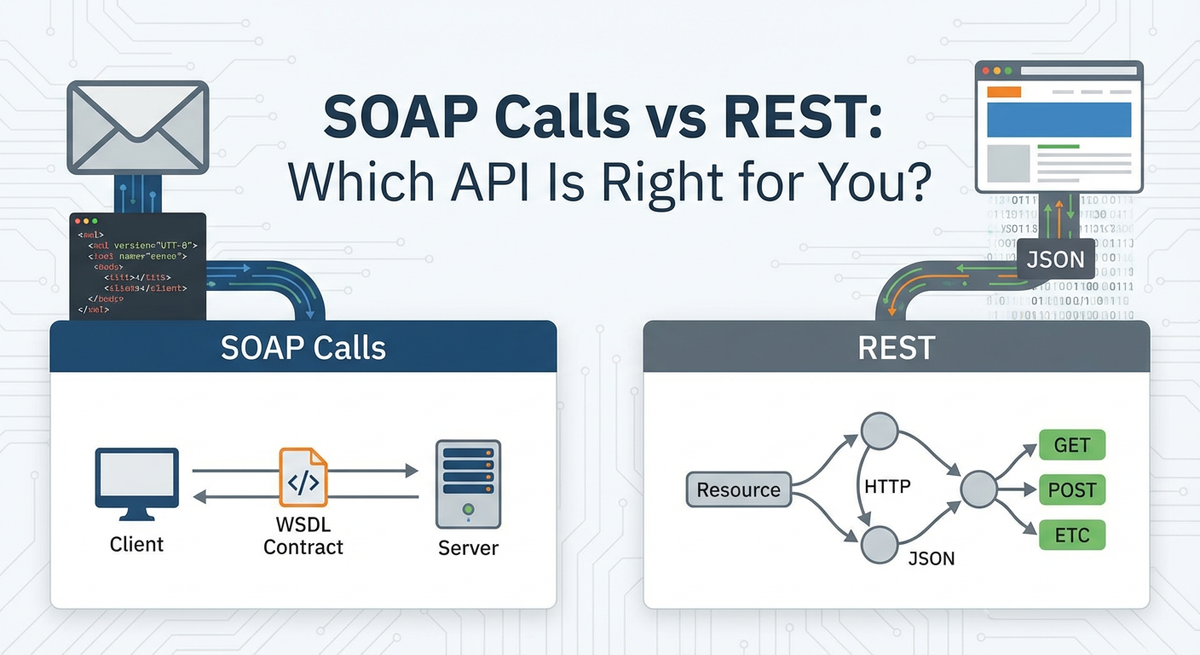
One of SOAP's defining characteristics is its independence from the underlying transport protocol. While it is most commonly transmitted over HTTP, SOAP messages can theoretically traverse any protocol, including SMTP (Simple Mail Transfer Protocol), TCP (Transmission Control Protocol), or even JMS (Java Message Service). This flexibility was particularly appealing in early enterprise integration scenarios where diverse communication channels were prevalent. The core of a SOAP message is its XML structure, which always adheres to a specific format comprising an Envelope, an optional Header, a mandatory Body, and an optional Fault element.
The Envelope acts as the root element of every SOAP message, defining the XML namespace for SOAP and encapsulating the entire message content. It's akin to the physical envelope that holds a letter, providing a wrapper for the actual message. Inside the Envelope, the Header element is used for transmitting application-specific information that is not part of the actual message payload but is crucial for processing, such as authentication credentials, transaction IDs, or routing information. Its optional nature allows for flexibility, but in many enterprise contexts, it's heavily utilized for cross-cutting concerns. The Body element is where the actual message payload resides, containing the request or response information specific to the web service operation being invoked. This is where the data, often represented as complex XML structures, is transferred. Finally, the Fault element is used to convey error information back to the client if an issue occurs during message processing. It provides structured error details, including a fault code, fault string, and optional detailed information, facilitating robust error handling.
Crucial to the SOAP ecosystem is WSDL (Web Services Description Language). WSDL is an XML-based language used to describe the functionality offered by a SOAP web service. It acts as a formal contract, providing a machine-readable specification that details what a service does, how to call it, what parameters it expects, and what kind of response it will return. A WSDL document specifies operations, message formats, transport protocols, and endpoint locations. This contract-first approach ensures that both the client and the server have a clear, unambiguous understanding of the service interface before any communication takes place. Tools can read WSDL files to automatically generate client-side stubs and server-side skeletons, significantly streamlining development and ensuring type safety. This strong typing and contract enforcement are major reasons why SOAP gained prominence in highly regulated industries and complex enterprise systems where reliability and predictability are paramount. The rigor of WSDL ensures that any deviation from the contract is immediately apparent, leading to more robust integrations.
Advantages of SOAP
SOAP's design principles lend themselves to several significant advantages, particularly in environments with stringent requirements:
- ACID Compliance: SOAP is exceptionally well-suited for transactional operations that demand ACID (Atomicity, Consistency, Isolation, Durability) properties. Its focus on formal contracts and comprehensive error handling ensures that distributed transactions either complete entirely or fail completely, maintaining data integrity. This makes it ideal for financial transactions, supply chain management, and other systems where data consistency is non-negotiable.
- Robust Security: The SOAP specification includes WS-Security, a comprehensive set of extensions that provide enterprise-level security features. These include mechanisms for message integrity, confidentiality, authentication, and authorization, supporting various security tokens (like SAML or X.509 certificates), encryption, and digital signatures. This sophisticated security framework often surpasses the baseline security offerings of simpler API styles, making it suitable for highly sensitive data and applications.
- Reliability: For scenarios requiring guaranteed message delivery and ordered messaging, SOAP offers WS-ReliableMessaging. This standard ensures that messages are delivered exactly once and in the correct sequence, even across unreliable network conditions. This level of reliability is critical for applications where dropped or out-of-order messages could have severe consequences, such as inter-system communication in healthcare or manufacturing.
- Extensibility: The WS-* standards landscape surrounding SOAP is vast and provides a rich ecosystem of extensions for almost any conceivable enterprise requirement. Beyond security and reliability, there are standards for transaction management (WS-AtomicTransaction), metadata exchange (WS-MetadataExchange), and more. This extensibility allows organizations to build highly customized and feature-rich services that adhere to specific industry standards.
- Strict Contracts: The WSDL contract-first approach provides an unparalleled level of formality and strictness. This clarity is invaluable in large, complex distributed systems involving multiple teams or external partners, where precise API definitions prevent ambiguity and integration errors. It makes long-term maintenance and versioning more manageable by providing a single source of truth for the service interface.
Disadvantages of SOAP
Despite its strengths, SOAP comes with notable drawbacks that have led to its declining popularity in many modern development contexts:
- Complexity: The most significant criticism of SOAP is its inherent complexity. The verbose XML message structure, combined with the extensive array of WS-* standards, creates a steep learning curve and often necessitates specialized tooling. Debugging SOAP messages can be challenging due to their sheer size and intricate nesting, making development and troubleshooting more time-consuming.
- Overhead: The XML-based nature of SOAP messages means they are considerably larger and more verbose compared to simpler data formats like JSON used in REST. This increased message size translates to higher bandwidth consumption and slower transmission times, particularly over networks with limited capacity. The parsing of these large XML payloads also adds processing overhead on both the client and server sides.
- Performance: Due to the larger message sizes and the computational cost of parsing complex XML, SOAP services generally exhibit lower performance compared to their RESTful counterparts, especially for high-volume, low-latency applications. While efficient XML parsers exist, the fundamental verbosity of the format introduces a performance penalty.
- Steep Learning Curve: Developers new to SOAP often find it daunting to grasp the various WS-* specifications and the nuances of WSDL. Unlike the relative simplicity of HTTP and JSON for REST, SOAP development often requires a deeper dive into XML schemas, namespaces, and specialized frameworks, leading to increased development time and resource allocation for training.
- Limited Browser Support: SOAP is not natively supported by web browsers. This means that direct calls from client-side JavaScript are not feasible without intermediaries, making it less suitable for modern web applications that rely heavily on asynchronous browser-server communication. This limitation pushed many developers towards more browser-friendly alternatives like REST.
Exploring REST (Representational State Transfer)
REST, or Representational State Transfer, is not a protocol but an architectural style, first articulated by Roy Fielding in his 2000 doctoral dissertation. It emerged as a simpler, more lightweight alternative to the heavier SOAP paradigm, specifically designed to leverage the existing infrastructure of the World Wide Web. REST is fundamentally resource-oriented, viewing everything accessible through the API as a "resource," identified by a unique URI (Uniform Resource Identifier). This resource-centric approach, combined with its reliance on standard HTTP methods, has made REST the dominant architectural style for web services, mobile application backends, and public APIs.
The core principles of REST are elegantly simple and directly inspired by how the web itself functions:
- Client-Server: A clear separation between the client and the server. The client is responsible for the user interface and user experience, while the server handles data storage, business logic, and API provisioning. This separation allows for independent evolution and scalability of both components.
- Stateless: Each request from client to server must contain all the information necessary to understand the request. The server should not store any client context between requests. This statelessness significantly improves scalability, as any server can handle any request, and no server needs to maintain session information, making it easier to distribute requests across a cluster.
- Cacheable: Responses from the server should explicitly or implicitly define themselves as cacheable or non-cacheable. This allows clients, proxies, and other intermediaries to cache responses, reducing server load and improving performance by minimizing redundant data transfers.
- Uniform Interface: This is perhaps the most critical constraint. It simplifies the overall system architecture by making every interaction with any resource appear similar. It's achieved through four sub-constraints:
- Resource Identification in Requests: Individual resources are identified in requests using URIs.
- Resource Manipulation Through Representations: Clients manipulate resources using representations (e.g., JSON or XML) of the resource's current state.
- Self-Descriptive Messages: Each message contains enough information to describe how to process the message.
- Hypermedia As The Engine Of Application State (HATEOAS): This principle suggests that clients should interact with a REST service solely through hypermedia links provided dynamically in the resource representations. A true RESTful API would guide the client through the application state purely by providing links, rather than requiring the client to have prior knowledge of the URI structure. While HATEOAS is a fundamental part of Fielding's original vision, many "RESTful" APIs in practice do not fully implement it, often opting for more rigid, pre-defined URI structures.
- Layered System: A client cannot tell whether it is connected directly to the end server or to an intermediary along the way. This allows for intermediate servers (like
api gateways, load balancers, and proxies) to be introduced or removed without affecting the client or the end server, enhancing scalability and security. - Code-On-Demand (Optional): Servers can temporarily extend or customize client functionality by transferring executable code (e.g., JavaScript applets). This constraint is optional and less commonly used than the others.
REST leverages standard HTTP methods (verbs) to perform operations on resources:
- GET: Retrieves a representation of a resource. It should be idempotent and safe, meaning it doesn't change the server's state.
- POST: Creates a new resource or submits data for processing. It is not idempotent.
- PUT: Updates an existing resource or creates a resource if it doesn't exist at a specific URI. It is idempotent.
- DELETE: Removes a resource. It is idempotent.
- PATCH: Partially updates a resource. It is not necessarily idempotent.
The flexibility of REST extends to data formats. While XML is supported, JSON (JavaScript Object Notation) has become the de facto standard due to its lightweight nature, human readability, and native compatibility with JavaScript. This has significantly reduced message sizes and parsing overhead compared to SOAP, contributing to better performance.
OpenAPI (formerly Swagger)
While REST eschews the strict WSDL contracts of SOAP for greater flexibility, the need for clear API documentation and discoverability remains paramount. This is where OpenAPI (formerly known as Swagger) comes into play. OpenAPI is a language-agnostic, human-readable specification for describing RESTful APIs. It provides a standardized way to define the API's endpoints, operations, parameters, authentication methods, and response models in a machine-readable JSON or YAML format.
An OpenAPI definition serves several critical purposes, much like WSDL does for SOAP, but with a focus on the REST architectural style:
- Documentation: It generates interactive documentation (e.g., Swagger UI) that developers can use to understand and experiment with the API without writing any code. This greatly improves developer experience and accelerates integration.
- Client Generation: Tools can automatically generate client SDKs (Software Development Kits) in various programming languages from an
OpenAPIdefinition, allowing clients to interact with the API with minimal effort. - Server Stub Generation: Similarly, server-side stubs or skeletons can be generated, providing a starting point for implementing the API logic.
- Testing:
OpenAPIdefinitions can be used to generate test cases and validate API responses, ensuring consistency and correctness. - API Gateway Integration: Many
api gatewaysolutions can ingestOpenAPIdefinitions to automatically configure routing, apply policies, and generate developer portals, further streamlining API management.
OpenAPI addresses one of the perceived weaknesses of REST (lack of a formal contract compared to WSDL) by providing a robust, widely adopted standard for defining and documenting APIs, bridging the gap between flexibility and clarity.
Advantages of REST
REST's design philosophy offers a compelling set of advantages that have contributed to its widespread adoption:
- Simplicity and Ease of Use: REST is significantly simpler to understand and implement compared to SOAP. It leverages existing HTTP infrastructure, meaning developers can use standard HTTP clients, browsers, and proxies without specialized tooling. The use of clear URIs and standard HTTP methods makes API interactions intuitive.
- Flexibility in Data Formats: While SOAP is strictly XML, REST supports various data formats, with JSON being the most popular choice. JSON's lightweight nature, readability, and native compatibility with JavaScript make it ideal for web and mobile applications, resulting in smaller payloads and faster processing.
- Scalability and Performance: The stateless nature of RESTful services dramatically improves scalability, as requests can be distributed across multiple servers without the need for session synchronization. Caching, another core REST principle, further enhances performance by reducing server load and network traffic for frequently accessed resources.
- Broad Adoption and Ecosystem: REST has become the de facto standard for web services, leading to a massive ecosystem of tools, libraries, and frameworks across almost every programming language. This extensive community support makes it easier to find resources, solve problems, and integrate with other services.
- Browser-Friendly: REST APIs can be directly invoked from web browsers using JavaScript (e.g., with
fetchorXMLHttpRequest), making them perfectly suited for single-page applications (SPAs) and dynamic web interfaces. - Microservices Architecture Fit: REST's lightweight nature, resource orientation, and statelessness make it an excellent choice for building microservices-based architectures, where independent services communicate over well-defined APIs.
Disadvantages of REST
Despite its many strengths, REST also has its limitations:
- Lack of Formal Contract (Historically): While
OpenAPIhas largely mitigated this, historically, REST APIs lacked a strict, machine-readable contract like WSDL. This could lead to ambiguity in API definitions and potential integration issues if documentation was incomplete or outdated. - Statelessness Challenges: While advantageous for scalability, strict statelessness can sometimes complicate scenarios requiring complex session management or multi-step operations. Client applications might need to manage more state on their end or send more data with each request.
- Security Concerns: REST relies on standard HTTP security mechanisms like TLS/SSL for transport encryption, and authentication/authorization schemes like OAuth2, API keys, or JWTs. While these are powerful, they require careful implementation and configuration. Unlike WS-Security in SOAP, REST doesn't have a single, universal, built-in security standard, giving developers more choices but also more responsibility.
- Over-fetching and Under-fetching: Clients often receive more data than they need (over-fetching) or need to make multiple requests to get all the required data (under-fetching). For example, fetching a user might also return their entire order history, even if only the user's name is needed. This can lead to inefficient network usage. Alternative API styles like GraphQL specifically address this issue.
- HATEOAS Adoption: The HATEOAS constraint, crucial for truly hypermedia-driven RESTful APIs, is often overlooked or poorly implemented in practice. Many APIs described as "RESTful" are merely HTTP-based APIs that don't fully leverage hypermedia controls, leading to more rigid client implementations.
APIPark is a high-performance AI gateway that allows you to securely access the most comprehensive LLM APIs globally on the APIPark platform, including OpenAI, Anthropic, Mistral, Llama2, Google Gemini, and more.Try APIPark now! 👇👇👇
Direct Comparison: SOAP vs. REST
The decision between SOAP and REST is rarely a matter of one being universally "better" than the other; rather, it's about choosing the right tool for the right job. Both architectural styles have their niches where they excel, and understanding these distinctions is key to making an informed decision.
At a high level, the fundamental difference lies in their nature: SOAP is a protocol with strict rules and a rich set of standards, while REST is an architectural style that leverages existing web standards (primarily HTTP). This distinction informs many of their contrasting characteristics. SOAP emphasizes formal contracts, strong typing, and enterprise-grade features for reliability and security, often at the cost of complexity and performance. REST prioritizes simplicity, flexibility, and scalability, embracing the lightweight nature of the web.
Let's summarize their core differences in a comparative table:
| Feature | SOAP (Simple Object Access Protocol) | REST (Representational State Transfer) |
|---|---|---|
| Nature | Protocol | Architectural Style |
| Messaging Format | XML-based, verbose | Flexible: primarily JSON, also XML, plain text, etc., typically lightweight |
| Transport | Protocol-agnostic (HTTP, SMTP, TCP, JMS, etc.) | Primarily HTTP/HTTPS |
| Contract/Description | WSDL (Web Services Description Language), strict, machine-readable | OpenAPI (formerly Swagger), less strict but widely adopted, machine-readable |
| Complexity | High: verbose, steep learning curve, requires specialized tooling | Low: simpler to understand and implement, uses standard HTTP |
| Performance | Lower: larger messages, parsing overhead | Higher: smaller messages, caching, statelessness |
| Statefulness | Can maintain state (e.g., WS-AtomicTransaction) | Stateless (each request independent) |
| Security | WS-Security, comprehensive, built-in standards (encryption, signatures) | Relies on HTTP/network security (TLS/SSL, OAuth2, JWTs, API Keys) |
| Reliability | WS-ReliableMessaging for guaranteed delivery | Relies on transport reliability (e.g., TCP), application-level retries |
| Tooling | Often requires specific IDE plugins and frameworks | Can use standard HTTP clients, browser developer tools |
| Browser Support | No direct browser support (requires proxies/gateways) | Native browser support (JavaScript fetch, XMLHttpRequest) |
| Use Cases | Enterprise applications, financial transactions, legacy systems, highly secure and reliable communication | Web services, mobile apps, public APIs, microservices, IoT |
When to Choose SOAP
- Enterprise-level Transactions: For scenarios demanding ACID properties, guaranteed delivery, and complex distributed transactions across multiple systems, SOAP's robustness and built-in standards (like WS-AtomicTransaction) make it a strong contender.
- Strict Security Requirements: Industries with high regulatory compliance (e.g., finance, healthcare, government) often benefit from the comprehensive security features offered by WS-Security, including message-level encryption and digital signatures.
- Formal Contracts and Interoperability: When dealing with multiple vendors or systems that require a very precise, machine-readable contract (WSDL) to ensure strict interoperability and predictable behavior.
- Legacy System Integration: If you are integrating with older enterprise systems that already expose SOAP-based services, adopting SOAP for new integrations might simplify the overall architecture.
- Asynchronous Communication and Messaging: For scenarios requiring asynchronous, queued, or reliable messaging paradigms, especially over protocols other than HTTP, SOAP's transport agnosticism can be an advantage when combined with specific WS-* standards.
When to Choose REST
- Web Services and Mobile Applications: For building public APIs, mobile application backends, and dynamic web applications (SPAs) where simplicity, performance, and broad client support (including browsers) are crucial.
- High Performance and Scalability: When dealing with high volumes of requests and needing to scale horizontally with ease, REST's statelessness and caching capabilities offer superior performance.
- Ease of Development and Integration: For development teams prioritizing rapid development, ease of learning, and quick integration, REST's lightweight nature and use of standard HTTP are highly beneficial.
- Microservices Architectures: REST is the prevailing choice for microservices due to its modularity, independent deployability, and efficient inter-service communication over HTTP.
- Public APIs and Third-Party Integrations: When building APIs that will be consumed by a wide range of developers and platforms, REST's simplicity and widespread adoption make it the natural choice.
- Data Flexibility: When your data structures might evolve frequently, REST's more flexible approach to data formats (like JSON) can be advantageous compared to the rigid schemas of SOAP/WSDL.
The Role of an API Gateway
Regardless of whether you choose SOAP or REST, the role of an api gateway in modern API management cannot be overstated. An api gateway acts as a traffic cop and a bouncer for your APIs, providing a single, centralized point of entry for all external requests. It decouples clients from the specific implementations of your backend services, abstracting away the complexity of your microservices architecture or diverse SOAP endpoints.
An api gateway offers a multitude of critical functionalities:
- Traffic Management: It handles request routing, load balancing, and traffic shaping, ensuring that requests are directed to the appropriate backend service efficiently and that your services can handle varying loads.
- Security: This is a paramount function. Gateways enforce authentication and authorization policies, validate API keys, manage OAuth2 flows, and can even inspect messages for threats. They act as the first line of defense, protecting your backend services from malicious attacks.
- Rate Limiting and Throttling: To prevent abuse and ensure fair usage, gateways can limit the number of requests a client can make within a specified timeframe.
- Monitoring and Analytics: Gateways provide centralized logging, metrics, and analytics for all API calls, offering deep insights into API usage, performance, and potential issues. This data is invaluable for troubleshooting, capacity planning, and business intelligence.
- Caching: By caching responses for frequently requested data, gateways can significantly reduce latency and backend load.
- Protocol Translation: Some advanced gateways can even perform protocol translation, allowing clients to interact with, say, a SOAP service using a REST-like interface.
- Version Management: They facilitate API versioning, allowing different client versions to access different backend service versions seamlessly.
- Developer Portal: Many gateways integrate with developer portals, providing self-service access to API documentation (often generated from
OpenAPIdefinitions), allowing developers to discover, subscribe to, and test APIs.
In essence, an api gateway centralizes cross-cutting concerns, reduces boilerplate code in individual services, and provides a robust, scalable, and secure infrastructure for managing your entire API ecosystem, irrespective of the underlying architectural style.
The Evolving API Landscape and the Role of API Management
The API landscape is dynamic, constantly evolving with new technologies and architectural paradigms. While SOAP and REST remain the most prevalent, other styles like GraphQL and gRPC are gaining traction for specific use cases. GraphQL, for instance, addresses the over-fetching and under-fetching problems of REST by allowing clients to specify exactly what data they need, reducing network payload and multiple requests. gRPC, a high-performance, open-source RPC (Remote Procedure Call) framework, excels in inter-service communication within microservices architectures, leveraging HTTP/2 and Protocol Buffers for efficient binary serialization. The choice of API style is therefore not always a binary decision between SOAP and REST, but increasingly involves considering a broader spectrum of options.
What remains constant, however, is the critical importance of robust API management. As organizations become more reliant on APIs, both internal and external, the ability to effectively design, publish, secure, monitor, and scale these interfaces becomes paramount. An effective API management strategy goes beyond merely choosing an architectural style; it encompasses the entire lifecycle of an API, from its initial conception to its eventual deprecation. This includes comprehensive documentation, version control, access management, performance monitoring, and robust security policies. Without a structured approach to API management, even the most well-designed APIs can become a chaotic, unmanageable mess, leading to security vulnerabilities, performance bottlenecks, and frustrated developers.
In this complex landscape, tools that simplify API management are invaluable. For instance, platforms like ApiPark offer comprehensive solutions, acting as an open-source AI gateway and API management platform. APIPark is designed to help developers and enterprises manage, integrate, and deploy AI and REST services with ease. It stands as a testament to how modern api gateway solutions are adapting to new technological demands, making the consumption of complex services much simpler.
APIPark integrates with and manages a vast array of AI models, unifying their invocation format. This feature is particularly relevant as organizations increasingly incorporate AI capabilities into their applications. By standardizing the request data format across all AI models, APIPark ensures that changes in underlying AI models or prompts do not disrupt existing applications or microservices, thereby simplifying AI usage and significantly reducing maintenance costs. This unification provides immense value, abstracting away the inherent complexities of integrating diverse AI technologies.
Furthermore, APIPark provides an end-to-end API lifecycle management solution. It assists with everything from the initial design and publication of APIs to their invocation and eventual decommissioning. It helps regulate API management processes, manage traffic forwarding, load balancing, and versioning of published APIs. This level of control and insight, combined with powerful performance rivaling Nginx (achieving over 20,000 TPS with modest hardware), is critical whether you're dealing with traditional SOAP endpoints (even if converting them to RESTful interfaces at the gateway level) or modern RESTful services. Its ability to create new APIs by encapsulating AI models with custom prompts showcases its flexibility in serving diverse API needs, from traditional data exchange to advanced AI functionalities.
For RESTful services, OpenAPI plays a vital role in defining and documenting API contracts. APIPark's capabilities, by providing a centralized developer portal and managing API access, inherently support the ecosystem fostered by OpenAPI definitions. By standardizing API definitions, api gateway platforms like APIPark ensure clear contracts and foster efficient development, making it easier for different departments and teams to find and use the required API services within a shared platform.
Security is another cornerstone of API management, and APIPark addresses this with features like subscription approval for API access. This ensures that callers must subscribe to an API and await administrator approval before they can invoke it, preventing unauthorized API calls and potential data breaches. Coupled with detailed API call logging and powerful data analysis features that track long-term trends and performance changes, APIPark empowers businesses with the tools for preventive maintenance and robust security. These features are indispensable in an era where data breaches and system downtime can have catastrophic consequences. APIPark, as a comprehensive api gateway solution, exemplifies how robust API management platforms are essential for navigating the complexities of the modern digital infrastructure, offering both technical prowess and strategic value to enterprises.
Conclusion
The choice between SOAP and REST is a foundational decision with long-lasting implications for any software project. There is no universally "correct" answer, as each architectural style possesses distinct strengths and weaknesses that align with different project requirements and organizational contexts.
SOAP, with its emphasis on formal contracts (WSDL), comprehensive security (WS-Security), and robust reliability (WS-ReliableMessaging), remains a viable and often preferred choice for complex enterprise applications, particularly in highly regulated industries. Its strength lies in its ability to ensure data integrity, facilitate distributed transactions, and provide a rigid, standardized framework for inter-system communication. However, this comes at the cost of increased complexity, verbosity, and potentially lower performance compared to its more lightweight counterpart.
REST, on the other hand, has become the dominant architectural style for the modern web, mobile, and microservices ecosystems. Its simplicity, flexibility in data formats (especially JSON), superior performance, and native browser support make it ideal for public APIs, high-volume data exchange, and rapid application development. The advent of OpenAPI has significantly addressed REST's historical lack of a formal contract, providing robust documentation and tooling capabilities that streamline development and integration.
Ultimately, the decision hinges on a careful evaluation of several critical factors:
- Complexity vs. Simplicity: Do you prioritize rigid standards and enterprise features, or ease of development and flexibility?
- Data Format and Payload Size: Are verbose XML messages acceptable, or do you require lightweight data exchange (like JSON) for performance?
- Security and Reliability Needs: Does your application demand message-level security and guaranteed delivery, or are transport-level security (TLS/SSL) and application-level retries sufficient?
- Performance and Scalability: Is high throughput and horizontal scalability a paramount concern?
- Learning Curve and Tooling: Does your team have the expertise and access to specialized tools for SOAP, or would they benefit from REST's reliance on standard web technologies?
- Existing Infrastructure and Integrations: Are you integrating with legacy systems that already use SOAP, or building new, greenfield applications?
In many contemporary environments, particularly those embracing microservices and cloud-native patterns, REST is often the default choice due to its agility and scalability. However, for specific domains requiring unparalleled transactional integrity or advanced security features, SOAP continues to demonstrate its enduring value. Moreover, the presence of an api gateway is crucial for managing the entire API ecosystem, abstracting complexities, enhancing security, and optimizing performance, regardless of the underlying API style.
By thoroughly understanding the principles, advantages, and disadvantages of both SOAP and REST, and considering the strategic importance of API management tools, developers and architects can confidently select the API style that best serves their project's unique demands, ensuring a robust, efficient, and future-proof digital infrastructure.
Frequently Asked Questions (FAQs)
1. What is the primary difference between SOAP and REST?
The primary difference lies in their nature: SOAP (Simple Object Access Protocol) is a protocol with a strict, XML-based message format and a defined set of standards (WS- specifications) for everything from security to reliability. REST (Representational State Transfer) is an architectural style* that leverages existing web standards, primarily HTTP, and focuses on resource-oriented interactions with flexible data formats (most commonly JSON). SOAP is heavier, more complex, and protocol-agnostic, while REST is lightweight, simpler, and HTTP-centric.
2. When should I definitively choose SOAP over REST?
You should consider choosing SOAP when your project requires: * Strict Security: If you need message-level security, encryption, and digital signatures as defined by WS-Security, often mandated by regulatory compliance (e.g., finance, healthcare). * Guaranteed Message Delivery and Transactions: For mission-critical operations demanding ACID properties and reliable messaging, especially across unreliable networks (e.g., using WS-ReliableMessaging and WS-AtomicTransaction). * Formal Contracts: When precise, machine-readable contracts (WSDL) are essential for complex enterprise integrations involving multiple vendors or systems, preventing ambiguity. * Protocol Agnosticism: If your services need to communicate over protocols other than HTTP (e.g., SMTP, JMS), SOAP's transport independence can be an advantage.
3. Can REST APIs be as secure as SOAP APIs?
Yes, REST APIs can be made highly secure, often to enterprise standards, but the approach differs. While SOAP has built-in, comprehensive security standards (WS-Security), REST relies on leveraging existing web security mechanisms. This includes using TLS/SSL (HTTPS) for transport encryption, and robust authentication/authorization schemes like OAuth2, JSON Web Tokens (JWTs), or API keys. The security of a REST API largely depends on the correct implementation and configuration of these widely accepted standards, often managed and enforced by an api gateway.
4. What role does an api gateway play in managing both SOAP and REST APIs?
An api gateway acts as a unified entry point for all API traffic, sitting between clients and backend services. For both SOAP and REST APIs, it provides critical functionalities such as: * Centralized Security: Enforcing authentication, authorization, and threat protection. * Traffic Management: Routing requests, load balancing, and rate limiting. * Monitoring and Analytics: Providing insights into API usage and performance. * Abstraction and Decoupling: Hiding backend complexity and allowing independent evolution of services. * Developer Portals: Offering documentation and self-service API access. For diverse architectures, some advanced gateways can even perform protocol translation, allowing REST clients to interact with SOAP backends, thus simplifying integration and providing a consistent interface.
5. Is OpenAPI relevant to SOAP services?
No, OpenAPI (formerly Swagger) is specifically designed for describing RESTful APIs. Its structure and elements are tailored to the principles of REST, defining resources, HTTP methods, parameters, and responses. For SOAP services, the equivalent formal description language is WSDL (Web Services Description Language). While both serve to provide a machine-readable contract for an API, they are fundamentally different specifications designed for different architectural styles.
🚀You can securely and efficiently call the OpenAI API on APIPark in just two steps:
Step 1: Deploy the APIPark AI gateway in 5 minutes.
APIPark is developed based on Golang, offering strong product performance and low development and maintenance costs. You can deploy APIPark with a single command line.
curl -sSO https://download.apipark.com/install/quick-start.sh; bash quick-start.sh

In my experience, you can see the successful deployment interface within 5 to 10 minutes. Then, you can log in to APIPark using your account.

Step 2: Call the OpenAI API.