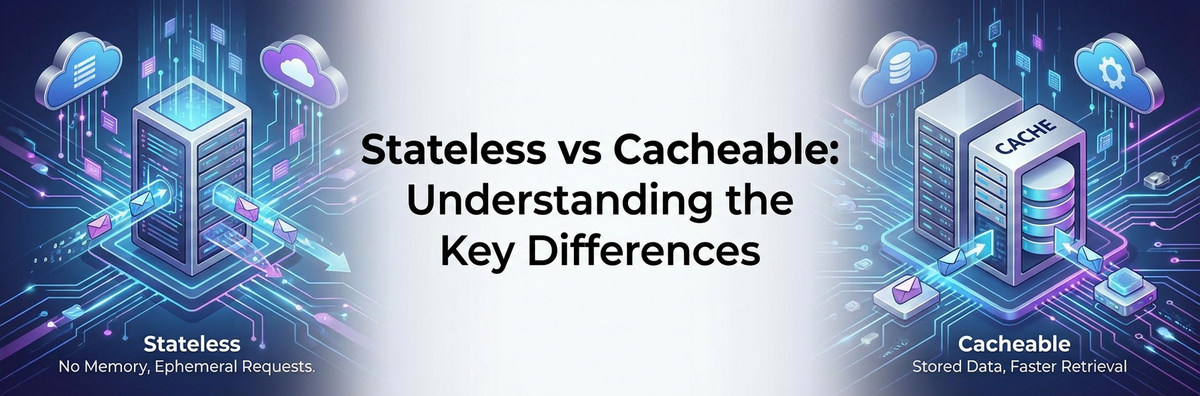
Stateless vs Cacheable: Understanding the Key Differences


In the intricate landscape of modern software architecture, particularly when dealing with distributed systems and web services, two fundamental concepts often emerge as pillars of design: "statelessness" and "cacheability." While seemingly distinct, or even at times, in subtle opposition, a deep understanding of their individual principles, their profound interplay, and their combined impact is critical for building scalable, resilient, and high-performance applications. This article delves into the core distinctions, the synergistic relationship, and the practical implications of designing systems that effectively embrace both statelessness and cacheability, especially within the context of robust API development and efficient API gateway implementations.
The proliferation of microservices, cloud computing, and mobile applications has fundamentally reshaped how we conceive and construct software. Today's applications are expected to handle massive concurrent user loads, operate with minimal latency across geographical distances, and remain fault-tolerant in the face of unpredictable failures. It is within this demanding environment that statelessness and cacheability transition from mere academic concepts to indispensable architectural imperatives. Grasping how an api interacts with its environment, how data flows through a sophisticated api gateway, and how optimizations can be applied at various layers, all hinge upon a clear comprehension of these two foundational principles.
We will explore the definitive characteristics of each, the compelling advantages they confer, the inherent challenges they pose, and the strategic design patterns that allow developers to harness their full potential. Furthermore, we will examine how these concepts manifest in real-world scenarios, influencing everything from database interactions to user experience, and how a well-chosen gateway can be the linchpin in orchestrating these complex dynamics. By the end of this extensive exploration, readers will possess a nuanced understanding that extends beyond simple definitions, enabling them to make informed architectural decisions that lead to more robust, efficient, and maintainable systems.
The Essence of Statelessness: A Foundation for Scalability and Resilience
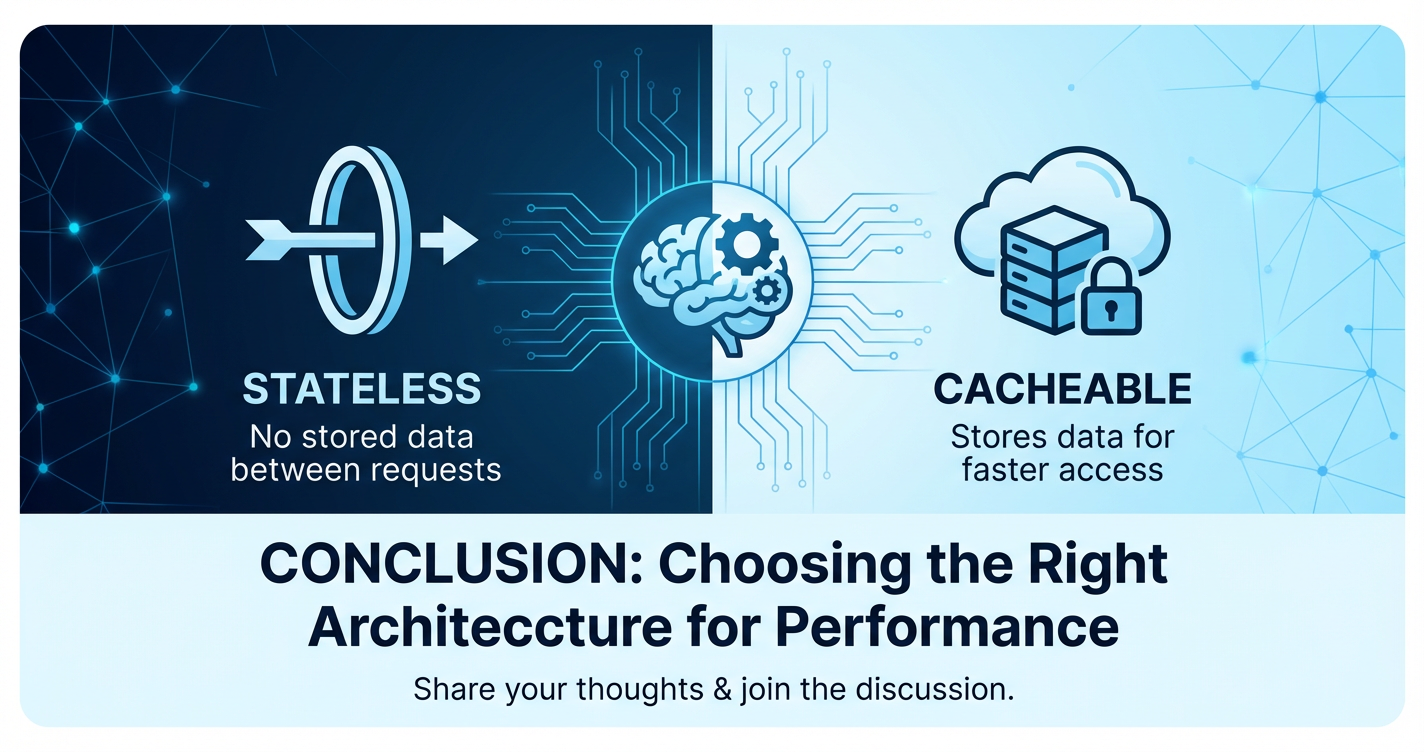
At its heart, a stateless system is one that treats each request as an independent transaction, completely unrelated to any previous request. The server processing the request holds no memory of past interactions with the client. Consequently, every request from a client to the server must contain all the information necessary for the server to fulfill that request. The server does not store any client-specific session data between requests. This fundamental design choice carries profound implications for the architecture, performance, and resilience of any system built upon it.
Defining Statelessness: No Memory, Pure Processing
Imagine a customer service representative who, upon receiving a call, has no recollection of your previous calls or interactions. Each time you call, you must provide all your details and context from scratch. This analogy, while perhaps frustrating in a human context, perfectly encapsulates the operational model of a stateless server. When a client sends a request—be it an HTTP GET, POST, PUT, or DELETE—the server receives it, processes it based solely on the information contained within that request, and then sends back a response. Once the response is sent, the server effectively "forgets" about that particular interaction. There is no persistent connection, no server-side session object, and no stored context linked to that specific client beyond the duration of the single request-response cycle.
This paradigm ensures that the server's state does not become a bottleneck or a point of failure. If a server instance crashes or restarts, it doesn't lose any client-specific data, because it wasn't holding any to begin with. The next request from that client can simply be routed to another available server instance without any disruption in service, assuming the client re-sends all necessary contextual information.
Why Statelessness Matters: The Pillars of Modern Architecture
The adoption of statelessness is not merely a philosophical preference; it is a pragmatic decision driven by several compelling advantages critical for modern distributed systems:
1. Unparalleled Scalability
This is perhaps the most significant benefit. In a stateless architecture, any server instance can handle any client request at any time. This property, known as "horizontal scalability," means that to handle increased load, you simply add more server instances to your pool. Load balancers can then distribute incoming requests evenly across all available servers. There's no complex session replication or sticky session management required, which often plagues stateful systems and introduces significant overhead and complexity. Each server is identical and interchangeable, making it trivial to scale up or down based on demand. For an api gateway, this means it can effortlessly distribute traffic to an ever-growing backend service pool without needing to manage session continuity itself.
2. Enhanced Resilience and Fault Tolerance
Since no single server holds critical client state, the failure of any individual server does not result in data loss or service interruption for ongoing client interactions. If a server fails, new requests can be immediately routed to healthy servers. This drastically improves the fault tolerance of the system. In a stateful system, a server crash could mean losing active user sessions, leading to a frustrating experience and requiring clients to re-authenticate or re-submit data. Statelessness simplifies recovery and maintenance, as servers can be taken offline, updated, or replaced without affecting the overall system availability.
3. Simplified Design and Development
Eliminating server-side state management significantly reduces complexity for developers. There's no need to worry about session management frameworks, state synchronization across multiple servers, or the intricacies of distributed locking. Each request can be processed in isolation, making the logic within each server simpler, easier to reason about, and less prone to bugs related to inconsistent state. This also streamlines testing, as individual request processing can be tested independently without requiring a complex setup of prior interactions. This simplicity extends to the api design itself, making each endpoint a self-contained operation.
4. Improved Resource Utilization
Stateful systems often require resources (memory, CPU cycles) to maintain session data even when the client is idle. In contrast, stateless servers only consume resources for the duration of a request. Once the request is processed, those resources are immediately freed up for other requests. This efficient resource utilization can lead to lower operational costs, especially in cloud environments where resources are billed based on usage.
Statelessness in Practice: The World of REST and HTTP
The most pervasive example of a stateless protocol is HTTP (Hypertext Transfer Protocol), the very foundation of the World Wide Web. Every HTTP request carries all the necessary information, including headers, body, and URL, to describe the intended action. The server processes this request and sends a response, then forgets the transaction. This inherent statelessness is why RESTful APIs, which strictly adhere to the principles of REST (Representational State Transfer), are designed to be stateless.
In a RESTful api, client applications send requests to retrieve or manipulate resources. Each request is complete in itself, often containing authentication tokens (e.g., JWTs), client identifiers, and all necessary parameters. The server does not maintain a "session" with the client. Instead, any necessary state information pertinent to the client's identity or authorization is either embedded within the request (e.g., a token) or stored on the client side, to be resent with each subsequent request. This design makes RESTful APIs incredibly robust and scalable, fitting perfectly into the microservices paradigm where services are loosely coupled and independently deployable.
An api gateway plays a crucial role in enabling and enforcing statelessness. It can receive requests, perform initial authentication and authorization checks (often using stateless tokens), route requests to the correct backend service, and then return the response. The gateway itself doesn't need to maintain state about client sessions; it simply acts as an intelligent proxy, forwarding self-contained requests.
Challenges and Considerations for Stateless Systems
While offering significant benefits, statelessness also presents certain design challenges that must be addressed:
1. Handling Authentication and Authorization
Since the server doesn't remember who the client is between requests, each request needs to carry credentials or a token that the server can validate. Common solutions include: * API Keys: A simple identifier the client includes. * JSON Web Tokens (JWTs): Cryptographically signed tokens that contain claims (user ID, roles, expiry) and are verified by the server. They are self-contained and don't require server-side storage, aligning perfectly with stateless principles. * OAuth 2.0: An authorization framework that issues access tokens for client applications to access protected resources on behalf of a user. The access token is then sent with each request.
The api gateway is an ideal place to handle these cross-cutting concerns. It can intercept requests, validate tokens, and then pass only necessary, verified information to the backend services, offloading this responsibility from individual microservices.
2. Managing Client-Side State
If the server cannot store state, then the client often needs to. This means the client application (web browser, mobile app) is responsible for managing its own session data, user preferences, and any other information needed across requests. This can involve storing data in local storage, cookies, or in-memory variables. Careful management is needed to ensure security (e.g., not storing sensitive information client-side unnecessarily) and to provide a seamless user experience.
3. Performance Overhead for Repeated Data
If the same data or context is needed for multiple requests, and it's always included in each request, this can lead to larger request sizes and increased network overhead. While tokens are usually small, sending larger contextual data repeatedly could impact performance. This is where caching becomes a crucial companion to statelessness.
4. Distributed Transactions and Eventual Consistency
For operations that span multiple services or require complex workflows, ensuring data consistency across a distributed stateless system can be challenging. Often, architects turn to eventual consistency models and event-driven architectures to manage state changes without tightly coupling services or introducing server-side session state. Saga patterns and message queues are common tools in this domain.
In summary, statelessness is a cornerstone of modern, scalable, and resilient architectures. By designing systems where servers do not retain memory of client interactions, we unlock significant advantages in terms of scalability, fault tolerance, and development simplicity. However, it necessitates careful consideration of how state (especially authentication and session-related information) is managed, typically by pushing that responsibility to the client or through self-contained tokens, often orchestrated effectively by an api gateway.
The Power of Cacheability: Accelerating Performance and Reducing Load
While statelessness is about forgetting, cacheability is about remembering selectively and intelligently. Cacheability refers to the ability to store a response to a request (or a computed result) so that subsequent requests for the same information can be served more quickly, without needing to re-execute the original computation or retrieve data from its primary source. This mechanism is a fundamental optimization technique for improving performance, reducing latency, and decreasing the load on backend systems.
Defining Cacheability: Intelligent Memory for Efficiency
A cache is essentially a temporary storage area for frequently accessed data or computational results. When a client requests a resource, the system first checks if a cached version of that resource is available and valid. If it is, the cached version is returned immediately, bypassing the potentially time-consuming process of fetching data from a database, performing complex calculations, or making network calls to other services. If the item is not in the cache (a "cache miss") or if the cached version is deemed stale, the system proceeds to retrieve or compute the data from its original source, serves it to the client, and then stores a copy in the cache for future use.
The goal of caching is to exploit the principle of locality of reference, which states that recently accessed data, and data near recently accessed data, are likely to be accessed again soon. By keeping this data "closer" to the point of request (whether that's the client, a proxy, or a service layer), the overall system response time significantly improves, and the load on the primary data source is reduced.
Why Cacheability Matters: The Engine of Performance
The strategic implementation of caching yields a multitude of benefits, directly impacting user experience, system stability, and operational costs:
1. Drastically Improved Performance and Reduced Latency
The most immediate and noticeable benefit of caching is the significant reduction in response times. By serving data from a fast, local cache instead of a distant database or a slow external service, requests can be fulfilled in milliseconds or even microseconds. This directly translates to a snappier user interface, better responsiveness for mobile applications, and overall higher user satisfaction. Lower latency also contributes to a smoother experience for any application relying on api calls.
2. Reduced Load on Backend Systems
Each cache hit means one less request reaching your database, application servers, or external APIs. This offloading effect is crucial for protecting backend systems from overload during peak traffic, reducing their CPU, memory, and I/O consumption. This can defer the need for costly infrastructure scaling and ensure the stability of core services, even under stress. For an api gateway, caching can prevent overwhelming backend services by serving frequently requested data directly.
3. Cost Savings
In cloud environments where you pay for computation, data transfer, and database operations, reducing the number of backend hits through caching can lead to substantial cost savings. Less CPU usage, fewer database reads, and reduced network egress can all contribute to a lower monthly bill. This economic benefit extends across the entire infrastructure, from content delivery networks (CDNs) to database-level caches.
4. Enhanced Reliability and Availability
If a backend service experiences a temporary outage or performance degradation, a robust caching layer can continue to serve stale, but still useful, data. This can provide a degree of graceful degradation, maintaining some level of service availability even when parts of the system are struggling. While not a substitute for proper fault tolerance, it adds an extra layer of resilience.
Types of Caching: A Layered Approach
Caching can be implemented at various layers of an application architecture, each with its own advantages and considerations:
1. Client-Side Caching (Browser/App Cache)
Browsers and client applications can cache responses, typically based on HTTP caching headers (e.g., Cache-Control, Expires, ETag, Last-Modified). When a client requests a resource it has previously cached, it can validate with the server if the resource has changed. If not, the client uses its local copy, avoiding a full network round trip. This is extremely effective for static assets like images, CSS, and JavaScript files, but also for dynamic api responses that don't change frequently.
2. Proxy Caching (Reverse Proxies, CDNs)
These caches sit between the client and the origin server. A Content Delivery Network (CDN) is a prime example, distributing content geographically closer to users. When a user requests content, the CDN edge server checks its cache; if available, it serves it. If not, it fetches from the origin, caches it, and then serves it. Reverse proxies (like Nginx, Varnish Cache) can also cache responses before they reach your application servers. An api gateway can also function as a reverse proxy with caching capabilities, serving as a critical optimization point.
3. Application/Server-Side Caching
This type of caching occurs within the application server itself or in a dedicated caching layer accessible by the application. * In-Memory Caches: Fast, but data is lost on application restart and not shared across instances (e.g., Guava Cache, ConcurrentHashMap). * Distributed Caches: Shared across multiple application instances, often external services like Redis, Memcached. These are crucial for microservices architectures where many instances might need access to the same cached data. * Database Caching: Databases themselves often have internal caching mechanisms for queries and data blocks. Object-Relational Mappers (ORMs) can also implement caching.
Cache Invalidation Strategies: The Challenge of Freshness
The primary challenge with caching is ensuring data freshness. Serving stale data can lead to incorrect information and a poor user experience. Effective cache invalidation strategies are paramount:
1. Time-To-Live (TTL)
The simplest strategy. Each cached item is given an expiry time. After this time, the item is considered stale and must be re-fetched. This is easy to implement but can lead to serving stale data for the duration of the TTL or unnecessary re-fetches if data changes infrequently.
2. ETag and Last-Modified (Conditional Requests)
HTTP headers like ETag (an identifier for a specific version of a resource) and Last-Modified (timestamp of last modification) allow clients to make conditional requests. If the client has a cached ETag or Last-Modified value, it sends it in a subsequent request (e.g., If-None-Match, If-Modified-Since). If the resource hasn't changed, the server responds with a 304 Not Modified, telling the client to use its cached version, saving bandwidth.
3. Explicit Invalidation (Cache Busting)
When the underlying data changes, the application explicitly notifies the cache to remove or update the affected items. This can be complex in distributed systems, requiring a messaging system or direct API calls to the cache. For example, if a product description changes, the system explicitly tells the api gateway's cache or a distributed cache like Redis to invalidate the entry for that product.
4. Cache-Aside Pattern
The application is responsible for managing the cache. Before fetching data from the database, the application checks the cache. If it's a miss, it fetches from the database, stores the data in the cache, and then returns it. When data is updated in the database, the application also explicitly updates or invalidates the corresponding entry in the cache.
5. Write-Through/Write-Back
Less common for web APIs, but often seen in databases or lower-level storage. * Write-Through: Data is written to both the cache and the primary storage simultaneously. Simple, but write latency is that of the slower storage. * Write-Back: Data is written to the cache, and then asynchronously written to the primary storage. Fast writes, but data loss risk if the cache fails before data is persisted.
Challenges and Considerations for Cacheable Systems
Despite its significant benefits, caching introduces its own set of complexities:
1. Cache Invalidation and Consistency
As discussed, ensuring caches are fresh is the hardest problem in computer science. Incorrect invalidation leads to stale data, while over-invalidation negates the benefits of caching. Achieving strong consistency across multiple distributed caches is especially challenging.
2. Cache Warm-up
When a cache is initially empty (e.g., after a restart), the first few requests for data will be cache misses, leading to slower responses until the cache is populated. "Cache warm-up" strategies involve proactively populating the cache with frequently accessed data during startup or off-peak hours.
3. Cache Misses and Performance Bottlenecks
A high cache miss rate means the cache isn't effectively serving its purpose. This could be due to poor key design, insufficient cache size, or data access patterns that aren't conducive to caching. Identifying and optimizing cache misses is crucial.
4. Security Implications
Sensitive data should be handled carefully within caches. Ensure that access controls are respected even for cached data and that cached sensitive information doesn't persist longer than necessary or fall into the wrong hands.
5. Debugging and Monitoring
Debugging issues related to stale cache entries can be difficult. Robust monitoring of cache hit rates, miss rates, and eviction policies is essential to ensure the cache is performing as expected. Tools that allow inspection and manual invalidation of cache entries are invaluable.
In conclusion, cacheability is a powerful technique for optimizing system performance, reducing backend load, and enhancing user experience. By intelligently storing and retrieving frequently accessed data, applications can achieve significant speedups and improve resilience. However, the complexities of cache invalidation, consistency, and management require careful design and implementation to fully harness its benefits. An api gateway can play a pivotal role here, offering centralized caching policies and mechanisms for its downstream APIs.
The Interplay: How Statelessness Enables Cacheability and Vice Versa
While statelessness and cacheability are distinct concepts with unique benefits, they are far from mutually exclusive. In fact, they are often complementary, forming a powerful synergy that underpins highly scalable and performant distributed systems. Understanding this interplay is key to designing robust api architectures.
Statelessness as a Prerequisite for Effective Caching
The very nature of statelessness makes it an ideal foundation for caching. Because each request is self-contained and does not rely on prior server-side session state, caching mechanisms can operate more simply and effectively:
- Uniform Request Identification: In a stateless system, a request for a specific resource, given the same parameters (URL, headers, query string, request body), should always yield the same response (assuming the underlying resource hasn't changed). This predictability makes it easy to generate unique cache keys for requests. If a server maintained session state, the response to
GET /items/1might vary depending on previous interactions, making it difficult to cache. - Simplified Cache Invalidation: When a resource changes, invalidating its cache entry is straightforward because its identity is unambiguous. There's no complex logic tied to user sessions that needs to be considered. If
GET /users/123is stateless, and user123's profile is updated, you simply invalidate the cache entry for/users/123. - Distribution of Cached Responses: Since any server can handle any request, any caching layer (proxy, CDN, or api gateway) can serve cached responses to any client. There's no need for "sticky" caching where a client must repeatedly hit the same cache instance to maintain context. This vastly improves the efficiency and scalability of caching across a distributed network.
Imagine a user accessing their profile via an api. If the user profile api is stateless, a GET request for /api/v1/users/profile with a valid authentication token will always return the current user's profile data. This response is highly cacheable. An api gateway or a CDN can cache this response. If the user's profile data doesn't change frequently, subsequent requests will hit the cache, drastically reducing the load on the backend authentication and user services. Without statelessness, if the backend needed to maintain session context to figure out "whose profile" it was, caching at the network edge would become significantly more complex, if not impossible.
Caching as an Enabler for Statelessness (Simulating State)
While stateless servers inherently "forget" everything between requests, caching can be used strategically to simulate state where needed, without compromising the core statelessness of the server itself. This is often seen with user sessions or preferences:
- Session Caching: For user sessions that are too complex or large to be embedded entirely in stateless tokens (like JWTs), the session data can be stored in a fast, distributed cache (e.g., Redis). A stateless server can then receive a session ID (perhaps in a cookie or a JWT claim), look up the full session data in the cache, process the request, and then update the cache if necessary. The server itself doesn't hold the session state; it delegates that to the external cache. This allows the application servers to remain stateless and horizontally scalable.
- User Preferences and Configuration: Frequently accessed user-specific data that doesn't change often can be cached. For example, a user's language preference or theme settings. A stateless application can retrieve these from a cache upon request without querying a database, making the request processing faster and lighter.
- Rate Limiting and Quotas: An api gateway might need to track how many requests a specific user or API key has made within a certain timeframe to enforce rate limits. While this feels stateful, the gateway often uses a fast, distributed cache (like Redis) to store and increment counters. The gateway itself doesn't maintain state for each user; it relies on the external cache. This maintains the gateway's stateless design while providing necessary operational control.
In these scenarios, the application server remains stateless – it doesn't store anything about the client's session in its own memory. All the "state" is externalized to a cache, which is treated as another service. This design allows the application servers to scale independently without complex state synchronization logic, while still providing a stateful experience for the end-user. The api gateway can facilitate this by orchestrating cache interactions before requests even reach the core application services.
Where They Diverge: The Trade-offs
While synergistic, it's also important to recognize where their focus diverges and the inherent trade-offs:
- Statelessness: Primarily concerned with server architecture and scalability. It's about designing individual components to be self-sufficient and interchangeable.
- Cacheability: Primarily concerned with performance optimization and reducing load. It's about data access patterns and minimizing redundant work.
A system can be stateless but not highly cacheable if its resources are constantly changing or unique to each request. Conversely, a system might attempt to implement caching even if its backend services are stateful, but this typically introduces more complexity in cache invalidation and consistency, potentially leading to stale data issues or the need for "sticky" caching.
The optimal design embraces both: stateless backend services that are inherently easier to scale and manage, coupled with intelligent caching layers (at the client, proxy, api gateway, and application levels) to accelerate data delivery and protect backend resources.
APIPark is a high-performance AI gateway that allows you to securely access the most comprehensive LLM APIs globally on the APIPark platform, including OpenAI, Anthropic, Mistral, Llama2, Google Gemini, and more.Try APIPark now! 👇👇👇
Architectural Implications and the Role of the API Gateway
The combined power of statelessness and cacheability profoundly influences the design of modern distributed architectures. These principles are particularly vital in microservices environments, where services are often independently developed, deployed, and scaled. The api gateway emerges as a critical component in orchestrating and maximizing the benefits of both.
Impact on Microservices Architectures
In a microservices world, individual services are typically designed to be stateless. This allows each service to be scaled horizontally by simply adding more instances behind a load balancer. If a service needs to maintain some form of "session" or context, it externalizes this state to a shared, persistent store (like a database) or a fast, distributed cache. This isolation of state from compute resources is a hallmark of resilient microservices.
Caching is then applied strategically: * Shared Data Caching: Data frequently accessed by multiple services (e.g., user profiles, product catalogs) can be stored in a shared distributed cache. * Service-Specific Caching: Individual microservices might have their own internal caches for data they frequently compute or retrieve. * Client/Edge Caching: Responses from various microservices, when aggregated and exposed through an api, can be cached at the client or edge (CDN, api gateway) to reduce latency and load on the entire microservices mesh.
The challenge here lies in managing dependencies and ensuring consistency across a potentially vast number of services and caches.
The Central Role of the API Gateway
The api gateway acts as the single entry point for all client requests into the backend system. This strategic position makes it an ideal place to implement cross-cutting concerns that benefit from both statelessness and cacheability.
1. Enforcing Statelessness at the Edge
- Authentication and Authorization: The api gateway can handle initial authentication (e.g., validating JWTs or API keys) and authorization checks. By doing this upfront, it prevents invalid or unauthorized requests from reaching backend services, and it doesn't require backend services to maintain session state for these checks. The gateway simply processes the self-contained token with each request.
- Request Transformation: The gateway can transform client requests into a format suitable for backend services, further abstracting the client from backend implementation details, without needing to maintain complex state for these transformations.
2. Centralized Caching and Optimization
- Response Caching: An api gateway is perfectly positioned to cache responses from backend services. If multiple clients request the same resource, the gateway can serve the cached response directly, dramatically reducing the load on backend microservices and improving response times. This is especially effective for read-heavy operations on data that doesn't change frequently.
- Rate Limiting: As mentioned earlier, the gateway can enforce rate limits by using an internal or external cache to track client request counts, preventing abuse and protecting backend services from traffic surges.
- Circuit Breaking and Load Balancing: While not directly caching, these features benefit from the gateway's ability to act as a stateless intermediary, distributing requests efficiently and isolating failing services without retaining server-side session information.
3. API Management and Lifecycle
A robust api gateway is more than just a proxy; it's a comprehensive API management platform. It helps govern the entire lifecycle of APIs, from design and publication to monitoring and decommissioning. This involves features like versioning, analytics, and developer portals, all of which benefit from a stateless and cacheable design.
Consider an API gateway like APIPark. APIPark is an open-source AI gateway and API management platform designed to manage, integrate, and deploy AI and REST services with ease. Its architecture inherently supports the principles of statelessness and cacheability, which are vital for handling the high throughput and diverse nature of AI model invocations and standard REST APIs. For instance, APIPark's ability to achieve over 20,000 TPS with an 8-core CPU and 8GB of memory underscores its highly optimized and scalable design, which is a direct benefit of embracing stateless request processing and efficient resource utilization, complemented by smart caching strategies. It offers features like unified API formats for AI invocation and prompt encapsulation into REST APIs, which are operations that can greatly benefit from caching strategies at the gateway level to speed up repeated AI inferences or common prompt invocations, without requiring individual AI models to manage user session state. By offering end-to-end API lifecycle management and detailed API call logging, APIPark provides the necessary tooling to monitor cache hit rates and ensure that both statelessness and cacheability are optimized for efficiency and security. Such a platform streamlines the process of integrating 100+ AI models, ensuring that underlying AI services can remain stateless, while the gateway handles the necessary caching and management overhead to provide a high-performance, unified developer experience.
Practical Use Cases and Examples
Let's illustrate with common application scenarios:
1. E-commerce Platform
- Product Catalog (Cacheable, Stateless API): When a user browses product listings, the API serving product details (
GET /products/{id}) is highly cacheable. The data changes infrequently, and the request for a product is stateless (doesn't depend on previous interactions). An api gateway or CDN can cache these responses, serving millions of requests without hitting the backend product service. - Shopping Cart (Stateful Client, Stateless Backend API with Session Cache): The shopping cart itself needs to maintain state. However, the backend shopping cart service can still be stateless. The client sends a
PUT /cart/{id}/itemsrequest with the user's cart ID and the item to add. The backend service retrieves the cart state from a distributed session cache (e.g., Redis), updates it, and writes it back to the cache. The application server itself remains stateless. The api gateway routes these requests but doesn't manage the cart state itself. - Order Placement (Stateless Transactional API): When a user places an order (
POST /orders), this is a transactional operation. The API is stateless, meaning each order request is a complete transaction. It's generally not cacheable for read access as each order is unique, but the process of placing an order is a distinct, self-contained interaction.
2. Content Management System (CMS) / News Website
- Article Content (Highly Cacheable, Stateless API): News articles, blog posts, or static pages (
GET /articles/{slug}) are excellent candidates for caching. They are retrieved frequently and change relatively rarely. A CDN and an api gateway can cache these for long periods, delivering content globally with low latency. - User Comments (Less Cacheable, Stateless API): User comments on an article (
GET /articles/{slug}/comments) might change more frequently as new comments are added. While the API itself is stateless, the cache TTL would be much shorter, or it might be frequently invalidated. Posting a new comment (POST /articles/{slug}/comments) is a unique, uncacheable operation. - User Profile Data (Moderately Cacheable, Stateless API): A user's profile (
GET /users/{id}/profile) can be cached, but with a moderate TTL, as users might update their information.
3. Real-time Data Feeds vs. Historical Data
- Real-time Stock Ticker (Not Cacheable, but Stateless Stream): A real-time stock ticker provides constantly updating data. This data is generally not cacheable for freshness, but the underlying api pushing updates might still be designed as a stateless stream (e.g., WebSocket), where each message is a complete data point.
- Historical Stock Prices (Highly Cacheable, Stateless API): Historical stock price data for a specific period (
GET /stocks/{symbol}/history?date={date}) is highly cacheable as it doesn't change.
Best Practices for Harmonizing Statelessness and Cacheability
To effectively leverage both concepts, consider the following best practices:
- Design Truly Stateless APIs: Ensure that your backend services and api endpoints do not rely on server-side session state. Pass all necessary context (authentication, user ID, request parameters) with each request.
- Use Self-Contained Tokens: For authentication and authorization, prefer tokens like JWTs that encapsulate user information and can be validated without database lookups on every request. The api gateway can handle this validation efficiently.
- Identify Cacheable Resources: Profile your API endpoints to determine which ones serve static or infrequently changing data. These are prime candidates for aggressive caching.
- Implement Robust Cache Invalidation: Choose an invalidation strategy appropriate for your data's freshness requirements. For highly critical data, explicit invalidation (cache-busting) might be necessary. For less critical data, TTLs are simpler.
- Layer Your Caches: Implement caching at multiple levels: client-side, CDN, api gateway, and application-level (in-memory or distributed caches). Each layer contributes to performance and load reduction.
- Monitor Cache Performance: Continuously monitor cache hit rates, miss rates, eviction rates, and latency. Use these metrics to fine-tune cache configurations and identify areas for improvement.
- Externalize Session State: If server-side session state is absolutely necessary, externalize it to a fast, distributed data store (like Redis or Memcached) rather than keeping it in application memory. This allows application servers to remain stateless and horizontally scalable.
- Leverage Your API Gateway: Utilize the capabilities of your api gateway for centralized caching, authentication, rate limiting, and other cross-cutting concerns. This offloads work from backend services and simplifies their design. A platform like APIPark, with its focus on high performance and comprehensive API management, is specifically built to help enterprises manage these aspects effectively, especially for complex AI and REST services.
- Consider Eventual Consistency: For systems requiring high availability and scalability, embrace eventual consistency models where appropriate, as they often complement stateless and cacheable designs better than strong consistency across widely distributed components.
By diligently adhering to these principles and practices, developers can construct sophisticated and resilient systems that gracefully handle the demands of modern web applications, delivering both high performance and exceptional scalability. The harmonious application of statelessness and cacheability, guided by a capable api gateway, forms the bedrock of next-generation digital infrastructure.
Comparison Table: Stateless vs. Cacheable
To provide a concise overview and highlight the distinctions, the following table summarizes the key attributes of statelessness and cacheability:
| Feature/Aspect | Stateless | Cacheable |
|---|---|---|
| Primary Goal | Scalability, Resilience, Simplicity | Performance, Reduced Latency, Reduced Backend Load |
| Server's Memory | No memory of previous requests or client state | Intelligent memory of previous responses/data |
| Request Dependency | Each request is independent and self-contained | Subsequent requests for the same data can reuse a stored result |
| State Management | State is managed by the client or externalized (e.g., tokens, distributed cache) | State (of data) is stored temporarily at an intermediate layer |
| Impact on Backend | Simplifies backend logic, enables horizontal scaling | Reduces hits on backend services/databases |
| Complexity Focus | Managing client-side state, token validation | Cache invalidation, consistency, cache coherence |
| Typical Protocols | HTTP, REST, often with JWTs | HTTP caching headers, CDN, Redis, Memcached |
| Benefits | Easier scaling, fault tolerance, simpler servers, efficient resource use | Faster response times, lower infrastructure costs, better UX, resilience |
| Drawbacks/Challenges | Larger request sizes (repeated data), client-side state management | Stale data, cache invalidation complexity, cache warm-up, consistency issues |
| Relationship with API Gateway | Gateway validates tokens, routes stateless requests, offloads authentication/authorization | Gateway serves cached responses, implements rate limiting, optimizes traffic |
| Ideal Use Cases | Microservices, REST APIs, webhooks, processing engines | Static content, product catalogs, user profiles, frequently accessed configuration data |
This table underscores that while distinct, these concepts often complement each other, with an api gateway playing a central role in managing both aspects effectively in a comprehensive API architecture.
Conclusion
The journey through the realms of statelessness and cacheability reveals them as more than just technical specifications; they are fundamental architectural philosophies that dictate the scalability, resilience, and performance of modern applications. Statelessness, by ensuring that each interaction is self-contained and free from server-side memory, unlocks unparalleled horizontal scalability and simplifies the fault tolerance of distributed systems. It's the foundational principle that allows microservices to thrive and cloud-native applications to achieve elasticity.
Conversely, cacheability, through its intelligent act of remembering frequently accessed data, stands as the paramount optimization technique. It drastically reduces latency, conserves precious backend resources, and elevates the user experience to new heights. Without effective caching, even the most scalable stateless system might buckle under the sheer volume of redundant requests.
The true power emerges when these two principles are harmoniously integrated. Stateless API designs pave the way for straightforward and highly effective caching strategies, as the predictability of requests simplifies cache key generation and invalidation. Conversely, caching can be strategically employed to externalize and manage "state" (such as user sessions or rate limits) in a way that allows application servers to remain truly stateless, thereby achieving the best of both worlds.
The API gateway stands as the crucial orchestrator in this intricate dance. Positioned at the entry point of your system, a robust gateway like APIPark can enforce stateless principles by handling authentication and authorization with self-contained tokens, offloading this burden from backend services. Simultaneously, it can implement sophisticated caching policies, serving as a high-performance memory layer that shields your core services from repetitive requests. By centralizing these cross-cutting concerns, the api gateway not only optimizes traffic flow and performance but also enhances security and simplifies the overall management of your api ecosystem, especially in complex environments involving AI and REST services.
In an era defined by distributed computing, massive data flows, and an insatiable demand for instant gratification, a deep understanding of statelessness and cacheability is no longer optional. It is essential for any architect, developer, or operations professional striving to build systems that are not only functional but also future-proof—capable of gracefully scaling to meet unforeseen demands and delivering an exceptional, performant experience to users worldwide. Embracing these principles, and leveraging powerful tools like API management platforms, is key to navigating the complexities of the digital frontier.
Frequently Asked Questions (FAQs)
1. What is the fundamental difference between a stateless and a stateful API?
The fundamental difference lies in how the server handles client interactions. A stateless API treats each request as entirely independent; the server does not store any information about previous client interactions or sessions. Every request must contain all necessary context (e.g., authentication tokens). In contrast, a stateful API remembers client information or session context from previous requests on the server side. This often leads to "sticky sessions" where a client's requests must be routed to the specific server instance holding its session data. Stateless APIs are generally more scalable and resilient, while stateful APIs can simplify client-side logic but introduce server-side complexities.
2. Can an API be both stateless and cacheable? If so, how do these concepts interact?
Yes, an API can and often should be both stateless and cacheable. They are highly complementary. Statelessness provides a clean, predictable foundation for caching because identical requests (with the same parameters and context) will always produce the same response if the underlying data hasn't changed. This makes it easy to generate cache keys and determine cache validity. Cacheability then enhances the performance of these stateless APIs by storing responses and serving them quickly, reducing the load on backend services. For example, a stateless REST endpoint for a product catalog is highly cacheable because the product data is stable, and each request for a specific product is self-contained.
3. What role does an API Gateway play in managing statelessness and cacheability?
An API gateway plays a crucial role as the central entry point for all API traffic. For statelessness, the gateway can enforce and manage authentication/authorization (e.g., validating JWTs) without requiring backend services to maintain session state. It ensures only valid, self-contained requests reach the backend. For cacheability, the gateway can implement centralized response caching, serving frequently requested data directly from its cache and significantly reducing the load on backend services and improving latency for clients. It can also manage rate limiting and enforce various policies, often using an external cache to store temporary state, thereby keeping the gateway itself stateless.
4. What are the main challenges when implementing caching, and how can they be mitigated?
The main challenges with caching revolve around cache invalidation (ensuring cached data is fresh and not stale) and consistency (making sure all users see the same up-to-date data, especially in distributed systems). Other challenges include cache warm-up (populating an empty cache) and managing cache misses. These can be mitigated by: * Strategic TTL (Time-To-Live): Setting appropriate expiry times for cached items based on data volatility. * Explicit Invalidation: Programmatically removing or updating cache entries when underlying data changes (e.g., publishing events to invalidate caches). * Conditional Requests (ETags/Last-Modified): Using HTTP headers to allow clients/proxies to efficiently validate cached resources with the server. * Layered Caching: Implementing caching at multiple levels (client, CDN, gateway, application) to maximize efficiency and resilience. * Monitoring: Closely tracking cache hit rates and miss rates to identify and resolve issues.
5. When might you choose to sacrifice some degree of statelessness or cacheability?
While generally beneficial, there are scenarios where pragmatism dictates a deviation. * For Statelessness: Highly interactive, real-time applications (like online gaming or collaborative editing) might find maintaining some server-side state beneficial for performance or simpler logic, though this often introduces scaling challenges. Stateful systems can also simplify complex multi-step workflows. However, in modern architectures, even these are often refactored to use externalized state (e.g., distributed caches or databases) to maintain overall server statelessness. * For Cacheability: Data that is highly dynamic, unique to each request, or extremely sensitive (e.g., one-time transaction tokens, personalized real-time feeds) should not be cached or should have an extremely short TTL. Sacrificing cacheability ensures data freshness and security for such critical information, prioritizing accuracy over performance. However, architects typically seek to cache anything that safely can be, even with short TTLs.
🚀You can securely and efficiently call the OpenAI API on APIPark in just two steps:
Step 1: Deploy the APIPark AI gateway in 5 minutes.
APIPark is developed based on Golang, offering strong product performance and low development and maintenance costs. You can deploy APIPark with a single command line.
curl -sSO https://download.apipark.com/install/quick-start.sh; bash quick-start.sh

In my experience, you can see the successful deployment interface within 5 to 10 minutes. Then, you can log in to APIPark using your account.

Step 2: Call the OpenAI API.