Stateless vs Cacheable: Understanding the Key Differences


In the rapidly evolving landscape of modern software architecture, where microservices, cloud computing, and distributed systems have become the norm, the principles guiding the design and interaction of services are more crucial than ever. Among these foundational principles, statelessness and cacheability stand out as cornerstones for building scalable, resilient, and high-performance applications. While seemingly distinct, or even at times appearing to be in opposition, these two concepts are often complementary, working in tandem to optimize the efficiency and responsiveness of an API. Understanding their individual characteristics, their respective advantages and disadvantages, and how they interact, is paramount for any developer, architect, or gateway administrator aiming to construct robust and efficient digital infrastructure.
This comprehensive exploration will delve deep into the definitions, implications, and practical applications of statelessness and cacheability. We will dissect their core tenets, examine the architectural decisions they influence, and illuminate how they manifest in the design of apis and the functionalities of an api gateway. By the end, readers will possess a nuanced understanding of how to leverage these principles effectively to build systems that not only meet current demands but are also poised for future growth and adaptation.
1. The Foundation of Statelessness: A Deep Dive into Principle and Practice
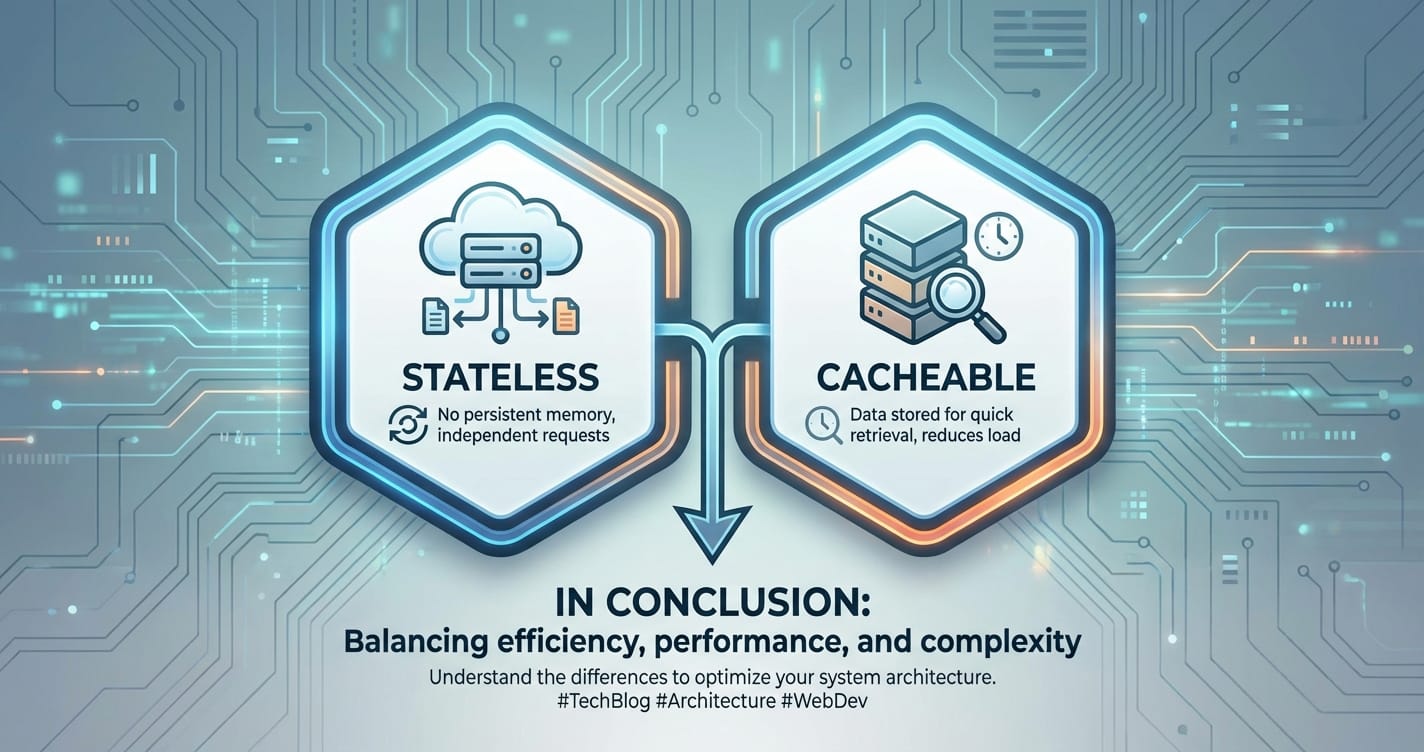
Statelessness is a fundamental design principle that dictates that a server should not store any information about the client's session between requests. Each request from a client to a server must contain all the information necessary for the server to fulfill that request, entirely independent of any previous requests. This means the server treats every request as if it were the very first one it has ever received from that client, processing it based solely on the data provided within the request itself.
1.1 Defining Statelessness: A Paradigm Shift in Server-Client Interaction
At its core, statelessness represents a significant departure from traditional stateful server architectures, where the server would maintain a "session" for each active client, storing specific data related to that client's ongoing interaction. Imagine an old-school telephone operator who remembered every detail of your previous call; a stateless server, by contrast, is like a fresh operator answering each new call, requiring you to repeat your entire request every time. This might sound inefficient at first glance, but it unlocks a multitude of powerful advantages in distributed systems.
In a stateless API design, when a client sends a request (e.g., an HTTP GET request to /users/123), the server receives this request, processes it, and sends back a response. The server does not store any memory of the client's "state" after the response is sent. If the client then sends another request (e.g., a POST request to /users/123/orders), this new request must again contain all the necessary information, such as authentication tokens, user identifiers, and the specific order details, without relying on the server having remembered anything from the previous /users/123 GET request.
This principle is most famously embodied in the Representational State Transfer (REST) architectural style, which emphasizes stateless communication as one of its primary constraints. RESTful apis typically use HTTP as their underlying protocol, and HTTP itself is inherently stateless. Each HTTP request (GET, POST, PUT, DELETE, etc.) is an independent transaction, carrying all necessary context within its headers, body, and URL. This context might include authentication credentials (e.g., JWTs in an Authorization header), specific request parameters, or resource representations.
Contrasting this with stateful protocols or architectures helps clarify the concept. For instance, the File Transfer Protocol (FTP) maintains state about the user's current directory and authentication across multiple commands. Similarly, early web applications often relied on server-side sessions, where after a user logged in, their session ID was stored on the server, and subsequent requests would use this ID to retrieve the user's state. While convenient in some localized scenarios, these stateful approaches introduce significant complexities when scaling applications horizontally or ensuring fault tolerance.
The elegance of statelessness lies in its simplicity for the server. The server doesn't need complex mechanisms to manage, store, or synchronize session data across multiple instances. This dramatically simplifies the server's internal logic and resource management, freeing it to focus solely on processing the current request based on the explicit information provided.
1.2 Advantages of Statelessness: Building Resilient and Scalable Systems
The adherence to statelessness yields a multitude of profound benefits that are particularly critical in today's distributed and cloud-native environments. These advantages are not merely theoretical; they translate directly into tangible improvements in system design, operational efficiency, and overall reliability.
- Exceptional Scalability: Perhaps the most compelling advantage of statelessness is the ease with which systems can scale horizontally. Since no server instance holds specific client session data, any available server can handle any incoming request. This means you can simply add more server instances behind a load balancer to accommodate increased traffic, without worrying about transferring session data or maintaining sticky sessions. The load balancer can distribute requests across servers in a round-robin fashion or based on server load, confident that any server can fully process the request independently. This flexibility is a cornerstone for applications experiencing variable or rapidly growing user bases.
- Enhanced Reliability and Fault Tolerance: In a stateful system, if a server hosting a client's session crashes, that client's session data is lost, often leading to a disrupted user experience or requiring the client to restart their interaction. With stateless
apis, a server crash does not result in the loss of critical session information because no such information is stored on the server. If one server goes down, subsequent requests from clients can simply be routed to another healthy server, with minimal or no interruption to the user experience. This inherent resilience makes stateless architectures significantly more robust against individual server failures, contributing to higher system uptime and availability. - Simplified Design and Development: Eliminating the need to manage server-side session state significantly reduces the complexity of server-side application logic. Developers do not have to contend with issues like session synchronization across multiple servers, session timeouts, or complex state transitions. This leads to cleaner, more modular codebases that are easier to develop, test, and maintain. The focus shifts from managing internal server state to processing individual requests, which simplifies the overall system design.
- Optimized Load Balancing: Statelessness greatly simplifies load balancing strategies. Since any server can handle any request, load balancers do not need to employ "sticky session" mechanisms, which attempt to route a client's requests to the same server that handled their initial request. This allows for more even distribution of traffic across all available server instances, maximizing resource utilization and preventing hot spots where certain servers become overloaded while others remain underutilized. The simplicity here contributes to better performance and more predictable system behavior.
- Improved Resource Efficiency: Without the burden of storing and managing session data for potentially thousands or millions of concurrent users, servers can allocate their memory and processing resources more efficiently to the actual task of fulfilling requests. This not only reduces memory footprint but also minimizes garbage collection overhead and other performance penalties associated with state management, leading to lower operational costs and better performance per server unit.
- Easier Debugging and Testing: In a stateless system, each request is an isolated event. This makes debugging much simpler, as you can analyze a single request and its corresponding response without needing to understand the historical context of previous interactions. Similarly, testing individual
apiendpoints becomes more straightforward, as tests can be designed to simulate single, self-contained requests without complex setup or tear-down of server-side state.
1.3 Disadvantages and Challenges of Statelessness: Navigating the Trade-offs
While the benefits of statelessness are compelling, adopting this principle is not without its own set of challenges and trade-offs. Understanding these potential drawbacks is crucial for making informed architectural decisions and mitigating their impact.
- Increased Request Size and Potential Bandwidth Overhead: The most immediate consequence of statelessness is that each request must carry all the necessary information for its processing. This often means including data like authentication tokens, user preferences, or other contextual information that, in a stateful system, might have been stored on the server and implicitly linked to a session ID. Consequently, individual request payloads can become larger, leading to increased bandwidth consumption, especially for applications with many small, frequent interactions where much of the context repeats. While for many applications this overhead is negligible, for highly latency-sensitive systems or those operating over constrained networks, it can be a consideration.
- Client Complexity and State Management: With the server absolved of managing session state, the responsibility for maintaining any ongoing context often shifts to the client. This means the client application (e.g., a web browser, mobile app, or another service) must manage its own state, persist necessary tokens, and ensure they are included in every subsequent request. For simple clients, this might be straightforward, but for complex applications with intricate user workflows, the client-side state management logic can become more involved, increasing development effort and potential for client-side bugs.
- Potential Performance Overhead from Repeated Data Transmission: Closely related to increased request size, the repeated transmission of the same contextual data with every request can introduce a minor performance overhead. Even if individual requests are small, the cumulative effect of transmitting redundant information over time can add up. For example, if an authentication token is sent with every single
apicall, this constant overhead, though small per call, can slightly impact overall throughput compared to a system where authentication state is implicitly maintained on the server after an initial handshake. - Security Implications of Exposing Data: Since sensitive information, such as authentication tokens or specific user IDs, must be included in every request, ensuring the secure transmission and handling of this data becomes paramount. While standard practices like HTTPS encryption mitigate many risks, the principle means that this data is consistently "in transit" or residing temporarily on the client. Proper token management, encryption, and secure storage practices on the client-side are essential to prevent unauthorized access or data breaches. Token expiration and refresh mechanisms are vital to limit the window of vulnerability.
- Difficulty with Long-Running, Interactive Processes: For highly interactive, long-running processes that require constant, rapid updates based on immediate previous actions (e.g., real-time gaming, collaborative document editing, or complex multi-step wizards), strict statelessness can sometimes be challenging to implement efficiently. While workarounds like WebSockets (which can be seen as stateful connections) or client-side orchestration exist, forcing every step into a completely independent, stateless
apicall might complicate the logic or increase chattiness. In such cases, a hybrid approach or careful design of interaction patterns is often required.
Navigating these challenges requires careful design. For instance, API gateways can sometimes alleviate client complexity by abstracting authentication details or transforming requests before forwarding them to backend services, even if those backend services remain strictly stateless.
1.4 Statelessness in the Context of API Design and API Gateway
The principle of statelessness is inextricably linked to modern api design, particularly for RESTful apis, and plays a pivotal role in the architecture and function of an api gateway.
- RESTful APIs and Inherently Stateless Communication: As mentioned, RESTful
apis are designed with statelessness as a core constraint. This means that every interaction with a RESTapishould be self-contained. For example, when you request a user's profile, theGET /users/{id}request should carry sufficient information (e.g., authentication token) to authorize the request and retrieve the profile, without the server needing to remember if you were previously viewing another user's profile. This design decision is fundamental to achieving the scalability and reliability benefits of REST. - The
API Gateway's Role in a Stateless Environment: Anapi gatewaysits at the edge of your microservices architecture, acting as a single entry point for all client requests. In a stateless system, theapi gatewayis crucial for orchestrating interactions without introducing server-side session state to the backend services. Its responsibilities typically include:APIPark, as an advanced open-source AIgatewayand API management platform, excels in facilitating these stateless interactions. By providing a "Unified API Format for AI Invocation," APIPark standardizes how applications interact with diverse AI models and REST services. This standardization inherently promotes statelessness, as client applications don't need to manage specific model-related state; instead, each request provides all the necessary input and context for the AI model. This abstraction, managed by APIPark, allows the downstream AI services to operate in a truly stateless manner, receiving self-contained requests and returning self-contained responses, without thegatewayor the AI models needing to remember prior interactions for that specific client beyond authentication. Furthermore, APIPark's "Performance Rivaling Nginx" capability underscores its efficiency in handling a high volume of independent, stateless requests, ensuring that eachapicall is processed swiftly without the overhead of complex state management.- Routing: Directing incoming requests to the appropriate backend service based on the request URL and other parameters. Since requests are stateless, the
gatewaycan route each request independently. - Authentication and Authorization: The
api gatewaycan validate authentication tokens (like JWTs) present in the incoming stateless requests. It checks if the token is valid, verifies the user's identity, and determines if they have permission to access the requested resource. This check is often stateless, as the token itself contains all necessary information, and thegatewaymerely validates its signature or performs a quick lookup against a token revocation list, without establishing a persistent session. - Rate Limiting: While rate limiting often involves maintaining some temporary state (e.g., counters for
apicalls per user/IP over a time window), these are typically transient states managed by thegatewayitself for its operational purposes, rather than being persistent session states for the backend services. Thegatewayprocesses each incoming stateless request, increments a counter, and enforces limits. - Request/Response Transformation: The
api gatewaycan modify incoming requests or outgoing responses. This might involve adding specific headers, translating data formats, or aggregating responses from multiple backend services. This transformation is typically stateless, applied on a per-request basis.
- Routing: Directing incoming requests to the appropriate backend service based on the request URL and other parameters. Since requests are stateless, the
In essence, statelessness simplifies the core logic of apis and empowers the api gateway to act as an intelligent, stateless traffic cop, efficiently directing, securing, and transforming requests without burdening the backend services with session management. This design choice is fundamental to building modern, cloud-native applications that can scale horizontally and remain resilient in the face of failures.
2. The Power of Cacheability: Enhancing Performance and Reducing Load
Cacheability is another cornerstone principle in distributed systems, focused on improving performance and reducing the load on origin servers by storing copies of resources closer to the client or at intermediate points in the network. Unlike statelessness, which primarily concerns the server's internal state management, cacheability is about optimizing the delivery and retrieval of resources.
2.1 Defining Cacheability: Storing and Reusing for Efficiency
Cacheability refers to the characteristic of a resource or its response that allows it to be stored (cached) for future reuse. When a client requests a resource, if that resource is cacheable and a valid cached copy exists, the client or an intermediary can serve the cached copy instead of fetching it again from the origin server. This process bypasses the need for the original server to process the request, generate a response, and send it over the network, thereby saving bandwidth, reducing latency, and offloading work from the backend.
The decision of whether a resource is cacheable, and for how long, is typically communicated through specific mechanisms, most notably HTTP caching headers. These headers provide directives from the origin server to caching mechanisms (be they client browsers, proxy servers, or CDNs) about how they should handle the response. Key HTTP caching headers include:
Cache-Control: This is the most powerful and widely used caching header. It allows the server to specify a broad range of caching directives.max-age=<seconds>: Specifies the maximum amount of time a resource is considered fresh.no-cache: Instructs caches to revalidate with the origin server before serving a cached copy, even if the cache has a fresh response. It doesn't mean "do not cache."no-store: Explicitly forbids any cache from storing any part of the client request or server response. This is for highly sensitive data.public: Indicates that the response may be cached by any cache, even if it's typically restricted to a private cache.private: Indicates that the response is intended for a single user and must not be stored by a shared cache.must-revalidate: Instructs caches to revalidate with the origin server if the cached response becomes stale, rather than serving it directly.
Expires: An older header that specifies an absolute date and time after which the response is considered stale.Cache-Control: max-agetakes precedence if both are present.ETag(Entity Tag): A unique identifier or fingerprint for a specific version of a resource. When a client sends a conditional request withIf-None-Matchand theETag, the server can compare it. If theETagmatches, the server returns a304 Not Modifiedstatus, indicating the client's cached version is still valid, thus avoiding re-sending the entire resource.Last-Modified: Specifies the date and time the resource was last modified. Similar toETag, clients can send a conditional request withIf-Modified-Sinceto check if the resource has changed since their cached version.
The interplay of these headers allows for sophisticated caching strategies, balancing the need for fresh data with the desire for improved performance. Cacheability is fundamentally about intelligently reusing previously fetched data to optimize resource delivery.
2.2 Types of Caching: Where Data Resides
Caching can occur at various layers within a distributed system, each serving a slightly different purpose and optimizing different parts of the data delivery chain.
- Client-Side Caching (Browser Cache): This is the most common and immediate form of caching. Web browsers store copies of web pages, images, stylesheets, scripts, and
apiresponses on the user's local machine. When the user revisits a page or makes a subsequentapicall for a resource, the browser can serve the cached version directly, significantly reducing load times and network traffic. This is controlled by HTTP caching headers sent by the server. - Proxy Caching (Intermediate Caches, CDNs,
API Gateways): These caches sit between the client and the origin server.- Content Delivery Networks (CDNs): CDNs are distributed networks of servers strategically placed closer to users worldwide. They cache static and sometimes dynamic content from origin servers. When a user requests content, it's served from the closest CDN edge server, drastically reducing latency and offloading traffic from the origin.
- Shared Proxy Servers: These are general-purpose web proxies used by organizations or ISPs that cache content for multiple users, reducing external bandwidth usage and improving access times for shared resources.
API GatewayCaching: Anapi gatewaycan implement its own caching layer. For frequently accessed, relatively staticapiresponses (e.g., public configuration data, product catalogs), thegatewaycan store these responses and serve them directly without forwarding the request to the backend service. This significantly reduces the load on backendapis and improves response times for clients, especially useful forapis that serve many consumers.
- Server-Side Caching (Application-Level, Database Caching): While primarily about optimizing the delivery from the server, caching also happens within the server environment to speed up processing before a response is even generated.
- Application-Level Caching: Applications can cache frequently computed results, database queries, or rendered templates in memory (e.g., using in-memory caches like Guava Cache or Ehcache) or in distributed cache systems (like Redis or Memcached). This prevents redundant computation or database lookups.
- Database Caching: Databases themselves employ caching mechanisms (e.g., query caches, buffer caches) to store frequently accessed data blocks or query results, speeding up subsequent data retrieval.
Each type of caching serves to intercept requests for data that has been previously fetched, providing it more quickly and efficiently from a closer source.
2.3 Advantages of Cacheability: The Benefits of Smart Reuse
Implementing effective caching strategies provides a suite of substantial advantages that directly impact the performance, cost-efficiency, and user experience of any distributed system.
- Dramatic Performance Improvement and Reduced Latency: This is arguably the most significant benefit. By serving content from a cache that is physically or logically closer to the client, the round-trip time for requests is drastically reduced. Instead of traversing potentially long network paths to the origin server, requests are satisfied quickly from the cache. For client-side caching, the response is instantaneous. This leads to faster page load times, quicker
apiresponse times, and an overall more responsive and fluid user experience. - Significant Reduction in Origin Server Load: Every request served from a cache is a request that does not hit the origin server. For popular
apiendpoints or frequently accessed content, caching can offload a massive percentage of traffic from backend services. This reduces the processing power, memory, and database connections required by the origin servers, allowing them to handle a higher volume of unique or dynamic requests more efficiently. This is critical for maintaining performance during traffic spikes or for highly concurrent applications. - Substantial Bandwidth Conservation: Caching reduces the amount of data that needs to be transferred over the network from the origin server. When a cached copy is served, either no data is transferred (client-side cache) or significantly less data (conditional requests returning
304 Not Modified). This conserves network bandwidth, which can lead to lower operational costs, especially for cloud-based services where data egress charges are a factor, and provides a faster experience for users on slower connections. - Enhanced User Experience and Responsiveness: Users perceive speed as a key indicator of quality and reliability. Faster loading times and more responsive
apiinteractions directly translate into a better user experience. Caching mitigates the impact of network latency and server processing delays, making applications feel snappier and more fluid, reducing user frustration, and potentially increasing engagement. - Increased System Resilience: By reducing the load on origin servers, caching can help prevent them from becoming overloaded during peak traffic, thereby increasing the system's ability to withstand higher loads without degradation or failure. In some cases, a robust caching layer (like a CDN) can even serve stale content if the origin server is temporarily unavailable, providing a degree of fault tolerance and maintaining service availability during outages.
- Cost Efficiency: Reduced server load often means fewer server instances or less powerful hardware are needed, directly translating to lower infrastructure costs. Additionally, reduced bandwidth usage, especially for cloud services, contributes to cost savings. By optimizing resource usage, caching helps businesses operate more efficiently.
These benefits collectively make caching an indispensable strategy for building high-performance, scalable, and cost-effective digital services.
2.4 Disadvantages and Challenges of Cacheability: The Cache Invalidation Problem
While the benefits of caching are undeniable, its implementation introduces its own set of complexities and potential pitfalls. The primary challenge revolves around ensuring that cached data remains fresh and consistent with the origin, famously dubbed "the two hard problems in computer science" along with naming things and off-by-one errors.
- The Stale Data Problem (Cache Coherency): This is the most significant challenge. If a resource changes on the origin server, but caches continue to serve an older, outdated copy, users will receive stale data. This can lead to incorrect information being displayed, inconsistent application states, or even critical operational errors in financial or data-sensitive applications. Ensuring "cache coherency" – that all caches eventually reflect the most current state of the data – is a complex undertaking.
- Complex Cache Invalidation Strategies: Managing when and how cached data is invalidated requires careful design. There are several approaches, each with its own trade-offs:
- Time-Based Invalidation (TTL - Time To Live): Caches simply expire after a set duration. Simple to implement, but can lead to stale data if the origin changes before expiry, or unnecessary re-fetches if data hasn't changed.
- Event-Driven Invalidation: Caches are explicitly invalidated when a change occurs on the origin. This requires a mechanism (e.g., webhooks, messaging queues) for the origin to notify caches of updates. More complex but provides greater freshness.
- Manual Invalidation: Administrators manually clear caches. Only practical for non-critical, infrequent updates.
- Versioned URLs/Content Hashing: Changing the URL or file name (e.g.,
style.css?v=2orbundle.1a2b3c.js) forces caches to fetch the new version, but doesn't solve dynamicapicontent. - Conditional Requests (
ETag,Last-Modified): Clients/proxies ask the server if their cached version is still valid. This reduces bandwidth if data hasn't changed but still incurs a round trip to the server.
- Increased System Complexity: Introducing a caching layer adds a new component to the system architecture. This means more infrastructure to manage (e.g., Redis clusters, CDN configurations), more code to write (e.g., cache population logic, invalidation triggers), and another layer where issues can arise. Debugging can become more difficult, as you need to determine if an issue is originating from the cache, the
api gateway, or the backend service. - Consistency Issues Across Distributed Caches: In large-scale systems with multiple distributed caches (e.g., CDN,
api gateway, application-level cache), ensuring that all these caches are consistent with each other and the origin server at all times can be incredibly challenging. Eventual consistency is often the pragmatic goal, but the window of inconsistency needs to be carefully managed based on business requirements. - Cold Cache Performance: When a cache is first populated or after an extensive invalidation, it is "cold." During this period, all requests will hit the origin server until the cache is warm, leading to temporary performance degradation. Strategies like cache pre-warming (proactively populating the cache) can mitigate this but add further complexity.
- Security Vulnerabilities: If not implemented carefully, caching can introduce security risks. For instance, caching private or sensitive user-specific data in a public cache can lead to data exposure. Strict
Cache-Controldirectives likeprivateorno-storeare essential for protecting sensitive information. - Cache Stampede: If a popular item expires from the cache and many clients simultaneously request it, all those requests can flood the origin server, potentially causing it to crash. Techniques like cache locking or thundering herd protection are needed to prevent this.
Despite these challenges, the immense benefits of caching usually outweigh the complexities, provided that developers and architects approach its implementation with a clear understanding of these pitfalls and employ robust strategies to mitigate them.
2.5 Cacheability in the Context of API Design and API Gateway
Cacheability is a critical consideration for both API designers and API Gateway operators, as it directly impacts the performance, scalability, and cost-efficiency of the entire API ecosystem.
- Designing Cacheable
APIResponses:APIdesigners play the first and most crucial role in enabling cacheability. They must ensure thatAPIendpoints that serve relatively static or frequently accessed data include appropriate HTTP caching headers in their responses. This involves:- Identifying Cacheable Resources: Determining which
apiresponses can safely be cached without introducing significant staleness issues. Public, non-user-specific data (e.g., product lists, configuration settings, static content) are prime candidates. - Setting
Cache-ControlDirectives: Usingmax-age,public,private,no-cache, andno-storeappropriately based on the sensitivity and volatility of the data. For example, a public product catalog might haveCache-Control: public, max-age=3600, while a user's private financial data would specifyCache-Control: private, no-store. - Implementing Validation Headers: Including
ETagandLast-Modifiedheaders for conditional requests. This allows clients and intermediate caches to ask "Has this resource changed since I last fetched it?" rather than always downloading the entire resource, leading to304 Not Modifiedresponses that save bandwidth. - Avoiding Query Parameters for Unrelated Variations: If query parameters (
?sort=asc,?page=2) change the response, they are naturally handled. But sometimes, unique query parameters are used that don't alter the core content, leading to cache misses. CarefulAPIdesign helps ensure a consistent URL for a given resource.
- Identifying Cacheable Resources: Determining which
API Gatewayas a Caching Layer: Anapi gatewayis an ideal location to implement a caching layer forapiresponses. Situated at the edge, it can intercept requests, check its cache, and serve responses without involving backend services. This provides several benefits:APIPark, as a high-performanceapi gateway, naturally contributes to the overall cacheability strategy of anapiecosystem. While it primarily focuses on managing and integrating diverseapis, its "Performance Rivaling Nginx" capability, achieving over 20,000 TPS with minimal resources, is inherently supported by efficient internal mechanisms that include intelligent caching for metadata, configurations, and potentially frequently accessedapiresponses. For instance, once an AI model is integrated via APIPark's "Quick Integration of 100+ AI Models" and "Prompt Encapsulation into REST API" features, if the output for a specific, consistent input is deterministic and often requested, thegatewaycould potentially cache these responses, or at least cache intermediate authentication tokens or rate limiting data to speed up subsequent requests. Its "End-to-End API Lifecycle Management" also implies the capability to define and enforce caching policies at thegatewaylevel, ensuring thatapis are consumed as efficiently as possible. This approach allows organizations to leverageAPIParknot just forapimanagement and AI integration, but also as a critical component in their overall performance optimization strategy, benefiting from fasterapiresponses and reduced backend load.- Reduced Backend Load: For
apis with high read traffic and relatively infrequent updates,gateway-level caching can significantly offload backend services, reducing their resource consumption and allowing them to focus on more complex, dynamic requests. - Improved Client Latency: By serving responses from a cache that is geographically or network-wise closer to the client (or simply within the same data center as the
gateway), theapi gatewaycan deliver responses much faster than if the request had to travel to the origin service. - Centralized Cache Management: The
api gatewaycan centralize caching policies, applying them uniformly across multiple backendapis or specific endpoints without requiring each backend service to implement its own caching logic. - Handling Cache Invalidation: The
gatewaycan be configured to respectCache-Controlheaders from backendapis or implement its own cache invalidation strategies (e.g., time-based expiry, explicit invalidation via anapi).
- Reduced Backend Load: For
In summary, cacheability is about smart resource reuse. When apis are designed with caching in mind and a powerful api gateway is deployed to manage caching policies, the result is a system that is not only faster and more responsive but also more resilient and cost-effective.
3. The Interplay and Synergies: Statelessness and Cacheability Hand in Hand
While statelessness and cacheability are distinct concepts addressing different aspects of system design, they are far from mutually exclusive. In fact, they often coexist and complement each other, working in synergy to create highly scalable, performant, and reliable distributed systems. Understanding this interplay is key to architecting truly optimized APIs.
3.1 How Statelessness and Cacheability Coexist and Complement Each Other
The beauty of their relationship lies in how the principles of one can simplify and enhance the implementation of the other.
- Statelessness Simplifies Cache Invalidation: One of the most significant challenges in caching is dealing with stale data and cache invalidation. In a stateful system, where the server might be maintaining complex session data, changes to that state could potentially invalidate not just cached
apiresponses but also affect how subsequent requests linked to that session are processed. With statelessapis, the server doesn't hold persistent session state. This simplifies cache invalidation because the cache doesn't need to worry about user-specific session data stored on the server. When a resource changes on the backend, the cache simply needs to invalidate the resource's cached representation, without complex considerations for how that might impact active sessions. Since each request is self-contained, a cache can serve any valid cached response without concern for the client's "current state" on the server. - Cacheability Enhances the Performance of Stateless APIs: Stateless
apis, by their very nature, require each request to carry all necessary information. While this offers immense scalability and reliability benefits, it can sometimes lead to slightly larger request sizes or repeated transmission of common data (like authentication tokens). Cacheability mitigates the potential performance overhead of this by intercepting requests. If a stateless request is for a cacheable resource, and a valid cached copy exists, the request might not even reach the origin server. This means the overhead of transmitting data for a stateless request is only incurred when a fresh resource is actually needed, not for every repeated request. This significantly reduces the network round-trips and processing load, making statelessapis perform even better. - Clearer Separation of Concerns: Statelessness promotes a clean separation between the client and the server, with the server acting purely as a request processor. Caching then operates as an optimization layer on top of this. The
apideveloper can focus on building correct, stateless business logic for the backend services, while architects andgatewayadministrators can layer caching strategies on top without interfering with the coreapifunctionality. This modularity makes systems easier to design, understand, and maintain.
Consider an api that serves a public product catalog. The GET /products endpoint is designed to be stateless: each request provides any filtering or pagination parameters, and authentication (if any) is via a token. The server processes this request and returns the product list. Because this api is stateless, it's easy to scale the backend servers. Now, by making this GET /products response cacheable (with appropriate Cache-Control headers), an api gateway or CDN can cache the response. Subsequent stateless GET /products requests will hit the cache, providing a near-instantaneous response without ever touching the backend product service. Here, statelessness ensures the backend is scalable and robust, while cacheability ensures efficiency and performance at the edge.
They are not competing forces but rather two powerful principles that, when understood and implemented correctly, create a synergistic effect, leading to highly efficient and resilient API architectures.
3.2 When to Prioritize Each: Strategic Decision-Making
While often complementary, there are situations where one principle might take precedence or require more focus than the other, depending on the specific use case and system requirements.
- Prioritize Statelessness for:
- High Scalability Requirements: If your primary concern is the ability to scale your backend services horizontally with ease, statelessness is non-negotiable. It simplifies load balancing and ensures that adding more instances directly increases capacity.
- High Availability and Fault Tolerance: For systems where downtime or data loss due to server failure is unacceptable, statelessness is critical. It ensures that individual server failures do not lead to lost user sessions or broken interactions.
- Backend System Simplicity: When you want your backend services to be lean, focused on their core business logic, and free from the complexities of managing session state, statelessness is the guiding principle.
- Distributed Architectures (Microservices, Serverless): Modern microservices and serverless functions inherently thrive on statelessness. Each function invocation or service call is independent, making them highly suitable for ephemeral, auto-scaling environments.
- Transaction Processing: For
apis that initiate or manage transactions (e.g., placing an order, updating a record), statelessness ensures that each transaction request is self-contained and idempotent where possible, simplifying recovery and preventing partial state issues.
- Prioritize Cacheability for:
- Performance-Critical
APIs: If your main goal is to reduce latency and provide extremely fast response times for certainapiendpoints, cacheability is paramount. This is especially true forapis serving content to a global user base, where CDN caching becomes essential. - Frequently Accessed, Relatively Static Data: Any
apiendpoint that serves data that changes infrequently but is accessed often is an ideal candidate for aggressive caching. Examples include public configuration settings, reference data, static content (images, CSS, JS), or product descriptions. - Reducing Load on Overburdened Backend Services: If a particular backend service or database is consistently hitting its capacity limits due to high read traffic, implementing a strong caching strategy at the
api gatewayor CDN level can provide immediate relief, preventing service degradation or outages. - Cost Optimization (Bandwidth and Compute): For cloud-based deployments, reducing bandwidth egress and compute cycles through caching can lead to significant cost savings.
- Read-Heavy Workloads: Systems where the vast majority of operations are data retrievals (reads) rather than data modifications (writes) benefit tremendously from caching.
- Performance-Critical
It's important to recognize that "prioritize" doesn't necessarily mean "exclusively use." Often, the best solutions integrate both principles thoughtfully. For example, a financial API might be strictly stateless for all transaction apis (prioritizing reliability and consistency), but implement aggressive caching for public market data or historical stock prices (prioritizing performance and reducing load).
3.3 Real-world Scenarios: Illustrating the Synergy
Let's explore a few practical examples to see how statelessness and cacheability work together in real-world applications.
- E-commerce Product Catalogs:
- Statelessness: When a user browses a product catalog, each request to retrieve product details (
GET /products/{id}) is stateless. The server doesn't remember which products the user previously viewed. The client provides the product ID, and the server fetches and returns the data. This allows the backend product service to scale easily if many users are browsing simultaneously. - Cacheability: Product details, especially for popular items, tend to be relatively stable. An
api gatewayor CDN can cache the responses forGET /products/{id}. Subsequent requests for the same product, from any user, can be served from the cache, drastically reducing latency and load on the product database. When a product's details are updated, an explicit cache invalidation or a shortmax-ageensures eventual consistency. This blend makes browsing snappy and efficient.
- Statelessness: When a user browses a product catalog, each request to retrieve product details (
- User Authentication and Authorization:
- Statelessness: Modern authentication often relies on stateless tokens, like JSON Web Tokens (JWTs). After a user logs in (a stateful "login" process, but the authentication mechanism is stateless), they receive a JWT. This token contains encrypted information about the user and their permissions. Each subsequent
apirequest includes this JWT in theAuthorizationheader. Theapi gatewayor backend service verifies the token's signature and claims statelessly for each request, without needing to query a session store. If the token is valid, the request proceeds. This allows anyapiinstance to process any authenticated request. - Cacheability: While the JWT itself is stateless, the validation process can be made more efficient with caching. For instance, if the
api gatewayneeds to check a token revocation list (e.g., if a user logged out), this list can be cached. Similarly, frequently accessed user roles or permissions derived from the token can be cached by thegatewayfor a short period, speeding up authorization checks without compromising the stateless nature of the token itself.
- Statelessness: Modern authentication often relies on stateless tokens, like JSON Web Tokens (JWTs). After a user logs in (a stateful "login" process, but the authentication mechanism is stateless), they receive a JWT. This token contains encrypted information about the user and their permissions. Each subsequent
- Social Media Feeds:
- Statelessness: When a user requests their news feed (
GET /users/{id}/feed), the request is typically stateless. The client sends user ID and authentication. The backend aggregates posts from various sources. This allows the feed aggregation service to scale to millions of users. - Cacheability: Parts of the feed, especially public posts or trending topics, are highly cacheable. An
api gatewayor CDN could cache aggregated trending topics for a short period. For personalized feeds, recent posts might be fetched live, but older, less dynamic parts of the feed could be stitched together from cached components. The challenge here is balancing freshness with performance for personalized content, often leading to a hybrid approach where different components of theapiresponse have different cacheability characteristics.
- Statelessness: When a user requests their news feed (
These examples illustrate that choosing between statelessness and cacheability is often a false dichotomy. The most effective api architectures leverage both, understanding where each principle provides maximum benefit and how they can be combined to achieve optimal performance, scalability, and resilience. The api gateway plays a pivotal role in orchestrating this balance, applying appropriate policies at the edge.
APIPark is a high-performance AI gateway that allows you to securely access the most comprehensive LLM APIs globally on the APIPark platform, including OpenAI, Anthropic, Mistral, Llama2, Google Gemini, and more.Try APIPark now! 👇👇👇
4. Advanced Considerations and the API Gateway Role: The Central Enforcer
As we move towards increasingly complex distributed systems, the architectural decisions around statelessness and cacheability become more intricate. The api gateway, positioned strategically at the system's periphery, evolves from a simple router into a sophisticated central enforcer of these principles, crucial for optimizing the entire API ecosystem.
4.1 API Gateway as the Central Enforcer
The api gateway is not merely a pass-through proxy; it's an intelligent orchestration layer that can actively manage and enforce both stateless request handling and caching policies, abstracting these complexities from backend services.
- Centralized Policy Enforcement: An
api gatewayacts as a single point of control for applying consistent policies across allapis. This includes:APIPark, with its robustapi gatewaycapabilities, exemplifies this role. Its "End-to-End API Lifecycle Management" directly supports the centralized enforcement of these policies. For instance, whenAPIParkfacilitates "Prompt Encapsulation into REST API" for AI models, it standardizes theapiinterface. This consistent interface makes it easier for thegatewayto apply uniform stateless authentication (e.g., token validation) and caching rules to these newly createdapis. The platform's ability to achieve "Performance Rivaling Nginx" with over 20,000 TPS is a testament to its optimized architecture for handling a high volume of stateless requests efficiently, likely incorporating sophisticated internal caching mechanisms forgatewaymetadata and potentiallyapiresponses to achieve such throughput. This ensures that even as new AI models are integrated, thegatewaymaintains high performance and consistent policy enforcement, leveraging both stateless processing and intelligent caching.- Stateless Authentication & Authorization: The
gatewaycan intercept every incoming stateless request, extract authentication tokens (like JWTs), validate them, and perform authorization checks. This means backend services receive already authenticated requests, simplifying their logic and ensuring uniform security. This stateless processing is fundamental to howapi gateways operate, examining each request's full context. - Rate Limiting & Throttling: While these policies involve maintaining transient state for counters, the
gatewayapplies them on a per-request basis to the incoming stateless requests. It doesn't need to remember specific user sessions for backend services to enforce these. Gateway-Level Caching: Theapi gatewaycan implement its own caching layer forapiresponses. It can be configured with rules that specify whichapiendpoints are cacheable, their TTLs, and cache invalidation strategies. This offloads immense pressure from backend services and provides a faster response to clients.- Protocol Translation and Transformation: The
gatewaycan transform stateless requests or responses, perhaps converting between differentapiversions, adding security headers, or normalizing data formats. This ensures backend services receive requests in their expected format, and clients receive responses they can understand, all in a stateless fashion.
- Stateless Authentication & Authorization: The
4.2 Security and Observability: Guarding and Monitoring the Flow
The api gateway's central position makes it critical for both securing and observing the flow of stateless and cached interactions.
- Security Implications:
- Statelessness Simplifies Security Context Propagation: With stateless tokens (like JWTs), the
api gatewaycan easily extract the security context from each request and pass it downstream to microservices, typically via internal headers. This ensures consistent security checks without complex session management. - Caching and Security Vulnerabilities: Caching must be implemented with extreme caution to prevent security breaches. An
api gatewaymust be configured meticulously to never cache private or user-specific data in a shared cache. It should strictly adhere toCache-Control: privateorno-storedirectives for sensitiveapis. Incorrect caching can lead to sensitive information being served to unauthorized users. Thegatewaymust differentiate between public and private responses and apply caching policies accordingly.
- Statelessness Simplifies Security Context Propagation: With stateless tokens (like JWTs), the
- Observability:
- Detailed API Call Logging: The
api gatewayis the ideal place to log everyapicall, whether it's served from a cache or forwarded to a backend. This provides a single, comprehensive record of allapitraffic. APIPark explicitly highlights "Detailed API Call Logging," which records "every detail of each API call." This feature is invaluable for understanding how stateless requests are handled, identifying patterns inapiusage, and diagnosing issues related to caching. For example, logs can reveal if requests are consistently missing the cache, indicating an inefficient caching policy, or if cache hits are reducing backend load as expected. - Powerful Data Analysis: Beyond raw logs,
api gateways often provide analytics and monitoring capabilities. APIPark offers "Powerful Data Analysis" to "display long-term trends and performance changes." This allows operations teams to monitor the effectiveness of caching strategies (e.g., cache hit ratio, average response time with/without cache), identify performance bottlenecks in statelessapis, and proactively detect anomalies. Such insights are crucial for optimizing both stateless backend processing and caching layers.
- Detailed API Call Logging: The
4.3 Evolving Architectures: The Bridge to the Future
The api gateway is an indispensable component in adapting to and leveraging evolving architectural patterns that increasingly lean on statelessness and distributed caching.
- Microservices and Serverless Functions: These architectures are inherently stateless. Each microservice or serverless function is designed to perform a specific task independently, without maintaining session state. The
api gatewayserves as the crucial entry point, routing stateless requests to the correct service, applying security, and often caching responses, enabling these highly scalable and resilient services to function efficiently. - Edge Computing and CDNs: As applications push computation closer to the user (edge computing) and rely heavily on Content Delivery Networks (CDNs) for static asset delivery, caching becomes even more critical. The
api gatewaycan integrate with CDNs or serve as an edge cache itself, further reducing latency for globally distributed users. It acts as the intelligent interface between the client and the distributed backend. - AI/ML Integration: The rise of AI and Machine Learning models introduces new challenges for
APImanagement, often requiring complex, compute-intensive processes. By making interactions with these models stateless and encapsulating them behind standard RESTapis (as seen with APIPark's "Prompt Encapsulation into REST API"), theapi gatewaysimplifies their consumption. Furthermore, if AI model inferences become predictable for certain inputs, caching at thegatewaylevel could significantly reduce the computational load on the AI inference engines, thereby speeding up responses and reducing costs.APIPark's focus onAI gatewayfunctionalities demonstrates this forward-thinking approach, where thegatewayis key to managing, optimizing, and securing the performance of these advanced services. - Multi-Tenancy and Access Control: APIPark's feature of "Independent API and Access Permissions for Each Tenant" and "API Resource Access Requires Approval" underscores how the
api gatewaymanages complex access control. These are inherently stateless checks: for each incoming request, thegatewayverifies the tenant, user permissions, and subscription status. This robust, per-request authorization ensures security without requiring stateful sessions on the backend.
In this dynamic environment, the api gateway acts as the intelligent bridge, orchestrating the principles of statelessness and cacheability to optimize performance, enhance security, and ensure the scalability of the entire API landscape. It's the point where traffic is managed, policies are enforced, and the health of the system is observed, making it indispensable for modern api-driven applications.
5. Practical Implementation Strategies: Building with Both Principles
Translating the theoretical advantages of statelessness and cacheability into practical, functioning systems requires deliberate design choices and robust implementation strategies. Here, we outline actionable steps for developers and architects.
5.1 Designing Stateless APIs: Principles for Clean Interactions
Building stateless apis is less about specific technologies and more about adhering to a mindset and a set of architectural principles.
- Adhere to REST Principles: The REST architectural style intrinsically promotes statelessness.
- Resource-Oriented Design: Focus on discrete resources (
/users,/products,/orders) and use standard HTTP methods (GET, POST, PUT, DELETE) to interact with them. - Self-Descriptive Messages: Ensure each request contains all the information needed to process it. This includes the verb, the URL identifying the resource, headers for metadata (like
Content-Type,Accept,Authorization), and a body for data. - HATEOAS (Hypermedia As The Engine Of Application State): While sometimes debated for its practicality in all
apis, HATEOAS suggests that theapiresponse should include links to related actions or resources, guiding the client without the server needing to remember the client's "state."
- Resource-Oriented Design: Focus on discrete resources (
- Authentication via Tokens (JWTs): For authentication, avoid server-side sessions. Instead, use stateless tokens like JWTs (JSON Web Tokens).
- Token Issuance: After initial login, the authentication service issues a JWT to the client. This token typically contains claims about the user (e.g., user ID, roles, expiration time) signed by the server.
- Token Transmission: The client includes this JWT in the
Authorizationheader of every subsequentapirequest (e.g.,Authorization: Bearer <your-jwt>). - Token Validation: The
api gatewayor backend service can validate the JWT by checking its signature, expiration, and claims. This validation is a stateless operation: it doesn't require querying a persistent session store. - Refresh Tokens: For long-lived sessions, use refresh tokens (which are often stored securely on the server for a limited time) to obtain new, short-lived access tokens, maintaining a balance between security and user experience.
- Avoid Server-Side Session Stores for Application Logic: The golden rule of statelessness is to eliminate server-side session data that dictates the flow of application logic.
- Move State to Client: Any data required across multiple requests should either be passed explicitly in each request or managed on the client-side (e.g., local storage, browser history).
- Use Distributed, Independent Data Stores: If state absolutely must be shared across multiple requests (e.g., a shopping cart), it should be stored in a durable, external data store (like a database or a distributed cache like Redis) that all server instances can access, rather than being tied to a specific server's memory. Even in such cases, the application logic itself on the server should remain stateless, simply retrieving and updating this external state.
- Design for Idempotency: Where possible, design
apis to be idempotent. An idempotent operation is one that can be applied multiple times without changing the result beyond the initial application.GET,PUT, andDELETErequests are typically idempotent. This property simplifies error recovery in stateless systems, as a client can safely retry a failed request without fear of unintended side effects.
5.2 Implementing Effective Caching: Strategies for Performance
Effective caching is an art and a science, requiring careful consideration of data volatility, consistency, and the layers of caching involved.
- Choose Appropriate Caching Mechanisms:
- In-Memory Caches: For very fast local access to frequently used small datasets (e.g., application configuration, frequently accessed lookups). Requires careful management in clustered environments.
- Distributed Caches (e.g., Redis, Memcached): For sharing cached data across multiple application instances. Ideal for application-level caching of database query results or aggregated data. Offers high performance and scalability.
- Content Delivery Networks (CDNs): For geographically distributing static assets (images, videos, CSS, JS) and sometimes dynamic
apiresponses. Crucial for global reach and reducing latency for users worldwide. API GatewayCaching: A dedicated caching layer within yourapi gateway(like APIPark could enable). Excellent for offloading backend services for high-readapis.
- Set Correct HTTP
Cache-ControlHeaders: This is fundamental for instructing caches how to behave.Cache-Control: public, max-age=<seconds>: For resources that can be cached by any intermediary and are valid for a specific duration. Ideal for public, non-sensitiveapiresponses.Cache-Control: private, max-age=<seconds>: For user-specific resources that should only be cached by the client's browser (private cache), not shared proxies.Cache-Control: no-cache: Means "revalidate with the origin before serving." It does not mean "do not cache." Use this when you want to ensure freshness but still allow conditional requests.Cache-Control: no-store: For highly sensitive data that must never be cached anywhere.Cache-Control: must-revalidate: Ensures caches revalidate stale responses, preventing them from serving stale content if the origin is available.
- Implement Validation Headers (
ETag,Last-Modified): These enable conditional requests, saving bandwidth even when a resource is not "fresh" but hasn't changed.- When a client requests a resource, the server sends
ETag(a unique identifier for the content) andLast-Modifiedheaders. - On subsequent requests, the client includes
If-None-Match: <ETag>and/orIf-Modified-Since: <Last-Modified-Date>. - If the resource on the server hasn't changed, the server responds with a
304 Not Modifiedstatus, and no content is transferred. The client uses its cached copy.
- When a client requests a resource, the server sends
- Develop Robust Cache Invalidation Strategies: This is the most challenging aspect of caching.
- Event-Driven Invalidation: When data changes in the origin database, trigger an event (e.g., through a message queue) that explicitly invalidates the relevant cached entries in your distributed cache,
api gatewaycache, or CDN. This provides the freshest data. - Cache Busting: For static assets, include a version hash in the filename (e.g.,
bundle.js?v=a1b2c3d4). When the file changes, its name changes, forcing all caches to fetch the new version. - Short TTLs for Volatile Data: For data that changes frequently but must be cached for performance, use short
max-agevalues (e.g., 5-30 seconds). This ensures reasonable freshness while still providing performance benefits.
- Event-Driven Invalidation: When data changes in the origin database, trigger an event (e.g., through a message queue) that explicitly invalidates the relevant cached entries in your distributed cache,
5.3 Leveraging an API Gateway for Both: The Orchestrator
The api gateway is the ideal place to orchestrate both stateless principles and caching strategies, providing a unified and efficient interface for your apis.
- Configure
GatewayRules for Authentication and Authorization (Stateless Checks):- Set up the
api gatewayto validate JWTs or other stateless authentication tokens for every incoming request. - Implement authorization policies based on roles or claims within the token, determining if the user has access to the requested
apiendpoint. - Use the
gatewayto perform token introspection if necessary (e.g., checking against a token revocation list), caching the results of these checks to further improve performance without adding state to backend services. - APIPark provides features like "Independent API and Access Permissions for Each Tenant" and "API Resource Access Requires Approval," demonstrating its capability to enforce complex, stateless authorization rules centrally.
- Set up the
- Set Up
Gateway-Level Caching Policies for SpecificAPIEndpoints:- Identify
apiendpoints that are suitable forgateway-level caching (high read volume, low data volatility). - Configure the
api gatewayto cache responses for these endpoints, specifyingTTLs, cache keys (e.g., based on URL, headers, query parameters), and invalidation mechanisms. - The
gatewaycan rewriteCache-Controlheaders from backend services or apply its own, more aggressive caching policies. - Leverage features of
APIParkthat allow "End-to-End API Lifecycle Management" to define and manage these caching policies alongside otherapigovernance rules.
- Identify
- Monitoring and Analytics Provided by
API GatewayPlatforms:- Utilize the
api gateway's logging and analytics features to monitor the performance of yourapis. - Track cache hit ratios to assess the effectiveness of your caching strategies.
- Monitor latency and error rates to identify performance bottlenecks in stateless
apis or issues with cache invalidation. - APIPark offers "Detailed API Call Logging" and "Powerful Data Analysis" which are indispensable for these tasks. These features help you understand how your stateless and cacheable
apis are performing, allowing for continuous optimization and proactive issue detection. For instance, data analysis might reveal that a particular statelessapiendpoint has a high average response time from the backend, suggesting an opportunity forgateway-level caching to alleviate the load and improve client experience.
- Utilize the
By diligently applying these practical strategies, organizations can build api ecosystems that are not only robustly stateless and highly cacheable but also maintainable, secure, and performant, ready to meet the demands of modern distributed applications.
| Feature/Aspect | Stateless | Cacheable |
|---|---|---|
| Core Principle | Server remembers nothing about client's past requests. | Storing resource copies for future reuse. |
| Primary Goal | Scalability, reliability, fault tolerance. | Performance, reduced server load, bandwidth saving. |
| Server State | No session state on the server. | Server specifies caching rules, no session state implied. |
| Request Content | Each request contains all necessary info. | Subsequent requests may be served from cache. |
| Scaling | Easy horizontal scaling (any server can handle). | Scales by moving data closer to client (e.g., CDN). |
| Resilience | High: server failures don't lose session state. | High: can serve stale content if origin is down. |
| Complexity Added | Lowers server complexity, increases client complexity. | Adds caching layer complexity, cache invalidation issues. |
| Data Consistency | Inherent consistency per request. | Potential for stale data if not managed properly. |
| HTTP Headers | Authorization, Content-Type, Accept, etc. |
Cache-Control, ETag, Last-Modified, Expires. |
API Gateway Role |
Enforces authentication, routing, rate limiting. | Implements gateway-level caching, respects headers. |
| Best For | Dynamic interactions, transactions, unique requests. | Static/infrequently changing data, high-read endpoints. |
Conclusion: Harmonizing Principles for Superior API Architectures
In the complex tapestry of modern software architecture, statelessness and cacheability emerge not as opposing forces, but as complementary principles, each offering distinct yet interconnected benefits. Statelessness lays the groundwork for inherently scalable, reliable, and fault-tolerant systems by stripping away the burden of server-side session management. It empowers individual api requests to be self-contained and independent, paving the way for distributed and cloud-native paradigms like microservices and serverless computing. This fundamental design choice simplifies backend logic, streamlines load balancing, and ensures that systems can gracefully recover from failures.
Concurrently, cacheability serves as a powerful optimization layer, dramatically enhancing the performance, reducing latency, and conserving resources across the entire api ecosystem. By intelligently storing and reusing api responses, whether at the client, api gateway, or CDN level, caching significantly reduces the load on origin servers and minimizes network traffic. This directly translates into a snappier user experience, lower operational costs, and increased system resilience against traffic surges.
The synergy between these two principles is profound. Statelessness simplifies the complexities of cache invalidation by ensuring that no intricate session state needs to be managed within the cache. In turn, cacheability mitigates the potential overhead of transmitting full context with every stateless request, allowing many requests to be satisfied rapidly from a nearby cache without ever reaching the origin.
At the heart of orchestrating these principles is the api gateway. Positioned at the entry point of a service mesh, a robust api gateway acts as the central enforcer, managing stateless authentication and authorization, applying rate limits, and implementing intelligent caching policies. Platforms like APIPark exemplify this critical role, offering comprehensive api lifecycle management, high-performance gateway capabilities, and advanced analytics that empower developers and operations teams to meticulously tune their apis for both stateless efficiency and cacheable speed. APIPark's ability to seamlessly integrate diverse AI models and standardize their invocation further highlights how a modern gateway can abstract complexities, enabling powerful, scalable, and performant AI services built on these foundational principles.
Ultimately, mastering statelessness and cacheability is not just about adhering to best practices; it's about making deliberate architectural choices that shape the very fabric of your digital infrastructure. By embracing both, and by strategically leveraging an api gateway to harmonize their implementation, organizations can build apis that are not only performant and resilient today but also adaptable and scalable for the challenges and opportunities of tomorrow. The future of api architecture lies in this intelligent interplay, delivering seamless, secure, and incredibly efficient digital experiences.
Frequently Asked Questions (FAQ)
1. What is the fundamental difference between Stateless and Cacheable in API design? Stateless refers to the server's behavior: it does not store any client session information between requests. Each request is self-contained. Cacheable refers to the resource's property: its response can be stored and reused for future requests to improve performance and reduce server load. Statelessness is about how the server processes requests; cacheability is about whether the response can be efficiently reused.
2. Why is statelessness so important for building scalable APIs and microservices? Statelessness is crucial for scalability because it allows any server instance to handle any client request independently. This eliminates the need for sticky sessions or complex session synchronization, making it incredibly easy to add or remove server instances (horizontal scaling) behind a load balancer to accommodate fluctuating traffic. It also significantly improves fault tolerance, as a server failure doesn't result in lost client state.
3. What role does an API gateway play in managing both statelessness and cacheability? An API gateway acts as a central control point. For statelessness, it can handle per-request authentication (e.g., validating JWTs) and authorization, rate limiting, and routing without requiring backend services to manage session state. For cacheability, the gateway can implement its own caching layer, storing api responses to reduce backend load and improve latency, based on policies or HTTP caching headers from backend services. It serves as an enforcement point for both principles.
4. What are the biggest challenges when implementing caching in an API? The biggest challenge is ensuring data freshness and consistency, often referred to as the "stale data problem" or "cache invalidation." If the original data changes but caches continue to serve outdated copies, it can lead to incorrect information. Other challenges include managing complex cache invalidation strategies, handling cold caches, potential cache stampedes, and the added architectural complexity that caching layers introduce.
5. Can a stateless API also be cacheable, and how do they benefit each other? Absolutely, a stateless API can and often should be cacheable. In fact, they benefit each other significantly. Statelessness simplifies cache invalidation because there's no complex server-side session state to worry about when a resource changes. Cacheability, in turn, enhances the performance of stateless apis by reducing the frequency with which the full, self-contained requests need to hit the origin server, thus reducing bandwidth and server processing for repeated queries of static or semi-static data.
🚀You can securely and efficiently call the OpenAI API on APIPark in just two steps:
Step 1: Deploy the APIPark AI gateway in 5 minutes.
APIPark is developed based on Golang, offering strong product performance and low development and maintenance costs. You can deploy APIPark with a single command line.
curl -sSO https://download.apipark.com/install/quick-start.sh; bash quick-start.sh

In my experience, you can see the successful deployment interface within 5 to 10 minutes. Then, you can log in to APIPark using your account.

Step 2: Call the OpenAI API.