Step Function Throttling TPS: Boost Performance & Stability


In the intricate tapestry of modern digital services, Application Programming Interfaces (APIs) serve as the fundamental threads, enabling seamless communication and data exchange between disparate systems. From mobile applications fetching real-time data to complex microservices orchestrating business logic, APIs are the lifeblood of connectivity. However, this omnipresent reliance on APIs brings with it a critical challenge: managing the sheer volume and unpredictable nature of requests. Uncontrolled API traffic can quickly overwhelm backend services, leading to performance degradation, system instability, and ultimately, a poor user experience. This is where API throttling emerges as an indispensable mechanism, acting as a sophisticated traffic cop for your digital infrastructure.
While traditional throttling methods offer a static, often rigid approach to controlling request rates, the dynamic landscape of cloud-native applications and fluctuating user demands necessitates a more intelligent solution. Enter Step Function Throttling, an advanced, adaptive technique designed to dynamically adjust Transactions Per Second (TPS) limits based on real-time system performance and load conditions. This sophisticated approach moves beyond arbitrary rate limits, allowing an API gateway to intelligently scale down traffic during periods of stress and liberalize it when resources are abundant. The result is a robust system that not only safeguards backend services from overload but also optimizes resource utilization, ensuring high availability and consistent performance even under extreme conditions. This comprehensive guide will delve deep into the principles, implementation, benefits, and best practices of Step Function Throttling, illuminating how this powerful technique can fundamentally transform the stability and efficiency of your API ecosystem.
The Imperative of API Throttling: Safeguarding Your Digital Infrastructure
Before we embark on the nuances of step function throttling, it's crucial to understand the foundational importance of API throttling in general. Throttling is a control mechanism employed by service providers to regulate the usage rate of APIs by client applications. It's akin to limiting the number of cars that can enter a busy highway at any given moment, ensuring smooth traffic flow and preventing gridlock. Without effective throttling, an API can become a single point of failure, susceptible to various vulnerabilities and operational bottlenecks.
Why Throttling is Not Just a Feature, but a Necessity
The reasons underpinning the necessity of API throttling are multifaceted and deeply rooted in system stability, resource management, and fair usage policies. Each justification underscores a critical aspect of maintaining a healthy and performant digital service.
Firstly, Resource Protection stands as the paramount objective. Backend servers, databases, and microservices have finite processing capabilities, memory, and network bandwidth. An uncontrolled surge in API requests can quickly deplete these resources, leading to slow response times, service timeouts, and outright crashes. Throttling acts as a protective barrier, preventing an influx of requests from overwhelming the underlying infrastructure, thus preserving the operational integrity of critical systems. Without this protective layer, a popular API experiencing unexpected traffic spikes—perhaps due to a viral event, a successful marketing campaign, or even a distributed denial-of-service (DDoS) attack—would inevitably crumble under the pressure, rendering the entire service unavailable. This protective function is not just about avoiding immediate failures but about ensuring the long-term reliability and sustainability of the service.
Secondly, Ensuring Fair Usage and Preventing "Noisy Neighbors" is a significant concern, especially in multi-tenant environments or platforms offering tiered access. When multiple consumers share the same API resources, an aggressive or poorly designed client application can monopolize server capacity, inadvertently degrading the service quality for all other users. Throttling mechanisms, particularly those that can be applied per-client or per-user, ensure that no single entity can consume a disproportionate share of resources. This fosters an equitable environment where all users receive a consistent and predictable level of service, preventing a "noisy neighbor" from negatively impacting the experience of others. It’s about creating a level playing field where resource consumption is governed by defined policies, rather than by sheer volume or brute force.
Thirdly, Cost Control is an increasingly vital factor in cloud-native architectures where infrastructure costs are often directly tied to resource consumption (e.g., CPU cycles, data transfer, database operations). Excessive or inefficient API calls can lead to unexpectedly high operational expenses. By limiting the rate of requests, throttling helps manage the load on backend services, thereby controlling the scaling requirements and associated cloud infrastructure costs. For instance, if a server auto-scales based on CPU utilization, throttling can prevent unnecessary scaling events during temporary traffic spikes that don't warrant sustained resource allocation, resulting in significant savings over time. This proactive cost management is essential for businesses operating on tight budgets or seeking to optimize their expenditure on cloud services.
Fourthly, Mitigating Malicious Attacks like DDoS is another critical function. While dedicated DDoS protection services exist, API throttling provides an immediate, first-line defense against application-layer attacks. By limiting the number of requests from a single source or identified malicious patterns, throttling can help absorb and mitigate the impact of such attacks, preventing them from consuming all available resources and bringing down legitimate services. Even without being a full-fledged security solution, it adds a crucial layer of resilience against common forms of abuse and hostile intent, buying time for more sophisticated security measures to kick in or for manual intervention.
Finally, Improving Overall System Stability and User Experience is the ultimate goal. A system that frequently crashes or experiences severe slowdowns due to overload is detrimental to user trust and business reputation. By preventing resource exhaustion, throttling contributes directly to a more stable and reliable service. Users experience consistent response times, fewer errors, and greater availability, leading to a much more positive perception of the application or service. This stability fosters user loyalty and reduces churn, directly contributing to business success. In essence, throttling isn't just about limiting; it's about enabling a sustainable and high-quality service delivery.
Traditional Throttling Methods: A Foundational Overview
Before the advent of more dynamic approaches, several traditional API throttling techniques formed the bedrock of traffic management. While effective in simpler scenarios, they often present limitations when confronted with the unpredictable and bursty nature of modern web traffic. Understanding these methods provides a crucial context for appreciating the advancements offered by step function throttling.
1. Fixed Window Counter: This is perhaps the simplest throttling mechanism. It defines a fixed time window (e.g., 60 seconds) and a maximum number of requests allowed within that window. All requests arriving within the window increment a counter. Once the counter reaches the limit, all subsequent requests until the window resets are denied. * Pros: Easy to implement, low overhead. * Cons: Prone to "burstiness" at the window edges. For example, if the limit is 100 requests per minute, a client could send 100 requests in the last second of a window and another 100 in the first second of the next window, effectively sending 200 requests in a two-second interval, potentially overwhelming the system. This "double-burst" problem is a significant drawback.
2. Sliding Window Log: To address the burstiness of the fixed window, the sliding window log method keeps a timestamp for each request made by a client. When a new request arrives, the system counts how many timestamps within the last N seconds (the window duration) are present in the log. If this count exceeds the limit, the request is denied. Old timestamps fall out of the window and are discarded. * Pros: Much smoother distribution of requests, mitigating the burstiness issue. Provides a more accurate representation of the request rate over a rolling period. * Cons: Can be memory-intensive, especially for a large number of clients or long window durations, as it requires storing timestamps for every request. The need to maintain and prune a log of timestamps can add computational overhead.
3. Sliding Window Counter (Hybrid): This method attempts to combine the simplicity of the fixed window with the smoothness of the sliding window log, often seen as a practical compromise. It divides the time into fixed windows but uses the concept of a "virtual" window that slides. For example, to calculate the rate for the current second, it might combine the count from the current partial window with a weighted average of the previous full window. This estimation reduces the need to store individual timestamps. * Pros: Offers a good balance between accuracy and resource efficiency. Smoother than fixed window, less memory-intensive than sliding window log. * Cons: Can still allow some burstiness, though less severe than fixed window. The accuracy depends on the weighting and window size.
4. Leaky Bucket Algorithm: Imagine a bucket with a small, constant leak at the bottom. Requests are like drops of water being poured into the bucket. If the bucket is not full, the request is accepted and queued. If the bucket is full, new requests overflow and are dropped (denied). Requests are then processed from the bucket at a constant rate, determined by the "leak" rate. * Pros: Smooths out bursty traffic into a steady stream, providing excellent protection for backend services that prefer a constant load. Prevents sudden spikes from reaching the server. * Cons: Can introduce latency if the bucket fills up, as requests must wait for their turn. All requests are processed at the same constant rate, regardless of current system capacity, which can be inefficient if the system could handle more. No provision for handling sudden drops in load by increasing throughput.
5. Token Bucket Algorithm: This method is similar to the leaky bucket but offers more flexibility for bursts. Imagine a bucket that contains "tokens." A new token is added to the bucket at a fixed rate. Each request consumes one token. If a request arrives and there are tokens available, it consumes a token and is processed immediately. If no tokens are available, the request is denied. The bucket has a maximum capacity, meaning it can only store a certain number of tokens, allowing for bursts up to that capacity. * Pros: Allows for controlled bursts of traffic while still enforcing an average rate limit. Requests can be processed instantly if tokens are available, avoiding the latency of the leaky bucket for non-bursty traffic. * Cons: Can be more complex to implement than simpler methods. Tuning the token refill rate and bucket size requires careful consideration to balance burst tolerance and protection. Like the leaky bucket, it's generally static and doesn't adapt to changing system conditions.
The critical limitation across all these traditional methods is their static nature. They define a fixed rate limit or processing rate irrespective of the current operational state of the backend services. If the server is struggling due to an external dependency, a database bottleneck, or a sudden change in resource availability, these static limits continue to push requests at the predefined rate, potentially exacerbating the problem. Conversely, if the server is underutilized, these methods prevent it from processing more requests, leading to wasted capacity. This is precisely the gap that Step Function Throttling aims to fill, offering an adaptive, intelligent approach to API traffic management.
The Paradigm Shift: Understanding Step Function Throttling
Step Function Throttling represents a significant evolution in API traffic management, moving beyond static, predefined rate limits to an adaptive, dynamic approach. Instead of a single, fixed Transactions Per Second (TPS) limit, step function throttling adjusts the allowed request rate in discrete "steps" based on real-time feedback from the system's health and performance metrics. This methodology acknowledges that the optimal TPS for an API is not a constant value but rather a fluctuating parameter influenced by numerous factors, including backend load, resource availability, and the performance of downstream dependencies.
What is Step Function Throttling? A Dynamic Approach to TPS Management
At its core, Step Function Throttling is a policy where the API gateway or a dedicated throttling service monitors key performance indicators (KPIs) of the backend services it protects. When these metrics indicate that the system is under stress (e.g., high CPU utilization, increased latency, elevated error rates), the throttling limit is decreased by a predefined step. Conversely, when metrics show that the system is healthy and underutilized, the throttling limit is increased, allowing more requests to pass through. This creates a responsive feedback loop, enabling the system to self-regulate its ingress traffic.
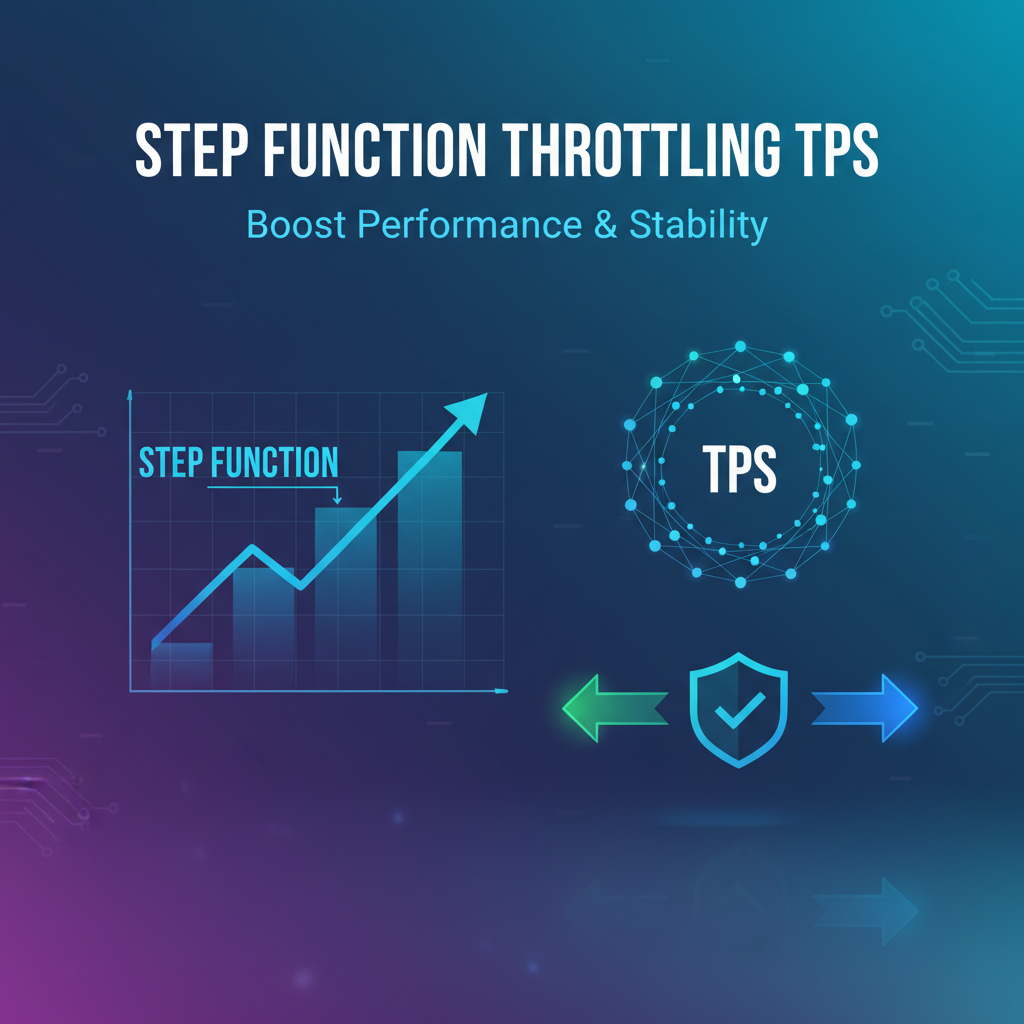
The "step" in "step function" refers to these discrete adjustments. Instead of a continuous, granular adjustment, the TPS limit moves between predefined levels, much like steps on a staircase. For instance, an API might have default limits of 1000 TPS, but if CPU utilization exceeds 80%, the limit might drop to 700 TPS. If error rates climb above 5%, it might further drop to 500 TPS. If, after some time, the system recovers and CPU drops below 60% and errors are negligible, the limit might then incrementally increase back to 700 TPS, and eventually to 1000 TPS, or even higher if allowed.
This dynamic nature differentiates it fundamentally from traditional methods. While a token bucket might handle bursts efficiently, its maximum capacity and refill rate remain static. A leaky bucket ensures a steady flow but doesn't accelerate when the backend can handle more. Step function throttling, however, is inherently flexible, allowing the system to breathe with the load, expanding its capacity when possible and contracting defensively when necessary.
How it Differs from Static Methods: The Power of Adaptability
The starkest contrast between step function throttling and its static predecessors lies in its responsiveness and intelligence.
- Adaptability vs. Rigidity: Static methods impose a rigid upper bound that remains constant regardless of the system's actual capacity. This means during periods of low load, potential capacity goes unused, while during high load, the system might still be overwhelmed if the static limit was set too high, or unnecessarily restrict traffic if set too low. Step function throttling, by contrast, is inherently adaptive. It continuously monitors the system and adjusts its behavior to match current conditions, maximizing throughput when possible and minimizing risk during stress.
- Proactive vs. Reactive Failure: Static limits often act as a last line of defense, preventing outright collapse once the system is already struggling. While they prevent an immediate overload, they don't necessarily optimize performance. Step function throttling, however, can be designed to be more proactive. By detecting early warning signs of stress (e.g., slight increases in latency before errors spike), it can reduce traffic before the system becomes critically impaired, preventing a full-blown failure and maintaining a higher quality of service.
- Optimal Resource Utilization: A fixed TPS limit might be a safe bet, but it's rarely the optimal bet. If your backend can handle 1500 TPS but your static limit is 1000 TPS, you're leaving 500 TPS of potential capacity on the table. Conversely, if your backend usually handles 1000 TPS but is temporarily degraded and can only manage 600 TPS, a static 1000 TPS limit will push it into an unhealthy state. Step function throttling, by dynamically adjusting the limit, strives to operate closer to the system's current optimal capacity, ensuring efficient use of resources without risking overload. This leads to better performance under varying conditions and more cost-effective infrastructure scaling.
- Graceful Degradation and Recovery: When a system becomes overloaded, static throttling simply rejects requests, often leading to sudden drops in service. Step function throttling, by gradually reducing allowed TPS, enables a more graceful degradation. As conditions improve, it similarly allows for a gradual and controlled increase in traffic, ensuring a smooth recovery rather than a sudden rush that could trigger another overload. This smooth adjustment minimizes the "thundering herd" problem that can occur when a system recovers and all previously denied requests retry simultaneously.
An Analogy: The Intelligent Traffic Light System
Consider a traditional traffic light system in a city. Each intersection has fixed timings for green, yellow, and red lights, regardless of the actual traffic volume. During rush hour, this might cause massive congestion; late at night, it might needlessly hold up the only car on the road. This is akin to static API throttling.
Now, imagine an intelligent traffic light system. Sensors embedded in the road continuously monitor the number of cars approaching from each direction, their speed, and the overall density. If a particular road segment is experiencing heavy congestion, the system extends the green light for that direction or shortens it for cross-traffic, and vice versa. It doesn't adjust in a continuous, infinitely variable way; instead, it shifts between predefined "phases" or "modes" (e.g., "rush hour mode," "off-peak mode," "emergency vehicle priority mode"). These modes represent the "steps" in step function throttling. The system constantly monitors traffic (like API metrics) and adapts its flow control (TPS limits) in discrete adjustments to optimize the overall traffic experience (system performance and stability). This analogy vividly illustrates the dynamic, adaptive, and step-based nature of this advanced throttling technique.
The transition from static to step function throttling marks a maturation in API management. It acknowledges the inherent variability of modern distributed systems and equips operators with a powerful tool to maintain performance, stability, and resource efficiency in the face of unpredictable demand.
Mechanisms and Implementation of Step Function Throttling
Implementing Step Function Throttling effectively requires a deep understanding of several interconnected components, including the choice of metrics, the definition of thresholds and steps, and the creation of robust feedback loops. This intelligent control system is typically orchestrated within an API gateway or a dedicated traffic management layer, which acts as the central nervous system for API requests.
Key Metrics for Adaptation: The Eyes and Ears of the System
The success of step function throttling hinges on the ability to accurately perceive the health and load of the backend services. This requires monitoring a carefully selected set of metrics that provide a holistic view of system performance. These metrics serve as the triggers for adjusting TPS limits.
- CPU Utilization: A fundamental indicator of processing load. High CPU usage (e.g., consistently above 70-80%) suggests that the server is struggling to keep up with computation-intensive tasks. When CPU utilization crosses a predefined high threshold, it's a strong signal to reduce inbound API traffic. Conversely, low CPU usage (e.g., below 40-50%) indicates underutilization, suggesting that the system could potentially handle more requests.
- Memory Usage: Critical for applications that are memory-bound. Excessive memory consumption can lead to swapping (using disk as virtual memory), which significantly degrades performance, or even out-of-memory errors, causing application crashes. Monitoring memory usage and setting thresholds (e.g., reducing TPS if memory exceeds 85%) is crucial.
- Response Latency/Duration: Measures the time it takes for a backend service to process a request and return a response. An increase in average or P99 (99th percentile) latency is a direct sign of service degradation, even if CPU and memory appear normal. This can be due to database bottlenecks, slow external dependencies, or inefficient code. A prolonged increase in latency (e.g., average latency exceeding 500ms for more than 30 seconds) is a clear trigger for reducing traffic.
- Error Rates: The percentage of requests resulting in server-side errors (e.g., HTTP 5xx status codes). A sudden spike in error rates signifies a critical problem in the backend, such as database connection issues, internal service failures, or application logic bugs. This is often the most direct and severe indicator of system distress, demanding an immediate reduction in API traffic.
- Queue Depth/Backlog: For services that use message queues or internal request queues, the depth of these queues indicates pending work. A rapidly growing queue depth means the service cannot process requests as quickly as they are arriving. This is an excellent proactive metric, as it often signals an impending overload before CPU, memory, or latency metrics become critically high.
- Database Connection Pool Saturation: Many applications rely heavily on databases. If the number of active database connections approaches the maximum limit, new requests will contend for scarce connections, leading to latency spikes and potential connection errors. Monitoring this metric can prevent database overload, which is often a major bottleneck.
- Network I/O: For data-intensive APIs or services with heavy inter-service communication, network bandwidth can become a bottleneck. High network I/O can slow down data transfer and impact overall response times.
The choice of metrics depends on the specific architecture and critical resources of the services being protected. A robust implementation will typically monitor a combination of these, weighing them appropriately.
Thresholds and Steps: Defining the Control Logic
Once metrics are being monitored, the next step is to define the "rules" for adjustment. This involves setting thresholds for each metric and specifying the "steps" by which the TPS limit should increase or decrease.
- Thresholds: These are predefined values for each metric that, when crossed, trigger a TPS adjustment. For instance:
- High Threshold (Decrease TPS): CPU > 80%, Latency (P99) > 1000ms, Error Rate > 5%.
- Low Threshold (Increase TPS): CPU < 60%, Latency (P99) < 500ms, Error Rate < 1%.
- It's important to have distinct high and low thresholds to prevent rapid oscillation of TPS limits. For example, if the "decrease TPS" threshold for CPU is 80% and the "increase TPS" threshold is 79%, the TPS limit might rapidly fluctuate if CPU hovers around 80%. Using hysteresis (a wider gap between the two thresholds, e.g., 80% and 60%) helps stabilize the system.
- Steps (Adjustment Increments): These define how much the TPS limit changes when a threshold is crossed.
- Decremental Steps: When a high threshold is breached, the TPS limit is reduced. This reduction can be a fixed value (e.g., -100 TPS), a percentage (e.g., -20% of current TPS), or even an exponential backoff (e.g., 50% reduction upon first breach, 25% of the remaining upon second, etc., for aggressive protection). The size of the decrement often depends on the severity of the metric breach. A high error rate might warrant a larger, more immediate drop in TPS than a slight increase in CPU.
- Incremental Steps: When a low threshold is maintained for a certain period, indicating recovery, the TPS limit is increased. These increments are typically smaller and more cautious than decrements (e.g., +50 TPS or +10% of current TPS). This prevents a sudden flood of requests from overwhelming a newly recovering system, allowing it to gradually test its new capacity.
- Minimum and Maximum Limits: Define the floor and ceiling for TPS. There should be a minimum TPS to allow some basic functionality (unless a complete shutdown is intended) and a maximum TPS to prevent over-provisioning or to adhere to external service limits.
Feedback Loops: The Brain of the System
The feedback loop is the continuous process of monitoring, evaluating, and adjusting. It's the "brain" that orchestrates the step function throttling.
- Monitoring Agent: This component (often part of the API gateway or a sidecar proxy) continuously collects metrics from the backend services. It aggregates data, calculates averages, percentiles, and rates, and feeds this information to the evaluation logic.
- Evaluation Logic: This is where the magic happens. It compares the current metric values against the defined thresholds. It needs to consider:
- Persistence: Has the metric exceeded the threshold for a sustained period (e.g., 30 seconds, 1 minute) to avoid reacting to transient spikes?
- Severity: How critical is the metric? An error rate spike might trigger a more aggressive reduction than a slight increase in CPU.
- Combination: Are multiple metrics signaling distress? (e.g., high CPU AND high latency). A combination of alerts might trigger an even larger step reduction.
- Adjustment Mechanism: Upon a decision from the evaluation logic, the adjustment mechanism modifies the active TPS limit enforced by the API gateway. This typically involves updating a configuration parameter or a shared state that the gateway reads.
- Enforcement Point: The API gateway itself. It receives incoming API requests and, based on the currently active TPS limit, either forwards the request to the backend or rejects it (usually with an HTTP 429 "Too Many Requests" status code).
The feedback loop must be designed with care. Too aggressive, and it might cause "bouncing" (rapid fluctuations in TPS). Too slow, and it might not prevent overload. Tuning these parameters is a continuous process.
Where it's Applied: The API Gateway as the Control Tower
Step function throttling is most effectively implemented at a central traffic management point, typically an API gateway. An API gateway acts as a single entry point for all API requests, providing a perfect vantage point to apply global or per-API throttling policies.
- API Gateway: This is the ideal location. A robust API gateway can monitor downstream services, enforce policies, and handle request routing, load balancing, and authentication. By integrating step function throttling logic directly into the gateway, it can make real-time decisions on which requests to allow or deny, applying adaptive rate limits before requests even reach the strained backend. This pre-emptive filtering is crucial for protecting the origin servers. Products like APIPark, an open-source AI gateway and API management platform, offer comprehensive capabilities for end-to-end API lifecycle management, traffic forwarding, load balancing, and detailed API call logging. Its ability to manage traffic forwarding and its performance rivaling Nginx make it an excellent candidate for implementing sophisticated adaptive throttling mechanisms. By leveraging a powerful gateway like APIPark, developers can set up monitoring hooks and integrate custom logic or utilize built-in features to dynamically adjust TPS limits based on real-time performance metrics, ensuring robust protection and optimized performance for their integrated AI and REST services.
- Backend Services (Sidecar/Microservices): While the API gateway is primary, individual microservices can also implement local, coarser-grained adaptive throttling if they have internal queues or specific resource bottlenecks not visible to the gateway. This acts as a secondary defense.
- Load Balancers: Some advanced load balancers can also incorporate basic adaptive capabilities, but they typically lack the rich context and policy enforcement capabilities of a dedicated API gateway.
The meticulous implementation of these mechanisms—from granular metric collection to intelligent thresholding and responsive feedback loops—empowers step function throttling to act as a resilient, self-healing component of your API infrastructure, ensuring optimal performance and unwavering stability.
The Transformative Benefits of Step Function Throttling
Adopting Step Function Throttling is not merely an incremental improvement; it represents a significant upgrade in how API traffic is managed, offering a multitude of benefits that profoundly impact system performance, stability, user experience, and even operational costs. These advantages collectively forge a more resilient and efficient digital ecosystem.
Enhanced Performance Through Optimal Resource Utilization
One of the most compelling benefits of step function throttling is its ability to optimize resource utilization, leading directly to enhanced system performance. Unlike static throttling, which often underutilizes resources during periods of low demand or overburdens them during unexpected spikes, step function throttling dynamically aligns the incoming request rate with the backend's current processing capacity.
When backend services are healthy and have ample capacity (e.g., low CPU, abundant memory, fast response times), the throttling mechanism can intelligently increase the allowed TPS. This ensures that the system is processing as many requests as it can efficiently handle, maximizing throughput and reducing idle computational cycles. Conversely, as soon as performance metrics indicate stress, the system proactively reduces the TPS limit. This prevents the system from being overwhelmed, allowing it to recover faster and maintain a higher baseline performance level even under pressure. The result is a system that operates closer to its optimal efficiency curve across varying load conditions, delivering faster responses and higher overall throughput than static methods could achieve. This dynamic balancing act means your infrastructure is neither wasting resources nor struggling to keep up, leading to a consistently high-performance service.
Improved Stability & Resilience: Weathering the Storms
Perhaps the most critical advantage, especially in production environments, is the dramatic improvement in system stability and resilience. Step function throttling acts as a sophisticated guardian, shielding your backend services from the cascading failures that often result from uncontrolled traffic surges.
By dynamically reducing the incoming API request rate at the first signs of stress, the system prevents a total collapse. Instead of processing an unmanageable number of requests and subsequently crashing or timing out for all users, the system throttles gracefully. This means it continues to serve a reduced number of requests effectively, rather than failing entirely. This "graceful degradation" is paramount during critical events like flash sales, viral traffic spikes, or even internal service disruptions. When the underlying issue is resolved, or the traffic spike subsides, the throttling mechanism gradually increases the TPS limit, allowing the system to recover smoothly without another overwhelming influx of requests. This intelligent self-preservation mechanism not only prevents outages but also significantly reduces the Mean Time To Recovery (MTTR), ensuring business continuity and maintaining user trust. In essence, it allows your API ecosystem to weather unexpected storms with greater fortitude and faster recuperation.
Fair Resource Distribution and Prevention of "Noisy Neighbors"
In multi-tenant architectures or environments where various client applications consume the same APIs, step function throttling can be configured to ensure fair resource distribution. Beyond just a global TPS limit, this technique can be applied per-client, per-user, or per-application, dynamically adjusting individual limits based on their observed behavior and the overall system health.
For instance, if one client application suddenly starts making an abnormally high number of requests (a "noisy neighbor"), but the backend system begins to show signs of stress, the step function logic can reduce the TPS limit specifically for that aggressive client, while potentially maintaining higher limits for other, well-behaved clients. This prevents any single application or user from monopolizing shared resources and degrading the experience for others. It ensures that the available capacity is distributed equitably or according to predefined service level agreements, thus preventing resource starvation for legitimate users and maintaining the integrity of the service for the entire user base.
Cost Optimization: Efficient Infrastructure Scaling
Cloud infrastructure costs are directly correlated with resource consumption. Over-provisioning to handle worst-case scenarios can lead to substantial wasted expenditure. Step function throttling offers a smart approach to cost optimization.
By ensuring that services only process what they can handle, it prevents unnecessary auto-scaling events during transient traffic spikes that don't warrant sustained resource allocation. If a temporary surge would normally trigger the provisioning of new servers, but the step function throttling effectively manages the load without pushing current resources beyond their limits, those additional servers might not be needed. This intelligent management of traffic means infrastructure scales more efficiently, only adding resources when there's a sustained need and the system genuinely benefits from it, rather than reacting to every short-lived peak. This precise control over resource utilization can lead to significant savings on cloud computing, storage, and networking costs, making your API operations more economically viable.
Enhanced User Experience: Predictable and Reliable Service
Ultimately, all technical improvements in API management aim to deliver a superior user experience. Step function throttling directly contributes to this goal by ensuring predictable and reliable service delivery.
Users interact with systems that remain available, responsive, and stable, even when facing internal or external pressures. Instead of encountering frequent errors, slow responses, or complete outages, they experience consistent performance. When throttling occurs, it often manifests as a temporary rejection (e.g., HTTP 429), signaling the client to retry later, which is preferable to a hung request or a server error. This predictability builds trust and loyalty. A user who consistently receives a stable service, even if occasionally rate-limited during extreme peak times, will have a much better impression than one who encounters frequent, unpredictable system failures. This directly translates to higher user satisfaction, better engagement, and a stronger brand reputation.
Predictability of System Behavior: Understanding Your API's Limits
Finally, step function throttling introduces a higher degree of predictability into system behavior under varying loads. Because the throttling logic adapts based on predefined metrics and steps, developers and operations teams gain a clearer understanding of how their APIs will behave under stress.
Instead of guessing how a backend might react to a 10x traffic spike, the adaptive throttling policies define a predictable response: gradual reduction of TPS, protection of core services, and controlled recovery. This predictability is invaluable for capacity planning, incident response, and performance debugging. Teams can better anticipate system responses, design more robust client-side retry mechanisms, and diagnose issues with greater precision, knowing that the traffic management layer is intelligently regulating flow. This makes the entire API ecosystem more transparent and manageable.
In summary, Step Function Throttling moves beyond simply preventing catastrophic failure; it actively cultivates an environment of optimal performance, unwavering stability, cost efficiency, and superior user experience. It's an indispensable strategy for any organization serious about the reliability and scalability of its API-driven services.
Use Cases and Scenarios for Step Function Throttling
The versatility and adaptive nature of Step Function Throttling make it applicable across a wide array of industries and architectural patterns. Its ability to dynamically adjust to varying loads and system conditions provides a robust solution for common challenges faced by modern API ecosystems. Understanding these specific use cases illuminates where this technique delivers its most significant impact.
E-commerce Flash Sales and Seasonal Peaks
Perhaps one of the most archetypal scenarios for stress testing any online service is the flash sale or seasonal shopping event (like Black Friday, Cyber Monday, or holiday sales). These events often generate unprecedented, sudden, and unpredictable surges in traffic, sometimes reaching 10x or even 100x the typical daily volume within minutes.
Challenge: A fixed throttling limit, if set too high, would allow too many requests, overwhelming backend databases, payment gateways, and inventory systems, leading to crashes and lost sales. If set too low, it would unnecessarily reject legitimate customers during periods when the system could handle more, resulting in missed revenue opportunities.
Solution with Step Function Throttling: An API gateway configured with step function throttling can monitor key e-commerce metrics: database connection pool utilization, payment service latency, inventory update queue depth, and overall application server CPU. As the flash sale begins and traffic spikes, if the database latency starts to climb, or CPU on order processing services surges, the gateway can automatically and gradually reduce the TPS for order submission or product browsing APIs. This ensures that the remaining requests are processed successfully, maintaining a stable checkout experience for some customers rather than failing for all. As the initial surge subsides, or if backend systems are optimized and performance improves, the gateway can cautiously increase the TPS, allowing more customers through and maximizing sales without risking a system collapse. This adaptive approach ensures peak performance during critical revenue-generating events.
IoT Data Ingestion and Telemetry
The Internet of Things (IoT) generates massive streams of data from countless devices, ranging from smart home sensors to industrial machinery. This data often arrives in bursty patterns, especially when devices come online, update firmware, or report critical events simultaneously.
Challenge: IoT platforms must ingest this data reliably and efficiently. A fixed ingestion rate might either be too slow during bursts, causing data loss or backlogs, or too fast, overwhelming downstream data processing pipelines and storage solutions.
Solution with Step Function Throttling: An API gateway or a dedicated ingestion gateway can use step function throttling to manage the flow of data from IoT devices. It monitors metrics such as message queue depth, database write latency, and data storage throughput for the ingestion backend. If the message queue (e.g., Kafka, RabbitMQ) starts to build up excessively, indicating that downstream processors cannot keep pace, the gateway can dynamically lower the TPS for device data submission APIs. This prevents the queue from overflowing and ensures that the system processes data at a sustainable rate. When the processing backlog clears, the gateway can increase the ingestion rate, ensuring that data is ingested as quickly as the system can handle it, preventing data loss and optimizing resource use for analytics and storage.
Microservices Communication and Inter-Service Dependencies
In microservices architectures, services frequently communicate with each other via API calls. A problem in one service (e.g., a slow database query or a bug) can quickly propagate, leading to cascading failures throughout the entire system.
Challenge: When Service A calls Service B, and Service B becomes slow, Service A's requests to Service B will pile up, consuming Service A's resources (thread pools, memory), potentially making Service A unresponsive, even if Service A itself is otherwise healthy.
Solution with Step Function Throttling: Step function throttling can be applied at the client-side of inter-service calls (e.g., through a service mesh sidecar) or within an internal API gateway managing internal APIs. If Service B starts exhibiting high latency or error rates, Service A's client-side throttling logic can automatically reduce the rate of calls it makes to Service B. This prevents Service A from overloading an already struggling Service B and, crucially, prevents Service A from becoming resource-starved itself while waiting for responses. As Service B recovers, Service A gradually increases its call rate. This mechanism acts as a circuit breaker with an adaptive rate limiter, containing failures and preventing them from spreading, thus bolstering the overall resilience of the microservices ecosystem.
Third-Party API Integrations and External Dependencies
Many applications rely on external APIs for functionalities like payment processing, SMS notifications, mapping services, or data enrichment. These third-party APIs often have their own rate limits, and exceeding them can lead to penalties, service degradation, or even account suspension. Moreover, the performance of these external services is beyond your direct control.
Challenge: Your application needs to make calls to external APIs without exceeding their limits and without being negatively impacted if the external API experiences its own performance issues.
Solution with Step Function Throttling: Your application's outgoing API gateway or client library can implement step function throttling for calls to each third-party API. By monitoring the response times and error rates from the external API (and potentially tracking your usage against their stated limits), your system can dynamically adjust its outbound call rate. If the third-party API starts returning 429 "Too Many Requests" errors or its latency spikes, your system can automatically reduce its call rate to that specific external API. This respects their limits, prevents your application from being penalized, and avoids accumulating pending requests that would eventually fail. When the external API recovers or your internal rate tracking indicates leeway, your system can gradually increase its call rate. This proactive and adaptive management of external dependencies ensures that your application remains stable even when external services are unreliable.
Backend Database Protection
Databases are frequently the bottleneck in many applications, especially under heavy write loads or complex query patterns. They have finite connection limits and I/O capacities.
Challenge: A sudden surge in API requests, particularly those involving database writes or complex reads, can quickly exhaust database connection pools or overwhelm disk I/O, leading to database errors, deadlocks, and application outages.
Solution with Step Function Throttling: By placing API endpoints that heavily interact with the database behind an API gateway employing step function throttling, the database can be effectively protected. The gateway monitors metrics directly related to database health: database connection pool saturation, query latency, transaction throughput, and even disk I/O. If these metrics indicate database stress (e.g., connection pool nearing capacity, average query time increasing significantly), the gateway immediately reduces the TPS for the associated APIs. This gives the database breathing room to process its existing workload, clear backlogs, and recover without crashing. As database health improves, the gateway slowly ramps up the allowed API traffic, maintaining the database's stability. This ensures that the most critical component of many applications remains operational and responsive.
These examples highlight how Step Function Throttling is not just a theoretical concept but a practical, impactful solution for mitigating common performance and stability challenges across diverse technological landscapes. Its adaptability makes it an indispensable tool for building resilient, high-performing systems.
APIPark is a high-performance AI gateway that allows you to securely access the most comprehensive LLM APIs globally on the APIPark platform, including OpenAI, Anthropic, Mistral, Llama2, Google Gemini, and more.Try APIPark now! 👇👇👇
Implementing Step Function Throttling in an API Gateway
The API gateway serves as the optimal control point for implementing Step Function Throttling. Its strategic position at the edge of your network, managing all incoming API traffic, provides the ideal infrastructure for monitoring, policy enforcement, and dynamic adjustment. A robust API gateway is not just a router; it's an intelligent traffic manager capable of protecting your entire API ecosystem.
The Indispensable Role of an API Gateway in Traffic Management
An API gateway is a single entry point for client applications to access various services (often microservices). It handles a myriad of cross-cutting concerns that would otherwise need to be implemented in each service, such as authentication, authorization, caching, logging, request routing, and critically, traffic management. For Step Function Throttling, its role is pivotal for several reasons:
- Centralized Control: All incoming requests flow through the gateway, making it the perfect choke point to apply global or fine-grained throttling policies before requests reach the backend. This centralizes traffic management, preventing individual services from being directly exposed to uncontrolled loads.
- Service Abstraction: The gateway can abstract the complexity of backend services from clients. This means throttling logic can be implemented and modified at the gateway level without requiring changes to client applications or the backend services themselves.
- Performance Monitoring Integration: Modern API gateways are designed to integrate with monitoring and observability tools. They can collect metrics not only on the gateway's own performance but also proxy requests and gather data from downstream services, providing the necessary feedback for adaptive throttling.
- Policy Enforcement: The gateway is the enforcement point. Once a throttling decision is made (e.g., current TPS limit is 500), the gateway actively accepts or rejects requests based on this real-time limit, returning appropriate HTTP status codes (e.g., 429 Too Many Requests) to clients.
- Traffic Shaping and Load Balancing: Beyond simple throttling, an API gateway can perform advanced traffic shaping, load balancing across multiple instances of a service, and circuit breaking—all of which complement and enhance the effectiveness of adaptive throttling.
Configuration Steps and Integration with Monitoring Systems
Implementing Step Function Throttling in an API gateway typically involves a series of configuration steps and careful integration:
- Choose a Capable API Gateway: Select an API gateway that supports advanced traffic management, policy-based routing, and has strong integration capabilities with monitoring systems. Open-source API gateways like APIPark, which is an open-source AI gateway and API management platform, are excellent choices. APIPark's capabilities for "End-to-End API Lifecycle Management," "manage traffic forwarding," "Performance Rivaling Nginx," "Detailed API Call Logging," and "Powerful Data Analysis" make it particularly well-suited for implementing and monitoring sophisticated throttling strategies. Its high performance (20,000+ TPS with an 8-core CPU and 8GB memory) means the gateway itself won't become the bottleneck while enforcing dynamic policies.
- Identify Key Backend Services and Metrics: For each API or service protected by the gateway, identify the critical backend metrics that reflect its health and capacity (e.g., CPU, memory, latency, error rates, queue depth). These are the indicators that will drive your adaptive throttling.
- Set Up Monitoring Agents and Data Collection:
- Gateway-side Monitoring: The API gateway itself should monitor its own performance (e.g., CPU, memory, request queue).
- Backend Service Monitoring: Implement agents or use built-in instrumentation within your backend services to expose these critical metrics (e.g., Prometheus exporters, Micrometer, custom endpoints).
- Centralized Monitoring System: All collected metrics (from the gateway and backend services) should flow into a centralized monitoring and observability platform (e.g., Prometheus, Datadog, New Relic, Grafana). This platform will aggregate, store, and visualize the data. APIPark's "Detailed API Call Logging" and "Powerful Data Analysis" features are directly relevant here, as they provide the essential data backbone for identifying trends and performance changes that inform throttling decisions.
- Define Throttling Policies and Rules: This is the core logic for step function throttling. It involves:
- Base TPS Limit: A default, stable maximum TPS for each API.
- Thresholds: For each monitored metric, define upper and lower thresholds that trigger a change in TPS.
- Example: If
service_A_cpu_utilization > 80% for 30 seconds, thendecrease_tps_for_api_X. - Example: If
service_A_latency_p99 > 1000ms for 1 minute, thendecrease_tps_for_api_X. - Example: If
service_A_cpu_utilization < 60% for 5 minutesANDservice_A_latency_p99 < 500ms for 5 minutes, thenincrease_tps_for_api_X.
- Example: If
- Adjustment Steps: Define the amount by which TPS should increase or decrease (e.g., -100 TPS, -20%, +50 TPS, +10%). Decrements are typically larger and faster than increments.
- Minimum/Maximum TPS: Set a floor and ceiling for the adaptive TPS.
- Cool-down Periods: Introduce delays between adjustments to prevent rapid oscillation ("bouncing"). For example, after a decrease, wait for 1 minute before checking for an increase trigger.
- Implement the Feedback Loop (Control Plane): This is the component that executes the logic defined in step 4.
- External Controller: For many API gateways, this logic is implemented as an external controller or a dedicated service that continuously queries the monitoring system, evaluates the rules, and then updates the gateway's configuration via its API or control plane.
- Integrated Logic: Some advanced gateways or service meshes might allow embedding this logic directly.
- This controller continuously analyzes the metrics from the monitoring system and, based on the predefined policies, sends commands to the API gateway to update the active TPS limits for specific APIs.
- Configure API Gateway for Dynamic Policy Updates: Ensure your API gateway can accept dynamic updates to its throttling policies without requiring a restart or significant downtime. This is crucial for real-time adaptation.
- Client-Side Retries and Backoff: While the gateway is managing the load, client applications consuming the API should be designed to handle
HTTP 429 Too Many Requestsresponses. They should implement exponential backoff and jitter strategies for retries, preventing a "thundering herd" problem when the API becomes available again. - Testing and Fine-Tuning: Deploy the throttling in a staging environment and simulate various load conditions. Monitor the system's behavior closely. Adjust thresholds, step sizes, and cool-down periods to find the optimal balance between protection and throughput. This iterative process is essential for robust implementation.
By carefully planning and executing these steps, leveraging the power of a capable API gateway like APIPark and integrating it with comprehensive monitoring, organizations can successfully deploy Step Function Throttling. This transforms their API infrastructure into a highly resilient and performance-optimized system, ready to handle the unpredictable demands of the digital world.
Challenges and Considerations in Implementing Step Function Throttling
While Step Function Throttling offers powerful advantages, its implementation is not without complexities. Successfully deploying and managing this adaptive technique requires careful consideration of potential pitfalls and ongoing fine-tuning. Overlooking these challenges can lead to suboptimal performance, system instability, or even unintended service disruptions.
Choosing Appropriate Metrics and Thresholds
The foundational challenge lies in selecting the right metrics and setting their corresponding thresholds.
- Metric Relevance: Not all metrics are equally indicative of system stress for every service. A service that is CPU-bound will react differently than one that is I/O-bound or memory-bound. Using a generic set of metrics without understanding the specific bottlenecks of a service can lead to ineffective throttling. For instance, throttling based solely on CPU for a database-intensive API might be too late or too conservative.
- Threshold Sensitivity: Setting thresholds too low can result in over-throttling, where the system reduces TPS even when it could handle more, leading to wasted capacity. Conversely, setting thresholds too high can make the throttling mechanism reactive rather than proactive, allowing the system to become overloaded before any action is taken.
- Metric Granularity and Aggregation: Deciding on the appropriate time window for aggregating metrics (e.g., average CPU over 30 seconds vs. 5 minutes) is crucial. Too short a window might react to transient spikes, causing unnecessary throttling. Too long a window might delay the response, allowing issues to escalate. Similarly, deciding between average, median, or percentile values (e.g., P99 latency is often more indicative of user experience issues than average latency) impacts sensitivity.
- Composite Metrics: Often, a single metric isn't enough. System stress might manifest as a combination of elevated CPU and increased latency, even if neither crosses its individual critical threshold. Designing rules that consider multiple metrics simultaneously adds complexity but can lead to more intelligent decisions.
The "Bounce" Effect (Oscillations)
One of the most common and frustrating problems in adaptive systems is oscillation, often referred to as the "bounce" effect. This occurs when the throttling mechanism rapidly switches between increasing and decreasing the TPS limit.
- Cause: This usually happens when the increase and decrease thresholds are too close, or when the adjustment steps are too large relative to the system's response time. For example, the system reduces TPS, which immediately improves a metric (e.g., CPU drops). The system then quickly increases TPS, which causes CPU to rise again, triggering another reduction, and so on.
- Mitigation:
- Hysteresis: Implement a clear separation between the "increase" and "decrease" thresholds for a given metric. For instance, decrease TPS if CPU > 80%, but only increase if CPU < 60%. This gap prevents rapid switching.
- Asymmetric Steps: Make decremental steps larger and faster than incremental steps. It's often safer to reduce traffic aggressively and recover cautiously.
- Time-based Cool-downs/Delays: Introduce a mandatory waiting period after any adjustment before another adjustment (especially an increase) can be made. This gives the system time to stabilize after a change.
- Averaging Windows: Use longer time windows for metric aggregation to smooth out transient fluctuations.
Complexity of Implementation and Maintenance
Step Function Throttling is inherently more complex than static rate limiting.
- Architecture: It requires a robust monitoring infrastructure, a sophisticated control plane (for evaluating metrics and updating policies), and an API gateway capable of dynamic policy enforcement. This means more components to deploy, configure, and manage.
- Configuration Management: Defining and managing the various metrics, thresholds, step sizes, and rules can become unwieldy, especially across many APIs and services. Versioning and testing these policies are crucial.
- Debugging: When things go wrong, diagnosing why throttling policies are behaving a certain way can be challenging due to the dynamic nature of the system. Tracing the cause of an unexpected TPS adjustment requires visibility into the metric values, threshold breaches, and policy decisions at specific points in time.
- Skill Set: It demands a higher level of expertise in observability, distributed systems, and control theory from the operations and development teams.
Testing and Fine-Tuning
Rigorous testing and continuous fine-tuning are paramount for effective step function throttling, but they also present significant challenges.
- Realistic Load Testing: Simulating realistic, bursty, and unpredictable traffic patterns (including degraded backend conditions) in a staging environment is difficult but essential to validate the throttling logic.
- Parameter Optimization: Finding the "sweet spot" for all the parameters (thresholds, step sizes, delays) is an iterative process that requires experimentation and observation. What works for one API might not work for another.
- Evolution of Services: As backend services evolve, their performance characteristics and bottlenecks might change, necessitating a re-evaluation and adjustment of throttling policies. This is not a "set-it-and-forget-it" solution.
Handling Distributed Systems and Multi-Cloud Environments
In highly distributed microservices architectures or multi-cloud deployments, implementing adaptive throttling introduces additional layers of complexity.
- Global vs. Local State: Maintaining a consistent view of system health and applying throttling decisions across multiple geographically distributed API gateways or service instances requires careful state management. Is the TPS limit global, or per-gateway instance? How is consistency ensured?
- Network Latency: Communication between monitoring agents, the control plane, and API gateways in a distributed environment introduces latency, which can delay throttling responses and impact accuracy.
- Cascading Failures: While adaptive throttling aims to prevent cascading failures, misconfigured policies in a distributed system can still exacerbate problems if not carefully designed. For example, a global throttle might starve a healthy service while a problematic one continues to consume resources.
Addressing these challenges requires a disciplined approach, continuous monitoring, and an iterative mindset. Despite the complexities, the benefits of improved stability, performance, and resilience often far outweigh the investment required to overcome these hurdles, making Step Function Throttling an invaluable capability for modern API platforms.
Best Practices for Step Function Throttling
To harness the full power of Step Function Throttling and mitigate its inherent complexities, adherence to a set of best practices is essential. These guidelines will help ensure a robust, efficient, and stable implementation that truly boosts your API ecosystem's performance and resilience.
1. Start with Conservative Steps and Gradual Adjustments
When first deploying step function throttling, resist the urge to implement aggressive, large-step adjustments. Begin with smaller decremental and incremental steps.
- Smaller Decrements: Reduce TPS by a modest percentage (e.g., 5-10%) initially when a metric crosses a threshold. This allows the system to gently shed load without immediately cutting off a large portion of traffic, giving it a chance to stabilize. If the system continues to struggle, subsequent, larger steps can be triggered.
- Even Smaller Increments: Recovery should always be more cautious than degradation. Increase TPS by even smaller percentages (e.g., 2-5%) and over longer durations. This prevents a "thundering herd" problem that could re-overwhelm a recovering system.
- Longer Cool-down Periods: Introduce significant delays between adjustments, especially increases. After a TPS reduction, wait for a few minutes to ensure the system has truly stabilized before considering an increase. After an increase, wait even longer before another increase to confirm the system can sustain the new load.
This conservative approach minimizes the risk of introducing oscillations ("bouncing") and allows for safer, more predictable behavior, which you can then gradually optimize.
2. Monitor Continuously with Granular Observability
The "adaptive" nature of step function throttling relies entirely on accurate, real-time, and granular monitoring.
- Comprehensive Metrics: Monitor not just the throttling gateway itself, but also every protected backend service and its critical dependencies (databases, message queues, third-party APIs). Collect metrics on CPU, memory, network I/O, latency (mean, P90, P99), error rates (HTTP 5xx), queue depths, and connection pool usage.
- High-Resolution Data: Ensure your monitoring system collects data at a high frequency (e.g., every 5-10 seconds) to capture transient spikes and nuanced performance changes.
- Dashboards and Alerts: Create dedicated dashboards to visualize the relationship between incoming TPS, backend metrics, and the dynamically adjusted throttling limits. Set up automated alerts for significant metric deviations or unexpected throttling behavior, allowing operations teams to respond proactively.
- Tracing and Logging: Integrate distributed tracing and comprehensive logging. This is crucial for debugging when you need to understand why a specific throttling decision was made or why a request was denied. A platform like APIPark with its "Detailed API Call Logging" and "Powerful Data Analysis" capabilities can provide invaluable insights here, allowing you to trace API calls and analyze historical data to understand performance trends and the impact of your throttling policies.
3. Combine with Circuit Breakers and Retries
Step Function Throttling is a powerful tool, but it's most effective when used as part of a broader resilience strategy.
- Circuit Breakers: Implement circuit breakers in upstream services or the API gateway itself. A circuit breaker can temporarily stop calls to a failing service after a certain threshold of errors or timeouts, allowing it to recover completely. Throttling can prevent the circuit breaker from tripping too frequently, while the circuit breaker provides a hard stop when throttling isn't enough.
- Client-Side Retries with Exponential Backoff and Jitter: When a request is denied by the gateway (e.g., with HTTP 429), client applications should not immediately retry. Instead, they should implement exponential backoff (waiting longer with each subsequent retry) and jitter (adding random delay to prevent synchronized retries). This prevents a "thundering herd" effect that could re-overwhelm the service as soon as the throttle lifts.
- Bulkhead Pattern: Use bulkheads to isolate resource consumption within an application, preventing a failure in one area from affecting others. This can complement throttling by ensuring that even if one part of a service is overwhelmed, other parts remain functional.
4. Document Policies and Communicate Changes
Given the complexity, clear documentation is paramount.
- Policy Documentation: Document every throttling policy: which APIs it applies to, the metrics being monitored, all thresholds (increase/decrease), step sizes, cool-down periods, and the rationale behind these settings.
- Client Communication: If your API is consumed by external partners or public developers, clearly communicate your throttling policies, including expected behaviors (e.g., 429 status codes), retry strategies, and how to stay within limits. Explain that limits are dynamic and adaptive.
- Change Management: Treat changes to throttling policies with the same rigor as code changes, including testing in staging environments and peer reviews.
5. Regularly Review and Adjust Parameters
Step Function Throttling is not a "set-and-forget" solution. The optimal parameters for your APIs will evolve over time as your services change, traffic patterns shift, and infrastructure scales.
- Performance Reviews: Periodically review performance data and the behavior of your throttling policies. Look for signs of over-throttling (wasted capacity) or under-throttling (system struggling despite throttling).
- Post-Incident Analysis: After any incident involving performance degradation or outages, analyze whether throttling played a role, and if its parameters could have been adjusted to prevent or mitigate the incident.
- Capacity Planning: Integrate insights from your adaptive throttling behavior into your capacity planning. Understand how much load your services can truly handle under various conditions.
- Automated Tuning (Advanced): For highly mature systems, consider exploring AI/ML-driven approaches to automatically fine-tune throttling parameters based on historical performance data and predictive analytics.
By adhering to these best practices, organizations can transform Step Function Throttling from a complex concept into a robust, self-managing system that significantly enhances the performance, stability, and resilience of their API ecosystem, ensuring consistent service delivery even in the most demanding environments.
Future Trends in Throttling: The Road Ahead
The landscape of API management is continuously evolving, driven by advancements in artificial intelligence, machine learning, and distributed system architectures. The future of throttling will undoubtedly leverage these innovations to create even more intelligent, predictive, and seamless control mechanisms. Step function throttling is a significant step in this direction, laying the groundwork for what comes next.
AI/ML-Driven Adaptive Throttling
The most promising future trend lies in the integration of Artificial Intelligence and Machine Learning into throttling mechanisms. While step function throttling relies on predefined rules and thresholds, AI/ML models can learn from historical data and real-time observations to make much more nuanced and intelligent throttling decisions.
- Predictive Analytics: AI models can analyze patterns in traffic, system metrics, and even external events (e.g., social media trends, news cycles) to predict potential traffic surges or system degradations before they occur. This allows for truly proactive throttling, adjusting limits in anticipation of future load rather than reacting to current stress.
- Automated Parameter Tuning: Instead of manual fine-tuning, ML algorithms can continuously optimize throttling parameters (thresholds, step sizes, cool-down periods) based on observed system behavior. This would reduce the operational overhead and improve the accuracy of throttling policies over time, adapting to changing service characteristics without human intervention.
- Anomaly Detection: AI can be used to detect unusual patterns in API traffic or backend metrics that might indicate a sophisticated attack or an unforeseen bottleneck. The throttling system could then dynamically adjust limits for specific users, APIs, or traffic patterns exhibiting anomalous behavior.
- Reinforcement Learning: Agents can learn to make optimal throttling decisions by interacting with the live system and receiving rewards for stable performance and high throughput, and penalties for instability or resource wastage. This "learn-by-doing" approach could lead to highly sophisticated, self-optimizing throttling strategies.
The underlying infrastructure of a robust API gateway that provides detailed call logging and powerful data analysis, like APIPark, will be crucial for these AI/ML approaches. The ability to collect, store, and analyze vast amounts of API invocation data is the fuel for training and validating these intelligent throttling models.
Predictive Throttling
Building on AI/ML, predictive throttling goes beyond simple reactive adaptation. It involves using forecasting models to anticipate future load and adjust capacity or throttling limits accordingly.
- Capacity Forecasting: By analyzing historical traffic patterns, seasonal trends, and growth rates, predictive models can forecast future demand for specific APIs. This information can then be used to pre-emptively scale up backend infrastructure or to adjust baseline throttling limits to prevent bottlenecks.
- Proactive Traffic Management: If a significant event (e.g., a planned marketing campaign, a major product launch) is known, predictive throttling can be configured to gradually reduce other, less critical API traffic in anticipation, freeing up resources for the expected surge in critical APIs.
- Resource Allocation Optimization: Predictive models can help ensure that cloud resources are provisioned optimally, avoiding both over-provisioning (cost waste) and under-provisioning (performance degradation). Throttling limits would become part of this intelligent resource allocation strategy.
Service Mesh Integration and Distributed Throttling
As microservices architectures become more prevalent, service meshes (like Istio, Linkerd, Consul Connect) are gaining traction. A service mesh provides a dedicated infrastructure layer for managing service-to-service communication. This paradigm offers new avenues for throttling.
- Distributed Throttling at the Edge: While an API gateway handles external traffic, service meshes can provide fine-grained throttling for internal service-to-service calls at the proxy (sidecar) level. This means each service can have its own adaptive throttling logic for outgoing requests to dependencies, preventing cascading failures locally.
- Global Throttling with Local Enforcement: A central control plane in the service mesh could define global throttling policies that are then pushed down and enforced by individual sidecar proxies. This allows for unified management of throttling across hundreds or thousands of microservice instances.
- Context-Aware Throttling: Service meshes provide rich context about service dependencies, request paths, and protocols. This context can be leveraged for more intelligent throttling decisions, e.g., throttling specific types of requests or paths differently based on their resource impact.
- Policy as Code: Service meshes typically manage policies through declarative configurations (Policy as Code), making it easier to define, version, and deploy complex throttling rules alongside application code.
The convergence of adaptive throttling with service mesh capabilities will enable a truly distributed yet centrally managed traffic control system, offering unparalleled resilience and control in complex microservices environments.
Conclusion: Mastering the Dynamics of API Traffic
In the contemporary digital landscape, where the heartbeat of every application, service, and user interaction reverberates through API calls, the ability to manage traffic with precision and intelligence is not merely an advantage—it is a fundamental necessity. The era of static, rigid API throttling is gradually giving way to more sophisticated, adaptive paradigms, with Step Function Throttling emerging as a powerful and indispensable technique. By dynamically adjusting Transactions Per Second (TPS) limits based on real-time system performance and health, this method transforms API traffic management from a reactive bottleneck into a proactive guardian.
This comprehensive exploration has unveiled the intricate mechanisms behind Step Function Throttling, detailing how the careful selection of metrics, the establishment of intelligent thresholds, and the implementation of responsive feedback loops coalesce within an API gateway to create a self-regulating ecosystem. We've seen how a robust gateway like APIPark, with its advanced traffic management, performance, logging, and analysis capabilities, serves as the ideal platform for orchestrating such dynamic policies. The benefits are profound: enhanced performance through optimal resource utilization, unwavering stability and resilience against unpredictable loads, fair distribution of resources among diverse consumers, and tangible cost optimization. Ultimately, these technical advantages converge to deliver a superior, more predictable, and reliable user experience, fostering trust and loyalty in your digital services.
While the implementation of Step Function Throttling comes with its share of challenges—from selecting the right metrics to mitigating the dreaded "bounce" effect and navigating the complexities of distributed systems—adherence to best practices can pave the way for successful adoption. Starting conservatively, monitoring continuously, integrating with complementary resilience patterns like circuit breakers, and committing to regular review and adjustment are the cornerstones of a successful strategy.
Looking to the horizon, the future of throttling promises even greater sophistication, driven by the integration of AI and Machine Learning for predictive adjustments and autonomous optimization, and the seamless embrace of service mesh architectures for truly distributed and context-aware traffic control. Step Function Throttling is not just a technique for today; it is a vital bridge to these intelligent, self-healing API ecosystems of tomorrow. By mastering its dynamics, organizations can ensure their APIs not only withstand the storms of unpredictable demand but also thrive, delivering unparalleled performance and stability in an ever-evolving digital world.
Comparison of Throttling Strategies
| Feature | Fixed Window Counter | Sliding Window Log | Leaky Bucket | Token Bucket | Step Function Throttling |
|---|---|---|---|---|---|
| Adaptability | None (static) | None (static) | None (static) | None (static) | High (dynamic, real-time) |
| Burst Handling | Poor (allows double-bursts) | Good (smoother) | Poor (queues, no bursts) | Good (allows controlled bursts) | Excellent (adapts limits for bursts) |
| Resource Usage | Low | High (memory for timestamps) | Low (fixed queue) | Moderate (token storage) | Moderate to High (monitoring, control plane) |
| System Overload Risk | High | Moderate | Moderate (queues can fill) | Moderate | Low (proactive adaptation) |
| Implementation Complexity | Low | Moderate | Moderate | Moderate | High (metrics, thresholds, feedback) |
| Response to Load Change | None (fixed) | None (fixed) | None (fixed output rate) | None (fixed average rate) | Excellent (increases/decreases TPS) |
| Graceful Degradation | Poor (abrupt rejection) | Poor (abrupt rejection) | Moderate (queues requests) | Poor (abrupt rejection) | Excellent (gradual reduction) |
| Primary Goal | Simple rate limiting | Smoother rate limiting | Smooth output rate | Controlled burst allowance | Optimal performance & stability under variable load |
| Cost Efficiency | Basic | Basic | Basic | Basic | High (optimizes resource use, avoids over-scaling) |
5 Frequently Asked Questions (FAQs)
1. What is Step Function Throttling and how does it differ from traditional API throttling? Step Function Throttling is an advanced, adaptive technique that dynamically adjusts an API's Transactions Per Second (TPS) limit based on real-time feedback from backend system performance metrics (e.g., CPU, memory, latency, error rates). Unlike traditional throttling methods (like fixed window or token bucket) which use static, predefined limits, step function throttling increases the allowed TPS when the system is healthy and underutilized, and decreases it in discrete "steps" when metrics indicate stress. This makes it far more responsive and intelligent in managing unpredictable traffic and protecting backend services.
2. Why is an API Gateway crucial for implementing Step Function Throttling? An API gateway acts as a central control point for all incoming API traffic, making it the ideal location to implement and enforce step function throttling policies. It can monitor downstream services, aggregate metrics, make real-time decisions on which requests to allow or deny, and route traffic accordingly. Its strategic position allows for centralized management, service abstraction, and seamless integration with monitoring systems, providing the necessary infrastructure to dynamically adjust and enforce throttling limits before requests even reach potentially strained backend services.
3. What key metrics should be monitored to effectively implement Step Function Throttling? Effective Step Function Throttling relies on monitoring a combination of crucial metrics that provide a holistic view of system health. These typically include CPU utilization, memory usage, API response latency (especially P90/P99 percentiles), backend error rates (e.g., HTTP 5xx), message queue depth or backlog, and database connection pool saturation. Monitoring these metrics allows the system to detect early signs of stress or ample capacity, triggering appropriate adjustments to the TPS limit.
4. How does Step Function Throttling help with cost optimization in cloud environments? By dynamically adjusting TPS limits, Step Function Throttling ensures that your backend services only process what they can efficiently handle. This prevents unnecessary auto-scaling events during transient traffic spikes that don't warrant sustained resource provisioning. Instead of always provisioning for worst-case scenarios, the adaptive throttling allows your infrastructure to scale more efficiently, only adding resources when there's a sustained need. This precise control over resource utilization can lead to significant savings on cloud computing and infrastructure costs.
5. What are some common challenges when implementing Step Function Throttling, and how can they be mitigated? Common challenges include choosing appropriate metrics and thresholds (requiring deep understanding of service bottlenecks), managing the "bounce" effect (rapid TPS oscillations), dealing with the increased complexity of implementation and maintenance, and ensuring rigorous testing and fine-tuning. These can be mitigated by starting with conservative, smaller adjustment steps, implementing hysteresis (a wider gap between increase/decrease thresholds), introducing cool-down periods between adjustments, thoroughly documenting policies, and continuously monitoring and reviewing parameters in staging environments before production deployment. Combining it with other resilience patterns like circuit breakers and client-side retries also enhances overall system stability.
🚀You can securely and efficiently call the OpenAI API on APIPark in just two steps:
Step 1: Deploy the APIPark AI gateway in 5 minutes.
APIPark is developed based on Golang, offering strong product performance and low development and maintenance costs. You can deploy APIPark with a single command line.
curl -sSO https://download.apipark.com/install/quick-start.sh; bash quick-start.sh

In my experience, you can see the successful deployment interface within 5 to 10 minutes. Then, you can log in to APIPark using your account.

Step 2: Call the OpenAI API.