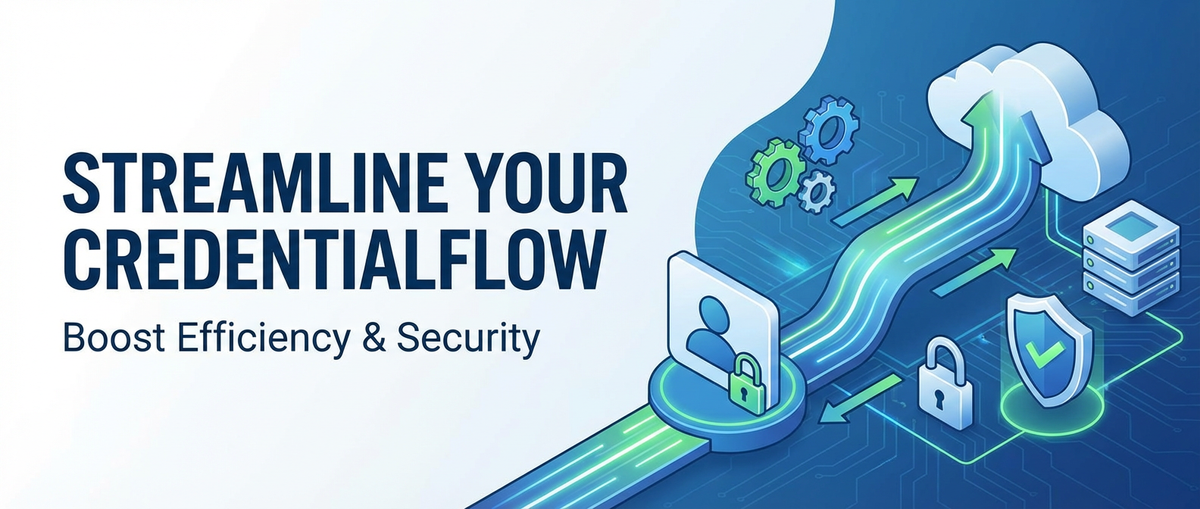
Streamline Your Credentialflow: Boost Efficiency & Security


In the intricate tapestry of modern digital ecosystems, the flow of credentials – from user logins to API keys and service accounts – represents the lifeblood of operations. Every interaction, every data exchange, every automated process hinges on secure and efficient credential management. However, as systems grow in complexity, embracing microservices, cloud deployments, and a myriad of third-party integrations, this "credentialflow" becomes a labyrinthine challenge. Businesses grapple with the dual imperatives of bolstering security against ever-evolving threats while simultaneously optimizing operational efficiency to foster innovation and agility. The quest for seamless, secure, and scalable credential management is no longer merely an IT concern; it is a strategic business imperative that underpins trust, drives productivity, and protects valuable assets.
This comprehensive exploration delves into the multifaceted dimensions of credentialflow, examining the inherent challenges and illuminating the transformative power of strategic solutions. We will dissect the critical roles played by key technological pillars – the api gateway, robust API Governance frameworks, and intuitive API Developer Portal platforms – in not just managing but actively streamlining this vital process. By understanding how these components synergize, organizations can move beyond reactive security measures and cumbersome manual processes towards a proactive, automated, and highly secure environment where credentials flow with precision, speed, and unwavering integrity.
The Evolving Landscape of Digital Credentials: A Proliferation of Access Points
The traditional model of a perimeter-based security approach, where a strong firewall guarded internal systems, has long been rendered obsolete by the distributed nature of modern applications. Today, organizations operate in a fluid environment characterized by hybrid clouds, remote workforces, a proliferation of IoT devices, and an ever-expanding network of third-party integrations. This paradigm shift has led to an explosion in the types and volumes of digital credentials that require careful management.
Consider the sheer variety: there are user credentials for employees, partners, and customers accessing web and mobile applications; machine-to-machine credentials for microservices communicating with each other; API keys for external developers integrating with an organization's services; database credentials; cloud service account keys; SSH keys for infrastructure access; and various tokens for authentication and authorization across different systems. Each of these represents a potential entry point, a vulnerability if not meticulously handled. The challenge is compounded by the ephemeral nature of many modern credentials, such as short-lived tokens, which, while enhancing security by limiting exposure, also demand sophisticated mechanisms for issuance, validation, and revocation. The sheer scale makes manual management impossible and error-prone, setting the stage for significant security risks and operational bottlenecks. Organizations must contend with managing these credentials across diverse environments, each with its own security context and access requirements, all while maintaining compliance with increasingly stringent regulatory frameworks like GDPR, CCPA, and industry-specific mandates. The inherent complexity mandates a holistic and automated approach to credentialflow, ensuring that every digital interaction, irrespective of its origin or destination, is underpinned by verified identity and authorized access.
Understanding "Credentialflow": More Than Just Passwords
"Credentialflow" encompasses the entire lifecycle and dynamics of digital credentials within an organization's ecosystem. It is a sophisticated dance involving the generation, secure storage, distribution, verification, rotation, and eventual revocation of all forms of digital identity and access tokens. This process is far more nuanced than simply storing usernames and passwords; it involves a complex interplay of systems and policies designed to ensure that the right entity has the right access, at the right time, for the right reasons.
At its core, credentialflow begins with the generation of credentials, whether they are automatically provisioned API keys, encrypted service account tokens, or user-generated passwords following strict complexity rules. This initial phase is critical, as weak generation practices can compromise the entire security chain. Following generation, credentials must be securely stored, often in specialized secrets management systems or vaults, protected by encryption and strict access controls, to prevent unauthorized discovery. Distribution refers to how these credentials are made available to the legitimate entities that need them – an application retrieving a database password, a developer obtaining an API key, or a user logging in. This phase must be carefully orchestrated to prevent interception or misuse.
Verification is the continuous process of authenticating the presented credential against its stored counterpart or validating its cryptographic signature, ensuring the entity claiming access is indeed who they say they are. This often involves mechanisms like multi-factor authentication (MFA) and single sign-on (SSO). Critically, credentials are not static; they must be regularly rotated to mitigate the impact of potential breaches or compromises, limiting the window of opportunity for attackers. Finally, when access is no longer required or a credential is suspected of being compromised, it must be revoked swiftly and thoroughly across all systems, preventing further unauthorized use. Each stage of this flow presents unique challenges and opportunities for both security enhancement and efficiency gains, underscoring the necessity for a well-architected and continuously monitored credential management strategy. Without a robust and streamlined credentialflow, organizations risk significant security vulnerabilities, operational inefficiencies, and damage to their reputation.
Security Imperatives in Credentialflow: Fortifying Digital Gates
The security of credentialflow is paramount. A single compromise can have catastrophic consequences, leading to data breaches, service disruptions, and severe reputational damage. Therefore, organizations must embed robust security mechanisms at every stage of the credential lifecycle, leveraging a multi-layered approach that addresses diverse threat vectors.
Authentication: Verifying Identity with Precision
Authentication is the initial gatekeeper, verifying the identity of an entity attempting to access a resource. Modern credentialflow demands more than just basic username-password checks. * Multi-Factor Authentication (MFA): Requires users to provide two or more verification factors to gain access, significantly reducing the risk of unauthorized access even if one factor is compromised. This can involve something they know (password), something they have (security token, phone), or something they are (biometrics). * Single Sign-On (SSO): Allows users to authenticate once and gain access to multiple independent software systems without re-authenticating. While enhancing user experience and efficiency, SSO implementations must be meticulously secured to prevent a single point of compromise. * OAuth and OpenID Connect: These protocols are crucial for modern applications, particularly APIs. OAuth provides a secure way for users to grant third-party applications limited access to their resources without sharing their credentials, while OpenID Connect builds on OAuth to provide identity verification, allowing clients to confirm the identity of the end-user. These token-based authentication methods are fundamental to microservices architectures, enabling secure, delegated access that is easily auditable and revocable. * API Keys: While simpler, API keys act as identifiers and authentication tokens for calling applications. Their security relies heavily on proper management – rotation, restriction to specific IP addresses, and pairing with other authentication methods.
Authorization: Granting the Right Level of Access
Once an identity is authenticated, authorization determines what that entity is permitted to do. Granular and context-aware authorization is vital to prevent authenticated users or applications from accessing or manipulating data they shouldn't. * Role-Based Access Control (RBAC): Assigns permissions based on a user's or service's defined role within the organization. This simplifies management, as permissions are tied to roles rather than individual entities. * Attribute-Based Access Control (ABAC): Offers finer-grained control by evaluating attributes of the user, resource, action, and environment in real-time. This dynamic approach allows for more complex access policies, adapting to changing contexts. * Policy-Based Access Control (PBAC) / Open Policy Agent (OPA): These systems externalize authorization policies, allowing security teams to define and enforce rules declaratively across various services and applications. OPA, for instance, provides a unified toolset for policy enforcement, ensuring consistency and auditability.
Secrets Management: Protecting the Crown Jewels
Securely storing and managing secrets (passwords, API keys, database credentials, certificates) is a cornerstone of credentialflow security. * Secrets Vaults and Key Management Systems (KMS): Dedicated solutions like HashiCorp Vault, AWS KMS, or Azure Key Vault provide centralized, encrypted storage for secrets, along with strict access controls, auditing capabilities, and features for automatic secret rotation. These systems ensure that secrets are never hardcoded into applications and are accessed only when needed by authorized services. * Ephemeral Credentials: Utilizing short-lived credentials that are automatically revoked or expired after a certain period or use. This significantly reduces the window of opportunity for attackers if a credential is leaked.
Threat Landscape and Mitigation
Credentialflow is constantly targeted by sophisticated attacks. * Credential Stuffing: Attackers use stolen credential pairs from one breach to attempt logins on other services, banking on users reusing passwords. Strong, unique passwords, MFA, and anomaly detection are crucial defenses. * Phishing: Deceptive attempts to trick users into revealing credentials. User education, email security filters, and MFA are vital. * Insecure Storage: Hardcoding credentials, storing them in plain text, or using weak encryption methods are common vulnerabilities. Secrets management solutions directly address this. * Insider Threats: Malicious or negligent insiders can abuse their legitimate access. Principle of least privilege, robust auditing, and strong access controls are key. * API Security Vulnerabilities: Specific to APIs, threats include broken authentication, excessive data exposure, injection flaws, and mass assignment. These demand specific API security testing and hardening.
Compliance and Regulatory Requirements
Beyond technical security, credentialflow must adhere to various compliance mandates. Regulations like GDPR, HIPAA, and PCI DSS often dictate specific requirements for how personal data is protected, which directly impacts credential management practices, data encryption, access logging, and audit trails. Maintaining meticulous records of credential access and changes is not just good practice but a regulatory necessity, allowing organizations to demonstrate adherence during audits and respond effectively to security incidents.
By integrating these security imperatives, organizations can construct a resilient and robust credentialflow, turning potential vulnerabilities into fortified digital gates.
Efficiency Drivers in Credentialflow: Unlocking Agility and Innovation
While security is non-negotiable, a credentialflow that is burdensome and inefficient can stifle innovation, slow down development cycles, and increase operational costs. The pursuit of efficiency in credential management is about enabling speed and agility without compromising security.
Automation: The Engine of Modern Credentialflow
Manual credential management is notoriously slow, prone to human error, and virtually impossible to scale in complex environments. Automation is the single most powerful lever for boosting efficiency. * Automated Provisioning: Tools that automatically provision credentials for new users, services, or applications based on predefined policies and roles. This eliminates manual approvals and configurations, speeding up onboarding. * Automated Rotation: Regularly scheduled, automatic rotation of API keys, database passwords, and other secrets dramatically reduces the risk exposure. Instead of engineers manually updating dozens or hundreds of secrets, an automated system can handle this seamlessly, often with zero downtime through smart credential management systems. * Automated Revocation: In cases of compromise or when access is no longer needed, automated systems can instantly revoke credentials across all integrated systems, minimizing the window of vulnerability. * Infrastructure as Code (IaC) Integration: Integrating credential provisioning and management into IaC pipelines ensures that security configurations are consistently applied and that secrets are managed securely from the moment infrastructure is stood up.
Standardization: Simplifying Complexity
A fragmented approach to credential management, with different systems using disparate authentication mechanisms, breeds complexity and inefficiency. * Standardized Protocols: Adopting industry-standard protocols like OAuth 2.0, OpenID Connect, and SAML for authentication and authorization across the entire ecosystem. This reduces the number of unique integrations and makes it easier for developers to build secure applications. * Unified API Formats: For internal services and especially for AI models, a unified API format simplifies invocation and maintenance. For instance, platforms that standardize request data formats across various AI models ensure that changes in underlying models or prompts don't break applications, significantly reducing maintenance costs and enabling quicker adaptation to new technologies. * Consistent Policies: Applying a consistent set of security policies and guidelines for credential usage across all teams and services. This reduces ambiguity, simplifies compliance, and makes it easier to audit.
Developer Experience: The Key to Adoption
If security measures are too cumbersome, developers will find workarounds, often leading to insecure practices. A positive developer experience is crucial for efficient credentialflow. * Self-Service Capabilities: Empowering developers to provision their own API keys, manage access tokens, and access documentation through self-service portals. This reduces reliance on central IT teams and accelerates development cycles. * Clear Documentation and SDKs: Providing comprehensive, easy-to-understand documentation and ready-to-use Software Development Kits (SDKs) that guide developers on how to securely integrate with APIs and manage credentials. * Reduced Friction in Security: Designing security processes that are robust yet minimally intrusive. For example, using token-based authentication with clear expiration policies that can be programmatically refreshed, rather than requiring frequent manual credential updates.
Reduced Operational Overhead: Freeing Up Resources
Efficient credentialflow directly translates to reduced operational overhead for security and operations teams. * Fewer Incidents: Proactive security measures and automated processes lead to fewer credential-related security incidents, reducing the time and resources spent on incident response and remediation. * Streamlined Auditing: Centralized logging and standardized credential management make audit processes faster and less resource-intensive. * Faster Development Cycles: By removing credential-related roadblocks, developers can focus on building features and innovating, accelerating time-to-market for new products and services.
By prioritizing these efficiency drivers, organizations can transform credentialflow from a security burden into an enabler of speed, agility, and continuous innovation, allowing them to remain competitive in a rapidly evolving digital landscape.
The Role of an API Gateway in Streamlining Credentialflow
An api gateway stands as a pivotal component in modern microservices architectures, acting as a single entry point for all API requests. Far more than just a reverse proxy, a robust API gateway plays a critical role in streamlining credentialflow by centralizing security enforcement, managing traffic, and providing invaluable insights, thereby offloading these complex concerns from individual backend services.
Centralized Authentication & Authorization: The Frontline Defender
One of the most significant contributions of an API gateway to credentialflow is its ability to centralize authentication and authorization. Instead of each microservice having to implement its own security logic, the gateway can handle these concerns uniformly at the edge. * Token Validation: The API gateway can validate various types of tokens, such as JSON Web Tokens (JWTs), OAuth access tokens, or API keys, before forwarding requests to upstream services. This involves verifying signatures, checking expiration dates, and ensuring the token's issuer is trusted. By offloading this computational and logical burden, backend services can focus purely on business logic, leading to cleaner codebases and reduced attack surfaces. * API Key Management: API gateways are adept at managing API keys, allowing administrators to issue, revoke, and monitor key usage. They can enforce policies associated with specific keys, such as rate limits or access permissions to particular APIs or operations. * OAuth and OpenID Connect Integration: Gateways can integrate directly with Identity Providers (IdPs) to facilitate OAuth and OpenID Connect flows, obtaining and managing access tokens on behalf of client applications. This provides a standardized and secure way to authenticate users and authorize applications without backend services needing direct knowledge of the IdP. * Policy Enforcement: Based on the authenticated identity and the requested resource, the API gateway can apply granular authorization policies. This might involve checking roles (RBAC), attributes (ABAC), or even making real-time calls to an external policy decision point (like OPA) to determine if a request should be allowed. This consistent enforcement across all APIs prevents unauthorized access attempts from even reaching backend services.
Traffic Management for Security and Availability
While not directly a credential management function, an API gateway's traffic management capabilities indirectly bolster credentialflow security and efficiency. * Rate Limiting and Throttling: By controlling the number of requests an individual client can make within a certain timeframe, the gateway can prevent credential stuffing attacks or brute-force attempts that try to guess credentials. It also protects backend services from being overwhelmed, maintaining availability. * Caching: Caching responses for frequently requested data can reduce the load on backend services, improving performance and resilience, which is particularly relevant for authentication metadata or authorization policies. * Load Balancing: Distributing incoming requests across multiple instances of a backend service ensures high availability and resilience. If one service instance fails, the gateway can reroute traffic, ensuring continuous access for legitimate users and services.
Logging, Monitoring, and Auditing: The Eyes and Ears
A powerful API gateway provides comprehensive logging and monitoring capabilities, which are indispensable for auditing credentialflow and responding to security incidents. * Detailed Call Logging: Every API call passing through the gateway can be logged, including details about the authenticated user or service, the API accessed, the time, and the outcome. This detailed record is crucial for forensic analysis, identifying suspicious patterns, and fulfilling compliance requirements. * Real-time Monitoring: Gateways can provide real-time dashboards and alerts, notifying security teams of unusual activity, such as a sudden spike in failed authentication attempts or access from unusual geographic locations, enabling proactive threat detection.
For organizations seeking a comprehensive solution for managing and securing their API infrastructure, including sophisticated AI model integration and end-to-end API lifecycle management, platforms like ApiPark provide robust API gateway functionalities. APIPark is designed to manage, integrate, and deploy AI and REST services with ease, offering features like unified API formats for AI invocation and powerful performance rivaling Nginx, all while providing detailed API call logging crucial for credentialflow oversight. Its ability to quickly integrate over 100 AI models and encapsulate prompts into REST APIs means that organizations can build new, secure services rapidly, with the gateway handling the underlying credential and access complexities.
The strategic deployment of an API gateway thus transforms credentialflow from a scattered, service-specific concern into a centralized, robustly managed, and highly observable process, significantly enhancing both security and operational efficiency.
APIPark is a high-performance AI gateway that allows you to securely access the most comprehensive LLM APIs globally on the APIPark platform, including OpenAI, Anthropic, Mistral, Llama2, Google Gemini, and more.Try APIPark now! 👇👇👇
The Power of API Governance: Architecting Order in a Complex World
As organizations increasingly rely on APIs to power their digital services, the sheer volume and diversity of these interfaces can quickly lead to a chaotic and insecure landscape if not properly managed. This is where API Governance becomes an indispensable framework, providing the policies, standards, and processes necessary to manage the entire API lifecycle securely and efficiently. For credentialflow, API governance acts as the architectural blueprint, ensuring consistency, compliance, and resilience across all API-driven interactions.
Defining API Governance: A Holistic Framework
API governance is not merely a set of rules; it's a strategic approach that dictates how APIs are designed, developed, published, consumed, and retired. It encompasses: * Policy Definition: Establishing clear policies for API design, security, performance, documentation, and versioning. * Standard Enforcement: Ensuring that all APIs adhere to agreed-upon technical standards (e.g., OpenAPI specifications, authentication protocols, error handling). * Lifecycle Management: Guiding APIs through their entire journey from ideation to deprecation, ensuring each stage is handled securely and efficiently. * Stakeholder Alignment: Ensuring that development teams, security teams, operations, and business units are all aligned on API strategy and best practices.
Why API Governance is Critical for Credentialflow
API governance directly impacts the security and efficiency of credentialflow by imposing order and consistency where chaos might otherwise reign. * Ensuring Consistent Security Policies: Without governance, individual teams might implement varying authentication and authorization mechanisms for their APIs, leading to fragmentation and potential vulnerabilities. API governance dictates that all APIs must adhere to a consistent set of security policies, such as mandatory OAuth 2.0 implementation, specific API key generation requirements, or the use of standardized scopes for authorization. This consistency reduces the attack surface and simplifies security auditing. * Standardizing Authentication/Authorization Mechanisms: Governance mandates the use of approved and secure authentication methods (e.g., JWT, OAuth, mTLS) and authorization models (e.g., RBAC, ABAC) across the entire API ecosystem. This standardization means developers spend less time figuring out how to secure their APIs and more time building features, while security teams have a clear framework to review and enforce. It also ensures that credentials, whether API keys or access tokens, are managed and validated uniformly, enhancing overall security. * Managing API Versions and Deprecation Securely: API governance provides clear guidelines for versioning APIs and for the secure deprecation of older versions. When an API or its underlying authentication mechanism changes, governance ensures a controlled transition, preventing disruption or exposure during the migration period. It ensures that outdated or insecure authentication methods are retired systematically. * Auditability and Compliance: A well-defined API governance framework dictates that all API interactions, including authentication attempts and authorization decisions, are logged and auditable. This is critical for demonstrating compliance with regulatory requirements (e.g., GDPR, HIPAA, PCI DSS) and for conducting security forensic investigations. Consistent logging standards make it easier to trace credential usage and identify anomalies. * Promoting Best Practices: Governance educates and empowers development teams to adopt secure coding practices from the outset, including how to handle sensitive data, validate inputs, and manage secrets securely. This proactive approach reduces the likelihood of credential-related vulnerabilities being introduced into the codebase. * Centralized Credential Policies: For example, governance might dictate that all service-to-service communication must use mutual TLS (mTLS) with certificates managed through a central PKI, or that all API keys must be ephemeral and rotated automatically every 90 days. Such directives ensure a uniform, high level of security for all credentials used across the API landscape.
For organizations seeking comprehensive API lifecycle management, including robust governance features, platforms like [ApiPark](https://apipark.com/] offer end-to-end solutions. APIPark assists with managing the entire lifecycle of APIs, from design and publication to invocation and decommissioning. It helps regulate API management processes, manage traffic forwarding, load balancing, and versioning of published APIs, all under a strong governance umbrella. Its capability to offer independent API and access permissions for each tenant, coupled with subscription approval features, directly supports a granular and secure API governance strategy for complex, multi-team environments. By providing a centralized display of all API services, APIPark facilitates shared understanding and adherence to governance policies, making it easier for different departments and teams to find and securely use required API services.
In essence, API governance is the strategic backbone that supports secure credentialflow, transforming a potentially chaotic proliferation of access points into a well-ordered, highly secure, and efficiently managed ecosystem. It moves organizations from a reactive security posture to a proactive, policy-driven approach, ensuring that every credential-driven interaction aligns with organizational security and business objectives.
Leveraging an API Developer Portal for Enhanced Security and Efficiency
An API Developer Portal serves as the public face and self-service hub for an organization's APIs, providing developers with the tools and information they need to discover, understand, subscribe to, and integrate with available services. While its primary goal is to foster API adoption and enhance developer experience, a well-designed API Developer Portal plays a crucial, often underestimated, role in bolstering the security and efficiency of credentialflow. By empowering developers with self-service capabilities and clear guidance, it reduces friction, minimizes errors, and enforces secure practices at the point of consumption.
What is an API Developer Portal?
At its core, an API Developer Portal is a centralized platform offering: * API Discovery: A catalog of available APIs with clear descriptions, use cases, and categorization. * Documentation: Comprehensive, interactive documentation (e.g., OpenAPI/Swagger UI) detailing endpoints, request/response formats, authentication requirements, and error codes. * API Key Management: Functionality for developers to register applications, generate API keys, and manage their credentials. * Testing and Sandboxing: Tools to test APIs directly within the portal or access sandbox environments. * Analytics: Insights into API usage for individual developers or applications. * Support and Community: Forums, FAQs, and support channels.
How it Enhances Credentialflow Security and Efficiency
The self-service nature and structured environment of an API Developer Portal significantly contribute to a streamlined and secure credentialflow. * Self-Service API Key Management: Developers can register their applications and generate their own API keys directly through the portal. This automates a typically manual and time-consuming process, drastically improving efficiency. Critically, it also ensures that keys are generated according to predefined security policies (e.g., minimum length, character complexity, specific key types), preventing developers from using weak or insecure keys. The portal can also facilitate key rotation and revocation, empowering developers to manage their credentials securely without needing intervention from operations teams. * Clear Documentation & Onboarding for Secure Usage: Comprehensive and up-to-date documentation on the portal is paramount. It explicitly outlines the required authentication mechanisms (e.g., OAuth flows, API key headers), authorization scopes, and best practices for securely storing and using credentials. By providing clear examples and walkthroughs, the portal educates developers on how to properly integrate with APIs while adhering to security protocols, thereby reducing the likelihood of insecure implementations or credential mishandling. This clarity directly impacts credentialflow efficiency by minimizing support queries related to authentication issues. * Access Control & Subscription Approval: A robust API Developer Portal provides granular access control, ensuring that developers only subscribe to and access APIs relevant to their projects or business needs. This aligns with the principle of least privilege. Furthermore, some portals, including advanced platforms, incorporate subscription approval features. This means that after a developer subscribes to an API, an administrator must approve the request before the API can be invoked. This crucial step acts as an additional layer of security, preventing unauthorized API calls and potential data breaches by ensuring human oversight on critical access requests. * Developer-Facing Analytics & Monitoring: While API gateways provide centralized logging, a developer portal can offer developers specific insights into their API usage, including successful and failed requests, authentication errors, and rate limit breaches. This transparency helps developers quickly identify and rectify issues related to their credentials or usage patterns, improving efficiency and reducing the burden on support teams. It also helps them understand if their credentials are being misused or compromised by observing unexpected usage spikes. * Fostering Secure Development Practices and Community: By acting as a central hub, the portal can promote a culture of security. Through forums, blog posts, and educational content, it can share updates on security best practices, communicate policy changes, and provide guidance on new authentication methods. This community aspect empowers developers to learn from each other and stay informed about the latest security protocols, contributing to a more secure overall credentialflow. * Tenant and Team Separation: For larger organizations or those offering services to multiple external partners, an API Developer Portal can support multi-tenancy. This feature, where each tenant (team or organization) has independent applications, data, user configurations, and security policies, while sharing underlying applications and infrastructure, significantly enhances credentialflow efficiency. It allows for delegated administration of credentials within each tenant, improving resource utilization and reducing operational costs for the central API management team.
A well-designed API Developer Portal, such as the one offered by ApiPark, acts as a central hub, not just for API consumption but also for fostering secure credentialflow. APIPark's platform enables the centralized display of all API services, making it easy for different departments and teams to find and use the required API services. Its support for independent API and access permissions for each tenant, coupled with features like API resource access requiring approval, directly enhances the security and governance of credentialflow. By providing a clear, self-service interface, it minimizes friction for developers while simultaneously enforcing stringent security protocols, turning credential management into an efficient and transparent process.
By embracing an API Developer Portal, organizations transform credentialflow from a potential bottleneck into a streamlined, secure, and developer-friendly process, ultimately accelerating innovation and fostering a robust API ecosystem.
Integrating These Components for a Holistic Solution
The true power of an api gateway, robust API Governance, and a comprehensive API Developer Portal is unlocked when they are integrated into a cohesive, holistic solution for managing credentialflow. Each component plays a distinct yet interconnected role, contributing to an ecosystem that is not only secure and efficient but also scalable and adaptable to future challenges. This synergy transforms the complex challenge of credentialflow into a streamlined, automated, and observable process.
The Interplay: A Symphony of Security and Efficiency
Imagine the lifecycle of a new API being published, or a developer seeking access to an existing one. 1. API Governance as the Conductor: Before any API is even designed, API governance dictates the security standards and policies. It specifies which authentication mechanisms (e.g., OAuth 2.0 with specific scopes, mTLS for internal services) must be used, how API keys should be generated and managed, and the required logging standards. This ensures that security is baked in from the very beginning, preventing inconsistencies and vulnerabilities later down the line. It defines the 'rules of the road' for all credential-related activities. 2. API Developer Portal as the Front Desk: Once an API adheres to governance standards, it's published to the API Developer Portal. Here, external developers or internal teams discover the API. Through the portal, they register their applications, generate API keys (adhering to governance-defined policies), and subscribe to the API. If subscription approval is required (a governance-mandated feature often managed via the portal), an administrator reviews and approves the request, ensuring that access is granted only to legitimate parties for appropriate use cases. The portal also provides crystal-clear documentation on how to securely use the API, including proper credential handling. 3. API Gateway as the Enforcer: When a request arrives from a client application, it first hits the API gateway. The gateway, acting on governance policies, performs the initial and critical security checks. It validates the API key or access token presented by the client – checking its validity, expiration, and associated permissions. It then enforces rate limits and other traffic management policies. Only if all these checks pass does the gateway forward the request to the appropriate backend service. The gateway also logs every interaction, providing an auditable trail for credential usage, which feeds back into governance for compliance monitoring. 4. Feedback Loop for Continuous Improvement: The insights gathered from the API Gateway's logging and monitoring, combined with usage data from the API Developer Portal, provide valuable feedback for refining API governance policies. For example, if monitoring reveals frequent brute-force attempts on certain APIs, governance might mandate stronger API key generation policies or implement more aggressive rate limiting via the gateway. If developers consistently struggle with a particular authentication flow, the portal's documentation or even the API's design can be improved according to governance guidelines.
Scenario Examples in Action
- New API Onboarding: A development team builds a new service. API governance provides them with security guidelines (e.g., use OAuth for authentication, define specific scopes). The API is registered with the API gateway (which will enforce these policies) and published to the developer portal with clear documentation for developers to consume securely.
- Credential Rotation: Governance mandates automatic rotation of all API keys every 90 days. The API gateway, integrated with a secrets management system, facilitates this rotation seamlessly for internal services. For external developers, the API developer portal can notify them of upcoming key expirations and provide self-service tools for generating new keys without service interruption.
- Incident Response: A security incident involving a compromised API key is detected. The API gateway's detailed logs help trace the key's usage. The compromised key is immediately revoked via the API gateway (or the developer portal for external keys). API governance then initiates a review to understand the root cause and update policies to prevent recurrence.
- AI Service Integration: A data science team wants to expose a new AI model as a service. API governance dictates that this AI service, once exposed via a REST API, must adhere to the same security standards as any other critical service. ApiPark, acting as both an AI Gateway and API Management platform, would be ideal here. It would unify the AI invocation format, secure the API via its gateway functions (centralized authentication, authorization), and then publish it to its API Developer Portal, allowing other internal teams to discover and securely integrate with the new AI capability, all under the umbrella of defined API governance policies.
This integrated approach ensures that security is not an afterthought but an intrinsic part of the API ecosystem. It eliminates redundant security implementations, reduces manual effort, and provides a clear, auditable chain of custody for all digital credentials, ultimately bolstering trust and enabling agile innovation.
Advanced Strategies for Credentialflow Optimization
Beyond the foundational elements of API gateways, governance, and developer portals, organizations can implement advanced strategies to further optimize credentialflow, ensuring maximal security, efficiency, and adaptability in increasingly complex environments. These strategies often involve leveraging cutting-edge security principles and integrating sophisticated technologies.
Embracing Zero Trust Principles
The Zero Trust security model, which operates on the principle of "never trust, always verify," is profoundly impactful for credentialflow. Instead of assuming trust based on network location, every request, whether from inside or outside the network, must be authenticated, authorized, and continuously validated. * Micro-segmentation: Dividing the network into smaller, isolated segments and applying granular security policies to each segment. This limits the lateral movement of an attacker even if one credential is compromised. * Continuous Authentication and Authorization: Credentials are not just validated at the point of entry. Zero Trust mandates continuous verification of user and device identity, context (e.g., location, time, device posture), and authorization for every access request. This means an API gateway might re-evaluate authorization for long-lived sessions or adjust access based on changes in user context. * Least Privilege Access: Ensuring that users and services only have the minimum necessary access required to perform their functions. This significantly reduces the blast radius of a compromised credential.
Identity Federation
For organizations operating across multiple domains, clouds, or with numerous partners, identity federation simplifies credentialflow by allowing users to use a single set of credentials to access resources across different, independent security domains. * SAML (Security Assertion Markup Language) and OIDC (OpenID Connect): These protocols enable secure exchange of authentication and authorization data between an identity provider (IdP) and a service provider (SP). This removes the need for users to manage multiple identities and for organizations to replicate identity stores, streamlining access for employees and partners. * Cross-Cloud Identity: Federating identities across different cloud providers (e.g., AWS, Azure, GCP) simplifies access management for multi-cloud deployments, ensuring consistent credential policies.
Machine-to-Machine (M2M) Authentication
With the rise of microservices and automated workflows, machines often need to authenticate with other machines without human intervention. * Client Credentials Grant (OAuth 2.0): This flow is specifically designed for M2M communication, allowing a client application to obtain an access token directly from the authorization server using its own credentials, rather than impersonating a user. * mTLS (Mutual Transport Layer Security): Requires both the client and the server to authenticate each other using certificates. This provides strong, identity-based authentication for service-to-service communication, ensuring that only trusted machines can interact. An API gateway can be configured to enforce mTLS for all internal API traffic, adding a critical layer of trust to credentialflow. * Service Accounts and Managed Identities: Cloud providers offer managed identity solutions where services can automatically obtain credentials without developers explicitly storing them. These identities are bound to the service and securely managed by the cloud provider, significantly improving credentialflow security and efficiency.
API Security Testing and Pen Testing
Proactive security testing is essential to identify vulnerabilities in credentialflow before they are exploited. * Automated API Security Testing: Incorporating tools that automatically scan APIs for common vulnerabilities, including broken authentication, improper authorization, and insecure handling of secrets. This is integrated into CI/CD pipelines to catch issues early. * Penetration Testing: Ethical hackers simulate real-world attacks to find weaknesses in the API ecosystem, including credential management flaws, providing an invaluable "attacker's eye" view. * Fuzz Testing: Sending malformed or unexpected data to API endpoints to uncover vulnerabilities related to input validation, which can sometimes be exploited for credential bypass or session hijacking.
AI/ML in Security for Credentialflow
Artificial Intelligence and Machine Learning are increasingly being leveraged to enhance credentialflow security. * Anomaly Detection: AI/ML algorithms can analyze vast amounts of API call logs (often collected by the API gateway) to detect unusual patterns in credential usage, such as logins from new locations, unusual access times, or spikes in failed authentication attempts. This proactive detection can alert security teams to potential credential compromise in real-time. * Risk-Based Authentication: Instead of a one-size-fits-all approach, AI can assess the risk of a login attempt in real-time based on context (device, location, historical behavior) and dynamically request additional authentication factors (e.g., MFA) if the risk is high. * Automated Threat Hunting: AI can automate the process of sifting through security data to identify emerging threats and vulnerabilities related to credentialflow that might be missed by human analysts.
APIPark's Contribution to Advanced Strategies
Platforms like ApiPark inherently support many of these advanced strategies. Its powerful data analysis capabilities can analyze historical call data to display long-term trends and performance changes, which is crucial for AI/ML-driven anomaly detection and preventive maintenance. Its end-to-end API lifecycle management, including robust logging, provides the granular data necessary for comprehensive security testing and auditability required by Zero Trust. Furthermore, by standardizing AI invocation and offering features like independent access permissions for tenants, APIPark facilitates secure M2M communication and granular access control, key tenets of advanced credentialflow management.
By strategically implementing these advanced strategies, organizations can move beyond basic security, creating a highly resilient, intelligent, and efficient credentialflow that is capable of adapting to the evolving threat landscape and supporting complex, dynamic digital environments.
Future Trends in Credentialflow Management
The landscape of digital identity and access is in a constant state of evolution, driven by technological advancements, emerging threats, and the demand for ever-greater convenience and security. Future trends in credentialflow management promise to reshape how we authenticate, authorize, and secure access across the digital realm, moving towards more intelligent, decentralized, and resilient systems.
Passwordless Authentication
The demise of the traditional password has been long predicted, and passwordless authentication is steadily gaining traction. This trend seeks to eliminate the vulnerabilities and user friction associated with passwords by leveraging stronger, more convenient methods. * Biometrics: Fingerprint scans, facial recognition, and voice recognition are becoming standard on devices, offering a seamless and secure way to authenticate. * Magic Links and One-Time Passcodes (OTPs): Sending a secure link or a temporary code to a trusted device (email, SMS, authenticator app) for single-use authentication. * FIDO2/WebAuthn: These open standards enable strong, phishing-resistant authentication using cryptographic keys generated and stored securely on a user's device, eliminating the need for passwords and making authentication much more secure and user-friendly. The integration of such standards directly impacts credentialflow by replacing vulnerable password-based credentials with cryptographically strong ones. * Device-Based Authentication: Relying on the unique identity and security posture of a trusted device for authentication, often in conjunction with other factors.
Decentralized Identity (DID) and Verifiable Credentials
Decentralized Identity represents a paradigm shift from centralized identity providers to a model where individuals and organizations control their own digital identities. * Self-Sovereign Identity (SSI): Users create and manage their own unique digital identifiers (DIDs) on a decentralized ledger (e.g., blockchain). They then collect Verifiable Credentials (VCs) – digital attestations of attributes (e.g., age, degree, employment) issued by trusted authorities and cryptographically signed. * Impact on Credentialflow: Instead of sharing sensitive personal data or generating numerous API keys for every service, users and services could present a Verifiable Credential to an API Gateway or service, which would cryptographically verify its authenticity without needing to directly query a centralized database. This could revolutionize credential sharing, making it more private, secure, and user-centric, drastically simplifying credential management by reducing the number of secrets to store and manage centrally.
Quantum-Safe Cryptography (Post-Quantum Cryptography - PQC)
The advent of quantum computing poses a significant threat to current cryptographic algorithms, which underpin much of our digital security, including credential encryption and digital signatures. * Preparing for the Quantum Threat: Research and development are actively focused on creating new cryptographic algorithms that can withstand attacks from quantum computers. * Impact on Credentialflow: As these PQC algorithms mature, they will need to be integrated into all layers of credentialflow, from securing stored secrets to authenticating API requests and encrypting data in transit. Organizations will need to assess their current cryptographic inventory and plan for a transition to quantum-safe alternatives to protect long-term data confidentiality and integrity. API gateways and secrets management systems will be among the first components requiring upgrades to PQC algorithms to safeguard credentialflow against future threats.
API Security Mesh
As organizations move towards highly distributed microservices architectures, the concept of an API security mesh is emerging. * Service Mesh Integration: Extending the capabilities of a service mesh (which manages service-to-service communication) with enhanced security features. * Decentralized Policy Enforcement: Rather than relying solely on a single API gateway at the edge, an API security mesh can enable policy enforcement, including authentication and authorization, closer to individual services. This provides more granular control and resilience, especially for internal M2M credentialflow, reducing the reliance on a single choke point. This concept complements the API gateway, pushing some security capabilities closer to the services.
AI-Powered Proactive Security and Governance
Building on current AI/ML capabilities, future systems will leverage AI more extensively for proactive security and automated governance. * Predictive Threat Intelligence: AI will move beyond anomaly detection to predict potential credential-related attacks based on global threat intelligence, behavior patterns, and system vulnerabilities, allowing for preemptive hardening. * Self-Healing Security Systems: AI-driven systems could autonomously respond to detected threats in credentialflow, automatically revoking compromised credentials, reconfiguring access policies, or isolating affected components, reducing human intervention and response times. * AI-Driven Governance Evolution: AI could help organizations dynamically adapt their API governance policies based on real-time threat landscapes, compliance changes, and internal usage patterns, ensuring that credentialflow management remains optimal and secure.
The future of credentialflow management is poised to be more dynamic, intelligent, and user-centric. By anticipating these trends and strategically integrating emerging technologies, organizations can ensure their credentialflow remains a robust enabler of digital transformation, secure against both current and future threats. Platforms that offer flexibility, robust integration capabilities, and a forward-looking approach to security, such as ApiPark, will be crucial in navigating this evolving landscape, providing the tools necessary to embrace these future trends effectively within their API and AI management strategies.
Conclusion: Fortifying the Digital Frontier with Streamlined Credentialflow
In the relentlessly accelerating digital age, where every interaction, every data point, and every automated process is an intricate dance of access and authentication, the efficient and secure management of "credentialflow" stands as a foundational pillar for any resilient organization. We have journeyed through the complexities of modern credential management, from the proliferation of diverse digital identities to the critical imperatives of security, efficiency, and compliance. The challenges are formidable, but the solutions are equally powerful when strategically deployed.
The API Gateway emerges as the vigilant sentinel, centralizing authentication and authorization, offloading security burdens from individual services, and providing the invaluable logs necessary for continuous monitoring and incident response. It acts as the traffic controller, ensuring that only verified and authorized requests proceed to the backend, thereby streamlining the flow of credentials by making it consistent and observable.
API Governance provides the indispensable architectural framework, transforming potential chaos into structured order. By dictating consistent policies for API design, security, and lifecycle management, it ensures that every credential-driven interaction adheres to the highest standards of integrity and compliance. It is the guiding hand that shapes a secure and efficient ecosystem, preventing fragmented security implementations and fostering best practices across all development teams.
The API Developer Portal, meanwhile, serves as the empowering interface, transforming the developer experience from a source of friction into one of enablement. By offering self-service credential management, clear documentation, and transparent access control, it dramatically boosts efficiency and encourages secure API consumption. It's the point where policies become actionable, allowing developers to integrate securely and swiftly, while features like subscription approval add a critical layer of human oversight to maintain security.
When these three components – the API Gateway, API Governance, and the API Developer Portal – are seamlessly integrated, they create a synergistic ecosystem that fundamentally redefines credentialflow. This holistic approach moves organizations beyond reactive security measures and cumbersome manual processes. It enables automated credential provisioning, intelligent threat detection, and adaptive security policies, all while accelerating development cycles and reducing operational overhead. Platforms such as ApiPark, which offers an open-source AI Gateway and API Management Platform with robust features spanning these critical areas, exemplify how integrated solutions can empower enterprises to manage, integrate, and deploy services with enhanced efficiency and unwavering security.
Looking ahead, the evolution towards passwordless authentication, decentralized identity, and quantum-safe cryptography will further transform credentialflow, making it even more resilient, private, and user-centric. By strategically investing in and continuously refining their credentialflow management, organizations are not just protecting their digital assets; they are fortifying their digital frontier, building trust, and unlocking unparalleled opportunities for innovation and growth in an increasingly interconnected world. The journey to a truly streamlined and secure credentialflow is ongoing, but with the right architecture and tools, it is a journey towards a more secure and efficient digital future.
Frequently Asked Questions (FAQ)
1. What is "Credentialflow" and why is it important for businesses?
"Credentialflow" refers to the entire lifecycle of digital credentials within an organization, including their generation, secure storage, distribution, verification, rotation, and revocation. It's crucial because every digital interaction, from user logins to API calls, relies on valid credentials. A streamlined and secure credentialflow is essential to prevent unauthorized access, mitigate data breaches, ensure compliance with regulations, and maintain operational efficiency and trust in digital services.
2. How does an API Gateway enhance the security of credentialflow?
An API Gateway acts as a central enforcement point for all API requests. It enhances credentialflow security by centralizing authentication and authorization, meaning it validates API keys, access tokens (like OAuth tokens), and applies security policies before requests reach backend services. This offloads security logic from microservices, reduces the attack surface, provides consistent policy enforcement (e.g., rate limiting, access controls), and offers comprehensive logging for auditing and threat detection.
3. What role does API Governance play in optimizing credentialflow efficiency?
API Governance establishes the policies, standards, and processes for managing APIs throughout their lifecycle. For credentialflow, it ensures consistency by mandating standardized authentication protocols and security measures across all APIs. This reduces development friction, minimizes security vulnerabilities, and simplifies compliance. By providing clear guidelines and best practices for credential handling, governance promotes efficient and secure development, reducing rework and speeding up API delivery.
4. How does an API Developer Portal improve both security and efficiency in credentialflow?
An API Developer Portal improves security by providing a self-service platform for developers to generate and manage their API keys, adhering to predefined security policies. It offers clear documentation on secure API usage and authentication methods, reducing errors. For efficiency, it automates the process of API key provisioning, allows for granular access control with potential subscription approvals, and provides developers with insights into their API usage. This empowers developers while enforcing secure practices, reducing reliance on central IT teams.
5. Can you provide an example of how APIPark helps streamline credentialflow?
ApiPark offers an integrated AI Gateway and API Management Platform that significantly streamlines credentialflow. Its API gateway capabilities centralize authentication and authorization for both REST and AI services, validating tokens and enforcing policies. For example, it can unify API formats for AI invocation, ensuring secure and consistent access to various AI models. Its robust API Governance features help manage the entire API lifecycle, including controlling access permissions for different teams (tenants) and enabling subscription approval for API resources. Additionally, APIPark's API Developer Portal facilitates self-service API discovery and management, offering detailed call logging and data analysis, which are critical for monitoring credential usage and enhancing security. This integrated approach simplifies credential management, making it more secure and efficient across the enterprise.
🚀You can securely and efficiently call the OpenAI API on APIPark in just two steps:
Step 1: Deploy the APIPark AI gateway in 5 minutes.
APIPark is developed based on Golang, offering strong product performance and low development and maintenance costs. You can deploy APIPark with a single command line.
curl -sSO https://download.apipark.com/install/quick-start.sh; bash quick-start.sh

In my experience, you can see the successful deployment interface within 5 to 10 minutes. Then, you can log in to APIPark using your account.

Step 2: Call the OpenAI API.