Testing Public APIs: Understanding Contract Meaning


In the vast and interconnected landscape of modern software development, Application Programming Interfaces (APIs) serve as the fundamental building blocks, enabling disparate systems to communicate, share data, and collaborate seamlessly. From powering mobile applications and web services to facilitating complex enterprise integrations and the burgeoning field of artificial intelligence, the reliance on APIs has grown exponentially. Among these, public APIs hold a particularly crucial position, offering developers access to a wealth of services, data, and functionalities without the need to build them from scratch. However, the very nature of consuming external, publicly accessible services introduces a unique set of challenges, predominantly centered around reliability, predictability, and maintaining consistent functionality. The cornerstone of mitigating these challenges lies in a deep understanding of the API contract and the implementation of rigorous testing methodologies. Without a precise grasp of what an API promises and robust validation of those promises, applications built upon public services risk becoming brittle, prone to unexpected failures, and incredibly difficult to maintain.
This comprehensive guide delves into the intricate world of testing public APIs, emphasizing the paramount importance of truly understanding the API contract. We will explore what constitutes an API contract, how standards like OpenAPI facilitate this understanding, why testing these external dependencies is not just a best practice but a fundamental necessity, and the various strategies and tools available to ensure the stability and reliability of your integrations. Furthermore, we will touch upon the broader concept of API Governance and its critical role in both providing and consuming public APIs effectively, ultimately aiming to equip developers and organizations with the knowledge to build resilient, future-proof applications in an API-driven world.
Part 1: The Foundation – What is an API Contract?
At its heart, an API contract is a formal agreement between the provider of an API and its consumers, outlining the exact behavior, structure, and constraints of the API. It acts as a blueprint, specifying precisely what consumers can expect when interacting with the API and, conversely, what the API provider commits to delivering. This contract is far more than mere documentation; it is the definitive source of truth that dictates how data is exchanged, how requests should be formatted, and what responses will look like under various conditions. Ignoring or misinterpreting this contract is akin to attempting to build a house without referring to its architectural plans – the results are almost guaranteed to be unstable, dysfunctional, and require extensive, costly rework.
Defining the Core Components of an API Contract
An effective API contract is multifaceted, encompassing a wide array of details that collectively define the interaction paradigm. These components ensure that both sides of the communication understand their roles and responsibilities. Let's dissect the key elements:
- Endpoints and HTTP Methods: The contract explicitly lists the available URLs (endpoints) that consumers can interact with, alongside the specific HTTP methods (GET, POST, PUT, DELETE, PATCH) permitted for each endpoint. This defines the resources that can be accessed and the operations that can be performed on them. For instance,
/usersmight support GET for retrieving users and POST for creating a new user, while/users/{id}supports GET, PUT, and DELETE for specific user manipulation. - Request Parameters: For each endpoint and method combination, the contract specifies the required and optional parameters that must be included in the request. These can be:
- Path Parameters: Variables embedded directly in the URL (e.g.,
{id}in/users/{id}). - Query Parameters: Key-value pairs appended to the URL after a
?(e.g.,?status=active). - Header Parameters: Metadata sent in the HTTP request headers (e.g.,
Authorization: Bearer <token>). - Request Body: The data payload sent with methods like POST, PUT, or PATCH. The contract defines the structure (e.g., JSON, XML), data types of fields, required fields, and any constraints (e.g., minimum/maximum length, allowed values, regex patterns).
- Path Parameters: Variables embedded directly in the URL (e.g.,
- Response Structure and Data Types: Crucially, the contract details what the API will return in response to a request. This includes:
- HTTP Status Codes: The standard codes indicating the outcome of the request (e.g., 200 OK, 201 Created, 400 Bad Request, 401 Unauthorized, 404 Not Found, 500 Internal Server Error). Each code typically has an associated meaning and, often, a specific error payload format.
- Response Body: The structure and data types of the data returned in the response payload. This is often defined using schemas (e.g., JSON Schema) to precisely outline objects, arrays, and the primitive types (string, integer, boolean, etc.) of their properties.
- Response Headers: Any specific headers that the API might return, such as
X-RateLimit-RemainingorContent-Type.
- Authentication and Authorization Mechanisms: The contract clearly states how consumers must authenticate themselves to gain access to protected resources. This could involve API keys, OAuth 2.0 flows, JWTs, or other methods. It also defines the scope of access granted based on different authentication levels or roles.
- Error Handling: A well-defined contract includes comprehensive details on how the API signals errors. This typically involves specific HTTP status codes for different error categories (client errors 4xx, server errors 5xx) and a standardized error response body structure that provides meaningful error codes, messages, and sometimes even details to help developers diagnose issues.
- Rate Limiting and Throttling: Public APIs often impose limits on the number of requests a consumer can make within a given timeframe to prevent abuse and ensure fair usage. The contract specifies these limits and how they are communicated (e.g., via response headers, status codes) when exceeded.
- Versioning Strategy: As APIs evolve, providers release new versions. The contract defines the versioning strategy (e.g., URL versioning like
/v1/users, header versioning) and how consumers can interact with different versions, along with deprecation policies for older versions.
Here's a simplified table summarizing these key components:
| Component | Description | Example |
|---|---|---|
| Endpoints & Methods | Defines accessible URLs and allowed HTTP verbs (GET, POST, PUT, DELETE). | /api/v1/products (GET, POST), /api/v1/products/{id} (GET, PUT, DELETE) |
| Request Parameters | Specifies path, query, header parameters, and the structure of request bodies for each operation, including data types and constraints. | GET /products?category=electronics&limit=10, POST /products with JSON body {"name": "Laptop", "price": 1200} |
| Response Structure | Outlines expected HTTP status codes and the structure (schema), data types, and properties of response bodies for successful and error scenarios. | 200 OK with JSON array [{"id": "1", "name": "Laptop"}, ...] for GET /products; 404 Not Found with JSON { "code": "NOT_FOUND", "message": "Product not found" } |
| Authentication/Authorization | Details how consumers authenticate (e.g., API Key, OAuth 2.0) and what permissions are required for specific actions. | Authorization: Bearer <token> in header for protected endpoints. |
| Error Handling | Defines specific HTTP status codes and standardized error response formats for various failure conditions. | 400 Bad Request with {"code": "INVALID_INPUT", "message": "Missing required field 'name'"} |
| Rate Limiting | Specifies the maximum number of requests allowed within a timeframe and how limits are communicated. | X-RateLimit-Remaining: 99, X-RateLimit-Reset: 1678886400 in response headers. |
| Versioning Strategy | Explains how API versions are managed and consumed, including deprecation policies. | /api/v2/products or Accept-Version: v2 header. |
The Role of OpenAPI Specification
While human-readable documentation is crucial, the advent of machine-readable specifications has revolutionized how API contracts are defined, understood, and utilized. The OpenAPI Specification (OAS), formerly known as Swagger, stands as the de facto industry standard for defining RESTful APIs. It provides a language-agnostic, human-readable, and machine-readable interface for describing the capabilities of an API. This specification acts as a formalized, structured API contract, enabling a vast ecosystem of tools to automate various aspects of API development and consumption.
How OpenAPI helps in understanding and enforcing API contracts:
- Machine Readability: Unlike free-form text documentation, an OpenAPI document (typically in YAML or JSON format) can be parsed by software. This allows tools to automatically generate interactive documentation (like Swagger UI), client SDKs, server stubs, and even test cases directly from the specification.
- Clear, Unambiguous Definition: OpenAPI forces API providers to define every aspect of their API contract in a structured manner, reducing ambiguity and ensuring consistency. It provides precise schema definitions for requests and responses, detailing data types, formats, constraints, and examples.
- Documentation Generation: One of the most immediate benefits is the ability to automatically generate comprehensive, interactive API documentation. This not only makes it easier for developers to explore the API but also ensures that the documentation is always in sync with the actual API definition.
- Client and Server Stub Generation: Tools can generate client-side SDKs in various programming languages, allowing consumers to interact with the API with minimal boilerplate code. Similarly, server-side stubs can be generated, helping API providers implement the API adhering to the contract.
- Validation: The OpenAPI specification enables robust validation at multiple levels. During development, mock servers can be spun up based on the spec to validate requests before they hit the actual backend. In production, gateways can validate incoming requests against the API definition, ensuring they conform to the contract before processing. This is a critical aspect for API Governance, ensuring adherence to defined standards.
- Design-First Approach: OpenAPI promotes a design-first approach, where the API contract is designed and agreed upon before any code is written. This shifts focus from implementation details to the consumer experience, leading to better-designed, more consistent, and easier-to-use APIs.
The evolution from Swagger to OpenAPI underscored a community-driven effort to standardize API descriptions, moving beyond a single vendor's toolset to an open standard supported by a wide array of companies and developers. This standardization is a massive boon for anyone interacting with public APIs, providing a universal language for contracts.
Implications of Contract Breaches
When an API provider deviates from its advertised contract, the consequences for consumers can be severe and far-reaching. A contract breach occurs when the API behaves differently than specified – perhaps a required field is suddenly missing, a data type changes, an error code is unexpected, or an endpoint is removed without warning.
The implications include:
- Broken Integrations: The most immediate impact is that applications relying on the API will break. A change in a response field's name, for instance, can cause parsing errors, leading to application crashes or incorrect data display.
- Downtime and Service Disruption: If a critical public API integration fails due to a contract breach, it can lead to partial or complete downtime for applications or services that depend on it, directly impacting users and business operations.
- Increased Development and Debugging Effort: Developers are forced to spend significant time diagnosing mysterious issues, reverse-engineering changes, and adapting their code to the new, undocumented behavior. This diverts resources from feature development and innovation.
- Reputational Damage: Applications that frequently break or exhibit unpredictable behavior due to unstable public API integrations can suffer reputational damage, leading to user dissatisfaction and loss of trust.
- Legal and Compliance Issues: In some industries, adherence to specific data formats or security protocols is mandated. A contract breach could inadvertently lead to non-compliance, with potential legal ramifications.
Understanding the API contract is thus not merely an academic exercise; it is a pragmatic necessity for building robust, reliable, and maintainable software systems that depend on the external world. This understanding forms the bedrock upon which effective testing strategies are built.
Part 2: Why Testing Public APIs is Non-Negotiable
Given the critical role of API contracts, the next logical step is to ensure that these contracts are honored in practice. This is where testing comes into play, transforming abstract specifications into validated realities. For public APIs, the imperative to test is even greater than for internal APIs, primarily due to the lack of direct control over the provider's environment and development lifecycle. You are effectively relying on a third party to maintain their end of the bargain, and without your own validation, you are operating on blind faith.
The Volatility of Public APIs
Public APIs, by their very nature, introduce an inherent layer of volatility that must be managed. Unlike internal services where you might have visibility into deployment pipelines, versioning strategies, and even direct communication channels with the development teams, public APIs exist in an environment largely beyond your control.
Several factors contribute to this volatility:
- Provider-Driven Updates and Deprecations: API providers constantly evolve their services. They might introduce new features, optimize existing endpoints, or deprecate older versions. While good providers announce these changes well in advance, miscommunication, overlooked warnings, or urgent bug fixes can still lead to unexpected alterations to the API's behavior or contract.
- Network Latency and External Dependencies: Public APIs operate over the internet, making them susceptible to network fluctuations, congestion, and outages. Furthermore, many public APIs themselves rely on other third-party services, creating a chain of dependencies where a failure at any point can affect the entire service. These external factors can lead to intermittent failures, slow responses, or unexpected error patterns.
- Unexpected Behavior from Real-World Usage: Even if an API adheres perfectly to its contract in isolated tests, real-world usage patterns can expose edge cases, performance bottlenecks, or race conditions that were not anticipated by the provider. High concurrency, unusual data payloads, or specific sequences of operations can trigger unforeseen issues.
- Security Patches and Infrastructure Changes: Providers regularly update their underlying infrastructure, apply security patches, and perform maintenance. While typically designed to be non-disruptive, these changes can occasionally introduce subtle regressions or alter timing characteristics, affecting consumers.
Because you cannot control these variables, you must develop robust mechanisms to monitor and validate the public APIs you consume. This validation is primarily achieved through comprehensive testing.
Types of Issues Testing Uncovers
Proactive and continuous testing of public APIs can uncover a wide range of issues before they impact your users or business operations. These issues go beyond simple contract violations to encompass performance, security, and integration stability.
- Contract Violations: This is the most direct application of testing. You can verify:
- Schema Mismatches: The API returns data that does not conform to the expected JSON or XML schema – a field might be missing, have an incorrect data type, or contain unexpected values.
- Unexpected Status Codes: The API returns a different HTTP status code than documented for a specific scenario (e.g., a 500 Internal Server Error instead of a 400 Bad Request for invalid input).
- Missing or Incorrect Headers: Required headers are absent or contain incorrect values in the response.
- Broken Authentication/Authorization: The authentication mechanism no longer works, or authorized requests are incorrectly denied, or unauthorized requests are unexpectedly permitted.
- Performance Bottlenecks: Public APIs, especially under load, can exhibit performance degradation. Testing can reveal:
- High Latency: Response times become unacceptably slow under normal or peak load conditions.
- Throughput Limits: The API cannot handle the expected volume of requests, leading to increased error rates or timeouts.
- Resource Exhaustion: Certain requests consume excessive resources on the provider's end, leading to slower responses for all consumers.
- Security Vulnerabilities: While the API provider is responsible for their security, your testing can sometimes indirectly highlight potential weaknesses or at least ensure your integration is robust against common exploits:
- Injection Flaws: Discovering if the API is susceptible to SQL injection, XSS, or command injection through malformed request parameters (though direct exploitation attempts against public APIs without permission are unethical and illegal).
- Broken Access Control: Ensuring that a regular user cannot perform administrative actions or access data belonging to other users.
- Data Exposure: Accidentally revealing sensitive information in error messages or through unexpected endpoints.
- Rate Limit Bypass: Discovering if the stated rate limits can be easily circumvented, potentially leading to abuse.
- Edge Case Failures: APIs often work well for typical "happy path" scenarios. Testing with unusual or boundary conditions can expose weaknesses:
- Empty or Null Values: What happens if optional fields are missing or explicitly null?
- Extremely Long/Short Inputs: How does the API handle inputs that push length limits?
- Special Characters: Does the API correctly process data containing international characters, emojis, or specific symbols?
- Concurrency Issues: What happens when multiple concurrent requests try to modify the same resource?
- Regression Bugs After Provider Updates: When an API provider rolls out an update, it might inadvertently introduce bugs that break previously working functionalities. Your continuous testing acts as a regression suite for the public API, ensuring that your existing integrations remain functional after provider changes.
The Cost of Not Testing
The absence of rigorous public API testing is not merely an oversight; it's a significant risk that can incur substantial costs, both tangible and intangible.
- Integration Failures and Operational Disruptions: Without testing, you only discover API issues when your live application breaks. This leads to emergency fixes, late-night debugging sessions, and prolonged periods of service degradation or outages. The operational cost of reacting to failures is far higher than preventing them.
- Reputational Damage and Loss of Trust: If your application frequently malfunctions due to public API instability, users will quickly lose confidence. This can lead to churn, negative reviews, and a damaged brand reputation, which is incredibly difficult to repair.
- Increased Development and Debugging Time: When an API breaks, developers must drop their planned tasks to investigate and fix the integration. This context switching and fire-fighting drastically reduces productivity and delays feature delivery. Without clear test failures, debugging a live system can be a nightmare.
- Customer Support Overload: Users encountering issues with your application will reach out to customer support, leading to an increased workload for support teams who may lack the immediate answers or tools to resolve API-related problems.
- Financial Losses: For e-commerce platforms, payment gateways, or any service where API interactions directly translate to revenue, a broken public API can lead to direct financial losses from failed transactions, lost sales, or compensation for affected customers.
- Missed Opportunities: Resources tied up in fixing preventable API integration issues are resources not spent on innovation, improving user experience, or developing new features. This can put your organization at a competitive disadvantage.
In an API-first world, treating public API consumption as a set-it-and-forget-it task is a recipe for disaster. Investing in comprehensive testing is an investment in your application's stability, your users' satisfaction, and your business's long-term success.
Part 3: Strategies for Effective Public API Testing
Effective testing of public APIs requires a multi-faceted approach, combining a deep understanding of the API contract with various testing methodologies tailored to uncover different types of issues. The goal is not just to verify basic functionality but to ensure resilience, performance, and security under diverse conditions.
1. Understanding the Contract Deeply
Before writing a single test, the absolute first step is to thoroughly internalize the API contract. This means going beyond a superficial glance at the documentation.
- Reading the Documentation (Often Generated from OpenAPI): Carefully read every section of the API provider's documentation. Pay close attention to data types, constraints (min/max length, regex patterns), required fields, error codes, and examples. If the documentation is generated from an OpenAPI specification, leverage tools like Swagger UI to explore the endpoints and schemas interactively. These tools allow you to send sample requests and see expected responses, providing immediate feedback on how the API should behave.
- Schema Validation as a First Line of Defense: Many APIs specify their request and response payloads using formal schemas, most commonly JSON Schema within an OpenAPI definition. Your testing strategy should incorporate schema validation. This means that after receiving a response from the public API, you validate its structure and data types against the expected schema. This is an automated way to catch many contract breaches immediately. If a field changes type from string to integer, or a required field is suddenly missing, schema validation will flag it.
- Importance of API Governance in Public API Design and Consumption: Both API providers and consumers benefit from robust API Governance. For providers, it ensures that their APIs are designed consistently, documented accurately (often through OpenAPI), and evolve predictably. For consumers, having internal API Governance guidelines means establishing clear processes for selecting, integrating, and monitoring public APIs. This includes defining standards for how teams document their usage of public APIs, how test cases are developed based on contracts, and how alerts are managed when issues arise. A mature API Governance strategy ensures that consuming public APIs is not a chaotic free-for-all but a structured, managed process.
2. Functional Testing
Functional testing verifies that each part of the API performs its intended function according to the contract. This is the bread and butter of API testing.
- Verifying Endpoints, Methods, and Parameters:
- Positive Testing: Send valid requests with all required parameters and expected data types. Assert that the API returns the correct HTTP status code (e.g., 200 OK, 201 Created) and that the response body's structure and data match the contract. For example, a GET request to
/users/{id}should return a JSON object representing the user with that ID. - Negative Testing: Intentionally send invalid requests to verify proper error handling. Test scenarios include:
- Missing required parameters.
- Incorrect data types for parameters (e.g., sending a string when an integer is expected).
- Invalid values for parameters (e.g., an ID that doesn't exist, an out-of-range value).
- Sending unexpected parameters.
- Using incorrect HTTP methods for an endpoint (e.g., PUT on a read-only endpoint).
- Assert that the API returns the expected error status code (e.g., 400 Bad Request, 404 Not Found) and that the error response body conforms to the documented error structure.
- Positive Testing: Send valid requests with all required parameters and expected data types. Assert that the API returns the correct HTTP status code (e.g., 200 OK, 201 Created) and that the response body's structure and data match the contract. For example, a GET request to
- Testing Authentication and Authorization:
- Verify that authenticated requests work correctly (e.g., with a valid API key or OAuth token).
- Test expired or invalid authentication credentials to ensure they are rejected with appropriate error codes (e.g., 401 Unauthorized).
- If the API has different permission levels, ensure that users with insufficient permissions are denied access to protected resources (e.g., a read-only user cannot perform a DELETE operation), returning a 403 Forbidden.
- Testing Rate Limits and Quotas:
- Design tests that exceed the stated rate limits. Verify that the API correctly throttles subsequent requests, often returning a 429 Too Many Requests status code, and that the appropriate
Retry-AfterorX-RateLimitheaders are present. - Monitor the
X-RateLimit-Remainingheader in successful responses to track your usage and anticipate throttling.
- Design tests that exceed the stated rate limits. Verify that the API correctly throttles subsequent requests, often returning a 429 Too Many Requests status code, and that the appropriate
3. Performance Testing
Performance testing evaluates the public API's responsiveness, stability, and scalability under various load conditions. For critical integrations, understanding how a public API performs under stress is crucial.
- Load Testing: Simulate a typical or peak expected load on the API. The goal is to determine if the API can handle the anticipated number of concurrent users or requests within acceptable response times. Measure average response times, throughput, and error rates. This helps understand if the public API meets the performance requirements of your application.
- Stress Testing: Push the API beyond its normal operating limits to identify its breaking point. This helps determine how the API behaves under extreme load, where bottlenecks occur, and how it recovers from overload conditions. While you shouldn't intentionally break a public API, understanding its failure modes can inform your defensive programming strategies (e.g., implementing circuit breakers).
- Latency Measurement: Continuously monitor and record the response times of critical API calls from your application's perspective. High latency can severely degrade user experience, even if the API is functionally correct. Track trends in latency over time to detect gradual performance degradation.
4. Security Testing
While directly conducting penetration tests against a public API without explicit permission is illegal and unethical, you can still perform security-oriented functional tests that focus on how your application uses the API and if the API properly enforces security controls.
- Authentication Bypass: Test common authentication flaws (e.g., sending requests without authentication headers, trying to guess API keys, using expired tokens) to ensure the API consistently rejects them.
- Broken Access Control: Verify that unauthorized users cannot access or modify resources they shouldn't. This is especially important for APIs that deal with sensitive user data.
- Input Validation Checks: While you won't be trying to exploit the API, you can send various malformed inputs (e.g., very long strings, special characters, potentially malicious payloads) to see if the API's validation layers catch them and return appropriate errors, rather than unexpected internal server errors. This helps you understand the robustness of the API's input sanitization.
- Data Exposure Checks: Ensure that error messages or responses do not inadvertently leak sensitive information (e.g., stack traces, internal server details, personal identifiable information of other users).
5. Contract-Driven Testing
This is a powerful methodology that leverages the formal API contract (especially OpenAPI specifications) to automate and validate tests.
- Using OpenAPI Definitions to Generate Tests: Tools exist that can read an OpenAPI specification and automatically generate a suite of basic functional tests. These tests can verify that all documented endpoints exist, accept the specified parameters, and return responses that conform to the defined schemas. This provides an excellent baseline of coverage and ensures that the API implementation matches its specification.
- Schema Validation Against the Specification: As mentioned earlier, this is a cornerstone of contract-driven testing. Every API response your application receives should ideally be validated against the OpenAPI schema for that specific response. This ensures data integrity and helps catch subtle contract breaches that might not immediately cause a crash but could lead to data inconsistencies down the line.
- Consumer-Driven Contracts (CDC): While more prevalent in internal microservices architectures, the spirit of CDC is highly relevant for public APIs. CDC focuses on ensuring that an API provider satisfies the expectations of its consumers. For public APIs, this means clearly defining your application's specific expectations of the API's behavior and data, and then continuously validating those expectations. Tools like Pact (though typically used for internal services) embody this philosophy by creating consumer-side contract tests that the provider can then verify. For public APIs, this often translates to highly detailed functional tests written from the consumer's perspective, capturing all expected input/output scenarios.
6. Monitoring and Alerting
Testing is not a one-time event; it's an ongoing process, especially for public APIs. Continuous monitoring is the vigilant guardian that stands watch over your API integrations.
- Beyond Initial Testing, Continuous Monitoring is Vital: Once your application is in production, you need to constantly monitor the health and performance of the public APIs it consumes. This involves regularly sending synthetic requests to key API endpoints and measuring their response times, success rates, and validating their responses against expected schemas.
- Setting Up Alerts for Downtime, Performance Degradation, and Contract Deviations: Crucially, your monitoring system must be configured to trigger immediate alerts when anomalies are detected. This could be:
- Downtime Alerts: If an API endpoint becomes unreachable or consistently returns server errors.
- Performance Alerts: If response times for critical endpoints exceed a predefined threshold for a sustained period.
- Functional/Contract Alerts: If schema validation fails, or if an API starts returning unexpected error codes or data.
- These alerts should notify relevant teams (development, operations) through channels like email, Slack, or PagerDuty, enabling rapid response and mitigation before users are significantly impacted.
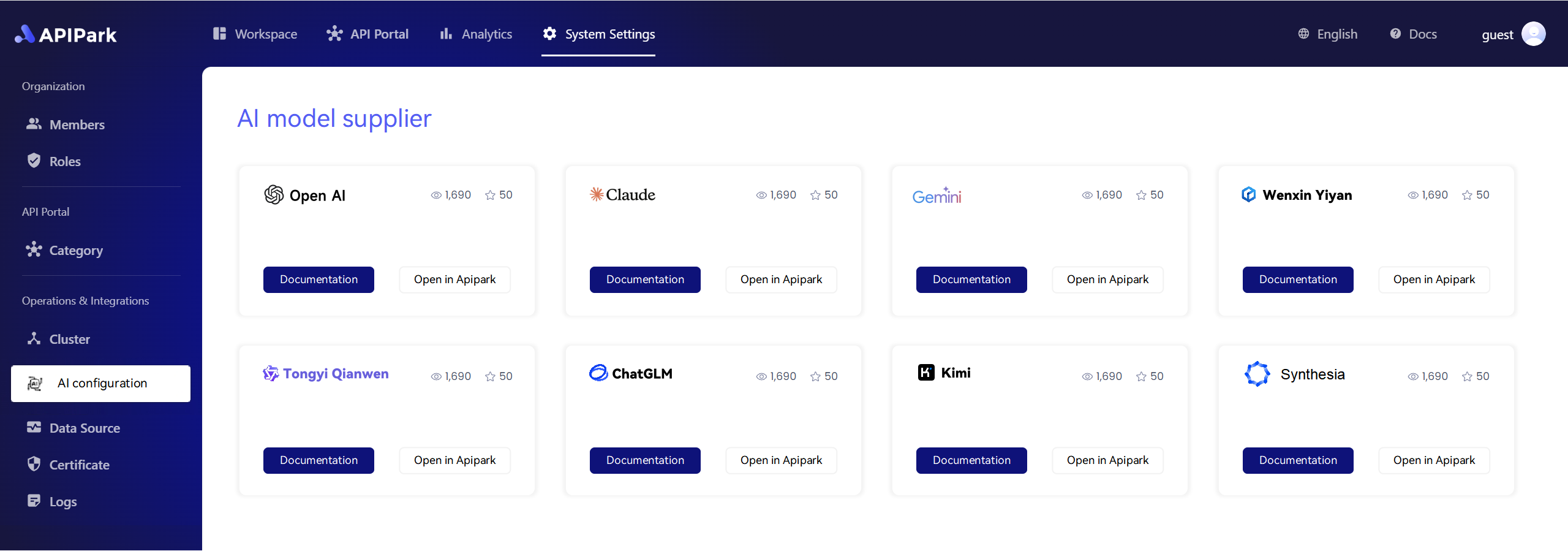
For organizations grappling with the complexity of integrating numerous public APIs, particularly those involving a diverse range of services or aiming to standardize their own API consumption and publication, robust API management platforms become indispensable. Platforms like APIPark offer comprehensive solutions that directly address many of the challenges discussed here. APIPark, as an open-source AI gateway and API management platform, is designed to simplify the entire lifecycle, from quick integration of over 100 AI models to end-to-end API lifecycle management and robust monitoring. Its ability to standardize API formats across different AI models and encapsulate prompts into consistent REST APIs directly facilitates easier testing and consistent interaction. Moreover, features like detailed API call logging and powerful data analysis within APIPark provide the continuous monitoring and insight needed for effective API Governance, allowing businesses to proactively trace issues, analyze long-term trends, and ensure the stability and performance of their API integrations, whether public or private. By centralizing management and providing deep visibility, APIPark helps enforce contracts and maintain the reliability of your API-driven applications.
APIPark is a high-performance AI gateway that allows you to securely access the most comprehensive LLM APIs globally on the APIPark platform, including OpenAI, Anthropic, Mistral, Llama2, Google Gemini, and more.Try APIPark now! 👇👇👇
Part 4: Tools and Methodologies for Public API Testing
The landscape of API testing tools is rich and varied, offering solutions for every stage of the testing process and catering to different needs. Combining these tools with sound methodologies creates a powerful testing framework.
Popular Tools for API Testing
- Postman / Insomnia:
- Use Case: Excellent for manual API exploration, interactive testing, and creating collections of requests for basic functional testing. Both tools allow you to define environments, variables, and write pre-request scripts and post-response assertion scripts (e.g., checking status codes, response body values, or schema validation).
- Benefits: User-friendly GUI, collaborative features for team sharing, robust collection runner for automating sequences of tests. They can import OpenAPI specifications to generate requests, making contract-driven exploration straightforward.
- JMeter / Gatling:
- Use Case: Industry-standard tools for performance testing (load, stress, and endurance testing). They can simulate thousands or millions of concurrent users making requests to an API.
- Benefits: Highly customizable, capable of simulating complex user scenarios, extensive reporting capabilities to analyze response times, throughput, and error rates under load. JMeter is Java-based, while Gatling is Scala-based, offering different performance characteristics and scripting styles.
- OWASP ZAP / Burp Suite:
- Use Case: Primarily for security testing (penetration testing) of web applications and APIs. These proxy-based tools intercept, inspect, modify, and replay HTTP requests, helping identify common web vulnerabilities like injection flaws, broken authentication, and data exposure.
- Benefits: Comprehensive set of security testing features, active community (ZAP is open source), and widely recognized in the security domain. Important note: Always obtain explicit permission from the API provider before conducting security tests on public APIs.
- Schema Validation Libraries (e.g.,
jsonschemafor Python,ajvfor JavaScript):- Use Case: Integrating direct schema validation into your test automation frameworks or even into your application's runtime. These libraries allow you to load JSON Schemas (often derived from OpenAPI) and programmatically validate incoming JSON responses against them.
- Benefits: Extremely precise contract enforcement, catches subtle data type or structure deviations, can be integrated into CI/CD pipelines for automated regression checks.
- Code-based Testing Frameworks (e.g., Jest/Mocha/Supertest for Node.js, Pytest/Requests for Python, JUnit/RestAssured for Java):
- Use Case: For developers who prefer writing API tests directly in their application's programming language. These frameworks integrate seamlessly with existing development workflows. Libraries like
Requestsin Python oraxiosin JavaScript handle HTTP client interactions, while testing frameworks provide the assertion capabilities. - Benefits: Full programmatic control, easier integration with source code, allows for complex test logic and data generation, strong tooling for CI/CD integration. When combined with schema validation libraries, they form a powerful contract-driven testing suite.
- Use Case: For developers who prefer writing API tests directly in their application's programming language. These frameworks integrate seamlessly with existing development workflows. Libraries like
CI/CD Integration
Automating your public API tests within your Continuous Integration/Continuous Deployment (CI/CD) pipeline is paramount for ensuring continuous reliability.
- Running Tests on Every Commit or Schedule: Configure your CI/CD system (e.g., GitLab CI, GitHub Actions, Jenkins, CircleCI) to automatically execute your public API test suite:
- On every code commit: To catch any changes in your application that might inadvertently break its interaction with public APIs.
- On a scheduled basis: To continuously monitor the public API itself for unexpected changes or downtime, independent of your code deployments. This acts as a continuous health check.
- Ensuring Your Application Doesn't Break Public API Integrations: By running tests automatically, you create a safety net. If an API provider makes an undocumented change, or if your application's logic subtly shifts its API consumption patterns, automated tests will flag these issues immediately. This reduces the time to detect and resolve problems, significantly lowering operational risk.
Mocking Public APIs
Mocking or simulating public APIs during development and testing is a highly effective strategy to isolate dependencies and accelerate development cycles.
- Creating Mock Servers Based on OpenAPI Specs: Tools like MockServer, WireMock, or even dynamically generated mocks from OpenAPI tools can simulate the behavior of a public API. You can configure these mocks to return specific responses for given requests, including successful responses, various error conditions, and edge cases.
- Benefits for Development: Developers can build and test their application against the mock API without waiting for the actual public API to be available or incurring usage costs. This speeds up development and allows for parallel work.
- Benefits for Testing: Mocks allow you to consistently test specific scenarios, including those that are hard to reproduce with a live API (e.g., network errors, very specific edge case error codes, complex data structures). They eliminate external flakiness from your internal test suite, making your tests faster and more reliable. Mocks are particularly useful for consumer-driven contract testing where the consumer defines the expected API behavior.
API Governance and Management Platforms (Revisiting APIPark)
Effective API Governance is not just about internal APIs; it profoundly impacts how an organization consumes public APIs. A well-governed approach involves:
- Standardized Consumption: Defining internal standards for how public APIs are integrated, tested, and monitored.
- Centralized Visibility: Maintaining a clear inventory of all consumed public APIs, their status, and their owners within the organization.
- Proactive Issue Management: Having clear processes for handling public API changes, deprecations, and outages.
This is precisely where sophisticated platforms like APIPark come into play. As an open-source AI gateway and API management platform, APIPark extends these API Governance principles to a powerful, actionable degree. For businesses consuming a multitude of public APIs – especially those integrating advanced AI models which often have their own unique invocation patterns – APIPark offers a unifying solution. It not only allows for the quick integration of over 100 AI models but critically, it provides a unified API format for AI invocation, standardizing requests so that changes in underlying AI models or prompts do not disrupt your applications. This standardization significantly simplifies the testing burden, as you're testing against a consistent internal interface rather than disparate external ones.
Furthermore, APIPark's end-to-end API lifecycle management supports not just your own APIs but also how you manage your external dependencies. Its features like detailed API call logging and powerful data analysis are invaluable for testing public APIs. By recording every detail of each API call, you gain granular visibility into how public APIs are performing, allowing you to quickly trace and troubleshoot issues, validate contract adherence in real-time, and identify performance deviations. The data analysis capabilities then transform this raw log data into actionable insights, displaying long-term trends and performance changes. This proactive monitoring is a direct extension of your testing strategy, enabling preventive maintenance before a public API issue escalates into a critical failure for your application. Moreover, with APIPark's API resource access requires approval feature, even for internal users consuming external APIs through the gateway, an additional layer of controlled access and auditing is maintained, bolstering your overall API Governance framework.
Part 5: Best Practices for Consuming and Testing Public APIs
Beyond tools and methodologies, adopting a set of best practices ensures that your integration with public APIs is resilient, adaptable, and secure. These practices emphasize defensive design, proactive communication, and continuous improvement.
Defensive Programming
Anticipating failure is not pessimistic; it's pragmatic, especially when dealing with external dependencies. Your application must be designed to gracefully handle scenarios where public APIs misbehave or become unavailable.
- Graceful Degradation: Design your application so that if a public API fails or returns unexpected data, it doesn't crash entirely. Instead, it should degrade gracefully. For example, if a weather API is down, display cached data or a message indicating that weather information is temporarily unavailable, rather than halting the entire application. Identify non-critical functionalities that can be temporarily disabled without crippling the core user experience.
- Retry Mechanisms with Exponential Backoff: Network glitches and transient API errors are common. Implement retry logic for API calls that fail with transient errors (e.g., 5xx server errors, network timeouts). Exponential backoff is crucial: instead of retrying immediately, wait for increasingly longer periods between retries (e.g., 1 second, then 2 seconds, then 4 seconds). This prevents overwhelming an already struggling API and allows it time to recover. Always define a maximum number of retries to avoid infinite loops.
- Circuit Breakers: A circuit breaker pattern is a design pattern used to detect failures and encapsulate the logic of preventing a failure from constantly recurring, during maintenance, or temporary outage of a third-party service. When an API call fails a certain number of times within a defined period, the circuit "trips" and all subsequent calls to that API are immediately rejected, preventing further attempts and allowing the API to recover. After a period, the circuit enters a "half-open" state, allowing a few test requests to pass through to see if the API has recovered before fully closing the circuit again. This prevents your application from continuously hammering a failing public API, conserving resources and preventing cascading failures.
Version Control
Public APIs often undergo revisions, and managing these versions is a critical aspect of integration stability.
- Understanding API Versioning Strategies: Familiarize yourself with the API provider's versioning strategy (e.g., URL-based
/v1/, header-basedX-API-Version, content negotiation). Understand their deprecation policy: how long will older versions be supported? What is the migration path to new versions? - Testing Against Specific Versions: Always explicitly target the API version you intend to use in your application. Do not rely on implicit or latest versions, as these can change unexpectedly. Your test suite should also target these specific versions. When a new API version is released, dedicate time to test your application against it in a staging environment before migrating production traffic. This allows you to identify and address any breaking changes or required adaptations.
Communication with API Providers
Proactive communication is a powerful, yet often overlooked, defense mechanism when consuming public APIs.
- Subscribing to Updates, Release Notes, Deprecation Warnings: Sign up for the API provider's newsletters, developer forums, blog updates, and any official communication channels that announce upcoming changes, new features, and especially deprecations. Regularly check their status page for real-time information on outages or performance issues.
- Reporting Bugs Effectively: If you discover a bug or an inconsistency with the API contract through your testing, report it to the provider clearly and concisely. Include specific request details (method, URL, headers, body), the exact response received, the expected response according to the contract, and steps to reproduce the issue. Good bug reports benefit both you and the broader API community.
Internal API Governance
While API Governance is often discussed in the context of providing APIs, it's equally vital for consuming public APIs within an organization. It brings structure and accountability to how external services are integrated.
- Establishing Guidelines for How Internal Teams Consume and Integrate with Public APIs: Create internal policies that define how teams within your organization should evaluate, select, integrate, and monitor public APIs. This might include:
- Due diligence: How to assess a public API provider's reliability, security, and support before integration.
- Integration patterns: Standardizing how authentication, error handling, and retry logic are implemented for public APIs.
- Documentation requirements: Ensuring that internal teams document their use of public APIs, including contract details, known limitations, and critical dependencies.
- Maintaining an Internal Catalog of Consumed APIs: Establish a centralized repository or catalog of all public APIs your organization consumes. For each API, track:
- Which applications depend on it.
- Key contact persons or teams responsible for the integration.
- The specific API version being used.
- Links to the official documentation and status page.
- Monitoring status and any known issues. This catalog serves as a vital resource for understanding dependencies, managing risks, and coordinating responses to public API changes or outages. Tools like APIPark can be leveraged here, as its capabilities for API service sharing within teams and independent API and access permissions for each tenant can extend to managing the internal visibility and access control for public APIs consumed through the platform, effectively creating a governed internal catalog.
By embracing these best practices, organizations can transform the consumption of public APIs from a potential source of instability into a reliable foundation for innovative and resilient applications. The continuous cycle of understanding, testing, monitoring, and adapting is key to thriving in an API-driven ecosystem.
Conclusion
The journey of developing modern applications is inextricably linked with the consumption of public APIs. These interfaces represent a vast ecosystem of services, data, and functionalities that accelerate development, foster innovation, and enable powerful integrations. However, the true value of public APIs can only be unlocked when they are treated with the respect and rigor they demand. At the core of this respectful interaction lies a profound appreciation for the API contract. This contract, a detailed blueprint of expected behavior, is the bedrock upon which reliable integrations are built. Standards like OpenAPI have dramatically enhanced our ability to define, communicate, and parse these contracts, transforming what was once ambiguous documentation into machine-readable specifications.
The imperative to test public APIs cannot be overstated. Given the inherent volatility and external nature of these dependencies, relying on mere hope or assumption is a recipe for disaster. Robust testing strategies, encompassing functional validation, performance assessment, and security checks, are essential to uncover contract breaches, performance bottlenecks, and unforeseen issues before they impact your end-users and business operations. Furthermore, sophisticated API Governance strategies, both from the provider and consumer perspectives, are crucial for managing the entire API lifecycle, ensuring adherence to standards, and mitigating risks.
By diligently understanding the nuances of an API contract, rigorously testing its implementations, employing defensive programming techniques, and fostering proactive communication with providers, developers can build resilient applications that withstand the inevitable changes and challenges of the public API landscape. Platforms like APIPark exemplify how modern API management solutions can significantly aid in this endeavor, providing comprehensive tools for integrating, standardizing, monitoring, and governing diverse API ecosystems, especially for complex scenarios involving AI models. Ultimately, a disciplined approach to testing public APIs is not just a technical requirement; it's a strategic investment in the stability, security, and long-term success of your software ecosystem in an increasingly interconnected world.
5 FAQs
- What is an API contract and why is it so important for public APIs? An API contract is a formal agreement between an API provider and its consumers, detailing the exact behavior, structure, and constraints of the API. It specifies endpoints, methods, request parameters, response structures, error codes, authentication, and rate limits. For public APIs, it's crucial because you have no direct control over the provider's system; the contract is your sole guarantee of how the API should behave, enabling predictable integration and robust testing.
- How does OpenAPI specification help in understanding and testing API contracts? OpenAPI (formerly Swagger) provides a standardized, machine-readable format (YAML or JSON) for defining RESTful APIs. It helps by offering an unambiguous, structured API contract from which tools can automatically generate interactive documentation, client SDKs, server stubs, and importantly, test cases. It also enables schema validation, allowing consumers to automatically verify that API responses conform to the defined structure and data types, thus streamlining contract-driven testing.
- What are the main types of testing that should be performed on public APIs? The main types include:
- Functional Testing: Verifying that each endpoint performs its intended operation correctly, including positive, negative, authentication, and authorization scenarios.
- Performance Testing: Assessing responsiveness, stability, and scalability under various loads (load testing, stress testing) to ensure acceptable latency and throughput.
- Security Testing: Ensuring the API properly enforces security controls, such as authentication, authorization, and input validation, to prevent vulnerabilities.
- Contract-Driven Testing: Using the API specification (e.g., OpenAPI) to generate and validate tests, ensuring responses adhere to the defined schema.
- Continuous Monitoring: Beyond initial testing, ongoing checks to detect downtime, performance degradation, or contract deviations in real-time.
- Why is continuous monitoring critical for public API integrations, even after initial testing? Continuous monitoring is vital because public APIs operate in environments beyond your control and can experience unexpected changes, performance issues, or outages at any time. Initial testing only validates the API at a specific point. Monitoring constantly checks the API's health, performance, and contract adherence in production. It provides real-time alerts for issues like downtime or slow responses, enabling proactive intervention before they severely impact your application and users, thereby ensuring ongoing reliability.
- How can API Governance principles be applied to consuming public APIs within an organization? Applying API Governance to public API consumption means establishing internal guidelines and processes for how your organization identifies, integrates, tests, and monitors external APIs. This includes performing due diligence on providers, standardizing integration patterns (like error handling and retry logic), maintaining a centralized catalog of all consumed public APIs, and ensuring teams subscribe to provider updates. This structured approach minimizes risks, enhances reliability, and ensures that external API dependencies are managed effectively across the organization.
🚀You can securely and efficiently call the OpenAI API on APIPark in just two steps:
Step 1: Deploy the APIPark AI gateway in 5 minutes.
APIPark is developed based on Golang, offering strong product performance and low development and maintenance costs. You can deploy APIPark with a single command line.
curl -sSO https://download.apipark.com/install/quick-start.sh; bash quick-start.sh
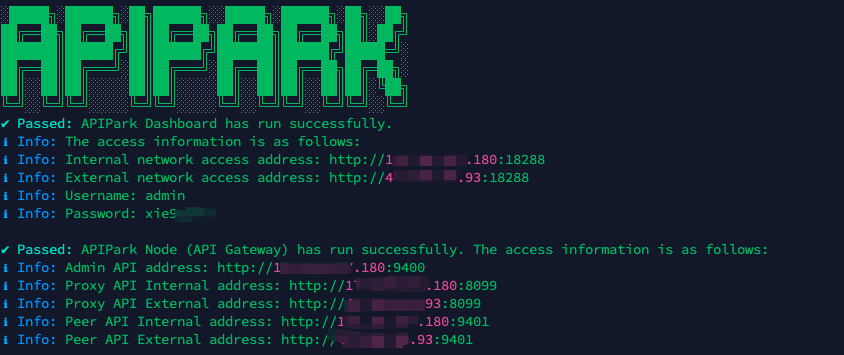
In my experience, you can see the successful deployment interface within 5 to 10 minutes. Then, you can log in to APIPark using your account.
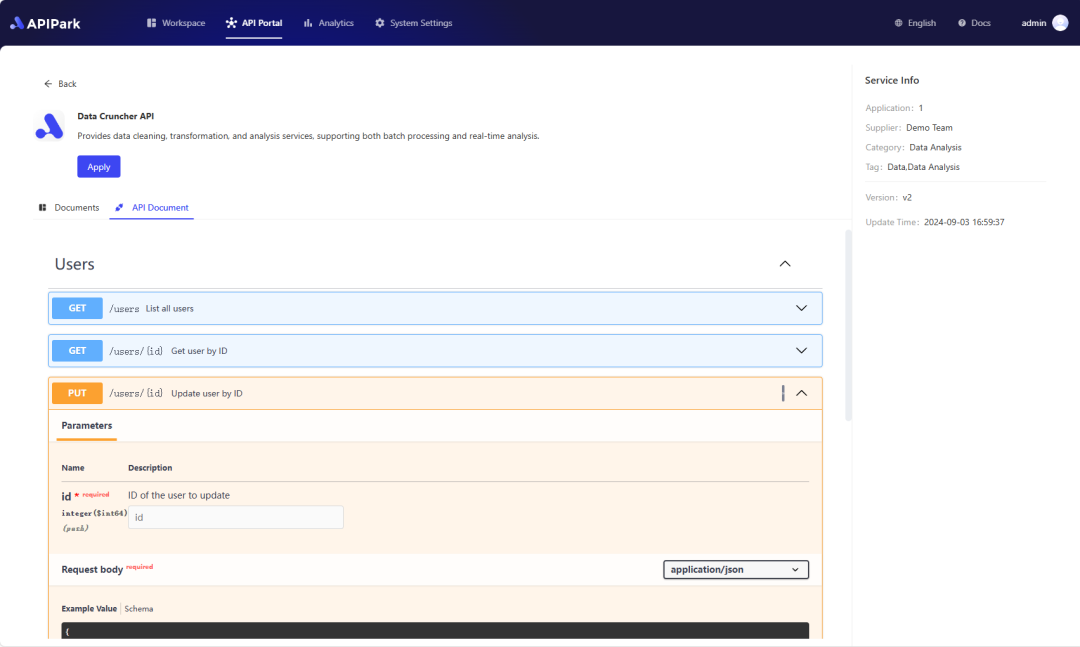
Step 2: Call the OpenAI API.