The Power of APIs: Unlocking Seamless Integration
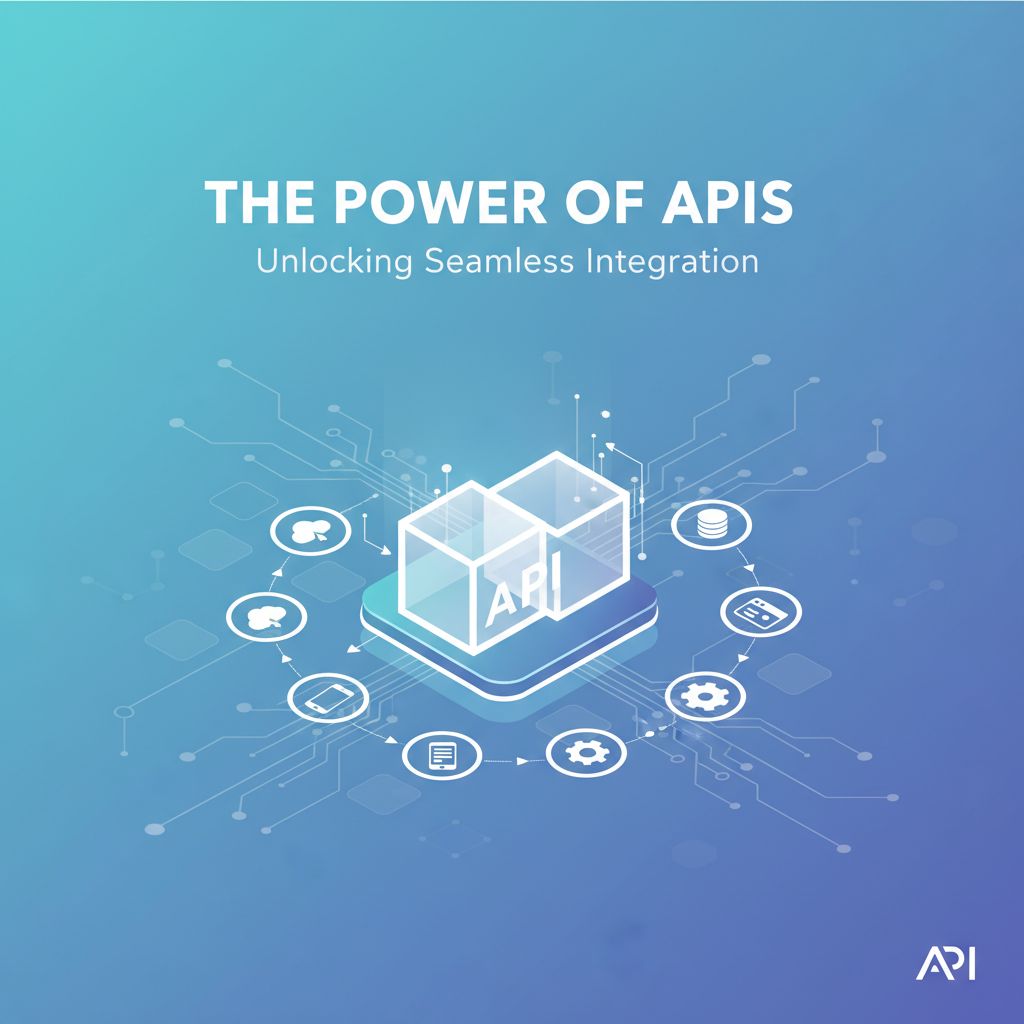


In an increasingly interconnected digital world, the notion of isolated systems operating independently is a relic of the past. Today, the landscape of technology is defined by fluidity, interoperability, and instant communication. At the heart of this transformative shift lies a fundamental yet often unseen force: the Application Programming Interface, universally known as the API. APIs are the invisible architects of modern digital experiences, enabling disparate software applications to communicate, share data, and collaborate in ways that were once unimaginable. They are the digital conduits that transform complex ecosystems into seamless, integrated networks, driving innovation, fostering new business models, and enhancing user experiences across every conceivable industry.
This comprehensive exploration delves into the profound power of APIs, unraveling their intricate mechanics, diverse applications, and monumental impact on the global digital economy. We will dissect how APIs facilitate unparalleled integration, from the most basic data exchange to the orchestration of complex AI-driven services. We will examine the critical role of components like the API gateway and the expansive potential of an API Open Platform in managing and scaling these digital interactions. Furthermore, we will navigate the essential considerations of API design, security, performance, and the exciting trajectory of their future evolution, ultimately demonstrating why APIs are not merely technical tools but strategic assets in the quest for digital excellence.
1. The Fundamental Concept of APIs: Building Blocks of the Digital Age
To truly appreciate the power of APIs, one must first grasp their foundational concept. Imagine a bustling restaurant. A customer (your application) wants to order a meal (data or a service). They don't walk into the kitchen (the server or database) themselves. Instead, they interact with a waiter (the API). The waiter takes the order, communicates it to the kitchen, and brings back the prepared meal. The waiter understands the kitchen's processes, its menu, and how to correctly convey the customer's request, acting as an intermediary that abstracts away the complexity of the back-end operations.
In the realm of software, an API serves precisely this purpose. It is a set of defined rules, protocols, and tools for building software applications. More technically, an API specifies how different software components should interact. It acts as a contract, detailing the kinds of requests that can be made, the types of responses that can be expected, and the data formats that must be used. This contract ensures that when one application wants to leverage functionality or data from another, it knows exactly how to ask for it and how to interpret the response. Without APIs, every application would need to understand the internal workings of every other application it wished to connect with, a prohibitively complex and unsustainable endeavor. APIs simplify this by providing a clean, consistent interface, much like a universal adapter for digital systems.
The underlying mechanism often involves a client-server model, where a client application sends a request to a server that hosts the API. The server processes the request, performs the necessary operation (e.g., retrieving data, executing a function), and sends a response back to the client. This entire interaction is governed by the API's specifications, which dictate everything from the endpoints (URLs) to access specific resources, the HTTP methods (GET, POST, PUT, DELETE) to perform actions, and the data formats (JSON, XML) for request and response bodies. This structured communication is what enables the remarkable integration we observe in today's digital landscape.
While the term API is often associated with web services, it encompasses a broader spectrum of interfaces:
- Web APIs: These are the most common type, typically accessed over the internet using HTTP protocols. They facilitate communication between web servers and web clients (browsers, mobile apps, other servers). RESTful APIs are a dominant style here, known for their statelessness and use of standard HTTP methods.
- Database APIs: Used to interact directly with database management systems. For instance, JDBC (Java Database Connectivity) or ODBC (Open Database Connectivity) allow applications to execute queries and retrieve data from various databases.
- Operating System APIs: These allow applications to interact with the underlying operating system's functionalities, such as file management, memory allocation, or process control. Examples include the Windows API or POSIX APIs for Unix-like systems.
- Library APIs: Used when incorporating a code library or framework into an application. These APIs define how the functions, classes, and components within the library can be accessed and utilized by the application code.
Each type of API, while serving distinct purposes, adheres to the core principle of providing a defined interface for interaction, abstracting complexity, and fostering modularity and interoperability. This abstraction is the bedrock upon which modern software architectures are built, enabling developers to build sophisticated applications by leveraging existing services and data without needing to reinvent the wheel.
2. Unlocking Seamless Integration: The Core Power of APIs
The true revolutionary power of APIs lies in their unparalleled ability to unlock seamless integration across diverse systems, platforms, and applications. In a world saturated with specialized software solutions, from customer relationship management (CRM) systems to enterprise resource planning (ERP) platforms, marketing automation tools, and payment gateways, the challenge isn't merely having these tools, but making them work together harmoniously. APIs are the orchestrators of this harmony, transforming fragmented digital assets into a cohesive and efficient operational whole.
2.1 Interoperability: Bridging Disparate Systems
One of the most significant contributions of APIs is their capacity to enable interoperability. Imagine a scenario where a retail business uses one system for inventory management, another for online sales, a third for customer support, and a fourth for shipping logistics. Without APIs, these systems would operate in silos, leading to data inconsistencies, manual data entry, and significant operational inefficiencies. An API acts as a universal translator, allowing these disparate systems, often built on different technologies and programming languages, to "speak" to each other. For example, when a customer places an order on an e-commerce website, an API call can instantly update the inventory system, trigger an order fulfillment process in the logistics system, and log the transaction in the CRM. This real-time, automated data flow eradicates manual bottlenecks and ensures that all relevant departments operate with the most current and accurate information. This level of interconnectedness is not just convenient; it's fundamental to modern business agility and responsiveness.
2.2 Data Exchange: The Lifeblood of Digital Operations
APIs are the primary conduits for data exchange in the digital realm. They facilitate the secure and structured transfer of information between applications, which is the lifeblood of almost every modern digital operation. Consider a weather application on your phone. It doesn't generate weather forecasts itself; instead, it calls an API from a meteorological service, fetches the relevant data (temperature, humidity, forecast), and displays it in a user-friendly format. Similarly, when you log into a third-party application using your Google or Facebook account, an API facilitates the secure exchange of your identity information, authenticating you without requiring the third-party app to store your sensitive credentials. This constant, regulated flow of data empowers applications to enrich their functionality, personalize user experiences, and provide real-time insights, all while adhering to predefined security and privacy protocols. The precise definition of data formats and access rules within an API ensures that data is exchanged accurately and securely, maintaining data integrity across the integrated systems.
2.3 Ecosystems and Platforms: Fostering Innovation at Scale
Beyond mere point-to-point integration, APIs are the foundational pillars upon which vast digital ecosystems and platforms are built. They allow companies to open up their core functionalities and data to external developers and partners, fostering innovation at an unprecedented scale. Think of smartphone app stores like Apple's App Store or Google Play. These are enabled by device APIs that give developers access to phone features like the camera, GPS, and notifications, allowing them to create a multitude of innovative applications. Cloud computing providers like Amazon Web Services (AWS) or Microsoft Azure offer hundreds of APIs, enabling developers to programmatically provision resources, deploy applications, and manage their cloud infrastructure. This "platformification" through APIs creates network effects, where the value of the platform grows exponentially with each new integration and application built upon it. An API Open Platform exemplifies this strategy, inviting a broader community to build upon and extend the platform's capabilities, leading to shared growth and mutual benefits.
2.4 Business Process Automation: Streamlining Workflows
In the modern enterprise, efficiency is paramount. APIs play a crucial role in automating complex business processes by connecting various software tools and services. From onboarding new employees to managing customer support tickets, processing financial transactions, or orchestrating marketing campaigns, APIs can link different stages of a workflow. For instance, when a new lead enters a CRM system, an API can automatically trigger an email sequence in a marketing automation platform, create a task for a sales representative in a project management tool, and log the activity in an analytics dashboard. This level of automation reduces manual effort, minimizes human error, accelerates operational cycles, and frees up human capital to focus on more strategic and creative tasks. By making processes predictable and executable across diverse systems, APIs become critical enablers of operational excellence.
2.5 User Experience Enhancement: The Invisible Hand
For end-users, the power of APIs often remains invisible, yet it profoundly impacts their digital experience. When you share a news article from a website directly to Twitter or Facebook, an API handles the seamless transition. When you book a ride on a ride-sharing app and see an integrated map showing your driver's location, an API from a mapping service provides that functionality. The ability of modern applications to aggregate information from multiple sources, provide real-time updates, and interact with other services without requiring users to switch contexts or re-enter information is largely due to the robust integration facilitated by APIs. This results in more intuitive, convenient, and feature-rich applications, enriching the overall digital journey for users. The fluid and responsive nature of today's best digital services is a direct testament to the underlying power of well-designed and efficiently integrated APIs.
3. The Transformative Impact of APIs Across Industries
The pervasive influence of APIs extends far beyond mere technical integration; they are fundamental drivers of transformation across virtually every industry vertical. By enabling new functionalities, streamlining operations, and fostering unprecedented collaboration, APIs are reshaping business models, accelerating innovation, and creating entirely new market opportunities.
3.1 Finance (FinTech): Democratizing Financial Services
The financial services sector has been profoundly revolutionized by APIs, giving rise to the burgeoning FinTech industry. APIs have enabled "Open Banking" initiatives in many regions, allowing third-party financial service providers to securely access customer data (with consent) from traditional banks. This has led to an explosion of innovative applications, from personal finance management tools that aggregate data from multiple accounts, to instant payment gateways, automated investment platforms, and personalized lending services. For example, payment APIs like Stripe or PayPal enable any e-commerce platform to securely process transactions without building their own complex payment infrastructure. Fraud detection APIs can be integrated to enhance security, while credit scoring APIs provide real-time risk assessment. APIs are democratizing access to financial services, fostering competition, and empowering consumers with greater control and choice over their financial lives.
3.2 Healthcare: Enhancing Patient Care and Efficiency
In healthcare, APIs are critical for breaking down data silos and improving interoperability, which is vital for enhancing patient care and operational efficiency. Electronic Health Record (EHR) APIs allow different healthcare providers to securely share patient medical histories, reducing redundant tests, improving diagnosis accuracy, and ensuring coordinated care. Telehealth platforms leverage APIs to integrate video conferencing, appointment scheduling, prescription management, and billing systems, providing a seamless virtual care experience. Wearable device APIs enable health data (like heart rate, activity levels) to be collected and integrated into patient records or wellness programs. APIs are also crucial for research, allowing de-identified patient data to be aggregated for population health studies and drug discovery, all while maintaining stringent privacy and compliance standards (e.g., HIPAA in the US, GDPR in Europe).
3.3 E-commerce: Powering the Online Retail Revolution
The e-commerce landscape is intrinsically linked to APIs. Every aspect of online retail, from browsing to checkout, often relies on a network of API calls. Product catalog APIs manage inventory and display product information. Payment APIs process transactions securely. Shipping APIs provide real-time shipping rates from various carriers and track package delivery. Recommendation engine APIs analyze customer behavior to suggest relevant products, enhancing cross-selling and up-selling opportunities. Customer support APIs integrate chatbots and CRM systems to provide responsive service. Moreover, APIs enable marketplaces to aggregate products from multiple vendors, creating vast virtual shopping malls. This intricate web of API integrations allows e-commerce businesses to offer rich, personalized, and efficient shopping experiences, adapting quickly to market demands and consumer preferences.
3.4 Travel and Hospitality: Seamless Journeys
The travel industry was an early adopter of APIs, transforming how people plan and book their journeys. Global Distribution Systems (GDS) and individual airline, hotel, and car rental APIs allow travel agencies, online travel aggregators (OTAs) like Expedia or Booking.com, and metasearch engines to access real-time availability, pricing, and booking functionalities. When you search for flights, book a hotel room, or rent a car through a single platform, it's typically through multiple API calls to various providers, consolidating information for a seamless booking experience. APIs also power loyalty programs, check-in systems, and personalized recommendations based on travel history, making the entire travel ecosystem more interconnected and convenient for travelers.
3.5 Logistics and Supply Chain: Optimization and Transparency
In logistics, APIs are revolutionizing supply chain management by enhancing transparency, efficiency, and real-time decision-making. APIs connect different stages of the supply chain, from raw material procurement to manufacturing, warehousing, and last-mile delivery. Carrier APIs provide real-time tracking information, allowing businesses and customers to monitor shipments at every stage. Warehouse management APIs optimize inventory levels and order fulfillment processes. Route optimization APIs leverage real-time traffic data to calculate the most efficient delivery routes, reducing fuel costs and delivery times. Furthermore, APIs facilitate communication between different stakeholders in a complex global supply chain, ensuring that all parties have access to critical information regarding goods movement, customs clearance, and delivery schedules, leading to more resilient and responsive supply chains.
3.6 Smart Cities and IoT: Connecting the Physical and Digital Worlds
The emerging domains of smart cities and the Internet of Things (IoT) are fundamentally API-driven. In smart cities, APIs connect various urban infrastructure components – from traffic sensors and smart lighting to public transport systems and waste management – allowing city planners to collect data, monitor conditions, and manage resources more effectively. For instance, traffic APIs can feed real-time congestion data into navigation apps or intelligent traffic light systems. In IoT, device APIs enable communication between countless connected devices, from smart home appliances to industrial sensors. These APIs allow devices to report data, receive commands, and interact with cloud platforms and other applications. For example, a smart thermostat API can integrate with a weather API to adjust heating/cooling based on the forecast, or with a home automation API to turn off lights when no one is home. APIs are the glue that transforms a collection of smart objects into an intelligent, responsive environment.
3.7 AI/ML Integration: Democratizing Artificial Intelligence
Perhaps one of the most exciting and rapidly evolving areas where APIs exert their power is in the integration of Artificial Intelligence and Machine Learning (AI/ML) capabilities. AI models, whether for natural language processing, computer vision, predictive analytics, or recommendation engines, are often complex to develop, train, and deploy. APIs democratize access to these sophisticated models by encapsulating their complexity behind a simple, standardized interface. This allows developers, even those without deep AI expertise, to easily integrate powerful AI functionalities into their applications.
For example, a developer can use a text analysis API to perform sentiment analysis on customer reviews, a translation API to localize content, or an image recognition API to categorize product photos. These APIs abstract away the underlying machine learning models, frameworks, and computational infrastructure, providing a clean endpoint for interaction. This significantly accelerates the adoption and application of AI across industries, enabling businesses to leverage cutting-edge intelligence for various use cases, from enhancing customer service with AI-powered chatbots to optimizing business processes with intelligent automation. This is precisely where specialized solutions become indispensable.
For organizations seeking a comprehensive solution that combines the power of an API gateway with an advanced API management platform, especially for AI services, platforms like APIPark offer compelling capabilities. APIPark, for instance, functions as an all-in-one AI gateway and API developer portal, designed to simplify the integration and deployment of both AI and REST services. It addresses challenges like unifying API formats for AI invocation, encapsulating prompts into REST APIs, and providing robust end-to-end API lifecycle management, ensuring efficient service sharing and robust security. It highlights the growing need for specialized platforms that can effectively bridge the gap between complex AI models and accessible, manageable API endpoints.
4. Architecture and Management: The Role of API Gateway and API Open Platform
As the number and complexity of APIs grow within an organization and across its digital ecosystem, robust architecture and comprehensive management become paramount. This is where concepts like the API gateway and the broader API Open Platform come into play, providing essential infrastructure and governance for API landscapes.
4.1 What is an API Gateway? The Digital Front Door
At its core, an API gateway is a single entry point for all client requests. It sits between the client applications and the backend services (which could be microservices, legacy systems, or even other third-party APIs). Instead of clients sending requests directly to various backend services, they send all requests to the API gateway. The gateway then routes these requests to the appropriate backend service, aggregates responses, and returns them to the client. This architectural pattern is especially crucial in modern microservices architectures, where an application might be composed of dozens or hundreds of small, independently deployable services.
The API gateway performs a multitude of critical functions that enhance performance, security, and manageability:
- Traffic Management: The gateway can route requests to the correct backend services, perform load balancing to distribute traffic across multiple instances of a service, and handle rate limiting to prevent abuse or overload.
- Security: It acts as the first line of defense, enforcing authentication and authorization policies. This means all incoming requests must pass through the gateway's security checks before reaching sensitive backend services. It can validate API keys, OAuth tokens, or JSON Web Tokens (JWTs).
- Request/Response Transformation: The gateway can modify requests before sending them to backend services or transform responses before sending them back to clients. This allows for a consistent API interface even if backend services have different protocols or data formats.
- Caching: To improve performance and reduce the load on backend services, the gateway can cache responses to frequently requested data.
- Monitoring and Logging: All API calls passing through the gateway can be logged, providing invaluable data for monitoring API usage, performance, errors, and security audits.
- Protocol Translation: It can translate between different communication protocols (e.g., HTTP to AMQP or gRPC), allowing clients to use one protocol while backend services use another.
- Fault Tolerance: By abstracting backend services, the gateway can implement circuit breakers and retries, gracefully handling failures in individual services without impacting the entire system.
The API gateway centralizes concerns that would otherwise need to be implemented in every backend service, leading to cleaner, more maintainable code for the services themselves. It is a critical component for building resilient, scalable, and secure API ecosystems.
4.2 API Management Platforms: Beyond the Gateway
While an API gateway handles runtime traffic, an API management platform encompasses a broader set of tools and processes for managing the entire lifecycle of APIs. It is a comprehensive solution that provides governance, control, and visibility over an organization's API landscape, extending far beyond the gateway's core functions.
Key capabilities of an API management platform include:
- API Lifecycle Management: From design and development to testing, deployment, versioning, and eventual retirement, the platform provides tools and workflows to manage each stage of an API's existence. This ensures consistency, quality, and maintainability.
- Developer Portals: These are dedicated websites where external (and internal) developers can discover available APIs, access comprehensive documentation, try out APIs in sandboxes, manage their API keys, and track their usage. A robust developer portal is crucial for fostering adoption and building an API ecosystem.
- Monetization Strategies: For organizations that want to offer APIs as a product, API management platforms provide features for setting up pricing models, managing subscriptions, billing, and reporting on API usage for revenue generation.
- Analytics and Insights: These platforms offer deep insights into API performance, usage patterns, error rates, and security events. This data is critical for understanding API adoption, identifying bottlenecks, making data-driven decisions for future API development, and optimizing existing services.
- Security Policies: While the gateway enforces security at runtime, the management platform defines and centralizes security policies, ensuring consistent application of authentication, authorization, and threat protection across all APIs.
- Version Control: Managing different versions of an API is complex. The platform assists with defining versioning strategies and smoothly migrating clients to newer versions without breaking existing integrations.
An API management platform provides the necessary framework to treat APIs as first-class products, ensuring they are well-governed, discoverable, secure, and valuable to both API providers and consumers.
4.3 The Concept of an API Open Platform: Fostering Innovation and Ecosystems
Building on the principles of API gateways and comprehensive management, an API Open Platform represents a strategic approach where an organization actively chooses to open up its core functionalities and data through APIs to a wide array of external developers, partners, and even competitors. This is more than just providing a few APIs; it's about creating an entire ecosystem where third parties can build new applications and services that leverage the platform's capabilities.
The benefits of adopting an API Open Platform strategy are manifold:
- Extended Reach and Distribution: By allowing others to integrate, a company can extend its market reach and distribute its services or data through channels it might not directly control.
- Third-Party Innovation: An open platform invites external developers to innovate, creating applications and features that the original platform owner might not have conceived or had the resources to build. This crowdsources innovation and accelerates the development of valuable services around the core platform.
- New Revenue Streams: APIs themselves can become a product, sold on a usage-based or subscription model, creating new revenue opportunities.
- Increased Brand Awareness and Lock-in: A vibrant API ecosystem can enhance brand visibility and create a strong network effect, making it more attractive for new users and developers to join.
- Data Aggregation and Insights: As more partners integrate, the platform can gain access to a richer dataset, leading to deeper insights into user behavior and market trends (with appropriate data governance and privacy controls).
Examples of highly successful API Open Platforms include Google Maps (allowing countless applications to embed maps and location services), Stripe (enabling seamless payments for businesses of all sizes), and Amazon (allowing sellers to integrate their inventory and order management systems). These platforms have not only transformed their respective industries but have also created entirely new economies built on their open APIs.
This comprehensive approach to API architecture and management is precisely what enables organizations to scale their digital ambitions. As mentioned earlier, for businesses navigating the complexities of integrating both traditional REST services and advanced AI models, dedicated solutions are becoming increasingly vital. For example, APIPark stands out as an all-in-one AI gateway and API developer portal. Its capabilities are directly aligned with the needs of managing a sophisticated API landscape: it quickens the integration of over 100+ AI models, unifies API invocation formats, and facilitates the encapsulation of complex prompts into easy-to-consume REST APIs. Furthermore, it offers robust end-to-end API lifecycle management, supports API service sharing within teams, and provides independent API and access permissions for multi-tenant environments. Such platforms streamline the creation and governance of an API Open Platform, making it easier for enterprises to unlock the full potential of their digital assets, including cutting-edge AI services, by providing a managed, secure, and performant gateway to the world.
APIPark is a high-performance AI gateway that allows you to securely access the most comprehensive LLM APIs globally on the APIPark platform, including OpenAI, Anthropic, Mistral, Llama2, Google Gemini, and more.Try APIPark now! 👇👇👇
5. Designing and Developing Robust APIs
The efficacy of an API is not solely determined by its existence but by the quality of its design and implementation. A poorly designed API can be a source of frustration for developers, leading to integration challenges, errors, and resistance to adoption. Conversely, a well-designed API is intuitive, reliable, and a joy to work with, fostering rapid development and successful integrations. Crafting robust APIs involves adhering to established design principles, providing meticulous documentation, rigorous testing, and thoughtful versioning strategies.
5.1 API Design Principles: Clarity, Consistency, and Predictability
The core philosophy behind good API design revolves around making the API easy to understand, use, and maintain. While different architectural styles exist, REST (Representational State Transfer) is the most prevalent for web APIs, advocating for a stateless, client-server interaction model leveraging standard HTTP methods.
Key design principles include:
- Resource-Oriented Design: APIs should expose resources (e.g.,
/users,/products,/orders) rather than actions. Each resource should have a unique identifier (URI). - Use Standard HTTP Methods: Leverage HTTP verbs (GET for retrieving data, POST for creating, PUT for updating/replacing, PATCH for partial updates, DELETE for removing) to perform actions on resources. This makes the API predictable and familiar to developers.
- Clear and Consistent Naming Conventions: Use plural nouns for collections (e.g.,
/users) and singular nouns for specific resources (e.g.,/users/{id}). Endpoint names should be intuitive and reflect the resource they represent. Consistency in naming parameters, error codes, and response structures across the entire API is crucial. - Statelessness: Each request from a client to the server should contain all the information necessary to understand the request. The server should not rely on any previous requests from the client. This improves scalability and reliability.
- Appropriate Status Codes: Use standard HTTP status codes (e.g., 200 OK, 201 Created, 204 No Content, 400 Bad Request, 401 Unauthorized, 404 Not Found, 500 Internal Server Error) to communicate the outcome of a request clearly.
- Pagination, Filtering, and Sorting: For large collections of resources, provide mechanisms for clients to paginate results, filter them based on criteria, and sort them in a desired order, preventing overwhelming responses.
- Error Handling: Provide clear, informative error messages with specific error codes that help developers diagnose and resolve issues. Errors should be structured consistently.
- Data Formats: Stick to widely accepted data formats like JSON (JavaScript Object Notation) or XML. JSON is generally preferred for its lightweight nature and ease of parsing.
Adhering to these principles ensures that an API is not only functional but also intuitive, reducing the learning curve for developers and minimizing integration friction.
5.2 Documentation: The API's User Manual
Even the most elegantly designed API is useless without comprehensive, accurate, and easily accessible documentation. API documentation serves as the API's user manual, guiding developers on how to interact with the API, what requests to send, what responses to expect, and how to handle errors.
Effective API documentation should include:
- Getting Started Guide: A quick overview to help developers make their first API call.
- Authentication Details: Clear instructions on how to authenticate requests (e.g., API keys, OAuth 2.0 flows).
- Endpoint Descriptions: For each endpoint, specify the URI, HTTP method, required/optional parameters (with types and descriptions), example request bodies, and example response bodies (for success and various error scenarios).
- Error Codes and Messages: A comprehensive list of all possible error codes, their meanings, and potential solutions.
- Rate Limits: Information on how many requests can be made within a certain timeframe.
- Versioning Strategy: How API versions are managed and how to migrate between them.
- SDKs and Libraries (if available): Links and instructions for any client libraries provided.
- Support and Community Information: How developers can get help or engage with the API provider.
Tools like Swagger (now OpenAPI Specification) and Postman facilitate the creation and maintenance of interactive API documentation, allowing developers to test endpoints directly from the documentation. Good documentation transforms an API from a mere technical interface into a consumable product.
5.3 Testing: Ensuring Reliability and Quality
Thorough testing is indispensable for building robust and reliable APIs. It ensures that the API functions as expected under various conditions, handles edge cases gracefully, and performs efficiently. A multi-faceted testing strategy typically includes:
- Unit Tests: Testing individual components or functions of the API in isolation to ensure they work correctly.
- Integration Tests: Verifying that different modules or services within the API (or external services the API depends on) work together correctly. This confirms the entire flow from request to response.
- End-to-End Tests: Simulating real-user scenarios to ensure the entire system, including the API, client applications, and backend databases, functions seamlessly.
- Performance Testing: Assessing the API's behavior under load, including stress testing (pushing beyond normal limits) and load testing (simulating expected concurrent users) to identify bottlenecks and ensure scalability. Metrics like latency, throughput (requests per second), and error rates are crucial here.
- Security Testing: Proactively identifying vulnerabilities such as injection flaws, broken authentication, sensitive data exposure, and misconfigurations. This includes penetration testing and regular security audits.
- Contract Testing: Ensuring that the API's consumer and provider adhere to the same API contract, preventing integration issues when changes are made.
Automated testing frameworks should be integrated into the CI/CD pipeline to ensure that every code change is thoroughly tested before deployment, maintaining high API quality and preventing regressions.
5.4 Versioning: Managing Change Gracefully
APIs, like any software, evolve. New features are added, existing ones are modified, and sometimes older ones are deprecated. Managing these changes without disrupting existing integrations is a critical challenge, addressed through API versioning. A well-defined versioning strategy ensures that API consumers can continue using older versions while new features are rolled out or breaking changes are introduced.
Common versioning strategies include:
- URI Versioning: Including the version number directly in the API endpoint URI (e.g.,
/api/v1/users,/api/v2/users). This is straightforward but can make URIs longer. - Custom Header Versioning: Sending the version number in a custom HTTP request header (e.g.,
X-API-Version: 2). This keeps URIs clean but might be less intuitive. - Query Parameter Versioning: Passing the version as a query parameter (e.g.,
/api/users?version=2). This is simple but semantically less appropriate for identifying a resource version. - Media Type Versioning (Content Negotiation): Using the
Acceptheader to specify the desired media type, which can include a version (e.g.,Accept: application/vnd.myapi.v2+json). This aligns well with REST principles but can be more complex to implement.
The choice of strategy depends on the project's specific needs, but consistency is key. It's also crucial to define a clear deprecation policy, giving consumers ample notice before older versions are retired, along with migration guides.
5.5 SDKs and Libraries: Easing Consumption
While a well-designed API with excellent documentation is a strong start, providing Software Development Kits (SDKs) and client libraries for popular programming languages can significantly ease API consumption. SDKs abstract away the underlying HTTP calls, authentication mechanisms, and data parsing, allowing developers to interact with the API using native language constructs. For example, instead of making an HTTP GET request to /api/users/{id}, a developer might simply call apiClient.users.get(userId). This reduces the boilerplate code, accelerates development, and minimizes errors, making the API more appealing and accessible to a broader developer community. By investing in thoughtful design, thorough testing, comprehensive documentation, and developer-friendly tools, organizations can ensure their APIs are not just functional, but truly powerful enablers of integration and innovation.
6. Security Considerations for APIs
In an interconnected digital landscape, APIs are increasingly targeted by malicious actors. Because APIs often serve as the gatekeepers to sensitive data and critical functionalities, securing them is not merely a technical task but a paramount business imperative. A single API vulnerability can lead to data breaches, service disruptions, reputational damage, and severe financial and regulatory penalties. Therefore, robust security measures must be embedded into every stage of the API lifecycle, from design to deployment and ongoing management.
6.1 Authentication: Verifying Identity
Authentication is the process of verifying the identity of the client making an API request. It ensures that only legitimate users or applications can access the API. Various authentication mechanisms are employed, each suited for different use cases and security requirements:
- API Keys: These are simple, unique strings passed with each request, typically in a header or query parameter. While easy to implement, API keys offer limited security as they often grant access to the entire API and cannot be easily revoked for individual users. They are best suited for public APIs where the data is not highly sensitive or for simple access control.
- OAuth 2.0: This is an industry-standard protocol for authorization that allows third-party applications to obtain limited access to an HTTP service, either on behalf of a resource owner (e.g., a user granting an app access to their social media profile) or by the application itself. OAuth 2.0 provides various "flows" (e.g., authorization code flow, client credentials flow) to handle different scenarios, ensuring secure delegation of access without sharing user credentials.
- JSON Web Tokens (JWT): JWTs are a compact, URL-safe means of representing claims to be transferred between two parties. They are often used in conjunction with OAuth 2.0 or as an authentication mechanism where, after successful login, the server issues a JWT to the client. The client then includes this token in subsequent API requests, and the server verifies its authenticity and validity. JWTs are particularly useful in stateless environments and for microservices architectures.
- Mutual TLS (mTLS): For highly sensitive APIs, mTLS provides two-way authentication by requiring both the client and the server to present and verify cryptographic certificates. This ensures that both parties are trusted entities, significantly enhancing security.
Choosing the appropriate authentication method depends on the API's sensitivity, the types of clients, and the desired level of security.
6.2 Authorization: Controlling Access
Once a client's identity is authenticated, authorization determines what specific resources or actions that client is permitted to access. Authentication verifies "who you are," while authorization verifies "what you can do."
- Role-Based Access Control (RBAC): This common method assigns permissions to roles (e.g., "admin," "editor," "viewer"), and then assigns roles to users or applications. For example, an "admin" role might have permission to create, read, update, and delete (CRUD) all resources, while a "viewer" role can only read.
- Attribute-Based Access Control (ABAC): More granular than RBAC, ABAC grants permissions based on attributes of the user, resource, and environment. For example, a user might only be able to view documents created by them, within their department, and during business hours.
- Fine-grained Permissions: APIs should be designed to enforce granular permissions, ensuring that clients can only access the data and functionalities they explicitly need. For instance, an API for managing user profiles might allow an application to update a user's address but not their password.
Authorization logic should be implemented rigorously at the API endpoint level, ensuring that every request is checked against the client's permissions before processing.
6.3 Data Encryption: Protecting Data in Transit and at Rest
Data transmitted over APIs must be protected from eavesdropping and tampering.
- HTTPS/SSL/TLS: All API communication should occur over HTTPS (Hypertext Transfer Protocol Secure). HTTPS encrypts the data exchanged between the client and the server using SSL/TLS (Secure Sockets Layer/Transport Layer Security) certificates, preventing man-in-the-middle attacks and ensuring data confidentiality and integrity. Unencrypted HTTP should be strictly prohibited for production APIs.
- Encryption at Rest: Sensitive data stored in databases or file systems that are accessed by APIs should also be encrypted to protect against unauthorized access in case of a breach of the underlying infrastructure.
6.4 Input Validation: Preventing Malicious Data
APIs are vulnerable to various injection attacks if incoming data is not properly validated.
- Strict Input Validation: All input parameters (query parameters, request headers, request bodies) must be rigorously validated against expected data types, formats, lengths, and acceptable values. This prevents common attacks such as SQL injection, Cross-Site Scripting (XSS), and command injection, where malicious code is embedded within legitimate input.
- Sanitization: Beyond validation, input data should be sanitized to remove or neutralize any potentially harmful characters or scripts before being processed or stored.
6.5 Rate Limiting and Throttling: Guarding Against Abuse
To protect against denial-of-service (DoS) attacks, brute-force attacks, and general API abuse, rate limiting and throttling are essential.
- Rate Limiting: Restricts the number of API requests a client can make within a specified time frame (e.g., 100 requests per minute). If a client exceeds this limit, subsequent requests are rejected, often with a
429 Too Many Requestsstatus code. - Throttling: Similar to rate limiting, but often involves dynamically adjusting the rate based on current system load or predefined quotas. Throttling helps maintain API availability and responsiveness for legitimate users by preventing a single client from monopolizing resources.
These mechanisms are typically implemented at the API gateway level, acting as a crucial defense layer.
6.6 API Gateway's Role in Centralized Security
As discussed, the API gateway serves as a critical choke point for API security. By centralizing security enforcement, it offers several advantages:
- Unified Policy Enforcement: Security policies (authentication, authorization, rate limiting) can be defined and enforced consistently across all APIs, reducing the risk of misconfigurations in individual backend services.
- Threat Protection: Gateways can integrate with Web Application Firewalls (WAFs) and other security tools to detect and block common attack patterns.
- Auditing and Compliance: All API traffic passes through the gateway, making it an ideal point for comprehensive logging and auditing, which is crucial for security monitoring, compliance, and forensic analysis after an incident.
Platforms like APIPark further enhance security by providing detailed API call logging, allowing for quick tracing and troubleshooting of issues, which is critical for system stability and data security. The ability to activate subscription approval features, requiring callers to await administrator approval before invoking an API, adds another layer of control, preventing unauthorized API calls and potential data breaches.
6.7 Auditing and Logging: Visibility and Forensics
Comprehensive logging of API calls is vital for security. Logs should capture details such as:
- Requester identity (e.g., API key, user ID)
- Timestamp of the request
- Requested endpoint and method
- Request and response headers
- Status code and response size
- Latency
These logs are invaluable for:
- Real-time Monitoring: Detecting suspicious activity or attack patterns.
- Incident Response: Investigating security breaches or anomalies to understand the scope and root cause.
- Compliance: Meeting regulatory requirements for data access and security audits.
Regular review of logs and integration with security information and event management (SIEM) systems are crucial for proactive threat detection. Securing APIs is an ongoing process that requires continuous vigilance, regular updates, and a proactive approach to identifying and mitigating new threats. By prioritizing API security, organizations can build trust with their users and partners, protect their valuable data, and safeguard their digital infrastructure.
7. Performance, Scalability, and Monitoring
The true value of APIs, especially those powering mission-critical applications or serving large user bases, hinges not just on their functionality and security, but also on their ability to perform efficiently, scale seamlessly, and maintain high availability. Performance, scalability, and robust monitoring are interdependent pillars that ensure an API ecosystem remains responsive, reliable, and capable of handling fluctuating demands.
7.1 Performance Optimization: Delivering Responsiveness
API performance refers to how quickly and reliably an API processes requests and returns responses. Poor performance can lead to frustrated users, lost business, and system instability. Optimizing API performance involves several strategies:
- Efficient Code and Algorithms: The backend services implementing the API should be written with performance in mind, using efficient algorithms, minimizing unnecessary computations, and optimizing database queries.
- Caching: Implementing caching at various levels—within the API gateway, in backend services, or at the database level—can significantly reduce the load on primary systems and speed up response times for frequently requested data.
- Asynchronous Processing: For long-running operations, instead of blocking the API client, initiate the task asynchronously and provide a mechanism for the client to check the status or receive a notification (e.g., via webhooks) when the task is complete.
- Database Optimization: Ensuring database queries are indexed, normalized (or denormalized appropriately for reads), and optimized is paramount. Database performance is often a primary bottleneck for APIs.
- Minimize Network Overhead: Reduce the size of request and response payloads by sending only necessary data. Use efficient data serialization formats like JSON over XML where possible. Implement compression (e.g., GZIP) for network transfers.
- Content Delivery Networks (CDNs): For APIs serving global audiences, distributing static or cached content through CDNs can reduce latency by serving data from geographically closer edge servers.
The goal is to minimize response times, maximize throughput (requests per second), and reduce error rates, providing a consistently fast and reliable experience for API consumers.
7.2 Scalability: Growing with Demand
Scalability is an API's ability to handle an increasing number of requests or a growing amount of data without degrading performance. As applications gain popularity or businesses expand, their APIs must be able to scale to meet the heightened demand.
- Horizontal Scaling (Preferred): This involves adding more servers or instances of an API service to distribute the load. For APIs, this usually means ensuring services are stateless (meaning they don't store session-specific data between requests), making it easy to add or remove instances behind a load balancer.
- Vertical Scaling: This involves increasing the resources (CPU, RAM) of a single server. While simpler in the short term, it has physical limits and creates a single point of failure.
- Load Balancing: A load balancer distributes incoming API traffic across multiple instances of backend services. This ensures optimal resource utilization, prevents any single server from becoming a bottleneck, and improves overall availability.
- Distributed Architecture (e.g., Microservices): Designing APIs as a collection of smaller, independent microservices allows individual services to be scaled independently based on their specific demand patterns, rather than scaling the entire application monolithically.
- Cloud-Native Architectures: Leveraging cloud platforms (AWS, Azure, GCP) with their auto-scaling groups, serverless functions, and managed services can provide elastic scalability, automatically adjusting resources based on demand.
Achieving high scalability requires thoughtful architectural design from the outset, focusing on statelessness, modularity, and leveraging cloud infrastructure capabilities.
7.3 Monitoring and Alerting: The Eyes and Ears of Your APIs
Even the best-designed and optimized APIs can encounter issues. Robust monitoring and alerting systems are essential for detecting problems early, understanding API behavior, and ensuring continuous operation.
- Key Metrics to Monitor:
- Availability: Is the API up and responding? (e.g., uptime percentage).
- Latency/Response Time: How long does it take for the API to respond to requests? (e.g., average, p95, p99 latency).
- Throughput/RPS (Requests Per Second): How many requests is the API handling?
- Error Rates: Percentage of requests resulting in error status codes (e.g., 4xx, 5xx).
- Resource Utilization: CPU, memory, disk I/O, network I/O of the servers hosting the API.
- Business Metrics: API-specific metrics relevant to the business, such as number of successful transactions, user registrations via API, etc.
- Logging: As previously mentioned, comprehensive logging is crucial for debugging and troubleshooting. Logs provide detailed information about each API call, including requests, responses, errors, and timestamps.
- Alerting: Setting up alerts based on predefined thresholds for critical metrics (e.g., if error rate exceeds 5%, if latency spikes, if CPU utilization is above 80%) ensures that operations teams are immediately notified of potential issues, allowing for proactive intervention.
- Distributed Tracing: In complex microservices architectures, distributed tracing tools help visualize the flow of a single request across multiple services, pinpointing where delays or errors occur.
7.4 Observability: Beyond Monitoring
Beyond traditional monitoring, "observability" refers to the ability to infer the internal states of a system by examining its external outputs (logs, metrics, traces). An observable API infrastructure provides:
- Metrics: Numerical data points about the system's performance and behavior.
- Logs: Detailed, time-stamped records of events within the system.
- Traces: End-to-end paths of requests through distributed systems.
By collecting and analyzing these three pillars of observability, teams can gain deep insights into the health and performance of their APIs, predict potential issues, and quickly diagnose problems in complex environments.
The continuous performance and availability of APIs are not just technical achievements but direct contributors to business success. With platforms like APIPark showcasing performance rivaling Nginx, capable of over 20,000 TPS (transactions per second) on modest hardware (e.g., an 8-core CPU and 8GB of memory), and supporting cluster deployment to handle large-scale traffic, businesses can ensure high availability and responsiveness. Furthermore, APIPark's powerful data analysis capabilities, which analyze historical call data to display long-term trends and performance changes, help businesses with preventive maintenance before issues occur. This holistic approach to performance, scalability, and observability, underpinned by robust API management solutions, is essential for any organization building a resilient and high-performing digital ecosystem.
8. The Future of APIs: Trends and Innovations
The API landscape is dynamic and ever-evolving, driven by technological advancements, changing business needs, and the continuous quest for more efficient and intelligent digital interactions. As we look ahead, several key trends and innovations are shaping the future of APIs, promising even greater power and sophistication.
8.1 Event-Driven APIs and Webhooks: Real-time Communication
Traditional APIs predominantly follow a request-response model, where the client explicitly asks for data. While effective, this model can be inefficient for scenarios requiring real-time updates. Event-driven APIs, utilizing concepts like webhooks, represent a significant shift. Instead of constantly polling an API for changes, a client can subscribe to specific events. When that event occurs on the server, the server automatically sends an HTTP POST request (a webhook) to a predefined URL on the client, notifying it of the change.
This pattern is ideal for:
- Real-time notifications: E.g., receiving instant alerts when a payment is processed, a user signs up, or an order status changes.
- Asynchronous workflows: Triggering downstream processes immediately without continuous polling.
- Loosely coupled systems: Allowing services to react to events without direct knowledge of other services.
The rise of event streaming platforms like Kafka and message queues further complements event-driven API architectures, enabling highly scalable and resilient real-time communication between services.
8.2 GraphQL: Efficient Data Fetching for Complex Clients
While REST APIs are widely adopted, they sometimes present challenges for clients with specific data requirements. Clients often either over-fetch (receive more data than needed, leading to larger payloads and slower responses) or under-fetch (requiring multiple API calls to gather all necessary data). GraphQL, a query language for APIs developed by Facebook, addresses these issues.
With GraphQL:
- Clients specify exactly what data they need: They define the structure of the response they desire, reducing over-fetching.
- Single endpoint: Typically, a GraphQL API exposes a single endpoint, and clients send queries to that endpoint.
- Aggregated data: Clients can query for related data across multiple resources in a single request, eliminating the need for multiple round trips.
GraphQL is particularly well-suited for mobile applications, complex user interfaces, and scenarios where data requirements vary significantly between clients, offering greater flexibility and efficiency in data retrieval.
8.3 AI-Powered APIs and AI Gateways: Democratizing Artificial Intelligence
The explosion of Artificial Intelligence and Machine Learning capabilities is profoundly impacting the API landscape. As AI models become more sophisticated, APIs are emerging as the primary mechanism for interacting with these intelligent services. This includes:
- AI Model APIs: APIs that expose pre-trained AI models for tasks like natural language processing (sentiment analysis, translation, summarization), computer vision (object detection, facial recognition), speech-to-text, and recommendation engines.
- MLOps APIs: APIs designed to manage the lifecycle of machine learning models, including deployment, monitoring, retraining, and versioning.
- Generative AI APIs: APIs for interacting with large language models (LLMs) and other generative models to create text, images, code, and more, opening up new frontiers for automated content generation and intelligent assistance.
The importance of specialized solutions in this domain cannot be overstated. An AI gateway, such as the one offered by APIPark, becomes crucial here. It standardizes the request data format across various AI models, meaning that changes in AI models or prompts do not affect the application or microservices. This significantly simplifies AI usage and reduces maintenance costs. Furthermore, it allows users to quickly combine AI models with custom prompts to create new APIs, such as tailored sentiment analysis or data analysis APIs, demonstrating how APIs are not just connecting systems but enabling the creation of new intelligent functionalities. This trend signifies a shift where AI capabilities are increasingly consumed as services via APIs, making advanced intelligence accessible to a broader developer base.
8.4 API Economy Growth: APIs as Products
The concept of the "API economy" is maturing, where APIs are not just technical integration points but strategic business assets and even products that generate revenue. Businesses are increasingly viewing their digital capabilities as sellable services accessible via APIs. This leads to:
- API Marketplaces: Platforms where companies can discover, subscribe to, and consume third-party APIs (and publish their own), creating a vibrant ecosystem of API providers and consumers.
- Usage-Based Billing: Monetizing APIs through metered usage, tiered subscriptions, or freemium models, transforming digital assets into tangible revenue streams.
- Partnership Ecosystems: APIs facilitating deeper partnerships and collaborations, allowing companies to co-create value and extend their offerings.
This shift emphasizes the need for comprehensive API management platforms that can handle monetization, developer onboarding, and analytics for API products.
8.5 Standardization and Governance: The Need for Order
As the number and complexity of APIs grow, so does the need for standardization and robust governance. This involves:
- OpenAPI Specification (OAS): Becoming the de facto standard for describing RESTful APIs, facilitating automated documentation, code generation, and testing.
- API Governance Frameworks: Establishing clear guidelines and policies for API design, security, documentation, testing, and versioning across an organization to ensure consistency, quality, and compliance.
- Security Standards: Adopting and enforcing industry-standard security protocols and best practices across all APIs to combat evolving threats.
Effective governance ensures that APIs are managed as valuable assets, preventing "API sprawl" and maintaining a high level of quality and security across the entire digital estate.
8.6 Low-Code/No-Code Platforms and API Abstraction
The rise of low-code and no-code development platforms is empowering a broader range of users, including business analysts and citizen developers, to build applications. APIs play a crucial role here by abstracting complex backend logic behind simple, configurable interfaces that these platforms can consume. This allows users to drag-and-drop components and connect them to powerful backend services via APIs without writing a single line of code, further democratizing application development and accelerating digital transformation.
The future of APIs is one of continued innovation, broader adoption, and increasing sophistication. From enabling real-time event-driven architectures to democratizing AI and fueling new business models, APIs will remain at the forefront of digital integration. Their evolution will continue to be critical in shaping how businesses operate, how applications interact, and how users experience the digital world, constantly unlocking new possibilities for seamless integration and transformative power. The journey with APIs is continuous, requiring thoughtful design, robust management, and a forward-looking approach to leverage their full potential.
9. Conclusion
In the grand tapestry of the digital age, APIs are the intricate threads that weave together disparate systems, applications, and services into a cohesive, interconnected whole. We have embarked on a comprehensive journey, dissecting the fundamental concept of the API as a digital contract enabling communication, and exploring its unparalleled power to unlock seamless integration across every conceivable industry. From revolutionizing financial services and healthcare to powering the vast ecosystems of e-commerce, travel, and smart cities, APIs are the silent orchestrators of modern digital transformation.
Our exploration delved into the critical architectural components and management strategies necessary to harness this power effectively. The API gateway emerged as the indispensable digital front door, centralizing traffic management, security, and performance optimization for complex microservices architectures. Complementing this, the broader API management platform provides the holistic governance, lifecycle management, and developer enablement tools that transform APIs from mere technical interfaces into valuable business products. Furthermore, the strategic adoption of an API Open Platform amplifies innovation, fosters vibrant ecosystems, and opens new avenues for growth and collaboration, democratizing access to functionalities and data for a global developer community.
We meticulously examined the rigorous processes of designing, developing, and deploying robust APIs, emphasizing clarity, consistency, thorough testing, and intelligent versioning. The paramount importance of API security was highlighted, underscoring the necessity of robust authentication, authorization, encryption, input validation, and rate limiting to protect sensitive data and ensure system integrity in an increasingly threat-prone environment. In this context, platforms like APIPark exemplify how an all-in-one AI gateway and API developer portal can address these challenges, offering streamlined integration for over 100 AI models, unified API invocation, and end-to-end lifecycle management. This integration of AI capabilities through secure and manageable APIs represents a significant leap forward, making advanced intelligence accessible and deployable with unprecedented ease.
Finally, we peered into the future of APIs, recognizing the accelerating trends towards event-driven architectures, the efficiency of GraphQL, and the burgeoning impact of AI-powered APIs, particularly through dedicated AI gateways that simplify complex AI integrations. The ongoing growth of the API economy, fueled by API marketplaces and sophisticated monetization models, along with the increasing demand for standardization and governance, points to an ever more sophisticated and pervasive role for APIs.
Ultimately, APIs are far more than just technical interfaces; they are strategic assets that empower organizations with unprecedented agility, accelerate the pace of innovation, facilitate the creation of new business models, and deliver profoundly enhanced user experiences. Their power lies in their ability to abstract complexity, standardize communication, and foster interoperability, allowing businesses and developers to build upon existing foundations rather than starting from scratch. As the digital world continues to evolve, the ability to effectively design, secure, manage, and leverage APIs will remain a defining characteristic of successful enterprises, ensuring that the promise of seamless integration continues to unlock limitless possibilities for transformation and growth. The journey with APIs is continuous, requiring thoughtful design, robust management, and a forward-looking approach to leverage their full potential.
5 Frequently Asked Questions (FAQs)
1. What is an API and why is it important for modern businesses? An API (Application Programming Interface) is a set of defined rules, protocols, and tools that allows different software applications to communicate and interact with each other. It acts as an intermediary, abstracting away the complexity of underlying systems and enabling controlled data exchange and functionality sharing. For modern businesses, APIs are crucial because they unlock seamless integration between disparate systems, drive automation of business processes, foster innovation by enabling third-party development on open platforms, facilitate real-time data exchange, and ultimately enhance user experiences and create new revenue streams. They are the backbone of digital transformation, allowing organizations to be agile, scalable, and interconnected.
2. What is an API Gateway, and how does it differ from an API Management Platform? An API Gateway is a single entry point for all client requests to an API ecosystem. It sits in front of backend services and handles critical runtime functions like traffic management (routing, load balancing, rate limiting), security (authentication, authorization), caching, and request/response transformation. It's primarily focused on enforcing policies and managing traffic flow at runtime. In contrast, an API Management Platform is a broader solution that encompasses the entire lifecycle of APIs, from design and development to deployment, versioning, and retirement. It includes features like developer portals, analytics, monetization tools, and comprehensive governance, working in conjunction with an API gateway to provide a holistic solution for API strategy and operations. The API gateway is a core component, but the management platform provides the overarching framework.
3. What are the key security considerations when working with APIs? Securing APIs is paramount due to their role as gateways to data and services. Key security considerations include: * Authentication: Verifying the identity of API consumers (e.g., using API keys, OAuth 2.0, JWT). * Authorization: Granting specific permissions to authenticated consumers (e.g., Role-Based Access Control). * Data Encryption: Protecting data in transit using HTTPS/SSL/TLS and encrypting sensitive data at rest. * Input Validation: Strictly validating all incoming data to prevent injection attacks (e.g., SQL injection, XSS). * Rate Limiting and Throttling: Preventing API abuse, DoS attacks, and resource exhaustion. * Logging and Auditing: Maintaining comprehensive logs of API calls for monitoring, incident response, and compliance. * Regular Security Audits: Proactively identifying and mitigating vulnerabilities.
4. How do APIs contribute to the "API Economy"? The "API Economy" refers to a business model where APIs are treated as products that generate revenue and foster ecosystems. APIs contribute by: * Creating New Revenue Streams: Companies can monetize their digital assets and services by offering APIs on a subscription or usage-based model. * Expanding Market Reach: APIs allow businesses to distribute their services through third-party applications and platforms, reaching new customers and markets. * Fostering Innovation: By opening up functionalities, APIs enable external developers and partners to build new, innovative applications and services that extend the value proposition of the original platform. * Enabling Partnerships: APIs facilitate seamless integration with partners, leading to co-created value and enhanced service offerings. * Improving Efficiency: By enabling automation and data exchange, APIs streamline operations and reduce costs for businesses across the ecosystem.
5. What role do APIs play in integrating AI and machine learning services? APIs play a crucial role in democratizing access to Artificial Intelligence and Machine Learning. They encapsulate complex AI models (for tasks like natural language processing, computer vision, or predictive analytics) behind simple, standardized interfaces. This allows developers, even those without deep AI expertise, to easily integrate powerful AI functionalities into their applications. Platforms like APIPark, serving as AI gateways, further streamline this by unifying API formats for various AI models, encapsulating custom prompts into REST APIs, and providing robust lifecycle management. This makes AI models consumable as services, accelerating the adoption and application of AI across industries by simplifying deployment, reducing maintenance, and enabling rapid innovation.
🚀You can securely and efficiently call the OpenAI API on APIPark in just two steps:
Step 1: Deploy the APIPark AI gateway in 5 minutes.
APIPark is developed based on Golang, offering strong product performance and low development and maintenance costs. You can deploy APIPark with a single command line.
curl -sSO https://download.apipark.com/install/quick-start.sh; bash quick-start.sh

In my experience, you can see the successful deployment interface within 5 to 10 minutes. Then, you can log in to APIPark using your account.

Step 2: Call the OpenAI API.