The Role of Production Operations in Insurance Companies
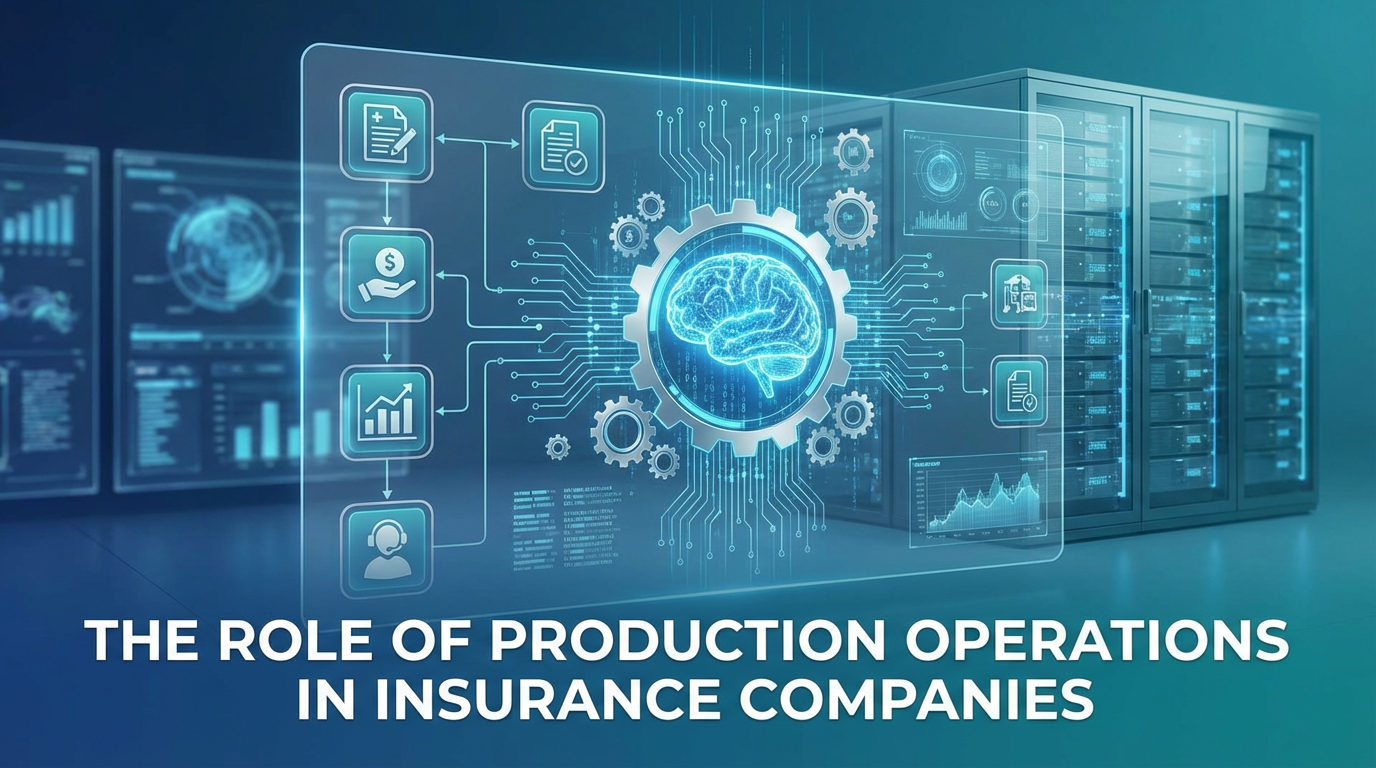


The insurance industry, a cornerstone of global economic stability, fundamentally operates on the principle of risk transfer and mitigation. At its core, the ability to effectively manage policies, process claims, and serve customers hinges on the robustness and efficiency of its production operations. Far from being a mere back-office function, production operations in insurance companies represent the intricate machinery that translates strategic vision into tangible value, ensuring seamless service delivery, regulatory compliance, and sustainable growth. In an increasingly dynamic landscape shaped by technological advancements, shifting customer expectations, and heightened competition, the role of production operations has transcended its traditional boundaries, evolving into a strategic imperative that dictates an insurer's agility, innovation capacity, and overall market resilience.
This comprehensive exploration delves into the multifaceted dimensions of production operations within insurance entities, tracing its historical trajectory, dissecting its core functions, identifying contemporary challenges, and illuminating the transformative power of modern technological paradigms, including the pivotal roles of Application Programming Interfaces (APIs), Artificial Intelligence (AI) Gateways, and the adoption of open platform strategies. By understanding these dynamics, insurance companies can not only optimize their current operational frameworks but also strategically position themselves for future success in an era of unprecedented digital transformation.
The Historical Trajectory of Insurance Production Operations: From Pen and Paper to Digital Ecosystems
To fully appreciate the current significance of production operations, it is crucial to understand its historical evolution. For centuries, insurance was a highly localized, labor-intensive business. Underwriting decisions were often made on personal relationships and qualitative assessments, policy administration involved reams of physical paper, and claims processing was a slow, manual reconciliation process. The "production line" of insurance was characterized by:
- Manual Processes: Every step, from application intake to policy issuance and claims settlement, required extensive manual intervention, leading to inherent inefficiencies, susceptibility to human error, and prolonged turnaround times.
- Decentralized Data: Information was often siloed across different departments or even within individual branches, making a holistic customer view virtually impossible and hindering comprehensive risk assessment.
- Limited Customer Interaction: Interactions were primarily reactive and transactional, often occurring in person or via postal mail, lacking the immediacy and personalization expected today.
- Fragmented Systems: Early attempts at computerization often resulted in departmental "mini-systems" that did not communicate with each other, creating further data silos and integration challenges.
The advent of mainframe computers in the mid-20th century marked the first significant shift, allowing for the automation of repetitive tasks like premium calculations and record-keeping. However, these were often monolithic systems, expensive to maintain, and difficult to adapt. The late 20th and early 21st centuries saw the gradual introduction of client-server architectures, enterprise resource planning (ERP) systems, and early forms of workflow automation. These developments began to lay the groundwork for more integrated operations, enabling insurers to handle larger volumes of business with somewhat improved efficiency.
The true paradigm shift, however, has occurred in the last two decades with the explosive growth of the internet, mobile technology, big data, cloud computing, and advanced analytics. These technologies have not merely optimized existing processes but have fundamentally reshaped the operational landscape, demanding a strategic re-evaluation of how insurance products are designed, delivered, and serviced. Production operations have moved from being a cost center focused solely on processing to a value driver that enables competitive differentiation, customer centricity, and agile innovation. This evolution underscores the constant need for adaptation and the embrace of new technologies to remain relevant and competitive.
Core Functions of Production Operations in the Insurance Sector
Production operations encompass a broad spectrum of activities that are indispensable for an insurance company's daily functioning and long-term viability. These functions are highly interconnected, with efficiency in one area often impacting the performance of others.
1. Underwriting Support and Policy Administration
At the heart of any insurance company lies the underwriting process, which assesses, rates, and accepts or rejects risks. Production operations provide critical support by:
- Data Collection and Validation: Gathering vast amounts of data from various sources – customer applications, credit reports, medical records, property databases, telematics data, and increasingly, social media and public records. Operations teams are responsible for ensuring the accuracy, completeness, and validity of this data, often leveraging automated tools for data cleansing and enrichment. Any discrepancies or missing information can lead to inaccurate risk assessments, potentially causing significant financial losses or regulatory penalties.
- Policy Issuance and Management: Once a risk is underwritten and accepted, operations teams are responsible for the accurate and timely issuance of policy documents. This includes generating policy schedules, endorsements, riders, and renewal notices. Moreover, ongoing policy administration involves managing policy changes (e.g., address updates, beneficiary changes, coverage modifications), processing renewals, and handling cancellations. The complexity here lies in managing a multitude of policy types, each with unique terms and conditions, across diverse customer segments.
- Premium Calculation and Billing: Accurate calculation of premiums, applying various discounts, surcharges, and taxes, is a core operational task. This is followed by robust billing and collection processes, including generating invoices, managing payment schedules, handling delinquencies, and reconciling payments. Errors in this area directly impact revenue recognition and customer satisfaction.
- Document Management: Insurance is a document-heavy industry. Production operations manage an enormous volume of physical and digital documents throughout the policy lifecycle. This includes scanning, indexing, archiving, and retrieving documents, ensuring they are readily accessible for customer service, claims processing, and regulatory audits. The transition to digital document management systems has been a significant operational improvement, reducing storage costs, improving retrieval times, and enhancing security.
2. Claims Processing and Adjudication
For many policyholders, the claims experience is the primary moment of truth that defines their relationship with an insurer. Efficient and empathetic claims processing is therefore paramount. Production operations play a crucial role in:
- First Notice of Loss (FNOL): Handling the initial reporting of a claim, often through multiple channels (phone, online portal, mobile app). This involves capturing critical information, verifying policy details, and initiating the claims process. Rapid and accurate FNOL can significantly impact subsequent claims handling efficiency and customer satisfaction.
- Investigation and Assessment: Coordinating with adjusters, investigators, and third-party experts to assess the validity and extent of the claim. This often involves gathering evidence, interviewing witnesses, reviewing documentation, and estimating damages. Operations supports this by providing access to relevant policy information, historical data, and communication tools.
- Loss Reserving: Collaborating with actuarial and finance teams to set appropriate reserves for reported claims, which is a critical financial management function. Accurate reserving prevents under-provisioning (which can destabilize financial statements) or over-provisioning (which ties up capital unnecessarily).
- Settlement and Payment: Calculating the final settlement amount, negotiating with claimants or their representatives, and authorizing payment. This requires adherence to policy terms, regulatory requirements, and internal guidelines. Operations ensures that payments are disbursed accurately and promptly, minimizing delays and disputes.
- Fraud Detection and Prevention: Implementing systems and processes to identify and prevent fraudulent claims, which pose a significant threat to an insurer's profitability. This involves leveraging data analytics, predictive modeling, and human expertise to flag suspicious claims for further investigation.
3. Customer Service and Relationship Management
In an era where customer experience is a key differentiator, production operations underpin an insurer's ability to deliver superior service.
- Inquiry Handling: Responding to a wide range of customer inquiries, from policy details and billing questions to coverage explanations and status updates. This involves training contact center staff, developing self-service portals, and leveraging communication technologies.
- Complaint Resolution: Managing and resolving customer complaints efficiently and fairly, which is crucial for maintaining customer trust and meeting regulatory obligations. Operations establishes protocols for logging, escalating, and resolving complaints, ensuring proper documentation and follow-up.
- Cross-selling and Upselling Support: Providing sales and marketing teams with data and insights to identify opportunities for cross-selling additional products or upselling higher coverage levels. While not directly a sales function, operations ensures the data infrastructure and process efficiency that enable these activities.
- Personalized Communications: Developing and delivering personalized communications to policyholders, whether for renewals, new product announcements, or educational content, enhancing engagement and retention.
4. Regulatory Compliance and Risk Management
The insurance industry is one of the most heavily regulated sectors globally. Production operations are on the front lines of ensuring compliance.
- Adherence to Regulations: Ensuring that all operational processes, from underwriting to claims, comply with a myriad of state, national, and international laws and regulations (e.g., Solvency II, GDPR, CCPA, NAIC model laws). This includes requirements related to data privacy, fair treatment of customers, anti-money laundering (AML), and financial reporting.
- Audit Readiness: Maintaining meticulous records and documentation to facilitate internal and external audits, demonstrating compliance with legal and industry standards. This involves robust data retention policies and easily retrievable audit trails.
- Data Security: Implementing stringent measures to protect sensitive customer and company data from breaches, cyber-attacks, and unauthorized access. This is particularly critical given the vast amounts of personal and financial information handled by insurers.
- Operational Risk Mitigation: Identifying, assessing, and mitigating operational risks that could disrupt business continuity, lead to financial losses, or damage reputation. This includes developing disaster recovery plans, ensuring system resilience, and implementing internal controls.
5. Data Management and Analytics
Data is the lifeblood of modern insurance. Production operations are central to its effective management and utilization.
- Data Ingestion and Storage: Collecting, processing, and storing vast quantities of structured and unstructured data from internal systems and external sources. This often involves big data technologies and cloud storage solutions.
- Data Quality and Governance: Establishing and enforcing data quality standards, data governance policies, and data lineage tracking to ensure data accuracy, consistency, and reliability across the enterprise. Poor data quality can undermine every decision made by an insurer.
- Reporting and Business Intelligence: Generating reports and dashboards that provide insights into operational performance, financial health, customer behavior, and market trends. These insights inform strategic decision-making across all departments.
- Predictive Analytics Support: Providing the clean, integrated data necessary for actuarial teams and data scientists to build predictive models for risk assessment, fraud detection, customer churn, and new product development.
Navigating the Modern Labyrinth: Challenges in Contemporary Insurance Operations
Despite technological advancements, insurance companies face a complex array of challenges in their production operations that demand continuous innovation and strategic responses.
1. Legacy Systems and Technical Debt
Many established insurance companies are burdened by decades-old mainframe systems and proprietary software, often referred to as legacy systems. These systems are:
- Infexible: Designed for a different era, they struggle to adapt to rapid changes in product design, regulatory requirements, or customer interaction channels.
- Expensive to Maintain: Requiring specialized skills and often running on outdated hardware, their operational costs are disproportionately high.
- Difficult to Integrate: Connecting legacy systems with modern cloud-native applications or external APIs is a significant technical hurdle, creating data silos and hindering end-to-end process automation.
- Hindrance to Innovation: Their rigidity stifles the ability to quickly launch new products or services, putting incumbents at a disadvantage against agile InsurTech startups.
2. Data Silos and Fragmentation
Even with modern systems, data often remains fragmented across different departments (underwriting, claims, customer service, finance) and disparate applications. This leads to:
- Incomplete Customer View: It becomes challenging to build a single, comprehensive view of a customer, impairing personalized service and targeted marketing.
- Inefficient Processes: Employees spend excessive time manually reconciling data from multiple sources, delaying decisions and increasing operational costs.
- Suboptimal Analytics: The inability to easily aggregate and analyze data from various sources limits the power of predictive analytics and business intelligence.
3. Regulatory Complexity and Compliance Burden
The regulatory landscape for insurance is constantly evolving, with new rules emerging concerning data privacy, consumer protection, market conduct, and financial solvency. Production operations must ensure:
- Continuous Adaptation: Processes must be constantly updated to comply with new regulations, which can be costly and resource-intensive.
- Robust Audit Trails: Detailed records must be maintained to demonstrate compliance during audits, requiring sophisticated data management and documentation systems.
- Cross-Jurisdictional Compliance: For multinational insurers, navigating conflicting or overlapping regulations across different regions adds another layer of complexity.
4. Evolving Customer Expectations
Modern consumers, accustomed to seamless digital experiences from other industries (retail, banking, tech giants), now expect the same from their insurers. This translates to demands for:
- Instant Gratification: Quicker quotes, faster policy issuance, and accelerated claims processing.
- Personalization: Tailored products, customized communications, and proactive service.
- Omni-channel Experience: The ability to interact with the insurer through their preferred channel (web, mobile, chat, phone, in-person) and expect a consistent experience across all touchpoints.
- Transparency: Clear communication about policy terms, claim status, and pricing.
5. Talent Shortages and Skills Gap
The shift towards digital operations, AI, and advanced analytics requires a new set of skills that are often scarce in the traditional insurance workforce. There is a growing need for:
- Data Scientists and Analysts: To interpret complex data and build predictive models.
- AI/ML Engineers: To develop and deploy AI solutions.
- API Developers and Architects: To build and manage integration layers.
- Cybersecurity Experts: To protect digital assets.
- Digital Transformation Leaders: To steer organizational change.
The inability to attract and retain this talent can significantly impede an insurer's operational modernization efforts.
6. Intensified Competition and Market Disruption
The insurance industry is experiencing disruption from multiple fronts:
- InsurTech Startups: Agile, technology-first companies offering niche products, superior digital experiences, or innovative business models.
- Big Tech Entrants: Companies like Amazon, Google, or Apple potentially entering the market leveraging their vast customer data and technological prowess.
- Embedded Insurance: The integration of insurance products directly into the purchase journey of other goods and services, often facilitated by non-insurance companies.
This competitive pressure forces incumbents to innovate their operational processes to reduce costs, enhance speed, and deliver differentiating value.
Leveraging Technology for Transformation: A New Paradigm for Production Operations
To address these challenges and thrive in the modern insurance landscape, production operations are undergoing a profound technological metamorphosis. This involves strategically adopting a suite of advanced tools and methodologies that enhance efficiency, improve accuracy, reduce costs, and ultimately deliver superior customer value.
1. Digitalization and Automation: Streamlining the Core
At its foundational level, transformation begins with digitalization and automation of routine, repetitive tasks.
- Robotic Process Automation (RPA): RPA bots can mimic human actions to interact with existing systems, automate data entry, reconcile data across multiple applications, generate reports, and trigger workflows. In insurance, RPA can automate tasks like processing claims forms, validating policy data, sending routine communications, and updating customer records. This frees up human employees to focus on more complex, value-added activities that require judgment and empathy.
- Business Process Management (BPM) and Workflow Automation: BPM suites provide tools to design, execute, monitor, and optimize end-to-end business processes. By digitizing workflows, insurers can enforce standard operating procedures, reduce manual handoffs, eliminate bottlenecks, and gain real-time visibility into process performance. This is crucial for complex processes like underwriting new policies or handling intricate claims, ensuring every step is followed correctly and efficiently.
- Intelligent Automation (IA): This combines RPA with AI technologies like machine learning, natural language processing (NLP), and computer vision. For instance, intelligent automation can process unstructured data from claim forms (using NLP), extract relevant information, categorize documents (using computer vision), and then use RPA to input this data into core systems. This allows for automation of processes that traditionally required human interpretation.
2. Data Analytics and Artificial Intelligence (AI): Driving Smarter Decisions
AI and advanced analytics are revolutionizing decision-making and operational efficiency across the insurance value chain.
- Predictive Analytics: Leveraging historical data to forecast future outcomes. In underwriting, this means more accurate risk assessment and personalized pricing. In claims, it can predict the likelihood of fraud or the potential severity of a claim. In customer service, it can predict churn risk and identify customers likely to respond to cross-selling offers.
- Machine Learning (ML): ML algorithms can learn from vast datasets to identify patterns and make predictions without explicit programming. Examples include:
- Automated Underwriting: ML models can analyze applicant data to automatically approve low-risk policies, flag high-risk ones for human review, and even suggest optimal pricing.
- Fraud Detection: ML models can detect anomalies in claims data that indicate potential fraud, improving the efficiency and accuracy of fraud investigations.
- Sentiment Analysis: Analyzing customer feedback from calls, emails, and social media to gauge sentiment, identify pain points, and improve customer service strategies.
- Natural Language Processing (NLP) and Generation (NLG): NLP allows computers to understand, interpret, and generate human language. It's used to:
- Process Unstructured Data: Extracting key information from policy documents, medical records, or claims narratives.
- Chatbots and Virtual Assistants: Providing instant, 24/7 customer support, answering FAQs, and guiding customers through processes like FNOL.
- Automated Document Generation: Creating personalized policy summaries or claims communications.
3. Application Programming Interfaces (APIs): The Connective Tissue of Modern Operations
The shift towards modular, interconnected systems is largely facilitated by APIs. APIs act as digital connectors, allowing different software applications to communicate and exchange data seamlessly. In insurance, APIs are no longer an optional add-on but a fundamental building block for modern production operations.
- Internal System Integration: APIs break down internal data silos by enabling legacy core systems to communicate with newer cloud applications, data lakes, and analytics platforms. This creates a unified data environment essential for a holistic customer view and end-to-end process automation.
- External Partner Integration: APIs are critical for connecting with a vast ecosystem of external partners, including:
- Data Providers: Accessing real-time external data (e.g., weather data for property claims, credit scores for underwriting, vehicle telematics for auto insurance) to enhance risk assessment and personalized pricing.
- InsurTechs: Collaborating with specialized startups for specific services like AI-driven fraud detection, personalized marketing, or innovative claims processing.
- Distribution Channels: Integrating with comparison websites, independent agents, and even non-insurance companies (e.g., real estate platforms for embedded home insurance) to expand reach.
- Service Providers: Connecting with repair shops, healthcare providers, or roadside assistance services for streamlined claims fulfillment.
- Customer-Facing Applications: Powering mobile apps, online portals, and third-party platforms that allow customers to get quotes, purchase policies, file claims, or manage their accounts with ease and immediacy.
- Innovation and Agility: By exposing core functionalities through APIs, insurers can rapidly develop and deploy new products or services by combining internal capabilities with external innovations, significantly reducing time-to-market. This modular approach allows for experimentation and iteration, crucial in a fast-changing market. The ability to quickly integrate external data and services via APIs provides a competitive edge, enabling insurers to react swiftly to market demands and offer highly customized solutions.
4. Cloud Computing: The Scalable and Flexible Foundation
Cloud infrastructure (SaaS, PaaS, IaaS) provides the scalable, flexible, and cost-effective foundation for modern insurance operations.
- Scalability: Insurers can instantly scale computing resources up or down based on demand, whether during peak claims periods or for running large analytical models, avoiding expensive on-premise hardware investments.
- Cost Efficiency: Shifting from capital expenditure (CapEx) on hardware to operational expenditure (OpEx) on cloud services, reducing IT infrastructure costs.
- Agility and Speed: Cloud-native applications can be developed, deployed, and updated much faster than traditional on-premise systems, accelerating innovation cycles.
- Disaster Recovery and Business Continuity: Cloud providers offer robust disaster recovery capabilities, enhancing the resilience of critical operational systems.
5. AI Gateway: Managing the Intelligence Layer
As insurance companies increasingly adopt multiple AI models for various operational tasks—from fraud detection and sentiment analysis to predictive underwriting and automated claims assessment—the challenge of managing these disparate AI services grows. This is where an AI Gateway becomes indispensable for production operations.
An AI Gateway acts as a centralized management layer for all AI models, regardless of their origin (internal development, third-party APIs, open-source models). Its role is critical for ensuring the secure, efficient, and standardized invocation of AI services within the enterprise. For production operations, an AI Gateway offers several vital benefits:
- Unified Management and Orchestration: It provides a single point of control for managing a diverse portfolio of AI models. Operations teams can oversee model deployment, versioning, and retirement from a unified dashboard, simplifying complex AI ecosystems.
- Standardized AI Invocation: Different AI models often have varying input/output formats and authentication mechanisms. An AI Gateway normalizes these interactions, presenting a consistent api interface to internal applications and microservices. This means that changes in an underlying AI model or its prompt configuration do not ripple through the entire application stack, significantly reducing maintenance complexity and cost. For example, if an insurer switches from one sentiment analysis model to another, applications continue to interact with the same gateway api, unaware of the underlying change.
- Security and Access Control: AI models often handle sensitive data. An AI Gateway enforces robust authentication and authorization policies, ensuring that only authorized applications and users can access specific AI services. It can also manage API keys, tokens, and provide an additional layer of security against unauthorized access or data breaches.
- Performance Monitoring and Cost Tracking: Operations teams can monitor the performance of all AI models in real-time, tracking latency, error rates, and resource utilization. This allows for proactive identification and resolution of performance bottlenecks. Furthermore, an AI Gateway can track usage patterns and costs associated with different AI services, providing valuable data for budgeting and resource optimization.
- Prompt Encapsulation and Reusability: Many modern AI models, especially large language models (LLMs), rely on carefully crafted prompts. An AI Gateway can encapsulate these prompts into easily invokable REST APIs. This allows operations teams to rapidly create new AI-powered services (e.g., a "claim summary generation" API or a "policy terms clarification" API) by simply combining an LLM with a specific prompt, without requiring deep AI expertise from the application developers.
For instance, platforms like APIPark, an open-source AI gateway and API management platform, offer capabilities to quickly integrate 100+ AI models, unify API formats for AI invocation, and encapsulate prompts into REST APIs, thereby simplifying AI usage and maintenance for enterprises. Its comprehensive logging and data analysis features further enable businesses to trace issues, ensure stability, and analyze performance trends, which are invaluable for robust production operations. By providing end-to-end API lifecycle management, APIPark helps regulate API management processes, manage traffic forwarding, load balancing, and versioning of published APIs, a critical suite of features for any insurer leveraging an extensive array of AI and traditional APIs.
6. Open Platform Strategies: Fostering Ecosystems and Innovation
In an increasingly interconnected world, insurance companies are moving away from purely insular operations towards an open platform strategy. This involves selectively opening up internal capabilities, data, and services (primarily through robust APIs) to external partners, developers, and even customers, to create a broader ecosystem of innovation.
- Co-creation and Innovation: An open platform allows insurers to tap into the creativity and specialized expertise of InsurTech startups, technology providers, and academic institutions. By providing APIs to core systems (e.g., quote engines, claims data, policyholder information, always with stringent security and privacy controls), insurers can facilitate the development of new applications, products, and services that they might not have the internal resources or speed to create on their own. This accelerates product development and allows for faster market experimentation.
- Enhanced Distribution: Open platforms can create new distribution channels by allowing third-party entities to integrate insurance products directly into their own customer journeys. For example, a car dealership could offer embedded auto insurance at the point of sale, or a smart home device manufacturer could bundle property insurance with their products. This extends the insurer's reach beyond traditional channels.
- Improved Customer Experience: By integrating with popular consumer platforms or lifestyle apps, insurers can offer more convenient and personalized experiences. For instance, an open platform might allow a policyholder to view their insurance details within their preferred banking app or get real-time assistance through a popular messaging platform.
- Data Enrichment and Value Exchange: Through controlled API access, insurers can exchange data with trusted partners to enrich their own risk models, improve customer insights, and offer more precise coverage. This symbiotic relationship fosters a network effect, where the value of the platform grows with each new participant.
- Driving Standardization: By publishing well-documented APIs, insurers contribute to industry standardization efforts, making it easier for new players to integrate and reducing overall integration costs across the ecosystem. An AI Gateway like APIPark, with its ability to standardize API formats for AI invocation and manage the entire API lifecycle, becomes an enabler for such an open platform strategy, ensuring secure and efficient interaction with external partners consuming AI-powered APIs.
APIPark is a high-performance AI gateway that allows you to securely access the most comprehensive LLM APIs globally on the APIPark platform, including OpenAI, Anthropic, Mistral, Llama2, Google Gemini, and more.Try APIPark now! 👇👇👇
The Specific Impact of Technology on Key Operational Areas
The integration of these advanced technologies profoundly impacts the core functions of production operations, leading to demonstrable improvements.
1. Underwriting Efficiency and Accuracy
- Automated Data Gathering: APIs facilitate instant access to external data sources (credit bureaus, property records, health databases, vehicle telematics, social media sentiment through AI), reducing manual data entry and speeding up application processing.
- AI-Powered Risk Assessment: ML models analyze vast datasets to identify granular risk factors, leading to more accurate pricing and reduced adverse selection. They can process complex medical records (using NLP) or analyze vast amounts of property data to give a precise risk score in real-time.
- Faster Quote-to-Bind: Straight-through processing for low-risk policies, driven by RPA and AI, allows customers to get quotes and purchase policies in minutes, dramatically improving customer experience and conversion rates. An AI Gateway can ensure that various risk assessment models are invoked consistently and securely during this rapid process.
2. Claims Management Optimization
- Accelerated FNOL: Mobile apps and online portals, powered by APIs, enable customers to file claims instantly, often with photo or video evidence, speeding up the initial reporting phase. AI-powered chatbots can guide customers through the FNOL process 24/7.
- Automated Claim Triage: ML models can analyze claim details to automatically categorize claims, identify low-complexity claims for straight-through processing, and flag suspicious ones for human investigation.
- AI-Driven Damage Assessment: Computer vision can analyze images/videos of damaged property or vehicles to estimate repair costs, reducing the need for physical inspections and accelerating settlement.
- Fraud Detection: AI algorithms, accessible securely via an AI Gateway, continuously monitor claims for patterns indicative of fraud, significantly improving detection rates and reducing losses.
- Personalized Communications: Automated systems, integrated via APIs, can send proactive updates to claimants, managing expectations and improving satisfaction.
3. Enhanced Customer Experience
- Omni-channel Service: APIs integrate various customer touchpoints (web, mobile, call center, social media) to provide a unified and consistent experience.
- Personalized Products and Services: AI and data analytics enable insurers to understand individual customer needs and preferences, offering tailored products, proactive advice, and personalized communications.
- Self-Service Capabilities: Online portals and mobile apps, built on robust APIs, empower customers to manage policies, file claims, and get answers to questions independently, improving convenience and reducing call center volumes.
- Proactive Engagement: AI can predict customer needs or potential issues (e.g., upcoming policy renewals, potential for natural disasters) and trigger proactive outreach, transforming reactive service into proactive relationship management.
4. Robust Risk Management and Compliance
- Real-time Monitoring: APIs and data streams provide real-time access to regulatory changes and market data, allowing operations to adapt processes promptly.
- Automated Compliance Checks: RPA and AI can automate compliance checks on policy documents, claims processes, and customer communications, reducing the risk of human error and regulatory fines.
- Enhanced Data Security: Cloud platforms and API Gateways provide robust security features, encryption, and access controls to protect sensitive data, crucial for meeting stringent privacy regulations. The ability to manage independent access permissions for each tenant and require approval for API access, as seen in APIPark, is a fundamental aspect of this enhanced security posture.
- Comprehensive Audit Trails: Detailed logging of all transactions and API calls (a key feature of platforms like APIPark) ensures complete audit readiness, demonstrating adherence to internal policies and external regulations.
5. Accelerated Product Innovation
- Modular Product Design: An open platform approach, leveraging APIs, allows insurers to modularize their products and services, making it easier to combine different components (internal and external) to create new offerings.
- Faster Time-to-Market: The ability to integrate external data, AI models (via an AI Gateway), and partner services through APIs significantly shortens the development cycle for new insurance products, allowing insurers to respond rapidly to market opportunities.
- Experimentation and A/B Testing: Agile operational frameworks supported by flexible technology stacks enable insurers to quickly pilot new products, gather feedback, and iterate based on market response.
Here's a comparison table highlighting the shift:
| Aspect | Traditional Production Operations | Modern Production Operations with Tech Integration |
|---|---|---|
| Data Handling | Manual entry, paper-based, siloed databases | Automated ingestion, centralized data lakes, real-time data streaming via APIs |
| Underwriting | Manual risk assessment, slow, subjective | AI-powered risk scoring, automated straight-through processing, API-driven data enrichment |
| Claims Processing | Manual FNOL, physical adjusters, long settlement times | Digital FNOL, AI-driven damage assessment, automated fraud detection via AI Gateways, faster settlements |
| Customer Interaction | Reactive, call center/mail-centric, inconsistent | Proactive, omni-channel, personalized, self-service portals via APIs, AI chatbots |
| Product Innovation | Slow, resource-intensive, internal-focused | Agile, modular, ecosystem-driven via Open Platform & APIs, rapid experimentation |
| Regulatory Compliance | Manual checks, difficult audit trails | Automated compliance checks, real-time monitoring, comprehensive logging |
| Operational Efficiency | High manual effort, prone to errors, high costs | High automation, reduced errors, lower operational costs, higher throughput |
| Security Posture | Physical security, basic IT security, fragmented | Multi-layered cybersecurity, API security, tenant isolation, granular access control via AI Gateway |
| Scalability | Limited by physical infrastructure, costly to expand | Cloud-native, on-demand scalability, cost-effective |
| Ecosystem Engagement | Limited partner integrations | Extensive partner integrations, API-driven Open Platform ecosystem |
The Human Element: Reskilling and Change Management
While technology undeniably transforms production operations, the human element remains paramount. The shift from manual processing to managing intelligent automation and AI systems requires a significant investment in reskilling the workforce.
- New Skill Sets: Employees need to develop skills in data analysis, AI literacy, process automation management, and digital customer service. Roles are shifting from execution to oversight, exception handling, and strategic problem-solving.
- Change Management: Implementing large-scale technological transformations often encounters resistance. Effective change management strategies are crucial, involving clear communication, employee engagement, comprehensive training programs, and demonstrating the benefits of new technologies to the workforce.
- Human-in-the-Loop: Even with advanced AI, human oversight and judgment remain essential for complex decisions, ethical considerations, and empathetic customer interactions. Operations teams must learn to effectively collaborate with AI, leveraging its speed and analytical power while applying human wisdom and compassion. The goal is augmentation, not wholesale replacement, leading to a more fulfilling and intellectually stimulating work environment.
Future Trends Shaping Production Operations in Insurance
The trajectory of production operations continues its rapid evolution, driven by emergent technologies and shifting market dynamics. Insurers must remain agile and forward-looking to capitalize on these trends:
- Hyper-personalization and Proactive Insurance: Leveraging vast data sets and advanced AI (accessed securely via AI Gateways), insurers will move beyond simple personalization to offer truly bespoke products and services, predicting needs even before the customer identifies them. This includes "insurance-as-a-service" models where coverage is embedded seamlessly into other daily activities or purchases.
- Embedded Insurance: The proliferation of APIs will accelerate the trend of embedding insurance directly into the purchase points of other products and services. Operations will need to manage a complex web of partnerships and micro-transactions, requiring highly flexible systems and real-time data exchange. An open platform strategy is central to this.
- Blockchain and Distributed Ledger Technology (DLT): While still nascent, blockchain could revolutionize claims processing, fraud detection, and subrogation by creating immutable, transparent records across a network of participants. This could lead to faster, more secure settlements and reduced administrative costs.
- Internet of Things (IoT) and Edge Computing: The proliferation of IoT devices (wearables, smart homes, connected cars) provides a continuous stream of real-time data on risk factors. Production operations will need to process this massive influx of data efficiently, often using edge computing to analyze data closer to its source, enabling immediate risk alerts and proactive interventions. This data will feed into AI models for more dynamic underwriting and personalized prevention services.
- Generative AI and Large Language Models (LLMs): Beyond current NLP applications, generative AI will enable creation of complex documents, personalized marketing copy, and even new product design proposals. It will significantly enhance the capabilities of virtual assistants and chatbots, making customer interactions even more sophisticated and human-like, further streamlining tasks such as claims explanation or policy summarization. Managing access and usage of these powerful models will necessitate robust AI Gateways.
- Cyber Resilience as a Core Operational Imperative: As operations become increasingly digital and interconnected, cybersecurity will cease to be merely an IT function and become a pervasive operational imperative. Protecting sensitive customer data, ensuring the integrity of AI models, and safeguarding API endpoints will be central to maintaining trust and business continuity. Platforms that offer independent API and access permissions for each tenant and require approval for API resource access, such as APIPark, will be crucial tools in this landscape.
Conclusion
The role of production operations in insurance companies has undergone a monumental transformation, shifting from a cost-intensive, paper-driven back office to a dynamic, technology-powered strategic engine. In an industry built on trust and efficiency, robust operations are no longer just about processing transactions; they are about enabling innovation, delivering unparalleled customer experiences, and ensuring resilient compliance in an ever-changing world.
The strategic embrace of technologies like APIs, AI Gateways, and open platform strategies is not merely an option but a critical necessity. APIs provide the essential connective tissue, enabling disparate systems to communicate and fostering a rich ecosystem of internal and external partnerships. AI Gateways offer the crucial control layer for managing the burgeoning complexity of AI models, ensuring their secure, efficient, and standardized application across the enterprise, as exemplified by powerful platforms like APIPark. And open platform strategies lay the groundwork for collaborative innovation, allowing insurers to co-create value and expand their reach in unprecedented ways.
As insurance companies navigate the complexities of digital transformation, those that recognize and strategically invest in the modernization of their production operations, viewing them as a core competitive advantage rather than a mere support function, will be the ones that not only survive but thrive, shaping the future of risk and protection for generations to come. The journey is continuous, demanding perpetual adaptation, strategic investment, and a holistic vision that integrates technology, people, and processes to build the agile, intelligent, and customer-centric insurance enterprises of tomorrow.
Frequently Asked Questions (FAQs)
1. What exactly are "production operations" in an insurance company? Production operations in an insurance company refer to the entire set of processes and activities involved in delivering insurance products and services. This includes core functions such as underwriting support (assessing risks, issuing policies, managing premiums), claims processing (handling claims from FNOL to settlement), customer service, policy administration, regulatory compliance, and data management. Essentially, it's the operational machinery that ensures the company's daily business runs smoothly and efficiently, translating strategic decisions into tangible customer value.
2. Why are APIs so crucial for modern insurance production operations? APIs (Application Programming Interfaces) are critical because they act as digital connectors, allowing different software systems to communicate and exchange data seamlessly. In insurance, this means breaking down data silos between legacy systems and modern applications, integrating with external data providers (e.g., for real-time risk assessment), connecting with InsurTech partners for specialized services, and powering customer-facing mobile apps and online portals. They enable faster data exchange, automation, innovation, and an open platform strategy, which are all vital for efficiency, speed, and customer experience in the digital age.
3. How does an AI Gateway benefit an insurance company's operations? An AI Gateway serves as a centralized management layer for all AI models utilized by an insurance company. With the increasing adoption of various AI tools for tasks like fraud detection, predictive underwriting, and sentiment analysis, an AI Gateway simplifies their orchestration. It provides unified management, standardizes AI invocation (meaning applications interact with a consistent API regardless of the underlying AI model), enhances security and access control for sensitive AI services, and offers performance monitoring and cost tracking. Platforms like APIPark exemplify how an AI Gateway can streamline the integration and management of multiple AI models, reducing complexity and costs for operations.
4. What does an "open platform" strategy mean for an insurer, and what are its operational implications? An open platform strategy involves an insurance company selectively opening up its internal capabilities, data, and services (primarily through robust APIs) to external partners, developers, and even customers. The operational implications are significant: it fosters co-creation and innovation by allowing external parties to build new products or services on top of the insurer's core offerings; it expands distribution channels; improves customer experience through integration with popular consumer platforms; and facilitates data enrichment through value exchange. This strategy demands robust API management, stringent security protocols (often managed by an AI Gateway), and a culture of collaboration to succeed.
5. What are the biggest challenges facing production operations in the insurance industry today? Modern insurance production operations face several significant challenges. These include: overcoming the inflexibility and high maintenance costs of legacy systems; managing fragmented data and eliminating data silos; navigating an increasingly complex and evolving regulatory landscape; meeting the rising expectations of digitally-savvy customers who demand instant, personalized, and omni-channel experiences; addressing talent shortages and skill gaps in areas like AI, data science, and cybersecurity; and coping with intensified competition from agile InsurTechs and potential big tech entrants. Successfully addressing these challenges often requires strategic investment in advanced technologies and a comprehensive digital transformation roadmap.
🚀You can securely and efficiently call the OpenAI API on APIPark in just two steps:
Step 1: Deploy the APIPark AI gateway in 5 minutes.
APIPark is developed based on Golang, offering strong product performance and low development and maintenance costs. You can deploy APIPark with a single command line.
curl -sSO https://download.apipark.com/install/quick-start.sh; bash quick-start.sh

In my experience, you can see the successful deployment interface within 5 to 10 minutes. Then, you can log in to APIPark using your account.

Step 2: Call the OpenAI API.