Top Gartner Magic Quadrant Companies to Watch


In the complex and rapidly evolving world of enterprise technology, making informed decisions about foundational infrastructure and cutting-edge solutions is paramount. Businesses are constantly seeking reliable guides to cut through the noise and identify the technologies and vendors that truly deliver value. Among the most respected and widely referenced tools for this purpose is the Gartner Magic Quadrant. For decades, Gartner has provided invaluable insights, evaluating technology providers based on their completeness of vision and ability to execute, thereby helping organizations strategically plan their IT investments. This comprehensive analysis dives deep into why the Gartner Magic Quadrant remains a critical resource, with a particular focus on the transformative roles of API Gateways, the nascent but crucial AI Gateways, and the specialized LLM Gateways, guiding enterprises on how to identify top companies poised for significant impact in these domains.
Understanding the Strategic Value of the Gartner Magic Quadrant
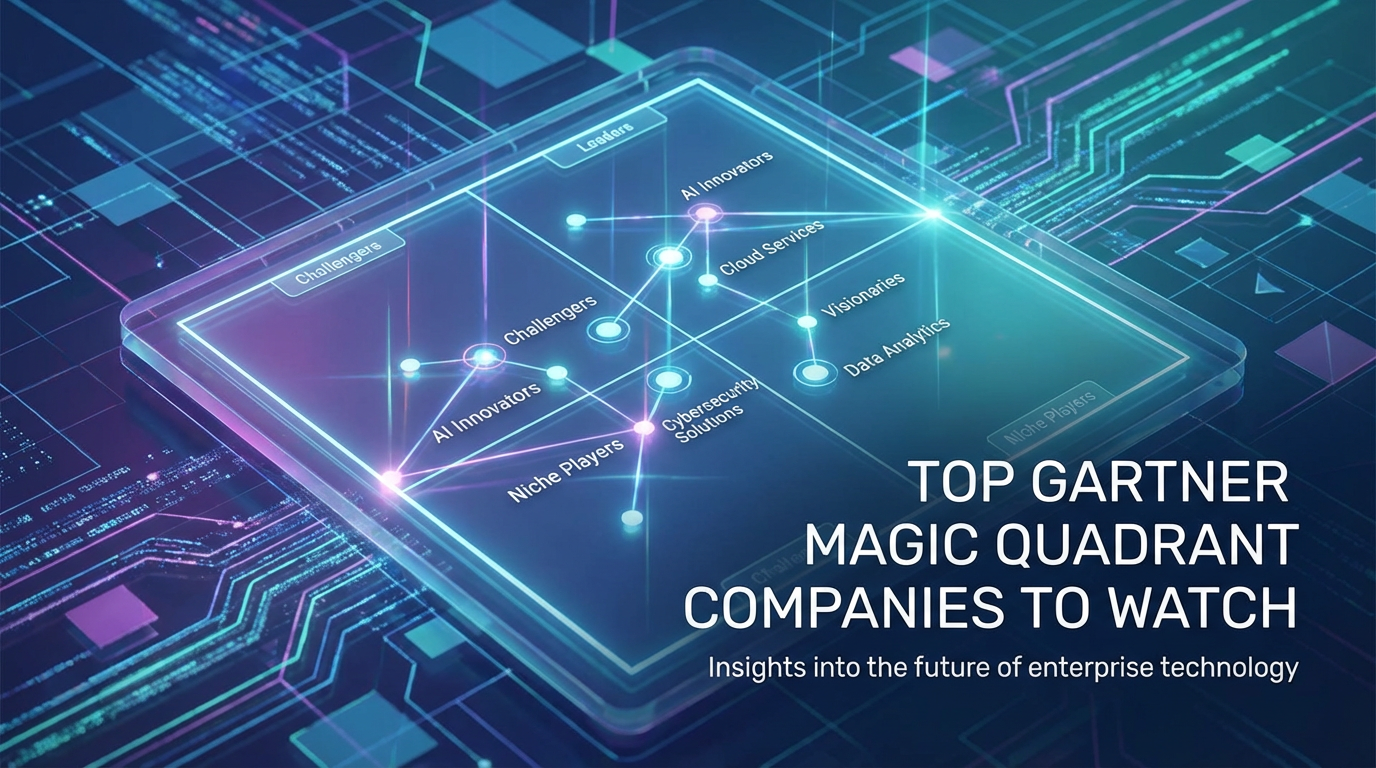
The Gartner Magic Quadrant is more than just a vendor ranking; it's a culmination of extensive research, market analysis, and rigorous evaluation, offering a graphical representation of a market's competitive landscape. For any enterprise, understanding this framework is the first step toward strategic technology procurement. Gartner positions technology providers into four quadrants: Leaders, Challengers, Visionaries, and Niche Players. Each quadrant signifies a distinct market position and set of strengths, catering to different enterprise needs and strategic objectives.
Leaders, positioned in the upper-right quadrant, demonstrate strong execution of their current vision and are well-positioned for the future. They typically have a large market share, a proven track record, and a comprehensive product offering that meets the needs of a wide range of customers. For organizations prioritizing stability, comprehensive feature sets, and established support, focusing on Leaders in relevant Magic Quadrants often represents a lower-risk approach.
Challengers, located in the upper-left, excel at execution today but might have a less developed vision for the future or a narrower market focus compared to Leaders. They often possess significant market presence and operational efficiency, making them strong contenders, especially for enterprises seeking robust, well-executed solutions within a specific domain or budget. These companies can sometimes offer more agile or cost-effective alternatives while still delivering high performance.
Visionaries, found in the lower-right, understand where the market is going or have a vision for changing market rules, but they may not yet fully execute on that vision. They are typically innovative, bringing disruptive technologies or novel approaches to market problems. Enterprises looking to innovate, gain early access to cutting-edge features, or address niche, emerging requirements might find Visionaries particularly appealing, provided they are willing to accept a potentially higher degree of risk or a less mature product ecosystem.
Finally, Niche Players, in the lower-left, focus successfully on a small segment of the market or have a more limited product portfolio. While they might not be suitable for broad enterprise adoption, they often offer specialized solutions that perfectly address very specific use cases or industry vertical needs. For organizations with highly specific, non-mainstream requirements, a Niche Player could be the ideal fit, offering deep expertise and tailored solutions that larger vendors might overlook.
The true strategic value of the Magic Quadrant lies in its ability to provide a nuanced perspective. It helps decode market complexities, identify key trends, and evaluate vendors not just on their current offerings but also on their future potential. By analyzing the criteria Gartner uses for evaluation—which often includes product capabilities, customer experience, pricing, market responsiveness, innovation, and strategic viability—businesses gain a holistic understanding of vendor strengths and weaknesses. This systematic approach is invaluable when making significant technology investments, especially in areas as critical and rapidly evolving as API management and artificial intelligence infrastructure.
The Indispensable Role of API Gateways in Modern Architectures
At the heart of modern digital transformation, microservices architectures, and cloud-native applications lies the API Gateway. This foundational component is far more than a simple proxy; it acts as the single entry point for all client requests, serving as a critical control plane for managing, securing, and optimizing the flow of data between consumers and backend services. Without a robust API Gateway, managing the proliferation of APIs in today's interconnected enterprise landscape would be an insurmountable challenge, leading to security vulnerabilities, performance bottlenecks, and operational chaos.
The primary functions of an API Gateway are multifaceted and extend across the entire API lifecycle. Firstly, it provides traffic management capabilities, including routing requests to the appropriate backend services based on various criteria (e.g., URL paths, headers, query parameters). This routing intelligence is crucial for complex microservices architectures where dozens or hundreds of services might be running simultaneously. Load balancing is another key feature, distributing incoming traffic across multiple instances of a service to ensure high availability and optimal performance, preventing any single service from becoming overwhelmed. Rate limiting and throttling mechanisms are also integral, protecting backend services from excessive requests, which could lead to denial-of-service attacks or performance degradation, while also enforcing usage policies for different API consumers.
Secondly, security is a paramount concern for any digital business, and the API Gateway serves as the first line of defense. It enforces authentication and authorization policies, ensuring that only legitimate users and applications can access specific APIs. This often involves integrating with identity providers (IdPs), handling OAuth2 token validation, API key management, and JWT verification. Beyond access control, API Gateways can implement advanced security measures such as IP whitelisting/blacklisting, DDoS protection, input validation, and even integration with Web Application Firewalls (WAFs) to mitigate common web vulnerabilities. By centralizing these security policies, enterprises can ensure consistent protection across all their APIs, significantly reducing the attack surface.
Furthermore, API Gateways are instrumental in enhancing the developer experience and promoting API adoption. They typically offer developer portals where API consumers can discover available APIs, access comprehensive documentation, test APIs, and manage their API keys. This self-service capability accelerates integration efforts, reduces the burden on internal support teams, and fosters a thriving ecosystem around an organization's APIs. For internal teams, the gateway facilitates API versioning, allowing multiple versions of an API to coexist simultaneously, enabling seamless upgrades and deprecation strategies without breaking existing integrations.
Finally, analytics and monitoring are critical functions provided by API Gateways. They capture detailed metrics on API usage, performance, and error rates, providing invaluable insights into API health, consumer behavior, and potential operational issues. This data can be used for performance optimization, capacity planning, usage-based billing, and proactive incident response. Comprehensive logging capabilities, like those offered by many advanced API management platforms, including open-source solutions such as ApiPark, ensure that every detail of each API call is recorded. This feature allows businesses to quickly trace and troubleshoot issues, ensuring system stability and data security, while powerful data analysis can display long-term trends and performance changes, helping with preventive maintenance. This holistic view is indispensable for maintaining the reliability and efficiency of an organization's digital services.
In essence, an API Gateway transforms a collection of disparate services into a cohesive, secure, and manageable digital product offering. Its strategic importance cannot be overstated for enterprises aiming to succeed in an API-driven world. The companies leading the Gartner Magic Quadrant for API Management are those that not only provide these core functionalities but also innovate in areas like hybrid and multi-cloud deployment, advanced policy orchestration, AI-driven automation, and a superior developer experience.
The Rise of AI Gateways and the Specialization into LLM Gateways
As artificial intelligence permeates every layer of the enterprise, the need for specialized infrastructure to manage AI services has become increasingly evident. This is precisely where the concept of an AI Gateway emerges, evolving beyond the traditional API Gateway to address the unique complexities inherent in integrating and governing AI models. An AI Gateway acts as an intelligent intermediary, specifically designed to orchestrate, secure, and optimize access to various AI and machine learning (ML) models, whether they are hosted internally, consumed from cloud providers, or utilize third-party AI services.
The challenges in managing AI models differ significantly from those of typical REST APIs. AI models require careful handling of diverse input/output formats, frequent version updates, varying computational resource demands, and distinct security considerations, particularly concerning sensitive training data and model intellectual property. An AI Gateway tackles these challenges by offering several key capabilities:
- Unified Model Integration: It provides a standardized interface for interacting with a multitude of AI models, abstracting away the underlying complexities and diverse APIs of different AI providers (e.g., natural language processing, computer vision, speech recognition, recommendation engines). This allows applications to consume AI services through a consistent API, regardless of the model's origin or underlying framework. Products like ApiPark exemplify this, offering quick integration of 100+ AI models with a unified management system for authentication and cost tracking, and standardizing the request data format across all AI models.
- Prompt Management and Encapsulation: A critical aspect, especially for generative AI, is the ability to manage and version prompts. An AI Gateway can encapsulate complex prompts into simple REST APIs, allowing developers to invoke sophisticated AI capabilities without needing deep knowledge of prompt engineering. This ensures consistency, reduces errors, and simplifies updates. For instance, ApiPark allows users to quickly combine AI models with custom prompts to create new APIs, such as sentiment analysis or data analysis APIs, demonstrating prompt encapsulation into a REST API.
- Cost Optimization and Load Balancing: AI model inference can be computationally expensive. An AI Gateway can intelligently route requests to the most cost-effective or highest-performing model instances, manage quotas, and provide detailed cost tracking per model or per user. It can also perform dynamic load balancing across multiple instances of the same model or even across different model providers to ensure optimal latency and resource utilization.
- Security and Governance for AI: Beyond standard API security, an AI Gateway addresses AI-specific concerns such as data privacy for inferences, model access control, and preventing prompt injection attacks. It can enforce data anonymization policies, log model usage for auditing, and ensure compliance with regulatory requirements like GDPR or HIPAA when processing sensitive data with AI models. APIPark, for example, allows for subscription approval features, ensuring callers must subscribe to an API and await administrator approval, preventing unauthorized API calls and potential data breaches, which is crucial for sensitive AI service access.
- Observability and Monitoring for AI: Gaining insights into AI model performance, latency, drift, and bias is essential. An AI Gateway provides centralized logging, metrics, and tracing for all AI inferences, enabling proactive monitoring, troubleshooting, and continuous improvement of AI services.
The Emergence of LLM Gateways
Within the broader category of AI Gateways, the rapid ascent of Large Language Models (LLMs) has necessitated the further specialization into LLM Gateways. These gateways are specifically tailored to address the unique demands and characteristics of generative AI models, such as OpenAI's GPT series, Google's Bard/Gemini, Anthropic's Claude, and open-source models like Llama.
LLM Gateways build upon the core capabilities of AI Gateways with additional features designed for language models:
- Advanced Prompt Engineering & Orchestration: They offer more sophisticated tools for constructing, testing, and managing complex prompts, including chaining multiple prompts, handling context windows, and facilitating few-shot learning.
- Model Agnosticism for LLMs: Given the rapid pace of LLM innovation, an LLM Gateway enables seamless switching between different LLM providers or models without altering application code. This provides flexibility and future-proofing, allowing organizations to leverage the best available model for a given task, whether it's for cost, performance, or specific capabilities.
- Response Optimization & Caching: LLM responses can be lengthy and sometimes redundant. An LLM Gateway can optimize responses, implement caching strategies for common queries to reduce latency and cost, and handle streaming responses efficiently.
- Guardrails and Content Moderation: A critical function for LLMs is to ensure responsible AI usage. LLM Gateways can integrate with content moderation APIs, apply custom filters to prevent toxic or inappropriate output, and enforce ethical guidelines before responses are delivered to end-users.
- Cost Management for Tokens: LLM usage is often billed by tokens. An LLM Gateway provides granular tracking of token usage, allowing organizations to manage budgets, set limits, and analyze cost drivers effectively across different applications and users.
In essence, while an api gateway is a generalist for all APIs, an AI Gateway is a specialist for all AI models, and an LLM Gateway is a hyper-specialist for large language models. The companies to watch in Gartner's relevant Magic Quadrants are those that recognize this evolving hierarchy and offer solutions that can seamlessly transition and scale from traditional APIs to advanced AI and LLM functionalities. Organizations are increasingly looking for platforms that provide end-to-end API lifecycle management, including for AI services, which regulate processes, manage traffic, load balancing, and versioning, much like ApiPark aims to do.
Key Gartner Magic Quadrants to Monitor for API and AI Infrastructure
To identify the top companies to watch in the realm of API, AI, and LLM gateways, enterprises must focus on several specific Gartner Magic Quadrants. Each quadrant addresses a distinct segment of the market, but together they paint a comprehensive picture of the vendors shaping the future of digital infrastructure.
The Magic Quadrant for API Management
This is arguably the most direct and crucial Magic Quadrant for evaluating api gateway providers. Gartner rigorously assesses vendors based on their ability to deliver comprehensive solutions for managing the entire API lifecycle, from design and development to publishing, security, monitoring, and monetization.
Companies positioned as Leaders in this quadrant typically offer: * Robust Gateway Capabilities: High-performance, scalable API gateways that can handle massive traffic volumes, provide advanced routing, load balancing, caching, and transformation capabilities. They are expected to support hybrid and multi-cloud deployments seamlessly. * Comprehensive Security Features: Advanced authentication (OAuth, OpenID Connect, JWT), authorization, threat protection, data encryption, and integration with enterprise identity management systems. * Intuitive Developer Portals: Feature-rich, customizable portals that foster developer self-service, provide excellent documentation, API discovery, testing tools, and community features. * Powerful Analytics and Monitoring: Granular insights into API usage, performance, errors, and security incidents, with customizable dashboards and alerts. * Lifecycle Management Tools: Support for API design, versioning, policy management, and governance across environments. * Monetization Capabilities: Tools to manage pricing plans, subscription models, and billing for APIs.
Challengers in this space often have strong products and a solid customer base but might be more focused on specific industries or deployment models, or lack some of the broader ecosystem integrations of the Leaders. Visionaries are innovating with features like AI-driven API management, advanced policy orchestration, or unique deployment models, but might not yet have the widespread market adoption or execution prowess of the Leaders. Niche Players might excel in very specific use cases, such as embedded API management for IoT devices, or cater to highly specialized compliance requirements.
When evaluating companies in this MQ, pay close attention to their strengths in areas like performance at scale, ease of integration with existing systems, flexibility for custom policy development, and their roadmap for supporting emerging architectural patterns and AI integration.
The Magic Quadrant for Cloud AI Developer Services / AI Platforms
While there isn't a dedicated "AI Gateway" or "LLM Gateway" Magic Quadrant yet, these technologies fall under broader categories like the Magic Quadrant for Cloud AI Developer Services or the Magic Quadrant for AI Platforms. These quadrants evaluate vendors providing services and platforms that enable developers to build, deploy, and manage AI applications.
Companies excelling here typically offer: * Broad Range of AI Services: Pre-trained models for various AI domains (e.g., NLP, computer vision, speech, recommendation), as well as services for custom model training, deployment, and management (MLOps). * Developer-Friendly Tools: SDKs, APIs, and low-code/no-code interfaces that simplify AI integration into applications. * Scalable and Performant Infrastructure: Cloud-native architectures that can handle the computational demands of AI model training and inference at scale. * Data Management for AI: Capabilities for data labeling, feature engineering, and data governance specific to AI workloads. * Model Lifecycle Management: Tools for versioning models, monitoring model performance and drift, and MLOps pipelines. * Responsible AI Practices: Features for bias detection, explainability (XAI), and content moderation, particularly important for generative AI.
When looking for companies that could provide strong AI Gateway or LLM Gateway capabilities, assess their offerings for: * API Standardization: How well do they standardize access to their diverse AI models? Do they offer a unified API surface? * Integration Flexibility: Can their services be easily integrated with external API gateways or do they offer their own gateway-like capabilities for AI? * Prompt Engineering Support: For LLM-focused vendors, how robust are their tools for prompt management, fine-tuning, and guardrails? * Cost Transparency and Control: How effectively do they help manage and optimize the cost of AI inferences?
Many of the companies in these AI-focused MQs are major cloud providers (e.g., AWS, Azure, Google Cloud) or specialized AI platform vendors. Their approach to managing access to their AI services, and their ability to integrate with or provide gateway functionality, is key. Open-source solutions or platforms like ApiPark are also emerging as crucial players in this space, offering enterprises greater flexibility and control over their AI infrastructure, serving as an all-in-one AI gateway and API developer portal.
By cross-referencing insights from both the API Management and AI Platform MQs, enterprises can gain a strategic advantage in identifying vendors that are not only strong in their respective core areas but also demonstrate a clear vision for the convergence of API and AI technologies. The ideal partner will offer robust api gateway functionality and possess a sophisticated understanding of AI Gateway and LLM Gateway requirements, or provide solutions that seamlessly bridge these domains.
APIPark is a high-performance AI gateway that allows you to securely access the most comprehensive LLM APIs globally on the APIPark platform, including OpenAI, Anthropic, Mistral, Llama2, Google Gemini, and more.Try APIPark now! 👇👇👇
Deep Dive: Characteristics of Top Companies in These Quadrants
To truly understand which companies warrant attention within the Gartner Magic Quadrants for API Management and relevant AI categories, it's essential to dissect the characteristics that distinguish high-performing vendors. These attributes go beyond basic feature checklists, delving into strategic capabilities that ensure long-term value and adaptability in a dynamic technological landscape.
For API Management Leaders: Beyond Basic Connectivity
Top-tier companies in the Magic Quadrant for API Management demonstrate mastery over the fundamentals while pushing the boundaries of what an api gateway can achieve. Their solutions are not merely transactional proxies but strategic control points for the entire digital ecosystem.
- Unparalleled Scalability and Performance: Leaders offer API Gateway solutions proven to handle billions of transactions per day with minimal latency. This often involves highly optimized runtime engines, efficient caching mechanisms, and support for horizontal scaling across cloud, on-premises, and hybrid environments. Their infrastructure is designed for resilience, ensuring high availability even under extreme loads or regional outages.
- Enterprise-Grade Security and Governance: Security extends beyond basic authentication. These vendors provide comprehensive threat protection against common API vulnerabilities (OWASP API Top 10), advanced rate limiting, sophisticated bot detection, and integration with leading security tools like SIEM and WAF. They offer granular access control policies, data masking, and audit trails to ensure compliance with strict regulatory frameworks (e.g., GDPR, CCPA, HIPAA). Furthermore, they provide robust governance tools that enforce design standards, security policies, and operational best practices across all APIs, fostering consistency and reducing risk.
- Superior Developer Experience (DX): Recognizing that developers are the primary consumers of APIs, top companies invest heavily in their developer portals. These portals are highly customizable, offering comprehensive interactive documentation (e.g., OpenAPI/Swagger support), sandboxes for testing, code snippets in multiple languages, and community features. The goal is to make API discovery, integration, and consumption as seamless and delightful as possible, accelerating time-to-market for applications built on their APIs.
- Multi-Cloud and Hybrid Deployment Flexibility: Modern enterprises operate across diverse environments. Leaders provide solutions that can be deployed and managed consistently across public clouds (AWS, Azure, GCP), private clouds, and on-premises data centers. This includes unified management planes, consistent policy enforcement, and seamless traffic routing across these disparate infrastructures, crucial for avoiding vendor lock-in and optimizing resource utilization.
- End-to-End API Lifecycle Management: Beyond runtime, these vendors offer integrated tools for the entire API lifecycle: design-first principles with robust API design tools, automated testing frameworks, CI/CD pipeline integration for seamless deployment, and sophisticated versioning strategies. This holistic approach ensures that APIs are not only performant but also well-governed from conception to deprecation. Solutions like ApiPark exemplify this, assisting with managing the entire lifecycle of APIs, including design, publication, invocation, and decommission, and helping regulate management processes, traffic forwarding, load balancing, and versioning.
- Extensibility and Ecosystem Integration: Top vendors provide powerful extension capabilities, allowing enterprises to customize gateway logic with custom plugins or scripts. They also boast extensive integration with a broad ecosystem of enterprise tools, including identity providers, analytics platforms, monitoring solutions, and other development toolchains, ensuring their solution fits seamlessly into existing IT landscapes.
For AI/LLM Management: Intelligence at the Edge of Interaction
As the focus shifts to AI, companies in the relevant Gartner MQs (e.g., Cloud AI Developer Services, AI Platforms) distinguish themselves by how effectively they enable the consumption and management of intelligent services. When seeking AI Gateway or LLM Gateway capabilities, look for these traits:
- Model Agnosticism and Interoperability: Leading AI platform providers understand that no single AI model or framework will suffice for all tasks. Their solutions offer seamless integration with a wide variety of AI models, including proprietary models from different cloud providers, open-source models, and custom-trained models. A robust
AI Gatewayshould enable switching between models or orchestrating multiple models without significant code changes in the consuming application, providing a unified API format for AI invocation, as seen with ApiPark. - Advanced Prompt Engineering and Lifecycle Management (for LLMs): For
LLM Gatewaycapabilities, vendors should provide sophisticated tools for designing, testing, versioning, and deploying prompts. This includes features for prompt templating, variable substitution, few-shot examples, and the ability to encapsulate complex prompt logic into simple, reusable API endpoints. This empowers developers to rapidly experiment with and operationalize generative AI capabilities, much like how ApiPark allows prompt encapsulation into REST APIs. - Cost Optimization and Resource Governance for AI: AI inference can be expensive. Top companies offer granular control over resource allocation, intelligent routing to optimize for cost or performance, and detailed cost tracking per model, application, or user. They provide mechanisms to set quotas, implement billing models, and analyze spending patterns to ensure efficient use of AI resources.
- AI-Specific Security and Responsible AI Features: Beyond traditional API security, these vendors incorporate features tailored for AI workloads. This includes securing model endpoints, protecting sensitive data used in inference, detecting and mitigating prompt injection attacks, and providing guardrails for generative AI (e.g., content moderation, bias detection, factual consistency checks). Ensuring responsible and ethical AI deployment is a growing imperative for leading vendors.
- Enhanced Observability and Explainability for AI: Monitoring AI models for performance degradation, drift, or unexpected behavior is crucial. Top platforms provide comprehensive logging, metrics, and tracing for AI inferences, offering visibility into input, output, and model decision-making processes. For critical applications, they might also offer tools for explainable AI (XAI), helping to understand why a model made a particular prediction. ApiPark addresses this need with detailed API call logging and powerful data analysis for historical trends and performance changes, vital for predictive maintenance.
- Integrated MLOps and Developer Experience: Strong AI platforms provide an integrated experience that spans data preparation, model training, deployment, and monitoring. They offer SDKs, APIs, and intuitive UIs that simplify the entire MLOps workflow, accelerating the development and deployment of AI-powered applications. Furthermore, independent API and access permissions for each tenant, as offered by ApiPark, allow for multiple teams with independent applications, data, and security policies while sharing underlying infrastructure, improving resource utilization and reducing operational costs.
When evaluating these characteristics, remember that the "top companies" are not necessarily a one-size-fits-all solution. An enterprise's specific needs—its existing infrastructure, security requirements, budget, and strategic goals—will dictate which vendor from which quadrant is the most appropriate fit. However, by understanding these differentiating factors, organizations can strategically align their choices with vendors that demonstrate true leadership and vision in the rapidly converging worlds of APIs and AI.
Strategic Considerations for Choosing a Vendor
Selecting the right vendor from the plethora of options highlighted in the Gartner Magic Quadrants, particularly for critical components like an api gateway, AI Gateway, or LLM Gateway, is a strategic decision that extends far beyond a simple feature comparison. It requires a holistic evaluation of an organization's current needs, future aspirations, and operational realities. Making the wrong choice can lead to significant technical debt, security vulnerabilities, and missed opportunities for innovation.
1. Scalability and Performance Requirements
The first and foremost consideration is whether the vendor's solution can meet your current and anticipated traffic demands. An api gateway must handle peak loads without performance degradation. For AI Gateway and LLM Gateway solutions, this translates to the ability to manage a high volume of inference requests, potentially across diverse models, with low latency. Assess the vendor's proven track record, benchmarks, and deployment architectures. Do they support horizontal scaling effectively? Can they handle sudden spikes in demand? Performance rivaling Nginx, with capabilities like 20,000 TPS on an 8-core CPU and 8GB of memory and supporting cluster deployment for large-scale traffic, as offered by ApiPark, demonstrates the kind of performance enterprises should look for.
2. Robust Security Posture and Compliance
Security is non-negotiable. Evaluate the vendor's approach to API security comprehensively. This includes authentication and authorization mechanisms (OAuth, OpenID Connect, API keys), threat protection (DDoS, injection attacks, bot management), data encryption in transit and at rest, and compliance certifications (SOC 2, ISO 27001, GDPR, HIPAA). For AI Gateway and LLM Gateway solutions, inquire about AI-specific security features, such as prompt injection prevention, data privacy during inference, and content moderation capabilities for generative AI outputs. Ensure the solution integrates seamlessly with your existing enterprise security infrastructure and identity management systems. The ability to activate subscription approval features, requiring callers to subscribe and await administrator approval before invoking an API, as offered by ApiPark, is a critical security layer.
3. Integration Ecosystem and Extensibility
A robust api gateway or AI Gateway must not operate in isolation. It needs to integrate smoothly with your existing CI/CD pipelines, monitoring tools, logging systems, identity providers, and data analytics platforms. Evaluate the richness of the vendor's ecosystem, including available connectors, SDKs, and APIs. Does the solution offer extensibility mechanisms (e.g., custom plugins, webhooks, serverless functions) that allow you to tailor its behavior to unique business logic or integrate with niche internal systems? The flexibility to adapt and extend is crucial for future-proofing your investment.
4. Total Cost of Ownership (TCO)
While initial licensing or subscription costs are important, they represent only a fraction of the total cost of ownership. Consider operational costs, including maintenance, infrastructure requirements, human resources for management and support, and potential integration costs. Factor in the cost of scaling, data egress fees (especially for cloud-based solutions), and any hidden charges. Open-source solutions, like ApiPark, often present an attractive TCO initially, but it’s important to weigh the value of commercial support and advanced features offered in their enterprise versions for leading organizations. Evaluate the long-term economic viability and ROI of the chosen solution.
5. Vendor Lock-in Concerns and Portability
Strategic technology decisions should aim to minimize vendor lock-in. Assess how easily you could migrate your API definitions, policies, and configurations to an alternative vendor if necessary. Solutions that adhere to open standards (e.g., OpenAPI Specification) and offer flexible deployment options (hybrid/multi-cloud) generally provide greater portability. The use of open-source components or platforms can also reduce lock-in risk, offering more control and community-driven innovation.
6. Support, Community, and Documentation
Even the most robust technology requires reliable support. Evaluate the vendor's customer support options, SLAs, and responsiveness. For open-source solutions, a vibrant community, active forums, and comprehensive documentation are equally important. Assess the quality of developer documentation, tutorials, and examples, as these are critical for onboarding new team members and troubleshooting issues efficiently. APIPark, being an open-source AI gateway and API management platform launched by Eolink, benefits from a professional community and commercial support for advanced features.
7. Future Roadmap and Innovation
The technology landscape, especially in AI and LLMs, is evolving at an unprecedented pace. Examine the vendor's product roadmap. Are they investing in emerging technologies and addressing future challenges? Do they have a clear vision for integrating generative AI, edge computing, or other relevant trends? A forward-thinking vendor is a better long-term partner, ensuring your infrastructure remains cutting-edge and capable of supporting future innovations.
By systematically evaluating vendors against these strategic considerations, organizations can move beyond mere quadrant placement to select a partner that not only meets their immediate technical requirements but also aligns with their long-term strategic objectives, fostering sustainable growth and innovation.
The Future Landscape: Converging APIs and AI
The trajectories of API management and artificial intelligence are not merely parallel but are rapidly converging, creating a future where intelligent gateways are not just a convenience but a necessity. The evolution from api gateway to AI Gateway and LLM Gateway signifies a fundamental shift in how enterprises conceive of and interact with their digital capabilities. This convergence is driven by several powerful trends that will redefine the enterprise technology landscape in the coming years.
Predictive and Proactive API Management
Future api gateway solutions will increasingly leverage AI and machine learning to become more intelligent and autonomous. Instead of merely reacting to predefined policies, gateways will use historical data and real-time analytics to predict traffic surges, identify potential security threats before they materialize, and proactively adjust policies for optimal performance and cost. This could involve AI-driven anomaly detection for security breaches, predictive scaling based on anticipated demand, and intelligent caching strategies that adapt to evolving usage patterns. The powerful data analysis capabilities of platforms like ApiPark, which analyze historical call data to display long-term trends and performance changes, are a precursor to this predictive maintenance and optimization.
Generative AI Integration and Orchestration
The explosion of generative AI will profoundly impact how applications are built and consumed. LLM Gateway solutions will become central to orchestrating complex AI workflows, allowing developers to chain multiple LLMs, integrate them with traditional APIs, and manage sophisticated prompt pipelines. This will enable the creation of highly dynamic, context-aware applications that can generate content, synthesize information, and interact with users in unprecedented ways. The gateway will be responsible for abstracting the complexity of these multi-model interactions, managing token usage, enforcing ethical guidelines, and ensuring seamless integration into existing application ecosystems. Prompt encapsulation into REST APIs, a feature of ApiPark, directly addresses this need for simplified integration of generative AI.
Edge AI and Distributed Intelligence
As AI models become smaller and more efficient, a growing trend is the deployment of AI capabilities closer to the data source, at the edge. This demands AI Gateway solutions that can manage and secure inference at the edge, orchestrate model updates, and synchronize data with centralized AI platforms. Edge AI gateways will play a crucial role in IoT ecosystems, industrial automation, and real-time applications where low latency and offline capabilities are paramount. The ability to deploy AI management in a distributed fashion will be a key differentiator for future-proof solutions.
API as a Service for AI Operations
The concept of "Anything as a Service" will extend deeply into AI operations. Future platforms will offer AI models, MLOps tools, and AI Gateway functionalities as fully managed services, simplifying the deployment and governance of AI at scale. This will allow organizations to focus on developing AI-powered applications rather than managing the underlying infrastructure, further democratizing access to advanced AI capabilities. The shift towards unified API and AI management platforms, like ApiPark which is an open-source AI gateway and API management platform, underscores this trend towards integrated and streamlined operational models for AI.
Enhanced Security and Trust for AI
As AI becomes more pervasive, the need for robust security and trust mechanisms will intensify. Future AI Gateway solutions will incorporate advanced cryptographic techniques, verifiable execution environments, and sophisticated auditing capabilities to ensure the integrity, confidentiality, and explainability of AI models and their inferences. This includes features for detecting and preventing adversarial attacks, ensuring data lineage, and complying with emerging AI ethics and regulatory frameworks.
The convergence of APIs and AI represents a profound transformation, moving enterprises towards more intelligent, adaptive, and autonomous digital operations. Companies that are positioned as Leaders and Visionaries in the relevant Gartner Magic Quadrants today are those that are actively investing in these future trends, building solutions that can seamlessly bridge the gap between traditional API management and the rapidly evolving world of artificial intelligence. By closely monitoring these companies and their roadmaps, enterprises can strategically prepare for a future where every interaction, every service, and every decision is augmented by intelligent gateways. The powerful API governance solutions offered by platforms like ApiPark will be instrumental in enhancing efficiency, security, and data optimization for developers, operations personnel, and business managers navigating this exciting, intelligent future.
Comparative Table: Traditional API Gateway vs. AI/LLM Gateway Features
To further clarify the distinction and evolution from traditional API gateways to specialized AI and LLM gateways, the following table highlights key feature differences and overlaps.
| Feature Area | Traditional API Gateway (e.g., for REST APIs) | AI Gateway (e.g., for general ML models) | LLM Gateway (e.g., for Large Language Models) |
|---|---|---|---|
| Core Function | Centralized access, security, and management for all APIs. | Centralized access, security, and management for AI/ML models. | Centralized access, security, and management for Large Language Models (LLMs). |
| Primary Traffic Type | REST, SOAP, GraphQL | REST, gRPC (for ML models), custom inference protocols | REST, gRPC (for LLMs), streaming protocols |
| Request Routing | Based on URL, headers, query params, service discovery. | Based on model ID, version, input type, cost/performance metrics. | Based on LLM provider, specific model, context, prompt routing. |
| Authentication | API keys, OAuth2, JWT, OpenID Connect. | API keys, OAuth2, JWT, secure token exchange for model access. | API keys, OAuth2, JWT, managed access tokens for LLM providers. |
| Authorization | Role-based access control (RBAC), fine-grained permissions for APIs. | RBAC, model-specific permissions, data access policies for inference. | RBAC, granular control over LLM features, content generation policies. |
| Rate Limiting | Requests per second/minute per API/user. | Inference requests per second/minute per model/user, cost-based limits. | Token usage limits per request/user, cost-based limits on LLM interactions. |
| Traffic Shaping | Load balancing, circuit breaking, caching. | Load balancing across model instances/providers, intelligent caching for inference results. | Load balancing across LLM instances/providers, intelligent caching for common prompts/responses. |
| Data Transformation | Request/response payload transformation (XML to JSON, etc.). | Input data preprocessing (e.g., feature engineering), output post-processing. | Prompt formatting, context window management, response parsing/summarization. |
| Security | DDoS protection, WAF integration, input validation, API key management. | Model access control, data privacy for inference, prompt injection prevention. | Prompt injection prevention, content moderation, ethical guardrails, toxicity filtering. |
| Observability | API usage metrics, latency, error rates, request/response logging. | Model inference metrics (latency, error, resource use), model drift monitoring, feature importance. | Token usage metrics, response quality, latency, cost tracking per interaction, prompt version logging. |
| Developer Portal | API discovery, documentation, interactive testing, API key management. | Model catalog, standardized inference APIs, prompt templates, example code for AI services. | LLM catalog, prompt library, prompt engineering tools, fine-tuning management. |
| Versioning | API versioning (e.g., /v1, /v2). | Model versioning, A/B testing for model deployment. | LLM model versioning, prompt versioning, guardrail versioning. |
| Monetization | Usage-based billing, subscription plans for API access. | Usage-based billing for model inferences, cost attribution per model/user. | Token-based billing, subscription plans for LLM access, cost optimization rules. |
| Key Differentiator | Manages interaction with software services. | Manages interaction with intelligent models. | Manages specific interaction with large language models. |
| Example Value Add | Ensures stable, secure, and scalable access to business services. | Simplifies integration, cost management, and security of diverse AI models. | Facilitates responsible, cost-effective, and flexible use of generative AI. |
This table underscores the progression from general API management to highly specialized intelligent gateway functions, reflecting the increasing complexity and unique requirements introduced by modern AI and LLM technologies.
Conclusion
The Gartner Magic Quadrant remains an indispensable compass for enterprises navigating the vast and often perplexing landscape of technology vendors. By providing a structured, research-backed evaluation of market players, it empowers organizations to make strategic decisions that align with their business goals and innovation agendas. As we've explored, the evolution of digital infrastructure is marked by the critical importance of foundational components like the api gateway, and the emergent necessity of specialized AI Gateway and LLM Gateway solutions.
Companies positioned as Leaders and Visionaries in the relevant Magic Quadrants for API Management, Cloud AI Developer Services, and AI Platforms are the ones to watch. These vendors are not only delivering robust, scalable, and secure solutions today but are also actively shaping the future of how enterprises interact with and leverage their digital assets and artificial intelligence capabilities. They are characterized by their commitment to enterprise-grade performance, comprehensive security, exceptional developer experience, multi-cloud flexibility, and a forward-looking roadmap that embraces the convergence of APIs and AI.
The strategic selection of these gateway technologies is paramount. It requires a meticulous evaluation of scalability, security, integration capabilities, total cost of ownership, and the vendor's long-term vision. Solutions that offer open-source flexibility, strong community support, and robust commercial offerings, such as ApiPark, present compelling options for organizations seeking to manage their API and AI ecosystems effectively.
As the digital world continues to intertwine traditional services with advanced artificial intelligence, the role of intelligent gateways will only grow in prominence. By carefully consulting the Gartner Magic Quadrant and understanding the nuanced requirements of API, AI, and LLM management, enterprises can identify the top companies that will serve as trusted partners in building the secure, efficient, and intelligent digital foundations of tomorrow.
Frequently Asked Questions (FAQs)
1. What is the Gartner Magic Quadrant and why is it important for businesses? The Gartner Magic Quadrant is a series of market research reports published by Gartner that evaluates and positions technology providers within specific markets. It's crucial for businesses because it offers an independent, expert assessment of vendor strengths and weaknesses, helping organizations understand the competitive landscape, identify key market trends, and make informed decisions about technology investments by evaluating vendors based on their completeness of vision and ability to execute.
2. How do API Gateways differ from traditional web servers or load balancers? While traditional web servers and load balancers primarily handle basic request routing and traffic distribution, an api gateway offers a comprehensive suite of functionalities specifically tailored for APIs. This includes advanced authentication and authorization, rate limiting, data transformation, caching, robust security policies, and a developer portal for API discovery and consumption. It acts as a central control plane for the entire API lifecycle, whereas web servers and load balancers are more focused on the transport layer.
3. What specific challenges do AI Gateways address that traditional API Gateways do not? AI Gateway solutions address the unique complexities of managing AI/ML models, which traditional API Gateways are not designed for. These challenges include standardizing diverse AI model APIs, managing prompts and their versions (especially for LLMs), optimizing cost for computationally intensive inferences, ensuring AI-specific security (e.g., prompt injection prevention, data privacy for inferences), and providing AI-centric observability for model performance and drift. They abstract away the model-specific complexities, offering a unified interface for AI services.
4. Why is an LLM Gateway necessary when I already have an API Gateway or even an AI Gateway? An LLM Gateway is a specialized form of AI Gateway that focuses specifically on the unique demands of Large Language Models. While an AI Gateway might manage various ML models, an LLM Gateway provides advanced features for prompt engineering, token usage management, generative AI-specific content moderation, and seamless switching between different LLM providers. These capabilities are crucial for efficiently, securely, and responsibly leveraging the rapidly evolving landscape of generative AI.
5. How can open-source solutions like APIPark compare to commercial offerings in the Gartner Magic Quadrant? Open-source solutions like ApiPark offer distinct advantages such as greater transparency, community-driven innovation, flexibility, and often a lower initial cost. While Gartner's Magic Quadrant typically focuses on established commercial vendors with significant market share and comprehensive enterprise features, open-source projects can be highly competitive in specific areas, especially for performance, customizability, and addressing niche needs. Many open-source projects, including APIPark, also offer commercial versions with advanced features and professional support, bridging the gap between community-driven development and enterprise-grade requirements, making them strong contenders for organizations seeking powerful and adaptable solutions.
🚀You can securely and efficiently call the OpenAI API on APIPark in just two steps:
Step 1: Deploy the APIPark AI gateway in 5 minutes.
APIPark is developed based on Golang, offering strong product performance and low development and maintenance costs. You can deploy APIPark with a single command line.
curl -sSO https://download.apipark.com/install/quick-start.sh; bash quick-start.sh

In my experience, you can see the successful deployment interface within 5 to 10 minutes. Then, you can log in to APIPark using your account.

Step 2: Call the OpenAI API.