Top Gartner Magic Quadrant Companies: What You Need to Know


In the ever-accelerating digital landscape, where technological innovation dictates the pace of progress and competitive advantage, understanding the strategic positioning of enterprise solutions is paramount for business leaders. For decades, the Gartner Magic Quadrant has stood as a beacon, guiding organizations through the complex labyrinth of technology vendors and their offerings. This comprehensive research series provides a graphical representation of the market for specific technologies, offering insights into the completeness of vision and ability to execute of various players. For CIOs, IT architects, and business strategists, navigating the Magic Quadrant is not merely an academic exercise; it is a critical step in making informed decisions that can define the trajectory of their digital transformation journeys.
The digital revolution, profoundly accelerated by the advent of cloud computing, microservices architectures, and now, pervasive artificial intelligence, has placed unprecedented demands on enterprise IT infrastructure. Businesses are no longer just looking for solutions; they are seeking strategic partners capable of delivering agility, security, scalability, and innovation. Within this intricate ecosystem, the management of application programming interfaces (APIs) has emerged as a cornerstone, facilitating seamless integration between disparate systems, enabling new business models, and powering modern digital experiences. Concurrently, the explosion of artificial intelligence, particularly the rapid evolution of large language models (LLMs), has introduced a new layer of complexity and opportunity, necessitating specialized tools for their governance and deployment. This article delves deep into the significance of the Gartner Magic Quadrant, specifically exploring key areas like API management, and the burgeoning importance of AI and LLM gateways, and how top-tier companies are shaping these critical sectors. We will examine the criteria that define leaders, the strategic implications for enterprises, and the characteristics of solutions that stand out in this competitive arena.
Demystifying the Gartner Magic Quadrant: A Foundation for Strategic Decision-Making
To truly leverage the insights offered by the Gartner Magic Quadrant, it's essential to understand its underlying methodology and the meaning behind its distinctive visual representation. Gartner’s analysis is far more than a simple vendor ranking; it is a nuanced evaluation designed to help organizations assess how technology providers stack up against Gartner's market view and against other vendors in a given market segment. The quadrant plots vendors into four distinct categories based on two primary evaluation criteria: "Completeness of Vision" and "Ability to Execute."
Completeness of Vision assesses a vendor's understanding of the market's direction, their innovation, and their strategic approach. This includes factors such as market understanding, marketing strategy, sales strategy, offering (product) strategy, business model, vertical/industry strategy, innovation, and geographic strategy. A vendor with strong completeness of vision is perceived to be forward-thinking, anticipating market needs, and consistently introducing innovative features and solutions that align with the future trajectory of the industry. They are not just responding to current demands but actively shaping future possibilities, often investing heavily in research and development to stay ahead of the curve. This visionary aspect is particularly crucial in rapidly evolving domains like AI and advanced api gateway technologies, where staying stagnant can quickly lead to obsolescence.
Ability to Execute evaluates a vendor's capacity to deliver on its vision. This encompasses product/service capabilities, overall viability (financial health, organization, sales channels), sales execution/pricing, market responsiveness/record, marketing execution, customer experience, and operations. A high ability to execute signifies that a vendor can not only conceptualize groundbreaking ideas but also effectively bring them to market, support them with robust services, and ensure customer success. This includes demonstrating strong operational efficiency, a proven track record of successful deployments, and a responsive customer support infrastructure. In mission-critical areas such as API management and AI Gateway solutions, a vendor's ability to execute translates directly into system reliability, performance, and the seamless integration experience that enterprises demand.
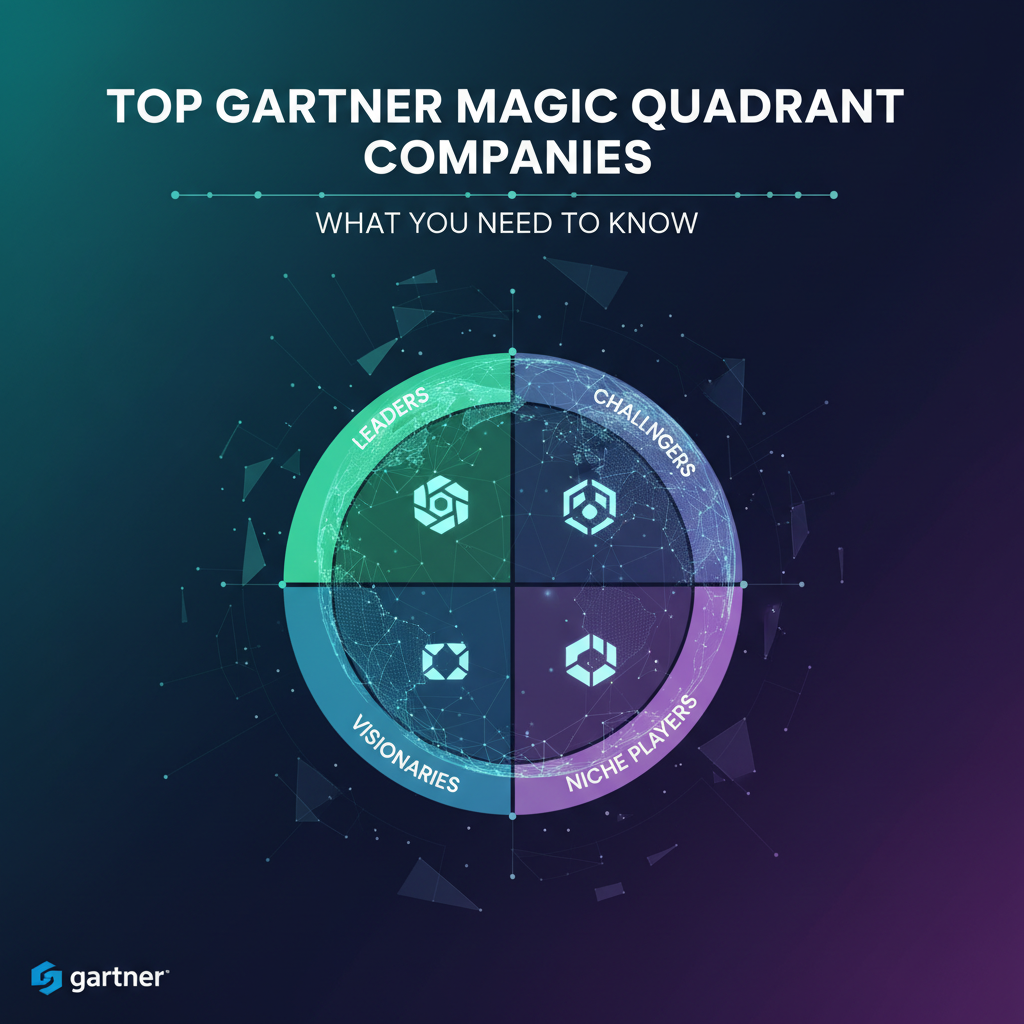
Based on these two axes, vendors are positioned into one of four quadrants:
- Leaders: Positioned in the upper-right quadrant, Leaders possess both a strong completeness of vision and a robust ability to execute. They are typically well-established vendors with a large market share, innovative product roadmaps, and a proven track record of customer satisfaction. For many enterprises, Leaders represent safe bets for mission-critical investments, offering comprehensive solutions that address a wide range of use cases and scale effectively.
- Challengers: Located in the upper-left quadrant, Challengers have a strong ability to execute but may lack the completeness of vision seen in Leaders. They often have a significant market presence and operational efficiency but might be more reactive to market trends or have a narrower product focus compared to Leaders. They excel at competing and winning in their chosen market segments, often through superior execution of established strategies.
- Visionaries: Found in the lower-right quadrant, Visionaries demonstrate strong completeness of vision but may have a lower ability to execute. These vendors often bring innovative technologies or fresh perspectives to the market, challenging the status quo with disruptive ideas. While their offerings might be less mature or their market presence smaller, they can be excellent choices for organizations looking to invest in cutting-edge solutions or specific niche capabilities that align with future strategic goals. Their potential to evolve into Leaders is often high.
- Niche Players: Occupying the lower-left quadrant, Niche Players focus on a small segment of the market or have a more limited vision and execution capability. They might offer highly specialized solutions for specific industries or use cases, or they could be emerging players with nascent offerings. While they may not cater to the broad market, Niche Players can sometimes provide tailored solutions that perfectly fit a particular enterprise's unique requirements, especially if those requirements fall outside the scope of broader offerings.
Understanding these distinctions is crucial. An organization's optimal choice might not always be a "Leader." For instance, a highly specialized enterprise might find a Niche Player’s focused solution more fitting, or an innovation-driven firm might partner with a Visionary to gain early access to transformative technology. However, for core infrastructure and strategic platforms, the "Leaders" quadrant often signifies a vendor capable of providing comprehensive, scalable, and reliable solutions for a broad range of enterprise needs.
The Pivotal Role of API Management and the API Gateway in Modern Enterprise
In today's interconnected digital ecosystem, APIs are the foundational currency of data exchange and service interaction. They enable applications to communicate, businesses to partner, and developers to innovate at an unprecedented pace. Consequently, robust API management has become an indispensable discipline for any organization looking to thrive in the digital economy. Gartner's Magic Quadrant for API Management is a keenly observed sector, reflecting the criticality of these solutions in building and scaling digital platforms.
At the heart of any comprehensive API management solution lies the api gateway. This component acts as a single entry point for all API calls, sitting between the client and a collection of backend services. Its responsibilities are multifaceted and critical for the security, performance, and governance of an API ecosystem. A sophisticated api gateway performs a myriad of functions, including:
- Traffic Management: Routing requests to the appropriate backend services, load balancing, and ensuring high availability. It can handle enormous volumes of traffic, dynamically scaling to meet demand spikes without compromising performance.
- Security: Enforcing authentication and authorization policies (e.g., OAuth, API keys), protecting against threats like SQL injection and DDoS attacks, and providing encryption for data in transit. This is perhaps its most crucial function, as APIs often expose sensitive data and critical business logic.
- Policy Enforcement: Applying policies such as rate limiting to prevent abuse, caching to improve response times, and quality-of-service rules to prioritize critical traffic. These policies are configurable and can be applied dynamically based on various criteria like user role, application, or request parameters.
- Monitoring and Analytics: Collecting detailed metrics on API usage, performance, and error rates. This data is invaluable for understanding API consumption patterns, identifying bottlenecks, troubleshooting issues, and making data-driven decisions about API design and evolution.
- Transformation and Orchestration: Modifying request and response messages (e.g., converting XML to JSON), aggregating multiple backend calls into a single API response, or enriching data before forwarding it to the client. This allows the API to present a consistent interface even if backend services evolve or use different protocols.
- Version Management: Facilitating the management of different API versions, allowing for graceful deprecation of older versions while introducing new ones, minimizing disruption to consumers.
The evolution of API management platforms has been significant. Early solutions were often simple proxy servers. Today, leading platforms offer end-to-end API lifecycle management, encompassing design, documentation, testing, publication, discovery through developer portals, monitoring, and deprecation. They integrate with identity management systems, analytics tools, and CI/CD pipelines, becoming central hubs for an organization's digital offerings. Companies that consistently appear in the Leaders quadrant for API management typically demonstrate not just robust api gateway capabilities but also comprehensive developer portals, sophisticated analytics, strong security frameworks, and a proven track record of supporting large-scale enterprise deployments across hybrid and multi-cloud environments. Their vision often includes support for event-driven architectures, GraphQL, and emerging API paradigms, ensuring future-proof solutions.
The Dawn of AI Gateway and LLM Gateway: Governing the AI Revolution
While API management has matured, the rapid proliferation of artificial intelligence, particularly the emergence of generative AI and Large Language Models (LLMs), has introduced a new frontier for governance and integration. Enterprises are quickly moving from experimental AI projects to integrating AI models into core business processes, creating an urgent need for specialized tools that can manage and secure these powerful new capabilities. This is where the concepts of the AI Gateway and the more specific LLM Gateway become critically important.
An AI Gateway serves a similar purpose to a traditional api gateway but is specifically designed to handle the unique challenges and requirements of AI models. Just as a conventional api gateway manages REST or SOAP APIs, an AI Gateway acts as a unified control plane for accessing, managing, and securing various AI services, whether they are hosted internally, consumed from third-party providers, or deployed on public cloud platforms. The complexities of AI models often include:
- Diverse Model Formats and Protocols: AI models can be deployed using different frameworks (TensorFlow, PyTorch), served via various protocols (REST, gRPC), and exposed through disparate endpoints.
- Specialized Authentication and Authorization: Access to AI models often requires fine-grained control, potentially based on model sensitivity, cost implications, or specific use cases.
- Performance Optimization: AI inference can be computationally intensive. An
AI Gatewaycan help with load balancing across multiple model instances, caching common predictions, and optimizing data payloads. - Cost Management: Many cloud-based AI services are billed per inference or token. An
AI Gatewaycan track usage, enforce quotas, and provide cost visibility, which is crucial for budget control. - Data Governance and Privacy: AI models process data, and an
AI Gatewaycan help enforce data residency rules, anonymization policies, and ensure compliance with regulations like GDPR or HIPAA. - Model Versioning and Lifecycle: Managing different versions of AI models, rolling out updates, and performing A/B testing can be complex. An
AI Gatewaycan simplify this by abstracting the underlying model complexity.
The value proposition of an AI Gateway is immense for enterprises looking to scale their AI initiatives securely and efficiently. It standardizes the invocation of AI services, irrespective of their backend complexity, allowing developers to consume AI capabilities through a consistent interface. This abstraction layer ensures that changes to underlying AI models or providers do not necessitate modifications to consuming applications, significantly reducing development and maintenance costs.
The Specifics of the LLM Gateway
The rise of Large Language Models (LLMs) has introduced another layer of specialization. While an AI Gateway can manage various types of AI models (vision, speech, tabular data), an LLM Gateway is tailored to address the particular nuances of language models, which are becoming ubiquitous in applications ranging from customer service chatbots to content generation tools and code assistants. Key functionalities of an LLM Gateway include:
- Prompt Engineering and Management: LLMs are highly sensitive to prompts. An
LLM Gatewaycan help standardize, version, and manage prompts, enabling organizations to optimize model outputs, ensure brand consistency, and prevent prompt injection attacks. It allows for the encapsulation of complex prompts into simple REST APIs, making sophisticated AI capabilities easily consumable. - Model Routing and Fallback: Organizations might use multiple LLMs from different providers (e.g., OpenAI, Google, Anthropic) for redundancy, cost optimization, or specific tasks. An
LLM Gatewaycan intelligently route requests to the most appropriate or cost-effective model and provide fallback mechanisms if a primary model fails or reaches its rate limits. - Cost Optimization for LLMs: LLMs can be expensive, with costs often tied to token usage. An
LLM Gatewaycan implement smart caching for frequently asked questions, optimize prompt length, and track token consumption across different models and users, providing granular control over expenditure. - Security for LLMs: Beyond general API security, an
LLM Gatewaycan filter out potentially harmful inputs or outputs, detect PII (Personally Identifiable Information) in prompts and responses, and apply content moderation policies to ensure responsible AI usage. - Performance Monitoring for LLMs: Tracking latency, throughput, and error rates for LLM inferences is crucial for maintaining responsive applications. The gateway provides detailed logs and analytics specific to LLM interactions.
For organizations building AI-powered applications, especially those leveraging the rapidly evolving landscape of LLMs, an AI Gateway and LLM Gateway are no longer luxuries but necessities. They provide the control, security, and efficiency required to move AI projects from pilot to production at scale, ensuring responsible and cost-effective deployment of these transformative technologies. The Gartner Magic Quadrant for AI/ML platforms and related emerging categories will increasingly scrutinize vendors for these specialized capabilities, highlighting those that offer comprehensive solutions for governing the full spectrum of AI models.
Leaders in the Quadrant: Characteristics and Strategic Value
Companies positioned in the "Leaders" quadrant of Gartner's Magic Quadrant for crucial technologies like API Management consistently demonstrate a blend of innovation, market presence, and customer success that sets them apart. While Gartner's specific reports name these companies, we can discuss the general characteristics that define them and how these traits benefit enterprises.
Key Characteristics of Leaders in API Management and AI Gateway Solutions:
- Comprehensive Platform: Leaders offer not just an
api gatewaybut a full suite of tools for the entire API lifecycle. This includes sophisticated developer portals, robust analytics and monitoring, strong security features, policy management, and integration with a broad ecosystem of enterprise tools (CI/CD, identity providers, SIEM systems). For AI, this extends to comprehensive model management, prompt versioning, and AI-specific analytics. - Scalability and Performance: Their solutions are engineered to handle massive volumes of traffic with low latency, essential for critical business operations and real-time AI inferences. They often support hybrid and multi-cloud deployments, allowing enterprises to scale their API and AI workloads across various infrastructures without vendor lock-in.
- Advanced Security Capabilities: Beyond basic authentication, Leaders provide advanced threat protection, fine-grained access control, API security firewalls, and compliance with industry standards and regulations. For AI, this includes data privacy, responsible AI guardrails, and detection of malicious prompts or outputs.
- Innovation and Future-Proofing: Leaders consistently invest in R&D, anticipating market trends and integrating support for new technologies like GraphQL, event-driven APIs, serverless functions, and edge computing. In the AI space, this means quickly adapting to new LLM architectures, incorporating advanced prompt engineering tools, and supporting diverse AI model types.
- Strong Ecosystem and Partnerships: They have a robust network of partners, integrators, and a vibrant developer community. This ensures that enterprises can easily find support, extensions, and complementary solutions.
- Customer Success and Support: Leaders are known for their strong customer support, extensive documentation, training programs, and a high rate of customer satisfaction. Their platforms are often user-friendly, catering to different personas from developers to API product managers and security teams.
- Global Reach and Enterprise Readiness: They possess the operational capabilities to support large enterprises globally, offering localized support, compliance with regional regulations, and robust service level agreements (SLAs).
For organizations evaluating solutions, engaging with a Gartner Leader often means gaining access to battle-tested technology, a vast knowledge base, and a vendor with the financial stability and market influence to continually evolve its offerings. However, this often comes with a higher price point and potentially a more complex sales cycle. It's crucial for enterprises to conduct thorough due diligence, perform proofs-of-concept, and evaluate how a vendor's roadmap aligns with their specific long-term strategy, rather than blindly choosing a "Leader."
APIPark is a high-performance AI gateway that allows you to securely access the most comprehensive LLM APIs globally on the APIPark platform, including OpenAI, Anthropic, Mistral, Llama2, Google Gemini, and more.Try APIPark now! 👇👇👇
APIPark: Bridging Traditional API Management with Advanced AI Governance
As enterprises navigate the intricate demands of both traditional API management and the rapidly evolving landscape of AI, the need for integrated, flexible, and powerful solutions becomes paramount. Many organizations are finding that existing API management platforms may not fully address the unique requirements of AI model governance, while specialized AI tools often lack comprehensive API lifecycle features. This is precisely where innovative platforms like APIPark offer a compelling solution.
APIPark stands out as an open-source AI Gateway & API Management Platform, designed to provide an all-in-one solution for managing, integrating, and deploying both AI and REST services with remarkable ease. Under the Apache 2.0 license, it offers enterprises a powerful, flexible, and cost-effective alternative for governing their digital assets.
One of APIPark's most significant strengths lies in its capability to offer quick integration of over 100 AI models. This feature is critical for organizations that leverage a diverse set of AI capabilities, ranging from vision and speech to various LLMs. It provides a unified management system for authentication and cost tracking across all these models, simplifying what would otherwise be a complex, fragmented integration effort. Furthermore, APIPark enforces a unified API format for AI invocation, standardizing the request data format across all AI models. This ingenious design ensures that changes in underlying AI models or prompts do not ripple through the application layer or microservices, drastically simplifying AI usage and maintenance costs. For developers, this means they can interact with any AI model using a consistent interface, abstracting away the backend complexities.
Beyond mere integration, APIPark empowers users to innovate rapidly through prompt encapsulation into REST API. This feature allows businesses to combine AI models with custom prompts to quickly create new, purpose-built APIs. Imagine creating a sentiment analysis API, a specialized translation service, or a data analysis API tailored to specific business needs, all with minimal coding effort. This bridges the gap between raw AI model capabilities and consumable business services, accelerating the development of intelligent applications.
For traditional API management, APIPark offers end-to-end API lifecycle management, assisting with every stage from design and publication to invocation and decommissioning. It helps regulate API management processes, manage traffic forwarding, load balancing, and versioning of published APIs, ensuring stability and control over the entire API ecosystem. The platform also facilitates API service sharing within teams, centralizing the display of all API services, which makes it incredibly easy for different departments and teams to discover and utilize necessary APIs, fostering internal collaboration and reusability.
Security and governance are not overlooked. APIPark provides independent API and access permissions for each tenant, allowing for the creation of multiple teams (tenants) with independent applications, data, user configurations, and security policies. This multi-tenancy capability improves resource utilization and reduces operational costs while maintaining strict isolation. Furthermore, the platform supports API resource access requiring approval, ensuring that callers must subscribe to an API and await administrator approval before invocation. This feature is crucial for preventing unauthorized API calls and potential data breaches, adding an essential layer of control.
Performance is often a concern with open-source solutions, but APIPark shines in this area, rivaling established enterprise solutions. With just an 8-core CPU and 8GB of memory, APIPark can achieve over 20,000 Transactions Per Second (TPS), supporting cluster deployment to handle even the most demanding large-scale traffic. This robust performance ensures that organizations can deploy APIPark with confidence, knowing it can scale with their growth.
Finally, APIPark offers powerful operational insights through detailed API call logging and powerful data analysis. It records every detail of each API call, enabling businesses to quickly trace and troubleshoot issues, ensuring system stability and data security. The platform's analytical capabilities go further, analyzing historical call data to display long-term trends and performance changes, which helps businesses with preventive maintenance and proactive decision-making.
APIPark's blend of advanced AI Gateway features, comprehensive api gateway functionality, and a commitment to open-source flexibility positions it as a significant player for enterprises seeking an agile, secure, and performant solution for their AI and API governance needs. It offers the best of both worlds: the robust API management capabilities expected of a top-tier platform, combined with specialized features designed to tame the complexities of modern AI models, including LLMs, all within an open-source framework that fosters transparency and community-driven innovation.
Strategic Implications for Enterprises: Navigating the Technology Landscape
The Gartner Magic Quadrant provides a valuable snapshot, but it is just one tool in an enterprise's arsenal for strategic technology planning. Making the right choices requires a holistic approach that considers internal capabilities, long-term business objectives, and the evolving market landscape.
Beyond the Quadrant: A Holistic Approach
- Understand Your Specific Needs: Before even looking at a Magic Quadrant, enterprises must clearly define their requirements. What are the current pain points in API management or AI deployment? What are the desired business outcomes? What are the specific technical constraints (e.g., hybrid cloud strategy, regulatory compliance, existing technology stack)? A Niche Player might be perfect for a very specific problem, while a Leader might offer more than needed at a higher cost.
- Evaluate Total Cost of Ownership (TCO): Licensing fees are just one component. Consider implementation costs, integration efforts, ongoing maintenance, training, and the potential for vendor lock-in. Open-source solutions, while potentially requiring more internal expertise, can often offer a more flexible and cost-effective long-term TCO, especially when backed by strong community support or commercial offerings like those provided by Eolink for APIPark.
- Roadmap Alignment: How does the vendor's product roadmap align with your strategic vision? Will their innovations support your future growth in areas like AI, IoT, or advanced analytics? A Visionary, though potentially less mature, might offer a roadmap that perfectly matches an enterprise's long-term innovative goals.
- Proof of Concept (POC): Always insist on a POC with real-world data and use cases. This is the most effective way to validate a vendor's claims, assess the solution's fit, and evaluate the team's ability to execute on your specific environment.
- Organizational Readiness: Does your team have the skills and resources to implement and manage the chosen solution? Complex enterprise platforms require skilled professionals. Consider the learning curve and the availability of training and support.
- Ecosystem Integration: How well does the solution integrate with your existing tools for identity management, security, monitoring, and development? A seamless integration experience reduces friction and accelerates adoption.
- Community and Support: For open-source solutions, a vibrant community is a major asset, providing knowledge sharing, bug fixes, and feature enhancements. For commercial offerings, evaluate the level of professional support, SLAs, and technical account management.
Future Trends Shaping Enterprise Technology Decisions
The technology landscape is dynamic, and future trends will inevitably influence who appears in the "Leaders" quadrant. Enterprises must be forward-looking in their decision-making:
- Pervasive AI and Machine Learning: The integration of AI will deepen across all enterprise applications. Solutions that can seamlessly manage and govern AI models, including specialized
LLM Gatewaycapabilities, will become non-negotiable. - Hybrid and Multi-Cloud Architectures: Organizations will continue to leverage diverse cloud environments and on-premises infrastructure. Solutions offering consistent management and governance across these disparate environments will be highly valued.
- Serverless and Edge Computing: The shift towards serverless functions and deploying compute closer to the data source (edge) will require API and AI management platforms that can extend their control plane to these distributed environments.
- API Ecosystems and Monetization: APIs will increasingly become products in their own right, driving new business models. Platforms that facilitate API monetization, partner management, and robust developer experiences will gain prominence.
- Enhanced Security Posture: With increasing cyber threats, integrated security features, threat intelligence, and compliance frameworks within API and AI management solutions will be critical differentiators.
- Sustainability and Green IT: As environmental concerns grow, enterprises will favor solutions that are resource-efficient and contribute to sustainable IT practices, influencing procurement decisions.
Illustrative Scenarios: Applying Strategic Choices
To better understand the practical implications of these considerations, let's look at two generic scenarios without naming specific Gartner-recognized companies:
Scenario 1: Global Retailer Enhances Digital Customer Experience
A large global retailer, facing intense competition and an increasing demand for seamless omnichannel experiences, needed to modernize its monolithic backend systems. Their goal was to expose various services – inventory, pricing, customer profiles, order tracking – as APIs to power a new mobile app, a revamped e-commerce website, and integrations with third-party logistics partners.
After careful consideration of their need for scalability, robust security, a global presence, and a comprehensive developer experience, they consulted the Gartner Magic Quadrant for API Management. They initially considered a "Visionary" due to its innovative features in event-driven APIs, but ultimately chose a "Leader." The Leader's solution offered a proven, high-performance api gateway capable of handling millions of transactions daily, a mature developer portal for easy partner onboarding, and advanced analytics that provided real-time insights into API consumption. Its global support and enterprise-grade security features were crucial for protecting sensitive customer data across multiple regions. The retailer successfully launched its new digital platforms, achieving significant improvements in customer satisfaction and operational efficiency, demonstrating the value of choosing a comprehensive, battle-tested solution for core digital infrastructure.
Scenario 2: Financial Services Firm Adopts AI for Fraud Detection and Customer Service
A mid-sized financial services firm sought to leverage AI to enhance its fraud detection systems and improve customer service through intelligent chatbots. They had multiple AI models – some developed in-house, others from third-party vendors – and faced challenges in managing their access, ensuring data privacy, controlling costs, and maintaining consistent performance. The firm understood the need for a dedicated AI Gateway and specifically an LLM Gateway for their chatbot initiatives.
They evaluated several solutions, including those offered by "Challengers" known for their strong execution in specific AI verticals. However, they also explored more flexible, open-source options that promised greater control and cost-efficiency in the long run. They discovered a platform, similar to APIPark, which offered an open-source AI Gateway with integrated API management capabilities. This platform allowed them to quickly integrate over 50 different AI models, providing a unified API for invocation. Critically, its LLM Gateway features enabled them to manage prompts for their customer service chatbots, implement cost-saving measures through intelligent caching, and enforce data privacy policies by filtering sensitive information before it reached the LLMs. The platform’s detailed logging and analytics provided transparency into AI model usage and performance, which was vital for compliance and troubleshooting. By adopting this integrated solution, the firm rapidly deployed their AI-powered fraud detection and chatbot services, significantly reducing fraudulent transactions and improving customer response times, all while maintaining strict governance over their AI assets.
These scenarios highlight that while the Magic Quadrant provides essential guidance, the ultimate decision relies on a careful alignment of an organization's unique context with a solution's capabilities and strategic fit. The rise of hybrid solutions, like those combining open-source flexibility with enterprise-grade features, offers increasingly compelling options for diverse enterprise needs.
The Evolving Landscape: Convergence and Open Source's Ascendancy
The future of enterprise technology is characterized by convergence and the increasing influence of open-source innovation. The lines between API management, AI governance, security, and data platforms are blurring. A holistic approach to digital transformation demands solutions that can seamlessly integrate these disparate functions.
Convergence of Capabilities: Modern platforms are moving beyond siloed functionalities. An api gateway is no longer just for routing; it’s a policy enforcement point for security, a data capture point for analytics, and increasingly, an orchestration layer for AI services. This trend underscores the importance of an AI Gateway that can also function as a robust api gateway, providing a unified control plane for all digital interactions. The ability to manage both traditional REST APIs and advanced AI model invocations from a single platform simplifies architecture, reduces operational overhead, and enhances security consistency.
The Rise of Open Source: Open-source technologies, once viewed with skepticism by large enterprises, have now become mainstream. Their benefits — transparency, flexibility, community-driven innovation, and reduced vendor lock-in — are compelling. Platforms like APIPark, built on an open-source foundation, exemplify this shift. They offer enterprises the agility to adapt solutions to specific needs, leverage a global community of developers, and build highly customized, cost-effective digital infrastructures. Commercial offerings built around open-source cores provide the best of both worlds: the freedom of open source coupled with professional support and enterprise-grade features, making them a strong contender even against established proprietary solutions.
The Gartner Magic Quadrant will undoubtedly continue to evolve, reflecting these dynamic shifts. New categories will emerge, existing ones will merge, and the criteria for evaluating "Leaders" will adapt to encompass the growing complexity and interconnectedness of enterprise IT. Vendors that can anticipate these changes, offer truly integrated and intelligent solutions, and support diverse deployment models will be the ones that consistently shape the future.
Conclusion
The Gartner Magic Quadrant remains an indispensable tool for enterprises navigating the intricate landscape of technology vendors. By providing a structured and comprehensive evaluation of vendor completeness of vision and ability to execute, it empowers organizations to make informed, strategic decisions. However, relying solely on quadrant placement is insufficient; a deeper understanding of one's specific needs, the total cost of ownership, and the strategic alignment of a vendor's roadmap is crucial.
In the rapidly expanding realms of digital services, the api gateway has solidified its position as the foundational component of modern API management, dictating the security, performance, and scalability of an organization's digital offerings. Concurrently, the explosion of artificial intelligence, particularly the transformative power of Large Language Models, has necessitated the emergence of specialized tools like the AI Gateway and LLM Gateway. These innovative platforms are vital for standardizing AI model invocation, ensuring robust governance, optimizing costs, and accelerating the secure deployment of AI across the enterprise.
Leading companies in these critical sectors are characterized by their comprehensive offerings, unwavering commitment to innovation, and a proven track record of customer success. They provide scalable, secure, and future-proof solutions that empower businesses to not only respond to the current demands of the digital economy but also to actively shape their future. As we move forward, the convergence of API management with AI governance, coupled with the increasing adoption of flexible open-source solutions like APIPark, will define the next generation of enterprise technology infrastructure, enabling unprecedented agility, intelligence, and competitive advantage for forward-thinking organizations. Choosing the right partners and technologies is no longer just about optimizing IT; it's about defining the future of business itself.
Frequently Asked Questions (FAQ)
1. What is the Gartner Magic Quadrant and why is it important for enterprises? The Gartner Magic Quadrant is a series of market research reports that provide a broad overview of technology vendors in specific markets. It graphically depicts vendors based on two main criteria: "Completeness of Vision" and "Ability to Execute," categorizing them into Leaders, Challengers, Visionaries, and Niche Players. It's crucial for enterprises because it helps them understand the competitive landscape, identify potential technology partners, and make informed strategic decisions about which solutions align best with their business goals, risk tolerance, and long-term vision, reducing the complexity of vendor evaluation.
2. How does an api gateway differ from an AI Gateway or LLM Gateway? An api gateway is a core component of API management that acts as a single entry point for all API calls to backend services, providing functions like traffic management, security, policy enforcement, and monitoring for general APIs (e.g., REST, SOAP). An AI Gateway is a specialized type of gateway specifically designed to manage and secure access to various AI models and services. It handles challenges unique to AI, such as diverse model formats, specialized authentication, cost tracking, and model versioning. An LLM Gateway is an even more specialized AI Gateway tailored for Large Language Models, focusing on prompt management, model routing for LLMs, token-based cost optimization, and specific security for language interactions, such as content moderation and PII filtering.
3. What are the key features to look for in a leading API Management platform? A leading API Management platform should offer comprehensive capabilities across the entire API lifecycle. This includes a robust api gateway for traffic management, security, and policy enforcement; a user-friendly developer portal for API discovery and onboarding; powerful analytics and monitoring tools for performance and usage insights; strong security features like OAuth, API key management, and threat protection; and support for hybrid/multi-cloud deployments. Additionally, it should integrate well with existing enterprise systems, offer excellent scalability, and have a clear roadmap that supports emerging API paradigms and AI integration.
4. Can open-source solutions like APIPark compete with commercial Gartner-recognized leaders? Absolutely. Open-source solutions, particularly those backed by strong communities and offering commercial support like APIPark, are increasingly competitive. They often provide greater flexibility, transparency, and cost-effectiveness by avoiding vendor lock-in. While commercial leaders might offer out-of-the-box features and extensive professional services, open-source platforms can be customized to fit specific needs, leverage community innovation, and achieve comparable performance and security. For many enterprises, especially those with strong in-house technical capabilities or a preference for open standards, open-source solutions present a compelling alternative that can deliver equivalent or superior value in the long run.
5. What role does an LLM Gateway play in responsible AI deployment? An LLM Gateway plays a critical role in responsible AI deployment by providing a control layer over how Large Language Models are accessed and used. It enables organizations to implement and enforce policies related to data privacy (e.g., PII filtering), content moderation (e.g., blocking harmful outputs), and ethical AI usage (e.g., preventing prompt injection attacks or bias amplification). By managing prompts, tracking usage, and providing an audit trail of interactions with LLMs, the gateway ensures transparency, accountability, and compliance with internal guidelines and external regulations, thereby mitigating risks and fostering trust in AI-powered applications.
🚀You can securely and efficiently call the OpenAI API on APIPark in just two steps:
Step 1: Deploy the APIPark AI gateway in 5 minutes.
APIPark is developed based on Golang, offering strong product performance and low development and maintenance costs. You can deploy APIPark with a single command line.
curl -sSO https://download.apipark.com/install/quick-start.sh; bash quick-start.sh

In my experience, you can see the successful deployment interface within 5 to 10 minutes. Then, you can log in to APIPark using your account.

Step 2: Call the OpenAI API.