Top Gartner Magic Quadrant Companies: Who's Leading?


In the relentlessly evolving landscape of enterprise technology, making informed decisions about foundational infrastructure and strategic partners is paramount. Organizations are constantly seeking reliable guidance to navigate the complex web of vendors, platforms, and emerging innovations that promise to unlock new levels of efficiency, security, and competitive advantage. Amidst this complexity, Gartner's Magic Quadrant series stands as a venerable beacon, offering a qualitative analysis of the market's direction, maturity, and participants. This rigorous evaluation helps businesses identify leaders, challengers, visionaries, and niche players across a multitude of technology sectors, providing a crucial framework for strategic technology investments. As the digital economy accelerates its reliance on interconnected services and intelligent automation, the roles of robust API management and sophisticated Artificial Intelligence infrastructure have become central to modern enterprise architecture.
The ongoing digital transformation mandates a seamless, secure, and scalable way for applications to communicate, process data, and deliver intelligent insights. This necessitates not only robust api gateway solutions that serve as the backbone for modern microservices architectures but also innovative AI Gateway platforms that can orchestrate the increasing complexity of artificial intelligence models. Furthermore, as AI models become more intricate and conversational, the need for standardized communication mechanisms like a Model Context Protocol becomes critical to maintain coherence and efficiency. This comprehensive article delves deep into the findings of various Gartner Magic Quadrants, examining the companies that are not merely participating but truly leading the charge in these pivotal domains. We will explore their strategic innovations, their unique strengths, and how they are shaping the future of enterprise technology, offering insights that extend beyond mere market share to encompass visionary leadership and impeccable execution. From the foundational elements of API governance to the cutting edge of AI deployment, understanding who leads, and why, is indispensable for any enterprise striving for sustained success in the digital age.
Demystifying the Gartner Magic Quadrant: A Framework for Strategic Decisions
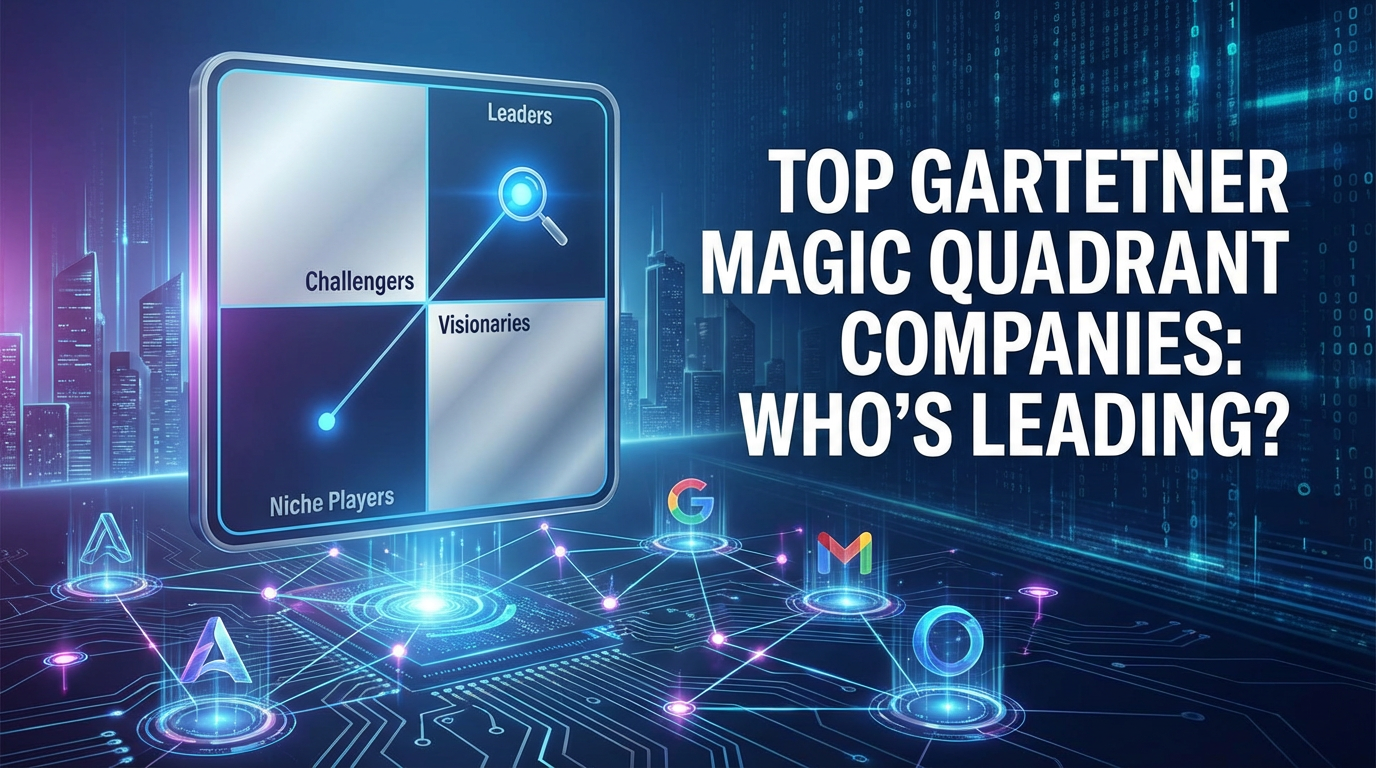
The Gartner Magic Quadrant is more than just a ranking; it is a sophisticated research methodology that provides a wide-angle view of specific technology markets. It graphically depicts Gartner's analysis of how certain technology providers are performing against a market they are either defined for or are competing in. This visual representation, divided into four quadrants—Leaders, Challengers, Visionaries, and Niche Players—offers enterprises a quick yet profound understanding of vendor capabilities and market dynamics. The assessment is based on two primary evaluation criteria: "Completeness of Vision" and "Ability to Execute." Understanding these criteria is fundamental to interpreting the Quadrant's insights and leveraging them for strategic technology planning.
"Completeness of Vision" reflects a vendor's understanding of the market's future direction, their capacity to innovate, and their ability to influence market trends. This includes assessing their product strategy, innovation, market understanding, sales strategy, business model, and geographic strategy. A company with a strong vision demonstrates a clear roadmap for future product development, anticipates evolving customer needs, and shows thought leadership in its domain. They are often pioneers in adopting new technologies, defining new market segments, or addressing emerging pain points before they become widespread. For instance, in the realm of AI, a visionary company might be proactively developing solutions for Model Context Protocol standardization, recognizing the future needs of complex AI interactions long before such needs are universally acknowledged. Their foresight often positions them to capture significant market share as the industry matures.
Conversely, "Ability to Execute" evaluates a vendor's capacity to successfully deliver on its stated vision. This criterion considers factors such as product/service capabilities, overall viability (financial strength, organizational structure), sales execution/pricing, market responsiveness/track record, customer experience, and operations. Companies that excel in execution typically have robust, proven products, strong customer support, a healthy financial standing, and a consistent history of meeting market demands. They possess the operational discipline to scale their offerings, maintain high service levels, and adapt to competitive pressures. A leader in the api gateway market, for example, would not only offer a feature-rich product but also demonstrate a track record of reliable performance, exceptional uptime, and responsive customer service for their global client base. The synergy between vision and execution is what ultimately propels companies into the coveted "Leaders" quadrant.
The four quadrants each represent a distinct profile: * Leaders: Positioned in the upper-right quadrant, Leaders possess a high Ability to Execute and a high Completeness of Vision. They are typically well-established vendors with a proven track record, offering mature, comprehensive products or services that address the current market needs while also investing significantly in future innovations. These companies often set the standard for the industry, influencing trends and driving best practices. * Challengers: Located in the upper-left quadrant, Challengers have a strong Ability to Execute but a lower Completeness of Vision. They might have a large customer base and significant market share, excelling at current product delivery, but their strategic vision or innovation might not be as far-reaching as the Leaders. They are strong competitors, often focusing on operational excellence and incremental improvements within established paradigms. * Visionaries: Found in the lower-right quadrant, Visionaries exhibit a high Completeness of Vision but a lower Ability to Execute. These companies are often innovative startups or smaller vendors that understand where the market is going and have groundbreaking ideas, but they may lack the financial resources, market presence, or operational scale to compete head-to-head with Leaders. Their strength lies in their disruptive potential and forward-thinking solutions, sometimes defining entirely new categories, such as early pioneers in the AI Gateway space. * Niche Players: Occupying the lower-left quadrant, Niche Players have a lower Ability to Execute and a lower Completeness of Vision. They typically focus on a specific segment of the market, a particular geographic region, or a niche use case. While they may serve their target market well, they often lack the breadth of offerings or the strategic reach to appeal to a broader audience.
Understanding the nuances of the Gartner Magic Quadrant methodology empowers enterprises to look beyond mere marketing claims and gain a data-driven perspective on vendor strengths and weaknesses. It is a powerful tool for validating vendor selections, benchmarking market performance, and strategizing technology roadmaps that align with both current operational needs and future strategic ambitions. However, it's also crucial to remember that the Magic Quadrant is a snapshot in time, and market dynamics are constantly shifting. Enterprises must therefore couple Gartner's insights with their specific organizational requirements, existing infrastructure, and long-term business objectives to make truly optimized technology decisions.
The Evolving Landscape of Digital Foundations: API Management and AI Infrastructure
The bedrock of modern digital enterprises is increasingly formed by two interconnected pillars: robust API management and sophisticated AI infrastructure. These domains, while distinct, are converging in ways that redefine how businesses operate, innovate, and interact with customers. Understanding the evolution and current state of these technologies is crucial before examining the leaders identified by Gartner.
The Criticality of API Management and the API Gateway
In today's interconnected world, APIs (Application Programming Interfaces) are the digital glue that holds modern applications, services, and ecosystems together. They enable seamless communication between disparate systems, foster innovation through partner integrations, and power the very fabric of microservices architectures. The sheer proliferation of APIs, both internal and external, has given rise to an urgent need for comprehensive API management solutions. Without proper governance, security, and scalability mechanisms, an API ecosystem can quickly devolve into an unmanageable mess, posing significant security risks and operational inefficiencies.
At the heart of any effective API management strategy lies the api gateway. This crucial component acts as a single entry point for all API calls, sitting between the client and the backend services. Its responsibilities are manifold and critical: * Traffic Management: The api gateway efficiently routes requests to appropriate backend services, handles load balancing, and ensures optimal performance even under high traffic loads. This is vital for maintaining service availability and responsiveness, directly impacting user experience. * Security Enforcement: It serves as the first line of defense against malicious attacks, enforcing authentication, authorization, rate limiting, and threat protection policies. By centralizing security, it significantly reduces the attack surface and ensures compliance with enterprise security standards. * Policy Enforcement: Beyond security, an api gateway applies various policies such as caching, transformation, and protocol mediation, streamlining communication and optimizing resource utilization. This allows for greater flexibility in how backend services are exposed and consumed. * Monitoring and Analytics: Gateways provide invaluable insights into API usage patterns, performance metrics, and error rates, which are crucial for performance optimization, capacity planning, and identifying potential issues before they impact end-users. Detailed logging and analytics empower operations teams to proactively manage their API landscape. * Developer Experience: Often integrated with a developer portal, the api gateway simplifies API discovery, documentation, and testing for internal and external developers, accelerating time-to-market for new applications and integrations.
The evolution of API management has moved from basic proxies to comprehensive lifecycle platforms that encompass design, development, testing, deployment, versioning, and retirement of APIs. Modern platforms support hybrid and multi-cloud environments, catering to the diverse deployment strategies of enterprises. The demand for robust, scalable, and secure API infrastructure continues to grow exponentially, driven by digital transformation initiatives, the rise of IoT, and the increasing reliance on external partner ecosystems. Companies leading in this space are those that not only offer superior api gateway capabilities but also provide a holistic platform that addresses the full spectrum of API governance and consumption. They understand that an API is not just code, but a product, requiring careful management throughout its entire lifecycle.
For organizations seeking to harness the power of APIs and AI without the overhead of building everything from scratch, open-source solutions offer a compelling alternative. For instance, APIPark emerges as a robust open-source AI gateway and API management platform. It offers a comprehensive solution for managing, integrating, and deploying both traditional REST services and advanced AI models. Its open-source nature under the Apache 2.0 license means enterprises can benefit from community-driven innovation and transparency, while still having access to powerful, enterprise-grade features for their api gateway needs. This type of platform is crucial for developers and enterprises aiming to streamline their API operations and quickly bring new digital services to market, ensuring security, scalability, and ease of use.
The Rise of AI Infrastructure and the AI Gateway
Artificial Intelligence, once a niche academic pursuit, has firmly embedded itself into the core operations of enterprises across every industry. From predictive analytics and personalized customer experiences to automated processes and intelligent decision-making, AI models are driving unprecedented levels of innovation and competitive differentiation. However, the journey from developing an AI model to deploying it in a production environment and managing its lifecycle is fraught with challenges. These include model proliferation, version control issues, security concerns, inconsistent access patterns, and difficulties in monitoring performance across diverse environments.
This complexity has given rise to the critical need for an AI Gateway. Similar in concept to an api gateway for traditional services, an AI Gateway acts as an intelligent intermediary specifically designed to manage and orchestrate access to various AI models. Its primary functions include: * Unified Model Access: It provides a single, standardized entry point for applications to interact with a multitude of AI models, abstracting away the underlying complexities and diverse APIs of different AI providers (e.g., OpenAI, Anthropic, Google Gemini, custom models). This simplifies client-side integration and reduces development effort significantly. * Authentication and Authorization: The AI Gateway centralizes security policies for AI model access, ensuring that only authorized applications and users can invoke specific models. It handles API key management, OAuth, and other authentication mechanisms, providing a crucial layer of defense for valuable AI assets. * Cost Tracking and Optimization: With AI model usage often incurring usage-based costs, an AI Gateway can track invocations, manage budgets, and even implement intelligent routing to select the most cost-effective model for a given query, optimizing operational expenditures. * Prompt Management and Transformation: It can manage and transform prompts, ensuring consistency and compliance before requests are sent to the AI models. This is particularly valuable for large language models (LLMs), where prompt engineering is critical for performance and safety. * Load Balancing and Scalability: Just like a traditional api gateway, an AI Gateway can distribute requests across multiple instances of an AI model or across different AI providers to ensure high availability and performance. * Observability and Monitoring: It provides centralized logging and monitoring for all AI model invocations, offering insights into usage patterns, latency, error rates, and model performance. This data is essential for troubleshooting, model improvement, and compliance.
The emergence of the AI Gateway is a direct response to the explosion of AI models and the imperative for enterprises to integrate AI seamlessly and securely into their applications without creating new operational silos. It represents a vital layer of abstraction that allows developers to focus on application logic, while the gateway handles the intricacies of AI model invocation and management. The leaders in AI infrastructure are increasingly recognizing the importance of this architectural component, either by integrating it into their platforms or by supporting third-party AI Gateway solutions.
It is precisely in this rapidly evolving space that APIPark distinguishes itself. As an open-source AI Gateway, it is purpose-built to address these challenges head-on. APIPark offers quick integration of over 100 AI models, providing a unified management system for authentication and cost tracking. Its ability to standardize the request data format across all AI models ensures that changes in models or prompts do not disrupt applications or microservices, drastically simplifying AI usage and reducing maintenance costs. Furthermore, APIPark empowers users to encapsulate custom prompts into new REST APIs, essentially allowing them to create specialized AI services like sentiment analysis or translation APIs on demand. This capability positions it as a powerful tool for developers and enterprises looking to leverage AI in a structured, efficient, and scalable manner.
The Dawn of the Model Context Protocol: Standardizing AI Interactions
As AI, particularly generative AI and large language models (LLMs), becomes more sophisticated and conversational, managing the "context" of an interaction becomes paramount. A consistent and efficient Model Context Protocol is an emerging necessity to ensure that AI applications can maintain coherent conversations, retrieve relevant information, and make informed decisions over extended interactions. Without such a protocol, AI models often suffer from "forgetfulness" or generate inconsistent responses, severely limiting their utility in complex, multi-turn applications.
A Model Context Protocol aims to standardize how context—be it previous turns in a conversation, relevant external data, or specific user preferences—is passed to and managed by AI models. Key aspects of such a protocol include: * Context Window Management: Defining clear mechanisms for managing the size and content of the context window that is sent to an AI model, ensuring that relevant information is included without exceeding token limits or incurring unnecessary processing costs. * State Management: Providing standardized ways to store and retrieve conversational state across multiple turns, allowing the AI to "remember" previous interactions and build upon them. * Data Retrieval and Augmentation: Integrating protocols for dynamically fetching and injecting external knowledge (e.g., from databases, knowledge bases, or search engines) into the AI's context, enriching its understanding and enabling it to provide more accurate and comprehensive responses. * Semantic Consistency: Ensuring that the interpretation of context remains consistent across different AI models or model versions, which is vital for applications that might leverage multiple AI services. * Error Handling and Resilience: Defining how context-related errors (e.g., malformed context, context too large) are handled, and how the system can recover gracefully to maintain a seamless user experience.
The development and adoption of a robust Model Context Protocol will significantly enhance the reliability, scalability, and intelligence of AI-powered applications. It moves beyond simply invoking a model to orchestrating a sophisticated dialogue between an application and an AI, ensuring that the AI always has the necessary background information to perform its task effectively. This protocol will be particularly crucial for enterprise-grade AI applications in customer service, complex data analysis, and advanced decision support systems, where contextual understanding is not a luxury but a fundamental requirement. The companies that lead in defining and implementing such protocols will undoubtedly shape the next generation of AI integration and application development, further cementing the role of advanced AI Gateway solutions in facilitating these interactions. APIPark, with its unified API format for AI invocation and prompt encapsulation capabilities, lays a strong foundation for managing and standardizing such interactions, even as the industry matures towards explicit Model Context Protocol standards.
APIPark is a high-performance AI gateway that allows you to securely access the most comprehensive LLM APIs globally on the APIPark platform, including OpenAI, Anthropic, Mistral, Llama2, Google Gemini, and more.Try APIPark now! 👇👇👇
Leading the Charge: Top Companies in Gartner Magic Quadrants
Having established the critical roles of API management, AI infrastructure, and emerging Model Context Protocol standards, we now turn our attention to the companies consistently recognized as leaders in relevant Gartner Magic Quadrants. These organizations not only possess comprehensive product portfolios but also demonstrate a profound understanding of market dynamics and a relentless pursuit of innovation.
Dominating API Management: The Architects of Connectivity
The Magic Quadrant for API Management has consistently highlighted a set of strong leaders who provide robust api gateway functionalities alongside full lifecycle management capabilities. These companies are foundational to enabling digital transformation at scale.
1. Google (Apigee): Google's Apigee is a perennial leader in API management, renowned for its comprehensive platform that caters to enterprise-grade API programs. Apigee's strength lies in its ability to support full API lifecycle management, from design and development to security, deployment, and analytics. Its api gateway component is highly scalable and secure, offering advanced traffic management, policy enforcement, and threat protection features. Google's strategic vision for Apigee emphasizes AI-driven insights, multi-cloud flexibility, and deep integration within the broader Google Cloud ecosystem. Enterprises choose Apigee for its proven scalability, strong developer portal capabilities, and its robust analytics engine that provides real-time insights into API performance and usage. The platform is particularly strong for organizations that require sophisticated monetization models and extensive API governance for a large number of internal and external APIs. Recent innovations include enhanced capabilities for event-driven APIs and closer ties to Google Cloud's AI and machine learning services, anticipating the needs of AI-powered applications that heavily rely on well-managed APIs.
2. Microsoft (Azure API Management): Microsoft's Azure API Management consistently ranks as a leader, primarily due to its deep integration with the Azure cloud ecosystem and its strong focus on developer experience and operational simplicity. Its api gateway is a fully managed service that offers key features like authentication, authorization, rate limiting, and caching, all seamlessly integrated into the Azure portal. Organizations leveraging Azure infrastructure find immense value in its native integration, single pane of glass management, and the ability to extend API management capabilities with other Azure services like Azure Functions, Logic Apps, and Azure Active Directory. Microsoft's vision focuses on democratizing API management, making it accessible to a wider range of developers and organizations, while also enhancing security and compliance features. Their ongoing efforts to simplify complex deployments and offer flexible consumption models have resonated strongly with enterprises looking for a scalable and reliable API management solution within a familiar ecosystem. Azure API Management also supports hybrid deployments, allowing enterprises to manage APIs hosted both on-premises and in the cloud, addressing common enterprise architecture requirements.
3. Broadcom (CA Technologies API Management): Broadcom's API Management portfolio, primarily built on the acquisition of CA Technologies, remains a significant player, especially in large enterprises with complex, hybrid IT environments. Their strength lies in powerful api gateway capabilities designed for mission-critical applications, offering extensive security features, high performance, and deep integration with legacy systems. Broadcom's solutions often appeal to organizations with stringent security requirements and those needing to expose a vast array of existing backend services through managed APIs. While some perceive their vision as more focused on established enterprise needs rather than cutting-edge innovation, their execution in providing robust, secure, and scalable API infrastructure is undeniable. Their gateway solutions are known for their advanced policy enforcement and ability to handle extremely high transaction volumes, making them a go-to for industries like financial services and telecommunications that demand absolute reliability and compliance.
4. IBM (API Connect): IBM API Connect is recognized for its comprehensive capabilities across the API lifecycle, from design and security to management and monetization. Leveraging IBM's vast enterprise software and services portfolio, API Connect provides a robust api gateway that integrates seamlessly with IBM's cloud offerings and traditional on-premises infrastructure. Its key differentiators include strong support for hybrid cloud environments, advanced developer portal features, and robust analytics. IBM's strategic vision often aligns with large enterprises undergoing digital transformation, particularly those looking to modernize their legacy systems and integrate them with new cloud-native applications. Their focus on AI-driven insights within API management and strong governance capabilities for highly regulated industries position them as a reliable choice for complex enterprise deployments. IBM's commitment to open standards and its deep expertise in security and compliance also make API Connect a preferred choice for organizations needing a trustworthy partner for their API initiatives.
5. Mulesoft (a Salesforce Company): Mulesoft's Anypoint Platform is a leader not just in API management but also in integration platform as a service (iPaaS). Its strength lies in its unified approach to API management and integration, allowing organizations to connect applications, data, and devices, whether on-premises or in the cloud. The platform's api gateway is tightly integrated with its core integration capabilities, providing a seamless experience for developing, deploying, and managing APIs that abstract complex backend systems. Mulesoft's vision emphasizes an "API-led connectivity" approach, where every integration is exposed as a managed API, promoting reuse and agility across the enterprise. Its strong focus on a complete developer experience, extensive connectors, and robust enterprise features makes it a preferred choice for organizations aiming for broad digital transformation and sophisticated integration patterns. The acquisition by Salesforce has further strengthened its market position, enhancing its reach and providing deeper integration with CRM and customer experience platforms.
6. Kong: Kong stands out as a strong visionary and challenger, rapidly gaining market share with its open-source api gateway at its core. Kong Gateway, initially an open-source project, has evolved into a comprehensive enterprise platform offering full API lifecycle management, advanced security, and a vibrant plugin ecosystem. Its lightweight, high-performance api gateway is particularly well-suited for microservices architectures and cloud-native deployments. Kong's vision is centered on providing universal API connectivity across hybrid and multi-cloud environments, focusing on developer productivity and flexibility. The company's strong emphasis on open source and its ability to deliver high performance at scale have made it a favorite among developers and organizations building modern, distributed applications. Kong's strategic direction also includes strong integration with service mesh technologies and a growing focus on the specific needs of an AI Gateway, offering plugins and capabilities that can extend its reach into AI model management, making it a highly adaptable platform for emerging use cases.
These leaders illustrate a diverse approach to API management, from comprehensive enterprise suites to nimble cloud-native solutions. What unites them is their commitment to providing secure, scalable, and manageable api gateway functionality that empowers businesses to build and consume APIs effectively.
Pioneering AI Infrastructure: Enabling the Intelligent Enterprise
The Gartner Magic Quadrant for Data Science and Machine Learning Platforms, alongside other AI-related market guides, identifies companies that are critical in enabling enterprises to develop, deploy, and manage AI models at scale. While a dedicated AI Gateway Magic Quadrant is still emerging, the capabilities offered by these leaders often provide the foundational environment for such gateways or directly integrate similar functionalities.
1. Databricks: Databricks has emerged as a powerhouse in the data and AI space, leading with its Lakehouse Platform which unifies data warehousing and data lakes, offering a single platform for all data and AI workloads. Its leadership stems from its powerful capabilities for data engineering, data science, machine learning (MLOps), and business intelligence. Databricks' vision is centered on simplifying the entire data and AI lifecycle, enabling data teams to collaborate effectively and deploy models faster. Their platform provides robust tools for model development, tracking, and serving, which are essential prerequisites for effective AI Gateway implementation. The ability to manage vast amounts of data, train complex models, and then serve them with high performance positions Databricks as a critical enabler for any organization looking to operationalize AI at scale. Its strategic acquisitions and continuous innovation in areas like Delta Lake and MLflow further cement its leadership in the foundational AI infrastructure layer.
2. Snowflake: Snowflake, known for its cloud-native data warehouse, has rapidly expanded its offerings to become a formidable player in the AI landscape. Its Data Cloud provides a powerful platform for data storage, processing, and analysis, which naturally extends to supporting AI and machine learning workloads. Snowflake's leadership is driven by its unique architecture that enables near-unlimited scalability, concurrency, and performance, allowing data scientists to work with massive datasets for model training and inference. Its vision is to democratize data access and collaboration, making it easier for organizations to derive insights and build AI applications directly on their data. While not an AI Gateway provider in itself, Snowflake's robust data infrastructure and increasing capabilities for MLOps (e.g., Snowpark, Streamlit integration) provide an ideal environment for deploying and managing AI models, creating a seamless data-to-AI pipeline. Its marketplace also fosters an ecosystem where AI services can be discovered and integrated, laying groundwork for future Model Context Protocol capabilities.
3. Google Cloud (AI Platform, Vertex AI): Google Cloud, leveraging its deep heritage in AI research, offers a comprehensive suite of AI services, primarily consolidated under Vertex AI. Google's leadership is characterized by its powerful pre-trained AI services (e.g., Natural Language API, Vision AI), advanced custom model development tools, and robust MLOps capabilities. Vertex AI provides an end-to-end platform for building, deploying, and managing machine learning models, from experimentation to production. Their strategic vision centers on making Google's internal AI expertise available to enterprises, offering cutting-edge capabilities in areas like generative AI and responsible AI. For enterprises seeking to integrate AI models efficiently, Google Cloud provides the underlying infrastructure that can be easily managed by an AI Gateway, ensuring consistent access and controlled usage of their diverse AI offerings. Their emphasis on explainable AI and robust model governance also addresses critical enterprise needs for responsible AI deployment.
4. Microsoft Azure (Azure Machine Learning): Microsoft Azure Machine Learning is a leading platform that provides a full spectrum of tools and services for the entire machine learning lifecycle. Its leadership is fueled by strong integration with the broader Azure ecosystem, offering seamless data connectivity, compute resources, and MLOps capabilities. Azure ML enables data scientists and developers to build, train, deploy, and manage custom machine learning models with flexibility and scalability. Microsoft's vision focuses on empowering every developer and organization to harness AI, providing a range of low-code/no-code options alongside powerful professional tools. Its capabilities for model deployment, monitoring, and governance are highly mature, making it a strong contender for hosting diverse AI models that would benefit from an AI Gateway for unified access and management. Furthermore, Azure's strong emphasis on responsible AI and compliance helps enterprises build trustworthy AI solutions, addressing both ethical and regulatory concerns.
5. AWS (SageMaker): Amazon Web Services (AWS) with its SageMaker platform is a dominant leader in AI/ML services, offering a comprehensive suite of tools for every stage of the machine learning workflow. SageMaker provides integrated modules for data labeling, model training, tuning, deployment, and monitoring, making it a go-to platform for organizations building production-grade AI applications. AWS's leadership stems from its massive scale, vast array of supporting services (e.g., S3, Lambda, EC2), and continuous innovation in AI/ML. Their vision is to make advanced machine learning accessible to developers of all skill levels, from beginners to seasoned experts. The sheer breadth and depth of SageMaker's capabilities mean it can host virtually any AI model an organization develops, and its robust deployment options are ideal for integration with an AI Gateway to manage access and traffic efficiently. AWS continues to push boundaries in areas like generative AI and purpose-built ML services, ensuring its continued relevance in the evolving AI landscape.
These companies provide the sophisticated infrastructure and platforms necessary to develop, deploy, and operate AI models. Their commitment to scalability, performance, and comprehensive MLOps capabilities forms the foundation upon which advanced AI Gateway solutions and Model Context Protocol standardization will be built, enabling enterprises to leverage AI effectively and responsibly.
A Comparative Look at Key Players and Solutions
To illustrate the diverse approaches and strengths of the leading companies and relevant solutions discussed, let's consider a comparative table focusing on their core offerings, strategic emphasis, and relevance to the keywords.
| Category | Company/Solution | Primary Offering/Focus | Key Strengths | Relevance to api gateway |
Relevance to AI Gateway / Model Context Protocol |
|---|---|---|---|---|---|
| API Management | Google Apigee | Full API Lifecycle Management, API Analytics | Scalability, advanced analytics, monetization, security | Comprehensive enterprise api gateway with advanced policies |
Supports API exposure for AI services, some AI-driven analytics |
| Microsoft Azure API Management | Managed API Gateway, Developer Portal | Azure integration, ease of use, hybrid deployment | Fully managed, secure, scalable api gateway as a service |
Integration with Azure AI services, potential for custom AI APIs | |
| Mulesoft | API-led Connectivity, iPaaS | Unified platform for integration and APIs, strong developer experience | Robust api gateway deeply integrated with integration flows |
Facilitates integration with AI models as part of broader workflows | |
| Kong | Open-Source API Gateway, Microservices Connectivity | Performance, flexibility, large plugin ecosystem, cloud-native | High-performance, flexible api gateway for modern architectures |
Adaptable for AI model routing, community-driven AI plugins | |
| AI Infrastructure | Databricks | Lakehouse Platform for Data & AI | Unified data & AI platform, MLOps, scalability | Foundational platform for data behind APIs | Environment for building, training, and serving AI models; supports model deployment endpoints |
| Google Cloud Vertex AI | End-to-end ML Platform, Pre-trained AI Services | AI research expertise, comprehensive MLOps, responsible AI | Back-end for AI APIs | Tools for developing and deploying AI models that an AI Gateway can manage |
|
| AWS SageMaker | Full ML Lifecycle Platform, Broad Services | Scale, comprehensive toolset, vast ecosystem | Back-end for AI APIs | Extensive features for training, deploying, and monitoring AI models for gateway consumption | |
| Open-Source/Hybrid | APIPark | Open-Source AI Gateway & API Management Platform | Quick AI model integration, unified API format, prompt encapsulation, performance | Full lifecycle API management, high-performance api gateway |
Core open-source AI Gateway with prompt engineering and unified invocation (Model Context Protocol enabler) |
This table underscores the strategic emphasis of each player. While API Management leaders focus on exposing and governing services, AI Infrastructure leaders provide the robust environment for building and running intelligent models. The emerging AI Gateway space, as exemplified by APIPark, bridges these two worlds, offering specialized capabilities to manage the increasing complexity of AI model consumption, while also laying groundwork for advanced concepts like a Model Context Protocol. The choice of solution depends heavily on an enterprise's existing infrastructure, strategic objectives, and the specific challenges they aim to solve. For organizations navigating the rapid convergence of APIs and AI, a flexible and powerful solution like APIPark provides a compelling open-source option to unify both traditional API and advanced AI model management, simplifying integration and future-proofing their intelligent applications.
The Broader Impact and Strategic Imperatives for Enterprises
The leadership positions in Gartner Magic Quadrants are not merely accolades; they signify profound market influence, technological innovation, and a validated ability to deliver tangible business value. For enterprises, understanding who leads and why is critical for making strategic technology investments that will underpin their digital future. The choices made today regarding api gateway solutions, AI Gateway platforms, and the adoption of principles like a Model Context Protocol will determine an organization's agility, security posture, and competitive edge for years to come.
The continued dominance of established players in API management underscores the maturity and criticality of this domain. Companies like Google Apigee, Microsoft Azure API Management, and Mulesoft have built comprehensive platforms that address the full spectrum of API lifecycle needs, from design to monetization. Their strengths lie in robust security, high scalability, extensive analytics, and deep integration capabilities. For enterprises embarking on digital transformation, choosing a leader in this space often means leveraging a proven, enterprise-grade solution that can handle complex environments, large API portfolios, and stringent compliance requirements. These leaders set the benchmarks for performance, reliability, and security, ensuring that the digital interactions that power modern business are both seamless and protected. Their continuous innovation in areas such as hybrid cloud support and event-driven architectures reflects an understanding of the evolving demands of distributed systems.
In the realm of AI infrastructure, the leaders like Databricks, Snowflake, Google Cloud, Microsoft Azure, and AWS are providing the foundational platforms necessary to develop, deploy, and operationalize artificial intelligence at scale. Their offerings empower data scientists and machine learning engineers to build complex models, manage vast datasets, and leverage advanced computational resources. The trend here is towards unifying data and AI workloads, streamlining the MLOps pipeline, and offering responsible AI capabilities. While these platforms are indispensable for AI development, they often present a diverse array of model APIs and deployment strategies, which can create integration headaches for application developers. This is precisely where the need for a dedicated AI Gateway becomes apparent. Such a gateway abstracts away the underlying complexities, providing a unified, secure, and cost-controlled access layer to these powerful AI models, allowing enterprises to consume AI capabilities with greater ease and consistency.
The convergence of these two critical domains – API management and AI infrastructure – is creating new strategic imperatives. As AI models increasingly become first-class citizens in enterprise applications, they too require the same level of governance, security, and lifecycle management traditionally applied to REST APIs. This is driving the evolution of solutions that can effectively serve as both an api gateway for traditional services and an AI Gateway for intelligent models. The future will see more platforms offering a unified control plane for all digital assets, whether they are human-coded services or machine-learned intelligence. Furthermore, as AI models become more context-aware and conversational, the adoption of standardized mechanisms like a Model Context Protocol will move from an academic concept to an operational necessity, ensuring that AI applications can maintain coherence and deliver consistent, intelligent experiences over extended interactions.
For enterprises, the strategic implications are clear: 1. Prioritize Unified Governance: Invest in platforms that can provide a holistic view and consistent governance for both traditional APIs and AI models. This reduces operational overhead, enhances security, and ensures compliance across the entire digital estate. 2. Embrace Abstraction: Leverage AI Gateway solutions to abstract the complexity of diverse AI models. This empowers developers, accelerates innovation, and future-proofs applications against underlying model changes. 3. Plan for Context: As AI applications mature, strategically consider how to manage and standardize conversational context. Solutions that support or enable a Model Context Protocol will be crucial for building sophisticated, intelligent systems. 4. Balance Proprietary with Open Source: While proprietary leaders offer comprehensive, robust solutions, open-source alternatives and specialized platforms, like APIPark, provide flexibility, community-driven innovation, and often a more focused feature set for specific needs. APIPark, as an open-source AI Gateway and API management platform, presents a compelling option for organizations looking to quickly integrate 100+ AI models, unify API formats, and encapsulate prompts into REST APIs, offering powerful performance and detailed logging at a reduced operational cost. It enables efficiency, security, and data optimization for developers, operations, and business managers, highlighting the value of a hybrid approach to technology adoption. 5. Focus on Security and Observability: Regardless of the vendor or technology, robust security measures, comprehensive logging, and powerful data analysis capabilities are non-negotiable. These are essential for maintaining system stability, ensuring data integrity, and quickly troubleshooting issues in complex, interconnected environments.
In conclusion, the Gartner Magic Quadrants provide an invaluable compass for navigating the complex technology market. The leaders identified in API management and AI infrastructure are not just selling products; they are shaping the future of enterprise connectivity and intelligence. By strategically adopting their strengths, and augmenting with innovative, flexible solutions like APIPark where appropriate, enterprises can build resilient, intelligent, and agile digital foundations that are prepared for the challenges and opportunities of tomorrow. Continuous evaluation, adaptation, and a keen eye on emerging technologies will be key to maintaining leadership in this rapidly evolving digital era.
Frequently Asked Questions (FAQs)
1. What is the Gartner Magic Quadrant and why is it important for enterprises? The Gartner Magic Quadrant is a research methodology that evaluates technology providers in specific markets, positioning them into four quadrants: Leaders, Challengers, Visionaries, and Niche Players, based on their "Completeness of Vision" and "Ability to Execute." It's important for enterprises because it provides an independent, expert analysis of market dynamics, vendor strengths, and strategic directions, helping organizations make informed decisions about technology investments, vendor selection, and long-term strategic planning. It acts as a trusted guide in a crowded and complex vendor landscape.
2. What are the key functionalities of an api gateway and why is it crucial in modern IT architecture? An api gateway serves as a single entry point for all API calls, sitting between clients and backend services. Its key functionalities include traffic management (routing, load balancing), security enforcement (authentication, authorization, rate limiting), policy enforcement (caching, transformation), and monitoring/analytics. It's crucial because it centralizes API governance, enhances security, optimizes performance, simplifies integration for developers, and ensures scalability in modern microservices and cloud-native architectures, acting as the backbone for digital connectivity.
3. How does an AI Gateway differ from a traditional api gateway, and why is it becoming essential? While both manage API traffic, an AI Gateway is specifically designed to orchestrate access to various AI models, abstracting their diverse APIs. It offers unified model access, centralized authentication, cost tracking, prompt management, and intelligent routing tailored for AI workloads. It's becoming essential due to the proliferation of diverse AI models, the need for consistent access patterns, and the complexities of managing AI costs, security, and performance across multiple providers. Solutions like APIPark exemplify this by providing a unified interface for integrating and managing numerous AI models.
4. What is a Model Context Protocol and what problem does it aim to solve in AI applications? A Model Context Protocol is an emerging concept that aims to standardize how contextual information (e.g., previous conversational turns, external data) is managed and passed to AI models, especially for complex, multi-turn interactions. It aims to solve the problem of "forgetfulness" or inconsistent responses in AI applications by ensuring the AI always has the necessary background information to maintain coherence, deliver relevant answers, and make informed decisions, thereby enhancing the reliability and intelligence of AI-powered systems.
5. How can open-source solutions like APIPark complement or compete with leaders in the Gartner Magic Quadrant? Open-source solutions like APIPark can complement Gartner leaders by offering specialized, flexible, and often more cost-effective alternatives for specific use cases. While leaders provide comprehensive, enterprise-grade platforms, open-source tools can offer agility, transparency, and community-driven innovation. For instance, APIPark, as an open-source AI Gateway and API management platform, offers rapid integration of AI models, unified API formats, and strong performance, making it an excellent choice for organizations seeking focused AI management capabilities or those operating within an open-source philosophy. It can effectively compete in specific segments by providing highly optimized features, such as prompt encapsulation into REST APIs, at a lower total cost of ownership, especially for startups or teams needing specialized tools alongside broader enterprise platforms.
🚀You can securely and efficiently call the OpenAI API on APIPark in just two steps:
Step 1: Deploy the APIPark AI gateway in 5 minutes.
APIPark is developed based on Golang, offering strong product performance and low development and maintenance costs. You can deploy APIPark with a single command line.
curl -sSO https://download.apipark.com/install/quick-start.sh; bash quick-start.sh

In my experience, you can see the successful deployment interface within 5 to 10 minutes. Then, you can log in to APIPark using your account.

Step 2: Call the OpenAI API.