Top Gartner Magic Quadrant Companies & Why They Lead


In the relentlessly evolving landscape of enterprise technology, making informed decisions about vendor selection and strategic investments is paramount for businesses striving for innovation, efficiency, and competitive advantage. For decades, the Gartner Magic Quadrant has stood as a beacon, guiding decision-makers through the complex maze of technology providers, offering an invaluable, unbiased assessment of market players. It is more than just a ranking; it is a meticulously researched analytical tool that provides a snapshot of a market's direction, maturity, and participants. Enterprises globally rely on its insights to discern which companies are truly shaping the future, which are innovating effectively, and which offer the most robust and future-proof solutions.
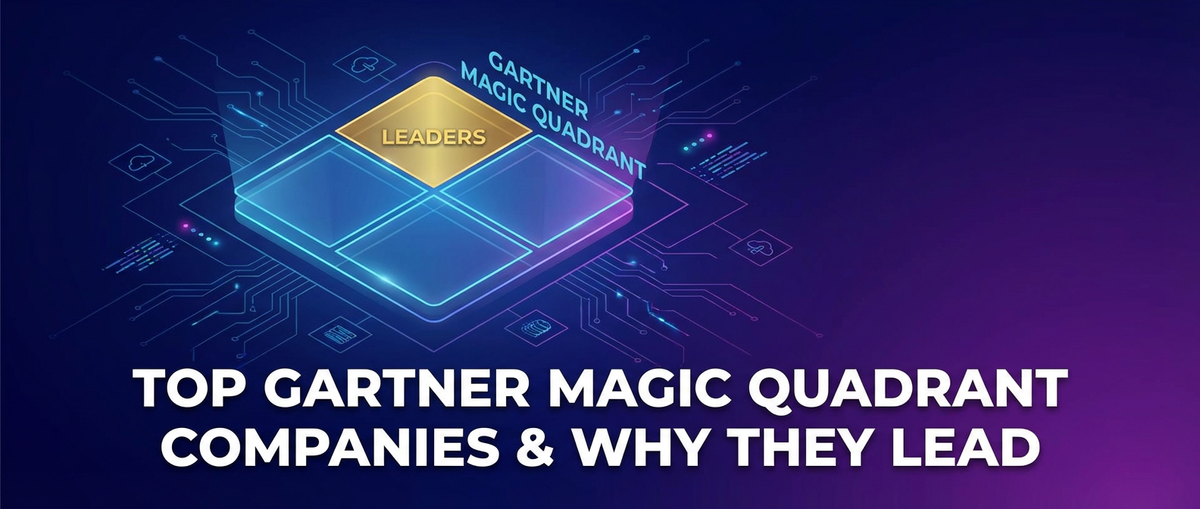
The Magic Quadrant framework scrutinizes technology providers across various sectors, from cloud infrastructure and data management to cybersecurity and enterprise applications, evaluating them on two primary axes: "Completeness of Vision" and "Ability to Execute." This rigorous methodology allows Gartner to categorize vendors into four distinct quadrants: Leaders, Challengers, Visionaries, and Niche Players, each representing a unique strategic position within the market. While all quadrants hold relevance, it is the "Leaders" quadrant that consistently captures the attention of major enterprises. These are the companies that not only demonstrate a profound understanding of market needs and a clear strategic roadmap but also possess the operational prowess to deliver on their promises, execute effectively, and drive significant impact for their customers.
This comprehensive article will delve deep into the world of the Gartner Magic Quadrant, dissecting the fundamental principles behind its esteemed methodology. We will explore the critical technology domains where leadership is most coveted and examine the distinguishing characteristics of the companies that consistently secure top positions. Furthermore, we will illuminate the transformative role of modern technological paradigms, particularly the pervasive power of APIs, the strategic deployment of advanced api gateway solutions, the burgeoning importance of LLM Gateways for managing cutting-edge AI, and the sophisticated engineering behind Model Context Protocols in enabling stateful, intelligent AI interactions. By scrutinizing the strategies, innovations, and operational excellence of these market leaders, we aim to uncover the core reasons behind their sustained dominance, offering insights that are invaluable for any organization charting its course through the digital future.
Understanding the Gartner Magic Quadrant Methodology
The Gartner Magic Quadrant is not a simple popularity contest or a static leaderboard; it is a dynamic, research-intensive evaluation that offers a graphical representation of a market and its participants. Gartner analysts apply a rigorous, standardized set of criteria to assess technology vendors, ensuring a comprehensive and objective analysis. This methodology is designed to provide enterprises with a nuanced understanding of vendors' strengths, weaknesses, and strategic positioning relative to their peers and the broader market trends.
At its core, the Magic Quadrant evaluates vendors based on two principal criteria, each comprising a multitude of sub-elements:
Completeness of Vision
This axis evaluates a vendor's understanding of the market, its ability to innovate, and its strategic foresight. It assesses not just where a vendor is today, but where it plans to be tomorrow and how well that vision aligns with anticipated market shifts and customer needs. A high score in Completeness of Vision indicates that a vendor is a thought leader, capable of shaping the market rather than merely reacting to it. The key components include:
- Market Understanding: How well the vendor understands customer needs, market trends, and competitive dynamics. This includes identifying emerging technologies and anticipating future requirements. A deep market understanding means a company isn't just building products, but building the right products for the right problems, often before the majority of the market recognizes them.
- Marketing Strategy: The clarity, consistency, and effectiveness of the vendor's strategy for communicating its value proposition to target markets. This goes beyond mere advertising; it encompasses how a company positions itself, articulates its differentiators, and engages with its audience to build brand awareness and preference.
- Sales Strategy: The vendor's approach to selling its products and services, including its sales channels, sales force effectiveness, and geographical coverage. A strong sales strategy ensures that innovative products reach the right customers efficiently and are supported by knowledgeable teams.
- Offering (Product) Strategy: The vendor's approach to product development and delivery, including its feature set, architecture, scalability, and integration capabilities. This criterion assesses how well the product addresses current and future market requirements and whether its roadmap is compelling and executable.
- Business Model: The soundness and viability of the vendor's business model, including revenue streams, pricing, and profitability. A sustainable business model is crucial for long-term growth and the ability to continue investing in innovation.
- Vertical/Industry Strategy: The vendor's ability to address the specific needs of different industries or vertical markets. This might involve specialized solutions, compliance features, or deep domain expertise that caters to unique industry challenges.
- Innovation: The vendor's commitment to and success in developing new technologies, features, and capabilities that differentiate it from competitors and drive market evolution. Innovation is about pushing boundaries, not just incrementally improving existing products.
- Geographic Strategy: The vendor's strategy for expanding its presence and supporting customers in different regions globally. This includes localized support, regulatory compliance, and cultural sensitivity in product design and service delivery.
Ability to Execute
This axis evaluates the vendor's capabilities to deliver on its promises and sustain its market presence. It assesses operational excellence, product delivery, customer satisfaction, and overall viability. A strong Ability to Execute indicates a vendor that can consistently provide high-quality products and services, support its customer base effectively, and operate efficiently. Key components include:
- Product/Service: The functionality, quality, usability, and performance of the vendor's offerings. This is a direct evaluation of what the customer receives and how well it performs its intended function. This includes not just the core features but also aspects like reliability, security, and ease of deployment.
- Overall Viability: The vendor's financial health, management stability, and commitment to the market. A financially sound and well-managed company is more likely to be a reliable long-term partner for enterprises.
- Sales Execution/Pricing: The vendor's ability to sell effectively, meet sales targets, and offer competitive pricing. This also includes the clarity and fairness of pricing models and the ability to demonstrate return on investment for customers.
- Market Responsiveness/Track Record: The vendor's ability to respond quickly to changing market conditions, customer feedback, and competitive pressures. A strong track record demonstrates consistent delivery and adaptation.
- Marketing Execution: The effectiveness of the vendor's marketing programs in generating leads, building brand awareness, and influencing purchase decisions. This is about translating vision into tangible market impact.
- Customer Experience: The quality of the vendor's customer support, service, and overall relationship management. Excellent customer experience fosters loyalty and advocacy, which are critical for sustained growth.
- Operations: The efficiency of the vendor's internal processes, organizational structure, and resource management. Strong operations underpin the ability to deliver products and services consistently and at scale.
The Four Quadrants
Based on their scores across these two axes, vendors are plotted into one of four quadrants:
- Leaders: Positioned in the upper-right quadrant, Leaders possess both a high Completeness of Vision and a strong Ability to Execute. They are innovative, financially sound, and have a clear understanding of the market. They are typically well-established, offer robust products, and consistently outperform competitors, often shaping market direction.
- Challengers: Located in the upper-left quadrant, Challengers have a strong Ability to Execute but may lack the comprehensive vision of Leaders. They are often large, well-established vendors with significant market share and strong products, but their vision might be more focused on current market demands rather than anticipating future trends.
- Visionaries: Found in the lower-right quadrant, Visionaries possess a strong Completeness of Vision but may have a lower Ability to Execute compared to Leaders. They are innovators and thought leaders, bringing new technologies and approaches to the market. However, they might lack the scale, market penetration, or operational maturity of more established players.
- Niche Players: Occupying the lower-left quadrant, Niche Players focus on a small segment of the market or have a limited vision or ability to execute. They might be smaller vendors, regional players, or specialists in a particular vertical. While valuable in their specific domain, their broader market impact is limited.
Enterprises leverage the Magic Quadrant for strategic planning, vendor shortlisting, competitive analysis, and validating technology investments. By understanding where vendors stand, organizations can make more informed decisions, mitigate risks, and align their technology choices with their overarching business objectives, ensuring they partner with companies capable of delivering sustained value and innovation.
Key Technology Areas and Their Relevance to Leadership
Leadership in the Gartner Magic Quadrant is not confined to a single technology domain; it spans across critical areas that form the bedrock of modern enterprise IT. Companies that consistently emerge as leaders do so by not only excelling in their core offerings but also by demonstrating foresight in anticipating market shifts and adapting their strategies to integrate emerging technologies. Let's explore some of these pivotal technology areas and the defining characteristics of their leaders.
Cloud Infrastructure & Platform Services (CIPS)
The shift to cloud computing has fundamentally reshaped the IT landscape, transforming how businesses deploy applications, store data, and scale operations. The Gartner Magic Quadrant for Cloud Infrastructure and Platform Services (CIPS) is arguably one of the most critical, reflecting the foundational nature of cloud services.
- Leaders: Amazon Web Services (AWS), Microsoft Azure, and Google Cloud Platform (GCP) consistently dominate this space.
- Why They Lead: Their leadership stems from an unparalleled combination of factors.
- Scale and Global Reach: These providers operate vast global networks of data centers, offering unmatched scalability and redundancy. This allows enterprises to deploy applications closer to their users, reducing latency and ensuring high availability across continents. Their immense infrastructure capacity can handle everything from small startups to the largest multinational corporations, adapting dynamically to fluctuating demand.
- Comprehensive Service Portfolios: Beyond basic compute (VMs, containers, serverless) and storage, these giants offer an ever-expanding array of services. This includes sophisticated database services (relational, NoSQL, in-memory), advanced networking capabilities (VPNs, CDNs, direct connects), and an extensive suite of AI/ML tools, IoT platforms, and data analytics services. This breadth allows enterprises to build highly complex, integrated, and innovative solutions entirely within a single cloud ecosystem.
- Developer Ecosystems and Tools: They foster vibrant developer communities by providing rich SDKs, APIs, command-line interfaces, and integrated development environments (IDEs). This empowers developers to build, deploy, and manage applications with ease, fostering rapid innovation and reducing time-to-market. Their marketplaces, featuring thousands of third-party solutions, further enhance their ecosystems.
- Security and Compliance: Given the sensitive nature of cloud data, these leaders invest billions in security infrastructure, personnel, and compliance certifications. They offer robust identity and access management (IAM), network security, data encryption, and adhere to a multitude of global regulatory standards (e.g., GDPR, HIPAA, PCI DSS), providing enterprises with the necessary assurance to migrate even their most critical workloads to the cloud.
- Innovation Pace: They are at the forefront of cloud innovation, continuously introducing new services and features. This includes advancements in serverless computing (e.g., AWS Lambda, Azure Functions), container orchestration (e.g., EKS, AKS, GKE), and specialized hardware for AI workloads. This relentless pursuit of innovation ensures that customers always have access to cutting-edge technology.
Data Management & Analytics
In the age of big data, the ability to effectively store, process, analyze, and derive insights from vast datasets is a critical differentiator. The Gartner Magic Quadrant for Cloud Database Management Systems and Data and Analytics Platforms highlights companies enabling this transformation.
- Leaders: Snowflake, Databricks, Microsoft, and Oracle are prominent names.
- Why They Lead: Their dominance is built upon platforms that combine performance, scalability, and advanced analytical capabilities.
- Scalability and Performance: These platforms are designed to handle petabytes of data and execute complex queries with extreme speed, adapting resource allocation on demand. This allows businesses to scale their data initiatives without worrying about underlying infrastructure limitations.
- Hybrid/Multi-Cloud Capabilities: Recognizing that many enterprises operate in hybrid or multi-cloud environments, leaders offer flexible deployment options and strong integration capabilities across different cloud providers and on-premises systems. This flexibility prevents vendor lock-in and allows for optimized data strategies.
- Advanced Analytics and ML Integration: They provide robust tools for advanced analytics, including integrated machine learning capabilities. This allows data scientists and analysts to build predictive models, perform complex statistical analyses, and leverage AI directly within their data platforms, accelerating the journey from raw data to actionable insights.
- Data Governance and Security: With increasing data privacy regulations, leaders offer comprehensive data governance features, including data lineage, access controls, masking, and auditing. This ensures compliance, maintains data quality, and protects sensitive information throughout its lifecycle.
- Ease of Use and Ecosystem: User-friendly interfaces, extensive documentation, and a thriving ecosystem of connectors and integrations with popular BI tools, ETL platforms, and data visualization software make these platforms accessible to a wider range of users, from data engineers to business analysts.
Enterprise Application Platforms (e.g., ERP, CRM)
Enterprise Resource Planning (ERP) and Customer Relationship Management (CRM) systems are the operational backbone of many organizations, streamlining core business processes and managing customer interactions.
- Leaders: SAP, Oracle, and Salesforce consistently lead in their respective areas (e.g., Gartner MQ for Cloud ERP for Service-Centric Enterprises, Sales Force Automation).
- Why They Lead: Their enduring leadership stems from:
- Deep Industry-Specific Functionalities: These platforms offer specialized modules and configurations tailored to various industries (e.g., manufacturing, retail, finance, healthcare). This deep vertical expertise ensures that the software meets the unique operational and regulatory requirements of diverse businesses.
- Integration Capabilities: Modern enterprises rely on a sprawling ecosystem of applications. Leaders provide robust integration frameworks, APIs, and connectors, allowing their core platforms to seamlessly communicate with other business-critical systems, fostering a cohesive IT environment.
- Cloud Transition and SaaS Model: They have successfully transitioned their offerings to cloud-native, Software-as-a-Service (SaaS) models, providing greater flexibility, reduced operational overhead for customers, and continuous updates. This model ensures that customers always have access to the latest features and security enhancements.
- Customer Success and Support: Leaders invest heavily in customer success programs, offering extensive training, support, and consulting services. Their vast partner networks further extend their reach and ability to provide tailored solutions and implementation expertise.
- Expansive Partner Networks: A strong network of implementation partners, consultants, and independent software vendors (ISVs) extends the value proposition of these platforms, offering specialized integrations and domain-specific solutions.
Cybersecurity (e.g., Network Firewalls, Endpoint Protection)
As cyber threats become more sophisticated, robust cybersecurity solutions are non-negotiable for any enterprise. Gartner's Magic Quadrants for Network Firewalls, Endpoint Protection Platforms, and Security Information and Event Management (SIEM) are vital for navigating this complex domain.
- Leaders: Palo Alto Networks, Fortinet, and CrowdStrike are frequently cited as leaders.
- Why They Lead: Their dominance is characterized by:
- Comprehensive Threat Intelligence: These companies leverage vast global threat intelligence networks and advanced analytics to identify and protect against emerging threats in real-time. This proactive approach is crucial in staying ahead of adversaries.
- Integrated Security Platforms: Rather than offering disparate point solutions, leaders provide integrated security platforms that unify various security functions (e.g., firewall, intrusion prevention, anti-malware, VPN, endpoint detection and response). This provides a holistic security posture, simplifies management, and reduces security gaps.
- Advanced Threat Detection (AI/ML-Driven): They heavily utilize artificial intelligence and machine learning to detect anomalies, identify sophisticated attacks (e.g., zero-day exploits, fileless malware), and automate responses. This AI-driven approach significantly enhances their ability to protect against unknown threats.
- Quick Response Capabilities: Leaders offer rapid incident response capabilities, enabling organizations to quickly contain and remediate security breaches, minimizing damage and downtime. This includes automated playbooks and orchestration tools.
- Cloud-Native Security: With the widespread adoption of cloud, leaders provide robust security solutions specifically designed for cloud environments, including cloud workload protection, cloud security posture management (CSPM), and secure access service edge (SASE) offerings.
- Compliance and Regulatory Adherence: They build in features and offer reporting capabilities that help organizations meet various regulatory compliance requirements, a critical aspect for many industries.
The companies leading in these critical technology areas consistently demonstrate a profound understanding of the market, a relentless commitment to innovation, and an exceptional ability to execute. Their success is rooted in building comprehensive, scalable, secure, and user-friendly platforms that empower enterprises to thrive in the digital age.
| Gartner MQ Leader Attributes | Completeness of Vision | Ability to Execute | Key Differentiators |
|---|---|---|---|
| Market Understanding | Excellent | Strong track record | Anticipates trends, deep customer insights |
| Product Innovation | High | Consistent delivery | Game-changing features, continuous evolution |
| Sales & Marketing | Strategic & effective | High performance | Global reach, strong brand recognition |
| Customer Experience | Integrated | Exceptional support | High satisfaction, extensive ecosystem |
| Overall Viability | Sustainable business model | Financially robust | Long-term stability, investment in R&D |
| Ecosystem & Partnerships | Visionary expansion | Active collaboration | Strong alliances, thriving developer community |
The Role of APIs and AI in Maintaining Leadership
In the contemporary technology landscape, the twin forces of Application Programming Interfaces (APIs) and Artificial Intelligence (AI) have emerged as indispensable drivers of innovation, efficiency, and competitive advantage. For companies striving to maintain their leadership positions in the Gartner Magic Quadrant, a sophisticated understanding and strategic implementation of these technologies are no longer optional but absolutely critical. They form the arteries and neural networks, respectively, of modern digital enterprises, enabling seamless integration, intelligent automation, and personalized experiences at scale.
The Pervasive Power of APIs
APIs are the silent workhorses of the digital economy, the fundamental building blocks that enable different software systems to communicate and interact. They are the backbone of digital transformation, allowing enterprises to break down monolithic applications into agile microservices, foster collaborative ecosystems, and unlock new revenue streams.
- Enabling Digital Transformation: APIs facilitate the modularization of enterprise IT, allowing companies to modernize legacy systems, adopt cloud-native architectures, and accelerate the development cycle. By exposing internal services through well-defined APIs, organizations can create new digital products and services, streamline operations, and enhance customer journeys. This modularity also enhances resilience and simplifies maintenance, as individual services can be updated or scaled independently without affecting the entire system.
- Fostering Innovation and Ecosystem Building: Leading companies don't just consume APIs; they publish them, creating vibrant developer ecosystems around their platforms. Think of how Salesforce allows partners to build applications on its AppExchange, or how AWS provides APIs for every one of its services. This approach fosters innovation by allowing third-party developers to extend the platform's capabilities, reaching new markets and creating value far beyond what the core company could achieve alone. These open platforms become magnets for innovation, attracting diverse talent and ideas.
- Driving New Business Models: APIs enable platform-as-a-service (PaaS) and API-as-a-Service (AaaS) models, allowing companies to monetize their data, services, or unique capabilities. For instance, payment gateways, mapping services, and communication platforms (like Twilio) have built entire businesses by exposing their core functionalities through robust APIs. This allows enterprises to tap into new revenue streams by offering their intellectual property as consumable services.
The sheer volume and complexity of API traffic within and between enterprises demand robust management solutions. This is where the api gateway becomes an absolutely critical component. An api gateway acts as a single entry point for all API requests, providing a crucial layer of abstraction, security, and performance optimization. Leading companies leverage advanced api gateway solutions for several key reasons:
- Security Enforcement: API gateways are the first line of defense, enforcing authentication (e.g., OAuth, API keys), authorization, and rate limiting policies to protect backend services from malicious attacks, overuse, and unauthorized access. They can also perform threat detection and introduce Web Application Firewall (WAF) capabilities, safeguarding sensitive data and ensuring compliance with regulations.
- Traffic Management and Load Balancing: As API usage scales, gateways efficiently route requests to the appropriate backend services, distribute traffic across multiple instances to prevent bottlenecks, and implement caching strategies to improve response times and reduce backend load. This ensures high availability and responsiveness, even under peak loads.
- Policy Enforcement and Transformation: Gateways can apply various policies—such as throttling, logging, monitoring, and request/response transformation—to API calls without requiring changes to the backend services. This provides centralized control, simplifies API versioning, and allows for seamless integration between systems with different data formats or protocols.
- Monitoring and Analytics: Comprehensive logging and analytics capabilities within an
api gatewayprovide invaluable insights into API usage patterns, performance metrics, and error rates. This data is crucial for troubleshooting, capacity planning, and understanding the business impact of API consumption. - Centralized Management: An
api gatewaycentralizes the management of APIs, making it easier to publish, deprecate, and monitor them across diverse environments. This is particularly vital in microservices architectures, where hundreds or thousands of individual services might expose APIs.
For enterprises navigating the complexities of API ecosystems, whether for traditional REST services or the burgeoning AI landscape, platforms like APIPark offer comprehensive solutions. APIPark, an open-source AI gateway and API management platform, excels at unifying the management of diverse APIs, offering features like quick integration of 100+ AI models, unified API formats, and end-to-end lifecycle management. Its robust performance and detailed logging capabilities position it as a valuable tool for any organization aiming for efficient and secure API governance. With its ability to encapsulate prompts into REST APIs and manage independent API and access permissions for each tenant, APIPark provides the agility and control necessary for modern, secure, and scalable API strategies.
The AI Revolution and Its Strategic Implementation
Artificial Intelligence, particularly the advancements in Generative AI and Large Language Models (LLMs), is reshaping every industry. Leading companies are not just experimenting with AI; they are strategically embedding it into their products, services, and operational processes to unlock unprecedented levels of automation, personalization, and insight.
- Enhanced Customer Experience: AI powers intelligent chatbots, personalized recommendations, predictive customer service, and dynamic content generation, leading to more engaging and satisfying customer interactions. Leaders use AI to understand customer intent, anticipate needs, and provide proactive support.
- Predictive Analytics and Automation: From predicting equipment failures in manufacturing to forecasting market trends in finance, AI-driven predictive analytics empowers better decision-making. AI also automates repetitive tasks, from document processing to code generation, freeing up human capital for more strategic endeavors.
- Personalized Services: LLMs are instrumental in creating highly personalized content, marketing messages, and educational materials. This hyper-personalization drives higher engagement and conversion rates.
However, the deployment and management of AI models, especially large and complex LLMs, come with their own set of challenges: cost optimization, security, performance, model versioning, and ethical considerations. This complexity necessitates specialized tools and infrastructure, leading to the emergence of the LLM Gateway.
An LLM Gateway serves a purpose similar to a traditional api gateway but is specifically tailored for the unique requirements of Large Language Models. Leading enterprises are adopting LLM Gateways to:
- Unify Access and Abstract Complexity: Instead of applications needing to interact directly with multiple, often disparate LLM providers (e.g., OpenAI, Google Gemini, Anthropic Claude), an
LLM Gatewayprovides a single, unified API endpoint. This abstracts away the intricacies of different model APIs, authentication mechanisms, and rate limits, simplifying development and enabling easy switching between models without application code changes. - Cost Management and Optimization: LLM usage can be expensive. An
LLM Gatewaycan implement smart routing policies to direct requests to the most cost-effective model for a given task, enforce budget limits, and provide detailed usage tracking and billing analytics, helping enterprises control and optimize their AI spending. - Security and Data Governance: LLM gateways can filter sensitive information from prompts before they are sent to external models, perform input/output sanitization, and enforce data residency policies. This is crucial for protecting proprietary data and ensuring compliance with privacy regulations.
- Performance and Reliability: By implementing caching, load balancing, and fallback mechanisms, an
LLM Gatewaycan improve the response times and reliability of AI applications, especially when dealing with high volumes of requests or when interacting with external LLM providers that might have varying latencies. - Prompt Engineering and Versioning: Gateways can manage prompt templates, inject common context, and facilitate A/B testing of different prompts or models. They also enable versioning of prompts and models, ensuring that applications can easily revert to previous stable configurations or test new iterations in a controlled manner.
- Observability and Monitoring: Detailed logging of prompt/response pairs, latency, token usage, and error rates provided by an
LLM Gatewayis essential for debugging AI applications, monitoring model performance, and identifying potential biases or hallucinations.
Further enhancing the sophistication of AI interactions, especially in conversational AI or applications requiring stateful memory, is the concept of a Model Context Protocol. This refers to the advanced techniques and standardized methods used to manage and maintain context across multiple interactions with an AI model. For leading companies building intelligent applications, a robust Model Context Protocol is vital because:
- Maintaining Conversational State: In chatbots, virtual assistants, or intelligent agents, the ability to "remember" previous turns in a conversation is paramount. A
Model Context Protocolensures that the AI retains relevant information from earlier interactions, allowing for coherent, natural, and helpful dialogue that builds upon previous exchanges. This involves strategies for managing token limits, summarizing past interactions, and intelligently injecting relevant historical data into subsequent prompts. - Ensuring Coherence and Consistency: For complex tasks spanning multiple steps or user queries, the AI needs to maintain a consistent understanding of the overall goal and context. The protocol helps ensure that the model's responses are consistent with the evolving context, preventing "hallucinations" or contradictory outputs.
- Personalization and Adaptation: By understanding the context of an individual user, their preferences, and their history, the
Model Context Protocolenables the AI to deliver highly personalized experiences. This could involve tailoring recommendations, adjusting communication style, or pre-filling information based on known user attributes. - Efficient Resource Utilization: Smart context management can prevent redundant information from being sent to the LLM, optimizing token usage and reducing inference costs. It also helps in structuring complex queries into manageable segments.
- Fine-tuning and Adaptation: Over time, the
Model Context Protocolcan incorporate mechanisms for fine-tuning models based on user interactions, adapting the AI's behavior and knowledge base to specific organizational needs or user groups. This continuous learning enhances the model's effectiveness and relevance.
Synergy between APIs and AI
The true power for leading companies lies in the synergy between APIs and AI. APIs are the conduits through which AI capabilities are exposed, integrated, and consumed, while AI, in turn, can enhance API management itself.
- AI-Powered API Management: AI can be used within an
api gatewayor API management platform for anomaly detection in API traffic, predicting usage patterns, automating security responses, and even generating API documentation. - APIs for AI-as-a-Service: AI models, including LLMs, are increasingly offered as services accessible via APIs. This democratizes AI, allowing developers to integrate sophisticated AI capabilities into their applications without needing deep AI expertise or massive computational resources. This is where the
LLM Gatewayplays a critical role, streamlining access to these AI-as-a-Service offerings. - Building Intelligent Composables: By combining well-managed APIs with advanced AI models and robust
Model Context Protocols, enterprises can build highly intelligent, composable applications that are adaptable, scalable, and capable of delivering truly transformative value.
Companies at the forefront of the Gartner Magic Quadrant understand that mastering APIs and strategically leveraging AI are not just about adopting new tools, but about fundamentally reimagining how they operate, innovate, and interact with their customers and partners. These technologies are the bedrock upon which future leadership will be built.
APIPark is a high-performance AI gateway that allows you to securely access the most comprehensive LLM APIs globally on the APIPark platform, including OpenAI, Anthropic, Mistral, Llama2, Google Gemini, and more.Try APIPark now! 👇👇👇
Case Studies of Leading Companies
To truly understand why certain companies consistently lead in the Gartner Magic Quadrant, it's insightful to examine specific examples across different domains. These companies embody the "Completeness of Vision" and "Ability to Execute" criteria, showcasing how strategic foresight, relentless innovation, and operational excellence translate into market dominance.
Microsoft: The Comprehensive Cloud and AI Powerhouse
Microsoft's journey from a traditional software vendor to a cloud and AI leader is a testament to its strategic pivot and unwavering commitment to enterprise value. It consistently appears in the Leaders quadrant across numerous Gartner Magic Quadrants, including Cloud Infrastructure and Platform Services (Azure), Analytics and Business Intelligence Platforms (Power BI), and Field Service Management (Dynamics 365).
- Completeness of Vision: Microsoft’s vision is expansive, aiming to be the most comprehensive and trusted platform for digital transformation. Their "Intelligent Cloud, Intelligent Edge" strategy encapsulates this, focusing on pervasive AI capabilities spanning from data centers to IoT devices. They have invested heavily in open-source technologies, hybrid cloud solutions (Azure Arc), and an ethical AI framework, demonstrating foresight into future enterprise needs and concerns. The integration of AI across their entire product suite, from Azure AI services to Microsoft 365 Copilot, showcases a clear, unified direction for leveraging intelligence to enhance productivity and innovation.
- Ability to Execute: Microsoft's execution is formidable. Azure’s global network is vast, offering a comprehensive suite of over 200 products and cloud services. Their strong enterprise relationships, extensive partner ecosystem, and robust sales channels ensure wide adoption. They continuously deliver new features, often outstripping competitors in specific areas, while maintaining high standards of security and compliance. The acquisition and successful integration of LinkedIn and GitHub further solidify their ecosystem and developer mindshare. For instance, Azure API Management acts as a sophisticated
api gatewayfor both internal microservices and external partner integrations, providing enterprise-grade security, throttling, and monitoring crucial for their vast cloud ecosystem. Their AI services leverage advancedLLM Gatewaysolutions to manage access, cost, and context for the various large language models they develop and integrate, ensuring their customers can reliably and securely consume cutting-edge AI. The underlyingModel Context Protocols within services like Azure OpenAI or Dynamics 365 Copilot are sophisticated, enabling stateful, intelligent interactions that power complex business processes.
Salesforce: The Customer-Centric SaaS Innovator
Salesforce has long been the undisputed leader in CRM, consistently dominating the Gartner Magic Quadrant for Sales Force Automation and achieving strong positions in other customer-centric categories. Their success is rooted in a cloud-native, customer-first approach and a relentless pursuit of innovation through a robust platform strategy.
- Completeness of Vision: Salesforce's vision centers around a 360-degree view of the customer, striving to empower businesses to connect with their customers in new ways. They pioneered the SaaS model and continue to expand their platform (Salesforce Platform, Heroku) and ecosystem (AppExchange) to provide comprehensive solutions across sales, service, marketing, and commerce. Their early and aggressive adoption of AI (Einstein AI) to infuse intelligence into every customer interaction, from predictive lead scoring to personalized service recommendations, highlights their forward-thinking strategy. This vision extends to data integration and automation, as evidenced by their strategic acquisitions.
- Ability to Execute: Salesforce’s execution prowess is exceptional. Their multi-tenant cloud architecture ensures scalability and continuous updates for millions of users. They have an unparalleled track record of customer success, built on extensive training, support, and a highly engaged community. The acquisition of MuleSoft brought a leading
api gatewaysolution into their portfolio, enhancing their ability to integrate Salesforce with any system, anywhere. This allows enterprises to unify disparate data sources, connect legacy systems, and build truly composable applications around their customer data, reinforcing the critical role of APIs in their ecosystem. Their continuous innovation in Einstein AI, integrating advanced machine learning and increasingly, large language models, shows a strong capability to deliver AI-powered features that genuinely enhance customer engagement and operational efficiency. The internalModel Context Protocols within Einstein ensure that AI-driven insights and automations are relevant and consistent across various customer touchpoints, making the overall experience seamless and intelligent.
Palo Alto Networks: The Unified Cybersecurity Platform Leader
Palo Alto Networks has consistently been a Leader in the Gartner Magic Quadrant for Network Firewalls, and increasingly, in Endpoint Protection Platforms and Cloud Workload Protection Platforms. Their strategy focuses on a platform approach to cybersecurity, unifying disparate security functions to provide comprehensive protection.
- Completeness of Vision: Palo Alto Networks’ vision is to deliver "continuous security for the cloud-enabled enterprise." They recognized early on that traditional perimeter security was insufficient in a world of cloud, mobile, and IoT, and pivoted towards a platform-centric, prevention-first approach. Their focus on integrating AI and machine learning into threat detection, automation, and incident response, along with a strong commitment to Zero Trust principles, positions them as a visionary in anticipating future cyber threats and architectural shifts. Their expansive platform, including offerings like Strata (network security), Prisma (cloud security), and Cortex (security operations), provides a unified view and control plane for enterprise security.
- Ability to Execute: Palo Alto Networks has an outstanding ability to execute, delivering high-performance, enterprise-grade security solutions. Their firewalls are renowned for their advanced threat prevention capabilities, including deep packet inspection and application-level visibility. They have a strong global presence, a highly skilled sales force, and a robust channel partner network. Their continuous innovation ensures that their platform stays ahead of evolving threats, offering rapid deployment of new signatures and features. Crucially, their entire platform is built upon robust
api gatewayprinciples, allowing various security services to interoperate seamlessly and provide a unified defense. This internal API strategy enables their security products to communicate, share threat intelligence, and enforce policies across network, endpoint, and cloud environments. For example, theapi gatewayfunctionalities within their firewalls allow for secure, controlled access to management planes and integration with SIEM and orchestration tools. As cyber threats increasingly involve AI-driven attacks, Palo Alto Networks is also investing in securing AI environments, which will naturally involveLLM Gatewaysecurity and ensuring robustModel Context Protocolprotections to prevent AI model poisoning or exploitation.
These case studies illustrate that leadership in the Gartner Magic Quadrant is earned through a combination of visionary thinking and exceptional execution. It involves understanding deep market needs, investing in cutting-edge technologies like robust api gateway solutions, strategic LLM Gateway deployments, and sophisticated Model Context Protocols, and building comprehensive, scalable, and secure platforms that deliver tangible value to enterprises globally.
Future Trends and Maintaining Leadership
The technology landscape is in a state of perpetual flux, driven by relentless innovation and ever-evolving market demands. For companies that aspire to maintain their leadership positions in the Gartner Magic Quadrant, understanding and proactively addressing future trends is paramount. The next decade promises transformative shifts, and sustained dominance will hinge on adaptability, foresight, and a continued commitment to customer-centricity.
Continued AI Integration and Generative AI Everywhere
Artificial intelligence, particularly generative AI, is no longer a niche technology but a foundational layer for future applications. Leaders will move beyond discrete AI features to embed AI pervasively across their entire product portfolios and internal operations. This means:
- Context-Aware AI: AI models will become more sophisticated in understanding and retaining context over extended interactions, moving towards truly intelligent agents. This will heavily rely on highly developed
Model Context Protocols that can manage complex, multi-turn dialogues and seamlessly integrate historical data and user preferences. The ability to handle long-range dependencies and maintain a persistent "memory" will differentiate leading AI applications. - Democratization of AI Creation: Low-code/no-code platforms will increasingly integrate generative AI capabilities, allowing business users to create custom AI models and applications with minimal technical expertise. This will accelerate innovation across all enterprise functions.
- Responsible AI: As AI becomes more ubiquitous, ethical AI development, transparency, explainability, and bias mitigation will become critical differentiators. Leaders will invest heavily in governance frameworks and tools to ensure their AI solutions are fair, secure, and compliant.
The Rise of Composable Architectures
The shift from monolithic applications to highly modular, composable architectures will accelerate. Enterprises will increasingly build bespoke solutions by assembling best-of-breed components and services from various vendors.
- API-First Everything: APIs will become the primary interface for all software components, both internal and external. This mandates even more robust and standardized API management. The role of the
api gatewaywill expand further, acting as a central nervous system for these composable enterprises, managing an even greater diversity of services, micro-frontends, and data streams. These gateways will need to support evolving API standards (e.g., GraphQL, event-driven APIs) and provide advanced orchestration capabilities. - Data Fabric and Mesh: To support composability, data will need to be easily discoverable, accessible, and governed across disparate sources. Concepts like data fabric and data mesh will move from theory to widespread implementation, enabling decentralized data ownership and consumption through standardized APIs.
Edge Computing and Distributed Intelligence
As data generation explodes at the edge (IoT devices, smart factories, retail points), processing intelligence will increasingly shift closer to the data source.
- Edge AI: Running AI inference at the edge reduces latency, conserves bandwidth, and enhances privacy. Leaders will offer integrated solutions that seamlessly deploy, manage, and secure AI models from the cloud to the edge, orchestrating distributed intelligence effectively.
- Hybrid and Multi-Cloud Dominance: While public clouds will remain central, hybrid and multi-cloud strategies will become the default for large enterprises, driven by data sovereignty, regulatory requirements, and workload optimization. Providers offering consistent management and security across these diverse environments will excel.
Cybersecurity as a Foundational Layer
The threat landscape will continue to escalate in sophistication and volume. Cybersecurity will no longer be an add-on but an intrinsic, "security by design" principle embedded into every layer of the technology stack.
- Zero Trust Everywhere: The Zero Trust security model, which assumes no user or device can be implicitly trusted, will become universally adopted. This requires continuous verification and least-privilege access, enforced by intelligent security controls.
- AI for Security: AI will be increasingly used to automate threat detection, incident response, and vulnerability management, leveraging vast datasets to identify patterns and anomalies that human analysts might miss. This will extend to securing AI models themselves, protecting against adversarial attacks, and ensuring the integrity of
LLM Gateways and their underlyingModel Context Protocols.
Sustainability and Environmental, Social, and Governance (ESG) Considerations
Technology companies are facing increasing pressure to demonstrate environmental responsibility and strong social governance.
- Green IT: Leaders will prioritize energy-efficient hardware, sustainable data center operations, and tools that help customers monitor and reduce their IT carbon footprint.
- Ethical Supply Chains and Diverse Workforce: Transparency in supply chains, fair labor practices, and fostering diverse and inclusive workforces will become key criteria for enterprise partnerships.
The Importance of Adaptability and Openness
Maintaining leadership will demand constant vigilance and a willingness to embrace change.
- Continuous Innovation: The pace of innovation will not slow. Leaders must foster cultures of experimentation, invest heavily in R&D, and be prepared to disrupt their own products before others do.
- Open Source and Community Engagement: Active participation in open-source projects and fostering vibrant developer communities will be crucial for attracting talent, driving innovation, and building broad adoption. Solutions like APIPark, being open-source, exemplify this commitment to community and collaborative development, offering a flexible and powerful foundation for API management that can adapt to future trends.
- Customer Obsession: Ultimately, understanding and exceeding customer expectations remains paramount. Leaders will continue to build deep relationships, gather feedback, and iterate rapidly based on real-world needs.
In essence, the companies that continue to lead in the Gartner Magic Quadrant will be those that not only envision the future but also possess the agility and robust infrastructure, underpinned by advanced api gateway solutions, intelligent LLM Gateways, and sophisticated Model Context Protocols, to execute that vision effectively and responsibly. They will be the architects of a more connected, intelligent, and sustainable digital future.
Conclusion
The Gartner Magic Quadrant stands as an enduring testament to the relentless pace of innovation and the critical need for objective analysis in the complex world of enterprise technology. It serves not merely as a report card but as a compass, guiding enterprises toward the vendors that are not only meeting today's demands but also charting the course for tomorrow's advancements. Through its meticulous evaluation of "Completeness of Vision" and "Ability to Execute," the Magic Quadrant consistently highlights those companies that demonstrate true market leadership across diverse and critical technology domains.
The companies that consistently reside in the coveted "Leaders" quadrant are not there by chance. They embody a unique blend of strategic foresight, unwavering commitment to innovation, and exceptional operational prowess. Whether it's the cloud infrastructure giants redefining scalability and service breadth, the data powerhouses unlocking insights from oceans of information, the enterprise application leaders streamlining core business processes, or the cybersecurity stalwarts safeguarding digital assets, their dominance is built upon foundational principles. They anticipate market shifts, invest heavily in research and development, cultivate vibrant partner ecosystems, and prioritize customer success with a level of dedication that sets them apart.
A recurring theme in the success stories of these leading enterprises is the strategic deployment of modern technological paradigms. The pervasive power of APIs, managed through sophisticated api gateway solutions, has become the circulatory system of the digital economy, enabling seamless integration, fostering innovation, and facilitating new business models. As the AI revolution continues its inexorable march, the need for specialized LLM Gateways to manage, secure, and optimize access to large language models has become increasingly apparent, ensuring that enterprises can harness the transformative potential of AI responsibly and efficiently. Furthermore, the development and application of robust Model Context Protocols are proving indispensable for building truly intelligent, stateful AI applications that deliver coherent, personalized, and impactful experiences.
Looking ahead, the landscape will continue to evolve at breakneck speed, driven by the pervasive integration of AI, the embrace of composable architectures, the expansion of edge computing, and the non-negotiable imperative of cybersecurity and sustainability. Sustained leadership will demand even greater agility, a deeper commitment to ethical technology deployment, and an unyielding focus on the customer. The companies that remain at the pinnacle of the Gartner Magic Quadrant will be those that not only embrace these trends but actively shape them, leveraging cutting-edge tools and strategies to continuously deliver unparalleled value in an increasingly interconnected and intelligent world.
Frequently Asked Questions (FAQs)
1. What is the Gartner Magic Quadrant and why is it important for businesses? The Gartner Magic Quadrant is a series of market research reports published by Gartner that provide a qualitative analysis of technology providers in specific markets. It evaluates vendors based on their "Completeness of Vision" and "Ability to Execute," plotting them into four quadrants: Leaders, Challengers, Visionaries, and Niche Players. It's crucial for businesses because it offers an objective, expert-driven assessment of market dynamics, helps in vendor selection, informs technology investment decisions, and provides insights into market maturity and future trends, significantly reducing research time and risk.
2. What distinguishes a "Leader" in the Gartner Magic Quadrant from other quadrants? A "Leader" in the Gartner Magic Quadrant is characterized by a high score in both "Completeness of Vision" and "Ability to Execute." This means they not only have a clear understanding of market needs, a compelling strategic roadmap, and innovative products (vision) but also possess the operational excellence, financial viability, strong sales, and customer support to deliver consistently on their promises and execute effectively in the market. They often set the pace for innovation and reliably meet enterprise customer requirements.
3. How do APIs and api gateways contribute to a company's leadership in the tech industry? APIs (Application Programming Interfaces) are fundamental for modern software architectures, enabling digital transformation, microservices, and ecosystem integration. A robust api gateway is critical for managing these APIs, providing centralized security (authentication, authorization, rate limiting), traffic management (load balancing, routing), performance optimization (caching), and monitoring. Companies that master API strategy and deploy advanced api gateway solutions can unlock new business models, foster innovation through open platforms, ensure the security and scalability of their digital services, and seamlessly integrate with partners and third-party developers, which are all hallmarks of market leaders.
4. What is an LLM Gateway and why is it becoming essential for enterprises? An LLM Gateway is a specialized api gateway designed specifically for managing access to and interactions with Large Language Models (LLMs). It provides a unified interface to various LLM providers, abstracting away their complexities. LLM Gateways are becoming essential for enterprises to: manage and optimize costs, enforce security and data governance policies, improve performance and reliability through caching and load balancing, facilitate prompt engineering and versioning, and provide comprehensive monitoring and observability for their AI applications. This centralized control is vital for responsible, efficient, and scalable LLM deployment.
5. How does a Model Context Protocol impact the effectiveness of AI applications? A Model Context Protocol refers to the advanced techniques and standardized methods used to manage and maintain conversational or operational context across multiple interactions with an AI model, especially LLMs. It significantly impacts AI effectiveness by enabling: consistent and coherent dialogue (preventing AI from "forgetting" past interactions), highly personalized user experiences (by leveraging historical data and preferences), efficient resource utilization (optimizing token usage), and enhanced reliability (by ensuring responses are relevant to the evolving context). A sophisticated Model Context Protocol is crucial for building intelligent, stateful AI applications that can engage in meaningful, multi-turn interactions.
🚀You can securely and efficiently call the OpenAI API on APIPark in just two steps:
Step 1: Deploy the APIPark AI gateway in 5 minutes.
APIPark is developed based on Golang, offering strong product performance and low development and maintenance costs. You can deploy APIPark with a single command line.
curl -sSO https://download.apipark.com/install/quick-start.sh; bash quick-start.sh

In my experience, you can see the successful deployment interface within 5 to 10 minutes. Then, you can log in to APIPark using your account.

Step 2: Call the OpenAI API.