Ultimate Guide to MCP Desktop Setup & Optimization
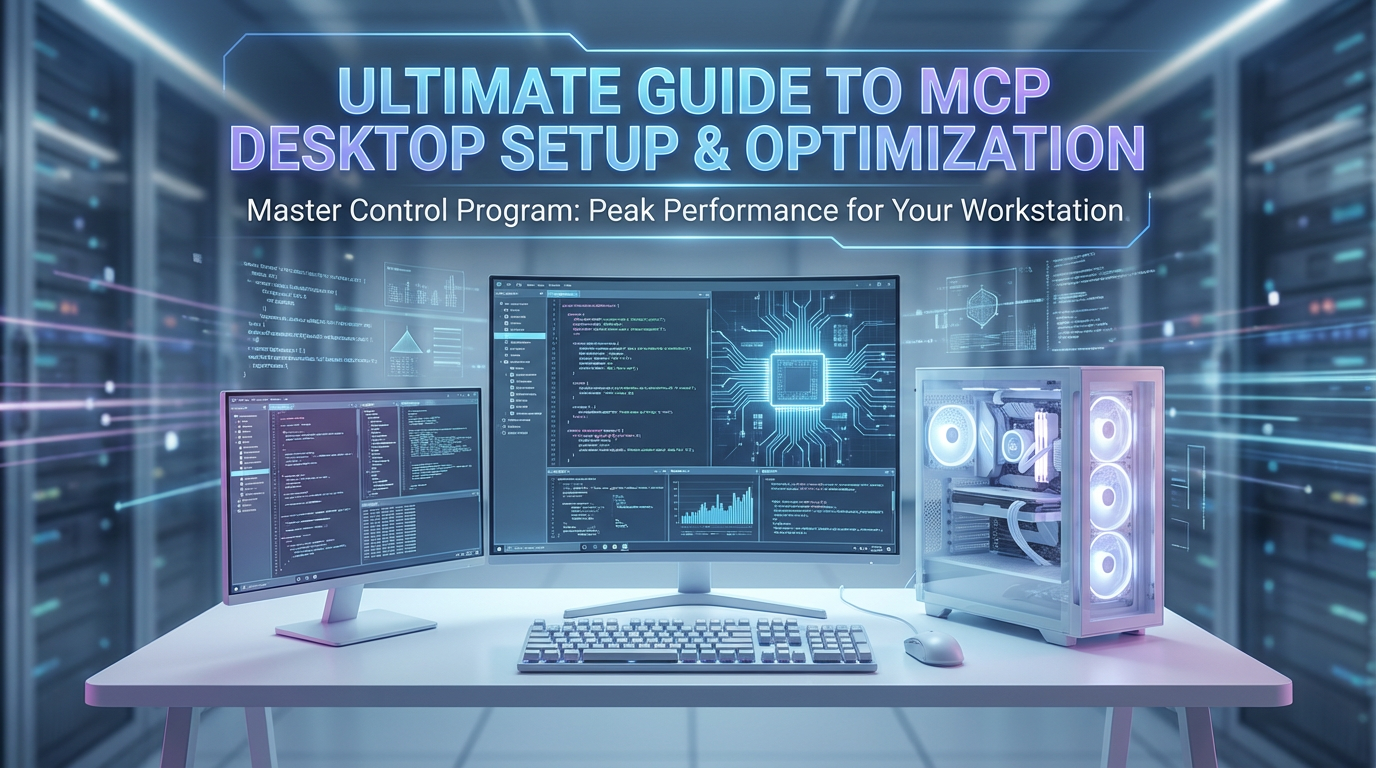


The world of Minecraft, a blocky canvas for creativity, extends far beyond its vanilla confines thanks to a vibrant modding community. For aspiring mod developers, the bedrock of their innovation lies in the MCP Desktop environment. The Minecraft Coder Pack (MCP) is not just a toolset; it's the very gateway to understanding, decompiling, and re-engineering Minecraft's intricate Java codebase, allowing developers to craft entirely new experiences, items, blocks, and game mechanics. This comprehensive guide will take you through every facet of setting up, configuring, and profoundly optimizing your MCP Desktop workspace, ensuring a smooth, efficient, and ultimately enjoyable modding journey.
From the foundational steps of installing Java and the MCP itself to advanced performance tweaks, workflow enhancements, and even leveraging cutting-edge AI tools like Claude Desktop and sophisticated API management platforms such as APIPark, we will cover the entire spectrum. This article is designed for both novices taking their first tentative steps into Minecraft modding and experienced developers looking to refine their existing setups. Our goal is to empower you with the knowledge and strategies to transform your MCP Desktop into a high-performance, productivity-boosting hub, making the daunting task of mod development not just feasible, but genuinely pleasurable. Prepare to unlock the full potential of your modding environment and embark on a journey of boundless creation within the Minecraft universe.
1. Understanding the Core: What is MCP and Why Does it Matter?
At its heart, MCP (Minecraft Coder Pack) is an indispensable, community-driven toolchain that facilitates the decompilation, deobfuscation, and re-compilation of the Minecraft client and server JAR files. Minecraft, like many commercial software titles, is distributed in an obfuscated state, meaning its original source code is intentionally scrambled and made difficult to read by humans. This obfuscation protects intellectual property but poses a significant challenge for anyone wishing to understand or modify its internal workings. MCP bridges this gap, transforming the cryptic, minified code back into a readable, navigable Java codebase, complete with method and variable names that reflect their original intent.
For anyone serious about creating mods, MCP Desktop is the foundational starting point. It provides the necessary environment to analyze Minecraft's internal logic, identify extension points, and develop custom code that integrates seamlessly. Without MCP, modding would be an arduous, if not impossible, task, akin to trying to solve a puzzle blindfolded. It's the standard for legacy Minecraft modding, predating and influencing modern frameworks like Forge and Fabric, which themselves often rely on the principles and outputs generated by MCP. Understanding MCP not only enables direct modding but also provides crucial insight into how these higher-level frameworks interact with the game, offering a deeper understanding of the entire modding ecosystem. The robustness of your MCP Desktop setup directly correlates with the efficiency and stability of your mod development process, making this initial understanding absolutely critical. It’s the difference between fumbling in the dark and working with a well-lit, organized blueprint of the game’s inner mechanisms.
Historically, MCP emerged from the fervent desires of early modders who wanted to push the boundaries of Minecraft beyond its original design. As Minecraft evolved, so did MCP, adapting to new game versions and Java standards. While modern modding often leverages more abstract APIs provided by Forge or Fabric, the underlying principles of bytecode manipulation and understanding the original game source that MCP champions remain profoundly relevant. Many complex mods still require a deep dive into the decompiled code provided by MCP to implement highly specific functionalities or optimize performance at a granular level. Thus, a well-configured MCP Desktop is not just for beginners; it’s a powerful asset for seasoned developers aiming for unparalleled control and innovation in their modding endeavors. The clearer the decompiled code, the faster and more accurately you can develop, debug, and deploy your modifications.
2. Preparing Your Workspace: Pre-Setup Checklist and System Requirements
Before diving headfirst into the installation of MCP Desktop, a meticulous preparation phase is paramount. Skipping this step can lead to frustrating compatibility issues, performance bottlenecks, and a generally cumbersome development experience. A well-prepared system ensures that your MCP environment operates smoothly, allowing you to focus on crafting code rather than battling configuration woes.
2.1 Operating System Compatibility
MCP primarily functions on Windows, macOS, and Linux distributions. However, specific configurations and dependencies may vary slightly across these platforms. * Windows: Generally the most straightforward for beginners, with excellent tooling support. Ensure you are running a 64-bit version of Windows 10 or 11. * macOS: Requires Homebrew for easier dependency management. Catalina (macOS 10.15) or newer is recommended, with particular attention to permissions and security settings that might affect script execution. * Linux: Highly flexible, but demands a greater understanding of terminal commands and package management. Ubuntu or Debian-based distributions are often the easiest to start with due to their extensive community support.
Regardless of your chosen OS, ensure it is up-to-date with the latest security patches and system updates to prevent unforeseen conflicts.
2.2 Java Development Kit (JDK) – The Cornerstone
Java is the language Minecraft is written in, and thus, a correctly installed Java Development Kit (JDK) is non-negotiable for MCP Desktop. * Version Specificity: Minecraft versions are notoriously sensitive to JDK versions. For older MCP versions (e.g., Minecraft 1.7.10 to 1.12.2), you’ll typically need JDK 8. For newer Minecraft versions (e.g., 1.13+), JDK 17 or even JDK 21 might be required, especially when working with modern mod loaders that build upon MCP's principles. Always check the specific MCP version's documentation or the mod loader's requirements for the exact JDK version needed. Using an incorrect JDK can lead to compilation failures or runtime errors that are difficult to diagnose. * Installation: Download the JDK from Oracle or adoptium.net (Adoptium OpenJDK is a popular, free, and open-source alternative). Follow the installation instructions carefully. * Environment Variables: Crucially, ensure that the JAVA_HOME environment variable is correctly set, pointing to your JDK installation directory. On Windows, this is typically done via System Properties -> Environment Variables. On macOS/Linux, it's often set in your shell profile (.bashrc, .zshrc, etc.). This step is vital for MCP's scripts to locate the Java compiler and runtime.
2.3 Integrated Development Environment (IDE) Choices
While you could technically mod with a plain text editor, an IDE is absolutely essential for productivity in a complex Java project like Minecraft modding. * IntelliJ IDEA: Highly recommended for Java development. Its robust code analysis, refactoring tools, and excellent integration with build systems like Gradle (often used in modern modding setups derived from MCP) make it a top choice. The Community Edition is free and perfectly adequate for modding. * Eclipse: Historically a popular choice for MCP users, offering a comprehensive feature set and good performance. It has a steeper learning curve for some but remains a strong contender. * VS Code: While primarily a text editor, its extensive marketplace of extensions can transform it into a powerful lightweight IDE for Java, especially when paired with Gradle/Maven integration. It's an excellent choice if you prefer a leaner environment or are already familiar with it for other languages.
Choose an IDE that you are comfortable with or willing to learn. Familiarity with your chosen IDE can significantly speed up your development workflow.
2.4 Hardware Recommendations
Modding Minecraft, especially with MCP, can be resource-intensive. * Processor (CPU): A modern multi-core processor (Intel Core i5/Ryzen 5 or better) is highly recommended. Compilation processes, decompilation, and running Minecraft itself can heavily utilize CPU cores. The more cores and higher clock speed, the faster your builds will complete. * Memory (RAM): 16GB of RAM is considered the minimum for a comfortable experience. This allows your IDE, Minecraft, and any background processes to run without constantly swapping to disk, which severely degrades performance. 32GB is ideal, especially if you plan to run multiple applications simultaneously or work on very large projects. Allocating sufficient RAM to your IDE and Minecraft client is critical. * Storage: A Solid-State Drive (SSD) is practically mandatory. The read/write speeds of an SSD dramatically reduce compilation times, IDE startup, and overall system responsiveness compared to traditional Hard Disk Drives (HDDs). A minimum of 256GB is recommended for your OS and development tools, with 500GB or 1TB being ideal for larger projects and multiple game versions. * Graphics Card (GPU): While not strictly critical for compilation, a decent GPU (NVIDIA GTX 10-series/AMD RX 500-series or newer) will provide a smoother experience when testing your mods within Minecraft, especially with shaders or high-resolution texture packs.
2.5 Network Considerations
A stable internet connection is essential during the initial MCP setup for downloading Minecraft client/server JARs, external libraries, and any IDE plugins. Subsequent development might require less internet, but updates or additional dependencies will always need connectivity. Ensure your firewall isn't blocking your IDE or MCP scripts from accessing necessary resources.
By meticulously addressing each point in this pre-setup checklist, you lay a robust foundation for your MCP Desktop environment. This proactive approach minimizes potential roadblocks, allowing for a focused and productive modding experience from the very beginning.
3. The Installation Journey: Step-by-Step MCP Desktop Setup
With your system adequately prepared, the next phase involves the precise installation and initial configuration of the MCP Desktop environment. This section outlines the critical steps to get MCP up and running, from acquiring the necessary files to performing the initial setup and importing the project into your chosen IDE. Accuracy and attention to detail here will prevent many common pitfalls.
3.1 Downloading the MCP Archive
The first step is to obtain the MCP archive itself. * Source: The official MCP downloads are typically hosted on community forums or repositories, historically on the Minecraft Forum or sites like Mod Coder Pack. For specific versions, you might need to search for archived releases. Always ensure you are downloading from a reputable source to avoid malware. * Version Matching: Crucially, download the MCP version that precisely matches the Minecraft version you intend to mod (e.g., mcp918-snapshot_20140924-1.7.10 for Minecraft 1.7.10, or mcp940-snapshot_20171025-1.12.2 for Minecraft 1.12.2). Using a mismatched MCP version will result in errors during decompilation and setup. * Location: Create a dedicated, clean directory for your MCP Desktop project, such as C:\Modding\MCP_1.12.2 on Windows or ~/Modding/MCP_1.12.2 on macOS/Linux. This helps keep your workspace organized and avoids conflicts with other projects.
3.2 Extracting the Files
Once downloaded, the MCP archive (usually a .zip or .7z file) needs to be extracted. * Extraction Tool: Use a reliable archiving tool like 7-Zip (Windows), The Unarchiver (macOS), or unzip/p7zip (Linux) to extract the contents. * Directory Structure: Extract the archive directly into the dedicated directory you created (e.g., C:\Modding\MCP_1.12.2). This will place the MCP scripts and directories directly within your chosen path. Avoid extracting into a subfolder like C:\Modding\MCP_1.12.2\mcp940, as this can confuse the setup scripts. The root of your MCP directory should contain commands.py, mcp.cnf, jars, src, etc.
3.3 Setting Up Environment Variables (Re-check JAVA_HOME)
While you might have done this in the pre-setup phase, it's worth re-verifying, especially for MCP. The JAVA_HOME environment variable must point to the root directory of your JDK installation, not merely the bin directory. * Windows: Right-click "This PC" -> Properties -> Advanced system settings -> Environment Variables. Under "System variables," find or create JAVA_HOME and set its value (e.g., C:\Program Files\Java\jdk-1.8). Ensure the Path variable includes %JAVA_HOME%\bin. * macOS/Linux: Open your ~/.bashrc, ~/.zshrc, or ~/.profile file. Add export JAVA_HOME="/techblog/en/path/to/your/jdk" and export PATH="$JAVA_HOME/bin:$PATH". Save the file and then run source ~/.bashrc (or your respective file) to apply changes. Restart your terminal session. * Verification: Open a new terminal/command prompt and type java -version and javac -version. Both should show the correct JDK version you installed. Also, type echo %JAVA_HOME% (Windows) or echo $JAVA_HOME (macOS/Linux) to confirm the path.
3.4 Running the MCP Setup Scripts
This is the core step where MCP performs its magic: downloading Minecraft, decompiling, and deobfuscating it. * Navigate to MCP Directory: Open a terminal or command prompt and navigate to your MCP Desktop root directory (e.g., cd C:\Modding\MCP_1.12.2). * Initial Setup (Windows): Run decompile.bat. * Initial Setup (macOS/Linux): Run python ./decompile.py. (You might need to ensure Python is installed and configured in your PATH. Most systems come with Python pre-installed, but you might need python3 for newer systems). * Process: This script will: 1. Download the specified Minecraft client and server JAR files. 2. Decompile them using a Java decompiler. 3. Deobfuscate the code, applying mappings to restore original names. 4. Apply patches (if any) to fix decompiler issues or make quality-of-life improvements. 5. Generate the src/minecraft (client) and src/minecraft_server (server) directories containing the decompiled, readable source code. 6. Set up the necessary libraries. * Patience is Key: This process can take a significant amount of time (15 minutes to an hour or more, depending on your system's performance and internet speed). Do not interrupt it. You will see a stream of output in your console indicating progress. * Success Confirmation: Upon successful completion, the script will usually print a message indicating it finished without errors. You should now find the src/minecraft and src/minecraft_server folders populated with thousands of Java files.
3.5 Importing into Your IDE (Example: Eclipse and IntelliJ IDEA)
Once MCP has successfully decompiled Minecraft, you need to import this project into your IDE for development.
3.5.1 For Eclipse:
- Generate Eclipse Project Files: In your MCP Desktop directory, run
eclipse.bat(Windows) orpython ./eclipse.py(macOS/Linux). This generates.project,.classpath, and.settingsfiles necessary for Eclipse. - Open Eclipse: Launch Eclipse.
- Import Project: Go to File -> Import... -> General -> Existing Projects into Workspace.
- Select Root Directory: Browse to your MCP Desktop directory (e.g.,
C:\Modding\MCP_1.12.2). Eclipse should detect theMinecraftproject. - Finish: Click "Finish." Eclipse will import the project. You might see some initial errors as it builds the workspace; let it complete.
3.5.2 For IntelliJ IDEA:
- Generate IntelliJ Project Files: In your MCP Desktop directory, run
genIntelliJRuns.bat(Windows) orpython ./genIntelliJRuns.py(macOS/Linux). This script createsrunClientandrunServerconfigurations directly for IntelliJ. - Open IntelliJ IDEA: Launch IntelliJ IDEA.
- Open Project: Go to File -> Open...
- Select Root Directory: Browse to your MCP Desktop directory and select the
mcp.ipr(if generated by an older MCP) or simply the root directory itself. IntelliJ is usually smart enough to detect the project. - Configure JDK: If prompted, configure the project SDK to point to your installed JDK 8 (or whichever version is appropriate for your MCP). Go to File -> Project Structure -> Project, and set the "Project SDK."
- Fix Run Configurations: Go to Run -> Edit Configurations. You should see
Minecraft ClientandMinecraft Serverconfigurations. If they don't appear, you may need to run thegenIntelliJRunsscript again, or manually add them:- Click
+-> Application. - For
Minecraft Client:- Main class:
net.minecraft.client.main.Main(for older MC versions) orStart(for Forge-enabled setups). Check MCP's specific instructions. - VM options:
-Xincgc -Xmx1024M -Xms1024M(adjust RAM as needed). Add-Dforge.gradle.console.stderr=true -Dforge.gradle.console.stdout=trueif using Forge. - Working directory: Point to
eclipse/minecraftorsrc/minecraft. - Use classpath of module: Select your MCP project.
- Main class:
- For
Minecraft Server: Similar settings but with a server main class.
- Click
- Build Project: Go to Build -> Build Project. Resolve any initial compilation errors.
3.6 Initial Run and Testing
Once imported, the real test is to see if Minecraft launches from your IDE. * Run Client: Locate the "Run Client" configuration in your IDE (usually a green play button). Execute it. * Verify: A Minecraft launcher should appear, or Minecraft will directly launch. You should see the vanilla Minecraft game running. * Server Test: Similarly, run the "Run Server" configuration to ensure the server starts correctly.
If both client and server launch successfully, congratulations! Your MCP Desktop environment is now fully set up and ready for you to begin your modding journey. This robust foundation is crucial for efficient development, allowing you to focus on crafting your unique additions to the Minecraft world.
4. Essential Configuration for MCP Desktop Development
A functional MCP Desktop setup is just the beginning. To transition from basic functionality to a genuinely efficient development environment, meticulous configuration of your Integrated Development Environment (IDE) and strategic adoption of development practices are indispensable. This section delves into these crucial configurations, transforming your workspace into a productivity powerhouse.
4.1 IDE Configurations: Optimizing for Performance and Convenience
Your IDE is where you'll spend most of your modding time; optimizing it is paramount.
4.1.1 Memory Allocation
Minecraft's codebase is extensive, and your IDE needs ample memory to parse, index, and compile it effectively. * IntelliJ IDEA: Go to Help -> Change Memory Settings. Allocate at least 4GB, preferably 8GB or more, for the JVM running IntelliJ. For the Gradle daemon (if you're using a modern modding setup layered on MCP's principles), adjust its memory via gradle.properties in your project root: org.gradle.jvmargs=-Xmx4G -XX:MaxPermSize=1024m -XX:+HeapDumpOnOutOfMemoryError. * Eclipse: Modify the eclipse.ini file in your Eclipse installation directory. Look for -Xmx and -Xms parameters. Increase them, for example, -Xmx4096m and -Xms1024m.
Insufficient memory often leads to sluggishness, freezes, and "Out of Memory" errors, severely impacting workflow.
4.1.2 Essential Plugins
Leverage IDE plugins to enhance your modding experience. * Java Development Kits: Ensure your IDE is configured with the correct JDK. * Lombok Plugin: If any of the libraries or Minecraft code itself uses Project Lombok annotations (though less common in vanilla MCP, more so in modding frameworks), this plugin is essential for resolving compilation errors related to generated methods. * Version Control Integration (Git): Install Git integration plugins for seamless commit, push, pull, and branching operations directly from your IDE. * Markdown/Documentation Viewers: Useful for reading README.md files or documenting your own mods. * Code Style Formatters: Enforce consistent code style (e.g., Google Java Format or a custom style) across your project, crucial for team collaboration and code readability.
4.1.3 Code Styles and Formatting
Configure your IDE to adhere to a consistent code style. This includes indentation, brace placement, line length, and naming conventions. A uniform codebase is easier to read, navigate, and maintain, especially when collaborating or revisiting older projects. Both Eclipse and IntelliJ allow extensive customization of code styles and offer automatic formatting features.
4.2 Build Systems and Dependency Management (Modern MCP-based Modding)
While vanilla MCP provides simple batch/python scripts, modern Minecraft modding (e.g., using Forge or Fabric) often integrates powerful build systems that build on top of MCP's deobfuscation. * Gradle: This is the de facto standard for modern Minecraft modding. It automates tasks like downloading dependencies, compiling your mod, and creating distributable JAR files. When setting up a modding environment based on Forge/Fabric, you'll typically interact with Gradle. * build.gradle: Understand the structure of this file, where dependencies are declared, and tasks are defined. * Gradle Wrapper: Always use the Gradle Wrapper (gradlew or gradlew.bat) for consistency, ensuring everyone on the team uses the same Gradle version. * Maven: Less common in the Minecraft modding scene compared to Gradle, but you might encounter it for certain older libraries. It's another powerful build automation tool focused on dependency management. * Dependency Resolution: When adding external libraries to your mod, ensure they are correctly declared in your build file. Your IDE, combined with the build system, will automatically download and manage these dependencies, making sure your mod has access to all required components.
4.3 Workspace Management and Project Structure
A well-organized project structure is vital for long-term maintainability and scalability. * Modular Design: Break down your mod into logical modules or packages. For example, com.yourmod.items, com.yourmod.blocks, com.yourmod.events, com.yourmod.capabilities. This improves readability and makes it easier to locate specific functionalities. * Resource Management: Separate your assets (textures, sounds, language files) into dedicated resource folders as per Minecraft's resource pack structure. * Configuration Files: Keep configuration files (e.g., mcp.cnf, gradle.properties) at the root of your project or in a clearly defined config directory. * Documentation: Maintain a README.md file at the root of your project with setup instructions, key functionalities, and contribution guidelines.
4.4 Version Control with Git
Version control is an absolute must for any serious development project, including modding. * Why Git?: Git allows you to track changes to your code, revert to previous versions, experiment with new features on separate branches without affecting the main codebase, and collaborate seamlessly with other developers. * Initialization: Initialize a Git repository in your MCP Desktop root directory (git init). * .gitignore: Create a .gitignore file to exclude unnecessary files from version control, such as: * Compiled class files (.class, bin/, out/) * IDE-specific files (.idea/, .project, .classpath, .settings/, .iml) * Build artifacts (build/, mods/, run/) * Dependency caches (.gradle/, libraries/) * Log files (*.log) * Local configuration files that shouldn't be shared. * Commit Regularly: Make small, descriptive commits frequently. This provides a clear history and makes it easier to pinpoint issues. * Branching Strategy: Use branches for new features or bug fixes. For example, main for stable releases, develop for ongoing work, and feature branches for specific functionalities.
4.5 Debugging Tools and Strategies
Debugging is an integral part of development. Your IDE offers powerful debugging capabilities. * Breakpoints: Set breakpoints in your code to pause execution at specific lines. * Step-Through Execution: Step over, step into, or step out of methods to follow the flow of your program. * Variable Inspection: Examine the values of variables at runtime to understand the program's state. * Call Stack: Analyze the call stack to see the sequence of method calls that led to the current point of execution. * Conditional Breakpoints: Set breakpoints that only trigger when a certain condition is met, useful for narrowing down issues in loops or complex logic. * Logging: Use System.out.println() or a more robust logging framework (like Log4j, which Minecraft uses) to output messages and variable values to the console for monitoring program flow.
Mastering these essential configurations and adopting best practices will not only streamline your MCP Desktop development but also significantly enhance the quality, maintainability, and collaborative potential of your Minecraft mods. This solid foundation is what separates a frustrating coding experience from a productive and enjoyable one.
APIPark is a high-performance AI gateway that allows you to securely access the most comprehensive LLM APIs globally on the APIPark platform, including OpenAI, Anthropic, Mistral, Llama2, Google Gemini, and more.Try APIPark now! 👇👇👇
5. Optimizing Your MCP Desktop Workflow for Peak Performance
A well-configured MCP Desktop is a good start, but true mastery comes from continuous optimization. This involves not only performance tweaks but also refining your development habits and strategies. Every second saved in compilation, every frustration avoided in debugging, contributes to a more efficient and enjoyable modding journey.
5.1 Performance Optimization: Speeding Up Your Development Cycle
Sluggish compilation times and slow IDE responsiveness can severely impact productivity. Here’s how to put your MCP Desktop into overdrive:
5.1.1 JVM Arguments for Faster Compilation and Runtime
The Java Virtual Machine (JVM) that runs your IDE and Minecraft can be fine-tuned with specific arguments. * Increased Memory Allocation: As mentioned, dedicate more RAM. For example, -Xmx4G for a 4GB heap. This prevents frequent garbage collection pauses. * Garbage Collector Optimization: Experiment with different garbage collectors. * -XX:+UseG1GC: G1 Garbage Collector is often a good default for general purpose, multi-core systems, balancing throughput and latency. * -XX:+UseConcMarkSweepGC: CMS (Concurrent Mark Sweep) can be effective for applications requiring lower pause times, though it's deprecated in newer JDKs. * -XX:+AlwaysPreTouch: Forces the JVM to touch all pages of the heap when memory is allocated. This can reduce page faults during runtime, leading to more consistent performance, though it increases startup time slightly. * Compiler Optimization: * -XX:TieredStopAtLevel=1: Can speed up startup by focusing on quick compilation for the initial execution, though potentially at the cost of peak performance later. Use with caution. * -XX:+OptimizeStringConcat: Improves the performance of string concatenation operations. * IDE Specific Settings: Most IDEs have specific settings for their internal JVM. For IntelliJ, check the idea64.exe.vmoptions file. For Eclipse, eclipse.ini.
5.1.2 Leverage SSDs and Fast I/O
If you're not already on an SSD, upgrade immediately. This is perhaps the single most impactful hardware upgrade for development speed. * Project Location: Ensure your entire MCP Desktop project, including your JDK, IDE, and all project files, resides on a fast SSD. * Temporary Files: Configure your system's temporary directory (TMP and TEMP environment variables) to point to a location on your SSD. Build processes often generate a multitude of temporary files. * Antivirus Exclusions: Configure your antivirus software to exclude your MCP Desktop project directory and your IDE installation directory. Real-time scanning of thousands of Java files can significantly slow down compilation and IDE operations.
5.1.3 Disabling Unnecessary Background Processes
- Close Unused Applications: Any application consuming CPU or RAM in the background (web browsers with many tabs, streaming services, other development tools) should be closed when focusing on MCP Desktop work.
- System Services: Review your operating system's services and disable any that are non-essential. Be cautious here, as disabling critical services can cause instability.
- Desktop Search Indexing: Temporarily disable Windows Search Indexing or macOS Spotlight indexing for your MCP Desktop project folders during active development. This prevents constant background scans of your code files.
5.1.4 IDE Performance Tips
- Disable Unused Plugins: Every active plugin consumes resources. Review your IDE's plugin list and disable any that you don't actively use for your MCP Desktop work.
- Reduce Indexing Scope: In large projects, you might not need your IDE to index every single file. Configure project scopes to focus on your mod's source code and necessary libraries, excluding generated files or other irrelevant directories.
- Aggressive Memory Management: If your IDE has options for more aggressive garbage collection or memory cleanup, enable them (e.g., in IntelliJ, "Settings -> Appearance & Behavior -> System Settings -> Memory Indicator").
- Restart Regularly: Sometimes, a fresh IDE restart can clear out accumulated caches and memory leaks, restoring responsiveness.
5.2 Productivity Hacks: Streamlining Your Coding Process
Beyond raw performance, optimizing your personal workflow can dramatically increase your output.
5.2.1 Master Keyboard Shortcuts
Learning your IDE's keyboard shortcuts is perhaps the single most effective way to speed up coding. * Navigation: Go to declaration, find usages, jump to line, recent files. * Editing: Duplicate line, delete line, reformat code, complete code. * Refactoring: Rename, extract method/variable, move. * Debugging: Set breakpoint, step over, step into, resume. Spend dedicated time learning the shortcuts for your most frequent actions. Many IDEs offer interactive tutorials or cheat sheets.
5.2.2 Code Templates and Live Templates
- Boilerplate Generation: Most IDEs allow you to create custom code templates. For example, define a template for a new block class that automatically includes
public class MyBlock extends Block { ... constructor ... }or a common event handler structure. - Live Templates (IntelliJ) / Code Snippets (Eclipse/VS Code): These expand short abbreviations into longer code constructs. Type
psvmand press Tab to getpublic static void main(String[] args) { ... }, orlogdfor a common debug logging statement.
5.2.3 Automated Tasks and Scripts
- Build Scripts: Use Gradle or Maven for comprehensive build automation (compile, test, package, deploy).
- Helper Scripts: Create simple shell scripts or batch files for repetitive tasks not covered by your build system. Examples:
run_client.sh,clean_build.bat,update_mcp_mappings.py. - File Watchers: Some IDEs support file watchers that can automatically reformat code, compile SASS/LESS, or run linters whenever a file is saved.
5.2.4 Modular Project Structure and Libraries
- Small, Focused Modules: Design your mod with a modular approach. Instead of one monolithic
Modclass, break down functionalities into smaller, reusable components. - External Libraries: For complex functionalities not directly related to Minecraft (e.g., advanced data structures, networking utilities), consider using well-tested external Java libraries instead of reinventing the wheel. Manage them with your build system.
- API Abstraction: If your mod interacts with external services, encapsulate these interactions behind a clean API within your own codebase. This improves testability and makes it easier to swap out implementations.
5.3 Troubleshooting Common MCP Issues: Navigating Roadblocks
Even with perfect setup, issues can arise. Knowing how to diagnose and resolve them is a crucial skill.
| Issue Category | Common Problem | Potential Causes | Solutions |
|---|---|---|---|
| Setup & Decompilation | decompile.bat/decompile.py fails |
Incorrect JDK, missing Python, network issues, corrupted MCP download, mismatched MC version. | Verify JAVA_HOME and JDK version. Check internet connection. Redownload MCP. Ensure MC version matches. |
| Compilation Errors | Cannot find symbol, package does not exist |
Incorrect project setup in IDE, missing libraries, wrong JDK, syntax errors. | Re-import project, ensure all dependencies are added, verify JDK. Carefully check your code for typos. |
| Runtime Errors | NullPointerException, ClassCastException, NoClassDefFoundError |
Logic errors in mod code, incorrect API usage, dependency conflicts, missing assets. | Use debugger to trace execution, check logs, verify dependencies are present and compatible. |
| IDE Issues | Slow performance, freezing, unresponsive UI | Insufficient RAM for IDE, too many active plugins, large project size. | Increase IDE memory, disable unnecessary plugins, clear caches, restart IDE. |
| Mod Conflicts | Game crashes when multiple mods are installed | Incompatible mods, conflicting API usage, resource overlap. | Test mods individually. Use binary search (remove half, test, repeat) to find culprit. Check mod forums. |
| Resource Loading | Textures missing, models not rendering | Incorrect resource path, typo in asset name, wrong domain. | Double-check resource folder structure, file names, and modid usage. |
| Gradle/Build Issues | Could not resolve all dependencies |
Missing repository in build.gradle, incorrect dependency version. |
Verify repositories block. Check Maven Central or modding specific repositories for correct versions. |
| Environment | python command not found (macOS/Linux) |
Python not installed or not in PATH. | Install Python (or python3). Add Python executable to PATH. |
Always check the console output and log files first. Error messages, while sometimes cryptic, often contain clues about the root cause. Online forums, community wikis, and the official MCP documentation are invaluable resources for troubleshooting. Don't hesitate to search for specific error messages; chances are, someone else has encountered and solved the same problem.
By systematically applying these optimization techniques and troubleshooting strategies, you can transform your MCP Desktop into a highly efficient and resilient environment, significantly enhancing your productivity and enabling you to tackle even the most ambitious modding projects with confidence.
6. Leveraging Advanced Tools and AI in Your MCP Desktop Environment
As Minecraft modding evolves, so too do the tools available to developers. Beyond traditional IDEs and build systems, embracing advanced utilities and artificial intelligence can provide a significant edge, streamlining complex tasks, fostering innovation, and enhancing collaboration. This section explores how to integrate such tools, including AI assistants and powerful API management platforms, into your MCP Desktop workflow.
6.1 Introducing AI Assistance for Mod Development
The advent of sophisticated AI models marks a new frontier for software development, and modding is no exception. AI assistants can act as powerful co-pilots, helping developers overcome mental blocks, speed up code generation, and even assist in understanding complex APIs.
6.1.1 How AI Can Assist in Modding:
- Code Generation: For repetitive boilerplate code, data structures, or common algorithms (e.g., implementing basic block properties, defining item methods, generating simple event handlers), AI can quickly scaffold code, saving valuable time. You can describe what you need, and the AI provides a starting point.
- Debugging and Error Explanation: Encounter a cryptic
NullPointerExceptionor a compiler error you don't understand? Paste the error message and relevant code snippet into an AI assistant. It can often explain the probable cause, suggest common fixes, or point to specific lines of code that require attention, offering insights faster than traditional search engines. - Documentation and API Exploration: Minecraft's internal APIs, even after MCP deobfuscation, can be vast and undocumented. AI can help explain the purpose of specific classes, methods, or parameters, or even generate documentation for your own mod's APIs, ensuring clarity for future developers or collaborators.
- Learning and Best Practices: Need to implement a new game mechanic but unsure of the best approach in Minecraft's context? AI can provide examples, discuss different design patterns, or outline best practices for mod compatibility and performance.
- Refactoring Suggestions: AI can analyze your code and suggest ways to refactor it for better readability, maintainability, or performance, identifying potential areas for improvement.
6.1.2 Integrating AI into Your Workflow (e.g., Claude Desktop)
While a dedicated "Claude Desktop" application for direct IDE integration might be evolving, the concept of using powerful AI assistants like Claude from Anthropic is incredibly potent. You can interact with these AIs through their web interfaces or via API calls, bringing their capabilities to your MCP Desktop setup. * Direct Interaction: Open your web browser alongside your IDE and use an AI like Claude (or similar, like ChatGPT, Gemini) as a constant companion. For example, when you encounter an error, copy-paste it into the AI. When you need a quick code snippet, ask the AI. * IDE Extensions (Future/Third-Party): Many IDEs are rapidly integrating AI features. Look for extensions that provide direct access to large language models. These can offer in-line code suggestions, chat interfaces within the IDE, or context-aware code generation based on your project. While not necessarily a "Claude Desktop" product, the functionality of having an AI assistant on your desktop and deeply integrated into your development environment is invaluable. Such integrations can act as a bridge between your thought process and the actual code, making the transition smoother and faster. Imagine asking your MCP Desktop environment directly, "How do I register a custom block with a specific material?" and getting a code example instantly.
6.2 The Role of API Management for Advanced Modding: Introducing APIPark
As modding projects grow in complexity, perhaps integrating with external web services for real-time data, complex calculations, or even connecting to other games/platforms, the challenges of managing these interactions can increase significantly. Modern game development often involves consuming and exposing numerous APIs, both internal and external. This is where a robust API management solution becomes invaluable. For developers working on such sophisticated projects, especially those integrating numerous AI services, tools like APIPark offer a comprehensive solution.
APIPark is an open-source AI gateway and API developer portal designed to help developers and enterprises manage, integrate, and deploy AI and REST services with ease. In the context of advanced MCP Desktop development, particularly for mods that extend beyond offline gameplay or interact with complex backend systems, APIPark offers several compelling advantages:
- Quick Integration of 100+ AI Models: Imagine a mod that dynamically generates quest narratives using an LLM, translates in-game text, or analyzes player behavior with a machine learning model. APIPark allows you to integrate a vast array of AI models with a unified management system for authentication and cost tracking, simplifying the process of adding intelligent features to your Minecraft mod.
- Unified API Format for AI Invocation: Different AI models often have different API interfaces. APIPark standardizes the request data format, meaning your mod code doesn't need to change if you decide to swap out one AI model for another. This flexibility is crucial for long-term project maintenance and experimentation within your MCP Desktop environment.
- Prompt Encapsulation into REST API: With APIPark, you can quickly combine AI models with custom prompts to create new, specialized APIs. For example, you could create a simple REST API endpoint that takes a player's query and returns a lore-friendly answer generated by an AI, effectively turning complex AI interactions into straightforward API calls that your mod can easily make.
- End-to-End API Lifecycle Management: From designing your mod's interaction with external services to publishing, monitoring, and eventually decommissioning these integrations, APIPark assists with managing the entire lifecycle. This helps regulate API management processes, manage traffic forwarding, load balancing, and versioning of published APIs, ensuring stability and scalability for your mod's external dependencies.
- API Service Sharing within Teams: If you're collaborating on a large mod project or developing an ecosystem of inter-connected mods, APIPark allows for the centralized display of all API services. This makes it easy for different parts of your development team to find and use the required API services without needing to constantly communicate integration details.
- Independent API and Access Permissions for Each Tenant: For professional teams or larger projects, APIPark enables the creation of multiple teams (tenants), each with independent applications, data, user configurations, and security policies. This enhances security and organization while sharing underlying infrastructure, improving resource utilization and reducing operational costs for complex modding initiatives.
- Performance Rivaling Nginx: When your mod scales and makes numerous API calls, performance is key. APIPark boasts high-performance capabilities, capable of handling over 20,000 TPS, supporting cluster deployment to manage large-scale traffic generated by many players using your mod's AI-powered features.
- Detailed API Call Logging and Powerful Data Analysis: Understanding how your mod interacts with external APIs is vital for debugging and optimization. APIPark provides comprehensive logging of every API call, allowing you to quickly trace issues. Its data analysis tools display long-term trends and performance changes, helping you with preventive maintenance before issues impact your mod users.
By integrating solutions like APIPark, developers can move beyond simple, client-side mods to create deeply interactive, data-driven, and AI-enhanced Minecraft experiences. It transforms the MCP Desktop from a local coding environment into a hub for complex, distributed system development, opening up entirely new possibilities for innovation in the modding community. This strategic integration of AI and API management positions your MCP Desktop setup at the forefront of modern software development practices, ready for the next generation of Minecraft mods.
7. Best Practices for Sustainable MCP Development
Developing a Minecraft mod is rarely a one-time effort. It’s an ongoing journey of creation, maintenance, and adaptation. To ensure your MCP Desktop projects remain manageable, robust, and enjoyable to work on over the long term, adopting a set of best practices for sustainable development is essential. These principles extend beyond mere coding and encompass project management, community engagement, and forward-thinking strategies.
7.1 Regular Backups: Your Digital Safety Net
This cannot be overstated: back up your work regularly. Hardware failures, accidental deletions, or catastrophic bugs can wipe out hours, days, or even weeks of effort in an instant. * Version Control (Git): While Git tracks changes, it's not a full backup solution for your entire project directory. It primarily manages code files. * Cloud Storage: Use services like Google Drive, Dropbox, OneDrive, or specialized code backup tools to regularly synchronize your entire MCP Desktop project folder to the cloud. Many services offer versioning, allowing you to revert to older states of files. * External Drives: Maintain an offline backup on an external hard drive or USB stick. This provides an additional layer of security against cloud service outages or account issues. * Automate Backups: Configure automated backup routines whenever possible. Manual backups are easily forgotten. * Testing Backups: Periodically verify that your backups are functional. Try restoring a small file or even the entire project to a different location to ensure it's uncorrupted and complete.
7.2 Robust Testing Methodologies
A mod full of bugs provides a frustrating experience for users and can quickly tarnish your reputation. Implementing thorough testing is crucial. * Unit Testing: For complex logic, algorithms, or utility classes within your mod, write unit tests. These are small, isolated tests that verify individual components function correctly. Libraries like JUnit are standard for Java unit testing. While not always practical for every game-specific interaction, pure Java logic can benefit immensely. * Integration Testing: Verify that different parts of your mod, or your mod with specific Minecraft features (e.g., block placement, item usage), interact correctly. This often involves launching Minecraft in a test environment. * Manual Playtesting: The most fundamental form of testing for mods. Play your mod extensively, trying out every feature, interacting with every item, and exploring different scenarios. Encourage friends or early adopters to playtest and report bugs. * Automated Testing (where possible): For modern modding frameworks (Forge/Fabric), some level of automated integration testing within a headless Minecraft instance is possible. Explore these options as your mod grows in complexity. * Edge Cases: Actively try to break your mod. What happens if a player has zero items? What if they try to place your block in an invalid location? What if multiple mods interfere? Thinking about edge cases helps build robust code.
7.3 Code Reviews: A Collaborative Quality Check
Even if you're a solo developer, asking a peer to review your code can uncover issues you've overlooked. If you're part of a team, code reviews are indispensable. * Fresh Perspective: Another pair of eyes can spot logical errors, inefficiencies, security vulnerabilities, or simply areas where the code could be clearer. * Knowledge Sharing: Code reviews facilitate knowledge transfer among team members, ensuring multiple people understand different parts of the codebase. * Quality Assurance: They enforce coding standards, promote best practices, and improve the overall quality and maintainability of the codebase. * Constructive Feedback: Approach code reviews with a mindset of constructive criticism and learning, rather than fault-finding.
7.4 Community Involvement: Learn, Share, Contribute
The Minecraft modding community is vibrant and supportive. Engaging with it can greatly enrich your development experience. * Forums and Discord Servers: Participate in relevant modding forums, Discord channels (e.g., ForgeCraft, Fabric Discord). Ask questions, help others, and share your progress. * Open Source: Consider open-sourcing your mod. This invites contributions, bug reports, and suggestions from a wider audience. It also showcases your skills and contributes back to the community. * Learning from Others: Analyze the source code of other successful mods. Learn how experienced modders tackle complex problems, structure their projects, and optimize performance. * Feedback: Actively solicit feedback on your mod. Constructive criticism, while sometimes hard to hear, is invaluable for improvement.
7.5 Keeping Up with Minecraft and Modding API Updates
Minecraft and its modding ecosystem are constantly evolving. Staying current is crucial for maintaining your mods. * Minecraft Version Changes: Be aware that major Minecraft updates (e.g., 1.12 to 1.13, or 1.16 to 1.17) often introduce significant breaking changes to the underlying game code and APIs. Your MCP Desktop setup will likely need to be re-decompiled for each new major version. * Mod Loader Updates: If you're using Forge, Fabric, or other loaders, keep an eye on their updates. New versions often introduce performance improvements, API additions, or necessary compatibility fixes. * Documentation and Changelogs: Regularly check the official documentation and changelogs for MCP, Forge, Fabric, and any libraries you depend on. * Migration Strategies: Plan for future updates. Design your mod with abstraction layers where possible to minimize the impact of underlying API changes. For very popular mods, consider maintaining versions for multiple Minecraft releases.
By embracing these best practices, you build a foundation for sustainable MCP Desktop development. Your mods will be more robust, easier to maintain, and more adaptable to the ever-changing landscape of Minecraft, ensuring a lasting and positive impact on the community. This holistic approach to modding ensures that your creative endeavors can thrive and evolve for years to come.
Conclusion
Embarking on the journey of Minecraft mod development with a well-optimized MCP Desktop environment is a deeply rewarding experience. This ultimate guide has traversed the intricate landscape from the very first steps of understanding MCP's fundamental role to the advanced strategies of leveraging AI and API management platforms. We've meticulously detailed the essential pre-setup checklist, guiding you through operating system compatibility, the critical importance of a correctly configured Java Development Kit (JDK), and the strategic choice of an Integrated Development Environment (IDE).
The step-by-step installation instructions for MCP and its seamless integration into popular IDEs like Eclipse and IntelliJ IDEA have laid a robust foundation for your modding endeavors. Furthermore, we delved into crucial configurations, from optimizing IDE memory allocation and selecting indispensable plugins to mastering build systems like Gradle and implementing rigorous version control with Git. Performance optimization techniques, including JVM argument tuning, the strategic use of SSDs, and streamlining background processes, were explored to ensure your MCP Desktop runs at peak efficiency.
Beyond raw performance, we highlighted productivity hacks such as mastering keyboard shortcuts, utilizing code templates, and automating repetitive tasks, transforming your workflow into a seamless process. A comprehensive troubleshooting guide was provided to help you navigate common pitfalls, ensuring that setbacks are merely temporary learning opportunities.
Crucially, we ventured into the cutting-edge realm of leveraging AI assistance, envisioning how tools like Claude Desktop can revolutionize code generation, debugging, and documentation within your MCP Desktop setup. We then introduced APIPark, an open-source AI gateway and API management platform, demonstrating its profound utility for sophisticated modding projects that integrate numerous AI models and external services, thereby expanding the possibilities for dynamic and intelligent game content.
Finally, we emphasized the paramount importance of sustainable development practices: regular backups, rigorous testing methodologies, collaborative code reviews, active community involvement, and staying abreast of the ever-evolving Minecraft and modding API updates. These practices ensure the longevity, quality, and maintainability of your creations.
By meticulously implementing the strategies and insights provided in this guide, you are not merely setting up a development environment; you are building a highly efficient, resilient, and future-proof MCP Desktop workspace. This empowers you to transcend the ordinary, allowing your creativity to flow unhindered as you craft innovative and impactful modifications for the vast and ever-expanding world of Minecraft. May your code be clean, your compiles be swift, and your mods bring endless joy to players worldwide.
Frequently Asked Questions (FAQs)
1. What is the primary difference between MCP and mod loaders like Forge or Fabric? MCP (Minecraft Coder Pack) is fundamentally a deobfuscation tool that converts Minecraft's obfuscated bytecode into human-readable Java source code. It provides the raw, decompiled Minecraft source that developers can directly modify or extend. Mod loaders like Forge and Fabric, on the other hand, build on top of this foundation. They provide an API (Application Programming Interface) that abstracts away many of the complexities of directly interacting with Minecraft's internal code. Developers write their mods against these APIs, which handle compatibility, event systems, and easier integration with Minecraft's features, allowing mods to be more compatible with each other and generally simpler to write. While MCP provides the "what" (the source code), Forge/Fabric provide the "how" (the structured framework for interaction).
2. Why is my MCP Desktop setup experiencing extremely slow compilation times, even with a powerful computer? Slow compilation in your MCP Desktop can stem from several factors, even with good hardware. Firstly, ensure your project and all its dependencies are on an SSD; traditional HDDs are a major bottleneck. Secondly, verify that your IDE (e.g., IntelliJ IDEA, Eclipse) and the Java Virtual Machine (JVM) running the build process have sufficient RAM allocated (e.g., -Xmx4G or more in their configuration files). Insufficient memory leads to constant garbage collection and disk swapping. Lastly, check for overzealous antivirus software scanning your project directory in real-time; temporarily excluding these folders can provide a significant speed boost. Outdated JDK versions or a cluttered operating system with many background processes can also contribute to performance degradation.
3. Can I use newer Java versions (e.g., JDK 17 or JDK 21) with an older MCP version (e.g., for Minecraft 1.12.2)? Generally, no. Minecraft versions, and by extension, MCP versions, are highly coupled with specific Java Development Kit (JDK) versions. For older Minecraft versions like 1.12.2, the game itself was compiled with and expects JDK 8. Using a newer JDK for compilation or execution will likely lead to compatibility errors, such as UnsupportedClassVersionError, or other unpredictable behavior due to changes in the Java language and JVM specifications between versions. Always match your JDK version precisely to the requirements of your specific MCP and Minecraft version. You can have multiple JDKs installed on your system and switch between them using JAVA_HOME environment variable or IDE settings.
4. How can AI tools like Claude Desktop truly help me in my day-to-day MCP modding workflow? AI tools, conceptually like Claude Desktop, can significantly enhance your MCP Desktop workflow by acting as an intelligent assistant. They excel at: * Code Generation: Quickly producing boilerplate, common method implementations, or simple algorithms based on your natural language descriptions. * Debugging Assistance: Explaining complex error messages, suggesting potential causes, and even proposing fixes for your code snippets. * API Exploration: Providing explanations for obscure Minecraft or mod loader API methods and classes, helping you understand their purpose and usage. * Documentation: Generating comments, Javadoc, or even entire conceptual explanations for your mod's components, improving code clarity and future maintainability. * Refactoring Ideas: Suggesting ways to improve your code's structure, performance, or readability. By offloading these cognitive tasks, AI allows you to focus more on the creative and architectural challenges of mod development.
5. When would a small-scale MCP modding project benefit from an API management platform like APIPark? While simple, client-side MCP mods might not immediately require an API management platform, APIPark becomes immensely beneficial as projects grow in complexity or integrate external services. * Integrating Multiple AI/External Services: If your mod uses more than one external AI model (e.g., one for sentiment analysis, another for content generation) or connects to other web APIs, APIPark centralizes their management, authentication, and unifies their data formats. * Team Collaboration: For teams, APIPark simplifies sharing and accessing API services, ensuring everyone uses the correct endpoints and understands permissions. * Performance & Monitoring: If your mod makes frequent external calls, APIPark's performance and detailed logging capabilities help monitor usage, debug issues, and ensure scalability. * Future-Proofing: Even if you start small, thinking about API management early on prepares your mod for future expansion, allowing seamless integration of new features or AI capabilities without extensive code refactoring. APIPark turns complex, distributed interactions into easily manageable components within your MCP Desktop development lifecycle.
🚀You can securely and efficiently call the OpenAI API on APIPark in just two steps:
Step 1: Deploy the APIPark AI gateway in 5 minutes.
APIPark is developed based on Golang, offering strong product performance and low development and maintenance costs. You can deploy APIPark with a single command line.
curl -sSO https://download.apipark.com/install/quick-start.sh; bash quick-start.sh

In my experience, you can see the successful deployment interface within 5 to 10 minutes. Then, you can log in to APIPark using your account.

Step 2: Call the OpenAI API.