Understanding mTLS: A Guide to Mutual TLS Security
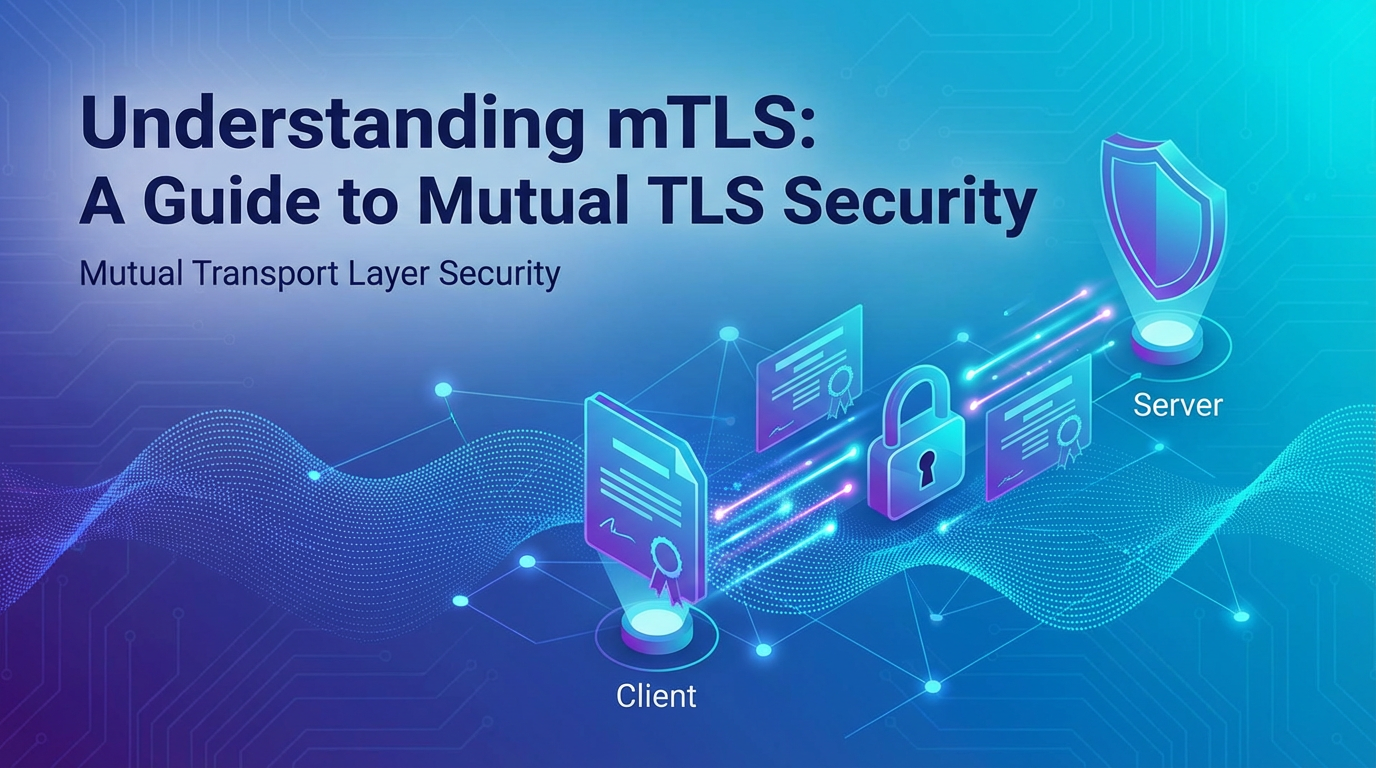


In an increasingly interconnected digital landscape, where data traverses vast networks and sensitive information is routinely exchanged between disparate systems, the need for robust security mechanisms has never been more paramount. The advent of cloud computing, microservices architectures, and the proliferation of APIs have introduced new complexities and expanded the attack surface for malicious actors. While Transport Layer Security (TLS) has long served as the cornerstone for securing internet communications, providing encryption and server authentication, a more advanced form of security — Mutual TLS (mTLS) — is rapidly gaining prominence. This comprehensive guide delves into the intricacies of mTLS, exploring its fundamental principles, operational mechanics, deployment considerations, and its crucial role in establishing impenetrable communication channels, especially within modern distributed systems and Zero Trust environments.
The Foundation: A Brief Look at Transport Layer Security (TLS)
Before we embark on a deep dive into mTLS, it is essential to understand its progenitor: Transport Layer Security (TLS). TLS, and its predecessor Secure Sockets Layer (SSL), are cryptographic protocols designed to provide communication security over a computer network. When you browse a website using HTTPS, you are leveraging TLS to secure the connection between your browser (client) and the web server. The primary objectives of TLS are threefold: authentication, confidentiality, and integrity.
Authentication, in the context of standard TLS, primarily focuses on verifying the identity of the server to the client. When a client connects to a server, the server presents a digital certificate. This certificate, issued by a trusted Certificate Authority (CA), contains the server's public key and details identifying the server. The client then validates this certificate by checking its expiry date, the issuer's signature, and ensuring the hostname matches. This process assures the client that it is indeed communicating with the legitimate server and not an impostor. Confidentiality is achieved through encryption, ensuring that all data exchanged between the client and server remains private and unreadable to anyone intercepting the communication. This encryption is typically established using symmetric encryption algorithms, with the session key securely exchanged during the TLS handshake using asymmetric cryptography. Finally, integrity is maintained by cryptographic checksums, which detect any tampering or alteration of the data during transmission. If even a single bit of data is modified, the integrity check will fail, alerting the communicating parties to a potential attack.
While standard TLS is remarkably effective at securing web traffic and many other forms of client-server communication, it operates on a model where only the server's identity is explicitly verified. The client typically proves its identity through application-level mechanisms, such as usernames and passwords, API keys, or OAuth tokens. This one-way authentication model is sufficient for many public-facing services where clients are often unknown or untrusted entities browsing a website. However, in scenarios demanding higher assurance of identity, particularly when dealing with critical internal services, B2B integrations, or microservices within a confined network, the limitations of one-way TLS become apparent. It is precisely these limitations that mTLS seeks to address, elevating the standard of security by introducing mutual verification of identities.
Unveiling Mutual TLS (mTLS): A Paradigm Shift in Authentication
Mutual TLS, or mTLS, extends the foundational security principles of standard TLS by introducing a critical second layer of authentication: the client also authenticates itself to the server. Unlike the conventional one-way TLS where only the server presents a certificate for verification, mTLS requires both the client and the server to present and validate each other's digital certificates. This bilateral authentication mechanism creates a significantly more robust and trustworthy communication channel, transforming the interaction from a unidirectional trust model into a bidirectional, zero-trust-aligned exchange.
The core distinction lies in the TLS handshake process. In a standard TLS handshake, after the server presents its certificate and the client verifies it, the handshake proceeds to key exchange and session encryption. With mTLS, an additional step is introduced: the server, upon successfully authenticating itself to the client, requests a certificate from the client. The client then responds by presenting its own digital certificate, which the server subsequently validates using its trust store (a collection of trusted Certificate Authority certificates). Only if both parties successfully authenticate each other's certificates is the secure connection fully established and data exchange permitted. This means that a client cannot simply connect and rely on application-level credentials; it must first possess a valid, server-trusted client certificate.
This symmetrical authentication process is a game-changer for environments where the identity of every communicating entity, whether human user, service, or device, must be unequivocally established. It moves beyond the perimeter-based security models of the past, where trust was often implicitly granted to entities operating within a supposedly secure internal network. In contrast, mTLS embodies the principles of a Zero Trust architecture, asserting that no entity, internal or external, should be trusted by default. Every request must be authenticated and authorized, regardless of its origin. This makes mTLS an indispensable tool for securing sensitive internal APIs, safeguarding communications between microservices, protecting IoT devices, and ensuring the integrity of critical B2B integrations where both parties need absolute assurance of the other's identity before exchanging sensitive data.
The implications of this mutual verification are profound. It significantly reduces the risk of impersonation attacks, prevents unauthorized access to services even if network perimeters are breached, and provides a cryptographically strong identity for every connection. By tightly coupling identity with the network session itself, mTLS elevates the security posture of any distributed system, making it a preferred choice for organizations aiming for the highest levels of data protection and compliance.
The Indispensable Role of mTLS: Why It's Crucial in Today's Digital Landscape
In an era defined by distributed systems, ephemeral workloads, and ubiquitous connectivity, the "why" behind adopting advanced security measures like mTLS becomes increasingly compelling. Its importance stems from its ability to address critical security gaps that conventional security models often leave exposed, especially in environments characterized by dynamic interactions and granular access requirements.
One of the foremost reasons mTLS is crucial is its foundational role in establishing a Zero Trust architecture. The Zero Trust model mandates that no user, device, or application should be trusted by default, regardless of whether they are inside or outside the organizational network. Every access attempt must be authenticated and authorized. mTLS directly contributes to this by providing strong, cryptographic verification of both client and server identities at the network layer. This means that even if an attacker manages to penetrate the network perimeter, they would still be unable to establish communication with mTLS-protected services without possessing a valid client certificate issued by a trusted CA. This dramatically shrinks the implicit trust zone and forces explicit verification for every interaction.
The proliferation of microservices architectures has further amplified the need for mTLS. In a microservices environment, applications are broken down into numerous smaller, independently deployable services that communicate with each other over the network. Securing these inter-service communications is critical. While network segmentation and firewalls offer some protection, they are often insufficient given the dynamic nature and volume of traffic between services. mTLS ensures that each microservice, acting as both a client and a server, can authenticate the identity of the other service it's communicating with. This prevents unauthorized services from impersonating legitimate ones and accessing sensitive data or functionalities. It provides a robust, cryptographically enforced service identity that is far more resilient than IP-based access controls. For example, in a complex API gateway ecosystem, an API call flowing from an external client through the gateway to a backend microservice can be protected by mTLS at multiple hops, ensuring end-to-end identity verification.
Furthermore, mTLS is a powerful deterrent against API security threats. APIs are the connective tissue of modern applications, facilitating data exchange between internal systems, partner applications, and external client applications. Protecting these APIs from unauthorized access, data breaches, and injection attacks is paramount. While API gateways typically enforce authentication through API keys, OAuth tokens, or JWTs, these mechanisms are often applied at the application layer. mTLS adds an additional, lower-level layer of authentication. By requiring client certificates for API access, mTLS ensures that only clients with cryptographically verified identities can even initiate a connection to the API gateway or the backend services it protects. This significantly hardens the API endpoints against unauthenticated access attempts and brute-force attacks on application-level credentials.
IoT device security is another critical domain where mTLS offers unparalleled advantages. With billions of connected devices, from smart sensors to industrial machinery, each potentially acting as a data source or control point, securing their communications is a monumental challenge. Many IoT devices have limited computing resources, making complex application-level security protocols difficult to implement or manage. mTLS provides a lightweight yet strong mechanism for devices to authenticate themselves to central servers and vice versa. Each device can be provisioned with a unique client certificate, ensuring that only authenticated devices can transmit data or receive commands, thereby preventing device spoofing and unauthorized control.
Finally, mTLS plays a significant role in regulatory compliance and industry best practices. For industries dealing with highly sensitive data, such as finance (e.g., PSD2 regulations), healthcare (e.g., HIPAA), and government, demonstrating stringent control over data access and communication security is often a regulatory requirement. mTLS provides an auditable, cryptographically strong method of proving identity for network connections, aiding organizations in meeting these compliance mandates and enhancing their overall security posture in a transparent and verifiable manner. The robust identity verification provided by mTLS helps build confidence and trust in multi-party communication systems, underpinning the integrity and confidentiality of critical data exchanges across diverse operational landscapes.
Deconstructing the mTLS Handshake: How It Works
The magic of mTLS unfolds during the TLS handshake, a meticulously choreographed sequence of messages exchanged between the client and the server. This process, while seemingly complex, is designed to establish a secure and mutually authenticated communication channel. Understanding each step is crucial for appreciating the robustness of mTLS.
Let's walk through the mTLS handshake process in detail:
- ClientHello: The handshake begins when the client initiates the connection by sending a "ClientHello" message to the server. This message contains essential information, including the highest TLS protocol version supported by the client, a random byte string (Client Random) that will be used later in key generation, a list of cryptographic cipher suites the client supports (combinations of encryption, hashing, and key exchange algorithms), and compression methods.
- ServerHello: Upon receiving the ClientHello, the server responds with a "ServerHello" message. In this message, the server selects the highest TLS protocol version common to both parties, chooses a cipher suite from the client's list that it also supports, generates its own random byte string (Server Random), and may provide a session ID if resuming an existing session.
- Server Certificate, ServerKeyExchange, CertificateRequest (Crucial for mTLS): This is where mTLS diverges significantly from one-way TLS.
- Server Certificate: The server sends its digital certificate to the client. This certificate contains the server's public key, its identity, and is signed by a trusted Certificate Authority (CA).
- ServerKeyExchange (Optional): If the chosen cipher suite requires additional parameters for key exchange (e.g., Diffie-Hellman parameters), the server sends a "ServerKeyExchange" message.
- CertificateRequest: This is the defining message for mTLS. The server sends a "CertificateRequest" message to the client. This message indicates to the client that the server requires client authentication. It also specifies the types of client certificates the server is willing to accept (e.g., RSA, ECDSA) and a list of distinguished names (DNs) of the Certificate Authorities that the server trusts to sign client certificates. This list helps the client select an appropriate certificate from its own store.
- ServerHelloDone: The server sends a "ServerHelloDone" message, indicating it has finished its initial part of the handshake.
- Client Certificate (Client's Response to CertificateRequest): Upon receiving the
CertificateRequest, the client searches its certificate store for a suitable client certificate that matches the types and trusted CAs specified by the server. If a suitable certificate is found, the client sends it to the server in a "Client Certificate" message. If the client does not have a suitable certificate, or is configured not to send one, the connection may be terminated at this point, or the server may decide to proceed without client authentication, depending on its configuration (though this defeats the purpose of mTLS). - ClientKeyExchange: The client then generates a PreMaster Secret. How this is generated depends on the cipher suite chosen. For example, if RSA is used, the client encrypts the PreMaster Secret using the server's public key (obtained from the server's certificate). If Diffie-Hellman is used, the client performs its part of the Diffie-Hellman key exchange. This encrypted PreMaster Secret (or DH parameters) is sent to the server in the "ClientKeyExchange" message.
- CertificateVerify (Crucial for mTLS): This is the counterpart to the server's
CertificateRequestand a critical step for client authentication. The client creates a digital signature over a hash of all the previous handshake messages using its private key (associated with the client certificate it just sent). This signature is sent in the "CertificateVerify" message. This proves to the server that the client indeed possesses the private key corresponding to the public key in the client certificate it presented, thereby authenticating the client's identity. - ChangeCipherSpec (Client): The client sends a "ChangeCipherSpec" message, informing the server that all subsequent messages will be encrypted using the negotiated keys and algorithms.
- Finished (Client): The client sends an encrypted "Finished" message, which is a hash of all handshake messages exchanged so far. This message is the first to be encrypted with the newly established symmetric key, serving as a test for the successful key exchange and cipher suite negotiation.
- ChangeCipherSpec (Server): The server, having received and verified the client's certificate and signature, and successfully decrypted the PreMaster Secret, computes the same symmetric keys. It then sends its own "ChangeCipherSpec" message.
- Finished (Server): Finally, the server sends its encrypted "Finished" message, confirming that it too can decrypt and encrypt messages with the new keys.
At this point, if all steps are successful and both client and server have validated each other's certificates and signatures, a mutually authenticated and encrypted TLS session is established. Both parties are now assured of each other's identity and can proceed to exchange application data with confidence in its confidentiality and integrity. Any failure in certificate validation, key exchange, or signature verification at any stage will result in the immediate termination of the connection, preventing unauthorized or unauthenticated communication.
This detailed handshake process underscores the cryptographic rigor inherent in mTLS, making it an exceptionally secure foundation for trust in distributed systems.
The Pillars of mTLS: Key Components and Their Roles
For mTLS to function effectively, several interconnected components must work in harmony, each playing a critical role in establishing and maintaining trust. These components form the backbone of the Public Key Infrastructure (PKI) that underpins mTLS. Understanding each element is vital for proper implementation and management of an mTLS system.
1. Digital Certificates (X.509)
At the heart of mTLS are digital certificates, specifically X.509 certificates. These are digital documents that bind a public key to an identity, such as a server's hostname, an organization, or an individual client. In mTLS, both the client and the server possess their own unique X.509 certificates.
- Server Certificates: These are standard TLS certificates that identify the server. They contain the server's public key, its domain name (Common Name or Subject Alternative Name), the issuer's name (the Certificate Authority that signed it), validity periods, and other identifying information. When a client connects, it receives the server's certificate and uses it to verify the server's identity and encrypt the session keys.
- Client Certificates: These are conceptually similar to server certificates but identify the client. They contain the client's public key, client identity (e.g., a user ID, service name, device ID), and are also signed by a trusted CA. When the server requests client authentication, the client presents this certificate. The server then uses the client's public key (extracted from the certificate) to verify the client's
CertificateVerifymessage (the digital signature).
Both types of certificates are essential for the mutual authentication process, ensuring that each party can cryptographically prove its identity to the other. The content within these certificates, particularly the Subject and Subject Alternative Name fields, is crucial for identification and policy enforcement. For instance, an API gateway might use the Subject DN of a client certificate to determine which APIs the client is authorized to access.
2. Private Keys
Every digital certificate has an associated private key. This private key is a secret cryptographic component that must be kept confidential by its owner. It is mathematically linked to the public key embedded in the certificate.
- Server's Private Key: The server uses its private key to decrypt the PreMaster Secret sent by the client (if RSA is used for key exchange) and to digitally sign its own messages during the handshake, proving its ownership of the public key in its certificate.
- Client's Private Key: The client uses its private key to digitally sign the
CertificateVerifymessage during the handshake. This signature proves to the server that the client indeed owns the public key presented in its client certificate, thereby authenticating the client.
The security of the private keys is paramount. If a private key is compromised, an attacker could potentially impersonate the legitimate owner, undermining the entire mTLS security model. Therefore, private keys are typically protected with strong access controls, encryption, and often stored in hardware security modules (HSMs) or secure enclaves.
3. Certificate Authorities (CAs) and Public Key Infrastructure (PKI)
Certificate Authorities (CAs) are trusted third-party entities responsible for issuing and managing digital certificates. They are the bedrock of trust in any PKI. In an mTLS setup, CAs are critical for verifying the legitimacy of both server and client certificates.
- Root CA: This is the ultimate trust anchor. A root CA certificate is self-signed and distributed widely (e.g., pre-installed in operating systems, browsers, or explicitly configured in applications). Its public key is used to verify the authenticity of certificates issued by intermediate CAs.
- Intermediate CA: To minimize the risk associated with a compromised root CA, most organizations use intermediate CAs to issue end-entity certificates (server and client certificates). The intermediate CA's certificate is signed by the root CA, forming a "chain of trust." This allows the root CA's private key to be kept offline and highly secure.
When a server or client presents a certificate, the receiving party validates the entire certificate chain, tracing it back to a trusted root CA in its trust store. If any part of the chain is invalid, or if the root CA is not trusted, the certificate is rejected, and the connection is not established. This hierarchical structure of CAs ensures scalability and manageability of trust relationships in large-scale deployments.
4. Certificate Revocation Lists (CRLs) and Online Certificate Status Protocol (OCSP)
Certificates have a validity period, but sometimes they need to be invalidated before their expiry date. This can happen if a private key is compromised, an employee leaves the organization, or a device is decommissioned. Mechanisms are needed to notify parties that a certificate is no longer trustworthy.
- Certificate Revocation Lists (CRLs): A CRL is a list of certificates that have been revoked by a CA before their scheduled expiration date. CAs periodically publish these lists, and relying parties can download and check them to ensure a presented certificate has not been revoked. However, CRLs can be large and might not always be up-to-date, leading to potential latency or stale information.
- Online Certificate Status Protocol (OCSP): OCSP provides a more real-time mechanism for checking certificate status. Instead of downloading a large list, a relying party sends a query to an OCSP responder (a server run by the CA) asking about the status of a specific certificate. The OCSP responder returns a signed response indicating whether the certificate is "good," "revoked," or "unknown." OCSP is generally preferred over CRLs for its timeliness and efficiency, especially in high-volume, performance-sensitive environments.
Both CRLs and OCSP are vital for maintaining the integrity of the PKI and ensuring that compromised or invalid certificates cannot be used to establish trust. Incorporating these checks into the mTLS handshake process adds another critical layer of security, safeguarding against the use of rogue certificates. The robust combination of these components creates a resilient and verifiable trust model, making mTLS a powerful tool for securing modern communication.
APIPark is a high-performance AI gateway that allows you to securely access the most comprehensive LLM APIs globally on the APIPark platform, including OpenAI, Anthropic, Mistral, Llama2, Google Gemini, and more.Try APIPark now! 👇👇👇
Architecting mTLS: Practical Implementation Steps
Implementing mTLS requires careful planning and execution, particularly concerning certificate management and server configuration. The process generally involves establishing a Certificate Authority, generating certificates, and then configuring both the client and server applications to utilize these certificates for mutual authentication.
1. Setting Up Your Certificate Authority (CA)
For internal mTLS deployments, it's common and often recommended to establish your own Private Certificate Authority. This gives you full control over the certificate issuance process and doesn't require reliance on external public CAs for internal trust.
- Choosing a CA Solution: You can use open-source tools like OpenSSL for simple, script-based CA management, or more sophisticated solutions like Vault's PKI secrets engine, Smallstep CA, or even cloud-managed PKI services like AWS Private CA for larger, enterprise-grade deployments.
- Creating the Root CA:
- Generate a private key for your Root CA. This key must be kept extremely secure, ideally offline, as its compromise would invalidate all certificates issued by it.
- Generate a self-signed Root CA certificate using its private key. This certificate is the ultimate trust anchor.
- Creating an Intermediate CA (Best Practice):
- Generate a private key for your Intermediate CA.
- Create a Certificate Signing Request (CSR) for the Intermediate CA.
- Use the Root CA's private key to sign the Intermediate CA's CSR, issuing an Intermediate CA certificate. This intermediate certificate should have a shorter validity period than the Root CA.
- The Intermediate CA will then be used to sign all your server and client certificates, allowing the Root CA to remain offline and untouched, significantly reducing the risk profile.
2. Generating Server Certificates
Each server or service that needs to be mutually authenticated will require its own server certificate.
- Generate Server Private Key: On the server itself (or a secure machine designated for key generation), generate a unique private key for the server.
- Create Server CSR: Use the server's private key to generate a Certificate Signing Request (CSR). The CSR contains the server's public key and identifying information, such as the Fully Qualified Domain Name (FQDN) in the Common Name (CN) or Subject Alternative Name (SAN) fields. The SAN is highly recommended for modern applications, supporting multiple hostnames or IP addresses.
- Sign Server CSR with CA: Submit the server's CSR to your Intermediate CA. The Intermediate CA will use its private key to sign the CSR, issuing the server's digital certificate. This certificate, along with the Intermediate CA certificate and the Root CA certificate (forming the certificate chain), will be presented by the server to clients.
3. Generating Client Certificates
Similarly, every client (e.g., a user, another service, a device) that needs to be mutually authenticated will require a unique client certificate.
- Generate Client Private Key: On the client machine or for the client application, generate a unique private key.
- Create Client CSR: Use the client's private key to generate a CSR. For client certificates, the identifying information in the CN or SAN fields might be a user ID, a service account name, or a unique device ID. This identity will be used by the server for authorization decisions.
- Sign Client CSR with CA: Submit the client's CSR to your Intermediate CA for signing. The Intermediate CA will issue the client's digital certificate. The client will then possess its private key and the issued client certificate.
4. Configuring Servers for mTLS
Server-side configuration involves telling the server to: a. Present its own server certificate and private key. b. Request a client certificate from connecting clients. c. Trust client certificates issued by your CA.
The exact configuration steps vary depending on the server software. Here are examples for common server types:
- Apache HTTP Server:
apache <VirtualHost *:443> ServerName myapi.example.com SSLEngine on SSLCertificateFile "/techblog/en/etc/apache2/certs/server.crt" SSLCertificateKeyFile "/techblog/en/etc/apache2/certs/server.key" SSLCACertificateFile "/techblog/en/etc/apache2/certs/ca-chain.crt" # CA certs for client validation SSLVerifyClient require # Require client certificate SSLVerifyDepth 2 </VirtualHost> - Application Servers (e.g., Java with Spring Boot, Node.js with Express): Many frameworks provide mechanisms to configure mTLS directly within the application, especially for internal service-to-service communication. This often involves loading the server's certificate and key, and specifying the trusted CA certificates for client authentication. The application can then access client certificate details (e.g., CN) for authorization.
Nginx: ```nginx server { listen 443 ssl; server_name myapi.example.com;
ssl_certificate /etc/nginx/certs/server.crt;       # Server's certificate
ssl_certificate_key /etc/nginx/certs/server.key;   # Server's private key

ssl_client_certificate /etc/nginx/certs/ca-chain.crt; # CA certificate(s) to trust for client validation
ssl_verify_client on;                                 # Enable mTLS: require client certificate
ssl_verify_depth 2;                                   # Max depth for client cert chain

location / {
    # Proxy requests or serve content
}
} `` Theca-chain.crt` should contain your Root CA certificate and any Intermediate CA certificates concatenated.
5. Configuring Clients for mTLS
Client-side configuration involves telling the client to: a. Present its own client certificate and private key. b. Trust the server's certificate (by trusting the server's CA).
curl(for testing):bash curl --cacert /path/to/ca-chain.crt \ --cert /path/to/client.crt \ --key /path/to/client.key \ https://myapi.example.com/data--cacert: The CA certificate(s) that signed the server's certificate.--cert: The client's certificate.--key: The client's private key.
- Programming Languages/Libraries:
- Python (requests library): ```python import requestsresponse = requests.get( "https://myapi.example.com/data", cert=('/path/to/client.crt', '/path/to/client.key'), verify='/path/to/ca-chain.crt' ) print(response.text)
* **Node.js (https module):**javascript const https = require('https'); const fs = require('fs');const options = { key: fs.readFileSync('/path/to/client.key'), cert: fs.readFileSync('/path/to/client.crt'), ca: fs.readFileSync('/path/to/ca-chain.crt') // CA that signed server's cert };https.get('https://myapi.example.com/data', options, (res) => { // ... handle response }).on('error', (e) => { console.error(e); }); ```
- Python (requests library): ```python import requestsresponse = requests.get( "https://myapi.example.com/data", cert=('/path/to/client.crt', '/path/to/client.key'), verify='/path/to/ca-chain.crt' ) print(response.text)
By following these detailed steps, organizations can establish a robust mTLS framework that ensures strong identity verification for all communications, laying a solid foundation for secure distributed systems. This process, while requiring initial effort, yields significant long-term security benefits by encrypting communications and authenticating every participating entity at the network layer.
mTLS in Modern Architectures: Powering Zero Trust and Beyond
The modern software landscape is characterized by distributed systems, ephemeral workloads, and complex inter-service communication patterns. In this environment, mTLS moves beyond being merely a security enhancement to become a fundamental building block for resilient and secure architectures. It plays a pivotal role in enabling Zero Trust principles, securing microservices, and acting as a critical control point within API gateways.
Microservices and Service Mesh Architectures
The shift from monolithic applications to microservices has brought immense benefits in terms of scalability, agility, and independent deployment. However, it also introduces a significant security challenge: securing the myriad of communications between hundreds or even thousands of services. Each service, potentially running on a different host or container, becomes a potential entry point for attackers if not properly secured.
This is where mTLS truly shines. In a microservices architecture, every service acts as both a client (when calling another service) and a server (when being called by another service). Implementing mTLS for every inter-service call ensures that:
- Strong Service Identity: Each service cryptographically authenticates the identity of the service it's communicating with. This prevents impersonation and ensures that only legitimate services can interact.
- Encrypted Communications: All traffic between services is encrypted, protecting sensitive data from eavesdropping even within the internal network.
- Network-Level Authorization: Authorization decisions can be made based on the authenticated identity derived from the client certificate's subject (e.g., "service A is allowed to call service B").
The management of mTLS across a large number of microservices can be complex, involving certificate issuance, rotation, and revocation for each service instance. This challenge is precisely what Service Meshes (e.g., Istio, Linkerd, Consul Connect) are designed to address. A service mesh provides a dedicated infrastructure layer for managing service-to-service communication. It typically deploys a proxy (often an Envoy proxy) alongside each service instance. These proxies, transparently to the application code, handle all incoming and outgoing network traffic.
Within a service mesh, mTLS is often enabled by default or with minimal configuration. The mesh's control plane manages the entire lifecycle of certificates for all services: * It provisions unique identity certificates for each service instance. * It handles the automatic rotation of these certificates, minimizing the operational burden and reducing the risk of expired certificates. * It enforces mTLS for all inter-service communication, often transparently, offloading the cryptographic work from the application code.
This centralized management of mTLS by the service mesh simplifies operations, enhances security, and ensures consistent application of security policies across the entire microservices ecosystem. It allows developers to focus on business logic, confident that the underlying communication fabric is robustly secured.
API Gateways and mTLS: A Critical Control Point
An API gateway acts as a single entry point for all client requests into a backend system, often routing traffic to various microservices or legacy applications. It serves as a central hub for concerns like routing, load balancing, rate limiting, authentication, and authorization. In this pivotal role, the API gateway becomes an ideal place to enforce mTLS.
When an external client, partner application, or internal client makes an API call, the API gateway can be configured to require a client certificate using mTLS. This establishes a strong, cryptographically verified identity for the calling API client before any application-level authentication (like API keys or OAuth tokens) is even processed.
Here's how mTLS enhances API gateway security:
- First Line of Defense: mTLS provides an initial, robust layer of authentication. Only clients possessing a valid, trusted client certificate can even establish a secure connection to the gateway. This filters out a significant portion of unauthorized access attempts at the network layer, preventing them from consuming gateway resources or attempting application-level attacks.
- Enhanced Client Identity: The identity encoded in the client certificate (e.g., organization name, client application ID) can be extracted by the API gateway and used for fine-grained authorization policies. This complements or even replaces less secure methods like simple API keys, especially for B2B integrations or internal service access.
- Zero Trust Enforcement: By requiring mTLS for incoming API calls, the gateway enforces Zero Trust principles at the perimeter of the backend services. No API client is inherently trusted; every connection must prove its identity.
- Internal mTLS for Backend Communication: Beyond authenticating incoming client requests, API gateways can also use mTLS to secure their communication with backend services. This creates an end-to-end mTLS chain, ensuring that even traffic originating from the trusted gateway is mutually authenticated with the target microservice, further strengthening the security posture. This is particularly relevant in complex environments where the API gateway itself might be part of a service mesh.
For organizations managing a large number of APIs, a robust API gateway is indispensable. Platforms like APIPark offer comprehensive API lifecycle management, including robust security features that can complement and enhance mTLS implementations, ensuring that only authenticated and authorized entities can access valuable API resources. By integrating mTLS, APIPark and similar API gateway solutions can provide an even higher degree of assurance for both external and internal API interactions, making them critical components in a multi-layered security strategy.
Zero Trust Architectures and Beyond
Beyond microservices and API gateways, mTLS is a cornerstone of broader Zero Trust architectures. It extends the principle of "never trust, always verify" to the network layer, ensuring that every connection, regardless of its origin, is mutually authenticated and encrypted. This is crucial for:
- Securing Data in Transit: All data exchanges are encrypted, protecting sensitive information from interception and tampering.
- Identity-Based Access: Access decisions are based on strong cryptographic identities rather than network location or IP addresses, which are easily spoofed.
- Defense in Depth: Even if other security controls fail, mTLS provides a robust barrier against unauthorized communication, acting as a critical layer in a multi-layered security strategy.
- IoT and Edge Computing: For vast networks of IoT devices and edge computing nodes, mTLS provides a lightweight yet powerful way to authenticate devices and secure their data streams to central platforms, preventing device spoofing and ensuring data integrity from the source.
In essence, mTLS provides the cryptographic glue that binds identities to network sessions, enabling a verifiable and trustworthy communication fabric across diverse and dynamic modern architectures. Its integration into service meshes, API gateways, and overall Zero Trust strategies makes it an indispensable technology for securing the digital infrastructure of today and tomorrow.
Navigating the mTLS Landscape: Challenges and Best Practices
While mTLS offers unparalleled security benefits, its implementation and ongoing management come with their own set of challenges. Organizations must be prepared to address these complexities to fully harness the power of mTLS without introducing new operational burdens or security vulnerabilities. By adhering to best practices, these challenges can be effectively mitigated.
Challenges of mTLS Implementation and Management
- Certificate Management Overhead:
- Issuance: Generating and issuing unique client and server certificates for every service, device, or user can be a labor-intensive process, especially in large-scale deployments.
- Rotation: Certificates have a finite lifespan. Regular rotation (e.g., every 90 days) is crucial to minimize the impact of potential key compromises, but it adds significant operational overhead. Automated systems are essential.
- Revocation: When a private key is compromised, a service is decommissioned, or an employee leaves, the associated certificate must be immediately revoked. Ensuring timely and effective revocation across all relying parties can be complex, especially with CRLs, which might not be frequently updated.
- Distribution: Securely distributing private keys and certificates to clients and services without compromising their secrecy is a non-trivial task.
- Increased Operational Complexity:
- Configuration: Configuring mTLS correctly on various client and server software (web servers, application servers, proxies, client libraries) requires deep technical understanding and can be error-prone. Misconfigurations can lead to connectivity issues or security gaps.
- Troubleshooting: Diagnosing mTLS connection failures can be challenging. Issues can stem from expired certificates, incorrect CA trust stores, mismatched cipher suites, or firewall rules blocking certificate revocation checks.
- Key Storage: Securely storing private keys, especially for client applications or IoT devices, requires robust mechanisms like hardware security modules (HSMs) or secure enclaves, which add cost and complexity.
- Performance Considerations:
- CPU Overhead: The cryptographic operations involved in the mTLS handshake (certificate validation, signature verification, key exchange) are CPU-intensive. While modern hardware can handle this efficiently, in very high-throughput, low-latency environments, the overhead can be a factor.
- Latency: The additional messages exchanged during the mTLS handshake add a small amount of latency to connection establishment. For short-lived connections, this cumulative latency can be noticeable. However, for long-lived connections, the initial overhead is amortized.
- Integration with Existing Systems:
- Integrating mTLS into existing legacy systems that may not have native mTLS support can be difficult, often requiring the use of sidecar proxies or API gateways to terminate and re-establish mTLS connections.
Best Practices for Effective mTLS Implementation
- Automate Certificate Lifecycle Management:
- Automated PKI Solutions: Invest in automated PKI solutions (e.g., HashiCorp Vault's PKI secrets engine, cloud-managed PKI services, or robust service mesh certificate management systems) that can programmatically issue, rotate, and revoke certificates. This drastically reduces manual effort and human error.
- Short-Lived Certificates: Issue certificates with short validity periods (e.g., 24 hours to 90 days) when automation is in place. Shorter lifespans limit the window of exposure for compromised certificates and incentivize automation.
- Establish a Robust Private CA Hierarchy:
- Offline Root CA: Keep your Root CA completely offline and use it solely to sign one or more Intermediate CAs.
- Separate Intermediate CAs: Consider having separate Intermediate CAs for different environments (e.g., production, staging) or different types of entities (e.g., servers, clients, IoT devices) to limit the blast radius in case of compromise.
- Secure CA Operations: Ensure stringent access controls and audit logging for all CA operations.
- Implement Effective Certificate Revocation Strategies:
- OCSP Stapling/Responders: Prioritize OCSP for real-time certificate status checks. Configure servers to "staple" OCSP responses to their certificates (OCSP stapling) to improve client performance by eliminating the need for clients to query OCSP responders directly.
- Automated Revocation: Integrate certificate revocation into your automated incident response and identity management workflows.
- Leverage Service Meshes and API Gateways:
- Service Mesh for Internal mTLS: For microservices environments, a service mesh provides an elegant and transparent way to implement, manage, and enforce mTLS for inter-service communication, abstracting away much of the complexity from application developers.
- API Gateway for External mTLS: Utilize API gateways as a central enforcement point for mTLS for incoming client API requests. The gateway can handle certificate validation, allowing backend services to trust traffic originating from the gateway, or even re-establish mTLS connections to backend services. This is where products like APIPark can provide significant value by centralizing management and security policies for all API traffic.
- Careful Private Key Management:
- Hardware Security Modules (HSMs): For critical servers and CAs, store private keys in hardware security modules (HSMs) for enhanced protection against extraction and tampering.
- Secure Storage: For other components, use encrypted file systems, secure environment variables, or secret management services (e.g., HashiCorp Vault, AWS Secrets Manager) to protect private keys.
- Access Control: Implement strict access controls (least privilege) over private key files and secret management systems.
- Granular Authorization with Client Certificates:
- Extract Attributes: Configure your servers or API gateways to extract relevant attributes from client certificates (e.g., Common Name, Organizational Unit, Subject Alternative Name) and use them for fine-grained authorization decisions, complementing or replacing application-level authorization tokens.
- Policy Enforcement: Integrate certificate attribute extraction with your policy enforcement points (e.g., authorization proxies, application logic).
- Comprehensive Monitoring and Logging:
- TLS Handshake Logs: Monitor TLS handshake logs for connection failures, certificate validation errors, and revocation check issues. This provides crucial visibility into potential security problems or misconfigurations.
- Certificate Expiry Alerts: Set up automated alerts for impending certificate expirations to prevent service outages.
By proactively addressing these challenges with robust automated processes, strategic architectural choices (like service meshes and API gateways), and diligent operational practices, organizations can effectively leverage mTLS to build highly secure and resilient communication infrastructures, aligning with the highest standards of Zero Trust security.
Security Benefits and Strategic Considerations
The adoption of mTLS is not merely a technical implementation detail; it represents a strategic shift towards a stronger security posture with far-reaching benefits across an organization's digital ecosystem. By embedding robust authentication at the network layer, mTLS addresses fundamental security requirements and aligns with critical industry trends.
Enhanced Authentication and Trust Verification
The most direct and significant benefit of mTLS is the enhanced authentication it provides. By requiring both parties to present and validate cryptographic identities, mTLS establishes a level of trust that is inherently stronger than one-way authentication mechanisms. This mutual verification ensures that:
- No Impersonation: An attacker cannot simply spoof an IP address or steal application-level credentials to impersonate a legitimate client or server. They would need access to the legitimate entity's private key and valid certificate, a far more challenging feat.
- Cryptographically Bound Identity: The identity of each communicating entity is tied to a unique cryptographic key pair. This provides a high assurance of identity that is difficult to forge or compromise, making it foundational for environments where every connection needs explicit verification.
This capability is particularly vital for confidential B2B integrations, critical internal services, and interactions with sensitive devices, where the integrity and source of every message must be beyond doubt.
Defense Against Advanced Threats
mTLS offers robust defense against a spectrum of modern cyber threats:
- Man-in-the-Middle (MITM) Attacks: Since both client and server authenticate each other, it becomes exceedingly difficult for an attacker to successfully inject themselves between the two parties and relay messages. Any attempt to present an untrusted certificate or to tamper with the cryptographic handshake will result in connection termination.
- Unauthorized Access and Data Breaches: By denying access to any client without a valid, trusted certificate, mTLS acts as a strong barrier against unauthorized access attempts, even if an attacker bypasses other perimeter defenses. This significantly reduces the risk of data breaches originating from compromised credentials or unauthenticated access.
- Insider Threats: In internal networks, mTLS helps mitigate insider threats by ensuring that even internal services or users cannot access sensitive resources without proper authentication via their unique client certificates. It enforces the "never trust" principle within the internal perimeter.
Data Integrity and Confidentiality
Like standard TLS, mTLS inherently provides confidentiality through strong encryption and data integrity through cryptographic hashing. All application data exchanged over an mTLS connection is encrypted using robust symmetric ciphers, protecting it from eavesdropping. Moreover, message authentication codes (MACs) ensure that any tampering with the data during transit is immediately detected, preventing malicious alteration. These features are fundamental for protecting sensitive personal data, financial transactions, intellectual property, and critical operational commands from interception or modification.
Alignment with Zero Trust and Compliance
mTLS is a natural fit for Zero Trust security models. By mandating mutual authentication for every connection, it directly supports the Zero Trust tenet of "never trust, always verify." It removes implicit trust based on network location, enforcing explicit identity verification for every interaction. This makes it an indispensable technology for organizations striving to implement a comprehensive Zero Trust strategy.
Furthermore, mTLS aids significantly in achieving regulatory compliance. Many industry regulations and data protection laws (e.g., HIPAA, GDPR, PCI DSS, PSD2) require robust security measures for protecting sensitive data in transit and at rest, along with strong authentication mechanisms. The strong identity verification, encryption, and integrity guarantees provided by mTLS offer clear evidence of an organization's commitment to securing its communications, thereby facilitating compliance and bolstering auditability. For example, financial institutions using APIs for open banking initiatives often leverage mTLS to secure communication between different bank systems and third-party providers, fulfilling stringent regulatory requirements for strong customer authentication and data protection.
Strategic Considerations for Adoption
- Phased Rollout: For large, complex environments, consider a phased rollout of mTLS, starting with the most critical services or specific communication paths. This allows teams to gain experience and refine their processes without disrupting the entire system.
- Interoperability: Be mindful of interoperability challenges, especially when integrating with external partners. Ensure that certificate formats, trusted CAs, and cipher suites are compatible.
- Performance Monitoring: Continuously monitor the performance impact of mTLS, particularly on CPU utilization and latency, and adjust configurations or scale resources as needed. While the overhead is generally low for most applications, it's worth monitoring.
- Cost-Benefit Analysis: While there is an initial investment in setting up and managing a PKI, the long-term security benefits and reduction in risk often far outweigh the operational costs. Conduct a thorough cost-benefit analysis tailored to your organization's specific needs and risk profile.
- Team Training: Ensure that your security, operations, and development teams are adequately trained in mTLS concepts, certificate management, and troubleshooting. A well-informed team is crucial for successful deployment and ongoing maintenance.
In summary, mTLS is more than just an encryption protocol; it's a strategic security enabler that provides strong identity assurance, fortifies defenses against a range of sophisticated attacks, and aligns perfectly with modern security paradigms like Zero Trust. Its comprehensive benefits, coupled with careful planning and best practices, make it an essential component of any resilient and secure digital infrastructure.
Conclusion: Securing the Digital Frontier with mTLS
In a world where digital interactions define the pace of business and personal life, the integrity and security of these interactions are paramount. As architectures evolve towards highly distributed, interconnected services and the attack surface continues to expand, relying solely on traditional perimeter-based security or one-way authentication is no longer sufficient. Mutual TLS (mTLS) emerges not just as an advanced security feature, but as an indispensable component of any robust, forward-looking security strategy.
This comprehensive guide has traversed the landscape of mTLS, from its foundational principles rooted in TLS to its intricate handshake mechanics, crucial underlying components, practical implementation steps, and its pivotal role in modern architectures. We have seen how mTLS transforms communication channels by establishing bilateral trust, ensuring that both client and server cryptographically verify each other's identities before any data is exchanged. This mutual authentication is a game-changer, acting as a powerful deterrent against impersonation, unauthorized access, and Man-in-the-Middle attacks.
The deep dive into how mTLS functions within microservices, orchestrated by service meshes, highlighted its ability to provide strong service identity and encrypted inter-service communication at scale. Furthermore, the role of mTLS at the API gateway level underscores its strategic importance as a critical control point, safeguarding valuable API resources by enforcing strong client authentication right at the entry point of your backend systems. Products that offer robust API gateway functionality, such as APIPark, can significantly simplify the integration and management of these advanced security features, streamlining the process of securing all your API traffic.
While the implementation and management of mTLS, particularly concerning certificate lifecycles, present undeniable challenges, these are effectively mitigated through automation, strategic architectural choices, and adherence to established best practices. Investing in automated PKI solutions, leveraging service meshes, and strategically deploying API gateways are not merely technical decisions but strategic investments in resilience and trust.
Ultimately, mTLS empowers organizations to build and operate truly Zero Trust environments, where every connection is explicitly verified, every identity is cryptographically assured, and every piece of data is protected. It moves beyond simply encrypting data to establishing a verifiable chain of trust that underpins the security and integrity of modern digital ecosystems. As we continue to navigate an ever-evolving threat landscape, understanding and effectively deploying mTLS will be crucial for securing the digital frontier and fostering an environment of unwavering confidence in our interconnected world. Embracing mTLS is not just about adopting a new technology; it is about embracing a higher standard of security, one that is essential for protecting sensitive information, maintaining operational integrity, and ensuring trust in the digital age.
Frequently Asked Questions (FAQ)
1. What is the fundamental difference between TLS and mTLS?
The fundamental difference lies in authentication. Standard TLS (Transport Layer Security) performs one-way authentication, where only the server proves its identity to the client using a digital certificate. The client's identity is typically verified at the application layer (e.g., username/password, API keys). mTLS (Mutual TLS), on the other hand, performs two-way or mutual authentication. Both the server and the client present digital certificates and cryptographically verify each other's identities during the TLS handshake. This ensures that both parties are legitimate before establishing a secure communication channel.
2. When should I consider implementing mTLS?
You should consider implementing mTLS in scenarios requiring high assurance of identity for both communicating parties. This includes: * Zero Trust architectures: To enforce "never trust, always verify" for all network connections. * Microservices communication: To secure inter-service communication, preventing unauthorized services from interacting. * API Security: To provide strong authentication for API clients (especially B2B partners or internal services) at the network layer, complementing or replacing application-level API keys. * IoT device security: To authenticate devices connecting to central platforms and prevent device spoofing. * Compliance requirements: For industries with stringent regulatory requirements for strong authentication and data protection (e.g., finance, healthcare). * Protecting sensitive internal systems: To ensure only authorized internal clients or services can access critical resources.
3. What are the main challenges associated with mTLS?
The primary challenges of mTLS revolve around certificate lifecycle management. This includes: * Issuance: Generating and distributing unique certificates for every client and server. * Rotation: Regularly renewing certificates before they expire, which can be a significant operational overhead without automation. * Revocation: Promptly invalidating compromised or decommissioned certificates using CRLs or OCSP. * Operational complexity: Configuring mTLS correctly across diverse client and server platforms, and troubleshooting connection failures. * Key management: Securely storing private keys to prevent compromise. While these challenges exist, they can be effectively mitigated through automation, robust PKI solutions, and leveraging tools like service meshes and API gateways.
4. Does mTLS significantly impact performance?
mTLS does introduce a small amount of additional CPU overhead and latency during the initial TLS handshake compared to one-way TLS, due to the extra cryptographic operations for client certificate validation. However, for most modern hardware and typical application workloads, this impact is often negligible, especially for long-lived connections where the initial overhead is amortized over the session. In high-throughput, low-latency environments, it's prudent to monitor performance and optimize configurations, but the security benefits generally outweigh the minor performance considerations for critical systems.
5. How are client certificates used for authorization in mTLS?
After a client successfully authenticates with mTLS, the server receives and validates the client's digital certificate. The server (or an intermediary like an API gateway or service mesh proxy) can then extract identifying attributes from this certificate, such as the Common Name (CN), Subject Alternative Name (SAN), or Organizational Unit (OU) fields. These extracted attributes represent the cryptographically verified identity of the client. An authorization policy can then be applied based on these attributes. For example, a server might be configured to allow access to a specific API endpoint only if the client certificate's CN matches a pre-approved list of service IDs, effectively enforcing identity-based access control.
🚀You can securely and efficiently call the OpenAI API on APIPark in just two steps:
Step 1: Deploy the APIPark AI gateway in 5 minutes.
APIPark is developed based on Golang, offering strong product performance and low development and maintenance costs. You can deploy APIPark with a single command line.
curl -sSO https://download.apipark.com/install/quick-start.sh; bash quick-start.sh

In my experience, you can see the successful deployment interface within 5 to 10 minutes. Then, you can log in to APIPark using your account.

Step 2: Call the OpenAI API.