Understanding Public API Contract Testing
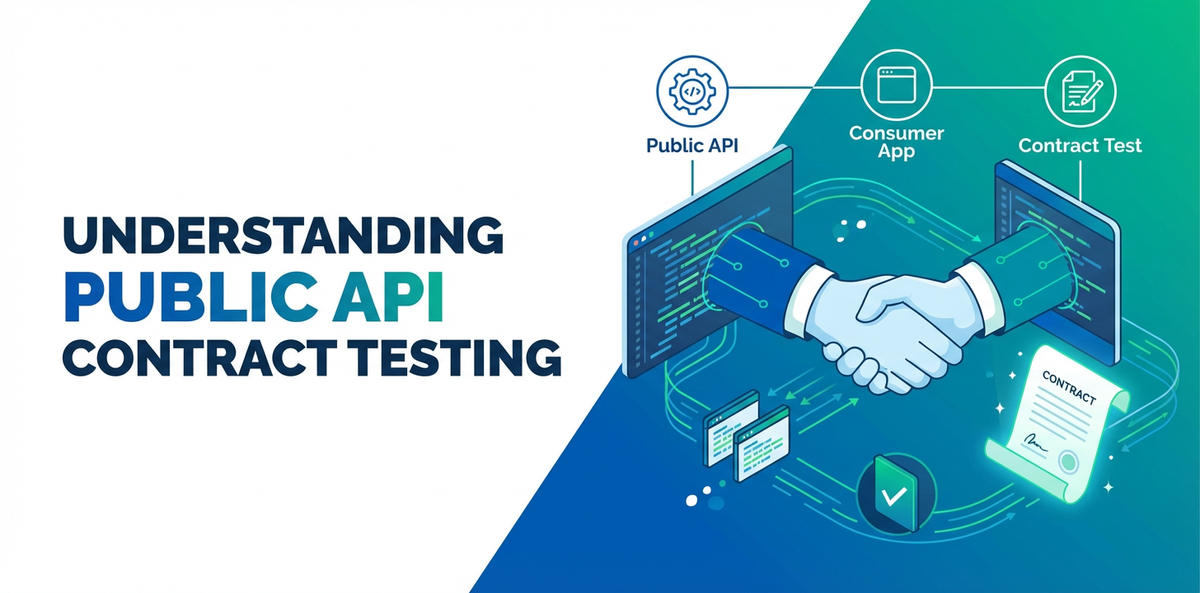


In the intricate tapestry of modern software development, Application Programming Interfaces (APIs) serve as the fundamental threads that weave together disparate systems, enabling seamless communication and unlocking unparalleled innovation. From mobile applications interacting with backend services to vast enterprise ecosystems exchanging critical data, APIs are the lifeblood of the digital economy. Public APIs, in particular, stand as open invitations for collaboration, empowering third-party developers, partners, and even competitors to build upon an organization's core capabilities, thereby extending reach, fostering new business models, and catalyzing community-driven advancements. However, the very nature of their public exposure introduces a unique set of challenges, demanding an unwavering commitment to stability, reliability, and backward compatibility. This is where API contract testing emerges not merely as a beneficial practice, but as an indispensable cornerstone of robust API Governance, ensuring that the promises made by an API provider are consistently delivered to its myriad consumers.
The journey of an API from conception to widespread adoption is fraught with potential pitfalls. A single breaking change, an undocumented alteration in data types, or an unexpected shift in behavior can cascade through an entire ecosystem, crippling dependent applications, eroding consumer trust, and incurring significant remediation costs. For public APIs, where the consumer base can be vast and diverse, the stakes are exceptionally high. The need to prevent such disruptions proactively has spurred the evolution of sophisticated testing methodologies. Among these, API contract testing stands out for its unique focus: verifying that an API adheres precisely to its agreed-upon interface definition – its "contract." This article delves into the profound importance of API contract testing for public interfaces, exploring its mechanisms, its symbiotic relationship with standards like OpenAPI, and its critical role in establishing a resilient and trustworthy API ecosystem, all while underscoring its pivotal position within a comprehensive API Governance framework.
The Expansive Landscape of Public APIs and Their Intrinsic Challenges
Public APIs represent a deliberate strategic choice by organizations to externalize certain functionalities, data, or services, making them accessible to a broader audience beyond their internal boundaries. These interfaces power a vast array of digital experiences, ranging from payment gateways and social media integrations to sophisticated cloud services and government open data initiatives. They act as universal translators, allowing different software components, often developed by independent teams or even entirely separate entities, to understand and interact with each other without needing to know the underlying implementation details. This abstraction is a powerful enabler of modularity, scalability, and accelerated development cycles, fostering an environment where innovation can flourish at an unprecedented pace.
However, the very openness and broad consumption that define public APIs also introduce a complex web of challenges. Unlike internal APIs, which might be consumed by a limited, controlled group within the same organization, public APIs face a diverse and often anonymous user base with varying technical capabilities, integration strategies, and business requirements. The sheer volume and variety of potential consumers amplify the impact of any changes or inconsistencies. One of the most significant challenges revolves around managing backward compatibility. When an API evolves, any modification, no matter how minor it might seem to the provider, has the potential to break existing integrations for consumers. This could range from a simple renaming of a field, a change in data type, an alteration in response structure, or even a subtle shift in business logic. For a public API, maintaining strict backward compatibility is paramount, as breaking changes can lead to widespread outages, necessitate costly refactoring for consumers, and, most importantly, erode the trust that is foundational to any successful public API program.
Furthermore, the public nature of these interfaces means that issues related to security and reliability are under constant scrutiny. A public API is a direct gateway into an organization's systems, making it a potential target for malicious actors. Robust authentication, authorization, and data encryption mechanisms are non-negotiable, and any vulnerability can have catastrophic consequences. Similarly, the scalability and performance of a public API must meet the demands of potentially thousands or millions of concurrent requests, often originating from diverse geographic locations. Failures in performance or availability can lead to significant reputational damage and financial losses for both the provider and its consumers. Finally, the challenge of documentation for public APIs cannot be overstated. Clear, accurate, and up-to-date documentation is the primary contract between the API provider and its consumers. Without it, integration becomes a frustrating and error-prone endeavor, leading to increased support tickets, misinterpretations, and ultimately, disengagement from the API itself. These multifaceted challenges underscore the critical need for a systematic and rigorous approach to quality assurance, with API contract testing emerging as a specialized and highly effective tool within this broader strategy.
What Exactly is API Contract Testing? Defining the Foundation of Trust
At its core, API contract testing is a methodology focused on verifying that an API adheres to its explicit and implicit agreement – its "contract" – regarding how it should behave and what data it should exchange. This contract is a formal specification that outlines the API's interface, encompassing aspects such as its endpoints, request methods, input parameters (including their data types, formats, and validation rules), response structures (including expected fields, their types, and possible values), status codes, error messages, and even security requirements. Unlike other forms of testing that might focus on the internal logic of an application or the end-to-end user experience, contract testing specifically targets the interface boundaries, ensuring that the API's implementation consistently matches its advertised specification.
To truly grasp API contract testing, it's helpful to distinguish it from other prevalent testing paradigms. Unit testing, for instance, focuses on individual components or functions in isolation, verifying their internal logic. Integration testing examines the interactions between multiple components within a system, ensuring they work together as expected. End-to-end testing simulates real user scenarios, traversing the entire application stack from the user interface to the backend databases. While all these forms of testing are crucial for building high-quality software, they operate at different levels of abstraction and address different concerns. Contract testing, by contrast, operates at the interface level, acting as a crucial bridge between different services or applications. It doesn't delve into the internal implementation details of the API provider, nor does it necessarily validate the complete business logic from an end-user perspective. Instead, its singular focus is on the API's external face: does it fulfill the promises outlined in its published contract?
The benefits of this focused approach are profound, especially for public APIs. By defining a clear contract, both the API provider and its consumers gain a shared understanding of expectations. Contract tests then serve as automated guardians, continuously asserting that these expectations are met. This proactive verification allows for the early detection of breaking changes – often before they are even deployed to a production environment. Imagine a scenario where a developer on the API provider team inadvertently changes a field name in a response payload. Without contract testing, this change might only be discovered much later, perhaps by a consumer whose application suddenly starts failing, leading to a frantic debugging session and potential downtime. With contract testing, a predefined test suite, based on the API's contract, would immediately flag this discrepancy, preventing the breaking change from ever reaching production. This early feedback loop significantly reduces the cost of fixing defects, accelerates development cycles by providing confidence in changes, and, most importantly, fosters a strong sense of reliability and trust among API consumers. It elevates the contract from a mere document to an executable specification, making it the single source of truth that governs the API's behavior.
The Indispensable Role of OpenAPI in Defining API Contracts
For API contract testing to be effective, there must be a clear, unambiguous, and machine-readable definition of the API's contract. This is precisely where the OpenAPI Specification (OAS) steps in as a game-changer for RESTful APIs. OpenAPI is a language-agnostic, human-readable, and machine-readable interface description language for REST APIs. It allows developers to describe the entire surface area of an API, including available endpoints, operations (GET, POST, PUT, DELETE, etc.), input parameters, authentication methods, contact information, license, terms of service, and, crucially, the expected request and response message formats using JSON Schema.
Before OpenAPI (and its predecessor, Swagger), documenting APIs was often a manual, inconsistent, and error-prone process. Developers would typically write prose documentation, which quickly became outdated as the API evolved. This led to a significant "documentation drift," where the actual API implementation diverged from its written description, causing immense frustration for consumers. OpenAPI addresses this fundamental problem by providing a standardized, structured format for defining APIs. An OpenAPI definition (typically a YAML or JSON file) becomes the definitive contract, acting as a single source of truth for both human understanding and automated tooling.
The components of an OpenAPI definition are rich and comprehensive, allowing for a thorough description of an API's interface:
- Paths and Operations: These define the available endpoints (e.g.,
/users,/products/{id}) and the HTTP methods that can be performed on them (e.g., GET /users, POST /products). - Parameters: For each operation, OpenAPI specifies the parameters (query, header, path, cookie) required or optional, their data types, formats, descriptions, and any validation rules.
- Request Bodies: For operations like POST or PUT, the structure of the request payload is defined using JSON Schema, specifying fields, their types, and constraints.
- Responses: Crucially, OpenAPI defines the expected responses for each operation and status code (e.g., 200 OK, 400 Bad Request, 500 Internal Server Error). For each response, the structure of the response payload is described using JSON Schema, ensuring consumers know exactly what data to expect.
- Schemas: Reusable data models (schemas) can be defined once and referenced throughout the OpenAPI document, promoting consistency and reducing redundancy.
- Security Schemes: Details on authentication methods (e.g., API keys, OAuth2, JWT) are also part of the contract.
The power of OpenAPI extends far beyond mere documentation. Because it is machine-readable, an OpenAPI definition can be used to generate a multitude of artifacts automatically. This includes interactive documentation portals (like Swagger UI), client SDKs in various programming languages, server stubs (mock servers for development), and, most pertinent to this discussion, test cases for API contract testing. When an API provider defines its contract using OpenAPI, it provides a solid foundation for building robust contract tests. Tools can parse the OpenAPI definition and automatically generate assertions to verify that the API's actual responses conform to the specified schemas, that required parameters are handled correctly, and that expected status codes are returned. This automated generation of tests directly from the contract ensures that the tests are always aligned with the documented API, significantly reducing the effort required to maintain comprehensive test suites and making OpenAPI an indispensable tool in any serious API Governance strategy.
Why Contract Testing is Indispensably Crucial for Public APIs
The decision to expose an API publicly is a strategic one, offering immense opportunities for growth, innovation, and ecosystem development. However, with this openness comes a heightened responsibility to ensure stability and reliability. API contract testing transforms this responsibility into a verifiable, automated process, making it not just a desirable practice but an absolutely critical one for any public API. Its importance for public interfaces can be articulated through several key aspects:
Maintaining Consumer Trust and Reputation
For public APIs, trust is the ultimate currency. Consumers, whether they are individual developers, startups, or large enterprises, invest time, resources, and often their own customers' experiences into building applications that rely on a public API. A single unexpected breaking change can shatter this trust, leading to frustration, lost productivity, and a reluctance to adopt future API versions or new services from the provider. API contract testing acts as a public declaration of commitment to stability. By continuously verifying that the API adheres to its published contract, providers can assure consumers that the interface they are integrating with is dependable and predictable. This consistency builds confidence, enhances the provider's reputation as a reliable partner, and encourages deeper integration, ultimately leading to greater adoption and success for the API program.
Ensuring Backward Compatibility and Preventing Breaking Changes
The most immediate and tangible benefit of API contract testing for public APIs is its ability to proactively prevent backward-incompatible changes. In a fast-paced development environment, it is all too easy for a seemingly innocuous change – such as renaming a field, altering a data type, or making an optional field mandatory – to inadvertently break existing integrations. For internal APIs, fixing such issues might involve coordinating with a handful of known teams. For a public API, however, the impact can be widespread and difficult to quantify, affecting potentially thousands of unknown consumers who have built their systems expecting a certain contract. Contract tests, executed as part of the continuous integration and delivery (CI/CD) pipeline, immediately flag any deviation from the agreed-upon contract. This early detection empowers development teams to address breaking changes before they ever reach production, significantly reducing the cost of remediation, avoiding public embarrassment, and preventing disruptions to the consumer ecosystem. It enforces a discipline that ensures every change is carefully considered against its impact on the established contract.
Facilitating Parallel Development and Collaboration
A clear API contract, rigorously enforced by contract tests, acts as a powerful enabler of parallel development. Once the contract is defined (ideally using OpenAPI), both the API provider and its consumers can work independently and concurrently. The provider can focus on implementing the API according to the contract, while consumers can begin developing their applications or services against a mock server that also adheres to the same contract. This approach minimizes dependencies and reduces "waiting time" for integrations. Consumers can mock out the API's behavior based on the contract, develop their client-side logic, and run their own tests against the mock. Meanwhile, the provider can develop and test their actual API implementation, confident that if it passes its contract tests, it will seamlessly integrate with consumer applications developed against the same contract. This concurrent development model accelerates time-to-market for all parties involved and fosters a more collaborative and efficient development ecosystem.
Reducing Support Burden and Troubleshooting Efforts
When an API behaves unpredictably or deviates from its documentation, it inevitably leads to an influx of support requests, bug reports, and troubleshooting efforts. For public APIs, this support burden can quickly become overwhelming, diverting valuable engineering resources away from new feature development and toward reactive problem-solving. By ensuring strict adherence to the API contract, contract testing significantly reduces the likelihood of these integration issues. If a consumer experiences a problem, and the provider's contract tests are passing, it immediately narrows down the potential cause, often pointing to an issue on the consumer's side rather than a breaking change from the provider. This clarity streamlines troubleshooting, improves the efficiency of support teams, and allows both providers and consumers to spend more time building value rather than debugging inconsistencies.
Enhancing API Governance and Strategic Control
Ultimately, API contract testing is a fundamental pillar of effective API Governance. API Governance encompasses the processes, policies, and practices that an organization implements to manage the entire lifecycle of its APIs, ensuring they align with business objectives, security standards, and quality requirements. Contract testing directly contributes to governance by:
- Enforcing Standards: It ensures that all APIs adhere to agreed-upon contract definitions, promoting consistency across the API portfolio.
- Managing Risk: By preventing breaking changes and ensuring predictable behavior, it mitigates the operational and reputational risks associated with public APIs.
- Improving Quality: It elevates the overall quality of APIs by making the contract an executable specification that must always be met.
- Facilitating Compliance: In regulated industries, contract testing can help ensure that data formats and exchange protocols comply with specific legal or industry standards.
Through these contributions, contract testing enables organizations to exert greater strategic control over their public APIs, transforming them from potential liabilities into powerful assets that drive business growth and innovation. It moves beyond mere technical validation to become a strategic tool for managing the entire public API program.
Dissecting the Types of API Contract Testing
While the overarching goal of API contract testing remains consistent – verifying adherence to a defined interface – the specific approaches and methodologies can vary depending on the context, team structure, and the relationship between API providers and consumers. Understanding these different types is crucial for selecting the most appropriate strategy for a given public API ecosystem.
Provider-Side Contract Testing
Provider-side contract testing is arguably the most straightforward approach. In this model, the API provider takes full ownership of defining and testing its API against its own published contract. The contract, often expressed as an OpenAPI specification, serves as the authoritative source of truth. The provider then writes a suite of automated tests that assert the actual behavior of their API implementation against this defined contract.
Workflow: 1. Define Contract: The API provider rigorously defines its API contract, typically using OpenAPI. This definition specifies all endpoints, methods, parameters, request bodies, and expected responses for various status codes. 2. Write Tests: Based on the OpenAPI definition, the provider writes automated tests. These tests will make actual HTTP requests to the API (or a local instance of it) and then validate the responses. Validation typically includes: * Checking that the HTTP status code matches expectations (e.g., 200 for success, 400 for bad requests). * Validating the structure and data types of the response body against the JSON Schema defined in the OpenAPI spec. * Verifying that all required fields are present and optional fields are handled correctly. * Testing various input scenarios, including valid and invalid parameters, to ensure the API responds as per the contract. 3. Integrate into CI/CD: These contract tests are integrated into the provider's CI/CD pipeline. Every time a code change is pushed, the tests are automatically executed. If any test fails, it indicates a breach of the API contract, and the build is typically halted, preventing the change from being deployed.
Pros: * Simplicity: Easier to set up and manage compared to consumer-driven approaches. * Full Provider Control: The provider fully owns the contract and its verification. * Early Feedback: Catches breaking changes at the earliest stage within the provider's development cycle. * Leverages OpenAPI: Works seamlessly with OpenAPI definitions for test generation and validation.
Cons: * Potential for Consumer Disconnect: The provider's understanding of the contract might not perfectly align with every specific consumer's actual usage or subtle interpretations. * "False Sense of Security": If the contract itself isn't truly aligned with consumer needs, even passing tests might not prevent consumer-side issues.
Tools: Dredd, Postman (with schema validation), ReadyAPI, various custom solutions built with general-purpose testing frameworks (e.g., Jest, Pytest with HTTP client libraries and JSON schema validators).
Consumer-Driven Contract Testing (CDC)
Consumer-Driven Contract (CDC) testing flips the script: instead of the provider defining the contract and the consumer adhering to it, the consumer defines its expectations of the API. These expectations are then communicated to the provider, who is responsible for verifying that their API meets all declared consumer expectations. This approach ensures that the API genuinely supports the actual needs of its consumers.
Workflow: 1. Consumer Defines Pacts: Each consumer defines a "pact" (a contract) specifying the specific requests it will make to the provider API and the expected responses it needs for its functionality. These pacts are typically written in a specialized DSL (Domain Specific Language) provided by CDC tools. 2. Consumer Publishes Pacts: The consumer publishes its pacts to a shared broker (e.g., Pact Broker). 3. Provider Verifies Pacts: The API provider fetches all relevant pacts from the broker. For each pact, the provider then executes a set of tests against its own API (or a mock thereof), verifying that its API indeed provides the requested responses for the specified requests. 4. Integration into CI/CD: Both consumer and provider integrate their respective pact-related steps into their CI/CD pipelines. Consumer builds fail if their pacts are invalid; provider builds fail if they cannot satisfy any consumer's published pact.
Pros: * Ensures Actual Consumer Needs: Directly validates that the API meets the specific requirements of its consumers, preventing features that nobody uses or breaking changes that only affect a single, critical consumer. * Stronger Collaboration: Fosters explicit communication and collaboration between consumer and provider teams. * Prevents Over-Engineering: Providers only implement and test what consumers actually need. * Truly "Consumer-Driven": Gives consumers a direct voice in the API's evolution.
Cons: * Complexity: More complex to set up and manage, especially with many consumers. Requires a pact broker and coordination. * Overhead: Each consumer needs to define and maintain its own pacts. * Discovery: Providers need a mechanism to discover all relevant consumer pacts. * Less Ideal for Truly Public/Generic APIs: Can be unwieldy for APIs with a vast, unknown, and constantly changing consumer base, where defining individual consumer pacts for everyone is impractical. More suited for internal or partner APIs.
Tools: Pact (the most popular framework), Pactflow (a commercial extension of Pact for enterprise environments).
Bidirectional Contract Testing
Bidirectional contract testing seeks to combine the best aspects of both provider-side and consumer-driven approaches, often leveraging a common, rich contract definition like OpenAPI. The goal is to provide comprehensive contract coverage from both perspectives while minimizing the overhead. In this model, the OpenAPI specification acts as the definitive source. Providers verify their implementation against this spec, and consumers verify their usage against the same spec.
Workflow: 1. Shared OpenAPI Contract: Both provider and consumer agree on a single, shared OpenAPI specification that describes the API. 2. Provider Verification: The API provider uses tools to verify that its implementation conforms to the OpenAPI specification. This is similar to provider-side contract testing. 3. Consumer Verification: Consumers use tools to generate client-side tests or mocks from the same OpenAPI specification. They also might generate "consumer expectations" (similar to pacts but derived from the OpenAPI spec) and verify that their client code correctly interacts with an API adhering to that spec. 4. Automatic Comparison/Verification: Some bidirectional tools (like Specmatic) can automatically compare the provider's generated contract (from its code) with the consumer's expectations (from its code or the shared OpenAPI), identifying discrepancies.
Pros: * Single Source of Truth: The OpenAPI specification serves as the universal contract, reducing ambiguity. * Comprehensive Coverage: Verifies both provider adherence and consumer usage against the same standard. * Reduced Duplication: Avoids each consumer having to explicitly write pacts for common API behaviors. * Automated Generation: Tools can often generate provider tests and consumer mocks/tests directly from the OpenAPI spec. * Good for Public APIs: Suitable for public APIs where a strong OpenAPI definition is available, as consumers can easily generate clients and understand expectations from the public spec.
Cons: * Tooling Maturity: Still an evolving area, with fewer mature out-of-the-box solutions compared to Pact for CDC. * Discipline Required: Relies heavily on maintaining an accurate and up-to-date OpenAPI specification.
Tools: Specmatic, some advanced usages of Pactflow (which can use OpenAPI as a source for pact generation), and custom setups combining OpenAPI validation tools with client-side mock generation.
Comparison of API Contract Testing Approaches
Here's a table summarizing the key characteristics of these contract testing approaches:
| Feature | Provider-Side Contract Testing | Consumer-Driven Contract Testing (CDC) | Bidirectional Contract Testing |
|---|---|---|---|
| Primary Focus | Provider's implementation adheres to its contract. | Provider's implementation meets consumer's needs. | Both provider adherence and consumer usage to a shared contract. |
| Contract Source | Provider-defined OpenAPI / schema. | Consumer-defined pacts (expectations). | Shared OpenAPI specification. |
| Who Writes Tests | Provider. | Consumer (defines pacts), Provider (verifies pacts). | Provider (verifies against OpenAPI), Consumer (verifies against OpenAPI or uses generated mocks). |
| Best Use Case | Generic public APIs, microservices with clear boundaries. | Internal APIs, tightly coupled partner APIs, when consumer needs drive changes. | Public APIs with a well-maintained OpenAPI, complex ecosystems. |
| Key Benefit | Simplest setup, early breaking change detection. | Guarantees consumer satisfaction, prevents over-engineering. | Single source of truth, comprehensive validation, good for public. |
| Main Challenge | Potential for provider-consumer expectation mismatch. | Higher setup complexity, overhead for many consumers. | Relies on rigorous OpenAPI maintenance, evolving tooling. |
| Example Tools | Dredd, Postman (schema validation), ReadyAPI. | Pact, Pactflow. | Specmatic, extended Pactflow, custom OpenAPI validation. |
Choosing the right approach depends on the specific context of your public API. For truly public APIs with an unknown and vast consumer base, a strong provider-side approach backed by a robust OpenAPI definition is often the most practical. For more tightly coupled public APIs (e.g., for specific partners), CDC or bidirectional approaches might offer more assurance of consumer satisfaction.
APIPark is a high-performance AI gateway that allows you to securely access the most comprehensive LLM APIs globally on the APIPark platform, including OpenAI, Anthropic, Mistral, Llama2, Google Gemini, and more.Try APIPark now! 👇👇👇
Implementing API Contract Testing: A Step-by-Step Guide to Reliability
Successfully integrating API contract testing into your development workflow requires a systematic approach, moving beyond theoretical understanding to practical application. This guide outlines the key steps to establish a robust contract testing practice for your public APIs, ensuring they remain reliable and trustworthy.
Step 1: Define Your API Contract Rigorously (using OpenAPI)
The foundation of all effective API contract testing is a clear, precise, and unambiguous API contract. For RESTful APIs, the OpenAPI Specification (OAS) is the de facto standard.
- Be Comprehensive: Document every aspect of your API: all endpoints, HTTP methods, request parameters (query, path, header, body), authentication mechanisms, status codes, and especially the full structure and data types of both request and response payloads using JSON Schema. Do not leave anything to implicit understanding.
- Be Precise: Use strict data types, formats (e.g.,
date-time,email,uuid), and validation rules (e.g.,minLength,maxLength,minimum,maximum,pattern,enum). The more precise your contract, the more effective your tests will be at catching deviations. - Version Your Contracts: Just as you version your APIs, version your OpenAPI definitions. This allows consumers to understand what version of the contract they are interacting with and helps manage changes over time. Semantic versioning (e.g., v1.0.0) is highly recommended.
- Design-First Approach: Ideally, the API contract should be designed and documented before coding begins. This "contract-first" approach encourages thoughtful API design, facilitates early feedback, and ensures that the implementation adheres to a well-defined interface from the outset.
- Tools for Authoring and Validation: Utilize tools like Swagger Editor or other OpenAPI authoring environments to write and validate your specifications. These tools can highlight syntax errors and help ensure your definition is structurally sound. Consider using spectral or other linting tools to enforce consistent OpenAPI style and best practices across your organization, which is a key aspect of API Governance.
Step 2: Choose the Right Testing Approach
Based on your API's nature (public, internal, partner-specific), your team structure, and existing tooling, select one or a combination of the contract testing approaches discussed previously:
- Provider-Side: Ideal for truly public APIs with a broad, diverse, and often unknown consumer base, where maintaining a single, provider-controlled contract is most practical.
- Consumer-Driven (CDC): Best suited for internal APIs or tightly integrated partner APIs where specific consumer needs significantly influence the API's design and evolution. It ensures providers only build what is needed.
- Bidirectional: A strong choice for public APIs that have a comprehensive OpenAPI specification and where you want to ensure both provider adherence and consistent consumer usage against that single source of truth.
The decision should involve a careful evaluation of the trade-offs in terms of complexity, overhead, and the level of assurance required for consumer satisfaction.
Step 3: Integrate Contract Tests into Your CI/CD Pipeline
For contract testing to be truly effective, it must be automated and integrated seamlessly into your continuous integration and continuous delivery (CI/CD) pipeline. Manual contract verification is unsustainable and prone to human error.
- Automate Test Execution: Configure your CI/CD system (e.g., Jenkins, GitLab CI, GitHub Actions, CircleCI) to automatically run your contract tests whenever changes are pushed to your API codebase.
- Fail Builds on Contract Breaches: A critical principle is to "fail fast." If contract tests fail, the build should be immediately halted. This prevents broken APIs from being deployed to staging or production environments. This strict enforcement is a cornerstone of good API Governance.
- Reporting and Alerting: Ensure that test results are clearly reported within your CI/CD system. Integrate with notification systems (e.g., Slack, email) to alert relevant teams (developers, QA, API product managers) immediately when a contract test fails. This provides rapid feedback and allows for quick remediation.
- Test Environment Consistency: Ensure that the environment where contract tests are run is consistent and stable. Use mock servers or dedicated test environments that closely mirror production, but without affecting live data.
Step 4: Versioning Your Contracts and APIs
Managing changes to public APIs requires a robust versioning strategy, and this extends to your API contracts.
- Semantic Versioning: Adopt semantic versioning (MAJOR.MINOR.PATCH) for your APIs and their contracts.
- MAJOR version increment (e.g., v1 to v2): Indicates backward-incompatible changes. These changes will break existing consumers and require them to migrate. Each major version should have its own distinct contract.
- MINOR version increment (e.g., v1.0 to v1.1): Indicates backward-compatible additions (e.g., new endpoints, new optional fields). Existing consumers should not be affected, but new features are available. The contract should reflect these additions.
- PATCH version increment (e.g., v1.0.0 to v1.0.1): Indicates backward-compatible bug fixes or minor improvements.
- Clear Deprecation Strategy: When planning breaking changes (a new major version), provide clear communication and a generous deprecation period for older API versions. This allows consumers ample time to adapt and migrate. Your contract documentation should explicitly mark deprecated features.
- Multiple Contract Versions: In scenarios where you support multiple major API versions concurrently, you will also need to maintain separate OpenAPI specifications for each active version. Your contract testing pipeline should then run tests against each supported version's contract.
Step 5: Monitoring and Continuous Improvement
API contract testing is not a one-time setup; it's an ongoing commitment to quality and consistency.
- Regular Review of Contracts: Periodically review your OpenAPI specifications to ensure they accurately reflect the current API implementation and, more importantly, continue to meet the evolving needs of your consumers. Engage with key consumers for feedback.
- Expand Test Coverage: As your API evolves, ensure that your contract tests are updated to cover new features, edge cases, and error conditions. Strive for comprehensive test coverage across all paths and responses.
- Feedback Loop from Consumers: Establish clear channels for consumers to report issues, suggest improvements, or provide feedback on the API's contract. This feedback is invaluable for refining your contract and tests.
- Metric Tracking: Monitor the success rate of your contract tests over time. A consistent record of passing tests is a strong indicator of API stability and quality. Track the time it takes for tests to run and address any performance bottlenecks.
Platforms like APIPark can serve as central hubs for such comprehensive API strategies. By providing an all-in-one AI gateway and API management platform, APIPark helps regulate API management processes, manage traffic forwarding, load balancing, and versioning of published APIs. Its end-to-end API lifecycle management capabilities, from design to publication and decommission, directly support a structured approach to contract testing. This ensures that contracts are not just defined but also consistently managed and enforced throughout an API's existence. APIPark's ability to offer a centralized display of all API services facilitates service sharing within teams, making it easier for different departments to find and use required API services while adhering to the established contracts. This holistic view provided by solutions like APIPark is invaluable for maintaining high standards of API Governance and ensuring contract adherence across your entire API ecosystem, from initial design to active use and eventual decommission. Its detailed API call logging and powerful data analysis features further support the continuous improvement loop by providing insights into actual API usage and performance.
Best Practices for Effective API Contract Testing
While the technical implementation of API contract testing is crucial, adopting a set of best practices ensures its long-term success and maximizes its value within your API Governance framework. These practices extend beyond mere tooling and touch upon organizational culture and development philosophy.
Keep Contracts Up-to-Date: The Living Document Principle
The most significant pitfall in contract testing is "contract drift," where the actual API implementation diverges from its documented contract. A contract that does not reflect reality is worse than no contract at all, as it provides a false sense of security and leads to confusion.
- Treat the Contract as Code: Store your OpenAPI definition in version control alongside your API code. This ensures it's versioned, reviewable, and treated with the same rigor as application code.
- Automate Documentation Generation: Where possible, generate human-readable documentation directly from your OpenAPI definition. This ensures consistency between documentation and the executable contract.
- Review Regularly: As part of code reviews or sprint planning, explicitly review changes to the API to ensure the OpenAPI definition is updated accordingly. Any change to the API's interface must be reflected in the contract first.
Comprehensive Test Coverage, Focused on the Contract
Your contract tests should thoroughly validate the API's adherence to its specification, but without delving into unnecessary internal details.
- Cover All Paths and Operations: Ensure every defined endpoint and every HTTP method (GET, POST, PUT, DELETE) for those endpoints has corresponding contract tests.
- Test Request Validation: Verify that your API correctly handles both valid and invalid input parameters (query, header, path, body). Test cases should include missing required parameters, incorrect data types, out-of-range values, and malformed payloads, expecting appropriate error responses and status codes (e.g., 400 Bad Request).
- Validate Response Structures: For every successful response (e.g., 200 OK, 201 Created) and expected error response (e.g., 404 Not Found, 401 Unauthorized), validate that the returned JSON or XML payload strictly conforms to the defined schema in your OpenAPI specification. This includes checking data types, field names, and value constraints.
- Test Edge Cases and Error Scenarios: Go beyond happy paths. Consider how the API behaves under unusual but valid inputs, boundary conditions, and anticipated error scenarios. Ensure the error messages and structures are consistent with the contract.
Don't Over-Test Implementation Details
Contract tests should focus exclusively on the API's external interface and its publicly visible behavior. They are not a replacement for unit tests or integration tests that validate internal logic.
- Black-Box Testing: Treat the API as a black box. Your tests should only concern themselves with inputs and outputs, not the internal workings of the service.
- Avoid Coupling to Implementation: Do not write tests that rely on knowledge of the API's internal database schema, caching mechanisms, or specific programming language constructs. This makes your tests brittle and resistant to refactoring.
- Focus on the Contract, Not Business Logic (Primarily): While contract tests implicitly validate some business logic at the interface level (e.g., "invalid input results in a 400"), deeper business rule validation should remain the domain of unit and integration tests. Contract testing ensures the interface behaves as documented, not necessarily that the business logic behind it is perfectly correct in all internal edge cases.
Clear Error Messaging and Actionable Insights
When contract tests fail, the output should be immediately clear and actionable, allowing developers to quickly identify and fix the underlying issue.
- Descriptive Test Names: Use test names that clearly indicate what is being tested and what specific part of the contract is being verified (e.g., "GET /users returns 200 with valid user array schema").
- Detailed Failure Reports: The test runner should provide specific details about why a test failed. For schema validation failures, it should pinpoint the exact field and the reason for the mismatch (e.g., "Expected 'string' for field 'userId', but received 'integer'").
- Link to Contract: Ideally, failure reports should be easily traceable back to the specific section of the OpenAPI definition that was violated.
Embrace Automation Fully
Manual contract verification is a non-starter for any public API. Automation is the only way to ensure continuous compliance and rapid feedback.
- Automated Generation of Tests: Leverage tools that can generate a significant portion of your contract tests directly from your OpenAPI definition. This reduces manual effort and ensures test coverage.
- CI/CD Integration: As discussed, integrate tests into your CI/CD pipeline to ensure every code change undergoes contract verification.
- Scheduled Runs: For critical public APIs, consider scheduling periodic contract test runs against deployed environments (staging or production) to catch any drift that might slip through or be introduced by external factors.
Foster Collaboration Between Teams
Effective API contract testing, especially consumer-driven or bidirectional approaches, thrives on strong collaboration between API providers and consumers.
- Shared Understanding: Ensure both provider and consumer teams have a clear, shared understanding of the API contract. Regular communication and joint contract reviews are essential.
- Centralized Contract Management: Use tools or platforms (like APIPark) that provide a centralized repository for API contracts, making them easily discoverable and accessible to all relevant teams.
- Feedback Mechanisms: Implement formal or informal channels for consumers to provide feedback on the API contract, report issues, and suggest enhancements.
Documentation-First Approach
Embrace a "design-first, contract-first" philosophy. The API contract (the OpenAPI spec) should be the first artifact created during the API development process.
- Start with the Spec: Begin by designing the OpenAPI definition. This forces careful consideration of the API's interface before implementation details cloud judgment.
- Validate the Design: Review the OpenAPI spec with stakeholders (both technical and business) and potential consumers before writing any code. This ensures the API design meets requirements and is usable.
- Derive Code and Tests: Once the contract is finalized, use it to generate server stubs (for the provider), client SDKs (for consumers), and, crucially, the initial set of contract tests. This guarantees that code and tests are aligned with the agreed-upon contract from day one.
By adhering to these best practices, organizations can transform API contract testing from a mere technical task into a strategic capability that underpins their entire API Governance framework, fostering trust, accelerating development, and ensuring the long-term success of their public API programs.
Challenges and Pitfalls to Avoid in API Contract Testing
While the benefits of API contract testing are undeniable, its implementation is not without potential challenges. Being aware of these common pitfalls allows teams to proactively mitigate risks and ensure that their contract testing efforts yield maximum value without becoming a burden.
Contract Drift: The Silent Killer
Contract drift occurs when the live API implementation diverges from its documented contract, rendering the contract (and any tests based on it) inaccurate. This can happen due to:
- Lack of Discipline: Developers making ad-hoc changes to the API without updating the OpenAPI specification.
- Automated Documentation Neglect: If documentation is generated manually or is not tied to the deployment pipeline, it can easily fall out of sync.
- Overly Complex Contracts: Contracts that are too intricate or difficult to understand are harder to maintain.
Avoidance Strategy: Implement strict API Governance policies that mandate contract updates alongside code changes. Integrate OpenAPI linting into your CI/CD to catch style or structural inconsistencies. Treat the OpenAPI spec as a critical piece of code, subject to version control and peer review. Use tools that can generate documentation and even client/server code directly from the OpenAPI spec, reinforcing its status as the single source of truth.
Overly Rigid Contracts: The Roadblock to Evolution
While consistency is key, an API contract that is too rigid can stifle innovation and make necessary evolution incredibly difficult. If every minor change requires a major version bump or a lengthy re-negotiation, teams may resort to workarounds or abandon contract testing altogether.
Avoidance Strategy: Design contracts with flexibility in mind. Use optional fields where appropriate. Plan for extensions (e.g., additionalProperties: true in JSON Schema, though use with caution in public APIs). Differentiate between backward-compatible changes (minor version) and breaking changes (major version) clearly. Foster a culture where API evolution is anticipated and managed, rather than feared. The API Governance framework should include clear guidelines for API versioning and change management.
Neglecting Non-Functional Requirements in the Broader Testing Strategy
Contract testing primarily focuses on the functional correctness of the API's interface. It does not typically cover non-functional requirements such as performance, security, reliability, or scalability. Relying solely on contract tests can leave significant gaps in your overall quality assurance strategy.
Avoidance Strategy: Contract testing should be part of a comprehensive testing pyramid. Supplement contract tests with: * Performance Testing: Load and stress tests to ensure the API can handle expected traffic. * Security Testing: Penetration testing, vulnerability scanning, and authentication/authorization tests to protect against threats. * Reliability Testing: Chaos engineering or resilience tests to ensure the API gracefully handles failures. * End-to-End Testing: To validate complete user journeys involving multiple APIs. * Observability: Implement robust monitoring, logging (which APIPark provides in detail), and alerting for deployed APIs to detect issues in production proactively.
Lack of Tooling Integration and Ecosystem Support
A disjointed set of tools that don't communicate effectively can make API contract testing cumbersome to implement and maintain. If your OpenAPI editor, test runner, CI/CD system, and documentation portal are all isolated, the overhead can quickly outweigh the benefits.
Avoidance Strategy: Invest in tools that integrate well within your existing development ecosystem. Look for solutions that can parse OpenAPI definitions, generate tests or mocks, and report results directly into your CI/CD. Platforms like APIPark offer integrated API lifecycle management, which can streamline many of these processes by providing a unified platform for API design, publishing, and monitoring, thereby improving the overall coherence of your API management tools. Centralized dashboards and API portals facilitate discovery and consistent application of API Governance policies.
Misunderstanding Contract Testing Scope: Not a Silver Bullet
Contract testing is powerful but has a specific scope. It verifies that the API behaves according to its contract, not necessarily that the contract itself is perfectly designed or that the underlying business logic is flawlessly implemented. It does not replace other forms of testing.
Avoidance Strategy: Educate teams on what contract testing does and does not cover. Emphasize its role in ensuring interface stability and preventing breaking changes. Continue to perform thorough unit, integration, and end-to-end testing to validate the full spectrum of API functionality and quality. Encourage early API design reviews with a diverse group of stakeholders, including potential consumers, to ensure the contract meets actual needs before implementation.
By being mindful of these potential challenges and implementing proactive strategies to address them, organizations can harness the full power of API contract testing, transforming it into a robust and enduring component of their overall API development and API Governance strategy.
The Broader Context: API Governance and the Future of APIs
API contract testing, while a powerful technical practice, is not an isolated discipline. It is an integral and indispensable component of a much broader strategic imperative: API Governance. In an era where digital transformation is synonymous with API proliferation, effective API Governance is no longer a luxury but a fundamental necessity for organizations to unlock the full potential of their API programs.
API Governance encompasses the comprehensive set of processes, policies, standards, and tools that guide the entire lifecycle of an API, from its strategic inception and design to its development, deployment, consumption, and eventual deprecation. Its primary goal is to ensure that all APIs within an organization's portfolio align with business objectives, adhere to technical standards, meet security requirements, and provide consistent, high-quality experiences for consumers. Contract testing directly supports these goals by:
- Enforcing Standards: It translates abstract design standards (like OpenAPI best practices) into executable checks, ensuring consistent API interfaces across the enterprise.
- Managing Risk: By preventing breaking changes and ensuring predictable behavior, it mitigates operational, financial, and reputational risks associated with APIs, particularly public ones.
- Fostering Trust: Consistent API behavior, guaranteed by contract tests, builds consumer confidence, which is vital for adoption and sustained growth.
- Accelerating Development: Clear contracts and automated validation reduce integration friction and accelerate parallel development efforts.
Without robust API Governance, API programs can quickly descend into chaos, characterized by inconsistent interfaces, security vulnerabilities, redundant development efforts, and dissatisfied consumers. Contract testing acts as a critical enforcement mechanism, ensuring that the defined policies and standards of API Governance are not just theoretical guidelines but are actively and continuously upheld.
Looking to the future, the landscape of APIs is poised for continuous evolution, driven by emerging technologies and shifting business demands.
- AI-Driven API Management: The advent of Artificial Intelligence and Machine Learning will likely revolutionize how APIs are managed and governed. AI could assist in automatically generating OpenAPI specifications from code, inferring contracts, predicting potential breaking changes, or even generating sophisticated contract tests. AI-powered gateways, such as those that form the core of platforms like APIPark, are already simplifying the integration and management of diverse AI models and traditional REST services, providing a unified API format for AI invocation and prompt encapsulation into REST API. This level of automation will further enhance the efficiency and accuracy of contract adherence.
- Stricter Regulatory Compliance: As APIs handle an ever-increasing volume of sensitive data, regulatory compliance (e.g., GDPR, CCPA, HIPAA) will become even more stringent. API contracts will need to explicitly define data handling, privacy controls, and security measures, with contract tests playing a role in verifying adherence to these legal and ethical obligations.
- Hyper-Personalized APIs: The future may see the rise of highly contextual and personalized APIs, dynamically adapting their behavior or responses based on consumer profiles or real-time conditions. While this introduces complexity, the underlying principles of contract testing will remain essential to manage the expected variations and ensure consistent experiences.
- The Evolution of OpenAPI and Related Standards: The OpenAPI Specification itself will continue to evolve, expanding its capabilities to describe more complex API patterns (e.g., event-driven APIs, GraphQL). As these standards mature, so too will the tooling and methodologies for contract testing, providing even more powerful ways to define and validate API agreements.
In this dynamic future, the importance of robust API Governance and its foundational elements like API contract testing will only intensify. Organizations that proactively invest in these practices will be better positioned to innovate responsibly, build trustworthy digital ecosystems, and secure their place in the interconnected digital economy. The commitment to understanding and implementing API contract testing is, therefore, not just a technical endeavor but a strategic investment in the longevity and success of every public API and the broader digital infrastructure it supports.
Conclusion
The journey through the intricacies of API contract testing reveals it to be far more than a mere quality assurance technique; it is a fundamental pillar for establishing and maintaining trust in the increasingly interconnected digital landscape. For public APIs, which serve as direct conduits for innovation and collaboration across organizational boundaries, the stakes of delivering stability and predictability are exceptionally high. A broken contract can lead to widespread system failures, erode consumer confidence, and impose significant costs on both providers and consumers. API contract testing provides the systematic, automated mechanism to prevent such disruptions, ensuring that an API's implementation consistently adheres to its explicit promises.
We have explored how a clear, machine-readable contract, most effectively defined through the OpenAPI Specification, forms the bedrock upon which all contract testing stands. Whether through provider-side verification, consumer-driven validation, or sophisticated bidirectional approaches, the core principle remains the same: verify that the API's external behavior matches its declared interface. This practice is not only crucial for maintaining backward compatibility and preventing breaking changes but also for fostering trust, facilitating parallel development, and significantly reducing the support burden associated with public APIs. Ultimately, API contract testing is an indispensable instrument within a comprehensive API Governance framework, enabling organizations to manage their API portfolios strategically, enforce quality standards, and mitigate risks effectively.
Implementing API contract testing requires a deliberate, step-by-step approach, from rigorously defining contracts and choosing the right testing methodology to seamlessly integrating tests into CI/CD pipelines and embracing continuous improvement. Adhering to best practices, such as treating contracts as living documents, focusing tests on the public interface, and fostering strong collaboration between teams, is essential for maximizing its long-term value. While challenges such as contract drift and the need to address non-functional requirements persist, recognizing and proactively addressing these pitfalls will ensure that contract testing remains a powerful asset rather than a liability.
As APIs continue to evolve and underpin an ever-growing array of digital services, including the integration of advanced AI models made seamless by platforms like APIPark, the importance of a robust API Governance strategy, with contract testing at its heart, will only intensify. By committing to this discipline, organizations can confidently build, deploy, and manage public APIs that are not only functional but also resilient, trustworthy, and ready to meet the demands of tomorrow's connected world, solidifying their reputation as reliable partners in the global digital ecosystem.
Frequently Asked Questions (FAQ)
1. What is the fundamental difference between API Contract Testing and other types of API testing like functional or integration testing?
The fundamental difference lies in their scope and focus. API Contract Testing specifically verifies that an API adheres to its agreed-upon interface specification (its "contract"), checking data types, field names, response structures, and status codes against a predefined schema (like OpenAPI). It doesn't test the internal business logic or end-to-end user flows. Functional Testing validates whether the API performs its intended functions correctly from a user's perspective, ensuring it meets business requirements. Integration Testing verifies the interactions between multiple API endpoints or services, ensuring they work together correctly. While all are crucial for quality, contract testing focuses narrowly on the interface agreement between services, acting as a crucial guardrail against unexpected breaking changes.
2. Why is OpenAPI so critical for effective API Contract Testing?
OpenAPI is critical because it provides a standardized, language-agnostic, and machine-readable format for defining API contracts. This specification acts as a single source of truth for all aspects of an API's interface. Because it's machine-readable, tools can parse an OpenAPI definition to automatically generate client SDKs, server stubs, interactive documentation, and most importantly for contract testing, a significant portion of the test cases and assertions. This automation ensures that contract tests are always aligned with the documented API, significantly reducing manual effort and preventing "contract drift" where documentation and implementation diverge. It makes API Governance much more executable.
3. What is Consumer-Driven Contract Testing (CDC) and when should I use it for public APIs?
Consumer-Driven Contract Testing (CDC) is an approach where consumers define their specific expectations of an API (known as "pacts"), and the API provider then verifies that its implementation meets these collective consumer expectations. This ensures the API truly serves its consumers' needs and prevents the provider from building features nobody uses or making changes that unexpectedly break specific integrations. While powerful for internal or tightly coupled partner APIs, using CDC for truly public APIs with a vast, unknown, and constantly changing consumer base can be challenging due to the overhead of managing individual consumer pacts. It's best suited for public APIs where you have a manageable number of known, critical consumers whose specific needs significantly influence the API's design, or as part of a hybrid approach.
4. How does API Contract Testing contribute to robust API Governance?
API Contract Testing is a fundamental pillar of robust API Governance by ensuring consistency, reliability, and predictability across an organization's API portfolio. It enforces design standards (often defined in OpenAPI) by making them executable tests. By automatically detecting and preventing breaking changes, it mitigates the operational and reputational risks associated with public APIs, which is a core concern of governance. It fosters trust among consumers by guaranteeing that APIs adhere to their published contracts. Ultimately, contract testing helps translate abstract API Governance policies and guidelines into concrete, automated checks, ensuring that APIs are developed and maintained in alignment with strategic business objectives and quality requirements.
5. What are the common pitfalls to avoid when implementing API Contract Testing?
Common pitfalls include: 1. Contract Drift: The API implementation diverging from the documented contract, rendering tests useless. Avoid this by treating contracts as code and integrating contract updates into your CI/CD. 2. Overly Rigid Contracts: Making contracts so strict that API evolution becomes difficult. Design for flexibility and use proper versioning. 3. Neglecting Non-Functional Requirements: Focusing solely on contract tests and overlooking performance, security, and reliability testing. Contract testing is one part of a comprehensive testing strategy. 4. Lack of Tooling Integration: Using disparate tools that don't communicate well, increasing overhead. Invest in integrated solutions that work with your OpenAPI definitions and CI/CD. 5. Misunderstanding Scope: Believing contract testing replaces all other testing. It ensures interface adherence, not internal business logic perfection.
🚀You can securely and efficiently call the OpenAI API on APIPark in just two steps:
Step 1: Deploy the APIPark AI gateway in 5 minutes.
APIPark is developed based on Golang, offering strong product performance and low development and maintenance costs. You can deploy APIPark with a single command line.
curl -sSO https://download.apipark.com/install/quick-start.sh; bash quick-start.sh

In my experience, you can see the successful deployment interface within 5 to 10 minutes. Then, you can log in to APIPark using your account.

Step 2: Call the OpenAI API.