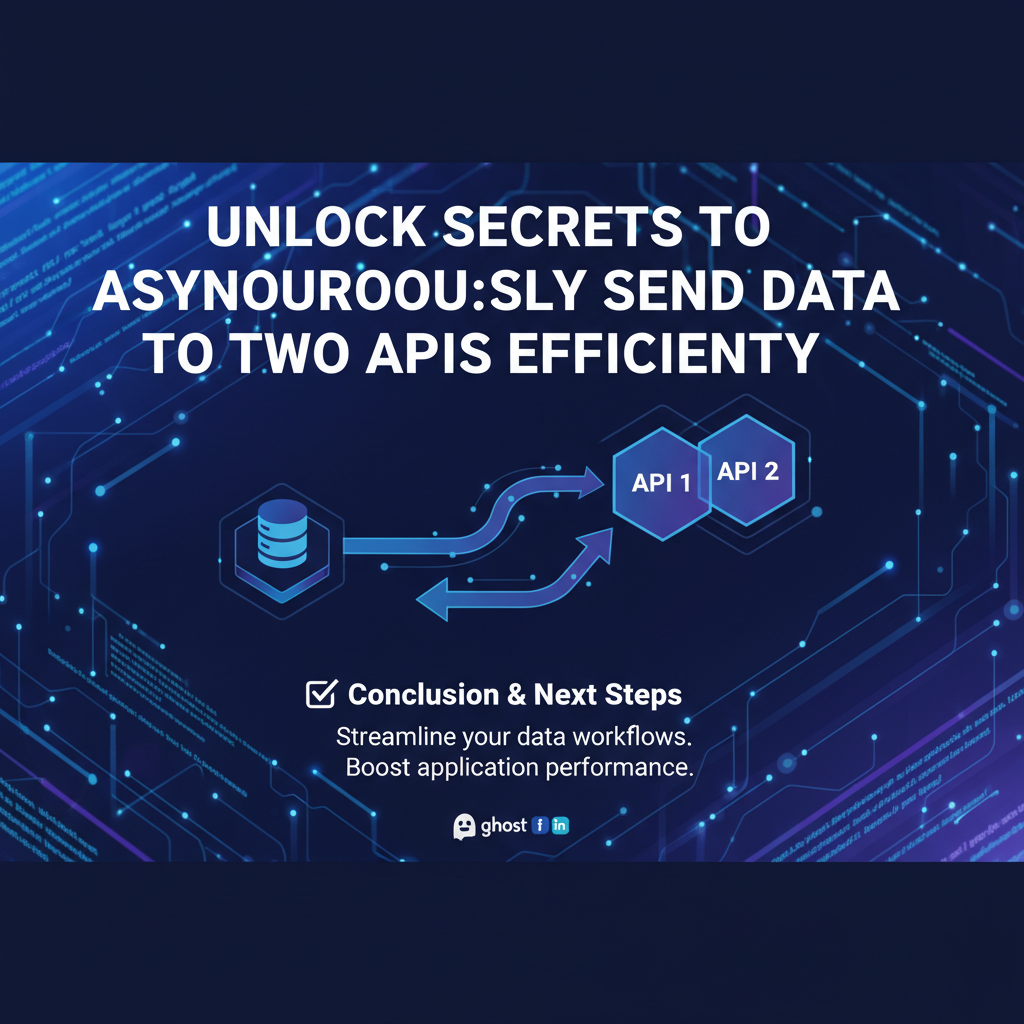
Unlock Secrets to Asynchronously Send Data to Two APIs Efficiently


In today's fast-paced digital world, the ability to asynchronously send data to multiple APIs is a crucial skill for developers looking to create scalable and responsive applications. This article delves into the intricacies of asynchronous data sending, explores the role of API gateways, and provides insights into how you can efficiently manage this process. We'll also introduce APIPark, an open-source AI gateway and API management platform that can significantly streamline your asynchronous data sending operations.
Understanding Asynchronous Data Sending
Asynchronous data sending refers to the process of sending data to one or more APIs without waiting for a response before proceeding to the next task. This approach is essential for applications that require real-time updates or need to process data concurrently. Here's a breakdown of the key concepts:
Key Concepts
- Non-blocking I/O: Non-blocking I/O allows the application to continue processing other tasks while waiting for I/O operations to complete.
- Callback Functions: Callback functions are used to execute code after a certain task has completed. They are crucial for implementing asynchronous operations.
- Promises and Async/Await: Promises and async/await syntax provide a more modern and readable way to handle asynchronous operations in JavaScript and other programming languages.
Benefits of Asynchronous Data Sending
- Improved Performance: By not waiting for responses, applications can handle more tasks concurrently, leading to better performance.
- Scalability: Asynchronous operations are essential for scaling applications to handle increased traffic and data volumes.
- Enhanced User Experience: Real-time updates and responsive applications provide a more engaging user experience.
The Role of API Gateways
API gateways act as a single entry point for all API calls, providing a centralized location for managing and routing requests to the appropriate backend services. They offer several benefits for asynchronous data sending:
Key Functions of API Gateways
- Request Routing: API gateways route requests to the appropriate backend service based on the request type, URL, or other criteria.
- Authentication and Authorization: They handle authentication and authorization for API calls, ensuring that only authorized users can access certain APIs.
- Rate Limiting: API gateways can enforce rate limits to prevent abuse and ensure fair usage of resources.
- Caching: Caching can be used to store frequently accessed data, reducing the load on backend services and improving response times.
Advantages of Using API Gateways for Asynchronous Data Sending
- Centralized Management: API gateways provide a single point of control for managing API traffic, making it easier to implement asynchronous operations.
- Improved Security: By handling authentication and authorization, API gateways can help protect sensitive data and prevent unauthorized access.
- Enhanced Performance: Caching and rate limiting can improve the performance of asynchronous operations.
APIPark is a high-performance AI gateway that allows you to securely access the most comprehensive LLM APIs globally on the APIPark platform, including OpenAI, Anthropic, Mistral, Llama2, Google Gemini, and more.Try APIPark now! 👇👇👇
Implementing Asynchronous Data Sending with APIPark
APIPark is an open-source AI gateway and API management platform that can help you efficiently manage asynchronous data sending operations. Here's how APIPark can be used to implement this process:
Key Features of APIPark
- Quick Integration of 100+ AI Models: APIPark allows you to easily integrate various AI models with a unified management system for authentication and cost tracking.
- Unified API Format for AI Invocation: It standardizes the request data format across all AI models, ensuring that changes in AI models or prompts do not affect the application or microservices.
- Prompt Encapsulation into REST API: Users can quickly combine AI models with custom prompts to create new APIs, such as sentiment analysis, translation, or data analysis APIs.
- End-to-End API Lifecycle Management: APIPark assists with managing the entire lifecycle of APIs, including design, publication, invocation, and decommission.
Steps to Implement Asynchronous Data Sending with APIPark
- Install APIPark: Use the following command to install APIPark:
bash curl -sSO https://download.apipark.com/install/quick-start.sh; bash quick-start.sh - Configure APIPark: Set up APIPark to route requests to the appropriate backend services.
- Create Asynchronous Endpoints: Define asynchronous endpoints in APIPark that will handle incoming data and send it to the appropriate APIs.
- Monitor and Optimize: Use APIPark's monitoring and logging features to track the performance of your asynchronous operations and make necessary adjustments.
Conclusion
Asynchronous data sending is a powerful technique for creating scalable and responsive applications. By understanding the key concepts and using tools like API gateways and APIPark, you can efficiently manage asynchronous data sending operations. APIPark's open-source AI gateway and API management platform provides a comprehensive solution for managing and optimizing asynchronous data sending, making it an excellent choice for developers and enterprises alike.
Table: Comparison of API Gateways
| Feature | APIPark | Kong | AWS API Gateway | Apigee |
|---|---|---|---|---|
| Open Source | Yes | No | No | No |
| AI Integration | Yes | No | Limited | Yes |
| Rate Limiting | Yes | Yes | Yes | Yes |
| Caching | Yes | Yes | Yes | Yes |
| Monitoring | Yes | Yes | Yes | Yes |
| Authentication | Yes | Yes | Yes | Yes |
FAQs
- What is the difference between synchronous and asynchronous data sending? Synchronous data sending requires the application to wait for a response before proceeding to the next task, while asynchronous data sending allows the application to continue processing other tasks without waiting for a response.
- Why is asynchronous data sending important for applications? Asynchronous data sending improves performance, scalability, and user experience by allowing applications to handle more tasks concurrently and provide real-time updates.
- What is an API gateway, and how does it help with asynchronous data sending? An API gateway is a centralized entry point for all API calls that routes requests to the appropriate backend services, provides authentication and authorization, and can improve performance and security.
- What are some benefits of using APIPark for asynchronous data sending? APIPark offers quick integration of AI models, unified API formats, prompt encapsulation, end-to-end API lifecycle management, and more, making it an excellent choice for managing asynchronous data sending operations.
- How can I get started with APIPark? You can download and install APIPark from its official website (https://apipark.com/). Once installed, you can configure APIPark to route requests to the appropriate backend services and create asynchronous endpoints to handle data sending.
🚀You can securely and efficiently call the OpenAI API on APIPark in just two steps:
Step 1: Deploy the APIPark AI gateway in 5 minutes.
APIPark is developed based on Golang, offering strong product performance and low development and maintenance costs. You can deploy APIPark with a single command line.
curl -sSO https://download.apipark.com/install/quick-start.sh; bash quick-start.sh

In my experience, you can see the successful deployment interface within 5 to 10 minutes. Then, you can log in to APIPark using your account.

Step 2: Call the OpenAI API.